Coincidentally

“Coincidence is God’s way of remaining anonymous.” — Albert Einstein

By Lee Pace

Another year dawns and the largesse of the Sandhills golf community continues to evoke awe and grace. Forty golf courses in a 15-mile radius, one USGA event coming in 2017, another on tap for 2019, an interesting and ambitious project to redesign Pinehurst No. 4 and create a new short course at Pinehurst set to commence this year. The populace revels in a golf-centric environment where at any point you’re liable to see a license plate like 4RT or WHIFF or GOLF’N or a pedestrian walking down a sidewalk, pronating his left wrist as if to make a solid move through the ball.

It has always fascinated and amused me to ponder the series of dominoes that fell over five years from 1895 to 1900 that allowed this “Accidental Resort” to sprout into reality. There was no big city next door to give birth to Pinehurst. There was no ocean or mountain range to make it an aesthetic or seasonable destination, no river to provide convenient access.

No, we have this “St. Andrews of American Golf” thanks to at least five unrelated but important dollops of happenstance.

— A chance encounter on a train in 1895.

James Tufts made his fortune in patenting, manufacturing and sales of apparatuses and syrups found in apothecary shops across the land and, as he neared the age of 60, turned his business operations over to subordinates. He was active in philanthropic work and sought on behalf of the Invalid Aid Society of Boston to locate a wintertime health resort for those suffering from consumption.

Col. Walker Taylor was a sharp businessman himself and had opened an insurance agency in Wilmington in 1866 following the Civil War. He traveled extensively throughout the Eastern Seaboard, and having a gregarious personality, was wont to introduce himself to perfect strangers. One day in 1895, pure happenstance landed Taylor and Tufts on the same train. They struck up a conversation, and Tufts explained his vision to Taylor.

Taylor, family legend has it, suggested that the train station in Southern Pines might be a good starting point for Tufts’ search for a site for his new resort. It was right on two of the nation’s major north-south transportation arteries — the railroad and U.S. Hwy. 1. There was cheap land available, and it was halfway between Boston and Florida. And thus Tufts did in fact search for land — and found 6,000 acres about five miles to the west of the train station in Southern Pines.

— An astute decision by Tufts to eschew the advice of a trusted aide that “golf is just a fad.”

At first golf was not part of the Pinehurst dossier, and visitors enjoyed activities such as horseback riding, dancing, recitals, carriage rides, cards and a croquet-like game called roque. But in the fall of 1897, Tufts learned that guests were hitting small rubber balls with wooden sticks around the dairy fields and, in the process, aggravating the cows. So he built a nine-hole golf course as a lark in 1898, enlisting the help of Dr. D. LeRoy Culver, a Southern Pines physician who was an avid golfer, had played in England and Scotland, and understood the gist of what a course should look like. But Tufts wasn’t sold on the game’s prospects and inquired of the manager of the Holly Inn, Allen Treadway, if he thought nine more holes would be a good idea.

“Save your money,” answered Treadway, who later would be elected as a Massachusetts congressional representative. “Golf is a fad and will never last.”

Tufts’ instincts and better advice from others in his circle convinced him otherwise, and soon he embarked on the expansion of the golf course to a full 18 holes.

— A fateful coin flip in the village of Dornoch, Scotland, in 1899.

Donald Ross was a 27-year-old employee at Royal Dornoch Golf Club and was in charge of maintaining the golf course, managing the caddies, organizing competitions, and building and repairing clubs. His boss was John Sutherland, the club “secretary,” i.e., general manager. One day a golfer visiting from Boston suggested to Ross that America was ripe for growing the sport of golf, and an ambitious expert in the game might do well to immigrate and carve his niche in the game’s expansion. Ross and Sutherland both took a fancy to the idea and decided to flip a coin — one goes to America, the other stays at home and runs the club at Dornoch.

Ross won the flip.

And so he set off to America.

“My mother and Mr. Sutherland’s daughter were great pals,” says Donald Grant, a lifelong Dornoch resident and club member. “They lived side-by-side growing up. I heard the story often. I have no reason to doubt its truth.”

— That it was Boston, not New York or Philadelphia or a dozen other cities, where Ross arrived in 1899.

Ross’ contact in America was Robert Willson, an astronomy professor at Harvard and a member at Oakley Country Club in the Boston suburb of Watertown. Upon arrival in Boston, Ross phoned Willson, visited his home, and soon Willson helped Ross find work at Oakley Country Club, which was located eight miles from Tufts’ home in Medford.

Now that Tufts had a full 18-hole course at Pinehurst and a vision for building more golf, he needed a golf professional to work during the October to spring season. He learned that Oakley had in its employ a sharp young Scotsman whose responsibilities were geared around the summer golf season — an ideal fit to go South in the winter. They met at Tufts’ home in Medford. Tufts hired Ross on the spot and Ross began his new assignment at Pinehurst in December 1900. He was busy at first making clubs, managing the caddies, giving lessons and organizing competitions. He also tried his hand at designing and building new golf holes.

— And that this ground in Moore County should be predominantly sand, prompting a serendipitous connection for Ross between Scotland and his new wintertime home situated 120 miles inland from the coast.

Millions of years ago, the Atlantic Ocean covered what is now dry land along the East Coast. During the Miocene Epoch (circa 20 million years ago), the ocean receded and left a strip of what is now ancient coastline and beach deposits. The Sandhills are part of that band some 30 miles across and 80 miles long. Tufts liked the land as he first found it because its sandy composition drained quickly and was thought to have health-giving benefits.

Pinehurst was perhaps not oceanside itself. But its location was a kissing cousin to the seashore. The word “links” can be traced to the Old English word for lean, hlinc, meaning “lean terrain formed by receding seas.” The ground was perfect for golf and Ross’s tastes. It provided, in essence, an “inland links” terrain; the earth was gently rolling and sandy. Rainwater flowed through the sandy soil at Dornoch; it did so as well in Pinehurst, allowing for a golf designer’s dream environment.

“He was particularly attracted to the soil conditions here, as they reminded him of the old links land at home,” Richard Tufts, James’ grandson, said years later. “Even our native wire grass seemed to remind him of the whins he knew in Scotland.”

What if Tufts had gotten off the train in Raleigh and chosen the heavy clay environment there? It might have had no attraction had Ross landed just an hour north.

And so the dominoes fell — Tufts debarks in Southern Pines, tweaks his vision to include golf, Ross and not Sutherland comes to Boston, and Ross turns Pinehurst’s sandy ground into an American golf nirvana that draws visitors from the population centers of the East, Midwest and Deep South. By 1919, Pinehurst had 72 holes of golf and was by far the nation’s foremost golf destination.

It all makes perfect sense and hearkens the immortal words of former baseball great Yogi Berra, himself a frequent visitor to Pinehurst from his home in New Jersey: “That’s too coincidental to be a coincidence.”  PS

Lee Pace has authored five books on the evolution of golf in the Sandhills, most recently The Golden Age of Pinehurst—The Story of the Rebirth of No. 2.

January Books

By Romey Petite

The True Flag: Theodore Roosevelt, Mark Twain, and the Birth of American Empire, by Stephen Kinzer

The best-selling author of The Brothers and Overthrow examines the key figures who shaped American foreign policy during the Progressive Era, a turning point in U.S. history when opinions over the nation’s involvements abroad were sharply divided. Kinzer’s book delves into the Panama Canal, the Spanish-American War, and the subsequent annexation of the Philippines and the men (Theodore Roosevelt, Henry Cabot Lodge and William Randolph Hearst) who were convinced these efforts were necessary, as well as those who protested this period of expansionism (Mark Twain, Booker T. Washington and Andrew Carnegie). A former foreign correspondent for The New York Times and The Boston Globe, Kinzer has a unique perspective on this relevant, fraught and complex debate.

The 5 Love Languages: Singles Edition and The 5 Love Languages: Military Edition, by Dr. Gary Chapman.

While the initial title in The 5 Love Languages series was written for married couples, in Singles Edition Chapman seeks to show readers how they can better communicate in daily life and express themselves to the people that matter most, be it friends or family (or perhaps seeking closure in understanding a relationship that didn’t work out). In The 5 Love Languages: Military Edition, Chapman works with Jocelyn Green, writer of both historical and spiritual nonfiction, to provide advice for the struggles involved in a long-distance relationship, separating the jargon of fieldwork from home life, and strengthening relationships post-deployment.

The Sleepwalker, by Chris Bohjalian

New York Times best-selling author of The Guest Room has delivered a new foray into the realm of psychological mystery. Annalee Ahlberg, a habitual sleepwalker suffering from parasomnia, vanishes from her home one night. As her husband and children search desperately for some trace of her or what they fear most, a body, her eldest daughter, Lianna, slowly finds herself hypnotically drawn to the detective investigating the case. It’s a story certain to keep readers up at all hours, spellbinding until its close.

The Girl Before, by J.P. Delaney

The movie rights to this title were picked up before it even saw print, but don’t write it off as just the latest addition to Delaney’s ongoing suspense thriller obsession. The Girl Before is a gripping read of two girls told from both non-linear and multiple perspectives. The reader flips back and forth while flipping each page: going from one, Emma, to the other, Jane. Both, at one point, find themselves occupants of an apartment at One Folgate Street. In it, each finds the perfect location to suit their respective needs, provided for by the landlord, an eccentric architect. Unbeknown to Emma and Jane, the enigmatic location hosts a trap that the girl before — and the girl after — cannot help but fall into.

Fever Dream, by Samanta Schweblin

In this mesmeric first novel, Amanda lies in the hospital of an agrarian community struggling against the poisonous toxins in her body. A strange boy, David, sits next to her asking questions she replies to reluctantly, half-knowing where those answers will lead. While she struggles for her life, and to remember something the boy insists she must, together the voices weave an arresting narrative of horses, horrors and estranging rituals.

The Bear and the Nightingale, by Katherine Arden

Vasilisa Vladimirovich lives on the edge of a dense Russian wood, a land where the frigid weather rarely relents. The girl is happy there enjoying the folk stories told by her nursemaid. Her life changes when her mother dies and, just as in fairy tales, her father takes a new wife. Now, Vasilisa’s cold-heartedly devout stepmother forbids the girl to honor the spirits from local lore — including the appeasement of the icy demon Morozko. Determined to protect her family from the ravages to their crops and the fierce forest beasts, Vasilisa begins a quest that reveals curious gifts she’s long held back. Wise readers will draw comparisons to the fairy tale retellings of Angela Carter; others will simply enjoy this rare confection — a perfect winter tale.

Lillian Boxfish Takes a Walk, by Kathleen Rooney

Rooney draws inspiration from the true life of poet and advertising writer Margaret Fishback, famous for her work for R.H. Macy’s. Dorothy Parker-esque drop-of-the-hat witticisms are all part of the job when you were once the most highly paid American woman in advertising. Rooney chooses an all-in-a-day format for her novel, selecting December 31 of 1984. A snappy, sensible octogenarian making observations with the brevity and lasting impression of a bee sting, Lillian finds herself dodging self-righteous vigilantes, phone calls from men she’s either mothered or been a mother to, and confrontations with shifty characters on New York’s streets. The format will doubtless put readers in mind of Virginia Woolf’s Mrs. Dalloway or the more recent Saturday by Ian McEwan. Rooney breathes life into what could have been a tired trope. Whisk yourself back to another turbulent year in history and ring in the New Year with Ms. Boxfish, the kind of witty woman you could only wish to be.

Lincoln in a Bardo, by George Saunders

A groundbreaking work of historical fiction, Lincoln in a Bardo is the story of Abraham Lincoln, his family, and his third son, Willie, who died when he was very young. What makes the tale truly remarkable is the way the categories of fiction and nonfiction are blurred. Told entirely through anecdotes, both true and fabricated, it is certain to generate controversy and furor from purists. Saunders is already an innovator in the short story form and a significant presence in the world of the short essay (he recently wrote an enormously entertaining piece after attending a Trump rally). His work manages to serve up portion after portion of humble pie with oscillations between both humility and humiliation. You may be scratching your head after hearing this is only his first stab at the novel. Lincoln in a Bardo doesn’t disappoint for a debut or for such a familiar and distinctive voice as Saunders’. It’s a peerless work of the genre achieving a new kind of authenticity.

PinePitch

Get To Know Your Town

The Citizen’s Academy invites residents of Southern Pines to get to know the inner workings of their community and meet some of its elected officials. Monthly sessions from January through May highlight town programs, services, policies, and procedures. Staff from various departments conduct tours, provide overviews of departmental functions, and answer questions — enabling participants to create an invaluable guide to the town and its services.

The program is free, but limited to 20, and application is required. Sessions will be held on Tuesday evenings, beginning January 10. In order to graduate (and receive a certificate!), participants must attend all five sessions. (One make-up allowed.) High school students are welcome to apply. Application forms are available online at www.southernpines.net/DocumentCenter/View/3841. For availability of individual sessions, call the library, (910) 692-8235.

For The Love Of Coffee And Tea

On Sunday, January 29, enjoy an afternoon at Pinehurst’s historic Fair Barn exploring the many varieties of coffee and tea and browsing the art on display and for sale. Coffee and tea samples and products will be available for purchase, and you can design your own coffee mug at the DIY coffee mug station. It will be a latte fun! The event is from 1 to 4 p.m. Tickets are $15 and available at Pinehurst Village Hall. The Fair Barn is located at the Pinehurst Harness Track, 200 Beulah Road South. For more information, call (910) 295-1900 or contact Danaka Bunch at dbunch@vopnc.org.

An Evening Of Baroque

On Sunday, January 8, the Weymouth Chamber Music Series presents “Light and Shadow,” a performance by Ensemble Vermillion, whose unique interpretation of 17th and 18th century chamber music will delight you. Musicians Frances Blaker (recorder virtuoso), David Wilson (baroque violinist), Barbara Blaker Krumdeick (baroque cellist), Barbara Weiss (harpsichordist) and Billy Sims (theorbo and baroque guitarist) are joined by soprano Molly Quinn and her silken voice in a program that features the music of Baroque masters Dietrich Buxtehude and JM Bach. Enjoy the music at 3 p.m. and stay for the reception to meet the artists in The Great Room at the Weymouth Center for Arts & Humanities, at 555 E. Connecticut Ave. in Southern Pines. Tickets, available at the Weymouth Center, are $10 for members and $20 for non-members. Call (910) 692-6261 or visit www.weymouthcenter.org for more information.

Hot Off The Algonquin Press

Susan Rivers will be at The Country Bookshop on Friday, January 13, at 5 p.m. to discuss her debut novel, The Second Mrs. Hockaday, published this month by Algonquin Books. The story, set in South Carolina at the end of the Civil War, is about Placidia, a young bride left alone to raise her husband’s baby, run his farm, and survive. Her husband returns from the war two years later and discovers Placidia accused of bearing a child and murdering it. The truth is revealed over the course of three decades through letters, court documents and a diary in this suspenseful narrative.  Rivers has an MFA in fiction writing from Queens University of Charlotte and currently teaches in upstate South Carolina. The Country Bookshop is located at 140 NW Broad St. in Southern Pines. Call (910) 692-3211 for more information.

Live At The Met

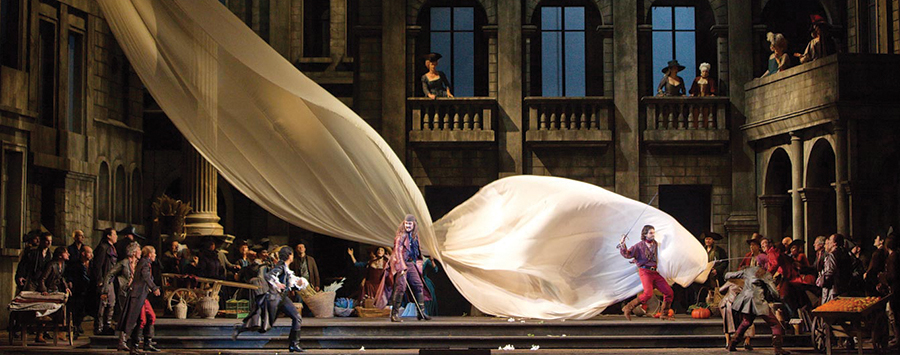
On Saturday, January 21, The Sunrise Theater will present Gounod’s opera Roméo et Juliette in HD via satellite from New York. The opera (in French with English subtitles) is based on William Shakespeare’s passionate play, The Tragedy of Romeo and Juliet, which tells the story of two teenage lovers whose marriage is forbidden by their feuding families, the Capulets and Montagues. The production features several memorable duets between the characters. The show begins at 12:55 p.m. Tickets are $27. The Sunrise Theater is located at 250 NW Broad St., Southern Pines. Call (910) 692-8501 or visit www.sunrisetheater.com for more information

Campbell House Galleries

This month’s art exhibit, Color in Nature, features paintings by Glenda Parker Jones, Meridith Martens and Miriam Sagasti. The exhibit is presented by The Arts Council of Moore County and sponsored by Shirley and Bill Frei. Hosts Bonnie and Buzz Parker, Howard Schubert, Jean Webster, and Mickey and George Wirtz invite you to the opening reception on Friday, January 6, from 6 to 8 p.m. The exhibit will run through January 27. The Campbell House Galleries are open weekdays 9 a.m.–5 p.m. and Saturday, January 21, 2–4 p.m., and are located at 482 E. Connecticut Ave., Southern Pines. Admission is free. For more information, call (910) 692-2787 or visit mooreart.org.

Celebrating January Authors’ Birthdays

On Saturday, January 7, between 10 a.m. and noon, bring the kids to Given Memorial Library to celebrate the birthdays of J.R.R. Tolkien and A.A. Milne. Special stations will be set up with creative and interactive projects and activities inspired by characters and settings from The Hobbit series and Winnie the Pooh. Alone or with a parent, kids can create characters, draw maps, and explore Chaos Tower. At the Photo Booth Station, they can get their pictures taken with a Hobbit or Pooh creature of their own making. A special map of the Kids Room will help them find books to check out and take home to read. Library cards are free, and kids of all ages are invited! The library is located at 150 Cherokee Road, Pinehurst. Call (910) 295-6022 or visit www.giventufts.com for more information.

The Rooster’s Wife

Aberdeen’s casual venue “with a totally serious appreciation for the best music found anywhere” presents the following this month:

Jan. 6, Missy Raines, 7-time IBMA Bass Player of the Year fronts her jazzy string band, the New Hip.

Jan. 13, House of Dues. Dance Party.

Jan. 15, Moors and McCumber, multi-instrumentalists, splendid songwriters ranging from Celtic through Americana

Jan. 19, Mitch Capel presents a Night of Love and Laughter.

Jan. 22, Louis Romano Quartet interweaves Latin, Middle, and Far Eastern influences within an American jazz framework.

Jan. 29, the Martha Bassett Trio returns with no genre left unexplored. Japanese guitarist Hiroya Tsukamoto will open the show.

For all of the above, doors open at 6 p.m. and music begins at 6:46 at the Poplar Knight Spot, 114 Knight St., Aberdeen. Call (910) 944-7502 or visit www.theroosterswife.org for more information.

And on January 5, at 7:30 p.m., you can catch Miss Raines and the New Hip at the Roosters Wife at the Cameo Art House Theater. 225 Hay St, Fayetteville. (910) 486-6633.

Weymouth Writer-In-Residence Reading

On Thursday, January 12, Sheryl Monks will be reading from her collection of stories, Monsters in Appalachia, set mostly in the story-rich mountains of West Virginia and rural North Carolina. Monks brings to life factory and mine workers, mothers and daughters, outlaws, abused wives, schoolchildren, and monsters in tales that have been described as both gothic and grim, realistic and surrealistic, haunting and humorous. Monks grew up in West Virginia and western North Carolina, holds an MFA in creative writing, and is a past winner of the Reynolds Price Short Fiction Award.

Her reading at 5:30 p.m. and the wine and cheese reception following will be held at the Weymouth Center for Arts & Humanities, 555 E. Connecticut Ave., Southern Pines. Sponsored by St. Joseph of the Pines, this event is free and open to the public. For more information call (910) 692-6261 or visit www.weymouthcenter.org or Facebook.

Lucky Me

A felinista’s annual ode

By Deborah Salomon

January is reserved for the kitties.

I am an animal person, daughter of non-animal-loving parents. Dogs and cats? Out of the question. My first pet was a good-sized turtle named Dinky, for whom I created an amphibious habitat of Mar-a-Lago proportions. Dinky dined on raw hamburger. He lived nearly 10 years. Since then, I have rescued and/or companioned dogs, cats, birds, a stray horse and a pair of Pekin ducks. My living room became a hospice for a daughter’s terminally ill greyhound. All my kitties just showed up, usually in bad shape.

After a lifetime of effort, I decided, enough. I’m retiring.

Then, in 2011, a gorgeous all-black cat with thick, glossy fur and expressive eyes . . . just showed up. Later I learned he had been abandoned when his family moved. I made a shelter and fed him outside for six months. When I finally opened the door, he headed for the kitchen and sat down where a kitty bowl should go. He was neutered, declawed (horrible!), healthy. He is intelligent, contemplative, a pacifist. In ancient Egypt, where cats were sacred, he would be a sphinx. Here and now, he is my solace.

In temperament, he reminds me of the Dalai Lama, but I called him Lucky for obvious reasons.

A year later, a lumpy, grey-and-white neighborhood kitty (clipped ear, to signify a spayed feral) fed by many, including me, showed up with a bloody paw. Naturally, I took her in, intending to fix the paw and send her on her way. This wattling, cross-eyed girl hissed, growled and swatted me and Lucky, who hung his head in acceptance. I should have named her Dingbat. Instead, Hissy, which I softened to Missy when fear-based venom turned to honey — and she became a purring lap anchor.

This gal wasn’t going anywhere.

Watching the kitties’ relationship develop and grow — fascinating. Now, they are like the Odd Couple, affectionate even while sparring, respectful of territory, manipulative and oh-so-clever.

Whoever said you can’t teach cats was right. They learn on their own.

For instance —

Circadian clock: Good thing I’m an early riser because at exactly 4 a.m. Lucky paws my face — gently, politely. If I don’t respond, he licks my ear, which tickles. I keep kibble in the nightstand; a few will distract him, but not for long. Hissy, meanwhile, waits at the foot of the bed, rarely crossing the invisible line into Lucky’s territory. I get up, feed and let them out. Making inside cats out of strays is almost impossible.

At exactly 4 p.m. he begins lobbying for supper.

Gender politics: I can’t figure out why Lucky allows Hissy to push him off his bowl. Got so bad that I feed him on the window sill, which won’t accommodate her girth.

Now, when I put her bowl down, he runs for the sill.

Follow-up: Hissy follows Lucky around like a fussy mother or pesky younger sibling. If he wants to lie under the bushes or in a sunny spot, so does she. If he drinks out of the birdbath she wants some, too. At least once a day she washes his face and ears with her raspy tongue. He sits quietly, and smiles.

Communication: Look, I told Hissy, I’ll feed, shelter and love you, provide health care (urinary tract infection, $324), even cede the wicker rocking chair for clawing if you leave the upholstery alone. It worked. When Lucky wants something he finds me, utters a plaintive meow and leads me to it — usually the back door, but often just a rubdown. Poor fella limps, probably from an old hip injury. He can jump up but getting down must be painful, so he raises his paw and I lift him off. Then we sit and discuss our arthritis for hours.

Memory chip: Lucky and Hissy-Missy know their names, come when called. A few winters ago, Lucky learned the warmest spot was the cable box. I bolstered it with a folded towel to accommodate the overhang. Now, the first chilly day he hops up for naps. Lucky also remembers that the suitcase means Mama’s going away. Maybe she won’t if I crawl inside it, shed on her clothes and protest removal, he figures.

Body language: Hissy lumbers or scurries, never walks. She is constantly underfoot. If I wore shoes in the kitchen she’d have no paws left. Their reaction to wildlife varies. He sits, immobile, and watches the birds and squirrels — even the black garden snake. She crouches, wiggles and chatters but never pounces. Why bother when Mama’s got a stash of Sheba, Meow Mix and super-green organic kibble? But let another cat approach her purview and Hissy turns hellcat-on-wheels. Lucky, the pacifist, assumes the sphinx pose and stares down the intruder through half-closed eyes.

Affection: Cats — aloof? The minute I sit down Hissy Velcros herself to me. Her naps are my only relief. Lucky has a chair beside my computer desk. Otherwise, he’d be tip-toeing typos.

Bon appetit: CNN-watchers know that Anthony Bourdain of Parts Unknown will eat anything, anywhere. My kitties are equally (epi)curious — and very bold. Mind you, I only offer a speck. Lucky prefers specks of grilled cheese, buttered toast, pasta marinara, scrambled eggs and Greek vanilla yogurt. He goes bonkers over one cottage cheese curd. Hissy laps up homemade chicken soup like it’s Dom Perignon. The sight of Lucky licking the salt off a saltine (shaking his head after every lick) is YouTube-worthy.

Nobel laureate Anatole France said that until one has loved an animal, a part of one’s soul remains unawakened. Philosophers, including Mahatma Gandhi, suggest how a person treats animals offers an indication of character. My two foundling kitties, of unknown provenance and age but definite personalities, reward me with companionship, entertainment, adoration and intel on a supra-human level. They are, indeed, fortunate to have found me. But, in the end, I got the better deal.  PS

Deborah Salomon is a staff writer for PineStraw and The Pilot. She may be reached at debsalomon@nc.rr.com.

Sweat Show

The Kiwi Roll ain’t hors d’oeuvres

By Bill Fields

Wrestling, the real kind, never appealed to me.

When we were forced to try it during physical education class at middle school, the mats could have used lots of Lysol. The moves were always a mystery. I didn’t know the difference between a Fireman’s Carry and a Double-Leg Takedown, and despite the best efforts of Coach Wynn, I never wanted to know. Other than when the dreaded pommel horse and parallel bars appeared, it was the only time I hated changing into gym clothes. 

For every Dan Gable grappling for Olympic glory for the United States, there seemed to be a lot more fellows like my unfortunate friend in high school, who, being on the small side, was recruited as a Pinecrest sophomore to wrestle in the lightest class. But he often struggled to make weight, and running down the aisle of a hot bus wearing a plastic suit while spitting into a bucket en route to a match at Lumberton wasn’t my idea of a good time.

Wrestling, the other kind, was a different story.

I am not ashamed to admit that I loved the professional version, the faces and the heels of this wacky world as essential a part of my television entertainment when I was a young teenager in the early to mid-1970s as Mary Tyler Moore, Bob Newhart and re-runs of The Andy Griffith Show or Dragnet.

Mid-Atlantic Championship Wrestling was on WRAL-TV 5 at 11:30 on Saturday nights. The shows, taped in the Raleigh studio earlier in the week, were hosted by Bob Caudle, a weatherman at the station in his day job. “Hello, wrestling fans,” Caudle said at the start of every broadcast, the signal that it was time to settle in on the couch with a Coke and some potato chips.

With my mother gone to sleep and my policeman-father off to work the overnight shift, I had an hour with a familiar cast of characters: Johnny Weaver, Jerry Brisco, The Missouri Mauler, Argentina Apollo, Swede Hanson, Brute Bernard, Nelson Royal, Nikita Koloff, Krusher Karlson, Rip Hawk, Paul Jones, Bearcat Wright, and El Gaucho.

There was a former NFL player, Wahoo McDaniel; brother teams of Gene/Ole Anderson and George/Sandy Scott; wrestling giants Man Mountain Mike and Haystacks Calhoun, who weighed more than 600 pounds. One of my favorites was New Zealander Abe Jacobs, in his mid-30s and an undercard wrestler in the latter part of his career. Jacobs’ trademark hold was the “Kiwi Roll,” in which he would lock legs with his opponent, rolling around in a circle applying pressure to the ankle until the writhing foe gave up. Lots of guys performed the Suplex or Piledriver, or whip-sawed someone hard into a turnbuckle, but Jacobs’ signature submission move was unique, the Fosbury Flop without any following suit.

Regardless of who was wrestling on a given Saturday evening, the soundtrack was the same — the stomping of boots and slamming of bodies on the elevated canvas mat interrupted by shouts from a small audience in the studio bleachers, narrated by Caudle and a sidekick. I never mulled how much was fake or if everything was. Until NBC’s Saturday Night Live debuted in the fall of 1975, it was what I wanted to watch on television late on a weekend night.

Despite my loyalty, I never could persuade my father to write in for tickets to a Mid-Atlantic Championship Wrestling taping at Channel 5. We never went to the Greensboro Coliseum or Dorton Arena to see the spectacle in person either. Once, though, pro wrestling did come to the Armory on Morganton Road. Tickets were cheap, and Dad agreed to take me.

We sat in metal folding chairs, the variety of which villain manager Homer O’Dell used to surprise-whack a rival on TV as Caudle was doing an interview. If  Jacobs was there and Kiwi-Rolled anyone, I don’t remember. It was loud, with plenty of yelling.

My lasting memory of the matches is of a town tough a handful of years older than me who jumped on the ring apron, agitated and ready to rassle. He deserved to be sat on by Man Mountain Mike but instead was restrained and led away, screaming, told, no doubt, that he was not part of the show.  PS

Southern Pines native Bill Fields, who writes about golf and other things, moved North in 1986 but hasn’t lost his accent.

Saved by the Dark Side

A family farm goes fungi

By Jan Leitschuh

Mushrooms add a depth of flavor to any number of dishes, meaty, with a hearty umami taste. Growing in dark, damp woodland places, who expected them to save the family farm?

Anyone with eyes has witnessed the shifts in rural agriculture, as the young folk and their young energies leave the farm for opportunities elsewhere, markets wither and long-stewarded properties sell out to housing developers. But some are bucking that trend. Welcome to one 21st century family farm in central North Carolina that has grabbed onto innovation as a way to survive.

Walk into one of the several “barns” on the pretty, rolling acreage here at Carolina Mushroom Farm in Willow Springs. No pink snouts or leathery golden leaves here anymore; hogs and tobacco have given way to at least three types of edible fungi.

Oyster mushrooms, pale and broad, aren’t hard to grow, says Shahane Taylor, 32, one of the four partners in the farm’s mushroom project. He walks to the sterile “prep” building, where special bags of straw are inoculated. Lined up like soldiers in a special 78-degree room are the bags of damp sterilized straw on which the inoculent thrives.

Oyster mushrooms double in size every 24 hours. They have broad, flat, upward-facing layers, and there is indeed a slight oyster-like appearance, unlike the more familiar button mushroom. You can grow oysters yourself, easily, in your kitchen. Besides the actual mushrooms, Carolina Mushroom Farm sells the grow bags too; if you don’t want to do your own research, gather materials, do the sterile prep and inoculation.

The taste of oyster mushrooms? Delicate and sweet. “Like chicken,” Taylor jokes, then adds, seriously, “like a chicken-seafood-y cross.” He likes a vegetable soup with oyster mushrooms.

Valuable shiitake mushrooms are a little trickier and slower to raise. Here, we move to another building where a sterilizing footbath awaits outside the door. Inside, there is another footbath, as well as a hand wash and special ventilation systems with HEPA filters to keep out molds and other contaminants, like foreign spores.

Step into yet another humid, warm room, and metal racks stacked with special blocks of compressed sawdust grow the umbrella-shaped brown caps of the delicate shiitake mushroom, famed for its savory taste and medicinal properties.

Shiitakes have a steak-like flavor that is prized in Asian cuisine, notably miso soup. Very umami, shiitakes are used to top meat dishes, added to stir-fries and used in soups. Shiitake pizza is Taylor’s favorite.

Shiitakes are one of the more popular forms of protein in China, and have a long tradition of medicinal use as well. Apparently, shiitakes have a strong antiviral effect due to natural interferons that inhibit viral replication. It has also been reported that the consumption of shiitake mushrooms lowers blood cholesterol levels.

In Asia, shiitakes are used to support cancer treatments. “Japan has developed an extract from shiitakes known as lentinan. The extract is used with patients undergoing traditional cancer therapy. In fact, in Japan mushroom extracts have become the leading prescription treatment for cancer. Lentinan may also prevent chromosomal damage induced by anti-cancer drugs. There are no known serious side effects,” reports the Mississippi Natural Products Association, a rural farmers’ cooperative.

But trickiest of all to grow are the baby portabella mushrooms.

Here at CMF they are reared on heavy trays of pasteurized compost, alive with beneficial microbes. “They are the most labor-intensive mushroom we grow,” says Taylor. “Baby bellas are especially sensitive in the early stages.”

But portabellas are very popular, so grow them they do. The smaller form, called cremini, is brown and a bit larger than a white button mushroom. They are mild, and can easily sub for the smaller white button ’shrooms in a recipe.

In their most mature form, the creminis grow out to the hefty, popular brown caps we know as portabellas. The large, beefy caps are terrific to grill, fabulous stuffed, and often substituted for meat among vegans. 

Among the three varieties, Carolina Mushroom Farm currently produces 500 pounds of edible fungi a week. They are scaling up quickly to 1,000 to 1,500 pounds in the near future. The quality of the product is excellent, and packaged professionally. Yet, this ambitious venture only came into being in late 2015.

How did this happen to a small family farm in mid-North Carolina? You could start this tale with the farm itself, or begin it in the Marines.

In the Marines, Dion Heckman, 28 and the second of four partners, was a roommate and good friend of Taylor. When they got out of service together in 2010, they continued to hang out.

“We got along really well, it’s just one of those things,” says Taylor. “Dion had a girlfriend who lived near Raleigh, so I’d come visit. And when we got out, Raleigh happened to be where we landed.” There is muffled conversation, and then Taylor comes back with a laugh: “Dion says to tell you he’s the brains of the business.

Both went to Wake Tech on the G.I. Bill, and that’s where Taylor met dark-haired Sabrina in late 2010. Now his fiancée, Sabrina is the daughter of agricultural speaker Jerry Carroll. Jerry is the third of the four mushroom farm project partners. The fourth, Steve Carroll, is Jerry’s brother and a research scientist for BASF.

Dating Sabrina, Taylor naturally got to know her dad Jerry, and got on well with both parents.

Jerry Carroll had been a farm producer, with 6,000 hogs and fields of tobacco on the family land, but saw the agricultural writing on the wall. Ask him why he got out of hogs, and he’ll shoot back, “Twelve cents a pound!” He says at the end he was losing 40 cents per pound and it was the last hog operation in his growing county. With the tobacco buyout in the early 2000s, the golden leaf also left the farm rotation.

There they were, a family farm with 85 rolling acres and several stoutly built farm buildings, the latter nearly paid off. And no crop.

Eventually living on the farm, Taylor hadn’t thought about working there, even with his horticultural experience. His studies had been in business and accounting, and working in media communications. He also worked at a specialty gardening store, and at a hydroponic lettuce farm. 

Heckman was drawn to the farm too. In their free time, they’d go fishing or target shooting there together, talk about the farm, especially the empty buildings. The expensive hog barns were just sitting there, used as farm storage. “We wanted it to be a working farm again,” says Taylor.

Pam Lockamy — Jerry and Steve’s sister — did her research and decided to build a new event space for weddings, to bring agritourism dollars to the throttled-back farm. Her husband, Ray, was looking to retire, and a wedding venue was their retirement plan. A beautiful red barn event space now marks the entrance to the farm, smelling of fresh pine lumber as the family works to complete the lofty interior.

With that plan in the works, the guys returned to look at production again. But producing what?

Jerry Carroll kept staring at the hog buildings. They were strong, well-kept and built to be sterilized. He wondered if there wasn’t a way to use this wasted asset. One day he turned to Taylor and asked the critical question: “What do you know about mushrooms?”

The answer “not much” was no deterrent. “The buildings they grow mushrooms in look just like what we have,” Carroll said.

“We had looked into strawberries,” says Taylor, “but there are a lot of strawberry growers and we wanted something unique. We looked up the top 10 most profitable greenhouse enterprises, and mushrooms were in the No. 2 spot.”

What was No. 1? “Marijuana,” he laughs. “Wouldn’t work here.”

Taylor started on a steep course of research, pulling his buddy Heckman along with him. “To do the scale we wanted to do, we knew we’d need a good team. We’d been best friends, Heckman knew the farm, so it seemed like a natural fit.” So in an era when the average age of the farmer in North Carolina is around 60 years, these two young Marine buddies joined their energies with brothers Jerry and Steve to form a partnership.

Taylor and Heckman began their research at the end of 2015. “When I say we immersed ourselves in it, I mean, we immersed ourselves in it,” Taylor laughs. “It was like going back to school. We’d all been in ag or hort backgrounds, but none of us had grown a mushroom.”

Turns out, the buildings were a perfect fit. Production began in 2016, and by autumn their product was not only showing up in restaurants but in the produce boxes of the local community cooperative, Sandhills Farm to Table, to great acclaim. On the very day of their first SF2T delivery, Sabrina also gave birth to their son, Addelynn.

The family farm, at least on this patch of ground, is not dying out. There is new life on these 85 acres, as the next generation reverses the trend and puts its energy into the age-old business of growing a crop for market.

Cream of Mushroom Soup

2 tablespoons butter

1/2 pound sliced fresh mushrooms

1/4 cup chopped onion

6 tablespoons flour or arrowroot 

1/2 teaspoon salt

1/8 teaspoon pepper

2 cans (14 1/2 ounces each) chicken broth

1 cup half-and-half cream

In a saucepan, heat butter over medium-high heat; sauté mushrooms and onion until tender. Mix flour, salt, pepper and one can broth until smooth; stir into mushroom mixture. Stir in remaining broth. Bring to a boil; cook and stir until thickened, about 2 minutes. Reduce heat; stir in cream. Simmer, uncovered, until flavors are blended, about 15 minutes, stirring occasionally. Yield: 6 servings.  PS

Jan Leitschuh is a local gardener, avid eater of fresh produce and co-founder of the Sandhills Farm to Table Cooperative.

How to Beat the Holiday Hangover

Sure fire drinks to upgrade your new year cocktails

By Tony Cross

Now that the holidays are over, it’s time to regroup and get it together. For most of us that means back to the gym, reintroducing new, or old, diets, New Year’s resolutions — you still do those? — and moderation. There’s nothing wrong with most of these; I usually take a cleanse of some sort to detox the ridiculous amounts of excess that I happily ate, drank and whatevered to my body. Most articles from various publications preach about what you should or shouldn’t do at the beginning of each year. So, in the tradition of cliché January columns on the subject, I bring you: how to drink better this year. I’ve mentioned in previous columns how it’s good to have a handful (maybe I used the word “arsenal”) of drinks in your mental reservoir whenever you’re at a bar or restaurant. This piece of advice still stands.

Cocktail historian David Wondrich once wrote that if you’re a vodka soda drinker, you should probably just continue to drink vodka sodas. Clever, and more than likely true. Most vodka soda fans aren’t drinking for flavor, but if you are, keep on reading. One of my favorite tricks to play on guests is giving them gin instead of vodka. Whenever a patron asked me to come up with something inventive on the fly that used vodka as the main spirit, I would more than likely use Uncle Val’s Botanical Gin. Distilled in Sonoma, California, it tastes nothing like any gin you’re used to. This gin is a huge lemon and citrus bomb. I’ve converted plenty of gin haters with this beauty. Head over to 195 Restaurant or The Bell Tree and ask for one with soda. 195 likes to add a splash of organic grapefruit juice, resulting in your new allegiance to gin.

Hangovers are the worst. The only real cure for them is time, but the best way to make crippling pain hurry up and go away is, you guessed it, a drink. Everyone does the mimosa or bloody Mary, and using fresh ingredients with both will get you a better tasting drink. There are a few ways you can switch up these weekend morning staples. First, replace your bloody Mary vodka with a London Dry Gin. A good two ounces of Beefeater’s turns your bloody Mary into a treat. Why would you do that? Why wouldn’t you? You can’t taste the vodka in a bloody Mary unless you put an insane amount in, and with the gin, the myriad of botanicals blend with all the flavors from the bloody Mary mix. Ironwood and The Sly Fox have great bloodys, and I always order them with gin. That’s a great way to switch it up at brunch. Have you had a Corpse Reviver No.2? This is a classic cocktail dating from the pre-Prohibition era. Don’t get this confused with the first type of Reviver (made with brandy, sweet vermouth and applejack); the Corpse Reviver No.2 is made with gin, Cointreau, Lillet Blanc, and fresh lemon juice (served up in an absinthe rinsed coupe glass). It’s perfect in the mornings, but if you’re having one of those days where it’s taking your funk a little longer to wear off, get to Chef Warren’s, where they make the best in town. This is an equal parts recipe, minus the absinthe. Don’t be afraid, the absinthe is primarily for the olfactory senses.

Corpse Reviver No.2

Absinthe (or Pernod)

3/4 ounce Conniption Gin (distilled in Durham)

3/4 ounce Lillet Blanc (available at Nature’s Own)

3/4 ounce Cointreau

3/4 ounce lemon juice

Take a half bar spoon of absinthe (or Pernod) and swirl (rinse) it in a chilled cocktail coupe, making sure the absinthe completely coats the inside. Discard any remaining absinthe and put the glass back in the fridge/freezer while making the cocktail. Place remaining ingredients into your cocktail shaker. Add ice, shake very well, until the drink is ice cold, and strain it into your coupe glass. Take a swath of orange peel, expressing the oils over the drink. Thank me later when you’re feeling better.

OK, Jamo and ginger guy/gal, you’re next. Probably more popular this generation than a Jack and Coke is the infamous Jameson Irish Whiskey with ginger ale. Popular at restaurants and your local pub — just ask the crew at O’Donnell’s how many bottles of Jameson they go through in a week. More than likely, any establishment with a liquor license that you frequent will be able to mix this up for you, and that’s great, but this is about loading up the arsenal, remember? Decker Platt over at 195 Restaurant carries Monkey Shoulder Blended Malt Whisky. Before you judge, know that Monkey Shoulder blends three Scotch single malts from Speyside, and it sits in used bourbon barrels for three to six months, giving it more of a mellow characteristic. One of the cocktails that Decker can make for you is called a Penicillin. Monkey Shoulder mixed with organic ginger, a local honey syrup, lemon juice and a splash of peaty Scotch whisky makes this a perfect wintertime concoction. Bringing this cocktail up to your nose, you’re tricked into thinking that the drink will taste smokier than it actually is.

Penicillin (Sam Ross, Milk & Honey, New York City, 2005)

1/4 ounce Laphroaig (or other smoky Scotch)

2 ounces Monkey Shoulder Whisky

3/4 ounces honey syrup (3:1)

3/4  ounce lemon juice

2 pieces ginger root

Put the ginger in your cocktail shaker, muddle to release the juice. Combine whiskey, honey syrup and lemon juice in your cocktail shaker, add ice, and shake until ice cold. Pour over ice in a rocks glass. Float Laphroaig on top of the cocktail (do this by pouring the 1/4 ounce over the back of a bar spoon on top of the cocktail). Garnish with a slice of fresh ginger, or candied ginger.  PS

Tony Cross is a bartender who runs cocktail catering company Reverie Cocktails in Southern pines. He can also recommend a vitamin supplement for the morning after at Nature’s Own.

Frozen in Place

When the best tool is the telephone

By Jim Moriarty

I’m not handy. Not to make excuses, but I come by this naturally. As my mother, who suffered from dementia at the end of her days, once explained to me in a depressingly lucid moment, “Your father couldn’t put up a stepladder.”

So, the prospects for the successful completion of virtually any gender-stereotypical task around my house were dismally low. Yet, hope sprung eternal in my wife, the War Department. This was an expectation I viewed with roughly the same enthusiasm the nail has for the hammer. Which brings me to the case of the frozen pipes.

The kitchen in our previous home was added on to the original building. Beneath this one-room expansion was a crawl space. Well, not exactly a crawl space, more like a duck-walking stoop space. And, underneath the floor of this one-room expansion were water pipes, water being a desirable element in almost any kitchen.

Though winters here tend to be blessedly mild, there was a certain inevitability that at some point we would endure a brief snap of weather bitter enough to cause the exposed pipes under this one-room expansion to freeze as solid as the Athabasca Glacier. It was equally predictable that I would be dispatched by the War Department to this version of the Russian front.

A friend of mine, who truly ought to be in witness protection, built the house he lives in near Sleeping Bear Dunes National Lakeshore in northern Michigan with his own two hands. Where he got the knowledge to do all this wiring and plumbing and hammering was as confounding to me as molecular biology. His father couldn’t put up a stepladder either. Anyway, this person — a card-carrying member of the cult of the handy who was held up to me at every turn as the quintessential model of the serviceable American spouse — instructed me on the ins and outs of fixing frozen pipes. How could you go wrong with advice from someone who lives where winter is so snappy you can get Manolo Blahnik snowshoes?

He told me about the butane torch. The flux. The sandpaper. The solder. All of it. He assured me the flux would suck the solder into the newly fashioned pipe joint like smoke out of a hookah in a Paris opium den. Then, in a hushed tone as if the phone line was tapped by Local 421 of the Plumbers and Pipefitters Union, he revealed the secret of a successful watertight seal. Bread. “Bread?” I asked. I could hear him nod.

So, off I went. Equipped with a pipe cutter, my flux, my fire, my sandpaper, my solder and two slices of Bunny Bread, I duck-walked into the Valley of Death. I confess, the actual order in which events transpired over the next several hours remains muddled. I do recall it beginning with the removal of the diseased and fractured section of copper tubing which, if I do say so myself, was accomplished with the skill and precision of a vascular surgeon. Thereafter, things went downhill.

The bread, it had been explained to me, would sop up any excess moisture. I had been properly cautioned that moisture was the Achilles heel of a tight seal. I stuffed the bread into the pipe with my finger like I was packing a charge of black powder into a Civil War howitzer. The pipes were appropriately sanded and fluxed. At the moment of truth, however, when I fired up the torch and applied the solder, the pipe spit at me like an enraged camel.

So, I started over. Same. I started over again. Same. I got more bread. Same. And again. More bread to the front, dammit! And again. And again. Did I already say that the crawl space under the kitchen was at something of an awkward height? It was too high to kneel and reach the pipes but too low to stand. In short, I was frozen, as it were, in what could only be described as a diabolical stress position. Had the War Department piped in Bee Gees music at sufficient decibels I would have confessed to the Ripper murders. Of course, with every aborted attempt and subsequent pipe trimming, the copper tubes got just a wee bit shorter. This resulted in my yanking on the pipes, first to my left, then to my right, in a kind of tug of war to make the ends meet. Still no luck. So often did I stretch the pipes, bread them, sand them, flux them and fire them that I used all the white bread in the house and resorted to wheat. That was when the War Department called our plumber.

Did I mention we had a plumber?

When Jim showed up — the irony that his name was the same as mine didn’t escape me — he looked through the tiny door into my kitchen crawl space where I was crouched, hunks of white and brown bread scattered about my feet, bolts of pain shooting through my lower back and hamstrings, and said, “You havin’ a picnic in there?”

No.  PS

Jim Moriarty is senior editor of PineStraw and can be reached at jjmpinestraw@gmail.com.

Splish Splash!

Winter waterbirds have arrived

By Susan Campbell

The arrival of cold weather in the Sandhills means that our local ponds and lakes will become the winter home to more than two dozen different species of ducks, geese and swans. Over the years, as development has added water features both large and small to the landscape, the diversity of our aquatic visitors has increased significantly. Although we are all familiar with our local mallards and Canada geese, nowadays from November through March, observant bird watchers can expect to see ring-necked duck, buffleheads, loons, cormorants, pied-billed grebes and American coots, to name a handful.

Certainly, the most abundant and widespread species is the ring-necked duck, flocks of which can be seen diving in shallow ponds and coves for aquatic invertebrate prey, dining on everything from leeches to dragonflies, midges to mosquitoes, water bugs to beetles. They obviously get their name from the indistinct rusty ring at the base of their necks.  Also look for iridescent blue heads, black sides and gray backs on males. The females, as with all of the true duck species, are nondescript: light brown all over but, like the males, have a distinctive grayish blue bill with a white band around it.

Perhaps the most noticeable of our wintering waterfowl would be the buffleheads. They form small groups that dive in deeper water, feeding on vegetation and invertebrates. The males have a bright white hood and body with iridescent dark green back, face and neck. They also sport bright orange legs and feet that they will flash during confrontations. The females of this species are characteristically drab, mainly brown with the only contrast being a small white cheek patch. Interestingly, the bufflehead is the one species of migratory duck that actually mates for life. This is generally a trait found only in the largest of waterfowl: swans and geese.

There are several types of aquatic birds, similar to ducks, that can be identified if you’re lucky enough to spot them; you’ll likely need a pair of binoculars. Common loons can occasionally be seen diving for fish on larger lakes in winter, and even more so during spring and fall migration. Their size and shape are distinctive (as is their yodeling song; unfortunately, they tend not to sing while they are here). It is important to be aware that we have another visitor that can be confused with loons: the double-crested cormorant, which is actually not a duck at all. This glossy dark swimmer, along with its cousin the anhinga, is more closely related to seabirds (e.g., boobies and gannets), and is a very proficient diver with a sharply serrated bill adapted for catching fish. It is not uncommon to see cormorants in their “drying” pose, when their wings are almost fully extended. (It’s the slight droop that makes them look sort of comical.) Since their feathers are not as waterproof as those of diving ducks, they only enter water to feed and bathe. Most of their time is spent sitting on a dock or some sort of perch trying to dry off.

Two other species of waterbirds can be found regularly at this time of year: pied-billed grebes and American coots. Pied-billed grebes are the smallest of the swimmers we see in winter, with light brown plumage, short thick bills and bright white bottoms. Surprisingly, they are very active swimmers. They can chase down small fish in just about any depth of water. American coots — black, stocky birds with white bills — are scavengers, feeding mainly in aquatic vegetation. They can make short dives but are too buoyant to remain submerged for more than a few seconds. Given their long legs and well-developed toes, they are also adept at foraging on foot. You might see them feeding on grasses along the edge of larger bodies of water or even on the edge of golf course water hazards.

In the coming weeks, if you find yourself in Lakeview, near the dam at Thagard Lake in Whispering Pines, or at a good vantage point along Lake Pinehurst, scan the surface for rafts of floating waterbirds. Of course, you will most likely need your binoculars in order to better make out the shapes and color patterns. But if you can get a good look, take the time to enjoy some of these wonderful, web-footed winter visitors from the far North. PS

Susan would love to receive your wildlife sightings and photographs at susan@ncaves.com.

Two Gents on a Porch

Another overheard conversation at Rosehaven Assisted Living in rural North Carolina

By Clyde Edgerton

“How do you control the climate, anyway?”

“That’s simple: The more you run air conditioning, the colder it gets. Air conditioning controls the climate indoors. That has an overall cooling effect out of doors too, because people used to keep their windows open and now they can’t. So now the air that used to cool houses can be used to cool the climate. It’s figured out with a climate formula. I think Ben Gore came up with it.”

“But I keep hearing ‘global warming.’”

“Very true, but air conditioning has been going on for what, over 60, 70 years. Cars heated up the air for about 50 years before air conditioning ever got started and then the climate started cooling down the Earth’s surface, especially in America. Air conditioning has now cooled down the early hot effect from cars.”

“But they say that temperatures are hotter than ever.”

“That’s because of airplanes. They started building great big airplanes with jet engines in the middle of the last century. Big engines spew out a lot of heat.”

“What do the scientists say? I heard they were saying something.”

“You mean ‘what do weathermen say?’ Those are the ones who know about how hot or cold it is. Scientists know about rocks and trees and chemicals and are usually just professors. I mean, why would you go to anybody but a weatherman to learn about the weather? It’s like why would you go to anybody but a cook to learn about how to cook? Common sense stuff.”

“I guess if you did away with cars and airplanes, then the air conditioning could make global cooling. Yes, common sense. Maybe we can move into an era of common sense.”

“Which had you rather have? Global warming or global cooling? Since we have a choice now.”

“I don’t know. I don’t get around much anymore, so I guess I’d rather keep air conditioning and cut back on cars and airplanes.”

“You know, I remember the times before air conditioning.”

“Oh, yes. Me too. It’s hard to remember how we kept cool.”

“You’d sweat, you’d get damp, and then the air from a fan would cool you down. Before electricity, my mama had a great big hand-held straw fan. You don’t see them anymore.”

“You don’t see a lot of things anymore.”

“Those were the good old days. No erectile dysfunction commercials.”

“No commercials at all. I mean, you had commercials on the radio, maybe for Tide, but they were only every half hour or so.”

“Yeah. Those were the good old days. I remember in our little house we had this big old window fan planted in a window so that it sucked air out instead of blowing it in, and on hot summer nights you’d close every window in the house except for windows beside a bed, and that window fan would pull in cool night air, gentle like, and you’d sleep in just your underwear without a sheet. You’d have that cool night air gently pulled in, keeping you nice and cool, and you’re sleeping with night sounds instead of air conditioning sounds. Before morning, you’d need a sheet. I woke up more rested than I have since.”

“I understand that President Trump is going to recommend opening up houses with the air conditioning on so that we can cool down global warming.”

“Are you sure about that?”

“Oh yeah. It was on the news. That’s what he’s hearing from his advisers.”

“I’m glad Trump doesn’t drink like Bill Clinton did. Remember what Clinton’s nose looked like?”

“You mean ‘looks like.’”

“Yeah. My Uncle Pierce had a nose like that and he drank like a fish. But remember, we said we were not going to discuss politics.”

“Sure. Right. But I’m not so sure letting air conditioning out of your house will stop global warming.”

“But you can. I promise. Think about it. And there are all kinds of benefits. If we go that route, we burn more electricity; if we burn more electricity, we use up more coal, and that gives us more coal mining jobs, which means more coal transportation jobs, which means more jobs making soap. Presto. You kill several birds with one stone.”

“Soap?”

“You handle coal, you get dirty hands.”

“What about a high electricity bill from all that air conditioning?”

“That’s easy. You pay for your air conditioning with the money you save on taxes. It’s called the clean energy credit. Air conditioned air has all the nasty stuff conditioned out of it. It’s clean. Clean energy. Come on, man.”

“Oh. Oh, I see.”

“The future is so bright I have to wear sunglasses.”

“I never thought about it that way. I don’t have any sunglasses.”

“Well, you better get some.”  PS

Clyde Edgerton is the author of 10 novels, a memoir and most recently, Papadaddy’s Book for New Fathers. He is the Thomas S. Kenan III Distinguished Professor of Creative Writing at UNCW.