Cheers to 20 Years

A little slice of wine, cheese and life

By Robyn James

A little over 20 years ago, I was an on-premise sales rep for a large North Carolina wine distributor. I sold wine to wine and cheese shops and upscale restaurants in the Piedmont area. It was a great job. I trained at many popular wineries — Robert Mondavi, Sterling and Jordan. My company sent me on recruiting trips to California wine country as well as trips to France and Germany. If I wasn’t necessarily married to my job, I was married to my boss. When we decided to divorce I moved into my parents’ basement in Whispering Pines with my 10-year-old son in tow.

I couldn’t find work, and it was becoming clear that my mother was descending into the early stages of Alzheimer’s. I got a referral to a new doctor in town to be treated for depression. I filled out my paperwork, and Dr. Bobby Maynor stepped into the room. He said, “I see you say your interest is in wine. Where do you go to take wine classes?”

I said, “Oh, I don’t take wine classes. I give wine classes.” We had a long discussion about our shared passion for wine and speculated about creating a cool project in town. Three days later he phoned me and said, “If you want to do this, I am on board and I know someone else who may be interested.”

Bobby introduced me to Dr. Charles Durell, a true wine aficionado and diehard Francophile, and the three of us opened a small retail wine shop on Pennsylvania Avenue in Southern Pines. In the early days we were just sliding by. I worked mostly by myself with Charles filling in as much as he could. I met Andie, a graphic designer with an office next door to our store. She told me she was looking for a smoke-free place to meet her friends for drinks one night a week and wondered if we would consider being a little wine bar on Wednesday nights. I thought, sure, why not?

We started opening one night a week, calling it Wine on Wednesday. The crowd started to grow, more people catching on to it, enjoying the varied selections of wines by the glass. We tried staying open Wednesday, Thursday, Friday and Saturday nights. It bombed. People came for Wine on Wednesday. That was it. We tried serving food and nobody bought it. We threw it all away. Sometimes timing is everything.

Our space was small, and I felt like we didn’t offer much in the way of ambience. Parking was a serious challenge for our customers. One day, my Dad called and said, “Guess what, the building you always wanted on Broad Street next to the ABC store is for rent.” I said, “Grab the number!”

But we were struggling, and moving a business is a serious expense. That was when Bobby introduced me to his friends Neil and Sole Griffin. They became our third set of partners, and we moved across town knowing there is no better location for us than next to the ABC store. We had great landlords who were awesome supporters of our business and worked hard to convert it from a nasty, dive bar to a cool, shabby, chic wine bar.

Today, we’re a 50/50 retail store, wine bar open seven nights a week, selling tons of food. We’ve added two additions to the inside space and extended the patio three times. We started offering a printed menu of the foods we offer and the wines by the glass and half glass, a balanced, eclectic selection that changes daily. In 2011 we purchased the first set of Napa Technology machines in Moore County so we could offer eight different very high-end wines by the taste, half glass and glass. Preserved by argon gas, they allow the customer to try wines they may never have had the opportunity to taste.

Three years ago, Taylor Norbury joined us as manager of the store. She and her husband added an edgy craft beer selection, hunting down awesome draft equipment so we could offer an ever-changing selection of craft beers on tap. She streamlined the staff, recruiting personnel with sharp customer service skills.

Two decades of life and work. And the doors are open.  PS

Robyn James is a certified sommelier and proprietor of The Wine Cellar and Tasting Room in Southern Pines. Contact her at robynajames@gmail.com.

Back to the Beds

When the deep freeze finishes

By Jan Wheaton

I don’t love to garden. The same way I don’t love to write. But my garden beckons to me the same way an empty, white page does: Put something here. I know it’s going to be painful, but oh, those rewards. In one way, gardening is a lot like writing — it’s mostly about putting the right things in the right place at the right time.

The right time for setting out annual bedding plants is April 15. If the weather has continued to be as warm as it was in February, some of you might not have waited. But do wait if you haven’t. There is not much to be gained from planting earlier because the plants won’t do much until the soil heats up some, and cold, damp soil can lead to rot. In the meantime, do your groundwork, literally, without which you will not achieve optimum results and reward for the money and effort you spend on your garden.

When I stick my trowel into my Sandhills garden, I cannot help but remember somewhat longingly the soils of gardens past: the black, fine-grained and fertile alluvial soil in Edmonton, Alberta, Canada — soil that crumbled in your fingers like a chocolate brownie and grew just about anything you’d put in it, once it warmed up, which was not until well past their last freeze date in mid-May. We were often lulled into a false sense of security up there, too, when April brought waves of warm, dry weather across the plains. I remember the chastening experience of watching snow fall on my freshly planted petunias on Victoria Day, May 24. Also never to be forgotten are the deep, dark brown topsoils of Kansas, evolved over eons of prairie grasslands, soil that was pure joy to stick your hands into.  But back to the soil at hand. “Amending your soil is the most important thing you can do,” according to Taylor Williams, Moore County Agricultural Extension agent. And that starts with a soil test. I box up my samples of gray loamy sand, about which the best thing that can be said is that it drains well, and send them off to N.C. State for analysis. And I feel as good about myself as if I’d just written the first paragraph of a story.

While you’ve got your gardening pants on, do some spring cleaning in those flowerbeds. Cut back and clean out any dead foliage from last year, and pull up those emerging weeds before they get too comfortable. To help with fertility and moisture retention, add a 2-inch top dressing of composted organic matter or well-seasoned manure. For new beds, especially perennial flowerbeds, add 6 inches. You may be tempted to mix that fine, fluffy stuff down into the sandy grit, but don’t. Williams warns tilling the soil, “leads to soil compaction and makes it lose air. Just put the compost on top and the bugs and organisms will do the work of moving it down into the soil.”  To be sure you don’t put plants in the wrong places, take a sun survey of your garden and flowerbeds. “A plant in the ‘wrong place’ will be more susceptible to pests and disease,” cautions Richmond County horticultural agent Paige Burns. Using a copy of a recent property survey of your lot or an online, interactive garden layout plan, draw in or indicate where you have major shade creators (trees, fences, house, etc.). Walk around and note at each hour from 9 a.m. to 5 p.m. where your sun and shade conditions correspond to requirements specified on plant labels: full sun, part sun, full shade and part shade. You can use these guidelines to help figure out exactly what these mean:

Full sun means the plant should have at least six hours direct, unfiltered sun, daily. The hours do not necessarily need to be together, but three or four should be in the afternoon.

Part sun means the plant needs at least three hours of direct, unfiltered sun, but it wants six, preferably in the middle of the day and late afternoon. Or it could have only dappled sun a large part of the day.

Part shade means your plant typically needs three hours of direct sunlight per day, and it doesn’t really want, but might tolerate up to six if it’s in the morning or early afternoon.

Full shade means the plant should not be in direct sunlight for more than three hours, and that should be morning sun only. Full-shade plants can thrive in dappled/filtered sun or light shade for several hours a day. But deep shade means no sun, direct or filtered.

Indicate locations (with dimensions) where the sun is full, direct or filtered and whether it occurs in morning or afternoon — and keep in mind how these areas will shift as the sun gets higher in midsummer and that afternoon sun is more intense and creates more heat than morning sun. Direct sun means no blockage or filtering of sun whatsoever. Light shade is found in the shadow of a building or wall, where no direct sunlight strikes, but there is light all around. Dappled or filtered shade is found under tree branches or latticework where the pattern of sunlight shifts throughout the day, and full shade is found under trees or structures with no direct light penetrating during the day. These variations are extremely important to your plants.

Also take note of drainage conditions (inclines, low areas, higher areas) and where soil may be sandier or have more organic matter. Most labels will specify a plant’s drainage needs and tolerance.

When you start shopping, the types and varieties of plants can be overwhelming, hence the value of your site plan — it will help you eliminate the plants that won’t work for you. Read the label in containers of plants that interest you, and match their sun/shade requirements, drainage requirements, ultimate size, and space requirements to your plan. This is especially important for herbaceous perennial plants. These plants will get bigger every year, and you don’t want to have to pull them out or move them in a few years. 

Now is a good time to buy and plant herbaceous perennials, many of which bloom in April. They can be planted even before the last freeze date and actually would prefer getting settled in the ground before it heats up too much. Perennials are a source of renewable gratification, coming back each year as they do and bringing early color and interest into your flowerbeds. One of my first thrills of spring is to see the tender green shoots of my day lilies pushing back up through the soil after dying back last fall. I consider it a miracle.

Perennial ground covers are useful as well as attractive — they help keep out weeds. I particularly like the evergreen ones. Ajuga reptans (bugleflower) is excellent for moist areas in part shade, forming a low, dense mat of dark green foliage and producing blue flowers in mid spring. For sun, it’s hard to beat phlox subulata (thrift), a tough little plant that’s easy to grow and spreads nicely, producing an abundance of bright blooms from March to May. Taller perennials will also add some weed-inhibiting shade and break up the monotony of a swath of annuals.

The label might not specify whether the plant is a cool-season or warm-season annual, but you need to know this. Cool-season annuals, such as geraniums, petunias and snapdragons, will not tolerate full sun when our temperatures climb into the 90s. They will gnarl up and produce only small, dull flowers, if any. I finally pulled mine up in late July last year to put them out of their misery and replaced them with some plastic daisies from Michaels. If you want geraniums or other cool season annuals, keep them in dappled sun or out of the sun altogether from early afternoon on. Plant warm-season annuals, such as blue daze, four-o’clocks, vinca and lantana, in your sunbaked exposures. They may not look as showy in the garden center in the spring, but these little troupers will stay in bloom all summer, looking fresh and pleased on the hottest of afternoons. And for showy on a sun-drenched deck, mandevilla is my go-to.

Now, begonias: This is one of the best and prettiest plants for versatility, ease and showmanship; but please, no matter what any plant seller tells you about “sun begonias,” don’t plant them in full sun. Sure, you see them in large, dense plantings all over town; and from a distance, they look like they’re going gangbusters. But get up close and you’ll see tortured-looking plants with brittle, shrunken foliage and tight little blooms. Keep begonias in part shade or filtered light and you’ll see a much happier plant, with full foliage, and luminous flowers. Plant the semperflorens in beds, but also try some specimens, like the dragonwing, in pots. And bring them inside about the first of November. Begonias are actually perennials, but are too tender to survive outdoors in our winter. Put them in front of a south or west window, water as needed, cut back the foliage to keep it from getting leggy, and next April set them back outside.

At the garden center, carefully inspect each plant before you put it in your cart. Peer under leaves and along stems for insects: look for aphids sucking nectar from a stem of a soon-to-be wilted leaf; and at the base of leaves, look for small, white cottony blobs, under which hundred of mealybugs are getting ready to hatch and wreak havoc on the plant. You do not want to take these guys home and introduce them to your other plants.

Also check to see if the plant is root bound by turning the container over and looking for roots poking out the drainage holes. Gently squeeze the bottom of a plastic container and ease the plant out. Don’t buy if you see roots winding around in a solid wall or matted on the bottom, which will require surgical intervention before planting and long periods of intensive care. Yellowed or chewed leaves, spindly stems and wilt are signs of infestations, disease or other abuse, and they do not bode well for the future of the plant.

If you haven’t yet got the results of your soil test, and you’re ready to plant, add two things in addition to the top dressing of organic matter: first, lime to combat our soils’ chronic acidity and second, a little high phosphate fertilizer (preferably organic) in the hole you dig for the plant. New plants need phosphorus for root production, and lime should always be added once a year. When you get your soil test results, follow the recommendations provided to be sure you are feeding your plants what they need and not giving them something they don’t need or shouldn’t have.  

And keep in mind that plants react to stress a lot like we do: lack of energy, susceptibility to virus and infections, and poor performance in general. So don’t plant in the heat of the day, don’t mess with their roots, give your plants some space and don’t under or over water them. (Their feet don’t like to be cold and wet any more than ours do.) Tuck those plants into their beds with a soft blanket of mulch, but don’t suffocate them

Now get yourself the drink of your choice and settle into your rocker on the porch or hammock in the trees and admire your work.

Maybe I do love to garden.  PS

For questions or help with plant choices, fertilizer applications, and other concerns, call the Help Line at the Moore County Cooperative Agricultural Extension Office between 10 a.m. and 12 p.m., weekdays through October at (910) 947-3188. Walk-in consultations are available during the same hours at the Agricultural Center, 707 Pinehurst Ave., Carthage. Free sample boxes, instructions and information sheets are available as well. Information on soil samples can be found at http://www.ncagr.gov/agronomi/uyrst.htm.

Jan Wheaton is a Pinehurst resident, native North Carolinian, unpublished novelist, and the compiler of PineStraw’s calendar.

Airstream Heritage

Chasing fish — and a bit of warmth

By Tom Bryant

Snowbird (person) — Wikipedia

A snowbird is a person who moves from the higher latitudes and colder climates of the northern United States and Canada and migrates southward to warmer locales such as Florida, California, Arizona, Texas, or elsewhere along the Sun Belt of the southern United States.

I guess you could say my grandfather fit the Wikipedia definition long before Wikipedia existed or the term “snowbird” was coined anywhere in the vernacular. He really didn’t qualify for the definition in its truest sense though, in as much as he already lived in the Sun Belt, in sunny South Carolina.

But Granddad was always cold-natured. When I was just a youngster, I can remember deer hunting with him and listening as he complained about the frosty weather. Many times he said, “Son, just as soon as the Christmas holidays are over, your grandma and I are heading south, down to Florida, where I plan to bask in the sun and catch as many fish as your grandma and I can eat, and you know she loves fresh fish.”

Granddad wasn’t a true snowbird because he bought a place, 100 acres exactly, right on the St. Johns River at a little crossroads of a town by the name of Astor Park. After that he was no longer a transient. Later when I visited them at their Florida property, I asked him why he needed so much land. His answer was simple: “Son, I might need to expand.”

He started with a little Airstream trailer, which he would tow from the homestead in South Carolina to the river property in Florida. Every winter when the wind would begin whistling out of the north and a heavy coat of frost would whiten the fields, my granddad would hitch up the little Airstream and head to the St. Johns.

Now both Granddad and Gangama, as we grandchildren called her, were pretty big people, and it didn’t take them long to decide that the trailer was OK but they needed more room. So they built a place with all the conveniences of home and parked the little trailer behind the new storage building. It didn’t stay there for long, though.

In the early ’50s, winters seemed to be colder and summers hotter. This was way before the catchphrases “global warming” and “climate change” rolled around. Granddad always said that weather was cyclical; we could have several years of colder winters than usual, and then several years of warmer than usual weather. Everything seemed to even out in the course of things. 

But, when the cold migrated farther south and my granddad couldn’t fish in his shirtsleeves, he hooked up the little Airstream and headed to the warmer climes at Everglades City and Chokoloskee Bay.  He bought a little place on Half-Way Creek just big enough for his boats and the trailer. Here he would retreat when old man winter got nasty up around Astor.

It turns out that the acorn really doesn’t fall far from the tree. My dad built a river house on the St. Johns; and after he passed away, my mom started wintering in Florida. So what do I do in retirement? I buy a little Airstream trailer and my bride, Linda, and I make our own winter sojourn south.

This will be the fifth year we’ve hooked up and hit the southern roads, and what an experience it has been. I was fortunate as a youngster to spend a lot of time with my granddad fishing in Florida, and I’ve lived long enough to see the major changes that have taken place in that state. It has been nothing short of amazing. The 100 acres that my granddad bought in the ’50s was nothing but scrub palmetto bushes, pine trees and sand. Today, his land is home to upscale restaurants, horse farms, and parts of cattle ranches.

The little piece of property in Everglades City on Half-Way Creek is now part of a huge marina where fishermen from all over the country come to try their luck in the 10,000 Islands that border Chokoloskee Bay and the Gulf of Mexico.

Our winter spot down there is what Linda calls the fish camp. It’s located on Chokoloskee Island and is usually inhabited this time of year by true snowbirds. These folks come from frosty hinterlands such as Canada, New York, Connecticut, Minnesota and other frigid locales, many arriving in southern Florida around November. They will soak up the sun until the weather up north becomes more habitable, usually in April. Then they will line Interstate 95 almost bumper to bumper as they head home to do it all over again the following winter. It’s something to see, and we have become part of this exodus.

When you read this, we’ll be on the way home after another month or so enjoying the warmth and some good fishing. Southwest Florida is beautiful in late winter. The sky is bluer and the air is moist and easy to breathe. Cumulous clouds hang low like puffs of cotton and look as if they can almost touch the coconut palms.

Our little Airstream has opened the door to an entirely different lifestyle that grows every year, that of traveling Americans. Not the ones who hop on a plane in New York and scurry off to sunny California, but the folks who drive across the country, seeing it from the ground level. These are the ones closer to our forefathers who backed their horses into the traces, hooked up the Conestoga wagons and headed to parts unknown. I know that sounds a little dramatic. Where they had four horses, our FJ Cruiser has almost 300; and whereas their maps were hand-drawn and sometimes not accurate, our GPS keeps us on the right path wherever we go. But like those folks from long ago, we’re looking at the same country, however changed it might be.

In the 10 years we’ve had the Airstream, we’ve traveled through almost every state, and I’ve confirmed an observation made many years ago by my granddad. Early one morning as we were fishing for sheepshead near Fiddler Key in the 10,000  Islands, I said, “There are a lot more folks down here this winter, Granddad. Seems as if most of them are Yankees who talk funny.”

He laughed, “There is a bunch more this year.” He paused and added, “I bet we sound funny to them, too. But you know, son, one thing I’ve discovered in my many years and travels, people are mostly the same wherever you go. I bet you’ll find that to be true when you get a little older and see more of the country.”

He was right. Just about everybody we’ve met from Alaska to Florida might speak with a different accent, but their hearts seem to be in the right place.  PS

Tom Bryant, a Southern Pines resident, is a lifelong outdoorsman and PineStraw’s Sporting Life columnist.

The Big Freeze

Waiting for the other shoe (and temperature) to drop — as April comes (way) early to the Sandhills

By Jan Leitschuh

Are you a betting man, or woman, as the case may be?

Though no psychic, I predict we’re in for a bruising from the weather. I’m not happy about those odds, and only hope it’s “not that bad.”

My speculation is based on long observation of the land and the weather here. Along with the profound, gut-level understanding that Sandhills strawberries and peaches are unique things, veritable sweet ambassadors for this marvelous region.

By now, you’ll know if I was right or wrong. Maybe. You’ll possibly have me at a disadvantage. Or not. As I write, it’s near the end of an unusually warm February. You’re reading this in April. By now, what’s happening will have happened.

So. Here’s the thing. My peaches are in full bloom on Feb. 22. Not all varieties, but the majority of the peach trees here are blowsy with bees and stunningly gorgeous, sheathed as they are in salmon-pink loveliness. My spring-craving soul rejoices in this gift, photographing the blossoms from all angles, in all light.

But the gardener in me — as well as the produce coordinator in me (for Sandhills Farm to Table Co-op, a community-supported produce box distributing organization) — says, “Yikes!”

“I love this warm weather,” a friend confided in me today, which topped out at 78 degrees. “But it’s so unsettling because it’s so unusual. It’s spooky. Plants can’t go inside and sit in the air conditioning.”

A February headline in the Washington Post said, “Fast-Forward Spring; February’s Warmth is Extreme, And It’s Just Getting Started.” This month, the temperature has averaged at least five degrees above normal over the lower 48. It’s April-in-February.

But it’s not April . . .

The USA National Phenology Network tracks spring’s arrival by reporting on the timing of leaf-out, flowering and other phenomena. According to this group, plant spring came in February this year: “Spring has arrived three weeks early in Virginia and Kentucky . . . continuing a pattern we see across the Southeast.”

Our average last frost date for the Sandhills is typically around April 9. It’s been earlier in recent years.

But when have we ever had a last frost date in February?

I’ll spare you the looking: Never.

That means those fragile pink blossoms, those happy pollinators, the potential young fruit are all vulnerable to a hard March freeze. No young fruit? No Sandhills peaches. Not a happy thought. As one of my peach-farming friends told me, “I’ve had peaches in full bloom once on Feb. 26 and still made a good crop. But only once. It’s not really looking good for the home team right now.”

The good news is that peach trees, as a rule, are exuberant lovelies. They throw off far more blossoms, and set far more fruit, than is needed for a decent crop. I’ve heard peach farmers say that even with only 17-18 percent of a crop left undamaged in an orchard, a grower can still manage enough bank to keep the farm alive another year. Most years, they have to thin the fruit. How likely this year? Unknown territory.

We’ll have a freeze. I’d bet those odds. But how bad?

If the freeze is not too hard, say 27 degrees, or perhaps even down to 26, producers bring various helpful mechanisms to bear. You may remember old photos of smudge fires and tires being burned; those days are gone. Today farmers harness the wind, using machines that mix the ground’s rising warm air with the descending frost. It only changes the temperature at tree level by a few degrees, but often that’s all that’s needed to keep delicate cells from freezing and bursting.

Others use clever site selection to overcome frost pockets, since the heavier cold air rolls downhill and pools at the base of slopes.

One last bit of good news. Despite the warm winter, experts say there have been just about enough chill hours — that is, degree-hours below 45, basically — that the peach trees can make fruit, should the weather gods allow. The lowest-chill-hour varieties are the earliest, at about 550-600 hours. The early clingstone Rich May is at 650 hours. The North Carolina varieties like Derby, and Windblo and Candor are in the 800 to 1,000-hour range. According to one of my peach growers, his site has accumulated 1,080 chill hours this year. The wildly popular freestone Contender, China Pearl and Carolina Gold all clock in at 1,100 chill hours. “We’ll see, but I think we’ll be OK there,” he says. “So, as far as chill accumulation, we’ve pretty much jumped through that hoop.”

But not a hard freeze.

Me, I watch the weather and get out my extra blankets in the late afternoon, before the heat is entirely gone, and swaddle my little babies. Sometimes it works, sometimes it doesn’t. But I don’t have to bet the farm on them.

I mention peaches, but the same issues affect other fruit crops, such as strawberries, plums, blueberries, and later blackberries, figs and apples.

Strawberries are big around here. Local families adore visiting pick-your-own fields, snacking on the tender and juicy Sandhills strawberries, bred for taste and sweetness rather than the ability to be picked half-ripe and shipped across the country without going bad. So, yes, your Sandhills strawberries need to be eaten quickly. But that fresh flavor . . .

As of February, the plants are already blossoming and setting fruit. It’s unlikely these blossoms and set fruits will survive a hard frost. If each plant only has so many arrows in its quiver, a few are being loosed now, reducing spring yields.

Strawberry farmers are used to dealing with frosts, and receive daily frost bulletins from strawberry specialists watching the weather. You may have seen long, white strips of fabric in farm fields — these are spun poly covers that deter a few degrees of frost. Again, they can survive an easy frost. But 17 degrees would bring a big hammer down on the area.

And here’s the “maybe” part. Depending on when you’re reading this in April, we may not be out of the frosty woods yet. So, you may still be in the same boat as me — wondering, hoping. Salivating.

“I worry about the last week in March and the first week of April more than anything,” said one orchardist. Another mentioned the hard April 10 freeze last year that cut deeply into his crop. Some hard and dangerous freezes have been even later. “All the worst freezes I’ve ever had have been in April,” said that grower.

So, we know we love our local farmers. Many of them have become familiar faces, the neighbors we buy our food from. We know the value of circulating money within the local economy. We love the green space of farms clustering around our little towns. So here’s the question, or rather two questions:

If the worst happens, and only a small crop is harvested, are you going to support it even if the prices rise to reflect the scarcity?

And, the bigger of the two:

How many seasons can a producer lose a crop and survive?

Think about it. If we value our local producers, if we value the flavor, green space and economic boost that comes with having fantastic fresh produce-growing experts in our community, how are we going to show it?

Are we going to pull out our wallets and subscribe to the farmer’s co-op, Sandhills Farm to Table? Will we visit their farm stands? Will we go to the farmers markets, and pay the prices without giving the producers a hard time?

If I were a betting person, I’d take those odds. I’d back local.  PS

Jan Leitschuh is a local gardener, avid eater of fresh produce and co-founder of the Sandhills Farm to Table Cooperative.

Lunatics, Lovers and Poets

There’s never a dull moment in Aries-land

By Astrid Stellanova

Oh, the famously maddening, cuh-razy-making Ram! Famous Arians include maniacs like Hitler (OK, OK, der Fürher was actually born on the cusp of Aries, with his sun in Taurus). But it also is the sign of beloved actors (Marlon Brando), singers (Lady Gaga) and rap stars (MC Hammer). Poets (Robert Frost, Maya Angelou) and artists (Leonardo da Vinci, Vincent Van Gogh), too, share the sign of the Ram. We may curse you, Aries Star Children, but we will also follow you, to cliff or cliff-hanger. Ad Astra — Astrid

Aries (March 21–April 19)

Sugar, you have it all: impetuousness, impatience. Usually, you are found stirring the pot in a very hot kitchen. Making action is your M.O., which is why your sign is common among generals and CEOs. But you ain’t common. Driven, affectionate, passionately loyal — also easily ticked off. You push, you pull, you press, you tug; you don’t relent. You have the combustible energy of a turbo jet.  But what you need most right now is a sugar-free cake and a long nap.

Taurus (April 20–May 20)

How’s the view from the edge? If you keep raising the hackles of a foe, you could wind up wearing your tonsils as jewelry. Honey, I hope you wake up to the fact that you cannot keep pushing the buttons of some of your most important allies without losing them for good.

Gemini (May 21–June 20)

I may not know karate but Astrid does know meltdowns. Juggling flaming batons has become your new normal. Sugar Pants, this is not a pace anybody could or should maintain. Even when you stop, you jog in place.  Don’t just do something — sit there till those hot pants cool off.

Cancer (June 21–July 22)

Drunker than Cooter Brown. Dishier than Smoky Bacon. This is a time of extremes for you. You have played your magnetism to the hilt, going all Zelda at the drop of a bra or jock strap. Honey, are you sure this is the plan — or is the plan in control of you? 

Leo (July 23–August 22)

It’s been a donkey’s age since you told the most important person in your life you loved them more than a pack of Nabs and a Coke. They need to hear it. Sugar, don’t play it cool. Let them know they are your MVP and cement the deal.

Virgo (August 23–September 22)

Something in the background of your life just ain’t reading quite right. And, I’d wager my bunions and white hairs that you have been kept out of a situation that deeply concerns you. It may be for your own protection, but I would prick up my ears and listen. If ole Astrid’s wrong, you can keep the bunions.

Libra (September 23–October 22)

Well, you can’t uncook a cooked goose, can you? And you can’t make amends if you don’t even recognize you had a hand in turning the oven temp up waaaay too high. You didn’t intend to create the situation, but if you own up, you can set things sorta, kinda right again. It is never too late.

Scorpio (October 23–November 21)

Let’s say you have been obsessed with settling a score. Am I right?  Bet you a doughnut for a dollar that you ain’t gotten over an old feud. It’s been simmering for some months now.  Let’s say you might want to lie low, because this particular feud won’t be helped by throwing more fat on the fire.

Sagittarius (November 22–December 21)

The lump in your mattress is not from stashed cash. Let’s say you’ve been a little extravagant, and you really and truly need some shekels that are scarce as hen’s teeth. Baby, austerity is the word for the month. But when you emerge from this dry spell, an old debt will be repaid and in the nick of time.

Capricorn (December 22–January 19)

Don’t give a hoot and a holler for what some stranger thinks of your idea? It really deserves a better opinion and another look. You are on the right track — no matter what you’ve been told. Your inspiration isn’t just all sweat — it’s a little bit of genius, Honey.

Aquarius (January 20–February 18)

Laying it on with a trowel, were they? Turned your head, huh? Well, that’s what people do when they sense an easy opportunity and a body in desperate need of an attagirl or an attaboy. Here’s the thing: Your reputation is solid as a Cadillac. Keep your feet on the ground. You don’t need that noise.

Pisces (February 19–March 20)

Even if Sheriff Andy Griffith got pulled into your latest kerfuffle, he wouldn’t know what to do either. The situation you are in requires you to be your own good counsel. Go to the diner, get a good cup of coffee and a slice of pie, and think it through. You already know the truth, Sweet Thing. PS

For years, Astrid Stellanova owned and operated Curl Up and Dye Beauty Salon in the boondocks of North Carolina until arthritic fingers and her popular astrological readings provoked a new career path.

The Eagle Is Landing

The PGA Tour goes to the beach

By Lee Pace

It was a cold February day in 1997, give or take a year as memories fade, and five men were sloshing through the woods and sandy waste of a parcel of land about 8 miles north of Wilmington. Four were men of considerable wealth and high golf IQs, the fifth considered golf’s top architect of the modern era. Together Billy Armfield, Bobby Long, John Ellison, John Mack and Tom Fazio were trying to determine if this tract just across the road from Porter’s Neck Country Club and across the Intracoastal Waterway from Figure Eight Island had potential for a new golf course.

Long smiles and shakes his head remembering the day.

“I thought that Tom Fazio, if he did not have such a great reputation, needed some serious psychiatric care,” Long says. “Trees are down everywhere, it’s raining, it’s 45 degrees, it’s miserable, it is a mess. But Tom is pointing here and there and saying here’s where the first tee’s going to be, where the 18th green’s going to be, where the clubhouse will be. He’s saying, ‘Man, this is great.’ I’m thinking, ‘You’re certifiably nuts.’ Tom saw something none of us did.”

Fazio merely shrugs.

“It’s just what I do,” he says. “Bobby Long can look at a balance sheet and it makes sense, and it’s Greek to me. I look at a piece of land and it makes sense.”

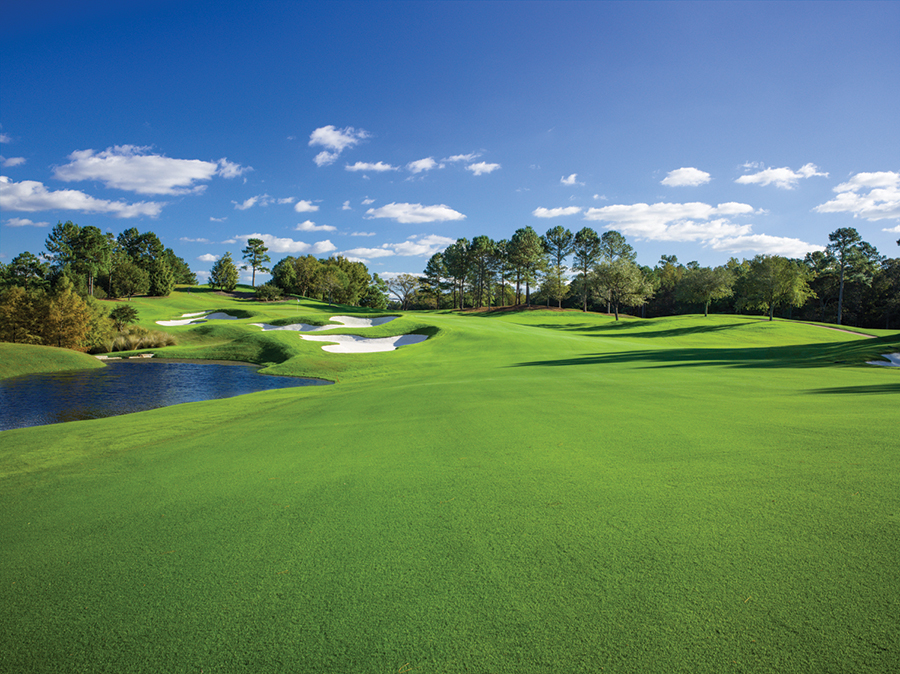
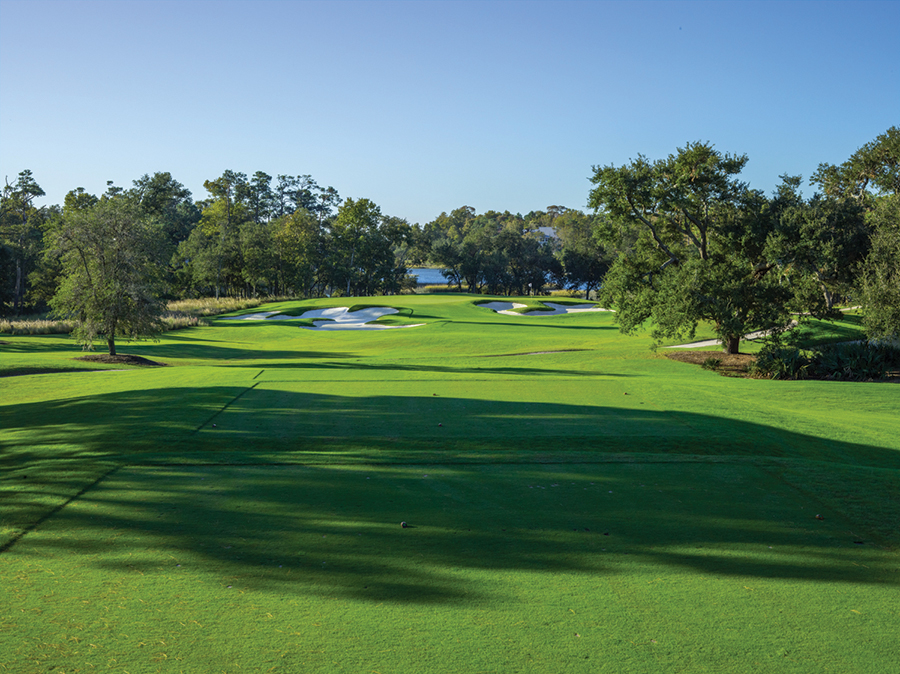
In time that vision would prove prophetic and crystal clear as the 230 acres became Eagle Point Golf Club, which has become one of North Carolina’s top golf environs and in May will be the site of the 2017 Wells Fargo Championship on the PGA Tour. The Wells (originally the Wachovia Championship when conceived in 2003) has been held annually at Quail Hollow Golf Club in Charlotte, but Quail’s 2017 position as host of the PGA Championship necessitated a one-year transplant.

Given that Quail Hollow President Johnny Harris is a member at Eagle Point and that Long, now the Eagle Point president, has been the guiding force in the resurrection of Greensboro’s spot on the PGA Tour the last decade in the form of the Wyndham Championship, there were plenty of synergies to do a one-off at Eagle Point.

“We thought it was a good opportunity to showcase the golf course, and we want to be a good citizen with Wilmington,” says Ellison, one of the four founding members of the club. “We thought this was a way to be a good citizen and help the economy. We like being a great private golf club, but also like being a good citizen. The two don’t have to be exclusive. We like the idea the restaurants and hotels and Wilmington will be seen in a way they haven’t since the Azalea Open left all those years ago.”

“Wilmington has some nice tradition with the Azalea at Cape Fear Country Club, and we thought it would be fun to kind of link back to that,” says club General Manager and Director of Golf Billy Anderson. “They looked at some other sites around the country for one year, but Johnny Harris and Bobby Long were afraid if it left the state, it would never come back.”

The Azalea Open was held at Cape Fear from 1949-72 as part of the annual Azalea Festival, and now the Wells Fargo at Eagle Point will be one peg in a considerable schedule of big-time golf in North Carolina this year. In addition to the Wells Fargo in Wilmington May 4-7, the PGA in Charlotte August 10-13 and the Wyndham in Greensboro August 17-20, Pinehurst gets in on the action with the U.S. Amateur Four-Ball on the No. 2 course May 27-31.

“Who would have thought a major would be coming to North Carolina and be somewhere other than Pinehurst?” Fazio muses, referencing the Quail Hollow layout on which he’s done considerable redesign work over two decades. “It’s more proof of the quality of golf in this state. You could take the 18 courses we’ve done in North Carolina, and that’s a pretty good career.”

Fazio was approached in the mid-1900s by Armfield, a Greensboro businessman who owned a beach house on Figure Eight Island and thought the Wilmington area was ripe for a unique public-private golf facility — a private course here, a public layout next door, common maintenance staff, equipment and infrastructure, and perhaps homes mixed in as well. They looked at a variety of sites and never found anything that worked. Eventually Fazio told Armfield he knew of a site near Porter’s Neck, which he designed in the early 1990s, that might be for sale. But it was big enough for one golf course only — no real estate.

“On that piece of property, you could only have golf,” Fazio says. “What they wanted was a purist golf environment, no compromises.”

The course opened in May 2000 and has grown to having nearly 500 members. It was run for its first decade by Armfield in the “benevolent dictator” manner of clubs like Pine Valley and Seminole, where he was also a member. When Armfield moved from Greensboro to Richmond, he passed the baton to Long. Sadly, Armfield won’t be able to see the PGA Tour come to Wilmington, as he died in July 2016 after a short bout with cancer.

But his vision is still intact — a golf-centric club, a full caddie staff, walkable layout and a few bedrooms for members from out-of-town. Some 11,000 to 13,000 rounds are played a year, and only on a few summer holidays does the course get jammed. Fazio built a nine-hole practice course as well, and that venue is the site of a regular Sunday night mixed scramble — you play with someone other than your own wife or girlfriend, and then repair to the clubhouse for dinner afterward.

“We wanted to play fast and play with caddies,” Long says. “Looking back, we might have had more money than sense. We did not have a clue what we were doing, and all of a sudden you’re into it pretty heavily and can’t let it fail.”

Fazio built a half-dozen lakes and a couple of streams that run through the course, and the property is dotted with a few massive, draping oak trees so prevalent on the coast. He then planted hundreds of pine trees that started at 6 to 10 feet and are now 35 feet. Fazio and his team moved 2 million cubic yards of dirt, and the highest point in New Hanover County at 52 feet elevation is the 18th tee.

“We took the highs and made them higher and the lows made them lower; that’s why it feels like it’s fairly rolling,” Fazio says. “Construction capabilities what they are today, you cannot tell where we moved earth and did not move it.”

Like most Fazio courses, Eagle Point is gorgeous to the eye and not too difficult from the forward tees. The farther back you go, the more inaccessible pins become and the tougher the angles. The three par-4s in the finishing stretch measure at least 430 yards — and two play uphill into the greens — the par-3 15th is 222 yards, and the home hole is a par 5 at nearly 600 yards with a lake to the right.

“The first three holes are a nice way to start a round of golf. Then as you get further into it, the volume keeps going up,” says John Townsend, who joined in 2000. “No. 4 is a difficult par-5, and six a difficult par-5, seven a gorgeous hole but a little bit of a breather. You step on the eighth tee, you’d better strap on your seat belt. If you don’t get it the first seven holes, it’s tough to shoot a good score. The closing stretch from 14 home is about the best five finishing holes in golf.”

Adds Long, “Three times I’ve been 2-under going to 14 and not broken 80.”

Long, Anderson and the Wells Fargo staff have worked with Marsh Benson, the recently retired senior director of golf course and grounds at Augusta National, on a number of aesthetic tweaks to the course over the last year. Benson made one key suggestion of moving the originally planned entrance to the tournament from the north side of the property to the eastern edge, where spectators will access the course through the par 3-course.

“The sight views are stunning. Marsh is truly an artist,” Long says. “He’s enhanced what we had here. I think the golfers and the spectators who’ve heard of Eagle Point and never actually been will be glad they came.”

And that is a vision that only Tom Fazio could see on a blustery winter day two decades ago.  PS

Chapel Hill-based golf writer Lee Pace, who appears monthly in PineStraw, wrote about the Azalea Open for Salt in the spring of 2014.

Life on the Edge of a Small Southern Town

Crook’s Corner Bar & Café honors a terrific debut novel

By D.G. Martin

More than a thousand books connected to North Carolina are published each year. There is no way to read them all or even find and give recognition to the best and most important of them.

But we can try. One of the best things we can do is to establish awards and prizes to give shout-outs to the best books in particular areas of fiction, poetry, history, biography and so on.

One of the newest, and one of the best, of these recognition programs is the Crook’s Corner Book Prize. Each year it honors the best debut novel set in the American South. The prize, inspired by the prestigious book awards long given by certain cafés in Paris, is a collaboration between Chapel Hill’s iconic restaurant Crook’s Corner Bar & Café and a sponsoring foundation.

Each year’s winner gets $5,000 from the foundation and a free glass of wine at Crook’s Corner every night for a year.

This year’s winner, Matthew Griffin, grew up in Greensboro and graduated from Wake Forest. He teaches writing, most recently at the University of Louisiana at Lafayette.

Griffin’s novel, Hide, is the story of two older men who have lived together for many years at the edge of a small North Carolina town. Frank is a World War II veteran, tough-talking and covered with tattoos. Wendell is a taxidermist who serves the hunting community. These two hardly fit the caricature images of being gay. But they are gay, and they have paid a heavy price for it. For years there was isolation from family, and unrelenting and constant fear that, somehow, someone would blow the whistle to law enforcement about their illegal relationship and activities.

The greatest power of the novel is not, however, in any testimonial argument or inside look at the gay lifestyle. Quite the contrary, the story’s power comes from the tortured and tender way in which Wendell and Frank adapt to Frank’s rapidly deteriorating physical and mental condition.

When Frank suffers a stroke while tending the tomato plants in his beloved garden, the ambulance rushes him to the hospital, and Wendell follows. But because only family members are allowed to accompany Frank, Wendell tells the attendant that he is Frank’s brother. When he is asked to show identification, he fumbles and then tells the attendant he left his wallet at home. He is worried that if she saw his last name was different from Wendell’s, his lie about being a brother would cause more trouble.

As Frank’s condition declines, there is a growing emptiness in the lives of both men. No children or nieces and nephews or other family members show up to care for them or to claim little items that the men have treasured.

Frank’s loneliness is tempered by a little dog named Daisy that Wendell found at the pound and gave to Frank.

Frank is shattered when the dog is torn to pieces in an accident in his garden. Wendell, crushed by Frank’s loss, begins a project to use his taxidermy skills to re-create Daisy from the parts remaining from the accident.

One of the novel’s most poignant moments comes when Frank discovers the incomplete project and, though failing steadily, he falls in love again with the half-stuffed dog.

As the novel closes, this reader was moved not so much by the problems Frank and Wendell had as gay people, but the challenge of finding meaning at the end of life.

Wendell, who always fixed the meals, has trouble adjusting to cooking for just himself when the bedridden Frank eats only nutrient shakes.  He has too much time to fill and finds “the biggest danger of all is an empty space in the day. It’s easy, then, for the whole thing to break through and rush in and join the emptiness inside.”

“You just go on living,” Wendell says. “You don’t have to have a reason.”

The novel’s poignant story should not lead readers to overlook Griffin’s lovely writing. His description of a Southern funeral gathering, the process of breaking down an animal’s body and rebuilding it as a trophy, the joy and disappointments of gardening, sex, love and much more turns Frank and Wendell’s lives into poetry.

The major problem with Griffin’s first novel is that it will be difficult for him to write a better one.  PS

D.G. Martin’s UNC-TV North Carolina Bookwatch interview with Matthew Griffin will air Sunday at noon on April 30 and Thursday at 5 p.m. on May 4. Bookwatch also airs on the North Carolina channel Fridays at 8 p.m. and Sundays at 10 a.m. Martin’s wife, Harriet Martin, serves on the board of the Crook’s Corner Book Prize Foundation.

Pieces that Speak

There are real stories in stuff

By Joyce Reehling

I walk around our house and hear stories quietly recounting themselves. Everything we own can tell a tale, and we should remember and share it around the dinner table. The real story.

Sometimes we dress up the story about how our “beloved” aunt left us this bowl when, in fact, she was a grouchy old thing that no one liked being around and the best part was the bowl. Tell that story.

Or the rickety, reassembled chair that once collapsed into laughter and pieces under the weight of a friend nicknamed Porky. Tell that story.

Or my little pine, drop leaf table. It sits in our den where it looks as if it doesn’t belong because it is so plain, casual and seldom used. It was the first piece of real furniture that I bought in New York for my very small apartment. I also bought two chairs which are long gone (not, however, casualties of Porky), but I can’t part with this table. I remember seeing it in a small shop on the Upper West Side one Saturday morning. I wasn’t in a show at the time so I had a Saturday to myself. I bought this table and managed to wrestle it home on my own once they had taped it up so it wouldn’t flop open every other step. Most of my life in New York I lived on the fourth floor of a walk-up but luckily, then, I Iived in an elevator building. Instant dining area! A real table and chairs.

I imagined dinners with a friend or, perhaps, a man who would be madly in love with me eating my snappy dinners. But that almost never happened because I worked in the theater and no one else wants to eat at 4:30 in the afternoon to be settled by show time. But I love that table. I look at it and feel younger. I am still, under the drop leafs, that 20-something girl walking excitedly down the street building a real life with a table.

I hang on with great joy to a funny little pitcher and sugar bowl that my maternal grandfather bought when he was quite young and forced to go to work to support his mom and sisters after his father died. He bought this silver-plated set to give to his mother — a true young Southern gentleman living in Richmond, making a gesture meant to uplift a sad and grieving soul. Their de minimis value means nothing. It is the thought of this boy, my grandfather, doing without to give this gift. His love resides with me each and every day. When I polish these pieces my heart glows from his generosity. O’Henry could not have done better.

We buy houses around a dining table. Ours is from Darling Husband’s side of the family. His maternal grandfather, Ferruccio Vitale, an Italian immigrant and a renowned landscape architect until the crash of ‘29, brought with him some amazing furniture. The table is the one D.H. ate family dinners around as a boy. And his mother sat at it when she was a child, too.

It is almost one plank of wood, some trim and some inlay; the legs are two large pedestals with deep acanthus leaf carvings. It takes a basketball team to move it. We believe it to be Florentine, unquestionably unique. Its eight regal chairs match it the way the planets match the sun. Dinners, debates, tears and laughs have spilled over this wood. Great food, great wine and culinary failures have flowed across it. It tells all those stories. Ferruccio must know how we love it so. It defines our house.

I have, among our many paintings, one by our friend Chipp Well, of the moon setting over a pond. It not only keeps Chipp alive in our hearts but on any day when the world is too hard to bear, the news too sad to take, that moon shining on the pond can bring my blood pressure right down. Even a melancholy moon promises another day.

The cups from the Orient Express are crying out for some tea so that I might see the Alps and feel the crisp air. Ask and I will tell the story.  PS

Joyce Reehling is a frequent contributor and good friend of PineStraw.

A Flash of Green

The stealthy green heron returns to N.C.’s waterways

By Susan Campbell

The green heron is probably one of the coolest little birds around — but one that I’d bet most folks have never seen. They return from tropical wintering grounds to breed across the state in early spring, migrating under the cover of darkness back to where they first hatched, beginning the cycle anew. Right now flocks are moving northward in order to pair up for the breeding season.  Although they are widely distributed, the green heron’s cryptic coloration and skulking behavior make them tricky to spot.

Standing a mere 18 inches tall and only about the size of a crow, this species is by far the smallest of about a dozen types of waders found in North Carolina. As with all herons, these birds have relatively long legs and a skinny neck, as well as a long, dagger-like bill. Given that green herons typically stand with their necks tucked in, individually they may seem smaller than they are. Their backs are a velvety green (hence the name), their bodies a handsome chestnut and their legs a pale yellow. The feathers on the head, in addition to the wings, are dark gray and often stand erect, giving the appearance of a shaggy crest. As with other herons and egrets, males are identical to females.

During the spring, males seek out thick shrubbery along the edge of a wet spot and begin building a platform of thin sticks as a nest. After attracting a mate, the male looses interest in nest-building, and it is the female that completes the shallow nest. Although the location may very well be along a creek or pond, it may also be man-made, for instance around a smaller depression adjacent to a water hazard on a golf course. Probably more important is whether or not there’s sufficient access to food and woody vegetation to support three to five chicks. Although other wading bird species generally nest in colonies, green heron pairs usually keep to themselves. But they, especially the males, are fiercely territorial when it comes to defending their feeding area. They will vocalize loudly and chase any bird that is perceived as a threat.

Green herons spend most of their time crouched completely still, alongside a wet spot, waiting for prey to appear. They will grab any moving creature that is small enough to swallow. Fish, frogs, crayfish, larger insects and even the odd hummingbird make up their diet. Occasionally, they may spear their food, but most often they grab what they catch with their powerful mandibles. And while green herons are very successful ambush-style predators, they sometimes show a cunning side, using objects such as sticks and insects very deliberately to lure fish to the surface. Surprisingly, they may also occasionally dive after prey. With partial webbing between their toes, they can swim short distances, if need be.

A few green herons lurk in the very southeastern part of our state each winter but most head to Mexico or Central America where food is more plentiful during the colder months. Our birds pass through Florida and head for the Caribbean on their way to marshlands in Central America.  There will be plenty of time in the coming months to spot one of these fascinating water birds. So the next time you’re passing a nearby farm pond or overgrown stream bank, carefully scan the banks and low branches — you may just catch sight of this neat little heron!  PS

Susan would love to receive your wildlife sightings and photos at susan@ncaves.com.

True Blue

Basketball forms an unbreakable bond

By Deborah Salomon

By the time you read this, The Big Dance should be over and the Final Four whittled down to the NCAA Men’s Basketball champion — which leaves a giant crater in my life, not to be filled until November when, once again, I hear the pitter-patter of huge feet on polished wood.

Doubtful that Duke will cut down the nets, but you never know. My Blue Devils forever remain the Fab Five to acolytes who view basketball as performance art, a ballet performed by glistening bodies wearing bright colors and fanciful hairstyles. They move like gazelles and, like gazelles, oftimes fall to predators.

Basketball is Greek tragedy, Shakespearean drama, Seinfeld humor, whereas football is, blunt force trauma exerted beneath a pyramid of bodies.

My passion reawakened upon returning to North Carolina in 2007. I heard people slander my alma mater, branding its students arrogant Yankees, spoiled brainiacs, nasty losers and worse.

Back through the time machine I spun, landing on East Campus, in 1956, already smitten. My high school team had won the N.C. State Championship in 1955, a heady experience. Duke, always a b-ball powerhouse, distributed books of free tickets to frosh and encouraged them to attend games. Dorm curfew was extended so we could cheer to the end.

Neither term paper nor exam kept me away.

Interest waned after graduation, as I raised a family in the Far North, although The Big Dance remained a rite of spring. I followed more closely when my daughter matriculated (along with Coach K) in 1980, graduated in 1984 but remained in Durham. She adored Duke basketball, too — even hitched a ride to the 1989 Battle in Seattle.

The sights and sounds came rushing back as I was now forced to play defense: Under the face paint and wigs the Cameron Crazies aren’t really crazy. Players are neither arrogant nor unsportsmanlike. Coach K doesn’t make rat faces. Academics mean as much as alley-oops. While speaking out, I discovered the root of my affinity. Basketball represented a happy interlude within a framework of rules which students respected and obeyed. The specter of finding a job and paying down student loans did not cloud the experience. Business, chemistry, pre-med and education majors connected over basketball.

We cheered our teams and received our diplomas at Cameron Indoor.

But oh, how basketball has changed. Integration provided a new dimension. Improved training methods and machines increased strength and endurance. Tall guys married tall women and produced 7-footers. Recruiters scanned Europe, the Middle East and Africa for raw talent. Games are broadcast in high definition, revealing each bead of sweat, every mouthed expletive on enormous court-shaped screens. What remains constant is the loyalty to an institution, at a formative age, that a sport engenders.

So what if Duke loyalists are obnoxious. We earned it. Show me another school with equal decibels at every game, not just the biggies.

And now, April, when the dance music crescendos — then fades. For me the experience is bittersweet. Duke won its first national championship on April 1, 1991. My daughter, Wendy, was ecstatic. She died 25 days later. I can no longer watch The Big Dance without tears.

Other hallmarks of the college experience have changed as well: laptops for note-taking, dining halls morphed into an international food courts, rules relaxed or repealed, co-ed dorms. What happened to yearbooks, class blazers? Newer buildings, although architecturally magnificent, remind me of kudzu, obliterating the familiar. An addition to the Duke Gardens bears the name of a shy boy who sat next to me in English class. On a recent visit I noticed how different Cameron looks. A new entry and lobby, enlarged offices and training facilities, a courtyard designated Krzyzewskiville, where students camp out for tickets. I felt a bit overwhelmed, lost, until I saw the ladies’ room door. Inside, pure 1956: a high gothic window, massive porcelain sinks and hardwood stalls with heavy metal latches that work on the guillotine principle.

Home, at last. I felt so much better until a glimpse in the mirror confirmed that what had changed the most wasn’t Duke . . . but me. Older, sadder, experienced, resigned but after all these years, still feisty, still connected.  PS

Deborah Salomon is a staff writer for PineStraw and The Pilot. She may be reached at debsalomon@nc.rr.com.