Roll, Honey, Roll…

If you’ve been there, you feel my pain

By Clyde Edgerton

If you’ve been “down in the back,” raise your hand.

If you didn’t raise your hand, you might find the following about as interesting as a pharmaceutical commercial.

But if you’ve been there, then as you read on you may nod your head in agreement here and there.

During our early January Arctic cold spell, I ventured under our house to turn off water to some outside pipes. At about six steps in through the low door that leads under the house — bending way over — I looked up and, whoops, felt a sharp pain in the middle of my lower back. A quiet voice said: “That was not good.” I finished with the pipes, got out from under the house and thought, Maybe it’s not too bad. I hauled in a load of wood for the fireplace, built a fire, messed around in the backyard, thinking: Something is wrong with my lower back. But it’ll be better in the morning.

Next morning, when I started to get out of bed, a sledgehammer hammered a spike into my lower back. A pain so severe that had it continued over a few seconds I’d been yelling constantly to the high heavens. “Stabbing pain” sort of gets at it, but I feel like I need a new word — not spasm, but: Stabazm!

I yelled, and fell back into bed. The universe had attacked. Oh my goodness.

Kristina, my wife, who’s had back problems off and on for a decade, said, “If you want to get up, you need to roll. Roll out of bed. Don’t just pull up. You’ve got to roll. And breathe.” After a long struggle and several more stabazms, each bringing a yell and sweat, I got up and slowly made my way — holding onto furniture — to the bathroom and then to the living room couch. Kristina helped me get propped up on my back with pillows under my knees, ice on my back and a laptop in lap for work. While helping me onto the couch, she said, “Roll. You’ve got to roll.” When I was later trying to get back up she again said, “Roll, honey, roll,” and the word roll got funny for some reason . . . to both of us. I started to laugh — but the laughing brought on — yikes! Stabazm!

“Please don’t make me laugh,” I whispered through clenched teeth.

Next I found that I could not cough without initiating a stabazm.

I remained inside the house, hobbling back and forth from bed to couch for one week. I would figure out yet another way to not move, and then: BAM, another you-know-what. After a week, I visited my doctor. She gave me a muscle-relaxer drug, an inflammation drug and said if it wasn’t better in another week to get an X-ray. It got a little better, but not much. I decided to wait two weeks to see if I really needed that X-ray. Inside the house I was using a cane that I was too proud to use outside the house. I finally started driving. A car entrance looked a little like . . . I don’t know — a turtle climbing onto a motorcycle?

At the beginning of the third week — two days ago as of this writing — I got that X-ray and then went to UNCW for a faculty meeting. I was somewhat better, no stabazms in three days. I was happy to be up and about — careful about every move. But I was five minutes late to the meeting, hobbling along carefully.

I met a student who said, “Hi.”

“Hi,” I said. I wondered if I was supposed to know him. He was smiling.

“Hi,” he said again.

I was a bit confused. I had pencil and pad in hand, ready to go into
the meeting.

Then he pointed . . . and said what he’d been saying all along: “Fly!”

“Oh. Thanks,” I said, grabbed at my pants, dropped the pencil, zipped up and then bent down to pick up the pencil.

Stabazm! I was unable to muffle a yell.

If you’ve been there, you know how it feels.

If you haven’t been there, then when it happens, and you have to get out of bed: Roll.

Clyde Edgerton is the author of 10 novels, a memoir and most recently, Papadaddy’s Book for New Fathers. He is the Thomas S. Kenan III Distinguished Professor of Creative Writing at UNCW.

Dateline: Carmichael

When good things came in smaller packages

By Bill Fields

I’m not sure how my reading ability stacked up to that of my elementary school classmates, but I’m certain having the sports pages of the Greensboro Daily News at the breakfast table didn’t hurt. There were some big words in there.

The newspaper was very specific about where it was covering an out-of-town contest. After North Carolina moved into its new basketball facility in 1965, the dateline for Tar Heel home games spilled over into a second line of narrow-column type.

CARMICHAEL AUDITORIUM, Chapel Hill—

Occasionally, if the slot man was swamped and the typesetter was sloppy, it looked like this next to my bowl of grits:

CARMICHAEL AUDITORI-
UM, Chapel Hill—

Regardless of how it appeared in the paper, the building’s name stood out because it was where my team played. It was not CAMERON INDOOR STADIUM, Durham; or REYNOLDS COLISEUM, Raleigh; or other Atlantic Coast Conference basketball venues.

We had no family ties to Carolina, notwithstanding a summer school Spanish class my UNC Greensboro sister took there. My other sister went to Wake Forest, and while I proudly wore the black-and-gold sweatshirt she gave me, I was a Carolina kid. It was one of those decisions those of us in ACC country made early, before you were even able to write the name of your favorite basketball player in cursive.

I was in first grade when the Tar Heels played their first game in Carmichael, defeating William & Mary 87-68 on Dec. 4, 1965. Although I didn’t see the place in person until I got to campus as a freshman a dozen years later, I felt I knew it.

Aside from newspaper stories and box scores, there were the radio broadcasts. In the late-1960s — when Carolina won the ACC Tournament and advanced to the Final Four three straight years — play-by-play was handled by Bill Currie, a crazy-uncle type known as the “Mouth of the South” and starting with the 1971-72 season by Woody Durham, who was “The Voice of the Tar Heels” for four decades.

Televised games were rare when I first became a fan. We had to be content when a Carolina contest was on the Wednesday or Saturday C.D. Chesley network. And “The Dean Smith Show” was weekly Sunday morning viewing, with Smith always much more effusive about assists or hustle than how many points someone had scored.

One of my first memories of basketball on television is the NCAA title game on March 23, 1968, when the Tar Heels played UCLA. It was a 7 p.m. tipoff in Los Angeles, which made it a very late night for an 8-year-old in Southern Pines. I stayed awake until early in the second half, when the Bruins were well on their way to a 78-55 victory.

Nine years later Carolina played for another championship but had its heart broken by Marquette. I attended my first game in Carmichael in the second semester of my freshman year, a two-point victory over Wake Forest on Jan. 15, 1978. Working my way up the pecking order of The Daily Tar Heel sports department, I traded a seat in the student section for one on the press row-catwalk above it. When things went well for the team wearing light blue and white, it was deafening either place. After home games, reporters huddled around Smith in a corridor outside the locker room as he smoked a cigarette and looked forward to a Scotch.

My first time on a commercial flight, on Dec. 3, 1979, I sat beside then-assistant coach Roy Williams going from RDU to Tampa-St. Petersburg to cover Carolina vs. South Florida. Prior to the start of the 1980-81 season, I had a 90-minute interview with Smith in his office. I was DTH sports editor at that point, but, needing to mind my grades as a senior, left the job well before Carolina lost to Indiana in the 1981 NCAA championship game.  The following spring, I was back on Franklin Street as a fan — and graduate — enjoying the Tar Heels’ win over Georgetown.

Carolina men’s basketball relocated to the Smith Center in 1986. It has twice the seats of Carmichael, but if one grew up with the latter, not twice the charm. Carmichael Auditorium is no more, having been renamed Carmichael Arena in 2010 following an extensive modernization. They sold small commemorative pieces of the hallowed hardwood from the old building in 1998. I didn’t buy one then, but it might be time to check on eBay.

Southern Pines native Bill Fields, who writes about golf and other things, moved north in 1986 but hasn’t lost his accent.

A Generous Voice

The distinguished reign of a poet laureate

By Stephen E. Smith

I have seen the ones I love leave this world as shadows without wings.

The purple martins that come up every year from Somewhere

Leave as easily as they jetted into their gourds in March.

And I have held my father’s hand as he was dying

And my mother’s, lying in her lap like dried peas . . .

From Paul’s Hill

Shelby Stephenson

North Carolina Poet Laureate

With the death of Poet Laureate Sam Ragan in 1996, the office of state laureate ceased being a lifetime appointment, and sitting governors began selecting poets laureate (with recommendations from the state’s writing communities) who would promote an appreciation for an often misapprehended genre. Recent laureates have been chosen for the excellence of their work, their influence on other writers, and “an appreciation for literature in its diversity throughout the state.” The revised guidelines grant tenures ranging from a standard two-year term to five years, depending upon the governor’s readiness to select a new laureate and the willingness of the poet to serve. With the exception of a disquieting hiccup during the McCrory administration, governors have chosen poets laureate who exhibit exceptional talent and generosity — and the process has been, thank God, more or less devoid of politics.

But the job of poet laureate, the physical act of getting behind the wheel of a car and driving to every corner of the state to give readings and workshops, has turned out to be anything but cushy. In fact, it’s full-time work, offering little in the way of compensation and requiring immense dedication. Beginning with Greensboro’s Fred Chappell, who was the first of the new poets laureate and whose Midquest is the finest book (poem) written by a poet of his generation, and continuing with Kathryn Stripling Byer, Cathy Smith Bowers, Joseph Bathanti and Shelby Stephenson, our poets laureate have been barnstorming nonstop for more than 20 years.

From December 2014 to January 2018, Stephenson has given 315 readings, lectures and workshops, traveling from Hatteras to the Tennessee border, twice, and driving more than 25,000 miles within the state. Stephenson, who officially leaves office when a new laureate is appointed later this month, has gently touched the lives of thousands of North Carolinians, and he leaves us with an ambitious 52-part poem, Paul’s Hill: Homage to Whitman (Sir Walter Press), which is the logical and artistic culmination of his past work framed within the hard edges of the perplexing new world in which we find ourselves.

Raised in a large family that farmed in Johnston County, Stephenson is deeply rooted in a rural environment and possessed of a strong sense of longing for a particular time and place that’s never failed to offer the purest vision. His primary subjects, the foundation upon which he’s shaped most of his poems, are family, the natural world, the cycle of life, even the plank house where he was born, and despite a reliance on memory and the intensely personal nature of his poetry, there’s a restrained use of nostalgia in his work. When reading his leapfrogging lyrical lines, the reader is left with an overwhelming appreciation for the life the poet has lived and his eagerness to share his most personal moments.

The light plays shadows where once cordwood readied the woodbox.

My mother’s lost in the steam of her kettle.

I rub my face, as if parting curtains,

Wonder if I see myself in the rose-blue feathers smeared on the picture-window.

Bliss fades into pattern I’ll ride later, dross and all.

White moon, hold me in your arms.

Bathe my thoughts so wild onions may climb the cold

Sister Night to say to morning, “Hello, again.”

A mix of spoken language and the rhymes and rhythms, the literary tongue is interspersed with hymns, dogs, goldfinches, tulip poplars, cornstalks, collards and  country music resonating in song titles and country lyrics, even in the irony of a long-forgotten radio advertisement sung by Arthur Smith and the Crackerjacks:

If your snuff’s too strong it’s wrong

Get Tuberose get Tuberose

To make your life one happy song

Get Tuberose get Tuberose.

Stephenson’s early poems took their inspiration from the land, but in the last 25 years he’s dealt critically with the guilt posed by slavery, the destruction of the natural environment, the dangers of romanticism, the relationship of the past to the present, and the twitches and ticks of contemporary life all infused into Paul’s Hill, anchored steadfastly in the present by the inclusion of the mundane elements of daily life and a use of language that dissolves the distinction between precincts of poetry and prose. His is the voice of a man viewing the present with skepticism, occasional distaste and a trace of anxiety.

The flag of the Oklahoma-bombing holds one tiny baby, fire-scarred

And that September, towering out of words, humble beyond relief,

Some hint of lushness — and you among the moon’s heaving night —

listening to whispers . . .

Judged by productivity, Shelby Stephenson has, for 50 years, created poetry of high quality. Beginning with Middle Creek Poems and moving forward through his 10 books to Paul’s Hill, he’s demonstrated continued growth and has perfected a distinctly individual voice cultivated with a single-minded devotion to his vision of a North Carolina in transition. As he’s matured as a writer, he’s stepped out of the tobacco rows, assuming the role of critic, teacher, reviewer, social commentator — and, most importantly, a distinguished and generous poet laureate.

Stephen E. Smith is a retired professor and the author of seven books of poetry and prose. He’s the recipient of the Poetry Northwest Young Poet’s Prize, the Zoe Kincaid Brockman Prize for poetry and four North Carolina Press awards.

Rush, Rush, Rush

You said you need a what?

By Renee Phile

A few months ago, around 6:50 a.m., the boys and I were on our way to school when David, my 14-year-old, from the backseat says, “I guess I’m not going to my band concert tonight. It’s really not a big deal.”

I nearly swerved off the road. There are only two concerts a year, and they are both quite the events. “What? Of course you’re going. Why would you say you aren’t?”

“My white shirt and the black pants are too small.”

I nearly swerved off the road again. “Really? When were you going to tell me?”

“I forgot.”

“So you decide to tell me on the way to school on the day of the band concert when you know I have to work all day.”

“Sorry. I don’t need to go. It’s not a big deal. My band teacher will understand.”

“Oh, so she has been preparing you for months for this concert and you think she will totally understand if you don’t go because you failed to tell your mom in time that you need new clothes?”

“Maybe.”

I was afraid of anything that might spill out of my mouth and I guess they were, too, because  we drove to school in silence.

After work I rushed to Kohl’s to find the required white dress shirt and black pants and, of course, they weren’t on sale. What choice did I have? I was being held up at the point of a band concert. I bought the clothes and picked up David from wrestling practice 30 minutes before he had to be at the concert.

“You really didn’t need to worry about it Mom. My band teacher would understand. She’s pretty reasonable.”

Um, you’re welcome.

***

A few weeks later Kevin and I were sitting at David’s wrestling match. Now, these matches typically last around three hours or more, so a wrestling match night is a late night. Kevin, my 9-year-old, between bites of popcorn, said in the most nonchalant voice, “Mom, can we stop by Walmart on the way home?”

“Why?”

“I need something for a project.”

“What project?”

“Something about solar systems. It’s due tomorrow.”

“Kevin, please tell me this is a joke.”

“I forgot about it until just now.”

Frantic, I sent a text to his teacher, apologized for bothering her at home, and said Kevin told me he has a project due tomorrow and this is the first time I have heard anything about it. (No smiley face.)

She texted back promptly and said that, yes, there was a discovery project on the solar system due in the morning, and it was also the end of the grading period, so he couldn’t turn it in late.  (Smiley face and a thumbs up.)

That night was spent gluing and coloring Mercury, Venus and Mars. Around and around we go.

The rules are simple: Tell me your due dates; give me notes from school when you get them; let me know what you need for a project a week ahead of time. Nowhere in the rules do the words “last minute” appear. I know they’re genetically capable of advance planning because when a friend is having a birthday party in two weeks, Kevin hands me the invitation right away and reminds me about it five times a day. They can do it, I just know they can.

Renee Phile loves being a mom, even if it doesn’t show at certain moments.

PinePitch

Our Little Hummingbirds

One of the delights of spring is the return of our hummingbirds, and it’s not too early to start thinking about getting your garden ready for them. Come hear local ornithologist and wildlife ecologist Susan Campbell talk about “Plants that Nurture and Attract Hummingbirds.” Campbell is the North Carolina authority on hummingbirds, and you may have seen her at Weymouth Woods, where she conducts research and bands hummingbirds as they pass through.

Sponsored by the Sandhills Horticultural Society and Sandhills Council of Garden Clubs, the talk takes place Friday, March 16, at 1 p.m. at the Ball Center at Sandhills Community College. Campbell  will describe hummingbirds’ physical attributes and tell you the best ways to attract them. The event is free, but registration is required, so if you are interested, please email landscapegardening@sandhills.edu to reserve your spot. SCC is located at 3395 Airport Road, Pinehurst. For more information, call (910) 692-6185.

Dining with History at the Shaw House

Back by popular demand, the creamed chicken and waffles luncheon will be served at the Shaw House Tea Room on Monday, March 19. Two years ago, the Moore County Historical Association revived the luncheon, once offered daily at the circa 1821 Shaw House. Chefs Jim Jones, co-president of MCHA, and Roberta Williams will prepare the delicious food on-site. There will be pitchers of maple syrup to drizzle on the waffles for fans of the creamed chicken-waffle-syrup taste combination. The dessert will be the traditional prune cake.

There are two seatings: one at 11:30 a.m. and another at 1 p.m. Lunch will be served in both the Shaw House and the Garner House, an 18th-century cabin behind the Shaw House, both located at corner of Morganton Road and Broad Street in Southern Pines. Take-out service will be available. After lunch, diners are invited to visit the gift shop.

The price per guest is $20. Please call (910) 281-5417 to make a reservation (required). For more information, call (910) 692-2051.

From Rio to Pinehurst

The Tufts Archives and Given Memorial Library will hold its 2018 Spring Colloquium, “Where Is Golf Going?” featuring renowned golf course architect Gil Hanse, on Wednesday, March 21, in the Cardinal Ballroom at the Carolina Hotel. Hanse designed the Olympic Course in Rio de Janeiro — where golf returned as an Olympic sport for the first time in over a century — in addition to creating Pinehurst’s acclaimed short course, The Cradle, and designing the highly praised Castle Stuart Golf Links in Inverness, Scotland. He’s currently working on a redesign of the Pinehurst No. 4 course. Tickets are $100. Cocktails begin at 5:30 p.m. and dinner at 6:30 p.m. The Carolina Hotel is at 80 Carolina Vista Drive in Pinehurst. Tickets are available at the Tufts Archives, 150 Cherokee Road in Pinehurst or at www.giventufts.org. For additional information call (910) 295-3642.

Magic and Mayhem

Dr. Jonathan Drahos and the Uprising Theatre Company invite you to join them on Thursday, March 15, for “Magic and Mayhem,” a benefit sponsored by the village of Pinehurst at the Fair Barn in support of Shakespeare in the Pines Summer Festival’s June presentation of A Midsummer Night’s Dream.

The festive evening begins with a cocktail reception at 6:30 p.m., followed by a short performance of songs and scenes reflecting the “magic and mayhem” celebrated in A Midsummer Night’s Dream. The evening will also include food, a silent auction and music.

Tickets for individuals are $75, $140 for couples, and $650 for tables of 10. You can purchase tickets at the door and online. The Fair Barn is located at 200 Beulah Road South, in Pinehurst. For more information and tickets, visit www.uprisingtheatrecompany.com.

Soup and Bread

Come to “Empty Bowls 2018,” a fundraising event to benefit Sandhills/Moore Coalition for Human Care, a nonprofit corporation that provides food, clothing and emergency resources to our Moore County neighbors in need. The date is Sunday, March 4, from 12 to 2 p.m., at the Country Club of Whispering Pines, where you will enjoy live music and delicious soups and desserts prepared by area restaurants and chefs, including Filly & Colts, Chef Clay White, Wolcott’s and Scott’s Table.

A general admission ticket of $40 also entitles you to a keepsake pottery bowl. A limited number of $20 tickets, without keepsake bowls, are available. Tickets for children ages 10–15 are $8 while children 9 and under can partake for free. Sponsorship opportunities are available. The venue is located at 2 Clubhouse Blvd., Whispering Pines. For tickets and more information, call (910) 693-1600 (option 5) or visit www.sandhillscoalition.org.

BYOT (Bring Your Own Talent)

The Arts Council of Moore County routinely invites all Moore County artists — actors, dancers, graphic designers, musicians, photographers, singers, visual artists, writers and other creative types — to get together for Artists Meetups. On Thursday, March 22, from 6 to 8 p.m., the Trinity Community Outreach Center will host an open mic acoustic event for singers, poets. A house piano, drums and sound system will be provided. Unlimited signups. Photographers, painters and dancers are welcome to capture and interpret the music. Savory and sweet snacks and light beverages provided. This is a free ACMC event. All artists are welcome to come and share their creative passion. The TCOC is located at 972 W. Pennsylvania Ave., Southern Pines. For more information, call (910) 692-2787 or visit www.MooreArt.org/ArtistsMeetup.
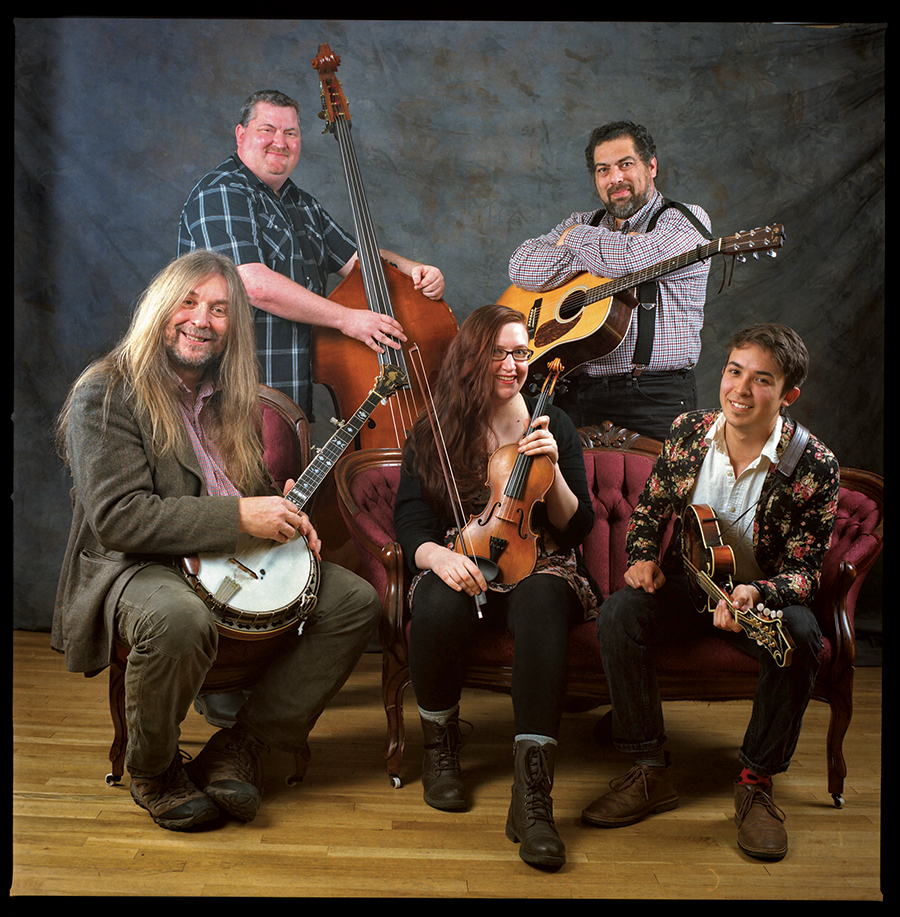
The Rooster’s Wife

Friday, March 2: The Kennedys. Now in their 22nd year as recording artists, the Kennedys are continually touring the United States and United Kingdom, playing acoustic folk rock at its finest. $10.

Sunday, March 4: Merlefest on the Road. Andy May, the Barefoot Movement and the Waydown Wanderers mix traditional Appalachian with whatever other styles they are in the mood to play. $20.

Sunday, March 11: Hiroya Tsukamoto and Kyshona Armstrong offer Japanese folk music and poetry through words and music. $15.

Thursday, March 15: Open mic.

Friday, March 16: Ms. Adventure’s Avril Smith, Vickie Vaughn and Kimber Ludiker play fiddle, bass, and guitar and have voices that soar through original and traditional tunes.

Sunday, March 18: Scroggins and Colorado perform a powerful, high mountain bluegrass explosion that features banjo and mandolin, incredible vocals and easy stage banter. $20.

Friday, March 23: The Steel City Rovers mix Celtic and North American traditions; and offer sophisticated musical arrangements and clever lyrical compositions. $10.

Sunday, March 25: Ameranouche — a rip-roaring ensemble playing hot acoustic, Gypsy-inspired music on traditional French jazz guitars. $15.

Doors open at 6 p.m. and music begins at 6:46 at the Poplar Knight Spot, 114 Knight St., Aberdeen. Prices given above are advance sale. For more information, call (910) 944-7502 or visit www.theroosterswife.org for tickets.

Sounds on the Grounds Fundraiser

On Sunday, March 25, from 4 to 8:30 p.m., come to the Weymouth Center for Arts & Humanities for a family-friendly fundraiser in support of the beautiful grounds, historic buildings and Weymouth’s wonderful community programs. Hear music by Momma Molasses, playing with James Villone and Evan Campfield on bass; 80’s Unplugged; Whiskey Pines; and Becca Rae. Enjoy food and beverage provided by Kona Ice, Wildfire Pizza, Swank Coffee, Southern Pines Brewery and Weymouth (wine), among others. Shop at pop-up stores. Tickets are $10 for members, $15 for non-members, $5 for teens (ages 12–15) when accompanied by an adult. No charge for children under 12. This event is hosted by Weymouth Young Affiliates. Weymouth Center is located at 555 E. Connecticut Ave., Southern Pines. For more information, call (910) 692-6261 or www.weymouthcenter.org.

Back the PAC

Join the Pinecrest Athletics Club at the Fair Barn on Saturday, March 10, in an evening filled with friends, food, dancing and fundraising in support of all student athletes at Pinecrest High School. From 6 to 11:30 p.m., enjoy beer, wine, hors d’oeuvres and music by DJ King Curtis. The evening will also include live and silent auctions. Tickets are $50 for individuals. Tables of eight may be reserved. You can purchase tickets at Cameron and Company, Village of Pinehurst; Knollwood Fairways and Driving Range, Southern Pines; Pinecrest High School; and First Bank, Pinecrest Branch; or by contacting Christa Gilder at (910) 528-1437 or christa.gilder@mzero.com.

Green with Envy

Doing St. Paddy’s Day the Southern way

By Tom Allen

You are what your ancestors ate. And drank. Sometimes.

Credit English forebears for my fish and chips hankering. Hot tea, too. But a recent Ancestry.com search shows a wee bit o’ green pulsing through my veins. Therefore the Irish branch on my family tree should support corned beef and cabbage. But no. A split decision. I love cabbage. Ditto potatoes and soda bread slathered with Kerrygold butter.  But, even on St. Patrick’s Day, I can’t stomach corned beef. Maybe that’s because nobody in Ireland eats the Americanized permutation, which replaced bacon — too expensive for poor Irish immigrants.

Funny thing is, I’m a deeply rooted Southerner who doesn’t appreciate a thick Better Boy tomato slice on white bread, made mushier with mayo. Duke’s, of course.  “Unheard of,” some folks say.  “Treason,” others sneer.  My reply?  “Sorry, it’s a texture thing.”

Leprechauns aside, March 17 marks the feast day of Ireland’s beloved patron saint.  In Ireland, until later in the 20th century, the day was more religious than raucous.  While family and faith are important to the celebration, pubs and parades now mark the occasion as well.  An estimated 33 million pints of Guinness are downed in that 24-hour period.

In America, St. Patrick’s Day is a one-day deal, but the Emerald Isle spends several days tipping its hat to the good fellow credited with Christianizing the island nation and driving out those legendary snakes.  According to a friend with Irish roots, lots of folks wear green, even live shamrocks, but pinching is purely American.  Pinch an Irishman who’s not wearing green and you’re liable to catch a left hook.

As for Irish food, colcannon, not corned beef, is a St. Patrick’s Day staple.  The mixture of creamy mashed potatoes and cabbage or kale is served with bacon, a combination that makes me smile.  But who whips up colcannon around here?

I’m a foodie traditionalist.  Therein lies the pickle.  Give me Hoppin’ John on New Year’s Day, burgers and dogs on July 4, turkey from Thanksgiving to Christmas.  But what’s a Southern boy, with a bit of Irish ancestry, supposed to eat on St. Paddy’s Day?  If not corned beef, perhaps a pork option honoring those frugal Irish immigrants who gave up their pricey bacon?  Try cured and fried.  Make mine country ham, sliced paper thin and seared in an iron skillet.  Perfect, I say, with a plate of steamed cabbage.  Pair with some buttermilk biscuits, spread with Kerrygold butter, of course, and dig into a fine pot of gold at the end of the rainbow.

Speaking of pickles, St. Patrick’s Day always falls during Lent, a season when some abstain from meat on Fridays.  Last year, the feast fell on a Friday.  Fortunately, some bishops in communities with large Irish-American populations relaxed the rule, granting one-day dispensations, so the faithful didn’t have to choose between sinning and nibbling on their beloved corned beef.

No such pickle this year, since St. Patrick’s Day falls on Saturday.  So simmer a pot of cabbage. Load up that slow cooker with a slab of corned beef brisket, or, if you’re like me, fry up some slices of North Carolina’s WayCo country ham.  Don a bit of green, offer a word of thanks for good souls like Patrick, then sit down to a salty feast that’s sure to keep those Irish eyes smiling.  Erin go bragh!

Tom Allen is minister of education at First Baptist Church, Southern Pines. 

Walter’s Saw

Cutting through time

By Jim Dodson

Save for a handsaw, an old pocket wallet and quiet memories, they are all that I have left of him.

The wallet is a fine piece of work, a gentleman’s pebble grain leather breast wallet, beautifully stitched and bearing my grandfather’s initials in gilt lettering: W.W.D.

William Walter Dodson was a skilled carpenter and electrician who helped raise this region’s first electrical transmission towers and worked on the crew that wired Greensboro’s Jefferson Standard Building. During the Second World War, he also made cabinets for PT boats and built bookshelves for local public libraries.

The wallet is in mint condition, lined with fine silk, its state of preservation suggesting it was scarcely used. I think my dad brought it to my grandfather upon returning from military service in England and Normandy, in 1945. My guess is, Walter rarely used it because he was a workingman who rarely, if ever, dressed up. As I remember him, he was a preternaturally quiet but gentle man in rumpled cotton pants who was either fishing or in his woodshop or massive vegetable garden — the three places I spent most of my time with him. There was always the stump of a King Edward cigar in his mouth.

Walter’s handsaw, on the other hand, shows years of steady use, well worn and rusted in places near its simple wooden handle. I suppose it must be 80 years old if a day.

Both wallet and saw came my way decades ago and traveled with me to Georgia and Maine and back to Carolina in order to complete the sacred circle old elephants and most Southerners observe before they translate to a gentler, kinder place.

I inherited the items from my father, who never used the wallet either — too nice, he claimed — but did use that old handsaw for years until power saws showed up in his own woodworking workshop. He made bookshelves and tables for friends and family.

Not surprisingly, I picked up the woodworking bug too, clearly something in the bloodline.  We hail, after all, from a long line of Carolina woodworkers, at least one of whom was a celebrated cabinetmaker.

Walter’s grandfather — my great-great-granddad — was one George Washington Tate, a prominent citizen of Alamance County who helped survey the boundaries of the state’s central counties following the Civil War, but was best known for his grist mill on the Haw River and his skill at crafting fine furniture.

Last summer, while attending a seminar at the Museum of Early Decorative Art (commonly known as MESDA) on the Scots-Irish furniture makers who filtered into the Carolina back country during the 18th century, I heard G.W. Tate’s name mentioned in a tone of near reverence by an expert on Piedmont furniture making, who noted that one of his most notable surviving pieces is a handmade wardrobe displayed in a Williamburg museum of early American furniture. Tate Street in Greensboro is named for this man.

She was delighted when I informed her afterwards that I knew of a second splendid handwork of Tate’s. My second cousin Roger Dodson and his wife, Polly, had recently had us to supper and showed us a handsome old walnut corner cupboard that bore his distinctive mark “G.W. Tate.”

It was his grandson Walter, however, for whom I’m partially named, who first placed a saw in my hand. One Christmas when I was about 6 or 7 years of age, visiting my grandparents in Florida, he gave me a miniature tool box with a small hammer, screw drivers and handsaw.

In his modest workshop, he also showed me how to saw a straight line and hammer a nail — small tasks that seemed almost magical at the time.

Somehow that kid’s toolbox disappeared over the years, probably because I used its tools constantly to build forts in the woods around our house. I recall using them to build my entry for the annual Cub Scout Pinewood Derby. My car got eliminated early, which was perfectly fine with me. I much preferred building forts and crude furniture.

It wasn’t until I was over 30 and living on the coast of Maine that two abiding passions hit me with a vengeance, both of which I trace to a quiet carpenter and gardener in rumpled pants.

The first struck when my wife and I built a post and beam house on a forested hill in Maine. I helped the housewrights place the structural beams, but did most of the interior finish work myself, learning as I went.

Not only did I lay and peg the 16-inch ancient pine flooring boards salvaged from a 19th-century barn in New Hampshire, I also designed and built the kitchen’s counter and cabinetry from scratch. Ditto the adjoining walls of pine bookshelves in the living room. My distinctly Southern mama, when she first walked into our home, smiled and remarked, “Honey, all this wood is very pretty. But when are you going to finish this house?”

The Canadian hemlock beams and pine floors and cabinets cast a golden glow over everything, especially as the sun shone through our tall south-facing windows. Over nearly two decades that followed, I loved the subtle creaks and moans the beams and floors made as the house settled and the wood aged, especially in the dead of winter when the sun struck the beams and the house emitted out a lovely scent of the forest. I thought of this as the house exhaling in a contented way that my late grandfather would likely have approved.

Walter probably would have liked the rustic farm table and occasional table I made for the living room, too. The table we gave away when my second wife and I moved home to North Carolina. The occasional table went to my first wife’s house, where it’s still in use and quite loved today.

Walter Dodson passed on when he was 64. I was 11, my first funeral, and it was really sad to see him go. He looked remarkably peaceful in his big wooden coffin, dressed in the only suit I ever saw him wear. My grandmother was a serious Southern Baptist, though Walter rarely darkened the doorway of any church. Time on the water or in his workshop or garden were his idea of worship, his way celebrating the gift of life.  Anyone who works intimately with wood or tends a garden through the seasons would completely understand.

As I write, this Walter is also 64 years old and preparing to build a set of ambitious bookshelves for the cozy room my wife and I have decided would make a splendid library in the old house we’ve been slowly redoing over the past 20 or so months.

I have my eye on a fancy new power saw that will do just about anything from the finest trim work to cutting a rough plank flooring. It costs more than my gifted, gentle grandfather probably made in a year.

Proof that you can take the boy out of the woodshop but not the other way around, however, resides in the fact that Walter’s handsaw will be hung somewhere in my new woodshop where those bookshelves will be born, a sweet reminder that the hand that shapes the cut was created long before the saw ever touched wood.

Contact Editor Jim Dodson at jim@thepilot.com.

Still Dormie

New life for the Coore-Crenshaw course

By Lee Pace

It was exactly 10 years ago this spring that Bob Hansen sat down to breakfast at the Pine Crest Inn to talk about his lifelong love affair with golf, his memorabilia collection, his involvement in a Brunswick County golf course called The Thistle, and a new club he was developing located 5 miles to the northwest of the village of Pinehurst.

The new enterprise was called Dormie Club. It was to be a private enclave with local and national membership components, a place for purists to congregate and walk a rough-hewn and old-style course designed by North Carolina native Bill Coore and his design partner, Ben Crenshaw. Hansen waxed eloquent about the old-soul template for the club and what he hoped would be a lack of pretense — just golfers sticking a peg in the ground and having a game.

“Golf is life-shaping,” Hansen said. “You get an opportunity to be completely away from the business world, from cellphones and traffic and all the noise out there. You get out on the golf course with people, and you find out real quick what’s on their minds. For the most part, you’ll see that fog from their everyday life evaporate and see that their commitment is to the game. Guys are wrought up with stress, but put your bag on your shoulder and go hit some shots and it changes your whole day.”

Hansen spoke of the genesis of the name “Dormie,” taken from the golf term meaning that a golfer in match play has a lead equal to the number of holes left to play. He cannot lose.

“’Dormie’ has been in the Scottish language for hundreds of years,” Hansen says. “In the context of this club, its primary meaning is that you have come to a point in life where nothing much bad can happen, where you can do me no harm. ‘I am dormie’ — the worst I can do is tie. I am at a point where I am comfortable and can relax.”

It turns out the “dormie” metaphor was far more ticklish than Hansen and his partners would ever dream. Over the following 12 months, the S&P 500 would be cut in half, and two venerable financial institutions would implode and go belly up. The timing for a new club was horrendous at best, dreadful at worst. The course opened in 2010, but the lofty visions of the Dormie brain trust never materialized. The golf operation never actually closed, but the original plans and infrastructure were stuck in the muck. In recent times, there was not even a head golf professional, just a clerk to take golf fees from the public and the package players that the club needed for its trickle of cash flow.

“Bob had excellent vision for the club,” says Mike Phillips, the club’s original membership and sales director who first worked at Dormie from 2009-13. “He was very smart in bringing Coore and Crenshaw in and basically giving them carte blanche to do what they wanted to do on the golf course. He showed them the boundaries of the property and said, ‘Use what you want and call me when you’re through.’

“The fact that the course never closed during some tough times says volumes about how good it is. The site is hard to match in terms of peace and tranquility.”

Coore and Crenshaw’s first smash hit in the golf design business was Sand Hills, a 1995 build-it-and-they-will-come club in central Nebraska. A member there is Tom Peed, who built a publishing empire centered in the heavy machinery and agricultural worlds of the Midwest and has three sons working for the business. One of them, Zach, is a crack golfer who played at Nebraska Wesleyan College and now is running a division of the company that has purchased four golf courses from Nebraska to Texas to Virginia and, now, to the Sandhills of North Carolina.

Dormie Club was bought in January by Dormie One Properties, which will operate it as one of a network of clubs that includes Briggs Ranch Golf Club in San Antonio, Texas, Ballyhack Golf Club in Roanoke, Virginia, and Arbor Links in Nebraska City, Nebraska. New management will honor tee times and outings already on the books, but in time the club will be strictly private — per the original vision. Local, national and corporate memberships will be available, and membership at one club includes access to each club in the Dormie One network, which the Peed family intends to expand. Plans for a clubhouse and 15 four-bedroom villas are in the works. Phillips, who has returned to the Dormie team as membership director and land sales broker, says the owners hope to break ground by summer, and plans call for no more than 60 to 70 golfers a day.

Coore visited the club in early January 2018 and planned a second trip soon after to complete a punch list of to-do items for the club maintenance staff, things mostly a result of tree and underbrush growth over the eight years since the course opened.

“Ben and I are very pleased with the new developments,” Coore says. “In talking to the Peed family and walking the golf course with them, they really do want it to reach its potential. It’s not been that far off. It’s a very positive thing — not just for Dormie, but for golf in the Pinehurst area. Basically the course just needs a little polishing, nothing major. It’s actually in very good condition.”

The club is located near the intersection of Hwy. 73 and Beulah Hill Church Road and has two lakes (one of them 55 acres large) and 100 feet of elevation change. There are the pine forests typical of the area, but a rich abundance of hardwoods as well.

The designers’ idea for the course when they began in 2006 was to incorporate the look and feel of the No. 2 course, which Coore played often as a junior in the 1950s and ’60s — hard running, plenty of width for strategy, interesting green complexes, no Bermuda rough anywhere. Tees, fairways and greens would be maintained, everything else left as nature had created it. Since there is no real estate within the course, it’s relatively compact and walkable (caddies are available).

“By no means did we envision a copy of No. 2,” Coore says. “But we wanted to take some of the principles we felt applied to No. 2 and other courses Mr. Ross had done in the Sandhills and say, ‘This is our interpretation of what golf in the Sandhills might look and feel like.’”

The finished design requires a deft touch in places — there are two par-4s drivable for long-hitters (the third and 14th, both under 300 yards), but often a player will deduce the smart attack is to lay back and have a full spinning wedge from a hundred yards. Delicacy is also required on the par-3 12th, which stretches only 98 yards with tees stair-stepping upward from back to front. Brute force is demanded on the closing holes — 17 is a par-5 with a vast expanse of sand and nature to carry, and 18 is a long par-4 uphill.

Coore remembers routing the course from walking the land and surveying the topo maps — before wetlands had been designated. He knew from experience and instinct which areas of the property would likely be deemed wetlands and thus untouchable for the playing areas. He was amused and pleased to learn that his routing and the government-issued wetlands map meshed nicely.

“If they had handed me a map at first with the wetlands delineated, I’d have handed them back and said, ‘You can’t do a golf course here,’” Coore says. “But it worked out fine. It just proved to me that if you lay the golf course out the way the land wants to go, in most cases the wetlands are going to be OK. The topos will tell you a lot of things, but they won’t tell you the feel of the place. You have to go walk a site and experience it, get a feel for the way the golf course will circulate. Because we laid the holes out the way you would naturally play from one high, across a low to the next high, the wetlands had little impact.”

And so Dormie Club enters its second iteration, hopefully one that will see it emerge as a winner in extra holes.

Chapel Hill-based writer Lee Pace wrote about Coore and Crenshaw and their restoration of Pinehurst No. 2 in his 2012 book, The Golden Age of Pinehurst.

Go Fish!

In the swim of things with brilliant, imaginative and elusive Pisces

By Astrid Stellanova

Cast a net into the sea of life, and marvel at the roundup of famous Pisceans. As if Albert Einstein weren’t enough, what about Kurt Cobain, George Washington and Dr. Seuss? Throw in Andrew Jackson and Jack Kerouac for a little special sauce, and see who would be best friends and roommates in the great hereafter. If anything is fishy about Pisces in the here and now, it is how they can hide their amazing selves in plain sight. Brilliant in ways you cannot stereotype, they will slip right out of your hands before you ever hook them, these delightfully slippery fish.  –Ad Astra, Astrid.

Pisces (February 19–March 20)

Time was when you were so forgiving (and distracted) that you would let anybody have their way if they were nice and remembered to say “thank you.” In the nicest way possible, you have learned to push back and find your footing concerning a subject that vexed you for most of 2017. Now you have to learn to say: Play me or trade me. Somebody who wants your talents may not realize how valuable they truly are. But, Sugar, you know.

Aries (March 21-April 19)

A natural wit allows you to come back swinging smartly no matter how deep the wound. But your inner wisdom may be telling you not to head into a knife fight with a stick of butter and a yeast roll. Little Ram, have you been duped? Let that sink in a minute, Sugar. Now, deep breaths. Head up, spine straight, and don’t
look back.

Taurus (April 20–May 20)

A tornado ripped through your life late last year, and you ain’t quite over it. What happened caused you to go right off the rails and then wallow in the ditch. That is not your style, Star Child. If anything motivates you to start over, it is knowing somebody one-upped you. Don’t tear their heart out and eat it with a nice Chianti. Find a way forward.

Gemini (May 21–June 20)

Could this month get any better? Possibly. You finally pulled your fingers out of your ears and started listening to your own heart and living your own life — not your sister’s, not your daughter’s, not your Mama’s. A special little secret is about to unfold.  You’ll be tap dancing all the way to the bank, metaphorically speaking. 

Cancer (June 21–July 22)

It is not that complicated. If you didn’t get what you wanted the last time around, suck it up and take a do-over. You can’t keep your children young and in your grasp forever. But you sure can make the home front happy. That, and take their car keys away. Don’t whine. Be the driver.

Leo (July 23–August 22)

Your two favorite words this month: refund due. Yes, Sweet Thing, the IRS is going to be your ally. Not for nothing did you lose so much money on Sea Monkeys and Sonic Egg Beaters. Turns out, some kinds of pain are deductible! Restrain your entrepreneurial impulse until you are back in the black. 

Virgo (August 23–September 22

You’ve never looked better, prompting a lot of folks to think you’ve found new love. Only you know the actual facts (as opposed to the alternative ones): You have found it a lot easier to be inside your own skin. Honey, that new ’tude ushers in one of the best springtimes in memory. Don’t blink and miss the fact that this ain’t a cosmetic fix, but an inside job — and an important development.

Libra (September 23–October 22) 

It is true that money can’t buy happiness, but it dang sure can buy puppies. At last, practical and generous you have funded your own happiness. This recent splurge may be one of the wisest moves you’ve made in ages. Next up: Discover the bliss of not giving a damn what anybody else thinks!

Scorpio (October 23–November 21)

The bottle before you purred, “Yes, amazing Scorpio, you ARE the wisest and best of all!” You drank that in, didn’t you, Sugar? Well, surprise, surprise.  You stayed at the party too long. A little sober reflection might bring you actual wisdom. It stings, realizing your need for affirmation took over.  But now you have opportunity to see clearly . . . truly.

Sagittarius (November 22–December 21)

Recently you have felt sick and tired of feeling sick and tired. That was the exact moment you began to change your life in a very productive way. No need to be all things to all those you love. If you spell resentment, it would look a whole lot like your name, Sugar. Ready to stop?  It’s that simple.

Capricorn (December 22–January 19)

In the anything-worth-doing-is-worth-overdoing category of life, you may have just taken first place honors and won a new badge. Try for second place, Honey. It is admirable that you care enough to over-deliver. But you cannot sustain this kind of effort. Just. Try. Less.

Aquarius (January 20–February 18)

It was the perfect birthday for you. Now, an important task. More than one person in your orbit relies upon your gentle counsel. It will surprise you to learn who, as you respect them greatly and view them as a spiritual guide. You are an old soul; you know validation comes from within.

For years, Astrid Stellanova owned and operated Curl Up and Dye Beauty Salon in the boondocks of North Carolina until arthritic fingers and her popular astrological readings provoked a new career path.

The Mighty Onion

A superfood for your garden

By Karen Frye

Superfoods became sought after several years ago, and are still going strong. They are highly nutrient dense in antioxidants, vitamins and minerals.  Usually they are plant based, and sometimes exotic.  Acai, goji berries and moringa are a few of the superfoods that are not typically grown in the U.S. and can be rather expensive to add to your diet. We are more familiar with easy-to-find blueberries and raspberries. 

A vegetable that tops the list of healing foods, and one you should include if you’re planting a garden this spring, is the onion. It has been used throughout the ages to treat and heal health maladies from head to toe. They grow easily here, and can be added to your diet in many ways.

Grown all over the world, onions were one of the most highly revered vegetables in cultures dating back to the Egyptians. They have even been used as currency. Onions were placed in the tombs of kings, including King Tut. 

What makes the onion so rich in healing benefits, even more so than its relative, garlic? They are rich in a potent, well-studied bioflavonoid and powerful antioxidant, quercetin, used to treat seasonal allergies. Quercetin kills cancer cells and prevents plaque buildup in the arteries.

Onions also contain sulfur compounds. These compounds have antimicrobial and anti-fungal properties that have been studied in connection with the prevention and treatment of heart disease, atherosclerosis, cancer, diabetes, asthma and many more health problems.

Eating onions regularly can help lower cholesterol, lower blood pressure and reduce your risk of heart attack and stroke. We think of garlic as a potent remedy for these conditions, and a lot of people take garlic capsules daily for prevention. Actually, onion oil is 10 times more potent than garlic oil. 

Adding onions to your plate can help balance your blood sugar and assist in normal functioning of the liver and kidneys. Women who eat onions daily had a bone density about 5 percent higher than those who only ate onions occasionally. And eating onions regularly may help prevent periodontal disease, by reducing the harmful bacteria that leads to this problem. Even though it’s best to eat them raw, the nutritional benefits are still available if you sauté, steam or bake them. Fried onions, however, lose a lot of value.

Topically, onion juice can be a very effective treatment to reduce scars. It’s so effective that there are some skin care products that use onion extract in their concoctions. A friend shared with me that his mother always reached for a raw onion to rub on insect bites to alleviate the itch. Onion poultice is easy to make, and works wonders for respiratory conditions. Simply slice a few onions and steam them for about 10 minutes. Pat them dry and wrap in a clean medium-sized dish towel. Place the warm (not too hot) poultice on the chest to break up congestion and coughing.

An onion a day may keep the doctor away. After all, food is our best medicine.

Karen Frye is the owner and founder of Nature’s Own and teaches yoga at the Bikram Yoga Studio.