The Omnivorous Reader

Follow the Money

Ben Franklin’s blueprint for America

By Stephen E. Smith

How is it possible that Ken Burns’ recent four-hour Ben Franklin documentary received ho-hum reviews? Have PBS devotees grown too familiar with Burns’ still-life voiceover production style? Maybe. But the lackluster reviews are more likely the fault of the kite-flying, bifocaled purveyor of the bon mot, old Ben Franklin himself. He’s every American’s everyman, the most human of our Founding Fathers.

We grew up learning about Franklin, and most of us believe we know what needs to be known about the archetypal American Renaissance man. Historian Michael Meyer’s Benjamin Franklin’s Last Bet: The Favorite Founder’s Divisive Death, Enduring Afterlife, and Blueprint for American Prosperity is a timely reminder that there is still much to learn about the influence Franklin continues to wield in 21st century America.

When he died in 1790 at the age of 84, Franklin was not universally mourned by his countrymen. Meyer reminds readers that George Washington and the Congress refused to acknowledge attempts by the French to express their condolences at Franklin’s passing, and John Adams had little good to say about his former diplomatic partner. Among his later detractors were Mark Twain, who wrote that Franklin “early prostituted his talents to the invention of maxims and aphorisms calculated to inflict suffering upon the rising generation of all subsequent ages”, and D.H. Lawrence reveled in revising and ridiculing Franklin’s 13 virtues.

Meyer’s primary focus is on the influence of Franklin’s last will and testament. William, Franklin’s first-born son who had sided with the British during the Revolution, was left worthless property and ephemera, and his daughter and grandchildren received gifts commensurate with the esteem in which he held them. But it was his “Codicil to Last Will and Testament,” a wordy but straightforward document, that morphed into a hydra-headed legal instrument that would vex administrators, the courts and politicians who attempted to oversee and control its ongoing disbursements.

Franklin established endowments for the cities of Philadelphia and Boston. “Having myself been bred to a manual art, printing, in my native town,” Franklin dictated, “and afterwards assisted to set up my business in Philadelphia by kind loans of money from two friends there, which was the foundation of my fortune, and of all the utility in life that may be ascribed to me, I wish to be useful even after my death, if possible, in forming and advancing other young men . . . .”

Franklin left each city £1,000, or about $133,000 in today’s dollars. The funds were intended to provide small loans to manual and industrial workers — cobblers, coopers, blacksmiths, wheelwrights, carpenters, etc. — to be repaid at 5 percent interest over a 10-year period. In addition to offering a helping hand for the socioeconomic class employed in manual labor, the funds’ underlying intention was to promote good citizenship. (“I have considered, that, among artisans, good apprentices are most likely to make good citizens,” Franklin wrote.) If the principal from the bequests were properly administered, the initial investment should have yielded billions in today’s dollars, making Franklin our first billionaire philanthropist.

So, what became of Franklin’s fortune, and where did his generosity lead us? Meyer follows the money, providing a decade-by-decade accounting of the funds’ expenditures while factoring in economic trends, poor oversight by fund managers, legal squabbles, political infighting, and losses incurred during national recessions and depressions.

All of which sounds incredibly boring. But be assured there’s nothing tedious about Meyer’s chronicle. What emerges is a lively and thoroughly researched social history of the country viewed through our evolving economic affluence and the increasingly litigious nature of American society.   

The early ledgers read much like a personalized history of the country: “Turning the musty pages of each loan agreement can feel like reading an old swashbuckling story,” Meyer writes, “bringing the same sense of relief when the last line reveals that a character has made it through. Three cheers for the cabinetmaker Christopher Pigeon, who repaid his debt on time. And a compassionate wag of the head for Paul Revere’s son-in-law, one of only two Boston defaulters.”

Unfortunately, there was skullduggery aplenty in the management and disbursement of Franklin’s gifts. In 1838, Philadelphia’s Franklin Legacy treasurer John Thomason purchased Philadelphia Gas Works stock with Franklin’s bequest, thus impeding the money’s growth and transforming the fund into a tool of corruption and patronage. In 1890, Franklin’s descendants were so aggrieved they felt compelled to file a suit claiming that his bequests should revert to their control.

Boston did not suffer a similar level of financial chicanery. In 1827, William Minot, who administered the fund for 50 years, deposited much of Franklin’s principal into Nathaniel Bowditch’s Massachusetts Hospital Life Insurance Company to acquire interest, thus enabling Boston’s fund balance to surpass Philadelphia’s for the first time. Beantown never trailed again.

In the final analysis, Franklin’s bequests accomplished very little of their original intent. In the days before central banking, loans were difficult to administer in an equitable manner, and many of the later loans suffered default or were not repaid on time. By 1882, Philadelphia had only about $10,000 left in its fund. Franklin had failed to factor in even a single default, and he had no way of foretelling the emergence of liberal credit terms and the growing availability of loans charging less than 5 percent interest. In 1994, the entirety of Boston’s Franklin fund went to the Benjamin Franklin Institute of Technology. The Philadelphia Foundation continues to manage its Franklin Trust Funds for its original purpose.

At this moment of intense political division and national soul searching, Benjamin Franklin’s Last Bet is a timely reminder that we remain a generous people, and that philanthropy lives on in the hearts of ordinary Americans. The popularity of GoFundMe pages is the latest manifestation of our desire to help those in need, an example of the civic-mindedness exercised by the “good citizens” Franklin hoped to encourage.  PS

Stephen E. Smith is a retired professor and the author of seven books of poetry and prose. He’s the recipient of the Poetry Northwest Young Poet’s Prize, the Zoe Kincaid Brockman Prize for poetry and four North Carolina Press Awards.


Poem

Evensong

At opposite ends of the feeder,

dangling from the buckeye

by a sliver of jute,

a cardinal and indigo bunting

feed, seemingly oblivious

to the blue and scarlet other,

their self-absorption

an ongoing evolutionary tick

completed this very instant.

Birdseed falls into the tall grass

under the tree.

The cardinal flies off,

upsetting the feeder’s ballast.

It sways, wildly

at first, then less

and then less until less,

like a hypnotist’s gold watch,

while the bunting,

fading by degrees

into the falling blue spell

of evening remains

perfectly still.

— Joseph Bathanti

Joseph Bathanti served as North Carolina’s poet laureate 2012-2014. His most recent book is Light at the Seam.

Heir to a Legacy

Vinh Luu and the American Dream

By Amberly Glitz Weber

Photograph by Tim Sayer

One early morning in 1979, Vinh Luu’s parents dressed him and his six siblings as if for school, before leading them cautiously out into the dark city streets of Saigon. Beneath those outfits, they wore as much clothing as they could put on, walking away from their family home with little more than the clothes on their backs. They were headed to an unnamed location to meet the smugglers they’d paid to arrange their escape. There they waited to be ferried in smaller, less conspicuous groups to board the rickety fishing boat they hoped would carry them to a new life.

The Luus had lived in Saigon since Vinh’s grandparents immigrated from China. His father worked as a dentist with the South Vietnamese Army, and his mother’s grocery business was the breadwinner for their large family. Vinh remembers her as a hard worker, and successful. Living in the capital city, the family did not see much bloodshed during the war years. “I remember after the fall of Saigon, you hear a lot of these celebrations by the Communists, shooting guns up in the air,” he says. “I remember seeing tanks tearing up the streets when they came in.”

After the fall of Saigon, the family stayed, hoping things would be better — they weren’t. In mid-1975 the Communist Army confiscated his mother’s grocery business, shutting down the entire supermarket with the promise that they would eventually return it to the local owners. His parents decided to flee soon after.

“You know, I think about it all the time,” Vinh says. “I can’t imagine bringing seven children, risking everyone’s lives for this trip. You take a chance at life; you have to make a decision. I can’t imagine just putting one life at risk, so for them to do that, it was desperate.” And not just their seven children — the Luus brought along extended family, loaning three uncles and numerous extended family the funds necessary for escape.

They paid extra — all in gold, as the currency was by then worthless — to ensure everyone was on the upper deck. Simple inland boats used mostly on the Saigon River, the holds were barely suitable for carrying any cargo, much less the human kind. During the escape, Vinh and his older sisters were separated from their parents and placed below deck. “This is a rickety old fishing boat,” Vinh remembers. “The smell of engine oil and saltwater down there — I passed out. When I woke up, I was completely naked. Literally, I was marinated in that engine oil, saltwater mixture.”

Eventually reunited with his parents on deck, his mother’s first concern was, “Where are your clothes?” Vinh’s infectious smile lights up his face as he gestures comically. “I’m like, ‘Mom, how am I!’ Come to find out later she had sewn gold necklaces and bracelets into our clothes to live off of at the refugee camp.”

Their ship floated in the South China Sea for nine terrifying days, struggling with broken engines, faulty navigation, seasickness, crowded conditions and little food. The passengers worked to stabilize the craft during storms, moving from port to starboard in an effort to avoid capsizing on the rough seas. Vinh remembers being so weak, he doubts he would have lived had they not made landfall when they did. One of his 2-year-old cousins died on the boat, as did his paternal grandfather. Their bodies were thrown overboard.

“After I reunited with my parents on the boat, I sat next to my dad. I don’t know when my grandfather died on the trip, but my dad, he was just bawling. I didn’t know why, and I cried with him. But now, looking back, I know why — either his father passed away, or he didn’t think that we were gonna make it.”

The boat landed on an isolated Indonesian island, where they remained for almost three months. Their boat disintegrated the day after landfall. Discovered by the island’s inhabitants, they were eventually moved to a more official camp.

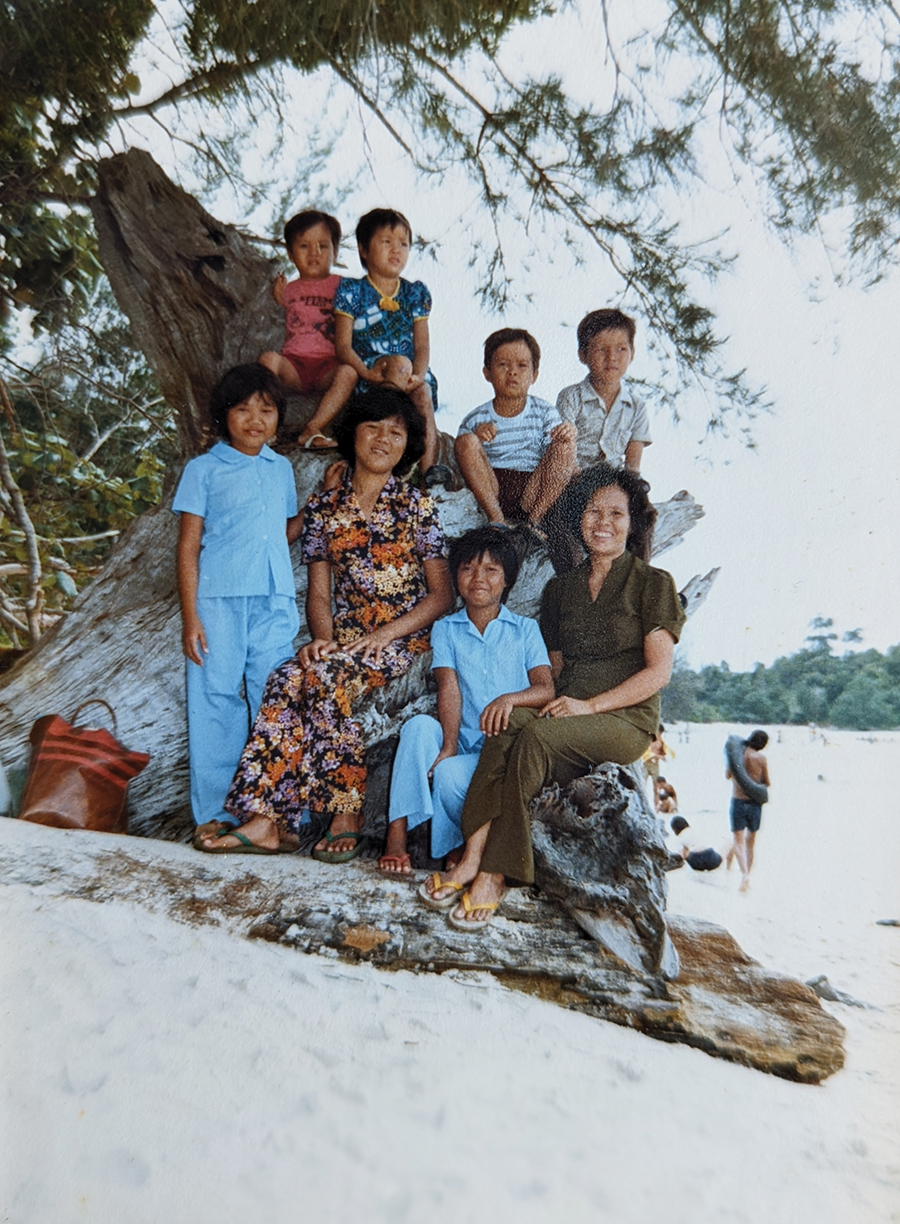
Luu family at the island refugee camp.

“The first island we were on, it was like what you pay to go to now. It was like paradise. The men built huts out of coconut leaves,” Vinh says. They spent the next three months in the second, larger camp before being moved to Galang Refugee Camp, where they would be processed for relocation. The latter two camps were rife with disease. Vinh remembers being sick throughout, the family living in what amounted to a cardboard box.

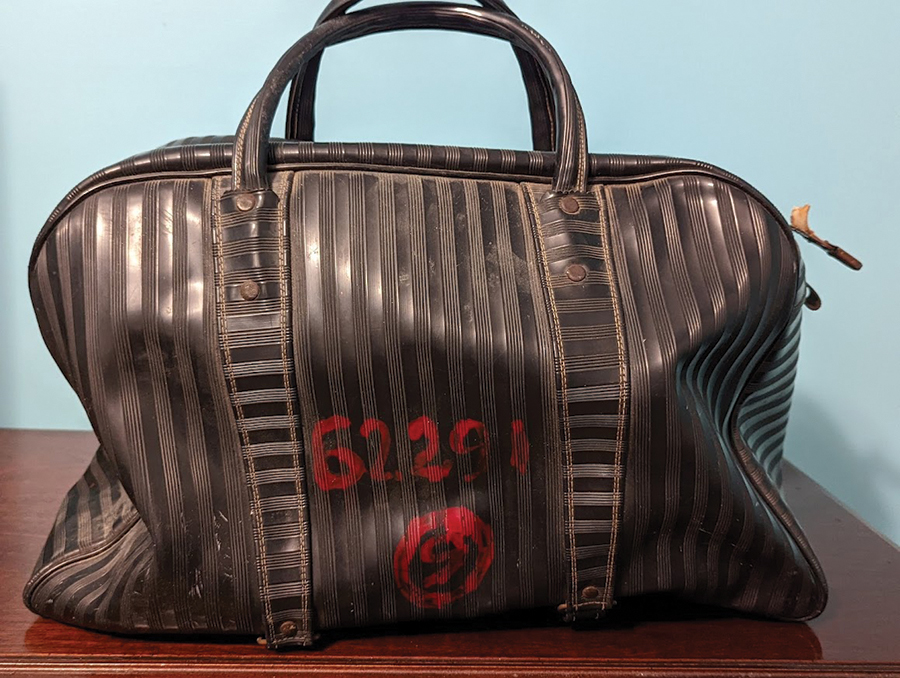
Tote bag with the family’s official refugee case number.

He has a reminder of the camps preserved on one of the few family heirlooms to have survived the escape, a black leather tote bag. Marked on the bag and still visible is the family’s official refugee case number, which was used for everything in the camps, from housing to meals. It’s engraved in Vinh’s mind as well, a five-digit number he’ll never forget. He says it twice, first in Vietnamese and then in English — 62291.

Their stay in the camps was prolonged, since the Luus were determined to wait until space restrictions allowed for two conditions: that they go to America, and that they go together. Ultimately a church in Gastonia, North Carolina, sponsored the family. Vinh doesn’t remember much from his first sight of America, but he does remember his first days in Gastonia.

“We had a beautiful snowstorm. I ran outside barefoot — and came right back in,” he says and laughs at the thought of his cold-footed scamper.

That contagious grin is as etched on Vinh’s face as his family’s case number is on the leather bag. Starting school in Gastonia, he couldn’t speak the language. “I was pretty fortunate. We had a teacher’s assistant and she devoted a lot of time helping me. I was fortunate to have wonderful teachers growing up. They had an incredible, long-lasting impact on my life,” he says, his eyes beaming with gratitude.


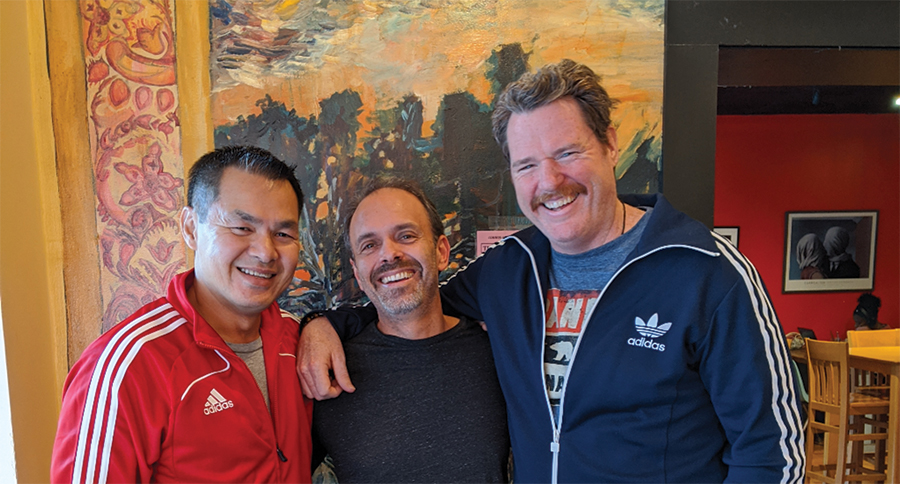
Left: Vinh and his friends, Jason Jones and Dennis Muldowney.

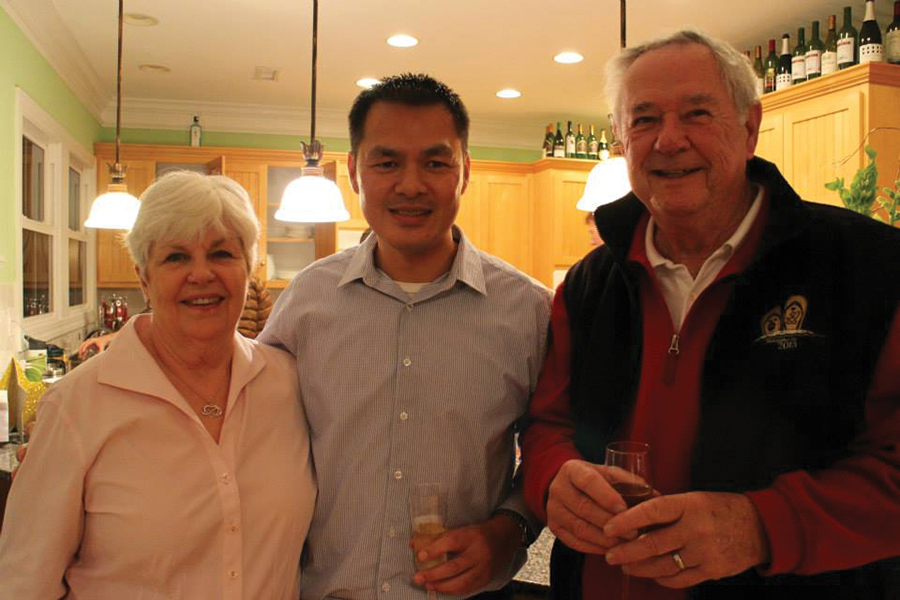
Right: Vinh with his American mom and dad, Kathy and Jim Muldowney.


It didn’t hurt that he’s incredibly smart. It’s the first thing his close friend, Jason Jones, noticed about him. “The first time I heard his name was in algebra. Every time we had a test, our algebra teacher would announce who got a 100. She’d call out, ‘John Smith and Vinh Luu made a hundred.’ And then the next test, ‘Amy made a hundred and Vinh Luu made a hundred.’ And I was thinking, ‘Who is this Vinh Luu guy?’”

Despite having been in the country only a few years and still learning a new language, Vinh tried his hand at anything and everything. Jones produces their 1989 high school yearbook as proof. While keeping excellent grades and working as a grocery bagger at Food Lion, Vinh’s smiling face appears throughout the volume. Jones laughs and taps the Quiz Bowl Team image lightly. “Even though his English was bad, every week he would come and we would ask questions. And even though that was not his strength, he still wanted to learn; he still wanted to participate; he still wanted to just do it. That’s Vinh,” he says.

The two friends take trips together every few years. One took them to Las Vegas, where they elected to try something other than gambling on the strip. They rented bikes to ride the Red River Canyon, a challenging 30-mile trip. As the experienced cyclist, Jones could tell Vinh was struggling on the uphill, hot desert route. Every time he checked on him, Vinh’s reply was a quavering, “I’m O-O-O-K,” right up to the moment he dismounted and heaved his morning’s breakfast at the side of the road.

Jones wanted to call “a paddy wagon, or 911,” but Vinh wouldn’t hear of it. “And we finished that 30-mile ride. I couldn’t believe it — but that’s just the kind of guy Vinh is.”

Vinh’s older sister married and headed to San Francisco at the end of his junior year. His family decided to move with the newlyweds. Vinh went out that summer but found himself homesick for North Carolina. “There’s a big Asian community out there” he says, “and this is pretty funny, but I started school there, and I couldn’t find American kids. It was all Asian kids. And I was homesick. ‘Where are my American kids to hang out with?’” He laughs. His parents agreed to let him move home to Gastonia, where he stayed with his friend Dennis Muldowney’s family for senior year before enrolling at N.C. State.

His “American mom and dad,” Kathy and Jim Muldowney, say he’s been part of the family ever since. Jim gestures to a large photograph on the living room wall of their Raleigh home — a beautiful family portrait of children and grandchildren at the beach for a Thanksgiving reunion. Jim points to Vinh in the center of the frame. “That’s our family.”

“I joke he gets adopted by about 20 people a year,” Jones says of Vinh’s ability to make friends and create family. When an elderly neighbor mentions their worries about the long drive to a family wedding in Florida, Vinh volunteers to chauffeur them. A 90-year-old neighbor’s son visits regularly from out of state, and Vinh delivers him to and from the airport, refusing payment. A neighbor posts on the NextDoor app looking for assistance and Vinh answers the ad, generating another close bond.


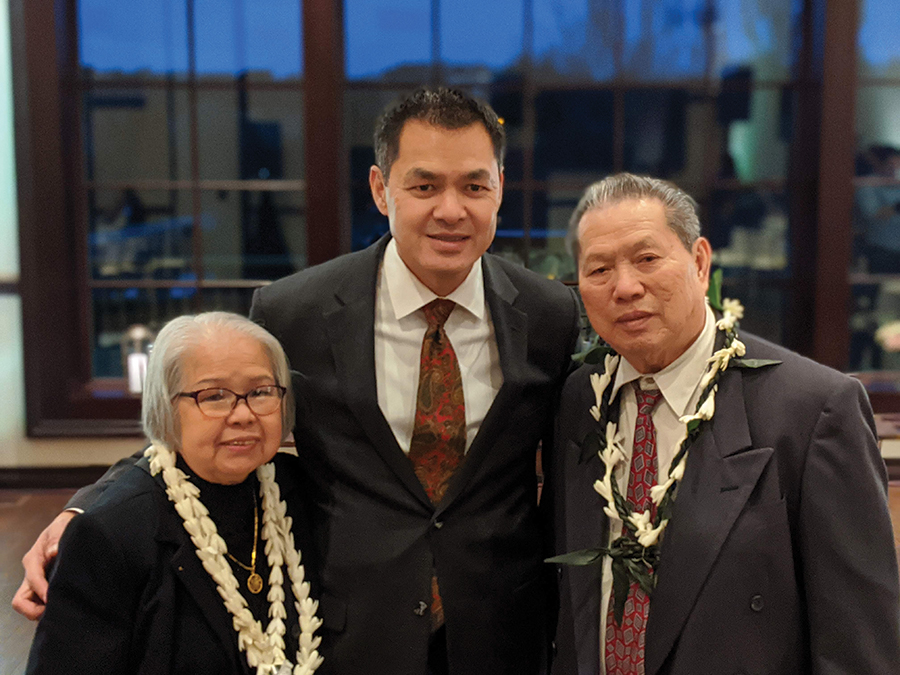
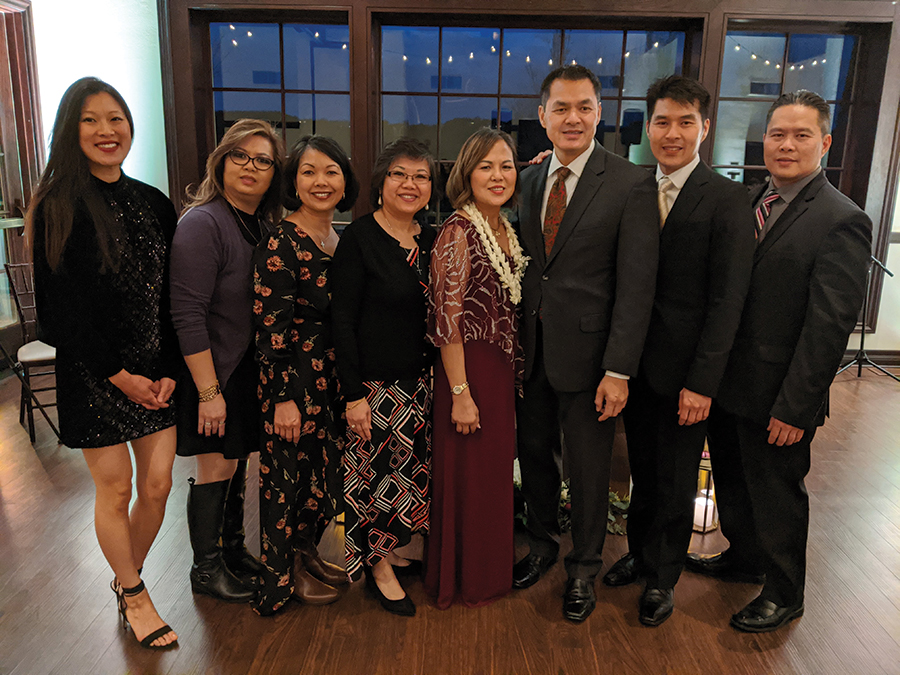
Left: Vinh and his family.

Right:Vinh and his parents.


As the oldest son, Vinh still maintains his family role as patriarch despite the nearly 3,000 miles separating him from his West Coast family. For him, there are no passing acquaintances — every relationship sparks a long and meaningful connection. Jones remarks fondly that although “Vinh’s never married, I don’t know anybody that has as big a family as he does.”

After graduating from N.C. State, Vinh began a long career at Ericsson Telecommunications, working in the Research Triangle. During the ’90s a new co-worker arrived from Iran, a political refugee who relied on Vinh for his advice and guidance. Years and a few out of state relocations later, the two stay in touch. Vinh’s a good mentor for anyone, but particularly for those seeking to build a new life.

“Assimilate,” he says, passing along his best advice. “Your roots and everything, it’s very important to carry on. But the faster you assimilate, the better off you are. And there’s nothing wrong with that, because this is your new life. And work hard. There are so many opportunities here, people don’t realize.”

While the family was blessed to find a welcoming community in Gastonia, they met with their share of challenges. Vinh still remembers the time a group threw rocks at their home, shattering windows before beating a hasty retreat. The experiences of his early years — a house fire in Vietnam that claimed the life of an older sister and his family’s terrifying escape from Saigon — could have been a struggle to overcome, the stuff of mental anguish.Vinh mentions that at one time he suffered from sleep paralysis, a sensation of being conscious but unable to move before waking, evoking terror and a sense of powerlessness. But Vinh has a superpower of his own, a buoyant nature and deep connection to others through simple, genuine kindness.

“It’s much different now than in the ’80s when we came here. People are more knowledgeable about things outside the U.S. and Americans are very — they care,” he says. “So, these refugees that end up here, I think they’re gonna be well taken care of. There’s hope.”

After Ericsson closed its R&D section in the Triangle, Vinh Luu’s expertise brought him to the Sandhills in 2016 to work as a contractor on mobile wireless technology for U.S. Special Operations Command at Fort Bragg. He feels as though he’s come full circle.

“You know, you have the Americans who went into Vietnam and fought for the South Vietnamese, us. And now, I’m doing work that protects the troops — keeps them safe, and America too, in that respect. It’s neat when I think about it. It’s more than a job, you’re actually protecting America.”

Service may be his profession, but his hobby is people. “I do a lot of stuff for some older folks that need help. I don’t have an exciting life,” he says with characteristic humor.

His friend Jason Jones goes to the heart of the matter. “Vinh is a good example of what America should be about — and has been about. This is why we are a country of immigrants, and this is why it is a dream.” The dream expressed by Martin Luther King Jr., “that every man is heir to a legacy of dignity and worth.”

It is an inheritance Vinh Luu earns every day. PS

Aberdeen resident Amberly Glitz Weber is an Army veteran and freelance writer. She’s proud to live in a country where there are Vinh Luus.

The Creators of N.C.

From Loft to Launch

Mark Bayne sends his works to sea

By Wiley Cash

Photographs by Mallory Cash

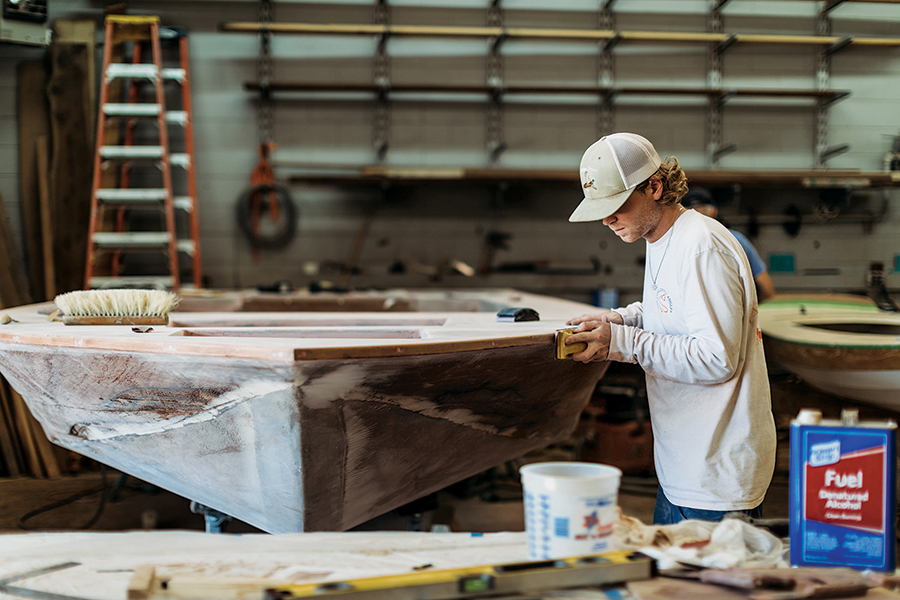
Master shipwright Mark Bayne is standing in an open bay at the workshop where he has been teaching wooden boat building at Cape Fear Community College in downtown Wilmington for the past 10 years. Over his shoulder, the murky brown Cape Fear River plods slowly eastward, where it will meet the Atlantic Ocean in just a few miles. It’s not quite summer yet, but the day is hot and bright. A stiff, warm breeze rolls in off the river, adding to the late morning’s warmth.

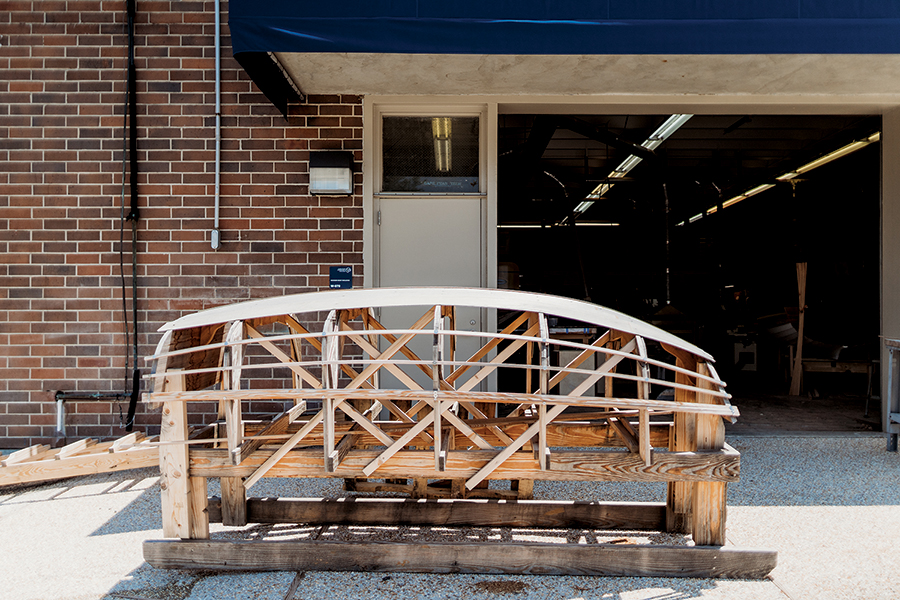
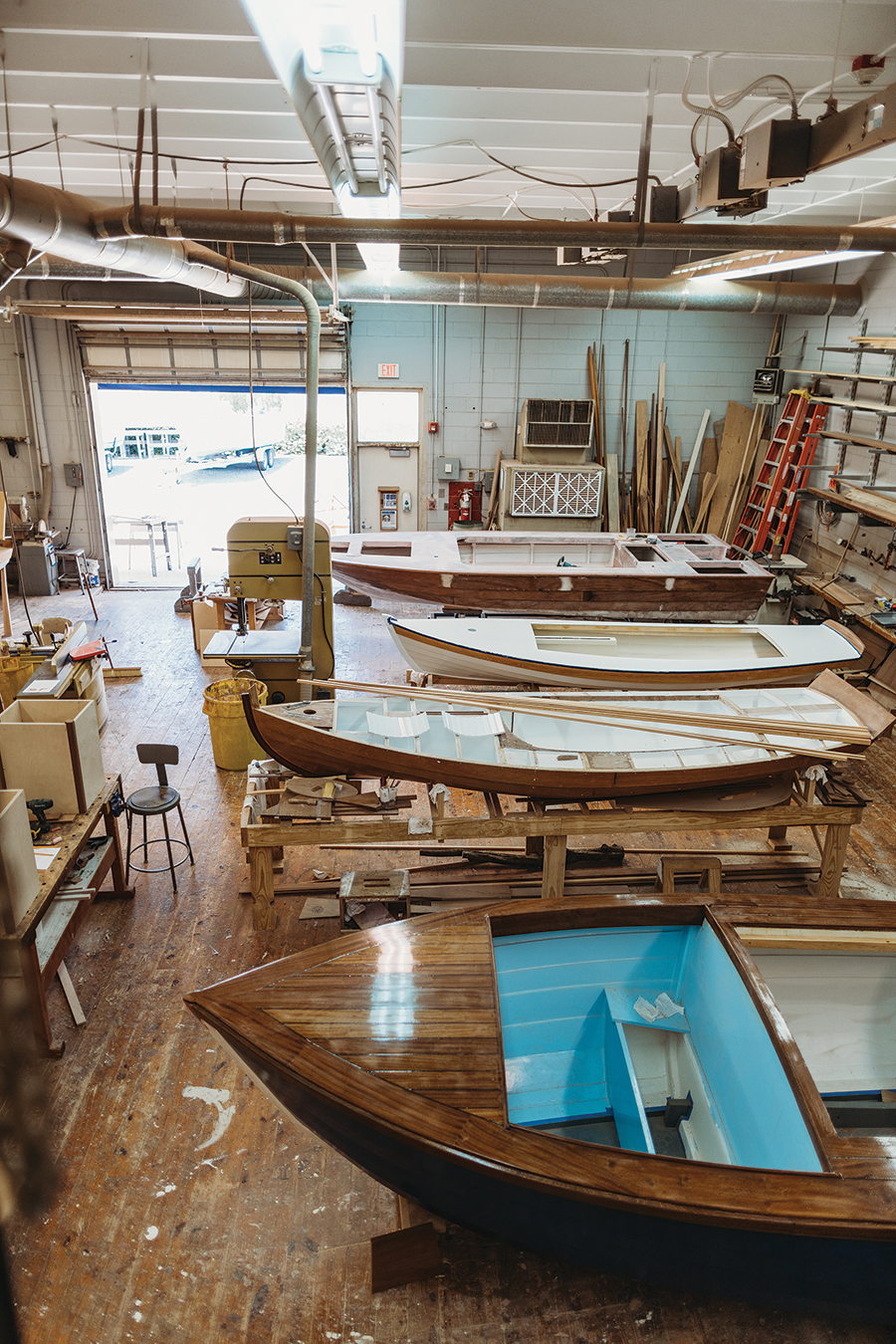
All around us, people are working on a half-dozen wooden boats in various stages of construction. There’s a flats boat that was specially designed so fishermen can stand with stability and cast a line from the broad deck; beside it is a beautiful, narrow melon seed just waiting for a sail; in the far corner of the workshop is a Jersey speed skiff that, as soon as it’s complete, will move next door (to the engine program) for the fall semester, where the team who built it will fit it with an inboard motor.

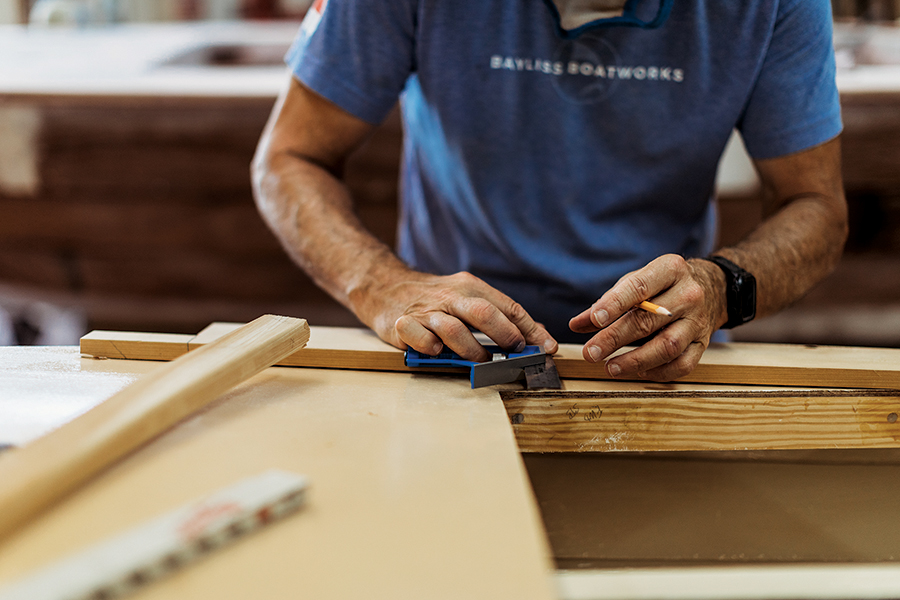
After decades building boats on his own and another decade of teaching people to do the same, Mark is accustomed to being surrounded by the sounds of saws and routers, the fine mist of sawdust floating through the air. He’s also accustomed to teaching others to build a variety of different kinds of wooden boats because that’s what he made a career doing before he found himself in the classroom.

“I’ve specialized in not specializing,” he says.

Mark is tall and handsome in the way that capable people often are. It’s as easy to picture him captaining a boat as it is to picture him building one. He’s quick to smile, and he’s still carrying the glow of holding a new granddaughter who was born down in Charleston, South Carolina, just a few nights before. That’s where Mark was raised, and his whole family, including his wife and their four grown children, live there now.


He splits his time between the low country and the Cape Fear, teaching at the college during the week and heading home to Isle of Palms on the weekend. His wife used to make the trips with him, but now that she’s surrounded by grandchildren she’s less likely to leave home. Bayne understands. He hears the call to home. For that reason, this is the last course he’ll teach for Cape Fear Community College’s wooden boat building program.

But in order to understand how his time at the college is ending, you have to understand how it began.

He grew up on “the backside” of Isle of Palms, South Carolina, in the marsh, sailing small boats, swimming, and crabbing with his younger brother and kids from the neighborhood. When I ask if they were ever so bold as to round the island and head for the open water, he smiles and pauses as if his mother and father are within earshot. “Officially, we did not do that,” he says, meaning, of course they did.

After a brief stint in college, Mark dropped out and worked at Mount Pleasant Boatbuilding Company as a helper in the joinery shop, where he learned to build and fit small, intricate parts to boats. He already loved boats, and he found that he also loved building and working on them. A welder in the boatyard mentioned that he’d heard about a new wooden boat building program beginning up the coast at Cape Fear Community College.

Mark enrolled in 1978 and was a member of the program’s first class. With his classmates and instructors, he literally helped build the program: They put down the hardwood floor in the workshop, and they built the workbenches from old bowling alley lanes that had been stored in a chicken coop in Southern Pines.

After completing the program and getting his degree, Mark went back to the Mount Pleasant Boatbuilding Company with the knowledge of how to loft boats, which is the process of drawing out plans on the floor, cutting and fitting the pieces, and constructing the boats using hand tools. On the weekends, he worked for himself, meaning he built boats apart from his work at the  boatyard. He found that he could make more money on his own while also building boats that interested and challenged him. In the late 1980s, he opened Sawdust Boatworks, and then he opened Sea Island Boatworks.

“No one has to have a boat,” Mark says, “so when someone hires you to build one, it’s a very special relationship.”

He can still remember the earliest boats he built. The first boat he built after opening Sawdust is still around; it’s a 14-foot marsh hen hunting boat. “That guy turned into a good customer,” Mark says. “I built multiple boats for him.”

.     

“I enjoy building things,” he adds, “and boat building allows you to be creative. Sometimes you build a boat to a plan that somebody else drew, and sometimes you build a boat by eye. You’ve got to know a lot. I worked with a guy in Panama City, Florida, once, and we built a 68-foot shrimp boat, just him and me. He was the master and I was the apprentice, but there was no plan, so you have to know all the construction details. When you’re doing it by hand with no plan it’s called rack of eye. It’s fun, it’s rewarding.”

Over the decades, Mark traveled up and down the East Coast, building boats from the Gulf of Mexico to the Chesapeake Bay, including the iconic Spirit of South Carolina, a tall ship that was constructed and ported in Charleston. The keel was laid in the summer of 2001, and the final plank was installed in the summer of 2006.

In 2012, Mark left the boatyards of South Carolina, as well as his life as a far-ranging boatbuilder, and returned “home” to Cape Fear Community College as head of the Wooden Boat Building program, where his professional career had started over three decades earlier. When he arrived, he found that he wanted to bring his vast experience to bear on the program’s curriculum.

“They had a good program going, but it wasn’t the way I wanted to do it,” he says. For years, the program had focused on moving students through stages of instruction on several different boats at various levels of completion. The students learned piecemeal, but that meant that they never completed a whole boat from start to finish. “I wanted students to work from lofting to launching,” he says.

“Mark has done a great job of giving this program a shot of momentum,” says Walter Atkins, an instructor in the boat building program who has decades of experience as a boatwright, his specialty building custom boat interiors. “I’ve learned a ton from Mark. It’s been awesome. We don’t use software where everything is designed on a screen. This is 1,000 percent old school.”

Over three semesters, including a summer term, students begin working with hand tools before graduating to power tools. Soon, the class moves up to the loft above the shop floor where they draw life-sized plans for the various boats they want to build.

“People slowly pair up,” Walter says. “You see the groups start to clump together.”

Recent high school graduates partner with retirees. Often, service veterans find one another, bonding over their shared experiences and their interest in boat building. It’s clear that both Walter and Mark find relationships with student-veterans important and endearing.

“I don’t ask about their service,” Mark says, “but I listen when they talk about it.”

Soon, the class moves to the shop floor, building the forms, fairing the hulls, and fitting the interior cabinetry. By the end of the program, as many as six complete boats are ready for the water. Once the boats are proven seaworthy, they’re auctioned off on a public website, where eager buyers are already lying in wait. The boats are purchased by people up and down the East Coast.

It’s clear that Mark takes pride in his students’ work, and he admits that if not for his wife, four children and growing number of grandchildren living down in the low country that he’d continue to work in the boat building program at Cape Fear. But he’s not really retiring. He’ll work some with his oldest son, Coulson, who is now building boats on his own while making good use of the family name: He decided to call his company Son of Bayne Boatworks. And there’s a 145-year-old historic schooner down in Panama City that was destroyed by Hurricane Michael that Mark wants to get his hands on. He’ll be busy, but according to him, he won’t be working.

“Boat building has never been a job,” he says. “I’ve never felt like I had a job a single day in my life.” PS

Wiley Cash is the Alumni Author-in-Residence at the University of North Carolina at Asheville. His new novel, When Ghosts Come Home, is available wherever books are sold.

Out of the Blue

Swinging on the Vine

Did I hear what I think I heard? Probably not.

By Deborah Salomon

Before email, before text and Facebook, before Twitter, before even Instagram there was the grapevine. Who could forget the late, great Marvin Gaye belting out, in 1968, “I heard it through the grapevine . . . ?” The term became synonymous with salacious news.

Lately, my antennae twitched over the following entries, all in good fun, of course:

Putin: OK, OK. So I bit off more than I can chew. I’ll take a week at the Black Sea billion-ruble dacha with one of my children’s mothers.

Rudy Giuliani: Those dopes say my rants prove that I’m senile. Hogwash! Look (drip-drip), my hair isn’t even gray.

Coach K: One-and-done? How about 1,202 (wins) and done. And look, my hair isn’t even gray.

Mayim Bialeck: “Sure, I’m a TV spokesgal for Neuriva (brain supplement). If I didn’t take it, I’d be hosting The Price Is Right instead of Jeopardy!

Ivanka Trump: “Of course we need 10 bathrooms in our new Florida estate. We have five people in this family.” 

President Joe Biden: “Jill, honey, . . . where did I leave my walker?”


First Lady Jill Biden: “Who said blondes have more fun?” Probably L’Oréal heiress Francoise Bettencourt Meyers, the richest woman in the world.

Downton Abbey: A New Era: Lights! Camera! Costumes!

Secretary of State Antony Blinken: “Where are Winken and Nod when you really need them?”

Prince Harry: “Of course she married me for my personality. And look, my hair isn’t even . . . there.”


Prince William, channeling Richard III: “Hair plugs, hair plugs! My kingdom for some hair plugs.”

Crown Prince Charles: “Who needs hair? I’m the heir.”

Vice President Kamala Harris: “Today is Tuesday, which means the baby blue pantsuit. Wednesday is maroon, with matching stilettos.” Good choice, ma’am. Harder to put foot in mouth while wearing stilettos.

Martha Stewart: “Inflation? What inflation? Let ’em eat cheesecake!”

Elon Musk at the karaoke bar, channeling Sinatra; “Fly me to the moon . . . ”
Melinda Gates, on ex-hubby Bill: “He’s just a big ol’ Microsoftie.”

Donald Trump, on Jan. 6: “No big deal. Just celebrating Elvis’ birthday two days early.”

Melania Trump, channeling Greta Garbo: “I vant to be left alone.”

Barron Trump: Denies relationship to Larry Bird. Yet, at 6’7” the resemblance is unmistakable. Except The Birdman smiles.

Patriotism: July 4th, dude. Gotta do something patriotic. Like pay a hundred bucks to see Hamilton or wear some stars-and-stripes flip-flops which now, like everything else, cost $1.25 at the Dollar Tree.

Truth or rumor? Fact or fiction? Stick with Marvin Gaye: “I heard it through the grapevine . . . ” PS 

Deborah Salomon is a writer for PineStraw and The Pilot. She may be reached at debsalomon@nc.rr.com.

Golftown Journal

The Pinehurst Look

The natural treasure of the Sandhills

By Lee Pace

Three years into the Robert Dedman and ClubCorp era of Pinehurst Resort and Country Club in 1987, green fees to play Pinehurst No. 2 were $24 with a $15 surcharge for hotel guests. That year Don Padgett Sr. joined the staff as director of golf, and the former PGA of America president and long-time golf industry insider immediately moved to double the base fee to $48.

“It was not as if we were trying to make more money,” remembers Pat Corso, the resort CEO from 1987-2004 who hired Padgett. “Don said if our value is that low, people will perceive us to be that low. We had to do better than that.”

Today most rounds of golf on No. 2 are factored into a golfer’s membership at the private country club or a visitor’s hotel package, but the rack rate is upward of $500 in high season.

Talk about inflation — not only in dollars but prestige.

The 2022 U.S. Women’s Open was held recently at Pine Needles Lodge and Golf Club, unofficially launching the next high-water mark in the Sandhills’ visibility in the national golf scene.

The day following the Women’s Open, the USGA broke ground for its $25 million Golf House Pinehurst, the equipment-testing facility, innovation hub, museum/visitor center and offices on ground adjacent to the Pinehurst member and resort clubhouses.

Later this month, the USGA launches the inaugural U.S. Adaptive Open, to be held at Pinehurst No. 6 and contested by players with physical, visual and intellectual impairments.

And in two years, the U.S. Open returns to No. 2 for its fourth rendition and the first of five Opens it has secured within the framework of having been designated in 2021 as an “anchor site” for the American national championship (the others coming in 2029, 2035, 2041 and 2047).

“It’s more than just a championship for us here in the Sandhills,” says John Bodenhamer, the USGA’s director of championships. “The players can speak to it. They love a golf course like Pine Needles. Great golf courses produce great champions. How do you argue what’s come about here?”

Michelle Wie West, who won the 2014 Women’s Open on No. 2, and Lydia Ko, who finished sixth at Pine Needles, were among the players who soaked up the Sandhills vibe.

“There’s so much history around this place,” Wie West said of a morning stroll through the village of Pinehurst. “Just to be walking here and playing, it’s a huge honor.”

“This is a huge golfing community,” added Ko. “It’s actually nice to go to places where people love it, people are excited about women’s golf being here, people are excited about golf in general.” 

The 2014 USGA doubleheader on No. 2 with the men’s and women’s national championships just after the Coore and Crenshaw 2010-11 course restoration combined with the recent event on a Pine Needles course similarly renovated by Kyle Franz have cemented what has evolved into “The Pinehurst Look” — a distinctive array of sandscapes, wispy grasses, jagged edges and towering pines that reflect the native environment.

That’s as it should be and is a style to be embraced by the Sandhills golf community. Televisions at various corporate entertainment venues at Pine Needles through the weekend showed simultaneous coverage of the golf at Pine Needles and from the Memorial Tournament at Muirfield Village on the PGA Tour.

Visuals from the Memorial screamed of green, green and more green in an organized and seamless fashion. Golfers missing fairways and greens bent over and peered into the lush rough to figure out how much of their ball was accessible.

In contrast, the views from Pine Needles reflected haphazard displays of Mother Nature doing her Sandhills thing — random and arbitrary plant growth, and fairway edges and tinges of brown in the bouncy fairways. Franz in his restoration of the 1928 Donald Ross design over 2017-20 removed 11 acres of Bermuda rough, leaving wayward shots finding an infinite array of lies and challenges amid the wiregrass and volunteer vegetation.

“This look brings out the architectural features that Donald Ross envisioned before irrigation and takes much less water to maintain,” says Jim Hyler, the 2010-11 USGA president and a part-time resident of Pinehurst. “It emphasizes the ground game, which places a different set of demands on the player than a green, lush course.”

Elsewhere around the Pine Needles campus, the USGA erected large banners heralding future Women’s Open venues. Each golf course reflected its essential nature and calling card — the ocean at Pebble Beach, the fescue roughs and treeless landscape of Erin Hills, the eucalyptus trees and kikuyu rough of Riviera, the notorious bunkers of Oakmont.

There was a time when Sandhills golf courses had lost their way, when the 2005 Open was played at No. 2 and the 2007 Women’s Open at Pine Needles and the visuals were dominated by narrow, bowling-alley fairways, layers of different mowing heights for roughs, and a misguided effort to look like Augusta National North.

“You could have been anywhere in the southeast United States where there is Bermuda grass and pine trees,” says Ran Morrissett, a Southern Pines resident and curator of the Golf Club Atlas website. “Pinehurst No. 2 no longer reflected that it was in the Sandhills of North Carolina. The golden age fairways typically were 42 to 47 yards wide. At one point before the Coore and Crenshaw restoration, I paced off the first fairway at 24 yards and at one point on the seventh fairway — I think the crook of the dogleg — it might have been 12 yards wide.

“That’s not how Donald Ross defended par. He defended it at the greens. But what happened was some guy plays it for the first time and you ask, ‘What did you think of 13?’ and he says, ‘Well, which hole was that?’ The holes were no longer distinctive.”

Minjee Lee, who won the Women’s Open with a four-shot margin and a 13-under-par total, certainly understood the distinctiveness of these Ross-designed courses through her final round. On the sixth hole, she missed the fairway left and had to thwack her ball through a tuft of wiregrass. On seven, she was wayward right, her ball sitting clean on the hardpan sand, but at address her clubshaft was swallowed by a willowy wiregrass plant. And on the par-5 10th, her second shot missed the green left and came to rest within a nesty enclave of dead grass.

So what if the scores were relatively low and Lee won with a 271 total, the lowest in the history of the Women’s Open? You had good weather and little wind. 

“All great architecture is prone to players playing really well on it,” Franz said. “The conditions are right, and that’s the greatness of Ross’s style.”

Low scores and the pure Sandhills look beat higher scores artificially promulgated by fertilizer and irrigation. The template has been properly reinstituted, these Donald Ross treasures coming full circle to when the young man from Dornoch embraced the similarity of the Pinehurst ground to that of his homeland in Scotland. 

It’s a look of its own and one that prompted USGA President Mike Whan to remark in lengthening shadows of the 18th green Sunday evening at Pine Needles, “You feel like you’re at the home of golf in America.”

Treasure that and lock it down. PS

Lee Pace has written about the Pinehurst-area golf scene for more than 30 years, including authoring Sandhills Classics — The Stories of Mid Pines & Pine Needles. Write him at leepace7@gmail.com and follow him @LeePaceTweet.

Sporting Life

Truckload of Memories

And there are someadventures left

By Tom Bryant
It was about 8:30 and I planned to call it an early evening since I was to be up and at ’em at sunrise the next morning to do a little pond fishing, my favorite kind. Linda, my bride, was in the den watching Jeopardy!, her favorite game show.
“I’m sacking out, Babe. Up early in the morning. You want me in the guest room, or do you want to watch the sun come up with me?”
“Guest room. You can tell me all about the sunrise. I hear your phone.”
My phone was in the kitchen, ringing its persistent nagging call. I checked the number and saw the caller was our son, Tommy. “Hey, Tom Bryant. Whatcha doing?”
“I’m up on Three Top, just coming down off the ridge. I had to detour from the trail a little. Saw a bear cub about 50 yards away and sure didn’t want to get in between the cub and its ma.”
Tom had just bought several acres on Three Top Mountain close to Jefferson and was planning a little hunt cabin because the property borders the game lands.
“That’s smart thinking, buddy roe. There’s nothing worse than an angry mama bear. It’s pretty late, almost dark here. I hope you’re about off the trail.”
“Plenty of light here, and I’ll be back to the truck in a few minutes. Andy called and wants to talk to you about buying the Bronco.”
Andy is a good friend of Tom’s. They both went to Lees-McCrae College in Banner Elk and stayed in touch after graduation. Andy and his wife live in New Hampshire, but he travels to Pawleys Island in South Carolina often to visit his family.
“He wants to buy the Bronco?”
“Yes, sir. He remembers the truck from the time I had it up here at school. He fell in love with it back then.”
“Tom, the old Bronco has been sitting in the garage for years. You know that. I only crank it up every now and then, back it out and let it run a bit and then put it back in the garage.”
“He says he really wants it. He’s becoming something of a car collector. Or wants to be.”
“I’ll be happy to talk to him,” I replied, “but I don’t think I want to sell it right now. I understand those old Broncos are commanding quite a dollar figure.”
“OK. I’ll tell him. Be looking for his call.”
We talked a little longer about his doings in the mountains, and I said good night and gave the phone to his mom. She loves to talk to Tommy. He’s approaching 50, but like moms everywhere, she figures her kid never gets too old to receive a few instructions.
As I was trying to go to sleep, I thought back to the history I had with the old truck. Some of my friends often said jokingly, “If that Bronco could talk, Bryant would be in all kinds of trouble.”
We traveled to a lot of places, most of the time with a canoe on top. Trips to the Okefenokee, duck hunting at Mattamuskeet, and many, many trips to our own secret duck hole.
In good times and bad, it seems that the Bronco was there. There is a photo somewhere with Tommy and my first Lab puppy, Paddle, sitting on the tailgate. Both the boy and the dog are smiling.
The old vehicle has been kinda put on the back burner, resting in our garage like I told Tommy, only getting fired up every now and then.
I bought the truck when it was brand new, smelling like all kinds of adventures. A friend and I had just started a weekly newspaper back in the days when newspapers were proudly appreciated. I spent many days and hours in the truck hauling newspapers from the press to the office and to racks around the county. I learned to live out of it, for work as well as play.
One time I did a little inventory of the items I had accumulated in the Bronco over a period of time. It started with my gunning bag, in itself quite a useful tool. It has lugged shotgun shells in a variety of gauges and sizes for hunting ducks, doves and small game, a few rifle cartridges and several rounds of ammo for handguns. It has held cans of sardines, beanie-weenies and candy bars. In it I’ve found long-lost pocketknives, and one time a Leatherman tool that I swore I lost in the marshes of Bodie Island. The gunning bag made by Barbour is very versatile. It has served many times as my carry-on bag aboard flights to New York City, emptied of hunting paraphernalia, everything except a sack of beef jerky. I like to take a little of home with me when I travel.
I also keep training tools for my Lab in the classic truck like retrievable training dummies, an extra dog collar and a few dog biscuits in a sack. I got tired of her eating my jerky.
There was a towing strap, three spark plugs, 50 feet of camouflage duck rope. Two rolls of toilet paper, two hats, a pair of gloves and an old, worn down to the good, camouflage duck coat. There also was a pair of ragged L.L. Bean boots that fit me just right, a canteen, which I think was a carryover from Pinebluff Scout Troop 206, and an old Army mess kit with a bent but still serviceable Sterno stove. (I don’t think they make Sterno anymore.) I usually had a spinning outfit with a few lures hidden in a back corner of the truck, and a small hand-painted camouflage cooler with a couple of warm beers rolling around in the bottom.
What happened to all that magnificent stuff, as much a part of the truck as its four-wheel drive? It has gone away, disappeared like some of my youth. But the basics are still here. My gunning bag rests close, ready to go whenever I am. The other stuff is around somewhere just waiting to be found, like my old Leatherman tool.
The morning after I talked to Tommy and before I headed to the pond to do some fishing, I backed the Bronco out of the garage and just sat in it, listening to the soft burble of the engine. All the smells were there, and it wasn’t hard for me to conjure up the days when it was loaded to the gunnels with all kinds of necessary gear, ready to go.
You know, I thought as I drove the Bronco back in the garage, it wouldn’t take much to get her ready for the woods again. But I remembered my mama and one of her favorite sayings, especially as she neared what she called her golden years. “There’s a season for all things, son. You’ll realize it as you age a little.”
Mom was right. A lot of things I used to do and take for granted come a little harder today, but I think the vintage Bronco and I just might have a couple of seasons left. PS
Tom Bryant, a Southern Pines resident, is a lifelong outdoorsman and PineStraw’s Sporting Life columnist.

PinePitch

Fireworks and Fun

Check out the rockets’ red glare at the Pinehurst Harness Track from 6 – 10 p.m. on Sunday, July 3. Fireworks will begin around 9:15 p.m., with plenty to keep you busy until then, from a kids zone with inflatables; a variety of food vendors; and Liquid Pleasure, the great dance and show band that has appeared with stars like Paula Abdul and Aretha Franklin. 200 Beulah Hill Road S., Pinehurst. Info: www.vopnc.org.


Up Close with Roy Firestone

Laughs guaranteed at this one-night-only show featuring Roy Firestone, the seven-time Emmy Award-winning host of ESPN’s legendary Up Close Primetime. You may also remember Firestone from his appearance in the film Jerry Maguire, where he played himself in an unforgettable scene, but did you know he was also a critically acclaimed humorist, musician and impressionist? Firestone has performed in more than 2,000 venues spanning two decades. You can catch him at the Owens Auditorium from 7:30 – 9:30 p.m. on Saturday, July 16, 3395 Airport Road, Pinehurst. Info and tickets: www.ticketmesandhills.com.


Everyone Is a Reader

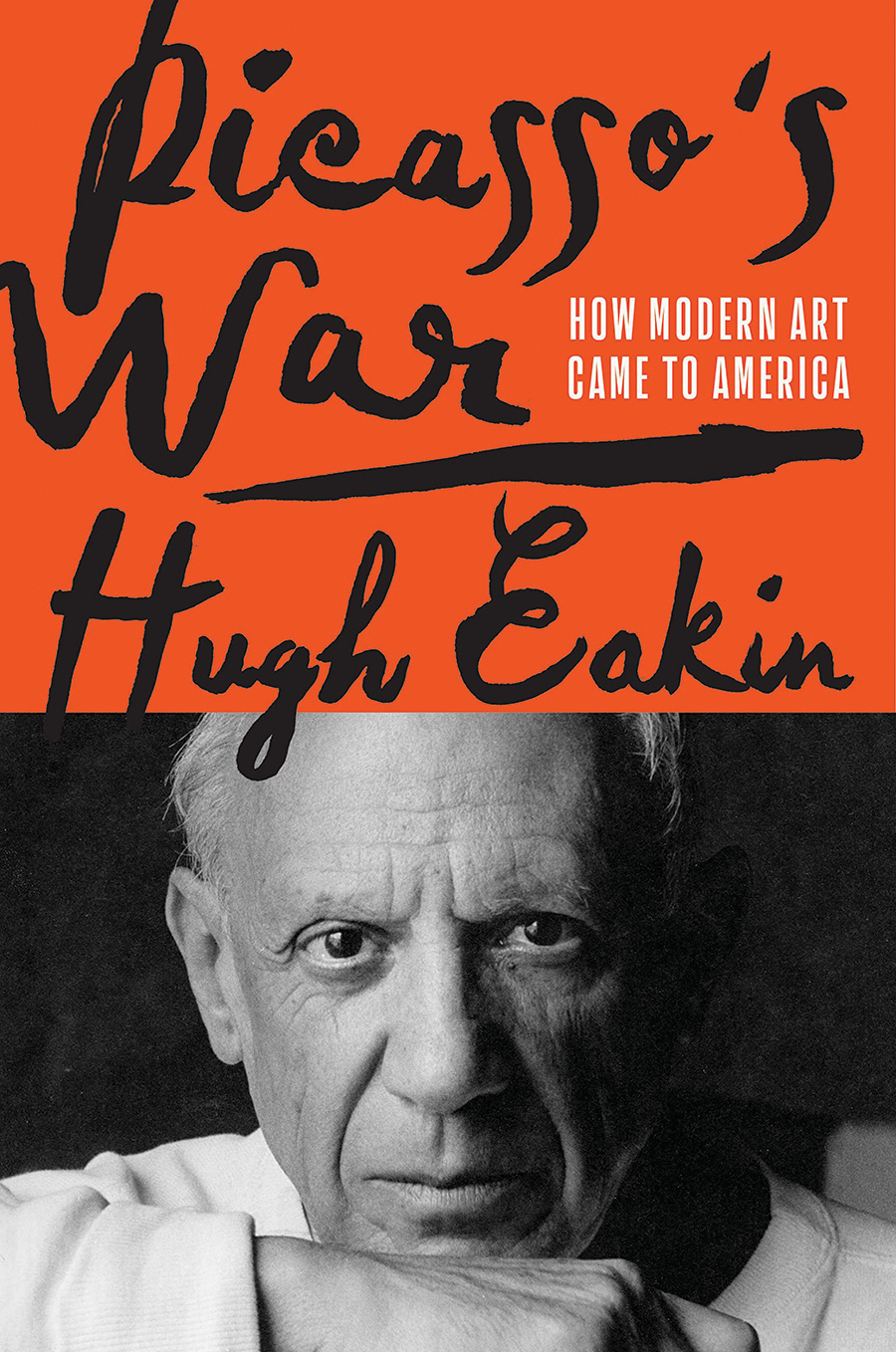
If you’re on the hunt for a summer read join The Country Bookshop’s Kimberly Daniels Taws for three author events in July. Hugh Eakin will be chatting virtually with Taws about his book Picasso’s War on Wednesday, July 13, from 1 – 2 p.m. On Friday, July 15, author Rick Ridgeway will be at The Pilot, 145 W. Pennsylvania Ave., Southern Pines, from 6 – 7 p.m. to talk about his outdoor explorations in Life Lived Wild: Adventures at the End of the Map. To wrap up the month, join author-illustrator Matt Myers on Tuesday, July 26, at 4 p.m. to celebrate the release of his new book, The World’s Longest Licorice Rope. His wife, Maya, will discuss two of her books, Not Little and Little Kids First Big Book of Baby Animals at The Country Bookshop, 140 N.W. Broad St., Southern Pines. Info and tickets for all events: www.ticketmesandhills.com.


Far Out Artwork

If you miss the psychedelic ’70s, then climb into your VW bus and drive to Seagrove for a special trip down memory lane. Carolina Bronze East, a studio and gallery space in the Historic Lucks Cannery in Seagrove, is owned by two ’76 East Carolina University grads, still making art, defying the odds. Their new display, “The ’70s Show,” showcases the talent that walked through the art school during that decade. Be quick about it, though, because the show closes July 7 at the Historic Lucks Cannery Artwalk, 365 Fernandez Loop, Suite 205, Seagrove, N.C. For more information call (336) 873-8291.


Summer on the Stage

Switch up your poolside routine and check out the inaugural Summer Theatre Festival, brought to you by the Judson Theatre Company. Beat the heat in the intimate, air-conditioned Bradshaw Performing Arts Center’s McPherson Theatre as three exciting 21st century shows receive their Sandhills area premieres. Running from July 22 – 31 is the two-man musical spoof of aspiring playwrights seeking Broadway contracts, Gutenberg! The Musical! Then catch Buyer & Cellar August 5-14 for a comedic fantasia about a struggling actor working in the basement mall of Barbra Streisand’s Malibu home. Wrap up the summer Aug. 19-28 with tick, tick . . . BOOM, a three-person musical by the author of Rent about an aspiring composer worried he made the wrong career choice. BPAC is at 3395 Airport Road, Pinehurst. For tickets visit judsontheatre.com. See you at intermission.


Christmas in July

If you’d rather deck the halls than sweat on the deck, you’ll want to join in the Yuletide festivities at Given Memorial Library on Saturday, July 23. Santa Max will be flying in on a summertime sleigh to celebrate Christmas in July. There will be a photo opportunity with Santa, a craft and a goodie bag to take home. Reservation required. There are two time slots to choose from, 9:45 – 11 a.m. and 11 a.m. – 12:15 p.m., 150 Cherokee Road, Pinehurst. Info: (910) 295-3642.


Patriotism on Parade

Nothing says Independence Day like a parade, and the village of Pinehurst is ready to celebrate, decked out in red, white and blue! Move your feet to snag a seat before the official parade begins at 10 a.m., Monday, July 4, at Tufts Memorial Park, 1 Village Green Road, Pinehurst. Info: www.vopnc.org.


Hot Town, Summer in the City

It’s the deals that are burning up the sidewalks in Southern Pines on July 16 from 10 a.m. to 5 p.m. Tables will be set up both inside and outside of the downtown stores so you don’t have sweat to get the biggest discount. The event is hosted by the Southern Pines Business Association.

Allison Hand + Jordan Kral

ALLISON HAND + JORDAN KRAL

Photographer: By Colette Photo Videographer: Wayward North Films Wedding Coordinator: Mary Dutton, Forest Creek

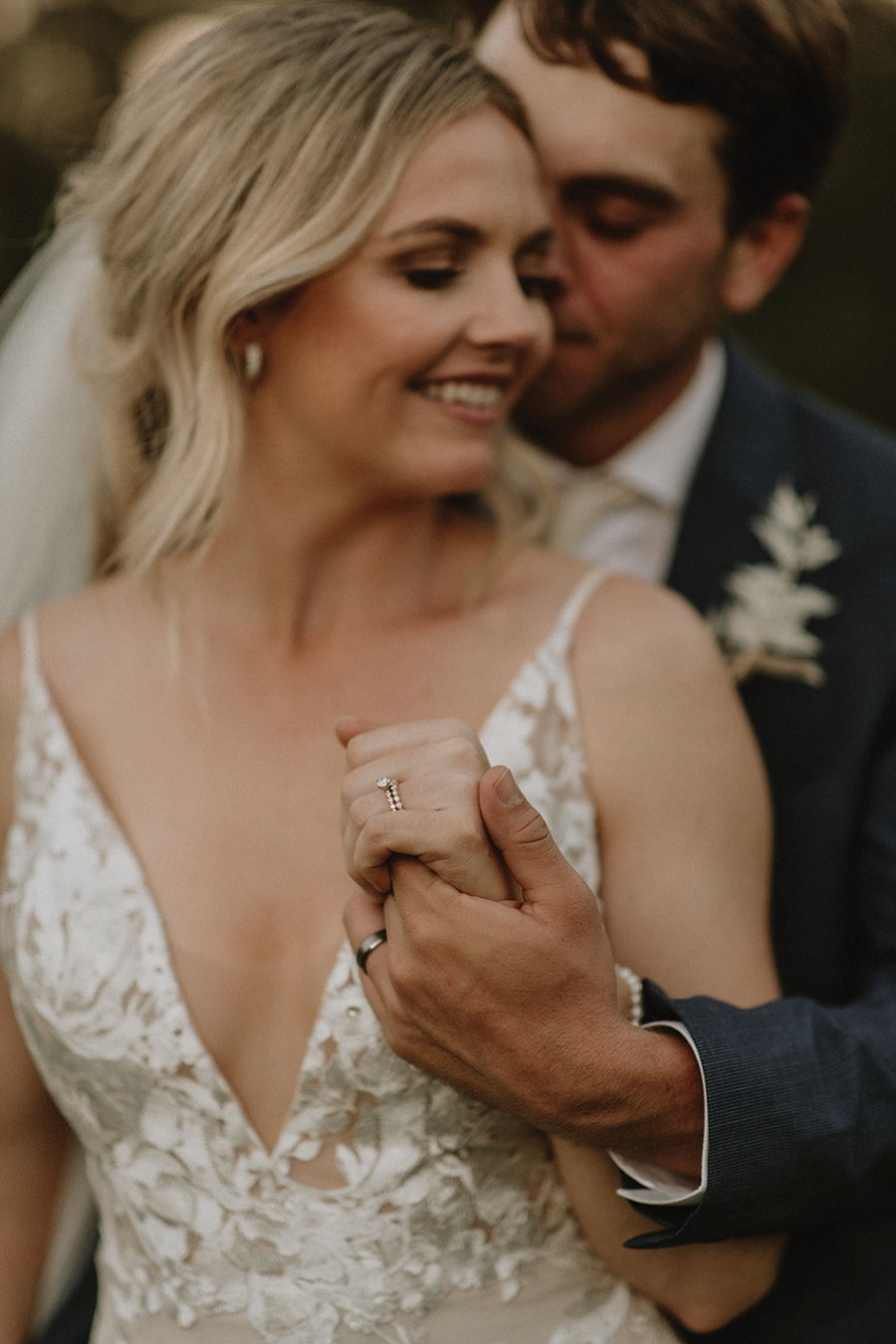
Both collegiate athletes, Jordan, a golfer, and Allison, a softball player, met through a teammate at a college bar. After dating briefly in school, the couple reconnected a few years later when Jordan reached out.

“We talked on the phone for hours that night and pretty much never stopped,” Allison remembered.

A beach proposal secretly photographed by Allison’s cousin and a brunch celebration with friends and family made a sweet start to a Sunday. After moving all over the United States and even back to Jordan’s hometown of Windsor, Ontario, the couple settled in Pinehurst so the groom could continue to work in golf.

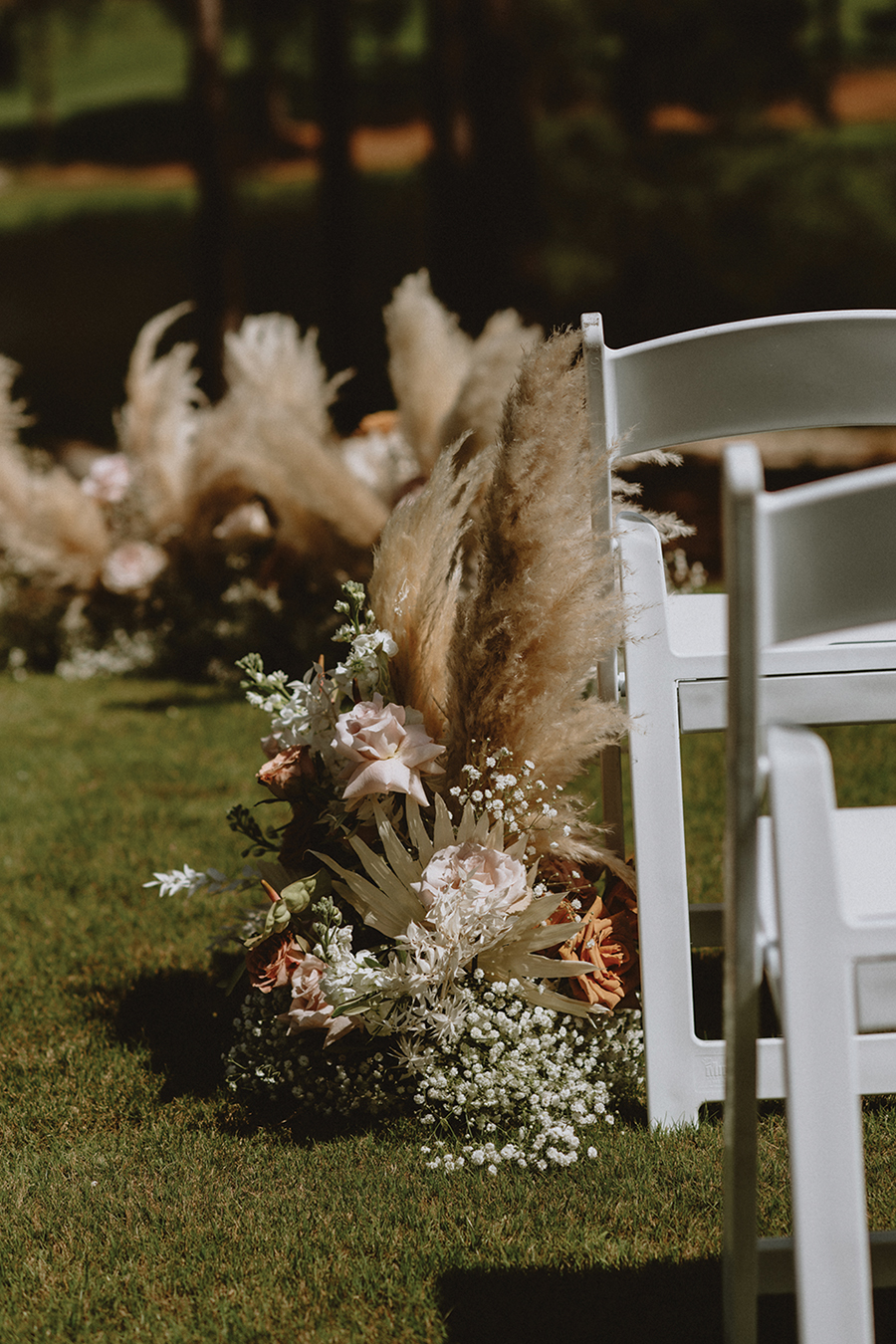
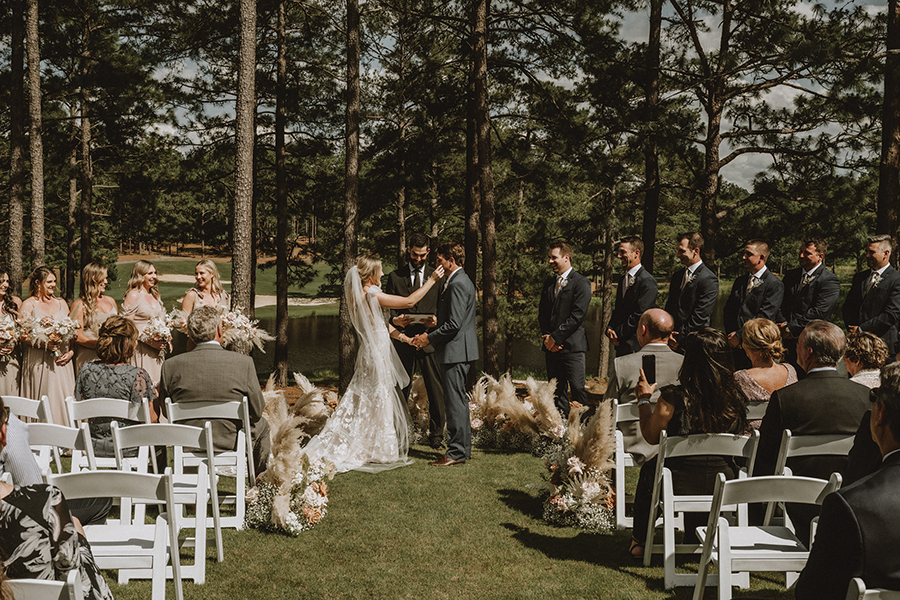
They held their wedding ceremony on the grass overlooking a golf course at the Forest Creek Golf Club and then moved on to food in the dining room and dancing outside on the patio. With flowers from Thistle & Moon, Allison said her modern, boho wedding came to life.

Ceremony & Reception: Forest Creek Golf Club | Dress: Elsie, Made with Love | Shoes: Vince Camuto | Hair: Kaylee Thomas, Bronde Salon & Extension Bar | Makeup: Chelsea O’Neal, Brittany King | Bridesmaids: Birdy Grey | Groom & Groomsmen: Freeds of Windsor | Flowers: Thistle & Moon | Cake & Cupcakes: Designer Cakes by: Brigitte and Southern Angel Donut Co. | Catering: Forest Creek Golf Club | Rentals: Richmond Rentals & Sales | Invitations: Shutterbug Grafix | Transportation: A Ride Transportation and Seven Lakes Transportation

Omnivorous Reader

Dame Agatha’s Mystery

A novel look at Christie’s 11-day disappearance

By Anne Blythe

Dame Agatha Christie, the famed author who wrote 66 detective novels in her 85 years, left the conclusion of one very public mystery untold.

While some details are known about what happened in December 1926 when the prolific writer famously went missing for 11 days, much remains unknown. That has led to an array of books and films in which writers attempt to piece together clues, fill in gaps and offer theories about Christie’s perplexing disappearance.

Nina de Gramont, a creative writing professor at the University of North Carolina Wilmington, has put forward an intriguing and inventive account in her latest novel, The Christie Affair. She tells her story from the perspective of the mistress who, history tells us, broke up the marriage of Christie and her first husband, Archie.

Here’s what we know from newspaper accounts.

The search for Christie included hundreds of police officers, planes, amateur sleuths on bicycles and in cars, musings from fellow mystery writers Sir Arthur Conan Doyle and Dorothy Sayers, and even a séance at the site where her green Morris Cowley was found deserted in a ditch in the English countryside.

Many theories were posed about what happened to the “lady novelist,” as some journalists described Christie. Was her body at the bottom of the Silent Pool, the lake in Surrey, England, near the abandoned car? Could the mystery writer, not so well-known at the time, be pulling a publicity stunt?

The hunt ended some 200 miles north of Sunningdale, where the author lived with her husband Archie and their daughter, when it was revealed that Christie had checked into the Swan Hydropathic Hotel in Harrogate using the name Theresa Neele. It was not known at the time by the public, but Neele was the last name of Archie’s mistress, the woman he planned to leave his wife for.

Christie’s only public explanation of her whereabouts came in a February 1928 interview with the Daily Mail, in which she described being in a state of depression after her mother’s death in 1926 and suffering from “private troubles,” which she said she preferred not to get into with the reporter. The Daily Mail reported that Christie contemplated death by suicide several times before driving her car into the remote ditch, hitting something, being flung against the steering wheel and bumping her head. It has long been questioned whether Christie truly had amnesia as the family reported after a public outcry about the extensive search and cost of it when it was revealed the author had been staying in the hotel under an assumed name.

“Up to this moment, I was Mrs. Christie,” she told the Daily Mail.

In her book, Gramont names her narrator Nan O’Dea, a departure from Nancy Neele, the real-life other woman. Without giving short shrift to details of the headline-grabbing disappearance available in newspaper archives around the world, de Gramont devises a double-pronged plot. She alternates between Nan’s account of the days and crucial moments before Christie went missing and a backstory filled with sadness and grief that drives the fictional narrator.

We’re transported from London to Ireland and the worlds of the haves and have-nots amid World War I. We move back and forth between Nan’s early days and her first powerful love in Ireland to Christie’s unraveling marriage and the 11 days that inspired the novel. Slowly, we find out why Nan sets her sights on Archie and aggressively works to woo him away from Agatha to achieve a greater love that becomes clearer as the suspense unravels.

Like the “Queen of Crime,” Gramont has a knack for mystery. She lures her readers in with her first sentence: “A long time ago in another country, I almost killed a woman.”

The North Carolina author also has a gift for leaving subtle signs of what lies ahead, putting pointers in plain sight in the style of Christie.

“Anyone who says I have no regrets is either a psychopath or a liar,” Nan, the narrator, says in the opening chapter when asked by her sister whether she regrets what she did. “I am neither of those things, simply adept at keeping secrets. In this way, the first Mrs. Christie and the second are very much alike. We both know you can’t tell your own story without exposing someone else’s. Her whole life, Agatha refused to answer any questions about the eleven days she was missing, and it wasn’t only because she needed to protect herself. I would have refused to answer, too, if anyone had thought to ask.”

Right at the start, we find out what will become clear in the end — Nan ends up with Archie and Agatha does not.

What we get from de Gramont’s evocative and layered scenes between the beginning and end are often twists, steamy romance, deadpan humor, an unexpected body (as necessary in any Christie mystery) and adventures to old-fashioned villages with a cast of mostly affable, but complicated characters.

“As readers our minds reach toward longed for conclusions,” de Gramont writes as Nan brings her own narrative to a close with an ending that’s not all rosy.

Her storyline for Agatha, though, concludes with a happier image.

“A mystery should end with a killer revealed, and so it has,” de Gramont writes toward the end of her book. “A quest should end with a treasure restored. And so it has. A tragic love story should end with its lovers dead or departed. But a romance. That should end with lovers reunited. Beyond the confines of these pages, life will go tumbling forward. But this is my story. I can make anything happen, unbeholden to a future that now has become the past. I can leave you with a single image, and we pretend it lasts forever. So for this part of the story, let’s stop here.”

The author’s masterful storytelling leaves you longing for more. PS

Anne Blythe has been a reporter in North Carolina for more than three decades. She has covered city halls, higher education, the courts, crime, hurricanes, ice storms, droughts, floods, college sports, health care and many wonderful characters who make this state such an interesting place.