Almanac

November is a great sweeping wind, a clearing of what must go, a dance with a howling reaper.

The crickets have disappeared. Their nightly serenades, which crackled like warm vinyl from spring through harvest season, faded with the first hard frost. In their wake, the wind shrieks through naked trees. A great horned owl bellows from his perch.

The garden folds into itself. The porch toads that lurked by the watering can on warm autumn evenings now burrow beneath the frost line. Field mice shimmy down chimneys, squeeze through eaves, craft their nests inside cozy walls.

Songbirds come and go. Hermit thrushes strip the hollies of their crimson fruit. White-throated sparrows shuffle through crumpled leaves, scratching up what’s buried underneath.

The wind sings of a quickening darkness. The squirrels, scrambling to cache pecans as they fall, retort with squawks and chatter. A skein of geese sails across a golden sunset.

At dusk, when the wind nips at the heels of those still roaming, a pair of coyotes yips and howls beyond the fringe. Back and forth they shriek, wailing like banshees, piercing the air with their shrill and haunting staccato.

“I’m here,” cries one to the other.

A single voice sounds like dozens.

A biting wind howls back.
When Pies Fly

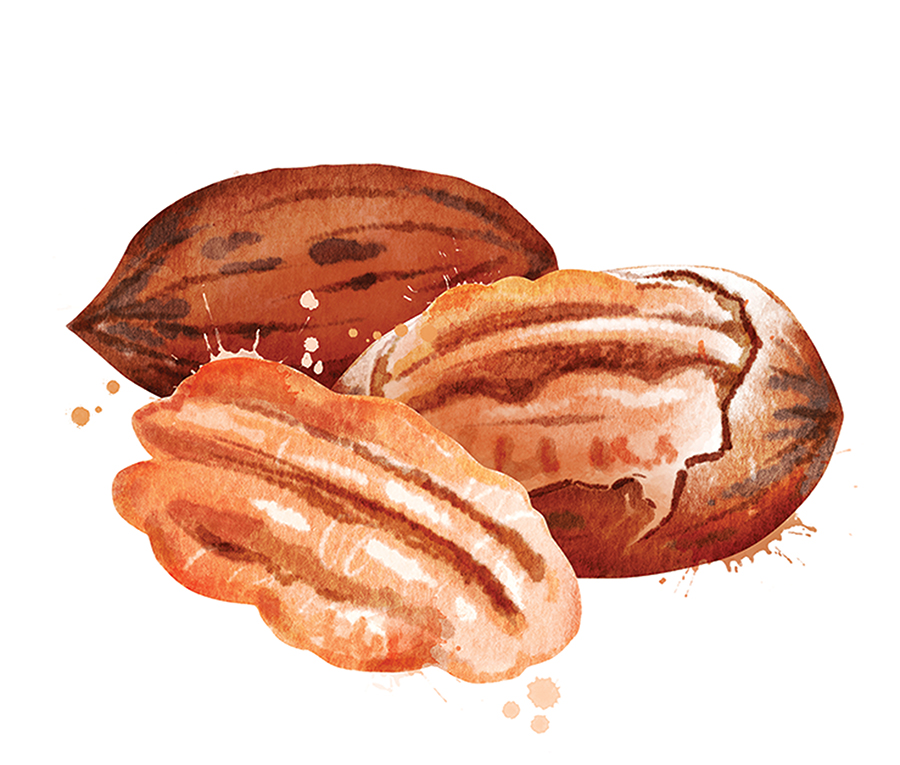
For our neighbors in Albany, Georgia (pecan capital of the world), it’s raining you-know-what right now. But we have our share of toothsome treasures plummeting upon our leaf-littered neck of the woods, too. Especially in the southeastern part of the state. Whatever you call them — PEE-cans or pee-KAHNS — ’tis harvest season. Pick them as they drop or else the crows and squirrels will beat you to it. You’ll want to let them cure (essential if they’re not yet ripe) before shelling and freezing them. Store them in a mesh bag — and in a cool, dry place — for about two weeks. While you’re waiting? Dream of pie.

On that nut-studded note, have you ever cracked pecans? If so, then you can more deeply appreciate that the average pecan pie packs between 70 and 80 of those sweet and buttery little candies. No need to mention the calories.


O wild West Wind, thou breath of Autumn’s being.

Thou, from whose unseen presence the leaves dead

Are driven, like ghosts from an enchanter fleeing

— Percy Bysshe Shelley
 

Prepare to be Dazzled

On Tuesday, Nov. 8, a total lunar eclipse begins around 3 a.m. According to Smithsonian magazine, which named this celestial event one of 10 “dazzling” must-sees of 2022, the moon will appear reddish, as if “all the world’s sunrises and sunsets” are being cast upon it.

Speaking of dazzling events, here’s to hoping your Thanksgiving will be described as such. At the very least, don’t let the parsnips eclipse that homemade pie.  PS

Birdwatch

Early Signs of Winter

Sighting the white-throated sparrow

By Susan Campbell

Here in the central part of North Carolina, the winged harbinger of winter is the white-throated sparrow. Summering in the forests of the far North, this bold little bird breeds across Canada and at elevation in northern New England. A medium-sized sparrow, it is brown above and white below with bold markings on the head. Pale stripes on the crown and a white throat patch are set off by gray feathers on the face. White-throateds also sport a yellow spot at the base of their stout bill.

Interestingly, there are two color forms of this species: those with heads that are white-striped as well as those that are tan-striped. Both forms persist because, as much as white-striped individuals are more aggressive during the breeding season, each almost always pair with the other type. Nests are made by the female in a depression on the ground under a low-growing tree or shrub. However, should it be depredated, the second nest may be placed on low branches.

If you have not spotted one of these birds, you almost certainly have heard their distinctive loud “seet” call emanating from thick vegetation. Their song, which can be heard even during cold weather, is a recognizable, liquid “oh sweet Canada” or to some, more of an “old Sam Peabody.” Since they tend to flock together, you are likely to encounter small groups along forest edges, farm fields, parks and suburban areas that have thick shrubbery.

White-throateds are commonly found at feeding stations, often in association with dark-eyed juncos, another bird of high country. These squatty sparrows actually have a broad diet. Although they primarily feed on a range of seeds during the winter months, their preference shifts during the year. In spring, they are more likely to seek out buds and flowers of fresh vegetation.

White-throated sparrows do not walk or run but hop when on the ground. As they forage, they will forcefully scratch backward in leaf litter using both feet and pouncing on food items that they uncover. These birds will also flick aside dead leaves using their bills. In the winter months, pecking orders form within flocks with the more aggressive males dominating.

If you want to attract white-throated sparrows this winter, it is easy and inexpensive. Since they tend to stay low, scattering a seed mix in a cleared spot near shrubs or other thick vegetation is all it may take. White-throateds will hop up onto a stump or low platform feeder as well. Easier yet, simply leave a portion of your yard unmown until spring, and these predictable visitors may well turn up to take advantage of the resulting seeds that remain as the growing season winds down.  PS

Susan Campbell would love to receive your wildlife sightings and photographs at susan@ncaves.com.

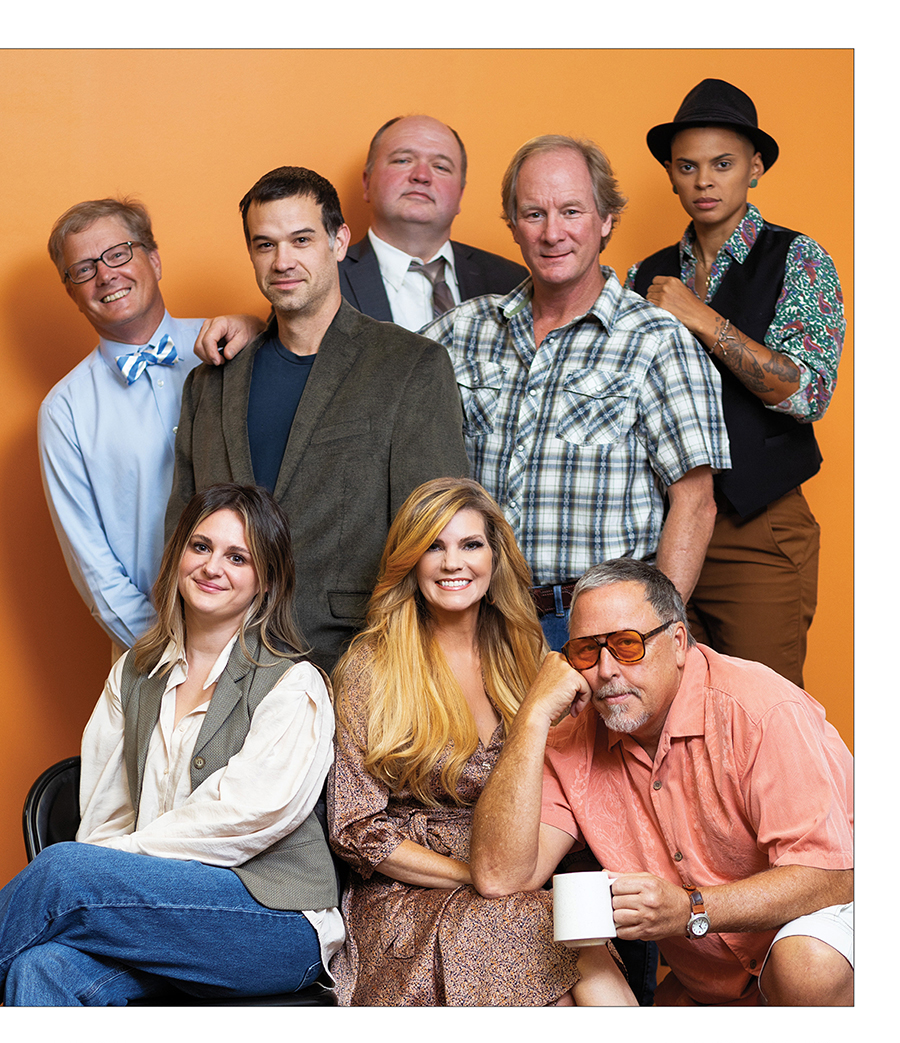
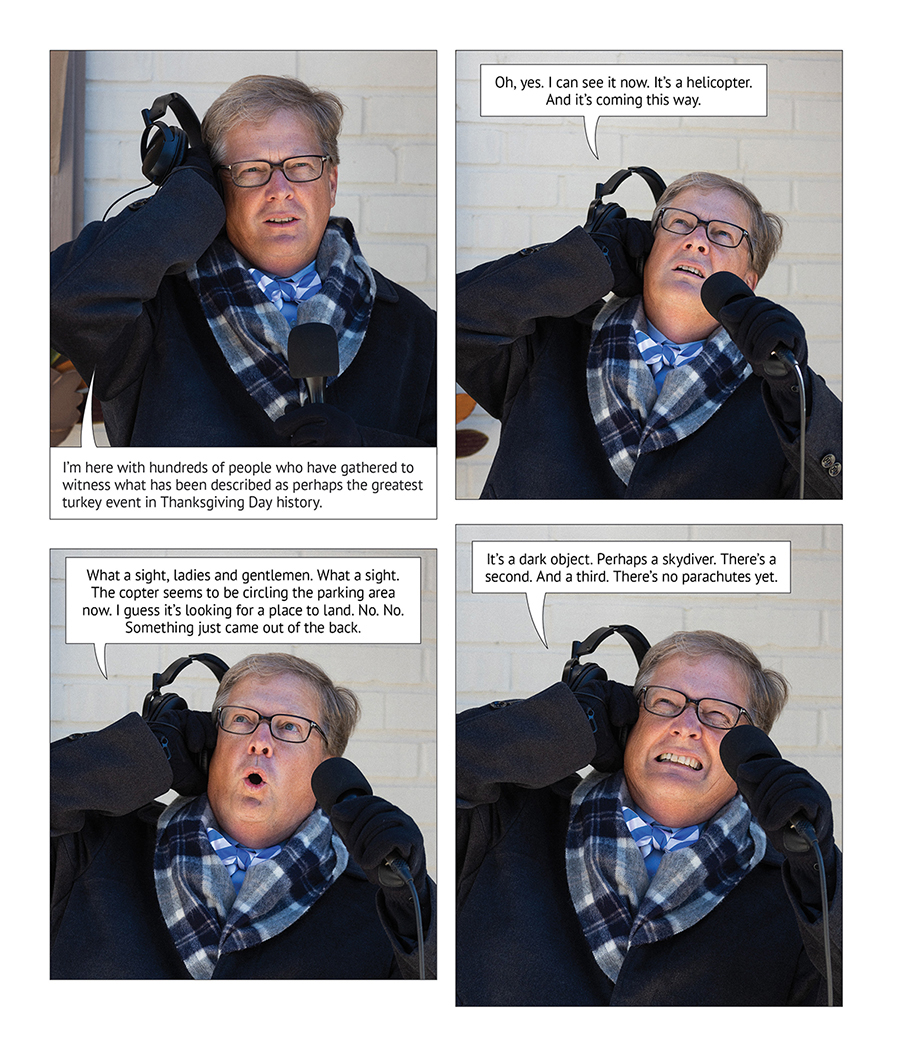
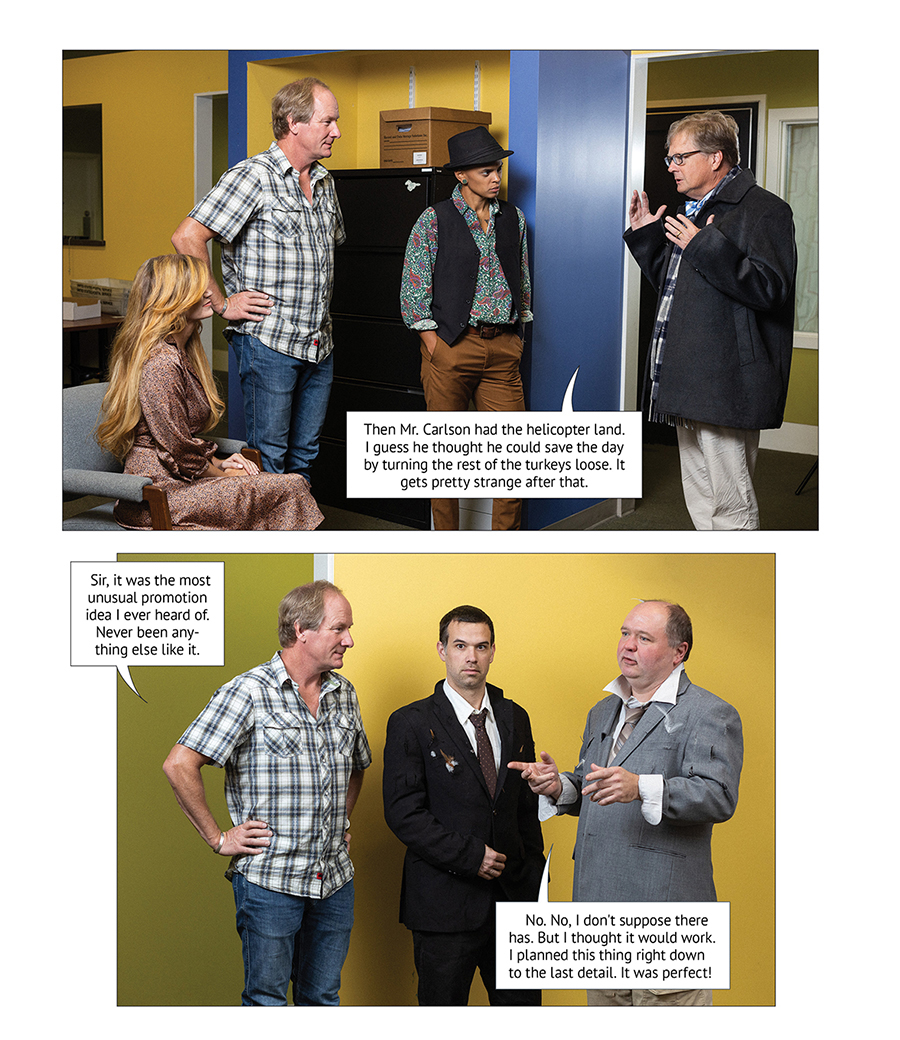
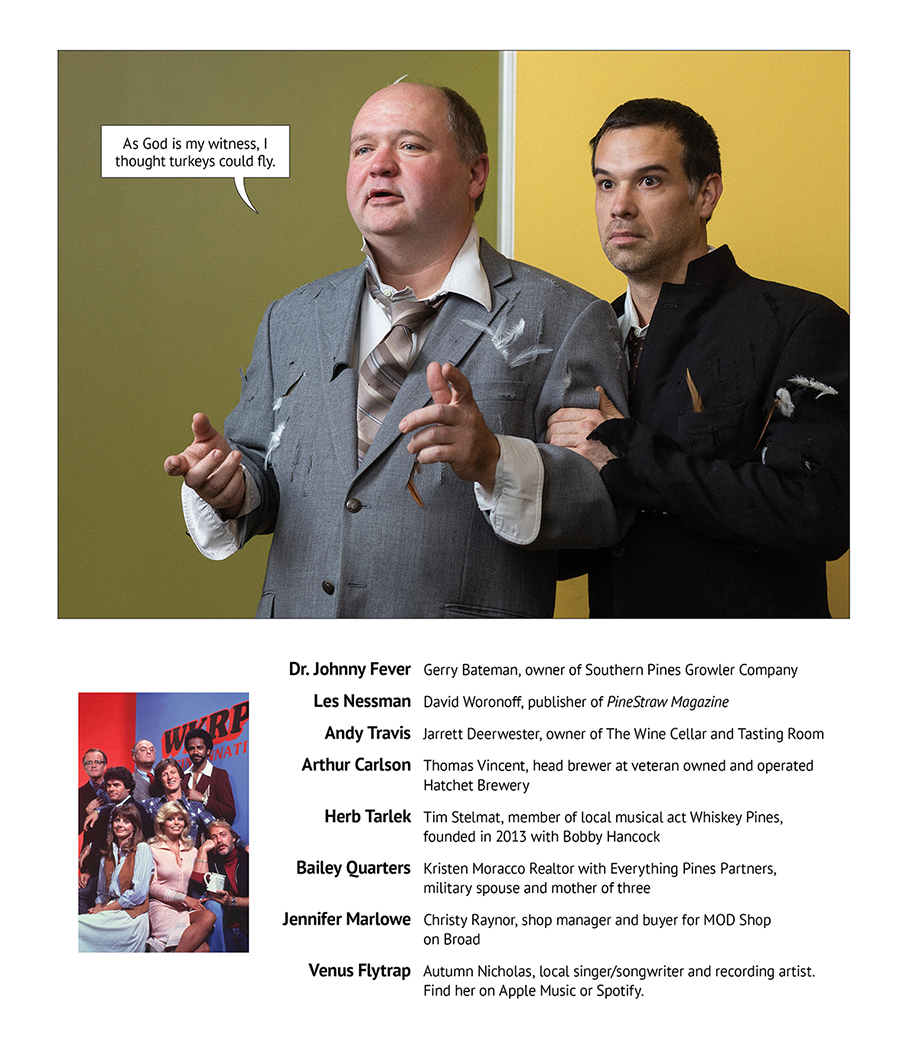
WKRP

IN MOORE COUNTY

Styled by Brady Gallagher

Photographs by Tim Sayer

Living with a Legend

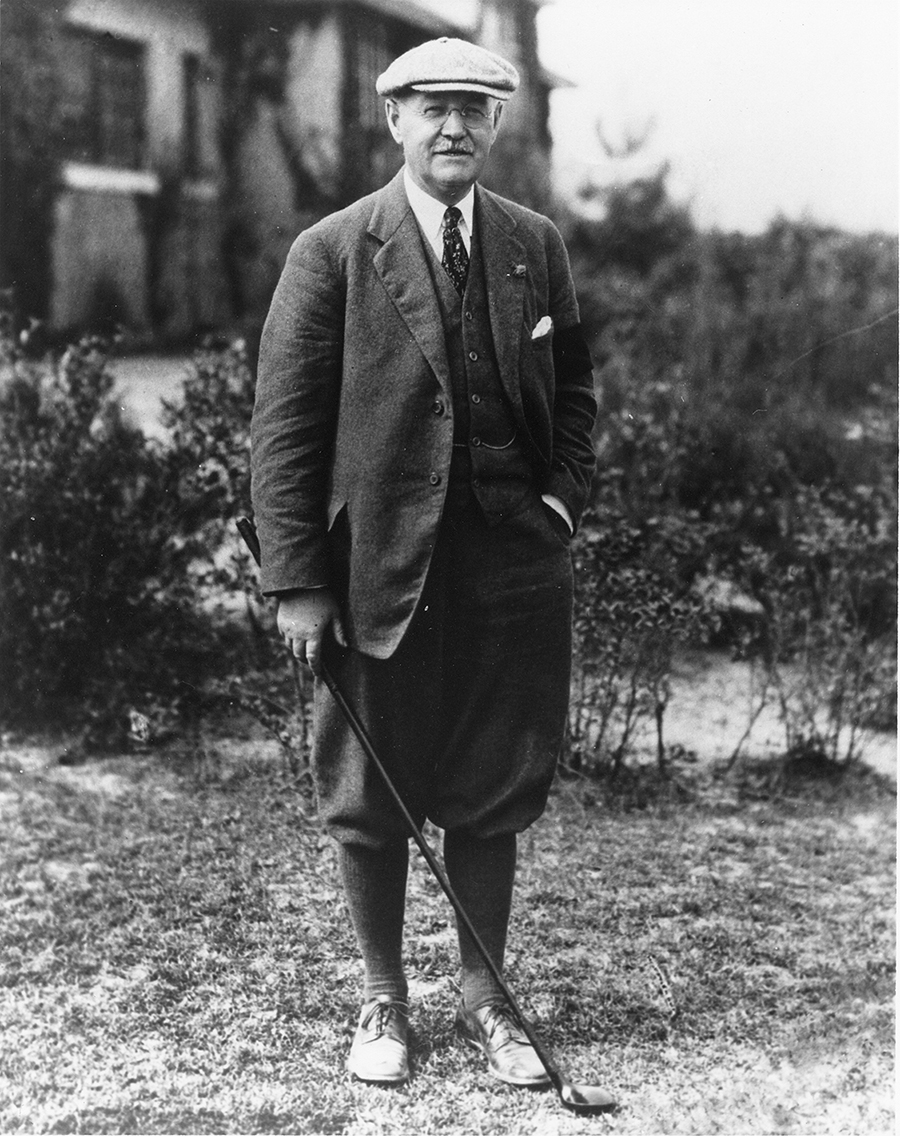
Donald Ross, up close and personal

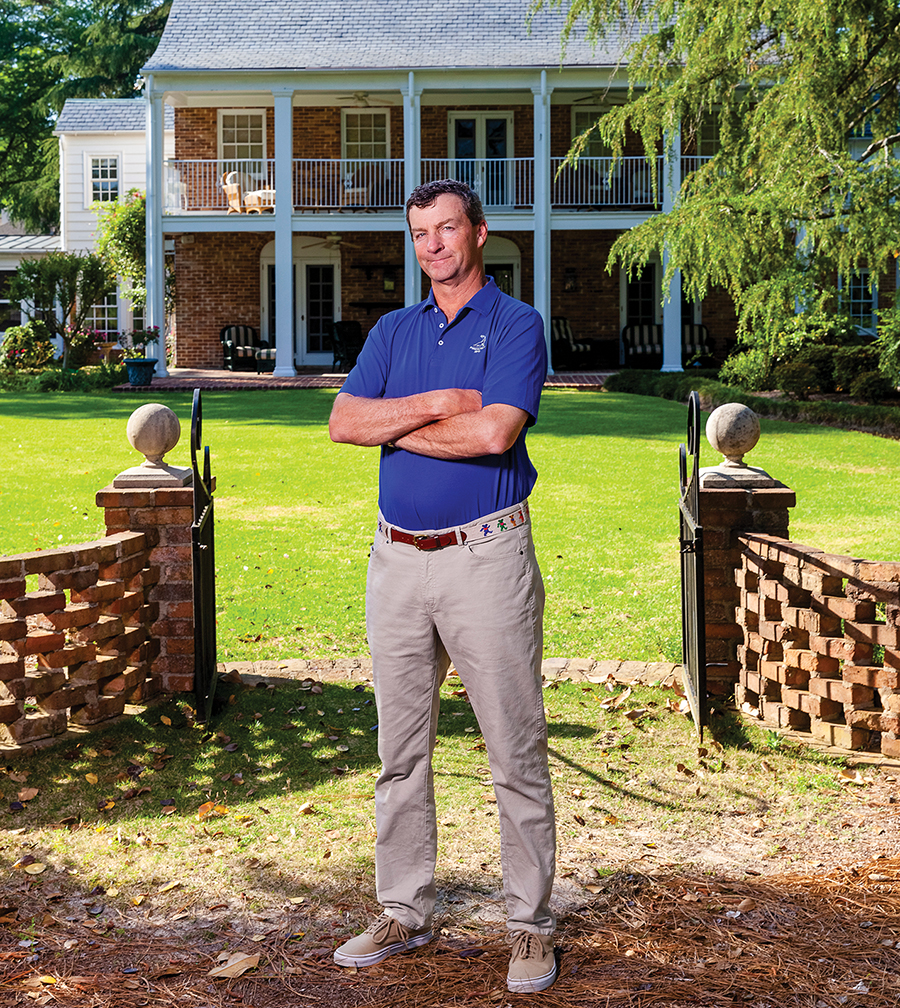
By Gil Hanse


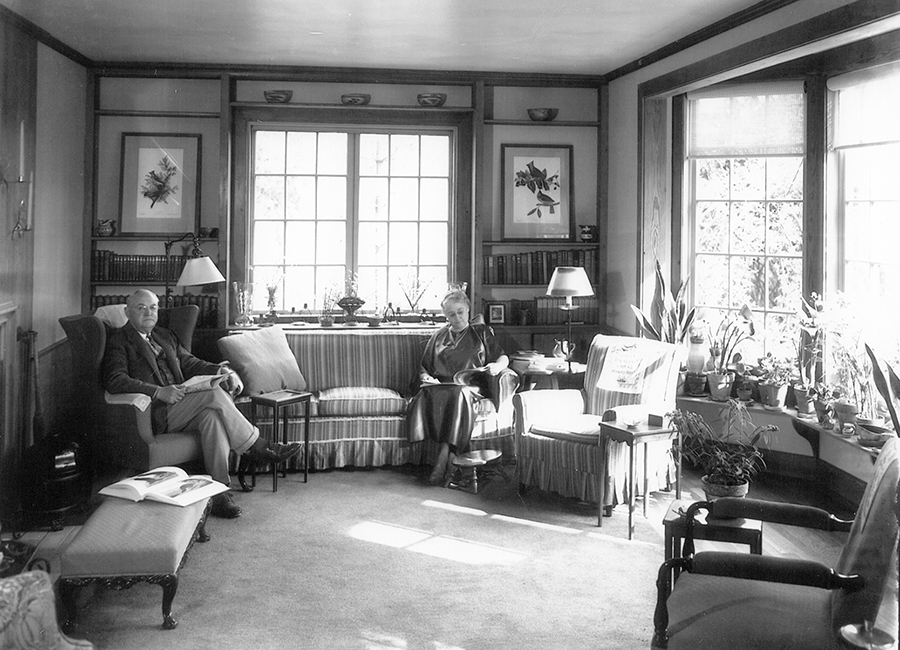
Historical photos from the Tufts Archive/Village of Pinehurst

Donald Ross was born 150 years ago this month in Dornoch, Scotland. Obviously, as a student of golf architecture, I had read about him. All of us involved in the art, and the business, of golf course design follow in his footsteps to some degree. There probably isn’t a place in America where Ross’ presence is felt more keenly than it is in Pinehurst, and my own relationship with him became more personal while I was there working on the renovation of Pinehurst’s No. 4 course.

I honestly can’t remember the first Donald Ross golf course I ever walked on. It was probably a little nine hole course up in the Catskills in New York where I went to high school. It’s called Rip Van Winkle Country Club now, and I’m sure Ross never visited it after laying it out. The first course of his that my partner, Jim Wagner, and I ever worked on was Plainfield Country Club, which I still think is one of his best. It’s not a flashy, glitzy spot. It’s not on the ocean. But pound-for-pound, as far as a piece of property, it really is spectacular. And the way he used it was incredible. Courses evolve and change and, hopefully, we’re respectful and thoughtful enough that, when we finish our work, it looks a lot like what he would have done.

When I was in the landscape architecture program at Cornell University, I would try to go and see everything I possibly could. I went to Pinehurst for the first time in the late ’80s, maybe early ’90s, on a study trip, kind of touring through that part of the country to see whatever I could see. I wouldn’t say I was particularly studying Ross’ work but, if it happened to be Ross and I was there, great. Obviously, Pinehurst was an important place to stop.

Unless you go to Seminole Golf Club or Aronimink Golf Club or Pinehurst No. 2 — among the ones he spent a ton of time on — Ross courses seldom seem spectacular but are always solid. You would never go out there and say, “Oh, my God, I’ve never seen anything like that before,” but you never left thinking it was a bad golf course or one with significant flaws. It was always just solid. That’s a helluva legacy. If you do 400-plus golf courses and the worst they are is solid, that’s pretty good.

His early stuff had to have been compromised somewhat by the fact that he was still playing professionally and still teaching. His position was golf professional. And then there was a middle phase where he transitioned from a playing career to being a golf course architect solely. Take something like the Country Club of Rochester, for example. It was built in 1916 and the greens were nice but they weren’t terribly complex. Then he came back in the late ’20s and early ’30s and added some greens. The complexity and the beauty and the aesthetics of those were off the charts.

You also see it in his plans. The early work was just stick drawings and little sketches. Then, as he started to do more and more work — and he needed those drawings to communicate to the people who were building the courses — they became more intricate and more detailed.

But the courses Ross actually spent his time on will always be the pinnacle of his work. There’s no way he could physically do all 400 and give it the time and the energy and the effort the way he did the 15 or 20 that he actually put his heart and soul into. There’s no better example of that than Pinehurst No. 2.

In 2017, when we were getting ready to work on Course 4, I ran into Bob Dedman and Tom Pashley at the Walker Cup at Los Angeles Country Club. We were chatting and Bob told me they had purchased Dornoch Cottage, Donald Ross’ house. He talked about how they were going to use it for corporate entertaining and as a resource for the resort and then he said, “But we’re not going to do any of that until you live there while you’re renovating Course 4.”

My jaw just about hit the ground. It was the nicest honor that has ever been extended to my wife, Tracey, and me while working on these projects. Bob, I think, knew how important that would be for us and how meaningful it would be. It was just an incredible opportunity.

As things are wont to happen, the renovations on the house took a little longer than they thought, so we started out in a little cottage in the village and then ultimately moved into Dornoch Cottage. How often do you get the chance to go out your back door, walk to work across one of the greatest golf courses in the world and draw inspiration from that? It’s 10 or 15 minutes walking through Course 2 to get to Course 4 and you’re looking at beautiful landforms and beautiful bunkers and greens. I know it wasn’t his desk, but sitting in his office and working on plans and drawings, it was incredible.

One night while we were there Tracey and I woke up around 3:30 in the morning. We both heard somebody say “goodnight” and we looked at each other. I’m sure it was one of us talking in our sleep but the fact that we both woke up and we both heard the exact same thing was a little scary. Hopefully, if his spirit is in the house, he was happy we were living there. I know we were.  PS

Gil Hanse is one of the world’s most respected golf course architects. His projects have included a major renovation of Pinehurst No. 4; The Cradle; The Olympic Golf Course in Rio de Janeiro, Brazil; and the Castle Stuart Golf Links in Inverness, Scotland.

Space Well Spent

Blinkbonnie is larger than life

By Deborah Salomon

Photographs by John Gessner

Styling by Matt Hollyfield


Bigger-than-big. Practically enormous. This residence is proportioned for an era of grandeur.

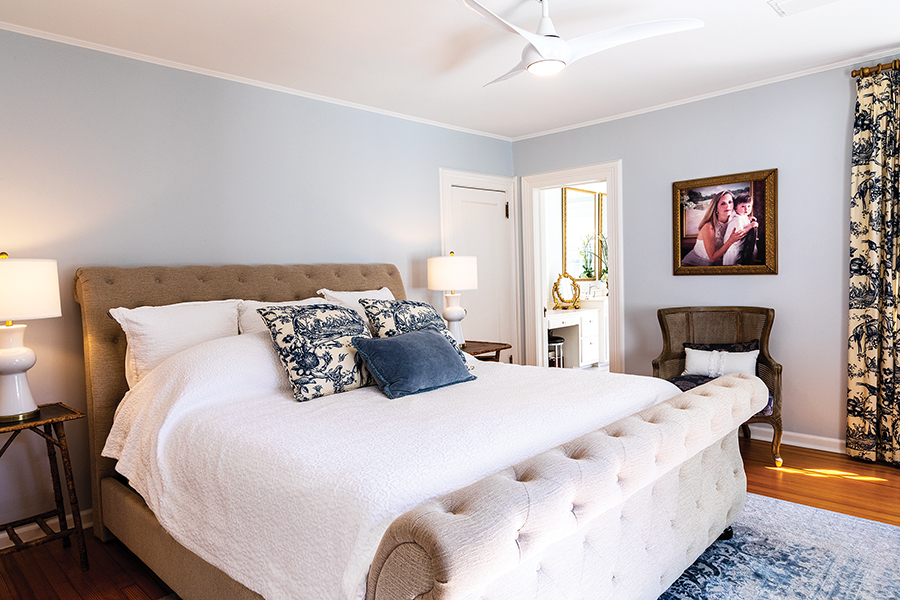
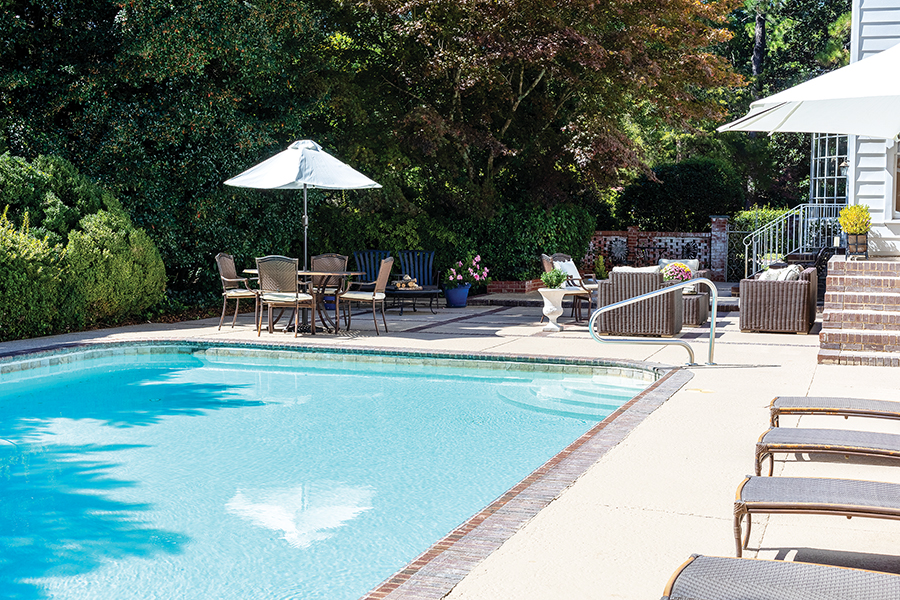
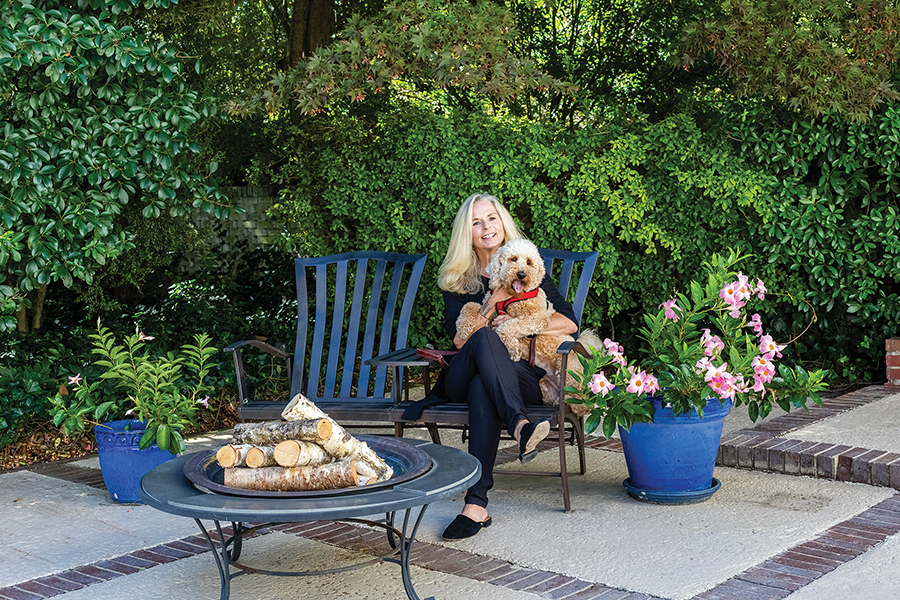
Scarlett would recognize the Tara-esque columns, while the European antiques gleam as though polished by Mr. Carson, the butler on Downton Abbey, who might appreciate the triple-sized butler’s pantry, too. Remove the runner and its length suits bowling. A grandfather clock reaches for the ceiling. The pool and pool house/sauna would eclipse those of most hotels. There are five bedrooms, six bathrooms, three home offices, a basement of ballroom dimensions, multiple gardens, even a fenced dog park for mini goldendoodle Lilly.

Just living there could be an aerobic workout.

Of course Pinehurst Old Town centenarian Blinkbonnie has been updated, enlarged and repurposed by several occupants. An added-on portico may seem incongruous to the Dutch Colonial architecture with gambrel roof, yet the house clings in spirit to an original purpose: genteel, happy times when conversation was an art and money flowed like prohibition whiskey during Pinehurst’s fashionable winter “season.”

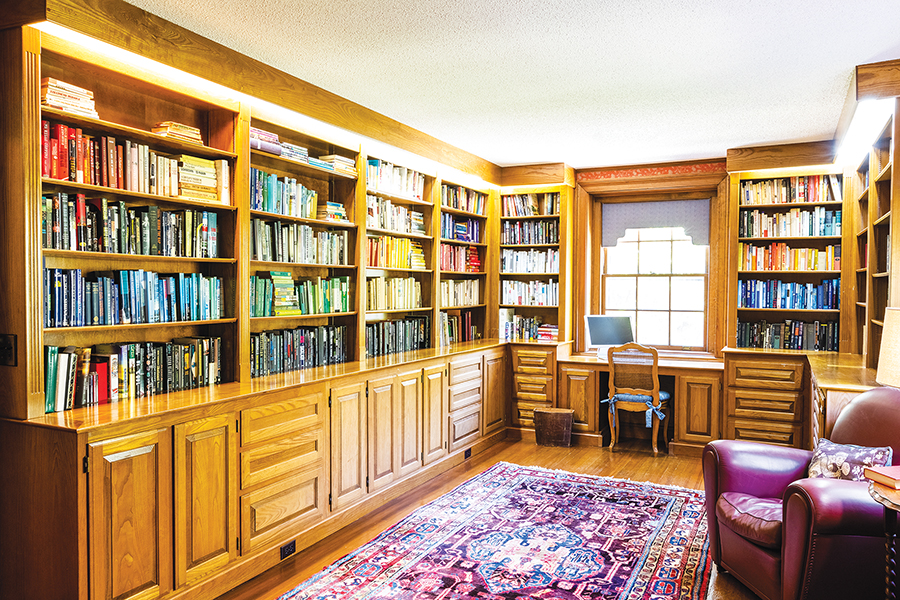
But times have changed, as has Blinkbonnie — Gaelic for “a glimpse of beauty.” Its most recent iteration: a refuge where owner Lisa Youngclaus escaped COVID by floating on the pool with her friends or, on a rainy day, dawdling in the 2,000-volume library where books are color-coded, or maybe even having a go at the full-sized billiards table in the finished basement where her son and friends once hung out.


The story starts, as do other Pinehurst homestead histories, in the early days of the 20th century. In 1917, Simon Chapin of New York, a major developer of Myrtle Beach, got word of the vacation enclave the Tuftses were building. Liking what he found, he built what is now called While-Away Cottage for his family on Blue Road and this larger estate for his sister, Mary Alice Chapin May, on nearby McCaskill. She wasn’t there long. In 1920 the house, by then owned by Dickenson Bishop, was christened Bishop’s Cottage. Several owners followed, including someone identified as “well-known sporting figure” Jay Hall, and Pinehurst mayor Steve Smith and wife, Becky.

Golf drew Bill and Lisa Youngclaus, both advertising executives living in Chicago, to Pinehurst, where they owned a weekend home at Country Club of North Carolina. After their son was born in 1996, Lisa retired and the family moved to Pinehurst full time.

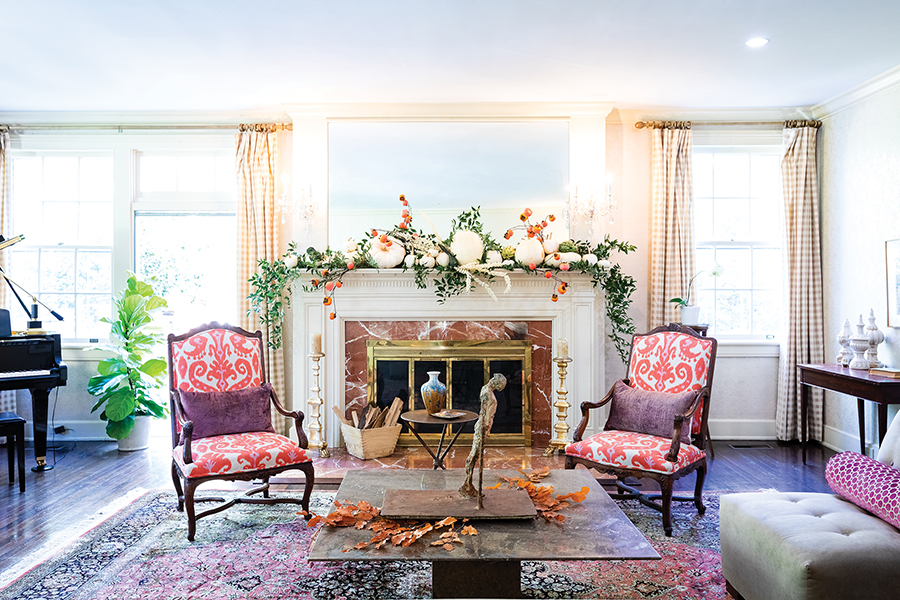
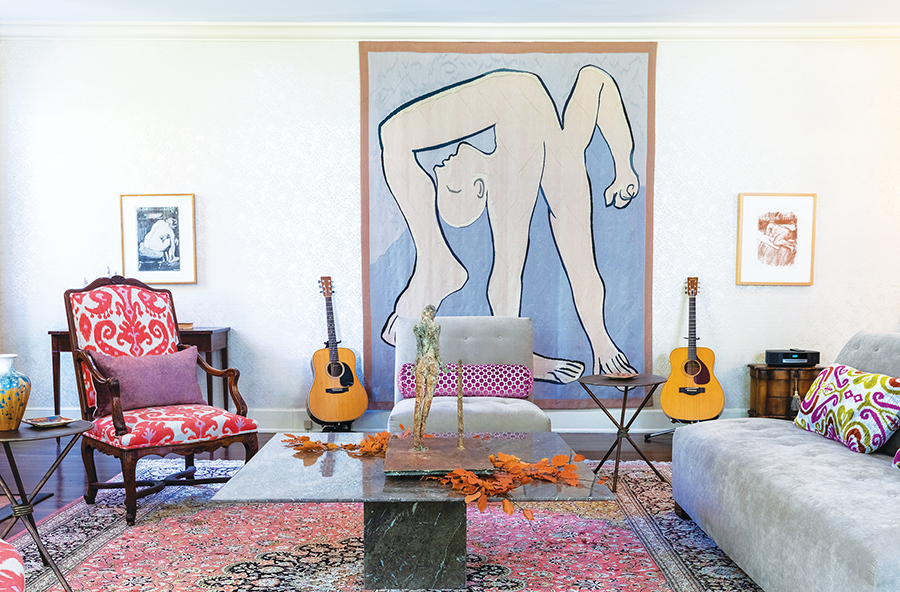
But the CCNC pied-à-terre wasn’t big enough for gatherings of the blended family. Besides, Lisa and Bill had spent a year in Paris, where she collected antiques on a grand scale, as well as art and assorted museum-quality objets begging a suitable venue. How many houses offer a double-wide foyer, intricate eyebrow moldings, bay windows, high ceilings, interesting wallpapers, chandeliers by Baccarat of Paris, a 30-foot-square living room dominated by a baby grand piano, drums, and an Aubusson tapestry of Pablo Picasso’s painting The Acrobat? The contorted abstract is flanked by contemporary armless sofas and antique French tables. Complementing this Picasso are several look-alikes Lisa found on Bald Head Island and had framed. On the floor, a silk rug from London. On the ceiling, strategically placed recessed lighting.

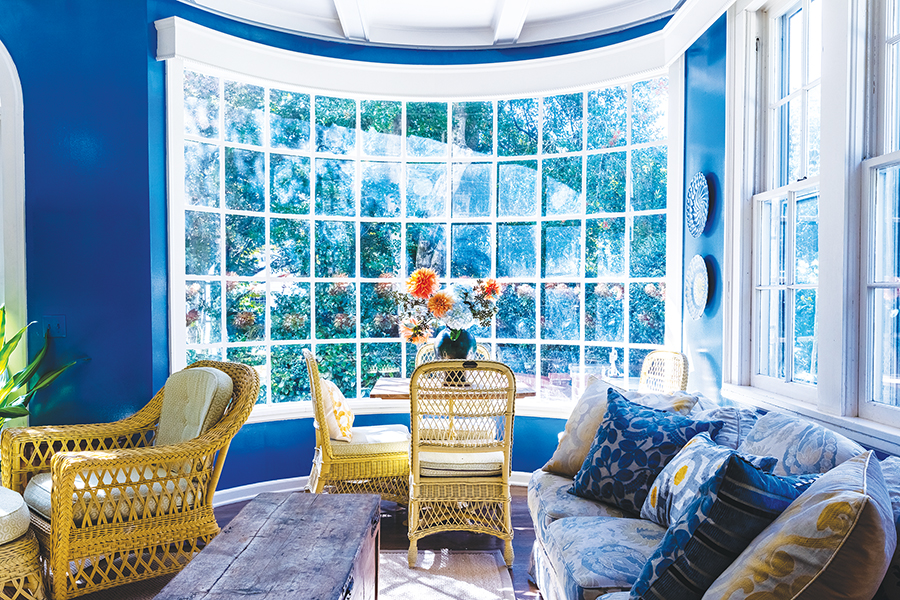
Yet, amid such splendor, Lisa chose checked gingham drapes hanging from a dowel rod. “I like to mix the old and the new,” she says, which explains a TV den with grasscloth walls, and sectional sofa in rust and sand tones that she calls her winter room. There are surprises, too, like the bathroom with a stained glass window and clawfoot tub, and a sunroom enhanced with blues, wicker and graceful ceiling details.


Throughout, a clever architect sited rooms with windows on two, sometimes three sides for maximum all-day light.

“I couldn’t believe it when we first walked around the house. I could see how our furniture fit the spaces. There was a place for everything,” including a giant French poster circa 1888, advertising an art exhibit in Brussels, that dominates the staircase landing.


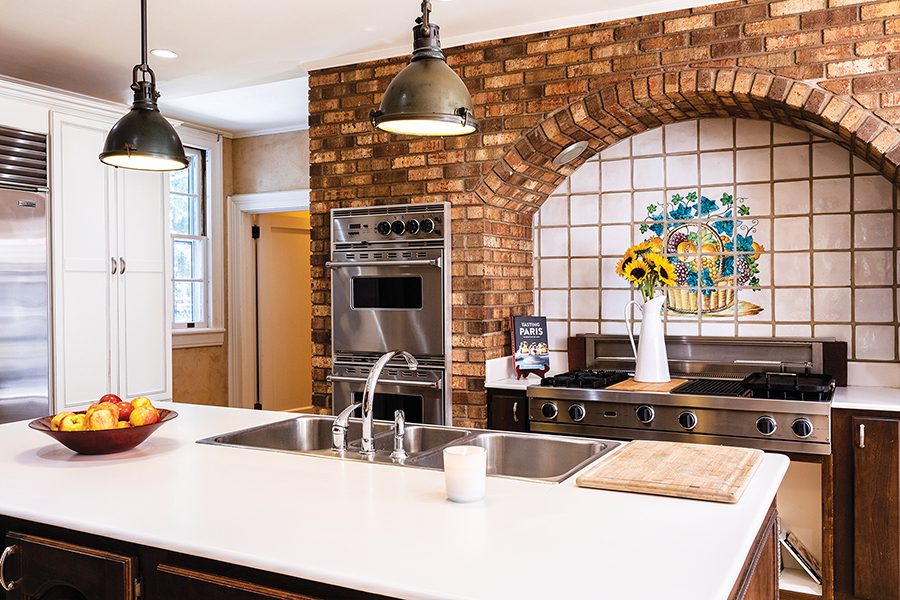
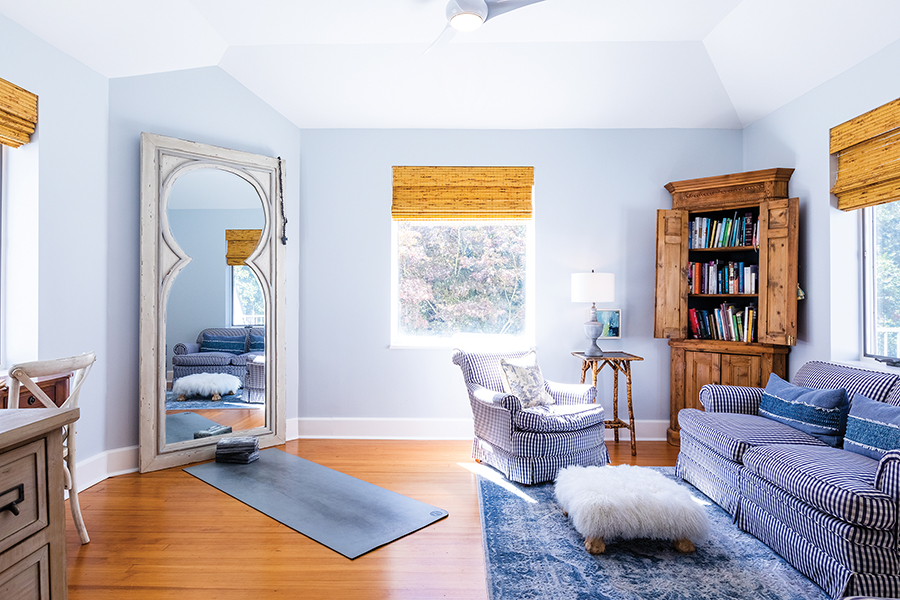
Lisa remodeled the kitchen when they moved in but left the dark wood cabinetry, which she preferred to sterile all-white. She also kept Venetian plaster walls in a creamy hue but refreshed the master suite in blues and white, which continues into an adjoining sun/yoga room, her “serene retreat.”

Lisa is a yoga instructor who has traveled to India to import icons and other merchandise for studio boutiques. In her own home she successfully juxtaposes these pieces with formal European furnishings, a 17th century tapestry and contemporary art. Yet, given copious space and absence of clutter, each piece stands out, ready to tell its story.


Time passes, circumstances change. Bill died in 2006. Their son, a musician, is still close by, but Lisa’s step-grandchildren are grown. “When your family changes you make a new family, with friends,” Lisa says, recalling a recent birthday binge given by 15 girlfriends, her sisterhood. “I’ve matured with the house, from babies to kids hanging out in the basement.” To now.

But for Lisa one thing remains constant: “When I get up in the morning and walk down the stairs I think, OMG, look at the arched windows, the doors and everything else. I’m so lucky.”   PS

Poem

Chime

We were birds then

at thirteen, a chime

of wrens chirping,

carbonated goddesses

blowing bubbles,

spilling secrets,

dancing the latest dances,

we did each others’ hair,

practiced kissing,

gossiped (a girl’s

first step toward insight),

we shook the magic eight ball,

could not imagine

a path toward our future —

we only knew we didn’t want

our mothers’ lives,

taking dictation,

cleaning up messes,

hiding tins of money,

we were angels falling,

wingless, trusting

the wind to lift

our bodies of light

far above the silver

water tower,

to let us down kindly

somewhere, anywhere

wild and broad and new.

— Debra Kaufman

Debra Kaufman’s latest collection of poetry is God Shattered.

In the Spirit

Flavor Savors

Infused syrups for myriad libations

By Tony Cross

The holidays are upon us. I know, I’m rolling my eyes, too. Time flies, and whether you’re ready or not, ’tis the season. The struggle is real, and so it begins.

These next two months can be an excuse for having a few more drinks than we normally would (you know who you are), so why not have some fun with it? If you’re playing host to family and friends, or just relaxing at home after being dragged to holiday get-togethers, here are a few syrups you can have ready in your fridge. They mix well with a variety of cocktails (shaken and stirred), and pair quite nicely with non-alcoholic beverages, too.

The syrups aren’t hard to make. The key is using fresh ingredients — sourcing them locally and being organic helps as well — and measuring your specs. Once you have these ready to go, you can interchange them in an arsenal of drinks. Included with each syrup is a cocktail that incorporates the former. Feel free to interchange some of these syrups with different spirits.


Syrup:  Ginger and Honey

1 part fresh ginger juice

1 part honey

Combine both ingredients into a blender and turn on high until honey is completely incorporated. I highly recommend sourcing local honey, and organic ginger. A quick note on juicing ginger: If you don’t have a juicer at home, stop by your local health food store or juice shop. Chances are you can buy the ginger there and have it juiced on the spot. Either way, make sure your juice sits in the fridge for a couple of hours before straining it. Ginger juice is very fibrous and you want as much of that fiber as possible to settle at the bottom of your container before using. This is called “racking.” Some might think that organic ginger is a bridge too far but I’ve been working with cold-pressed ginger juice for over five years now and I can attest, organic ginger tastes and looks better. Try it and see. Syrup holds for 2 weeks.

Cocktail:  Penicillin

2 ounces blended Scotch

3/4 ounce fresh lemon juice

3/4 ounce ginger-honey syrup

1/4 ounce Islay Single Malt Scotch Whisky

Candied ginger

In a shaking vessel, combine blended Scotch, lemon juice and ginger-honey syrup. Add ice and shake until vessel is ice cold. Double strain into a rocks glass over ice. Float your 1/4 ounce of Islay Scotch over the cocktail. Garnish with candied ginger. You can also use this syrup with gin and tequila sours.

Syrup:  Brown Sugar/Cinnamon

10 grams cinnamon sticks

1 part brown sugar

1 part cane sugar

1 part water

1 ounce Everclear grain alcohol 151 proof (optional)

Place cinnamon in a blender and blend quickly for 10 seconds. In a small pot, combine brown and cane sugars with water. Place heat on medium and stir until sugar has completely dissolved. Place the syrup in the blender with the cinnamon, and blend once again for another 10 seconds. Let the syrup cool in a container, and then strain out the solids. Refrigerate until ready to use. Syrup holds for one month — or many months if Everclear is used.

Cocktail:  Old Fashioned

2 ounces bourbon

1/4 ounce cinnamon syrup

3 dashes Angostura bitters

Orange peel

Cinnamon stick

In a stirring vessel, combine bourbon, syrup and bitters. Add ice and stir until your cocktail is both cold and water is diluted. Strain into a rocks glass over ice. Express oils from orange peel over your cocktail, dropping peel into the drink with cinnamon stick. You can use this syrup in rum and tequila old fashioneds. It also works well with tequila sours.

Syrup:  Vanilla   (Makes 2 cups)

1 1/4 cups water

1 1/4 cups light brown sugar

1/4 vanilla bean

In a small saucepan, combine the water, sugar and vanilla bean and bring to a simmer over medium-low heat, stirring until the sugar has dissolved. Remove from the heat and let stand for 30 minutes. Strain through cheesecloth into an airtight 1-pint glass container. Seal the container and store in the refrigerator for up to one month. This syrup goes well with whiskey sours and vodka sours (add muddled strawberries for the latter).

Non-Alcoholic Cocktail:  Haikara Mugicha

3 ounces charcoal-roasted barley and lapsang souchong tea (recipe below)

1/2 ounce vanilla syrup

3 dashes Angostura bitters

Orange twist

Build the drink in a double rocks glass by adding the tea, syrup and bitters over hand-carved ice. Stir well until chilled. Garnish with an orange twist.

Charcoal-Roasted Barley and  Lapsang Souchong Tea

4 cups water

1/4 cup charcoal-roasted mugicha (or barley tea)

1 1/2 teaspoons loose lapsang souchong tea leaves

Fill a 1-quart container with the water, add the teas, and let steep at room temperature for 30 minutes. Strain through a coffee filter into an airtight 1-quart glass container. Seal the container and store in the refrigerator for up to 3 days. This recipe is courtesy of famed Japanese bartender, Masahiro Urushido’s book, The Japanese Art of the Cocktail. Your ice does not have to be hand-carved unless you feel obliged.  PS
Tony Cross is a bartender (well, ex-bartender) who runs cocktail catering company Reverie Cocktails in Southern Pines.

Bookshelf

November Books

FICTION

Into the Forest, by Christina Henry, edited by Lindy Ryan

Deep in the dark forest, in a cottage that spins on birds’ legs behind a fence topped with human skulls, lives the Baba Yaga. A guardian of the water of life, she lives with her sisters and takes to the skies in a giant mortar and pestle, creating tempests as she goes. Those who come across the Baba Yaga may find help, or hindrance, or horror. She is wild, she is woman, she is witch — and these are her tales. Edited by Lindy Ryan, this collection brings together the voices of Gwendolyn Kiste, Stephanie M. Wytovich, Mercedes M. Yardley, Monique Snyman, Donna Lynch, Lisa Quigley and R. J. Joseph, with an introduction by Christina Henry.

Flight, by Lynn Steger Strong

It’s Dec. 22, and siblings Henry, Kate and Martin have traveled with their spouses to Henry’s house in upstate New York. This is the first Christmas the siblings are without their mother and the first not at their mother’s Florida house. Over the course of the next three days, old resentments and instabilities arise as the siblings, with a gaggle of children afoot, attempt to perform familiar rituals, while also trying to decide what to do with their mother’s house, their sole inheritance. As tensions rise, the whole group is forced to come together unexpectedly when a local mother and daughter need help.

We Are the Light, by Matthew Quick

Lucas Goodgame lives in Majestic, Pennsylvania, a quaint suburb that has been torn apart by a recent tragedy. Everyone in Majestic sees Lucas as a hero — everyone, that is, except Lucas himself. Insisting that his deceased wife, Darcy, visits him every night in the form of an angel, Lucas spends his time writing letters to his former Jungian analyst, Karl. It is only when Eli, an 18-year-old man the community has ostracized, begins camping out in Lucas’ backyard that an unlikely alliance takes shape, and the two embark on a journey to heal their neighbors and, most importantly, themselves. We Are the Light is an unforgettable novel about the quicksand of grief and the daily miracle of love from the bestselling author of The Silver Linings.

Foster, by Claire Keegan

It is a hot summer in rural Ireland. A child is taken by her father to live with relatives on a farm, not knowing when or if she will be brought home again. In the Kinsellas’ house, she finds an affection and warmth she has not known and slowly, in their care, begins to blossom. But there is something unspoken in this new household — where everything is so well tended to — and this summer must soon come to an end. Winner of the prestigious Davy Byrnes Award, this internationally bestselling contemporary classic is available for the first time in the U.S. in a full, stand-alone edition.


NONFICTION

Friends, Lovers and The Big Terrible Thing: A Memoir, by Matthew Perry

The star of Friends takes us behind the scenes of the hit sitcom and his struggles with addiction in this candid, funny and revelatory memoir that delivers a powerful message of hope and persistence. “Hi, my name is Matthew, although you may know me by another name. My friends call me Matty. And I should be dead.” So begins the riveting story that takes us along on his journey from childhood ambition to fame to addiction and recovery in the aftermath of a life-threatening health scare. Before the frequent hospital visits and stints in rehab, there was 5-year-old Matthew, who traveled from Montreal to Los Angeles, shuffling between his separated parents; 14-year-old Matthew, who was a nationally ranked tennis star in Canada; 24-year-old Matthew, who nabbed a coveted role as a lead cast member on the talked-about pilot then called Friends Like Us . . . and so much more. Perry lays bare the fractured family that raised him (and also left him to his own devices), the desire for recognition that drove him to fame, and the void inside him that could not be filled even by his greatest dreams coming true. But he also details the peace he’s found in sobriety and how he feels about the ubiquity of Friends, sharing stories about his castmates and other stars he met along the way. Unflinchingly honest, moving and uproariously funny, this is the book fans have been waiting for.


CHILDREN’S BOOKS

Pookie’s Thanksgiving, by Sandra Boynton

Little Pookie loves his mama and his family, but he especially loves pie! This fun celebration of food and family is the perfect Thanksgiving book for little ones. (Ages birth-3.)

How It’s Made: The Creation of Everyday Items, by Thomas Gerencer

From airplanes to basketballs to gummy vitamins, find out how they’re made in this fun tell-all title that’s perfect for any inquisitive budding scientist. (Ages 7-12.)

Terry’s Crew, by Terry Crews and Cory Thomas

Terry’s crew at his new school may not look like the typical friend group but, together, they can do anything they set their minds to! With themes of respect, hard work, school success and commitment to family and friends, this graphic novel is sure to be a hit. Available on Nov. 8. (Ages 9-12.)

Outside Nowhere, by Adam Borba

Parker Kelbrook’s father sends him halfway across the country to work on a farm alongside five other kids who find him less than charming. As Parker learns to roll up his sleeves and keep his head down, strange things start happening. After he awakens one morning to find a 1,700-pound dairy cow on the roof of a barn, he suspects that something magical and mysterious is growing in the farm’s fields. (Ages 10-13.)  PS
Compiled by Kimberly Daniels Taws and Angie Tally.