It’s been such a long, hot summer, we couldn’t resist the temptation to invite ten of our favorite contributing writers to uncage their overheated imaginations and tell us what’s really going on in the original photographs submitted by ten of our favorite photographers. The results, we think, are like fictional summer postcards from the edge . . .
Our Photographers:
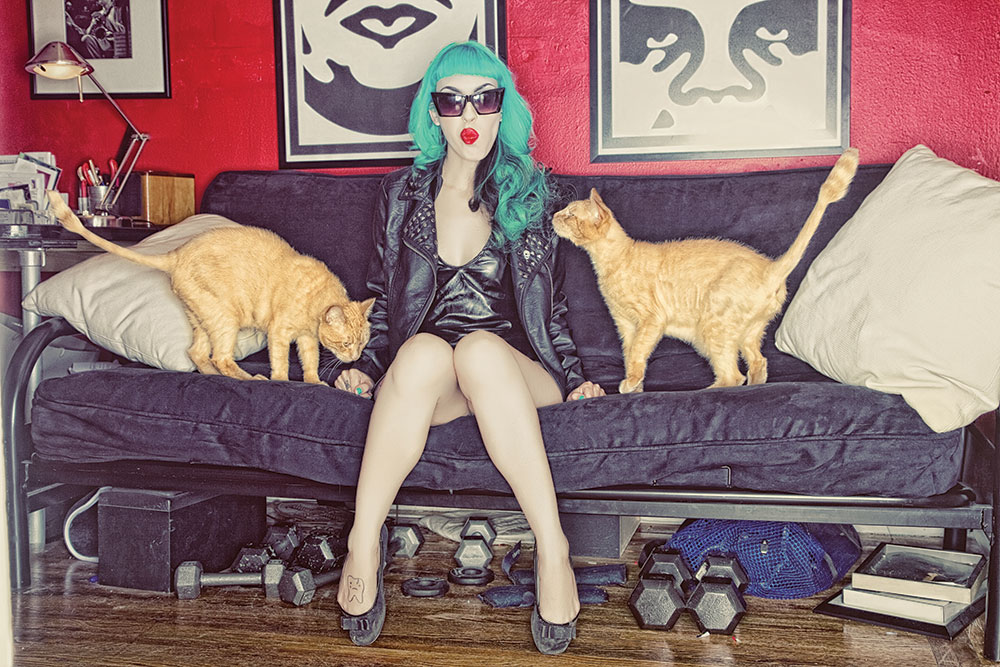
When Tim Sayer graduated from the College of Charleston with a theater degree, he did what all promising theater majors do — he waited tables. That was until he took a surfing trip to Costa Rica with some buddies and fell in love with photography. Self-taught, Sayer has had a studio in Southern Pines for twelve years. He captured performer Raquel Reed, kind of a Lady Gaga before Lady Gaga came along, in a New York City apartment.
Andrew Sherman is a freelance photographer specializing in architecture, food and lifestyle. A Maryland native and Wilmingtonian at heart, he moved away to get his MFA in photography at Savannah College of Art and Design (SCAD) but returned after finishing because there’s no place like Wilmington. He believes in the power of collaboration and works closely with his clients to produce clean, graphic, upbeat imagery. Find him roaming the city he loves with camera or cocktail in hand.
A Greensboro native, Lynn Donovan has been a swimmer, coach, actor, singer, dancer, pianist, accordion player, scuba diver and community volunteer. Starting out with a Brownie camera in the 1960s, she graduated to an SLR in the 1970s and continued shooting throughout her 30- year career with Greensboro Parks & Recreation’s City Arts/Community Services, as well as for pleasure. After retiring Donovan opened her own photography business.
Ginny Johnson has been photographing since college and remembers the good old days of developing her own film and printing images in a darkroom. She loves to shoot just about anything but has recently turned her camera lens to storm-chasing. The image used in this feature is from a tour in 2015. A Colorado native, Johnson has lived in North Carolina since 1982 and currently resides in Greensboro with her dog, Blackie, and cat, Rascal, and two horses.
Sam Froelich is a professional photographer and an award-winning independent film producer, whose films, such as Cabin Fever and George Washington, have been distributed worldwide. His best three productions all came in on time but way over budget — son Jake is currently senior at NC State, son Harrison a freshman at UNCC, and daughter Lucy a sophomore at Page High School. Froelich, born and raised in High Point, married a Greensboro girl, who made him move to the “big” city and for that he is eternally grateful.
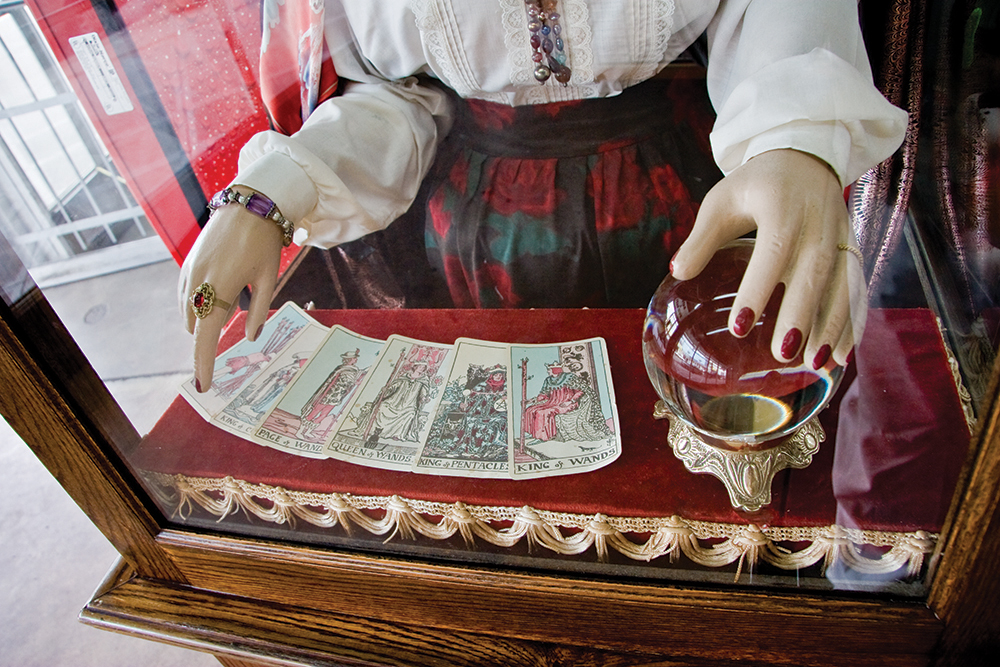
You might as well say John Gessner got his start in photography on his paper route. Growing up in the Lake Region of upstate New York, one of his customers had been a still photographer during the silent movie era. Helen Hayes had a house down the street. As a boy Gessner met the famed portrait photographer Yousuf Karsh. He was hooked. He discovered a fortune-telling machine in one of the ancient arcades in Mrytle Beach.
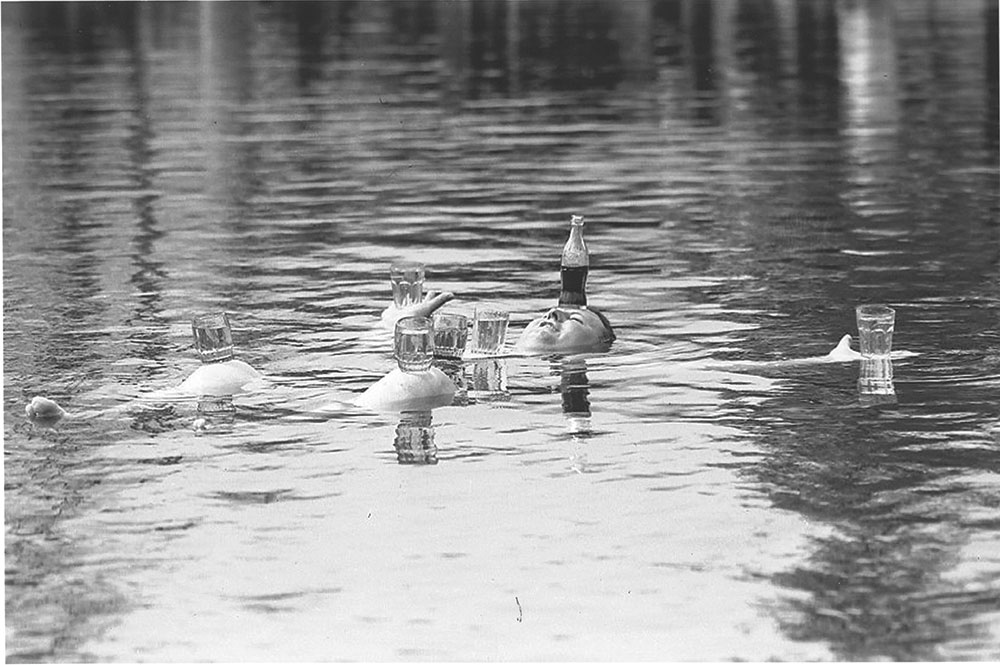
The Tufts Archives in the Given Memorial Library is the custodian of the rich history of Pinehurst. In addition to original Donald Ross golf course plans and numerous Tufts family artifacts, the archives’ collection includes 80,000 photographic negatives by John G. Hemmer spanning over 40 years of Pinehurst history. Hemmer photographed celebrities, golfers and the unique — and sometimes fanciful — life of a thriving resort, including the occasional aquatic balancing act.
Ned Leary retired from the corporate world in 2003, bought a camera at the local Best Buy and hasn’t looked back. Self-taught, he learned the basics via endless hours of internet tutorials and numerous landscape photography workshops in America’s national parks. His portfolio has evolved from fine art landscapes to include family portraits and most recently videography, where the balance of his time and pension are currently devoted.
Mark Steelman is a full-time professional photographer and works hard to ensure anyone or anything looks its absolute best. Recalling a recent stop at the convention center, he says he took a photo of a group of women. One was particularly stressed about her photo and pleaded, “You be sure to Photoshop me.” He replied, “Ma’am, I don’t mess with perfection.” Her face beamed and she gave him a kiss right in the middle of the ballroom. What’s not to love?
Laura L. Gingerich is an award-winning freelance photographer. Her talent and gritty spirit have led her to the far corners of the world documenting relief and disaster assistance, and providing images that tell a story when words simply can’t. When she’s not on assignment, Gingerich’s popular photography workshops inspire beginners to advanced enthusiasts. You can contact her by sending an email to stoptime325@gmail.com.
Our Writers:
Virginia Holman writes both feature stories and her column “Excursions” for Salt. Her passions include kayaking, birding, teaching creative writing at UNCW and conjuring the siren songs from our salty marshlands. Her memoir of her mother’s untreated schizophrenia during the 1970s, Rescuing Patty Hearst, won a National Alliance on Mental Illness Outstanding Literature Award. She’s also been awarded a Pushcart Prize, a North Carolina Arts Council Fellowship, and a Carter Center Mental Health Journalism Fellowship.
Maggie Dodson is the eldest and wisest child of James Dodson. She’s a reluctant New Yorker, avid biker, terrible photographer, stinky cheese lover, Stevie Nicks enthusiast, and aspiring film writer. Currently, she is copywriting her heart out for a large Manhattan-based PR firm, making short movies in her spare time, and tending to every need and want of her cinnamon-colored beagle, Billie Holiday.
Billy Ingram is OG, Original Greensboro, but spent one of his lifetimes as a movie poster designer in Beverly Hills, California. A frequent contributor to O.Henry, Ingram has written about popular culture, art and Greensboro history. His latest book, Hamburger(squared), is a collection of short essays about the city he grew up in. The volume is available at the Greensboro Historical Museum, Amazon.com and your favorite bookstore.
Ross Howell Jr. published the historical novel Forsaken with NewSouth Books of Montgomery, Alabama, in February 2016. The novel was selected as an “Okra Pick” by the Southern Independent Booksellers Alliance (SIBA), was called “superior historical fiction detailing a cruel national past,” in Forward, and noted by Southern Living as “a solid entry into the Southern canon.” Howell is currently at work on a new novel and writes regularly for O.Henry.
Maria Johnson is a contributing editor of O.Henry. Since the magazine’s founding five years ago, she has written humor columns and feature stories. A native of Kentucky, Johnson moved to North Carolina for a newspaper job in 1983. She has won several state and national awards for her journalism. She and her husband have called Greensboro home for more than 30 years.
Jim Moriarty is the new senior editor at PineStraw and an old golf writer. Author of two golf novels, he traveled the PGA Tour for thirty-five years writing and taking photographs for Golf World and Golf Digest. His most recent book of essays, “Playing Through,” will be released in October. He can be found at his favorite public house, affectionately referred to by at least one patron as the Bitter and Twisted.
Stephen Smith is a retired professor, a current poet and graceful voice from PineStraw’s earliest days to now. His poems, stories, columns and reviews have appeared in many periodicals and anthologies. He is the author of seven previous books of poetry and prose and is the recipient the Poetry Northwest Young Poet’s Prize, the Zoe Kincaid Brockman Prize for poetry, and four North Carolina Press awards.
Until this summer Serena Brown was living in Southern Pines, where she worked as senior editor of PineStraw magazine. Prior to that she was part of the award-winning team at the BBC’s prestigious arts documentary series Arena. A native Briton, Brown returned recently to the misty shores of her home country. She is now unpacking and trying very hard to remember which box contains an umbrella.
Gwenyfar Rohler is a prolific writer, reader and archivist. Her writing can be found on the pages of Salt in her column“Stagelife / Screenlife” and “Omnivorous Reader.” As a founding member of Luddites United for Preservation, she spends her days managing her family’s bookshop on Wilmington’s Front Street and in her spare time, restoring two pre-computer-age cars. She wrote this bio by lantern and sent it by pigeon.
Mark Holmberg is a writer who splits his time between Wilmington and Richmond, Virginia, where he writes for The Richmond Times-Dispatch and WVTR.com. He enjoys roaming with a camera in hand or surfing and fishing in coastal Carolina. He believes there’s some room for good ol’ printed words about believers and strays and adventurers who know anger and division make us weaker and easier to control, and that love is stronger than fear.
Play Again
Story by Jim Moriarty • Photograph by John Gessner
Vickie Wilkes was a summer girl.
The Smith brothers, Billy and Er-Er, knew when to expect her the way water knows when to boil. She was from Lake City, not Gypsy, where they lived. Just like a lot of people from across the water, she spent the hot months in a cottage on the shore, building fires on the beach and Saturday nights at the amusement park. Every summer Vickie Wilkes got a little taller, a little blonder and a little, well, bigger. This escaped the notice of exactly no one, in particular Billy and Er-Er, a set of twins so similar the only way to tell them apart was because one of them had trouble pulling the starting cord on his sentences and no one liked the name Um-Um.
They watched each other eat cherry sno-cones, biting off the tips at the bottom of the paper holders to suck out the last drops. They rode three abreast on the old wooden roller coaster that moaned so badly it sounded like it was about to die of exhaustion. And they ran for the new attraction, the bumper cars with the tall poles that had floppy metal tongues on top that licked the ceiling and gave off sparks. Billy and Er-Er believed they’d scouted out which cars were the fastest ones and made straight for them the second the gate opened to make sure Vickie Wilkes got trapped in one of the slow jobs they could bang into over and over again.
“Hey,” Billy said when the three of them came stumbling out of the cage of cars. “Look at that.” He pointed at Madam Magian, the fortune telling machine straight across the midway.
Billy and Er-Er traded elbow jabs. They looked at Madam Magian. They looked at Vickie Wilkes. The Madam. The girl. They couldn’t believe they hadn’t seen it before.
“What?” Vickie asked.
“Um, um, you’re just alike,” Er-Er said.
Now, whether Vickie Wilkes had grown into it over the winter or Madam Magian had been refurbished in the off-season, there was no denying the blonde in the glass case looked as close to a dead ringer for the girl from Lake City as Billy looked like Er-Er.
“Do not,” Vickie protested in defense of her humanity.
“Do, too,” Billy said.
“Why, why don’t we ask her?” Er-Er said. They ran to Madam Magian. Billy put a quarter in and cranked the handle, two turns, like a gumball machine. The crystal ball glowed from underneath. Gears meshed deep inside like a gastrointestinal disorder. The fortune-teller’s satin-covered arm hovered above the magic cards in front of her, moving back and forth until it clunked into place. The forefinger of fate with its red nail polish — for that was the color fate always came in — stabbed the Queen of Wands. A small card appeared in the slot below. Vickie used both hands to pinch the corners and pull it out.
The crystal gazer sees a great deal
of happiness in store for you. Twice
as much to look at, twice as much to love.
PLAY AGAIN!
All summer. And maybe, um, um, forever.
The Mother of Invention
Story by Stephen E. Smith • photograph from the Tufts Archives
Lacey Pekerman, Reliable Used Autos’ Salesman of the Month for August 1933, was seeking inner peace. He’d just sold fourteen rusty rattletraps, surpassing his nearest competitor, salesman Inky Chavis, by five clunkers, and achieving an all-time monthly record for the dealership. A drink or two and he’d be free of the karmic guilt that accompanies the sale of a used car of questionable dependability to an unsuspecting rube. Or, in this instance, fourteen unsuspecting rubes. As soon as the whisky buzz hit his prefrontal cortex, he planned on kicking back and doing what he liked to do best — float in cool water and guzzle hooch nonstop.
The Twenty-first Amendment would soon repeal Prohibition and Pekerman would no longer have to do his drinking alone on a scum-covered pond, but for now he was content to lull away the hours without the annoyance of unwanted company or a surprise visit from Eliot Ness and the Untouchables. To that end, his agile mind, always quick to grasp the possible, had conceived a means by which he could avoid leaving the water to refill his glass with moonshine or grab his favorite chaser, a lukewarm Coca-Cola.
A man of greater ambition and lesser intelligence might have constructed a small raft from an inner tube and a few stray boards and placed his drinks and chaser on top. But that option would have required effort, a commodity which Pekerman never expended without discomfort. No, he’d come up with a better plan. If he did not have access to a bar he could belly up to, he would turn his belly into a bar. After all, a man of his bulk was as buoyant as a blimp and could bob effortlessly in calm water for hours on end.
Had Pekerman been familiar with the principles of Archimedes, he might have cried “Eureka!” as he slipped off his clothes, reclined in the cool water and began balancing the first two brimming tumblers on his knobby knees. From there the plan evolved of its own volition. He placed the cola bottle on his forehead, two more glasses balanced themselves nicely on his slightly distended belly, and the remaining tumblers he held in his open palms. Flexing his ample buttocks, he propelled himself gently into the center of the pond where he floated languidly, sunlight reflecting off the glistening glassware — and for a moment, one blessed moment, he achieved a state of Nirvana-like tranquility.
Then he heard a car pull off the road and the driver and passenger scramble down the embankment to the edge of the pond. “Who’s there?” Pekerman asked.
“It’s Clyde Barrow and Bonnie Parker,” a man’s voice answered. “What the hell are you doing?
“I’m balancing glasses of whisky,” Pekerman yelled back.
“Do what?” Bonnie asked. “Don’t you have a job?”
“Yeah,” Pekerman answered, “I’m a crackerjack used car salesman.”
“Well,” Clyde said, “this calls for a little target practice.”
That’s when Lacey Pekerman recognized the unmistakable click-clack of a pump-action shotgun.
Silence of the Frogs
Story by Serena Brown • Photograph by Ned Leary
“Hello?”
“Oh, Shelby, hi, it’s Beth. Thank goodness you’re there. Will you do me a big favor?”
“Of course. What do you need?”
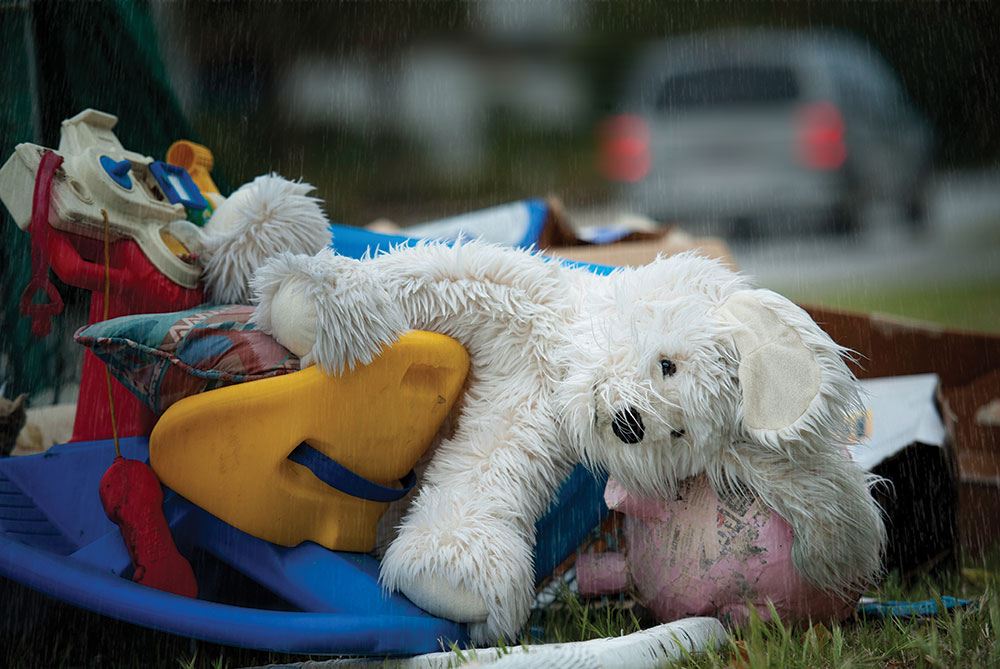
“Will you run out and look at the end of our drive? We left a load of stuff out there for the trash men, well, anyone really, to pick up. Can you see if we left a white, stuffed dog? If it’s still there?”
“Yep. No problem. Let me just pick up a flashlight and I’ll walk down there now. You still on the road?”
“No. We pulled off for the night about an hour ago. Yes, honey, I’m talking to her right now. Mommy will be off the phone in just a minute. No. No Dora now, it’s too late. OK, one episode. Just one. Excuse me, Shelby, yes, we’re in a motel. The Star Mountain one.”
“Which now?”
“Oh, no, sorry Shel, not us. I was talking to Jennifer. Star Mountain’s in her TV show. We’re somewhere in Georgia, I think. Maybe Tennessee. There was a state line we crossed round about dark. Then Jennifer started fussing. It wasn’t but ten minutes ago but it feels like ten hours. Oh, I can hear the frogs at your end. I miss them already.”
“You don’t have frogs there?”
“I don’t know. Not where we are right now anyway. All I can hear is Nickelodeon. Ow!”
“Sorry love, I was whistling for Boyce. Damn dog’s made a break for the Stevens’ trash. Boyce!”
“Did it stop raining?”
“Yeah. Pretty soon after you left. BOYCE!”
“Shel?”
Rustle shuffle rustle. “BOYCE!” Shuffle rustle rustle. “BOYCE! Get your ass back here!”
“Shel. Are you there?”
“Yeah. Hi. The Stevenses throw out a lot of food.”
“Oh.”
“What else do you need?”
“When you get to our house, can you go round to the dog kennel?”
“Did y’all forget the dog?”
“I think we’ve got him. I don’t know anymore. I don’t know why we had a kennel, he never went in there. Anyway, on the tree behind it there’s a birdhouse. There’s a keepsake box inside it. Please, will you take it out and burn it?”
“BOYCE!”
“Shelby? There’s a box in the birdhouse. Please burn it.”
“Surely.”
“Thank you, Shel. Thank you. I’d better go. I need to work out where we’re heading tomorrow.”
“Your stuffed animal’s here. Boyce has got it now. BOYCE! Drop it!”
“It’s OK. He can keep it.”
“Thanks. His tail’s wagging. Boyce, not the animal. But he looks pretty happy too.”
“Good. Thanks, Shel.”
“Anytime. I’ll say goodbye now, but I’m going to hang up back at the house so you can hear the frogs, OK?”
“Yeah. Bye, Shel.”
“Goodbye, Beth. Send a postcard. Here are the frogs.”
Brand New Me
Story by Maggie Dodson • Photograph by Tim Sayer
Dear Rob,
I got your postcard from rehab. It looks like a very restorative location. I suppose it makes sense that sweeping views of the ocean and 24-hour hot yoga have incredible healing properties. I sure do wish you’d send some of those properties my way to repair the hole you punched in my wall.
Gratefully no longer yours,
Penny
Dear Karen,
Operation self-love is in full effect. Yesterday I burned all of Rob’s old shirts and ate not one — but four brownies. They were divine. On Mom’s advice I took up Web therapy and started chatting with a woman named Promise. She seems promising. And expensive.
Later, on a drive through the south side of town, the sun was shining, Jimmy Buffett was on the radio, and I stopped by a garage sale and picked up a box of dumbbells. Maybe my dream of becoming a weightlifting, buff-goddess is in my future after all. Who knew?
Give Jo-Jo a kiss for me.
Xo
Penny
Dear Amazon Customer Service,
I wanted to reach out and say “thank you” to Joyce, the woman who answered my phone call on Sunday evening and endured the gruesome details of how my relationship ended in what can only be described as a fiery ball of hell. I didn’t mean to break down over my purchase of bedazzled magenta curtains, but Joyce met my sobs with patience, kindness and wisdom. She offered advice, noting that the healing process takes time, comes in many shapes and forms and that there’s always solace in a big piece of apple pie. Human kindness can be hard to come by these days, especially in the world of online shopping, but Joyce’s sweetness will stick with me. You’ve got a great woman on your
customer-care team.
Also, thank you for the full refund. On further thought, plain white curtains were better suited to my tastes and less glaring.
A satisfied customer,
Penny
Dear Application Manager,
I am writing in relation to the two cats up for adoption on the Furry Friends website, Betty Friedan and Judy Bloom. I’m in the midst a personal journey and though I’ve taken it in stride — new job, new hair color, new mindset — I find nights get lonely when adopting a new world philosophy. I feel two felines are the purrfect pair for my progressive lifestyle.
As I mentioned, I’ve just begun a new job and I’m thriving. Outside of work, I bake, garden, get tattoos I don’t tell my mother about and recite poetry at a coffee shop downtown. I excel at feeding animals on time and letting go of things that aren’t good for me. Some say I’m a force to be reckoned with but my sister says I’ve got a good heart . . . I just need to find a person to nurture it.
So while I’m searching for Mr. Right, Betty and Judy would bring me comfort and provide me with cuddles when I need them most.
Eagerly awaiting your response,
Penny
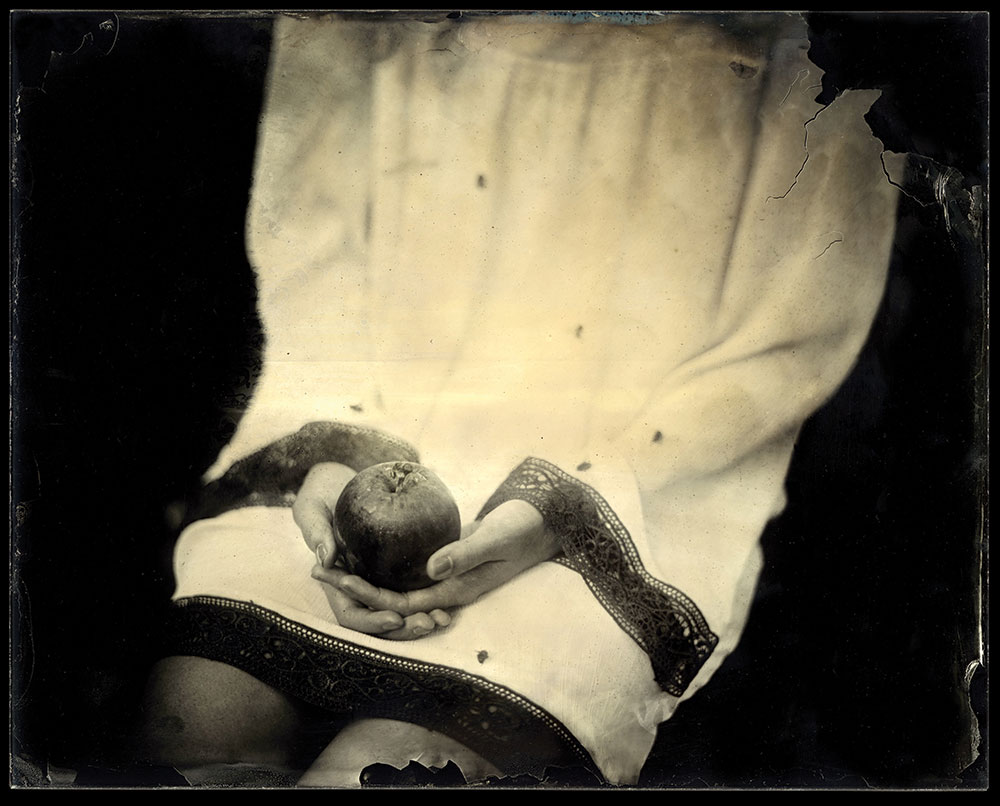
Black Limbertwig
Story by Virginia Holman • Photograph by Andrew Sherman
Each Sunday, Great Grandmother Zelia, propped in her wingback chair, declared she wished to see one place before she died, her old farm. No one could bear to tell her it was gone, sold by her great nephew soon after she’d moved to assisted living. Her facility was good and the staff generous, but it took a lifetime’s assets and her monthly Social Security check to secure good care. Mother politely entertained the notion of a trip to the farm, so as not to crush Zelia’s spirit, but not for too long, because that would raise her hopes. Zelia was easily distracted, so in that way, the conversation was deferred.
Two years before Zelia died, she offered me her sturdy 1971 Buick Estate station wagon as a sixteenth birthday present. For two decades she’d driven it to the holy trinity: Safeway, the post office, and the Caledonia Methodist Church. 23,000 miles. Mint, except for some rust, and free, or so I thought.
Soon, I was called upon to run small errands. In time, my duties grew. One morning, I was summoned to take Zelia to her cardiology appointment. Patsy, her nurse at assisted living, wheeled her to the wagon, and tucked her into the passenger’s seat.
“See you at supper, Mrs. Woods,” she said and patted her hand flat against the window to say good-bye.
Patsy had sprayed Zelia’s hair a bit, which looked odd, like a fluff of cotton candy. Usually, Zelia wore it parted simply on the side with a tidy row of bangs. Teased up like this, her scalp shone through, pink and alive.
“Thank you for taking me to the farm, dear,” Zelia said with a sigh.
“The farm?” I said. Sly old Zelia. Her face was mapped with creases so deep you had to study her features to see what she used to look like. Her eyes were the color of new leaves. I tapped my fingers on the steering wheel. Zelia and I were now both too old for my mother’s scoldings. I’d languished that summer, bored to a stupor. I earned some money babysitting for women in Forest View who dressed in silk shantung to play bridge and drink with one another. Absurd. The world was absurd, my new favorite word, and I pronounced the s like a z, which I’d picked up from plump Mrs. Sterling, who’d once lived in Stockholm for an entire year, and seemed impossibly sophisticated.
“All right, Zelia,” I said. What were forty miles and a missed appointment?
As a child, the farm seemed remote, an interminable journey from rolling green field to rolling green field. Now it was traffic and stores and fumes. The farms were gone, subdivided and replaced with houses so close together you could almost pass the sugar from one kitchen window to another.
Along the way to her old farm, Zelia told me of her marriage to Henry Woods, and of their glorious month-long honeymoon across the Southeast. Henry had arranged to stop at successful farms along the way to learn from more experienced farmers. Some gave him seeds, which he labeled and placed in coffee cans. At the end of the final visit, an old farmer and his wife dug up a sapling from their orchard as a wedding gift, a Black Limbertwig apple tree.
Henry, she said, tended that tree as if his success as a farmer depended upon it. He picked a spot somewhat sheltered from the wind, dug the hole, softened the soil, then gently flayed the roots with his thumbnail. Their soil wasn’t rich, so when the limbs seemed to droop as it grew Zelia was concerned, but not Henry. By the second winter, it had fruit buds. The third summer, it fruited. That fall he took a photo: his lovely Zelia with a perfect Black Limbertwig apple, the first ever in Caledonia. Eight months later their first girl, Rose, was born.
I started to tremble as Zelia and I got closer to the old Woods’ farm, until I understood that my mother’s persistent refusals were generous. What good could come from replacing Zelia’s cherished memories with the terrible fact of its ruin? I pretended to be lost, killing time until I became so turned around I had to stop for directions at a small, two-pump general store on the outskirts of town. Beside the store was a field that needed bush-hogging. Orange daylilies ran wild in the ditches. There was a derelict barn, and beyond it, like a blessing, a small orchard, the trees gnarled and blighted, but still fruiting.
“Look, Zelia,” I said. “Limbertwigs.” I couldn’t walk her to the trees, so she waited in the wagon as I trudged through the field, trespassing. I picked as many apples as I could carry in the front of my untucked shirt. Her old Estate smelled of cider the whole drive back.
When I returned to assisted living with Zelia, my mother was waiting outside beside Patsy. She flew out to the parking lot in a purple-lipped fit, but when she saw Zelia dozing with the unripe apples in her lap, she quietly opened the back door and slid in behind me. We shared one of those tart, rough-skinned apples right there, while Zelia snored and the engine ticked in the heat. Tears poured down my mother’s face. I wasn’t quite sure what to make of them.
I saved those seeds and used them over the years to start three separate orchards. Are they Henry’s Black Limbertwigs? Why, they must be, for when I gather those apples and close my eyes, there’s my mother and there’s Zelia — conjured clearer than any memory — almost close enough to touch.

Catamount
Story by Ross Howell Jr. • Photograph by Lynn Donovan
Whit added honey to the chai, tapped the spoon on the sink and carried the mug to the glass doors overlooking the gorge.
His wife sat on the deck in a chair by the railing. She was wearing his wool coat and cap with earflaps from his years at Bowdoin. Her pink bandanna peeked from under the cap.
He cracked the door.
“Robyn?” he said. “Won’t you come in? It’s cold as the bejesus.”
Her face was pale.
“No,” she said. “I like it.” The mug steamed the glass.
He stepped outside and handed her the tea.
“See if it’s all right,” he said.
She took the mug and sipped, then smiled and nodded.
“Perfect,” she said. She pointed to the sky. Her mitten looked like a big paw.
“See the belt?” she asked.
He saw three stars in a row.
“Yes,” he said. “Orion, the hunter.”
She sipped, cradling the mug with her mittens.
“I heard it again,” she said. “Just now.”
“Maybe it was the windmill,” he said. “Thing’s rusty as hell.”
“No wind,” she said. “Still as the grave. I’m just telling you.”
“Sweetie, there haven’t been panthers in these mountains for generations.”
His ears stung. He rubbed his hands together.
“I’m freezing,” he said. “Let’s go inside.”
“In a little,” she said.
She turned as he opened the door. Her eyes were bright.
“Funny how it can come back,” she said.
“You’re doing great,” he said. “All the doctors say so. Don’t freeze out here.”
She smiled.
“All right,” she said.
He went to the sink and rinsed the spoon. He put the chai and honey in the cabinet. He went to the fireplace, poked the embers, and added two split pieces of oak. Splinters crackled. Sparks glittered as they rose from the hearth.
He looked out the glass doors. The mug was sitting on the rail. The chair was empty.
“Jesus,” he said. He grabbed a wool cap and threw on his down vest. He flung open the door.
“Robyn?” he called. “Robyn?”
He trotted down the stairs of the deck, stumbled on a root at the base of the steps. He’d forgotten the damn flashlight.
“Robyn?”
Then he heard it. In the gorge, the mewling of a child.
“Jesus,” he said. He started to run. Briars tore at his fingers and vest. Branches whipped his face. He burst through a thicket into a clearing.
Robyn stood in the middle, her back to him. She clutched his cap and the bandanna in a mitten. Her bare pate undulated in the moonlight.
Beyond her, he saw darkness crouched. The evanescence of breath. Pure white fangs.
“Robyn!” he shouted.
The big cat vanished.
She turned to him, her face the one he’d fallen in love with when she was a girl.
“Did you see, Whit?” she asked.
“Yes,” he said.
“I wasn’t afraid,” she said. “I wasn’t afraid at all.”
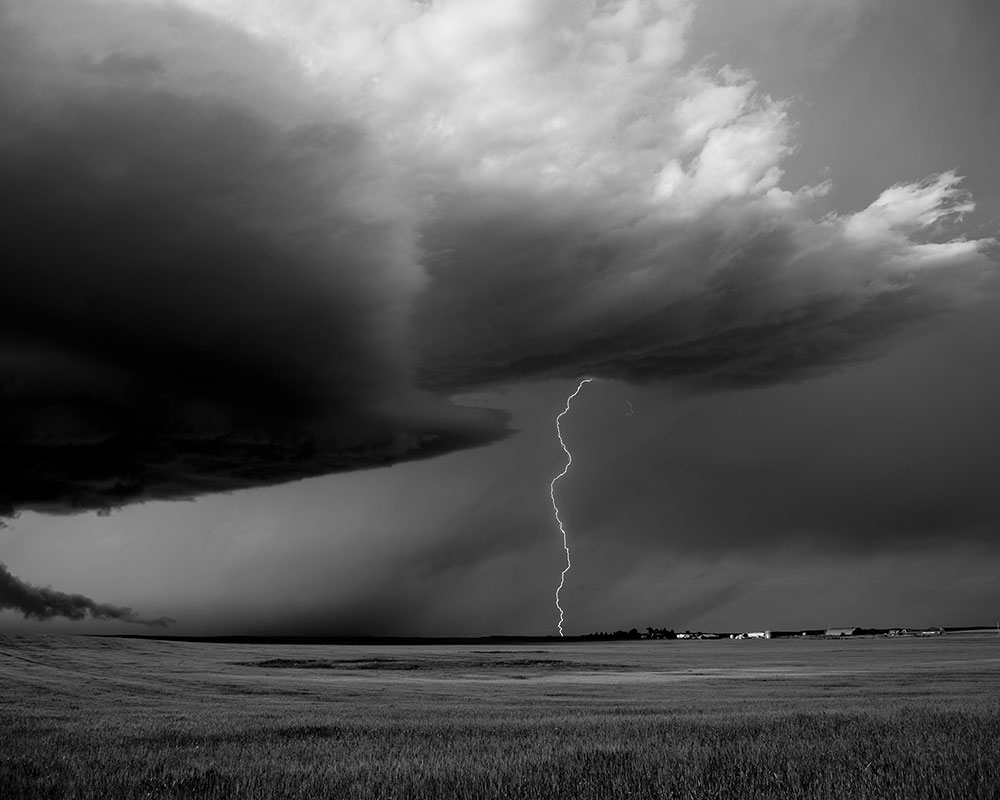
Come Saturday Morning
Story by Billy Ingram • Photograph by Ginny Johnson
They say before death, life passes before your eyes. So it was for William Binder Batson II as he dismissed well-meaning hospice workers in order to leave this world on his own terms.
Breathing reduced to a death rattle, William reflected on what had been a hardscrabble existence from the very beginning. Orphaned as a toddler, he went to work while still in elementary school, hawking newspapers on one of Manhattan’s busiest intersections. Hardly his fault when the naive youngster was lured by a shadowy figure into a dark, deserted portion of the nearby subway station where he was met by six wise and powerful men who were well-meaning in their generosity but the out-of-body experience left him confounded and conflicted.
The incident that followed left the boy with what might charitably be called the most severe case of split personality imaginable. He escaped into a world where jungle cats spoke to him in aristocratic English; a warped consciousness in which even a tiny earthworm was perceived as a dire threat with malevolent intent.
It wasn’t until he turned 15 that William’s life took a turn for the better after he met a kindly older gentleman who offered the troubled teen his tutorage, teaching him how to trust again. They spent the better part of the 1970s traveling country backroads in a custom Winnebago; at each stop they found a way to enrich the lives of strangers. This impressed the young man who also appreciated that this unlikely patron called him by his boyhood nickname, “Billy.” Anthropomorphic animals and insects no longer plagued his mind.
The two eventually settled into a farmhouse outside a small town in Kansas, the older man tilling soil while William took a job at a family-owned hardware store. Townfolk admired the clean-cut lad who, they noticed, never cursed; closest he ever came was referring to “the ‘S’ word,” one that will never pass from his lips again. How respectful, everyone thought. Why, then, was it he never found the right girl or never managed to have any close relationships? Almost as if there was a secret held close, one so awesome he dare not share it with anyone other than the elderly man that took him in and accepted, without judgment, what he was capable of.
It was barely six months ago that William (nobody had called him Billy since his mentor passed away) was given the terrible diagnosis: terminal cancer of the liver. With health rapidly deteriorating, he began to confront the reality of his tenuous mortality and consider what life after death might entail.
So it came to be that, with no more than a few breaths remaining, William Batson spoke that word he had avoided since his teen years. In an instant, thunder rumbled the floorboards beneath his bed, a bolt of lightning sent down by the gods pierced the ceiling and the dying man vanished, in his place stood a virile collegiate athlete in a bright red bodysuit.
Ironically, this revitalized individual can never speak “the ‘S’ word” William ended his life with. For if Captain Marvel ever utters the word “Shazam” he’ll revert back to Billy Batson and Billy Batson is dead.
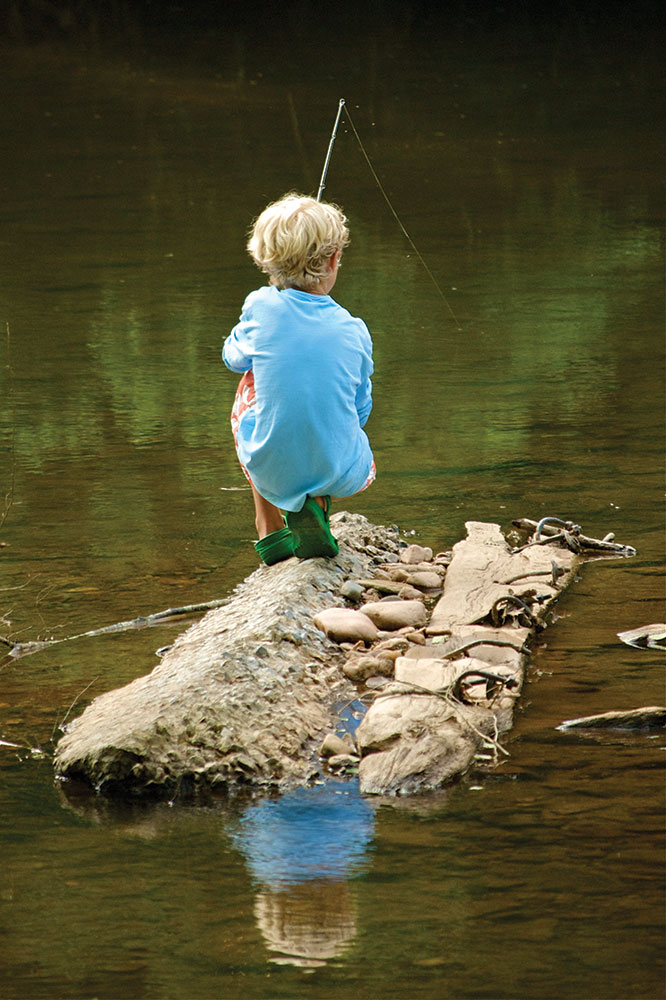
Soup’s On
Story by Maria Johnson • Photograph by Sam Froelich
Clear down to the river, Ashe could hear the public radio talk show wafting from the mountain cabin that his family rented every summer.
A radio-show caller was talking about how she’d a picked a peck of peaches, which was more than she bargained for. She wanted the show’s host, a lady with a rich deep voice that reminded Ashe of his pillar-like Aunt Terry, to tell her what to do with the remainders.
“Do you know what would be really good?” the Aunt Terry
soundalike said.
“What?” said the caller.
“Peach soup,” said Aunt Terry.
“Peach soup?” said the caller. “I’ve never heard of peach soup.”
“THAT’S BECAUSE NO ONE EATS PEACH SOUP!” hollered Ashe’s mother, who was up in the cabin. The Aunt Terry impostor went on about the peach soup.
“You don’t see it very much. But I once had it in Savannah, and it was out of this world,” she said. “So go to your refrigerator and get some coconut water and some fresh ginger, then take your food processor and . . .”
“OH! OH! COCONUT WATER AND FRESH GINGER! WELL, JUST LET ME LOOK IN THE CRISPER! HONEST TO GOD. . .” hollered Ashe’s mother.
Ashe knew that, as much as she protested, his mom would be asking if they had any coconut water and fresh ginger when she went down to the Food King this afternoon. He smiled to himself. His chin rested on his knees. His knees rested over his spongy green Crocs, which had taken on the funky metallic smell of the lake.
He and his older brother Hoke had crewed their new rubber raft all along the shore until two days ago, when a neighbor’s Fourth of July bottle rocket had landed, still glowing, on the raft while it was dry-docked on a picnic table.
The boys’ father was determined to mend the wound. He and Hoke had gone to the marina store in search of a patch kit. Ashe took the opportunity to go fishing by himself at the river that hooked around the cabin and emptied into the lake.
Folded up on a concrete finger that had braced a long-gone pier, Ashe cradled his grandfather’s old Zebco rod and reel in front of him. A ragged mound of mosquito bite itched the back of his left hand. He scratched it with his right hand and waved off a fly.
Presently, his thoughts stilled, and particles of the present sifted down to the bedrock of memory. Cicadas thrummed the rhythm of summer. In the river’s still places, Jesus bugs walked on the water. A swarm of gnats hovered over ripples. Minnows huddled on the shady side of the concrete bar. A breeze slid through the leaves. Even the air had a distinct character.
A voice popped the bubble.
“Catch anything?”
“No,” said Ashe.
“Toldya,” said Hoke. “C’mon, we found a patch. You can blow up the raft.”
Ashe stood to reel in his line. The wet cricket at the end had stopped kicking. Ashe gently removed it from the hook.
The cricket would not die in vain, Ashe decided. It would find new life when Hoke unearthed it in a bowl of peach soup tonight.
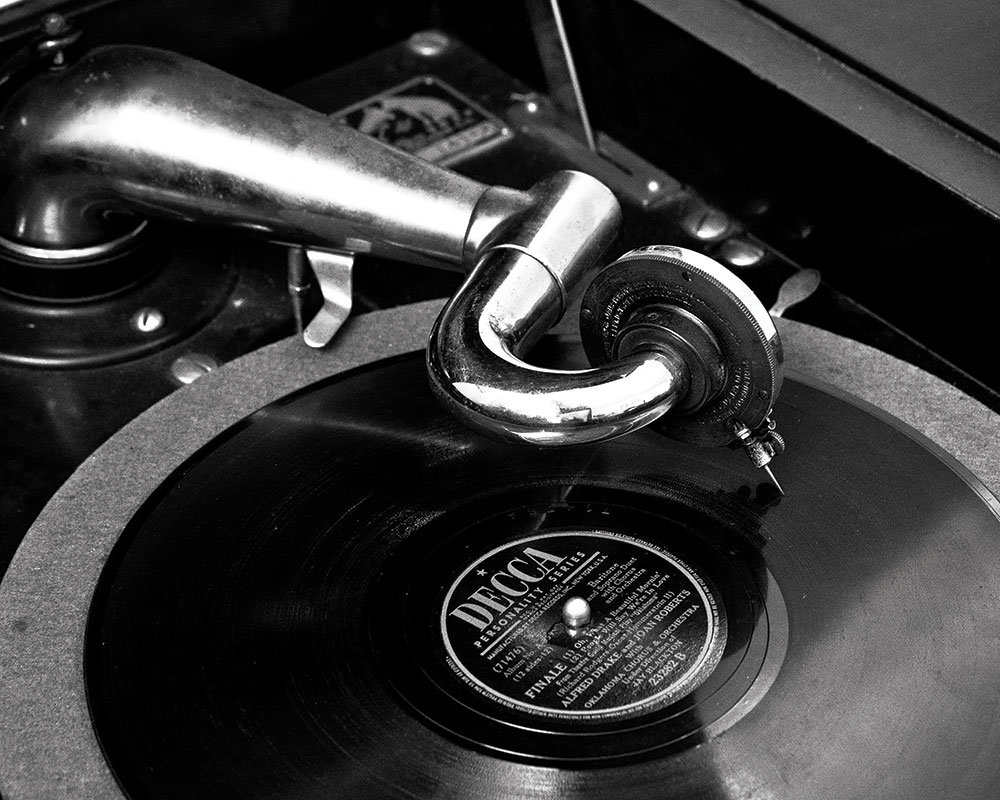
Spinnin’ Platters
Story by Gwenyfar Rohler • Photograph by Mark Steelman
“I’m worried about your father.” My mother didn’t even let me get inside the kitchen door before she rounded on me with a spatula in her hand. The unmistakable rhythm of the opening chords of “Peggy Sue” vibrated through the walls. Mom flipped a pancake in the cast iron skillet. It was breakfast-for-dinner-night — which meant she was really worried about Daddy. “He’s been playing those records all day.” Buddy Holly’s guitar was turned up at top volume, a shock in a house where one could pinpoint each family member by the sound of their footsteps. Her normally domineering voice was almost drowned out, and I wondered if part of her annoyance wasn’t just that for the first time in my memory she wasn’t the most powerful sound at home. She shook her head again, this time with a jerk of impatience. “This has something to do with his ex-girlfriends.” She picked up a paring knife and began slicing peaches to go on top of the pancakes.
“Haven’t you guys been married for like forty years?” I asked. “What do his ex-girlfriends have to do with this?” I snagged a piece of bacon from the plate on the center of the stove. “Are they even still alive?”
“Go check on your father.” She swatted my hand away from the plate. “Go.” She gestured with the knife down the hallway.
One does not argue with a well-armed matriarch.
I went.
In the living room my father was sprawled across his favorite upholstered chair with the carelessness of late adolescence: limbs floppy and akimbo, still-shod feet up on the coffee table. His eyes were closed singing along with the music, periodically directing part of the band with one hand in the air. Two speakers, like obese standard poodles, had been hauled down from the attic. They were still covered in dust — except for his handprints — and connected by huge loops of new speaker cord to the record player and amplifier that had materialized from some place of hiding.
“Hi Daddy . . .” I ventured. Somehow this didn’t look like something that I should interrupt.
“Hi Kitty.” He hit a few drumbeats in the air. “Have you met Buddy? Buddy, this is my daughter, Kitty.” He opened his eyes and looked straight at me. “Do not ever get on a non-commercial flight in an ice storm.” He stared at me intensely and with deep meaning. “Do you hear me? Not ever.” He underscored this last point with a finger slash through the air.
“OK . . . I promise.”
“Good.” He closed his eyes again. I backed out of the room feeling that I was somehow intruding on a world that I could never understand.
Back in the kitchen Mom asked me what I had learned. Were the ex-girlfriends, in fact, at the root of this?
“Um, no, apparently this is about non-commercial aviation and ice storms,” I reflected. “So I think this is about Howard Hughes.”
“Alan Fried, you mean. And no, don’t be fooled by that. This is about more than just an isolated incident.” She cocked her head to listen to the sudden silence. Daddy’s shaking hand scratched the record a bit when he tried to drop the needle on the next disc, then a groovy guitar pierced the air with a slight cymbal and the unmistakable wail of Janis Joplin.
“Oh, no, he didn’t!” Mom looked toward the living room. You know you got it, oooh wooaaoh if it makes you feel . . . Janis crooned. Mom ran a hand through her hair, then turned back to me. “You should go spend the night at a friend’s house tonight.”
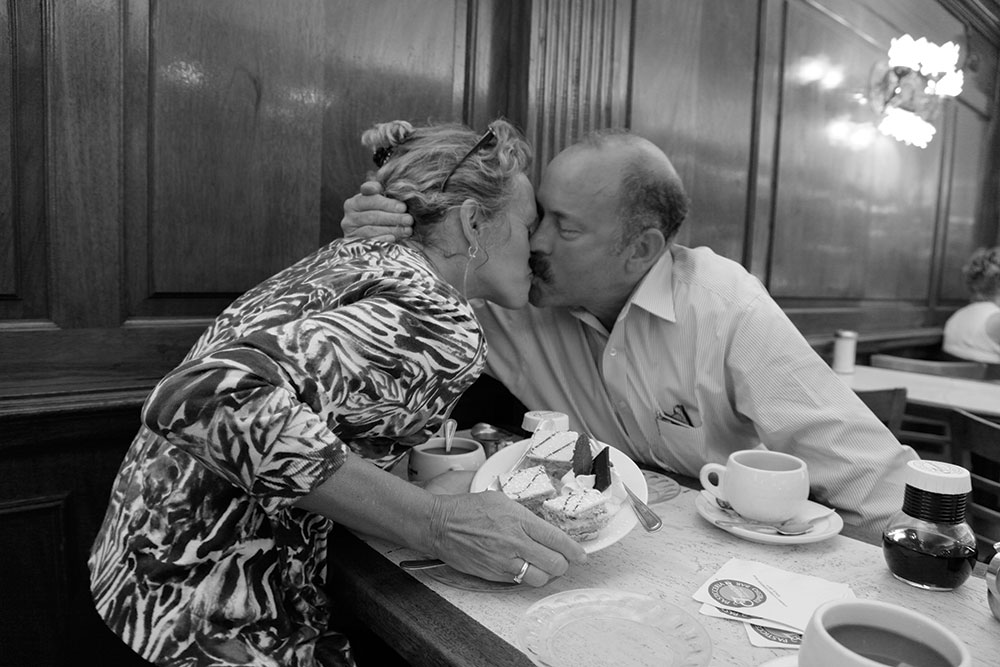
Connected
Story by Mark Holmberg • Photograph by Laura Gingerich
It was a short, hand-written letter that marched right into Margie’s soul with each neatly penned word.
I was on Bus 28, it said. It was me who was with you that day, who left you the note with the ring at the hospital. I read of your husband’s death last year, and I hoped you might meet me so I can share something that has long been on my heart.
The letter was signed Tony Pyanoe, and listed a date, time and, surprisingly, she and her late husband’s favorite Italian restaurant.
Margie knew right where that old mysterious note was. She found her J.T. Hoggard class of ’71 yearbook filled with heartfelt and tearful messages written by virtually all of her classmates.The folded note slid easily out from under the cover. It had come to her hospital room forty-five years earlier in an anonymous envelope with a simple, wedding band-like ring.
I have long admired you and am so glad you survived. We had nothing in common at school, but our blood mixed on the bus that day. I wish you a long life and I will always love you.
She put down the strange note and thumbed to the Ps in her yearbook.
Ahh, that Tony, she thought, looking at the stamp-sized photo.
They had shared a few classes. He was a quiet, awkward boy, his hair already thinning. One of the nerds, she recalled. He was the son of Italian immigrants — working class. Far from rich, unlike her family, who owned big chunks of Wilmington real estate. And Margie had been as beautiful and popular as she had been rich. She had been the Homecoming Queen. Her boyfriend was the star of the lacrosse and football teams. Her boyfriend . . .
He had been sitting next to her on Bus 28 during a senior field trip when the bus driver apparently suffered a heart attack and drove through the College Road intersection. They were T-boned by a tractor-trailer.
Her boyfriend was killed instantly, along with three other students. It was the worst school bus crash in North Carolina history.
She woke up in the hospital with no idea what had happened. Along with several broken bones she had suffered a deep laceration to her neck that left a long, high-ridged scar that she looked at every day.
Her doctors had told her one of her fellow students apparently kept her from bleeding to death, but the rescue scene was so chaotic, no one really knew exactly what had happened.
Margie went to her jewelry box and found the ring. She had worn it for years, imagining a hero student and remembering how lucky she was. When she got married, she took the ring off, but noticed it frequently while getting dressed.
She slid it on her right ring finger and decided to go.
Tony had gone to Vietnam a year after the crash and had eventually become an engineer, he told Margie at the restaurant. He had married and raised a family. His wife had died of cancer two years earlier.
He looked like a much-older version of the nondescript boy in the yearbook. But there was kindness and strength in his eyes.
“I never forgot you,” he told her as they ate their entrees.
Like many boys at Hoggard, he had idolized her, he said, not because she was beautiful, but because she was kind.
“When the bus crashed, my first thought was of you,” he told her, his brown eyes gazing into hers.
“Both my arms were broken,” he said. “I couldn’t feel my hands. But I crawled over to you and blood was pumping out of your beautiful neck.”
Subconsciously, she lifted her hand and felt her scar — something she did a dozen times a day.
“So I lay down beside you and kissed your neck. I used my lips to draw the wound together and put enough pressure to keep the blood from spurting until the medics came.”
He reached out his hand and Margie took her hand from her neck and put it in his.
“I know how crazy this sounds,” he continued, “but in the midst of that crazy disaster, all I could think about was how beautiful you smelled, how wonderful it was to be that close.”
Margie could hardly believe what she was hearing.
“Why didn’t you tell me this back then?” Margie asked. “Why the anonymous note?”
“I knew you were destined for better things,” Tony said. “By the time I got my engineering degree and a decent job, you were already married.”
She looked at the simple ring — it still fit nicely — as the waitress brought their dessert. Such an odd thing, the way this virtual stranger was making her feel. So comfortable, so protected, so cherished. And so not alone. And there was this powerful feeling of an old, nagging mystery being solved at last.
“All these years I’ve dreamed of being this close to you again,” he said, leaning across the table.
“I’ve seen your face, smelled your hair in a thousand dreams. For so long I desperately wanted to kiss you again, even if for just one moment.”
Margie found herself leaning across her coffee. His fingers gently touched that scar on her neck, and then they were in her hair as he pulled her close for the kiss that would change the rest of their lives — forever.




 The Carolina Hotel, along with the village, was nouveau-chic when, in 1909, Bostonian Emma Jane Sinclair commissioned architect W.W. Dinsmore to design a winter home with satellite cottages for her married daughters. The Pinehurst Outlook of that year called it “A little gem, in mission style, with bright red rows of tile and stucco walls . . . which adds tremendously to the attractiveness of the outlook from the hotel.”
 Bathrooms were renovated but not enlarged. One clawfoot tub remains.
 One tall, non-functioning radiator holds potted plants. Dark-stained beams in the vaulted ceiling, beadboard walls painted cream, pine flooring found in the attic satisfy Victoria and Kirk’s love for wood. Art reflects Kirk’s golf involvement. Just inside the front door hangs their signature piece. The nine-by-four-foot painting, done in photo realism, depicts Kirk and Victoria, their children and dogs, playing in Kensington Gardens adjoining the Albert Memorial in London. The artist tricks the eye by repeating the same family members in different sections of the park.


