Food for Thought

Greens, Eggs and Ham

The devil in the details

By Jane Lear

Something about April makes me nostalgic for — well, I’m not sure what, exactly. The first young vegetables are juicy, tender and exquisite; they are what spring tastes like. Farmers and home gardeners alike have earth-caked hands and knees. They are working hard, being patient. Waiting for the world to wake up and warm up.

As a child, my Aprils were often spent chasing after my mother, who was intent on foraging wild watercress before it flowered and then disappeared until the following year. She’d picked up the knowledge that the plant had been used both culinarily and medicinally during ancient times, and as we waded in frigid creeks and teetered on rocks midstream, she’d treat me to a homily on how brilliant the Greeks were and how exceptional watercress was. (Watercress is indeed rich in vitamins K, A, C, E and B6, as well as phosphorus, magnesium and calcium. Ounce for ounce it contains more antioxidants than broccoli.)

For Easter and other spring occasions, we might be treated to watercress soup served in my grandmother’s thinnest porcelain cups. For the most part, though, we enjoyed the peppery, pungent sprigs fresh in a salad, dressed with nothing more than salt, lemon juice and olive oil — back then, not all that easy to find down South, and thus one of my mother’s most valued condiments.

These days, I avoid wild cress unless I know for sure that the stream it comes from is pristine; instead, I go for the cultivated stuff at the supermarket. It wilts beautifully under a steak, roast chicken or seared piece of fish.

And it makes a wonderful bed for deviled, or stuffed, eggs — the quintessential springtime hors d’oeuvre. I’m crazy about them, especially those made by my longtime friend Rick Ellis. He’s a noted food stylist and culinary historian who is never afraid to serve stuffed eggs at the fanciest dinner party. “They’re always the first thing to disappear,” he said, and he’s right.

What gives Rick’s eggs their rich, round flavor is butter, and he credits Julia Child with the idea. One of the things you learn from someone like Rick (or Julia) is that simplicity doesn’t necessarily mean ease of preparation, but instead perfection and balance in a dish. That’s why it’s important, for instance, to push the cooked egg yolks through a fine-mesh sieve rather than mash them with a fork. It’s what gives the filling such great body.

Another great spring favorite is deviled ham — reason alone for serving a tender, juicy baked ham at Easter. The use of the culinary term “deviled” to mean highly seasoned with spices or condiments dates from at least the early 19th century, but the kind of deviling most Southerners come across isn’t fiery at all, but instead gets a sharp nip from Dijon mustard, often with an assist from a pinch of cayenne.

And if you spoon it onto toast points, you have lovely little canapés, which were, Rick told me, one of the first types of hors d’oeuvre served with drinks. My mind leapt immediately to Jack Benny, who once defined an hors d’oeuvre as a ham sandwich cut into 40 pieces.

Rick, however, was thinking about another icon, Fannie Farmer, and after a quick search in his library, read aloud from his 1918 edition of Fannie Farmer’s Boston Cooking School Cook Book, which laid out the newfangled concept of canapés. “Canapés are made by cutting bread in slices one fourth inch thick, and cutting the slices in strips . . . or circular pieces. The bread is toasted, fried in deep fat, or buttered and browned in the oven, and covered with a seasoned mixture of eggs, cheese, fish, or meat.”

As for the deviled ham, Rick found a recipe for ham sandwich spread seasoned with mustard, salt, pepper and vinegar in the original (1931) edition of The Joy of Cooking. It rightly belongs to the far older category of potted meats, of course. Two centuries ago, I would have had to pound the cooked ham (or partridge, ox tongue, hare, etc.) to a smooth paste with butter in a stone mortar, then season it with salt, pepper and perhaps mace or cayenne. Pressed into small crocks and sealed with clarified butter, my potted ham would have kept about two weeks in a cool, dry place.

No recipe re-enactments for me: I’ll take my food processor and refrigerator and be grateful, thank you. The recipe for deviled ham, which is based on Marion Cunningham’s reborn classic, The Fannie Farmer Cookbook (published in 1979), is simple and delicious. No way it’ll last two weeks.

Rick Ellis’ Stuffed Eggs

Makes 24

1 dozen large eggs

1/4 cup mayonnaise

1/4 cup Dijon mustard

4 tablespoons unsalted butter, softened to room temperature

1 teaspoon fresh lemon juice

1/4 teaspoon cayenne

Coarse salt and ground white pepper

Finely snipped fresh chives for garnish

1. Place the eggs in a pan large enough to hold them in 1 layer and cover with cold water. Bring to a boil, cover the pot, and let sit 15 minutes. Drain and run under cold water until eggs are completely cool.

2. Peel the eggs and cut in half lengthwise. Remove the yolks and rub through a fine-mesh sieve into a bowl. Add the mayo, mustard and butter, and mix until smooth. Stir in the lemon juice, cayenne, and a generous amount of salt and white pepper. Transfer the filling to a pastry bag fitted with a 1/2-inch tip (or jury-rig out of a plastic zip-top bag with a corner snipped off).

3. Pipe the filling into the egg white halves and sprinkle with chives.

Deviled Ham with Toast Points

Makes 2 cups

About 8 slices best-quality white sandwich bread

2 cups (about 1/2 pound) chopped cooked city-cured (baked) ham

1 tablespoon minced onion

2 to 3 teaspoons Dijon mustard

A small pinch cayenne

An even smaller pinch ground mace (optional)

1 tablespoon minced sweet pickle

2 tablespoons mayonnaise or unsalted butter, softened to room temperature

Coarse salt and freshly ground pepper to taste

1. Heat oven to broil and set rack about 6 inches from heat. Put the bread slices on a baking sheet and broil until pale golden and crisp on top, about 1 minute or so. Flip the slices and broil until pale golden on other side, about 1 minute. While bread is still hot, trim crusts and cut into triangles or strips. Once cool, the toast points will keep in an airtight container up to 1 day.

2. Purée the ham until smooth in a food processor. Scrape it into a bowl, then stir in the rest of the ingredients. Pack the deviled ham into a small crock and refrigerate, covered.  PS

Jane Lear was the senior articles editor at Gourmet and features director at Martha Stewart Living.

Crossroads

Ode to a Poet

Easter evokes memories of writers and friends

By Tom Allen

A dear friend died in January, a friend I never met, never conversed with, but through whose words I felt an immediate connection. Mary Oliver, a Pulitzer-prize winning poet, died of cancer at 83.

I credit Helen Byrd, my 10th grade English teacher, with my love of reading and narrative writing. But poetry eluded me, save the text of beloved hymns or the Psalms I grew up reading and hearing in the King’s English. I’m sure Psalm 23, a poetic gift from past millennia, was the first poem I ever memorized, probably around age 10. Others were as foreign as the Hebrew in which they were originally penned. I remember spitting out Tennyson’s “Charge of the Light Brigade” for a college English project and occasionally thumbing through my mother’s collection from Helen Steiner Rice, the 20th century queen of inspirational iambic pentameter. (A good poem, I would learn years later, doesn’t have to rhyme, nor will the world stop turning if it doesn’t.) But poetry never connected like a good mystery, a spy-thriller, or a page-turner of a biography. Not until Mary Oliver.

“Poetry, to be understood,” Oliver once said, “must be clear. It mustn’t be fancy.” I concur. That’s probably the reason I fell in love with her writing, my first collection a gift from a clergy friend. Most of her poems were deeply spiritual, filled with images from nature, although Oliver never embraced a particular faith tradition. She wasn’t uncomfortable in a church, a temple, a sanctuary. But more often than not, her cathedrals were formed by black oaks or towering pines. Her font, a pond; incense, a patch of violets. The song of a wren was plainsong chant. Her altar was the world.

Oliver’s words were profound, yet not “fancy,” as she would say. In “Sometimes”, she offered these directives:

Instructions for living a life:

Pay attention.

Be astonished.

Tell about it.

She lived by her words, looking out her back door each morning, with notepad and pencil in hand.

Like the Psalms or the words of a comforting hymn from childhood, Oliver’s “I Worried” encouraged me on more than one occasion.

I worried a lot. Will the garden grow, will the rivers

flow in the right direction, will the earth turn

as it was taught, and if not how shall

I correct it?

Was I right, was I wrong, will I be forgiven,

can I do better?

Will I ever be able to sing, even the sparrows

can do it and I am, well,

hopeless?

Is my eyesight fading or am I just imagining it,

am I going to get rheumatism,

lockjaw, dementia?

Finally I saw that worrying had come to nothing.

And gave it up. And took my old body

and went out into the morning,

and sang.

In going out into the world, Oliver followed her own directive — pay attention. To say she “communed with nature” was an understatement. All of life was sacred, no creature off-limits. All creatures, great and small, have lessons to teach — the bear, the loon, the turtle, humpbacks, snakes, wild geese.

She writes, in “Crows,”

In Japan, in Seattle, in Indonesia – there they were –

each one loud and hungry,

crossing a field or sitting

above the traffic . . .

they don’t envy anyone or anything . . .

Why should they?

The wind is their friend, the least tree is home.

Nor is melody, they have discovered, necessary . . .

I see them in trees, or on ledges of buildings,

as cheerful as thieves of the small job

who have been, one more night, successful –

and like all successes, it turns my thoughts to myself.

Should I have led a more simple life?

Have my ambitions been worthy?

Has the wind, for years, been talking to me as well?

The week before Easter, I will visit two cemeteries, to mourn and give thanks for family and friends who rest beneath the shade of pines and cedars. And I will pay attention. Not to years lived but to the silence and sacredness of those places, to the cardinal who graces a branch with his color or the lone, late daffodil that will not be overpowered by grey granite. I will look, and listen, and give thanks.

I can hear Mary Oliver saying to those women who came early, that first Easter, with oils and spices, to care for the body of their entombed Lord, “pay attention, be astonished, tell about it.” They were, and they did. 

And though distanced by millennia, the final couplet from one of her most popular poems, “The Summer Day,” could well be her departing words to those women, and to us:

Tell me, what is it you plan to do

with your one wild and precious life?

May Easter, and spring’s rebirth, cause us to be attentive, to ponder our stories, and to ask those questions that matter most.  PS

Tom Allen is minister of education at First Baptist Church, Southern Pines.

True South

All Pumped Up

Or just wait until the urge passes

By Susan S. Kelly

And now, a few concise words about exercising: I loathe it.

I was never on a sports team. No one wanted to double-Dutch jump rope with me as a partner. I’m so uncoordinated that I tend to fall down just putting on my underwear. In high school, while I kind of coveted the flippy kilts my field-hockey playing classmates got to wear, I preferred the passive, less-participatory exercise of wearing a weighted belt Velcroed around my waist under clothes. Worked just fine until you drank a glass of water. After study hall, we’d “walk” down the long dorm hall linoleum on our butt cheeks while listening to Cat Stevens singing “Wild World” from the Tea for the Tillerman album. An effort, in retrospect, that would have probably been a lot more effective if we’d just ceased and desisted with toast-eating contests at breakfast.

Despite years of sitting in stadiums, I never understood football until I watched Friday Night Lights on Netflix and had to figure out first downs to follow the plot. As for tennis or golf, why would anyone do anything that requires putting on sunscreen, much less sweating? I’d be perfectly content never to put on sneakers again — and I realize they’re not called sneakers anymore. In my opinion, anyone who changes the sheets on a king bed has had ample exercise for the day, what with all that walking around from one side of the bed to the other.

In defense of all this inactivity, I’d like to point out that I wear no ace bandages anywhere, have no joint, tendon, muscle, back, knee or other issues, and have no idea what an ACL or meniscus is or where they’re located; all of which I attribute to the fact that for five decades I never engaged in anything competitive or, well, physical, when you come right down to it. Just sayin’. And I do like to think that balancing on one foot while brushing my teeth counts for something. At least it beats my friend who’s figured out that she can set the treadmill speed at 3.8 before the wine starts sloshing out of the cup holder. Never mind my friend who’s eating Big Macs because the people at Weight Watchers told her she’s not fat enough to qualify.

Still, when a fitness facility opened up practically in my own backyard the year I turned 50, I decided it was Time To Get With The Program, as my father would say. Not that I would even consider walking the one-eighth mile over there when I could drive. Please. It quickly became clear that I don’t have the personality for yoga. The first time the instructor told me to quit wearing baggy tops — so she could correct my position — was the last time I went to yoga class. Besides, the whole time we were supposed to be clearing our minds or assuming the Savasana pose or whatever you’re meant to Om, I was thinking about all the things I needed to be doing and wishing the session would just end so I could get on with it. One friend’s husband wanted to go to yoga class with her, so she gave him a set of sessions for Christmas. Unfortunately, his first class became his last class, because, as is often the case with yoga, he publicly pooted. There’s no namaste for that. Somewhat similar to my sister’s issue with a chocolate power bar in her back pocket that melted and squished and looked — well, let’s just say it’s best to always wear black exercise clothes.

Beware of classes disguised as cults, in which Fitness Barbies and Kens are demoralizingly superior to you. I’m sorry, but if you have makeup on at the gym, I don’t care how long you can plank; you’ve lost all credibility. But I do like the way, in a class, the teacher will run down the quick-quick chop-chop single-syllable system checklist of to-dos or have-dones: quads, pecs, lats, delts, abs, glutes, biceps, etc. They come in handy for doing crosswords. (While sitting down.) The main argument for classes with scary titles like Pump It Up, Power Flex, yada yada, is the punch line to that old joke about why the guy keeps hitting himself on the head with a hammer: Because it feels so good when you quit.

Best, then, to stick with the treadmill, where you can multitask otherwise sedentary activities like online bridge and Netflix. At 79, a friend’s father began memorizing T. S. Eliot to pass time on the stationary bike. He’d repeatedly take a laminated card from his pocket, consult it, put it back, and pedal on. The discipline proved so popular to fellow cyclers that he formed a club with seven other men who meet three times a week to recite. In case you’re wondering, “The Waste Land” takes 40 minutes to recite.

Me, I’m reveling in a smaller triumph: The nurse who administered my flu shot asked, “Do you work out?”

“How did you know?” I returned.

“Your arm muscle,” she replied.

Score!  PS

Susan S. Kelly is a blithe spirit, author of several novels, and a proud grandmother.

Simple Life

Confessions of a Happy Old Guy

And the joys of life in the slow lane

By Jim Dodson

A close colleague needed to speak in confidence the other day. She looked so serious.

“I don’t know how to tell you this,” she said, “but I have to tell you something important.”

I feared she might be quitting her job to join a kazoo band or something even worse, appear on a reality show. So I braced for impact.

“I was behind you in traffic yesterday. You drive like an old man!”

She burst out laughing.

I laughed, too — and agreed with her. She wasn’t the first to point out my maddening old-fashioned driving habits, or as I prefer to simply call them, careful. For the record I haven’t had a moving violation in 40 years, something one can accomplish only by moving slowly through the busy intersections of life. Knock wood.

A year ago, however, I turned 65. In the eyes of my government, my insurance agent and my beloved colleague, this apparently means I’ve achieved official Old Man status. So essentially, my driving habits are finally catching up to my age.

Over this year, in fact, since word has spread like kudzu on a redneck barn, I’ve received several “special dinner” invitations from companies eager to tell me all about their exciting products and services designed to “make your senior years happier, safer and more fulfilling.”

One was from a lawyer pointing out the dangers of failing to update my final will and testament, presumably so craven heirs don’t rob me blind. Another was from a financial firm eager to feed me at the Olive Garden in order to convince me that I should try a reverse mortgage that would allow me to sell my house piece-by-piece in order to finance a speedboat or buy a timeshare in Cabo San Lucas. Not long after that, two dinner invites from local funeral homes offered a fancy last supper with small talk of coffins over coffee.

The truth is, I’m perfectly fine officially being an Old Guy. I’ve never felt happier or more fulfilled than at this very moment, even without a speedboat. My health is good, the important parts all seem to work, I love what I do every day and look forward to many years of doing it as I chug along in the slow lane of life.

I never plan to retire or even slow down because I’ve always moved at more or less the same modest speed. Slow and steady wins the race, as the moral goes, assuming you even care about winning the rat race. Never hurry, never worry was the personal motto of the late great Walter Hagen, a dapper fellow who walked slow and lived large while winning 45 golf tournaments, a total that included 11 major championships and four British Opens. Successful living, said the late great Leroy Robert Paige, a.k.a. “Satchel,” — hall-of-fame Major League pitcher who played his last game for the Peninsula Grays of the Carolina League at age 60 in 1966 — is really a question of mind over matter. “If you don’t mind,” he counseled, “it don’t matter.”

Besides, the evidence is pretty compelling that I’ve been an old man since the day I was born.

A small chronological sampling:

It’s February, 1953, and I am born. My mother thinks I’m the cutest baby ever. My father jokes that I look like Dwight D. Eisenhower. My mother doesn’t think this is funny, doesn’t speak to my father for a week. Years later, whenever she’s annoyed with me, she’ll sigh and say, “I guess you were just born an old man, Sugar Pie.”

It’s 12 years later, 1965. My favorite Beatle is George Harrison, the “quiet one” whose guitar gently weeps. I teach myself guitar and spend endless solitary hours learning to play like George. Paul McCartney tells the Associated Press that “George is the old man of the group.” In tribute, I try growing a beard like George. It goes nowhere. Then again, I’m only in fifth grade.

Now we’re in the early avocado-colored ’70s. The music, the cars, the groovy way college girls look — it’s all quite wonderful. I grow my hair long and spend an entire summer at college smoking pot, which only puts me to sleep. So I quit smoking pot, buy a Dr. Grabow pipe and a corduroy sports coat with leather elbow patches. My hippie girlfriend jokes that she’s dating William F. Buckley and is shocked when I admit digging the music of Burt Bacharach. I am the only guy in my dorm who watches the Watergate Hearings from beginning to end — and enjoys it.

Now it’s the 1980s and I’m an investigative reporter for a magazine in Atlanta, engaged to a beautiful TV anchorwoman who works late on weekends. Way past my normal bedtime, she likes to unwind from her job by dragging me to glamorous late-night parties where everyone is buzzing from funny white powder inhaled off the bathroom counter. More than once I sneak off to a stranger’s bedroom to grab a quick nap or watch reruns of Hee Haw with a Falstaff beer. The engagement is predictably short.

In the late 1990s, I become a father of two, the happiest thing that’s ever happened to me. I build my own house and a faux English garden deep in a beech forest near the coast of Maine. I love reading books to our little ones and normally fall asleep before they do. We like the same G-rated movies and yellow food group. They grow way too soon. Apparently I never did. But at least I am fully trained for grandparenthood.

Two summers ago, while driving my vintage Buick Roadmaster in crazy rush hour traffic outside Philadelphia, a snarky young dude in a BMW opened his window and yelled, “Hey, Chevy, wanna drag race me to Wallyworld?” He howled at his own wit. I smiled politely back. When the light changed, however, I opened up my Roadmaster’s massive 350-hp, eight-cylinder Corvette engine and taught that little twerp never to mess with an old man driving his old man’s Buick.

For the record, old guys like shirts with roomy pockets. This is a known fact and I’m no different. I want a shirt with pockets large enough for car keys, screwdrivers, grocery store lists, directions to the party, a sandwich for later, a tape measure, various auto parts, mysterious things you find in the yard and so forth. Pocket protectors, however, are ridiculous. What do you take me for, a complete old geek?

Also, long ago, I decided that certain essentials in life should primarily be basic white. This includes, but is not limited to, golf balls, toilet paper, underwear, snow, vanilla ice cream, dress shirts, and the look on any idiot BWM owner’s face who thinks he can beat my Buick to Wallyworld. (By the way, genius, Chevy’s wagon was a Ford).

If you’re going to jabber during the movie, please do us both a big favor and sit elsewhere, preferably in another county. I have a hard enough time hearing what’s going on in the movie without having to listen to your witless commentary. And if you speak to me in a crowded party, don’t be surprised if I just smile at you like a drooling village idiot because I can’t understand a blessed word anyone says to me in noisy, crowded places.

Ditto if I forget your name. Please don’t take it personally. Next time just wear your name tag — preferably written in LARGE EASILY DISCERNABLE LETTERS. For the record, I forget lots of names of things these days, including those of movie stars, old flames, neighbors, song titles, state capitals, sports stars, candidates I voted for, candidates I wish I voted for and so on. On the other hand, I can name every dog I ever owned, just one of many reasons a dog really is an old man’s best friend. You never forget them.

Finally, I love going to the grocery store without a shopping list. Talk about free-range fun for Old Guys! Roaming the aisles like a man on a mission who can’t remember what he’s looking for, I just grab whatever catches my fancy on the oft chance it might include whatever item my wife specifically asked me to bring home. True, this often means a quick return to the store to get the correct item but, hey, that just means you can repeat the process and double your fun, taking home other great stuff that captures your fancy.

Frankly, I could rattle on forever about the simple pleasures of finally being a certified Old Guy — going to bed early and rising before the chickens, reading poetry, biographies and histories in my tree house office, long walks with the dogs and road trips with my bride, small suppers with friends, stargazing, classical music, lonely back roads, rainy Sundays, weekend gardening, watching birds, early church, late afternoon naps, Kate Hepburn movies, historic battlegrounds, old houses, Scottish golf courses, expensive bourbon, bumping into old friends I actually remember, and other stuff I invariably forget how much I enjoy.

Whew, just the thought of all that activity exhausts me.

I’d better go grab a quick nap before I run to the store to fetch supper items I probably won’t remember to get.  PS

Contact Editor Jim Dodson at jim@thepilot.com.


Birdwatch

Babes in the Woods

Early spring is nesting time for wood ducks

By Susan Campbell

Love is in the air for the most beautiful of all the waterfowl: the wood duck. These lovely creatures begin courtship in January, and by the end of the month seek out suitable nesting sites. They are busy raising what is usually a very large family by early spring.

“Woodies” as they are affectionately known by waterfowl lovers, are found commonly in marshes, beaver swamps and along streams throughout most of North Carolina. Here in the middle of the state they are year-round residents, although the population swells in the winter to include birds from farther north. Nonresident birds tend to be very skittish and flush very quickly upon approach. Our local wood ducks can become very tame, especially in locations where they are being fed by people. On more than one occasion, I have approached individuals at Reservoir Park in Southern Pines, where they were feeding on corn with a variety of other ducks and geese.

Wood ducks are smaller and more slender than our familiar mallards. The hen is nondescript — grayish with white spotted flanks and white around the eye. The drake, on the other hand, is a patchwork of red, brown, yellow and green. He sports a drooping green crest and a bright red bill and eye. Don’t expect quacking. Wood ducks’ vocalizations are a series of squeals and whistles. In the air these ducks are fast fliers and remarkably maneuverable, threading their way through forested bottomlands, their preferred habitat.

This species of waterfowl spends most of its time foraging on aquatic vegetation and insects found in shallow bodies of water. But when it comes time to breed, they may be found up to a mile from water, searching for a suitable nesting site. They are unique in that they are the only ducks that nest in trees in our area. Hens will typically look for holes in dead or dying trees in which to lay their eggs. It is not unusual for them to lay a clutch of 20 eggs in a cavity over a hundred feet up in an old tree. At Weymouth Woods, wood ducks frequently use old pileated woodpecker holes that were, in turn, created initially by red-cockaded woodpeckers.

As uncanny as it sounds, the ducklings have no trouble whatsoever dropping to the ground when they are called by their mother soon after hatching. They will all then quickly walk downhill to the nearest body of water. Unsurprisingly, this is when they are most vulnerable, not only to ground predators such as foxes but also to being separated from their mother as they make their way around obstacles.

Of course, with natural snags being less common on the landscape, wood ducks have taken to using man-made housing. Many folks in the Sandhills and Piedmont have been successful at attracting woodies to their property with wood duck houses adjacent to wetlands. A box should be mounted on a pole and fitted with a baffle to keep predators such as raccoons and opposums from getting to the nest. It is also important to be aware that these ducks regularly produce two sets of young each year, so a box may contain a female on eggs any time from February through May. In addition, do not be surprised if the box is used by other birds during the course of the year. Screech-owls, great crested flycatchers and even bluebirds may take advantage of a duck box as well.  PS

Susan would love to receive your wildlife sightings and photos. She can be contacted by email at susan@ncaves.com.

The Pleasures of Life Dept.

The Black Hat

Happy returns and small kindnesses

By Janet Wheaton

I have always liked to wear hats, not only to keep the sun out of my eyes and off my face, but because I don’t have good hair — it’s too fine to provide much warmth for my head and too flat to hold a nice style. A good hat, however, must be more than serviceable, it should define you. Such a hat is not easy to find.

I don’t remember exactly when I got the black hat, a soft, felted wool fedora with a 2.5-inch brim and a ribbon around the crown (no feather). I ordered it online and knew as soon as I pulled it out of the box and set it on my head, tilted the brim and dimpled the crown that it was my hat. Worn with a tan trench coat from early fall through late spring, it was met frequently with approving glances and elicited comments such as “nice hat.”

I have always kept it close when I took it off in restaurants, kept my hand over it in gusty weather, and double-checked hotel rooms and overhead bins when traveling. But last spring my husband and I flew to Ireland, where a friend would join us. The trip over was fraught with delayed flights and missed connections; and upon arrival, we were met with excruciating lines, first at customs and then the rental car agency. I could hardly keep my eyes open on our drive to our first destination in the Wicklow Mountains, south of Dublin. Exhausted from lack of sleep and addled by jet lag, I went into town and had dinner with my companions. Back in the cozy B&B, I fell into bed and had one of the best night’s sleep ever. The next morning I awoke refreshed and excited to be in this land I loved so well.

After a delightful breakfast and chat with our host and hostess, Mike and Margaret, we piled into our rental car and headed across Ireland. You are certainly guessing what I have to tell you. Yes, when we arrived at our next destination and got out of the car, I realized my hat was missing. The day before was something of a blur, and I couldn’t even begin to think where I might have left it. On the plane? In the restaurant? At the B&B? My husband and our friend could not remember when they last saw the hat on my head.

I bought an Aran wool knit hat to keep my head warm and soldiered on, silently mourning the black hat. Uncertain of where I had lost it and who might have found it, I held out slim hope of ever seeing my hat again.

Upon returning home, I emailed the hosts of the B&B where we stayed in Wicklow and asked: Could they have found my hat in our room, the breakfast room or the lobby? If not, would they be so kind as to check with the restaurant where we ate dinner that night? The next day I heard back from Mike that our waitress at the restaurant had picked up a hat matching the description I gave him and brought it to the office in case someone came back to claim it. Mike was going to fetch it that day and put it in the mail to me. I shed tears of joy, but remained fearful over the next week. Would it get lost in the mail? Would it be crushed and ruined from the shipping?

But a week later, the black hat came back to me, carefully packed and protected. I danced to the mirror and gave the brim an affectionate little tug. Several times that day and even the following, I had to go to the closet and take a peek, like a pinch to remind myself I hadn’t dreamed its return. I wrote to both the waitress and Mike, effusing my gratitude and appreciation, especially to the waitress, who had found — hers for the taking — a valuable item, a fine hat that might have looked quite smart on her own head, but instead had done what she could to get it back to its owner.

I felt that gratitude afresh when I packed my old friend away for the season. It reminded me of a time years ago when I admired a gold necklace worn around the neck of a co-worker. When I complimented it, she had responded: “I found it in the ladies room at a restaurant over the weekend.” And no, she said, she had not turned it in. Its owner would probably not have a clue where her necklace had fallen, would never go back to the restaurant to check, and some waitress or other patron would have wound up pocketing it. This was my colleague’s rationale for keeping the necklace. I thought about that girl who lost the necklace, what special meaning it might have held for her, what a bitter loss it must have been, how she might be missing it still. I thought about the smugness of my erstwhile co-worker over her “find” — an exquisite piece that had cost her nothing. Or so she thought. PS

Janet Wheaton is a Pinehurst resident, frequent contributor to PineStraw, and a recent writer-in-residence at Weymouth Center for the Arts & Humanities.

The Accidental Astrologer

The Originals

Leave it to the March-born to break the mold

By Astrid Stellanova

March madness doesn’t just apply to basketball, boys and girls. It applies to the whole universe. We astrologers already knew the universe held all kinds of spooky entanglements before the physicists did.

Happens that Fred Rogers and Albert Einstein were March-born Star Children. And so were Vincent Van Gogh and Ruth Bader Ginsburg. Quincy Jones and Aretha Franklin, too.

Creative, artistic, occasionally mystic, but almost always completely original — the birthright of those born this month.

Pisces (February 19–March 20)

Making. It. Rain. Boo-ya! That’s rainmaker you this birthday and year. You roar right into the lead with one good idea after another and the energy to make them happen. If the rest of the pack cannot keep up, and not many can, then they have to eat your dust. It will be hard to dampen your enthusiasm and to contain your excitement as precious dreams are realized. Take a bow!

Aries (March 21–April 19)

You’ve had some hard knocks and rude shocks, most of them from thinking you could do the next to the impossible for the undermotivated. If you are feeling like the Mayor of Underachiever Town, just remember there’s no way to change others and most of your suffering is from that.

Taurus (April 20–May 20)

You’ve been generous, Star Child, especially when out on the town, but now you’re feeling hard-pressed. You act like I don’t know your moola from your hula lately. As fun as it was, visit the great state of Austerity for a serious time-out. Clip both coupons and your wings for a while.

Gemini (May 21–June 20)

Careless and reckless comes to mind, my twin. Yet you wonder why you feel like you’re Tito in the Jackson family? You were born with gifts and talent but you have not used them.

Cancer (June 21–July 22)

Be firm with somebody who knows how to play you. Make Midas let go of the greenbacks and be generous with you for a change. Visit places you haven’t been, like the province of Reality Checkville.

Leo (July 23–August 22)

You’ve been spinning it to win it, like a revitalized Vanna White at the wheel. Fun to watch, and fun to be you during this sun cycle. It will delight your friends and depress your enemies to see your sparkle.

Virgo (August 23–September 22)

Darling, you’ve been a Jittery Joe. It is discombobulating to trade roles with a close alliance, but you have bravely experimented with self-discovery. Don’t give up now; it leads you to a whole new paradigm.

Libra (September 23–October 22)

Sneaky! Those who think they can predict everything about you are going to have to put a bell around your neck to find you. You have privately begun explorations they will find amazing. Amaze yourself, too!

Scorpio (October 23–November 21)

Sugar, don’t look back unless you plan to go that route. Now that a new endeavor is under way, all signs point to success. Keep your cool. Also, find one person who needs your mentoring. It will be a revelation.

Sagittarius (November 22–December 21)

Shake it. Bake it. But don’t just lie there and take it! You are at a key place, and you’ve invested a lot emotionally in a good outcome. Fight for what you want, and be as inclusive as you can if you want to lead.

Capricorn (December 22–January 19)

Namaste doesn’t mean nah, may stay. You may want to stay put and not budge, but where you are now is all about finding peace in a time where you feel at war with yourself.

Aquarius (January 20–February18)

In another 364 days you will ask yourself if you made a dint or difference in the world. You already have. Someone is trying to express just how important you are, and what you have done, and honor you. PS

For years, Astrid Stellanova owned and operated Curl Up and Dye Beauty Salon in the boondocks of North Carolina until arthritic fingers and her popular astrological readings provoked a new career path.

The Omnivorous Reader

The Definitive Douglass

Revealing a multifaceted American icon

By Stephen E. Smith

Readers who’ve been inspired by Frederick Douglass’ eloquent autobiographies will likely find David Blight’s 900-page Frederick Douglass: Prophet of Freedom — touted by its publisher as “the definitive, dramatic biography of the most important African American of the nineteenth century” — a demanding read. The complexities of race relations in America make it so, and the fact that Frederick Douglass, our first nationally recognized black civil rights leader, is one of the most multifaceted and controversial Americans to have shaped 19th-century thought, only amplifies the challenge. But Blight’s insights into Douglass’ radical evolution and the obvious correlation with the state of race relations in contemporary America make this meticulously researched and beautifully written biography well worth the time and effort.

Douglass was born Frederick Augustus Washington Bailey around 1818 and lived his early years on the Delmarva Peninsula, a few miles from the small town where this reviewer was born and raised. At age 13, he was sent to Baltimore, where he was taught to read by his owner’s wife, Lucretia Auld. He was eventually hired out to a “slaver breaker” in St. Michaels, a bayside village 10 miles west of my hometown of Easton, and after an attempted escape in 1836, he was briefly incarcerated in the Talbot County jail, an ominous stone structure adjacent to the courthouse I passed daily.

During my school years, I never once heard the name Frederick Douglass. There was no historical marker identifying the Sage of Anacostia as a local luminary (the only public monument in town, a bronze figure of a Confederate soldier cloaked in the stars and bars, was dedicated “To the Talbot Boys/1861-1865/C.S.A.”). No school or municipal building was named for the great man, and he wasn’t discussed in the Maryland history book we studied in the fifth grade. None of my childhood friends can recall any reference to Douglass. I was a college student before I learned of his extraordinary accomplishments and was compelled by curiosity to read his three autobiographies. Only then did it occur to me that growing up in Frederick Douglass’ backyard without learning about him was tantamount to being raised in Springfield, Illinois, without hearing the name Abraham Lincoln.

I mention this lapse in my education, occurring about the time the Supreme Court ruled against segregation and Jim Crow laws, because it’s an example of what Douglass struggled with all his adult life: the notion that a black man couldn’t possibly demonstrate a profound philosophical wisdom and achieve worldwide fame. Perhaps the good citizens of Talbot County thought it best not to mention Douglass. Other than the accident of birth, they couldn’t claim credit for his success. And who, after all, is a prophet in his own land?

Blight’s biography adds little new information concerning Douglass’ prewar years as a social reformer and abolitionist, other than to note that a self-reliant Frederick Bailey transformed himself by force of will into Frederick Douglass, one of the great thinkers of his time, a writer and public speaker whose talents were equal to those of Lincoln and whose determination to end the “peculiar institution” that was the economic lifeblood of the South surpassed that of the martyred president. “Douglass offered an original American to those who sought such images,” Blight writes, “he was the sui generis former slave who found books, the boy beaten into a benumbed field hand who fought back and mastered language and wielded a King James – inspired prose at the world’s oppressions with a genius to behold.”

Douglass biographies are numerous and range in quality from Benjamin Quarles’ excellent Frederick Douglass to Leigh Fought’s Women in the World of Frederick Douglass, a misguided effort that occasionally borders on fiction. Blight’s biography is exceptional because he had access to untapped primary sources contained in the collection of Walter Evans of Savannah. He’s made good use of these sources to explicate Douglass’ postwar struggles to secure the rights of freed slaves and to banish the scourge of lynching from the South. 

Blight also thoroughly examines Douglass’ varied causes and obsessions. He backed John Brown’s violent anti-slavery activities and was a staunch supporter of women’s rights. He carried on a long-term relationship with Ottilie Assing, a German feminist, freethinker and abolitionist, who sheltered him when he was charged with conspiracy in connection with John Brown’s raid on Harpers Ferry. He served as minister to Haiti from 1889 to 1891 and was deeply involved with the 1893 Haitian pavilion at the World’s Columbian Exposition in Chicago.

In 1884, Douglass married Helen Pitts, a white abolitionist from a prominent New York family, thus crossing the color line. All the while, Douglass continued to speak out against racial injustice, Jim Crow and peonage laws that in effect locked freedmen in a state of perpetual servitude. Late in his life, he was still railing on the effects of the pernicious color line: “(It) hurts us at midnight, it denies us accommodations in hotels and justice in the courts, excludes our children from schools, refuses our sons the right to learn trades and compels us to pursue only such labor that will bring the least reward.” The South won that war of attrition.

Blight’s biography is, for the moment, the definitive work on Frederick Douglass, although there is a need for a more insightful inquiry into the great orator’s religious, political and philosophical beliefs. After 900 pages of text, Douglass remains something of an enigma, a man whose intelligence, eloquence and determination almost changed America for the better

On the courthouse lawn in my hometown of Easton, Maryland there are now two statues, one celebrating the “The Talbot Boys” and another bronze that depicts Douglass, one hand on a lectern, the other raised beseechingly skyward. The town celebrates their most famous son “throughout the year, including Frederick Douglass Day in September and the annual Juneteenth celebration of abolition.” It’s about time. PS

Stephen E. Smith is a retired professor and the author of seven books of poetry and prose. He’s the recipient of the Poetry Northwest Young Poet’s Prize, the Zoe Kincaid Brockman Prize for poetry and four North Carolina Press awards.

Out of the Blue

Requiem for a Knife

The unkindest cut of all

By Deborah Salomon

It was only a kitchen knife — a cheap one, at that. I have no idea where it came from, or how long I’ve had it, only that it was perfect. The perfect length (about 8 inches), a comfy grip (worn synthetic) and a blade that, magically, rarely needed sharpening, especially since I used it every day for everything except bread and tomatoes. I have an equally cherished serrated model for those. And a dozen more: stubby paring knives, a graceful cheese knife with pronged point, carving knives, steak knives, some with metal grips, others with wood, none just right.

None that glides through warm brownies every Friday morning.

About that infrequent sharpening: I’m back to using my father’s sharpening stone. He didn’t believe in electric sharpeners because they “wore away the blade.” Yeah, after 100 years. He had no need for the knife-scissors-lawnmower sharpening guy who drove his truck through the neighborhood, bells clanging. From apartment to duplex to house to condo back to apartment, I’ve left a trail of the kind of sharpener you screw into a doorframe and swipe the knife through a slit.

My favorite knife never went into the dishwasher. Tut-tut, I was admonished, by a chef who gave no reason.

My knife has gone missing many times but always found, usually in the darndest places. But almost a week has passed, which means if I threw it out with apple or potato peels . . . gone.

Which makes me feel sad, even panicky.

So I shopped several stores that sell moderately priced kitchenware. Most knives were mounted on cardboard and sealed in plastic, which prevented testing the grip . . . not that I considered ones with a fat rubberized grip. I wanted something slender and graceful, like my old friend which, out of habit, I still reach for.

I finally bought one that looked similar. Honestly, I needed a good knife to release it from the cardboard and plastic. What a disappointment. The grip felt slippery and new, the blade stiff and a tad too short.

Frustrated, depressed, still in denial, I launched one last search through the house, although the knife rarely left the kitchen. Maybe I needed it to open a package, or cut some string. Maybe it’s hiding amid the clutter on my desk or under the couch.

No luck.

I’m not wasting any more money on replacements. I’ll just broker a truce with a knife in the drawer.

Sentimental? Not usually, although I use my granny’s battered aluminum pot lid with a hole where the knob used to be. I also have an ancient metal jar opener and two bent and stained metal cookie sheets which in more than half a century have turned out approximately 50,000 cookies, nary a burned bottom.

Not a day goes by that I don’t miss my corded phone that never got lost. Who among you hasn’t called your land line with cell, just to find the cordless handset? And vice versa.

These are the minutiae of life, things we hardly notice until they are gone. Most can be replaced by cutting-edge models for people who appreciate and believe they need bagless vacuum cleaners, quiet hair dryers, Swiffer mops.

But even a super-expensive knife honed in Germany for professional chefs won’t replace my favorite implement. Its loss cut deeply . . . a cut that’s still bleeding. PS

Deborah Salomon is a staff writer for PineStraw and The Pilot. She may be reached at debsalomon@nc.rr.com.

Fallow Ground & Fertile Memories

The Little Nine faces an uncertain future

By Bill Fields

Golf courses come and go, enduring or failing at different times for different reasons, their guaranteed survival as rare as a calm day on a links. A particular nine-holer in Southern Pines, though, has been a good walk uncertain for a long time, not used for its original intent in 15 years, but also not utilized for a formal new purpose.

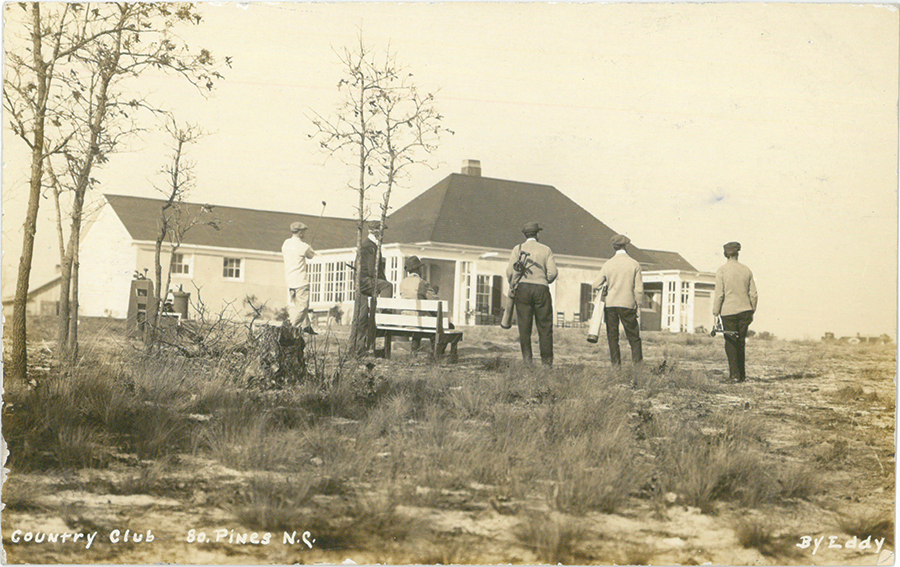
Known to many as the “Little Nine” of Southern Pines Golf Club — owned by Lodge 1692 of the Benevolent and Protective Order of Elks since the middle of the 20th century — it has sat dormant since 2004, when tight finances in the wake of the September 11 terrorist attacks caused the Elks Lodge to shut down a design that opened in the 1920s, a track that, like the club’s surviving 18 holes, is credited to legendary golf architect Donald Ross.

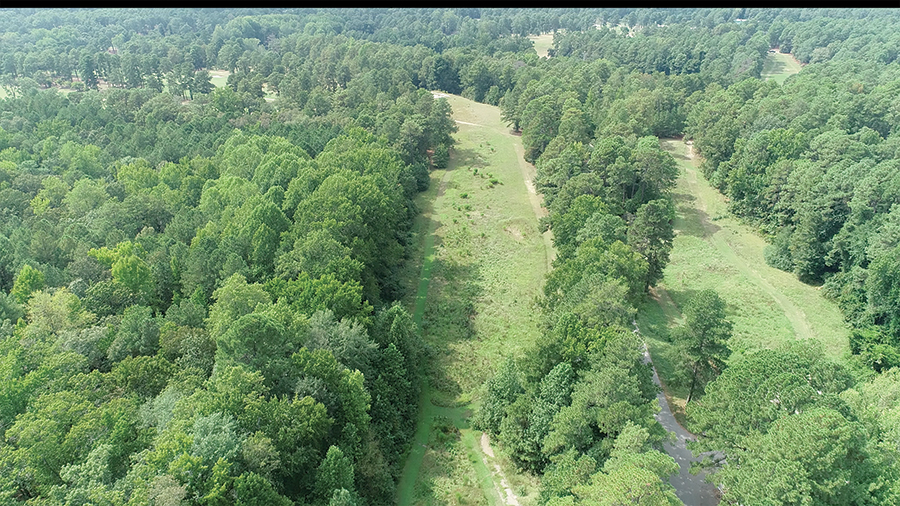
The Elks have negotiated with multiple potential buyers for Southern Pines Golf Club since it closed the Little Nine, most recently a proposed $3.2 million deal that fell through early last year. The result is that for more than a decade, the forsaken Little Nine property (45 acres, plus 55 acres of adjoining land) has remained valuable green space in a town that has seen lots of growth — a place for dog walkers, high school cross country runners and, after snowfalls, sledders on the steep “Suicide Hill” at the former fifth hole.

A recently formed nonprofit community group, Little Nine Conservancy (LiNC), whose leadership includes members of Lodge 1692, is hoping it can cooperate with the fraternal order to protect the land from being developed. Its plan: Purchase a conservation easement from Elks Lodge 1692 to ensure that the land is sustained as a natural buffer instead of potentially becoming crowded with residential housing.

“I just don’t want to see this become another suburb of Fayetteville,” says Little Nine Conservancy President Gus Sams, a neighboring landowner. “I moved here not to be part of that. One of the offers the Elks received was talking about putting between 200 and 400 homes on the hundred acres. Would the infrastructure even handle something like that? That density is more than double what we’ve got around the Little Nine right now.”

Bill Savoie, exalted ruler of Lodge 1692, says a sale that would have led to such heavy real estate development in the Little Nine space was “discounted very quickly” by the Elks. But he acknowledges that the status quo of de facto green space — taken for granted by some locals who falsely believe it can’t ever be built upon — isn’t a given.

“For the many years the Elks have owned the golf course, we’ve tried to be very good stewards of it and the adjoining property,” Savoie says. “We own 300 acres of land. The golf course pays for itself, but golf isn’t a business most people are going to want to buy into these days. At some point, how much longer does the lodge hold that land? What are its choices? The highest and best use comes into play.

“What I’ve said to [Little Nine Conservancy] is if the goals of that entity and the goals of the lodge are meshed, I support what they’re trying to do,” Savoie continued. “They see an opportunity to put an organization together to preserve the land as open space. I don’t think that is at direct odds with the goal of the Elks being stewards of the land.”

Although Sams, who grew up in Atlanta, and some of his fellow board members are transplants to Moore County, others such, as John Buchholz, Marian McPhaul and Marsh Smith, are Southern Pines natives who once lived close to the Elks Club.

“It’s a holy ground for kids who have grown up there,” says Smith, a Southern Pines attorney who has been involved with obtaining conservation easements at several other locations in the area over the last couple of decades. “It was a very important part of my life. In the fifth or sixth grade, I was so chubby my pants split when coach Wynn was teaching us how to do the forward roll. I got up the next day, in the dark, and decided I was going to run on the Little Nine. I couldn’t go a hundred yards without getting a stitch in my side but I kept at it, and I was a runner for 30 years.”

Buchholz, a retired Pinecrest High School teacher and still the Patriots’ cross country coach, came upon an overgrown Little Nine, grass as tall as a second-grader, shortly after the course closed. He believed the property — where he and his pickup football-playing childhood buddies were kicked off more than once by longtime SPGC head professional Andy Page — would be perfect for a 5K cross country course. He has cut a 5-foot swath through the former fairways ever since for prep races. Suicide Hill proved an unpopular part of the course with rival runners in the Sandhills Athletic Conference and was taken out of the route, but the incline remains part of the Patriots’ training regimen.

“We host most of the conference meets because this is one of the few courses on turf that’s available,” Buchholz says. “It is the best high school course in the state. I’ll match it against anyone’s.”

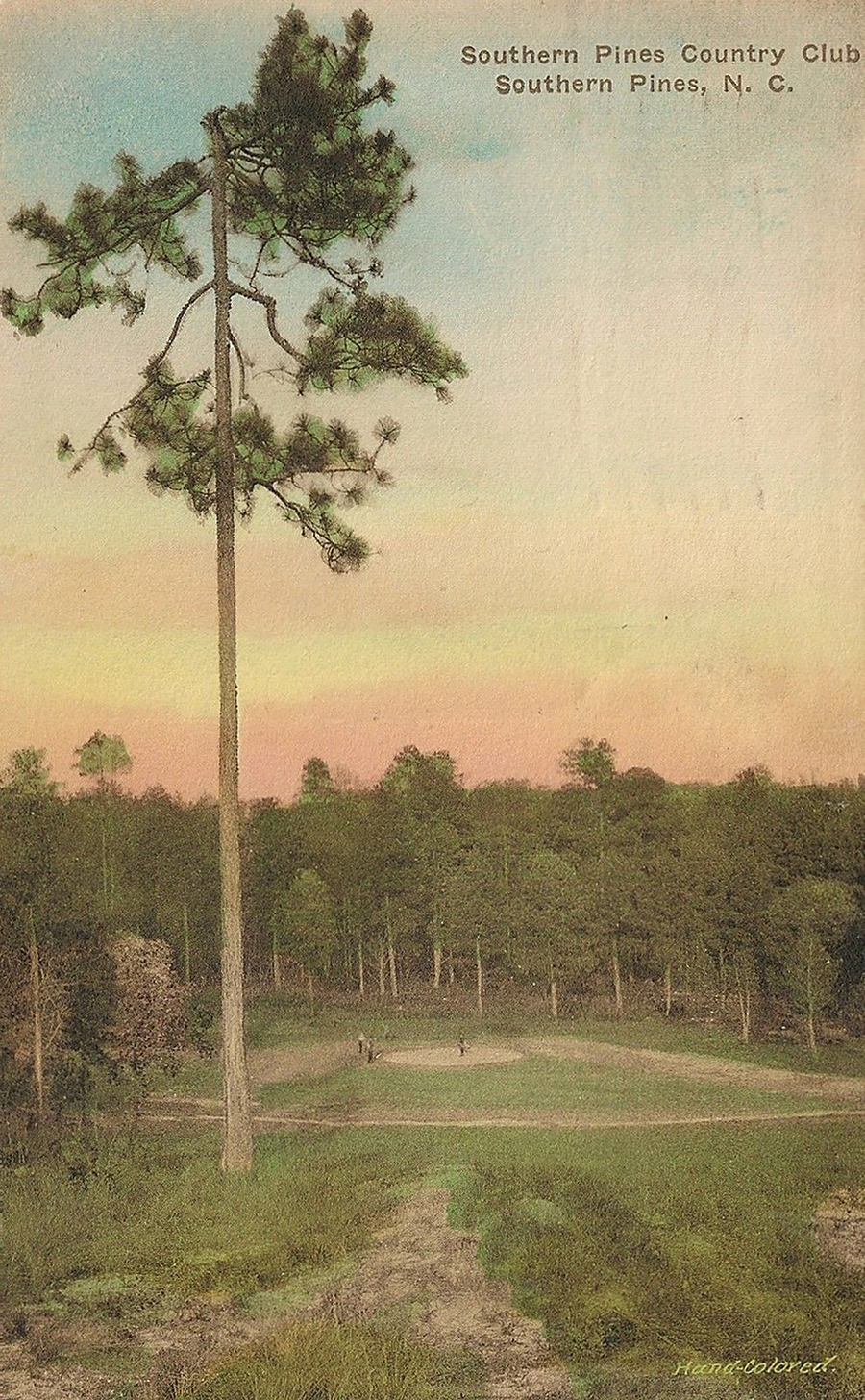
The Little Nine opened in time for the 1924 winter season, 18 years after the first holes were constructed at SPGC (then called Southern Pines Country Club) and a decade after Ross revamped the original 18 into the well-regarded layout that exists today.

“I’m long on record on Golf Club Atlas saying the main 18 at the Elks occupies the best land in Moore County [for golf], and people parrot that back to me in agreement,” says Ran Morrissett, founder of the website for golf architecture aficionados, and a Southern Pines resident and Elks Club member since 2000. “The detail work, the bones of the Ross routing, the fact that you only see homes on a couple of holes — it’s such a compelling environment.”

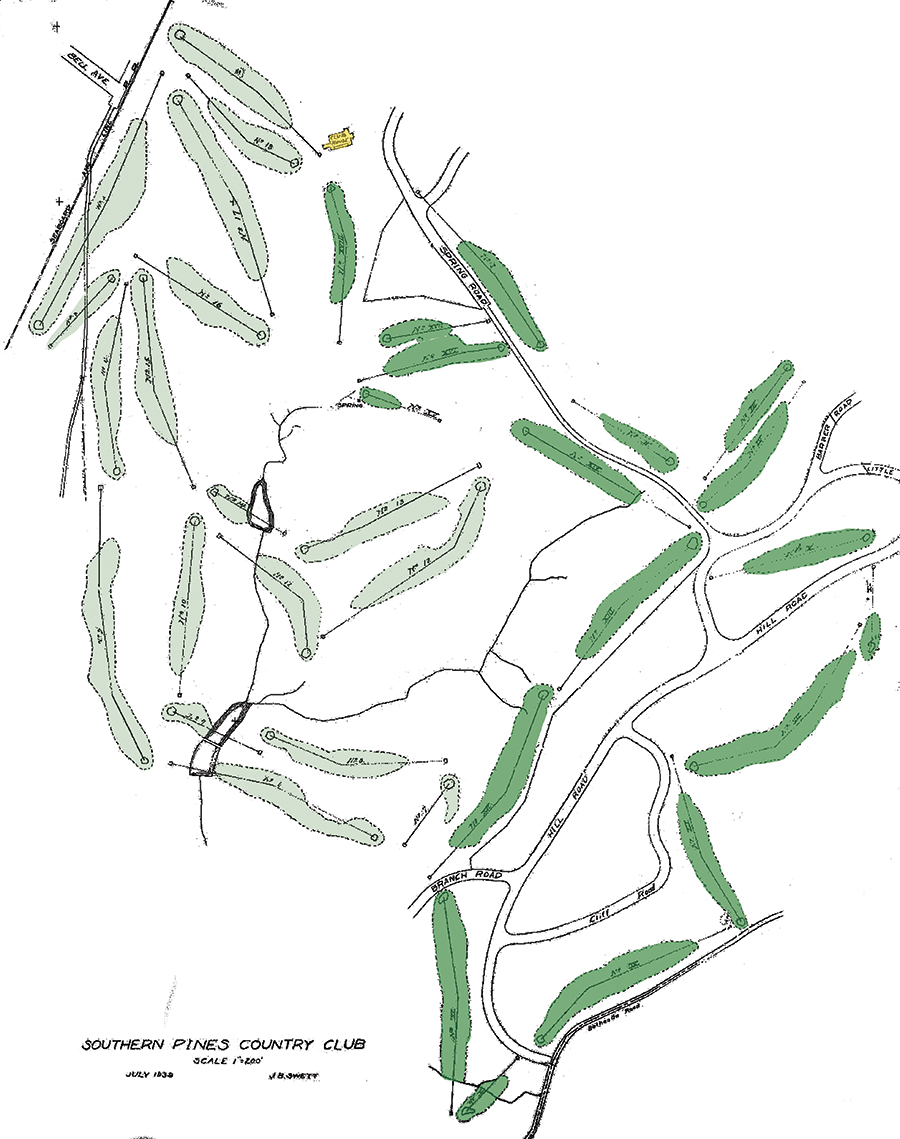
The third nine, to accommodate a growing tourist business, was built south and east of the clubhouse. Before the 1920s were over, it had been joined by a fourth nine. In a 1930 promotional pamphlet, Ross noted 36 holes at Southern Pines. In accounts during the 1930s, local newspapers credited Ross’ engineer and draftsman, Walter Irving Johnson, with having drawn up the plans. Johnson, hired by Ross in 1920, was an important part of his operation, executing detailed drawings from the architect’s rough sketches.

“Do I see Ross features [on the Little Nine]? Not necessarily,” says Richard Mandell, Sandhills resident, golf course architect and author of The Legendary Evolution of Pinehurst, which details the arc of golf courses in the Sandhills. “Ross is one of the top five architects of all time, but there is so much stuff that he did that wasn’t inspiring because it was on a small budget, or other people did it in his name. He probably didn’t have the ability to let loose on that third nine. And who knows what was rebuilt over all the years?”

As it expanded, though, SPGC was proud of itself. “Golf Course Extended Over The Hills and Streams, And Into The Most Rugged Section of the Sandhills,” a 1928 advertisement for the club announced in The Pilot. “The hills are rugged little mountains, giving all the charm desired for a climb or a walk in the pursuit of the game or in a ramble among the pine woods, where walks and roads, and springs, and forest foliage, suggest the primeval.”

The club’s second 18 was a par 71 of 6,120 yards, and regardless of who was most responsible for it, the layout had variety: 290-yard, par-4 No. 2; 445-yard, par-4 No. 9; 635-yard, par-6 No. 14; 126-yard, par-3 No. 15, 241-yard, par-3 No. 17. Both 18s survived the Great Depression and featured grass greens by the end of the 1930s, but the next decade wasn’t kind. World War II and ownership changes contributed to the abandonment of the fourth nine, in the Hill Road area, in the late 1940s.

Twenty-seven holes plus nine more holes “that can be easily re-conditioned” and “50 large valuable building lots” were advertised for sale in June 1948 for $110,000. Almost three years later, the Southern Pines Elks bought the property for just $58,500.

Over the years, the Elks sold some of the 500 acres included in the 1951 sale. The Little Nine became a mixture of the front and back nines of the second 18 — comprised of the opening four holes of the front and closing five holes of the back, but with the monster par-6 14th, formerly a double dogleg, shortened considerably.

The Little Nine had taken on its hybrid makeup by 1958 when Page and his wife, Margaret, started their 40-year stint running the club’s golf operations. “It had quite a bit of play over the years,” Andy says. “If we were real busy, I would send folks to play it first before playing the big course. I like to play it. Older people and kids loved to play it.”

One of those kids was Southern Pines native Chris Buie, now 55, who wrote about the Sandhills’ golf history in The Early Days of Pinehurst. “My dad became an Elk specifically because of the Little Nine,” Buie says. “It was our babysitter. It was where I learned to play golf. It was $22 for the entire summer for us kids. We would be out there all the time, a gang of us playing two or three times a day. It kept us out of too much mischief.”

If the Little Nine Conservancy (www.linc-sp.org) is able to achieve its objective, current and future generations of children might continue to be able to utilize the land. Those behind the effort would have no problem if the Little Nine was reopened as a golf course, but that seems a long shot.

“Golf is still contracting in this area. There is already an oversaturation of the market,” Savoie says. “If we had the deep pockets of a Pinehurst and wanted to turn a section of that into something like The Cradle [Pinehurst Resort’s acclaimed new short course], that would be fabulous. Unfortunately, we don’t have those resources.”

“The lodge is not desperately trying to sell,” Savoie continues. “We’re not actively speaking to people about buying. I want to see if Marsh and the Little Nine Conservancy can put something together that is good for the lodge and good for the community.”

Savoie and Smith agree a conservation easement won’t be inexpensive, given the location of the land that is the focus of LiNC’s concern.

“One hundred acres of land in close to Southern Pines’ center would be of particular attraction potentially for real estate development,” Savoie says. “I think it’s going to have to be a fairly substantial amount before the Elks say we’re going to let a potential resource like that go.”

“I think it’s fair to say the Elks’ leadership has told us their preferred outcome is for this to be protected open space, but they need a fair price for it,” Smith says. “They’ve got their club’s mission, which is to help people who are in need — school kids, veterans, handicapped folks. They’re trying to raise money.”

For now, it is the Little Nine Conservancy that is in the fundraising mode. The group is reaching out to residents who live near the Little Nine and connected woodlands, and those with ties to the area who remember it before so much growth occurred.

“I come from D.C. and know what overcrowded — really heavy development and traffic — looks like,” says Robert Simmonds, the LiNC webmaster, who recently moved to Southern Pines. “We moved here specifically because of the natural surroundings. I want to do everything I can to help it stay as natural as possible. We’re all volunteers; this is a selfless, we-think-this-is-good-for-the-community effort.”

To Morrissett, maintaining the natural setting would be good for golf, keeping the character of Ross’ surviving 18 holes. “So many courses built since Ross’ death have hinged on real estate sales,” Morrissett says. “One of the reasons the Elks course is as good as it is, is that it wasn’t built with homes in mind. If the conservancy can protect the land, the course essentially will remain alone in nature, which would be very encouraging. As an Elks member, I would be horrified at the thought that somebody could buy, say, to the right of the 13th hole and start slapping up condos. If outside intrusions start to bear down on the course, a lot of the charm would unravel. As it is now, it’s kind of cocooned in there.”

Savoie, speaking for himself and not the fraternal order, concurs. “If this were to look like a mini-Myrtle Beach, then it’s going to destroy the character of the golf course,” he says. “I certainly don’t want to be the one who puts 300 houses on a historic golf course. My personal belief is that I want to make sure we can protect the contiguous property that we have.”

The Little Nine Conservancy will do what it can. “A lot of people move to the area because of its character,” says Buchholz, who graduated from East Southern Pines High School 50 years ago. “If they want to keep it, they need to step up and be active. If we don’t do something to keep some of these natural areas, we will lose it all.”  PS

Southern Pines native Bill Fields, who writes about golf and other things, moved north in 1986 but hasn’t lost his accent.