Golftown Journal

Fathers, Sons and Golf

A tradition like no other at CCNC

By Lee Pace

The world of golf is chock-full of great father-son stories. Fourteen of the first 30 Open Championships beginning in 1860 were won by fathers and sons from two families — the Willie Parkses (Sr. and Jr.) and the Tom Morrises (Old and Young). Arnold Palmer learned to play from his father, Deacon, the greenkeeper and pro at Latrobe Country Club, and they played golf together on junkets to Pinehurst. Jack Nicklaus nervously ambled around Pinehurst No. 2 in 1985, watching his son Jack II win the same North and South Amateur title the elder Nicklaus had won 26 years earlier.

This summer will mark the 50th rendition of the Sandhills’ oldest tradition invoking dads and their boys. The Country Club of North Carolina’s National Father-Son Invitational was conceived by noted amateur golfer Dale Morey, and the first one was held on the Dogwood Course at CCNC in 1970.

“We think with the quality of golf courses and the tradition we have, the Father-Son is one of the special tournaments in all of amateur golf,” says CCNC Director of Golf Jeff Dotson. “We’ve had teams come from across the country, and it truly is a national event.”

CCNC opened in 1963 on land just to the southeast of Pinehurst Resort and Country Club, and was conceived as Moore County’s first true private golf club and one viewed as a weekend and leisure escape for businessmen and avid golfers from across the state and beyond. Willard Byrd and Ellis Maples designed what would be known as the Dogwood Course. The first nine holes of the Cardinal Course followed in 1970, with nine more added in 1981.

Donald and Jeffery Hall won the inaugural event and were followed in 1971 by Tom and Tom Kite Jr. — the latter at the time a 21-year-old University of Texas golfer. Another future PGA Tour standout, Scott Hoch, won the Father-Son as well, teaming with dad Arthur in 1977 and ’79 when Scott was still playing at Wake Forest.

The tournament is generally held in July — the 25th through the 28th this year — and utilizes both the Dogwood and Cardinal Courses. Both courses have been updated in recent years with modern turf and drainage, with the Dogwood Course getting a complete overhaul in 2015-16 from architect Kris Spence.

The format is to play the Dogwood Course for the first round, the Cardinal for round two, and then Dogwood again for the final round. The first two rounds are better ball and the final 18 is aggregate — both scores counting. So each team posts four scores over three days. If one player is the dominant player, he can carry the team for the first two rounds. But there’s nowhere to hide on the final day.

Ronnie and Hunter Grove have the most titles with five — collecting them in 1990-92, ’98 and 2000. A Senior Division was started in 2000 and a Super Senior Division in 2014, and Tim and Chris Miller have the distinction of being the only team to win in two divisions; they were overall champions in 2007-08 and then graduated to the Senior Division, where they won three straight from 2012-14.

Dick Schwob has been a CCNC member since 1999 and has cherished the times he and son Leighton have teed it up in the Father-Son.

“There is nothing like having three days one-on-one with your son playing the game you love on courses you love,” says Schwob. “We both played sports as kids growing up and have that competitive drive, and this is an outlet for competition and having fun with your son.”

Leighton works for the USGA as director of operations for the U.S. Open, so his summers are busy with travel, but he makes every effort to clear out that weekend for the Father-Son.

“The Father-Son at CCNC is as fun an event as you can have,” the younger Schwob says. “The field consists of a bunch of like-minded fathers and sons from all over the country who love the game of golf. We have met many great people over the years and look forward to seeing them each year.

“But the most important part of this event and what separates it from so many others is the time I get alone with my father out on the golf course. Life can be hectic these days between the Open and the growing family, but getting to spend quality time with my dad playing a sport we both love and are passionate about is as good as it gets.”

Rick Jones Jr. of Youngtown, Ohio, is the only golfer who has won as a son and a father. He was the son playing with Rick Sr. to win in 1980, ’85 and ’86. He was the father playing with son Connor two years ago, in 2017. That 1986 win was notable because in the final round on the Dogwood Course, Rick Jr. aced the par-3 16th, Rick Sr. birdied 17 and both Joneses birdied 18 — that’s 5-under in three holes to come from behind and win.

“It’s the best week of the year,” Rick Jones Jr. says. “It always has been, always will be. CCNC is my favorite place to play golf. I’ve never been anywhere so quiet.”

Bob Dyer and his son Kenny started playing in 1985 and were regulars for more than a decade. Bob is 87 now and says they aged out several years ago, but his affection for the annual trip sparked him and his wife to buy a house in Pinehurst and join the club.

“I finally got here in 2005,” Dyer says. “As soon as I walked into the property in 1985, I said, ‘Wow, this would be a good place to live.’ We had such a good time over the years. It was a wonderful experience.”

One of the interesting dynamics of fathers and sons teaming is melding the experience and strategic thinking of the more mature father with the “what, me worry?” attitude of the younger golfer. And then there is the evolution of age — as the fathers lose their athleticism and distance and their sons become the team leaders.

“You don’t realize how much pressure the dads are playing under,” Jones says. “I had no idea when I was young. When you’re young, you’re just playing and having fun. But the dads are grinding. They tend to choke a bit. You’re grinding so hard for your son. I learned that when Connor and I started playing.”

Kelly Miller, whose family owns the Pine Needles and Mid Pines resorts in nearby Southern Pines, has long been a competitor at the top level of national amateur golf. He’s a member at CCNC and has competed with son Blair often in the Father-Son, the Millers collecting the championship in 2002.

“I guess you’ll always be a father to some degree, but there’s a stage where you want to become a friend as well,” he says. “The Father-Son is a place to do that. You enjoy the time you spend with your son. That part is great. It’s an interesting dynamic as you grow older and your games change. You go from your son depending on you (when he’s younger) and all of a sudden you’re depending on him. It goes full circle.”

The Father-Son Invitational participation history for the Keim family of Erie, Pennsylvania, dates to the late 1970s and includes five golfers over three generations. Jim Keim, a top-ranked amateur golfer in Ohio and later on national levels as a senior golfer, brought his son Michael to the tournament in 1978 when Michael was 16. Another son, Chris, was four years younger, and over the years Keim played with both sons in the event. Michael has two sons, Aaron (now 34) and Alex (32), and both of them have competed either with their father or grandfather.

It would be difficult to top the experience of playing at CCNC with your dad, your brother and your sons,” Michael says. “The golf courses are spectacular and challenging in every way, and the fact that the staff and the board managed to keep this thing going all these years I think is no small miracle in itself. My dad was very single-minded in his passion for golf over his entire life, and this tournament was perfect to enjoy the game with his sons and grandsons.”  PS

For information on the CCNC National Father-Son Invitational, contact Director of Golf Jeff Dotson at (910) 692-1502.

Lee Pace has written about the Pinehurst area golf scene for more than 30 years. Write him at leepace7@gmail.com.

Out of the Blue

Made in the U.S.A.

But how?

By Deborah Salomon

The way I understand it, after the Industrial Revolution engineers emerged who could design a machine to perform any task, make almost anything: put toothpaste into tubes, peas into cans, ketchup into bottles. Tires and engine parts scooted off an assembly line. Pills were formed, counted and routed into containers. Buttons were sewn onto shirts with a hammering needle.

Making the machines that made the products became an industry itself — the tool and die trade. We hardly consider the ways and means anymore when purchasing socks or soda, books or baseballs. Metal is molded a million ways, from body parts to car parts. Plastic? Don’t ask.

I’m not too concerned with the mechanism that catapults a spacecraft toward the moon, but as I stare down into a bowl of Cheerios I wonder
. . . do they concoct a sludge of oats, sugar, whatever and pour it into a mold with a trillion little O indentations? What then? Baked, dumped into a silo, I suppose.

Then, the eternal mystery of the aerosol can. If the cream goes in as a liquid, why can’t I hear it swoosh when I shake a full can? Does the gas pressing down silence the cream?

America’s insatiable desire to demystify the wrapping of Hershey Kisses (why the name?) has been assuaged by a display at two factories where machines wrap 33 million a day. But I still don’t know why or how Pringles and other “stackable” potato chips come about.

From a logical standpoint, a potato chip should be made from a potato sliced paper thin, then deep fried — a grand total of two processes if you omit peeling, which is entirely unnecessary. But who wants logical, when the alternative has been peeled, pulverized, flavored, adulterated, formed, fried before the chip clones are stacked in a cylinder.

OK, maybe the package takes up less room in the pantry. But the integrity of the potato is lost.

Oreos require punching out, embossing, baking, filling with the flavor of the month, sandwiching. Makes the machine that pits olives and cherries seem like child’s play.

I found some vindication watching kindly old Italian women hand-twisting tortellini in a Venetian pasta factory. Hope their insurance covers carpal tunnel syndrome. One reason crabmeat is so expensive is that picking out shells remains a task best performed by human eyes and hands.

Speaking of pasta, picture the gadget that extrudes angel hair, the finest strand, and slides the right weight strands into the box, unbroken.

Wouldn’t you love to see the machine that affixes bobby pins to the card?

Here’s the kicker: half a dozen educational TV channels have been trying forever to figure out how the great pyramids were built (the latest being an interior spiral roadway designed by space aliens) without agreeing on a method. Yet, after putting in only two letters my cell phone knows what word I want and insists on being right, rejecting any unfamiliar spelling. Maddening. 

Sometimes, capabilities go too far. In his Western movie days, Ronald Reagan popularized “stonewashed” jeans attained after hundreds of wearings and washings. Denim-meisters figured, why wait? So they dumped new jeans into giant metal cylinders laden with rough stones, including pumice. Rotating the cylinders subjected fabric to abrasion. When pumice became scarce, manufacturers turned to cellulose enzymes. Sandblasting promoted fading and fraying. I don’t want to know how they accomplish threadbare knees. Those opposed to cruel and unusual punishment perpetrated against denim hired cowboys to wear a new pair for a year or so. Not really. But used jeans stores were the rage back in the ’70s. Most precious were specimens with the outline of a Marlboro hardpack on the seat pocket, à la the Shroud of Turin.

Some machine-assisted tasks have been immortalized (mocked?) in the American lexicon, like “the greatest invention since sliced bread.” All I know is if the Egyptians could figure out pyramid construction and keep the secret, think how they could improve Cheerios, not to mention Levis.

Yet they consumed barley and spelt, figs and dates, wine but little meat. And they wore simple linen tunics while performing tasks no electronic or human brain can fathom.

Hmm . . .   PS

Deborah Salomon is a staff writer for PineStraw and The Pilot. She may be reached at debsalomon@nc.rr.com.

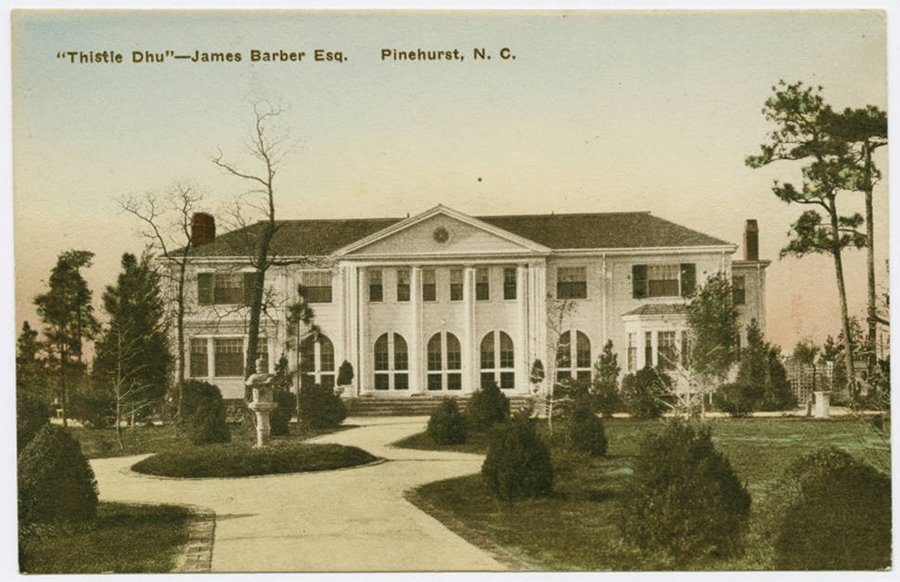
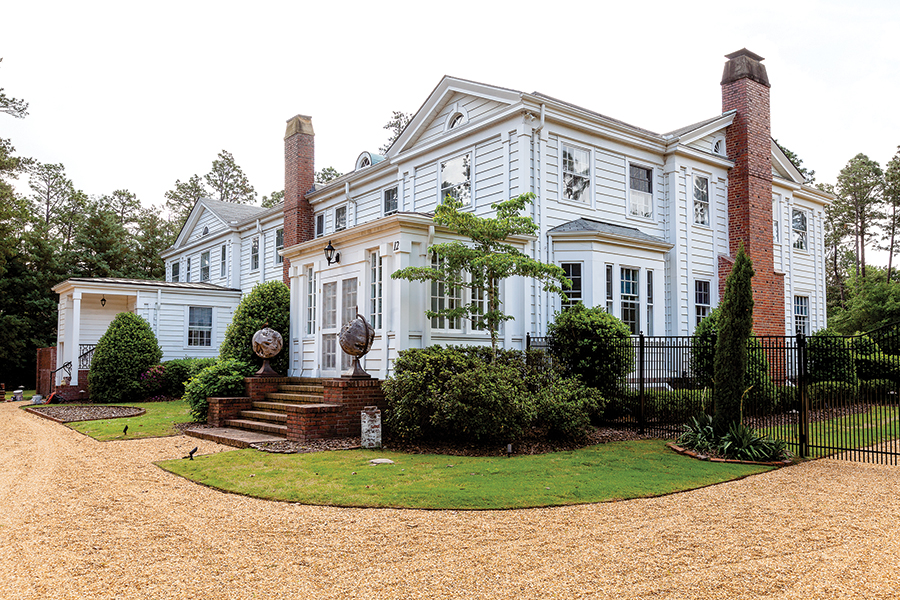
Thistle Dhu Gets a Do-over

A Pinehurst palace celebrates its centennial in mod attire

By Deborah Salomon  •  Photographs by John Koob Gessner

Attention all amateur and professional Pinehurst house historians. Forget everything you saw, read or heard about Thistle Dhu — the 13,000-square-foot Roaring 20s palace built by James Barber, the very same Midas who conceived and constructed, in his yard, America’s first miniature golf course. No kiddie putt-putt, this. Barber’s Lilliput stumped the deftest duffers.

Forget stuffy furnishings, a predictable layout. Instead, whirl into a phantasmagoria of color, art, whimsy, shock. Think pink tufted velvet sofas. A pop-art portrait of Queen Elizabeth. A stairwell mural worthy of 8-year-old Picasso left home alone . . . with fingerpaints. Metallic gold dinette chairs. The mother of all leather massage recliners for après golf. A fitness room and sauna, speakeasy bar and movie theater.

Look up: The living room (in four sections) ceiling is wallpapered in a dizzying metallic kaleidoscope pattern.

Look down: Floors throughout are original narrow heart pine strips stained mink brown.

At last! Those floors, moldings, window panes and upper kitchen cabinets provide a link to an era when wealthy industrialists and their socialite spouses spread money around Pinehurst, the newly chic winter destination.

Then imagine the Barbers’ reaction to such décor hedonism accomplished by young-and-restless owners Patricia and David Carlin, who commute — sometimes by chartered jet with three big dogs — from their primary residence in Park City, Utah.

Upfront, Patricia makes this statement:

“For 20 years nobody cared about this home. It was abandoned, an eyesore. The land was parceled out and the true entrance destroyed.” Then, she continues, she and David fell in love with golf, Pinehurst and the Barbers. They spent millions of dollars and thousands of hours resurrecting a notable historic property, creating an emotional tie to the house and its first family.

The backstory: London-born James Barber and his brother founded Barber Lines in 1886, relocated to America in 1912. By 1917 the company had grown into Barber Steamship Lines of New York, with trading routes worldwide, including Africa, Russia and Australia. Barber merchant ships played a major role in supplying troops during World War I. James Barber’s wealth allowed him to indulge in his passion, golf, at fashionable Pinehurst, where he moved in 1916 and eventually served as Tin Whistles president. Here, he built Cedarcrest, a mansion large and elaborate enough to please his wife and seven children . . . for a while, since in 1919 he built a yet more elaborate home first dubbed Mrs. Barber’s House and later Thistle Dhu, a riff on “this will do” which is what Barber said upon viewing either the house or his miniature golf course. The phrase stuck, given thistles are emblematic of Scotland and Scotland emblematic of golf.

The second house, of Federal Revival style, had Palladian archways framing the front entrance and cost, according to faded documents at Tufts Archives, a whopping $33,000 — about $2 million in today’s dollars.

By 1921, The Pilot called Barber “the biggest force in development of the Sandhills,” for developing Knollwood.

After Barber died at Thistle Dhu in 1928, the house was sold to a Wall Street wheeler-dealer-scoundrel named Michael Meehan, of Good Humor ice cream fame, who deeded the property to the Catholic Church. Nuns from the Daughters of Jesus order in Raleigh renamed it Maryhurst and operated the mansion as a retreat for women.

Imagine the nuns viewing its current flamboyance.

David and Patricia Carlin had never played golf until their honeymoon in 2013, at a Florida resort. After only a few rounds they were hooked — played every day for two weeks, then took road trips from their home in Palm Beach as far north as Hilton Head, where somebody suggested Pinehurst.

“Magical,” Patricia discovered.

Besides golfing through Scotland and Ireland, they continued to visit Pinehurst four times a year, renting houses and riding bikes around town looking for something permanent. Thistle Dhu, in shambles, captured their imagination.

“I figured somebody who knows how to build steamships would build a sturdy house,” Patricia reasoned.

They dug deep into its history, even locating and contacting Barber’s great-great-granddaughter. Finally, they bought it, as well as another house to live in during the renovation, which took almost two years. The floorplan would remain intact except for reducing the bedrooms from nine (or 10, depending on source) to six, thus enlarging the remaining ones. Servants’ quarters near the kitchen became a suite suitable for guests, or even the owners, since Patricia says they sleep all over the house. A corner second floor bedroom became the his/hers dressing room. Bathrooms number 10, meaning never having to travel far. The loos, one with a doggie tub, are notable for their wallpaper — from classic to geometric art deco, to floor-to-ceiling tiny golfers putting away. Linger awhile, and appreciate.

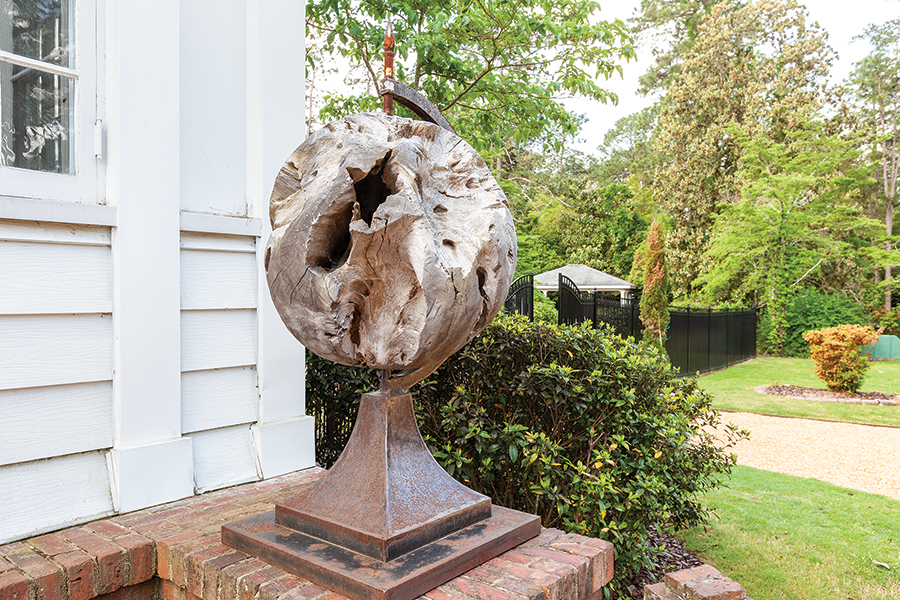
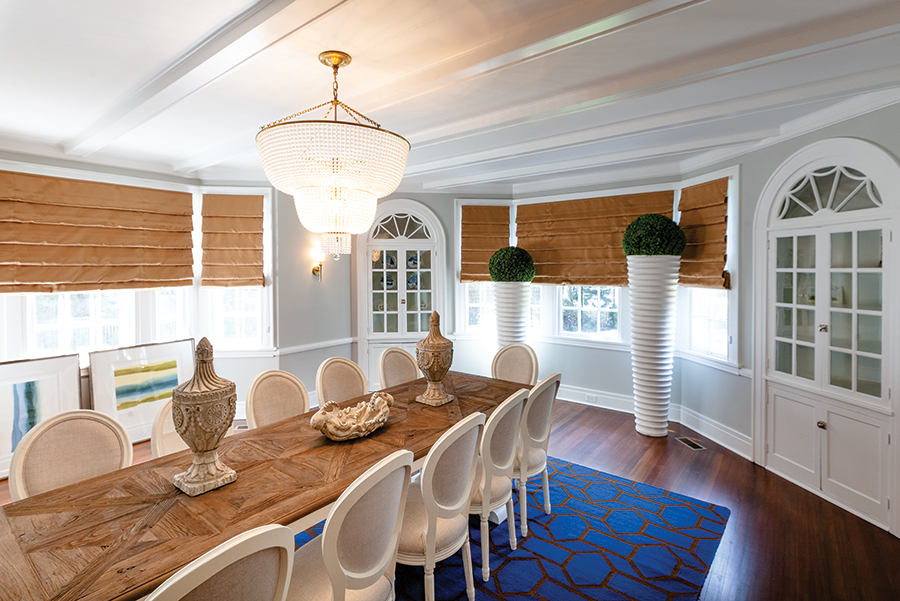
The Carlins’ décor speaks to their lifestyle: young, successful, confident, unencumbered (except for those three frequent-flyer dogs) and, for a project like this, all in. “We don’t plan anything,” David says. Patricia’s mantra is: See it; like it; buy it. Comfort is his. Every stick of furniture, every rug, towel and mug in the house is new. She breezes through a football-field sized furniture warehouse in an afternoon, leaving orders which when delivered fill many rooms. Then, she finishes online at Restoration Hardware. The effect is minimalist punctuated by surprise. That pink velvet on the tufted living room sofa reappears on the master bedroom headboard. Crystal chandeliers are surrounded by metal orbs. Whoever heard of a ping pong table surfaced in planks? Or an oil drum emblazoned with the Chanel logo? The dining room, with original corner cupboards, also houses shrubs trimmed to resemble scoops of ice cream atop 5-foot white “cones.” On the sun gallery stand two year-round Christmas trees. A set of Lucite chairs at the game table channel Frank Gehry — the metallic gold ones in the dinette, probably not. But the couches are definitely Cynthia Rowley.

“If we get bored, we can switch stuff around every year,” David says.

Some rooms have themes, notably the steamship bedchamber with marine blue nautical wallpaper and sailboat art, which makes David feel submerged.

The house had a full basement, unusual for the times except for those with coal furnaces. Here, the nuns built a confessional not far from the existing bar and now, fitness/entertainment equipment.

The intrinsic beauty lies in room size; space allows unusual pieces proper display.

Only the dining room delivers a poignant message. “We’ve never eaten in here,” Patricia says. No Thanksgiving or other dinner has been served on the massive table seating 12. After the housewarming, they hosted no big cocktail parties or cookouts, despite outdoor dining facilities. Because, in truth, although the Carlins feel part of new-generation Pinehurst, they don’t do much day-to-day living at Thistle Dhu. The kitchen — white and pristine as an operating room with a graveyard’s worth of marble — shows no trace of food preparation. The butler’s pantry stands idle.

Instead, rooms are peopled by art, some channeling Beatles-style album covers from the psychedelic ’60s: pop-art Queen Elizabeth competes with a Renaissance damsel wearing ski goggles and paintings suitable as backdrop for Stravinsky’s The Firebird ballet. Still, the piece de resistance has to be the wild brushstrokes in the foyer and up the stairs, inspired by something the Carlins learned from a Beverly Hills (not Versailles) designer.

“We just told the painter to do whatever you want,” David says. “My mother didn’t like it but Kelly Clarkson did.”

The overall effect is startling yet invigorating, representing how fresh, modern concepts transform historic spaces. The Carlins attacked the project of re-imaging a neglected landmark up for auction with verve and attitude. The result is not for everybody, although great-great-granddaughter Kate Barber approved.

A sign in the foyer warns: “For some people, you will be too much. Those aren’t your people.”

Their mission accomplished, David and Patricia may move on, perhaps new construction overlooking a Pinehurst course. Patricia misses her family, who now live in Arizona. Come winter, the avid skiers head back to Park City.

But for now at least, this’ll do.  PS

Out of the Blue

The Brownie Effect

A treat with a tasty purpose

By Deborah Salomon

Please don’t take this recipe as an affront to PineStraw’s excellent food columnists — proponents, like myself, of healthy eating. Brownies don’t grow in the garden, so I’m not treading on Jan Leitschuh’s turf. They don’t boast fiber, or antioxidants. They are chock-full of gluten, fat and calories. But they do serve a purpose.

The Brownie Effect started in the early 1980s, when I worked part-time as a food/features writer at an excellent New England newspaper. The staff was youngish and famished so I brought cookies whenever I turned in an assignment. At first they stared at me like I was Mary Poppins and the Tooth Fairy rolled into one. Soon, I progressed to brownies still warm from the oven, but only on the Fridays when I was needed.

“Why are you doing this?” they asked, between bites.

“Because it’s Friday,” I explained. Brownies are what I do on Friday.

Before you could say lickety-split I was hired full-time. I’d like to think this was because of my writing but . . .

Word spread. Soon, employees of the ad department, circulation, even the publisher had business in the newsroom on Friday.

Amazing, what a little chocolate and sugar can accomplish. I’m reasonably sure that several employers have wanted to dump me but dared not, fearing a brownie backlash.

Even more amazing — how easy, foolproof and yummy these brownies are. No idea where the recipe came from, only that I made them for my children and grandchildren, for bake sales, picnics and funerals. I have shared the recipe hundreds of times. And so, in the interest of improving employer-employee, husband-wife, student-teacher, neighbor-neighbor relationships I feel compelled to share it with you, conversationally, like we were having coffee at the kitchen table.

You’ll need a big (at least 3 quart), heavy pot, a heavy (not sleazy-cheap) 13-by-9 inch non-stick baking pan, a wooden spoon, a rubber spatula, measuring spoons and a 2-cup measuring cup. Into the pot, put 1 1/2  cups sugar, 1 1/2  sticks butter, 4 tablespoons water, 1 teaspoon instant coffee granules. Slowly bring to a rolling boil, stirring often with wooden spoon. Take off burner and add 2 cups (a 12-ounce package) semi-sweet chocolate chips. Stir until chips are completely melted, set aside. Crack 4 large eggs into a glass, stir well with fork and drizzle into chocolate, stirring all the time with the wooden spoon. Measure 1 1/2 cups flour; add 1 teaspoon salt and combine thoroughly with a tiny whisk. Mix flour into chocolate with the wooden spoon until smooth and no streaks remain. Grease pan or spray with baking spray.  Scrape batter into pan and tilt to even it out. Sprinkle with nuts, if desired (See below). Bake at 350 degrees EXACTLY 35 minutes for brownies that are firm on top, fudgy inside. Let cool for 20-30 minutes, cut into squares.

I can have them finished in 50 minutes. But then I’ve baked at least 3,000 pans.

About the butter: I prefer stick margarine, but it must, by law, be labeled margarine. The only two brands available locally are Land o’ Lakes and Harris Teeter house brand. Imperial, Parkay, Mrs. Filberts are NOT real margarine suitable for baking.

About the chocolate chips: They aren’t created equal. Must be a 12-ounce bag. I’ve tried every brand, found Harris Teeter and Food Lion house brands melt better than Toll House. Don’t use “dark” chocolate, in 10-ounce bags. Not enough chips, and they resist melting.

About the flour: I use Walmart house brand unbleached for all my baking. Half the price of King Arthur, can’t tell the difference.

About the coffee: Trust me. Subtle, but what a difference.

About the nuts: People either love or hate them. I sprinkle sliced almonds over the batter, which haters find easy to remove.

Warning: You must take boiling mixture off the burner and stir in chips until completely melted. Only then will it be cool enough not to “cook” eggs, as they are drizzled in. Brownies do not require baking powder or soda, which would turn them into cake.

These brownies freeze beautifully.

Brownies are as unnecessary to survival as Champagne or crab cakes. But they have worth. So think of this not as a recipe, not even a bribe. Think of it as a lesson in life, a theory on human relations, a method beneficial to baker and recipients.

But only on Fridays.  PS

Deborah Salomon is a staff writer for PineStraw and The Pilot. She may be reached at debsalomon@nc.rr.com.

Mom, Inc.

From the Podium

A few words from an award-winning mom

By Renee Whitmore

My son, Kevin, just told me I was the meanest mom in the world. I made him ride his bike for 30 minutes before he could come inside, and I told him he could not have Tootsie Rolls and Reese’s Peanut Butter Cups before dinner. So, in his defense, I clearly am awful.

I am so honored. Meanest mom in the whole world. Wow. Out of all those other moms, me! Just a small-town girl with big dreams, hiding from my kids in my closet, armed with a box of Dove milk chocolates.

So, I wrote a speech for when I accept my award. I walk up on stage with the best Beyoncé reaction I can gather.

(Waiting for applause to die down.)

Thank you. Thank you. Family. Friends. Please be seated. I am absolutely in shock right now. I am so blessed to be standing in front of you today. I truly wasn’t expecting this. (I try to run my fingers through my hair nonchalantly but can’t get past the tangles of dried chocolate.)

Something like this cannot be accomplished alone. I stand on the shoulders of all the mean parents in the world who do not give in to every whim and demand their children make.

Karen. Debi. Shelly. I feel like you guys should be up here with me. Karen, I saw you stop your daughter from standing up on the slide — so cruel. Debi, you only let your son be in two activities at a time — positively sadistic. Shelly, you didn’t buy your kid a third iced donut when he already had a sprinkled one and a glazed one — what were you thinking?

Of course, this day would have been impossible without my long-suffering campaign manager, Kevin, who I sincerely believe will recover from my many dastardly acts in the fullness of time.

My message for you today is a simple one: If I can do it, so can you. You, too, can be meaner than you ever thought possible. So, join me in a toast. Let’s raise a second cup of coffee:

To all the moms who make their kids play outside.

To all the moms who don’t let their kids eat cookies and popcorn for dinner (lunch maybe).

To all the moms who say no to a third dog or cat.

To all the moms who do not let their kids go to school in the clothes they slept in the night before.

To all the moms who pitched out their kid’s once-favorite toy that they haven’t touched in two years.

To all the moms who enforce a bedtime.

To all the moms who make their kids eat green beans.

To all the moms who say “no.”

To all the moms who recognize the purpose of toothpaste.

To all the moms who teach their kids to clean up their own messes, love others and respect authority.

This is for you.

Hold your head up high and be mean.

You can do it, too!

World’s meanest mom. Wow. These are heady times when anything seems possible. When any ordinary mom can aspire to an achievement like this.

Thank you. Thank you so much. I am honored.

They like me. They really, really like me!

(I make a mad dash back to my closet and my Dove chocolates).  PS

When Renee is not teaching English or being a professional taxi driver for her two boys, she is working on her first book

Birdwatch

Purple Reign

For birdwatchers, the return of the purple martin marks the true arrival of spring

By Susan Campbell

For many bird enthusiasts, it is not truly spring until purple martins return. Their unique and twangy song, high-flying acrobatics and glossy plumage easily distinguish them from the other members of the swallow family. But it is the species’ affinity for manmade housing that endears them to thousands of martin landlords across the United States. In fact, east of the Rocky Mountains, purple martins are completely dependent on gourds and multifamily housing to raise their annual broods. Nesting Martins love company and pairs may take up residence in close quarters with anywhere from a few other families to dozens of them during May and June. Established colonies have been known to include a hundred or more adults if space is available. In prime habitat, less experienced birds may delay breeding until a vacancy in the housing occurs.

Martins return to North Carolina from their wintering grounds in Brazil by late March. However, early individual scouts may be seen as early as late February. Experienced adults are paired for the season by early April. Both male and female share the nest building duties, producing a nest of pine needles and leaves. The female lays five to seven eggs and patiently sits on them for about two weeks. After hatching, the young are fed by both parents for up to a month before they are strong enough to leave the nest. They remain associated as a family group not only with each other but also their neighbors in the colony until late July when they begin their journey southward for the winter.

Purple martins are found where larger flying insects are plentiful during the warmer months. This is usually close to water given that their favorite prey includes dragonflies and damselflies, which tend to be abundant near ponds, lakes and rivers. For many years it was erroneously believed that martins were an ideal form of mosquito control. But recent research has shown that they do not pursue mosquitoes. This is almost certainly related to the mosquito’s small size. Maneuvering to catch such tiny prey has virtually no energetic benefit. Also peak foraging occurs around midday, not at dawn and dusk when mosquitoes are most active.

Attracting martins requires some forethought. The birds need lots of room to soar and maneuver adjacent to their home. It needs to be in an open location at least 30 feet from human housing and 60 feet from the nearest tall trees (the farther, the better!). The gourds or house should be 10–20 feet high and clear of any bushes, shrubs or vines. Open area around the pole and housing will reduce the likelihood of predation by mammals or climbing snakes. Once a few pairs of martins are successful breeding in a new location, they will not only become very site faithful but also attract other individuals. Indeed, countless people each year find that providing for purple martins and sharing in their summertime activities is the ultimate backyard birding pursuit. PS

Susan would love to receive your wildlife sightings and photos. She can be contacted by email at susan@ncaves.com.

Too Much Stuff

Spring cleaning and decluttering in the Sandhills

By Jan Leitschuh

You never get enough ’cause there’s just too much stuff

— Too Much Stuff, by Delbert McClinton

In my Wisconsin childhood, the first soft days of spring led to a vigorous and enthusiastic assault on accumulated winter crud by the women on my block. After being cooped up for months with the kids, they felt the craving for space, serenity and order. Children were shooed outside — no playdates needed, just a sweatshirt and orders like “Go play with your little brother, and not in the road.” Boom: The closet cleaning, organizing and disposal of the long winter’s detritus commenced.

“I think the urge comes from prepping for spring, especially those gray, rainy weekends just before. It’s been a long winter, and we’re feeling stuck; we want to purge,” says Mandy Mosier of Clean Quarters by Mandy, an in-home decluttering service charging $40 per hour. “Or I could be cliché and say ‘new beginnings.’”

These days, busy moms work outside the home, and stuff accumulates despite the increasing involvement of the male of the species. But stuff has weight, and they want to lift that weight off their household. But we’re busy . . . and there’s that inertia thing . . . and, so much stuff.

It’ll wear you down, carrying around too much stuff

Today, decluttering the homes of the busy and overwhelmed is big business, the purview of coaches, specialists and TV series, such as organizational guru Marie Kondo’s best-selling books and recent hit Netflix program Tidying Up with Marie Kondo.

Another popular online resource is home organization website FlyLady.net. “Have you been living in CHAOS? FlyLady is here to help you get your home organized! She teaches you to eliminate your clutter and establish simple routines for getting your home clean!”

Woman hands tidying up kids clothes in basket. Vertical storage of clothing, tidying up, room cleaning concept.

FlyLady has you begin with a clean sink and expand from there, sending daily emails assigning small 15-minute tasks. FlyLady’s key values are self-love, patience and many small actions. It urges folks not to be perfectionists, noting that your home didn’t get cluttered overnight, so just drop the mental chatter, be patient with yourself and git ’er done. If your after photos look worse than others’ before photos, no self-flagellation. Note the change and keep moving forward.

All this outside support speaks to a deep longing in our busy souls for space, peace and household order.

So. What’s holding us back from serenity and home nirvana?

Too much stuff, there’s just too much stuff

“Our culture is to accumulate, gather things,” observes Mosier, wife of an active duty military man and veteran of 14 moves in the last 18 years. “Then we are working full time, so we don’t make time to throw things away after doing the cooking, laundry, shopping, dealing with the kids, trying to relax. There’s no time, it seems. It’s so much easier to shove something in a box in a corner or the attic.”

“Moving as often as I do, it is in the forefront of my mind, knowing I’ll have to pack things up again. So this has forced me into a constant state of purging. I’ve learned to live a minimalist lifestyle,” she adds.

Some spring-cleaners need a non-judgmental, outside eye to give them direction and help them stay focused. For others, simply watching a reality show about decluttering is the spark to clean things up and restore peace to the home. Local thrift stores report donations are up in the wake of the Kondo series. “Absolutely,” agrees Lucie Saylor, manager of the Emmanuel Episcopal Thrift Shop in Southern Pines. “I have been asking everyone who brings things in, ‘What’s going on here?’ I think a lot of it has to do with the weather. I’m sure the Coalition (Sandhills/Moore Coalition for Human Care), Friend to Friend, Whispering Pines (Thrift Shop), all of us are benefiting.”

Marie Kondo’s method is full-bore. It begins by connecting with the house, and then simply piling all the clothes on a bed and looking for items to discard, thanking them first for their role in your life. Discard what no longer “sparks joy.” This can be problematic — do athletic supporters or Spanx or underwire support bras “spark joy” in you? (No denying they can be useful in certain situations.) After the winnowing, Kondo shows clients how to roll clothes and stand them upright in drawers, so all can be seen at a glance. Then she moves on to books, papers, sentimental items and everything else — kitchen, garage and the rest.

You can pile it high . . . But you’ll never be satisfied

Perhaps the real secret to Kondo’s decluttering success isn’t the simple sparking of joy but the massive disruption caused by disgorging all that stuff from its static place at the bottom of the closet or back of the drawer. Once it’s out, it must be dealt with. Besides making a visual impact — “Oh my! I have so much stuff!” — the shelves are now clear to wipe down, the floors easily vacuumed. Who wants to put all that back anyway? Plus, you’ve now found that beloved concert tee you thought you’d lost, and who needs to buy toothpaste when two full tubes still in their boxes surface?

“I love Marie Kondo,” says Mosier, “and I did the ‘spark joy’ thing, but I think it can have some limitations. Say, when you’re sorting your sock drawer.”

Persistence is the key. “It looks worse before it gets better” is a Kondo mantra. “You have to grab the mood when it strikes,” says Mosier. And carry on.

The Kondo “mountain of stuff” method may not work for everyone. “A lot of our psychological block is that it’s already overwhelming, especially if you have children,” says Mosier. “I’ll break it down into categories for them. We’ll do all the dresses. Then all the T-shirts. When I leave, I might say, ‘Tonight I’ll have you do your sock and underwear drawer.’”

It’ll mess you up, fooling with too much stuff

While some sort by sparks of joy, others use the tried and true one-year rule.

Kelly Sanders of Kelly’s Tidying and Organization, who also helps others organize, clean and declutter at $35 per hour, agrees with Kondo that “I personally find it easier to make a complete mess first and bring everything out, then start sorting.”

Sanders, mother of two, is so disciplined and organized in her home life that she doesn’t have much in her closets to clean out. “I buy only the bed linen I need, then wash it and put it right back on the bed, so I keep the closet from overcrowding,” she says. “And as far as my own closet goes, most of my items are wash-and-wear quality in dresser drawers. So my closet is minimal.”

But she is firm about discarding, sparks or no sparks. “If I haven’t used it in a year, it needs to go.”

Well it’s way too much . . . You’re never gonna get enough

Mosier, as the wife of an active duty military man, is also tough on herself, but her approach to clients depends on their core values. “I don’t have a specific one-size-fits-all method because what motivates one person doesn’t motivate another. I try to connect to the main reason they contacted me in the first place.” She has new clients fill out a questionnaire detailing their goals, priorities and their “why.” It becomes her roadmap in dealing with specific client needs.

One of Kondo’s principles is item visibility, and Sanders agrees. For her own home, where she is the strictest, Sanders stays organized by “constantly checking on things and seeing how out of hand an area or closet has gotten. The old saying ‘out of sight, out of mind’ is so true. If you can’t see it . . . it’s likely to become hidden with clutter.”

Her home’s kitchen is an example. “I have open shelving storage so I see exactly where things go or need returning. Same goes for my closets. Everything is in sight. My son’s closet is by size and color so I know exactly what I’m looking for. I try to go crazy, clearing out seasonally.” As each one of the four seasons ends, she says, “I go through everything from that season as I’m putting it away in storage containers . . . clear ones with labels so I know what’s inside. I donate holiday decor items I’ll no longer use or sell my kids’ clothes that they’ve outgrown, to buy the new ones they need. I try to stay on top of clothes.”

Ah, baby clothes. “A major question I ask in a first meeting: ‘Are you planning to have more children?’” says Mosier. “Women who are done having children can get rid of all this baby stuff.”

It’ll hang you up, dealing with too much stuff

Sentimental attachment is one factor both Sandhills organizers find trips people up. People often identify strongly with items imbued with memories.

“Everyone is different,” says Sanders, “but basically I talk to them about being overwhelmed in stuff, and wanting to breathe. That it’s OK to let go of some things and only keep the most meaningful, something that meant something to you personally.”

Our attachments can have deep psychological roots. “I think the biggest thing behind clutter is being attached to items,” says Sanders. “There’s guilt of letting it go because maybe someone special gave it to you, and you don’t want to disappoint them. Or, you believe it has sentimental value?”

The “might-need-it-someday” mentality is also a clutter keeper. “I know several people who came up very poor and believed in keeping things until they broke or could pass them down,” says Sanders. “They now are able to buy things, but are mentally unable to let things go.”

“My kids might want this one day” is another hang-up, but many find their offspring are rarely interested in grandma’s china or the great-aunt’s crystal. Use or donate, the experts advise.

It’s a mental game. Mosier tries to connect with her clients’ “why.” “One lady is very attached to her things,” says Mosier. “She has dresses with tags still on them. Some are old and stained and torn but she was pregnant when she wore them. As a stay-at-home mom, she wears dresses maybe once a week to church. She went through them and had a hard time letting go. And the clutter in the house was damaging their marriage.”

Yeah, it’ll tear you down, fooling with all that stuff

Mosier’s tips for sorting clothing include asking: Is it classic or trendy? Does it still look new or fresh? Is it stained, damaged or torn? “Women are very appearance driven, and clothes are important to us, and we get attached to those things in a way I don’t think men do,” she says.

Harking back to her questionnaire of stated goals, Mosier was able to ask her client, “Is this dress that you have never worn more important than your marriage?” She may practice a little tough love. “Sometimes I have to take a gruff approach with people. ‘You’re going to go through these dresses again.’ And then I sit there as they try them on. An outsider’s eye has no sentiment. Often, I’ll be able to offer some clarity and say, ‘Honey, you’re a beautiful girl and that doesn’t flatter you,’ or, ‘That dress doesn’t do you any favors.’”

One client had trouble letting go of a large stainless steel silverware chest because it was a wedding gift, even though she had a set she preferred. The solution? Art. “We took one setting only — knife, fork and spoon — and had them framed in a shadow box with a meaningful saying about love and nourishment, and she liked that,” says Mosier. “There are companies that will take your baby clothes, or your college tees, and turn them into blankets.”

For bulky sentimental items, the organizers suggest up-cycling. Mosier turned her wedding dress into a baby quilt. “Now I have one baby blanket that my kids use, not 10, and it is meaningful.” Her husband’s old military uniforms were important to him, but taking up space, unused: “My mother-in-law took them and made two lap blankets for our two boys.”

You know you can hurt yourself, fooling with too much stuff

The massive disgorging of clothes frees up a lot of energy, say all the organizers. This is the payoff — space, peace, satisfaction, the big sigh of relief. “Start by focusing on the most cluttered rooms first,” advises Sanders. “After those are completed, the rest of the house will seem like a breeze and will be something you’ll want to do. Place seldom-used items in clear containers for easy storage and you’ll know how to locate them.”

Mosier finds “the master closet seems to be the number one priority, followed by the kitchen, followed by the kids’ playroom. Most of us find it easier to get rid of our kids’ stuff, than our own.”

Then there is the “where-to-discard-it” paralysis. A number of folks don’t want to consign the still-useful to landfills. “Some of it just has to go right in  the dumpster,” says Mosier. “Then I like to suggest the Sandhills Coalition or Friend-to-Friend for useable items. People like the idea of helping others. Since I mostly work with women, I use Friend to Friend, the battered women’s advocacy agency, to help women let go. I point out that if this dress can help one woman in need get out and get a job to support her children, that’s an easy sell.” Mosier also likes the website RealReal.com for recycling upscale items on consignment.

You know you can’t get a grip when you’re slippin’ in all that stuff

For Mosier and Sanders, decluttering is a year-round activity they enjoy. “But I see why people might feel overwhelmed,” says Mosier. “I am naturally prone to this because of the way my parents raised me, and our constant military moves. I became a stay-at-home mom when we decided to have children, and that allows me to have the time to do something I enjoy doing.”

She laughs: “If I was working full time, my house would probably be a mess!”  PS

Contact Sanders through email: Sanderskelly2820@yahoo.com or at 910-705-5016. Contact Mosier either on her “Clean Quarters by Mandy” Facebook page, or by email: cleanquartersbymandy@gmail.com.
Character Study

A Chin Scratcher

Stuck in the era of the presidential close shave

By Scott Sheffield

Whither hast thou gone, presidential whiskers? No American president has sported facial hair of any kind since Howard Taft left office in 1913, except for the mustache and goatee cultivated for a short time by Harry Truman after the 1948 election. Before Taft, no American president had gone without it since James Buchanan ceded the office to Abraham Lincoln in 1861, except Abe’s successor, Andrew Johnson, and William McKinley. During that era, the diversity of presidential facial growth ran the gamut of possibilities. Long sideburns, mustaches, mustaches with muttonchops, full beards with mustaches and without.

John Quincy Adams (1825–1829) was the first president to opt for a hairier facial appearance. This new look consisted of something between very long sideburns and muttonchops. He may have been emulating his father’s [John Adams (1789–1803)] sideburns, which were shorter but just as bushy as his. Martin Van Buren (1837–1841) was next to show some facial flair, sporting long bushy sideburns, followed by Zachary Taylor (1849–1850), who wore shorter, less ostentatious but still bushy sideburns as well.

In 1861, the first beard appeared on the face of a president. The beard, sans mustache, appeared on the face of Abraham Lincoln. In October of the previous year, Lincoln had received a letter from a young girl advising him that he should grow some whiskers in order to enhance his appearance, as well as his chances of winning the election the following month. Although Lincoln expressed concern in his reply to the little girl that people might consider doing so “a silly affectation,” he started growing a beard shortly thereafter. On his inaugural trip to Washington, D.C., the following February, his train stopped in Westville, New York, the hometown of the little girl, Grace Bedell. He called her from the crowd and proudly showed her his full-grown beard, saying, “Gracie, look at my whiskers. I’ve been growing them for you.”

In 1865, Andrew Johnson, who became President after Lincoln’s assassination, was the last clean-shaven president until William McKinley took office in 1897.

During those intervening years, the choices varied considerably. Ulysses S. Grant (1869–1877) wore a closely cropped, but full, beard and mustache. My favorite, by the way. (Maybe because it looks like mine.) Rutherford B. Hayes (1877–1881) likewise wore a full beard and mustache but most definitely not a closely cropped affair like Grant’s. His beard cascaded well over his celluloid collar, just as his mustache flowed over his mouth, almost concealing it completely.

James A. Garfield (1881–1881) was only in office six months when he became the second president to be assassinated in less than 20 years. While in office, though, he perpetuated the style of his predecessor with a free-flowing mane of his own, beard and mustache alike. At least you could make out his mouth.

Chester A. Arthur (1881–1885) distinguished himself as the only president to adorn his countenance with the combination of muttonchops and mustache. Unfortunately, the hair on his face grew sparsely so he really wasn’t able to rock the style statement.

Grover Cleveland, the only president to serve two nonconsecutive terms (1885–1889 and 1893–1897), wore only a full mustache. It was a bushy one, one that seemed to eschew trimming, but not on the scale of those belonging to Hayes and Garfield.

Then there was Benjamin Harrison’s (1893-1897) beard. Similar to Grant’s in shape and length and well groomed, it also earns style points for color. Although he was only 56 years of age when he took office, his beard was totally white. I still like Grant’s the best. (Did I mention that his looked like mine?) As a result of yet another assassination, Teddy Roosevelt became president in 1901. William McKinley (1897-1901) had opted against any type of facial hair at all, but his successor wore a full mustache similar in size and shape to Cleveland’s. In today’s parlance, both Teddy’s and Grover’s mustaches would be likened to those of bull walruses, and come to think of it, probably were in their day as well.

The last president to adorn himself with facial hair was William Howard Taft (1909-1913). His choice was a full-blown handlebar mustache.

So why have the presidents’ faces gone hairless for over a hundred years? Around the turn of the 20th century, public health officials determined that tuberculosis, a scourge of the era, was an infectious rather than a hereditary disease. In this period of uncertainty about the disease, the theory arose that men’s beards could be repositories of tuberculosis germs. That pronouncement eventually led to the adoption of the clean-shaven look as the more healthful and therefore more desirable for presidential candidates, as well as men in general. Even after it was determined that beards posed no greater risk of contracting or transmitting tuberculosis than shaven skin, the damage was done. Facial hair didn’t return to men’s faces until the 1960s and never again (or at least not yet) to the faces of presidents.

In the presidential races of 1944 and 1948, Thomas Dewey, the last candidate for the office to wear facial hair, was defeated on both occasions. It was said at the time that the public’s disapproval of his mustache may have contributed to his losses.

So, is that it? Has presidential facial hair been relegated to the dustbin of history? I don’t think so. If Julian Edelman, the MVP of Super Bowl LIII, can wear a beard and have it shaved live on TV by Ellen DeGeneres, can the most powerful chief executive in the world be far behind?

Maybe, if it’s a woman.  PS

Scott Sheffield moved to the Sandhills from Northern Virginia in 2004. He feels like a native but understands he can never be one.

PinePitch

Parade of Champions

Come walk the fairways with the legends of the game in the second United States Senior Women’s Open Championship played May 16-19 at the Pine Needles Lodge & Golf Club in Southern Pines. Defending champion is Dame Laura Davies who won the inaugural championship last year at Chicago Golf Club. Eleven former U.S. Women’s Open Champions are among those in the field. Ticket packages — some including a special screening of The Founders at the Sunrise Theater on May 13 at 5 p.m. with reception to follow at The Pilot — vary and are available at www.usseniorwomensopen.com. Tickets will also be available at the gate.

Spring into Antiques

The Cameron Spring Antiques Street Fair takes place Friday, May 3 and Saturday, May 4 from 9 a.m. to 5 p.m. in the heart of Cameron on Hwy. 24/27. All shops will be open and will be joined by 250 outside vendors. Food and refreshments will be available.

Author Visits Brownson

Debby Irving, the author of Waking Up White will be at Brownson Memorial Presbyterian Church for a lecture and discussion on Monday, May 20 from 6 – 8 p.m. and again on Tuesday, May 21, from 9 a.m. to noon for a workshop, followed by a discussion period. A former community organizer and a classroom teacher for 25 years, she shares her struggle to understand racism and racial tensions, offering a fresh perspective on bias, stereotypes, manners and tolerance. 

First of the Firsts

The opening First Friday concert features Eric Gales on the First Bank Stage next to the Sunrise Theater on Friday, May 3. Music begins at 5 p.m., rain or shine. Beer available for purchase. No outside alcohol and, please, leave your dogs at home. There will be food trucks and fine music in
great abundance.

Get Your Souvenir

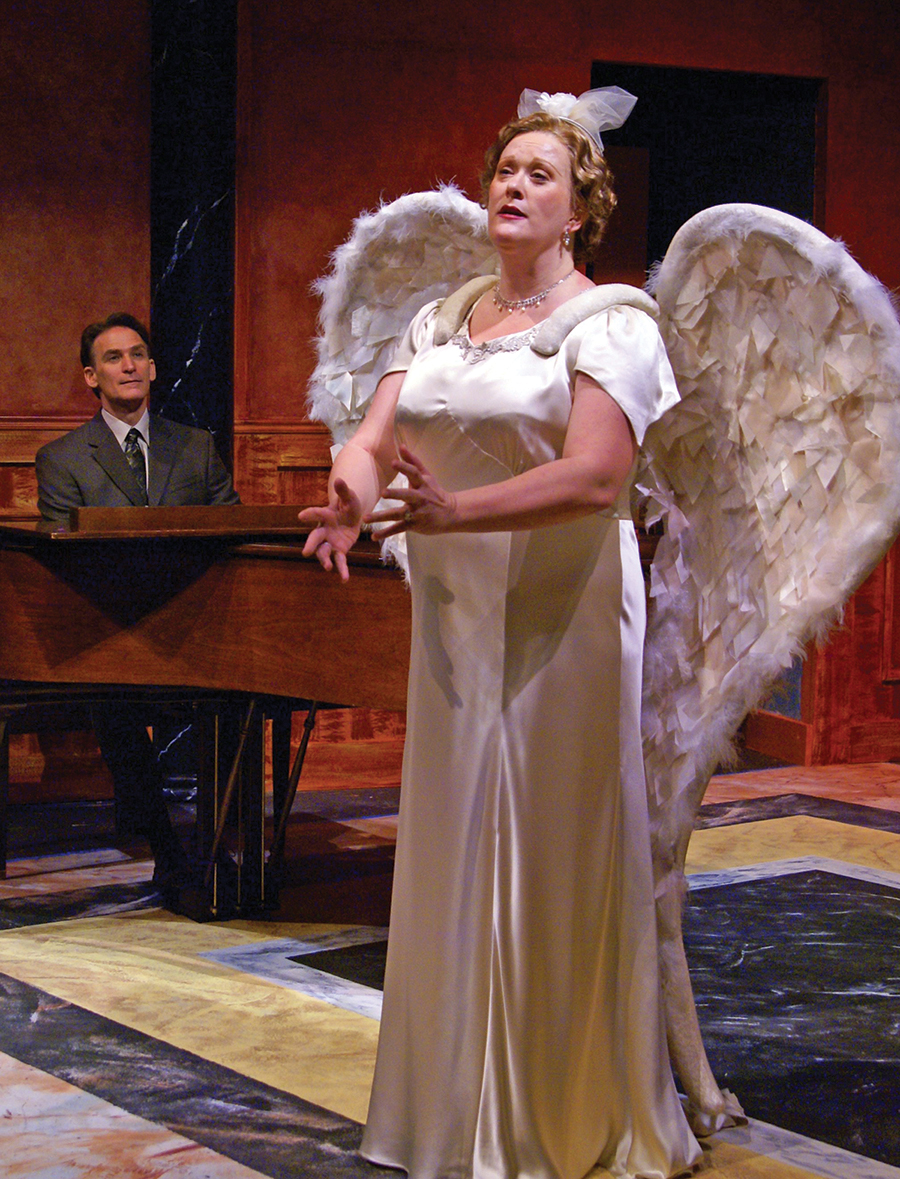
The Judson Theatre Company presents Liz McCartney and Bob Stillman in Souvenir: A Fantasia on the Life of Florence Foster Jenkins. It’s the true story of one of opera’s most unforgettable stars. An eccentric and wealthy New York socialite believes she is an enchanting coloratura soprano and wants to share her gifts with the world. She becomes a sensation, draped in fabulous costumes, holding recitals at the Ritz. Unfortunately the truth is, Mrs. Jenkins can’t sing. But there’s more than one way to get to Carnegie Hall. The curtain goes up at the Hannah Center Theatre, The O’Neal School, 3300 Airport Rd., Southern Pines, on Thursday, May 9 at 7 p.m.; Friday, May 10, at 8 p.m.; Saturday, May 11 at 8 p.m.; and Sunday, May 12 at 3 p.m. Tickets are $38 and available at judsontheatre.com.

Farmers al Fresco

North Carolina food is expertly prepared by Chef Mark Elliott in this special fund-raising event for the Given Memorial Library and Tufts Archives at 6:30 p.m. on May 21 at Tufts Memorial Park on the Village Green in Pinehurst. Tickets are $80 and can be purchased at the Tufts Archives or www.ticketmesandhills.com. For additional information call (910) 295-3642.

Start Your Engines

The second Sandhills Motoring Festival begins Friday, May 24 with an informal car show at Little River Golf & Resort from 5 – 8 p.m. The three-day event continues on Saturday with a rally and concludes on Sunday at the Concours in the Village with 125 automobiles parked on the Village Green and the streets of Pinehurst. Registration ends on May 15. For more information visit www.sandhillsmotoringfestival.com.

Best of the Pines

Explore pop-up booths from over 25 favorite local businesses vying for nominations and votes for “Best of the Pines” honors on Saturday, May 11 from 11 a.m. to 3 p.m. at The Heritage Flag Company, 230 S. Bennett St. in Southern Pines. The vendors will be giving out samples of treats, products and services. There will be live music, beer from the Southern Pines Brewing Company and food from What’s Fore Lunch food truck.

The Rooster’s Wife

Sunday, May 5: Rory Block and Cindy Cashdollar. The name says it all: Sisters of Steel. Delta blues guitar, steel guitar and lap steel superlative. Cost: $25.

Thursday, May 9: Compton and Newberry. Preeminent practitioners of the real deal. Masters of old-time mandolin and banjo/guitar. Cost: $15.

Sunday, May 12: Fish Harmonics, The East Pointers. Take an adventurous dive into roots and modern folk music with first-class world music maestros.

Thursday, May 16: Open mic with the Parsons.

Saturday, May 18: The Gravy Boys. Natural storytellers who spin their tales through tight brother duet harmonies over a vintage acoustic backdrop. Cost: $10.

Sunday, May 19: Bombadil, India Ramey. Creative and heartfelt lyrics, lush vocal harmonies and thoughtful arrangement, contrast with a sassy spitfire and her Southern-gothic songwriting. Cost: $15.

Friday, May 24: Yarn, Ashley Heath. Yarn plays roots music from the shadows of skyscrapers. Expect velvet blues with a touch of twang from Ashley Heath to open the evening. Cost: $15.

Sunday, May 26: The Allen Boys. Sacred steel comes to Aberdeen. Get ready to be happy. Cost: $25.

Thursday, May 30: Tim Carter Band. Grooving Appalachian, folk rock, funked-up, bluegrass, gypsy blues music.
Cost: $10.

Unless otherwise noted, doors open at 6 p.m. and music begins at 6:46 at the Poplar Knight Spot, 114 Knight St., Aberdeen. Prices above are for members. Annual memberships are $5 and available online or at the door. For more information call (910) 944-7502 or visit www.theroosterswife.org or ticketmesandhills.com.