Almanac

December Almanac

By Ashley Wahl

December is here and, with it, the sound of a single cricket. One distant, mechanical song. A message transmitted across space and time.

The stars are out. You cannot sleep. And so, you listen.

Months ago, when the crape myrtle scattered her crinkled petals like pink confetti upon the earth beneath her, an orchestra of crickets filled the night with a song thick as honey. And months from now, when the vines are heavy with ripening fruit, they will sing again, knitting an afghan of sound by moonlight — gently tucking you into bed.

On this cold December night, the cricket transmission grows clearer. You follow it like a single thread of yarn until you receive it:

There is no end, the cricket sings. Only change.

Somehow, this message brings you comfort.

December isn’t an abrupt or happy ending. There is no hourglass to turn. No starting over. Just a continuum. An endless stream of light and color ever-shifting like a dreamy kaleidoscope.

December is sharing what’s here: our warmth, our abundance, what we canned last summer.

This year and the cold have softened us. We feed our neighbors, feed the birds, open our hearts and doors.

The camellia blossoms. Holly bursts with scarlet berries. From the soil: gifts of iris, phlox and winter-flowering crocus.

The cricket offers his song — a tiny thread guiding us toward the warmth of spring — and we listen.

This listening, too, is a gift. Sometimes it’s all we’ve got. And, sometimes, that listening is itself a simple thread of hope.

December’s wintry breath is already clouding the pond, frosting the pane, obscuring summer’s memory . . . – John Geddes

You Gotta Eat Your Spinach, Baby

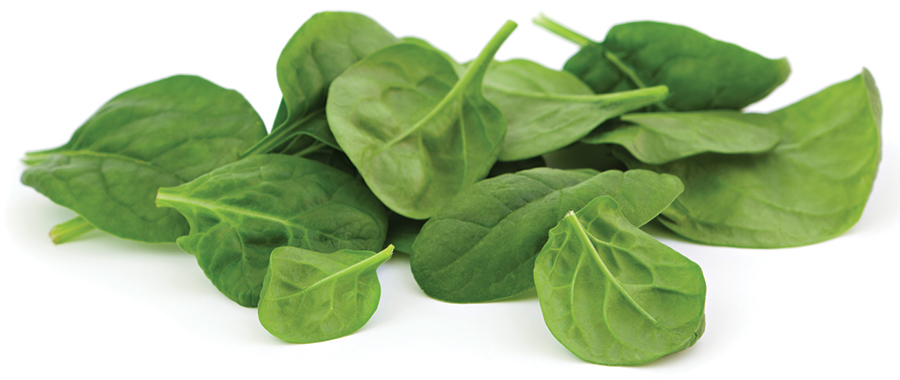
Fortunately, many nutrient rich greens thrive in our winter gardens. Especially spinach. And what’s not to love about it?

Enter pint-sized Shirley Temple, ringlets bouncing as she marches past a small ensemble to join Jack Haley and Alice Faye centerstage:

“Pardon me, did I hear you say spinach?” she asserts with furrowed brow and her punchy, sing-songy little voice. “I bring a message from the kids of the nation to tell you we can do without it.”

And then, song:

No spinach! Take away that awful greenery

No spinach! Give us lots of jelly beanery

We positively refuse to budge

We like lollipops and we like fudge

But no spinach, Hosanna!

And now for the opposing view: In the 1930s, the spinach industry credited cartoonist Elzie Crisler (E.C.) Segar and his muscly armed sailor man for boosting spinach consumption in the U.S. by 33 percent.

But why-oh-why did he eat it from a can?

Longer shelf life, no doubt. Also, cooked spinach contains some health benefits that raw spinach does not. Raw spinach is rich in folate, vitamin C, niacin, riboflavin and potassium, but it also contains oxalic acid, which can hinder the body’s absorption of essential nutrients like calcium and iron.

According to Vegetarian Times, eating cooked spinach allows you to “absorb higher levels of vitamins A and E, protein, fiber, zinc, thiamin, calcium and iron.”

In other words: You gotta eat your spinach, baby.

Starry, Starry Night

Well, this is perfect: The Geminid meteor shower will be peak from mid-evening December 13 until dawn December 14 — a new moon. That means the show will be unobstructed from moonlight, and if conditions are right, you might catch up to 120 meteors per hour.

Some believe this prolific shower ramps up every year. We’ll see. Regardless, may we allow this celestial pageant to remind us of the wonder and beauty that so often graces us.

And don’t forget to make a wish.  PS

Golftown Journal

Best Buys

Golf under the Christmas tree

By Lee Pace

We’ll soon utter good riddance, bon débarras (French), buon viaggio (Italian) and buen viaje (Spanish) to this dud of a virus-tainted year of 2020. Fortunately, some good emerged from the rubble — the golf course has proven a reasonably safe refuge from Zoom calls, nose swabs and political backbiting. Golf Datatech, a golf industry research firm, reports a 25 percent jump in rounds played over a year ago in the month of September, and year-to-date rounds are up nearly 9 percent nationally.

Many golfers report their “COVID handicaps” are a hair lower because they’re playing more golf. I did my part and spent a few bucks along the way, figuring I can’t take it with me, and I might as well pump up a sagging gross domestic product.

Herewith are a few of my favorite purchases from 2020. Maybe they’ll spawn a Christmas gift idea.

For game improvement: the Flyt Chipping/Pitching Sleeve (pronounced like flight). Brad Smith, a former pro on various developmental tours worldwide, concocted the device after noticing the fundamental differences in the chipping and pitching motions of elite players versus mid-handicappers and up. The sleeve covers the right hand, wrist and arm just past the elbow (of a right-handed golfer) and takes out any hinging action of the wrist and elbow. You simply move your arms and chest back and through in a triangle motion with absolutely no hand action. A tip from an instructional video to keep the chest down and moving through the shot is the secret sauce. I am still working on getting distances and trajectories honed, but contact has never been as consistently pure by replicating the motion and feel. Highly recommended.

For foot comfort while walking the course: Sketchers GO-Golf shoes and Bombas Tri-Block ankle socks. There is nothing more important to the walking golfer than good shoes and socks. Who among us hasn’t slogged up 18 with a painful blister borne of rigid shoes or poorly constructed socks? I’ve tried a pair of the True Linkswear Knit shoes and they are among the lightest and most comfortable I’ve worn, but they’re not waterproof. So if you troop through the dew on a summer morning, you’ll be soggy all day. These Sketchers shoes are waterproof and featherweight, and their spikeless traction outsoles feature multidirectional cleats and lugs that provide superior traction. The Bombas socks are made of a cotton/poly blend; they don’t slip, have no irritating toe seams and have a “blister tab” — a tiny cushion that sits directly where the shoe hits the leg. You’ll be tuckered out after walking 18 holes, but your feet won’t be squealing.

For a total sell-out to technology over minimalism: Peakpulse Rangefinder. I swore I’d never stoop to using an artificial measuring device (and even said so in this space in a September 2009 piece titled “The Golf Curmudgeon”). But I airmailed wedge shots on the same hole on consecutive Sundays back in June because I was too lazy to find a sprinkler head. I tried a Bushnell Phantom GPS but found it cumbersome to mount to my bag or belt (and too easy to pop off), then opted for the Peakpulse. It’s easy to use, accurate and reasonably priced. I simply reach into my bag as I approach my ball, pull out the rangefinder and give the flag a quick shot.

For my winter golf comfort: a reverse stripe hoodie from Linksoul. Players like Justin Thomas and Erik van Rooyen have normalized wearing a hoodie on the golf course, and my annual resolve to play more winter golf (and annual rejection thereof) prompted the idea for a stylish and comfortable outerwear piece. Generally I am more homed in on the color of Stitch and Johnnie-O and find Linksoul’s color palette too earthy and muted, but this light gray piece (“Deep Lake” in their catalog) looks great with stone-color trousers on the course and jeans off it. That’s exactly what company founder John Ashworth had in mind — create a transitional wardrobe based around a Southern California coastal environment; every piece works whether you’re walking onto the first tee or into a boardroom.

For my lightest and coolest golf bag ever: a customized bag from FlagBag Golf Company. A course superintendent in California named Josh Smith had the idea a year ago to take flags used on hole flagsticks and turn them into golf bags, figuring that three flags stacked one on top of another and stitched together would be the right amount of material. Josh and his brother Matt went into business together and manufacture the bags in a shop in Portland to individual customers’ specifications. I acquired flags from six of the courses to be featured in my upcoming book that University of North Carolina Press will publish in the spring of 2021 and asked the Smiths to turn them into a bag. It features Pinehurst No. 2, Palmetto GC, Eagle Point GC, Old Town GC, Grandfather Golf and CC and Old Chatham GC and weighs only 2 pounds. It’s bare bones — one pocket, no umbrella holder, no stand. “Less is more,” Smith says. “It ties into minimalist golf. Minimal strokes wins in golf. Minimal wins in architecture, swing thoughts and golf bags.”

For my reading pleasure: a vintage hardback copy of The Heart of a Goof by P.G. Wodehouse. I have more than a dozen yellowed paperbacks from the Jeeves/Bertie Wooster library of novels by Wodehouse, the British humorist from the early 1900s, as well as his two golf books, The Heart of a Goof and The Clicking of Cuthbert. My favorite is The Heart, in which from his perch on the veranda at a fictional club, The Oldest Member ruminates and tells stories on the vagaries of golf and its adherents. The opening salvo in this book tells of a “goof” named Jenkinson, “one of those unfortunate beings who have allowed this noblest of sports to get too great a grip upon them, who have permitted it to eat into their souls, like some malignant growth.” It’s a book worth re-reading every year or so, and I thought it should assume a more distinguished spot in my library in the form of a hard-cover edition from The Classics of Golf vintage book collection. That this version includes a foreword from the esteemed Herbert Warren Wind makes it all the more special.

And for my nesting pleasure: a trio of vintage, golf-themed railroad travel posters. As we’re spending more time at home, I thought my office could use a makeover with these throwback images from the early 1900s. Back in the day, railroad companies spent much of their advertising budgets commissioning beautiful and intriguing paintings to promote their destinations and routes. Now these giclee prints depicting venues in France (Vichy), Scotland (Cruden Bay) and Switzerland (St. Moritz) give me wistful longings for the days we could easily get on a plane to play golf and then shake hands after that final putt on 18.  PS

Lee Pace has written about the Sandhills golf scene for more than 30 years and currently is working on a 25-year anniversary book for Forest Creek Golf Club. Contact him at leepace7@gmail.com.

Southwords

The Tinsel War

By Matthew Moriarty

If there is one thing my father and I agree on this holiday season, it’s that this is going to be, unquestionably, a tinsel year.

You see, my older sister, Jennifer, and I are the offspring of a mixed marriage. My father loves tinsel on our family Christmas tree. My mother absolutely loathes it.

Naturally, some years ago, Jennifer and I were forced to pick sides. I went into Dad’s camp. My traitorous sister sided with Mom. The battle lines were drawn. This type of conflict can tear any normal family apart. Luckily, ours isn’t that normal. Family legend holds, for instance, that back in the “old country” brothers Cormac and Connor Moriarty actually split the family in two over whether it was appropriate to add a cinnamon stick to a burning log of peat. So, at least in terms of important holiday decisions, we have a long history of this sort of thing.

On the eve of a duel to settle the cinnamon issue once and for all, the story goes, both died simultaneously of acute liver failure, leaving matters to their argumentative progeny. Thus remains a simmering conflict. The brothers were too poor to buy a cinnamon stick anyway.

But I digress. Knowing how hard family conflict could be on one’s organs, we eventually entered into an uneasy treaty. As a compromise, Mom agreed that every other year would be a tinsel year. On the face of things, this would seem the perfect compromise. However, time being linear and memories being not, it seems that every year in November the same debate erupts over whether last year was a tinsel year. I’m still convinced that Dad and I got chiseled out of few good tinsel years.

So, why do I love Christmas tree tinsel? Um . . . good question. I really don’t know. It’s terribly tacky stuff. It can take an otherwise beautiful Christmas tree and turn it into a monument to white trash tastes. It melts onto the lights, sticks to the dog and generally gets everywhere. It feels, in a word, kind of creepy.

The only logical conclusion is that I love tinsel because I inherited it from my dad. Just to be sure, I called him up and asked him why he likes Christmas tree tinsel.

“It’s part of the overall experience,” he explained. “Why do you like the leaves to turn in the fall? It’s part of the overall experience.”

I pressed him for a better answer. Give me something tangible, I pleaded.

“Well, it’s home entertainment as well,” he offered, “when the cats yack it up.”

There we go, I thought. In the interest of family fair play (and so as not to unduly fan the flames), I also asked my mom why she hates tinsel.

“How many reasons do you want?” she replied. “For one, it gets all electrified. It grabs onto the cats and they drag it all around the house.” (Editor’s note: You may wish to find a comfy seat. She’s just getting started.) “They eat it and you have to pull it out of their butts. You can’t vacuum it. It winds its way around the vacuum and you have to flip it over and pull it out by hand. It’s so nasty. Children play with it and you look at them and see little pieces of shiny junk sticking out of the corners of their mouths. You pull it out and it’s a foot long. Yuck.”

“Anything else?” I asked her.

“Those are a few reasons. I could name others.”

She went on unstoppably about finding mysterious pieces of tinsel on the carpet in July (“Where has it been the last six months? I have no idea.”) and about its other horrible tendencies to infest every nook and cranny of our home. She was still ranting about tacky tinsel when I had to hang up.

One year my mom attempted to end this protracted war by buying static-cling-free tinsel. It was oddly translucent strips of plastic that looked and felt nothing like real tinsel. The peace offering actually had the opposite effect. Dad and I hated the “fake tinsel” and demanded a do-over the next year. That spring, Mom found a bird’s nest made out of the stuff. I’m glad something found a decent use for it.

About five years ago, with Jennifer and me out of the house, my mom somehow won a decisive battle. The exact details of the skirmish are lost to history, but one thing is for sure: We haven’t had a tinsel year since.

That is, until now. That’s right. It’s a tinsel year. I asked my dad, just to make sure.

“Matty,” he says, “it’s always a tinsel year. What the hell’s the matter with you? What kind of question is that? Go ask your mother.”

So, to be on the safe side, I also asked Mom.

“No,” she replied, as if I must be joking. “Of course not. It’s never a tinsel year.”  PS

(This column originally appeared in the December 2007 edition of PineStraw. Matt’s father feels that, if ever there was a tinsel year, 2020 must be it.)

Birdwatch

Winter Visitors

You’ll know this clever nuthatch by its color and its call

By Susan Campbell

Every few winters, an irruption of wintering finches wings its way to the Southeast. This is definitely shaping up to be one of those years. Thousands of songbirds native to the far north, such as pine siskins and purple finches, are already pouring in, looking for food all over North Carolina.

The first waves were observed in late September, signaling that there’s already a dearth of red spruce, balsam fir, Eastern hemlock and other small, oily and protein-rich native seeds across the northern tier of states. These birds will move farther and farther south in coming months. Some, such as the red-breasted nuthatch, have their breeding grounds way up in the boreal forests of Canada. Although pairs can also be found in northwestern North Carolina at altitudes of upwards of 3,000 feet year round, some nuthatches may cease their quest southward when they happen upon a well-stocked birdfeeder. If it’s your feeder, don’t be surprised if they take up residence in your yard for the duration of the season. And are they ever entertaining for the lucky hosts!

The red-breasted nuthatch is closely related to our resident brown-headed and white-breasted nuthatches with which many of us are so familiar. They defend their nest cavity fiercely from other birds as well as climbing predators. They have also been documented using resin and pieces of bark around the nest entrance for protection. Such skillful tool usage is remarkable, so it’s no surprise that red-breasted nuthatches can be very successful breeders. However, if the weather is good and food is abundant in summer, they can easily outstrip the local mast crop by late summer.

These animated little birds have a gray back, a prominent eye stripe and rusty flanks as well as a reddish breast, as their name implies. Red-breasteds are also quite vocal, calling repeatedly a distinctively nasal “yank yank” that sounds like a tiny tin horn being blown from the treetops. Both sexes will call, but unmated males are the most vocal. They give a very definite warning of their presence — even to larger birds, which they are not afraid to challenge for food.

Red-breasted nuthatches spend their time crawling over the branches of pine trees looking for seeds in cones as well as insects active in the needles and outer bark. Stock your birdfeeder with sunflower seeds, which they love. With their long, wedge-shaped bills, they can readily shell and gobble down black-oil sunflower seeds or they store them in a crevice for later. These little birds also love peanuts and suet. Individuals can be quite aggressive, driving other nuthatches away with strong body language and harsh vocalizations.

In the Sandhills and Piedmont, where we have such good nuthatch habitat, you can find them almost anywhere in a good winter. The best way to locate a red-breasted is to slowly walk through a pine stand and listen. They rarely resist giving themselves away. But in the absence of repeated, nasally calls, scan nearby chickadee or titmouse flocks. These northern visitors are known to frequently associate with other small-bodied seedeaters. If you spend just a little time in the woods over the coming weeks, chances are you’ll spot some of these clever winter visitors!  PS

Susan would love to receive your wildlife observations and/or photos at susan@ncaves.com.

Hope & Healing

Photographs by John Gessner

We’ve all had bad days. Occasionally it’s been a tough week. And some months are better than others — blistering heat in August and ice storms in February come to mind. But an entire year gone off the rails? Geez. There is little doubt that 2020 carved out a special spot in our psyches for wretchedness. Seemed as though if it could go wrong, it did. It’s been an alphabet soup of catastrophe and, as we all know, the letter C stands for COVID. But the end is in sight. The sun will come up tomorrow. And who better to remind us of the promise of that new day than the faith community that surrounds and embraces all of us?
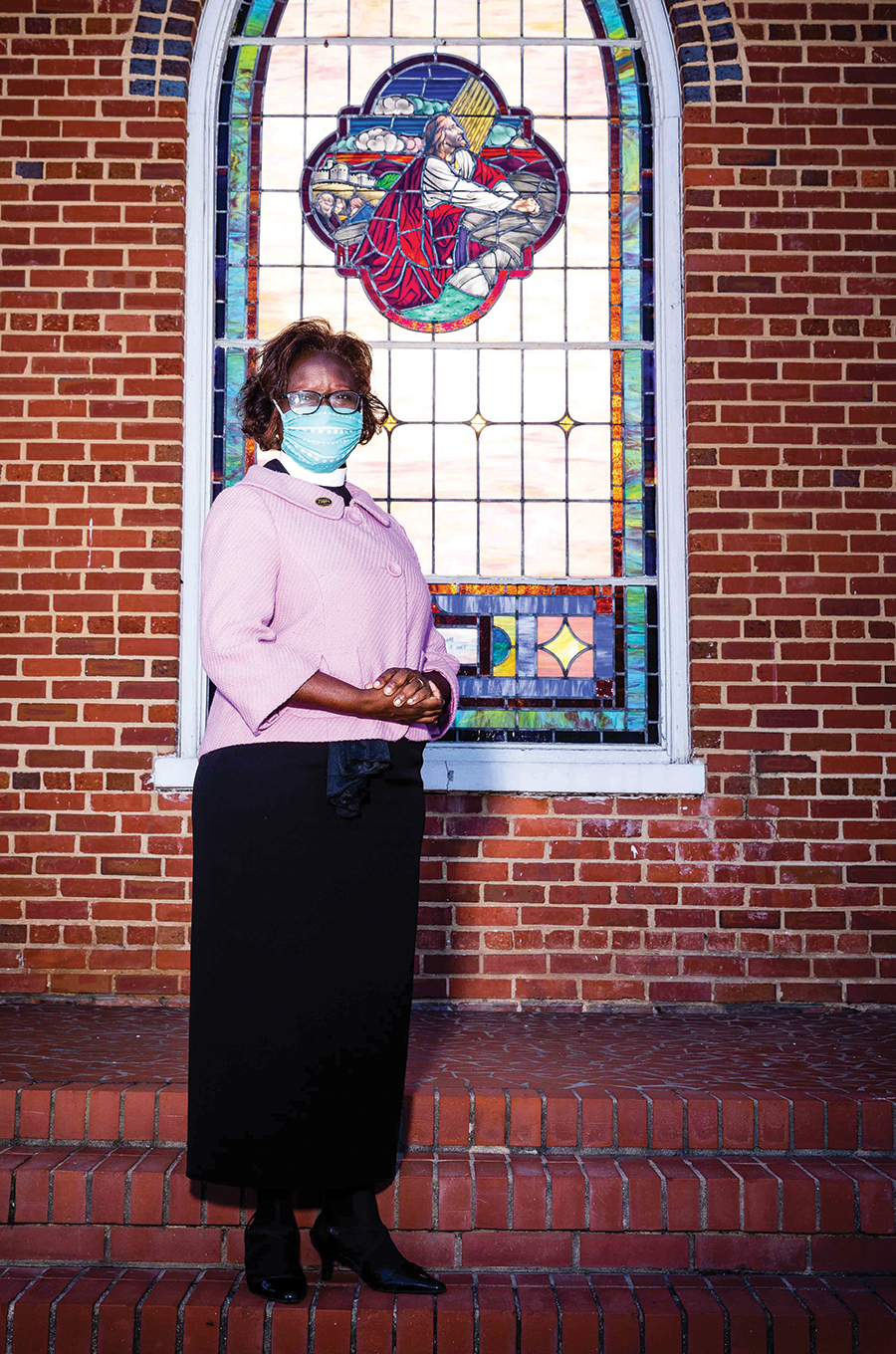

Rev. Debra L. Gray

Pastor Blacknall Chapel
A.M.E. Zion Church

Attorney and author Bryan Stevenson, in his public appearance at Davidson College in 2019, declared proximity to be important in addressing the problem of inequity in our society. This is not natural, nor easy. Ethnic and socioeconomic divides disunify our nation. Yet the unforeseen challenges of this year have devastated the lives of all of us. It is in this place of pain and frustration that we have now begun to experience proximity. The images of the inexplicable deaths of Breonna Taylor and George Floyd and others are embedded in our minds, not to be forgotten. We have all been affected. We have all been hurt. We are all forced to accept the new norm of masks and social distancing. We understand others’ hurts because it is the same as ours.

I am reminded of the story of Moses. Scriptures tell us when Moses died, it was God who buried him. The Creator of all the Earth got close to the lifeless remains of this man to put him in the ground, where only God knows the place. Our God can still get close to our dead places. Welcome His proximity into your life as we walk this journey together.
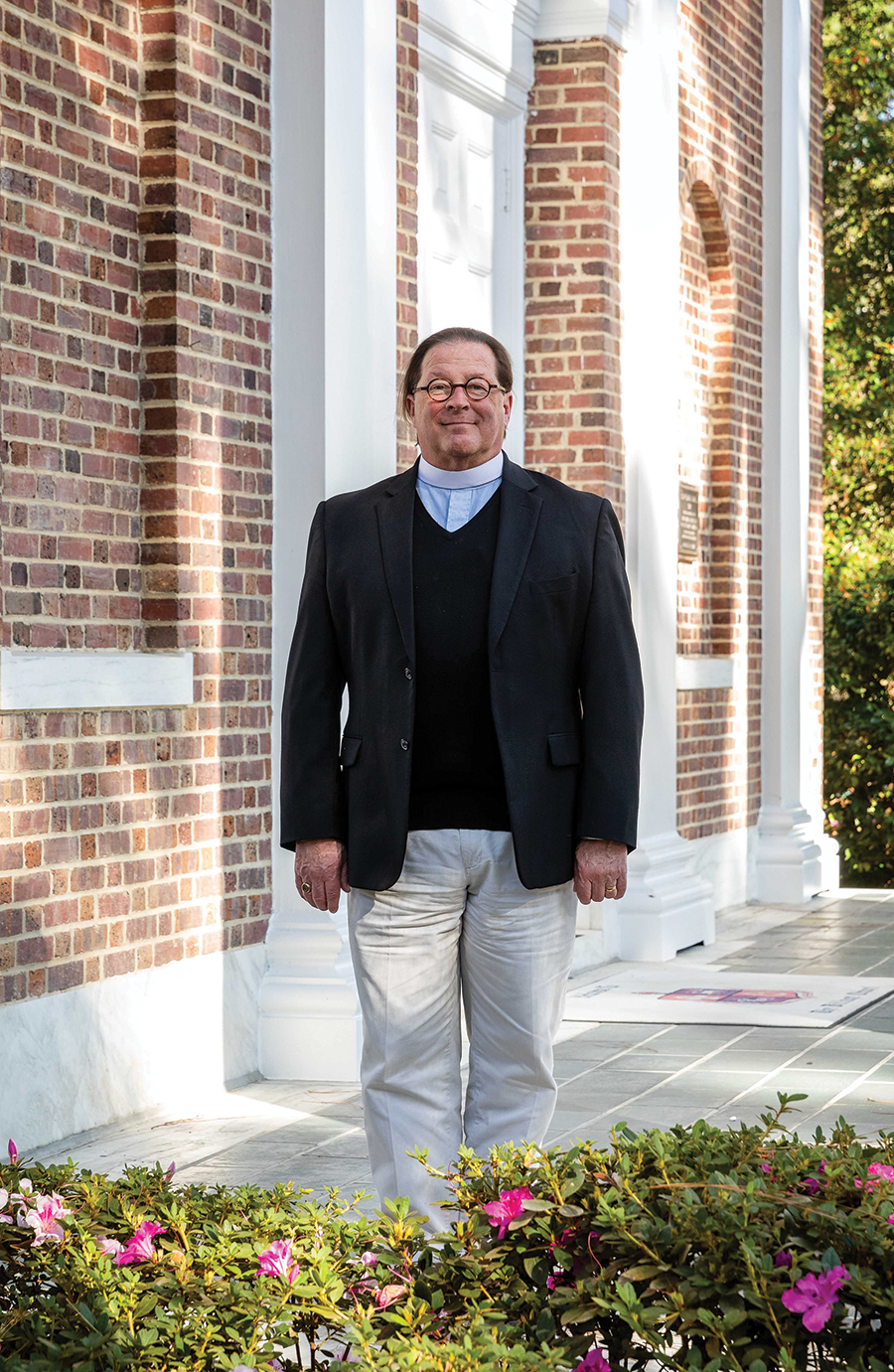

Rev. John Jacobs

The Village Chapel

Yes, we’ve had a tough year, but that doesn’t have to define us. Circumstances beyond our control need not control us. Unsuccessful responses to crises need not defeat us. Abraham Lincoln called us the “almost chosen people,” in contrast to the Jews, as God’s chosen people. Well, are we? I believe we are.

Our hope in 2021, and the years to follow, must be in where it has been before: “In God We Trust.” Considering the fact there are many who will be grateful to see this past year retrospectively, hopeful that 2021 will bring welcome changes for the better; for many, reasons to cheer 2020 are nonexistent. Some might even find scant chance for redemption in the year to be remembered for racial unrest, lawless destruction in our cities, political polarization, and a pandemic virus leading to shutdowns affecting the economy, jobs, schools and churches. No one has been unaffected negatively by our responses to the pandemic.

And yet, the bleakest prospect would be to think that nothing can be learned and changed by these 2020 experiences. God help us if we ignore a redemption that can restore our faith in the Creator of this world — the God who has promised to make all things new; the God who can take our sins and mistakes and redeem them for good.  

In this country the rest of the world still calls “new” — and as God’s “almost” chosen people — therein lies our hope, in God’s redeeming grace, our only hope, that will take us from this crisis to the next, and from here to eternity.
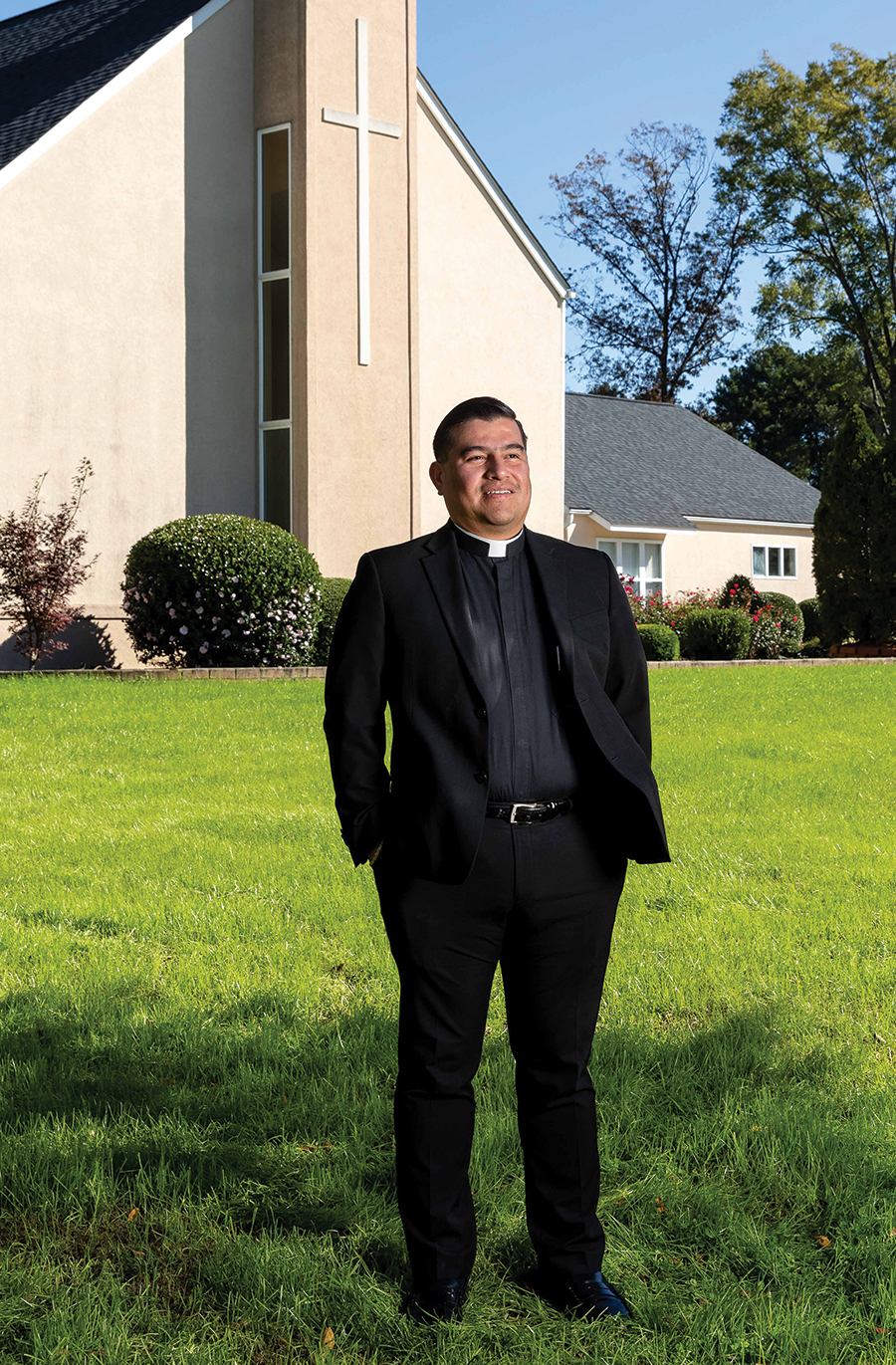

F. Javier Castrejón

San Juan Diego Catholic Mission, Robbins

Les saludo con mucha alegría. Este año 2020 ha sido un año diferente como todos los demás, sólo que este año nos ha dejado tristezas en algunas familias y nos ha presentado retos difíciles. Pero al mismo tiempo, este año nos deja una gran enseñanza, que sólo unidos todos como verdaderos hermanos, sin distinción de raza, pueblo o nación, podremos vencer las dificultades, el egoísmo, el racismo, la indiferencia y la irresponsabilidad deben desaparecer de nuestras vidas en este 2021. Todos nosotros debemos ver este nuevo año como una nueva oportunidad para corregir nuestros errores pasados y saber que todo lo que yo haga en beneficio de los demás ayudará a que todos vivamos mejor y así cuidar nuestra casa común, que es este mundo en el cual vivimos. Nada malo podrá vencernos si nos mantenemos unidos. No olvides volver tus pasos a Dios y vivir su mandamiento de amarnos unos a otros como Él nos ha enseñado.

Mis mejores deseos para este 2021. Dios te bendiga.

I greet you with great joy. This year 2020 has been a different year like all the others, only this year has left us sadness in some families and has presented us with difficult challenges. But at the same time, this year leaves us a great lesson, that only united as true brothers, without distinction of race, people or nation, can we overcome difficulties, selfishness, racism, indifference and irresponsibility must disappear from our lives in 2021. All of us must see this new year as a new opportunity to correct our past mistakes and to know that everything I do for the benefit of others will help us all live better and thus take care of our common home, which is this world in which we live.  Nothing bad can defeat us if we stick together. Do not forget to turn your steps to God and live his command to love one another as He has taught us.

Best wishes for 2021. God bless you.
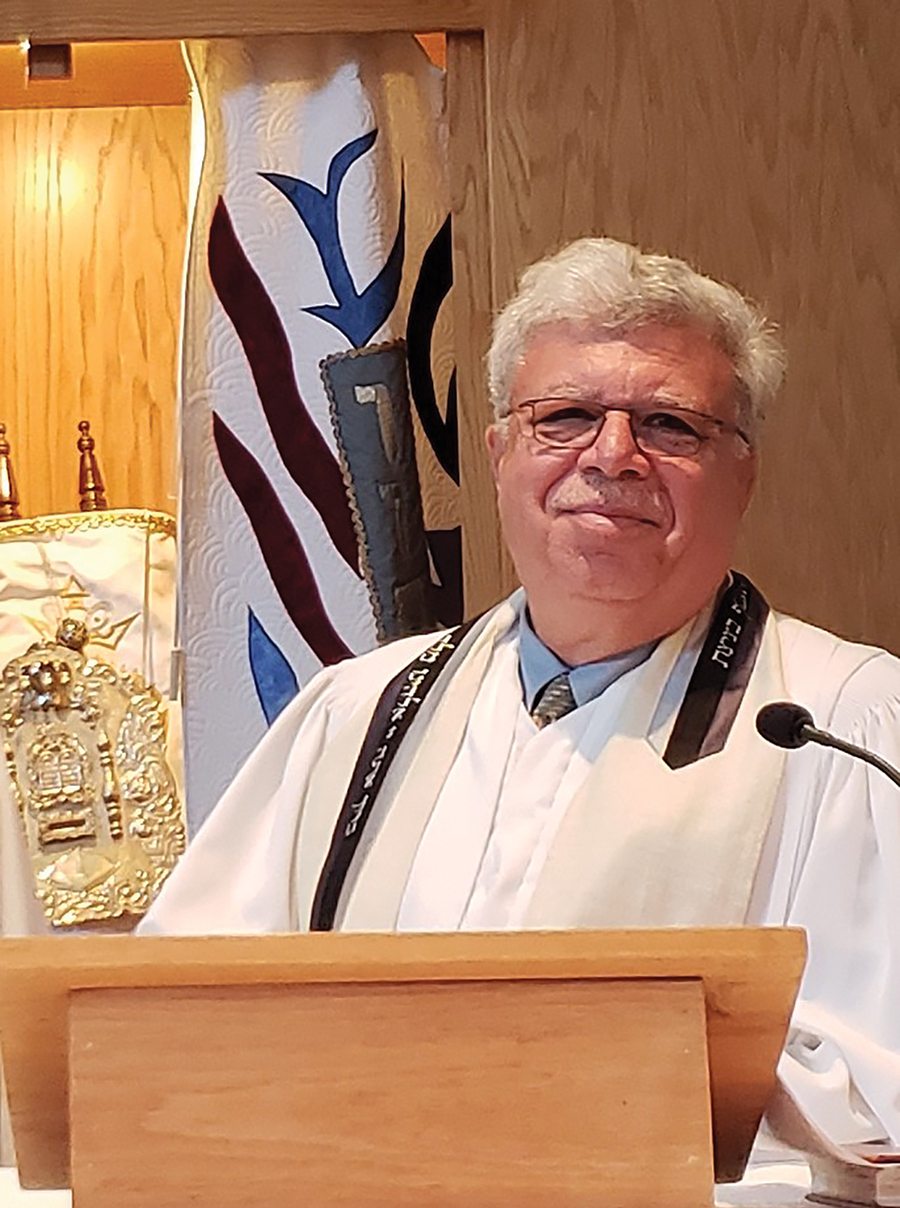

Rabbi Ken Brickman

Sandhills Jewish Congregation — Beth Shalom

Each week the Jewish Sabbath begins at sundown with the lighting of two candles to remind us to bring light and hope into the world, just as day turns to night. In recent months, the restrictions caused by the pandemic, the illness itself and the grief of those who have lost loved ones to the virus have often made it seem as if the light of that hope has been diminished and a pall has been placed over the world. As we approach the holiday season, people of all faiths will celebrate by lighting lights, whether it is the candles on the Hanukkah menorah or the multicolored lights that adorn homes throughout our community.

As the year ends, we hope and pray that these lights will rekindle the sense of hope for a new year in which we can resume our lives as they were when we celebrated the holidays last year. Ring in the New Year not with the usual resolutions, but with the commitment to bring light into our world by working to realize our shared vision of a just and more humane world.
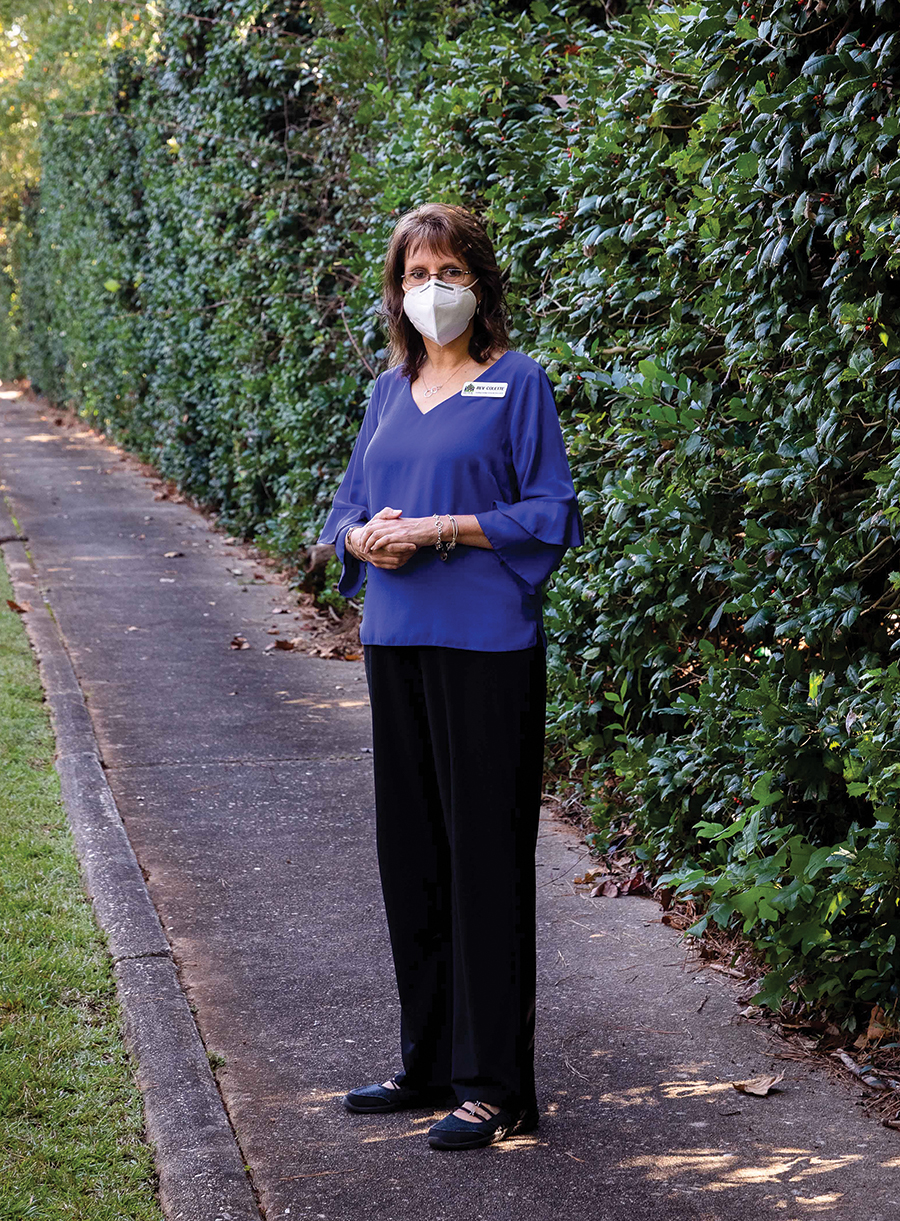

Rev. Colette Bachand

Penick Village

When my children grew old enough to know who Santa was, their father and I had to make an important decision. Would the gifts under the Christmas tree be wrapped by Santa or unwrapped?

When their dad was little, Santa brought unwrapped gifts, but in my house as a child, Santa’s gifts were wrapped. There was a special feeling that came with discovering wrapped gifts. There was mystery, anticipation and most of all trust. Trust that something amazing lay beneath the colorful wrapping and bows. There was a moment when everything in the world felt possible. Underneath the wrappings could be a new bike, a record player, roller skates, or even better, the outfit guaranteed to impress the boys at school.

This is a year we need to believe that underneath the Christmas tree, anything and everything is possible. We need to hold on to anticipation because we’ve waited too long for things to feel normal. We need the guarantee that the outfit we wear when COVID is over will be our victory garment because we made it through with God by our side.

In the end, my girls got gifts wrapped by Santa. This year, I need a reminder of those wrapped gifts because they held within them the promise of things to come, even when we didn’t know what that was. The mystery of wrapped gifts is the promise that under the Christmas tree is everything we need. Under the tree is God, the God who wishes to dwell among us and because of that, we will be OK. For now, the mystery must be enough. In due time, we can unwrap the gift.
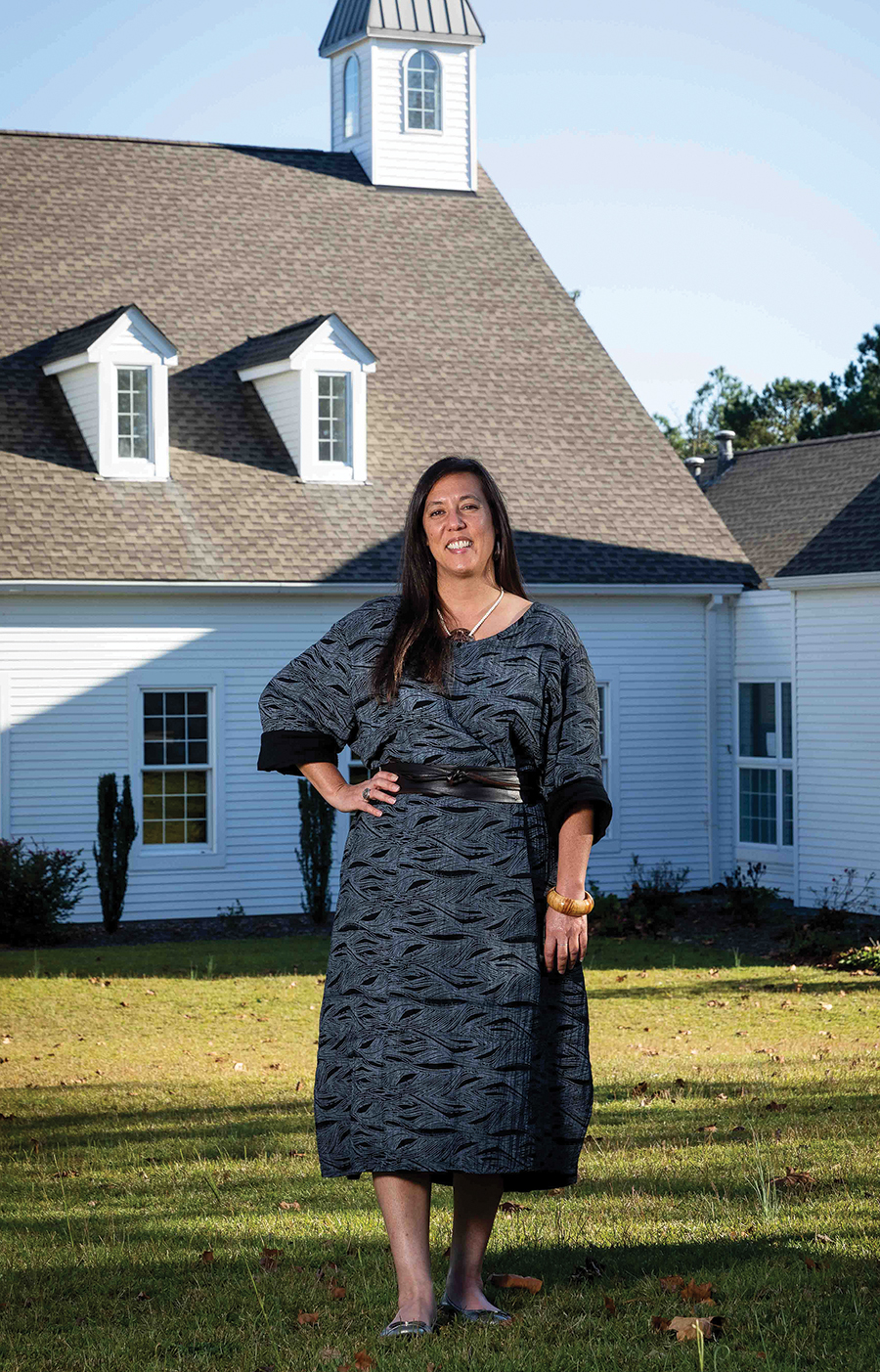

Rev. Terry Yasuko Ogawa

Congregational Church of Pinehurst

If we are Christian, we follow the God who is Love itself (I John:4).

After a year of physical distance, isolation and divisiveness, I think the path to unity requires that we each admit that we are not defective, but broken. There seems to be a desperation to deny our ongoing hurts, which prevents acknowledgement of our neighbors’ pains. The problem is, when we do that, the pain leaks out, and often gets taken out on others in resentment.

Recognizing others’ trauma does not diminish the significance of your own trauma, even if they are not equivalent. The God of Love has healing for us all. There is room at the table for each and every one. And we are called to make sure that our neighbors get to the proverbial feast as well.

We have work to do. The work of justice, the work of kin-dom building, is ongoing. Use the gifts God has given you to the best of your ability, and let your light shine. Recognize that others’ lights deserve to shine too. Hope lies in being the best disciples of Love we can be. And recognizing that if others are following their own paths of compassion, well, God loves them too.
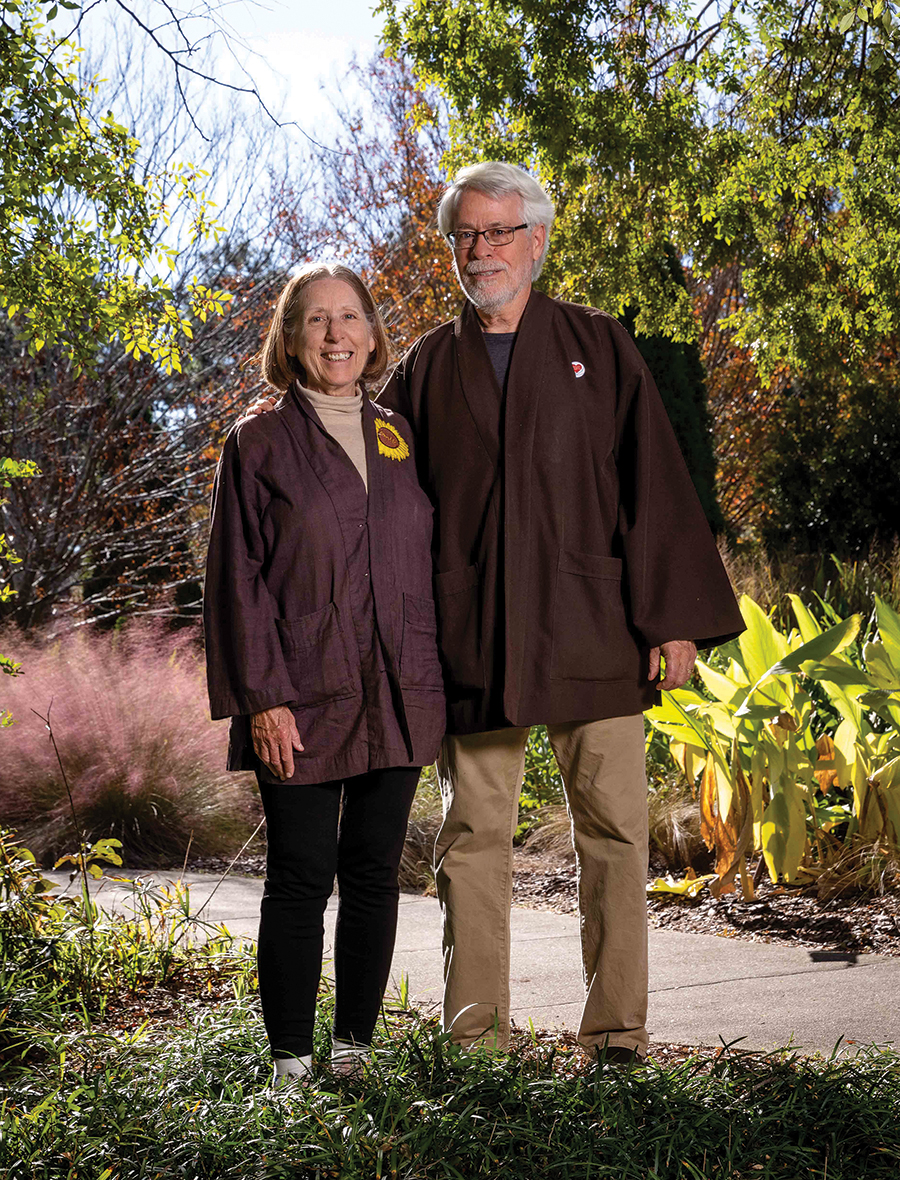

Emily Whittle and John Bowman

Community of Mindful Living in the Pines

During this year our human family has been confronted with monumental challenges and suffering. Together we continue to face an expanding pandemic; a societal crisis in terms of racial injustice, poverty and class inequality; severe economic challenges; and climate crisis. Today we all have a role to play in the rising tide of collective awakening to racial injustice, systemic inequalities and climate justice.

As we honor our emotional experience at this moment and care for what is arising in us, we are invited to examine our lives and our community and help move our world toward a more inclusive and compassionate society.

One of the greatest challenges we face now is how to be calm and peaceful in these crises. Mindfulness practice and mediation can be a source of peace, healing and transformation, and it must go hand-in-hand with deeply looking into all aspects of our daily lives and its social structures to examine their ethical and moral foundations. When we act from a place of being, of stillness and peace, we can be moved into compassionate action. At this moment it is essential that we stand up and speak out against racism and for racial justice, just as it is for gender, class and climate justice. We must have the courage, patience and openness of mind to look deeply into the root causes of these injustices, and listen deeply to those who are suffering, and learn how we are each contributing, individually and collectively. This can be a source of peace, healing and transformation for the world and us.

May we all be filled with loving kindness, may we all be well, may we be calm and at ease, may we all be safe and happy.
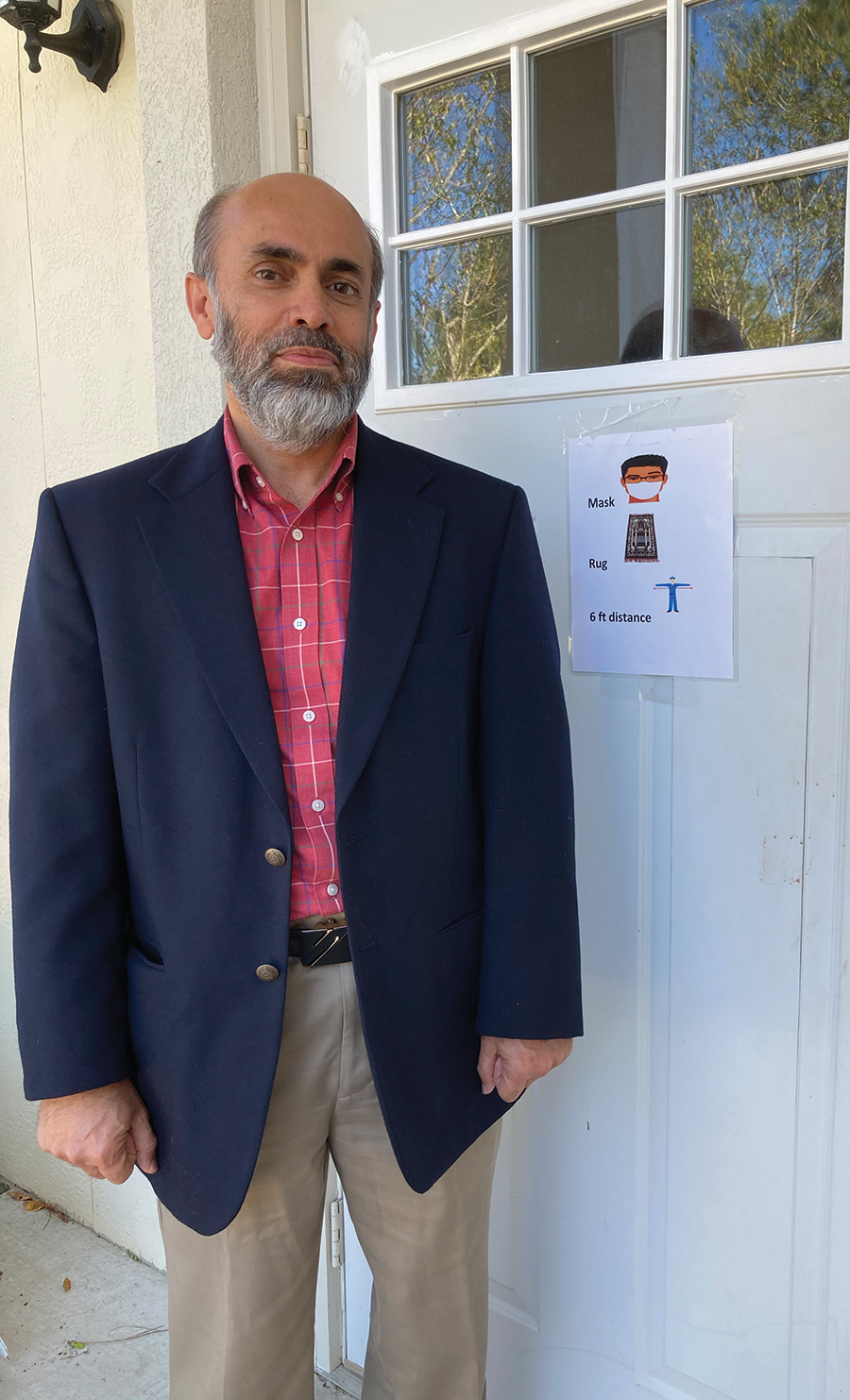

Muhammad A. Lodhi

Masjid Al Madina

As believers, we trust that the prevailing pandemic and accompanying challenges faced by humanity cannot exist without the knowledge and permission of Almighty God. Every hardship is a test from our Lord as He says in the Holy Quran, “And We will surely test you with something of fear and hunger and a loss of wealth and lives and fruits but give good tidings to the patient. Who, when disaster strikes them, say, ‘Indeed we belong to God, and indeed to Him we will return.’” COVID-19 is a test from God. A test to see whether we reflect, show patience, and thank Him or continue with our usual ways. There is no one who can remove adversity from us except God, who is known as Al Rahman and Al Raheem, the most merciful to His creation. Prophet Muhammad, peace be upon him, taught us that God tests those people He loves. He further advised to recognize and acknowledge God in times of ease and prosperity, and He would remember us in times of adversity. We should turn to God and beg His forgiveness, show our allegiance, and spread goodness. May the Controller of affairs protect us all from any harm.
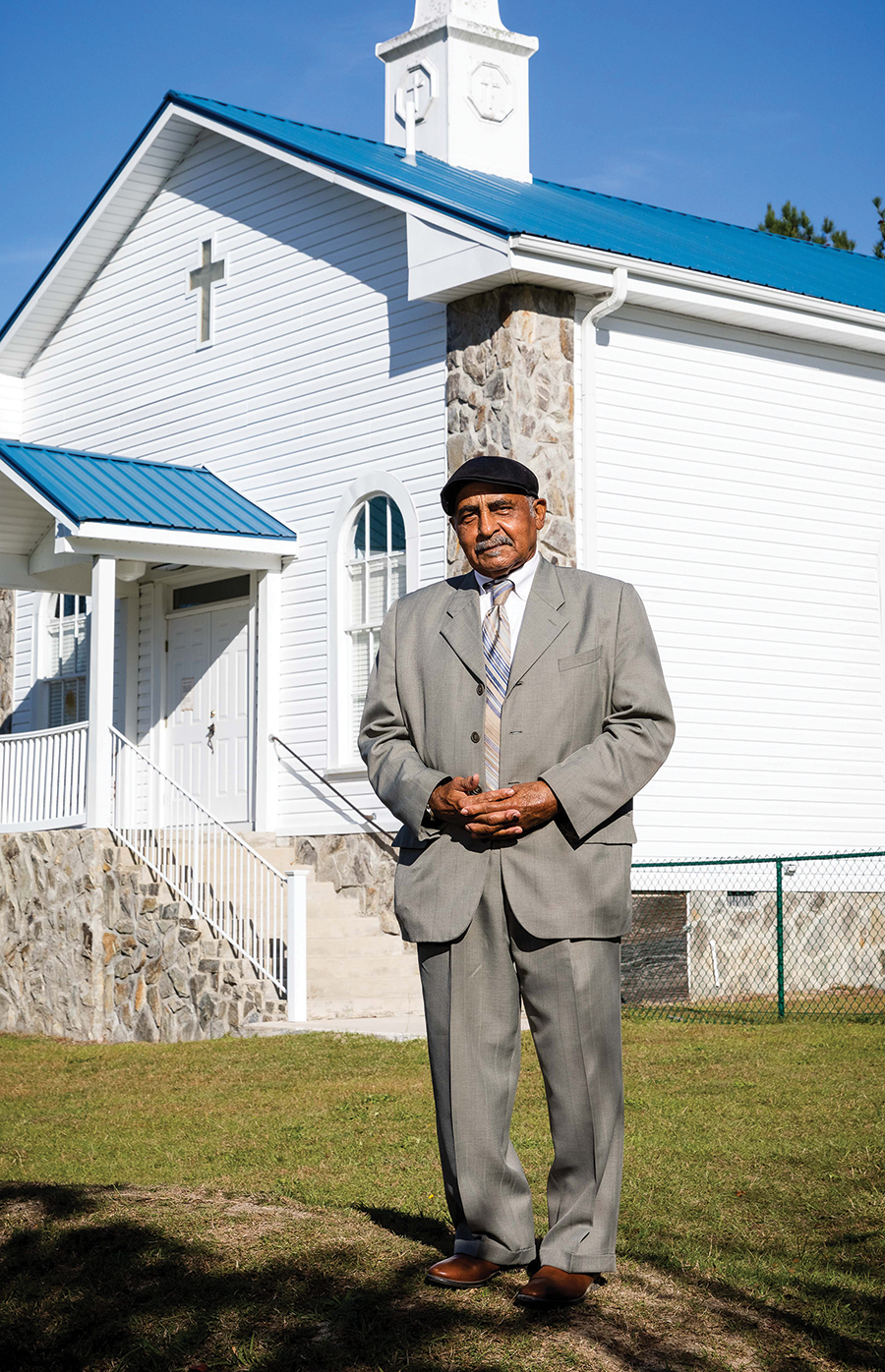

Pastor Nathaniel Jackson

Christ Way Deliverance Church

In these very different times

Dear God what can “I do” in these times

To make things better for someone

Although I am aging

Put me in places and mold me

To make someone’s day brighter and bring a smile

Although I am growing in years

Help me to help the young reach their goal

If not their lifetime goal

A goal that makes things better for the moment

Dear Lord

Help me cheer up someone’s day

That they are smiling as I walk away

Lord help me

Offer a hand up that will last

Not just a hand out

Bless this our country and our world

Keep us safe and free from all sickness

Help us find more love, peace and happiness

Not just at this Christmas season but all year long

Help us find salvation in Jesus Christ our savior

In Jesus’ holy name I pray

The Omnivorous Reader

Mountain Redux

The return of Ron Rash’s classic character

By D.G. Martin

What is it about Waynesville, the small mountain city west of Asheville?

Two of our state’s most admired novelists set their best books in the mountains near Waynesville: Cold Mountain, by Charles Frazier, and Serena, by Ron Rash. Both books are gems with memorable characters and descriptive language that flows like poetry. Both deal with cruel and brutal destruction of life and land: Cold Mountain by war, Serena by the clear-cutting of ancient mountain forests.

Having written about Frazier recently, it is time to give attention to the work of Rash. His latest book, In the Valley, gives us nine new short stories and a novella that revives the main story in the classic Serena.

From its beginning, North Carolina has been the scene of environmental destruction that accompanied the creation of great wealth and employment opportunities. The importance of tars and pitch to our economy gave us our Tar Heel nickname and destroyed vast forests of longleaf pine.

In the early part of the last century, our mountain regions opened their treasured forests to massive clear-cut operations that destroyed some of the state’s most beautiful and important natural landscapes.

Serena was set in the time of the Great Depression in the immense forests near Waynesville. The leading characters were the owners of a Boston lumber company that was systematically cutting all the trees on the thousands of acres that it owned.

The background of systematic forest destruction was a perfect backdrop for Rash’s epic story of love, hate, ambition, ruthlessness and revenge. His novel opens at the railroad station in Waynesville. Pemberton, the leading partner in the lumber company, returns from Boston with his new bride, Serena. Her striking appearance and arrogance immediately awe Pemberton’s partners and most of the employees, who have come to meet the couple at the station.

Also at the station are a rumpled mountain man and his pregnant teenage daughter, Rachel, whose unborn child was fathered by Pemberton. The mountain man accosts Pemberton with a Bowie knife. In the ensuing fight, Pemberton sinks his own knife into the chest of the mountain man, who drops his Bowie knife and dies.

Serena, showing the dominating character that will carry the novel to its end, picks up the Bowie knife, hands it to the dead man’s daughter and says, “By all rights it belongs to my husband. It’s a fine knife, and you can get a good price for it if you demand one. And I would,” she added. “Sell it, I mean. That money will help when the child is born. It’s all you’ll ever get from my husband and me.”

Serena was ambitious and dramatically attractive, riding a white horse and displaying her well-trained eagle. She and her husband were determined to get rich by clear-cutting thousands of acres of North Carolina mountain forestlands, destroying a rich, stable and precious environment.

Rash made Serena a symbol of corporate greed and anti-environmentalism. Serena was also driven by personal passions. She was determined to eliminate her husband’s illegitimate son and the child’s mother, Rachel. This assignment went to Galloway, a one-armed employee utterly devoted to Serena. Galloway’s efforts, chronicled in the book’s dramatic last pages, were nevertheless a failure. The boy and mother were safe, and Serena was off to exploit the forests of Brazil.

Some critics compare the tale to Shakespeare’s Macbeth — the ambition of Serena and Pemberton to dominate, own, and exploit, leading to the same sort of triumphs and ultimate “bloody handed” tragedy. Maybe it’s a stretch to compare Rash with Shakespeare, but his vivid writing takes the reader by the hand and makes him a participant in the action, not just an observer. I found myself jumping aside to escape a falling tree that killed a lumberman. I panicked with a character who lost her way in the pitch dark of a mountain night. I died with one of the book’s characters as rattlesnake poison crept up our legs.

Serena established Rash as one of America’s leading authors. New York Times book reviewer Janet Maslin named Serena one of her “10 Favorite Books” of 2008.

A novella that is part of Rash’s new book, In the Valley, brings Serena back from Brazil to North Carolina to take charge of a logging project. Galloway also returns to take on Serena’s murderous assignments, including the search for Rachel and her son.

Readers will again be impressed and horrified at Serena’s determined and brutal efforts that destroy more of the environment and decimate the logging crews.

Rash’s writing is firmly connected to his concerns about threats to the preservation of the environment. In an interview with Mountain Times Publication’s executive editor Tom Mayer, Rash explained, “I’m seeing now this peril for the national parks. There’s a lot of push to change what is considered wilderness that can be mined or timbered. My hope is that this (story) would remind us how hard won these national parks were and what they were fighting against.”

The new book is a bonus for fans of Rash’s short fiction. There are nine finely tuned short stories. All deal with mountain people like those he knows from growing up in or near the mountains, or from his long years teaching at Western Carolina University. These are folks that Rash clearly cares for and worries about. But the time settings vary, giving readers a look at mountain life over hundreds of years.

The opening story, “Neighbors,” is set during the Civil War in the mountain community of Shelton Laurel. A Confederate foraging and raiding party targets the farm of a young widow and her two children. The Confederates assume she is a Union sympathizer and prepare to burn her house and barn. Rash captures the meanness and ugliness of war and punctuates his point with an ending that surprises the reader and darkens the tale.

“When All the Stars Fall” deals with a poignant breakup of a father and son’s construction business because their value systems are different and incompatible.

In “Sad Man in the Sky,” a helicopter pilot who sells 30-minute rides takes on a troubled but inspiring passenger.

In “L’Homme Blesse,” a mountain college art professor explores the connection between the artwork of a Normandy invasion veteran and the images on the walls of ancient caves in France.

“The Baptism” is the story of a country minister responding to a worthless wife abuser who wants to be baptized. The story has an unexpected and satisfying ending.

A young female probationary park ranger in “Flight” encounters a bully who blatantly fishes without a license and breaks all the park’s rules. Her daring retort is illegal but satisfying.

A struggling late-night storekeeper in “Last Bridge Burned” helps a troubled woman who stumbles into his store. Years later he reaps an interesting reward when he connects with the same woman, who has been transformed.

In “Ransom,” a wealthy college student survives a lengthy kidnapping only to face more challenges resulting from the warm relationship she developed with her kidnapper.

Set 60 years after the Battle of Chickamauga, “The Belt” tells how a belt and its buckle that saved a Confederate soldier’s life during that battle has now saved the life of his great-grandson.

Rash’s fans will appreciate this short volume of some of his best writing. For those unfamiliar with his work, In the Valley would be a great beginning place.  PS

D.G. Martin hosts North Carolina Bookwatch Sunday at 3:30 p.m. and Tuesday at 5 p.m. on UNC-TV.

Good Natured

Swedish Bitters

The long-life elixir

By Karen Frye

This is the story of a 500-year old European remedy that rejuvenates vital organs, improves regularity, aids in digestion, and cleanses entire bodily systems. The original recipe of 11 herbs was the work of the “Luther of Medicine,” a Swiss/German named Paracelsus (whose full name was Philippus Aureolus Theophrastus Bombastus von Hohenheim) in the 1500s.

The formula for his elixir, lost for almost 200 years, was rediscovered in the 17th century by two Swedish physicians, Dr. Claus Samst and Dr. Urban Hjärne — hence the name Swedish Bitters. Hjärne lived to be 83, and Samst died at the ripe old age of 104, in a riding accident, no less. It’s worth pointing out that life expectancy in the 17th century was 20-40 years.

It was Maria Treben — a distinguished Austrian herbalist — who brought Swedish Bitters to the world’s attention. As a refugee in Czechoslovakia, she became ill with typhoid fever in a camp in Bavaria and was hospitalized for more than six months. Soon after her release, and while she was still very ill, her husband and family took her to Austria. A woman there heard of Maria’s suffering and, wanting to help, brought her a small bottle containing a dark, strong-smelling liquid. Along with that bottle of Swedish Bitters was the manuscript written by Samst explaining how the bitters heal every illness.

Maria was skeptical that a few modest drops could help her regain her health, so she put the bottle aside. Eventually she changed her mind and decided to give the bitters a try, and her symptoms disappeared.

Treban later put together a book about the maladies Swedish Bitters could help. Health Through God’s Pharmacy is still the best source of information on the many ways to use the bitters to improve one’s health and add years to one’s life.

Prevention is better than a cure, and using bitters as a daily tonic may ward off something that could lead to a health crisis. Our ancestors used herbs as treatments, so the list of the uses of the Swedish Bitters formula is long. Internally, it’s used to improve digestion and relieve pain. Nearly every malady you can think of is mentioned in Treben’s book. There are even uses as topical applications to alleviate skin diseases.

An herbal tonic that’s been around as long as Swedish Bitters and is still highly regarded earns a certain level of trust. It may be the missing ingredient to improving your health.  PS

Karen Frye is the owner and founder of Nature’s Own and teaches yoga at the Bikram Yoga Studio.

The Creators of N.C.

Art in Service

Rosalia Torres-Weiner’s flowers blossom

By Wiley Cash   •   Photographs by Mallory Cash

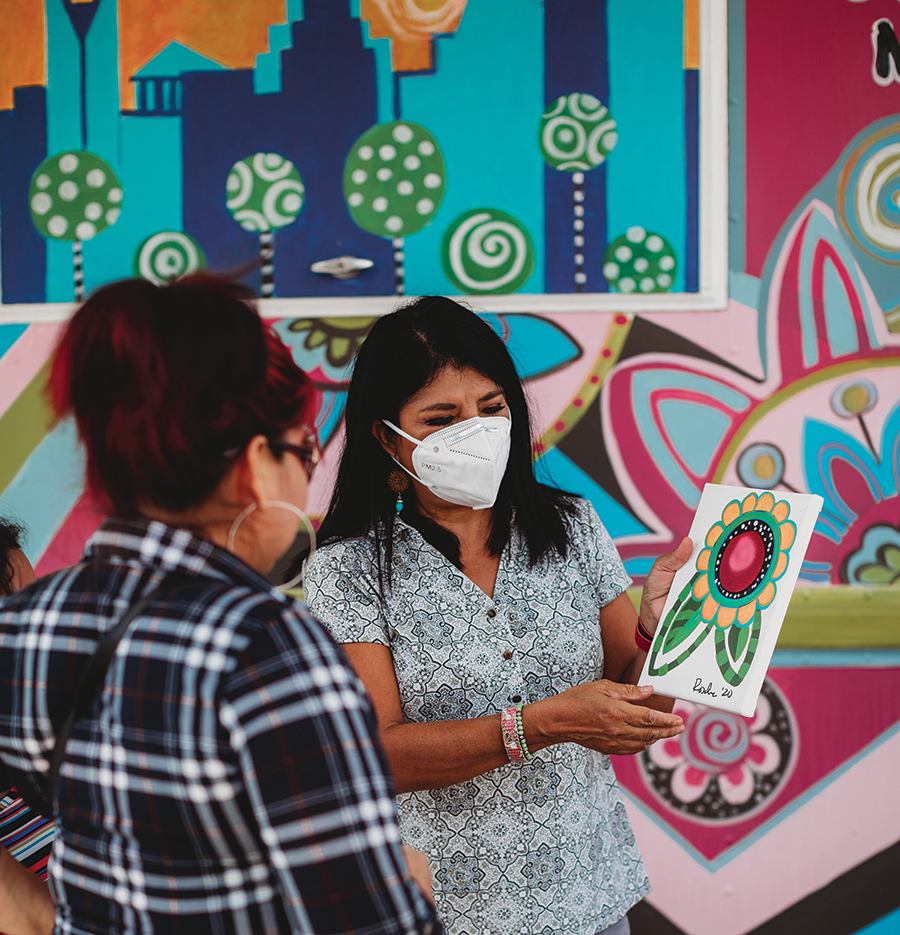
People begin arriving at 2 p.m. sharp on a Saturday afternoon at the Compare Foods Supermarket on Sharon Amity in east Charlotte: elderly men and women, families with small children, single mothers with babies on their hips — each of them carrying a distinctly different painting of bold, colorful flowers on 8×10 canvases. A few people appear uncertain, others seem excited to discover the source of the mystery that has brought them together. A message on the back of each painting has instructed them to arrive at this location on this day and at this time.

Over the past several days, the paintings — a hundred of them, in fact — have been found scattered around the Queen City on park benches, at bus stops, and inside laundromats, places that one does not expect to find works of art, especially art of this caliber. The artist, Charlotte’s Rosalia Torres-Weiner, is waiting for them, sitting on a folding chair outside her boldly painted art truck. The art truck is a repurposed delivery truck that, before the pandemic, Torres-Weiner used to deliver art supplies and arts education to Charlotte’s underserved Latinx communities. Today, those communities are coming to her.

Some people arrive speaking Spanish, others English, but Torres-Weiner, who was born and raised in Mexico City, moves effortlessly between the two languages, greeting everyone with a warm smile that cannot be denied, even by the mask she wears due to the continued rise in coronavirus cases in North Carolina, where Charlotte’s Latinx population has been particularly affected.

Over the summer, Charlotte’s WBTV reported that Hispanic people make up about 10 percent of North Carolina’s population, but they comprised roughly 46 percent of the state’s coronavirus cases. According to Atrium Health, 25 percent of Hispanics who were tested were positive for COVID-19, while testing for other groups returned positive rates at only 9.5 percent. Torres-Weiner, a self-described “artivist” whose work is fueled by service to her community, felt called to respond to the devastating effects of the COVID crisis.

“All my work comes from the community, and while I obeyed the orders to stay home, I realized that I needed to do something,” she says. She soon found herself asking: “What can I do to produce art and help the Latino community?”

This question led to an idea, and the idea eventually grew into action. Torres-Weiner’s husband, Ben Weiner, who works in technology, has grown accustomed to his wife coming up with these kinds of ideas, ideas that put her art to work in service of the community. He lovingly refers to these moments of inspiration, which he envisions as tiny black beans that grow into something larger, as frijolitos, and he has dubbed his wife’s visionary projects as “Frijolito, Inc.” As usual — and as her husband probably predicted — Torres-Weiner’s ideas on how to confront COVID grew.

One day, while bouncing ideas off a friend who is also part of Charlotte’s Latinx community, Torres-Weiner decided that she would find a way to distribute sanitization supplies to underserved communities. Her friend told her that was a great idea, but what people really needed was food. Mothers and fathers were dying of COVID, leaving behind spouses and children who needed support. Yes, they needed supplies to protect their bodies, but they also needed food, especially children, who were going to bed hungry, their physical pain compounded by the emotional pain of losing a parent to the coronavirus.

Pain and beauty: Torres-Weiner was motivated by one and desperate to spread the other, and she recalled a quote from the impressionist painter Claude Monet, “I must have flowers, always, and always.” She knew how to spread beauty, and she decided to paint a hundred 8×10 canvases with bold, colorful flowers. But she knew she needed help finding a way to address the pain people were feeling. Frijolito, Inc. sprang into action.

Although she has made a living as a professional artist, Torres-Weiner went to college for business administration. “My sister became a lawyer, my other sister became a doctor, so when I told my mother I wanted to be an artist, there was not a choice,” she says. But sometimes mothers know best, and Torres-Weiner admits that her business background has provided the tools she needed to find funding and partnerships for her art projects. For her latest, she reached out to Google Fiber. With their support, Torres-Weiner was able to ensure that for each painting she painted, its new owner would have access to a gift bag containing hand sanitizer, masks, soap, and other items. Also, each bag would contain a $50 gift card to Compare Foods Supermarket.

As is often the case when Torres-Weiner executes a plan, her husband is on-site today. Each time someone arrives with their newfound art in hand, Torres-Weiner checks the number on the back of the painting and calls it out to her husband, who is inside the art truck, where the gifts bags are waiting. Out of the 100 paintings Torres-Weiner distributed across Charlotte, 89 find their way back to their creator, and although the new owners get to keep the paintings, many of them cannot believe their good fortune. Surely there is a catch, some of them ask. Others try to return their paintings, certain that such beautiful art cannot have been passed on to them for free.

If you ask Torres-Weiner why she feels compelled to use her art to support her community, she will respond by telling you that this is a community that has always supported her from the moment she and her husband arrived in Charlotte from Los Angeles in the mid-1990s. “I remember when we moved here,” she says, “and we saw a church on almost every corner of the city, and we saw everyone playing baseball and taking their kids to activities, and my husband and I looked at each other and said, ‘This is our city. This place is going to embrace us.’ And it did. We’ve been here 26 years.”

But others in the city were not as convinced as Torres-Weiner that Charlotte was the place for her and her art. “When I started painting my colorful art, someone said, ‘You need to move to Santa Fe or San Francisco.’ I’m glad I didn’t listen.” Another time, while she was working on a mural in Washington, D.C., she told someone that she was ready to return home. They asked if she was heading back to Mexico. “No,” she said. “I’m going back to Charlotte, North Carolina. That’s my home.”

But home changes, and artists adapt, and Torres-Weiner has adapted, easily blending her Mexican cultural heritage into her work as a Mexican-American artivist living in Charlotte. By way of example, she references cuisine and how foodways can merge cultures and bring people together.

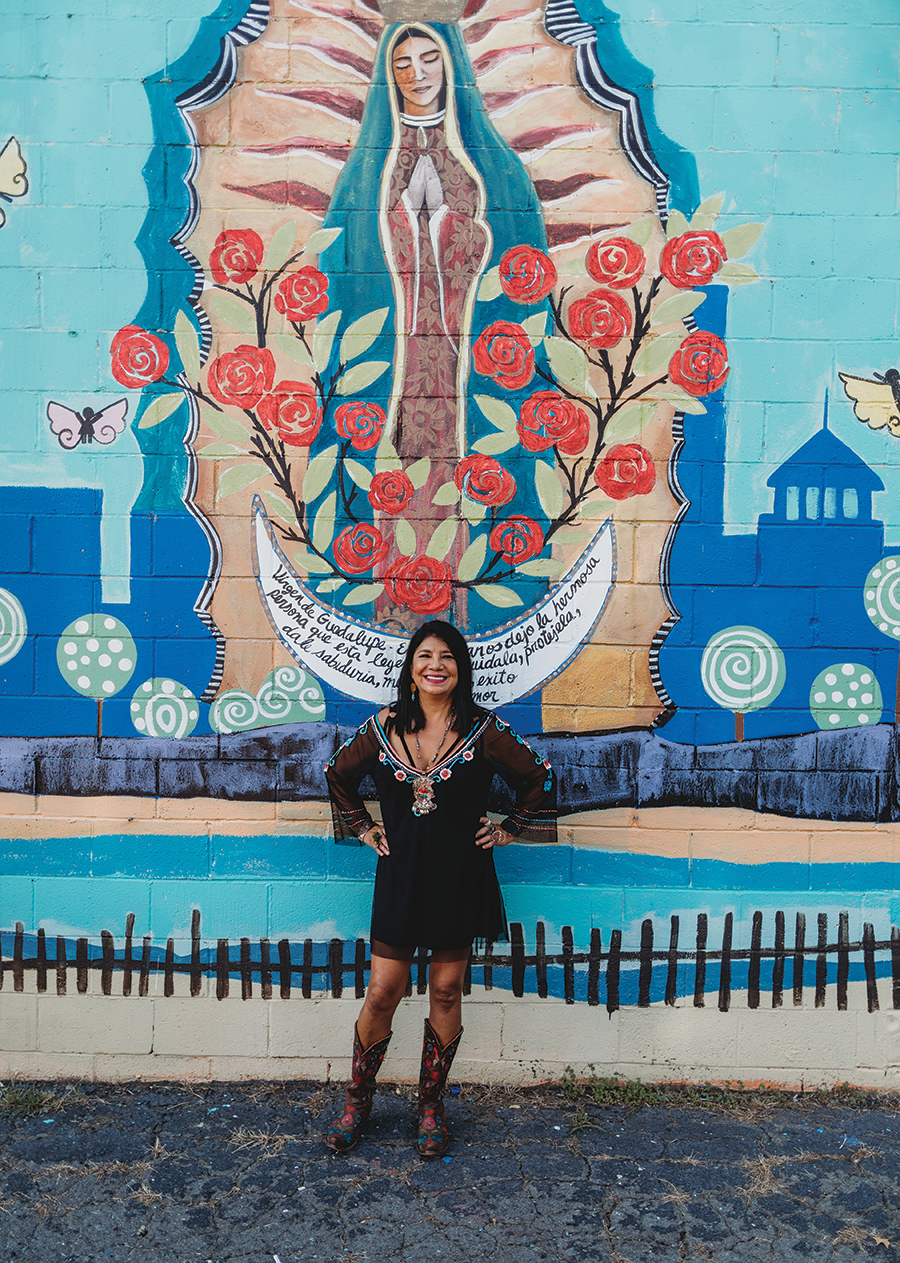
A few years ago, while standing in line at a walk-up Mexican restaurant that had long been a secret kept within the Latinx community, Torres-Weiner noticed the diversity of people waiting with her, and she struck up a conversation with a Black man who was standing behind her. He saw the paint on her clothes, and he asked if she was a painter. She said she was. As a matter of fact, she had painted the nearby mural of the Lady of Guadalupe on Central Avenue. The man told her the neighborhood had once housed primarily Black families, and before that White Charlotteans had made it their home. Now, the neighborhood was home primarily to members of the Latinx community, and Torres-Weiner explained that she was painting the mural to welcome them to Charlotte. While they waited for their lunch, Torres-Weiner and the man continued to talk about old landmarks, how communities change, how they maintain their hospitality, how they can welcome anyone who is looking for a home.

Rosalia Torres-Weiner’s career has taken her all over the world, and her work has been featured in major museum collections and ended up on the cover of a United States history textbook. But no matter where she goes or where her work is showcased, Charlotte remains home. “Last year, I was selected to represent North Carolina as a Mexican artist when an event was organized in Mexico City that invited one artist from each state in America to represent the arts,” she says. “And when they chose me as North Carolina’s artist, I was so proud.”

The day’s event has ended. The confused and curious people who arrived with a gorgeous painting in one hand are leaving with a bag full of groceries and COVID supplies in the other.

No one is more pleased than Torres-Weiner. It is obvious that her day of service has regenerated her, guaranteeing that she will soon find another way to put her art into action to serve her community. What else can an artivist do but create and serve? “It’s my food, it’s my air,” she says. “It is my Christmas.” PS

Wiley Cash and his photographer wife, Mallory, live in Wilmington, N.C. His latest novel, The Last Ballad, is available wherever books are sold.

Out of the Blue

A Different Kind of Christmas

Searching for our better angels

By Deborah Salomon

Prediction: Christmas will be tricky this year. Parades are iffy or off. Office parties face extinction. Caroling spreads COVID’s aerosolized particles. Can department store Santas fit masks over fake facial hair?

My upbringing afforded a different kind of Christmas — one that provokes criticism, some justified. This was the secular Christmas celebrated in New York and other large cities, in the late 1940s, when the Yanks came marching home to open arms, jingle bells and roasted-chestnut vendors on every street corner.

This “Christmas spirit” was enjoined by people of all faiths, or none. It was slammed as commercial, a sacrilegious riff on the real thing.

My father came from an ultra-orthodox immigrant Jewish family. My mother was raised Southern Baptist, in Greensboro. My father rebelled against the rules while holding tight to the cultural/culinary part. He laughed as Hanukkah became the “Jewish Christmas,” because it falls sometime in December. No matter, as long as he had a plate of latkes, the signature Hanukkah food. My mother did not seek church affiliation. But they both loved Manhattan Christmas. That meant a tree, gifts, fruitcake and the holiday show at Radio City Music Hall. For me, it also meant standing in line to see the animated windows at Fifth Avenue department stores.

They were magical, musical, depicting Christmases of yore, when ladies wore long skirts and tight bodices and gentlemen, waxed whiskers and wainscots. Some added sugar plum fairies, ballerinas, ice skaters on mirror ponds. Music tinkled from outdoor speakers.

Oh, how I wanted to jump into those scenes, like Alice into the looking glass.

Because, sadly, my childhood was less than storybook.

That changed, somewhat, when we moved to Asheville. I was 11. My parents joined the Reform temple. I attended Sunday School and High Holiday services. We still exchanged gifts, sent cards to friends, hung a holly wreath on the door. No tree. My husband was Jewish; we raised three children in a 99.9 percent Jewish neighborhood, home to many Holocaust survivors. No trees, wreaths or lights except for the electric Hanukkah menorah (candelabra) in the window. I became expert at celebrating Jewish holidays at the table and elsewhere. My homemade crispy mini-latkes replaced fruitcake and eggnog, which was fine, although I missed some trappings of a secular Christmas, just not silly songs round the clock.

In Asheville I noticed that the Jewish community delivered Christmas dinner boxes for the needy, volunteered at hospitals and nursing homes so employees could have the day off. Jewish people do that in many places, as well as “eating Chinese” at the only restaurants that stay open. Therefore, for 35 years as a newspaper reporter I worked every Christmas. This took the form of a 24-hour Yule Log. I logged in at midnight Mass, the bus depot, rode the pre-dawn ferry across Lake Champlain, ice skating, fancy hotel buffets, afternoon movies and anything else I could find. I did that here for a while, beginning with a candlelight service on Christmas Eve, ending at Neville’s, after the last turkey carcass had been picked bare. Lately, I’m limited to the Project Santa bike giveaway early on Christmas morning. What a glorious sight: hundreds of shiny new bikes for children Santa bypassed. I wept, as did many volunteers who postponed holiday brunch to help each child find the right wheels, while Brenda Lee blared “I Saw Mommy Kissing Santa Claus.”

I understand why the devout deem secular Christmas offensive. But I was a lonely only child, star-struck by the beauty. And now, during December, I don’t see why charitable acts and goodwill toward all should belong to a single faith. Therefore, I will forever roast chestnuts with Nat King Cole. On my playlist “Feliz Navidad” rates up there with anything Billy Joel. Because whatever motivates people to perform kind deeds deserves respect.

For sure, Christmas will be tricky this year. More unemployment, illness, poverty, isolation. Fewer turkeys, toys and trees. A perfect setting for practicing humanity — secular or sacred.

In 1966, Broadway lyricist Jerry Herman wrote a song for “Mame,” set in 1929, at the onset of the Great Depression:

We need a little Christmas,

Right this very minute

Candles in the window,

Carols on the spinet . . .

For I’ve grown a little leaner,

Grown a little older,

And I need a little angel, sitting on my shoulder . . .

We need a little Christmas . . . right now!

Works for me.  PS

Deborah Salomon is a contributing writer for PineStraw and The Pilot. She may be reached at debsalomon@nc.rr.com.

As Seen in the Sway

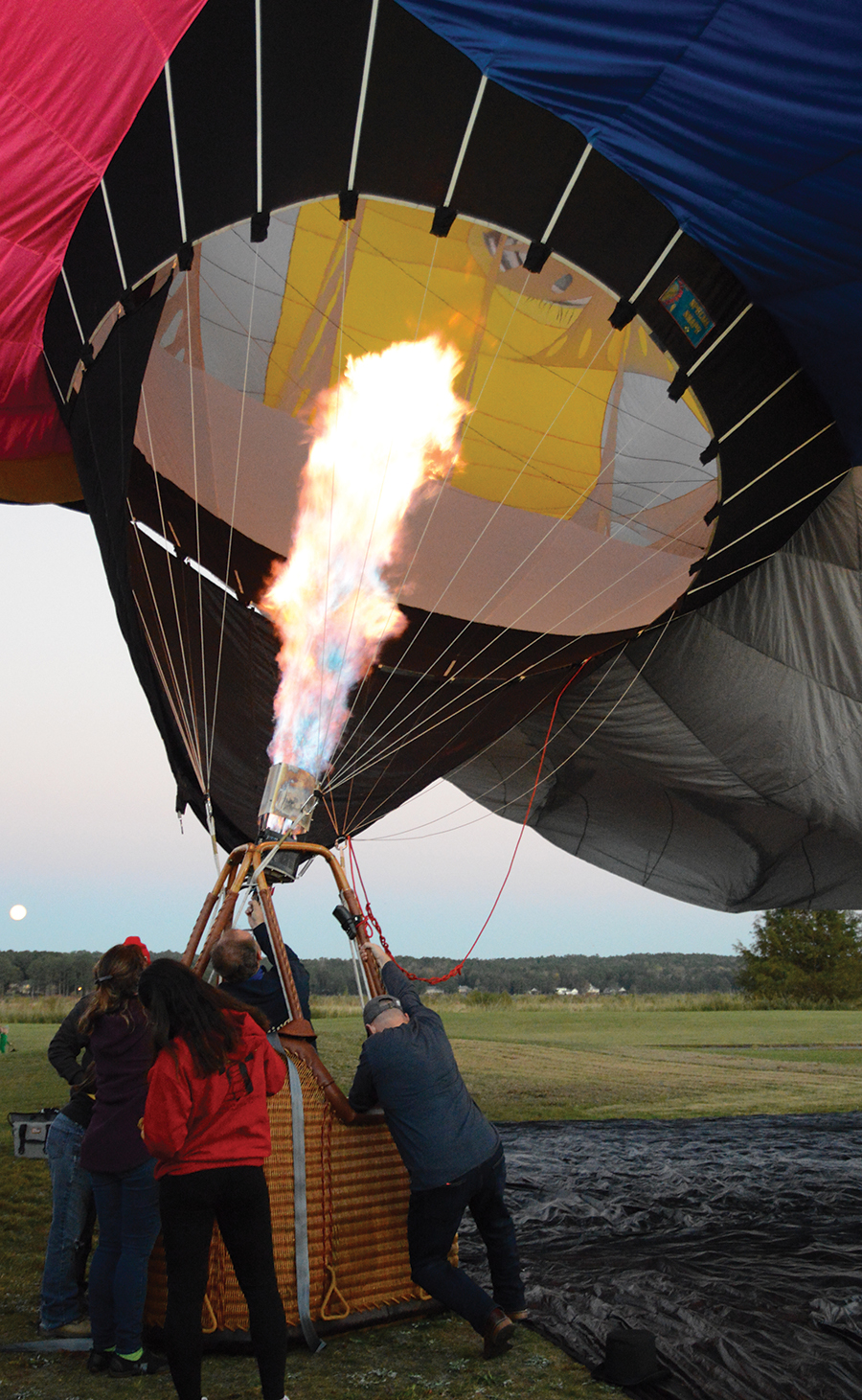
After 17 moves with the Army, Mark Myers may have settled down in Woodlake, but the longtime pilot has no plans to stay grounded. He and his wife, Missy — along with their four kids and their 15-passenger van — are the team behind Balloons Over America, flying 1,500 feet over Cameron, Carthage, Sanford and beyond.

In the four years they’ve owned the business, the couple has towed their balloons to festivals from Germany to Statesville, N.C. They flew passengers 5-10 times a month in their former home of Westminster, Maryland; and this month, they’ll be traveling to a festival in Albuquerque with On the Fly, a balloon in a traditional diamond weave.

You Become the Wind

For Mark, whose resume is filled with 36 years of aviation certifications and awards, learning to pilot a balloon was just one more experience to add to his LinkedIn page. The official FAA certification is “Lighter than Air,” — appropriately named, Missy says, because in the ballon “you become the wind.”

“Every balloon flight is an adventure. You can plan all you want, but the wind may decide it’s doing something else. Sometimes it’s good for us to be a little spontaneous and just go with it.”

If that sounds scary, take a cue from Missy — who’s just a little afraid of heights.

“There’s no wind in your face. You don’t have that feeling of acceleration or deceleration. The air is stable; most people will be 3-6 feet in the air and don’t realize they’ve left the ground. The experience is really unique and different, because it’s not at all what you think.”

It’s that Bucket List Item

Rides for up to four people typically last around an hour, and Mark can take you up in the clouds or keep you low enough for a high-flying bird’s-eye view. As for exactly how long you’ll be up or where exactly you’ll land? Well, you Type A person, that’s a bit out of your control.

“We don’t do many things in our lives anymore that we don’t plan to the last second,” Missy says. “Ballooning lends itself to not being a planned event. Most people, once they’re up, are happy to be relieved of that burden. Everything just seems so peaceful and our repeat customers want to experience that easy, relaxing feeling.”

For a lot of reasons (cost being one of them) ballooning is something most do once or twice.

An hour in Mark and Missy’s balloons will run you $300 per person. Why? Well, look at that big-ass balloon on the ground behind them. They’d have to pay us $300 just to roll that thing up. You’re also paying for fuel, insurance, and Mark’s expertise.

“Generally, it’s just someone who’s looking for a completely new experience,” Missy says. “It’s that bucket list item.”  PS