Poem

Butterfly Effect

Chaos Theory revisited

A flash of yellow

flits across my window

Then another

and another

Cloudless sulphur butterflies

winging their way

once again

to southern warmth.

Do they know

they are fleeing

for their lives?

Do they know

a single wing flutter

has the power

to create or destroy

a tornado far from

the wing.

Unknowing

unaware as their instincts

propel them on.

As I watch from my window

I wonder how each breath

I take or don’t take

how each word I say

or don’t say

affects someone

or something

somewhere in my world

or the next.

— Patricia Bergan Coe

A Page Out of History

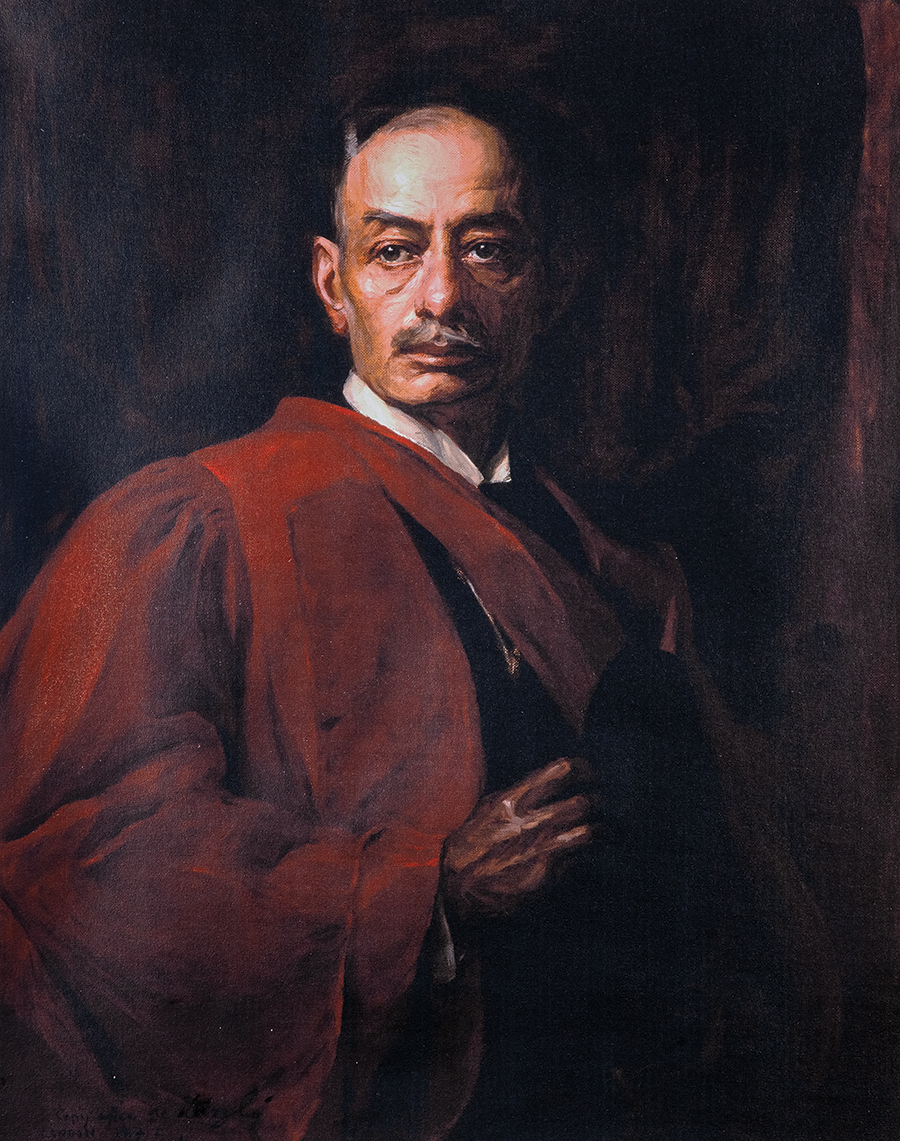
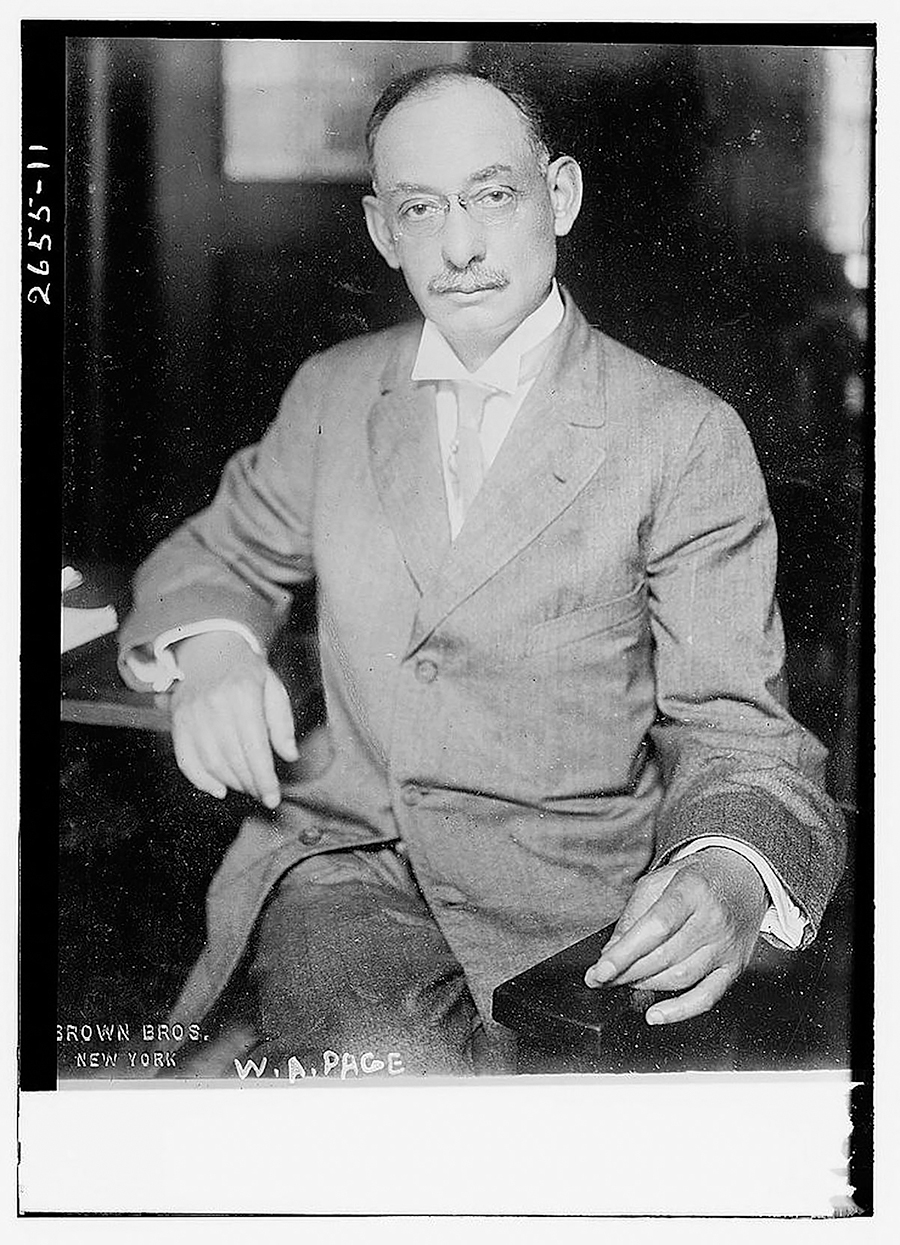
The greatness of Walter Hines Page

By Bill Case

The presidential election of 1916 was a close thing. Had Republican challenger Charles Evans Hughes carried California, a state he lost by a mere 3,700 votes, he would have become president. But Hughes lost to the Democratic candidate Woodrow Wilson, who won re-election for a second term.

Wilson spent the bulk of his first term steering America clear of the bloodbath of World War I, which by Election Day had raged over Europe for 2 1/2 years, leaving millions dead in its wake. The president’s aversion to American involvement in the conflict was reflected in two catchphrases used during his 1916 campaign: “America First” and “He Kept Us Out of War.” Wilson’s hands-off strategy was popular with a majority of voters, and led to his narrow electoral victory.

However, a growing number of Americans felt that Wilson’s neutrality policy was wrongheaded — that it favored autocratic and conquest-driven Germany over democratic allies Great Britain and France. Doubts magnified following Wilson’s response to a German U-boat’s May 1915 sinking of the unarmed British ocean liner Lusitania with 128 American passengers aboard. While the president condemned the attack, his tepid statement — “We are too proud to fight” — struck many as alarmingly weak. But few in his administration spoke in opposition, as Wilson tended to shun those who disagreed with him.

One member of the inner circle who dared to question the president’s approach was Walter Hines Page, America’s ambassador to Great Britain. Wilson had appointed his longtime confidant to the prestigious post (previously occupied by several presidents) in 1913. Page’s selection was not based on his diplomacy experience, since he had none. It had more to do with rewarding the native North Carolinian for his role in aiding Wilson’s political advancement over a 30-year period.

It was presumed the ambassadorship would provide the 57-year-old Page a mostly trouble-free conclusion to a remarkably eclectic career that had included successful turns in academia, journalism, publishing, social reform, public policy advocacy and farming. But the advent of the war threw pleasantness aside and caused damage to the collegial relationship of the two men. The ambassador considered it his duty to inform the president of British (and his own) disapproval with the administration’s failure to act more decisively toward Germany — especially regarding the Lusitania disaster. His fault-finding missives from London irritated Wilson, who complained that Page “seemed more British than the British.” A degree of frost formed over their relationship.

Page was born in 1855 in a small settlement in Wake County, North Carolina, that eventually became the city of Cary. His father, Allison Francis (Frank) Page, founded the town. A rugged, God-fearing Methodist, Frank Page made a small fortune extracting turpentine from pine trees and sawmilling them into lumber. Standing an impressive 6 feet 5 inches, he commanded respect bordering on awe. Walter’s mother, Catherine, was of a more intellectual bent, usually observed with a book in her hands.

Walter, nicknamed “Wat” in his youth, grew up during the Civil War, and its deadly turmoil left a lasting mark. When he was 9 years old a train stopped at the local station and a wooden box was dropped on the platform. The boy was told the box was “Billy Morris’s coffin and that he had been killed in a battle.” There were more to come.

The tall, gangling, curly-headed boy was viewed as something of a dreamer by his parents. An avid reader like his mother, he often hiked in the woods with just a book for companionship. His parents steered their scholarly son in the direction of the ministry, sending the 16-year-old to Methodist-run Trinity College, located in the backwoods of Randolph County (later the school moved to Durham and was renamed Duke University).

Wat was miserable at Trinity, and after an unhappy year transferred in 1872 to another Methodist school, Randolph-Macon College, in Ashland, Virginia. “It was at Ashland that I first began to unfold,” Page would later remark. “Dear old Ashland!”

Randolph-Macon boasted outstanding and broad-minded professors, and under their tutelage, Page mastered Greek, Latin and English literature. He thrived in the school’s heady intellectual environment, and evolved into a skeptic of religious orthodoxy, jettisoning any notions of joining the clergy. “I’m damned if I’ll become a Methodist preacher,” he told his father. After a disappointed Frank refused to pay for further tuition, Walter self-financed the remainder of his education.

In 1876, Page was one of 21 students gaining admittance to America’s first graduate school at Johns Hopkins University. Initially, he flourished in the intense regimen, but by the midterm of his second year, he had become bored with the nuances of Greek and Latin, disparagingly calling himself a “Greek drudge,” and left without completing his course of study.

Page’s disenchantment with classical languages did not extend to English literature. In 1878, he spent an enjoyable summer teaching it at the University of North Carolina. When he wasn’t asked back to Chapel Hill, he moved on to another teaching position in Louisville, Kentucky.

Visualizing a career in journalism and harboring “dreams and aspirations” of owning and editing a magazine, he invested $1,000 and became half-owner and the editorial writer of a fledgling Louisville weekly called The Age.

Unfortunately, it folded in June 1879, barely three months after his investment. Undaunted, Page combed his native North Carolina looking for “any sort” of journalistic position, but, as he ruefully put it, “journalism didn’t seem in any hurry to make up its mind to admit me.”
During a summer stay in Cary, Page fell in love with Alice Wilson, whom he’d first met as a teenager. The smitten couple became engaged during the 1879 Christmas holidays, postponing marriage until Page could obtain gainful employment. At the same time his father pulled up stakes in Cary and moved 68 miles south to the settlement of Blue’s Crossing in rural Moore County, where he had acquired a vast pine forest covering thousands of acres.

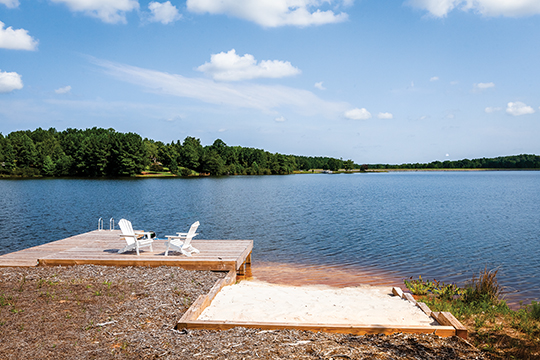
The elder Page began harvesting products from the trees just as he had in Cary. He established an array of related operations to bring the products to market. By damming up a creek to power his sawmilling operation, he created Aberdeen Lake. Frank Page constructed a railroad from his logging sites into Blue’s Crossing and on to Southern Pines. His entrepreneurial activities helped jumpstart development in the settlement, which became incorporated as the town of Aberdeen in 1888.

Frank and Catherine Page and most of their eight living children (but not Walter) would build homes on or near “Page Hill” overlooking Aberdeen. Among the offspring who achieved success in Aberdeen and beyond, Robert won election as a United States congressman; Henry was appointed food commissioner by President Herbert Hoover; Frank Jr. served as chairman of North Carolina’s Highway Commission; Julius (Chris) was a respected businessman in Aberdeen; John became a doctor; Emma taught for 50 years at the North Carolina State Normal and Industrial School (now UNC Greensboro); Mary was a family historian and charitable benefactor; and Jesse became an ordained Methodist minister — the calling rejected by his brother Walter.

Unable to find his footing as 1880 loomed, a breakthrough occurred in January when Walter Page landed a job as a reporter at a St. Joseph, Missouri, newspaper, The Gazette, contributing all kinds of articles “from stockyard reports to political editorials and heavy literary articles.” After five months, the publisher promoted young Page to editor-in-chief and raised his salary, giving Walter and Alice the wherewithal to tie the knot in November 1880. Hoping to parlay his knowledge of the South into his own cottage industry, Page wrote to several Northern newspapers, advising them of his intention to travel, observe and write about the post-Civil War South. “I was going to send them my letters,” Page wrote later, ”and I prayed heaven that they’d print them and pay for them.”

His Southern ramblings of 1881 proved educational. He observed that Oxford, Mississippi, “still slumbers from the narcotic influences of slavery,” contrasting it with bustling Atlanta, which “had not quite so many aristocratic shackles.” Though acknowledging that Northern capital investment and industry formation would certainly help the somnolent South, Page’s wanderings convinced him real advancement could only occur by “way of agricultural improvement,” and “popular and practical education.” He felt the region needed an infusion of cultural literacy, noting that “the poets, the novelists, the magazines, and the newspapers have done more than all the schools to stimulate the intellectual life of New England.”

Page’s letter-writing gambit succeeded. The big-city papers printed his submissions and paid for the privilege. “I had money in my pocket for the first time in my life,” he recalled. Moreover, the essays impressed the editor of the New York World, who offered Page a correspondent’s job with the paper. He accepted and headed north. His beat included congressional hearings regarding tariff measures as well as the tariff commission itself.


Page’s coverage of the commission brought him to Atlanta in 1882, where he visited his friend Edward Renick, the law partner of 26-year-old Woodrow Wilson. After being introduced, the two men engaged in a discussion regarding the merits of protectionism versus free trade. Dazzled by Wilson’s keen insights, Page urged the young lawyer to express his views before the commission. According to Wilson, Page promised him “a good notice in his letter to the World.” Believing he had discovered a budding political star, Page would gush to a colleague that Wilson “has one of the finest minds in America. Keep your eye on him!”

When the World changed ownership in May 1883, Page resigned and returned to North Carolina hoping to personally own and edit a publication in his home state. With financial help from his father, he launched a weekly newspaper in Raleigh, The State Chronicle. It covered statewide politics, industrial progress and social reform efforts. Page’s editorials lauded Democratic presidential candidate Grover Cleveland and derided local politicians as “small men” holding obsolete and parochial views.

The paper proved unprofitable, however, and in February 1885, Page ceded its control to Josephus Daniels (who would later buy Raleigh’s principal newspaper, the News and Observer), and retreated to New York. Though still revering North Carolina, the frustrated Page abandoned thoughts of making a living there. He told his father, “there is no (use) in my trying to do anything down south anymore. I have proved disastrous every time.”

Comfortably ensconced in Manhattan with Alice and two toddlers, Ralph and Arthur (who would later be joined by two more children, Frank and Katharine), Page penned freelance articles for magazines like The Atlantic and Harper’s Magazine mostly pertaining to the South and national politics. He was becoming, as one biographer put it, “a self-appointed but recognized ambassador from the South to the North.”

One series of four pieces, the “Mummy Letters,” brought him particular attention. The theme was that the powerbrokers in North Carolina — the “mummies” — had chosen to glorify the “Lost Cause” of the war rather than focus on steps necessary for the state’s recovery. Page suggested this was why “the most active and energetic men born in North Carolina have gone away (like himself).” Some back home castigated Page, accusing him of Yankee leanings, but the state’s progressive elements welcomed his criticism.

Page rose to prominence in New York’s magazine scene — a noteworthy accomplishment, since many in the Northeastern intellectual establishment looked upon Southerners as backward. In 1891, he became the editor of The Forum, a journal appealing to the well-educated elite of the city. While a struggle for control of the magazine in 1895 resulted in Page’s departure, he landed on his feet in Boston as the editor of The Atlantic — the magazine industry’s gold standard — and its book-publishing parent, Houghton, Mifflin & Company. As editor, Page cultivated the era’s top fiction writers, and expanded Atlantic’s treatment of political topics such as American imperialism and the perils of unregulated monopolies. At Page’s behest, his friend Woodrow Wilson contributed three public policy articles.

Page’s gravitation toward national politics did not deter him from expounding on a pet concern: Southern educational reform. He spoke on the subject in Greensboro at the Normal School’s 1897 commencement exercises. In his eloquent “Forgotten Man” speech, which served as an important catalyst for educational reform in North Carolina, Page maintained that the state had failed to develop its most valuable resource, “the people themselves . . . forgotten and neglected.” He decried North Carolina’s long history of providing scant resources to educate the less fortunate. These were the people whom “both the politician and the preacher have failed to lift.”
Though sitting in one of publishing’s most prestigious editorial chairs, Page still longed to be his own boss. He resigned from The Atlantic in 1899 and, after a brief misbegotten adventure with McClure’s Magazine, ventured into the book publishing business with Frank Doubleday in New York. Doubleday, Page & Company started small, but grew quickly. Page enticed prominent men of letters like Theodore Dreiser, Booker T. Washington, Rudyard Kipling and Upton Sinclair to join the publisher’s list. Woodrow Wilson’s book The New Freedom was sold under the Doubleday, Page umbrella. The company published a magazine, The World’s Work, which became Page’s primary focus.

Sons Ralph and Frank would follow their father into journalism. Ralph wrote a successful book as well as articles for The World’s Work. Frank became an editor.

Page’s partnership with Doubleday relieved him from financial distress. He was no millionaire, but he could afford a two-story cooperative apartment in the city, a home on Long Island, servants, private schools for the children, and golf.

Meanwhile, Page continued to assist Woodrow Wilson’s political advancement. He came to his fellow Southerner’s aid in 1910 when Wilson, then the president of Princeton University, successfully ran for governor of New Jersey. Wilson’s meteoric political rise was capped by his election to the presidency two years later. Page played a significant role in Wilson’s presidential campaign, raising money and providing reams of favorable publicity in The World’s Work. Following the election, Wilson met with Page to obtain the latter’s advice regarding prospective administration appointments. The Washington rumor mill speculated that The World’s Work editor would soon be appointed either secretary of Agriculture or secretary of the Interior.

Though pleased to be in the mix for a top spot, Page, by then 57, was also exploring the acquisition of a farm estate back in Moore County. Sons Ralph and Frank had gravitated there, starting a farm cooperative sales and development business. With Washington less than a day’s train ride from Moore County, Page figured, if tapped for a Cabinet post, he could commute to the Sandhills, assist his sons, and visit Page family members in Aberdeen.

While awaiting word from the president-elect, Page and his wife rented a cottage in Pinehurst, the town formed out of Moore County pine barrens by James Walker Tufts, who purchased the land, denuded by Frank Page’s logging operations, in 1895. After Walter Page arrived in Pinehurst in February 1913, he canvassed available area properties fitting his farm estate requirements and found an ideal spread 2 miles southwest of Pinehurst. With lightning speed, he struck a deal to buy it. The Pinehurst Outlook reported, “Dr. Walter Page, editor of ‘World’s Work,’ has purchased a thousand acre farm . . . upon which he will build a winter home.” Page hired an architect, who set to work designing a two-story Georgian brick house. Construction was soon underway.

Page contemplated sanguine times ahead at the farm off Linden Road he would call “Garran Hill,” where he planned to grow peaches. (The estate was renamed “Hollycrest” by a subsequent owner.) But on March 26, 1913, now-President Wilson threw the would-be country squire a curveball. Instead of the anticipated Washington Cabinet post, Wilson offered Page the position of ambassador to Great Britain. The surprised Page harbored misgivings over the prospect of leaving America for an extended period — including the postponement of his foray into North Carolina country life — but understood the ambassadorship was a glamorous assignment, just not the one he had anticipated. He agreed to serve, and boarded the ocean liner Baltic sailing for England on May 15, 1913.

“Here I am going to London to talk international affairs with the men who rule the British Empire,” wrote Page while aboard ship, “and I am to dine with the King and Queen on May 30 . . . I feel as if I were going on a great adventure.”

Page got along famously with the bluebloods in London’s highest places: royalty, members of Parliament, and most especially Sir Edward Grey, the foreign minister, who would become a close personal friend. However, Page had not anticipated the financial strains of the ambassadorship. Entertainment and housing expenses were costing him $35,000 annually out of his own pocket. “It is an enormous thing,” he told son Arthur, “and of course, bankrupting.”

Page regarded it his responsibility to provide the president unvarnished British reaction to U.S. policies. One such example occurred when Congress enacted legislation in 1912 exempting American ships from the payment of tolls when passing through the Panama Canal. An outraged British government claimed this measure breached a treaty providing that ships of all nations would be treated equally in their use of the canal. Page’s September 13, 1913 letter to Wilson cited “the dishonorable attitude of our Government about the Panama Canal tolls . . . We made a bargain — a solemn compact — and we have broken it.”

Wilson agreed with Page’s view and appreciated the ambassador’s hard-hitting assessment. “Your letters are like a lamp to my feet,” responded the president. Wilson persuaded Congress to repeal the exemption.

Throughout the first year-and-a-half of Page’s ambassadorship, Wilson expressed delight with his friend’s erudite correspondence. “I hope that Walter Page’s letters will be published. They are the best letters I have ever read!” exclaimed the president. “I get more information from his letters than from any other source.”

The outbreak of World War I in July 1914 aggravated the manifold burdens of Ambassador Page’s office. London-based Americans, fearful of being caught in the middle of the war, were leaving England in droves, requiring the ambassador’s assistance. Page also took command over the German and Austrian embassies and dealt with the stranded citizens of those two countries. But the ambassador’s hardest task was to avoid doing anything that would contravene American neutrality toward the belligerents while at the same time conveying his personal sympathy and friendship to Great Britain. It was a dilemma he would struggle with for the next three years. The exhausting duties caused his health to deteriorate as an ulcer flared up, made worse by Page’s incessant smoking.

During the first years of the war, Wilson sought to be an impartial mediator, hoping to obtain peace by seeking common ground between the warring countries. Page considered the president’s impulses noble but naïve. He advised Wilson that the allies would never accept a result that would leave the militaristic leadership intact and in position to wreak more havoc, nor should they.

According to Page, the German leaders, were “another case of Napoleon — even more brutal; a dream of universal conquest . . . Prussian militarism (must) be utterly cut out, as surgeons cut out a cancer. And the Allies will do it — must do it — to live.”

After the Wilson administration objected to Great Britain’s blockade of neutral countries’ shipments into Germany, Page remonstrated with the president to see the issue from the British leaders’ perspective. They are inclined, asserted Page, “to meet all our suggestions, so long as (they are) not called upon to admit war materials into Germany. We would not yield in their place . . . England will risk a serious quarrel with us or even hostilities with us rather than yield.”

Wilson’s reading pleasure dissipated as Page’s increasingly unwelcome correspondence advanced positions out of synch with those of the administration. With his re-election campaign looming, Wilson was determined to do nothing that could draw America into the war or undermine his role as a mediator of peace. The antagonized president ignored his ambassador’s entreaties, other than to warn him through staff “to please be more careful not to express any unneutral feeling either by word of mouth or by letter.”

Page was stunned by Wilson’s failure to comprehend the threat to democracy caused by autocratic Germany. His exasperation grew when the president issued his “we are too proud to fight” statement in response to the sinking of the Lusitania. After the Germans torpedoed another ship with Americans aboard, Page wrote the president in January 1916 that officials in the prime minister’s cabinet had confided their impression “that the United States will submit to any indignity and that no effect is now to be hoped for from its protests against unlawful submarine attacks or anything else.”
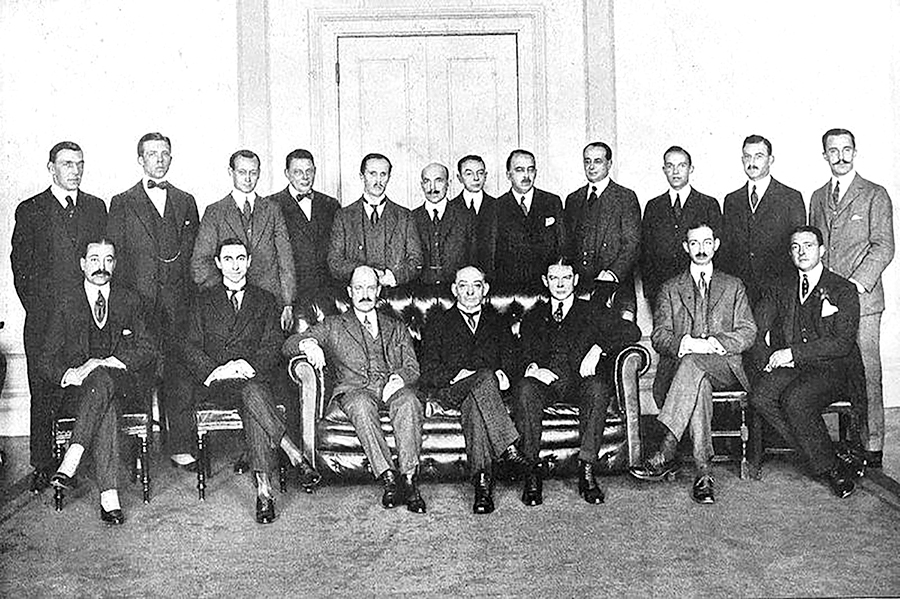
American state department diplomats began meeting regularly with their British counterparts without bothering to notify the out-of-step ambassador. This isolation, coupled with the stalemated war, depressed Page. He resigned himself to the possibility he might never return to his Moore County farm. A beleaguered Walter wrote his son Arthur: “The farm — the farm — the farm — it’s yours and Mother’s to plan and make and do as you wish. I will be happy whatever you do even if you put the roof in the cellar and the cellar on top of the house.”

Page did visit America during August and September 1916. While stateside, he lobbied for an opportunity to visit the president. The request was initially resisted, but the president finally agreed to see him on September 23. Although cordial enough, the president stiff-armed Page’s assertion that Germany was the world’s scourge. The ambassador was profoundly discouraged with Wilson’s assessment that the war was “essentially a quarrel to settle economic rivalries between Germany & England.”

Puzzled how the president could possibly view the two countries as morally equivalent, Page expressed pity for a man whose intellectual reasoning he had once acclaimed. He believed that the president’s stonewalling of dissenting voices had rendered him isolated and out-of-touch. “I think he is the loneliest man I have ever known,” he told his third son, Frank.

Wilson assumed his bargaining hand as peacemaker would be strengthened by his re-election, but he was wrong. Two events in early 1917 would end his mediation efforts and draw America into the conflict. In an attempt to starve out its enemy, Germany announced that it would henceforward commit unrestricted submarine warfare against any neutral countries’ ships transporting goods to England, including the U.S. This was followed by British intelligence’s discovery of the “Zimmerman telegram” cabled by the German Foreign Office to the Mexican government. It proposed a military alliance between those two countries in which Mexico would ultimately recover the states of Texas, Arizona and New Mexico in the event America entered the war. Americans were outraged at Germany’s treachery, and public opinion suddenly turned in favor of entering the war.

It took another month for Wilson to abandon hopes for peace and ask Congress to declare war, but he finally did so on April 2. Page was elated. “I cannot conceal nor can I repress my gratification we are in the war at last,” he wrote. He felt vindicated that his “letters & telegrams . . . for nearly two years” had proved clairvoyant and helped alter Wilson’s pacifistic stance. “I have accomplished something . . . I swear I have.” But the ambassador acknowledged to son Arthur  in September 1917 that having successfully brought America into the fray, “my job is really done here.”

The war dragged into 1918, and American casualties mounted, including Page’s nephew, Allison Page, a U.S. Marine, killed in battle at Belleau Wood.

Page’s health, never robust, got progressively worse. He suffered from hardening of the arteries, high blood pressure and early-stage emphysema. Told he would require six months’ rest, Page wrote Wilson on August 1 and submitted his resignation. When he left London on October 2, he required support on each arm to make it to his private railroad car. During the ocean voyage home, he bordered on delirium, greatly alarming the ship’s doctor. Upon reaching New York, a waiting ambulance rushed him to St. Luke’s Hospital. A further examination added diagnoses of retinal hemorrhages, heart congestion and kidney failure to Page’s mounting woes.

While Page’s condition improved somewhat, he remained very weak. He did, however, relish the announcement of the armistice ending hostilities on November 11. Still hospitalized, he wrote Wilson on November 23 to advise that while he had hoped to come to Washington to tender the president a final report, his health would not allow him to do so. Wilson responded with wishes for a speedy recovery, and hopes for a meeting “when I can see you and catch up with things in a long talk.” Actually, Wilson had been in New York during Page’s hospital stay, but chose not to visit his ailing friend.

On December 11, Page boarded a private railroad car and came home to North Carolina. Literally carried off the train by his son at the Aberdeen station, he remarked, “Well, Frank, I did get here after all, didn’t I?”

Walter and Alice Page did not stay at Garran Hill; Ralph had made the farm his residence. Instead, they rented Currituck Cottage in Pinehurst. Page was reunited with several of his siblings, but his condition declined a week later. He died on December 21 at the cottage. Following its practice of not printing a word about deaths in Pinehurst, the Pinehurst Outlook, coincidentally edited by Ralph, made no announcement of his father’s demise.

But Page’s Christmas Eve funeral at Page Memorial Church and burial at the Page family plot at Old Bethesda Cemetery in Aberdeen did receive international attention. Given his role in ending the “War to End All Wars,” virtually giving his life to the cause, Walter Page was hailed as an American hero. His grave became a mecca, visited by grateful Americans paying him honor. The state built a road to the cemetery to absorb the traffic. Johns Hopkins would honor Page by founding the Walter Page School of International Relations.

Woodrow Wilson proved prescient in claiming that Page’s letters merited publication. Arthur Page, working with biographer Burton Hendrick, and Doubleday Page engineered the publication of a three-volume set of The Life and Letters of Walter H. Page. Readers eager to learn the inside story of the war made the series a best-seller. Woodrow Wilson declined involvement in the project.

In September 1919, Wilson toured the country making speeches in support of a grueling and ultimately unsuccessful effort to promote a League of Nations. Thereafter, he was felled by a debilitating stroke. The president’s wife, Edith, is said to have run the country until the conclusion of her husband’s term. Woodrow Wilson died in March 1921.

Historians have wondered why, given their manifest differences, Wilson never relieved Page of his ambassadorial duties. Perhaps the president was hesitant to sever the last threads of a relationship that over several decades had served to benefit both men.

While Wilson and his administration did not always appreciate Walter Hines Page, England still does. In a vestibule of Westminster Abbey is a sculpture of Page with a testament that reads, “The friend of Britain in her sorest need.”  PS

Pinehurst resident Bill Case is PineStraw’s history man. He can be reached at Bill.Case@thompsonhine.com.

Eye of the Beholder

Famous faces of the Sandillls

By Jim Moriarty     Photographs By John Koob Gessner and Tim Sayer

Costuming by Mary and Marcie McKeithen, Showboat

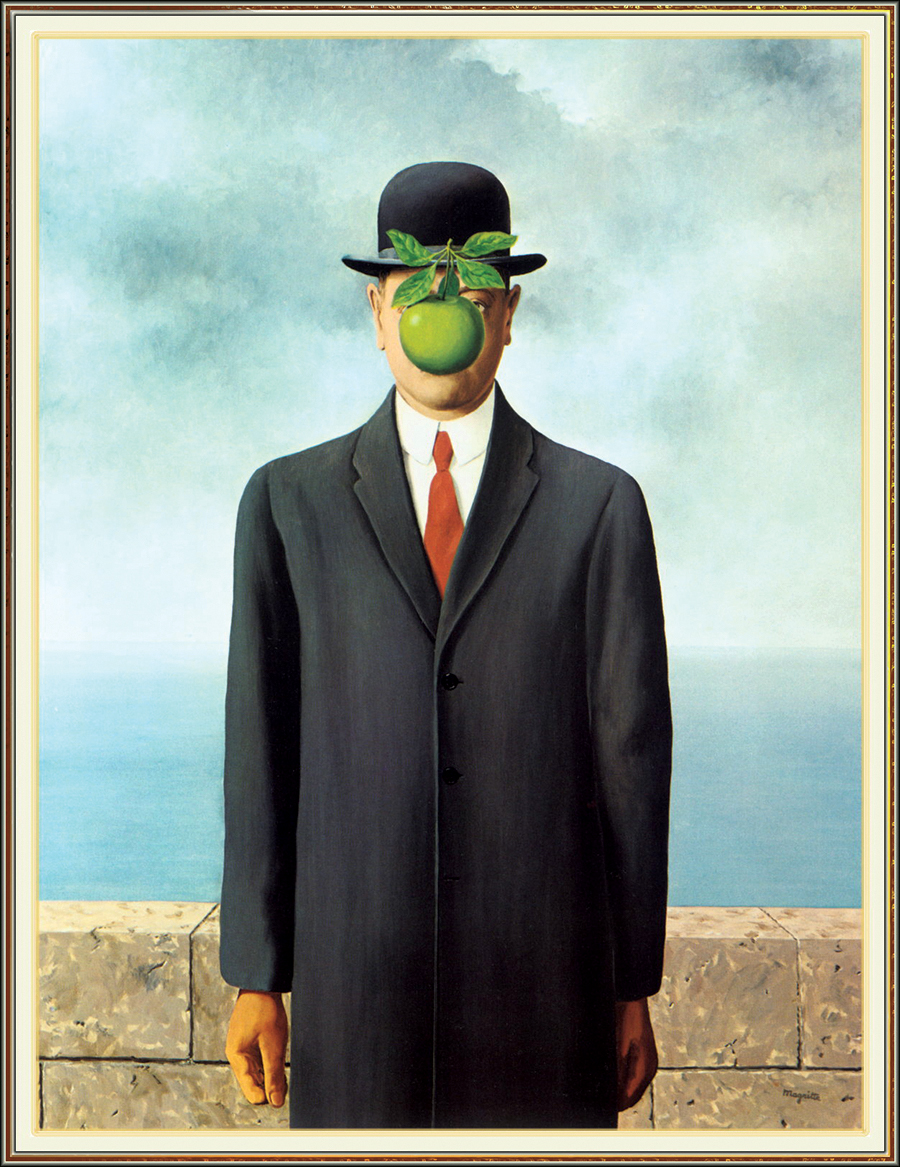
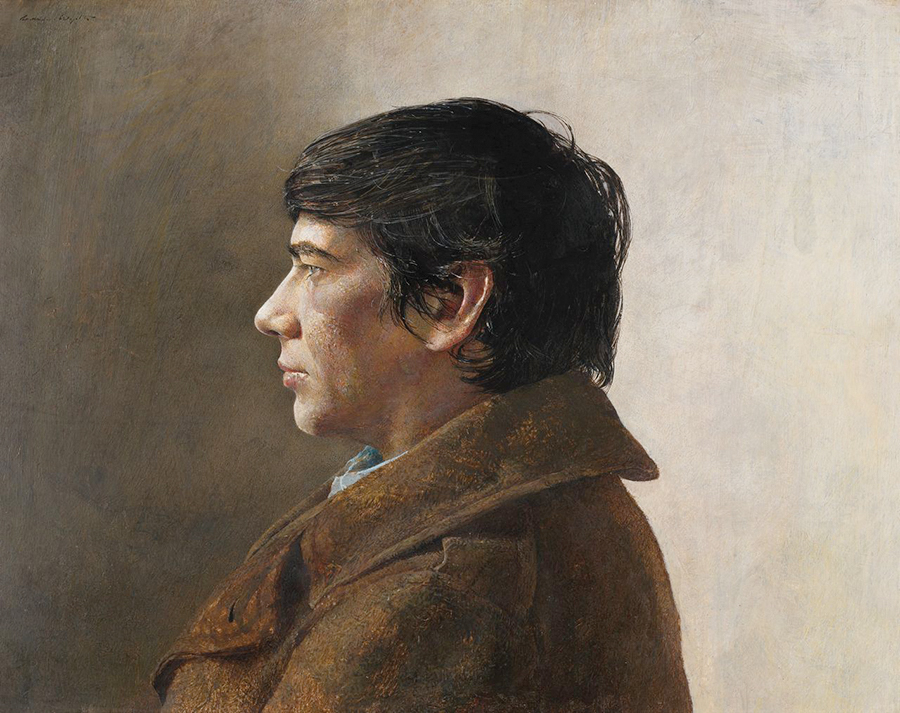
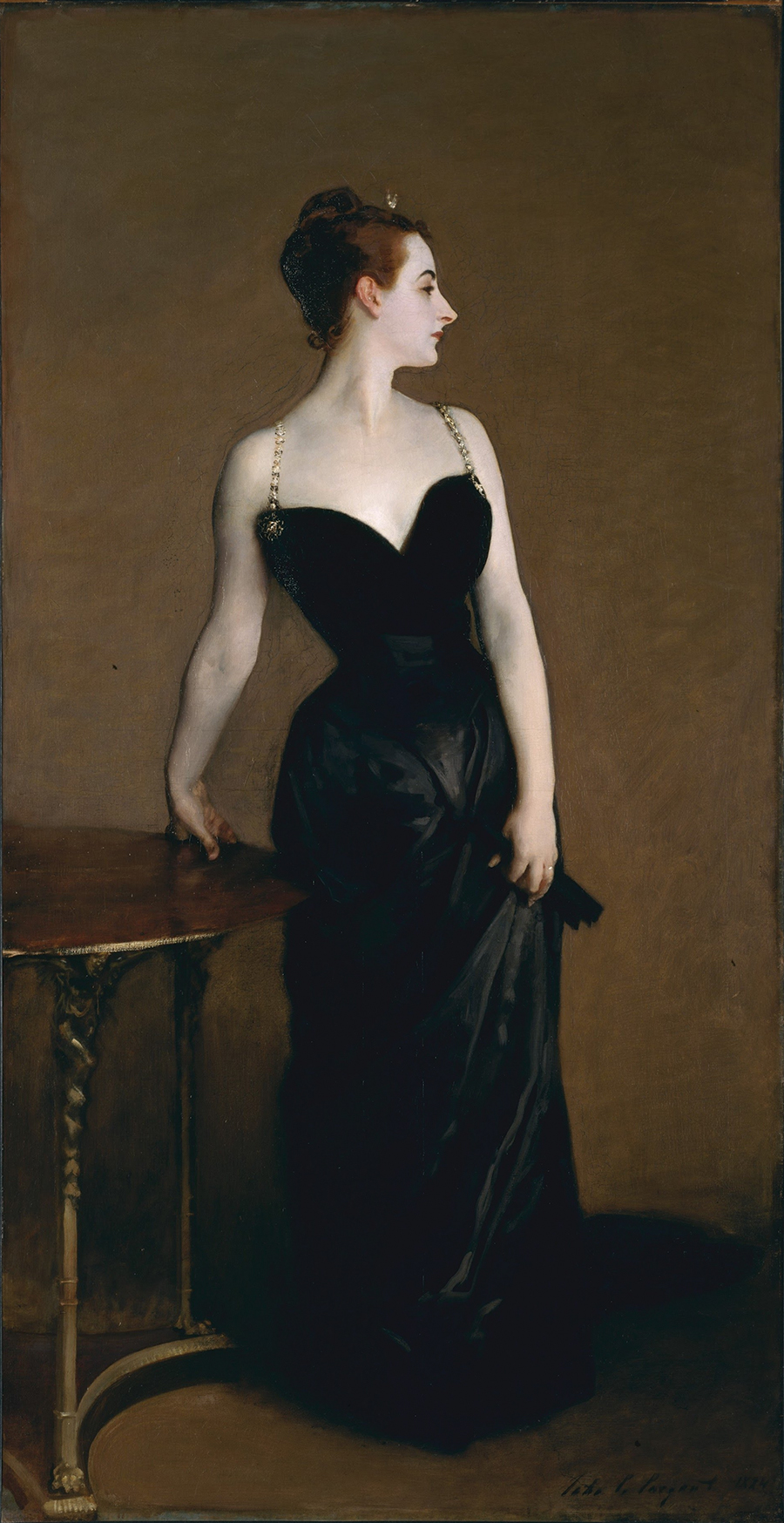
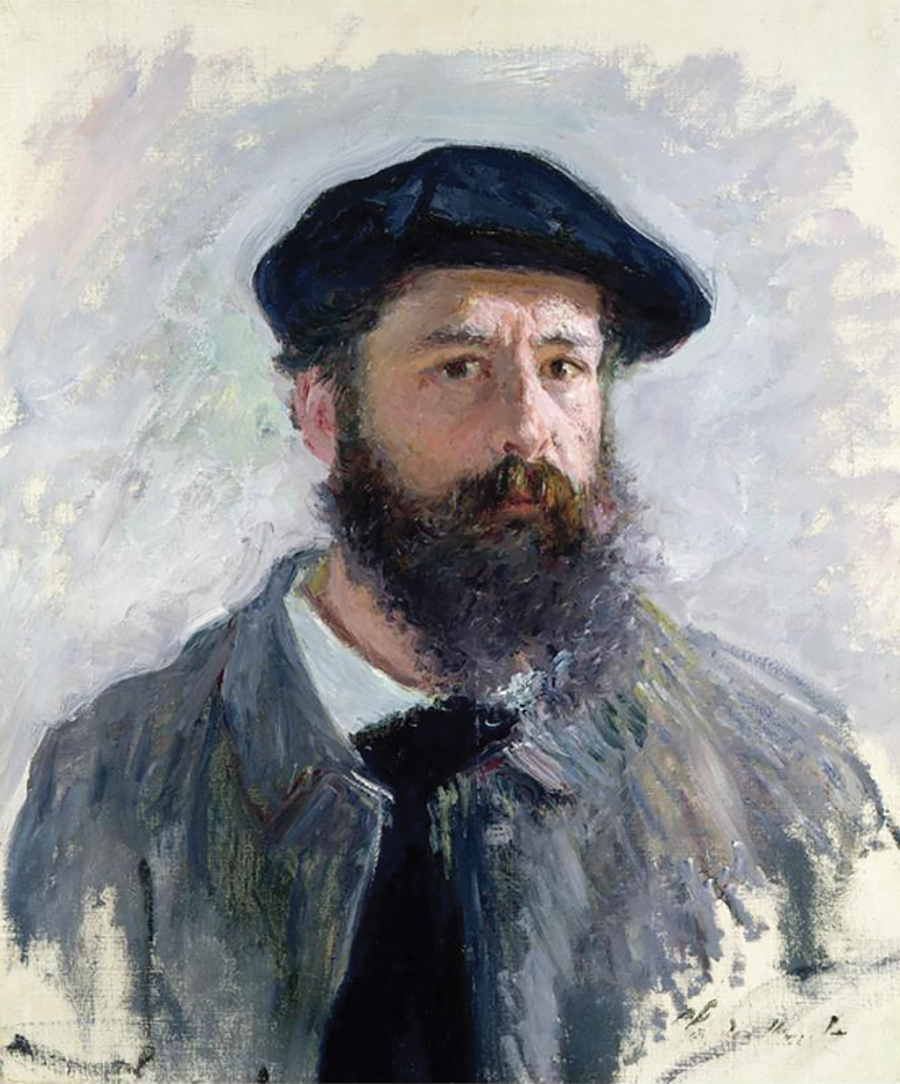
The idea that somehow, somewhere, there is someone who looks just like you is so deeply embedded in the human psyche it could have been a whole new level of awareness in Sigmund Freud’s study of the mind or maybe a McGuffin in an Alfred Hitchcock movie.

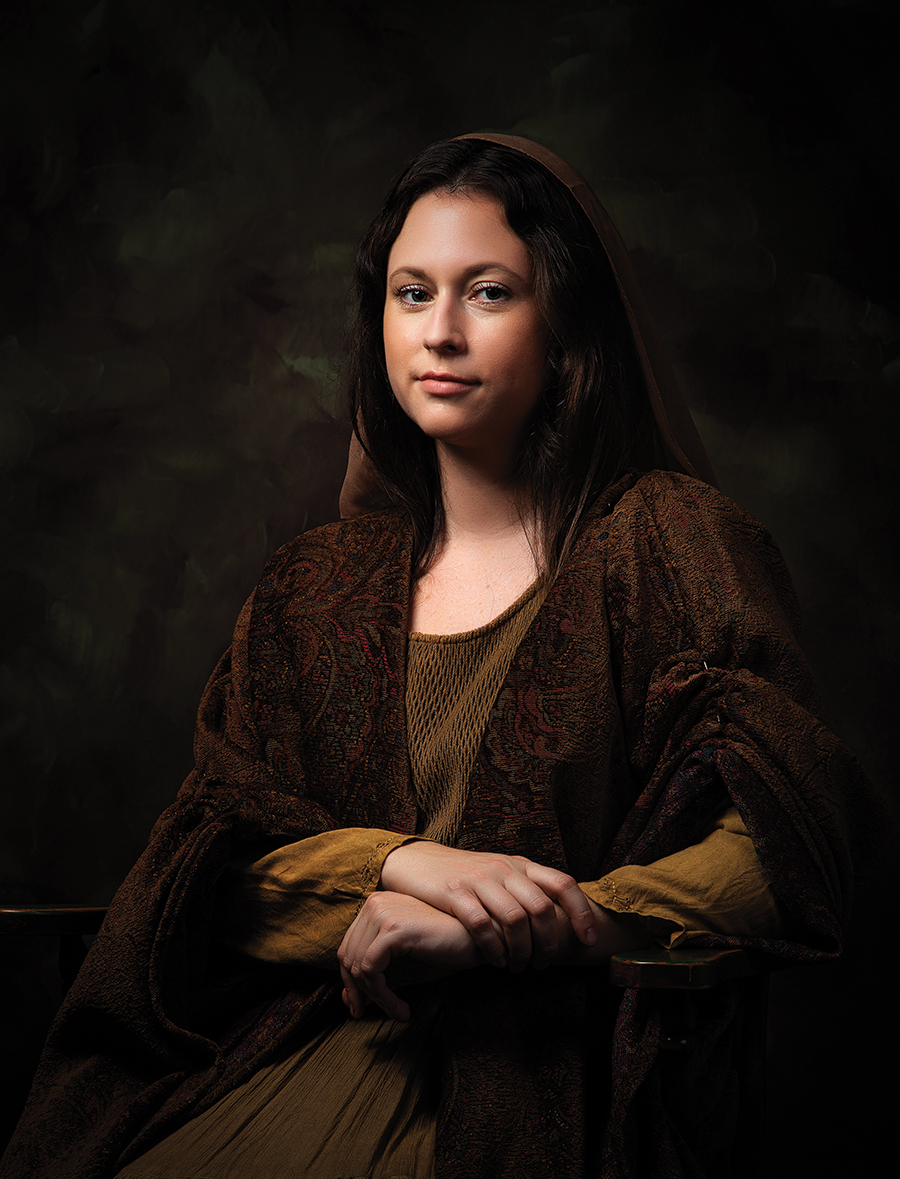
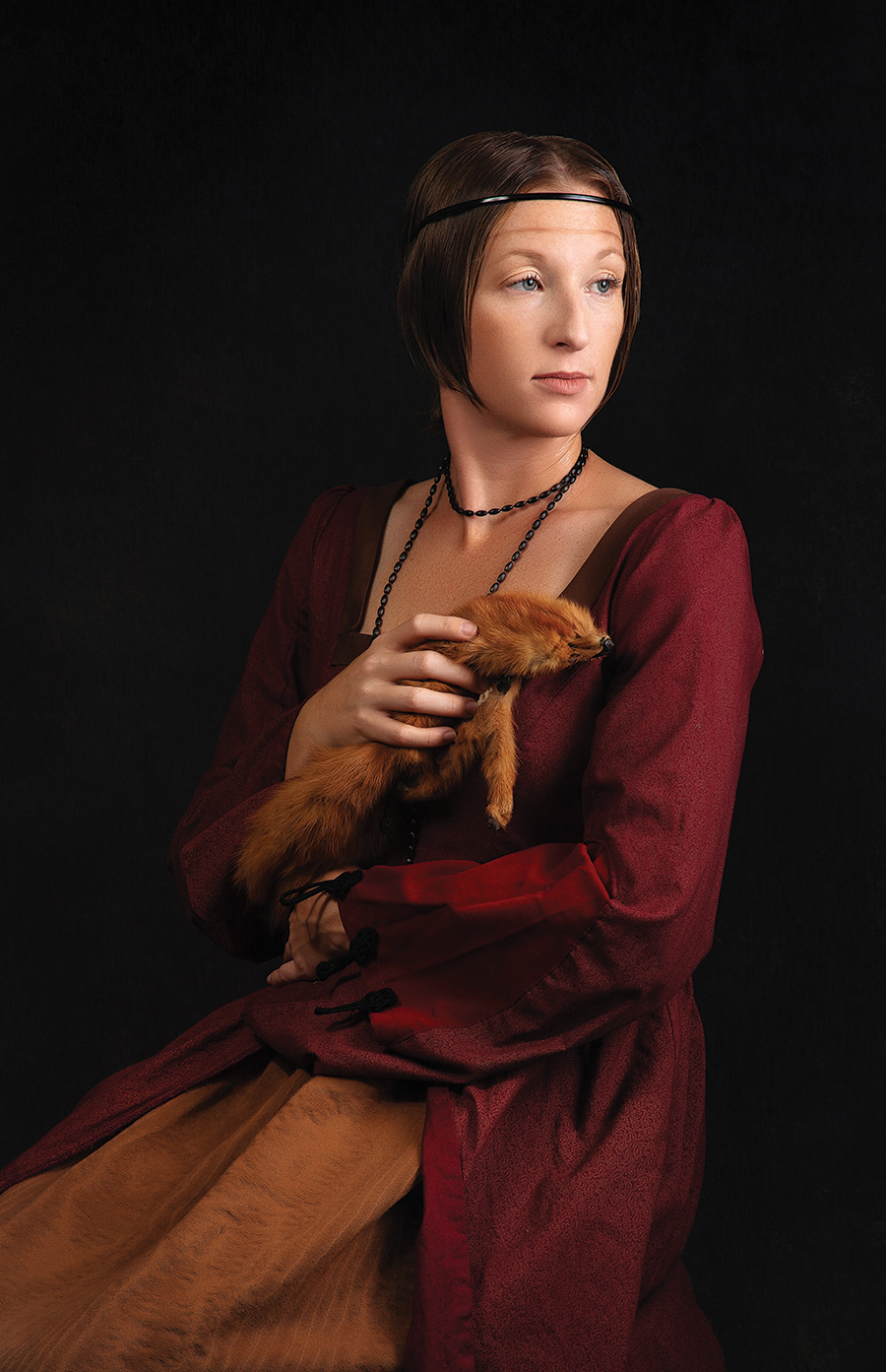
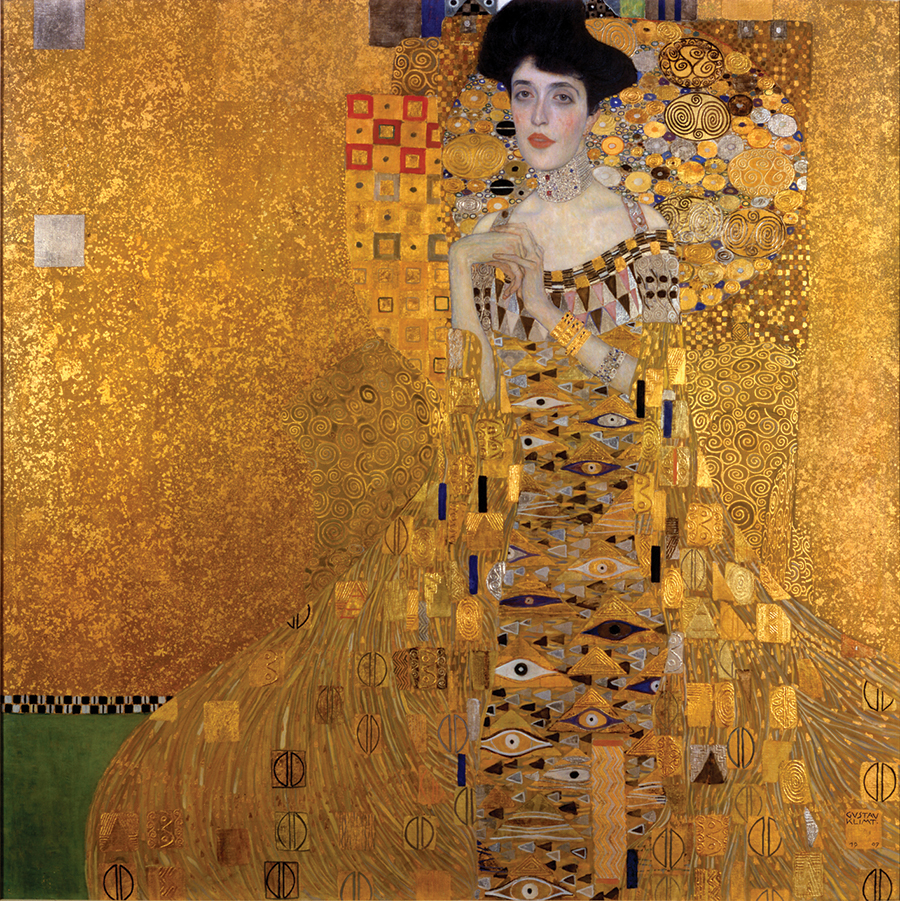
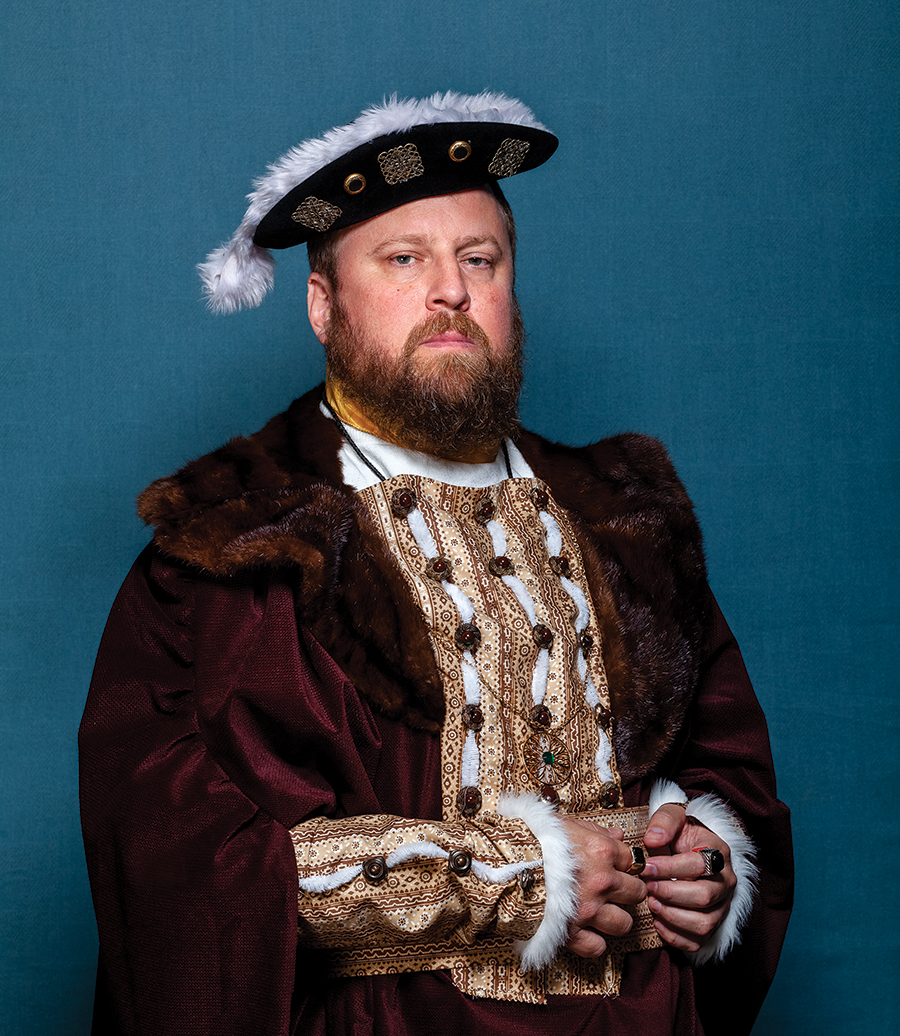
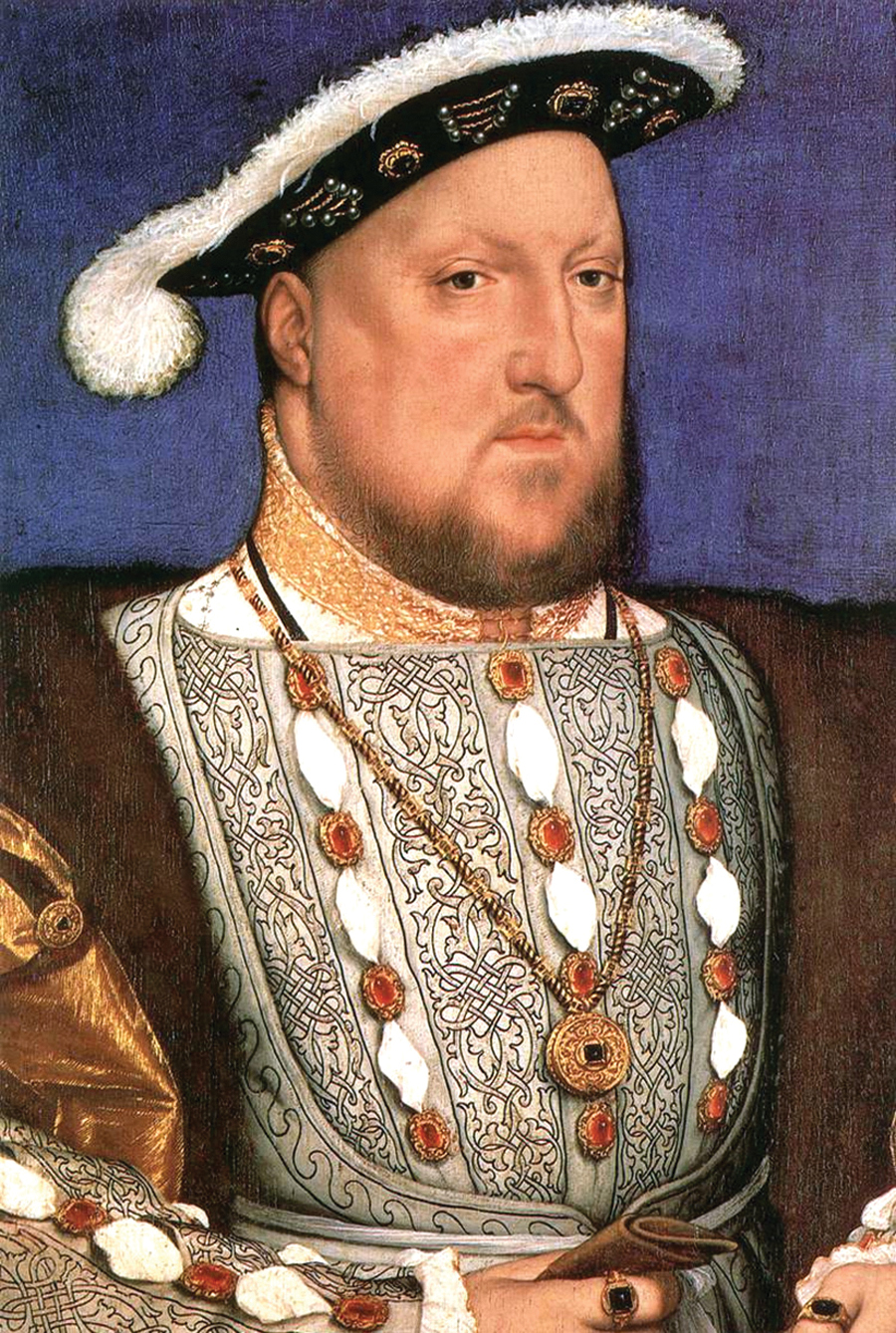
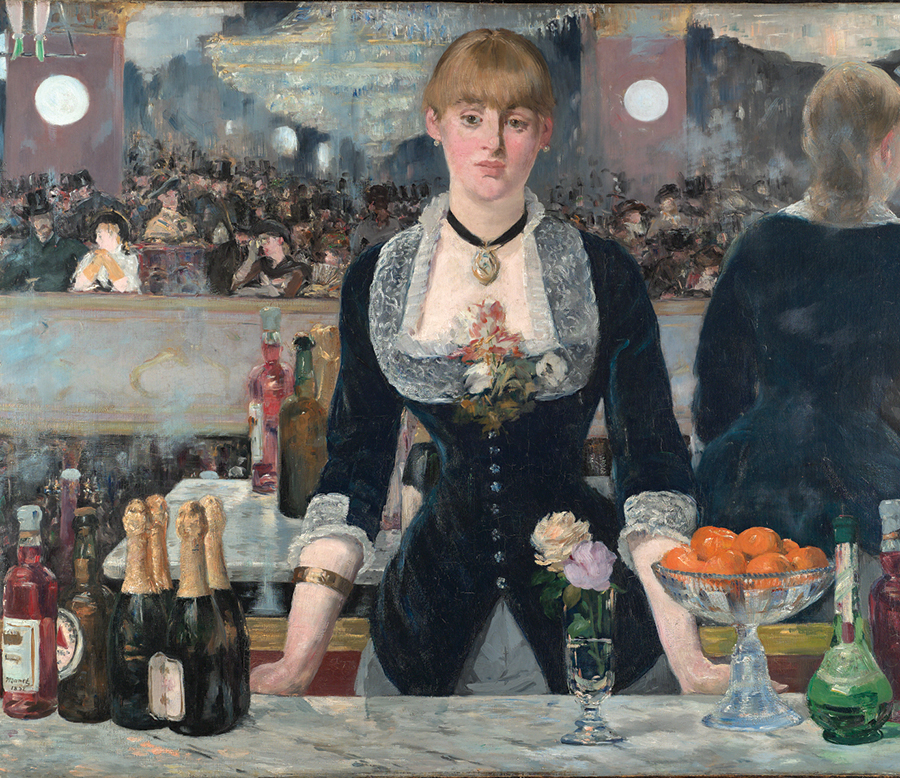
Alter egos, evil twins, double spirits — whatever you want to call them — show up in folklore, religions and cultures throughout human history. Dostoyevsky wrote a novel about it. Stephen King waded into its DNA. Donald Duck has a double, and so does Droopy. Homer Simpson has a doppelgänger named Guy Incognito. So it occurred to us we may have a few doppelgängers of our own. What follows are some of the most recognizable works of art ever created and the people who look, rather surprisingly, as if they could have been the ones in the frame.


The Son of Man – Photograph by John Koob Gessner

Belgian surrealist painter René Magritte created The Son of Man in 1964 as a self-portrait. “Everything we see hides another thing, we always want to see what is hidden by what we see,” said Magritte. Most recently the painting played a staring role in the 1999 remake of The Thomas Crown Affair. The apple of our eye is, well, anyone’s guess.


Buzzards Glory – Photograph by John Koob Gessner

Created by Andrew Wyeth in 1968, this is a portrait of Johnny Lynch, a Chadds Ford, Pennsylvania, neighbor of Wyeth’s. In his autobiography Wyeth said, “I, frankly, was intrigued by his jet-black hair. The title is the section of Chadds Ford — the Italian part of town — where his family lived for some time.” Franklin Dean, a certified general real estate appraiser for Village Appraisers LLC, steps into the frame as our Johnny Lynch.


Portrait of Madame X – Photograph by Tim Sayer / Hair and Makeup by Caleb Marion

John Singer Sargent’s 1883 painting of the young socialite, Virginie Amélie Avegno Gautreau, the wife of a French banker, caused a sensation at the Paris Salon of 1884. The model, an object of fascination for artists, was an American expatriate who became notorious in Parisian society for her beauty and rumored infidelities. Another artist of the period, Edward Simmons, said that he “could not stop stalking her as one does a deer.” We hunted down Fiona McKenzie, the Department Chair of Culinary and Pastry Arts at Sandhills Community College, to be our Madame X.


Self Portrait with a Beret – Photograph by John Koob Gessner

Painted by the French Impressionist Claude Monet in 1886 when he was 46 years old, it’s one of several self-portraits done by Monet when he was living in Giverny, France. Though his brow is slightly furrowed, there is a twinkle in his eyes. Our Monet is Max Reeder, a network engineer at Fort Bragg and a local musician.


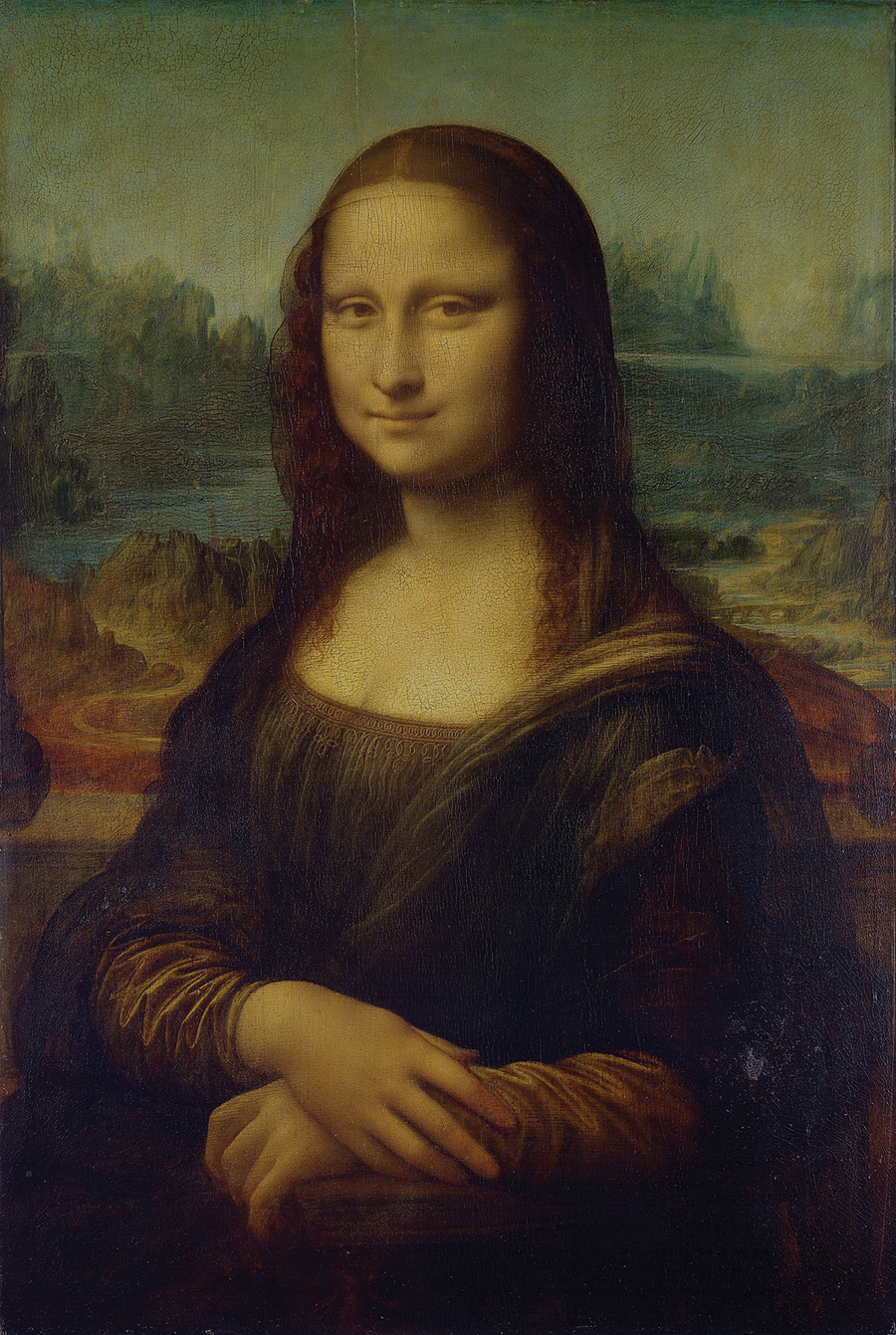
Mona Lisa – Photograph by Tim Sayer / Hair and Makeup by Retro Salon

Believed to have been painted between 1503 and 1506, Leonardo da Vinci’s portrait, thought by many to be of Lisa Gherardini, has been described as “the best known, the most visited, the most written about, the most sung about, the most parodied work of art in the world.” It hangs in the Louvre Museum in Paris but our Mona Lisa, Stephanie Sims, can be found at Swank in Southern Pines and is strictly local.


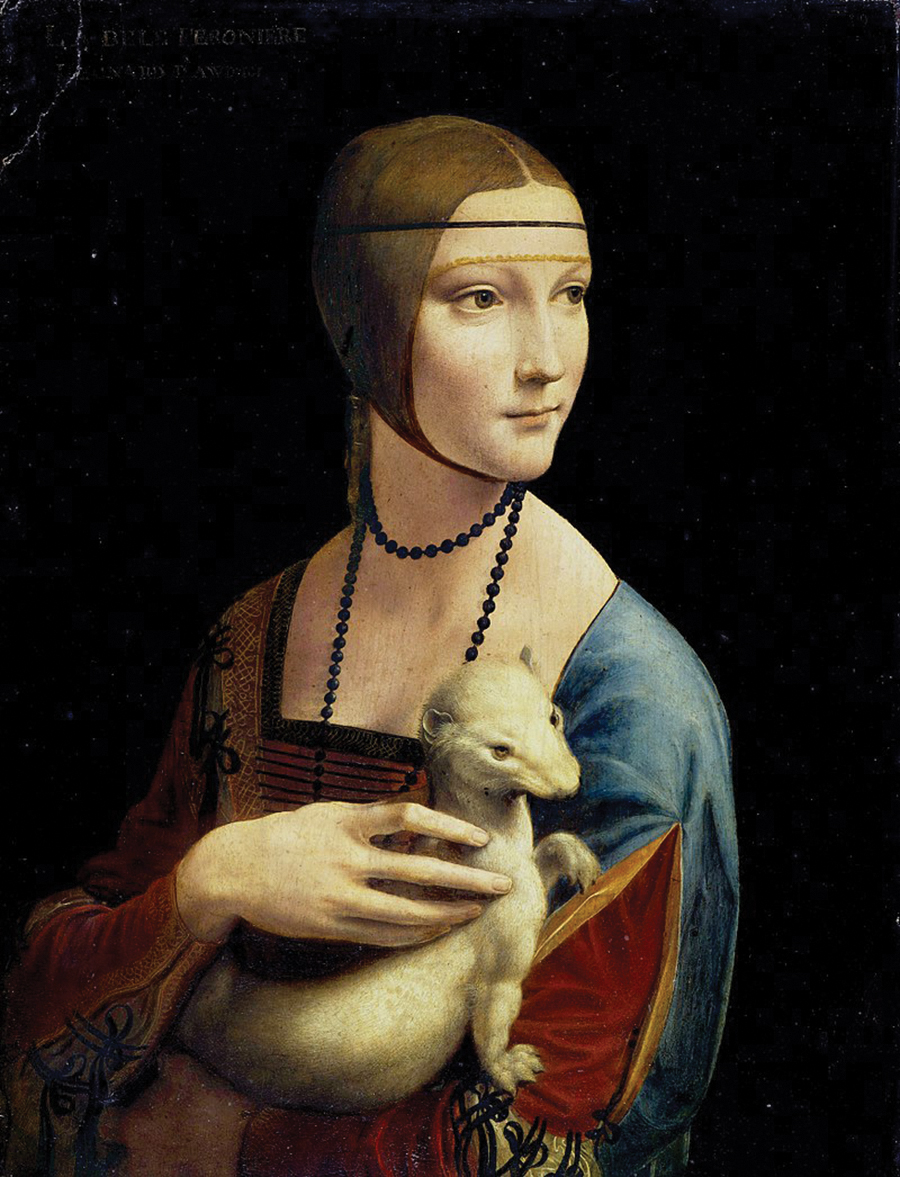
Lady with an Ermine – Photograph by Tim Sayer / Hair and Makeup by Retro Salon

Cecilia Gallerani, the mistress of the Duke of Milan, is the subject for this portrait done by Leonardo da Vinci around 1489-90. It, and the Mona Lisa, are two of only four portraits of women painted by Leonardo. The Lady with an Ermine was painted in oils, a relatively new medium in Italy at the time, on a wooden panel. Our lady is Houston Verbeck, a nursing student at Sandhills Community College who also works at Curt’s Cucina in Southern Pines.


Portrait of Adele Bloch-Bauer I – Photograph by Tim Sayer / Hair and Makeup by Retro Salon

Made at the height of Gustav Klimt’s career, the 1907 portrait is a mix of naturalism — in the face and hands — and the ornamental decoration of the dress, influenced by Egyptian art. Adele was one of Klimt’s mistresses and has the distinction of being the only person the artist ever painted twice. Our Adele is Katrina Denza, the associate editor of Narrative Magazine and the chair of the Weymouth Center for the Arts and Humanities residency program.


Portrait of Henry VIII – Photograph by John Koob Gessner

Possibly a study for a larger mural destroyed in a fire, this painting is the only surviving work of Henry done by Hans Holbein the Younger and one of the most iconic images of any British monarch. It was created in 1536-37. The larger original was intended to hang in the privy chamber of the Palace of Whitehall. Stepping in as our facsimile is Anthony Parks, the king of The Ice Cream Parlor in Southern Pines.


A Bar at the Folies-Bergère – Photograph by Tim Sayer / Hair and Makeup by Caleb Marion

First exhibited at the Paris Salon in 1882, the painting is considered one of Édouard Manet’s masterworks. It depicts a scene in the Folies Bergère nightclub in Paris. The woman at the bar is a real person, known as Suzon, who worked at the club. Our Suzon is Jessie Pollitt who tends the Pure Barre in Southern Pines.

The Outlander Connection

A Sassenach and Scotsman in the Sandhills

By Gayvin Powers

On Samhain in the Scottish Highlands, mist encircles standing stones, a low hum buzzes through the air, and time, as we know it, ceases to exist. Otherworldly happenings are whispers of apparitions like strangers out of time — common when the veil between worlds is close.

As worlds and times merge in history and literature, a Sassenach, otherwise known as an “Outlander” in Scotland, is an English person who is someone not to be trusted. The world between fantasy and real life couldn’t be closer for local residents than with the fourth and fifth books of the famed Outlander series, bringing adventure and history to 18th century Colonial North Carolina.

Diana Gabaldon, author of the Outlander book series that led to the popular STARZ television show (the fifth season this fall), lets her creativity go wild over the pages, entwining historic Scottish and American Colonial legend, history and love like a Celtic spiral that moves endlessly through time. Outlander feeds imagination, especially if a person enjoys being present at historic events. Couple that with an enduring love between Claire, a time-traveling World War II doctor, and Jamie, a brave 18th century Highlander on the run. Moments sizzle between the pages and onscreen with the undeniable chemistry between Claire and Jamie that has led to over 25 million books sold worldwide and over 1.5 million viewers on STARZ.

The books and show are tantalizing and intriguing. It’s alluring to be present in a historic moment. It’s beguiling to watch Claire and Jamie’s continuous risks and consequences unfold as their best intentions to right history lead them to the point of an arrow, barrel of a gun, burning at the stake and more. All the while, it’s seductive to watch their tantalizing love transform across time and place.

Despite their bond, Claire doesn’t start off her harrowing adventure as a willing oracle to history, or wife to Jamie. The first book is set six months after World War II ends. While on honeymoon, with her 20th century husband in the Scottish Highlands, Claire hears the haunting call of the stones at Craigh na Dun. This is the magical site of pagan rituals during Samhain. Unable to resist the temptation, Claire touches a stone and is transported 200 years into the past, just before the uprising of Bonny Prince Charlie.

At first, her rational mind tries to catch up with her irrational situation. She thinks that she stumbled upon a re-enactment of the British Dragoons against the Scottish Highlanders — until a bullet whizzes past her.

All of this has Claire questioning herself and her surroundings. When her new reality sets in, she’s quite unhappy about the mystical arrangement. Fortunately, the MacKenzie clan saves her from the clutches of “Black Jack” Randall, a sadistic British Dragoon officer. To protect her and utilize her skills as a healer, the MacKenzie clan keeps her as a “guest” at Castle Leoch.

Desperate to return to her 20th century husband, Claire makes several attempts to escape. She tries to return to the magical stones at Craigh na Dun and is captured, once again, by Black Jack Randall.

Worried about what Black Jack will do with Claire, it takes all sorts of coercion, calculation and fighting by the MacKenzies to free her. Since Jamie knows all too well about Randall’s cruel behavior, the MacKenzies hatch a plan to wed Claire to Jamie so that she is officially under their clan’s protection. In order to survive her circumstances, Claire unhappily agrees to marry Jamie.

After the wedding, Claire’s lack of bridal excitement isn’t lost on Jamie or anyone else when a woman questions him:

“Why, what’s the matter wi’ the poor child?” she demanded of Jamie. “Has she had an accident o’ some sort?”

“No, it’s only she’s married me,” he said, ‘though if ye care to call it an accident, ye may.”

What starts out as a marriage of survival turns into a marriage of trust, loyalty and love. Over time, there is an intimacy and playful banter that develops between the husband and his unwilling, at first, wife. During one of those moments in Book 1, Claire asked Jamie how he knew that he wanted to marry her:

“Because I wanted you.” He turned from the window to face me. “More than I ever wanted anything in my life,” he added softly.

I continued staring at him, dumbstruck. Whatever I had been expecting, it wasn’t this. Seeing my openmouthed expression, he continued lightly. “When I asked my da how ye knew which was the right woman, he told me when the time came, I’d have no doubt. And I didn’t. When I woke in the dark under that tree on the road to Leoch, with you sitting on my chest, cursing me for bleeding to death, I said to myself, ‘Jamie Fraser, for all ye canna see what she looks like, and for all she weighs as much as a good draft horse, this is the woman.’”

I started toward him, and he backed away, talking rapidly. “I said to myself, ‘She’s mended ye twice in as many hours, me lad; life amongst the MacKenzies being what it is, it might be as well to wed a woman as can stanch a wound and set broken bones.’ And I said to myself, ‘Jamie, lad, if her touch feels so bonny on your collarbone, imagine what it might feel like lower down . . .”

He dodged around a chair. “Of course, I thought it might ha’ just been the effects of spending four months in a monaster . . .”

Claire, a head-turner and far from a draft horse, gives as good as she gets. While she marries Jamie out of survival, ultimately, he marries her for love and desire. His devotion to her and his passion lead to a trust that she’s never known before. The banter and intimacy that comes out of their distressing near-death experiences bonds these two time-crossed lovers.

Every place Claire and Jamie travel in the late 1700s is a new adventure. They go from the stone rings and enemy forts in Scotland, to the court of France, to crossing the Atlantic (only to become castaways), and to homesteading a new life in Colonial America. Everywhere they go is a hotbed of intrigue and political turmoil, risking their families’ survival.

Drums of Autumn, the fourth book in the nine book series, finds promises of hope and prosperity in the New World — something that has evaded Claire and Jamie throughout their journey together. Colonial North Carolina is the setting of this hopeful new beginning. The actual Scottish migration during this time period can be seen throughout the Sandhills, particularly Aberdeen, New Bern, the Appalachians, Wilmington and more. They journey through Roanoke Island, home of the first British settlers and the Lost Colony. On Roanoke, Claire finds another set of standing stones, like those in Scotland, showing that the mystical, haunting powers of Scotland are very much alive in the New World. Despite the undercurrent of otherworldly happenings, it looks like the couple may get some peace at last. Or will they?

Colonial America is on the brink of the Revolutionary War. Claire is still a feminist doctor with a sailor’s tongue, healing locals while fighting a gender bias against her advanced medical skills. Jamie is still a man that every man wants to be and every woman (and man) wants to be with. He’s trying to remain true to his Scottish family and friends in the Colonies, who are rising up against the British, while remaining loyal to the British Crown that granted him 10,000 acres in North Carolina at the fictional “Fraser’s Ridge.”

Last season ended on a hopeful note with Brianna, their daughter, reunited with their new son-in-law Roger MacKenzie and their grandchild. The Fiery Cross, the fifth book and upcoming season on STARZ this fall, begins with Colonial America on the verge of war and the British trying to snuff out the revolt. Claire knows that the American Revolution is only a couple of years away and is trying to prepare for it. Jamie is charged with an impossible task: leading a militia to wipe out the Colonial rebellion — headed by his Scottish godfather — or betray an old loyalist friend and the British king. Either way it could cost him everything.

The dilemma Jamie and Claire face is the same one that many people’s ancestors encountered when family members were pitted against each other in a world of divided loyalties. All the while, they’re dealing with the everyday issues married couples have, finding ways to stay together despite the challenges of the outside world. Conflict and the threat of war surround these new immigrants as they form friendships with the local Cherokee and Mohawk Nations, pirates, Loyalists, trappers, settlers and more. All the while, the reader experiences the foundational beginnings of the United States as seen through Claire’s modern eyes. Her views are sometimes countered with Jamie’s practical Scottish nature that softens with his love for, and trust in, his wife.

The provocative moments between Claire and Jamie, the impossible situations they face, how history intervenes, and how they try to make the world better based upon their honorable but flawed personalities entice the viewer. Whether they’re trying to change the outcome of Bonny Prince Charlie’s uprising, attempting to protect the Scottish clans while in France, fleeing to the Americas, or saving their daughter, these two characters may not always agree, but they find a way to come back together.

Their enduring devotion is embodied in The Fiery Cross when Jamie speaks to Claire:

“When the day shall come, that we do part,” he said softly, and turned to look at me, “if my last words are not ‘I love you’ — ye’ll ken it was because I didna have time.”

Locations:

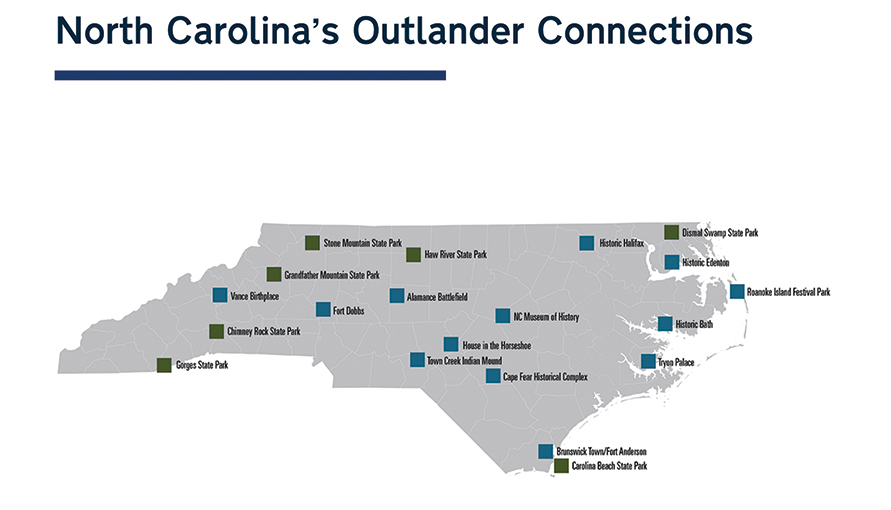
The rich history and timeless love affair between Claire and Jamie has inspired many people to travel to Scotland to visit some of the sites that animate the books and to see where the scenes were filmed. Fans were hopeful that Drums of Autumn and The Fiery Cross would be shot in North Carolina, but the producers chose their own film studio, Wardpark Studios in Cumbernauld. Even though fans will have to travel to Scotland to see the film locations, they’ll be happy to know there are plenty of sites to visit in North Carolina that retrace the inspiration for the fourth and fifth books. Some of the key locations in the books and television show, Seasons 4 and 5, are located in the following places:

Fraser’s Ridge — Blowing Rock and Boone

This fictional 10,000 acres is where Claire and Jamie pin their hopes for the future of their family. Gabaldon has been quoted as saying that Fraser’s Ridge is located “up near Boone and Blowing Rock” on the Yadkin River. Many people also believe that Grandfather Mountain is a key landmark in Fraser’s Ridge.

Roanoke Island — Outer Banks

Claire discovers a set of standing stones like the ones in Scotland at Craigh na Dun.

River Run — Fayetteville

The fictional plantation of Jamie’s Aunt Jocasta at Cross Creek is on the banks of the Cape Fear River. Outlander’s fictional River Run “eventually became part of Fayetteville. Were there any Cape Fear River plantations at the time Jamie and Claire showed up at the fictional one belonging to Jocasta Cameron? Yes. But just two, said Fayetteville historian Bruce Daws after consulting a 1775 map,” according to the Fayetteville Observer.

Port of Wilmington

This is the location where Jamie and Claire are invited to the theater by Governor Tryon as well as introduced to a young Colonel George Washington and his bride, Martha. Claire lets Jamie know that Washington will be the first president of the United States. It isn’t all encores and roses — their daughter Brianna has a secret handfast ceremony with Roger, only to be brutally attacked by the scoundrel Stephen Bonnet.

Tryon Palace — New Bern

Tryon Palace was the home of the Royal Governor William Tryon, Colonial North Carolina’s eighth governor from 1765-1771, a historical figure fictionalized in Drums of Autumn. He’s the person who grants Jamie 10,000 acres of land, even though they both know that the British land grants are only for Colonists who are Protestant British . . . and Jamie is a Catholic Scotsman. This secret could be his undoing if Jamie’s background is revealed to the British Crown in Book 5/Season 5.

Alamance Battleground State Historic Site — Burlington

“On May 16, 1771, nearly 2,000 backcountry farmers, who called themselves ‘Regulators,’ confronted the 1,000-man royal militia of Colonial Governor Tryon. Dishonest sheriffs, illegal fees and heavy taxation led the farmers to call for regulation of public officials. These so-called Regulators were mentioned in Drums of Autumn (on which Season 4 is based) and more prominently featured in The Fiery Cross (on which Season 5 will be based) when their discontent erupted into the ill-fated Battle of Alamance. The battle is the central theme in The Fiery Cross and was, arguably, one of the most important battles of Colonial North Carolina that created tensions that helped spark the American War for Independence,” according to the North Carolina Department of Natural and Cultural Resources.

The DNCR has additional locations relevant to Outlander including:

Brunswick Town/Fort Anderson, Winnabow, North Carolina

Mentioned in A Breath of Snow and Ashes.

Bath, North Carolina

Stephen Bonnet, a notorious pirate in Drums of Autumn, is inspired by Stede Bonnet, who had ties to Bath.

Edenton, North Carolina

Mentioned in Drums of Autumn and The Fiery Cross.

Halifax, North Carolina

Mentioned in Drums of Autumn and The Fiery Cross.

Grandfather Mountain State Park, Linville, North Carolina

Estimated location of the fictional Fraser’s Ridge.

Cape Fear Historical Complex, Fayetteville, North Carolina

The epicenter of Scottish migration during the Colonial era. Fayetteville was once known as Cross Creek, mentioned in Drums of Autumn and The Fiery Cross.

Dismal Swamp State Park, South Mills, North Carolina

This is a backdrop for many settings in An Echo in the Bone, the 7th book.

House in the Horseshoe, Sanford, North Carolina

This was not in the books, however, in season 3, Voyager, it’s where they encounter the dangerous Stephen Bonnet.

Additional Sites:

Town Creek Indian Mound, Mt. Gilead, North Carolina

Haw River State Park, Browns Summit, North Carolina

Fort Dobbs, Statesville, North Carolina

Stone Mountain State Park, Roaring Gap, North Carolina

Vance Birthplace, Weaverville, North Carolina

Chimney Rock State Park, Chimney Rock, North Carolina

Gorge State Park, Sapphire, North Carolina

Events:

Fraser’s Ridge Homecoming, Ferguson, North Carolina

A four-day Outlander-themed event at Leatherwood Mountains Resort, Thursday, Oct. 3 – 6.

New York Comic-Con 2019

Outlander will be taking center stage. Cast appearances have yet to be confirmed. Thursday, Oct. 3 – 6 at the Jacob K. Javits Convention Center, New York

Outlandish Hillsborough

Ayr Mount Historic Site, Hillsborough, North Carolina, Friday, Oct. 11 – 13. Weekend event to celebrate the Outlander series. “Step Through The Stones”  Sunday, Oct. 13, at 10 a.m. — 4 p.m.

Discovering Tryon Palace — Outlander Home and Hearth, New Bern, North Carolina

Saturday, Oct. 19 and Nov. 16 at 9:15 – 10:30 a.m.

Galaxy Con — Louisville, Kentucky

Nothing like Thanksgiving with Dougal MacKenzie ready to pour a drink and steal your wife. Dougal MacKenzie, played by Graham McTavish, will be there with more actors to be announced. Friday, Nov. 22 at 10a.m. – Sunday, Nov. 24 ending at 8 p.m.

The Land Con — Paris

Feel like fleeing the country and going to France like Claire and Jamie in Book 2? Try Paris and see Sam Heughan (Jamie Fraser), Cesar Domboy, David Berry, Ed Speleers, Sophie Skelton, Richard Rankin, John Bell, Steven Cree. Saturday, Nov. 30 – Sunday, Dec. 1.  PS

Gayvin Powers, author and writing coach at Soul Sisters Write, just finished her latest middle grade adventure book set on Roanoke Island. She can be reached at hello@gayvinpowers.com.
Story of a House

Minding Their Manors

Retirees resurrect Walter Hines Page residence

By Deborah Salomon     Photographs By John Koob Gessner

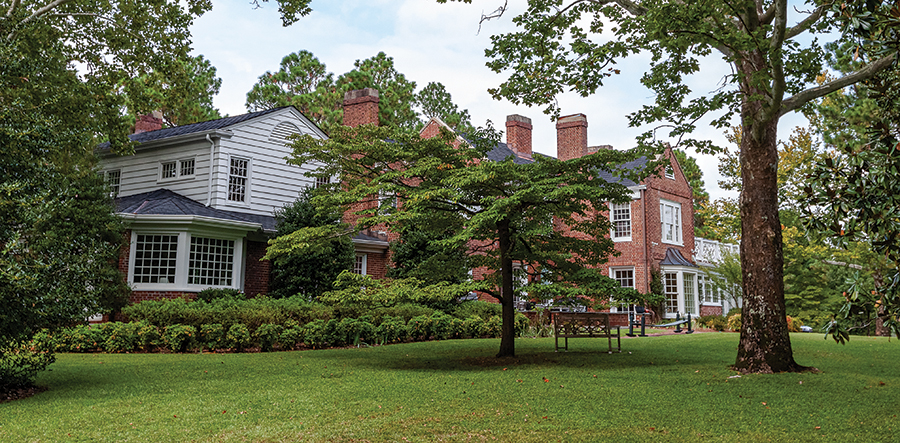
Twenty years ago, Dr. Russell and Ann McAllister decided to downsize from a 4,000- square-foot home in Durham. Their children were grown. Russell, a cardiologist, anticipated retirement. Golf wasn’t a factor. So what did they do? Purchase an empty and neglected 6,000-square-foot manor house on 5 acres with two tennis courts and a 20-by-40-foot pool, built in Pinehurst, circa 1916, for U.S. Ambassador to the United Kingdom, Walter Hines Page.

Page, appointed by Woodrow Wilson, served during World War I. His father, Francis Page, had made a fortune in logging and construction. The elder Page is credited with founding Cary and Aberdeen. Son Walter, who followed more intellectual pursuits (journalism, teaching, publishing), shifted his attention and residence to England, planning to return, eventually, as a gentleman farmer. Illness brought him back to Pinehurst, where died in 1918, at 63, without fully occupying the stately residence called Garran Hall.

The McAllisters’ acquisition of the Georgian manor, renamed Hollycrest, spins an unlikely tale.

Ann: “A friend asked me to come down from Chapel Hill with her to help find a house in the Sandhills. We looked through some brochures.” One caught Ann’s eye. The agent offered a showing. “It had been vacant for 16 years. As we came up the drive it looked like a haunted nursing home.”

By chance, the house was open. They tiptoed in.

(Roll the spooky music.)

“I had a moment,” Ann recalls. She saw beyond the cobwebs to the grounds, the scope and isolation. “I adore magnolias,” which were plentiful. She faces challenges without fear.

Russell: “I was at choir practice when Ann called to say she had found what she always wanted. And all those years I thought (that something) was me.” Instead, a brick masterpiece, simple and dignified, built longitudinally one room deep, with a wing at each end.

This faded beauty oozed potential. Ann possessed expertise; she had renovated a historic home in Kentucky, also trained as a docent at The Hermitage, President Andrew Jackson’s residence in Nashville, Tennessee.

Nevertheless, Russell — also a history buff — came down, took one look and uttered, tapping his forehead, “She needs help.”

She got the practical kind from the architect who designed their Durham home. But interiors executed in a genteel Southern mode are Ann’s alone.

Once termite damage had been rectified and the skeleton exposed, the crew got to work on making the house 21st century livable: Enlarge the main floor master suite and bathrooms, create a kitchen (original in the basement, which now houses a wine cellar), install new systems (five-zone AC), add two staircases and enough paneling, coffers and moldings that, if laid end to end, would reach W.H. Page’s grave in Aberdeen.

They were able to save all seven carved mantels, most doors and some oak flooring, which was lifted, repaired and relaid. Workmen ran into trouble when replacing the front portico, deemed wrong for the era. During its removal, bricks fell off the house front. The hunt for matching ones took three months.

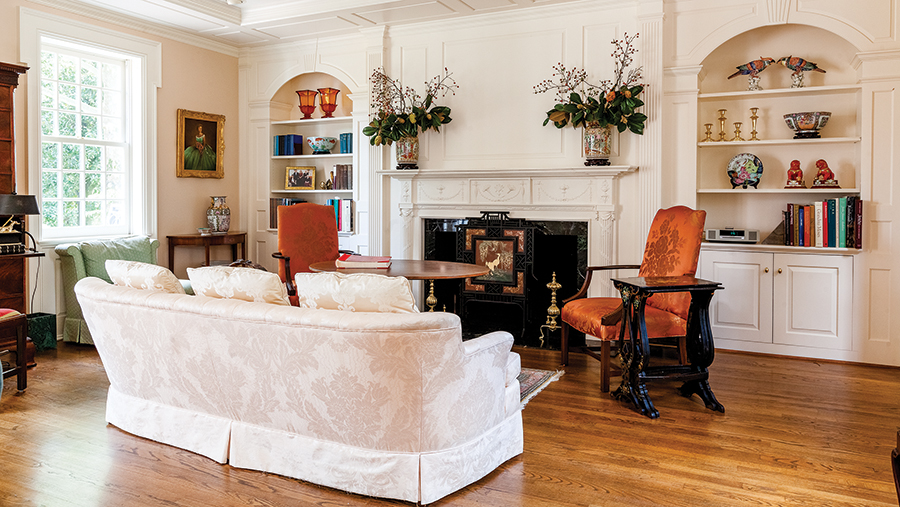
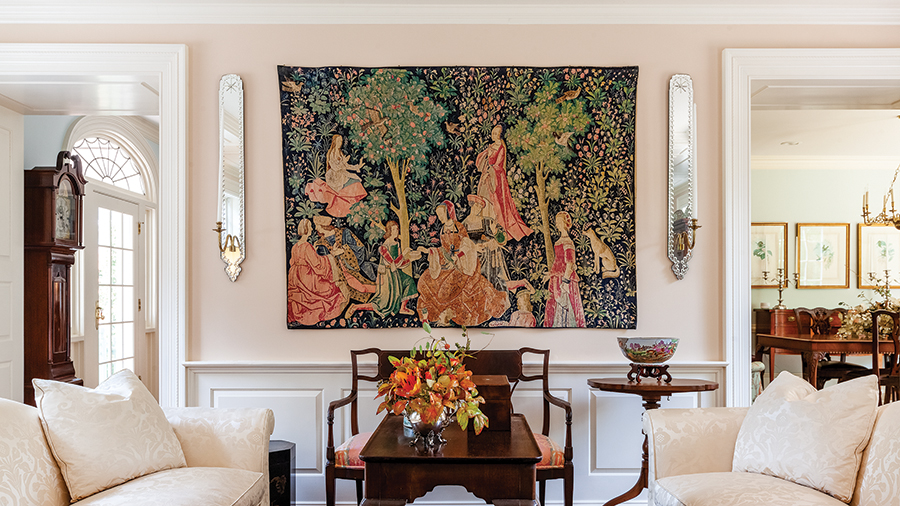
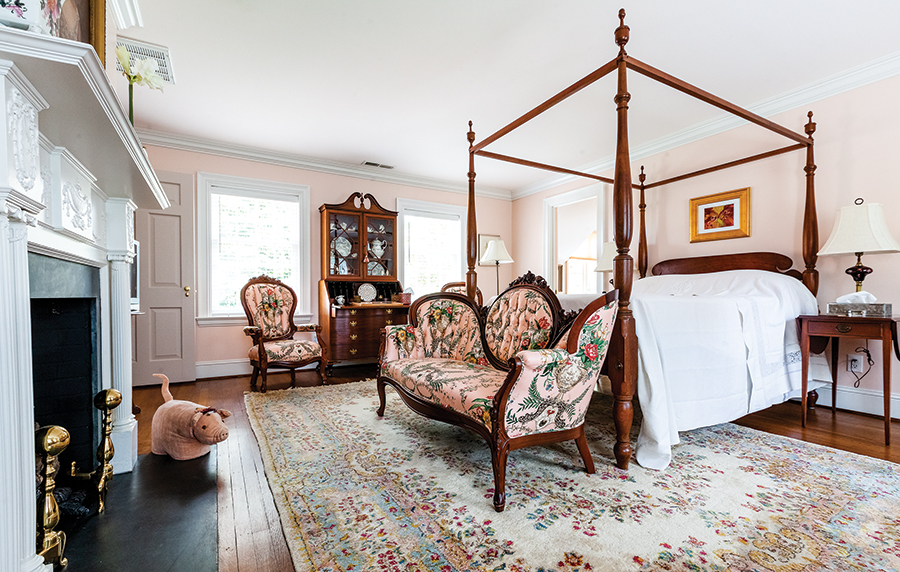
The blush pink salon — nearly 40 feet long, with tall bare windows parading down both sides — remained intact, divided into conversation areas by white sofas, chairs, rugs and tables. One end is anchored by a fireplace, the other by a 15th century millefleurs tapestry reproduction, where the background is composed of tiny flowers.

Given the dimensions, Russell envisioned it a ballroom.

“We love to dance.”

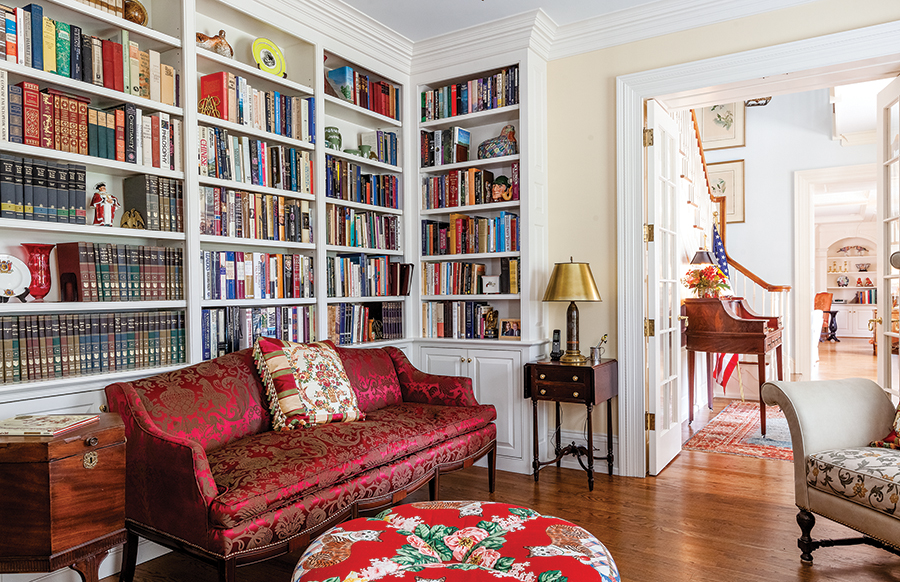
Less imposing on a quiet evening are several sitting rooms, including one adjacent to the kitchen, also Ann’s Blue Room displaying her Delft collections, notably tiles framing the fireplace. Part of Russell’s second-floor office doubles as the TV room. Her favorite is the library just off the kitchen, where a round ottoman upholstered in a fabric featuring life-sized cats dominates floorspace.

“Playfulness,” Ann calls it. “Every room needs a laugh.”

Laughing from the top of a highboy is her collection of nutcrackers brought back from a year in Switzerland. Russell identifies the odd painted wooden benches on the veranda and by the front door as joggling boards, a low country craft.

“This is where you sit with your girlfriend and ‘joggle’ closer and closer.”

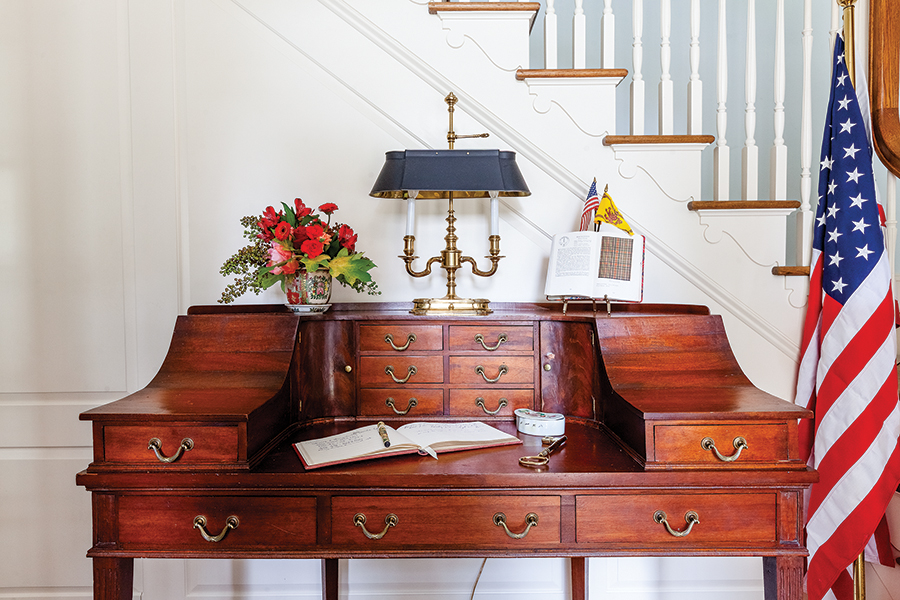
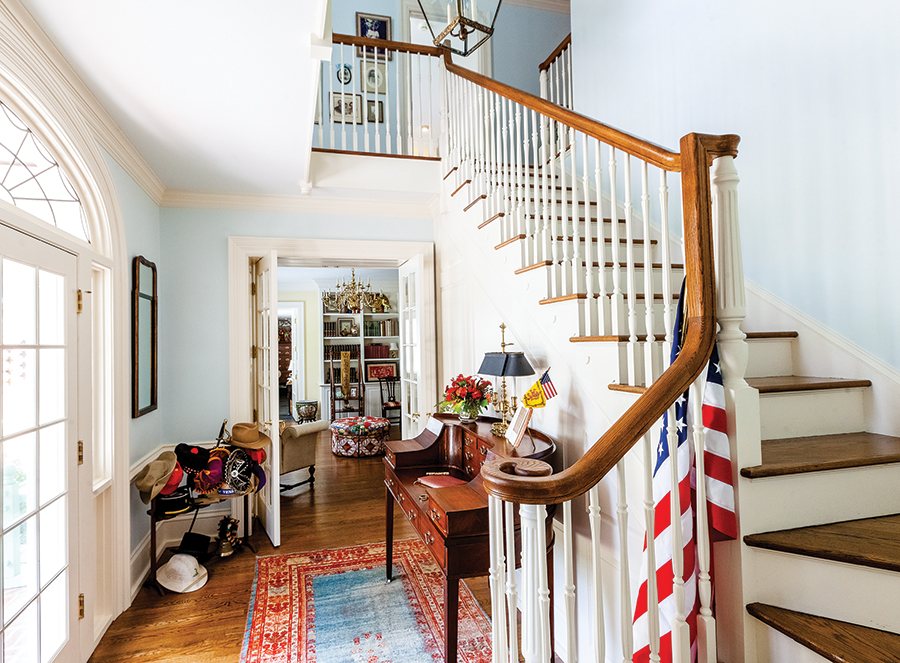
How refreshing to see serious antiques placed beside a cat fabric and pig-shaped leather footstool. In the foyer Ann again accomplished this with her mother-in-law’s Governor Winthrop-style desk a few feet from a low rack draped with a velvet jester’s cap, a French gendarme’s hat and assorted headgear collected on their travels.

Ann’s fabric/wallpaper preferences lean toward chinoiserie patterns with flowers and birds of paradise, popular in Europe when Asian trade routes opened during the 17th century. Some have a silky sheen. Her method: Haunt fine fabric shops in Charleston, Atlanta and Durham, purveyors of brands like Scalamandre and Brunschwig & Fils, for finds and bargains. When something catches her eye, “I buy it, a lot, and build the room around it.”

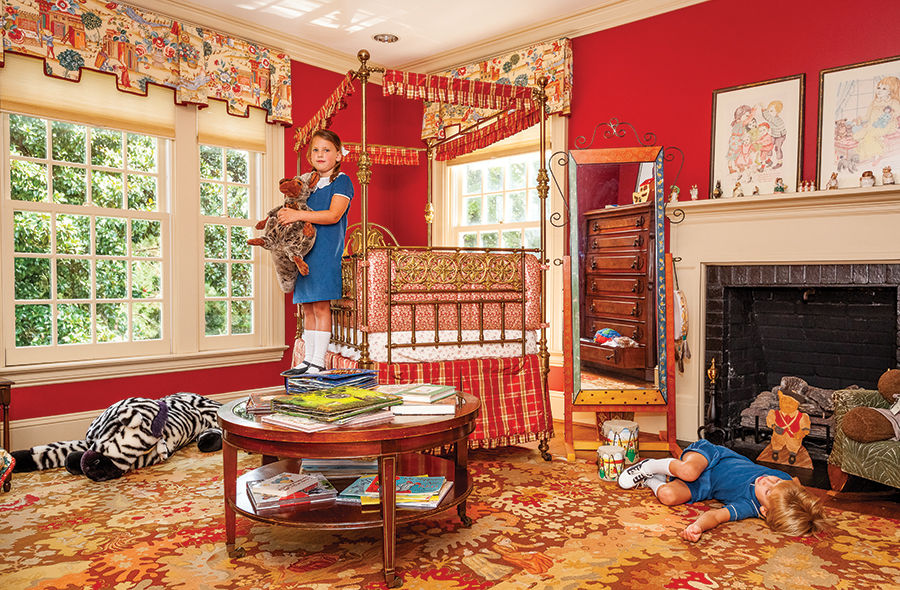
The gap between purchase and use can be years. Other times, the fabric completes a theme, as in the upstairs nursery. Here, a medieval tone is set by a brass canopied crib, fit for a prince, first used by the McAllister children, now by the grandchildren.

Ann attributes recurring Asian themes, notably lamps, to time their son spent at the University of Beijing.

Furniture wasn’t a problem. Russell descends from an old Virginia family, Ann from a Tennessee counterpart. Heirlooms aplenty trickled down, including a Biedermeier chest, many desks, side tables, campaign and other chairs, a bachelor’s chest, armoires, classic dining room pieces and, of course, ancestral portraits: Russell’s kin, a handsome assistant surgeon general of the Confederate Army, shares a wall with his stern-looking wife. “When you have enough relatives who die on both sides you can pull it together,” Ann learned.

Her kitchen, created from scratch, pushes the envelope in another direction. The toile wallpaper in giant black-on-white figures suggests a formality not reflected in matte black granite countertops, preferred for their well-worn look. The low storage island doubles as a dinette table, and two farm sinks (one in an open butler’s pantry) help when the McAllisters entertain. The wall of windows over the main sink faces an expanse of grass bordered by elder magnolias and American plane trees, with pool and tennis courts beyond.

“Every morning at 6:30 I look out and see a deer herd go by,” Ann says.

Indeed, Hollycrest qualifies as lodging for royalty. Elizabeth Demaine, who purchased the property in the 1940s, hosted the Queen of Thailand, a college friend, and her entourage there. Demaine, a foxhunter, changed the name to Hollycrest, adding stables and kennels — even an enclosure for peacocks, known to be guard birds.

Demaine’s favorite horse is buried on the property.

All things considered, the beauty of Hollycrest lies in the sum of its details: the old-fashioned robin’s egg blue and barely pink downstairs walls contrasting to dark, vivid teal and red upstairs, accomplished by first painting the surface black, then overlaying color. The Tennessee marble used for a powder room vanity. The original polished brass hinges and doorknobs. A narrow spiral staircase. Brick gateposts and a circular drive to match house proportions. Art purchased worldwide just because the collectors liked it. A secret coat closet, under the main staircase. A collection of tiny Hummel figurines. The handpainted folding screen in the dining room. Shelves of Southern literature and gardening books in Ann’s sitting room. A tiny refrigerator built into Russell’s office bookcase, containing his favorite beverages and the grandchildren’s.

Lucky grandchildren. Ann and Russell located a furnished “wee cottage” just tall enough to accommodate grade-schoolers. They arranged for its transportation, in toto, by sky crane, then secured it with a foundation.

Alice found no match in Wonderland.

Next up, lighting the tennis courts so the McAllister’s daughter, who played for Princeton University, can teach her children.

What Ambassador Walter Hines Page started others have continued in a style both innovative and respectful of times when people paid calls, wrote thank-you notes and took Sunday drives. As its current chatelaine Ann McAllister realizes, even greater potential as a family homestead.

“This house needs three or four kids running around. I have tried to preserve it for someone down the path, a continuing challenge.” PS

Poem

The Sound of You

This morning I wake to music,

the sound of the cat lapping water from the glass on my nightstand,

and wish I could capture the softness with words.

The 1-2-3 rhythm sends me waltzing with you in the garden,

in the kitchen, kissing in the rain on the sidewalk,

and I wonder why I’ve only written love poems for the ones who broke my heart.

The cat is still drinking, and as you sleep,

I wish I could capture your softness.

Then it hits me.

Those love poems were never for them.

I wrote them as if the words might fill the cracks,

as if my own love might mend my brokenness,

as if, some day, I might learn to waltz.     

The coffee is steeping, and as you stir from sleep,

love spills from me freely, not to fill some void,

but because there is so much here.

Drink from this sacred fountain. Dance beneath it.

Like every love poem you have ever written,

this is and has always been yours.

  — Ashley Wahl

Fortune Hunting

A not so quiet day in the country

Fiction by A.J. Rothwell   


Lord Blenkinsop was a good man. Good family. Acquaintance of the king. Wide of girth. Not the sharpest knife. Took his responsibilities seriously, though, always had.

One of them being the further education of his nephew Nigel Carruthers.

When he was 19, Nigel’s courageous Royal Naval father, Captain William Carruthers, had been killed by a musket ball on his own poop deck while serving His Majesty on the sloop HMS Orion, fighting the French off Brest. “Damn that little shrimp Boney and his dastardly ambitions,” muttered His Lordship at Carruthers’ funeral as the service wore on. And that is when, in an instant, he decided that it was his solemn duty, in loco parentis, so to speak, to make sure Nigel was schooled in the ways of the world.

With no children of his own he had always taken an interest in the boy, who he felt had lived a rather sheltered life, as it were, fencing and dancing instructors, if you please. The result was that he had few friends of his own age with whom to get out and about.

When Blenkers (as he was affectionately known in the family) put the idea to Marjorie Carruthers she agreed wholeheartedly — the tutoring had been her husband’s idea and had severely restricted her social life, as it required her to be at home rather than out with the fashionable set to which she felt she belonged, a ruse of the oft-absent Captain. But now that her husband had departed this mortal coil, Blenkinsop’s notion suited her down to the ground: She needed to see and be seen in society, even if her attire was, temporarily, mourning black.

His Lordship planned an agenda for the proper instruction of a young man entering London society. First he took him to his club, where he had his first proper taste of alcohol, a brandy no less, reading The Times in a large leather armchair after a good lunch — quite the gentleman about town. On another day they went to a coffee shop, a place of male intrigue if ever there was one, concluded Nigel; it appealed to him a great deal, and he entered into some interesting conversations. On another it was off to the House of Commons, where shouting down the current speaker seemed to be the order of the day, but where again he took a keen interest in the proceedings. In the evenings they visited a tavern or two, where he evinced quite a deal of attention from the ladies, unused to seeing young men in their teens in city inns.

The longer this “education” went on the more Nigel seemed to be enjoying it. He was getting a taste for ale and brandy, and His Lordship was very pleased with the way the programme was proceeding and with the boy’s keen interest and sharp mind. “Blossoming, if you ask me,” reported Blenkinsop to Marjorie Carruthers, “like a bottle long-stoppered, finally released!” She’d noticed the change too and was all for it — the more he was his own man the more freedom she would have.

Next it was to be the country, for they were “cits,” and if you were a cit it was fashionable to spend time getting back to your roots by going out to the country — riding, hunting and mixing with the country folk. “Salt of the earth,” Lord B proclaimed to Nigel, “not used to the ways of London, but happy with their lot. Hearts of oak don’t you know. They’d give you the shirt off their back. I’ll take you out as my groomsman and show you the ropes.”

On the appointed day for their country excursion, Lord B hired a post chaise, which took them, already regaled in their equine garb, to Sarratt in Hertfordshire and to The Boot Inn, where decent hunting horses were to be had by the day for a few shillings. The vicar of Sarratt was an old acquaintance of His Lordship and had spoken glowingly of the countryside around the village. They looked quite a pair — Lord Blenkinsop being, let us say, rotund and dressed in traditional hunting clothes straining at the seams, while Nigel was as thin as a rake and attired in a baggy blue groom’s coat and wide-brimmed hat — not exactly the country squires they hoped to be taken for.

They duly arrived at The Boot, ordered two horses to be saddled, and after a pint of ale and some bread and cheese, they mounted up. Using a rough map the landlord prepared for them with a recommended route, they made their way past the church until they were able to break off into the fields and copses.

They spent the next hour or so pretending to be huntsmen, shouting “tally-ho,” chasing after imaginary foxes and wishing they had guns whenever a pheasant got up in front of them. Following the map, they eventually started to head back to the village when the horses suddenly set back their ears and made for a stand of trees some way off at a good gallop. In spite of their best attempts to slow them down, the horses kept to their course, and before long, arrived among the trees where they came to a halt in a clearing. The would-be huntsmen, who couldn’t understand what had gotten into the horses, dismounted to get their breath back, and as they did so, an old lady and a good-looking young wench, both dressed in ragged clothes, emerged from the trees and started to feed apples to the horses.

As they did, the old lady spoke: “What you be doin’ ’ere, sur?

“If you must know, we’re just out from London, taking the air and getting a little exercise,” said Blenkinsop rather testily, unused as he was to being questioned by someone dressed in rags.

“You be trespassin’ on those ’orses, sur,” said the old lady. “This be crown land, belongin’ to the king you understan’, only folks on foot ’ave roight o’ way ’cross it.”

Oh, dear,” said His Lordship, now looking distinctly flushed.

“But we don’t ’ave to report it to no one under certain circumstances,” the old lady continued, half closing one eye and raising a crooked finger to make her point.

“And what would those circumstances be?” asked Lord B.

“Well, let me see now,” said the old lady, “how about you press some silver into my palm and I’ll tell your fortune, and Mary here will tell your young friend’s and we need never say nothing more ’bout it.”

“I suppose that would be all right,” said Blenkinsop, softening, as he had no desire to do anything that would put him in bad odor with His Majesty, to whom he owed his peerage. “How much would you suggest?”

Not the best question, for it gave the old lady the upper hand.

“Well, let’s see,” said she. “I should think a couple o’ guineas should cover the situation.”

“Two guineas!” exclaimed Blenkinsop, turning red in the face. “That’s highway robbery, ma’am, and you know it!”

“Do I? Do I, now?” said the old crone. “Well, suit yerself. We’ll just ’ave to report yer then, won’t we?”

“That won’t be necessary,” said His Lordship, who knew when he was on the losing end of a bargain from a lifetime of experience, “but these fortunes better be good.”

During this exchange Nigel had been ogling the young girl, who had gained his complete attention. She was the comeliest girl he had ever seen, and she was also showing an interest in him. Unfortunately for our heroes, they had not noticed that, while thus distracted, a third gypsy was hanging down from a tree and rifling through the portmanteau on the back of Blenkinsop’s horse while a fourth was expertly picking his pockets.

Meanwhile, the old lady held out her hand to Lord B, who reluctantly took out the necessary coinage from his waistcoat pocket. She carefully counted the money and told the wench — Mary, she called her — to get started.

The young girl took Nigel’s hand. “That’s an intrestin’ palm if ever oi saw ’un,” said she. “Let’s see now. Yer’ll ’av a long loif, sur, an’ yer’ll be lucky in luv an’ be blessed wi’ many healthy chillen. That’s all oi see there.”

“Is that it?” exclaimed Lord B. “That’s about a shilling a word! Is that the best you can do?”

The old lady chimed in, “If oi were you, sur, I’d remember wot oi said about trespassin’ on the king’s land an’ count moiself lucky. Now let’s see yer palm.”

Come on, Nigel, I’m not waiting to hear what rot they have to say about me,” said His Lordship, resigned to having been taken advantage of. “Let’s leave these witches and get back to the inn and wash the taste of them out of our mouths.”

“Wery noice sentiments, oi must say,” said the old lady. “Be off wi’ yer then an’ take more care where yer go nex’ toim.”

The horses, it seemed, had had their fill of apples and were content to take their riders back to the The Boot, with Nigel occasionally looking back to see if he could get a last glimpse of the girl — he could still feel her hand holding his — but she had disappeared. They arrived at the tavern and looked for the landlord to tell him what had happened, but he was nowhere to be seen. They told the coachman to load their belongings into the post chaise and stand guard, ordered their ale from a serving girl and fumed over their expensive experience.

After a while they began to relax, deciding to order another ale “for the road,” and Lord B finally saw the funny side of their outing when Nigel commented on his statement about country folk giving them the shirts from their backs.

“More like we lost our shirts,” guffawed Lord B, a typical Blenkers attempt at humour. “Time to go. Your mother will be wondering what’s happened to us.”

“I’ll need to relieve myself for the journey first, Uncle,” said Nigel.

Off you go then, I’ll settle up. See you in the coach.”

Nigel made his way across the inn’s courtyard and ’round behind the stables to the privy, but as he was standing there he heard muffled voices from inside. In disbelief he thought he recognized the old lady’s scratchy voice. Could it be, he thought, and leant closer to the wall.

“Oh yes, we took ’em proper” she was saying. “You trained them ’orses well, Jim — came straight to us, didn’t they, Mary? They luv them apples! Two guineas in my palm and Billy ’ere got two pocket watches with chains and our Sal got a couple o’ silk kerchiefs. ’Ere’s yer share and good luck to the lot o’ us!”

By this time Nigel had crept round the front of the building, grabbed a pitchfork leaning up against the wall, and threw open the door, shouting, “Caught you red-handed, you scoundrels! You’re not getting away with this! Do you know that’s Lord Blenkinsop you just robbed, a confidente of the king himself, whose name you just took in vain out there in the woods — probably a hanging offence!”

With which he leveled the pitchfork at the landlord’s throat as though it was a rapier and said, “Put all the money and the watches in the handkerchiefs and tie them up and hand them over.” He made a jab with the pitchfork to show he meant business. The landlord flinched, and with trembling fingers did as he was told. He had gone white, while the women just stood there, their mouths gaping open.

“Now the next part is up to you,” Nigel said looking at them one by one. “We can either have a constable come out here and have you all arrested and locked up, if you’re not hung, or you can solemnly swear that you will discontinue this loathsome practice here and now.”

This statement was greeted with silence other than the sound of the old lady wringing her hands and moaning and the landlord’s knees knocking. “Very well, I shall call my uncle and he will take the matter over.”

“No, no, no,” said the landlord, looking at the others, who nodded vehemently in agreement. They knew the penalties for what they were doing and it sounded like they were going to be given a second chance. “That won’t be necessary, young sir. We were misguided. Very misguided. We’ll stop today, here and now, we swear. On the Holy Bible. Don’t we, ladies?”

“Yes. Yes.” they said, out of very dry throats.

“Very well,” said Nigel, “but to make sure you do, Lord Blenkinsop will write a letter to his friend the vicar here and tell him what has transpired today, that you have sworn to stop your thievery, but that if he hears anything to the contrary he is to contact us and we will put the wheels in motion for you all to be arrested. Good-bye to you and I hope I never have to see your faces again.”

One last look at the girl, who didn’t know whether to be impressed or furious, and Nigel was gone, climbing into the coach. Seconds later they were out of the courtyard and on the road back to London when His Lordship asked, “Do you usually take so long to relieve yourself, my boy? I wondered what had happened to you.”

Nigel’s reply was to ask him to open his hands. “Playing a game, are we?” he inquired.

“You’ll see, Uncle,” said Nigel, then pulled out the handkerchiefs from his pocket and untied them.

“Good lord,” said his uncle, “there’s my money — and our watches! Where did they come from?”

Nigel recounted the whole story to an astonished member of the peerage. Blenkers wasn’t sure if his nephew had made the right decision about letting them off so lightly, but he was impressed with the young man’s quick thinking and courageous action.

“Your father would have been very proud of you, as am I,” he said. “Swift, decisive action. Definitely a chip off the old Carruthers block!”

“And to think I was taken with that girl back there,” said Nigel, shaking his head.

“A part of your education I hadn’t reckoned on, I must say,” replied Lord B with a wry smile.

The poste chaise eventually arrived back at the Carruthers residence after a most interesting, and as it turned out, exciting day.

“Do we tell your mother?” asked His Lordship.

“Let’s just tell her we’ve had a good day fortune hunting, eh, Uncle? What’s on the agenda for tomorrow?”  PS

A. J. “Tony” Rothwell moved to Pinehurst in 2017, exchanging the mind-numbing traffic of Washington, D.C., for the vagaries of golf. He spent 50 years in the hotel business but in retirement collects caricatures, writes short stories, sings in the Moore County Choral Society and, with his wife Camilla, enjoys the many friends they have made in the Sandhills.

Fact and Fiction

Captain Carruthers would have been on blockade duty off Brest, intended to stop French ships getting in or out of harbour. It was long and tedious duty but every now and again one or more ships would take a chance and a sea battle would ensue if they were spotted. Both the French and the English employed snipers with muskets in the top rigging to shoot officers with the objective of weakening the resolve and organization of the opposing force.

The king referred to is George III, known affectionately by his subjects as Farmer George from his rather bucolic manner of speech.

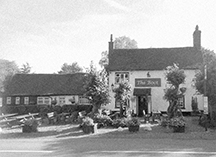
There is to this day an inn called The Boot in Sarratt, Hertfordshire, built in 1739, some 40 years before the setting for this story.

“Cits” ( a slang name for people who lived in the city of London at the time of the setting for this story) had a hankering for the pursuits and clean air of the countryside, for much of London was squalid, unsavory and smoky. Further evidence of this is that two of the most popular painters of the day were George Stubbs, who specialized in horses, and George Morland, who painted rustic scenes.

Robbery was punishable by hanging, especially if violence was involved, in the 18th and early 19th centuries.

“Fortune Hunting” is an original print, engraved by the great caricaturist James Gillray from a sketch by Brownlow North who would bring ideas to Gillray so that he could have prints run off to give to his friends. It was hand-colored and published in 1804.

As for the rest — pure fiction.

Simply ReMarkable

An evolved generalist interprets modern farmhouse in West End

By Deborah Salomon     Photographs By John Koob Gessner

Leonardo daVinci painted portraits and designed military hardware — kitchen appliances, too. He wrote treatises on science, math and life. Thus the phrase “Renaissance man,” a sweeping mantle worn by Dr. Mark Ridinger, a radiologist who practices what he calls the duality of life — physical and spiritual — who grows 10 varieties of heirloom tomatoes, six of peppers and four basils in his organic hugellkulture raised garden bed. A cook who planned an “intuitive kitchen” and bathes in a “wet room” with open shower. An eye soothed by white shiplap (horizontal boards) exterior.

Digging deeper, his blog, entitled “The Evolved Generalist” states:

“Increasingly, there is a bifurcation of prognostications of what may come with the development of so-called strong artificial intelligence — AI proponents say it will afford an opportunity for humankind to be free of the yoke of repetition and monotony.”

Interesting people don’t thrive in cracker boxes. Ridinger has designed a lakeside house in West End apart from any in Moore County. A house that leaps forward rather than glorifying the past. A house meriting Architectural Digest over Antiques Roadshow.

A house which appears from the exterior plain, simple, Shaker-utilitarian with Japanese overtones. Nevertheless, Ridinger classifies it a modern farmhouse, the architectural trope popular with millennials. A metal roof, yes, but no wraparound porch and potted geraniums.

Instead, notice two olive trees and two lemon trees facing a low gabion: This retaining wall composed of smooth stones encased in wire cages was used by ancient Egyptians to divert the Nile, later by encamped Romans. His cages stacked two deep stretching 80 feet hold 20 tons of rock. This wall facing the infant olive trees serves secondarily as a solar collector, to warm them come winter. The potted lemon trees, however, will be moved inside the garage to overwinter by a sunny window installed for this purpose. If all goes well, eventually Ridinger will press his own olive oil. A squeeze of lemon juice . . . and the salad’s dressed.

Flowers come from a garden planted in indigenous wildflowers, where he starts the day at 6 a.m.

Which doesn’t leave much time for reading X-rays.

Which is why Ridinger doesn’t any more.

Ridinger grew up and attended medical school in Chicago, followed by a residency at Duke. His family home was traditional, bordering French Provincial, he laughs. North Carolina suited his purposes. During the late 1990s he commuted from Durham to a practice in Pinehurst, staying at the Holly Inn week nights.

“I got to know the area,” he says. “I was looking for land somewhere in the Carolinas, maybe Chapel Hill. But I wanted to be near water and stumbled upon this place.”

Golf wasn’t a factor. By now, neither is radiology. After his residency, Ridinger co-founded a health care information software company. Its sale, leaving him as chief medical officer, enabled exploration of other interests, primarily design.

“I have two sides.”

The lifelong tinkerer watched his father, an engineer, build radios. His artistic side plays the guitar, collects modern art and interprets living space, believing “as society moves to hyper-specialization, and with the advent of artificial intelligence, the softer human qualities will be in demand.”

In demand — perhaps marketable, with this house as his business card. He feels qualified to consult on the modern farmhouse style, which Architectural Digest describes as a classic motif made inventive and elegant, incorporating timber cladding, A-frame roofs and loft spaces with a sleeker spin . . . streamlined but still connected to its natural surroundings.

Ridinger’s adaptation grew from the site purchased in 2017, which juts out into Lake Troy Douglas, where he kayaks. Fifty-three feet of glass across the living area face north to avoid glare. Myrtle trees planted along the southern border filter light, since only the bedrooms have window treatments. Once inside, any resemblance to a farmhouse, modern or otherwise, disappears. Gasp.

The longitudinal space with 12-foot ceilings divided into living room, dining room and kitchen, all overlooking the lake, is breathtaking in white, black, stainless steel. Gray oak floor. A real Eames chair. Elongated sofa in rust velvet. A sound system with turntable. World War II propeller ceiling fans. Two-sided wood-burning fireplace. A dining table following the Japanese tradition of a thick polished slab, here black walnut, with irregular edges surrounded by chairs on one side, a bench upholstered in apricot velvet on the other, “just to be different.”

Ridinger learned to cook from his Italian mother. “There’s nothing worse than an unintuitative kitchen.” He arranged his in three sections: prep, cooking, cleanup. His range has multiple parts: gas burners, a Wolf induction cooktop requiring special pots, several oven options and a microwave. The range is placed so he will face guests seated at the table as he prepares their meal. A Sub-Zero hides behind flush stainless cabinetry. His cleanup sink is big enough to hold an alligator. Clutter is banned. Tabletop appliances and coffee machines remain out of sight, in “garages.”

No TV chef is better equipped.

The mud room has a doggie bath tub with grooming accessories, for his next golden retriever.

Color? “My plants and art are the color,” Ridinger says. Each painting recalls his life situation at the time of its acquisition. Wall space allows for oversize canvases. One, a stylized grove of sycamore trees, has a spot of turquoise at the edge which he repeats in throw cushions. A lime green ceramic platter punctuates the neo-industrial kitchen. A tall leafy plant grows from gingerroot, available for digging should a recipe stipulate.

His office juts out toward the lake like a ship’s bow. The guest bedroom, also in this wing, accommodates his sole furniture holdovers: a four-poster made in North Carolina, and a handsome antique reproduction bureau which, in this setting, look like they were relocated from Kansas by Dorothy’s tornado.

Ridinger wanted a master suite in ever-so-slightly softened colors. The gray is earthier, the white less glaring, the floors cherry. He introduces cocoa via a leather chair and wall faux-painted to resemble fabric.

The eye-openers here (aside from artsy female nudes) are the massive sliding barn doors separating the suite from the hallway and, in the enormous bathroom, vanity cabinets conceived by Ridinger as an homage to Frank Lloyd Wright’s Fallingwater residence built over a waterfall in Pennsylvania. Planks of sapele wood are staggered at three levels; one holds a vessel sink, another a drop-in. Stand back and imagine water cascading down the steps.


The result: Californian, likely Monterey on a cliff overlooking the Pacific. In Moore County, perhaps a turning point for farm gentry retired from gritty northern metropolises.

However, Mark Redinger’s highly personal interpretation will not likely be duplicated. It stands a monument to the physician-turned-philosopher seeking freedom, as stated, from repetition and monotony. He feels a Zen vibe in the house that, he says, keeps on giving. True, the process may have been painstaking — persnickety, his word. But for him the finished product justifies attention to many details.

“I spend so much time here. Now, I feel at home.”  PS