Sporting Life

Waiting for a Ride

A close encounter with a hero

Jimmy, some of it’s magic,
  some of it’s tragic

But I had a good life all the way.

— From “He Went to Paris” by Jimmy Buffett

By Tom Bryant

The morning of June 24 was as promised by the folks at the Weather Channel. It was gonna be hot and humid. But after all, it was the first week of summer, and the way they talked, we should get ready for more of the same.

I was leaning against the fender of the old Bronco waiting for Sam to come out of the bank. Not knowing how long Sam’s business would take, I prudently grabbed a shady spot next to an old Ford pickup. He said he wouldn’t be long, but I took no chances.

He had called me the week before.

“Bryant, need a favor. Could you give me a lift to the VA up in Durham? Got to have an operation on my carotid artery. They say it needs to be reamed out.”

“Absolutely,” I replied. “When you gotta go?”

“Next Wednesday. You can drop me off, and the bride will pick me up when it’s time. I sure appreciate it.”

So, that’s how I ended up waiting outside the bank on the first Wednesday of summer. It would prove to be an interesting day.

Sam came out shading his eyes and ambled toward the truck. “I hope you left some money in there for me,” I said, chuckling.

Sam’s a medium size guy, losing weight to aging, but he always has a gleam in in his eye, ready for what’s next. On this morning, I noticed he walked a little slower than usual. I commented, “Hey boy, you slowing down in your old age?”

“Not on your life, Bryant. I’ve learned to walk around it rather than run over it. I thought I’d learned you that valuable lesson.” We laughed and climbed in the ancient truck and headed to Durham, where the VA hospital is located.

Sam and I go way back to the days before society became so transient. We met probably in the third grade and continued our friendship, always staying in touch over any length of time or distance. Age and circumstances weighed on us both, but more healthwise for Sam than me.

The old truck isn’t conducive to conversation when you’re roaring down the road at a blistering 55 miles an hour, but Sam and I were used to it. We carried on, shouting a bit when the wind noise threatened to shut us down.

“You gonna come outta this?” I asked, using the black humor we sported back and forth to one another all our lives. “If not, I hope you made the proper arrangements with your lawyer. I’m not driving you up here for nothing.”

“Don’t worry, Bryant, I’ll see you get a tank o’ gas out the deal. Find us a quick food joint and let’s get some lunch. I’m not hankering for hospital food for supper.”

I stopped at a Wendy’s right outside of town. There were a couple of picnic tables shaded under an oak tree, and we decided to eat outside away from the lunch crowd.

“What’re y’all doing on the Fourth?” he inquired.

“We always go up to Burlington. A group of friends get together every year to celebrate. It’s a good summer outing with folks we’ve known forever. What are y’all gonna do?”

“Don’t know yet. Depends on how this trip turns out.”

I could tell that Sam was feeling his age and also a little mortal. Who wouldn’t, going to a strange hospital for an operation that is supposedly routine but could always turn out not to be?

“Come on, Sam. This operation will be fine. You’ve got the best doctors in the country. The Duke docs run the show at the VA, I understand.”

“I know, but at my age, anything can happen. I’m not ready to get on that bus, you know, just in case they’re getting up a load,” he said.

The burgers were good, and we stowed our trash in the waste can next to the table and were on our way. In a short drive, I pulled up in front of the massive VA hospital, found a parking place again in the shade, and we got out of the Bronco.

“Thanks for the ride, partner. You don’t have to come in. I can handle all the paperwork.”

“Nah, I want to see the place just in case I have to come up here someday.”

And it was something to see. The building was huge, with large halls stretching from here to yonder. After a bit of searching, as directed by the lady at the front desk, we found where Sam was supposed to bunk. It was a ward, really, with six or eight beds in the room. He was the only one there.

“You don’t reckon they might lose you back here?” I asked, smiling as I was getting ready to leave.

“I hope not. But you better have your compass so you can find your way back to the Bronco.”

“All right, sport. You take it easy. Good luck in the morning. I’ll touch base with you tomorrow.”

I stepped out into the hall to find my way back to the entrance. Sam was right, I did need a compass. I immediately got turned around and wandered the halls right and left, totally lost. The amazing thing was there were no people. I walked past empty rooms, vacant corridors, nobody. Finally, I met a lady heading my way. She was looking lost, too.

“Ma’am, I’m trying to find the front door to this place. Can you point me in the right direction?”

“I think it’s down this hall,” she said, pointing to a long passageway to my right. “I’m new here myself, from the Duke hospital across the road, and I’m trying to find the floor nurse.”

“Good luck,” I said, and she walked away in the opposite direction.

Around the corner, down the hall, I saw a door opening outside. There was a parking area all right, but not the one where I had parked. A fellow was sitting on a bench right next to the sidewalk. He looked like he had been there for a while, so I thought I’d get directions from him.

When I walked up, he looked over at me, grinned and said, “You lost?”

“No, sir, but my truck is.”

“You came out the wrong door, Bubba. This is the back entrance. You probably parked around front.”

The man was of an indeterminate age, with iron-gray hair cut in a military brush style. He had on a sweatshirt with the sleeves cut off and a faded Marine Corps insignia on the front. He wore crisp, ironed khakis and sandals. A cane was propped on the bench. His color had a yellow cast to it, and his breathing was short, as if he had to concentrate on it. A small tattoo showing the stripes of a master sergeant was on his right arm.

“Business inside?” he asked.

“My friend. I gave him a lift up here. He has an operation scheduled tomorrow. Marine Corps?”

“Yep, 28 years, retired. You?”

“Same. Short timer. Let me guess. Gunnery sergeant?”

“Good guess. Vietnam?”

“Same era. You?”

“Three tours.”

“Good grief. Couldn’t get enough of the good times, I guess.”

“There in the beginning, helping the ARVN build firebases. Sort of an observer. Second tour, more a participant. The Southern regulars weren’t up to the task. Meant well, but would scatter like a busted covey of quail at the first shots. Third time, realized it was a politicians’ war and a wasted effort.”

He looked out at the traffic slowly driving by, lost in his thoughts.

“You a patient inside?” I asked.

“Yeah, sort of a regular. They tell me I’m about done, though. Waiting on my ride. My niece is picking me up.”

I didn’t ask what he meant by “about done.”

“Here she is now.” He pointed to a pickup that stopped at the curb. “Good talking with you.”

He slowly got up from the bench, and with the help of his cane, shuffled down the sidewalk.

“Hey, Gunny,” I said as he neared the vehicle. “Have a great Fourth. Semper Fi.”

He stuck up his thumb in the universal gesture for “everything is OK” and slowly climbed in the truck. I watched as they drove away, and as I walked around the building to find the Bronco, I couldn’t help but think about the hero I had just met. He deserved better than a bench sitting in back of an almost empty VA hospital.  PS

Tom Bryant, a Southern Pines resident, is a lifelong outdoorsman and PineStraw’s Sporting Life columnist.

Hometown

A Week in the Big City

Learning to clear, and run, the tables

By Bill Fields

It was a low moment when my beloved Baltimore Orioles lost to the Pittsburgh Pirates in the 1971 World Series after winning the previous season. As the seventh grade got started, though, I still had great memories from that summer and an adventure of the highest order.

Not long after the All-Star team from the Southern Pines Little League was quickly bounced from the post-season with a defeat in Warsaw (North Carolina, not Poland) in which I was hapless against the opposing pitcher’s curveball, Sadie, one of my two older sisters, invited me to spend a week with her in High Point.

Sadie had settled there after going to college at UNC Greensboro, marrying a restaurant owner named Bill Carter, and had an infant son, John. At 12, I was an uncle and, although I would make an attempt to play Pony League baseball the following year, essentially knew that I was a washed-up good glove/bad bat third baseman who would not be following Brooks Robinson to a hot corner somewhere in the major leagues.

I realized it was time to concentrate on other things, and the opportunity to hang out with one of my siblings in a place with about 10 times the population of my hometown wasn’t something to be missed. An intriguing aspect was that thanks to my brother-in-law this was a working vacation, and I would come home with some cash while also getting to enjoy the pleasures of the big city.

As a golf-loving kid fascinated by miniature golf, especially Putt-Putt, I knew High Point had a Putt-Putt facility on North Main Street, 36 holes of putting pleasure that wasn’t available in the Sandhills. A daytime, play-as-much-as-you-want pass was $3, and at least four days that week Sadie dropped me off and picked me up several hours later.

Round and round I would go, the sporting equivalent of an all-you-can-eat dinner, with no anxiety at seeing my colored golf ball go down the chute at the 18th hole because I knew there was a counter full of balls to choose from for my next round and no need to dig into my pockets to see if I had enough money to pay for it. There was also no wait to tee off on those weekday afternoons, the rest of the world obviously not into Putt-Putt as much as I was.

By the end of the week, I had gotten proficient enough to have broken 30 a few times on the par-36 courses, which made me think I could one day challenge professional putting champions like Vance Randall and Rick Smith on the carpet. I became such a familiar face to the proprietor that he let me skim bugs out of the water hazards for a pack of crackers. Unfortunately, he didn’t offer me a discount on the P.P.A. (Professional Putters Association) steel-center golf balls favored by the pros for sale in the kiosk, which I was convinced would drop my score by a couple of strokes. 

My nights were spent working as an apron- and paper cap-wearing busboy at Brinwood, one of Bill’s two restaurants. The menu was huge — steaks, seafood, sandwiches, chicken, spaghetti and much more — and the food was delicious, the latter the reason the place was much more crowded than the Putt-Putt on North Main. I clearly remember two of Bill’s edicts: Never dip a glass into the bin of crushed ice, and never sweep up while customers are eating nearby.

As a relative, I got special dispensation to order whatever I wanted for my end-of-shift meal. One night I picked fried flounder, which was as good as anything you could get at the beach. All the other evenings, though, I chose country-style steak, the waitresses kidding me for being a creature of habit. There were great desserts too, the homemade German chocolate cake being a favorite.

The metabolism of a 12-year-old is a wonderful thing, but I think I still came home with an extra pound or two. After closing Brinwood, we’d go to Bill’s other restaurant, Carter’s, a smaller place closer to downtown, to check up there. While he counted the money in the till, I was free to prepare myself a milkshake in a metal cup just like they made them at the Sandhill Drug fountain. I never looked at a carton of store-brand Neapolitan in our freezer quite the same.

I came home with $60 from my busboy shifts, most of which my mother “suggested” I use to start a savings account. I sure felt rich after my week of living like a king.  PS

Southern Pines native Bill Fields, who writes about golf and other things, moved north in 1986 but hasn’t lost his accent.

Out of the Blue

Bless My Mess

To ease my stress

By Deborah Salomon

I remember, as a child, “putting things” in a corner of my closet. They could be anything: a scratchy sweater; a comic book; last summer’s worn-out sandals. I wasn’t hiding them, exactly. I just wanted them safely out of sight. In a heap, not neatly stacked.

From time to time my mother told me to “throw that stuff out” or at least “straighten it up.” No way.

That pile initiated a long line of “junk” drawers, basement repositories, currently a spare bedroom where all the dishes, towels, lamps, magazines, boots, crutches, quilts and clothes that I couldn’t part with during the last move are stashed.

That “last move” happened 14 years and many dust bunnies ago.

This is neither hoarding nor collecting. It is, perhaps, the seminal clue that indicates failure as a crazy clean/neat freak — not that I aspire to either. Most of the genuine crazy clean/neat freaks I’ve encountered are driven . . . by a chauffeur named Freud. They rarely have pets, fonts of dirt and disorder. I feel badly for them.

This conundrum only matters when the traits travel to the workplace. The desk I occupied in a busy newsroom for 15 years, its drawers and the wall shelves above it, were obliterated by stacks of envelopes, printouts, clippings, press releases, notebooks, cookbooks, etc. — barely leaving room for the antique computer monitor, tower and keyboard. I couldn’t even claim “but I know where everything is” because I didn’t.

Every Friday afternoon I would straighten the piles, dust around them and fill a wastebasket with things I probably, hopefully, wouldn’t need.

When I retired, they brought in a dumpster.

A friend recently emailed me 50 historic photos from the past 100 years. Among the horrific war scenes and aftermaths of earthquakes was a photo of the Wright brothers’ liftoff and the first self-serve supermarket, a Piggly Wiggly in Tennessee. The photo that stopped me cold was Albert Einstein’s desk and shelves, taken on the day he died, in 1955.

They were a mess.

Please don’t think I’m correlating a messy desk with genius. I’m just saying the inability to maintain order is not fatal, cognitively or emotionally, something my mother didn’t understand. Every surface in her house was covered with stuff, neatly stacked and arranged, never messy, dusted frequently.

No wonder I, the rebellious daughter, kept a pile in a dark closet corner.

The other thing that struck me about Einstein’s desk was no electronics, not a telephone or adding machine or typewriter. Just papers, his pipe and tobacco. Numbers covered a blackboard behind the desk, which indicates most of his conclusions were reached manually.

Take a hike, Alexa! Adios, Siri! The cloud? Clear skies today.

Obviously, I’m trying to justify (excuse?) a bad habit. So, every few days I stack the notebooks neatly, dust behind my monitor. But don’t anybody touch my Word archives because every so often I really, really need a story from 2004. Besides, I’ve learned that anything resembling a purge is like feeding a stray cat that reappears same time tomorrow.

I should know, after adopting two strays who showed up at the same time 10 years ago. Wish I’d named one Albert.

Clean is glorious, necessary, fulfilling. Nothing puts joy in my step like pushing a vacuum. I’d rather sniff Mr. Clean than Chanel No. 5. But neat? A slippery slope ending, I fear, at OCD.

In the dark corner of my closet lie a few old sweaters awaiting disposal. Stray kitty found them, made this soft, quiet corner his bed. Which proves that a little mess left undisturbed goes a long way . . . in the right paws.  PS

Deborah Salomon is a writer for PineStraw and The Pilot. She may be reached at debsalomon@nc.rr.com.

Simple Life

Death of a Green Dragon

A gardener’s bittersweet reminder of life’s impermanence 

By Jim Dodson

Last month, I returned from my first trip since the start of the pandemic to discover a baffling mystery at home.

The leaves of a beautiful Green Dragon Japanese maple I’d raised from a mere seedling appeared to suddenly be dying. Arching gracefully over the side driveway, the rare seven-foot beauty was the star of my garden. It had never been more vibrant than the day I departed for a week out West, lush and green with lots of bright spring growth. But suddenly, inexplicably, those delicate new leaves were limp and withering.

A friend who knows his ornamental trees pointed out that a freakish, late-season cold snap might be the culprit. The leaves of nearby hydrangea bushes were also severely burned, but with the return of seasonal warmth, were already showing signs of recovery.

“I think you should simply leave it alone. Give the tree water and maybe a little spring fertilizer and let things take their course,” he said. “Nature has a way of healing her own.”

His theory seemed plausible. I’ve built and maintained enough gardens in my time to know that nature always holds the upper hand. Sometimes unlikely resurrections happen when you least expect them.

So I waited and watered, trying to push the thought of losing my spectacular Green Dragon out of my mind. Perhaps by some miracle it would come back to life.

As I went about other tasks in the garden — mulching and weeding perennial beds and transplanting ostrich and woodland ferns to my new shade garden — I thought about how the sudden death of a spring pig provided writer E. B. White intense grief and something of a personal epiphany, inspiring one of his most affecting essays in 1948.

Following a struggle of several days to heal his mysteriously ailing young pig — such an ordeal blurs the passage of time, the author expressed — White, accompanied by his morbidly curious dachshund, Fred, walked out one evening to check on the patient, hoping for the best:

“When I went down, before going to bed, he lay stretched in the yard a few feet from the door. I knelt, saw that he was dead, and left him there: his face had a mild look, expressive neither of deep peace nor of deep suffering, although I think he had suffered a good deal.”

The young pig was buried near White’s favorite spot in the apple orchard, leaving his owner surprised by the potency of his own grief. “The loss we felt was not the loss of ham but the loss of pig,” White recounts. “He had evidently become precious to me, not that he represented a distant nourishment in a hungry time, but that he had suffered in a suffering world.”

Life, of course, is full of unexpected compensations. It’s possible that the guilt and grief E. B. White suffered with the loss of his pig was the literary world’s gain. Four years later, the author’s tale of a female barn spider that saves a charming young pig from slaughter by crafting upbeat messages about Wilbur the pig in her web became an instant American classic. Over the decades, Charlotte’s Web continues to rank among the most beloved children’s books of all-time.

I don’t know if a failed effort to save a spring pig bought “in blossom time” is anything like trying to save a young Japanese maple I’d raised from a seedling, but the sadness of its sudden loss combined with a palpable sense that I’d somehow failed my tree followed me around like Fred the dachshund for weeks, a reminder of life’s mystery and bittersweet impermanence. It didn’t help matters, I suppose, that I couldn’t even bring myself to dig up the deceased tree and cart it out to the curb for the weekly refuse crew. At this writing, as lush summer green explodes all around, the beloved tree stands like a monument to my botanical incompetence or simple bad luck. The autopsy is incomplete. The verdict is still pending.

Gardeners and farmers, of course, experience dramas of life and death — and sometimes unexpected rebirth — on a daily basis. Pests and disease are constant threats that interrupt the cycle of life at any moment with little or no advance notice. Too much rain or not enough, violent winds, summer hailstorms and unwelcome diners in the garden are simply part of the process of helping living things grow.

My longtime friend and former Southern Pines neighbor, Max Morrison, who is justly known for his spectacular camellias and probably the most abundant vegetable garden in the Carolina Sandhills, solved his deer and rabbit problem decades ago by transforming his edible landscape into something resembling a Soviet Gulag with ten-foot wire fences and electric monitoring systems.

On one of the first evenings I dined with Max and his wife, Myrtis, a gifted Southern cook, I noticed a large jar of Taster’s Choice instant coffee going round on the lazy Suzan. Attached to it with rubber bands was an index card covered with tiny dates written in pencil.

“What’s this?” I asked, picking it up.

Myrtis laughed. “Oh, that’s Max’s record of all the squirrels he’s dispatched with his pellet rifle over the years in order to keep them out of his garden.”

The death count went back decades.

Among other surprises, this cool, wet spring brought a noticeable uptick in the squirrel and chipmunk populations around the neighborhood, which made me briefly consider picking up an air rifle of my own.

For the moment at least, our young female Staffordshire Bull Terrier has taken matters into her own paws, nimbly standing guard over the back garden from atop a brick terrace wall, ready to leap into action at the sight of a furry invader. Our in-town neighborhood is also home to a sizable community of rabbits that appear at dawn and dusk to feed in the front yards along the block. The dogs pay little or no attention to them. For the most part, ours seems to be a remarkably peaceful kingdom with no need to resort to sterner measures of defense.

At the end of the day, this may be my form of post-pandemic compensation. My garden has actually never looked better, save for the untimely passing of a lovely green dragon.

This morning, after I set down a few closing words, I’ve made up my mind to go out and do what I should have done weeks ago — dig up my dead maple and send it on to the town mulch pile. At least its remains may eventually enrich someone else’s garden.

In its place, I’ll plant a border of peonies that will fill in nicely in a year or two.

I shall miss that lovely green dragon, though.  PS

Jim Dodson can be reached at jim@thepilot.com.

The Creators of N.C.

A Place Like Home

Wilmington’s Seabird restaurant and oyster bar has landed

By Wiley Cash
Photographs By Mallory Cash

Chefs Dean Neff and Lydia Clopton are sitting at a table inside Seabird, their recently opened seafood restaurant and oyster bar in downtown Wilmington. It is midafternoon, and sunlight streams through the high windows along Seabird’s west-facing wall. The hum of breakfast has passed, and the dinner crowd has yet to arrive. Reservations have been fully booked since opening night. In this rare quiet moment, the couple pauses to reflect on what brought them together, what brought them to Wilmington, and what has kept them in the restaurant business since their chance meeting more than a decade ago.

Given their shared history, it should come as no surprise that Neff and Clopton use the word “our” a lot. After all, they share a family, a restaurant and a past. But when the chefs discuss Seabird, it is clear that their use of the word extends beyond their personal and professional relationship to the place they now call home.

“Seabird is a small, community restaurant,” Neff says, “and I hope it’s a place that feels like part of our community.”

Partnerships with local farmers and small-scale fishermen support Seabird’s efforts to be good stewards of the environment, says Neff. The restaurant’s crew is treated like family, and menus vary based on seasonal availability. “Our food is going to develop from our relationships with the people in this community.”

Neff and Clopton’s relationship began 12 years ago in Athens, Georgia, where Neff was the new sous-chef at Hugh Acheson’s now-iconic restaurant, Five and Ten. At the time, Clopton was working toward a biology degree at the University of Georgia. “I was baking a lot at home,” she says, “and my roommate said, ‘You should try doing this professionally.’”

A friend of Clopton’s worked at Five and Ten. Neff remembers the day that Clopton came in for her interview. When owner Hugh Acheson asked if she’d ever baked professionally, Clopton admitted that she hadn’t. But Acheson must have seen something in the eager young baker. Neff remembers him saying, “Great. When can you start?” Neff must have seen something in her too, and, soon, she would see something in him as well. Romance ensued. From Athens, where Neff eventually became executive chef at Five and Ten and worked with Acheson on his first cookbook, the couple ventured to Western North Carolina, where Clopton and Neff both found themselves working with some of the South’s best known chefs and restauranteurs: Neff helped John Fleer open Rhubarb, a farm-to-table restaurant on the square in downtown Asheville. Clopton worked at Asheville’s Chai Pani, known for its innovative Indian street food, and also helped open Katie Button’s Nightbell, a cocktail bar beneath Cúrate, another Button restaurant lauded for its “curative” Spanish cuisine.

Next, Clopton was baking wedding cakes out of the couple’s home while Neff taught in the culinary arts program at Asheville-Buncombe Tech and coached the school’s competition cooking team. “I loved what we were doing, but I knew that the longer we did it the harder it would be to get back into a restaurant,” Neff says.

And that was when Athens returned to their lives in a surprising way.

A man named Jeff Duckworth had long been a regular at Acheson’s Five and Ten. Back when Neff was chef, it wasn’t uncommon for Duckworth to find his way into the kitchen after enjoying a meal. He would always say the same thing to Neff: “We should go open a restaurant somewhere.” Years later, Duckworth tracked Neff and Clopton down in Asheville to let them know he was leaving Athens for Wilmington. He said he was ready to prove how serious he was about partnering with Neff.

Although the couple had never visited Wilmington, it had been on their radar. “Back when we were in Athens, we had a list of places that we were considering moving, and Asheville and Wilmington were on it,” Clopton says. “And it just happened.”

The first time Neff and Clopton drove across the Cape Fear Memorial Bridge, the river below and the city nestled on its banks before them, they knew this was where they would make their home, both in the restaurant business and in the community.

The partnership between Duckworth and Neff opened as PinPoint in May of 2015, and Neff immediately understood how important local support would be to the success of any small, community restaurant. “We thought that being downtown would get us a lot of tourists, but the space didn’t lend itself to that. You had to really know about it,” he says. Local support grew, and so did a buzz that carried beyond the city and state. While Neff loved his time at PinPoint, he grew eager to strike out on his own.

“I sold my shares to Jeff in 2019, and I wasn’t sure at that moment what I was going to do,” Neff says. “We’d just found out that Lydia was pregnant, and then I learned that I was on the long list for the James Beard Award for best chef in the Southeast, and it all kind of reinvigorated the idea that I wanted to open our restaurant in the way we wanted to do it.”

In the midst of all these changes, Clopton had opened Love, Lydia, an upscale bakery near downtown, where her offerings, especially her focaccia, made a name for themselves. According to North Carolina-based food and travel writer Jason Frye, “Lydia was willing to step out and take some chances. It wasn’t the typical stuff. She did things like bring sesame seeds to her focaccia, and that and other choices she made showed a full and thorough approach to food.”

Neff hoped that Clopton would be willing to bring that same full and thorough approach to a shared venture. “She’s a details person,” Neff says. “And I knew that if we did this restaurant together then we would spend more time together, and everything — from the front of the house to the back — would be better if she were here.”

It turns out that the couple would be spending a lot of time together. In quick succession, their son was born, the pandemic hit, Clopton closed her bakery, and, finally, in May, Seabird opened to rave reviews.

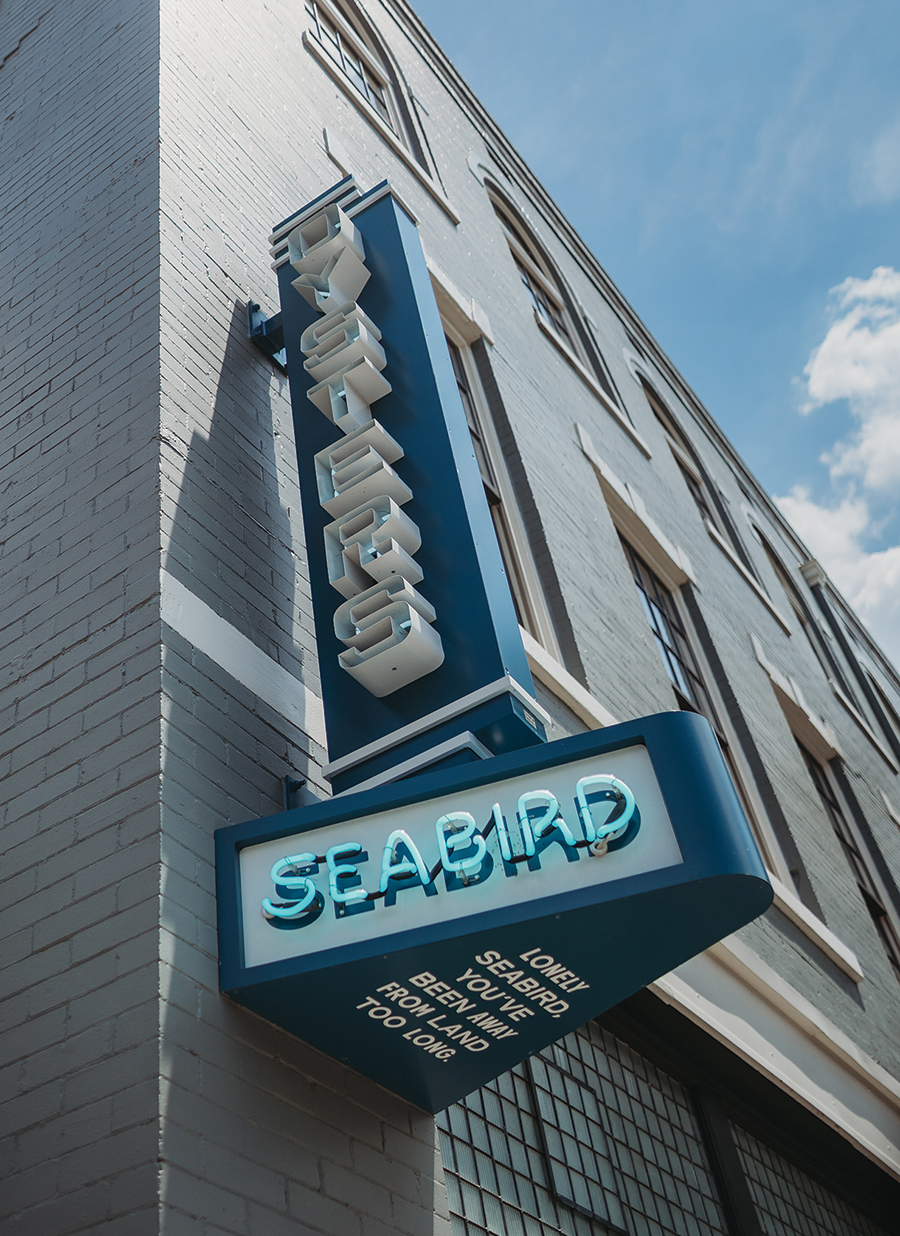
Neff credits the name of the restaurant with his obsession with maps and aerial views. When thinking of names, he pictured a bird flying over Eastern North Carolina, gazing down upon the expansive landscape from which he and Clopton would draw both ingredients and inspiration. When someone tipped him off to the song “Seabird” by the Alessi Brothers, Neff knew they had chosen the right name, especially when he read the lyrics Lonely seabird, you’ve been away from land too long. Those lines are now featured beneath the restaurant’s marquee at the corner of Front and Market Street in downtown Wilmington.

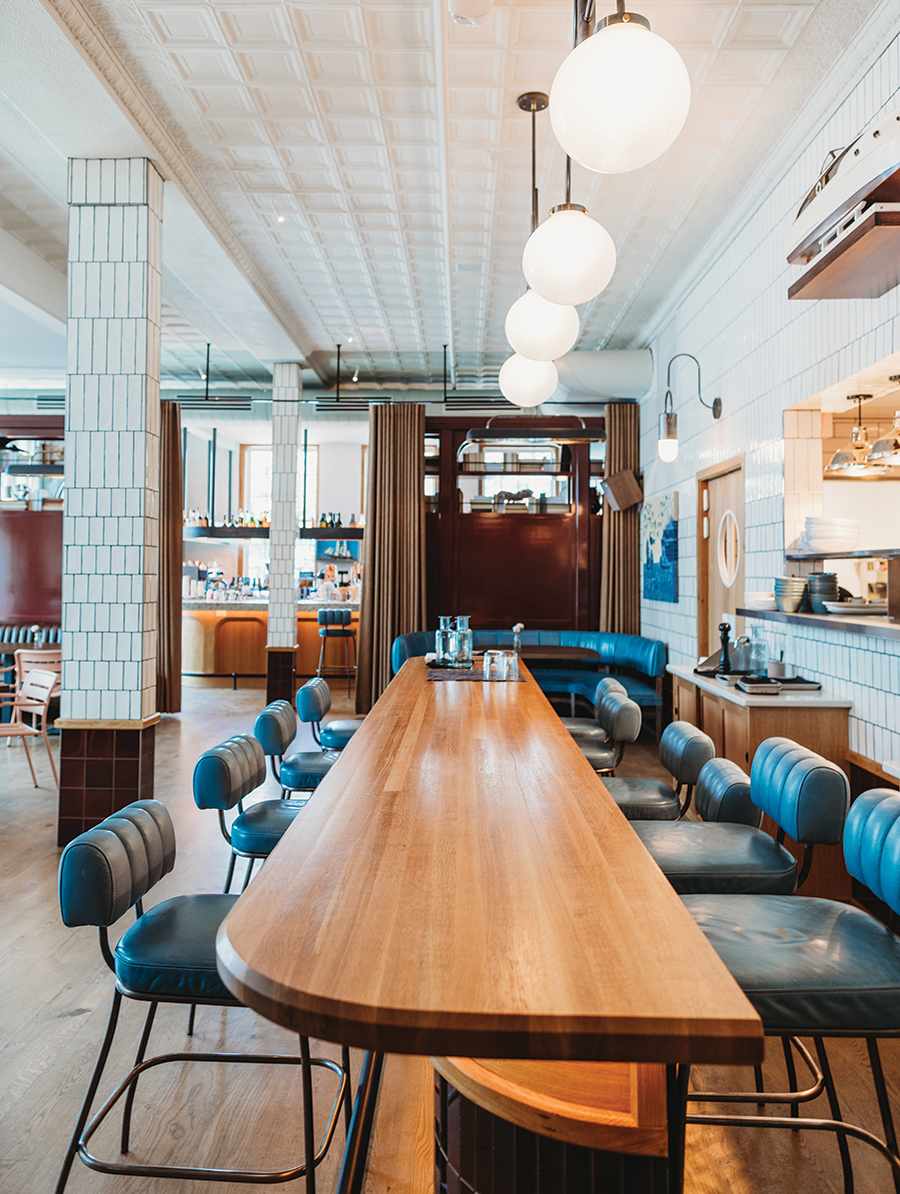
While both subtle and bold details inform the visual aesthetic at Seabird, clean lines, floor to ceiling windows, and textures varying from natural wood to textiles, create a space that feels durable and robust yet finely appointed. But make no mistake; while the restaurant is gorgeous, the menu is the focus.

Jason Frye cites the smoked catfish and oyster pie as being among his favorites. “It’s a masterclass in subtle flavors,” he says. “The oyster is stewed until tender, and the smoked catfish is done lightly, so the smoke comes in, but it doesn’t overwhelm the creamed collards and celery broth or the potato-flour pastry that sits on top. With every bite, one flavor leads into the next. At the end, you don’t come away from it feeling like you’ve read a collection of short stories. You feel like you’ve read a novel.” And that’s exactly what Neff and Clopton want the food at Seabird to do: tell the story of the community it comes from.

After more than a decade of working solo or for other chefs or alongside business partners, Dean Neff and Lydia Clopton have come home to Seabird, and they’re inviting locals and visitors to join them. Food, stories, family, community: All of the ingredients are here.  PS

Wiley Cash is the writer-in-residence at the University of North Carolina-Asheville. His new novel, When Ghosts Come Home, will be released this year.

Good Natured

Tea Time

Refreshing, and good for you

By Karen Frye

Here in the South, drinking tea is almost a birthright. The good news for us tea (and sweet tea) lovers is that a recent study from the University of California in Irvine School of Medicine revealed that two catechin-type flavonoids found in both green and black tea activate a process in the body that relaxes the blood vessels. This discovery could be helpful in the treatment of hypertension. So, enjoy your glass of tea; just be careful of the amount of sugar you use to sweeten it — or maybe use honey or stevia instead.

There are a few other teas that can quench your thirst on these hot summer days. Yerba mate is a lovely tea with similar benefits as green and black teas. The tree where the tea leaves are found is a species of holly found deep in the rainforests of South America. The leaves are hand-harvested by farmers in indigenous communities in Paraguay, Argentina and Brazil. Yerba mate contains less caffeine than a cup of coffee (about 85 mg), but a little more than a cup of black tea.

Just like black and green teas, yerba mate is rich in antioxidants. It also has 24 vitamins and minerals, 15 amino acids, and abundant polyphenols to slow down the aging process. Some of the benefits of this superfood tea are increasing energy and mental focus, boosting the immune system, and lowering blood sugar and heart disease risks. Yerba mate nourishes while it stimulates. 

Hibiscus tea is a caffeine-free tea that is as delicious as iced tea. Its lovely rosy color is reminiscent of Kool-Aid. Children will find it a delicious drink as well. Hibiscus flowers are from the hibiscus plant, but not the ornamental variety that we see blooming in the summer.

Here is a simple recipe for an energizing, cold-brewed tea on sweltering summer days:

3 tablespoons loose leaf black tea (or 5 tablespoons yerba mate or hibiscus flowers)

6 cups cool water

3 tablespoons honey or to taste

1 lemon, sliced

Add the loose leaf tea and cool water to a large jar or tea pitcher. Stir to mix well. Seal the jar or pitcher and refrigerate 12 hours. When ready to serve, strain the tea into another container and add the honey and lemon slices.

Enjoy your delicious and healthful beverage.  PS

Karen Frye is the owner and founder of Nature’s Own and teaches yoga at the Bikram Yoga Studio.

PinePitch

Happy Fourthfest

The Independence Day Parade rolls in a day early in the Village of Pinehurst, showing off its patriotic pride from 10 a.m. to 1 p.m. on Saturday, July 3. The parade will be followed by a fireworks display from 6 p.m. (well, actually, after dark, but you might want to show up early to get a spot) to 9 p.m. at the Pinehurst Harness Track, 200 Beulah Hill Road S., Pinehurst. For more information got to www.vopnc.org.

Hot Summer Deals Galore!

Downtown Southern Pines will be awash in deals for outdoor shoppers on Saturday, July 17 when the Broad Street businesses will hold a sidewalk sale in tandem with the pop-up vendors and crafters at Sunrise Marketplace. The sidewalk sale runs from 10 a.m. to 5 p.m. while the tents on Sunrise Square come down an hour earlier. For additional information got to www.SouthernPines.biz.

Talkies on the Grass

Bring a blanket or a lounge chair and make yourself at home when the Sunrise Theater holds its summertime outdoor screenings of Hairspray (July 9 and 10), Austin Powers (July 16 and 17) and Little Shop of Horrors (July 30 and 31) on the Sunrise Square next to the theater, 250 N.W. Broad St., Southern Pines. All movies begin at 8:45 p.m. and have the option of moving indoors in the event of thunderboomers. For more information call (910) 692-3611 or visit www.sunrisetheater.com.

Surf’s Up

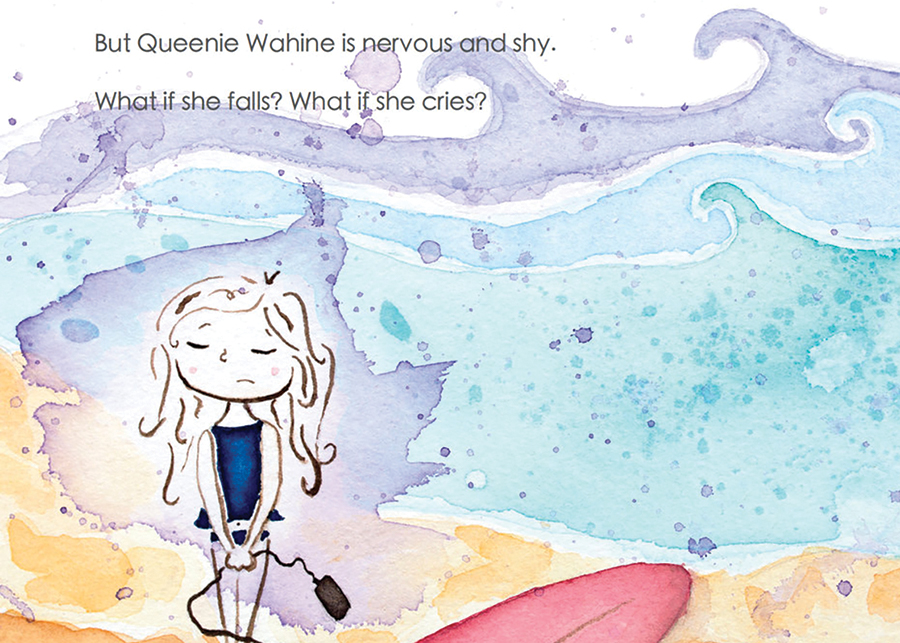
The Country Bookshop and the locally-based company Tribe of Daughters are teaming up to offer a story time on Tuesday, July 13, at 3 p.m., featuring the surfing book Queenie Wahine, Little Surfer Girl. Tickets are $25 per family and include a copy of the book and activities. The story time will be at The Country Bookshop, 140 N.W. Broad St., Southern Pines. For more information call (910) 692-3211 or visit www.ticketmesandhills.com.

Get the Buzz

Sign up for PineStraw’s newsletter PineBuzz at www.pinestrawmag.com.


Wherefore Art Thou?

Dr. Jonathan Drahos, UNC Pembroke’s director of theater, will help demystify Shakespeare during a theater camp for high school and Sandhills Community College Promise Program students ages 14-20 beginning Monday, July 19, from 10 a.m. to 3 p.m., at Owens Auditorium, 3395 Airport Road, Pinehurst. The workshop culminates in a live performance for family and friends on July 24. Cost is $100. For information go to www.ticketmesandhills.com or jonathandrahos@me.com.

Lakeshore Flicks

Join Aberdeen Parks and Recreation for the family-friendly movie The Croods: A New Age, at 8:30 p.m. on Friday, July 16, at Aberdeen Lake Park, 301 Lake Park Crossing, Aberdeen. Concessions will be available for purchase. For additional information call (910) 944-7275.

Santa in July

Where does Santa go in the summer? You can find him at the Given Memorial Library, 150 Cherokee Road, Pinehurst, on Saturday, July 24 from 10 a.m. to 11:45 a.m. Your visit will include a picture with Santa, a snack and a holiday craft to take home. There are two time slots, one from 10 a.m. to 10:45 a.m. and from 11 a.m. to 11:45 a.m. Space is limited. Santa’s helpers are taking reservations. For info and reservations call: (910) 295-3642.

Bookshelf

July Books

FICTION

Hell of a Book, by Jason Mott

In Hell of a Book, a Black author sets out on a cross-country publicity tour to promote his bestselling novel. Hilarious, yet arresting, spellbinding and reflective, Hell of a Book is unforgettably told, with characters who burn into your mind and an electrifying plot ideal for book club discussion. Mott’s first author event for his debut novel, The Returned, was at The Country Bookshop in Southern Pines in 2014. Hell of a Book is the novel Mott has been writing in his head ever since.

The Personal Librarian, by Marie Benedict and Victoria Christopher Murray

In her 20s, Belle da Costa Greene is hired by J. P. Morgan to curate a collection of rare manuscripts, books and artwork for his newly built Pierpont Morgan Library. Belle becomes a fixture in New York City society and one of the most powerful people in the art and book world, known for her impeccable taste and shrewd negotiating as she helps create a world-class collection. Belle simultaneously is passing as white with Portuguese heritage when in actuality she is the daughter of Richard Greener, the first Black graduate of Harvard and a well-known advocate for equality. The Personal Librarian is the story of a powerful and brilliant woman and the carefully crafted white identity that allowed her to succeed in the racist world in which she lived.

Embassy Wife, by Katie Crouch

Persephone Wilder is a displaced genius and the wife of an American diplomat in Namibia. She takes her job as a representative of her country seriously, coming up with an intricate set of rules to survive the problems she encounters: how to dress in hundred-degree weather without showing too much skin; how not to look drunk at embassy functions; and how to eat roasted oryx with grace. She also suspects her husband is not actually the ambassador’s legal counsel, but a secret agent in the CIA. The consummate embassy wife, she takes the newest spouse, Amanda Evans, under her wing. Propulsive and provocative, Embassy Wife asks what it means to be a human in this world, even as it helps us laugh in the face of our own absurd, seemingly impossible states of affairs.

Intimacies, by Katie Kitamura

From the author of A Separation, Kitamura’s new novel is the story of a woman who works as an interpreter at The Hague. A person of many languages and identities, she’s drawn into simmering personal dramas: Her lover, Adriaan, is still entangled in his former marriage; her friend Jana witnesses an act of violence; and the interpreter is pulled into an explosive political controversy when she’s asked to translate for a former president accused of war crimes. This woman is the voice in the ear of many, but what command does that give her, and how vulnerable does that leave her? She is soon pushed to the precipice, where betrayal and heartbreak threaten to overwhelm her, forcing her to decide what she wants from her life.

NONFICTION

The Man Who Hated Women: Sex, Censorship, and Civil Liberties in the Gilded Age, by Amy Sohn

Anthony Comstock, special agent to the U.S. Post Office, passed a law in 1873 that severely penalized the mailing of contraception and obscenity. Eight women were charged with violating state and federal Comstock laws. These “sex radicals” — publishers, writers, doctors and the first woman presidential candidate — took on the fearsome censor in explicit, personal writing and in court seeking to redefine work, family, marriage and love for a bold new era. Risking imprisonment and death, they redefined birth control access as a civil liberty.

In the Forest of No Joy: The Congo-Océan Railroad and the Tragedy of French Colonialism, by J.P. Daughton

One of the deadliest construction projects in history, the Congo-Océan railroad was completed in 1934, when Equatorial Africa was a French colony. In the Forest of No Joy details the story of African workers forcibly conscripted, who hacked their way through dense tropical foliage, suffered disease, malnutrition, and rampant physical abuse, likely resulting in at least 20,000 deaths.

New Women in the Old West: From Settlers to Suffragists, an Untold American Story, by Winifred Gallagher

Survival in this uncharted American West for the more than half a million settlers between 1840 and 1910 required two hard-working partners, compelling women to take on equal responsibilities to men, a stark contrast to the experience of women in the East. As these women wielded their authority in public life for political gains, served in office and established institutions, they fought for the right to earn income, purchase property, and vote. In 1869, partly to lure more women, Wyoming gave women the vote. Utah, Colorado and Idaho followed. Nearly every Western state or territory had enfranchised women long before the 19th Amendment did so across the country in 1919.

CHILDREN’S BOOKS

Stingers, by Randy Wayne White

Readers searching for mystery and adventure need look no further than Stingers, the second book in the Sharks Incorporated Series. When marine biologist Doc Ford invites three young nature lovers to the Bahamas where invasive lionfish are upsetting the ecological balance of the coral reefs, they make a few unexpected discoveries that may just get them into deep water. (Ages 9-12.)

Bubbles Up, by Jacqueline Davies

A love poem to water and the many things one can do with it, this fun title screams of summer and sun and fun but also of self-confidence and empowerment. This picture book from the author of The Lemonade War is an absolute must for summer reading. (Age 3-5.)

Dino Gro, by Matt Myers

Everybody knows sometimes new friends have to grow on you, but in Cole’s case his new friend grows and grows and GROWS. Move over Clifford, author/illustrator Myers has created a new lovable oversized friend with Dino-Gro. This one is sure to be a big hit with little dinosaur lovers. (Ages 3-6.)

Faraway Things, by Dave Eggers

“It’s a faraway thing,” declares the boy when he finds a cutlass washed up on the beach. This faraway thing is, indeed, a ticket to another world for the boy, who must decide if it is worth more to keep the cutlass or venture into the world of the unknown to discover his real treasure. This lovely picture book will be enjoyed by readers of all ages as they dream of the sea and what real treasure means to them. (Ages 4-8.)  PS

Compiled by Kimberly Daniels Taws and Angie Tally.

The Creators of N.C.

Live from The Burrow

Roots duo Chatham Rabbits reinvent the dream

By Wiley Cash
Photographs By Mallory Cash

American roots music is rife with compelling and talented duos — think Dolly Parton and Porter Wagoner, June Carter and Johnny Cash — but few have been as charmed or charming as Austin and Sarah McCombie of the North Carolina band Chatham Rabbits. The two first met in 2014 at a concert they attended separately, and within a few years they were rattling around the country together in a 1986 Winnebago, headlining concerts of their own. It’s an old story based on an even older dream: start a band with your best friend, sell everything you own, make a living with your music. But for Chatham Rabbits, that dream came true, and the most genuine thing about that dream is the music itself.

In marriage and in music, Austin and Sarah blend their individual histories into a shared musical experience. Years ago, Sarah first took the stage as a member of the South Carolina Broadcasters, a musical trio that harkened back to the bygone days of the Grand Ole Opry and AM radio country classics. Meanwhile, Austin played keyboards and guitar for an electro-pop band called DASH. Given their backgrounds, how would Chatham Rabbits describe their musical marriage?

“We’re not purists,” Austin says.

“And we’re certainly not the hippest,” Sarah adds. “But we’ve been able to belong nowhere and everywhere at the same time,” which is to say that Chatham Rabbits have always been able to create a musical home, both for themselves and for their fans.

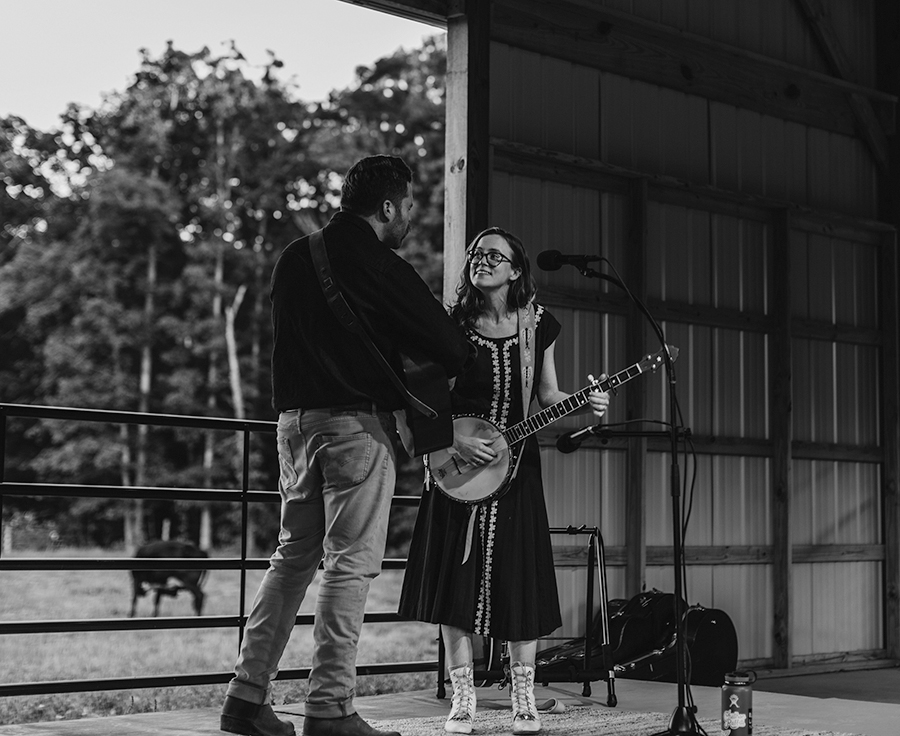
The duo’s first album, All I Want From You (2018), was written in Bynum, where Austin and Sarah could sit on the porch of their old mill house and survey the entire village of tightly packed homes, a vantage point that revealed their own ties to the close-knit community. The music — with Sarah on banjo, Austin on guitar, and the two splitting lead vocals and sharing harmonies — reaches out to the listener while reaching back in time in search of stories. Their latest album, last year’s The Yoke is Easy, the Burden is Full, is carried by the same gorgeous melodies, harmonies and delicate instrumentation, but it possesses a more introspective quality, which makes sense considering that the album was written when the couple moved to their 11-acre farm in Siler City. In these songs, the Rabbits use contemplation as incantation, inviting the listener to sit quietly with Austin and Sarah as they reflect on their shared life and their families’ histories. If their debut album was a means of reaching out to connect with a larger community, then their more recent album is a guided, dreamy meditation on turning inward. Whether they’re reaching out or looking in, Chatham Rabbits have always invited listeners to join them.

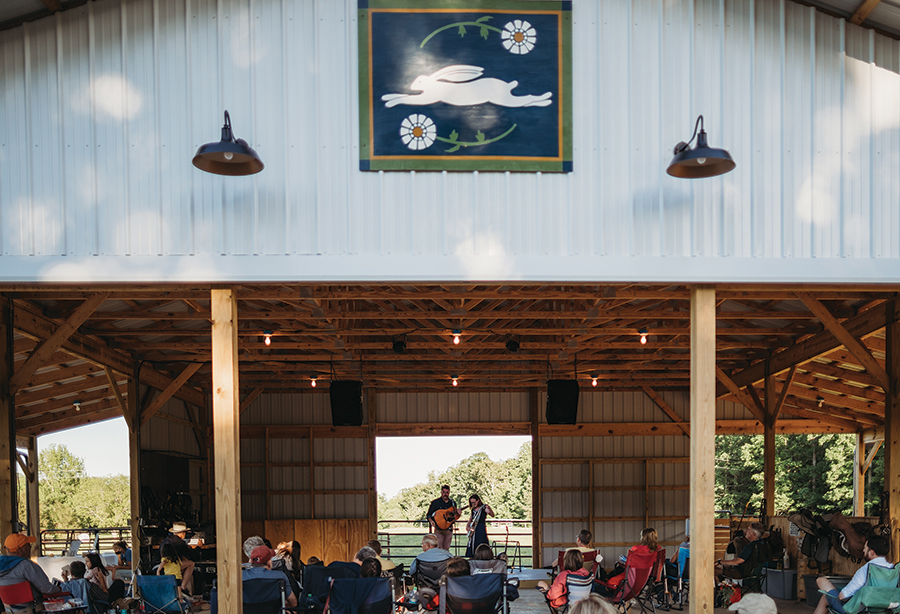
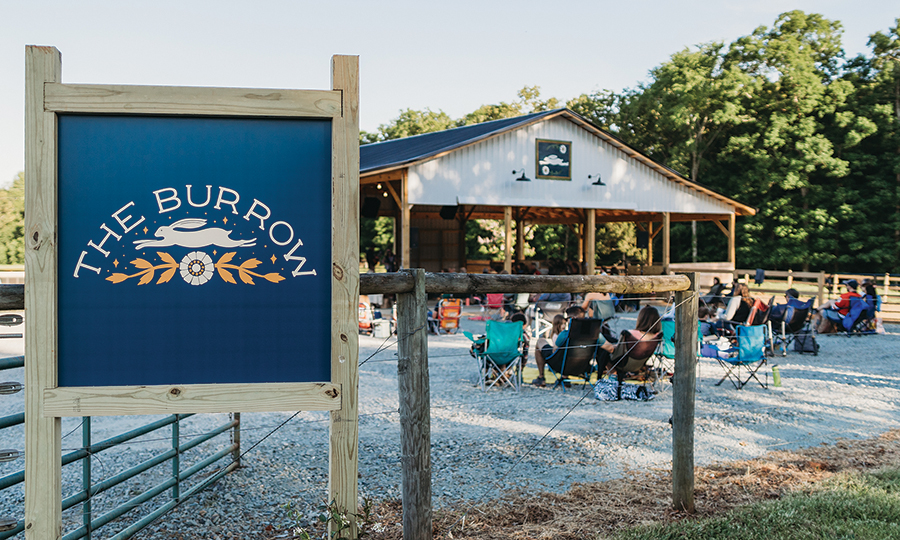
They’ve recently invited listeners to join them on their farm, too, where a new barn has been repurposed to host outdoor concerts that allow for the requisite 6 feet of social distance between pods of attendees. On a Saturday in early May, Austin and Sarah are both smiling behind masks as they move through the preconcert crowd, catching up with old friends and meeting new fans for the first time. The two are refreshingly approachable, remembering people’s names and asking after their children and families. He’s wearing a navy-blue button down and khaki pants; she’s in a navy-blue dress that once belonged to her great aunt. Although there are speakers hanging from the rafters and a lighting system illuminates the instruments and microphone on stage, there are plenty of reminders that this is still a working farm. Saddles and bridles hang on the wall. Chickens meander through the crowd. In the nearby pasture, a black cow named Petunia rubs her back against an old tree.

“The barn was halfway built when the pandemic hit and all of our shows were being cancelled,” Austin says. “At the time, the barn floors were going to be dirt, and the builders were about to enclose the walls. We asked about pouring a concrete floor, and we learned that it would cost the same amount to pour the floor as it did to put up the walls. We chose the floor.”

That kind of quick decision making has served the band well during the pandemic, which has rocked the music industry, but Chatham Rabbits have found ways to adapt.

“When the pandemic hit, we were about to release a new album, and we spent a week worrying about the world and feeling sorry for ourselves,” Sarah says. “Then we got busy figuring out how to make it work.”

The two used funds from their Patreon crowdfunding platform to buy a Sprinter van and a flatbed trailer. Off they went, playing outdoor shows in neighborhoods across the state and into Virginia and South Carolina in support of the new album that was supposed to have been celebrated in concert halls across the country. “We’ve probably played one hundred shows from the back of that trailer,” Sarah says.

Once the barn was finished and the state’s health restrictions allowed it, they decided to test the waters by holding six live concerts throughout the summer in the space they’ve named The Burrow. The tickets sold out in less than three days. As the state’s coronavirus numbers improved, Chatham Rabbits released more tickets, which sold out in mere minutes.

The resilience and flexibility required by the past year has influenced the song writing for their new album, to be released in coming months. “Many of the songs are reflections of us being at home together for an entire year,” she says. “It’s about our life on the farm, shifting friendships, and the way we had to come to terms with our foundations being rocked.”

As Austin and Sarah take the stage, the air is charged with energy and a giddy sense that something is returning to the world, whether it be live music or summertime or the feel of a cold beverage in your hand and the weight of a sleepy child on your lap.

After welcoming the crowd to the inaugural show at The Burrow, Austin and Sarah open with a song from their first album titled “Come Home.” Attendees take off their masks, settle into their beach chairs, and — for the rest of the evening — do just that.  PS

Wiley Cash is the writer-in-residence at the University of North Carolina-Asheville. His new novel, When Ghosts Come Home, will be released this year.

Hometown

Polyester and Plaid

The ghosts of fashion don’ts

By Bill Fields

After retrieving the items from a box and making a cursory inspection, one thing was as clear as my vision after cataract surgery: Moths have better taste than I did.

This particular sweater and sport jacket are nearly 50 years old but, notwithstanding a few small stains, they have survived the decades intact, their synthetic fibers not even on the menu for a couple of generations of nocturnal insects.

These are not just any clothes. They were two of my go-to garments during high school, possessions I wore with pride despite their effect on my social life. I loved them.

The canary cardigan and tan, blue, red and white plaid coat weren’t exceptions but the rule for my 1970s dress code. Multiple photographs in my high school yearbooks are proof of these fashion crimes. Among plenty of denim and flannel there I am, over and over, ready for a tee time.

I blame golf for leading me down the polyester path, although I take full responsibility for my rust-colored corduroy suit (with vest). If what I wore led to where I was on Friday and Saturday nights — upstairs in my room, alone, reading and listening to the radio — I was OK with it, such was my obsession with the game.

Part of playing golf was dressing the part, and I did my best. I was aided and abetted in this pursuit. In ninth grade, by which time I had abandoned other sports to concentrate on making the tour, my social studies teacher was Mrs. Troop, a kind, young woman whose husband, Lee, was an assistant pro at the Country Club of North Carolina. Told of my golf habit, he gave me a trio of lightly used, 100 percent orlon, men’s size large Izod sweaters in blue, red and yellow. They were Crayon-bright colors with a green crocodile on the left breast, what cool golfers (as opposed to cool teenagers) were wearing in 1974.

I donned those sweaters regularly, in class and on the course, over the next several years. They were in my regular cool-weather rotation along with a zip-up crafted from velour, the poor man’s cashmere. Regardless of the season, chances are I had on a pair of polyester slacks, some of them in plaid or check patterns purchased with my employee discount in the pro shop at Mid Pines Golf Club, where I worked part time as a golf cart attendant. And I might have been wearing my casual deerskin shoes popular with the septuagenarian crowd.

The synthetic-fibered sport jacket (Andhurst by Belk) had padded shoulders and was of a sturdy hand. It was plain ugly, yet I often wore it senior year while delivering the sports on Pinecrest’s student-produced daily closed-circuit television show over a golf shirt with a wide, hard collar. The garish jacket is in the annual, too. I am telling the score of some Patriots’ game while sitting next to the weather girl, who that day was wearing a shirt with “Foxy Lady” inscribed on the front. At least I wasn’t the only one committing a fashion faux pas.

Besides playing much better than we did, I’m sure the golf-mad teenagers at Pinecrest these days dress better as well. Golf clothing still has its quirks — quarter-zip anyone? — but the game’s fashion doesn’t, for the most part, scream like it did during the Synthetic Seventies.

That said, there probably are a few Rickie Fowler wannabes who will feel about their head-to-toe Creamsicle-colored outfits the way I recall the days I looked like a goldfinch. At least my yearbooks were printed in black and white.  PS

Southern Pines native Bill Fields, who writes about golf and other things, moved north in 1986 but hasn’t lost his accent.