
PinePitch

Conductors of Magic

The Sandhills Central Model Railroad club presents its annual Train Show on Saturday, Nov. 19, from 10 a.m. – 4 p.m. Founded in 1979, the Club is located in the Aberdeen Train Depot, where an HO model railroad features a beautifully constructed re-creation of the town of Aberdeen and surrounding areas. The layout depicts portions of Main, South, and Poplar Streets, U.S. 1 and Hwy. 5, and billboards modeled in detail. Admission: $5; free for children. The Historic Aberdeen Train Depot and Museum, 100 E. Main St., Aberdeen. Info: (910) 944-1115 or explorepinehurst.com.

Fare-Thee-Well

On Thanksgiving Day, 1976, Canadian-American rock group The Band performed a farewell concert that featured more than a dozen special guests, including Bob Dylan, Neil Young, Emmylou Harris, Ringo Starr, Joni Mitchell, Van Morrison, Neil Diamond and Eric Clapton. The performance, which was filmed by Martin Scorsese for a documentary called The Last Waltz, will show for free at the Sunrise Theater this Thanksgiving night (Thursday, Nov. 24), at 7:30 p.m. Rolling Stone magazine called it the “Greatest Concert Movie of All Time.” Sunrise Theater, 250 NW Broad St., Southern Pines. Info: (910) 692-8501 or sunrisetheater.com.

Destination: Music

Best thing about a Rooster’s Wife show at Poplar Knight Spot? There isn’t a bad seat in the house. You’ll just want to make sure you snag one. Here’s what’s hot at the Spot this month:

Nov. 4 – Martin Grosswendt and Susanne Salem-Schatz deliver country blues with bottleneck and finger-busting guitar, powerful vocals, soul and wry humor.  Tickets: $10. You can also catch them on Thursday, Nov. 3, 8 p.m., at the Cameo Arthouse Theater, 225 Hay Street, Fayetteville. Tickets: $12.

Nov. 6 – Southern Pines native Sam Lewis comes home from Nashville with a full band and a new record to share his folksy roots and soulful persona with friends new and old. Tickets: $15.

Nov. 11 – Cicada Rhythm. Chilling harmonies and unbridled enthusiasm redefine so-called folk music. Tickets: $10.

Nov. 13 – Joe Walsh delivers his newest project, “Borderland,” for this CD release celebration. The Matt Flinner Trio splits the show. Talk about modern mandolin mayhem — and all things stringed. Tickets: $15.

Nov. 20 – Jordan Tice is a singular voice on the American roots music scene. Stray Local opens. Tickets: $15.

Doors open at 6 p.m. All shows start at 6:46 p.m. The Rooster’s Wife, 114 Knight St., Aberdeen. Info: (910) 944-7502 or www.theroosterswife.org.

ps-pinepitch1-11-16

Art that Pops

New work by collage and assemblage artist Louis St. Lewis will be on display at Broadhurst Gallery on Sunday, Nov. 6, at 5 p.m. Hailed as a “cunning pirate of art history,” St. Lewis is a bold and witty artist and designer whose brilliant manipulations of appropriated art grace the collections of French fashion designer Christian LaCroix, former Vogue editor André Leon Talley, The Prince of Kuwait, and Oprah Winfrey. Born in nearby Albemarle, he now divides his time between Raleigh, Paris and New Orleans. Don’t miss his “Collecting Art” talk, during which he just might explain what he means when he says artists are “social court jesters.” Broadhurst Gallery, 2212 Midland Road, Pinehurst. Info: (910) 295-4817 or www.broadhurstgallery.com.

If These Trees Could Talk

On Saturday, Nov. 5, learn about our region’s first and biggest industry — naval stores — during this fascinating excursion back in time. “Tar, Pitch and Turpentine” will be presented hourly from 10 a.m. until 4 p.m. by filmmaker, historian and writer Bryan Avery. Watch Avery extract resin from a tree, light fires to distill turpentine from gum, and more. Bring a blanket or chair for the outdoor demos, and since they’re open, don’t miss the chance to tour the property’s two house-museums. Free admission. Bryant House and McLendon Cabin, 3361 Mount Carmel Road, Carthage. Info: (910) 692-2051 or explorepinehurst.com.

Enchanted Forest

The 20th annual Sandhills Children’s Center Festival of Trees will take place from Wednesday, Nov. 16, through Sunday, Nov. 20, 10 a.m. – 8 p.m. Over 200 decorated trees, wreaths, gift baskets and gingerbread houses will be featured in a winter wonderland complete with live entertainment, silent auction and a Festival Marketplace. Three words: lights, children, magic. Admission by any monetary donation at the door. Proceeds benefit Sandhills Children’s Center. Carolina Hotel, 80 Carolina Vista Drive, Pinehurst. Info: (910) 692-3323 or sandhillschildrenscenter.org/trees.

Made With Love 

The Annual Seagrove Pottery Festival, to be held Saturday, Nov. 19, and Sunday, Nov. 20, from 9 a.m.–5 p.m., celebrates the craft heritage of Seagrove, the Randolph County gem that is home to the largest concentration of working potters in the United States. In addition to pottery — both functional and sculptural— the festival features food vendors and live music, educational activities for children and adults, and demos by blacksmiths, basket makers, woodcarvers, weavers, and potters. Admission: $5. Seagrove Elementary School, 528 Old Plank Road, Seagrove. Info: (336) 873-7887 or discoverseagrove.com.
ps-pinepitch2-11-16

Boot Stomping Music

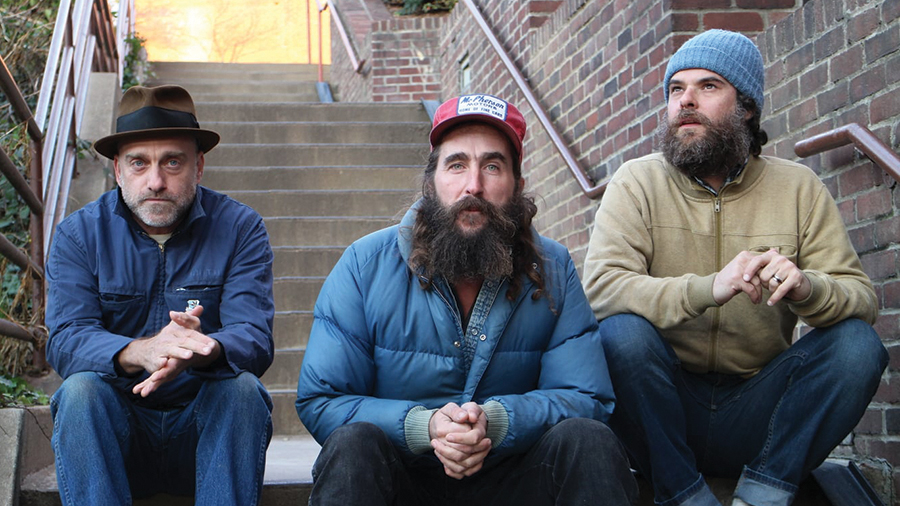
The Hackensaw Boys inject traditional Appalachian and Delta music with a heavy dose of contemporary, good-times-roll kind of spit and vinegar. If the sound of that makes you feel like putting on your dancing boots, mark your calendar for Friday, Nov. 18, 7:30 p.m. Known for their spirited and rowdy live shows, the Hackensaw Boys will perform old favorites and tunes from their latest album at the Sunrise Theater. Produced by Larry Campbell — the multi-instrumentalist wizard who has lent his talents to the likes of Bob Dylan and Levon Helm — “Charismo” has a casual, porch-front aesthetic that’s sharpened around the edges, focusing on the simple beauty of Hackensaw’s melodies and the earnestness in their delivery. Tickets: $20 (general admission); $30 (VIP). Sunrise Theater, 250 NW Broad St., Southern Pines. Info: (910) 692-8501 or sunrisetheater.com.

Walk in the Woods

You’ve heard of Eat, Pray, Love? Why not Hike, Pray, Eat? On Thanksgiving Day, meet at the Weymouth Woods Visitor Center for a 10 a.m. discovery hike sure to help you work up an appetite for the afternoon feast. Weymouth Woods Sandhills Nature Preserve is an enchanted window to the longleaf pine forests that once covered millions of acres in the southeastern U.S. The lanky pines – some of them hundreds of years old – tower over expanses of wiregrass and rare and intriguing species, including the red-cockaded woodpecker, pine barrens tree frog, bog spicebush, and fox squirrel. Who knows what else you’ll discover? Wear comfortable shoes and bring bottled water for this ranger-led two-mile hike. Weymouth Woods-Sandhills Nature Preserve, 1024 Fort Bragg Road, Southern Pines. Info: (910) 692-2167 or www.ncparks.gov/weymouth-woods-sandhills-nature-preserve.

Old Fashioned Nights

And the perfect rye whiskey to take off the winter chill

By Tony Cross

Whenever Mother Nature makes up her mind, and decides that she’s going to throw colder weather our way, I always seem to forget how much I love pairing a good whiskey with the chill. There’s something about the burn going down my chest after escaping a cold and rainy night. I’m not reminiscing about the hellfire from a sour mash that I would shoot when I was barely old enough to partake. That had its time and place years ago. Nowadays, especially in good company, I opt for a good rye. One of my favorites over the past few years has been from Utah’s High West Distillery.

Jack Daniel’s was the first whiskey I ever tasted. I hated it. I’m still not fond of the spirit, and I’ll probably get a lot of flak for being honest, but I’d be fine with never ordering it again. On the other hand, I probably wouldn’t turn down a Jack & Coke if one was sent my way. It wasn’t until bourbon began making its presence on the market felt that I began experimenting, and understanding our native hooch. And then I tried rye, and it was all over. The element of spice in a rye whiskey had my taste buds intrigued from day one. Not only that, but I began to notice that rye added much more depth in the whiskey cocktails that I was playing around with. Any chance I got to purchase a new rye (as in new to our local ABC store), I would scoop it up immediately.

High West was recommended to me by a patron one night. He had just returned from a work conference in Park City, Utah, where he encountered the world’s only ski-in gastro-distillery and couldn’t contain his excitement when explaining the myriad food and drink choices on the menu. In addition to serving cocktails with their signature whiskies, High West has an extensive spirits list with everything from Green Chartreuse to, well, Jack Daniel’s. The way he explained the different nuances with High West’s whiskies sounded like an adolescent with every sense aroused. All I knew was that I sure as hell had to get my hands on some.

From my first bottle of their Double Rye! (a blend of two-year and 16-year rye whiskies) to one of their limited releases, Yippee Ki-Yay, a blend of two ryes that are aged in Vya sweet vermouth and Qupé Syrah oak barrels (I yelled it out like Bruce Willis after my first sip. Yeah, that good), proprietor and distiller, David Perkins has yet to disappoint. The mainstay on my shelf is the Rendezvous Rye, a complex rye blend that marries a spicy 6-year-old rye with a more mature 16-year rye that adds a touch of vanilla and caramel. It’s the whiskey you pour with those who will appreciate it. Perfect with a cube of ice, but fantastic in an old-fashioned (recipe below).

In the past few years that I’ve gotten acclimated with rye, more and more distilleries are becoming readily available throughout our state. The increase in sales of whiskey has gone through the roof over the past decade. Just last year alone, whiskey sales grew 7.8 percent. Americans aren’t the only ones with a thirst for our national spirit: Export sales have grown from $743 million in 2005 to $1.56 billion last year. That’s crazy. Even crazier, according to Fortune magazine, with all of the growth of beer distilleries in the U.S., “distilled spirit suppliers and marketers marked the sixth straight year of increasing their market share relative to beer.”

So, it was no surprise to me when I read that High West Distillery has just been purchased by Constellation Brands Inc., owners of Corona beer, Svedka Vodka, and Casa Noble tequila, who also recently purchased Prisoner Wine Co. and Ballast Point Brewing & Spirits. “Uh-oh,” I thought. However, the Wall Street Journal online explained that the 200 employees at the distillery will continue working there, including Mr. Perkins. “The same people will be making and selling it,” the article assured me.

Not log ago, I discovered a bottle of the Double Rye! on the shelf of our local ABC outlet. It’s good to see that our town is adding more premium spirits to their inventory. I have a lot of friends who are bourbon fans, some connoisseurs. If that’s you, I’ll say this: purchase a bottle of rye, take it home, and try it with an ice cube or two; it’ll open up the whiskey like a decanter does for wine. If you’re still not swayed, make an old-fashioned. You’ll blush and cuss.

Old-Fashioned

1 cube demerara sugar

Pinch of brown sugar

3 dashes Angostura bitters

2 dashes orange bitters

2 ounces High West Rendezvous Rye

Lemon and/or orange peel

This cocktail can be built in the glass you (or your guest) will be drinking from, or you can mix it in a cocktail shaker, and strain it into the glass. Either way, make sure the glass is a thick-bottomed 8-10 ounce old-fashioned glass. Also, spend a few extra bucks, and buy small and large ice cube molds. Last time I checked, Southern Whey on Broadstreet had those available. There’s no point in making a cocktail with a $60 whiskey, if it’s going to get watered down immediately with your crappy ice. Place both sugars at the bottom of your mixing vessel. Dash both bitters over the sugar, and muddle it into a paste. Add the whiskey, stir with a mixing spoon for a few seconds, and then add four small ice cubes, and stir for 50 revolutions. If you’re building this cocktail in your glass, carefully add the larger cube, and stir. If you’re using the smaller cubes, strain over the large cube in the rocks glass. I love using a lemon and orange peel for this classic. Express the oils of both peels over the drink before adding them in. Santé!  PS

Tony Cross is a bartender who runs cocktail catering company Reverie Cocktails in Southern pines. He can also recommend a vitamin supplement for the morning after at Nature’s Own.

Confessions of a Nostalgic Nose

You can talk to the hand. However, the nose remembers all

By Deborah Salomon

The most underrated sense, I believe, is smell.

Remember Al Pacino as a blind veteran dancing the tango in Scent of a Woman, rated among the best all-time film sequences? Unable to witness her beauty, he inhaled.

This opinion results from losing olfactory competence 20 years ago, after a bad cold. It happens, my otorhinolaryngologist said. Don’t argue with a 21-letter specialty. I can’t smell a pot burning on the stove. A bit gets through if I put an orange right under my nose. Fresh paint doesn’t bother me, nor would sitting behind a high school boys’ basketball bench. But I do miss meat loaf, split pea soup and . . . let’s see what else my nose recalls.

Cider mills: Apples permeate October in New England. Nowhere is the aroma stronger than at a cider mill, where whole apples are crushed into a spicy-sweet nectar. You (and the yellow jackets) can smell it half a mile away.

A maple sugarhouse: Early spring nights in Vermont mean boiling freshly collected sap until the water evaporates, leaving pure maple syrup. Forty gallons of sap boil down to a gallon of syrup. Farmers boil all night in sugarhouses — rough cabins that glow against the receding snow. The maple smell is so strong, so delicious you can practically pour it on pancakes.

Lily of the valley: When I was a child, Coty’s Muguet de Bois was a popular fragrance. My mother had a cardboard cylinder of body powder; I would put it near my nose and feel soothed, happy. The powder is still available online, as a vintage product, like Tangee lipstick. Wouldn’t do me any good now.

What happened to new-car smell? I see sprays that provide what new cars have lacked for decades. My last fragrant auto was a spiffy ’72 Olds Cutlass convertible with white leather upholstery. Subsequent Subarus and Toyotas arrived fragrance-free.

Garlic: Here’s the story. My mother-in-law despised garlic. The very word made her shudder. She was an excellent cook without it. Then I took over the big family meals, aware of but not bound by her prohibitions. I remember a holiday back in the day when a standing rib roast didn’t cost more than a root canal. Mom walked into the house, exclaiming, “What smells so good?” followed by “Everybody says your roast beef is better than mine,” from inserting garlic slivers deep into the meat, then rubbing the outside with a cut clove. I never confessed.

A newsstand, preferably on a Manhattan corner, near the subway entrance: Stacks of fat Sunday editions, abetted by comic books, Fleers Dubble Bubble gum and cigars, emitted a smell I can feel, but not describe.

As a teenager I drove often from Asheville to Durham. Approaching Valdese, the smell of bread from the Waldensian bakeries dominated the air. I can close my eyes and smell it now.

Not all odors are good or even acceptable . . . like the time a mouse crawled behind the wall of built-in-bookcases, and died. I never knew how he got in but I know how he got out and how much I paid the carpenter.

But some scents are sublime: the fuzzy head of a freshly bathed baby. Great coffee percolating (drip and single-serve appliances not the same). Rain, on a summer afternoon. A wood fire. Steak searing on a hot charcoal (not gas) grill. And the one that breaks my heart: my daughter Wendy, running through the airport arrivals concourse, arms outstretched for a hug, whispering in my ear, “Mmmm, you smell like mommy.”

The holidays loom, announced by roasting turkey with cornbread-sage stuffing, followed by balsam and spruce boughs. In my kitchen, where deep-frying never happens, the heavy, sticky smell of Hanukkah potato pancakes sizzling in oil soaks into clothes, hair, upholstery and everything else.

Look, a working nose isn’t vital, unless you’re a bloodhound, but smell does enhance other senses while imprinting the brain and stimulating memory. I am absolutely sure that this very minute you are making a mental list.

So sure I can almost smell it. PS

Deborah Salomon is a staff writer for PineStraw and The Pilot. She may be reached at debsalomon@nc.rr.com.

The Brief Unwritten Social Rules of the Southern Womanhood

(Revealed at last)

By Susan Kelly

Opening caveat: No judgment here, as the millennials say. Simple reportage.

As brides-to-be, both my daughter and my daughter-in-law looked blankly at me when I mentioned a trousseau present. They had no clue as to what — much less how to spell — a trousseau is, er, was. OK, fine. One less gift to buy. (This, from the bride-to-be whose mother went with her to buy a honeymoon nightgown. For my trousseau. Later, I chopped off my mother’s peignoir to wear as a dressy top to cocktail parties. Draw your own Jungian, Freudian or rebellion conclusions.)

Like the era when mixing metals was simply not done, the time of wedding trousseaus, in which your mother’s friends brought gifts for your lingerie or linen or stationery drawer, has gone the way of children being seen and not heard. More’s the pity. But never fear, plenty of Unwrittens — obscure social mores you’re meant to follow that aren’t recorded anywhere and, often, have no basis in existing — are still out there, and I’m making a few publicly available. Ready?

Blacken the wicks of all candles even if they’re so fancy and curved and hand-dipped or whatever that you never plan to burn them. The brief sulphur aroma may cause your children or husband to sniff and say, “Have you been smoking?” to which you can point to the candles. Then they’ll say, “Why did you do that?” Good luck.

Answer all formal invitations in black ink only.

Honeydew should always be served with a slice of lime.

No front yard flowers. Exceptions: naturalizing bulbs (not tulips or hyacinths; crocus debatable) and these should only be growing in ground covers.

No botanical prints or skirted tables downstairs. (These last two from a Charleston friend’s mother. You should hear her on non-Christmas front door wreaths.)

Nice people have blanket covers.

No bare shoulders at a funeral. (This dictate from a friend whose baby nurse actually told her this as my friend was trying to get her post-natal body to a funeral.)

Beginning Labor Day, wear transitional dark cottons. This was an actual phrase at my house, and translated, for me, as cotton Black Watch plaid smocked dresses to school. (The brand new book satchel provided some offsetting comfort.)

Do not say purse. Say pocketbook. (Although my sister’s high-fashion boss at Belk told her that if she said pocketbook instead of bag one more time, she would fire her.)

Do not say hose. Say stockings. Exceptions can be made for pantyhose. (Though personally, as an Anglophile, I think we should switch to tights and be done with it.)

Do not say panties. Say underwear or underpants or, in a pinch, borrow u-trou from the boys. If you say panties, we can’t be friends. End of story.

Literally.  PS

In a former life, Susan Kelly published five novels, won some awards, did some teaching, and made a lot of speeches. These days, she’s freelancing and making up for all that time she spent indoors writing those five novels.

Money Well Spence

A new day for CCNC’s Dogwood Course

By Lee Pace

First impressions stick.

Robert “Ziggy” Zalzneck was a young accounting intern in Raleigh a long way from his Pennsylvania home during the holidays and was given access to the Country Club of North Carolina’s golf course on Christmas Day 1967. He had the place to himself. “I played 36 holes and it was 70 degrees,” Zalzneck says. “It was the prettiest place I’d ever been my whole life. I’ve loved the place ever since.”

Kris Spence was a young green superintendent at Greensboro Country Club in the mid-1980s when club staff and officers held a planning retreat at CCNC, the private, gated community nestled in the center of a triangle formed by Pinehurst, Southern Pines and Aberdeen.

“I’ll never forget coming onto the property the first time,” Spence remembers. “It was so impressive and set a standard you noticed quickly. It was a standard above even the best private clubs in the state.”

And Alex Bowness, a young homebuilder in Southern Pines, was invited to play the Ellis Maples-designed course in 1977 and knew immediately that he wanted to become a member.

“I’ll never forget playing the 15th hole the first time,” he says of the par-4 that kisses against the shore of Watson’s Lake — one of seven holes on the back nine accented by water. “It was April, the dogwoods were in bloom, and some dog ran across the fairway. It was a spellbinding vision. It took my breath away. I can see it today as if it were yesterday.”

Thirty-nine years later, Bowness is sitting in an Adirondack chair nestled in the pine forest between the fourth hole of the Dogwood golf course and his Williamsburg-style home. His cavalier king spaniel, O. Max, cavorts through the pine straw. It’s been home for Bowness and wife Susan since 2000.

“When we drive through the gate, our shoulders fall down,” he says. “It’s very relaxing. We live 2.4 miles from the gate, and it’s a nice, soft ride. From here we see golfers go by, we see little boats go by with fishermen. There’s even a bald eagle who lives near here; sometimes late in the day you’ll see him swoop through the trees. It’s almost like coming into a park.”

This “park” is now 53 years old, but it has a fresh coat of paint (and grass and sand and tree-scape) following a nine-month shutdown for Spence, now a golf course architect, to make significant changes to the course on agronomic, strategic and maintenance fronts. In nearly two decades of golf design, Spence has specialized in restoring and remodeling vintage courses by Golden Age architects like Donald Ross and then, from the next generation, Ellis Maples, the son of Ross’ green superintendent and construction foreman at Pinehurst, Frank Maples.

“Anyone who comes here has an expectation,” says Spence, who supervised the remodeling of the Dogwood course from November 2015 through Labor Day weekend of 2016. “It’s a lofty one. We can’t hit a triple here, we have to hit a grand slam. The expectation level is very high. The expectation was of excellence. When I came here to walk the course before the interview, it was anything but that. Time had just taken a toll on this golf course.”

While the Sandhills golf community had been built since the turn of the 20th century on resort golf and semi-private courses, a group of North Carolina businessmen believed in the early 1960s the state needed a private club centrally located that could draw members from Raleigh to Charlotte and beyond. Raleigh accountant Dick Urquhart, Greensboro investment banker Hargrove “Skipper” Bowles, Greensboro developer and builder Griswold Smith, and Raleigh attorney James Poyner were the four founding members and soon enticed three dozen “charter members” to join the club. They represented a Who’s Who of North Carolina business and philanthropy, among them C.C. Cameron of Raleigh, George Watts Carr of Durham, Frank Kenan of Durham, James Harris of Charlotte ,and Karl Hudson of Raleigh.

“What could be better than a good club centrally located for nearly all of us, ideally suited for golf, horses, hunting or just plain socializing?” Urquhart asked in a 1962 letter to charter members.

Willard Byrd studied landscape architecture at N.C. State in the late 1940s with an emphasis on land planning and had opened a shop in the land-planning business in Atlanta in 1956. He was hired to draw the master plan for CCNC, which would include approximately 300 residential lots averaging two acres apiece. The golf course was routed at the outset, with the lots to be arranged around the best land for golf. Much discussion ensued at the beginning over the issue of wrapping nine holes of golf around Watson’s Lake, thus eliminating some premier lakefront building lots.

At the time, Byrd was not officially a golf architect, so Maples was retained to collaborate on the creation of the golf course, to be named after the preponderance of dogwood trees on the property. The original plans have both the names of Byrd and Maples on the blueprint for each hole. Byrd created the routing and Maples designed the features — the green shapes and undulations, bunkers and placement of hazards.

“The course should be second to none from the very start,” said Urquhart, whose views that the golf course should get the premier lakefront exposure won out in that discussion.

The course opened in 1963 and was one of the original members of Golf Digest’s 100 Greatest Golf Courses and was site of the 1971 and 1972 Liggett & Myers Match Play Championship on the PGA Tour (won by Dewitt Weaver and Jack Nicklaus) and the 1980 U.S. Amateur (won by Hal Sutton). It has hosted six Southern Amateurs (with Ben Crenshaw and Webb Simpson among the winners), and the 110-year-old championship will return in 2017. It has been the venue for the 2010 U.S. Girls’ Junior Championship as well as multiple Carolinas Golf Association championships, including three Carolinas Amateurs and seven North Carolina Amateurs. The course remained in Digest’s rankings until 1999, when it was muscled out by the many outstanding new courses from the 1990s golf boom.

The original course was so popular the club built a second one and named it the Cardinal in keeping with the state of North Carolina theme. The course opened as 18 holes in 1981, a combination of nine holes each from Maples and Robert Trent Jones. The club converted those greens from bentgrass to Champion Bermuda in 2012 and liked the results, so a similar conversion was planned for the Dogwood, among other significant changes.

“We knew for five or six years we had a significant project ahead of us,” says Director of Golf Jeff Dotson. “The irrigation system was antiquated. The bunkers had reached the end of their useful life. It was a struggle every summer to keep the bent greens healthy, and the Bermuda greens on Cardinal were thriving.

“Dogwood had been one of the top courses in Southeast for half a century. We needed to set it up for the next 50 years.”

Much of the work was structural: convert the greens to Bermuda; install a new irrigation system; rebuild all the bunkers with the easier-to-maintain “Better Billy Bunker” system; replant the fairways with zoysia grass; open the vistas with the removal of several hundred trees that encroached over 50 years.

And much was strategic: bunkers repositioned to challenge more aggressive lines on dogleg holes; green approaches re-sculpted to allow run-up shots; a new green on the par-4 fourth built to reflect Maples’ original design that had never actually been built; a new green on the 15th hole positioned some 25 yards back from the original; a cross-bunker added in the landing area of the second shot on the par-5 18th, giving players more food for thought in planning their approach to the green.

“The structural issues have certainly been fixed,” Spence says. “Aesthetically and strategically, I think it reflects and respects Mr. Maples’ work. I wanted to respect his work but still adjust things to better suit the modern game. If you look through old photos of this course and others he designed, this still has that look and character of what I think he would approve of.”

Spence and Zalzneck were in the first foursome to play the remodeled course when it reopened on Sept. 2, Spence because he shepherded the work and Zalzneck because he’s now the club president.

“Kris was like a proud papa playing the course,” Zalzneck says. “And it was very rewarding for those of us who have worked on this project over three to four years. The changes reposition CCNC for a long time to come.”

And they preserve those first impressions that remain vivid in many minds despite the passage of time — not to mention creating new ones for residents like Alex and Susan Bowness from their Adirondack chairs along the fourth fairway.  PS

Lee Pace has written about golf in the Sandhills since the late-1980s; his most recent book is The Golden Age of Pinehurst—The Story of the Rebirth of No. 2.

Happy Thanksgiving, Pilgrim

Norman Rockwell, not John Wayne, informs our Thanksgiving celebrations

By Tom Allen

For Americans, Norman Rockwell’s depiction of a family Thanksgiving is as familiar as Grant Wood’s “American Gothic” or James McNeill Whistler’s portrait of his mother.

But if art imitates life, growing up, I was brushed out of Rockwell’s painting more often than not.

I vaguely recall a few traditional Thanksgivings with family, albeit half the size of Rockwell’s troupe. Our table featured a roasted Butterball, Granny’s dressing, and jellied Ocean Spray.  Sweet tea, laced with ReaLemon Juice, washed down bowls of collards and turnips, taters and snap beans. My Methodist granny occasionally popped the cork on a bottle of “French wine.” Pecan pie (I didn’t have pumpkin until my 30s) completed the feast. Football and a carb-induced nap rounded out the afternoon. Hugs were plentiful but conversation, scant. The celebration ended by 3 p.m.

As grandkids grew and elders’ health declined, meals became more eclectic, less Rockwellian. One Thanksgiving during college, after Santa concluded the Macy’s parade, baked spaghetti greeted Dad and me. Grateful, I bowed my head, smiled at Mom’s aberration, then dug in. Who needs a broad-breasted bird when baked pasta is just as good?

My last year in seminary, a cute brunette I met during study abroad invited me to share Thanksgiving on her family’s Kentucky horse farm. I invested in a haircut and a blue oxford cloth button-down. Alas, my dorm became my Old Kentucky Home for the holiday. At 6 a.m. Thanksgiving morning, Ann called to say her mother came down with strep throat. Maybe next year.

Providence intervened. A motley crew of would-be ministers concocted a Thanksgiving feast. Scott, dumped just days before by a reluctant fiancée, stirred up a bowl of instant mashed potatoes. Dave warmed canned green beans in his microwave. I snagged a Mrs. Smith’s Pecan Pie, reduced for quick sale, at Kroger. Luis, whose family fled Cuba with nothing but the clothes on their backs, roasted the turkey. The dorm smelled of cumin for days. Vernon, deaf and mute from birth, signed grace. We all said, “Amen.”

Years later, our family would include two teenage daughters. We made the every-other-year trek to north Georgia for Thanksgiving with my wife’s folks. Work schedules disrupted Thanksgiving Day, so we dined on Friday. We left Whispering Pines Thanksgiving morning, only to return an hour later for a forgotten suitcase. By afternoon, our nerves were frazzled by traffic and our stomachs groaned from hunger. Restaurants off the interstate were closed. With gas running low, we pulled into a Shell station. Empty booths inside the convenience store provided a place to spread what we’d packed for the road — chicken salad, saltines, grapes and Nabs. We bowed our heads, gave thanks, then washed down our moveable feast with Dr. Pepper, Cheerwine and Diet Coke. We shook our heads, smiled about the day’s happenings, and made a memory we talk about, every year, on the fourth Thursday of November.

Norman Rockwell’s painting depicts three generations gathered around a dining room table. Grandma, aproned and coiffed for the holiday meal, delivers the turkey on, no doubt, her mother’s china platter. Grandpa, in suit and tie, grinning and famished, stands behind her, waiting to pray, carve and eat. The painting was one of four, illustrating a 1943 series of Saturday Evening Post essays. Based on Franklin Roosevelt’s Four Freedoms, outlined in his 1941 State of the Union address, Rockwell appropriately named his Thanksgiving portrait “Freedom from Want.”

Seventy years later American families look different. Yet, Roosevelt’s words and the Rockwell portrayal remain timeless. Thanksgiving is still about gratitude. So, yes, give thanks for all you have while remembering to make room at the table for others, so they, too, experience gratitude.

Then, no matter what your menu or who you consider family, everyone will have a special meal, a reason to smile, and hopefully, because of your kindness, a memory to cherish forever.  PS

Tom Allen is minister of education at First Baptist Church in Southern Pines.

A Southern Commandment

There will be cornbread!

By Jan Leitschuh

Even in these low-carb times, there is cornbread.

It’s not going anywhere.

Moist, lightly golden, aromatic, steam-emitting and firm-yet-crumbly, iconic Southern cornbread is simply a tradition not to be trifled with. This is November, the season of the harvest and Thanksgiving. And there will be cornbread, Paleo diet be damned.

Cornbread has been called the “cornerstone” of Southern cuisine. While we associate cornbread with the tables of the South, the story goes deeper than that. Corn, or maize, is a New World grain, evolved from centuries of careful selection and breeding by indigenous populations of this weedy grass.

Though now it is grown across the world, and bred in laboratories, corn was unknown to Europeans before Columbus. Early settlers naturally tried to grow their familiar wheat in the steamy South. They wanted bread.

But wheat bread did not do as well in Southern fields, while corn did, growing all the way down into Mexico and beyond, where it was domesticated over 10,000 years ago. Several small cobs of several inches developed from a grass that originally produced only one tiny cob an inch long. Now it grows long and prolific, and is the most widely grown grain in the Americas and the most widely grown grain in the world by weight. Over 85 percent of U.S. corn is now genetically modified, under patent, including sweet corn.

Early settlers in the Southeast imitated their native neighbors, learning to process and cook maize from the Cherokee, Creek, Chickasaw and Choctaw. They ground the corn to make a meal, sometimes treating it with alkaline substances to increase nutrition and digestibility. Before long, settlers were adapting recipes to the prolific crop to make the breads and bakery. High in energy, corn became a meal staple. From Colonial days until the present, cornbread has been eaten on Southern tables.

Cornbread rose in popularity during the Civil War. Baking soda became available and was used for leavening. Cornbread was cheap, and it was filling. Meal could be shaped into loaves to bake and rise, or simply fried in some bacon drippings in a cast iron skillet. This latter technique was easy enough for anyone to cook up a mess of fritters, johnnycakes, corn pone and hoecakes that stuck to the ribs and let a body do a hard day’s work.

In fact, with a little water, salt and fat, you could cook a small dense cake right in the field, on a garden hoe blade held over a small fire. As families grew wealthier, the basic recipes expanded to include eggs, buttermilk, flour, yeast and sugar.

Cornbread is considered a quickbread, that is, a bakery leavened with baking powder rather than yeast. Corn lacks the tough gluten proteins that trap gases given off by yeast. Instead, Southern cornbread relies on the protein from eggs to give it structure.

If you grew up in the North, or Midwest as I did, cornbread meant something a little different. Sugar was used, along with a portion of wheat flour, to produce a lighter, more cakey type cornbread. We buttered it lavishly, and drizzled it with honey.

In the South, less sugar is used, and little to no wheat flour. Southern cornbread today can be as simple as corn flour, a little salt, baking powder, milk or buttermilk (clabber) and eggs. Molasses is the traditional drizzle. Leftover cornbread will not go to waste either, sometimes crumbled and served with milk like cold cereal.

The cornbread-like hush puppy is another prized Southern treat, the buttermilk batter being deep-fried, often with the addition of onion powder and seasonings. Served with fish or seafood, you’ll find it on menus up and down the mid-Atlantic coast.

It’s a versatile grain, corn. With different treatments, it’s the basis for cornmeal pudding, masa harina (cornmeal treated with an alkaline lime water) for tamales and tortillas, polenta, posole, hominy, grits, corn muffins, even popcorn, corn flakes and corn dogs. Corn oil and cornstarch, corn syrup and grain alcohol (think moonshine and bourbon whiskey) are further iterations that might show up in our kitchen cabinets.

So now that you’re drooling — you know you are — and have determined to revisit this Southern favorite this November, let us combine the best of the old and the new, the North, the South and the West.

With luck, you are an industrious locavore, and last June and July you bought scads of local, non-GMO sweet corn fresh picked from area markets. You ate sweet corn on the cob, roasted, boiled or steamed, till it came out of your ears, and then sliced the milky, yellow kernels from the remaining cobs and froze batches for chillier times such as these.

That means, clever you, that there is home-frozen sweet corn at your disposal. And if you are going to expend the calories on this starchy, cool weather treat, it’s going to have to be good. That means you are going to add some thawed and drained sweet corn to your cornbread, to help give it tooth and natural sweetness.

If you were unfortunate enough to miss the summer sweet corn train, you could use canned, I guess. Add a small can of drained sweet corn kernels to the mix and fantasize.

There are many variations in cornbread recipes, including those which add cheese, or jalapeños, or pork rinds, onions, even bacon. Native Americans added seeds, or nuts and berries. You do just as your little taste buds dictate.

Mark Twain may be right. This scion of the Midwest may not know how to make a proper Southern cornbread, though we sure do grow a whole heap of corn out there. It’s possible we picked up a tip or two.

The recipe below is a winner, though, and can even be made gluten-free for those holiday visitors who may be avoiding wheat. It has a mild, natural sweetness. If you enjoy an even sweeter cornbread, increase sugar by 1/4 cup.

Stick to the Paleo diet if you must; starchy corn is high in calories. But consider a wee hiatus to whip up a batch of golden-crusted cornbread to have with a winter’s chili, then go for a run. Or permit the odd indulgence at Thanksgiving to celebrate, with gratitude, the season of harvest and abundance.

Buttermilk Cornbread

Ingredients

1/2 cup melted butter

2 eggs

1 cup finely milled yellow cornmeal

1 cup flour (or all-purpose gluten-free baking mix with xanthan gum)

1/4 cup sugar

1/2 teaspoon baking soda

1/2 teaspoon salt

1 cup buttermilk

Kernels from one or two cobs sweet corn, thawed drained.

Instructions

Preheat oven to 375F.

Whisk together melted butter and eggs. Add remaining ingredients except fresh corn. Whisk until just combined and few lumps remain (do not over-mix). Stir in fresh corn kernels.

Pour into a greased 8-inch baking dish. Bake for about 30 minutes, until lightly browned on top and a toothpick inserted into the center comes out clean.  PS

Jan Leitschuh is a local gardener, avid eater of fresh produce and co-founder of the Sandhills Farm to Table Cooperative.

Hillbilly Blues

Poor, white and not quite forgotten

By Stephen E. Smith

The presidential election is either over or is about to be, and, barring an unforeseen catastrophe, we ought to be breathing a collective sigh of relief. But in our hearts we know the truth: It ain’t over yet. The media, including the publishing industry, aren’t about to let us rest. We’ll no doubt be obliged to examine in excruciating detail the cause-and-effect relationships that inflicted this grievous wound on our national psyche.

Publishers, of course, get us coming and going. White Trash; The Making of Donald Trump; Hillary’s America; The Year of Voting Dangerously, etc. — Amazon lists at least 17 books that address the pre-election mêlée, enough reading to keep us bleary-eyed and brain-bruised until the next election cycle, and well beyond.

Of these many offerings, Hillbilly Elegy: A Memoir of a Family and Culture in Crisis, by J. D. Vance, has been the chief beneficiary of our need to grasp the incomprehensible. Published in late June, this Horatio Alger memoir shot to the top of The New York Times and Amazon.com best-sellers lists and stayed there. This was due in large part to promotion by the author and Amazon that fostered the belief that Hillbilly Elegy offers a profound insight into the rise of Donald Trump as a presidential candidate.

A quick read of Amazon’s “Editorial Reviews” is explanation enough: “What explains the appeal of Donald Trump? . . . J.D. Vance nails it” (Globe and Mail); “You cannot understand what’s happening now without first reading J.D. Vance . . . .” (The American Conservative), and so forth. Only The New York Times acknowledged a mild albeit flawed apprehension of fact: “Mr. Vance has inadvertently provided a civilized reference guide for an uncivilized election . . . ,” “inadvertently” being the operative word.

In February, Vance wrote an op-ed for USA Today headlined: “Trump Speaks for Those Bush Betrayed”: “. . . .what unites Trump’s voters,” Vance wrote, “is a sense of alienation from America’s wealthy and powerful.” In a print interview with Rod Dreher, senior editor at The American Conservative, Vance stated, “The simple answer is that these people — my people — are really struggling, and there hasn’t been a single political candidate who speaks to those struggles in a long time. Donald Trump at least tries.” Vance’s appearances on ABC, CNN and NPR only reinforced this perception, and by the time he arrived on the set of “Morning Joe,” Vance’s criticism was even more focused, asserting that Donald Trump is “just another opioid” to many Americans struggling with loss of jobs, broken families and drug addiction.

All of which begs the question: Does Hillbilly Elegy explain the rise of Donald Trump?

It doesn’t. No amount of tortured exegesis can conclude with a calculated degree of certainty that the anecdotal examples offered in Hillbilly Elegy lead to a statistical generalization regarding the wide-ranging support garnered by the Trump candidacy. Despite the claims of critics and the author, the book does not present, directly or indirectly, a viable explanation for the recent national unpleasantness — and the hype surrounding the publication of Hillbilly Elegy amounts to little more than a subtle form of literary bait and switch.

Misrepresentations aside, it’s safe to say that Vance has written an insightful and readable memoir that details the estrangement of a segment of America’s displaced white underclass. His personal story, which comprises most of the text, is straightforward: Poor boy from a broken, drug-befuddled family wants to make good and does. The sociological narrative is also immediately explicable: As “hillbillies” migrated from Kentucky and other Southern mountain states, they clustered in desultory communities around the factories that offered them work. But this relocation came at a price. The traditional culture that once rendered support and stability from birth to death was sacrificed to economic prosperity. When the high-paying jobs disappeared, neighborhoods of poor people were left behind, lacking the social networks that sustained them in their mountain communities.

To his credit, Vance’s message is one of personal responsibility. He has no patience with convenient excuses or the tendency to shift blame to the media, politicians, or the middle and upper classes. Succinctly stated, his advice is to pull up your pants, turn your hat around and make something of your life.

Hillbilly Elegy possesses the same appeal that propelled Rick Bragg’s 1999 All Over but the Shoutin’ onto the best-sellers list — it’s thoughtful, compelling in its grim detail, and ultimately faith-affirming. No red-blooded American can abandon the belief that any lucky, talented, hardworking schmo can become a success, but the wise reader will understand that Vance’s story is not an allegory for life; it’s merely the recounting of a series of random events arranged in such a way as to suggest meaning.

Readers should also bear in mind that better sociological studies have come and gone without notice. One is reminded of Linda Flowers’ 1990 Throwed Away, which detailed the economic exploitation of eastern North Carolina sharecroppers and tenant farmers.

As for articulating the emotional toll taken on those Kentucky mountain people who migrated north, poet Jim Wayne Miller summed up their sense of loss in five lines from his 1980 collection The Mountains Have Come Closer. The final stanza of the poem “Abandoned” reads:

Or else his life became the house

seen once in a coalcamp in Tennessee:

the second story blown off in a storm

so stairs led up into the air

and stopped.  PS

Stephen E. Smith is a retired professor and the author of seven books of poetry and prose. He’s the recipient of the Poetry Northwest Young Poet’s Prize, the Zoe Kincaid Brockman Prize for poetry, and four North Carolina Press awards.

Ration the Passion

For Scorpios, it don’t mean a thing if it ain’t got that sting

By Astrid Stellanova

Scorpios are famously passionate, ambitious, intense and jealous. They will ask but they sure won’t tell. What they should know is that their best day is Tuesday, and to mirror their passion, they should don their best color — red. What you should know is this: They don’t always lay their cards flat out on the table, but they really don’t like it when the tables are turned. Cross a Scorpio and you will unleash the scorpion’s sting. And this: A Scorpio will never forget and may never forgive either.

Scorpios like to use their looks as a means of self-expression and will almost always make a big impression wherever they go and whatever they choose to do. They are as colorful as they are unique, too. Prince Charles is a Scorpio. So is Whoopi Goldberg. Ponder that, Star Children. Ad Astra — Astrid

Scorpio (October 23–November 21)

Friends are tempted to give you novelties on your birthday — things like pillows embroidered with “Drama Queen” or “If You Can’t Say Anything Good about Others, Sit by Me.” Much like the Dowager at Downton Abbey you can dish it out. You have a secret love of bling. Sugar, you also don’t like to admit your tastes are much more Vegas Strip than Park Avenue. This birthday, let go of any desire to be something or someone else and love your own fine self. You are an original, enigmatic and audacious in your ways — traits your friends rely on, Honey. When you blow out the candles on your cake — and there will be a blowout with cake — make a big wish. This just might be your year to win the whole dang shebang!

Sagittarius (November 22–December 21)

The fact is, Honey, you have become the Ernest T. Bass of relationships. You get mad at your beloved and your idea of resolution is to throw rocks at the window and howl like a hound dog during a King Moon. Time to start being the grown-up when it comes to love matters, my wild little Love Muffin. There is nothing or no one you cannot have once you stop trying to muscle your way to a solution.

Capricorn (December 22–January 19)

When everyone else was sitting down, you were just outstanding. Take a star turn and then take a seat. Sweet Thing, a strange turn of coincidence is about to make you glad you had such a fine sense of timing. It is more than going to compensate for a rough patch you have just undergone. It’s (nearly) all over but the shouting, as Rick Bragg likes to say.

Aquarius (January 20–February 18)

Does Fifty Shades of Purple sound like the title of your memoir?  Well, you got all shook up over a loved one, and it sent your blood pressure through the roof. Lordamercy, nobody’s worth all that purple passion you’ve been spending. Spend some time in a meditation class instead, and promise yourself you are going to let that crazy-maker go. Then get a hobby for goodness sake — just not in surveillance or private-eye work. 

Pisces (February 19–March 20)

A life-changing experience has caused you to do some recent soul-searching. Now you are looking deep, trying to find a bigger purpose. You have extra special energy this month, Sugar Pie, and it is going to make you a magnet for special and inspiring experiences. If you have a metal detector, haul it out of the closet, as you are about to find something you believed lost for good.

Aries (March 21–April 19)

You spent your fall second-guessing everything you did and everything your closest friends did. Now, Honey, is a time to downshift and just bury some nuts for the winter ahead. Look on down the road and stop majoring in the minor stuff when you need

to look at the major stuff. When you take stock, you have to admit you have been busy overdoing everything you ever thought worth doing at all — except for the nut thing.

Taurus (April 20–May 20)

Learn something new. Take a friend for coffee. Befriend a stranger. But don’t drink and dial this month, because you are prone to talk too much and listen too little and then pray for rain when all your friendships dry up. The fine print bears reading, Sugar, before you sign that contract, too. Meantime, kiss a baby and indulge your love of sweet tea and a side of lemon pie. But don’t text or dial.

Gemini (May 21–June 20)

As much as you want to step into a situation and take control, try and hold your impulsive self back just a teensy bit. There has been mounting evidence that your involvement is not helpful. Meantime, you have got a big old mess to clean up on Aisle Nine. The mess is one you made; so don’t blame the first one you find to hang it on, Sweet Thing.

Cancer (June 21–July 22)

You are the Richard Petty of speedy karma, repeating a cycle over and over and over again on the roadway of life. Put a cop on anyone’s tail for 500 miles and they’ll get a ticket, too. Want to retire that title? This month gives you a long overdue chance to reevaluate things, Honey, and you are going to find the support you crave to break out. 

Leo (July 23–August 22)

When you step back and look in the mirror, as you secretly like to do, what do you see? Is it the same person everyone around you sees? Your secretive life is at the root of some pain you hold onto and carry around like a precious bag of gold. Trust someone and unburden yourself, Sugar. Self-truth won’t hurt one bit.

Virgo (August 23–September 22)

There’s a new sheriff in town you ain’t so sure you like. Get deputized, Sweet Pants, because you are going to have to deal with them no matter what. Meantime, you calculate your losses and pocket your winnings. You still are going to come out ahead, Darling. But pay attention to a lonely neighbor whose luck ain’t so great right now.

Libra (September 23–October 22)

There’s too many hands around the pottery wheel and it has you all befuddled. In a nice way, tell them to mind their own business, and don’t apologize. Meanwhile, you are the UP in somebody’s 7UP and don’t even know it. Sugar, you have more sex appeal than ought to be allowed throughout this whole dang star cycle.  PS

For years, Astrid Stellanova owned and operated Curl Up and Dye Beauty Salon in the boondocks of North Carolina until arthritic fingers and her popular astrological readings provoked a new career path.

A Better Idea

Coffee on the porch turns into long gowns and tuxedos

By Tom Bryant

“Bryant?”

“Yeah?”

“I’ve got a great idea.”

“Coleman, every time you get a great idea, I either get in a lot o’ trouble or it costs me a lot o’ money.”

We were kicked back on the porch at the Wildlife Club after a great morning jump-shooting ducks on the Haw River. It was a classic kind of hunt. Everything came together at just the right time. The water on the river was at a good level, with the current flowing fast enough to keep us on our toes but still a leisurely speed enabling us to enjoy our surroundings. And what surroundings they were. Hickory trees were decked out in all their yellow glory backed up by golden-leafed oaks.  Bright green-colored cedars added a perfect backdrop, providing a classic early morning fall picture, something that you only see if you’re lucky, or sometimes in sporting magazines.

It’s a classic way to duck hunt, jump-shooting from a canoe. We put the boat in at the mill dam in Saxapahaw, and using an electric kicker, motored upstream to the confluence of the river and a little creek at Swepsonville. We then floated slowly downstream, hunting as we drifted along.

Wood ducks like to swim close to the shore dabbling for fallen acorns or berries that grow near the bank. They silently float under overhanging alders and when disturbed will burst from their feeding space like a covey of quail. The sport, in hunting out of a tipsy canoe, is not to flip over when the duck zips out from under the alders. It’s almost like shooting from a skateboard. One wrong turn and a hunter can hit the drink. Poor form, especially when the temperature is hovering around 40 degrees and the truck is a couple of miles away.

Usually when I’m jump-shooting, I’m all by my lonesome. I’ll only get in a canoe with another hunter if his experience in paddling a boat and his competence with a shotgun is as good or better than mine. You don’t get second chances with a shotgun or a fast flowing river. With Dick Coleman, I had the best of both worlds, a superb canoer and a magnificent gun handler. I’ve marveled more than once at some impossible shots he made in the field. I definitely wouldn’t tell him that, though. We’ve been friendly competitors since our early days, when we became close friends.

With two hunters jump-shooting from a canoe, there are a couple of very important rules — number one, and the most critical, only one shooter at a time. Number two, silence is more than golden, it can be the difference in a successful duck hunt or just a float down the river.

On this trip, Coleman was to be the first shooter. We cut a few branches from a cedar tree and rigged them to overhang the bow of the boat. My canoe was camouflaged anyway, but the cedar would provide a little more cover. We wanted to look like a tree floating downstream.

On the first flush, Dick got his limit of two wood ducks, a hen and a drake. He made a great double, getting both ducks as they were crossing left to right. They actually jumped from the left bank and crossed right in front of the canoe. That’s the fun in jump-shooting; a gunner never knows where they’ll come from.  We rapidly picked up the floating ducks and made it to the bank to change over, Dick now in the stern and me in the bow.

I got my limit with a couple of singles, two wood duck drakes, the last one right at the take-out where we had left the Bronco.

It was too early in the season to try again for mallards; and since we had our limit of wood ducks, we picked up and decided to head to the Wildlife Club and a pot of good coffee.

Dick Coleman, gone too soon, was an amazing individual. I met him early in my settled-down life. I was just out of the service, back in college and married to a beautiful, smart young brunette. I had a part-time job at the local newspaper, and Coleman was busy managing one of his family’s men’s specialty stores. We were friends right off the bat, especially when we found out about our service in the Marines. Dick was at Parris Island about three months after I left the basic training camp, and he coincidently was in the First Battalion and had the same drill instructors. We could really commiserate with one another, and we became fast friends.

Dick got up from his chair to get another cup of coffee. “You want to hear my great idea or what?”

“I hope it’s not like the last great idea that almost got us killed on the same river we got those ducks this morning.”

“Nope, this one’s more sedate, and that river trip last spring was as much your doing as mine.” The trip he was talking about was one we made after careful planning: float the Haw to the Cape Fear River, then to Wilmington and the Atlantic Ocean. A great plan, but with one problem: When we put the canoes in at Saxapahaw the Haw River was at flood stage, and quickly chewed us up and spit us out. On that adventure we learned a valuable lesson about white-water paddling and surviving an angry river.

“Christmas is just a few weeks away. What if we get Vernon and Lasly and the girls, and have a fantastic Christmas game dinner. We’ve got plenty of game. I know you’ve got lots of doves and ducks in your freezer; so have I. Vernon’s got a few pheasants. I think Lasly has some venison somebody gave him, and we could get together the fixin’s with no problem. It would be simple.”

“And where do you plan on having this little cookout? That close to Christmas, I know the ladies would pitch a fit if we suggested having it at one of our houses.”

“No, man. Right here. We’ll have the feast right here at the Wildlife Club.”

“Dick, this place is just a little better than a warehouse. I mean, look at it. It’s all right for a bunch of guys, but to bring Lida and Linda and Vicky and Libby? Man, they would have us scrubbing this place before they’d set foot in it.”

“You’re the writer. Where’s your imagination? We’ll make it a black-tie affair. You know, not a whole lot o’ light, we’ll use candles, white tablecloths, a blazing fire in the fireplace. We’ll decorate, we’ll have a Christmas tree, we can cut one of those cedars up by the skeet range, and holly, there’s plenty of that next to the pond, full of berries. We’ll send fancy invitations to the girls and make it a real dress-up shindig.”

Believe it or not, it all came together the Saturday before Christmas. The ladies came dressed to the nines in long gowns that would be more suitable at the country club than out in the woods at a sportsmen’s simple clubhouse, and the guys cleaned up a lot, sporting tuxedos. It was quite an affair, and turned into the first annual game dinner that I would continue for the next 35 years. It was one of Coleman’s better ideas.  PS

Tom Bryant, a Southern Pines resident,p is a lifelong outdoorsman and PineStraw’s Sporting Life columnist.