






Get November off to a Swift start with “Are You Ready For It? A Taylor Experience” at 7 p.m. Saturday, Nov. 1, in BPAC’s Owens Auditorium, 3395 Airport Road, Pinehurst. A national touring Taylor Swift tribute band recreates the pop star’s Eras Tour complete with a live band, performances from every era, all the costume changes, multi-media and audience participation. Will Travis Kelce be there? (We don’t think so because the Chiefs are playing the Bills in Buffalo the next day.) For information or tickets go to www.ticketmesandhills.com.
The Arts Council’s Classical Concert Series hosts pianist Miki Sawada, who has performed at Carnegie Hall, the Toronto Music Festival, the Banff Centre, and with the North Mississippi Symphony Orchestra and Portland Columbia Symphony. She founded the “Gather Hear Tour,” traveling with a piano in a rented van with a mission to connect with Americans across socioeconomic and political divides. “Gather Hear” has given over 90 free performances in seven states and is currently touring North Carolina. The concert, from 7:30 p.m. to 9 p.m. on Monday, Nov. 3, at the Sunrise Theater, 250 N.W. Broad St., Southern Pines, also features Christopher Thompson, a performer-composer who merges contemporary art music, jazz, percussion and notated rap. For information go to www.ticketmesandhills.com.
Meet the members of the Artists League of the Sandhills at the opening reception for its fall exhibit and sale on Friday, Nov. 7, from 5 p.m. to 7 p.m., at 129 Exchange St., Aberdeen. The sale continues on Saturday from 11 a.m. to 3 p.m. For more information go to www.artistleague.org. A few miles up U.S. 1, the Arts Council of Moore County will hold the opening reception for its show “Framing Form” at the Campbell House, 482 E. Connecticut Ave., Southern Pines, from 6 p.m. to 8 p.m., also on Friday, Nov. 7. Call (910) 692-2787 or go to www.mooreart.org for additional information. Both exhibits hang until deep into December.
The annual Veterans Day Parade is Saturday, Nov. 8, from 10 a.m. to 2 p.m., on Broad Street in Southern Pines. Bring the whole family, wave, applaud and be grateful. If you are a veteran, join the parade and let us honor you. For information call (910) 692-7376 or go to www.sandhillsveteransfestival.com.
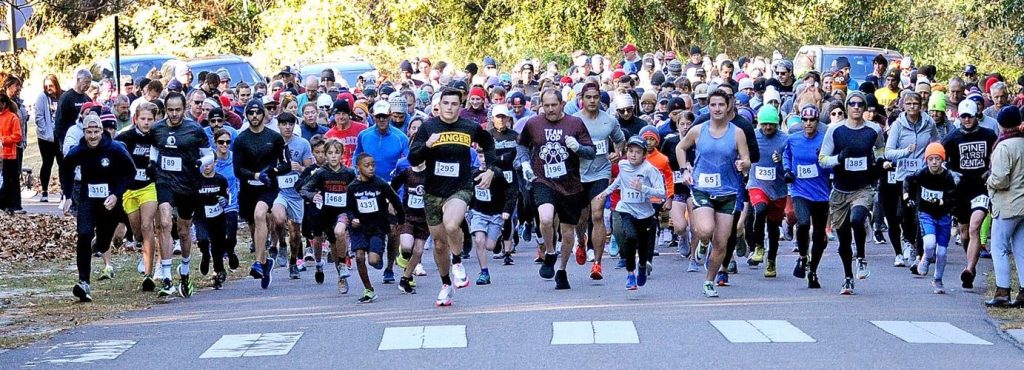
Make room in advance for those Thanksgiving pounds with a run through the streets and neighborhoods of the village of Pinehurst on Saturday, Nov. 22. There will be a 5K run and a Little Gobbler 1-mile fun run. Races begin at the Village Arboretum, 375 Magnolia Road, Pinehurst. For more information visit www.vopnc.org.
Shed a tear and party on at the last First Friday of the 2025 season when Joslyn & the Sweet Compression brings its magical mix of funk and soul to the greenspace beside the Sunrise Theater, 250 N.W. Broad St., Southern Pines, on Friday, Nov. 7. The free-for-all show begins at 5 p.m. and closes down at 9. Y’all know the drill by heart but, just in case, no pets larger than a palmetto bug — and it has to be on a leash — and no outside alcohol. If you need more info go to www.sunrisetheater.com.
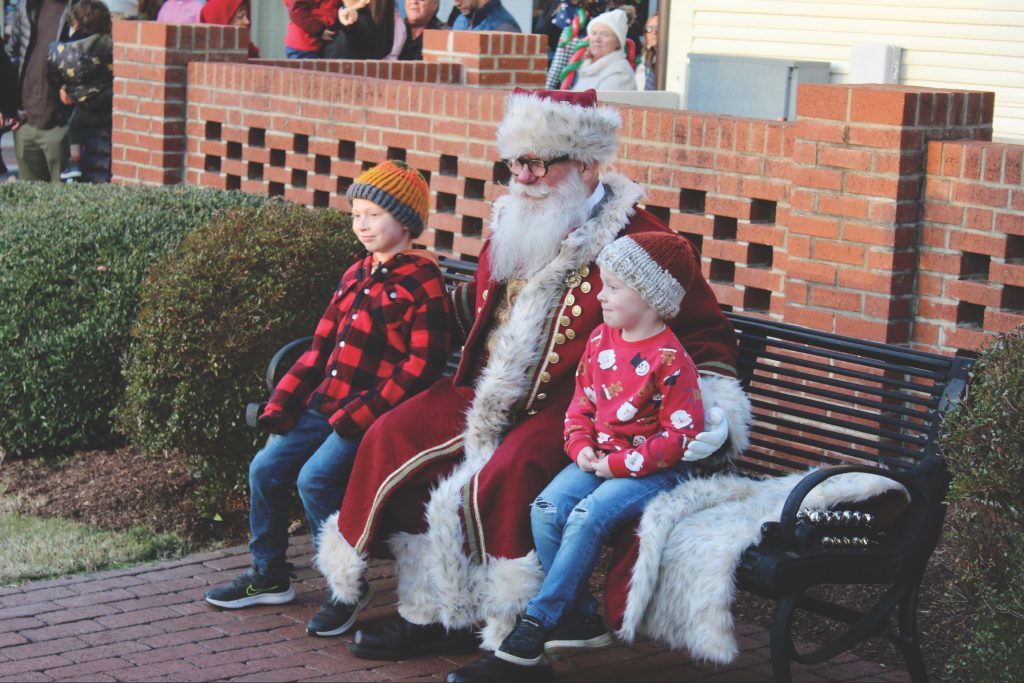
The Southern Pines tree lighting celebration begins at 4:30 p.m. on Saturday, Nov. 29 in the downtown park. Lighted trees line the streets and Santa can’t be too far away. He’s even available for pics if you have your own camera. What’s a camera you ask? It’s an app on your cell phone. If you need more information about Christmas tree lights or Santa Claus, feel free to call (910) 692-7376.
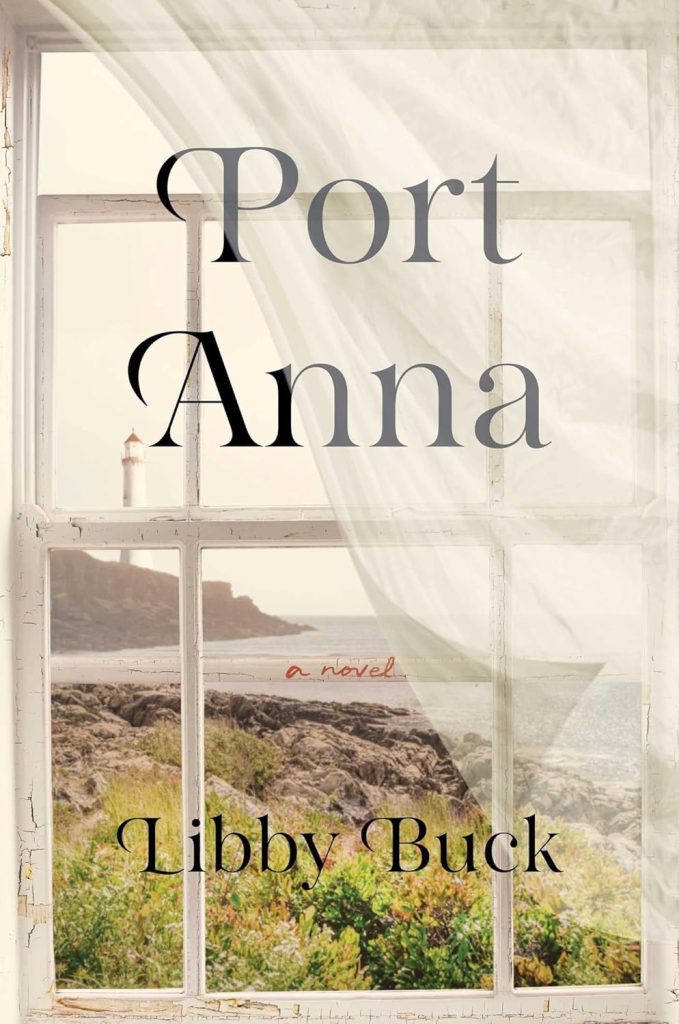
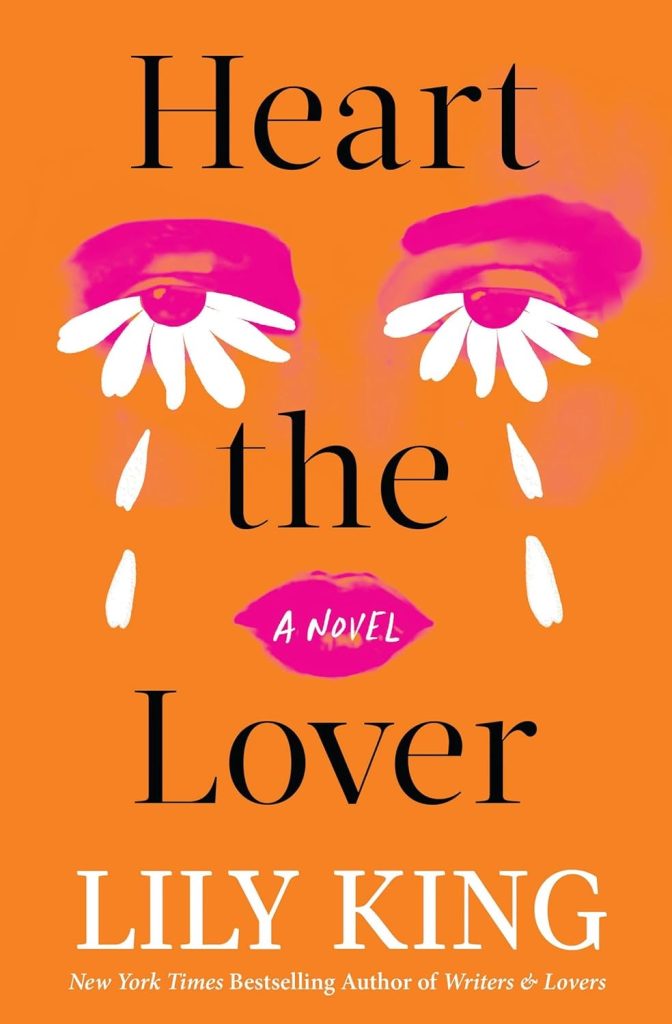
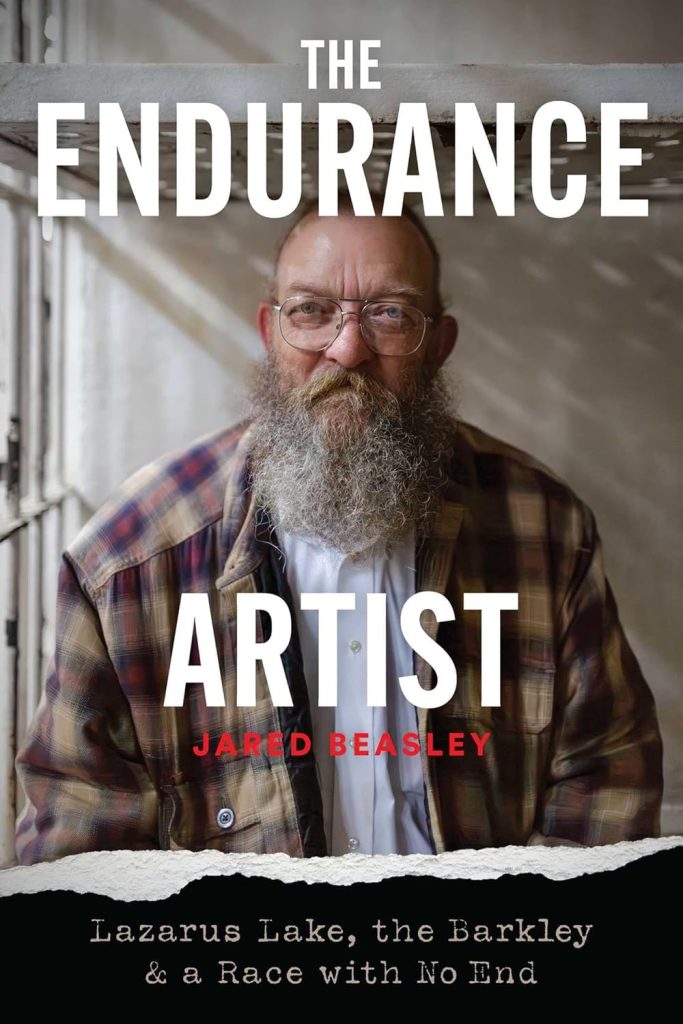
Lily King discusses her new novel, Heart the Lover, at the Country Club of North Carolina, 1600 Morganton Road, Pinehurst, beginning at 2 p.m. on Sunday, Nov. 9. On Monday, Nov. 10, there’s a book launch for Katrina Denza’s new short story collection, Burner and Other Stories, at 6 p.m., at the Weymouth Center for the Arts & Humanities, 555 E. Connecticut Ave., Southern Pines. On Tuesday, Nov. 18, Libby Buck talks about her debut novel, Port Anna, at The Country Bookshop, 140 N.W. Broad St., Southern Pines. Pace Yourself Run Company and The Country Bookshop will partner for a meet-the-author event with Jared Beasley discussing his new book, The Endurance Artist, on Friday, Nov. 21, at 6 p.m. at the bookshop. Last but not least, Livia and Maya Benson will be at The Country Bookshop at 2 p.m. on Sunday, Nov. 30, to talk about their cookbook Cookies Every Day. For more info on all go to www.ticketmesandhills.com.


By Jenna Biter
I peer into the rearview while the Dixie Cups keep singing.
Goin’ to the chapel, and we’re, gonna get ma-a-a-rried. Goin’ to the chapel, and we’re, gonna get ma-a-a-rried. . .
I drop an octave.
Gee, I really love you, and we’re . . .
I go back up.
. . . gonna get ma-a-a-rried. Goin’ to the chapel of love, oh, baby.
She’s staring blankly into space. The 1,000-yard stare, I call it. And the song loops.
Goin’ to the chapel, and we’re, gonna get ma-a-a-rried.
OK. I’m paying attention the whole time this time, all two minutes and 50 seconds. I reposition my hands on the steering wheel and focus on the double yellows.
Spring is here. The-uh-uh sky is blue. Whoah-oh-oh.
I waggle my head back and forth.
Birds will sing, as if they knew, today’s the day, we’ll say, ‘I do,’ and we’ll ne-ver be lonely any more. Because we’re . . .
Hard stomp, jazz hands, move toward the camera. That’d be perfect, I think. Costuming would be, hmmm, I don’t know, hard shoes? For sure, to emphasize the “hard stomp.”
. . . goin’ to the chapel of love.
Ugh. I stopped listening again. I glance in the rearview; still awake.
Bells will ring. The-uh-uh sun will shine. Whoah-oh-oh. I’ll be his, and he’ll be . . .
I used to wonder why music apps have a repeat mode. Actually that’s not true. I didn’t wonder. I just never used it.
. . . goin’ to the chapel of love.
OK. Now I’m really going to listen.
Goin’ to the chapel, and we’re, gonna get ma-a-a-rried.
I drum my fingers on the leather.
Goin’ to the chapel, and we’re, gonna get ma-a-a-rried. Gee, I really love you, and we’re, gonna get ma-a-a-rried. Goin’ to the chapel . . .
I wonder, when the Dixie Cups recorded “Chapel of Love” in 1964, did they think anyone would loop the song for hours on end? Doubt it, though they might’ve dreamed it.
I take another look.
“Yes!” I exclaim — in my head, not out loud.
She’s “reading labels.” That’s what I’ve named it, when she turns her head to the side, middle through pinky fingers in her mouth, lolling eyes trained on the labels on the sidewall of her car seat.
To give proper credit, my dad was the first to ponder whether the Dixie Cups could have imagined the staying power of their pop love song. My parents originally sang the tune to my older brother 30-plus years ago. We don’t know why it puts babies to sleep; we just know it does. And you don’t mess with success.
I turn down the volume.
Goin’ to the chapel, and we’re . . .
I look in the mirror. Out like a light.
The Dixie Cups strike again.


By Stephen E. Smith
On an unseasonably cool August night in Charleston, South Carolina, I’m sitting in Kaminsky’s Dessert Café with Linda Annas Ferguson, whose first novel, What the Mirrors Knew, arrived that day in the form of 500 paperback and hardcover books. (The official release date was Sept. 21.) She’s glowing with that nervous anticipation felt by every author of a freshly published work — she’s proud, exuberant, anxious and pleasantly overwhelmed by her achievement. She’s seen the germ of an idea to completion, and the fruits of her labor are contained in a beautifully designed novel of almost 400 pages that pleads to be read by appreciative readers.
This isn’t Ferguson’s first book. She began her writing career as a poet and has successfully published and marketed five books of poetry. Her poem “On the Way Home” appeared in our September issue.
Still, I am keenly aware that writing poetry can, oddly enough, be an encumbrance. When a writer proficient in one genre tests his or her talent in a different form — a novelist writes poems, a playwright turns to poetry, etc. — we’re often skeptical, wondering how much professional skill will carry over. Who can recite one of the poems from Hemingway’s first book, Ten Poems? How many of us have read Faulkner’s The Marble Faun? So here’s the question: Will the accomplished poet become the clumsy apprentice to the novel?
Turns out that narrative poetry was Ferguson’s training ground, so she experienced a natural transition to prose. Upon reading her novel — having escaped the shadow of Kaminsky’s Tollhouse Bourbon Pecan Pie to delve into the haunting darkness of What the Mirrors Knew — it’s apparent that her poetic skills are readily transferable.
“My writing life began with telling stories through poetry,” Ferguson says. “Unlike many writers who were influenced at a young age, I only started writing seriously when I was around 30 years old. I scribbled my family stories in journals which eventually became poems.”
Ferguson’s novel is a lyrical blend of spirituality and philosophy, featuring sharply drawn characters who emerge as wholly believable. Her use of dialogue is sharp and sparse, and the narrative is enriched by an energized prose style that propels the reader ever forward. Stir in a touch of philosophy, spirituality, mystery and romance, and you’ve got a first-class novel that reads like the work of a seasoned professional. More importantly, the narrative embodies a strong sense of resonance, a lingering afterglow that will leave the reader pondering the moment.
“In some ways my novel is similar to a long poem, with one particular chapter in it serving as a volta, a turning point, as in a sonnet. I haven’t written a great deal of sonnets, but many poems, even free verse and especially narrative ones, have a turning point about two-thirds of the way through.”
Ferguson is also influenced by film, conceiving her chapters as scenes from a movie. “I visualize it all in my mind as if I am present in each scene,” she says. “I’ve always enjoyed the transition from scene to scene in films. At the end of one chapter I have a bee beating its wings against a glass window, and the next chapter begins with a friend rapping on the back door glass. Because of what film has instilled in me, transitions seem to come without much conscious plotting.”
Leaving Charleston’s blessedly cool weather behind, the question that occurs to me in the moment is what strategy Ferguson has contrived to promote her novel. She’s had experience running a small bookstore and obviously has “a business head,” but the marketplace for books is highly competitive. Chain and local bookstores have partnered with major publishers to feature readings by their new authors. The competition is keen for time and space to make appearances, often squeezing out small, independent presses. Moreover, online platforms featuring books can place another barrier between the writer and consumer. Unless you’re John Grisham, Stephen King or James Patterson, your books aren’t likely to fly off the shelves without some vigorous umph from a promotional entity.
But Ferguson has a plan. “Creating good content on social media is critical in this environment of cyberspace interaction,” she says. “My first step was to expand my presence to two Facebook accounts, two Instagram accounts (one personal and one professional), and one LinkedIn account. I have quite a few followers on Facebook, but I don’t just create posts. I build friendships as I congratulate other writers on their accomplishments, and they connect with what I am doing. I join groups where we can share our successes and issues and support each other.”
Initially, Ferguson vacillated about creating a video trailer for the book, but she’s glad she did. It includes a narrator, music, quotes from the novel and a beautiful video of Ireland. Besides posting it on social media, she can upload it to a personal YouTube platform.
“And one thing I would add, which readers will find prevalent in my writing, is that I take stock in how the universe seems to help those who have a dedication to their path, regardless of where they are on it. ‘Intention, attention, and commitment’ are good promises to make to yourself. Keep writing and publishing!”
Which is precisely what Linda Annas Ferguson has done. She’s liberated her imagination, pressed the power button on her computer and written a novel. She’s done something that anyone who’s determined to write a book can do — if they have the skill, nerve and determination to do it. The big job, the hard work of putting it in the hands of readers, lies ahead.


By Ashley Walshe
November is the mother of quiet wonders.
Rainbows in spider silk. Wood ducks, migrating by moonlight. The slow-beating heart of a box turtle in brumation.
She gives and gives, offering her final mild days, her cool-season greens, the last of her berries, nuts and seeds.
“Eat up,” she says to the wild ones. “There’s plenty here to go around.”
Bird and squirrel delight in her sweet and earthy fruit. Fox and deer, too. A feathery frost gilds mottled oak leaves on the first frigid morning.
When weary spider spins her silken sac, a cradle for a thousand eggs, the mother leans in close.
“Go now,” she whispers to the weaver. “Your work is done. Your babes shall know the tender kiss of spring.”
Wren song rings through chilly air. The last colored leaves gleam like stained glass in a light-filled cathedral. The altar remains blessed with beautyberries, acorns, persimmons and rosehips.
“Nourish yourself well,” the mother commands, folding moldy fruit and spoiled nuts into her womb-dark soil, where even the dead leaves are precious.
“I can use this,” she murmurs of what’s gone to rot. “Nothing will be wasted.”
Deciduous trees drift toward dormancy. Black snakes seek out burrows. Wood frogs prepare to freeze solid.
By and by, the great mother readies herself for winter’s deep, long sleep.
Surrendering her beauty back to the hard, damp earth, she strips away all she has to give: a humble banquet for the wild ones; what precious light remains; a bouquet of blessings in the name of quiet wonder.

But there is always a November space after the leaves have fallen when she felt it was almost indecent to intrude on the woods . . .
— L.M. Montgomery,
Anne of the Windy Poplars
A no-fuss recipe you’ll return to again and again. Simple, nourishing and gentle on the system, this soothing side dish is an unexpected crowd-pleaser at the most dynamic of family gatherings — and a treat the day after, too.
Prep and cook time: n/a
Yield: immeasurable
Ingredients
6 bushels of gratitude
3 pecks of grace
1 heaping cup of humor
4 dollops of kindness
1 pinch of forgiveness
1 dash of compassion
A dusting of birdsong
A breath of fresh air
Sunshine (if available)
Directions
Combine all ingredients. Stir and breathe slowly. Break for a kitchen dance party. Repeat.
Note: Modify ingredients to your taste. Sprinkle in some new ones. Leave out what doesn’t serve you. Make this recipe your own.
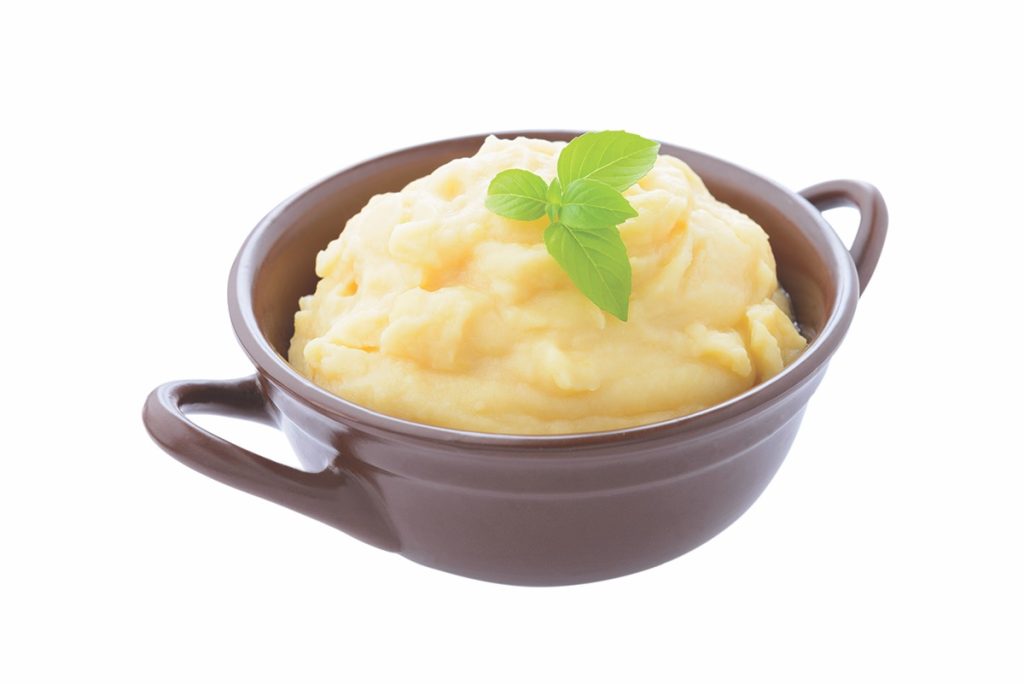
If one plans to mash potatoes for the Thanksgiving masses, one knows they must double the batch. But does one have a plan for that whopping load of leftovers?
Three words: mashed potato pancakes.
If you haven’t tried them (there are several recipes available online), do yourself a favor and whip out the skillet. This isn’t a maple syrup-type situation. Think sour cream and chives. Think breakfast, lunch or dinner. Think no further.
You’ll thank yourself for mashing the extra mile. Especially if the fam is still visiting.


By Jim Dodson
November is the month I take stock of the year’s happenings, the ordinary ups and downs as well as the unexpected challenges and graces that come with being alive and kicking in 2025. This year,
however, I’m looking back a bit further.
Two years ago, seemingly out of the blue as my oldest golf buddy, Patrick, and I were setting off on a golf adventure across Southern England, celebrating our mutual 70th birthdays and 60 years of friendship, I was diagnosed with prostate cancer. Talk about a trip buzz killer.
Naturally, I was surprised to discover that I was one of a quarter million American men who annually develop prostate cancer. But perhaps I shouldn’t have been.
My dad, you see, discovered his prostate cancer at age 70. He chose to have his prostate surgically removed and went on to live a productive and happy life for the next decade. My nickname for him was “Opti the Mystic,” owing to the extraordinary faith and unsinkable optimism that carried him to the very end.
A few years later, as I was completing work on my friend
Arnold Palmer’s memoir, A Golfer’s Life, the King of Golf was also diagnosed with the disease. Likewise, Arnie had just turned 70. He went straight to the Mayo Clinic and had his prostate removed. He lived a full life, reaching 87 years.
Experts say that most prostate cancers occur in men without a family history, though they concede that there may well be a family gene factor involved. In retrospect, I like to think that I was simply destined to follow the leads of the two men I admired most — a unique medical case of “like father, like son, plus his favorite boyhood sports hero.”
Joking aside, I chose a different treatment path than my dad and Arnie because, as I learned, there have been tremendous medical advances in prostate cancer treatment since their dances with the disease, providing modern patients a much greater chance of living out their natural life expectancy.
Thus, under the direction of an outstanding urologist named Lester Borden and veteran Cone Health oncologist Gary Sherrill, I chose six weeks of targeted radiation therapy followed by 24 months of a relatively new “super drug” my oncologist called “the Cadillac of prostate treatment.”
During the discussions of options, I quipped to Lester (a fellow golfer) that I hoped to publish at least three more books on golf before I exited the fairways of life and someday shoot my age, the quest of every aging golfer. I also assumed that the golf trip to England was now out of the question.
Lester smiled. “You’ll have three books and maybe more,” he said. “Meanwhile, the best thing you can do now is to go play golf with your buddy in England and have a great time. That’s the best medicine.”
So, off we went. And though it turned out to be the statistically wettest week since the Magna Carta, Patrick and I had a wonderful journey from Southern England’s east coast to west, seeing old friends and playing 18 nine-hole matches through howling winds and sideways rain over seven of Britain’s most revered golf courses. Somehow, amazingly, our roving golf match wound up being tied — in retrospect, perhaps the perfect ending and just what the doctor ordered. My prostate problem hardly entered my mind.
During our last stop at a historic club called Westward Ho, where we were both overseas members for many years, we had a delightful lunch (probably for the last time) with our dear friend, Sir Charles Churchill, 90, a legend in British golf circles, who reveled in our soggy tales of a golf match nobody won. The real winner, Charles reminded us, was our enduring friendship.
As anyone who makes the cancer journey understands, or quickly discovers, optimism and faith are essential tools in the fight against this merciless disease.
Upon our return I resolved to spend the rest of my days with more optimism, good humor and a deeper gratitude for the life and work I’ve enjoyed — along with an awakened empathy for others who aren’t as fortunate.
The tools in my kit include a keen (if somewhat private) spiritual life that I exercise every morning when I chat with God under the stars. Plus, I often ask his (or her) advice throughout the day, especially when I’m watching birds at the feeders in early morning or late afternoon.
One of the surprising gifts from this period was a song I heard by chance — or maybe not? — called “I See the Birds,” by a gifted songwriter named Jon Guerra.
I was stuck in heavy city traffic, late for a lunch date and stewing over the insane way people drive these days, when this incredible song from God-knows-where mysteriously popped up on my music feed.
I see the birds up in the air
I know you feed them
I know you care
So won’t you teach me
How I mean more to you than them
In times of trouble
Be my help again
By the end of the song, I was fighting back tears. It’s from a beautiful album simply titled “Jesus” that’s based on the Book of Matthew.
That song became the theme of my two-year journey back to health. I still listen to it at least once a day.
I also turned to the timeless wisdom of the old friends who line my library bookshelves.
“Don’t waste your life in doubts and fears,” advised Ralph Waldo Emerson, one of my favorite non-golfing heroes. “Spend yourself on the work before you, well assured that the right performance of this hour’s duties will be the best preparation for the hours or ages that follow it.”
With that guidance, the work before me during my cancer journey included the pleasure of publishing my most rewarding book and finishing a landscape garden that I’ve worked on for a decade. I also received a new left knee that might someday improve the quality of my golf game.
Best of all, we learned that my daughter, Maggie, is pregnant with a baby girl, due Christmas Eve, finally making me a granddad. Talk about a gift from the universe.
The final touch came last week when oncologist Gary Sherrill provided the good news. “You’re doing great,” he said. So, I’m doubling down on the things I’ve learned from my unexpected journey.
To judge less and love more. To thank my maker and see the birds up in the air.
Who knows? Maybe someday this budding grandpa may even shoot his age.

By Bill Fields
Every fall, at some point after the days began to cool, I could count on hearing a complaint from my father.
“Those damn persimmons,” he would say. “That tree needs to go.”
Our yard was mostly populated by longleaf pines, half a dozen of which loomed taller than the two-story house they surrounded. Their fellow evergreen was a bulky cedar, thickened over the years like a college freshman with a generous meal plan and little willpower. Several maples and sycamores gave our corner of the block a little color around Halloween.
Dad realized that having to clean up the needles and leaves after they drifted to the ground was the price of shade. But he was much less understanding about what dropped from our Diospyros virginiana each autumn.
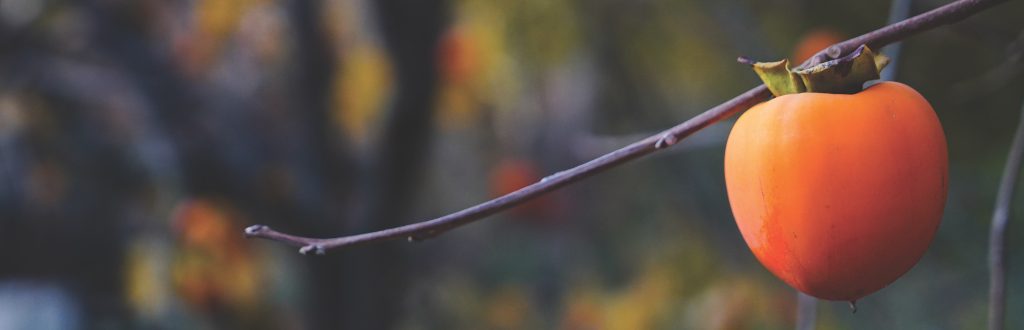
About 40 feet tall, our American persimmon tree, with its dark, blocky squares of bark, stood next to the driveway. It was in just the right location for its fruit to fall on our cars and stain them. We were a (well) used-car family during my early childhood. But Dad kept the vehicles washed and waxed and didn’t appreciate the mess made by the fleshy persimmons, which were about the color of a basketball and the size of a ping pong ball.
Sometimes, we kids threw them like baseballs at each other, unaware that the sweet pulp of the ripe fruits could be — when mixed with the proper amount of milk, sugar, eggs, flour and butter — turned into a tasty persimmon pudding. (I only sampled an unripe persimmon once, so astringent was its flavor.)
One day, my father hired a man with a chain saw, and the persimmon tree was no more. Its remains were hauled to the curb to be hauled off by town workers. For decades a small stump marked its former presence and demanded a slight detour when mowing.
Dad was not a golfer at that point, and I was a mere fledgling in the game. Neither of us knew that the type of tree chopped into pieces and piled by the curb figured so prominently in golf. Beech, ash, dogwood and other species were utilized for wooden clubheads during the 18th and 19th centuries in Great Britain, but American persimmon (native to south central and eastern parts of the U.S.) became the material of choice beginning in the early 20th century. Persimmon is dense and durable, ideal for golf clubs. I have wondered whether any clubheads could have been produced from the wood of the tree we had taken down because it was a nuisance.
I was a young teenager when I acquired my first persimmon-headed woods, lightly used MacGregor Tourneys manufactured in the late 1960s. Experiencing the “satisfying thwack” of a well-struck shot was a revelation. The sensation was something golfers of all abilities, from duffers to legends, sought to feel. When a golfer found a certain persimmon club to his or her liking, it could be a magical and productive union.
Ben Hogan broke through for his first individual wins on tour in the spring of 1940 — in Pinehurst, Greensboro and Asheville — with a MacGregor driver just given to him by Byron Nelson. Sam Snead used an Izett model driver and Jack Nicklaus a MacGregor 3-wood for decades. Persimmon clubs crafted in the 1940s through the early 1960s were regarded as being of the highest quality because of the old-growth trees the wood came from. Johnny Miller won the 1973 U.S. Open with a MacGregor driver made in 1961 and 3- and 4-woods manufactured in the 1940s.
The development of metal-headed woods in the 1970s and 1980s spelled the end of persimmon’s prominence for clubheads. Bernhard Langer was the last to win a major championship with a persimmon driver, at the 1993 Masters. Most of the high-tech drivers on the market now have clubheads more than twice the size of the persimmon classics.
Not that the old beauties which were such a part of golf history aren’t used today. There is an enthusiastic subset of golfers who enjoy collecting and playing vintage persimmon-headed clubs in at least some of their rounds. I am proudly among them. You get some strange looks from playing partners. A kid I got paired with at my local muni asked, “Don’t you like technology?”
But on the occasions when your drive with a 65-year-old club finishes in the same vicinity as theirs struck with a current model, it can be very satisfying. Golf’s much different with the modern stuff, but I’m not sure it’s better.


Why I Bought the Economy Size
Because she was not pretty,
her overbite designed to rip prey,
canines sharp as javelins, slight
lisp. Because she could stand
to lose a few pounds, and wore
a flowing flora, and a gray cardigan
strained across her chest. Because
she smiled when she talked, her voice
soft as a mother soothing a fussy child;
because she suggested the best bargain
but did not insist, just gently opened
the jar, offered it like a sacrament,
invited me to dip my finger into the cool
face cream, gently imploring, try it;
because I needed moisturizer, and she
needed that job, I bought the large size,
thanked her for the free gift, samples
wrapped in tissue paper and tucked
inside a pink pouch, the color of her dress.
— Pat Riviere-Seel


By Jim Moriarty
When Linda Purl and her real life partner, Patrick Duffy, take to the stage to perform Love Letters, they can be forgiven if there is an occasional, if faint, sense of déjà vu, sharing in their own way both the distance and intimacy of the characters they portray.
Judson Theatre’s production of Love Letters, a finalist for the Pulitzer Prize in Drama written by A. R. Gurney, takes the main stage at the Bradshaw Performing Arts Center’s Owens Auditorium on Friday Nov. 14, at 7 p.m., with additional shows on Saturday Nov. 15, at 2 p.m. (with a “talkback” session with the actors following), and on Sunday, Nov. 16, at 3 p.m.
The play, first performed in 1988 and debuting both off Broadway and on the following year, is told in the epistolary form. The play’s sole characters, Melissa Gardner and Andrew Makepeace Ladd III, are side by side, seated at tables or standing, reading the notes and letters they have exchanged over five decades living their separate lives. In those intimate communications they tell each other about their dreams and ambitions, their hopes and disappointments. Coincidentally, Love Letters was Judson Theatre’s inaugural play in 2012, starring Tab Hunter and Joyce DeWitt.
Purl and Duffy became a couple via Zoom during the COVID pandemic, mimicking in their own way a shorter, more hi-tech version of Gurney’s characters though, as Purl says, “We’re so different from the characters we play. We first met when we were in our late 20s. We did a reading together. Literally 20 years later we bumped into each other again. And 20 years after that. We had these momentary, ‘Oh, hi. How are you doing? Nice to see you. Great. Great.’ And 20 years would pass and we’d have the same conversation.”
The lockdown changed all that. No one was working, the theater world was closed. Their relationship began in a group text and elevated to a standing date every evening. They even dined together a thousand miles apart until one day Duffy got in his car and drove from Oregon to Colorado. They’ve rarely been apart since.
Love Letters is a bit player in that. They’ve performed it multiple times in a half a dozen or more locations including London, Belfast, Florence and now Pinehurst. This will be the third time Purl — best known for her roles in The Office, Happy Days and Matlock — performs in a Judson Theatre production, having appeared in Joan Didion’s emotional one-woman play The Year of Magical Thinking, and in Jeffrey Hatcher’s comedy Mrs. Mannerly, both in BPAC’s black box McPherson Theater. “It’s become a very special place for me because of the guys who run it, Morgan (Sills) and Dan (Haley),” says Purl.
Each time Duffy and Purl do Love Letters together, it reveals more nuance for them. “It’s really the mark of such a good play,” says Purl. “You think, oh, this time it’s not going to get me, it’s not going to zap me in the heart or stomach, but it does. It seems like a simple play, and it is — and it isn’t.”
Duffy, well-known for his roles as Bobby Ewing in the nighttime soap Dallas and as Frank Lambert in Step by Step, has the same reaction. “The beauty of it is that it takes place over 55-60 years of these peoples’ lives,” he says. “You discover things from when they were 12 that you might not have thought about in rehearsal or the first three or four times you did it. Every time there’s a nice little treat, I would say, in doing the show. It never gets old.”
Does their own experience inform their work in Love Letters? On the margin, perhaps. “When you’re out there, you use everything you can,” says Purl.
“In my mind there’s no specific correlation as I’m doing it,” says Duffy, “but we confess this all the time — every once in a while on stage I’ll look at Linda and she’ll give me one of those looks that cemented the deal over Zoom.”

Story and Photograph by Rose Shewey
Far be it for me to suggest you have anything but turkey for Thanksgiving. Tradition is tradition. But for practical purposes, those big ol’ birds may not be the perfect solution for every household across the land — especially those who celebrate in a more intimate setting or by their lonesome.
Take my family, for instance: There’s Mom, Dad, and a 7-year-old picky eater. If just the three of us opted to celebrate at home, even the smallest gobbler would produce days’ and days’ worth of leftovers. And, quite frankly, we don’t love turkey enough to have it for breakfast, lunch and dinner for an entire week.
Case in point: In 2024 my mom came to visit from Germany, where this very American holiday isn’t celebrated. To give her the complete experience of a traditional Thanksgiving dinner, we bagged the smallest turkey we could find and roasted it in the oven, along with all the usual fixings. The meal was spectacular but in the days that followed, we grew increasingly tired of coming up with ideas on how to use up the leftovers.
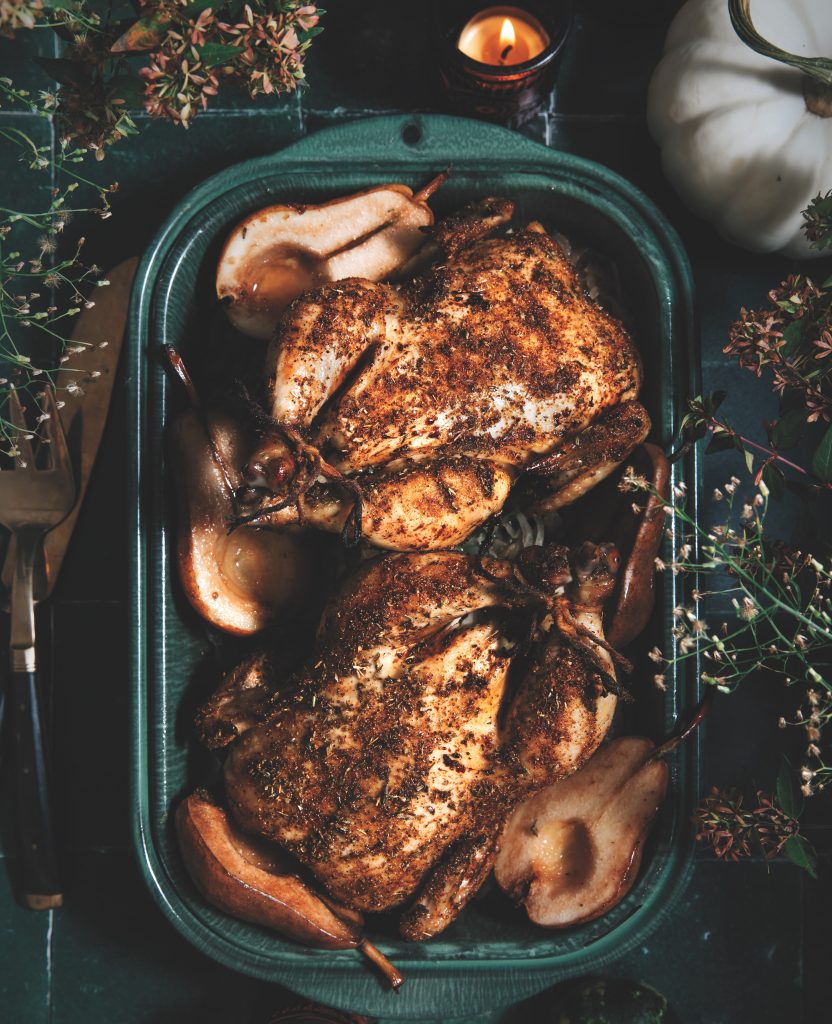
Passing on turkey does not mean you have to be content with ordinary, everyday fare on the last Thursday in November. Quite the opposite. While turkey is special, so are Cornish game hens — for the novelty of having a whole miniature bird on your plate, if nothing else. One bird makes about one portion of meat. Cornish game hens are extraordinarily tender and, contrary to their name, not “gamey” at all.
I’m in good company on Thanksgiving since my husband is as pragmatic about large stuffed birds as I am — as long as the substitute isn’t nut loaf.
Ingredients
2 Cornish game hens, fully thawed
2-3 tablespoons olive oil
2 pears
Maple syrup, for drizzling
Balsamic vinegar, for drizzling
(For autumn spice rub)
2 tablespoons smoked paprika
1 tablespoon onion granules
1/2 tablespoon garlic granules
1/2 tablespoon ground coriander
1 teaspoons sea salt
1 teaspoon ground cinnamon
1/4 teaspoon ground nutmeg
Directions
Begin by making the spice rub. Combine all the spices in a small bowl and mix with a fork. Set the Cornish game hens in a roasting pan and remove giblets, if your birds have any inside. Brush a little olive oil on the hens, then massage the spice rub into the skin and all over the birds. Tuck the wings and tie the drums together using butcher’s twine. Bake in the oven on a lower rack at 425F for 50-60 minutes, or until the thickest part of the breast reads 165F. Cooking time will vary depending on the size of your hens. Wash, dry and halve the pears, scoop out cores and drizzle pears with a little maple syrup and balsamic vinegar. Arrange them next to the hens in the roasting pan for the final 20 minutes of cooking. Serve roasted Cornish game hens and pears with roasted potatoes and/or vegetable or any of your favorite side dishes.


By Deborah Salomon
Photographs by John Gessner
A house doesn’t have to be a home. It can evolve into an office, a store, a B&B, a museum. In can even be a serene hideaway for Writers in Residence at the Weymouth Center for the Arts & Humanities.
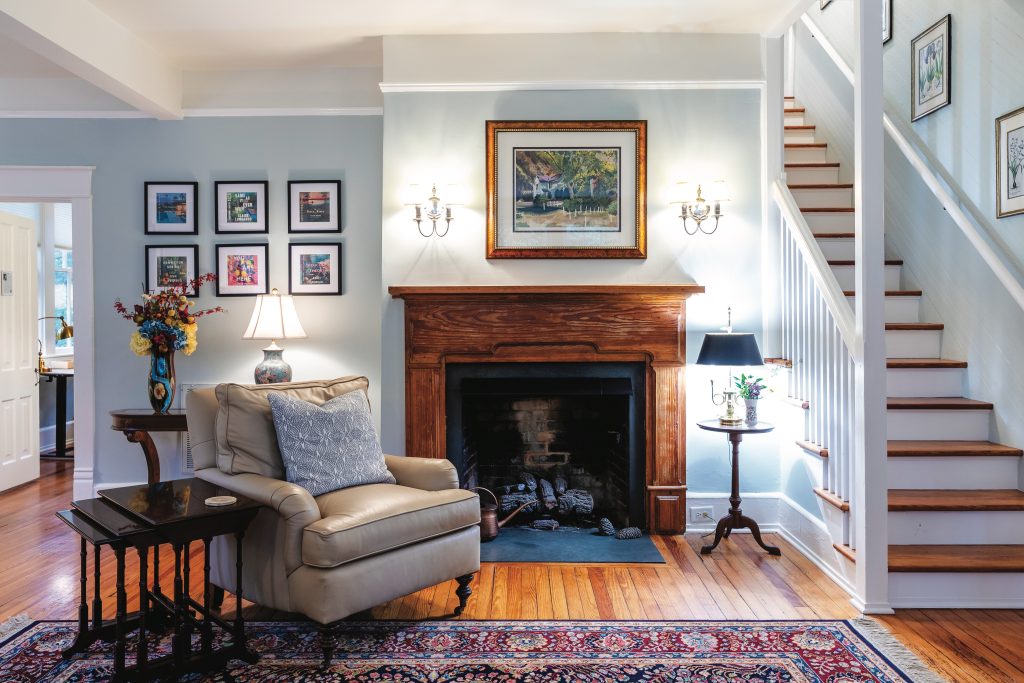
Lamont Cottage, tucked behind the Boyd homestead and shielded by overgrowth, answers to this role. After decades as a rental property, it has been remodeled, adapted, refurbished and furnished in mid-20th century mode plus AC, Wi-Fi, washer/dryer and a patio.
So where’s the giant wall-mounted, stream-fed TV? Nowhere to be found.
Writers are there to write, not watch the Game of the Week. After days of solitary work, midnight confabs with other writers occupying the four bedrooms (two adapted for mobility issues) carries forth a tradition practiced by James Boyd, when Thomas Wolfe, Sherwood Anderson, F. Scott Fitzgerald and other literary giants of the 1920s Jazz Age stayed for a spell at Weymouth, the sprawling Boyd estate. According to legend, Wolfe arrived in Southern Pines by train late one summer night, walked up the hill to Weymouth, got in through an open window and crashed on a sofa. Whatever the actual details of his visit, Fitzgerald later felt compelled to send Boyd a letter of apology.
Katharine Lamont, barely out of her teens and from an equally wealthy/sporty clan, fell in love with James and built the cottage (originally called The Gatehouse because of its location) for herself, living there until their marriage in 1917. The couple occupied the cottage again in 1922 during the construction of the current Boyd house, and Katharine served as her husband’s secretary/acolyte while he wrote Drums, a hefty volume published in 1925 and touted in its day as the best historical novel of the Revolutionary War. Katharine lived in the cottage one more time, moving back after James’ death, at 50, in 1944.
The literary coterie that flourished in and around Weymouth added glitter to Moore County’s reputation for mild winters, golf and horses. Its artistic dimension was greatly enhanced in 1979 when Sam Ragan, N.C. poet laureate, editor and publisher of The Pilot, and Weymouth board president, instituted the Writers in Residence program. Published North Carolina authors were invited to stay in the house for one or two weeks to work on their projects. Writers had to reside in N.C. or have strong ties to the state.
As vast and charming as the Boyd house is, navigating its stairways presented an accessibility problem. A solution came from the writers themselves, says Glenda Kirby, current board chairman. Why not renovate Lamont Cottage? The possibility was discussed but derailed by COVID.

Tabled but not forgotten. When the subject was broached again in 2024 the entire board agreed. “It was part of our mission,” says Kirby. Funds came from donations and other sources, and the project came in under budget.
The ground floor now has three bedrooms, one accessibility-friendly, with a ramp at the front entrance. Adjustments were made without harming handsome woodwork, heavy paneled doors, moldings, baseboards, mantelpiece and native knotty pine floors that were newly refinished.
Each of the four bedrooms bears the name of a female N.C. Literary Hall of Fame author. A terrace and several porches invite socializing on cool evenings.
Except for the pale yellow kitchen, walls throughout share a soft, calming green. “I selected it to create a sense of serenity,” says Kathryn Talton, one of the muses responsible for planning the cottage renovation, along with Kirby, Katrina Denza, Pat Riviere-Seel and a committee of dedicated volunteers.
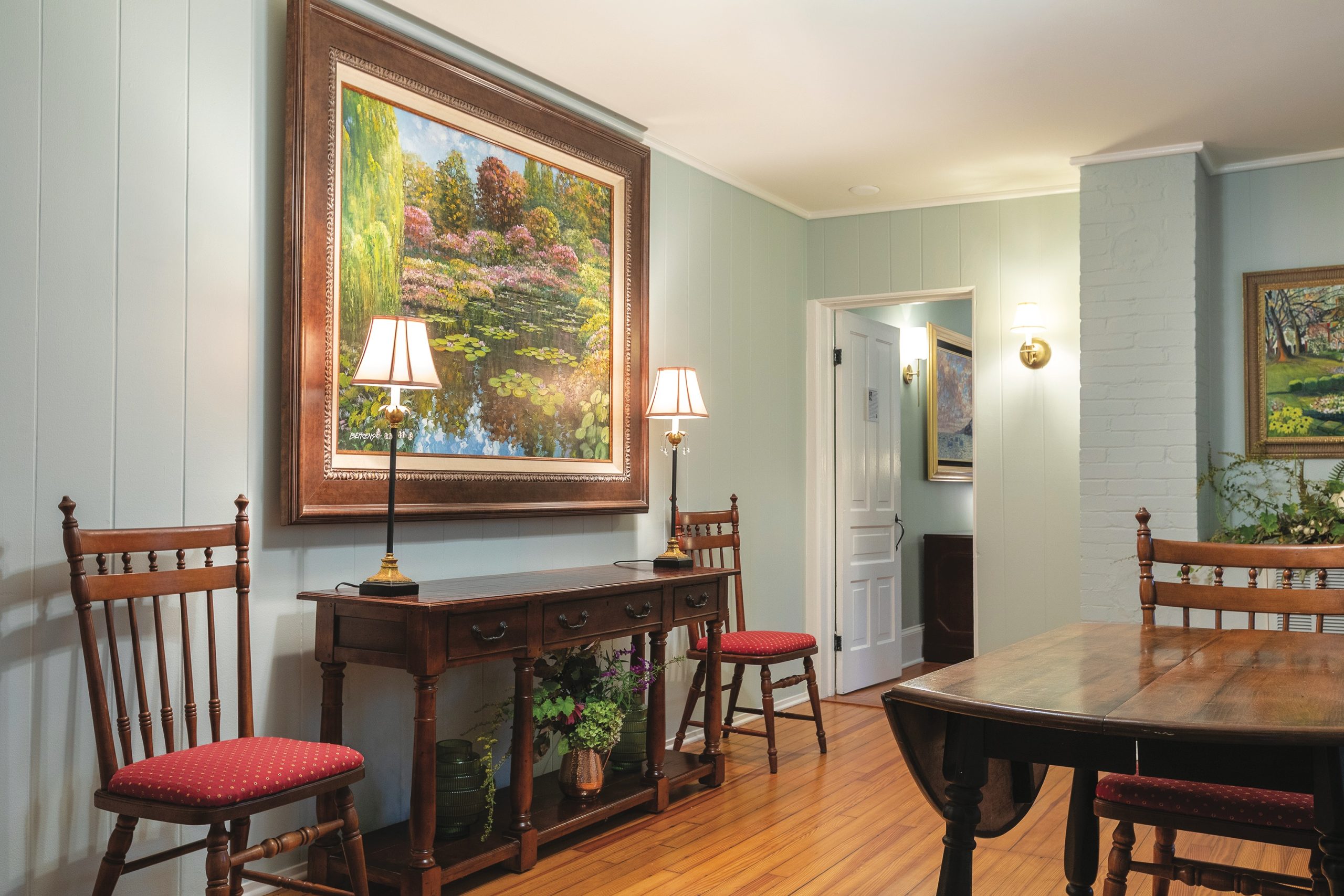
Furnishing the house was a challenge, even for a muse. Word got round and donations trickled in, some from the recent renovation of the Carolina hotel lobby do-over. Volunteers scavenged through used furniture outlets in search of hidden gems. Wing chairs were reupholstered. A butter-soft leather settee speaks to a quality lifestyle, as does an enormous sleigh bed and side table/nightstands, some dainty, one with a thick, dark marble top. Quilts are made from flat, small-print fabric, nothing puffy. Donated lamps cop the blue ribbon, especially a classic “trumpet” and a stocky part-porcelain Chinese specimen, one of several nods to Asian décor. The art is spectacular, from landscapes to prints and portraits. Writing niches, some looking out over treetops, have office-friendly tables to accommodate a laptop and source materials.
In Katharine Boyd’s time, kitchens leaned utilitarian. Here, the muses part ways, opting for black appliances (including a dishwasher and oversized fridge), a smooth-top electric stove and a pantry divided into four so each guest can stash his or her coffee and cereal. Pots, dishes, cutlery, of course, for DIY meals. Chatelaines of Katharine Lamont Boyd’s echelon didn’t use sporks and paper plates.
The word “cottage” underestimates this 2,000-plus-square-foot showplace, especially when it comes to its tall, multipaned windows in the sitting room, the shimmering sunlight revealing wavy original glass. No ghosts have as yet been spotted, but writers might watch for a slender lady with big round eyeglasses peering through the wavy panes watching over authors plying their craft.
“Sometimes you can feel Katharine’s presence here,” Riviere-Seel says. “She’s a good spirit.”
We use cookies to improve your experience on our site. By using our site, you consent to cookies.
Manage your cookie preferences below:
Essential cookies enable basic functions and are necessary for the proper function of the website.
Statistics cookies collect information anonymously. This information helps us understand how visitors use our website.
Google Analytics is a powerful tool that tracks and analyzes website traffic for informed marketing decisions.
Service URL: policies.google.com (opens in a new window)
SourceBuster is used by WooCommerce for order attribution based on user source.