Out of the Blue

Falling for October

And putting the summer behind us

By Deborah Salomon

At last. . . October!

The word, hardly mellifluous. The image, glorious, when oaks and maples flame yellow, orange and red before browning and blowing away. The chill of an October morning washes away the humid, fetid air of summer like a wave upon the Maine seacoast.

I fell in love with October at age 5, maybe 6, when my parents took the train from Manhattan, where we lived, to a dude farm in southern Vermont. Here, post-harvest, the Jones family rented out one-room log cabins to city folk hungry to pet a pig, pick a pumpkin, milk a cow, feed a chicken, skip a stone across the pond and eat at a long communal table in the farmhouse.

Heaven, especially breakfast, served farmer-early: pancakes drenched in local maple syrup, maybe fried apples from trees bordering the meadow.

My parents weren’t big on vacations. This is the only one I remember, ever.

The cabins had neither electricity nor running water. Every morning a metal bucket appeared on the tiny front porch, with a skim of ice around the edges.

Good thing we brought flannel pajamas.

How humans are wired into cycles of the sun and the seasons never fails to amaze. All I know is the images and flavors of this weekend left an imprint, which may explain why, for a lifetime, I have risen before dawn and gloried in October.

For me, the rapture of April and May signal only hay fever . . . and dreaded summer. September . . . unpredictable.

This summer wasn’t too bad, weather-wise, until August’s last gasp of 90-plus degree days. But it was a disturbing summer, almost too disturbing for October to erase. The COVID’s welcome slide became a surge, especially among children. Images of families — hot, hungry, unwashed, desperate — waiting for evacuation from Afghanistan led every newscast. I can’t erase from my memory the infirm grandma being pushed down a dusty road in a wheelbarrow. Leaders proved that common sense is not necessarily taught at Harvard and Yale. Katrina’s cousin Ida struck New Orleans with a vengeance. Providing near-comic relief, the royal family bickered and whined while Ben Affleck, to the paparazzi’s delight, rediscovered J-Lo.

Is that Shakespeare rewriting himself, “This was the summer of our discontent . . . ” from his grave?

Octobers of yore meant watching my son score touchdowns, a pot of homemade veggie-beef soup in the fridge, McIntosh apples and corduroy. As a child I wore corduroy overalls, jackets and hats, as did my children. Their navy blue became faded and soft from many washings.

Whatever happened to corduroy?

Any day now the air will feel scrubbed clean in the low afternoon sun. Temps and humidity down, bugs (except yellow jackets) almost gone. AC off, windows open. True, fall foliage is not a Sandhills’ forte. For that, plan a brewery-crawl in Asheville. But October still imparts not only beauty but relief . . . summer is over, winters here are nothing to dread.

October is the dividing line. I’m oh-so-ready to hop across.

Welcome, October. And thanks.  PS

Deborah Salomon is a writer for PineStraw and The Pilot. She may be reached at debsalomon@nc.rr.com.

Almanac

October Almanac

By Ashley Wahl

October is the language of crows: playful, dark and mysterious.

On a crisp, gray morning, swirls of golden leaves dance round like Sufi mystics and a plump squirrel quietly munches seeds beneath the swinging feeder. The air feels charged — electric — and from the silver abyss, a crow caws five times, the staccato rhythm stabbing the ether like a haunting, dissonant chord. 

Caw. Caw. Caw. Caw. Caw.

In the crooked branches of a distant tree, a council of crows rattles back and forth as if casting their clicks and grumbles into an invisible cauldron. Their crude chatter grows louder and increasingly harsh, escalating until it reaches a roiling cackle.

The coven has spoken.

One by one, the black birds take wing, flashing across the sky in glorious and raucous splendor.

Below, asters spell out messages on the leaf-littered lawn. Only the crows can read them. And when they chant the words aloud — their many raspy voices one — you are equal parts delighted and disturbed.

Ca-caw! Ca-caw!

A single crow descends upon the wrought iron fence, pivots round in three slow circles, then cocks its head in silence.

The squirrel has scurried off.

A flurry of leaves jumps as if spooked by wind.

The crow tilts back its head and lets out three chilling squawks.

Trick-or-treat?

There is a bird who by his coat,

And by the hoarseness of his note,

Might be supposed a crow.

— William Cowper

Let’s Grow Together

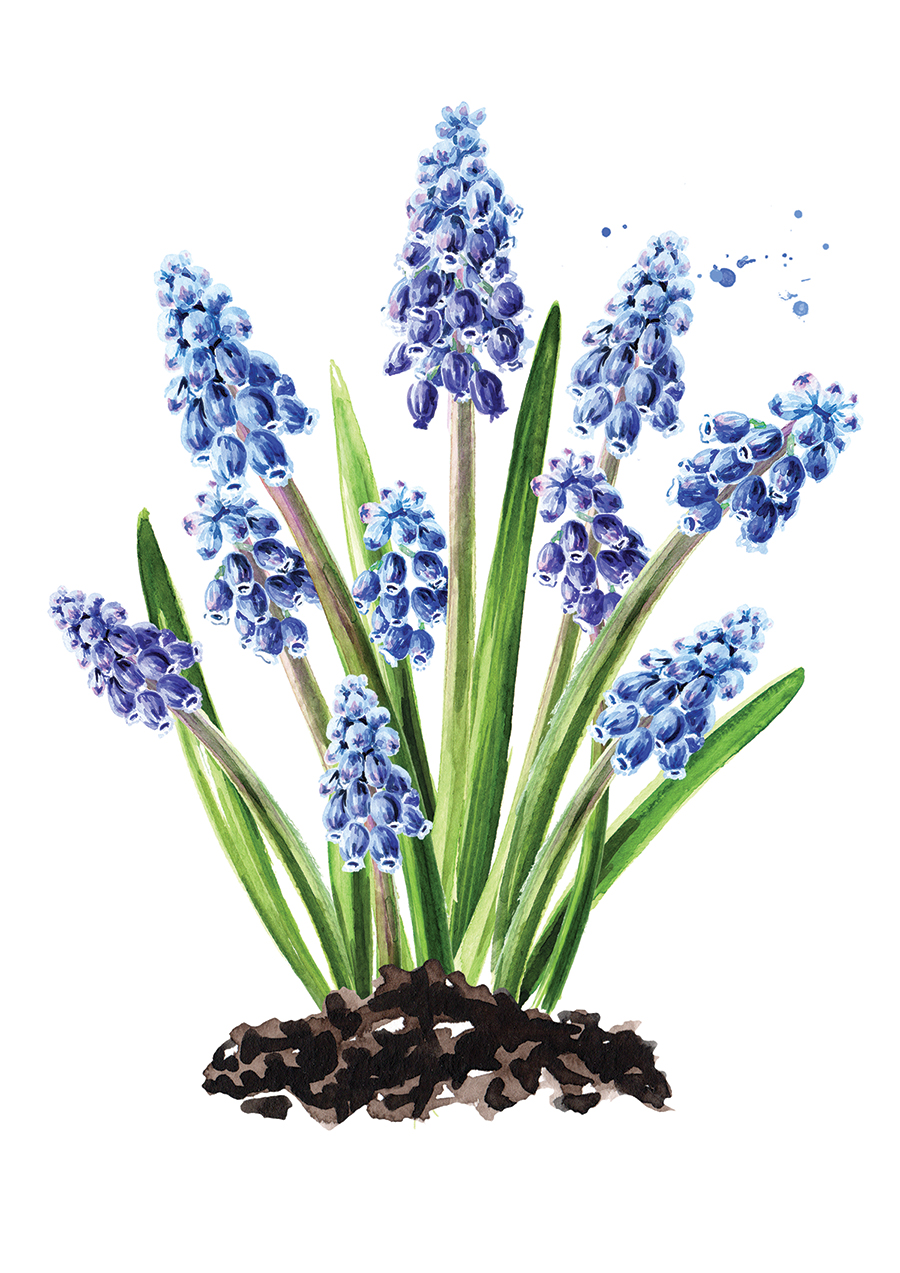
Everyone who’s tried to grow them knows: Tulips are deer candy. But if you haven’t tried planting them alongside grape hyacinths (Muscari armeniacum) — deer and rabbits don’t like them — there is hope for your spring garden yet.

The ideal companion for tulips (and daffodils, which said critters also avoid), grape hyacinths protect and complement this bright and showy bloomer. Think about it: waves of vibrant purple flush against rows of red, orange and yellow blossoms. The treasure is the rainbow itself. Come spring, the deer can admire it from afar. And you, the deer. But it’s time to plant the bulbs now.

Autumnal Brew

The full Hunter’s Moon rises on Wednesday, October 20. Autumn has settled in. As you begin to do the same, here’s an herbal tea redolent with spices that could rid you forevermore of your pumpkin-spiced neurosis.

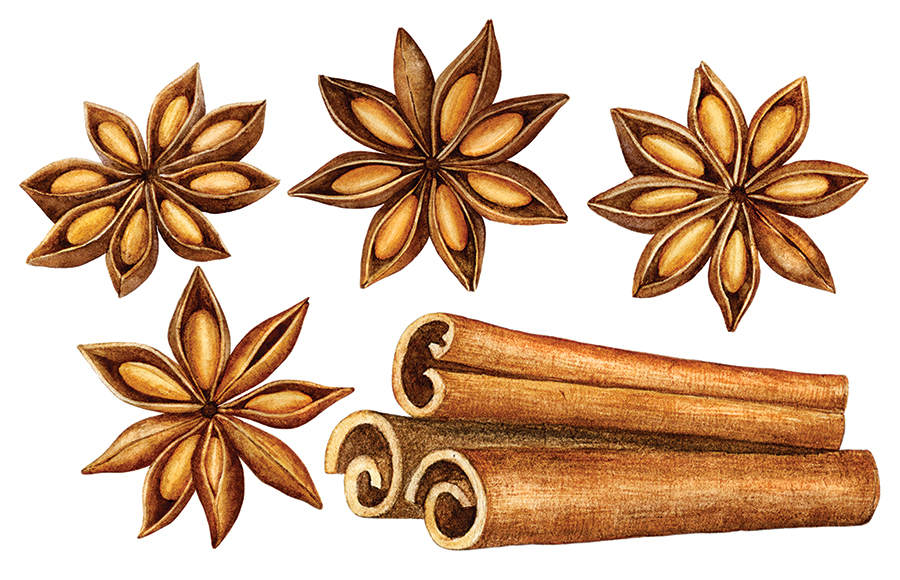
Star Anise Tea

Ingredients:

1 cup water

1 bag green or black tea

2 pods star anise

1 stick cinnamon

Honey or agave to sweeten (optional)

To brew a cup, bring water to a boil. In a favorite mug, pour hot water over tea bag, star anise and cinnamon stick. Let steep for five minutes. Add sweetener or not. Enjoy the glory of autumn sip by sip.  PS

The Kitchen Garden

Bowled Over

Goodies in a gourd

By Jan Leitschuh

And so the seasons change.

The morning freshness in the air and the autumnal shifts in foliage color reinvigorate our heat-saturated souls. Naturally, we yield to the urge to celebrate the transition to coolness, happily sampling the seasonal pumpkin spice lattes and apple hand pies, and the return to outdoor enjoyment.

So, too, we decorate our homes with pumpkins, gourds, squashes — colorful symbols of the harvest abundance of summer, stored for winter feasting. Around Thanksgiving, the fall cucurbit show can be turned into nutritious meals and side dishes.

Eating a squash isn’t the only possibility for festive fall culinary adventures. Get your gourd on. Creativity increases festivity. C’mon, unleash your inner Martha Stewart, in service to the season.

No doubt, squashes and pumpkins are good eating. They are nutrient dense, with lots of vitamins, minerals, and gut-soothing fiber but relatively few calories.

But we are talking fun here. To add a bit of thoughtful eye candy to the dinner table, we can skip the ceramic soup tureens, and the cute serving dishes shaped like autumn produce, and go directly to the real deal. Use your fall pumpkins, green and tan squashes and Jack-B-Little minis as the serving container.

Long ago, I tumbled to this at a fall potluck. I made a pile of buttery sweet potatoes mashed with a little orange juice, maple syrup and bourbon. The concoction was delicious, but in a bowl the brown-orange blob was visually uninspiring. I had a mid-sized pumpkin on hand, and it looked to be perfect for my presentation upgrade.

After cutting off the pumpkin top and scooping out the seeds, I put the hollowed globe in a baking pan and roasted at 350 degrees for 20-30 minutes. I wanted my “bowl” hot enough to keep my mashed sweet potatoes warm, but not so roasted that its walls collapsed and its pretty orange color changed. After I spooned the mash inside, I topped it with pecans and brown sugar, and stuck the top back on partway, serving spoon sticking out. My bourbon mash stayed hot, and the serving vessel brightened the autumn potluck table.

A large pumpkin, hollowed out and lightly seasoned and baked, could also hold soup. The seasonal “tureen” is a conversation-worthy centerpiece in itself. Tuck a few ears of colorful Indian corn at the base, if desired. A meaty tan or green heirloom pumpkin would be extra special.

Now, wouldn’t a ginger-peanut-butternut soup taste extra good in it?

Children love the smaller pumpkins as serving vessels. Pie pumpkins are a good size for soup and, who knows, could a serving of vegetables in one of the “Littles” encourage consumption?

Kids aside, small pie pumpkins could dish up pretty individual servings of, say, a coconut-pumpkin curry. The orange and white mini-pumpkins, so cute and readily available in supermarkets this time of year, could even dress up small quantities of something wildly spicy, say a Thai sauce, hot pepper jelly or Mexican salsa.

Squashes can get in on the action too. A halved acorn, delicata or butternut squash, seeds removed, can be brushed with oil and seasoned before baking. The heat caramelizes the sugars in the squash for a richer flavor. Use your squash as a side dish, as is.

A fancier method is to cool the baked squash, scoop out the roasted flesh, combine with some onions, rice, seasonings and ground beef, and return the mix to the shell. Top with a little shredded cheese for a quick broil. Dinner on the half shell.

Or, combine roasted squash mash with chopped fall apples and a little cinnamon, raisins and brown sugar for a nutritious dessert. The colorful striped “carnival” acorn squash would be spectacular here.

Now that you are planning to put that extra Halloween pumpkin to work doing double duty, you’ll want something warm to put inside it. Why not try this autumnal recipe, packed with cool-weather veggies, from BrokeAss Gourmet:

Peanut-Ginger Soup

Ingredients

2 tablespoons olive oil

1 1/2 cups broccoli florets

2 medium-sized carrots, cut into coins

1 tablespoon grated fresh ginger

4 cloves garlic, chopped

1/2 teaspoon cayenne pepper

1/2 teaspoon dried basil

1/4 teaspoon crushed red pepper

1/2 teaspoon salt

1/2 teaspoon pepper

1 14-ounce can vegetarian vegetable stock

1 28-ounce can diced tomatoes

6 tablespoons peanut butter

Directions

In a large soup pot, heat the olive oil over medium heat and sauté the broccoli, carrots, ginger, garlic and spices until veggies are tender. Add the stock, tomatoes and peanut butter. Reduce the heat and simmer for 20 minutes, stirring occasionally. Serve and top with a few crushed peanuts. Serves 4.  PS

Jan Leitschuh is a local gardener, avid eater of fresh produce and co-founder of Sandhills Farm to Table.

Hometown

The Show Went On

Snatching victory from the jaws of oblivion

By Bill Fields

When most people think of memorable golf moments at Pinehurst, the 1981 Hall of Fame Tournament isn’t among them.

I beg to differ.

A long time before Pinehurst No. 2 held its first U.S. Open and subsequently became part of the rota for the national championship, the ’81 PGA Tour event there made its own mark. Forty years later, I’m proud to have been part of it.

I was 22, fresh out of a summer school session at North Carolina, my diploma in the mail. I needed a job. My friend Michael Dann, executive director of the World Golf Hall of Fame and the Hall of Fame Tournament, needed a public relations director who would work cheap.

The ’81 tour stop in the Sandhills was the tournament that wouldn’t die. As Chip Alexander wrote in The News & Observer that summer, not long after I was hired, “The pulse was weak, the last rites all but read. As recently as two weeks ago, the Hall of Fame Tournament seemed to be breathing its last, ready for the slab.”

The tournament had rallied spectacularly. In March, it only had $30,000 in the bank. Even during an era when purses were around $250,000, that wasn’t much. PGA Tour commissioner Deane Beman extended the deadline for posting the prize money multiple times. Tour pros who had a soft spot for Pinehurst, notably Ben Crenshaw and George Burns, took up the cause. Jack Nicklaus, who won the 1975 World Open but hadn’t competed in a handful of years, committed to play. Lee Trevino, who would be inducted into the World Golf Hall of Fame during tournament week with fellow honoree Ralph Guldahl, also agreed to play. Gov. Jim Hunt did what he could to round up sponsorship.

Once the tournament was green-lighted, we set out to promote it. I ordered bumper stickers and buttons. We hired a film crew to gather sound bites from tour pros to distribute to television sports stations across the state. Michael and I went to the PGA Championship in Atlanta. Raymond Floyd was not happy when I interrupted him on a practice day at the PGA Championship, but his bark was worse than his bite. We made a commercial on a lean budget. To get a tight clubhead-striking-ball image for the ad, I hit my MacGregor Tourney driver on the fifth hole of No. 2, a short walk from our offices at the WGHOF building.

My last, lazy days of college had given way to long hours doing what I could to help. I went on television shows with Lee Kinard in Greensboro and Jim Burns in Wilmington. I tracked down Guldahl for a story in the tournament program, which was printed on the Golf World press in Southern Pines. Before the event I helped lay down temporary carpet on the wooden floors in the press room — the converted Donald Ross Grill. Once the tournament started, I put on my best radio voice, offering updates to any station in the region that was interested. Everyone on our small staff felt like we were on an important mission to pull off what had seemed so unlikely.

The surprise winner turned out to be Morris Hatalsky, an unheralded and unassuming 29-year-old from San Diego. Ron Green Sr. of The Charlotte News wrote that Hatalsky “looks like a singing waiter.” He sure hit all the right notes over 72 holes, one-putting 11 times in a first-round 65 and going on for a 2-stroke victory over Jerry Pate and D.A. Weibring at 9-under 275. Hatalsky won $45,000 for the first of four career PGA Tour victories. The weather was glorious, which helped draw sizable galleries of 12,000 to 15,000 people on the weekend.

My foray into golf administration was brief. I applied for a job in the communications department at the USGA later that fall but didn’t get it. By the following spring, I was sending out resumes to a couple hundred newspapers across the country in search of a sportswriter position. I accepted an offer from the afternoon paper in Athens, Georgia.

The World Golf Hall of Fame building was razed years ago, but I can’t drive past the woods where it used to stand and not think of those days, that tournament and the fun we had making it happen.  PS

Southern Pines native Bill Fields, who writes about golf and other things, moved north in 1986 but hasn’t lost his accent.

Lunch with Winston

My father’s “brush” with history

By Tony Rothwell

“I’ve often noticed that when coincidences start happening they go on happening in the most extraordinary way. I dare say it’s some natural law that we haven’t found out.”

— Dame Agatha Christie

My mother, Myra Hardman, grew up in Manchester, England, in a house called “Como.” In 1937, she married my father, Bill Rothwell, a hotelier. At the outbreak of war in 1939, Dad enlisted in the Lancashire Fusiliers. In 1943, by then commanding a squadron of Churchill Mk.IV tanks, Capt. Rothwell took part in the Salerno landings in Italy, part of a massive plan to drive the Germans out of the country. He remained in Italy until the end of the war in Europe, May of 1945.

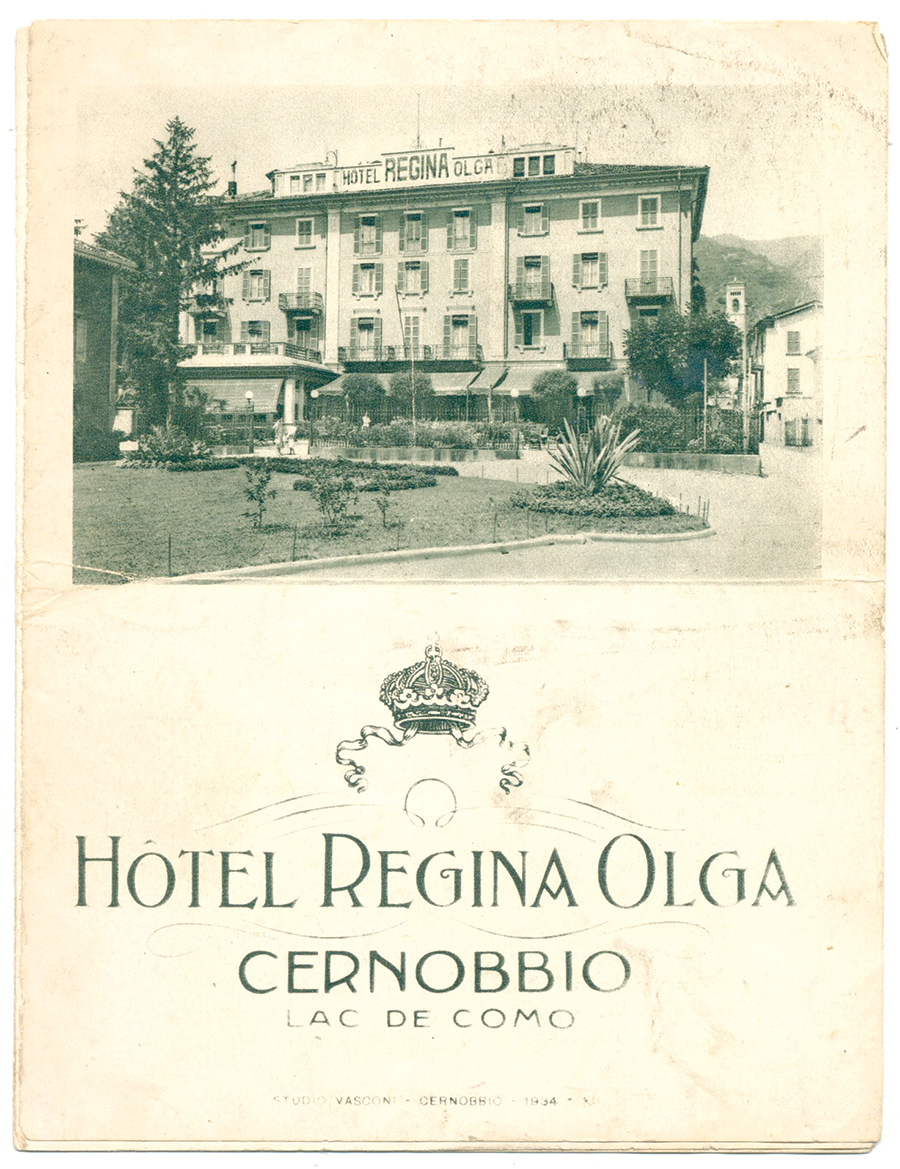
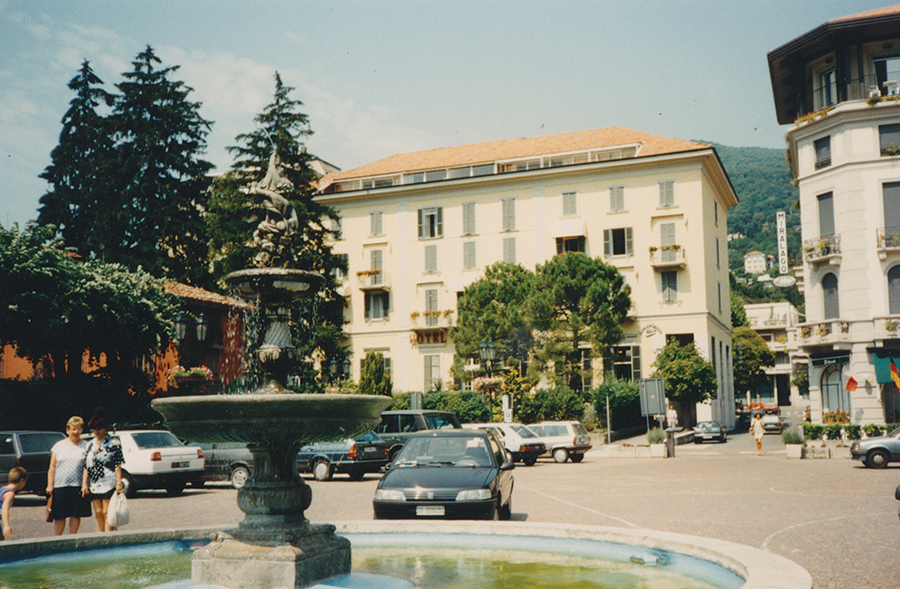
Like everyone else, Dad couldn’t wait to come home, but the Army had different plans. They needed a place for managing mopping-up operations and commandeered the Hotel Regina Olga on Lake Como. It was in good condition because the Germans had been using it as a hospital, but who was to run it? Looking through the lists of Army officers with hotel management experience and already in Italy, they found Dad. “Sorry, old boy, you’re not going home just yet,” they told him. “You’re running a hotel for us on Lake Como.”

That my mother had grown up in a house by the same name as the majestic lake where my father concluded his military service seems the merest of coincidences. But they don’t end there.

Back in Britain, Churchill’s Conservative Party was shockingly voted out of power in the July general election, and the Labor Party took over. The working class, the private soldiers on the front line, and the women left behind who had made so many sacrifices, were having their say. The man who had rallied Britain when it stood alone with his bulldog courage and commanding oratory was out.

So, what was Churchill to do? He was certainly not going to stay around for everyone to feel sorry for him. He decided he would go somewhere and paint, an interest he’d long neglected during the war years, and accepted an invitation to spend a month on Italy’s Lake Como. The Army, he was told, had a hotel there. And so off he went with his oils, his physician Lord Moran and his personal secretary.

And so, suddenly, out of the blue, the unimaginable. My father found himself looking after one of the most famous people on Earth. 

In a fascinating book written by Lord Moran, a compilation of his diaries for the years spent with Churchill from 1940 to 1965, the entry for their first day in Italy, Sept. 3, 1945, reads:

We had planned to set out about ten o’clock to reconnoître the surrounding country for a scene which Winston could paint: However, it was noon before we set off. As we drove round the lake Winston kept his eyes open for running water, or a building with shadows on it, but we stopped for a picnic lunch before he found what he wanted. The “picnic” arrived in a shooting break with his chair and a small table. A score of Italian peasants gathered in a circle and watched us eat. He was in fine spirits.

When he was satisfied that he had found something he could put on canvas, he sat solidly for 5 hours, brush in hand, only pausing from time to time to lift his sombrero and mop his brow.

After dinner Winston was ready to talk of anything: he only mentioned the election once. Eventually he gave a great yawn; when we thought he was about to go to bed he broke into a hymn and sang three verses of “Art Thou Weary.”

Over the next few weeks Dad sent sandwiches and drinks down to the lakeshore many times but on one occasion he joined Churchill for lunch and years later related part of their conversation to my brother and me.

“Do you have children, Rothwell?” Churchill asked.

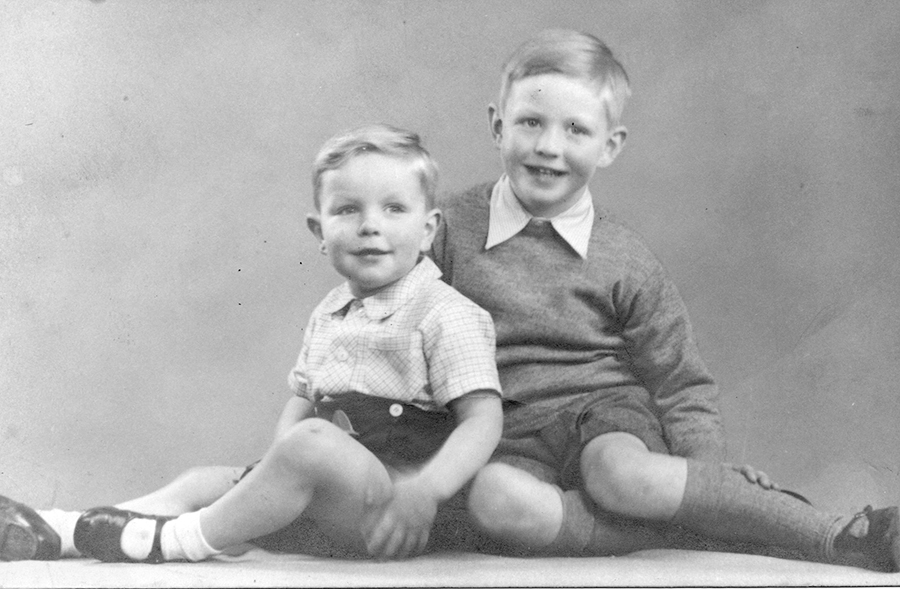
“I have two boys, sir,” he replied. “In fact, I just received a letter from home with a photograph.”

“Let me have a look,” Churchill said. After studying the photo for a few seconds, he said, “They say all babies look like me.”

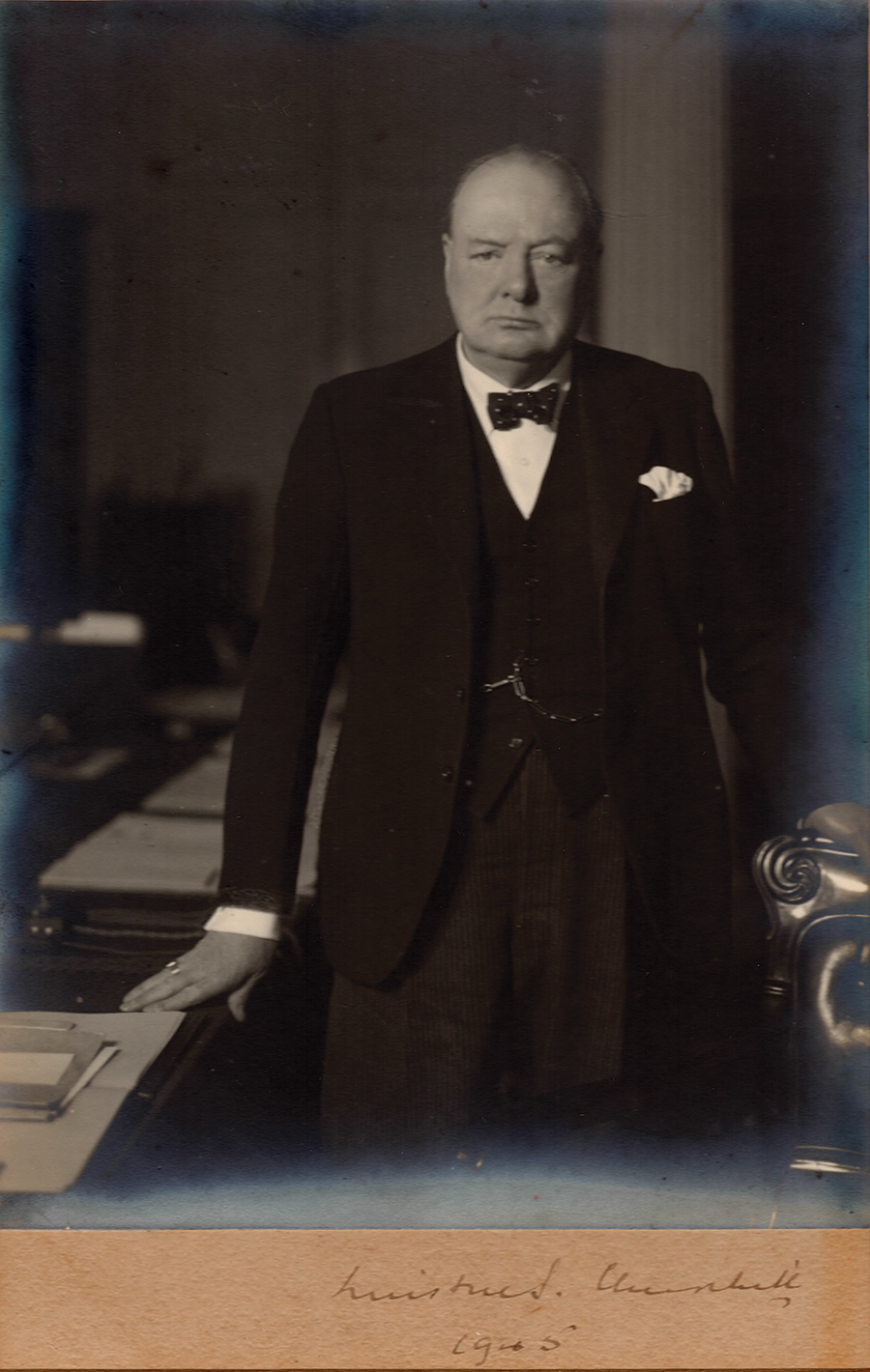
At the end of lunch Churchill got out his cigars and offered one to Dad, who had just lit a cigarette. Because he was smoking already, Dad felt it would be bad form to accept the offer and became, perhaps, the only man ever to refuse a cigar from Churchill. All was not lost. After Churchill’s return to England, he sent Dad a signed photograph, a prized family possession.

The great man died in 1965 on Jan. 24, aged 90. After he had lain in state for three days, the funeral took place in St. Paul’s Cathedral in front of one of the largest gatherings of world dignitaries ever assembled. Following the service, the coffin was taken by launch down the Thames, past the House of Commons, and then by train to Bladon in Oxfordshire for burial in the family site at St. Martin’s Church. This is close to Blenheim Castle, the seat of John Churchill, 1st Duke of Marlborough, Winston’s ancestor and a national hero, following his great victory at the Battle of Blenheim in 1704. Then 22, I commemorated the day of the funeral with a drawing. In yet another coincidence, my father’s last hotel before retirement was The Marlborough Head Hotel in Dedham, Essex, named for John Churchill.

Later, when I lived in London in the early 1980s, I worked for a financial investment company that had a hotel portfolio for which I was responsible. The owner of the company happened to live next door to Churchill’s house, “Chartwell,” south of London in Kent. My wife, Camilla, and I were among the guests invited there one weekend. After dinner that Saturday, our host asked us all to follow him through a door and down some stairs and along a narrow corridor. He opened a door and put on the lights. We were in a small, whitewashed room off which were a bedroom, a kitchen and a bathroom. He pointed to a sealed door and informed us that behind it was a tunnel that led to Churchill’s house, and that we were standing where Churchill worked when he came down to Chartwell during the war. It was presumed that spies watched Churchill’s every move, and by working under the house next door he stood a better chance of surviving if attackers somehow managed to blow up his house.

In 2015, Camilla and I visited London and made a point of going to the war rooms near 10 Downing Street to see where Churchill spent his days and nights during those dreadful years. Adjoining them is a small Churchill Museum. Of all the many exhibits we saw there, two items stood out: his school reports, which basically said he would never amount to anything, and — the last coincidence — out of the hundreds of paintings he did in his lifetime, there was just one on display. It was of Lake Como.  PS

Tony Rothwell, a Brit, moved to Pinehurst in 2017, exchanging the mind-numbing traffic of Washington, D.C., for less traffic, better weather and the vagaries of golf. He spent 50 years in the hotel business but in retirement writes short stories, collects caricatures, sings in the Moore County Choral Society, and with his wife, Camilla, enjoys the many friends they have made in the Sandhills. Email ajrothwell@gmail.com

Golftown Journal

The Short List

Learning how to save shots, and your score

By Lee Pace

Kelly Mitchum is standing front-right of the 10th green at Pinehurst No. 4, his golf ball sitting slightly down in Bermuda rough, a bunker set between him and the putting surface. There’s a good 50 feet of green between the bunker and the cup.

“You can’t assume the only play is the lob wedge just because you’ve got to clear a bunker,” Mitchum says. “You’ve got plenty of room for the ball to run. And you’re going uphill, which will help slow it down.”

Later he’s standing to the right of the 16th green, his ball in light rough 30 feet from the green, with a slight upslope to the putting surface and a pin on the near side of the green.

“Could you putt this?” Mitchum asks. “Yes, you could. This course and No. 2 lend themselves to putting from off the green. Martin Kaymer won the 2014 U.S. Open putting from all over the place.

“The lower the shot, the safer the shot. Always look to go low first.”

Mitchum takes a close look at the pathway a putt would have to take along the turf. “But,” he says, pointing at the grass still glistening with some morning dew, “here I think there’s too much grass to putt through. And it’s a little wet.”

Instead, he takes his 54-degree wedge (the second-most lofted club in his bag, next to the 60-degree), chips the ball into the side slope, watches it bounce and pop up and land gently on the green, well within a putter’s length of making the putt for an up-and-down.

“This is the fun part of golf to me,” he says. “It’s creativity, imagination, strategy.”

Mitchum is leading our group in the Pinehurst Short Game Academy one Friday morning around several holes on the course to illustrate various scenarios golfers find themselves in within 100 yards of the green. The next day, we’ll spend time on course No. 2, the site of three men’s U.S. Opens, a fourth in 2024, and one women’s U.S. Open.

Over the course of two-plus days, Mitchum, the resort’s short-game expert, opens our eyes to a myriad of nuances in reading greens, executing short shots and managing our way around the greens.

To wit:

Grain: Light colored grass or darker?

Sand: Firm packed or fluffy?

Grass: Tight-clipped or longish? Dry or dew-covered?

Green slope: One degree? Two or more?

These questions and more, combined with technique and equipment, blend into the realm of the short game — pitching, chipping, putting and bunker play.

“The short game has been my passion,” says Mitchum, a 23-year veteran of the Pinehurst teaching staff. “Not being super long off the tee, it’s been my way of equalizing and giving me a chance against guys longer off the tee.”

Mitchum went to Pinecrest High School,  played golf at N.C. State, winning the 1991 ACC title, and won the 1993 North and South Amateur. He tried the professional tours for four years and then joined the Pinehurst golf staff in 1998, and while working the resort’s golf schools and giving individual lessons, has found time to play in four PGA Championships and multiple PGA Tour events that come through the Carolinas.

He approached Eric Alpenfels, the resort’s director of golf instruction, in 2017 with the idea of creating a short-game focused school within the Pinehurst Golf Academy.

“It’s been well-received,” Mitchum says. “We’ve pretty much filled up all the short-game availabilities through the summer of 2021.”

Mitchum became a YouTube sensation in July 2015 with a 20-second clip of him striking three right-to-left putts within one second of each other, the balls traveling on different paths and reaching the bottom of the same hole in rapid-fire succession. What made the feat so awe-inspiring is that the third putt hit the hole first, followed by the second, followed by the first.

“There is definitely a huge application from a green-reading standpoint,” Mitchum says of his trick shot, which had more than 100,000 views within six weeks. “It clearly shows you can make a breaking putt on different lines, depending on the speed.”

Green reading is certainly an element of my game I need help with on this July weekend. Over my lifelong golf career, I’ll give a putt a quick plumb-bob and a cursory survey of the green’s landscape, but honestly, I never delved much further.

“You see any young players on the pro tour or amateur golf plumb-bobbing?” Mitchum asks. “Not many. You know why? It doesn’t work very well on a consistent basis.”

Instead, Mitchum teaches learning to feel and read side-to-side break with your feet as well as your eyes. He shows us how to straddle the ball facing the cup and feel which way the ground is sloping.

Next, Mitchum teaches us to take a look at the putt from the low side, about halfway between the ball and the cup; if you determine it’s a right-to-left breaker, stand on the left side.

“If it is, in fact, the low side, you’ll be able to look across the line and see the ground on the other side is higher,” Mitchum says. “You look into the face of the slope and it becomes clear.”

Our putting mechanics are measured and tweaked, and Mitchum follows the green-reading portion with a chapter on speed control.

“No one ever says, ‘I’m going to practice my distance-control putting,’” he says, “but, if forced to say what I think is the most important part of putting, I’d have to lean toward speed control. There are more three-putts because of poor distance control than any other reason.” Once your mechanics and slope-reading skills are honed, distance control is mostly a matter of practice. Mitchum shows us a number of games we can play around the putting green to make it fun and challenging.

“One reason most golfers are bad putters is they don’t practice it,” he says. “And putting practice can get boring. You have to make it interesting and engaging. That’s how you get better.”

Of course, putting is just one element of a comprehensive short-game education. There’s chipping, bunker play and half-wedges. There’s the element of taking it from the practice ground to the golf course. There’s the mind game of figuring airtime, bounce and roll.

Our newfound skills are put to work on The Cradle, the nine-hole par-3 course with holes ranging from 58 to 127 yards. It’s no wonder that Gil Hanse’s creation that opened in 2017 quickly captured Mitchum’s fancy, and he’s taken to playing as many as 30-plus rounds in one day in the annual Winter Solstice Marathon he organizes each December.

“The Cradle’s a lot of fun,” he says. “Every part of your short game gets a test there.”

On the fourth hole, I was 30 feet short of the green and thought I had way too much grass to putt through. I knew a lob wedge wasn’t the play given a fairly tight lie, so I thought of chipping with a 9-iron, landing it short of the green and letting it run up.

I quickly got a lesson in nuance. Contrasting this shot to the one on course No. 4 the day before, Mitchum looked closely at the turf in front of the green. It was almost noon on a sunny day, and the patch had been in sunlight all morning.

“It’s thin and dry,” Mitchum said. “That’s actually really good to roll it through. Remember: Look to go low.”

I analyzed a slight left-to-right break, took the grass and a slight upslope on the green to the hole into consideration and judged my stroke accordingly. The ball rolled to two feet, an easy follow-up for my par. Never before would I have thought to putt that ball, but now after a weekend in Pinehurst I have pages of notes pared down to my ultimate short list.  PS

Lee Pace has written about golf in the Sandhills for three decades. His newest book, Good Walks — Rediscovering the Soul of Golf at 18 Top Carolinas Courses, is available wherever books are sold.

Birdwatch

Swirling Birds

The return of the chimney swifts

By Susan Campbell

The approach of fall means many things to many people: cooler days, longer nights, the smell of pumpkin spice — all things that I love. But the much anticipated evening congregations of chimney swifts is also near the top of the list. Swirls of these long-distance migrants form at dusk for several weeks as the birds pass through North Carolina on their way south.

If during the warm weather you have seen small, twittering, fast-flying birds wheeling about high overhead, you are likely seeing chimney swifts. These “flying cigars” can be observed across the state, but given their affinity for human habitation, they are more abundant where people, buildings and, as their name implies, chimneys are found.

Chimney swifts are known to breed throughout North Carolina from the mountains to the coast. Historically, they were undoubtedly sparsely distributed, nesting in big hollow trees in old growth forests in the eastern two-thirds of the United States. But as settlers spread across our state and provided abundant nesting cavities in the form of chimneys, swifts became more common. Today they are virtually dependent on humans for their reproductive success. But, unfortunately, most modern chimneys with caps or extensive lining are unsuitable for the birds. If they can enter a newer chimney, the smooth substrate within the brick or stone prevents the birds from clinging and, furthermore, does not allow adhesion of the nest (built with small sticks and saliva) to the wall. As a result, recent declines in the chimney swift population have been documented across the species range.

Without a doubt, these small birds are incredible fliers, more so than swallows and martins. They spend the vast majority of their waking hours on the wing, except while nesting. Even courtship and copulation occur in mid-air. Only at night do they descend to rest in a protected spot — which is almost always a chimney of some sort.

By late July, flocks of swifts begin congregating, feeding on abundant aerial insects, and roosting together in larger chimneys. These aggregations begin to move southward in August on prevailing northerly air currents to wintering grounds in the tropics. You may find hundreds swirling around in the vicinity of older schools, churches and office buildings that still retain substantial brick chimneys. Such chimneys are more spacious and year after year provide critical staging grounds for generations of swifts. It is an awesome sight to see thousands of individuals pouring into a roost site at dark.

Unfortunately, these unique birds have been misunderstood at this time of year and are often thought to be disease-carrying bats. As a result, significant numbers of sites have been capped for fear of being a human health hazard. Big old chimneys are lost across our state each year to such misunderstandings.

Additionally, changes in modes of heating result in large chimneys being retired: usually covered and rendered unavailable to swifts. Quite simply, there is a general lack of awareness of the structures as an important biological resource. Furthermore, across most of our state, we are still in the process of identifying major roost sites.

During the winter months, chimney swifts are found in loose aggregations throughout the upper Amazon basin of South America. There they loaf and feed on an abundance of flying insects until lengthening days urge them northward again. The return trip brings individuals, swirling and darting, back to their summer homes by early April.  PS

Susan Campbell would love to hear from you. Feel free to send questions or wildlife observations to susan@ncaves.com.

Bookshelf

September Books

FICTION

Matrix, by Lauren Groff

A woman’s power is often judged by her beauty, wealth and situation in life. Marie — awkward, too tall, illegitimate, without means, and orphaned — has none of these. Sent to the most wretched abbey England has to offer in 1158, Marie comes to understand that a woman’s power comes from cleverness, ingenuity, fortitude and the bond of sisterhood. In this first novel since the brilliant Fates and Furies, Groff delivers a story that shakes the walls of the age-old patriarchy.

The Magician, by Colm Tóibín

In a provincial German city at the turn of the 20th century, Thomas Mann grows up with a conservative father, bound by propriety, and a Brazilian mother, alluring and unpredictable. As a boy, Mann hides his artistic aspirations from his father and his homosexual desires from everyone. He is infatuated with one of the richest, most cultured Jewish families in Munich, and marries the daughter, Katia. They have six children. On a holiday in Italy, he longs for a boy he sees on a beach and writes the story Death in Venice. He becomes the most successful novelist of his time, winner of the Nobel Prize for literature, a public man whose private life remains secret. In a stunning marriage of research and imagination, Tóibín explores the heart and mind of a writer whose gift is unparalleled, and whose life is driven by a need to belong and the anguish of illicit desire. The Magician is an intimate, astonishingly complex portrait of Mann, his magnificent and complex wife, Katia, and the times in which they lived — World War I, the rise of Hitler, World War II, the Cold War, and exile.

Cloud Cuckoo Land, by Anthony Doerr

Like the characters of Marie-Laure and Werner in Doerr’s novel All the Light We Cannot See, Anna, Omeir, Seymour, Zeno and Konstance are dreamers and outsiders who find resourcefulness and hope in the midst of the gravest danger. Their lives are gloriously intertwined as Doerr’s dazzling imagination transports us to worlds so dramatic and immersive that we forget, for a time, our own. Dedicated to “the librarians then, now, and in the years to come,” Cloud Cuckoo Land is a beautiful and redemptive novel about stewardship — of the book, of the Earth, of the human heart.

The Santa Suit, by Mary Kay Andrews

When newly divorced Ivy Perkins buys an old farmhouse sight unseen, she is looking for a change in her life. The farmhouse, The Four Roses, is a labor of love, but Ivy didn’t bargain on just how much labor. The previous family left so much furniture and so much junk, it’s a full-time job sorting through it. At the top of a closet, Ivy finds a Santa suit, beautifully made and decades old. In the pocket is a note written in a childish hand from a little girl who has one Christmas wish, and that is for her father to return home from the war. The discovery sets Ivy off on a mission. Who wrote the note? Did the man ever come home? What mysteries did the Rose family hold? Ivy just might find more than she ever thought possible: a welcoming town, a family reunited, a mystery solved, and a second chance at love.

NONFICTION

Cuba: An American History, by Ada Ferrer

Cuba’s history is full of violent conquest, invasions and military occupations; conspiracies against slavery, colonialism and dictators; revolutions attempted, victorious and undone. Ferrer, a celebrated New York University professor and the daughter of Cuban immigrants, brings her personal perspective to this sweeping history of Cuba, and its complex and intimate ties to the United States, utilizing stories from both well-known and little-known characters from Cuban history. She documents the enormous influence the U.S. has had on Cuba and the many ways in which Cuba is a recurring presence in U.S. history, beginning with its key role in the American Revolution.

Travels with George: In Search of Washington and his Legacy, by Nathaniel Philbrick

When George Washington became president in 1798, the United States of America was still a loose and quarrelsome confederation and a tentative political experiment. Washington undertook a tour of the ex- Colonies to talk to ordinary citizens about their lives and their feelings about the new government, and to imbue in them the idea of being one thing — Americans. Philbrick embarked on his own journey into what Washington called “the infant woody country” to see for himself what it has become in the nearly 225 years since. Writing in a thought- ful first person about his own adventures with his travel companions (his wife and puppy), Philbrick follows Washington’s tour of America — an almost 2,000-mile journey. The narrative moves smoothly back and forth from the 18th to 21st centuries, seeing the country through Washington’s eyes as well as Philbrick’s. Written at a moment when America’s foundational ideals are under scrutiny, Travels with George grapples bluntly and honestly with Washington’s legacy as a man of the people, a mythical figure of the early republic, a reluctant president, and a plantation owner who held people in slavery. Philbrick paints a picture of 18th century America as divided and fraught as modern America, and comes to understand how Washington, through belief, vision and sheer will, created a sense of national solidarity that had never existed before.

CHILDREN’S BOOKS

Isobel Adds Up,
by Kristy Everington

Isobel loves to solve problems. Multiplication, subtraction, addition, bring them on! But she begins to have some trouble when a new loud neighbor moves into the apartment next door. Of course, clever Isabel has a solution and maybe also a new friend. Math-loving young readers will delight in this fun new problem-solving story that is sure to bring on some giggles. (Ages 5-7.)

Negative Cat, by Sophie Blackall

When a boy finally gets his long-awaited cat, things don’t go quite as expected, but sometimes it takes a bit to discover the joy that comes from being just a little outside the box. Fun for anyone who loves an animal that’s just a little unusual, and a perfect read-aloud by the Caldecott-winning illustrator Sophie Blackall. (Ages 3-6.)

Dozens of Dachshunds, by Stephanie Calmenson

Dozens of dachshunds waltz, woof and wag their way across the page and into the hearts of readers in this adorable read-aloud. Long-haired, smooth-haired and wire-haired dachshunds alike are all dressed in costume (of course there’s a hot dog!) for the Dachshund Day parade. With a seek-and-find game and back matter on real Dachshund Day celebrations, this one’s sure to have everyone barking for more. (Ages 3-6.)  PS

Compiled by Kimberly Daniels Taws and Angie Tally.

Out of the Blue

Shopper’s Remorse, Kinda

To browse or not to browse, that is the question

By Deborah Salomon

If shopping were an Olympic sport, I’d win the gold medal. I can happily while away an hour just looking at stuff, be it books or blouses, now called “tops.” Yet when the news that Target might be coming to Southern Pines roared through town I couldn’t muster much excitement.

Maybe the thrill is gone. Maybe Target drowns in too much stuff.

The thrill, in my case, has less to do with buying than with the experience characteristic of the shop-till-you-drop USA. My brief forays abroad indicate that in most cultures, people shop to satisfy a need — like socks or wine or paper towels. They look around, find something acceptable, pay and leave.

I shop as a pastime, a learning experience. I look at colors. I read labels that reveal where the merchandise was made and what it is made of. I ponder prices. In small stores I ask questions.

This doesn’t make me popular with proprietors answering my questions, always pleasantly, while sensing I have no intention of buying those stunning handcrafted silver earrings, for $65.

I enjoy shopping the big boxes, too. A bundle of dresses is still smashed from the box where it was packed by hands on the other side of the globe, then shipped across many oceans in boxcar-sized containers. That makes me remember when Walmart et al. began adding groceries to smashed dresses. At first, the sight of cauliflower and ground beef sharing a cart with jeans, house paint and mittens seemed odd.

It still does, really. Convenience hath its price.

I’m not an organized shopper. I rarely make a list. That way, I can wander, hoping that seeing Tide on sale will remind me.

Wandering is a luxury afforded by age. I retain mixed memories of weaving in and out of the aisles with a toddler in the shopping cart seat and two others, only slightly older, dashing ahead, begging, “Can we buy this, Mommy? Please, please . . . ”

Stop to read a label and they’re climbing the shelves in pursuit of some repulsive purple cereal.

I remember, too, the times my elderly father visited. Supermarket trips were a thrill because he appreciated food, having grown up poor and often hungry. He would feign outrage at the prices, which never kept him from eating what I bought. But as we approached the check-out, he’d disappear.

“I’ll meet you at the car.”

Seeing the total was just too painful. And that was when grapefruit were four for a dollar and sirloin, $1.25 a pound.

I never minded shopping for clothes but despised try-on rooms with their three-way mirrors; an unexpected full rear view can ruin the experience. Therefore, half my untried-on purchases went back.

I thought about that last winter, when the virus closed dressing rooms and returned purchases were, I guess, restocked. Not a pleasant thought.

Shopping for a new car . . . another story. Takes me about 15 minutes to find one I like, another 10 to do the math. The salesperson always looks disappointed at not having to cajole, convince, bargain, use all those snappy phrases learned at training sessions. So, if I can decide in 25 minutes, why does the paperwork take 45?

Still, I’m suspicious of shop-at-home dealerships advertised on TV.

Shopping online guarantees pleasures and perils. You can’t feel the fabric (is it scratchy?) or see the color (duller than expected). Return postage is exorbitant (except for Amazon, with drop-offs at Kohl’s), so I usually end up keeping the borderline-satisfactory purchase.

That’s why, with all due respect, I don’t really care if Target comes to town. I’ve shopped their Greensboro store. Nice housewares, OK selection of packaged groceries, good pet supplies, not much fresh stuff. I couldn’t relate to the clothes.

Sorry if I sound negative. Not my intention. I grew up in the fab Manhattan department store era: B. Altman, Lord &Taylor, Macy’s, Gimbel’s, Best & Company, now just names engraved on tombstones. They had lovely cafés for lunch, free delivery, nice rest rooms. Perfume counters sprayed samples, and elevator operators wore white gloves.

Years later their arty shopping bags were exhibited at the Museum of Modern Art.

Now that was shopping, neither convenient nor quick. Not even price-conscious, although shoppers probably bought less.

I thought about those department stores and primordial supermarkets (A&P, Piggly Wiggly, Gristedes) during a recent safari through the enormous Harris Teeter in Taylortown, where I spent 15 minutes finding shoe polish — same time it took to select my last car.

No, retail therapy isn’t what it used to be. “The customer is always right” maxim has been maxed out. But if a new Target the size of two football fields stocked from A (apples) to Z (zippers) pushes your buttons, go for it.

Me? I’ll hold out for the $65 earrings. Gift-wrapped and carried home in a frameable shopping bag, please.  PS

Deborah Salomon is a writer for PineStraw and The Pilot. She may be reached at debsalomon@nc.rr.com.