Out of the Blue

The Kitty Chronicles, Part VI

The odd couple and the cat lady

By Deborah Salomon

Happy New Year, and welcome to my annual kitty column.

Backstory: I love animals. More important, I trust and admire them. As a lifelong rescuer/adopter I have experienced many beautiful food-based relationships with stray and feral kitties, lost dogs, a retired racing greyhound, a pair of Pekin ducks and thousands of grateful squirrels, birds, possums and other wild creatures. Coyotes and foxes don’t make the cut, for obvious reasons.

Once I found homes for 32 kittens before capturing mama and having her spayed.

That year, when my family asked what I wanted for my birthday, I answered a Hav-a-Heart trap.

Enough, I thought, after moving here 12 years ago. I’ve done my part. Then a coal black kitty with satin-smooth fur and expressive eyes appeared at my door. He had been left behind by a family that moved. He made a nest beneath the bushes. I fed him outside for six months. Finally, on July 4, 2011, I opened the door to Lucky. He walked into the kitchen and sat down, awaiting bowl placement. After a good feed he hopped on the couch and fell asleep. He was home. I felt relieved.

Black cats are special, soulful. I cannot resist them. I probably needed him more than he needed me.

A year later I did the same for Hissy/Missy, who the neighbors called Everybody’s because she was fed by many. Hissy had a notched ear, indicating a spayed feral. She is a widebody, a patchwork of soft white underbelly fur and coarse mottled gray on top. One eye is crossed. She waddles.

Lucky — sleek and shiny — had been neutered and declawed (horrible) but no microchip.

I study them. I learn from them. They make me feel better.

Go ahead . . . laugh. At least I’ll never need opioids. And I’ve met interesting people, uh, pawing through bitsy cans in the cat food aisle.

Lucky has the best disposition I have ever encountered in an animal. He is a quiet gentleman, a thinker, a cuddler who literally looks before he leaps. I can honestly say that in eight years I have never heard Lucky hiss or growl, except when an unfamiliar cat passes by, and Lucky is safely behind a closed window. He gets along fine with a neighbor’s kitty. They hang out together on the porch, two old men sharing stories.

Hissy, in contrast, is a fussbudget. I almost named her Edith after Archie Bunker’s “Dingbat” from All in the Family. For the first month or so, she hissed at me, at Lucky, at everything. Hence the name. Then, suddenly, she became sweet as sugar so now it’s Missy, although she will always be Hissy to me.

They couldn’t be more different. But opposites attract, as evidenced by their relationship mimicking some marriages. He stands still when she grooms him. She follows him around, pushes him off his food bowl and his windowsill perch. He has nests all over the house, which she tries to share. When he asks to go out, she follows . . . and is not far behind when he meows to come in.

He accepts her affection and ministrations without noticeable response, let alone reciprocation. Except when Hissy was at the vet all day for treatment Lucky seemed unsettled, watchful.

They communicate by nuance, by intense stares and twitching whiskers.

“Supper could have been better,” Lucky twitches. “I like grain-free kibble laced with chicken livers best.”

Actually, he likes to lick the underside of my yogurt cup top best. Greek vanilla, please.

She reports the weather to him. “I went out. It’s raining. I came in. I went out again. Still raining. I came in. Went out again. Drizzling.”

Come winter, each has a flannel-covered heating pad on the bed. His, for an arthritic hip. Hers because she pushed him off his. I try to position one for me (arthritic shoulder) — a lost cause.

Since my catspeak is rusty we communicate physically. When Lucky wants something he finds me, paws my leg, makes eye contact and leads me to his objective — usually food or the door — front, in the morning, back in the afternoon, according to where the sun warms the chair cushion. If he wants laptime he just jumps. Missy is needy. She lives on attention, probably a result of a deprived kittenhood. Soon as I sit down, she’s there, kneading with her claws and purring. She thinks mealtime is whenever I’m in the kitchen. She rubs my legs, gets underfoot at the risk of having her paw stepped on.

At least she doesn’t wake me at 3 a.m., asking for treats, which I keep in the bedside table drawer to pacify Lucky when he quietly but persistently paws for a snack.

I rise early anyway, so I forgive him for reasons best expressed by Paul Simon:

When you’re down and out . . . when evening falls so hard . . .  I will comfort you . . . When darkness comes and pain is all around . . . I will lay me down, like a bridge over troubled water . . .

You think I’m crazy, right? Did you hear about Dean Nicholson, the Scottish welder who decided to cycle around the world? He found an abandoned kitten in Bosnia, did all the necessary vetting, bought Nala a vest, a leash and a bike carrier and continued his journey for thousands of miles. When Nala gets tired of the basket she drapes herself around Dean’s neck and falls asleep. Their story made The Washington Post.

As for sweet Lucky . . . and to a lesser extent, Missy, they prove that I’m a nutty old cat lady.

But they’re just cats, right?

Yes, just cats. That’s the best part. PS

Deborah Salomon is a staff writer for PineStraw and The Pilot. She may be reached at debsalomon@nc.rr.com.

In the Spirit

Oleo Saccharum

Three ways to create a simple base for your cocktails

By Tony Cross

Over the years, I’ve experimented with many ingredients, recipes and gadgets — all aimed at making my job easier. I mean, c’mon, my business is built on the premise of pulling a handle to get the finished product. You can’t get much lazier than that. Some of these experiments have been disastrous, but from time to time I’ll find a winner. In this case, the winner is oleo saccharum and a few ways to make it.

“A few ways to make what?” Oleo saccharum. It has the same number of syllables as REO Speedwagon, but is waaay better. Trust me. Latin for “oil-sugar,” this combination is the base for most punches and certain cordials/cocktails. (My very first article in PineStraw, circa 2015, touched on the subject briefly.) It’s a very simple process of mixing certain citrus peels — grapefruit, lemon or lime — with sugar. After some time, the sugar draws out oils from whichever citrus you used. Science! And this is coming from someone who failed high school chemistry. Let’s go over several ways to achieve this.

If you’re a beginner:

Combine the peels of one grapefruit and 250 grams of baker’s sugar (or plain granulated sugar) in a bowl. Use a muddler (or, if you don’t have one, a wooden spoon) and press the peels into the sugar for about 30 seconds. Cover the bowl with plastic wrap and let it stand about four hours, or even overnight. When you return to the bowl, you’ll see that what was sugar is now a syrup mixed with peels: oleo saccharum.

Now, you can do a couple of things. Add the oil-sugar to a pot with 1 cup of fresh squeezed (and filtered) grapefruit juice — it might help to add the juice to the bowl after trying to get all of the oleo saccharum into the pot. Once it’s all together, stir on medium heat for a couple of minutes. Strain out grapefruit peels and refrigerate after it cools. Or, you can skip the juice and simply strain out the grapefruit peels and refrigerate (if there’s undissolved sugar, muddle your heart out). You can mix this basic syrup, in sparkling water for a fresh non-alcoholic cooler, or you can whip up a quick little riff on the classic Champagne cocktail:

4 ounces chilled Champagne (or other dry sparkling wine)

1/4 ounce grapefruit oleo

2 dashes grapefruit bitters (or Angostura, if you don’t have any)

Add oleo and bitters in a flute glass, top with Champagne. 

If you’re a seasoned vet with a vacuum sealer:

Combine the same specs from above, but this time place in a food processor. Blend until all of the grapefruit peels are completely obliterated. Place the mix in a vacuum seal bag and use the vac-seal machine to suck out all of the air from the bag. Place it in the kitchen and come back in two hours, or put it in the freezer if you’d like to use it at another time.

If you’re a chemistry cowboy:

Bring out the sous-vide machine. Meaning “under vacuum,” this style of cooking has been very popular for years now, but I like to use it when making certain syrups, including oleo saccharums. I use the Anova Culinary model, but I’m sure there are a few others on the market that will do the trick. Ditch the food processor and combine the peels and sugar into the vacuum seal bag, and seal. Oh, and by the way, if you’re not a fan of grapefruit (who are you?), you can most certainly substitute lemons or limes. I recommend around 35 grams of lemon peels or 50 grams of lime. Grab your sealed bag and place it in a large bath of water. Hook up your sous-vide machine and set temperature to 130 degrees Fahrenheit, and the timer to 45 minutes. When the timer goes off, unplug the machine, and take the bag out of the water. Nothing but net! I mean, oil. Pretty cool.

Tying it all together:

OK, you’ve made your oil-sugar. What now? You can use it as a base for punch, or a simple syrup. I’ll leave you with a riff on a Tom Collins cocktail.

The Cleaner

1 ounce Durham Distillery Conniption Navy Strength Gin

1/2 ounce TOPO Vodka

1/4 ounce St. Germain Elderflower Liqueur

1 ounce grapefruit oleo saccharum cordial (syrup with the grapefruit juice, like in Step 1 from above)

1/2 ounce lemon juice 

Pinch of salt

Sparkling water

Combine all ingredients (sans the sparkling water) in a cocktail shaker. Add ice and shake hard for 10 seconds. Strain into a long (Collins) glass over ice. Top with sparkling water. Use a barspoon to stir together ingredients briefly. Garnish with a swath of a grapefruit peel.  PS

Tony Cross is a bartender (well, ex-bartender) who runs cocktail catering company Reverie Cocktails in Southern Pines.

Sporting Life

Black Dark

Sleet, snow, ducks and a dog

By Tom Bryant

Old duck hunters call it black dark. That’s when you crawl out of a warm bed at three in the morning, wander sleepily to the door of the cabin in your skivvies, stick your head out to check the weather, and report back to the boys. The guys are slowly muttering, pulling on long underwear and heavy socks before grabbing a cup of coffee. You report, “Men, it’s sleeting mixed with snow, colder than Aunt Sylvia’s horse holder in January, and black dark. It’s perfect!”

That’s the way it was on one of my last duck hunts at Bob Hester’s duck club right off Lake Mattamuskeet. Black dark. When we trooped out of the little motel where we were staying for the duration, sleet was falling, bouncing off our hats like little grains of sand. As we loaded up and drove out of town toward Bob’s barn, the headquarters for the day’s hunt, Bryan said, “Man, it’s black dark out there.”

The little town of Engelhard has a few pole lights on street corners, and some of the stores were lit with night lights, but it didn’t take long to leave the town with its soft glow and move into the blackness of the country.

Bryan followed up his darkness statement with, “I hope y’all brought your flashlights.” I remembered the little Mag flash I had repacked with new batteries. I remembered the batteries but didn’t remember putting the little light in my gunning bag. Could be trouble, I thought.

The headlights of the truck pierced the coal-black night with just enough brightness that we saw the turn to Bob’s farm as we rode by it. Bryan stopped the truck, backed up, made the turn, and it was a short ride to the barn where we would get our marching orders.

There were two big pole lights on either side of the barn, creating a halo effect with the sleet and snow reflecting back on the building. Bob was inside his walled-off office with his feet propped up on his desk, leaning back next to a glowing, cherry-red woodstove that radiated heat across the room.

Bob Hester is famous across the Southeast with diehard duck hunters. He has gained his reputation after many years of studying species of ducks and their habitats. As Big Tom, a resident of Fairfield and the owner of a thriving duck cleaning business, says, “Mr. Bob knows more about ducks than ducks know about ducks.”

“Well, boys,” Bob said as he dropped his feet off the desk and stood up, “I hope y’all are ready to do some serious ducking. The weather’s right, and the ducks are here. It ought to be a good hunt. Grab your gear and let’s load up. You’ll need flashlights. It’s black dark out there.”

We hustled to the truck, pulled on our waders, grabbed our gunning bags and shotguns, and lastly, pulled out our flashlights. Luckily, I found my light just where I had stowed it, in the top pocket of my bag. It’s one of those waterproof stainless steel Mag lights about the size of a candle and works great in close quarters, but if I had to light up any distance, I was out of luck.

We crammed ourselves in the open bed of Bob’s pickup, and he looked in the back just before cranking up and heading out. “You boys all loaded and ready? It’s about a 15-minute ride. Hang on to your gear. There’s a couple of wet spots I’ll have to negotiate before we get there. Could be some slipping and sliding.”

He was right. The dikes we were driving over had holes from the weather and from regular wear and tear. Muskrats didn’t help as they dug and undermined the sides of the dikes in some cases.

Bryan’s little dog, Babe, snuggled up under my legs trying to escape some of the snow that was coming down harder. Babe was a Wirehaired Pointing Griffon and will retrieve anything from a duck to a squirrel; and as it worked out, she would see a lot of action before the morning was over.

After a short time, Bob’s truck slowed and came to a stop. He stepped out of the cab and said, “OK, boys, this is the jumping-off point.” He shined his big handheld spotlight out across the black water. As we unloaded from the bed of the truck, we watched with some trepidation as the light illuminated the tree line.

“The boat with the decoys is right here on the bank. If I was you, I’d put my coats in the boat until you wade across the canal. The water is a little deep and will come up right high on your waders, probably wet your coats if you leave ’em on. The canal ends right yonder.” He pointed his light to the low growing brush at the beginning of the swamp on the other side of the deep black canal water. It was about 30 yards.

We loaded our gear along with our coats and prepared to shove the skiff off the bank. Bob pointed to me. “Tom, you’re the tallest, go ahead and step in so we can see how high the water is on you.”

“Why don’t I paddle the little boat over to the other side and then step in where it’s shallow.”

“Naw, wouldn’t work. That skiff wouldn’t hold you. She’d sink.”

I looked down at the inky dark water, took a breath, and eased myself down. The water came up over my hips, but I had enough free board on my waders to make it across, unless I stepped in a hole.

Bob shined his big light toward what looked like a cut in the brush on the other side. “See that hole in the brush? You can put your coats on when you get there. It’s relatively shallow after that. Red survey tape placed on some trees will mark the way to the blind. It’s a couple hundred yards. I’ll come back and pick you up around noon. Y’all wear ’em out.”

He climbed into his truck, and we watched as the glow of his taillights disappeared down the dike. It was black dark, and our little lights were like pinpricks in the darkness. It started sleeting in earnest, looking like little pebbles splashing in the canal channel.

Bryan put Babe in the small skiff, and I pulled it over to the cut in the brush, then put on my hunting coat. The sleet changed to snow.

It didn’t take long for us to assemble on the other side and start our forced march across the sleet-covered marsh toward the blind. Bryan’s little dog stayed in the skiff with the gear and decoys as if to say, “I ain’t getting out there. Are you crazy?”

The hunt was many years ago, and it was to go down in the journal as one of the best. Hester has since taken his club super private, which means I can no longer afford it. Neither can any of my hunting buddies. All we have now are memories of what Hester called the “woods blind,” the snow on that winter morning, and that expression of old duck hunters: The night was truly black dark. PS

Tom Bryant, a Southern Pines resident, is a lifelong outdoorsman and PineStraw’s Sporting Life columnist.

Poem

Musings on Fitness

Do I dare to eat a peach?

  – T.S. Eliot

Calculating carbs and calories,

logging laps in the pool, miles on the bike,

my walks in the woods.

Examining family photos,

genetic code for metabolism that screwed up

our capacity to eat ice cream with impunity.

Questioning the processing of wheat,

golden staff of life,

meant to sustain, not kill us.

Thinking about endless revolutions

on a stationary bike, or the treadmill,

going nowhere but into looser pants, if I’m lucky.

Thousands of folks doing the same, spinning

away, all over the nation. What if we spent

that same energy raking leaves for those

too old to scratch the dirt themselves?

Or building something — a giant calorie-burning

skyscraper, or tap-dancing or waltzing

to make ourselves smile?

Sometimes I am jealous, of my grandparents,

never thin, never fat, farmers

who ate eggs, bacon, and biscuits with molasses,

and never once logged their work in the fields.

I miss their apple pie, MaMa’s light yellow pound cake.

Most of all, I miss not fretting about it.

  Laura Lomax

The Accidental Astrologer

Feeling Your Goats

Everyone will experience the Capricorn Effect in 2020

By Astrid Stellanova

Eat your peas and collards, Star Children. Tradition will matter. Soften your hearts and strengthen your minds.

On January 3, Mercury joins the Sun, Jupiter, Saturn and Pluto in Capricorn, meaning none of the signs can escape the Capricorn Effect in 2020.

Here’s what the sky says: The new year brings a new vision, and, er, caps off the past two years of tumult, transition, mergers and misfires, with calculation and transformations that will change our realities. As any astrologer will tell you: The Goat always triumphs.

Capricorn (December 22–January 19)

You have to think about your professional image, Sugar, or feel like you do. You’ve worried yourself half sick over how you stack up, because you pit yourself against an old nemesis with big juju. Basically everyone from Here Comes Honey Boo Boo could outclass this old blow-hard rival. Stop worrying.

Aquarius (January 20–February 18)

Confidential matters and family secrets have kept you knotted up. Listen, if karma won’t slap you, ole Astrid has to, because it’s time you noticed you don’t have to be the standard-bearer for integrity and discretion.

Pisces (February 19–March 20)

There are changes to your inner circle, and close networks that have been shifting. The old dynamic is completely changed, in case you didn’t notice. Want to be the ringmaster of the s*@t show? Don’t think so, Honey Bun.

Aries (March 21-April 19)

I’m thinking you seized the wrong freakin’ day, Ram. As your mission and position have changed, did you notice exactly what condition your condition was in? Right — you were too busy seizing. Let it go. Not yours to wrestle with.

Taurus (April 20–May 20)

You, Brothers and Sistahs, are sweet but twisted. Some of that blunt force you used will get you over the fence to new places this year, but also forces you to take a kinder view of the differences. That makes the new places mean something.

Gemini (May 21–June 20)

One side of you strongly wants to do the right thing. The other side of you wrestles with giving others their fair share, due credit and fair play. You insist it ain’t your pasture, not your bull crap, but, sometimes, Sugar, it is.

Cancer (June 21–July 22)

Focus on close relationships, Sweet Pea, like your partners at work and at home. It is worth remembering that they are the ham in your ham sandwich. The jam in your PB&J. The clapper in your Liberty Bell.

Leo (July 23-August 22)

You aren’t a fan of fitness or workouts, but your life and lifestyle demand a reboot. It will also need to be interior — think volunteering or offering your services. Don’t rush when you’re waiting for the last dang minute.

Virgo (August 23-September 22)

The next generation, Sugar, is writ large in your sign. Think babies, teens, pregnancies and young adults populating your life. Things are coming full circle. What does this signify? Why don’t you overthink it?

Libra (September 23–October 22)

Home, family and land are all at the center of your world. Given how outdone you feel by those near and dear, realize everybody knows your give-a-damn is busted all to pieces. But giving again, and communicating will be your redemption.

Scorpio (October 23–November 21)

You’re thinking, excuse me, Dante, but what circle of hell is this? Yet the things you excel at (even if you wish they would go away) include publishing, communicating and educating, and they keep offering opportunity. Take the stage, Sugar, and ascend.

Sagittarius (November 22–December 21)

Just show you the money. Everything you do concerning property, charity, and finance will work for you and benefit others. Keep your head up, Darlin’, or that crown will slide right off.  PS

For years, Astrid Stellanova owned and operated Curl Up and Dye Beauty Salon in the boondocks of North Carolina until arthritic fingers and her popular astrological readings provoked a new career path.

Second Act

How socialist politician Robert Hunter made the jump to celebrated golf course architect

By Bill Case

In April 1909, Robert Hunter was still a fairly new golfer, having played the game just five years. Yet the 35-year-old had already established himself as a player to be reckoned with at Wee Burn Country Club near his Connecticut home. Seeking further improvement, Hunter along with wife Caroline and family, decided to spend that April lodged at the Carolina Hotel, testing his mettle in competitive events as a new Pinehurst Country Club member.

Like so many early 20th century Pinehurst visitors, Hunter had the financial wherewithal to spend a month, if not a full season, in the Sandhills. He’d grown up in Terre Haute, Indiana, where his father operated a successful business building horse-drawn carriages. His wife, however, came from even grander opulence. This wasn’t Midwestern riches; it was New York money. Her father, Anson Phelps Stokes, had amassed a vast fortune from an array of enterprises ranging from railroads, copper mining and real estate to banking. It was Stokes who donated the trophy for the Americas Cup yacht race.

But politics set the Hunters apart from the other wealthy bluebloods — in Pinehurst and elsewhere. They joined the American Socialist Party in 1905, and Robert Hunter gained notoriety as a driving force in the party, serving on its executive committee. While the Socialist Party would have been anathema to an overwhelming majority of the well-heeled PCC members, it appears most of them welcomed the Hunters’ participation in various social activities at the club. When the couple returned to the village in January 1910 for a prolonged four month stay in Plymouth Cottage, the most important man in town, Pinehurst kingpin Leonard Tufts, made it a point to host them for dinner at The Carolina.

Hunter’s advancement into the village’s in-crowd was capped by his December 1910 admission into the Tin Whistles, Pinehurst’s pre-eminent “golfing fellowship.” While there may have been some Tin Whistles who gritted their teeth a bit before voting him in, Hunter’s engaging sense of humor — along with his rise toward the top of PCC golf ranks — tipped the scales in his favor.

It’s fair to say that, notwithstanding his party affiliation, Hunter was no radical, wild-eyed flamethrower. Born at the back end of the laissez-faire Gilded Age when ultra-capitalist “robber barons” took advantage of the lack of legal protections for workers, Hunter’s core belief that America’s working poor were being horribly treated wasn’t a heavy lift. He urged that such economic injustices could be rectified by the legislative regulation of business. The specific proposals Hunter had in mind — considered revolutionary in early 20th century America — are now codified in every jurisdiction: minimum wages, workers’ compensation, old-age pensions, limitation of the hours of work, regulations governing a safe working environment, and child labor laws. Hunter was of the firm view that the only way to obtain progressive legislation was through the political process. He and Caroline emphatically rejected the arguments of Marxists, anarchists, and others on the far left who believed democratic processes, controlled by the capitalists, were of limited usefulness, and that only confrontational actions ranging from labor strikes to outright violence could bring about meaningful change.
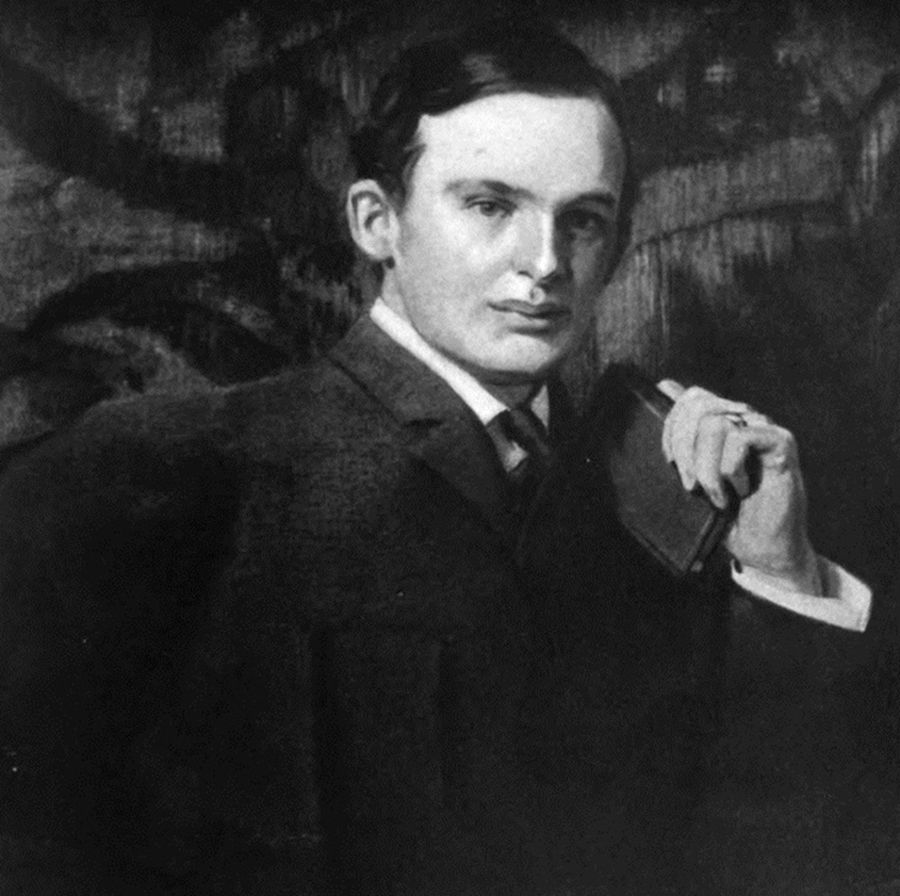
In 1904 Hunter’s book Poverty became a best-seller and brought national attention to the plight of workers and their families laboring under the specter of the poorhouse and starvation. To refute a commonly held perception of the well-off that the working poor were personally responsible for their desperate circumstances, Hunter produced data demonstrating that precisely the opposite was true — it was next to impossible for undernourished, overworked employees to claw their way out of the depths. “A sanitary dwelling, a sufficient supply of food and clothing, all having to do with physical well-being, is the very minimum which the laboring classes can demand,” he wrote. “The more fortunate of the laborers are but a few weeks from actual distress when the machines are stopped. Upon the unskilled masses, want is constantly pressing. As soon as employment ceases, suffering stares them in the face.”

According to Edward Brawley’s biography on Hunter, Speaking Out for America’s Poor, Hunter’s book “opened America’s eyes to the magnitude of poverty in the midst of plenty.” Poverty, wrote Brawley, made a convincing argument that “causing people, especially children, to suffer preventable poverty and ill health was not only shameful for a wealthy society but also a waste of the nation’s most valuable resources.” When Poverty failed to spur the Democratic and Republican parties to promote legislation, the Hunters cast their lot with the socialists. His writing brought Hunter significant street cred with socialist higher-ups who arranged for the author’s appointment to the party’s executive committee.

Hunter’s advocacy on behalf of the less fortunate grew out of his Indiana roots. Through his father, a charitable man in his own regard, Hunter met Eugene Debs, another Terre Haute native and the most famous socialist and influential labor leader of the late 19th century. Robert’s first encounter with Debs left an everlasting impression. “An old railroad workman joined us,” Hunter recalled. “I heard him explain to Debs that he could get a job if he could raise enough money to buy a good time-piece. Knowing that a watch was essential to a worker on the railroad, Debs immediately took out a handsome gold watch . . . unhooked it from its chain, handed it over to the man, saying ‘I care a lot about this watch . . . Keep it until you can afford to get another.’”

Though his own family’s finances were sufficient to withstand a downturn in the economy, Hunter was witness to the massive distress caused by the Panic of 1893 when falling prices resulted in countless bankruptcies. An empathetic Hunter distributed food to the hungry and went so far as to put himself on a strict diet of oatmeal. His growing concern for the poor was also influenced by the Russian author Leo Tolstoy, who believed that obedient Christians should follow Jesus’ instruction to “Sell everything you have and give it to the poor (Mark 10:21).” A young Hunter considered it his Christian duty to share with those in need everything he possessed.

Hunter’s father expected him to enter the family buggy business or embark on a legal career, but the son harbored other ideas. A light bulb went off for Robert after a chance meeting with Dr. Phillip Ayers, the secretary of the Cincinnati Board of Charities. Hunter recalled that Ayers “made my heart leap with joy by pointing out that with adequate preparation I could expect to obtain employment as a social worker.” After visiting Ayers in Cincinnati, Hunter was taken aback by the appalling conditions of the area’s slums and wanted to assist relief efforts there. When Ayers advised him to attend college first Hunter enrolled at Indiana University, graduating in 1896. By then, Ayers had moved to Chicago and was heading up the city’s Charitable Organization Society. He arranged a job for Hunter as the organizing secretary.

After observing that the teeth of children in the slums were frequently in poor condition, Hunter convinced city dentists to donate their services to those unable to pay. He also organized the first-ever municipal facility dedicated to short-term housing for vagrants, and published a study, “Tenement Conditions in Chicago,” the first of his sociological writings.

While in Chicago, Hunter resided in settlement houses, a reform phenomenon of the late 1800s where people from all segments of society came together in urban locations to find ways to alleviate area poverty. Settlement houses also became cultural destinations where famous speakers, writers, poets, public figures and educators appeared. During his stint in Chicago, Hunter lived at Hull House, operated by one of America’s pioneer social workers, Jane Addams. While in residence, he broke bread with celebrities like Clarence Darrow, Frank Lloyd Wright and John Dewey. He also spent a summer at another settlement house in London, where he met Bernard Shaw and H.G. Wells.

In 1902, Hunter moved to New York and became the head resident of the University Settlement. He led the group largely responsible for passage of the first New York state law prohibiting child labor. “It was in New York that Hunter met Graham Phelps Stokes, who like Robert, was destined to become that rarest of birds, a millionaire socialist,” wrote Brawley. The younger Stokes introduced Hunter to his sister Caroline, who was also active in social work. The two hit it off immediately and in April 1903, became engaged on the elder Stokes’ yacht, marrying a month later in Noroton, Connecticut, the Stokes’ hometown.

During the couple’s European honeymoon, Hunter visited one of his idols, Count Leo Tolstoy. The Russian confided that his attempt to give his possessions to the poor had been thwarted. The great writer’s wife refused to cooperate, maintaining that his benevolence would condemn the couple’s children to lives of ceaseless poverty. In appeasement, the author of War and Peace turned his property over to his spouse and was residing in the house as her guest. The count lamented to Hunter that this attempt at compromise had undermined his principles. Hunter described Tolstoy as “downcast, tearful and, I should say, morally wounded by his failure.”

Returning to New York, Hunter redoubled his efforts to assist the poor and live a simpler life. One frigid morning, he gave his overcoat to a shivering beggar, and then stoically did not don another throughout the winter. Rather than live in luxury, the newlyweds moved into modest quarters on Grove Street in the city’s Lower West Side (later Greenwich Village) with hopes of lending a hand toward revitalization there.

A New York newspaper reported that the Hunters had moved into “one of the vilest slums.” When it was whispered that the couple intended to give away “millions of dollars” to the poor, the rumor went viral. Hundreds formed outside their home seeking a piece of the pie — and more kept coming. For three weeks, Hunter was unable to leave the house, and it eventually forced the couple to retreat to the Stokes family enclave in Noroton.

It was during this frantic time that Hunter researched and wrote Poverty, a Herculean effort that brought him to the brink of a breakdown. His physician recommended outdoor exercise to provide a distraction, and Hunter embarked on a regimen of daily golf, despite awareness that many in his circle considered participation in the sport to be “effeminate.”

Hunter continued his deep involvement in socialist politics, writing books and lecturing. Twice he mounted runs for Connecticut political office under the socialist banner, losing both races. He sailed to Europe and attended international congresses of socialists, where he encountered Vladimir Lenin, Friedrich Engels and Benito Mussolini. President Theodore Roosevelt took notice of Poverty, and invited Hunter to a one-on-one discussion at the White House. Hunter even befriended Mark Twain.
But the amount of time Hunter was devoting to golf was beginning to rival that spent on social reform. In March, 1911, he reached the PCC club championship semifinals and then entered April’s prestigious United North and South Amateur Championship, a move specifically addressed in a tongue-in-cheek Tin Whistle bylaw that explained it was “the duty of each member to suppress the incipient conceit of any fellow member who thinks he is in line for the United North and South Amateur Championship.” Hunter surprised everyone by qualifying for match play and winning his way to the 36-hole final against the legendary Chick Evans — then at the peak of his Hall of Fame career. Hunter kept the match close during the morning round, but Evans pulled away in the afternoon to win 6 and 5. Still, it was an extraordinary feat to have reached the final given that he had only played golf for seven years.

Over the next five years, “Hunter of Wee Burn” won numerous Pinehurst events. In December 1912, he carted off the Holiday Golf Tournament’s President’s Cup, defeating former U.S. and British Amateur champion Walter Travis in the final match. He beat the great Travis again in a scintillating extra-hole match to win Pinehurst’s Mid-April Tournament in 1914, and successfully defended that championship the next two years. Hunter fashioned a second excellent performance in the 1915 North and South championship by reaching the semifinals, and he won the 54-hole medal play Tin Whistles championships of 1914 and ’15.

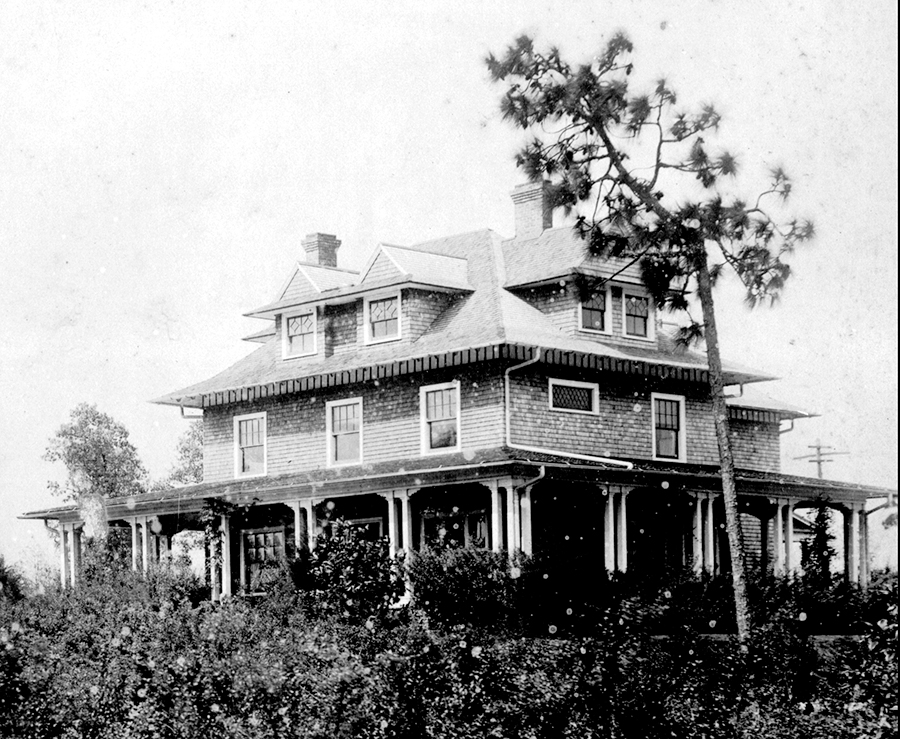
In January 1913, the Hunters purchased Mystic Cottage, which, according to the Pinehurst Outlook, was “the largest and most attractive of the winter homes here.” The couple hosted dinners in their spacious home with distinguished guests like Leonard Tufts and Donald Ross. It did not go unnoticed that the millionaire socialist, having once craved a Spartan existence, was increasingly living a life of opulence. Some thought the man a hypocrite, a charge Hunter never satisfactorily rebutted. His encounter with Tolstoy (recounted in his 1919 book Why We Fail as Christians) and the adverse public reaction to his own attempt to live modestly in New York may have persuaded him that self-denial was not all it was cracked up to be.

In any event, his disenchantment with his fellow socialists was growing. A majority of party leaders advocated labor strikes and other confrontational actions that moderate socialists like Hunter thought wrongheaded. This disagreement over tactics became intractable and led to his resignation from the Executive Committee in 1912. His disaffection was further exacerbated when the party refused to support America’s 1917 entry into World War I.

Hunter approved of the war declaration, reasoning that the conduct of a militaristic and conquest-driven Germany threatened the rights of working people in all democratic countries. In protest, the Hunters and thousands of former party supporters who likewise favored the war fled socialist ranks in droves. The party nearly disintegrated and was never again a major factor on the American political scene.

Increasingly regarded by many colleagues on the left as a pariah, Hunter began pursuing another outlet for his considerable energies — golf architecture. He wrote that his interest in the subject led him “abroad in the summer of 1912 for a six months’ study of the structure and upkeep of the championship courses of Great Britain.” The courses he visited included the Old Course at St. Andrews, Prestwick, Muirfield and Hoylake, all “by the sea in links-land.” As the demand for new golf courses in America was rapidly escalating, a self-taught crash course in golf architecture at the game’s birthplace could provide enough bona fides to start a course design business.

But it was not going to happen in Pinehurst, where Donald Ross monopolized commissions for golf courses up and down the Eastern Seaboard. In 1917, the Hunters pulled up stakes from their Connecticut and Pinehurst homes and relocated to Berkeley, California, where he filled a teaching position at the University of California until 1922. While relishing his new environment, Hunter admitted missing Pinehurst’s golf courses, bemoaning in a letter to a friend, “There is absolutely none where I am now living — unless I am to consider the local country club, which resembles one of the sand clay roads of Moore County.”

However, Northern California’s lack of courses also provided an opportunity. When Berkeley locals decided to build a new course in 1920, Hunter was named chairman of the fledgling club’s greens committee. Soon, he had drawn up a set of complete plans for the course. Berkeley Country Club had already hired the well-established Willie Watson as course architect, but Hunter’s routing left little for Watson to do. He basically rubber-stamped Hunter’s design work. Hunter also oversaw the course’s construction and today, the club acknowledges he deserves the lion’s share of credit for the design.

After a fire destroyed his Berkeley home, Hunter moved to Pebble Beach, hoping his work at Berkeley CC would create sufficient splash on the Monterey Peninsula to result in further design commissions. It did not. How could he broadcast his course design chops and simultaneously prove he was no dilettante in the field? The same way he had cemented his reputation for reform advocacy — by writing a book. Published in 1926, The Links became an authoritative reference bible for every phase of golf course design and construction. It’s chock-full of the author’s philosophy regarding everything from hiring a designer and acquiring land to the placement, shape and contours of hazards, bunkers, and greens. Noted designer Bill Coore still consults Hunter’s book and says that it “became a cornerstone in my personal golf architecture education and a bond in my partnership with Ben Crenshaw, who I learned had begun studying The Links at approximately the same time I did.”

The book came to the attention of the renowned British golf architect Alister MacKenzie, who was wowed by Hunter’s grasp of the innumerable details of course design, calling “it by far the best book on golf architecture ever written.” So, when Hunter proposed that he and MacKenzie build courses together in California, the Yorkshireman, who had never been to the West Coast, listened and agreed. Hunter expected the two would find themselves deluged with commissions. He was correct. Requests for work to be performed by the firm of MacKenzie and Hunter poured in.

In August 1926, the new partners entered into a contract to design a course for the Meadow Club in the San Francisco Bay area. This was followed by projects for the California Golf Club of San Francisco; Woodside Country Club near Stanford University; Green Hills Country Club; Northwood Golf Club; Pasatiempo Golf Club; and the Valley Club at Montecito. MacKenzie and Hunter updated the Pebble Beach links in preparation for the club’s hosting of the 1929 U.S. Amateur. To some extent, Hunter’s working relationship with MacKenzie mirrored the one he had established with Willie Watson at Berkeley. The more flamboyant MacKenzie was always the name architect while Hunter promoted him and managed the details on the ground. He seemed content to play the role of second banana in the relationship, though MacKenzie fully recognized Hunter’s ingenuous contributions. Regarding their work at the Valley Club at Montecito, an appreciative MacKenzie lauded his partner for introducing “a new machine, a Caterpillar tractor with bulldozer equipment, to remove the large rocks and boulders. He thus saved thousands of dollars in explosives and manual labor.”

But the partnership’s tour de force was its work in 1928 designing and building the incomparable Cypress Point Club, an oceanside course so beautiful it’s often referred to as golf’s Sistine Chapel. Golf historian and architect Geoff Shackleford calls the course “the most stunning creation in the history of golf course architecture.” Hunter, a local, was again the man responsible for overseeing the progress of daily construction. Also involved was son Robert Jr., who headed up the American Golf Course Construction Company.

It is too late to unravel the individual contributions Hunter and MacKenzie each made that resulted in the finished product at Cypress Point. Nonetheless, it is clear that Hunter was no mere sidekick and deserves far greater credit than he ever received for Cypress and the partners’ other wonderful California courses. Their association lasted until 1929, when the Great Depression tanked most all golf construction projects.

With the advent of President Franklin Roosevelt’s New Deal in the early 1930s, Hunter ping-ponged back into the analysis of the nation’s affairs. This time he had a far different spin on things. Despite the fact that the president’s leadership resulted in the enactment of progressive legislation, which he would have undoubtedly supported in his socialist days, Hunter was alarmed at what he perceived to be Roosevelt’s dictatorial tendencies. He viewed the president as a profligate spender whose economic policies were destined to result in an inflationary upheaval that would ultimately culminate in revolution.

Hunter pointed out that Lenin had hijacked Russia’s progressive movement and imposed a brutal dictatorship under similar economic circumstances. In 1940, he encapsulated his dire warnings (which, of course, proved to be greatly overblown) with another book, Revolution: Why, How, and When?, that was favorably received by those Republicans who despised Roosevelt, then running for his third term. The former socialist also served as an adviser to Republican candidate Wendell Willkie during the latter’s unsuccessful campaign for the presidency against Roosevelt in 1940.

Hunter would pass away two years later.

Most biographers tend to discount Hunter’s rants against the New Deal and Roosevelt, focusing instead on his earlier social reform efforts and authorship of Poverty. Of course the world of golf remembers another Hunter book, The Links. But the ripple effects of his contributions to the game reach beyond his writings. If he had not induced Alister MacKenzie to come to California, Cypress Point might never have been built in the glorious manner it was. And if there was no Cypress Point, Bobby Jones would never have chanced to play the course in 1929, nor would he have engaged MacKenzie in the design of Augusta National Golf Club.

Pinehurst had its role to play. It’s where Hunter’s interest in golf course architecture was first cultivated, and his acquaintance with fellow Tin Whistle Donald Ross (whose layouts Hunter revered) undoubtedly gave him meaningful exposure to the art and science of design. While his impact may have been easy to overlook, his legacy is astonishing in its scope.  PS

Bookshelf

January Books

FICTION

American Dirt, by Jeanine Cummins

On a sunny afternoon in Acapulco, a cartel massacres 16 members of a family at a barbecue. By a twist of fate, Lydia and her 8-year-old son, Luca, survive; and so begins their terrifying and interminable journey across Mexico in an attempt to cross the border. The tale exemplifies the struggle to elude the long-encompassing arms of the cartels. Who can be trusted? Propelled by fear and weighing the terror of what lies behind you against what lies ahead of you, to what lengths would you go to ensure the survival of your child? Cummins’ urgent and precise prose forbids you to stop reading until the end, then lingers long afterward.

The Truants, by Kate Weinberg

In a debut novel of suspense, Weinberg weaves a tale of obsession, deception and misguided love. Jess Walker is a young woman who enters an uninspiring university in East Anglia for the sole purpose of being a student of a charismatic professor of literature, Lorna Clay, who seems to have taken the position under a cloud of suspicion. Clay will be conducting studies on the life and work of Agatha Christie, with an underlying theme: “People disappear when they most want to be seen.” Jess not only falls under her thrall, but also that of her three new friends who introduce her to a lifestyle of excess and awakenings, with tragic and life-altering consequences. This is a moody, mesmerizing, literary read.

Run Me to Earth, by Paul Yoon

What happens when it seems that war and its atrocities are all you know, but somehow the instinct for survival and some semblance of childhood innocence prevail? That is precisely what Yoon has captured in this work, which is both elegant and spare, yet imbued with an incredible depth of emotion. The haunting story follows three orphaned children in Laos during the 1960s who find themselves working as couriers for a makeshift hospital with an enigmatic doctor. When an evacuation attempt forces the three in different directions, what follows is the tale of their lives through the decades. A magnificent read.

What I Carry, by Jennifer Longo

If a checklist exists for all the things a read requires, then this novel ticks off all the boxes. The number of foster homes Muir has found herself in far exceeds the 17 years of her life. She’s learned to pack light. Socks and toothbrush? Sure. Emotional attachments? Never. What she does have is an amazing, longtime social worker she can depend on, and what she finds is a new foster mom who is different from the rest, a for-the-first-time best friend, and a perfect boyfriend — all who actually “see” her. She also has a pillowcase resembling a blackbird’s nest of small objects acquired over the years to tell her story. Muir’s great love of the outdoors finds a home on a beautiful Pacific Northwest island as she comes to terms with her future and her imminent “aging out” of the foster care system in this unforgettable and exquisitely written book.

The Secret Guests, by Benjamin Black

A fictional account of the two daughters of the king of England, Elizabeth and Mary, who are sent to Ireland during the bombing of London. Keeping the girls’ location a secret is hard for everyone and the action starts when their secret is discovered.

Dear Edward, by Ann Napolitano

How do you go on living when the plane you’re on with your family crashes, and you’re the only survivor? That’s the dilemma for 12-year-old Edward, who is now living with his aunt and uncle, but doesn’t know how to stop feeling guilty. A wonderful story of how he discovers happiness again.

Lady Clementine, by Marie Benedict 

In 1909, Clementine steps off a train with her new husband, Winston. An angry woman attacks him from the crowd, shoving him in the direction of an oncoming train. Just before he stumbles, Clementine grabs him by his suit jacket. This will not be the last time Clementine Churchill will save her husband. Lady Clementine is the ferocious story of the ambitious woman at Churchill’s side, the story of a partner who did not flinch through the darkness of war, and who would not surrender to either expectations or to enemies.

Big Lies in a Small Town, by Diane Chamberlain 

North Carolina, 2018: Morgan Christopher’s life has been derailed. Taking the fall for a crime she did not commit, she finds herself serving a three-year stint in the North Carolina Women’s Correctional Center. Her dream of a career in art is put on hold — until a mysterious visitor makes her an offer that will see her released immediately. Her assignment: restore an old post office mural in a sleepy Southern town. Morgan knows nothing about art restoration, but desperate to leave prison, she accepts. What she finds under the layers of grime is a painting that tells the story of madness, violence, and a conspiracy of small town secrets.

North Carolina, 1940: Anna Dale, an artist from New Jersey, wins a national contest to paint a mural for the post office in Edenton, North Carolina. Alone in the world and desperate for work, she accepts. But what she doesn’t expect is to find herself immersed in a town where prejudices run deep, where people are hiding secrets behind closed doors, and where the price of being different might just end in murder.

What happened to Anna Dale? Are the clues hidden in the decrepit mural? Can Morgan overcome her own demons to discover what exists beneath the layers of lies?

Hunter Killer, by Brad Taylor

Pike Logan and the Taskforce were once the apex predators, an unrivaled hunting machine that decimated those out to harm the United States, but they may have met their match. While Logan and Jennifer Cahill prepare to join their team on a counter-terrorist mission in the lawless tri-border region where Argentina, Brazil and Paraguay meet, they are targeted in Charleston, South Carolina. A vicious explosion kills a friend, and the perpetrators have set it up to look like an accident. While the authorities believe this was not foul play, Pike knows the attack was meant for him. He and the Taskforce are under assault. Pike and Jennifer head to Brazil and run headlong into a crew of Russian assassins. Within days they are entangled in a byzantine scheme involving Brazilian politics and a cutthroat battle for control of offshore oil fields.

CHILDREN’S BOOKS

Croc & Turtle Snow Fun, by Mike Wohnoutka

It’s time for a playdate, but the two friends have come to an impasse. Croc wants to play outside while Turtle is determined to stay inside. The result is a fabulous compromise. Perfect for classroom or home reading — any place where young listeners may find themselves at odds with their fellow playmates. Croc and Turtle are the coolest new characters on the learning-to-read scene. (Ages 2-6.)

Bear Has a Story to Tell, by Philip Stead

Bear has a story to tell but, with all his friends busily preparing for the coming winter, will he ever get to share his thoughts before he must make his own preparations? A sweet winter read-together just perfect for story time or snuggle time. (Ages 2-4.)

Scientist Scientist,
Who Do You See?
by Chris Ferrie

Borrowing the rhythm from the classic Brown Bear, Brown Bear series, Ferrie introduces the youngest scientists to some of the most famous chemists, biologists, and meteorologists as well as pioneers in technology, artificial intelligence and space travel. The perfect book for new babies or budding young experimenters. (Ages 2-5.)

Camilla, Cartographer, by Julie Dillemuth

Camilla loves maps — old ones with crisping edges that show her home as it once was; maps left behind by summer hikers; and even maps of imaginary places. So when the snow falls deep enough to obscure all the known trails, Camilla delights in making a new map to help her friend Parsley find the path to the creek. Lovely, warm illustrations bring to life this fun title that reminds readers young and old of the value of thinking, creativity and exploration. (Ages 6-8.)  PS

Compiled by Kimberly Daniels Taws and Angie Tally

Almanac

January is fresh linens, heightened awareness, infinite possibility.

Like a dream within a dream.

Last night, I dreamed I was flying through a thick forest of pine, a holy swirl of stars like pinholes to the heavens in the winter sky above me. Cassiopeia the Queen was dancing west of Polaris, and my breath became a living veil, the Big Dipper disappearing and reappearing with every exhale. Suddenly, in the midst of all this magic — flight, the crisp night sky, the dance of breath and starlight — I realized that I could plummet to Earth at any moment. And yet the thrill of the alternative ignited me. This is my dream, I thought. And to claim a dream requires faith.

As the Big Dipper rose above the North Star, I began pumping my legs, swimming through the air at what felt like the speed of light, weaving between trees, between realms, between worlds.

January is here, and with it, a world of infinite possibility.

A seed of hope.

A bulb, cracking open beneath the soil.

A field of daffodils in the making.

New beginnings, new rituals, new dreams.

All that is required is faith.

Rabbit, Rabbit

Every New Year’s morning in the first blush of light, I bundle up, go outside, and listen to the deep quiet. As Earth begins stirring with unseen critters, silhouettes dance in the periphery. Often, one of a rabbit.

On such occasions, I’ve wondered if there was some correlation between rabbits and New Year’s, but settled with my own belief that it was some sort of good omen. Only recently did I discover the quirky superstition of saying “Rabbit, rabbit” on the first day of the month for good luck. Have you heard about this?

According to the Farmers’ Almanac, the first written record of this strange rabbit habit traces back to a 1909 British periodical called Notes and Queries

I think I prefer my New Year’s tradition, and how the language of nature seems to transcend words. But, for what it’s worth: Rabbit, rabbit.

Rabbit, rabbit, and happy New Year!

Year of the Rat

Twelfth Night (Jan. 5), the eve of Epiphany, marks the end of the Christmas season. But the merriment continues. Saturday, Jan. 25, marks the celebration of the Chinese New Year. Cue the paper lanterns for the Year of the Metal Rat, a year of wealth and surplus. Bring it on.

According to one ancient myth, the rat is the first of all zodiac animals because it tricked the ox into giving it a ride to the Jade Emperor’s party, a race to determine the order in which the animals would appear. Just as the ox was approaching the finish line, the rat leapt down in front of it, arriving first. All this to say that 2020 just may be a year of newfound ingenuity and resourcefulness. But in case you’re not convinced that the Year of the Rat will be an auspicious one, this is for you:

In Rajasthan, India, there is a Temple of Rats dedicated to a Hindu warrior worshiped by her followers as the incarnation of the goddess Durga. Outside, a beautiful marble façade with solid silver doors. Inside, 25,000 black rats plus a few rare and especially “holy” white rats, all revered.

Now, on a side note, it’s said that cleaning or throwing out garbage on the day of the Chinese New Year is a spring festival taboo — you don’t want to “sweep away” the good luck! Unless you’re inviting a certain zodiac animal to the party (ahem), you might want to turn a blind eye to it. 

In the Garden

Bare branches against bright sky in every direction, and yet a closer look reveals flowering witch hazel, camellia and daphne, hellebores, apricot and winter jasmine.

In the garden, now’s the time for preparation. Prune what’s asking to go. Fertilize beds with wood ash. And when the soil is dry enough, plant asparagus crowns for early spring harvest.

Soon, a sea of spring vegetables will grace the garden. English peas, cabbage, carrots, radish, turnip, rutabaga. But now, patience.

Patience and faith.

Nature has undoubtedly mastered the art of winter gardening and even the most experienced gardener can learn from the unrestrained beauty around them. — Vincent A. Simeone

PinePitch

Watch the Birdie

Discover strategies to attract birds to your backyard, including information on feeders and types of food, in a program at Weymouth Woods-Sandhills Nature Preserve, 1024 Fort Bragg Road in Southern Pines, on Sunday, Jan. 12, at 3 p.m. You may even learn how to scare a crow or two. For information call (910) 692-2167 or go to www.ncparks.gov.

Artistic Pioneers

Author and lecturer Vivian R. Jacobson pairs Marc Chagall and Elvis Presley — innovators in their respective fields — in a presentation at the Bradshaw Performing Arts Center, Owens Auditorium, 3395 Airport Road in Pinehurst, at 7 p.m. on Wednesday, Jan. 9. Tickets can be purchased at www.ticketmesandhills.com.

Jammin’ the Beat

Bring an instrument and a love of music to a jam session and song circle on Tuesday, Jan. 28, at 6 p.m., at the Weymouth Center for the Arts and Humanities, 555 E. Connecticut Ave., Southern Pines. It’s free and open to the public. For more information call (910) 692-6261 or go to www.weymouthcenter.org.

The Phil Does Films

The Carolina Philharmonic Orchestra will present music from the Golden Age of Film at 7:30 p.m. on Saturday, Jan. 18, at the Bradshaw Performing Arts Center, Owens Auditorium, Sandhills Community College, 3395 Airport Road, in Pinehurst. For more information call (910) 687-0287 or visit www.carolinaphil.org.

Lecture Series

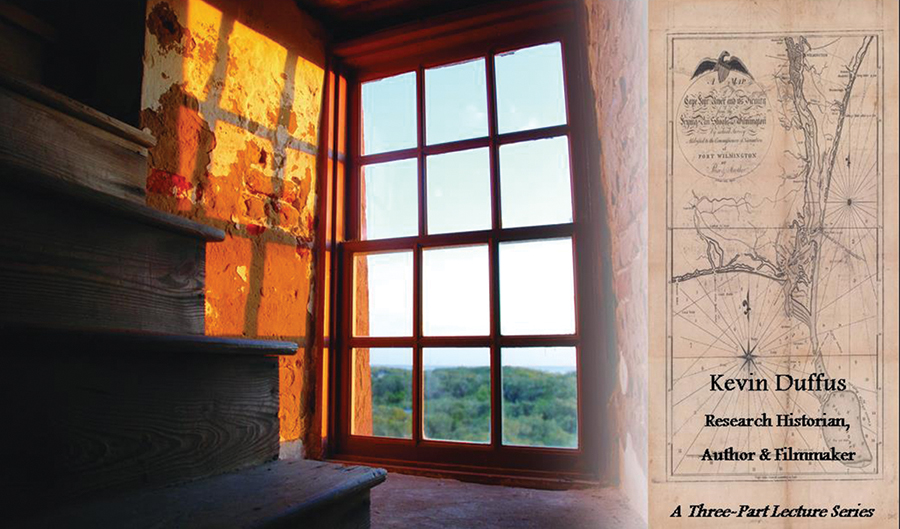
Historian Kevin Duffus begins a three-part lecture series on the Cape Fear and 500 years of American history at 2 p.m. on Sunday, Jan. 19, at the Weymouth Center for the Arts and Humanities, 555 E. Connecticut Ave., Southern Pines. For additional information call (910) 692-6261 or visit www.weymouthcenter.org. Tickets are available at www.ticketmesandhills.com.

A Day at the Opera

The Sunrise Theater’s Met Opera series continues on Saturday, Jan. 11, at 1 p.m., with Wozzeck, Alban Berg’s 20th century shocker staring baritone Peter Mattei in the title role. Groundbreaking visual artist and director William Kentridge unveils a bold new staging set in an apocalyptic wasteland. For information call (910) 692-3611 or visit www.sunrisetheater.com.

Get Well

Learn about Kombucha tea, CBD and essential oils at a holistic wellness expo running from 10 a.m. to 2 p.m. at The Pilot office, 145 W. Pennsylvania Ave., Southern Pines. Holistic health experts will exhibit and be available to answer questions. For more information contact mollie@firstflightagency.com. Tickets can be purchased at www.ticketmesandhills.com.

The Rooster’s Wife

Sunday, Jan. 5: The Gibson Brothers. The best brother duo in bluegrass makes its annual appearance with shows at 12:46 p.m. and 6:46 p.m. at the Poplar Knight Spot. Cost: $35.

Sunday, Jan. 12: The Kennedys with special guest, Grammy-winner Jon Carroll. Old friends and collaborators from the D.C. area meet at musical crossroads in Aberdeen. The Kennedys, Pete and Maura, have shared many stages, tour buses and studios with Carroll over the years, and they’re excited to catch up at The Rooster’s Wife. Cost: $20.

Friday, Jan. 17: An Evening with Chris Smither. Honing a synthesis of folk and blues for 50 years, Smither is truly an American original. Rolling Stone and The New York Times agree that Smither continues to be a profound songwriter, a blistering guitarist, and intense performer as he draws deeply from the blues, American folk music, modern poets and humanist philosophers. Cost: $30.

Sunday, Jan. 19: Tire Fire, Stoll Vaughn. Kentucky singer/songwriter Vaughn opens the show for this newgrass-jam-funk-groovemachine-headbangin’-electrified-party-band! Cost: $15.

Sunday, Jan. 26: Cliff Eberhardt with special guest Louise Mosrie. Eberhardt knew by the age of 7 that he was going to be a singer and songwriter. Living close to the Main Point, one of the best folk clubs on the East Coast, he cut his teeth listening to the likes of James Taylor, Joni Mitchell, Bruce Springsteen, Howlin’ Wolf, Muddy Waters, Bonnie Raitt and Mississippi John Hurt. At the same time, he studied great pop songwriters like Cole Porter, the Gershwins, and Rodgers and Hart, all of which explains his penchant for great melodies and clever lyrical twists. He’ll be joined by Louise Mosrie. Cost: $20.

Thursday, Jan. 30: DamnTall Buildings. Whether live or on record, the band radiates the energy of a ragtag crew of music students playing bluegrass on the street. Anchoring that energy is their instrumental chops, their strong songwriting, and their varied influences that stretch beyond bluegrass. Sharing lead vocals, instrumental solos and high-spirited harmony, DamnTall Buildings is more than the sum of its parts. Cost: $15.

Unless otherwise noted, doors open at 6 p.m. and music begins at 6:46 at the Poplar Knight Spot, 114 Knight St., Aberdeen. Prices above are for members. Annual memberships are $5 and available online or at the door. For more information call (910) 944-7502 or visit www.theroosterswife.org or ticketmesandhills.com.