Poem

A Thoughtful Response

Quick answers are not planned

Not as rich as one wants

But with the time needed

We give back so much more

One man asks his girl

Do you love me?

She reflects, breathes deeply, and raises an eyebrow

Then, exhaling, she responds with a smile

The air between them froze

Complicated relationships

Deserve more

But often we find answers in the curl of a lip

The angle of an eyebrow

The chisel of a chin

The finer movements in our face

Often speak without words

— Murray Dunlap

Birds of Paradise

Exploring a hidden Carolina Bay

Photographs by Laura L. Gingerich

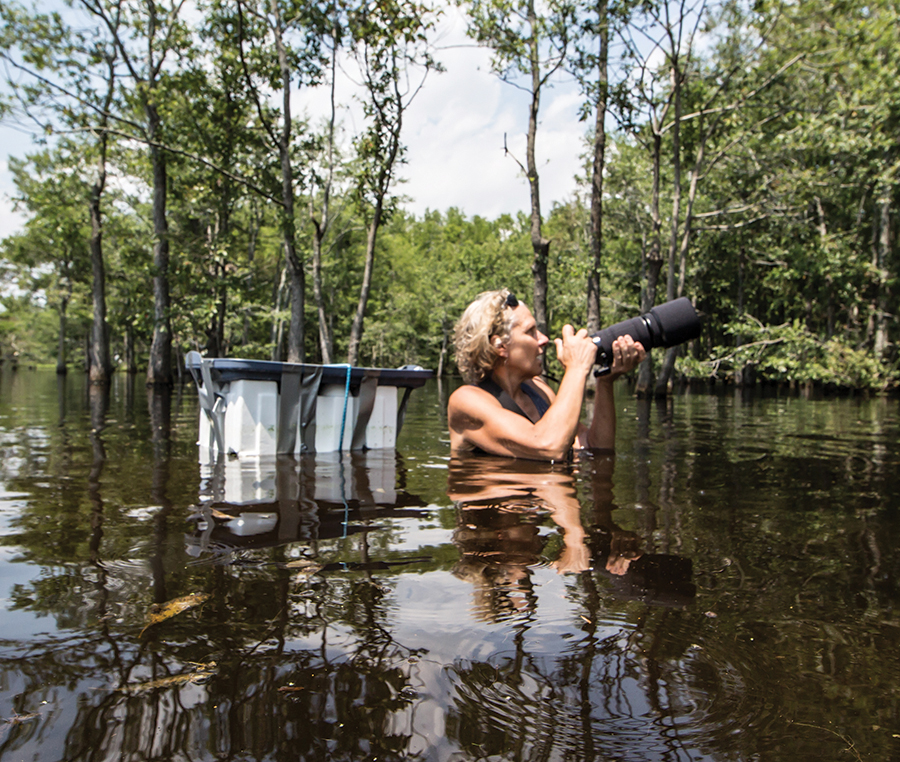
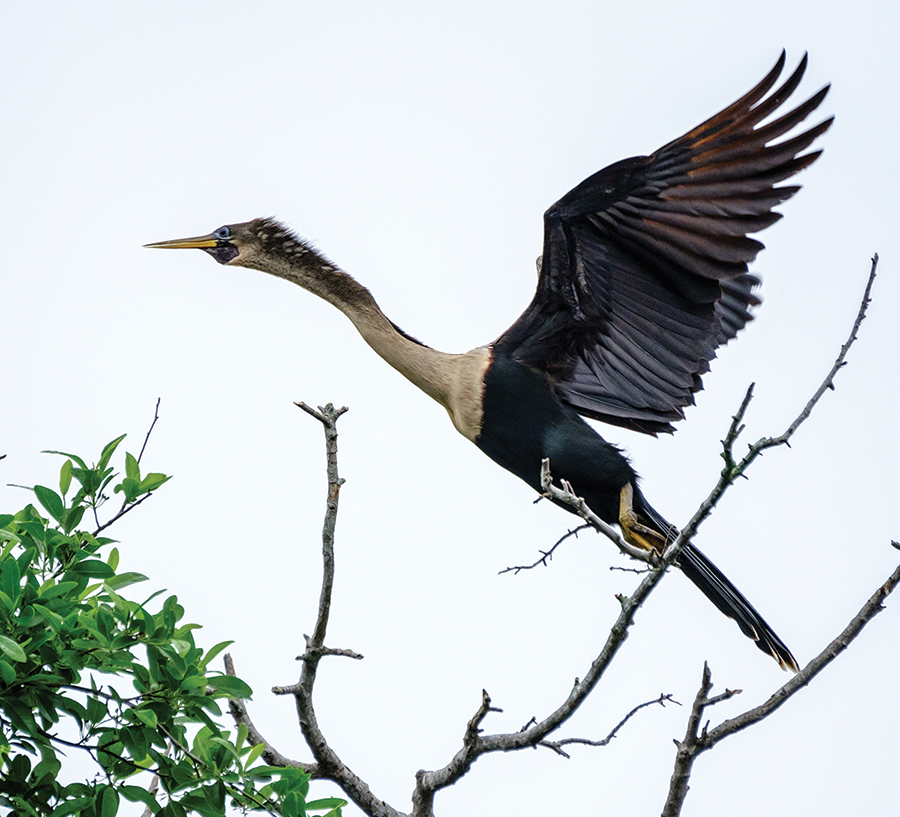
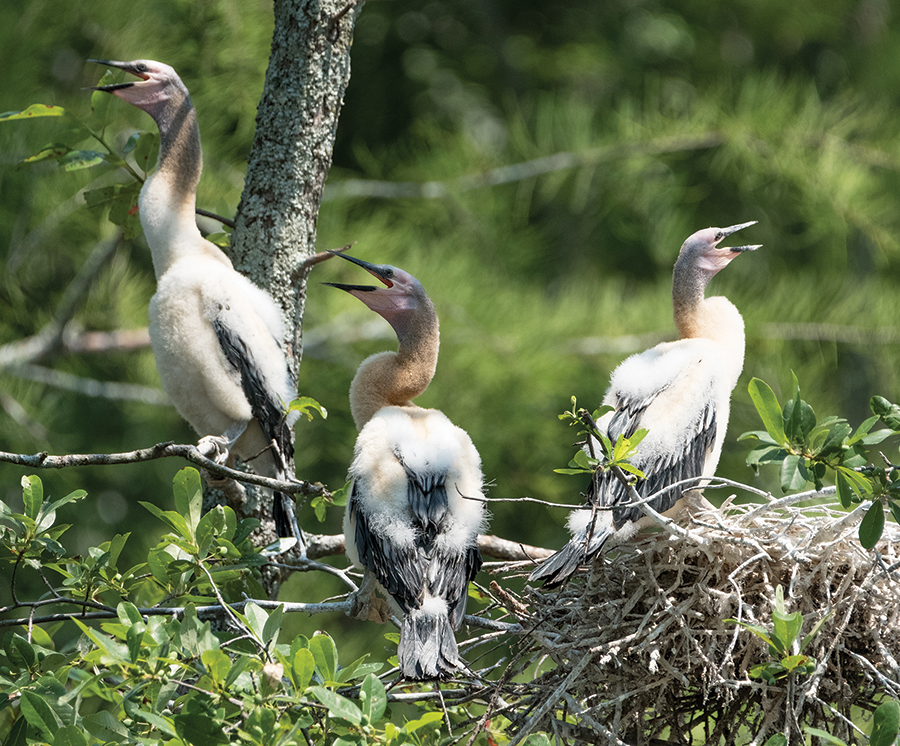
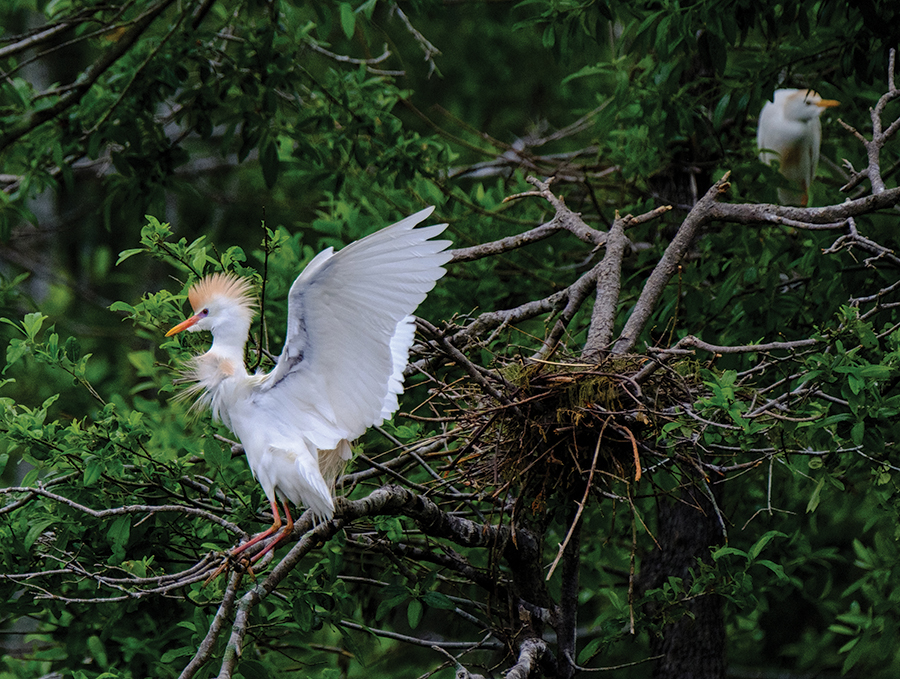
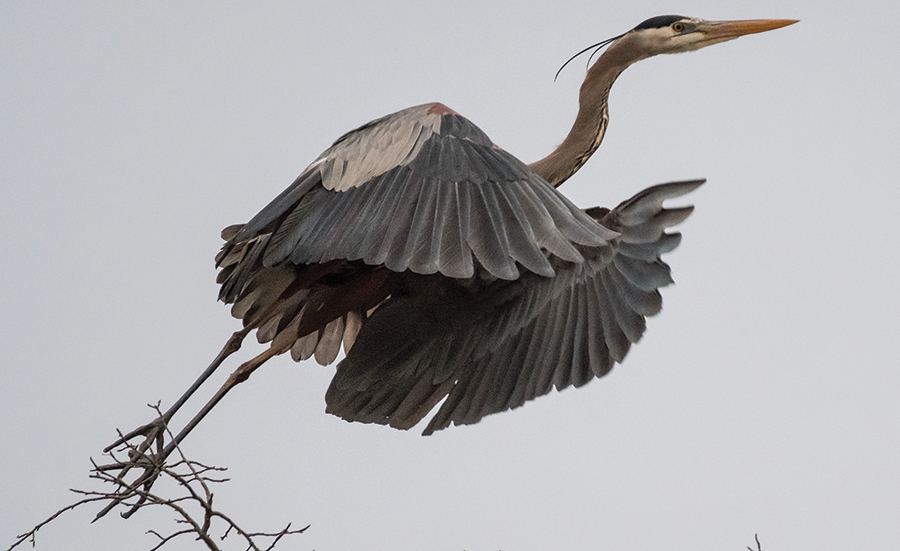
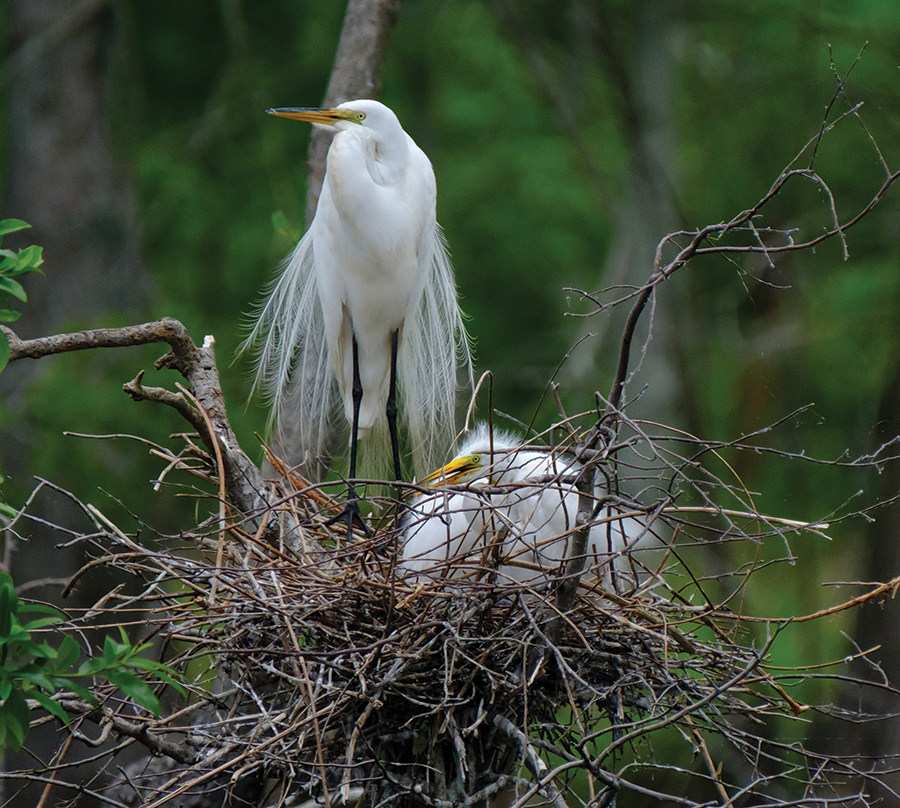
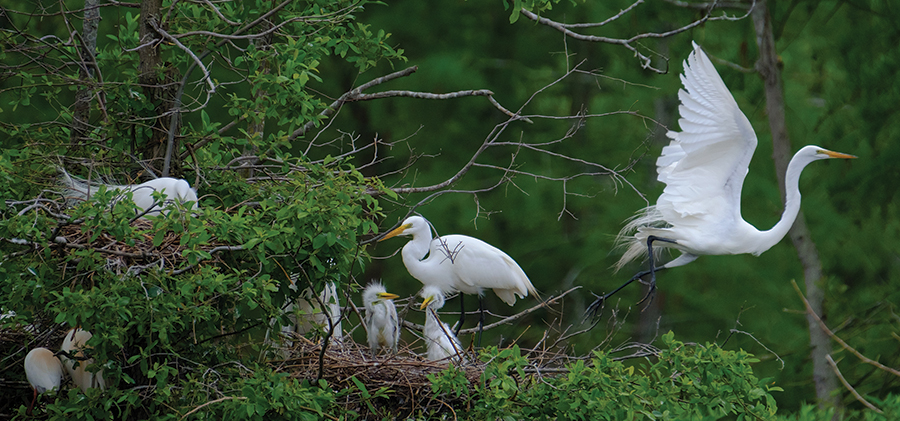
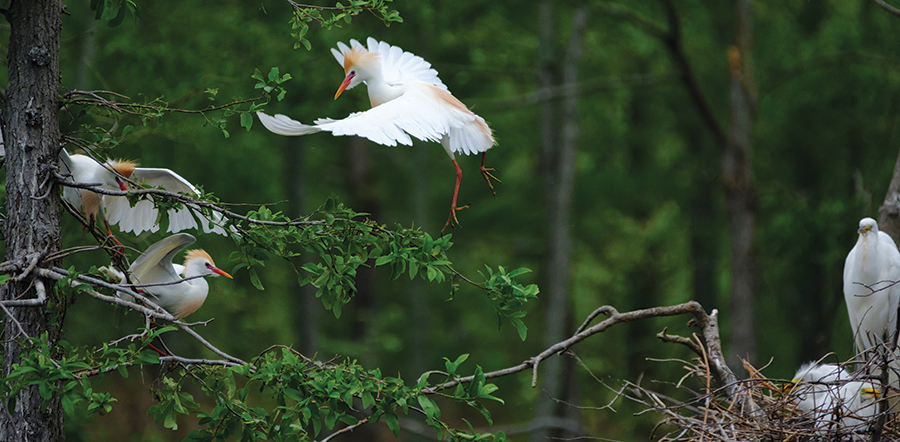
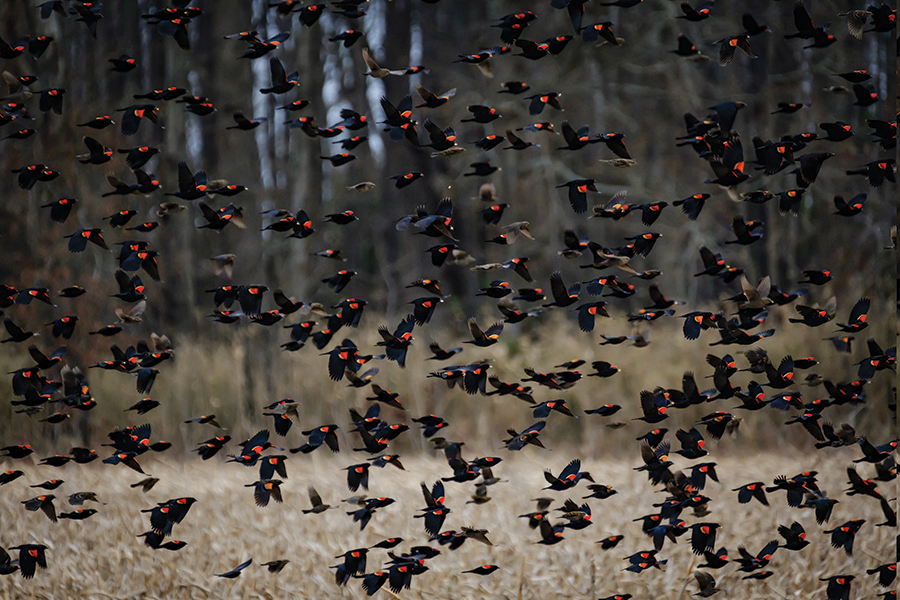
Carefully holding her camera above the surface of the water, Laura Gingerich waded into the forest swamp up to her armpits. Her feet sank into the slippery rot and muck on the bottom. Like quicksand, the more she moved, the more the ground swallowed her legs, nearly reaching her knees. Beyond a stand of cypress, she saw a clearing. By then the water was touching her chin. Turning a corner, they appeared in front of her. It was a robust, diverse community of birds, a breeding spot for snowy egret, great egret, great blue heron, green heron, cormorant and anhinga. Awe replaced trepidation. In the months that followed, Gingerich used a jon boat, a kayak and a canoe to return over and over again to the swamp, gathering photographs of this rare inland rookery in Robeson County.

“It’s one of the clay-based Carolina Bays,” says Jeff Marcus of the Nature Conservancy. “Carolina Bays are these unique geological features, rare isolated wetlands that occur primarily in the coastal plain of North and South Carolina. They’re all elliptical in shape and all kind of oriented to the northwest and southeast. It’s been a hotly debated topic as to what the origins of these things are. People have speculated everything from meteor impacts to dinosaur or whale wallows. The most prevalent theory is that it has more to do with the wind and wave actions when the Coastal Plain was a shallow sea.”

This bay, like many others, is protected by the Nature Conservancy. “What makes this site interesting is that most of those birds primarily are kind of coastal breeders. They’re found in the greatest abundance right at the coast, nesting on barrier islands, so it is somewhat unusual to have a large rookery so far inland,” says Marcus. “It’s great to get people more interested and aware and excited about all the natural history we have right in our own backyard. We don’t always appreciate what a special and unique place it is to live where we do.”

Anyone interested in visiting a site like the rookery in Robeson County or in becoming a member of the Nature Conservancy can call the Sandhills field office at (910) 246-0300.

Triumphant Return

Frazier is back with a new historical novel that reads like poetry

By D.G. Martin

Charles Frazier’s blockbuster first novel, Cold Mountain, marked its 20th anniversary last year. It won the National Book Award in 1997 and became a popular and Academy Award-winning film starring Nicole Kidman, Jude Law and Renée Zellweger. From Cold Mountain and the books that followed, Thirteen Moons and Nightwoods, Frazier gained recognition as North Carolina’s most admired writer of literary fiction since Thomas Wolfe.

Frazier’s many fans celebrated the April release of his latest novel, Varina, based on the life of Confederate President Jefferson Davis’ wife. But, because his most recent previous novel, Nightwoods, had come out in 2011, they wondered why he had made them wait so long. The simple answer: Frazier refuses to work fast. Every word of every chapter of every one of his four books was reviewed, rewritten, replaced and restored by him to make the final product just right. It’s that process that makes Varina a book so full of rich and lovely prose it could pass for poetry. And well worth the wait.

Because Varina is historical fiction, Frazier faced a challenge similar to the one Wiley Cash encountered in his recent book, The Last Ballad. Writing about a real person — textile union activist Ella May Wiggins in Cash’s case or Varina Davis in Frazier’s book — limits an author’s freedom to create and imagine without limits. The facts of history set firm and solid boundaries.

On the other hand, those real historical facts provide the framework within which Cash and Frazier, both, have succeeded in developing interesting and believable characters. Varina takes us back to the 1800s and the Civil War, a period it shares with Cold Mountain and Thirteen Moons. The central character of the new book is Varina Howell Davis, until now an obscure Civil War footnote. Frazier refers to her as “V.”

He builds V’s story around an unusual fact. While living in Richmond as first lady of the Confederacy, she took in a young mixed race boy she called Jimmie. She raised him alongside her own children. At the end of the Civil War, Union troops took 6-year-old Jimmie away from V, and she never learned what happened to him.

Frazier begins his story 40 years later at a resort-spa-hotel-hospital in Saratoga Springs, New York, where V is residing. James Blake, a light-skinned, middle-aged African-American, has read about Jimmie. His memories are very dim, but he begins to think he might be that same Jimmie and sets out to visit V at Saratoga Springs.

When Blake calls on V at the hotel, she is suspicious, having been the victim of various con artists who attempted to exploit her fame. But something clicks. “She works at remembrance, looks harder at Blake’s broad forehead, brown skin, curling hair graying at the temples. She tries to cast back four decades to the war.”

Blake visits V for several Sundays, and Frazier builds his story on the growing friendship and the memories they share. During the course of Blake’s visits, V remembers her teenage years in Natchez, Mississippi; her courtship and marriage to Davis; life on his plantation while Davis is often away in military service or politics; living in Washington as wife of a U.S. senator and Cabinet official; being the first lady of the Confederacy; and her post-Civil War life when she becomes friends with the widow of Ulysses Grant and writes a column for a New York newspaper.

These are important subplots, but the book’s most compelling action develops in V’s flight from Richmond when it falls to Union troops at the end of the Civil War. In the book’s second chapter, V and Blake begin to recall their journey southward. As V prepares to leave Richmond on the train, Davis tells her she would be coming back soon because “General Lee would find a way.” But Lee does not find a way this time.

V’s family, including Jimmie, servants and Confederate officials, travel to Charlotte, where an angry mob confronts them at the rail station. Evading the mob there, they “traveled southwest down springtime Carolina roads, red mud and pale leaves on poplar trees only big as the tip of your little finger, a green haze at the tree line. They fled like a band of Gypsies — a ragged little caravan of saddle horses and wagons with hay and horse feed and a sort of kitchen wagon and another for baggage. Two leftover battlefield ambulances for those not a-saddle. The band comprised a white woman, a black woman, five children, and a dwindling supply of white men — which V called Noah’s animals, because as soon as they realized the war was truly lost, they began departing two by two.”

Their goal is escape to Florida and then Havana.

Supplies have shrunk and their money has become worthless. Rumors circulate that their caravan has a hoard of gold from the Confederate treasury and that there will be a big reward for their capture.

Frazier writes, “In delusion, bounty hunters surely rode hard behind faces, dark in the shadows of deep hat brims, daylight striking nothing but jawbones and chin grizzle, dirty necks, and once-white shirt collars banded with extrusions of their own amber grease.”

Like Inman’s trek toward home in Cold Mountain, V and her companions confront adventure and terror at almost every stop.

In Georgia, low on food and soaking wet, the group finds refuge in a seemingly deserted plantation house. As they settle in, two or three families of formerly enslaved people appear, accompanied by the son of their former owner, Elgin, a “white boy, who grew less beard than the fuzz on a mullein leaf.”

Elgin sasses and threatens two former Confederate naval cadets, Bristol and Ryland, who are accompanying V’s group. He blames them for losing the war.

Ryland responds in kind, “You’ve not ever worn a uniform or killed anybody, and you’re not going to start now. Have you even had your first drink of liquor?”

Ryland and Bristol laugh when the boy reaches into his pants and pulls out a Derringer pistol and points it at Ryland.

“And then Elgin twitched a finger, almost a nervous impulse, and an awful instant of time later, Ryland was gone for good.”

Frazier writes that Ryland had been transformed in a matter of seconds “to being a dead pile of meat and bones and gristle without a spark. Three or four swings of the pendulum and he was all gone.”

Instantly Bristol guns down Elgin. Before moving on, V’s group and the former slaves bury Elgin and Ryland, two more unnecessary casualties in a war that simply would not end.

With V’s group back on the road, we know their attempt to escape is doomed to failure. But Frazier’s dazzling descriptions give us hope, hope that is quickly dashed when Federal troops capture V and take Jimmie away from her.

Readers who loved Frazier’s luscious language and compelling characters in his earlier books will agree that Varina was worth the long wait.

But what are they to make of V, her husband, and the Confederate heroes who are bit players in the new book?

Perhaps Frazier leaves a clue with the final words, as James Blake remembers what V says to him on one of their visits at Saratoga Springs.

“When the time is remote enough nobody amounts to much.”  PS

D.G. Martin hosts North Carolina Bookwatch, which airs Sundays at 11 a.m. and Thursdays at 5 p.m. on UNC-TV.

TOPO’s Whiskey and Rum

New releases from one of North Carolina’s most inventive distilleries

By Tony Cross

Four years ago, I was in my final couple of hours of wrapping up a Saturday night behind the bar. It was busy and I was slinging drinks and carrying on the type of banter that goes with the territory. Usually after 8 p.m. on a weekend night, most of my guests were relaxed enough to tolerate, maybe even laugh at, my antics. In between the chaos, two gentlemen took seats at the bar. After greeting them, I turned around to grab a bottle of rye and make a drink. “Do you guys carry TOPO spirits?” one of them asked. It had to have been some sort of divine intervention, because my first thought was, “Yeah, but you’re the only person to ask for it.” TOPO vodka was the first local spirit I carried, and I was a little disappointed that guests weren’t flocking to support a local distillery. Another way of putting it is: My feelings got hurt when guests didn’t like what I did. But instead of talking first and thinking later, I said, “Actually, yeah, we carry their vodka. It’s good stuff.” Good job, Tony. Not being a smart-ass paid off for once. I had just met the owners of Top of the Hill Distillery, Scott Maitland and Esteban McMahan.

Since that night, I’ve formed a relationship with TOPO’s spirit guide, McMahan. No one in North Carolina’s distillery game seems busier than him. If you follow TOPO on Instagram (handle: topoorganicspirits), then you know exactly what I mean. If I had to guess, I’d say that he’s doing three to four events a week across the state. The guy is everywhere. And thanks to McMahan’s work ethic, I was able to debut my carbonated cocktails on draught to a ton of people when he asked me to bartend with him at Stoneybrook two years ago. Since then, we’ve collaborated a few times and he always makes a point to let me know when he’s in Moore County. The last time I saw McMahan was in March, when he was finishing up an event at the Carolina Horse Park and wanted to link up so he could turn me on to TOPO’s new whiskey. After having a drink and catching up, he gifted me a bottle of their organic Spiced Rum and Reserve Carolina Straight Wheat Whiskey.

I first got a taste of TOPO’s Spiced Rum last fall during Pepperfest in Carrboro. McMahan had invited my friend and co-worker, Carter, and me to come out and use pepper-infused TOPO vodka with our Reverie strawberry-ginger beer. We had a blast, and our cocktail even took first place. While we were there, we got to see the TOPO crew unveil their newest spirit, the Spiced Rum. A few months prior to Pepperfest, the guys over at the distillery were still tweaking the rum. They’d given me a taste at the time, and it wasn’t bad. When I got to try it at Pepperfest, it was clear they had gotten it just right. On the nose, there’s vanilla, orange, and the slightest whiff of banana. On the palate, orange and vanilla are still present, but I can also taste spices — cinnamon is definitely there, clove is subtle, and allspice seems to round it out. McMahan says their rum is “N.C.’s only USDA Certified Organic rum. It is distilled from organic evaporated cane juice and molasses, and spiced with organic fruit and spices. Unlike most spiced rums, it is not heavily sweetened post-distillation, nor are there artificial colors and flavors.” Heck, the rum was even awarded a bronze medal at the American Distilling Institute Competition this year. I would suspect that rum purists might not go crazy about it, but I think it’s fun to play around with, and goes well in a variety of mixed drinks. You can definitely go the Dark n’ Stormy route, or you can fiddle around with something like I did below:

Kind of Blue

2 ounces TOPO Spiced Rum

3/4 ounce pineapple juice

1/2 ounce lime juice

1/4 ounce simple syrup (2:1)

2 ounces Reverie Ginger Beer

Take all ingredients (sans ginger beer) and pour into a cocktail shaker with ice. Shake like hell, and then pour two ounces of ginger beer into the shaker. Dump everything into a rocks glass. Garnish with fresh grated nutmeg (using a microplane).

As much as I like to stay busy, I can do lazy, too. Case in point: that bottle of TOPO’s Reserve Carolina Straight Wheat Whiskey. I didn’t want to open it until I could take a picture of it for this issue’s column. I’ve had this bottle staring at me from my kitchen counter since March. All I had to do was take a picture of it. Well, I did. Tonight. And I opened it. Tonight. One of my friends has been telling me how good this whiskey is. I’ll be hearing “I told you so” sometime later this week.

I asked McMahan about TOPO’s new whiskey, and he had this to say: “The TOPO Organic Reserve Carolina Straight Wheat Whiskey is N.C.’s first and only locally sourced straight whiskey. It is distilled from a 100 percent wheat mash bill of USDA Certified Organic soft red winter wheat from the Jack H. Winslow Farms in Scotland Neck, N.C. It is distilled below 80 percent ABV, barrel aged in #3 char new American oak barrels two to four years at no more than 125 proof, and then it’s non chill-filtered.” I know, he forgot to tell me how smooth this whiskey is. Congratulations are in order, too. McMahan was just notified that TOPO placed gold in the San Francisco Spirits Competition. No drink recipe for this one, folks. If you must, an old-fashioned. I’ll take mine neat with half an ice cube. Cheers!   PS

Tony Cross is a bartender who runs cocktail catering company Reverie Cocktails in Southern Pines.

Summer Simmer

The heat’s on in June but the stars say, “Cool it!”

By Astrid Stellanova

Star Children, I do relate to all the mischief you are in right this hot minute with Summer Solstice approaching on the 21st. We’re all hot and bothered. I’m a hopeless romantic, too. June is named after Juno, the Roman goddess of marriage. Let. That. Sink. In. If I was to finally tie the knot with Beau, I’d have more pink, tulle, icing and frou-frou going on than Shelby’s wedding in Steel Magnolias. I would also hand out Pepto-Bismol as a wedding favor, because shortening and sugar are a plural food group in my world, and happiness or heartache still bring stomach ache.

Pepto-Bismol solves at least one of the problems. You’re welcome. I’m dispensing a few more warnings that just about all of y’all in Star Land need to heed. And why not follow the (free) counsel of older and wiser Astrid? – Ad Astra

Gemini (May 21–June 20)

Honey, you got an itch to be bewitched. And when you say I do, remember it’s durn difficult to find the undo button. Most folks just settle for a do-over before they have been done over. You have lost your mind because somebody has been wooing and undoing you. Your powers to charm and bewilder can strike in the same sentence. If you see a greener pasture, we know your M.O. You will be over the fence and bolted before the one you loved and left has even figured it out. The sensible thing would be to just hit the pause button. But Sugar, sensible is not in your wheelhouse.

Cancer (June 21–July 22)

You cannot hear thunder. What got into you, Sugar? Let me just say, Karma honked the horn at you and you just sashayed right on past. You cannot outrun your destiny. Take two minutes to read that again. There is a real need for you to own what happened, and make amends.

Leo (July 23–Aug. 22)

My Lord! Somebody steered you wrong, but you decided that somebody knew more than everybody else. That friend could be a serial killer and you would still think they would go for your bail. This is going to hurt, this cliff dive, because you convinced yourself the very one driving you over cared about you. Let the healing begin.

Virgo (August 23–Sept. 22)

This is your life. And this month is like spending 24 hours in a Vegas casino and winning a cup of quarters. Yes, Sugar, it does beat losing. But not by much. Go get you some sunshine, rehydrate, then have a square meal and recover your senses. 

Libra (Sept. 23–Oct. 22)

It’s a recurring theme: You need to escape, and your bag is packed with your best clean underwear with good elastic. Answer this: Are you running from love, or towards it, Honey? When you recover from itchy feet, you may find nothing that scary is chasing you.

Scorpio (October 23–November 21)

Where is your sense of self-preservation? Is this love or is it suicide? You and your beloved are like planets circling the same sun but on a collision course. You don’t have to treat love like nuclear fusion. Love doesn’t have to destroy you to excite you.

Sagittarius (November 22–December 21)

Be like my dog Woodrow and hit the woof. Howl! Holler! You have tamped down all your emotions and now it is time to let them out! You are not dead yet, despite all your attempts to give that impression.

Capricorn (December 22–January 19)

If you loved yourself as much as you love your pocketbook, you wouldn’t let yourself go just because a no-good somebody broke your little heart. Time to splash out on some new duds, a haircut and some Crest teeth strips. Then, love, grin and bear it. 

Aquarius (January 20–February 18)

How far are you going to take this bad mood of yours? I will tell you that orange sure ain’t your color and it sure ain’t the new black. If you kill/maim/sabotage somebody in a jealous rage, the only thing you will have discovered is your own personal hell.

Pisces (February 19–March 20)

By the time word of your adventure traveled back, and it traveled fast, there was nobody who could look you straight in the eye and not think: Lordamercy! So you blew your inheritance on something like a big trip to Dollywood. It ain’t nobody’s business but yours. Live on the memories, Sweet Thing.

Aries (March 21–April 19)

I’d like to introduce you to your future. But I won’t. It ain’t in my power to tell you what will happen if you take the steps you’ve been contemplating. It’s extreme, even for you, Sugar. For the love of Pepto-Bismol, don’t run over a small child just trying to get ahead when you will anyhow.

Taurus (April 20–May 20)

Lord help us. There is not enough sunscreen in the world to keep you from SPFing this thing up. You know what I mean. You have got one powerful opportunity, and all you need to do is exercise just a smidge of caution. But that ain’t happening unless somebody bodily restrains you. PS

For years, Astrid Stellanova owned and operated Curl Up and Dye Beauty Salon in the boondocks of North Carolina until arthritic fingers and her popular astrological readings provoked a new career path.

The Deer Departed

At least, that’s the plan

By Jan Leitschuh

I have chronicled the ravages of Southern white-tailed deer here at Cottage Garden Farm, as well as the myriad methods used to discourage our cloven-hoofed neighbors from ravaging not only the vegetable garden but stripping out the tasty pansies, roses, zinnias, daylilies, sunflowers, hostas and more.

Last summer, it got so bad I actually considered giving up growing vegetables. The magnitude of that discouragement still stings. Vegetable gardening is something I’ve done since childhood when my parents, retaining a Victory Garden habit from the war years, taught me the pleasures of coaxing edible life from the soil. I can imagine few more graceful pursuits than the quiet peace of growing fresh, clean, delicious food.

But after following the call of spring last year, the largest horde of deer yet swooped in and savaged the entire garden. Before, it might be a ripe fruit taken here, an okra plant nipped there. Now, healthy cucumber, squash, sugar snap pea, pepper and tomato plants were taken to the ground. Laid waste. Little but rosemary was left standing.

I may have a solution. Call me hopeful, more hopeful than I have felt in years, thanks to a tip from a fellow plant enthusiast from Greensboro, garden educator Ellen Ashley.

You can’t blame the deer. They only do what deer do — smell out a good thing and eat it. With the efforts we have made to sweeten and enrich the garden’s soil, one could almost take it as a backhanded compliment. The deer equivalent of the cereal commercial: “Mikey likes it!”

We tried an electric fence wire. Nope, over they hopped. We hung the wire with little peanut butter-smeared foil “tags,” hoping to tempt the deer to lick them, and training them to stay away because of the mild electrical unpleasantness. For a variety of reasons, that didn’t work either (plus it was difficult to keep the wires from grounding out). The vegetables fattened happily on their parent plants, and just when you’d think “one more day to perfect ripeness,” the keen-nosed deer would make the same assessment, whisking in and making off with the season’s first tomato, flattening the okra or decimating the green bean patch — and ignoring the peanut butter.

Scent is key. Some studies have estimated that the white-tail deer’s ability to smell is about 10,000 times stronger than a human’s. In a deer, more brainpower is dedicated to analyzing odors than any other brain function. They have a secondary odor detector in the roof of their mouth. A buck can smell a doe over a mile away.

For deer, smell is the information highway, and a dinner menu.

Many anti-deer strategies try to use their sense of smell against them. I have tied pungent soaps in little hosiery bags around the garden — we should have bought stock in Irish Spring that year. Nope. I clipped the dog and sprinkled his winter fluff about the perimeter. No luck, although area bird nests that year had fluffy, soft, blond golden retriever linings. (The dog himself was useless, camping at night at the foot of our bed.) No dice with human hair collected from a hairdresser, either.

I casually suggested to my husband that he make his way to the perimeter of our secluded garden to kind of mark his territory in a sort of Y chromosome wilding activity. He was not amenable, noting that the toilet was much closer and less likely to get him arrested for indecent exposure.

Last year, taking a cue from Karyn Richardson of Eagles Nest Berry Farm, I invested in a tall, see-through plastic netting that blended nicely into the background. Deer can jump seven feet, so a fence must be high. Karyn has surrounded her blueberry acres with this fence and high poles, and from a distance, one can hardly see it. She did find the deer were sneaking underneath the fence, so she pinned the bottom.

I did the same, using bamboo poles to extend our stakes. The fence took tremendous effort to erect, was costly, a pain to weed-eat around and move wheelbarrows through, but what price peace in the garden?

It should have worked. Yet in the morning, there would be multiple deer inside our small garden and I’d lose my mind. In carelessly leaping out, the deer would tear down a whole netting wall. And the garden mess they left behind was heartbreaking. This winter we took the fence down completely. The deer were just too accustomed to visiting our flavorful patch. Was this the end of my love affair with garden veggies?

For years I had been protecting choice plants like pansies and hydrangeas with an expensive store-bought deer repellent spray. It did work — rather well, actually — but was too expensive to justify for a whole garden, even for a few fresh beans or young zucchini.

Which is why I sat up in my chair when Ashley spoke at Weymouth this April, at a public lecture sponsored by The Garden Club of the Sandhills, and declared she had a sure-fire deer repellent. “This will work! And I’ve tried everything!”

Ashley teaches regular gardening classes throughout the Triad on a number of topics like shade garden planting, cutting gardens, rock gardening, pruning, pest control, edible gardening, and more. It must have been fate that brought her to the Sandhills, and me to her lecture.

She noted that commercial sprays are effective and convenient if you only have a few plants in need of protection. “But they are expensive,” she said. “And I had 10 acres. And when you drove in, you’d see eight or nine deer on the driveway.”

Ashley’s challenge was to protect thousands of plants in more than nine different gardens, including woodland gardens, a “tropical garden,” a conifer garden, a rock garden, a cutting garden and an edible garden filled with fruit trees, berries, vegetables and herbs. “I used many things that were the solution,” she said.

Like me, she tried strategies like pungent soap in bags and human hair. She also tried mothballs, and 2-foot stakes with saturated cotton balls positioned every 15 feet around the garden. “It all worked until it didn’t.” 

She experimented with fox urine, also expensive. “You drip it around your garden and nothing is supposed to come near it. Including you. It was so nasty you never wanted to come near your garden.”

The commercial products “Deer Fence” and “I Must Garden” did work, but were still too expensive. “I noticed the common ingredient in these products was egg,” she said. “I added egg to my sprayer, but it kept gumming up the nozzle. So I separated the egg from the yolk, and just used the yolk. It worked beautifully.”

Ashley advised that the gardener should keep tabs on new growth. “The deer have such sensitive noses, they will know exactly which leaves you have not sprayed,” she said. “They will eat the five inches on top you have not sprayed. And if you don’t spray everything, they’ll just turn from their favorite to their second- or third-favorite plants.”

So I’ve taken the leap of faith. Yesterday, I mixed up a batch for a simple, inexpensive 1-gallon sprayer. I beat the egg yolk and peppermint oil together in a bowl with a bit of water and, innovating, added a small squirt of dish soap to help with the emulsifying and sticking. It did not smell bad at all, thanks to the peppermint.

I installed my tomato, squash, cukes, okra, eggplant, beans and pepper plants, and then liberally sprayed the still-surviving lilies, hostas, cosmos and pansies. Because, I must garden. 

Ellen Ashley’s Deer Repellent Recipe

Whip 3 egg yolks with 2 teaspoons of peppermint oil. Beat that into a gallon of water, and spray onto vulnerable plants. “It may smell funky to you, though it does seem to work while the eggs are fairly fresh,” says Ashley. “The stuff doesn’t go bad, it’s already bad. The longer it sits, the more pungent it becomes. I spray it when I’m about to go inside for the night. By the end of the next day you can hardly smell it.” Spray more frequently in spring, or after a hard rain.  PS

For lectures or courses, contact Ashley via her website http://www.learntogarden.net, or email ellen@learntogarden.net.

Jan Leitschuh is a local gardener, avid eater of fresh produce and co-founder of the Sandhills Farm to Table Cooperative.

Shooting Star

Whether capturing images of golf or war, no one did it better than Pinehurst photographer John Hemmer

By Bill Case

The grammar school dropout was forever on the move. There were times he bolted into the darkroom of his employer’s photographic studio to hide from an approaching truant officer. More often, the errand boy ran pell-mell to the offices of New York City newspapers and magazines, lugging a pouch stuffed with the newsy photographs of the day snapped by the studio’s owner, Edwin Levick, and his seven assistant photographers.

The success of Levick’s photographic services business depended on speed. The first good images of a newsworthy event to reach the syndicated media were the ones most likely to be published, and pay off. So, Brooklyn-reared John Hemmer — the dropout, the errand boy — learned long before he clicked his first shutter that, in the photography trade, there was no substitute for being in the right place at the right time.

In 1910, when Hemmer was just 18, one of Levick’s assistant photographers incorrectly loaded the powder in the flash lamp of one of the cameras. The magnesium powder could be nasty stuff. Careless photographers were known to set rooms, or even themselves, on fire. The resulting explosion singed the face of a supervisor, who fired the assistant on the spot. Hemmer was standing nearby. The agitated boss thrust the camera at the teenager and commanded, “Get some pictures, Hemmer!” He didn’t stop for 60 years.

With a working knowledge of photography gained from Levick, a transplanted Englishman, and his agency’s other cameramen, Hemmer raced around New York again, but this time with cameras and equipment in tow instead of a satchel. Like Mozart to music, he took to the work immediately. The cutthroat world of syndicated photography wasn’t for the timid. Veteran competitors told him to “get lost,” but the feisty Hemmer couldn’t be bullied. “If I didn’t fight back, or think up new tricks, I went back without any pictures, and that was a sure way to get fired,” he said later. His determination was fueled by an innate self-confidence. Hemmer told The Pilot’s Mary Evelyn de Nissoff that, during his New York days, when he arose each morning, he “felt like shouting from the housetop, ‘I’m John Hemmer!’”
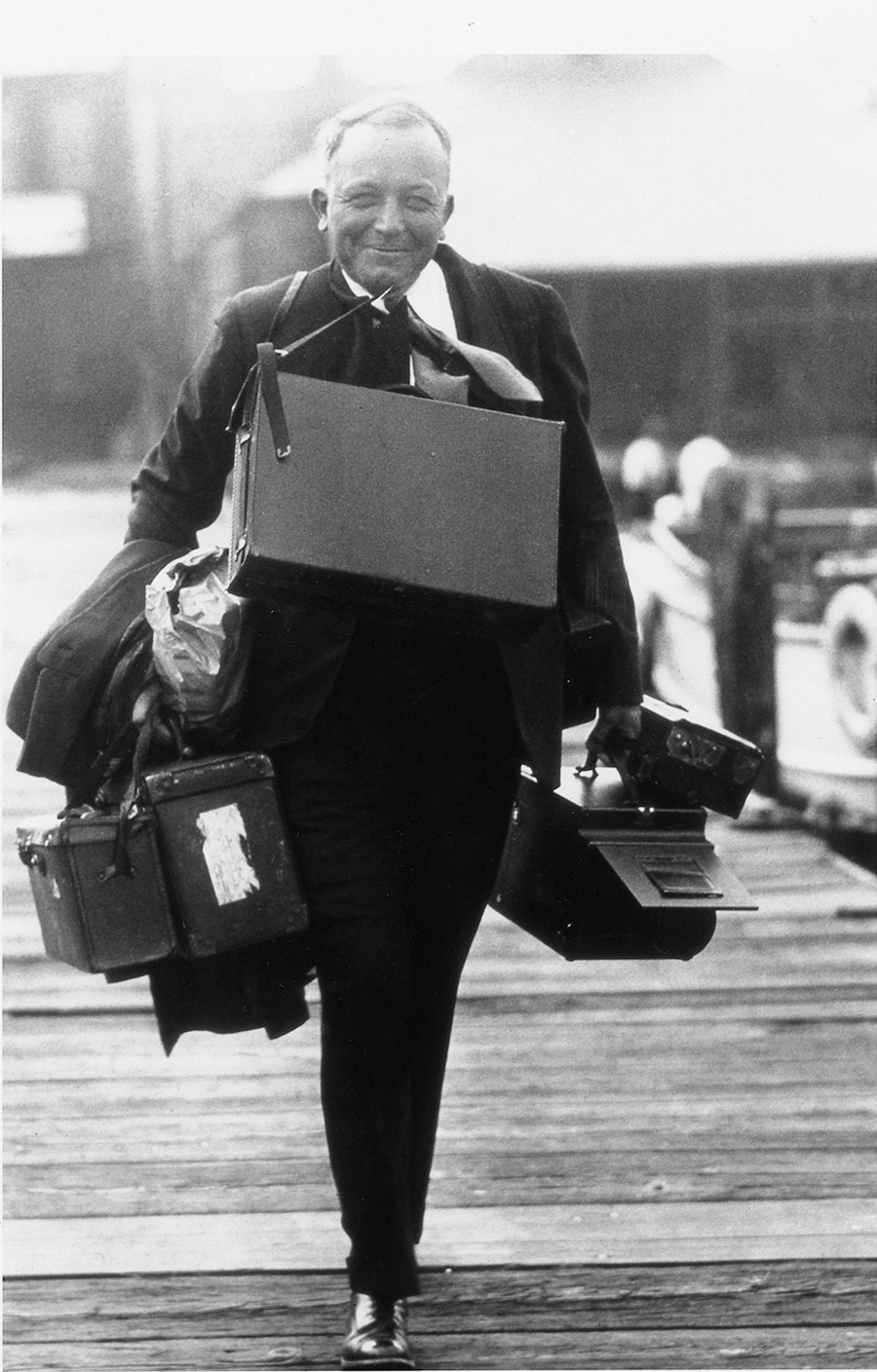
The sharp-elbowed photographers were forever conjuring up new methods to scoop one another. Hemmer recalled the novel way his well-heeled competitors from Hearst Publications covered the arrival of major ships. “The Hearst boys started using carrier pigeons to relay their film from the press boat back to the city, and their pictures were usually in print by the time the rest of us got back to the dock,” Hemmer said. The system, however, had its flaws. There were times, Hemmer chuckled, when the pigeons “circled the ship and lit on the mast.”

As the agency’s junior photographer, Hemmer was often sent to what Levick, a premier maritime photographer, considered secondary assignments. One was golf — a sport barely out of its infancy in America. Hemmer’s first tournament was the 1911 U.S. Amateur, held at the Apawamis Club in Rye, New York. His golf photos were barely noticed until the 1913 U. S. Open at The Country Club in Brookline, Massachusetts. The routine assignment became a godsend when a 20-year-old amateur and former caddie at the host club, Francis Ouimet, emerged the winner. Ouimet’s unlikely playoff upset over the British duo of Ted Ray and the incomparable Harry Vardon, written about some 90 years later in the book The Greatest Game Ever Played, jump-started more than just golf in America — it jump-started John Hemmer, too. His photographs of Ouimet’s victory at Brookline were in high demand. Suddenly, Hemmer found himself catapulted into the upper ranks of the game’s photographers.

When an important golf tournament popped up on the schedule, Levick would turn to Hemmer. In the early days, Hemmer and his fellow shutterbugs seldom strayed from the clubhouse until the players finished their rounds. The winners lined up for pictures. “No one had ever thought of going out on the course until one day I got interested in seeing what I could photograph out there,” Hemmer recalled. He began lugging his bulky gear, 60 pounds or more, onto the course to capture images of key shots, revolutionizing tournament photography. Respected by his colleagues, Hemmer became the first president of the New York Press Photographers Association.

Though the German-Irish kid from Flatbush had an expertise in sports photography, he swore off baseball after an unnerving experience at the Polo Grounds. Hemmer was in the process of shooting the Giants’ star pitcher (and future Hall of Famer), Rube Marquard, warming up on the sidelines. Suddenly Marquard fired a fastball that whizzed close by the photographer’s head. “Don’t you ever take my picture again!” warned the irate southpaw, who harbored a superstition, shared by many of the era’s ballplayers, that photography constituted a sort of black art that could bring ill to those who consented to have their picture taken.
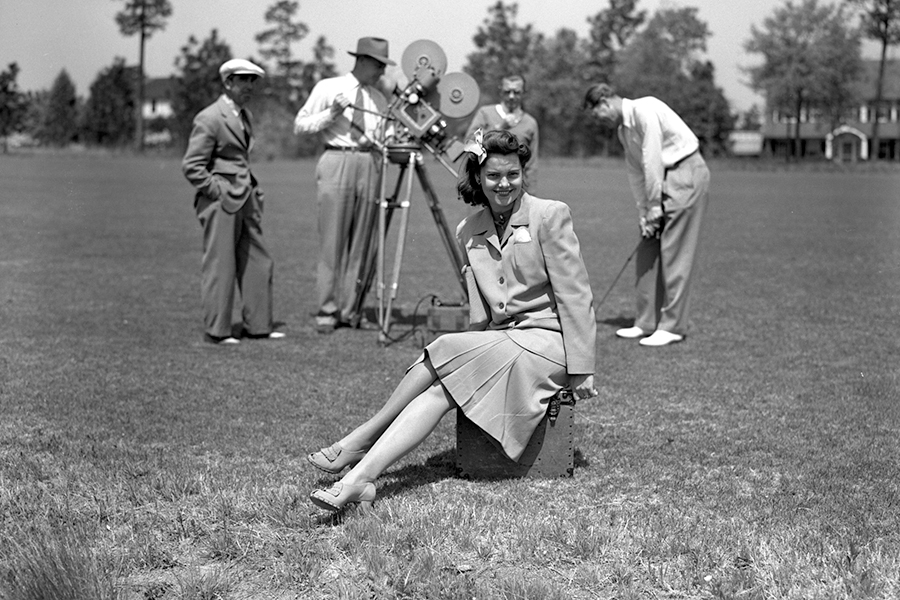
Hemmer married Anna Flynn in 1918, just prior to serving in World War I as a Signal Corps cameraman attached to the American Expeditionary Force Siberia. This forgotten theater of “The Great War” involved the efforts of 7,950 Army officers and enlisted men to protect the equipment and supplies the United States had sent to the Tsarist regime from being seized by the Bolsheviks. The Expedition also assisted the Czechoslovak Legion in its evacuation from Russia. By all accounts, Siberia’s bleak tundra made for a miserable posting as the freezing soldiers continually faced shortages of food and supplies. Hemmer experienced a  harrowing encounter crossing Siberia by railroad: “The train broke down. It was 60 below outside,” he recalled. “I tried to go out and make pictures of the train in the snow, but I couldn’t. The wolves wouldn’t let me off the train.” Hemmer managed to emerge from his war service unscathed, and in 1919, returned to his New York job with Levick. In 1923, John and Anna celebrated the birth of their son, John L. Hemmer.

In July, 1924, following the death of Pinehurst photographer Edmund Merrow, Richard Tufts approached Levick in search of a photographer for the resort’s Mid-South golf tournament, to be held in late October. Tufts also needed a man for a number of Pinehurst events scheduled for March. Levick agreed to provide a cameraman for both, then failed to produce one in October. A disappointed Tufts wrote that the no-show for the Mid-South breached “very definite arrangements.” Levick cavalierly dismissed the blown assignment as being not worth the trouble. “It would have to be more tangible than just a single tournament to justify even an assistant at Pinehurst,” he responded.

While Tufts may have seethed at the offhand treatment, Levick nonetheless possessed working relationships with all of the Eastern newspapers. Tufts decided to let the agency cover Pinehurst’s March 1925 events as planned.  On March 23rd, Levick advised the resort owner that his selected assistant was on route to Pinehurst, assuring him, “My assistant, John Hemmer, who will cover the assignment, knows golf thoroughly and has been with us now some sixteen or seventeen years.”
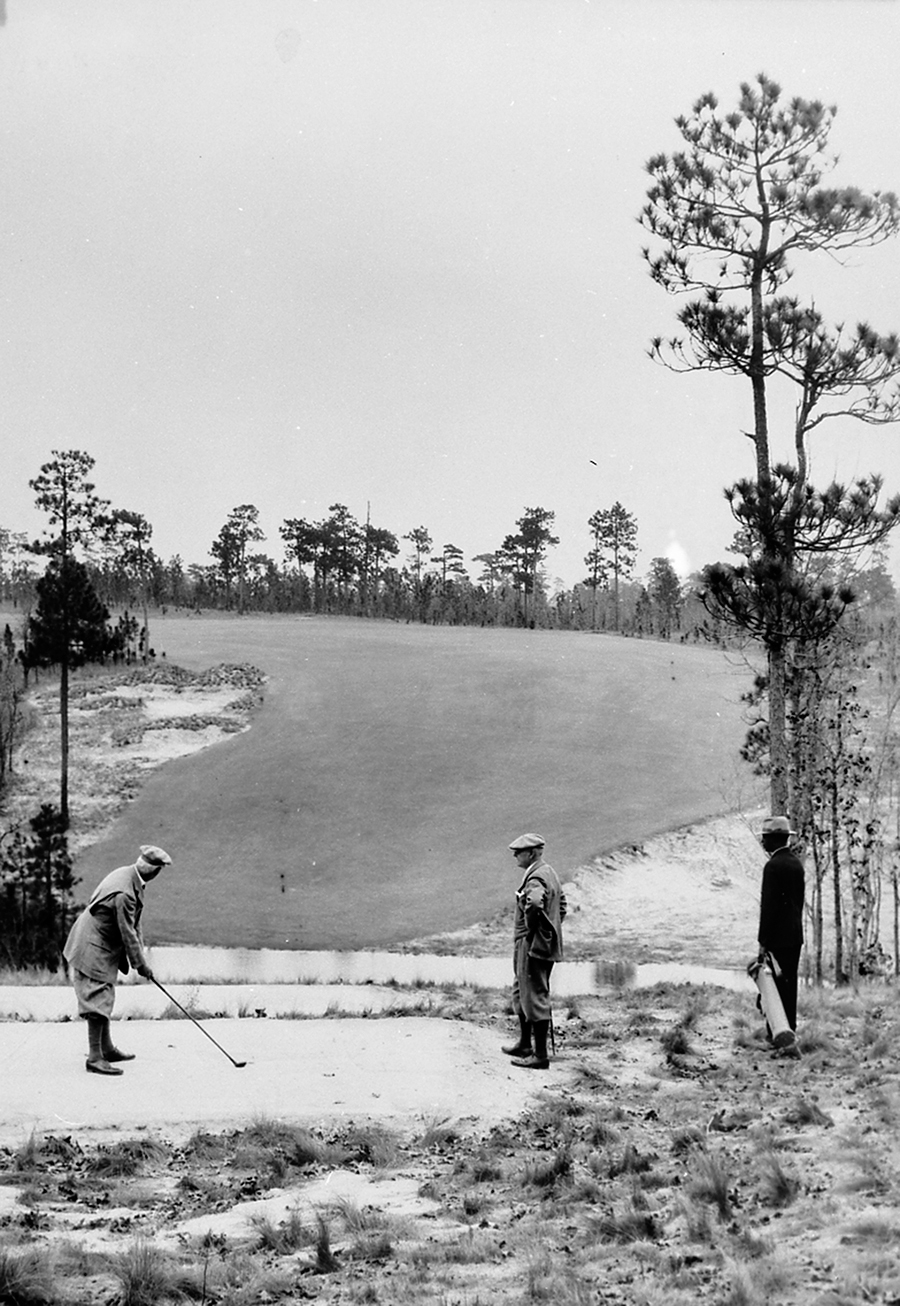
Four days after Hemmer’s arrival, Tufts wrote Levick. “We are very favorably impressed by him [Hemmer] and are looking forward to good results from his work here.” Though Hemmer’s first stint in Pinehurst was brief, it was long enough for the buttoned-up Tufts to conclude that he wanted the New Yorker back. Always on time, nattily attired in dark suit, white shirt, vest and tie, and attentive to Tufts’ desire that photos be promptly forwarded to resort guests’ hometown newspapers, Hemmer quickly ingratiated himself with the boss. The guests liked him, too. Easygoing behind the camera, Hemmer’s mugging and quips never failed to bring a smile to those he was photographing. And Levick promised Tufts that his assistant’s Pinehurst pictures would be displayed in even more  newspapers the following season.

By July 1925, Tufts was inclined to cut out the middleman. He suggested to Hemmer, “if you feel you are in position yourself to give us good publicity we might be interested in making arrangements with you rather than Mr. Levick on somewhat the same basis.” He also suggested that Hemmer consider spending the entire winter season (October to May) in Pinehurst, promising that he and connected persons in the community could funnel plenty of business his way.

Enchanted by Pinehurst, Hemmer leaped at the offer. He advised Tufts that he was making arrangements with a firm to place Pinehurst photos “not only in the metropolitan papers, but all through the east, west, north, and south.” Soon, John, Anna and John Jr. were snugly housed in Pinehurst’s Laurel Cottage, where the Given Outpost is now — the cottage was razed in 1934 to make way for Pinehurst’s post office. He opened “Hemmer’s Photo Shop,” initially in the Harvard Building, thereafter at the Carolina Hotel.
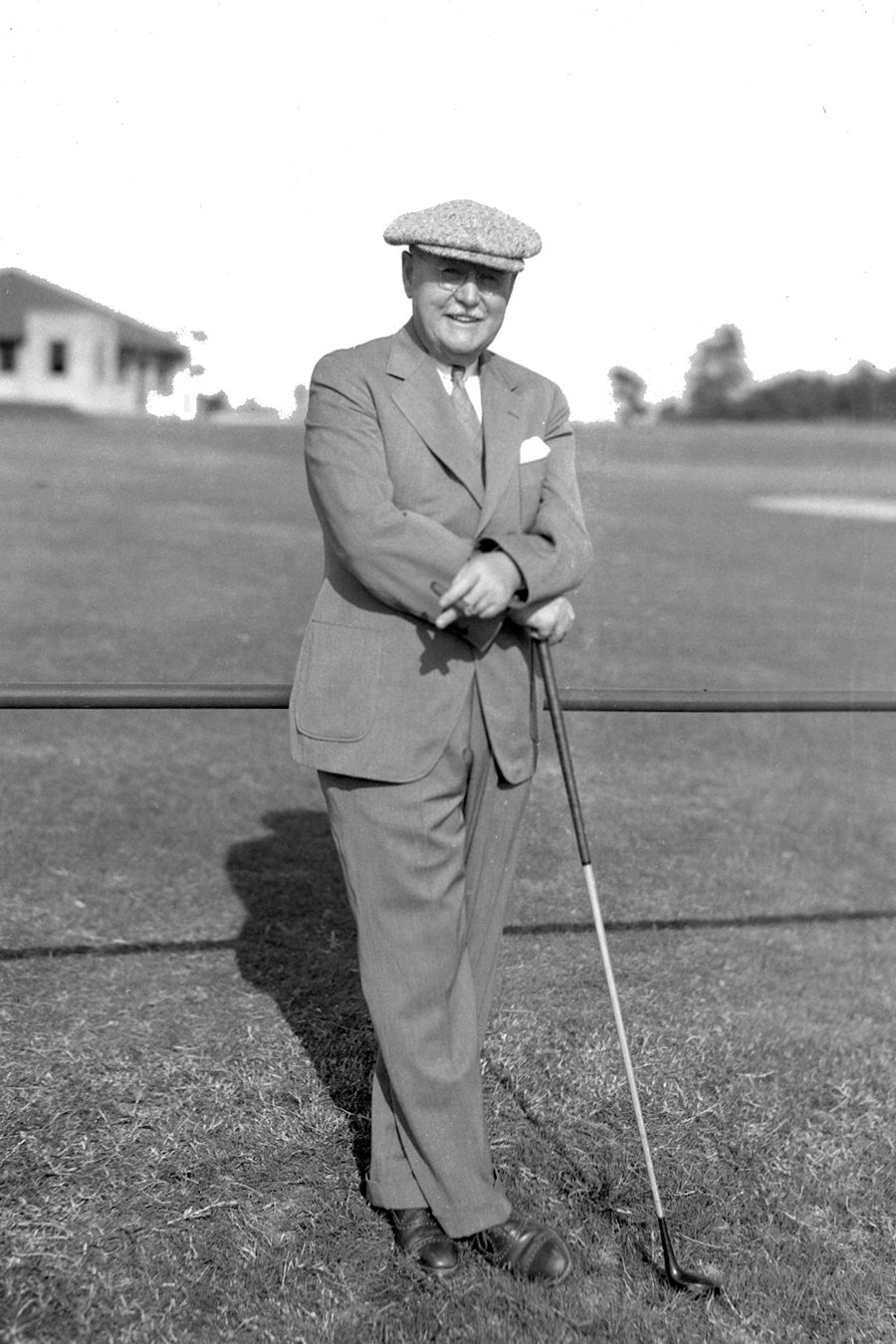
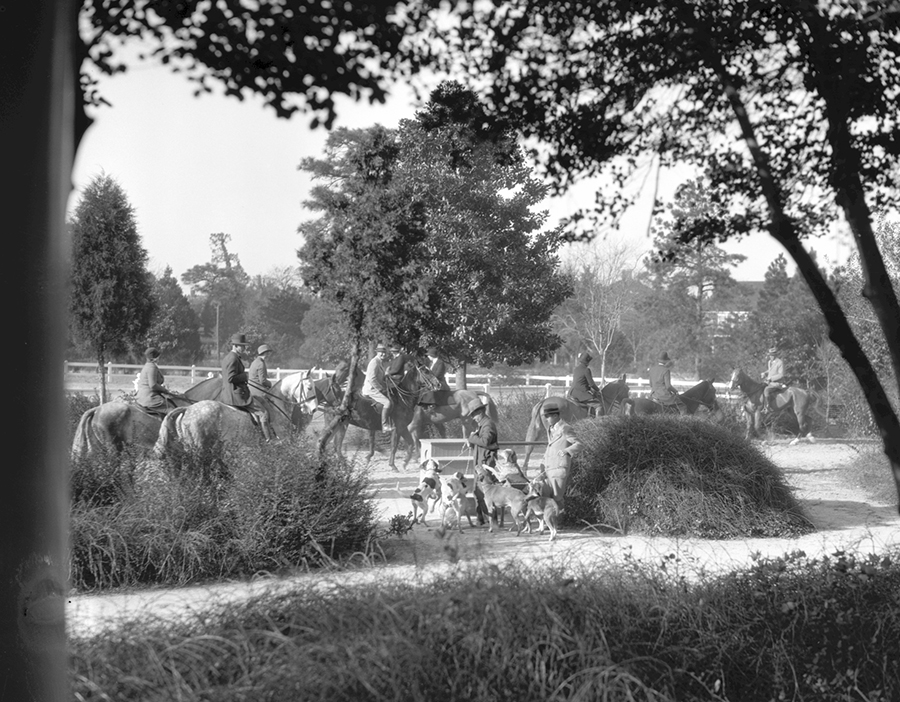
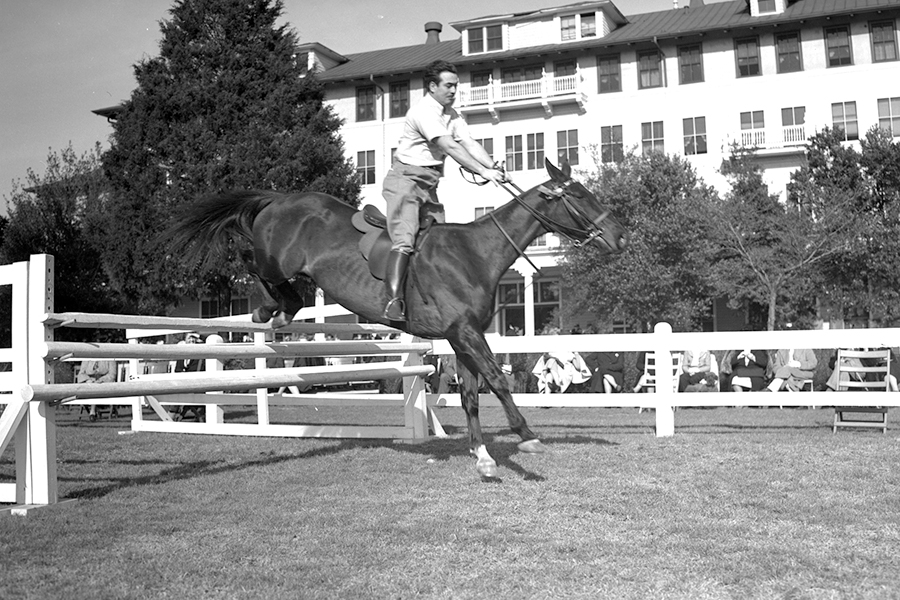
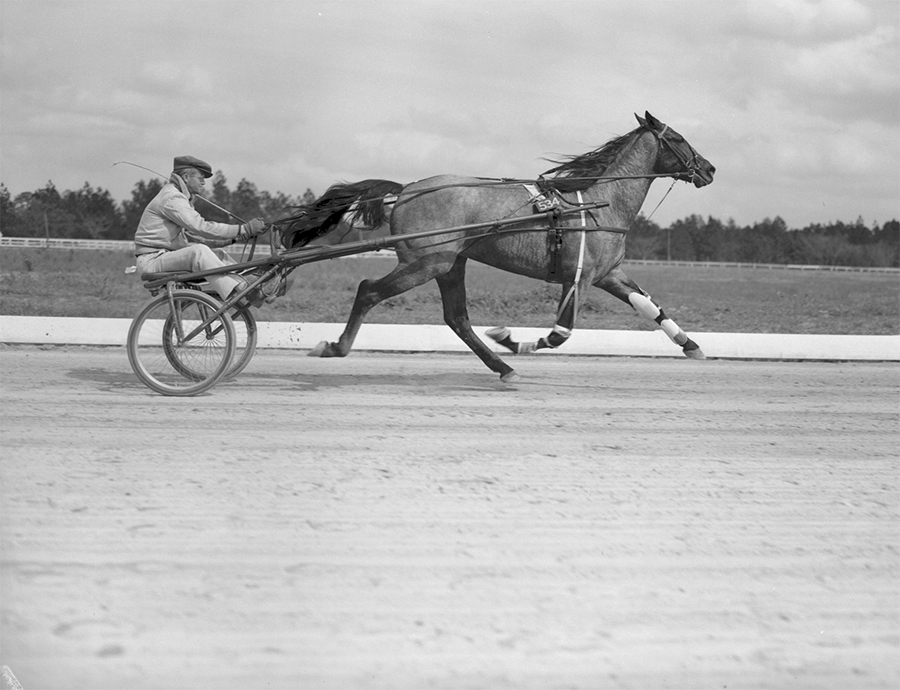
The diversity of Pinehurst, Inc.’s activities afforded Hemmer a wide variety of subjects for his lens. Photographing sporting activities like golf (particularly the North and South tournaments), shooting at the gun club, tennis, gymkhanas and horse racing constituted the bulk of his work. Hemmer took a raft of  publicity pictures at the Tufts’ brand new golf course at Pine Needles, including several of Donald Ross hitting shots. The many celebrities that found their way to Pinehurst couldn’t leave town without posing for Hemmer. Images of the Tufts’ agricultural operations, like the piggery and the farm’s cattle, were snapped by Hemmer’s all-seeing camera. Leonard Tufts (Richard’s father), proud of  his renowned Ayrshire cattle breeding operation, even suggested to the photographer that if famous people like Will Rogers or Gloria Swanson were in residence, “you should get a picture of them milking the old cow” — Leonard’s prized Ayrshire he lovingly named Tootsy Mitchell.

Hemmer also created a remarkable series of photographs  featuring  Pinehurst’s African-American caddies. Colorful loopers with sobriquets like “Dr. Buzzard,” “Hog Eye,” “Calvin Coolidge” and “Dr. Hawk” captured by his weather-beaten camera make up a collection of images that ranks among the Tufts Archives’ most cherished. Hemmer’s horseracing photos drew particular admiration given his uncanny ability to snap galloping steeds with all four hooves airborne. Hemmer also arranged for his Pinehurst photographs to be transformed into postcards. The dissemination of the hand-colored cards, designed to portray Pinehurst’s peaceful and idyllic atmosphere, provided an invaluable boon to the resort’s promotional efforts.

A February 1926 article in The Pilot gushed, “Mr. Hemmer . . . has beaten all previous records for the number of Pinehurst pictures published during a season. Every real newsstand in America puts out some paper every day exhibiting specimens of Mr. Hemmer’s art and genius. He is giving this section the highest type of publicity it has ever enjoyed.”

During summers, Hemmer would return to New York, where he continued the hunt for newsworthy subjects. He found a good one on a cloudy morning in May, 1927 at New York’s Roosevelt Field, where a sandy-haired Midwestern pilot named Charles Lindbergh was preparing to take off in his daunting attempt to make the first aerial crossing of the Atlantic. Learning that Lindbergh had completely exhausted his funds in preparing for the epic flight, a sympathetic Hemmer passed the hat among the assembled media types in order to scrape together sufficient cash to buy sandwiches and a thermos of coffee for the young flyer’s journey.

Much like Forrest Gump, Hemmer seemed to always be on hand, playing a contributing role at historically important events. His timing was once again impeccable at  the 1930 U.S. Amateur at Merion Golf Club where Bobby Jones’ 8 and 7 victory over Eugene Homans provided the last of his four major championship victories that year. Later Hemmer would say that photographing Jones’ Grand Slam was his greatest thrill.

In Pinehurst, Hemmer immersed himself in civic activities. He became commander of the local American Legion post and a director of the Chamber of Commerce. Though never a golfer himself, Hemmer did gain a reputation as a crack gin rummy player and inveterate hunter of arrowheads. After Laurel Cottage was razed, Hemmer moved his family across the street to  Cherokee Cottage (behind the Theatre Building and now the site of the Maples Building). Hemmer’s reputation continued to grow. Bob Harlow, American golf’s greatest promoter, and the founder and publisher of Golf World magazine, would write in 1938, “John Hemmer is the best newspaper photographer in America, and has been for a number of years. He has the rare combination of being a great artist with the camera, a fine judge of news values in what the editors of the tabloids call the ‘pix,’ and he can write captions with any headline scribe and hold his own.”
Why Hemmer decided to curtail his work in Pinehurst and join the New York Daily News prior to World War II is something of a mystery. Hemmer adored  Pinehurst and had become a fixture in the community. With the Great Depression not yet in America’s rear view mirror, a slowdown in business at the resort may have been a factor. Maybe he missed the bustle of the big city, or perhaps the Daily News offered financial terms Hemmer couldn’t refuse. In any event, he kept a foothold in Pinehurst, visiting often and taking an occasional assignment. He also retained ownership of the Hemmer Photo Shop, placing talented 34-year-old Emerson Humphrey in charge of operations.

Whatever his reasons, Hemmer’s return to New York made for the most exciting period of his career. Once World War II began in earnest, he was frequently aloft, miles out over the Atlantic, in the Daily News’ single-engine airplane, snapping photographs of ships burning, listing or sinking from the deadly effects of U-boat torpedoes. The newspaper, Hemmer mused, “never sent us out unless the weather was terrible.”

In his efforts to obtain front page-worthy  photos, Hemmer sometimes went too far. He often encouraged the pilot of the Daily News’ craft to repeatedly circle a wrecked ship for “just one more shot.” Invariably running low on fuel, on one occasion the pilot was forced to ditch the plane in the ocean. Photographer and pilot were safely rescued, and Hemmer somehow managed to keep his speed-graphic camera and plates dry.  Pushing the envelope brought Hemmer and the Daily News trouble when the paper published a 1941 aerial photograph of a war-damaged British battleship limping into New York’s harbor, raising the ire of an incensed secretary of the Navy, who felt wartime censorship regulations had been violated.

Sometimes his risk-taking resulted in memorable images of the war. His aerial shot of the British vessel King George V’s, arrival (with British ambassador to the United States Lord Halifax aboard) in the Chesapeake Bay won Hemmer the “Best Photographic Award” of 1941. Wendell Willkie, the recently defeated Republican candidate for president, presented the award.

Missing “sand in his shoes,” Hemmer returned to the tranquility of Pinehurst in 1944, residing full-time at Cherokee Cottage. Emerson Humphrey moved on, opening a photo shop in Southern Pines, and Hemmer relocated his studio to an outbuilding adjacent to his cottage.
Dividing his time between performing his usual photography work in Pinehurst and new employment with North Carolina’s State Conservation and Development organization in Raleigh, Hemmer became the official photographer for the state. For half of the year, he would blitz North Carolina, “from Manteo to Murphy,” as he put it, taking promotional photos. “We made some enemies along the way,” he would later admit, “because if the weather happened to be bad so that we couldn’t take color pictures in a certain place, we had to move along to the next place anyway.” His award-winning work continued to bring Hemmer into contact with notable personalities. Covering the theatrical production of The Lost Colony on the Outer Banks, Hemmer snapped several photos of the tall, amiable young man playing the role of Sir Walter Raleigh — a little-known actor named Andy Griffith.

His promotional pictures of North Carolina appeared in newspapers and magazines throughout America. Son John Jr., who followed in his father’s footsteps by becoming the photo editor of the Tucson Citizen newspaper, said his father effectively became the state’s ambassador, and that he “lived and breathed North Carolina.”

But golf photography remained the go-to staple of Hemmer’s work. Raleigh News & Observer reporter Joe Holloway said, “The eyes belonging to Johnny Hemmer have focused cameras on more golfers than any eyes in the world.” Golf World’s Harlow turned the camera around on Hemmer, making him the cover boy of a 1951 edition of the magazine.

Throughout the ’50s and ’60s, Hemmer was every bit as much a fixture in Pinehurst as the Putter Boy statue. He made friends with another generation of Pinehurst residents, including Gen. George C. Marshall. Lifetime Pinehurst resident Nancy Smith participated in equestrian events in her youth and was a target of the veteran cameraman’s lens, especially at the Sunday gymkhana events held adjacent to the Carolina Hotel. “I think of him with a smile on his face,” recollects Smith.

His outward affability masked pain, both physical and psychic. Wife Anna died in 1960, and Hemmer remained a widower the rest of his life. While in New Jersey, photographing the 1961 transfer of the U.S. Battleship North Carolina from the United States to the state of North Carolina, Hemmer fell off of a raised platform and was laid up for weeks after severely damaging his side, and breaking several bones. In another mishap, he was kicked in the leg and face by a thundering thoroughbred in an effort to rescue a fellow photographer who had meandered onto the track in the midst of a steeplechase race. The accident accentuated the deterioration of Hemmer’s vision, a problem that gradually increased in severity as the ’60s unfolded.

Though slowing in his 70s, Hemmer remained the resort’s go-to photographer. Requiring assistance in his photo shop, he hired a 14-year-old Pinehurst High School schoolboy, Don McKenzie, in 1966 to help out after school. Laboring  in Hemmer’s darkroom, pasting captions onto photos, escorting his mentor to the Southern Pines’ railroad station to arrange for shipment of photos to Northern newspapers, and toting battered equipment to assignments, McKenzie absorbed much about the photography business.
And though young McKenzie had yet to take a picture, he learned about photographic composition by observing his boss taking golf course photos at the Pinehurst resort. “Mr. Hemmer was the only one allowed to drive his car on the courses, and I would go with him to help set up,” McKenzie remembers. “When he took golf course pictures, he usually had something in the foreground, like a tree limb, then a middle ground — usually  the subject of the picture — then something that caught your eye in the background, maybe the clubhouse.”

McKenzie also marveled at the veteran cameraman’s ability to take great pictures with out-of-date equipment. One ancient camera had reached a stage where it was letting unwanted light into the picture frame. Rather than purchase a replacement, McKenzie says, “Mr. Hemmer simply taped over the opening where the light was coming in and the camera worked just fine.” McKenzie’s experience with Hemmer helped inspire him to embark on his own lifelong photographic career in Southern Pines.

Despite the loss of acuity in his sight, Hemmer kept taking pictures throughout the ’60s. But it became a losing battle. Blindness was rapidly approaching. Around the time that the Tufts family sold the resort to the Diamondhead Corporation (1970), Hemmer snapped his final picture, ending a 45-year association with Richard Tufts and Pinehurst, Inc. For a while, Hemmer was able to remain in his Cherokee Lodge home. Longtime Pinehurst resident Bonnie Mosbrook recalls him in dark glasses waving his white cane high over his head to alert approaching motorists that he was intending to walk across a village intersection.

Failing health forced Hemmer into the Sandhills Nursing Center in December 1973. His son arranged for the sale of Cherokee Lodge in March of 1974. Less than two months later, the home was destroyed by fire. His former photography studio was salvaged, though it, too, was eventually razed. Though no longer part of the action in Pinehurst, he was far from forgotten and a stream of tributes flowed his way. When the World Golf Hall of Fame was established in Pinehurst, its photo room was named the “John Hemmer Gallery.” A Hemmer trophy for the year’s best golf picture by a news photographer was also instituted. On his 85th birthday in 1977, the Given Memorial Library’s Tufts Archives arranged a “Hemmer Exhibit” of his photos.

After five years in the nursing home, Hemmer’s funds were exhausted. Friend and legendary fellow North Carolina photographer, Hugh Morton. rushed to his rescue, organizing a fund so that Hemmer could meet his expenses. Among those chipping in were Gov. Terry Sanford, Andy Griffith, and the White House News Photographers.

John Hemmer passed away on October 6, 1981, at age 89 but, housed in the Tufts Archives, 85,000 of his photographs can still see the light of day.  PS

Pinehurst resident Bill Case is PineStraw’s history man. He can be reached at Bill.Case@thompsonhine.com.

East Meets West Down South

The house of a thousand stories chronicles a career abroad

By Deborah Salomon    Photographs by John Gessner

They met in a used furniture store in Columbia, South Carolina. Catherine was looking for a dresser. John was seeking distraction. He was from splashy Miami, “When it was young and empty.” She was from Albemarle — a doctor’s beautiful daughter raised in a gracious Southern home with wraparound porch, shaded by magnolias. Their life, a magic carpet ride through far-away kingdoms, plays out in a brick house on Massachusetts Avenue, attributed to society architect Aymar Embury II and Louis Lachine, an engineer associated with the Highland Pines Inn who, in the 1920s, built 10 spec houses near the  resort hotel.

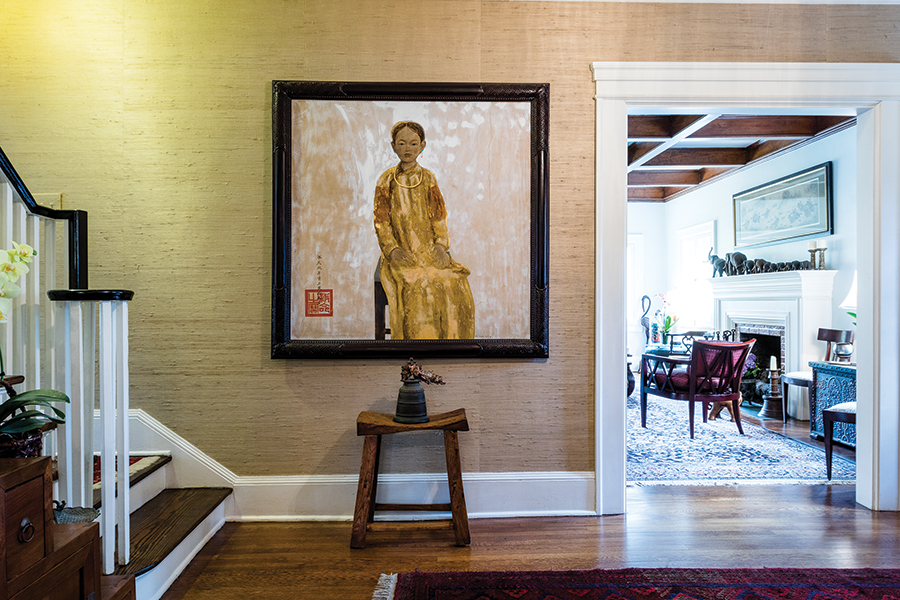
Now, this one runneth over not with Southern heirlooms but Asiana, Africana and a Marco Polo-worthy trove. John and Catherine Earp display more than a painting here and a table there. As a Ford Motor Company executive in the 1990s John was posted worldwide, primarily in Asia. “What we have collected is more about memories than things,” he says. Still, shipping their massive collection from posting to posting and finally to retirement in Southern Pines boggles the mind.

But with Ford footing the bill, why not?

John was in the Army when he met Catherine. After discharge, he started with Ford in Cincinnati, Ohio, then Kansas City, Missouri, soon moving into the glamorous motor sports division. After two years, company hierarchy tapped him to open a new market, as director for Ford Motor Company in Korea.

“Is there a cookbook for that?” John asked.

No, but you’ll figure it out, the suits replied.

Catherine’s reaction: “Korea . . . where’s that? But I was excited, not apprehensive at all.”

Neither had a passport.

Off they went, first to a fabulous hotel for two months, then to an equally fabulous house overlooking a river, where they lived for two years.

The house needed furniture. Ford provided a $15,000 allowance. Catherine and John were already auction hounds. Oreos were an underground prize but in Korea they found “markets” similar to famous Les Puces (Fleas) in Paris. “The Koreans wanted everything new and modern; they weren’t interested in their grandmothers’ stuff,” Catherine discovered. This younger generation unloaded gems of the simple, practical Korean style — notably a stunning high-rise armoire in the living room, heavy chests meant for blankets and sleeping mats elsewhere. Some pieces, like the living room sofa with a teak frame, were made-to-order with distinctively Korean lines.

Then came Japan and Thailand, more markets, more décor finds.

Western eyes blur Asian styles. The black lacquer cabinet in the dining room is actually a Chinese wedding chest, functioning like an American hope chest where brides stored linen gifts. Catherine points out her many elephant motifs emblematic of Thailand, beginning with 10 carved specimens parading across the living room mantel. Fronting a stretch of small-paned windows, vaguely British along with the coffered ceilings, stands a row of alabaster Buddhas from a Burmese monastery. Exporting them required untangling red tape with government ministries. “It’s a sign of respect to Buddha,” John says. “Having them here is a rare thing.”

But because they lived in several Buddhist countries, “We also have a reverence for him,” Catherine adds.

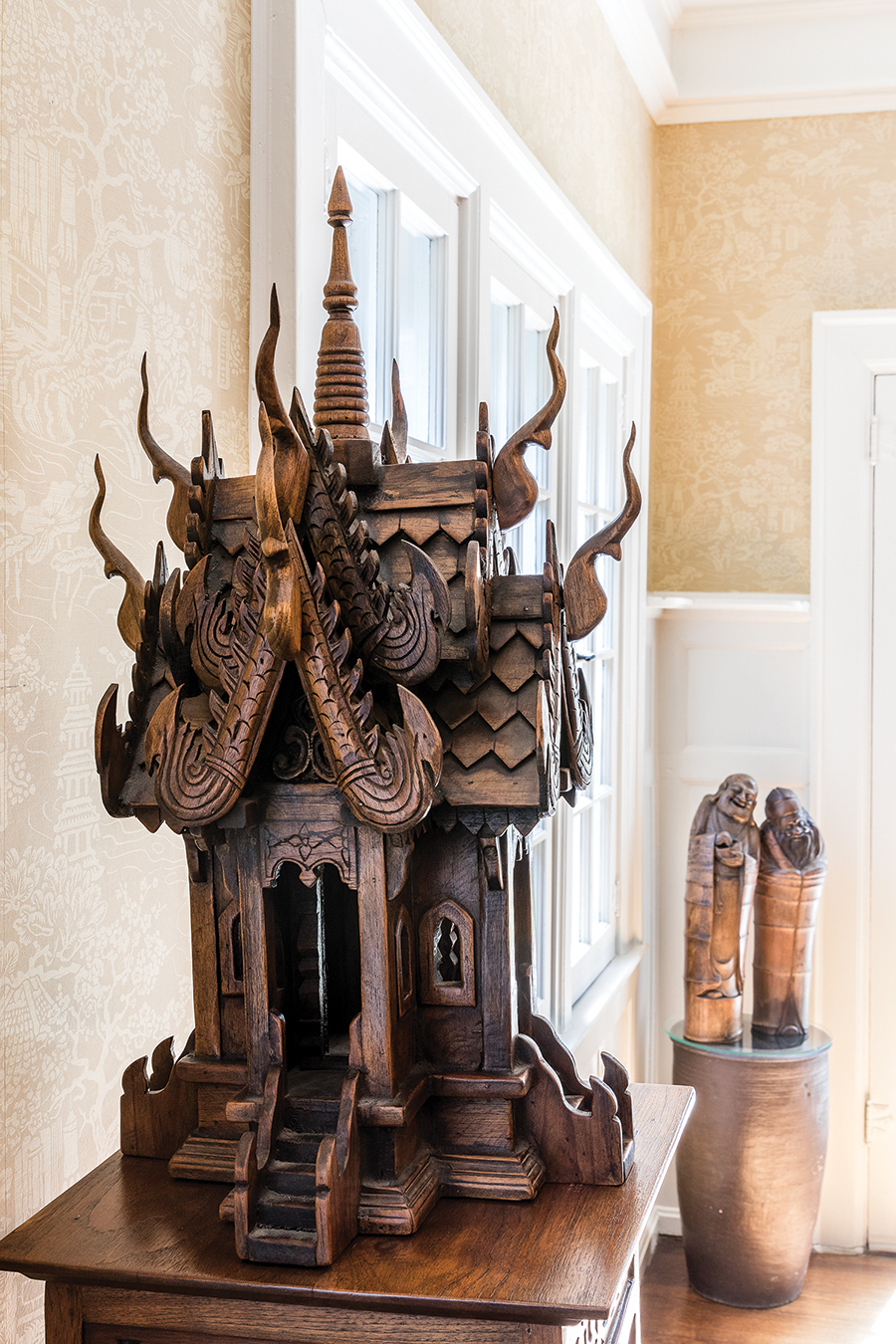
Bells, bells everywhere — from cow bells to temple bells to elephant bells — some massive, made from iron, stand in the foyer, while others, more delicate, are displayed in a glass-fronted curio case. Catherine has positioned her collection of Japanese dolls throughout the house. These armless, legless painted wooden kokeshi (some with bobble heads) look like precious bowling pins, too tall and heavy for cuddling. But the most fanciful objet d’art is a miniature “spirit house” resting on a fern stand in the dining room. Like birdhouses, these carved structures with spirals and wings erupting from walls and roof are placed outside the home, to welcome beneficial spirits.  “Our real house in Thailand looked just like that,” Catherine says.

Their real house in Southern Pines has a circular floorplan; a tour begun in the large foyer tracks through the living room, dining room, kitchen, two dens/offices and back to the foyer without retracing a step. The original room designation remains a mystery. Catherine believes the two offices off the foyer might have been bedrooms with a bathroom, perhaps used as overflow accommodations by the Highland Inn. Outside, a terraced garden, fountain, pond and trellis covered with Confederate jasmine speak more North Carolina than South Korea.

The second floor, with lower ceilings and fewer moldings, suggests the house was planned for entertaining, with architectural details concentrated downstairs. Here, Catherine appreciates having enough wall space to display their art collection, including several waterscapes, some painted on lacquer, from Korea, where commercial fishing flourishes.

The kitchen had been enlarged and renovated by a previous owner who added a vaulted ceiling paneled in pickled wood — more Western than Eastern. However, musky olive green walls, a black enamel farm sink and sculpturesque gas cooktop mounted on the island impart an Asian flavor — except for statuettes of saints, brought from Central America, looking down from atop a cabinet.

Beyond the kitchen is a practical feature rarely seen in either classic or contemporary residences. A door opens into a hallway to the laundry, garage and stairs to the former maid’s quarters, now a private guest suite with heart pine floors, dormers, built-in drawers and claw-foot bathtub, all accessible without entering the house itself.

If Catherine loved Asia, South Africa left her positively ecstatic, perhaps because they lived on a predator-free game preserve where gentle kudus ate out of her hand, over a backyard fence. “The animals! You see these wonderful animals everywhere!” she says. Art and artifacts throughout the house, including zebra wallpaper in an upstairs bathroom, memorialize this experience.

“Africa changes you,” imprinting not just your house, but your soul, John says. Catherine felt closer to the earth from having lived there. “It’s just magical — both the animals and the people.”

John and Catherine enjoyed a lifestyle reminiscent of British colonials learning folkways from servants and drivers — not all positive. “Africa made me look at poverty differently,” Catherine says. “Our housekeeper taught us never to waste food, not a scrap.”

“Yet the people fought through poverty. They didn’t act poor. They were industrious,” John observes.

In 2013 the Earps (yes, he’s related to Wyatt, distantly) chose Southern Pines — and this house — for their retirement because Catherine’s sister lives down the street. Reason enough, without the existential link. For a decade or more the sturdy brick Weymouth residence was known as the H.H. Pethick house. Henry Pethick served as U.S. vice-consul in Saigon, in 1919. He then became a Standard Oil executive in China, returning only when Japan began bombing Canton, according to a Sept. 1937 edition of The Pilot. Mrs. Pethick had come back a year earlier, undoubtedly with household souvenirs. When the Pethicks sold the house in May 1945, a front page story described it as “one of the most attractive and elaborate residences in Southern Pines.”

No mention, however, of serene ghosts floating about in fine silk garments, waiting patiently for their ship, piloted by the Earps, to sail home.   PS

Bull Session

By Astrid Stellanova

Queen Elizabeth and Ted Kaczynski. Willie Nelson and Billy Joel. Karl Marx and Malcom X. Tina Fey and Adele. Cher and Bono (U2 front man, not Cher’s late ex husband Sonny). That’s right, Star Children: These are Taurus babies who are all just a tee-ninesy bit intense and take to a stage, pulpit, or even the witness stand like a ducky takes to a daisy. The emerald? A pretty intense birthstone that makes it just right, don’tcha think? This is a month to end bad juju, make amends, dream bigger and dazzle with a smile. Ad Astra — Astrid

Taurus (April 20–May 20)

Sugar, you could be on your deathbed arguing about the guest list for your own funeral. Sometimes you are a pragmatic soul. At others, you go psycho over some little detail that flips you out and trips all the circuits. Take yourself for a little lunchtime walk or get your hands in the soil. Let nothing come between you and your joy this month.

Gemini (May 21–June 20)

If you don’t do anything else, accept a gift that is offered to you. Ain’t going to change the person who always gets you riled, so just live and learn, and move up the line. You’re a natural trendsetter, who will find yourself making an imprint. The second act of your life was always meant to be especially important.

Cancer (June 21–July 22)

Lordy! You started out saying you wanted to risk it for the biscuit, then you backed down. Don’t let anybody stop you this time — make your mind up to put some steel in your backbone, Honey. You have given much more than you’ll ever take — your moment has come and the reward is deserved. Also, say yes to that trip.

Leo (July 23-–August 22)

It won’t take a slide rule for you to calculate how many hours you have wasted on the wrong partner. It seems you overcommitted. Now, just try a little undercommitment. Sugar, I’m just warning you that you have been dropping the bucket down the wrong well. Your reward is waiting in an unexpected location.

Virgo (August 23-–September 22)

If you were just honest about it, being uppity is not working for you. By your standards, paper towels are white trash, too. Why don’t you practice a little more acceptance, because all this social maneuvering, posturing and aspiring just makes you look silly and feel lonely. And you don’t handle lonely.

Libra (September 23-–October 22)

A confession is overdue. There is something you need to stop carrying on your shoulder ’cause it’s not yours to bear, Love, and you don’t need to carry it one more step. Confront the person you think you wronged and make amends. They will surprise you, and your health will improve afterward.

Scorpio (October 23–November 21)

You are spending more time alone than is usual, and maybe you like your own company. Make it your business to reach out, Honey, and touch somebody, just like the commercial says. Few people know you have a doozy of a secret. Open up. They can handle it, Love.

Sagittarius (November 22–December 21)

The greatest adventure you ever took started at your front door. Only you understand what that means. Home is everything to you nowadays — far more than to most (and far more than to typically far-flung you!). It is also where you are finding your calm center in a very turbulent, topsy-turvy time. Rest up, Honey, because the adventure isn’t quite over.

Capricorn (December 22–January 19)

In your fantasies about the life you shoulda-coulda-woulda had and the path you didn’t take, there is always one particular dream on your mind. It has haunted you. This is a good time to take a step in realizing that dream, even if your rational self says it’s nuts. It ain’t. And, best of all, it ain’t too late, Sweet Pea.

Aquarius (January 20–February 18)

You are having a phase of intense dreams that reveal issues and concerns helpful in your daily life. In many ways, you have been dreaming of the most meaningful and best ways to move forward. Keep a close record of those reveries for May and notice key information that your mind is offering.

Pisces (February 19–March 20)

Shew, you crossed the wrong person and they have not let it go, have they? You sure did poke the bear and now you are living to regret it. Give ’em a good bottle of whatever they like to drink or take them some blossoms, but for garsh sakes, end this thing! They may be wrong but holding out ain’t worth it.

Aries (March 21–April 19)

Last month, you were given a birthday present that startled you and you haven’t quite figured out its meaning. That may be a good thing. Someone you don’t love in quite the same way as they feel toward you has been trying to worm their way into your heart. If you go there, it will flame out fast and cause more heartburn than passion, Baby.  PS

For years, Astrid Stellanova owned and operated Curl Up and Dye Beauty Salon in the boondocks of North Carolina until arthritic fingers and her popular astrological readings provoked a new career path.

A Highland Fling

The rich legacy of the Scots

By Haley Ray

Even with directions, it’s easy to miss the graveyard deep down a small, unmarked Carthage dirt road. The worn stones are quiet. The only sounds are the earth beneath your feet and the air in the pines above. The Old Scotch Graveyard is worth the trip. It’s a glimpse into Moore County’s past; a snippet of the people that lived here hundreds of years ago and the world they helped shape.

Here lies Alexander McCaskill

Born on Isle of Skye Scotland

Village of Dunvegan

1760

Brother of Angus

Died March 18, 1840, Richmond County

The grave of Alexander’s brother, Angus, lies right next to his own. Not all the stones are readable; some are crumbling, others have fallen over, some plots are unmarked. The gravestones that are discernable usually provide the Scottish village of the man or woman’s origin. Bill Caudill, director of the Scottish Heritage Center at St. Andrews University, says it was a cultural custom commonly practiced by the early migrant Scots in America.

“This identity is very strong here,” says Caudill. “How many ethnic groups do you know that place on their tombstone where they came from and when they came from there? That’s telling you that these people had a sense of belonging. They were here, and they made a new livelihood for themselves, but they always belonged somewhere else. That’s the sense these people had of who they were, and that they still belonged in Scotland.”

Moore County had a large number of those early Scottish immigrants, most hailing from the Highlands of northern Scotland, and dubbed Highlanders (as opposed to the Lowland Scots of southern cities like Edinburgh). Drive through the village of Pinehurst and plenty of Scottish surnames adorn street signs: McKenzie, McDonald, McCaskill, Blue, Shaw, Ferguson, Caddell. While heavily concentrated in the small boundaries of Pinehurst proper, similar road names are scattered across the Sandhills as a tribute to the old, powerful families.

“There’s a lot of subliminal things, a huge amount of subliminal things that nobody would know if it wasn’t really pointed out for you,” says Caudill. “When I say that, I’m talking about historic sites, old family cemeteries, street names.”

The Scots presence extends deeper than Scottish flags on front porches, a Lion Rampant on a license plate or a few family names on street signs. The depth of the influence is framed by the fact that the North Carolina Scottish settlement was the largest Highland settlement in North America until the latter quarter of the 19th century.

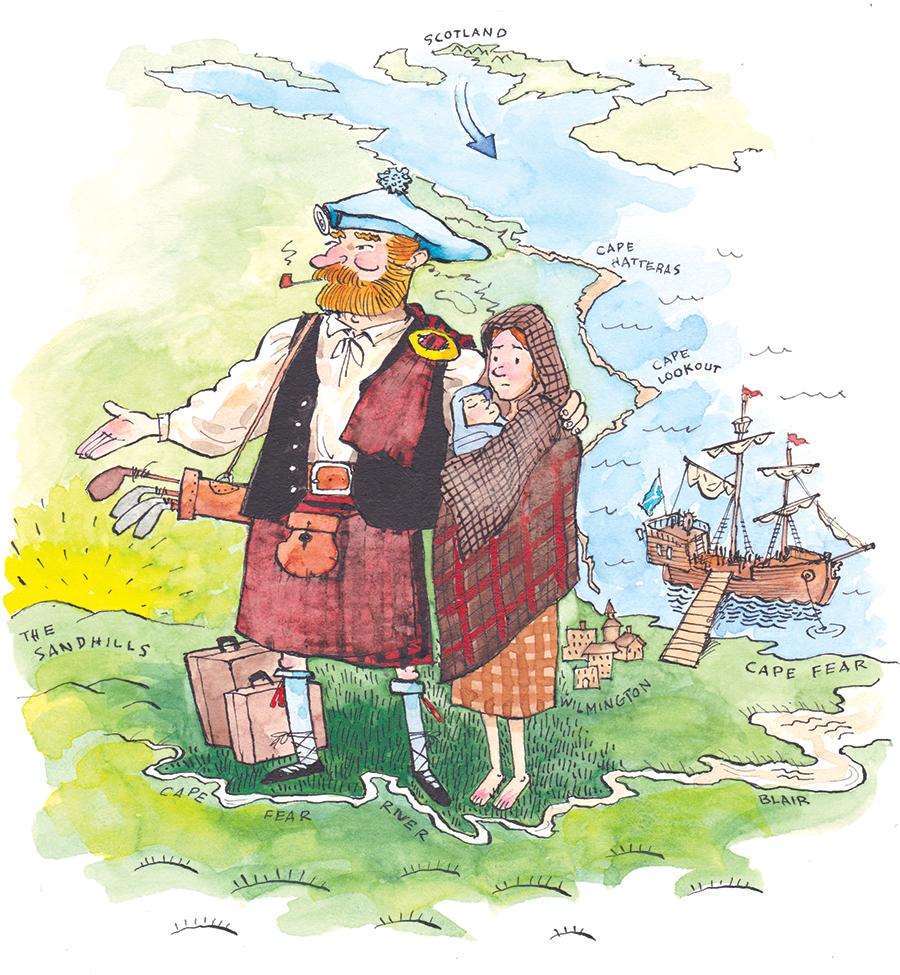
The popular, more romanticized version of this great migration tells of shiploads of rebel-hearted Scots washing up on the shores of Wilmington in the 1740s and spreading throughout North Carolina, opting to settle in the American colonies rather than face persecution by the English after the failed Jacobite rebellion in their homeland. Having defied their king, Highlanders had no option but to flee — North Carolina or bust.

The shiploads of Scottish immigrants who flooded into the Wilmington port followed the Cape Fear River deeper into the state, and into the Sandhills. The motivations behind the large-scale emigration are often misrepresented or misunderstood. The dramatic version of events is referred to in history books as the “Theory of Exile.” Scholars mused that the Brits had a master scheme to exile unworthy residents to the colonies after Prince Charles Stewart failed to reclaim the English throne with Scottish — mostly Highland — support.

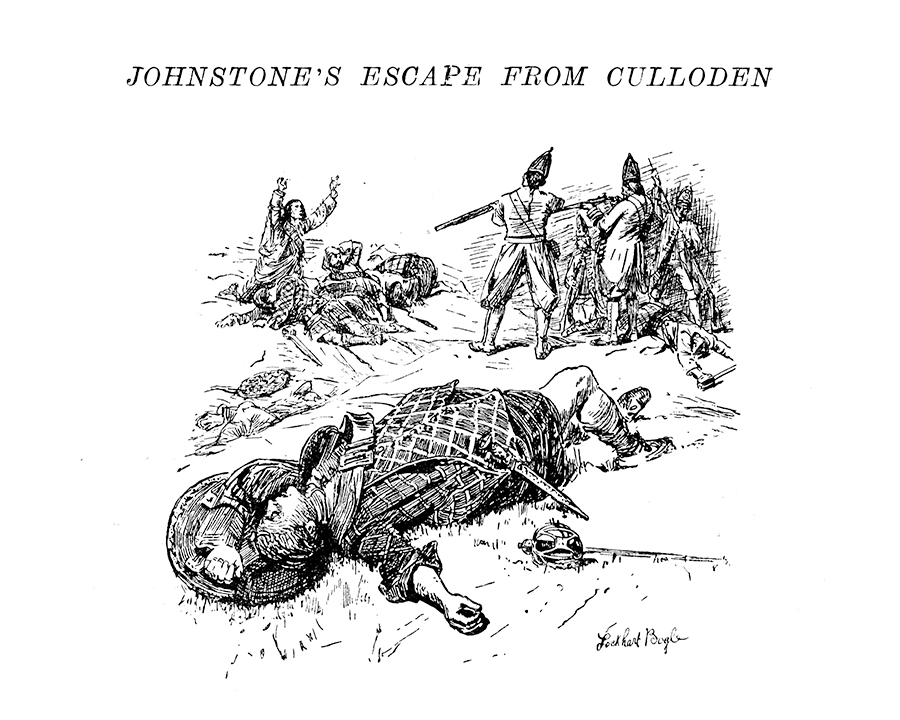
But, their great escape from the glens and moors of the Highlands had less to do with vengeful persecution than economic changes and a growing population. Although the aftermath of the Battle of Culloden — the deciding clash between the English and the Jacobites that ended the Scottish rebellion in 1746 — did contribute to the exodus, it doesn’t tell the whole story. Caudill says the exile theory can be credited to the writings of one man, William Henry Foote, a minister who wrote about the history of North Carolina from a Presbyterian perspective. Researchers and historians who dug deeper into the records found that the story of the British transporting large numbers of people to work in the colonies was largely inaccurate.

“It didn’t happen. Simply did not happen,” says Caudill. “First off, the people that were transported were taken to prison after Culloden by the government forces. Most of them, that were not paroled, were taken to places like the West Indies and Barbados. Colonies like that. Because of our trade routes, some of those people perhaps may have ended up here. But most of them, no.”

The dismantling of the exile theory begs the question of why, then, did so many Scots leave their beloved country? Moore County native Douglas Kelly also tackles the question of the Theory of Exile in his book Carolina Scots: An Historical and Genealogical Study of Over 100 Years of Emigration. Both sides of Kelly’s family descended from the Highlander immigrants in North Carolina, and he took an interest in his family history at a young age. He explains that before the Battle of Culloden, the clan system was the operating hierarchy in the Highlands of Scotland. Lowland culture more closely resembled that of Britain, although it retained distinctly Scottish characteristics.

The Scottish defeat at Culloden Moor helped dismantle the traditional clan system, but social and economic changes drove the breakdown, and thus migration out of Scotland. Before the Jacobite Rebellion, clan chiefs were the supreme commanders and owners of the land. Below them were the tacksmen, who were leased “tacks” of land from the chief to sublet to farmers on a year-to-year basis. Kelly says the tacksmen were the wealthy middle class, often relatives of the chief. Peasants and poor farmers, also called crofters, made up the lowest level. Tacksmen were paid a fee from the chiefs for managing the land and to ensure the farmers had the tools they needed to tend it.

“Well before Culloden, as early as the 1740s, there was coming pressure on the upper middle class, on the tacksmen,” he says. “Some of the chiefs and lords were getting advice that they were costing too much. It wasn’t religious persecution.”

Shutting out the tacksmen to save money was discussed in the 1730s, but never actually happened, Kelly says. Still, they knew their position was in jeopardy. Following the Scottish defeat at Culloden, the English enforced the 1746 Act of Proscription, which disarmed the Highlanders and instituted punishment for the wearing of traditional Highland dress, including kilts. There is no doubt the oppression contributed to the pressure and panic clans felt, but it is far from the sole reason for the migration. The Theory of Exile fails to include the rising rents, famine years, and increasing population that had citizens, especially tacksmen, scrambling to charter a ship to the Americas.

“The handwriting was on the wall,” says Kelly. “The tacksmen knew their position was threatened in Scotland economically. They decided to emigrate. North Carolina had a Scottish governor, Gabriel Johnston, at that time. He wanted to get Scottish Protestants to settle his colony because North Carolina was far behind South Carolina and Virginia (in population). They were richer. We were considerably underpopulated, so he wanted to get Scots. He contacted some wealthy tacksmen in Argyll, the McNeals and the Clarks, and told them if they would set up a party of emigrants, a colony, he would give them free land in what is now Fayetteville and Moore County.”

So, Scots boarded ships and crossed the sea. The first colony arrived in 1739, seven years before the battle heavily credited for the relocation. Although there are records of Scots arriving before 1739, this colony marked the start of the governor’s Old World recruiting. In addition to free land, Johnston exempted the incoming settlers from taxation for 10 years and allowed them to serve as magistrates and judges. It was a braw deal. Some of Kelly’s family arrived in this settlement, which docked in Wilmington or Brunswick and took smaller boats up the Cape Fear River into Fayetteville.

The Fayetteville colony was a large one, but eventually the settlers were pushed out to make room for Fort Bragg. There are numerous historic sites on the Fort Bragg base that are no longer easily accessible to the curious visitor. You need to make an appointment with Dr. Linda Carnes-McNaughton, archaeologist and curator of the Fort Bragg Cultural Resources Program. Some sites will always remain off-limits for civilians. Carnes-McNaughton estimates that 80 percent of the Fayetteville colony was Scottish, and the historic sites reflect their presence.

“It was predominatly white European settlers moving into the area,” she says. “So when the Scots came, the first things they built were churches. They built schools because they wanted to continue to educate the next generation. That’s why some of the churches are so old, like Barbecue and Longstreet. Building a church and a school went hand-in-hand.”

The Blue family, of the historic Blue Plantation in Aberdeen, also had large tracts of land in Fayetteville before relocating. Carnes-McNaughton says only the Presbyterian churches still stand, some dating back to 1757. She takes many descendants of settler families on tours, and provides access to old documents, as they piece together their family history.

That Scottish sense of self was strong enough to shape the culture and attitudes of the Sandhills in a way that lingers today. Southern Pines resident Jane McPhaul is a proud descendant of those settlers, and heavily involved with preserving the culture and history of her ancestors. She says that placing a large importance on family, church and education is one legacy they left behind. Kelly, Caudill and McPhaul all believe that the area’s famous Southern hospitality, and a close-knit community, may to some degree be credited to the early Scots.  

“You might more broadly say that this is throughout the South, but there’s a sense of kinship here that is much more akin to what you would find in Scotland of old, as opposed to what you would find in other places,” says Caudill. “Here in Laurinburg, everybody knows who everybody’s family is and how they were related. So there was an extended sense of kinship that sort of likened itself to the clans.”

Kelly, who still has family in the Highlands and has lived in Scotland, grew up in a Presbyterian household, hearing Gaelic, learning to work the fields at the Blue Plantation, and listening to family gossip as a popular form of entertainment — a true Scot tradition. Some of his family from the Isle of Skye came to visit Moore County years ago, which he says really brought the similarities to light. Highlanders broadly define themselves as hospitable to strangers, hardworking and unpretentious — North Carolina traits.

“When they were here, they said the spirit is so much like the Highlands of Scotland. The humor, even the way people walk was similar, so they were amazed,” he says. “This sounds self-serving, but in general there’s a courtesy and kindness. It was always generally non-pretentious.”

Along with the importance of church, family and education, many rituals survive. The Highland Games, in both Laurinburg and Grandfather Mountain, is one popular tradition, attended by Scots and non-Scots alike. Bagpipers play at community events. The Kirkin’ o’ the Tartan, an annual ceremony held in a church to bless the clan tartans, is another. Today, the kirkin’ is continued for descendants to celebrate and honor their national and religious heritage, and it’s a ritual McPhaul habitually takes part in.

“We do the Kirkin’ o’ the Tartan at Brownson Church. We’ve done it at The Village Chapel many times, and many of the churches around here do this,” she says. “We have banners. So you’ll take your tartan banner, and generally the men will walk it down the aisle during the kirkin’. It’s something that’s cherished.”

Many of the original Scottish families remain in the area. One reason may be the family land the settlers likely received from Gov. Johnston. Kelly says that the eldest sons inherited the land and had a strong incentive to remain, keeping the family name in the Sandhills.

Jesse Wimberly, a Highlander descendant and outreach coordinator for the nonprofit Sandhills Area Land Trust, says the unique ecosystem is another reason they remained. Many Scottish immigrants, including Wimberly’s family, made their money by extracting pine, turpentine and tar from the native longleafs for the shipbuilding industry. He says that the flora of the pines wasn’t disturbed by the turpentiners. The diverse environment of the Sandhills also made for good hunting, another tradition they continued from their homeland.

Although the breadth of information available on the original Scottish settlements is seemingly endless, data is still missing. Caudill says there is no exact number on how many Scots arrived on the coast of North Carolina, because ship records are available for just part of two years. Historians can only guess at the number of arrivals, which they place somewhere between 15,000 and 30,000 before the Revolutionary War.

“There’s academics in Scotland who know more about our settlement and community than most history professors at UNC,” says Caudill.

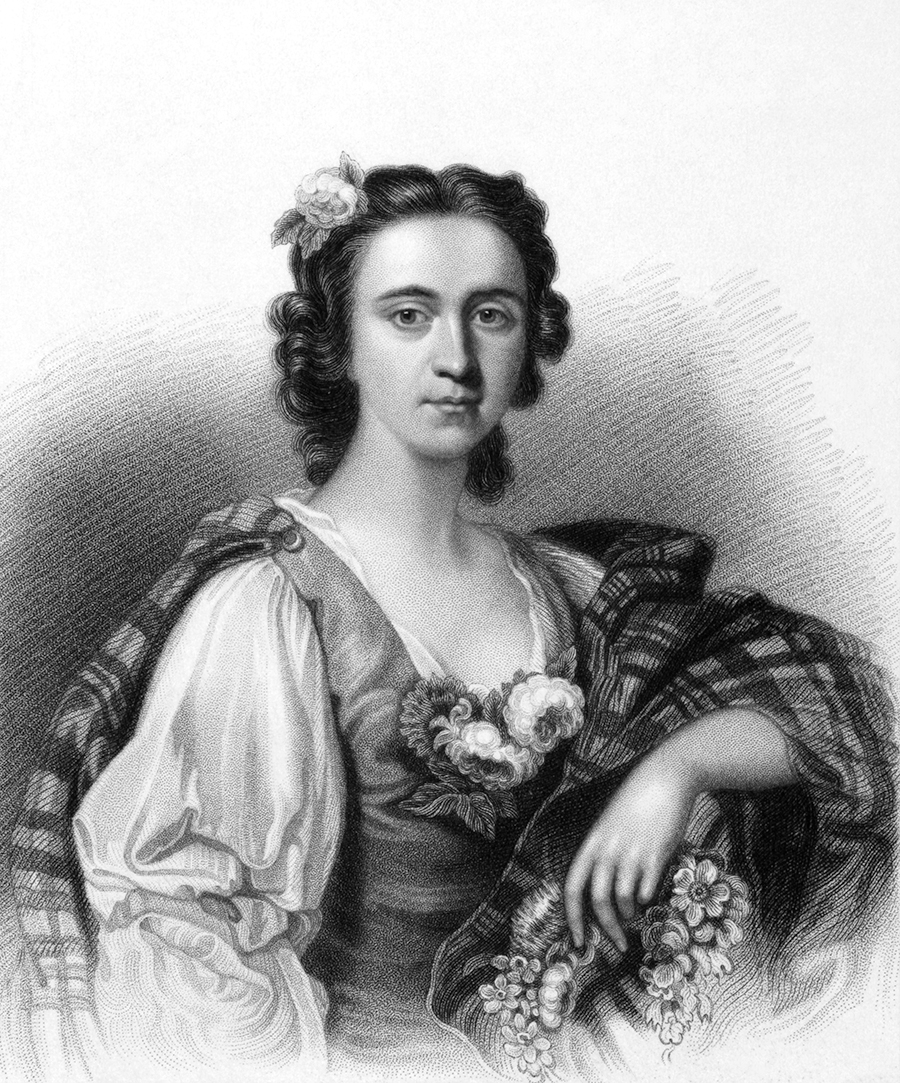
For newcomers to the Sandhills the Scottish influence likely begins and ends with golf, and beloved golf course designer Donald Ross. Less well known is that the Jacobite heroine Flora MacDonald resided in Richmond County in the 1770s with her tacksman husband, Allan. Still revered in song and folktales, MacDonald earned her celebrity by assisting Prince Charles Stewart in escape from the English after the rebellion failed.

Davidson College was founded as a Scottish college in 1837 and two Scots from Fayetteville were the first heads of the University of North Carolina at Chapel Hill.

Behind the Chick-fil-A on U.S. 15-501 is the grave of Kenneth Black, hanged for housing Flora MacDonald after revolutionaries burned her house to the ground. The MacDonalds, who eventually returned to the Highlands, were loyalists to the crown during the American Revolution, as were many of the Scottish in America.

John MacRae, a Scottish oral poet largely unknown outside of academic circles, resided in Carthage after leaving Scotland in 1774. Caudill has a book of his poetry sitting in his office.

“John MacRae is the only voice of these people in their own language. He wrote poems and songs that were transmitted in the oral tradition that have been collected by folklorists all over the world, wherever there are Gaelic settlements. And they were written in Moore County. And nobody knows about them, except for the scholars,” Caudill says.

McPhaul works to preserve the historic Mill Prong House in Red Springs, and continues the annual family reunion they call the gathering of the clans. She can trace the route her ancestors took up the Cape Fear River. “We honor ancestry, we don’t just know about it,” says McPhaul. “It is a heritage that means a great deal.”

Generations removed, the ties still bind. PS

Haley Ray is a Pinehurst native and University of North Carolina-Chapel Hill graduate, who recently returned from the deserts of Southern California