PinePitch

Carolina Peach Festival

The 21st Annual N.C. Peach Festival begins Friday, July 14, in Candor at 6:30 p.m. with the Peachy Feet 5K. On Saturday, July 15, at 8:30 a.m. there’s a peach-cooking contest at Town Hall before lining up for the parade at 10 a.m. on Main Street. Then take a helicopter ride for an overview of beautiful Montgomery County. With your feet back on the ground, move to the music of Jim Quick & Coastline, the Sand Band, Rockin’ Acoustix, and Big Bang Boom. Take part in fun activities for all ages — everything from camel rides to karaoke, bungee trampoline, miniature train rides, petting zoo and more. And don’t miss meeting the 2017 Peach Queen. Admission is free. Fitzgerald Park, Candor. Info: (910) 974-4221 or ncpeachfestival.com.

Fireworks, Festivals, and Fun for All on the 4th of July

The Village of Pinehurst offers a daylong celebration, starting with its annual Independence Day Parade at 10 a.m., followed by the patriotic pet contest, an antique car display and Sandhills Farmers Market in the Pinehurst Village Center and Tufts Memorial Park, 1 Village Green Road W. At 2 p.m., slip into the Grand Ballroom of the Carolina Hotel, 80 Carolina Vista Dr., for the Moore County Concert Band’s rousing and entertaining performance of Sousa marches and patriotic favorites. And, at 6 p.m., the fun continues at the Pinehurst Harness Track, 200 Beulah Hill Road S, with a free concert, children’s activities and fireworks celebration.

The Town of Aberdeen is also offering an evening of live entertainment, food vendors, and activities including a rock climbing wall, an inflatable slide and bounce houses. Something for all ages, starting at 5 p.m. at Aberdeen Lake Park, 301 Lake Park Crossing.

Fort Bragg celebrates with musical acts, parachute free-fall demonstrations, a flag ceremony, fireworks, food and beverages from 3 p.m. to 11 p.m. at Main Post Parade Field 11, 25 Capron St., on the base.

For information on all of these events, visit www.explorepinehurst.com or consult your PineStraw Arts and Entertainment Calendar.

Tea with Trigiani

On Monday, July 17, The Country Bookshop invites you to Thyme and Place Café for tea, tiramisu and to visit with New York Times best-selling author Adriana Trigiani, whose previous books include The Shoemaker’s Wife. She will be discussing her new book, Kiss Carlo, the epic story of an Italian-American family in 1949 in South Philadelphia, whose peace and prosperity is threatened by a decades-long feud. At the story’s center is young Nicky Castone and his struggle to fulfill his dreams while holding on to the family he cherishes.

This ticketed event will be at the Thyme and Place Café, 155 Hall Ave., Southern Pines, from 3 to 4:15 p.m. The cost is $42, which includes an autographed copy of the book, tea, and treats. Tickets are available online and at The Country Bookshop. For more information, call (910) 692-3211.

Something Moore

On Friday, July 14 and Saturday July 15, The Arts Council of Moore County will be holding its popular Arts Council Treasure Chest Sale and Fundraiser. Come and find a treasure among the antiques, art, jewelry, pottery, china, silver, furniture and other collectibles featured this year. When you purchase your special item, you’ll be supporting Arts Council’s programs throughout Moore County.

You can donate items until July 13, so there’s still time to let one or more of your old treasures become someone else’s new treasure. The sale will be held 9 a.m. to 4 p.m. on Friday and 8 a.m. to 4 p.m. on Saturday at the Campbell House Galleries, 482 E Connecticut Ave. in Southern Pines. For more information and pickups, call (910) 692-2787 or email katherine@mooreart.org.

First Friday

You just might feel like you’re in New Orleans when you come downtown on Friday, July 7, as First Friday welcomes The New Breed Brass Band. This 9-man, New Orleans band blends funk, rock, jazz, and hip-hop with the second-line, brass band tradition, a style that has been called the quintessential New Orleans art form. Enjoy good food, beverages and entertainment at this family-friendly event, beginning at 5 p.m. It is free and open to the public, but please don’t bring your dogs. The First Bank Stage at the Sunrise is located at 250 NW Broad St. in Southern Pines. For more information call (919) 692-8501.

Interpreting the Qur’an

On Thursday, July 13, at 3:30 p.m., retired U.S. Army Foreign Area Officer Jason Criss Howk will be at The Given Memorial Library, at 150 Cherokee Road in Pinehurst to talk about Islam, Islamism and the contents of the holy book of Islam. Howk is the author of the recently released book, The Qur’an: A Chronological Modern English Interpretation. Much of Howk’s career focused on South Asia and the Middle East, and he teaches courses and leads discussions about Islam across the country. This presentation will be repeated at 7 p.m. at the Outpost/Given Book Shop, 95 Cherokee Road, Pinehurst. Both are free and open to the public. For more information, call Lisa at (910) 295-7002.

The Rooster’s Wife

Sunday, July 2: Shawn Camp, preeminent Americana and country songwriter and lead singer of the Earls of Leicester, is bringing his full band. $20.

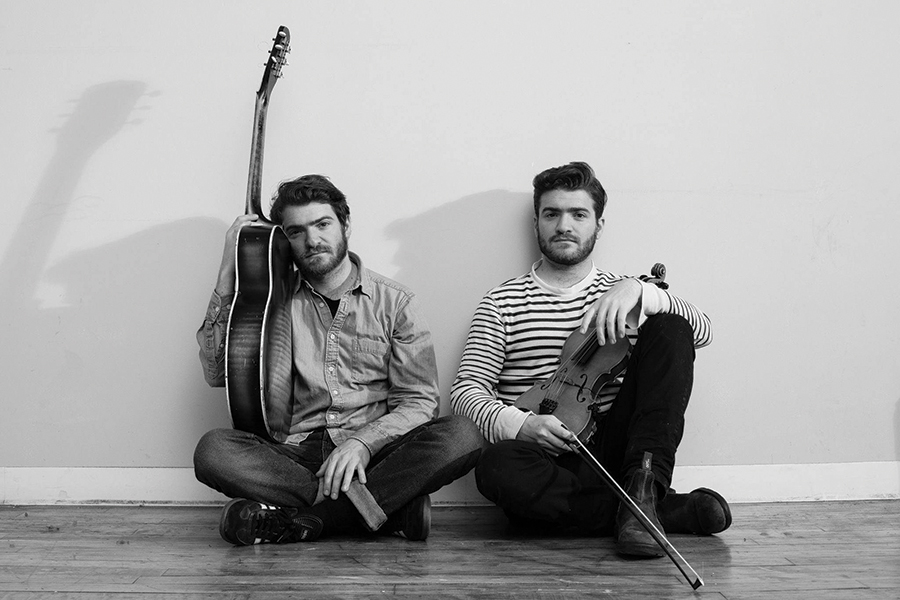
Sunday, July 9: The Sunday Exchange presents I Draw Slow, Ireland’s answer to Americana. This five-piece, Dublin roots string band finds new, folksy grooves in old-time Appalachian song. Admission is free to this event, next door to the Artists League of the Sandhills, 129 Exchange St., in Aberdeen.

Sunday, July 16: The Sam Frazier Band performs stellar guitar licks and funky bluesy songs for listening and dancing. Poet, songwriter, and journalist Molly McGinn opens the show in a big way. $10.

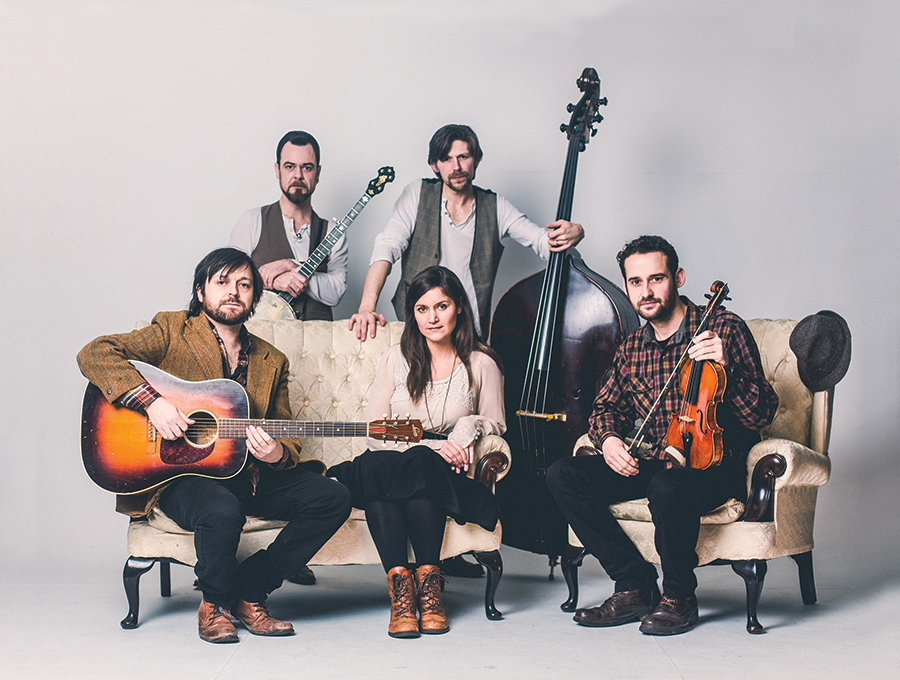
Sunday, July 23: The Brother Brothers and Che Apalache perform. The Brother Brothers really are brothers, and their familial connection comes through in the music. Rich harmonies and thoughtful songs accompanied by guitar, cello, violin and banjo. $15.

Friday, July 28: The Louisiana Soul Revival delivers the soul, blues and funk music of Louisiana with a 6-piece band fronted by National Blues Hall of Fame and Louisiana Music Hall of Fame inductee, Doug Duffey. This is a Friday Night Dance Party. $20.

Sunday, July 30: The Rooster’s Wife celebrates the end of the season with a special appearance in honor of a milestone. Patrick Fuller and his dad, Craig, of Pure Prairie League and Little Feat fame, open the show. They are followed by Wild Ponies, featuring the magnetic chemistry of husband-and-wife duo Doug and Telisha Williams. $20.

Ticket prices listed above are in advance. All shows are at 6:46 p.m. and, except for the Sunday Exchange, take place at The Poplar Knight Spot, 114 Knight St. in Aberdeen. For more information call (910) 944-7502.

Revenge of the Lawn

Covet not thy neighbor’s grass. Just go hire the right organic lawn care specialist

By Wiley Cash

I’m standing on my lawn in Wilmington, North Carolina, recalling the time I heard a mindfulness teacher condense the many years of the Buddha’s teachings into one sentence: Cling to nothing as I, me, or mine. That’s good advice, life-making or life-changing advice depending on when you receive it, but it’s hard advice to follow in my neighborhood, especially as my gaze drifts from the weed-choked, shriveled brown grass at my feet to the lush, pampered golf course-green of my neighbors’ lawns. All around me are weeds I don’t understand, things I’ve never seen before, things I never could have imagined: monstrous tendrils that snake into the air in search of something to strangle; vines covered in thorns and bits of fluff that cling to the skin like the pink fiberglass insulation your dad always warned you not to touch in the attic; scrubby pines no taller than 6 inches with root systems as long as my legs and twice as strong.

Roughly 250 miles west sits the city of Gastonia, where I was raised in a wooded suburb that always felt to me as if the houses in the neighborhood of my youth had been forged from the landscape. In my memory, dense forests loom in our backyard, the smell of wood smoke curls through the air, grass looks like grass: thick blades that grow up toward the sun instead of clumping and crawling like desperate snakes wriggling toward prey.

Another 100 miles west, nestled in the cradle of the Blue Ridge Mountains, is the city of Asheville, where I grew into adulthood and made the decision to become a writer. This meant I worked odd jobs and lived in relative — if not romantic — poverty throughout my 20s. I inhabited a slew of rental houses with friends of similar ages and similar interests, each house having one thing in common: a wild expanse of unkempt lawn where nature grew in a heady, beautiful containment — variegated hostas, blue and pink and purple hydrangeas, English lavender and flame azalea. We didn’t water anything or spread fertilizer. The only people who ever cut the grass were the landlords, and that was done sporadically with the weather and season. Yet, it seemed that we could have dug our heels into the black earth and something beautiful would have sprung forth.

Down here on the coast my lawn is nothing but sand with a thin skin of sod draped over it. I live in a region where if you buy plants at the garden store, you’d better buy the soil to plant them in. Nothing but the most tenacious, native weeds can survive in this boggy, sandy soil. Some days I have doubts about my own survival. It too often feels like I don’t belong here, but then again, my lawn doesn’t belong here either. Just a few months before we moved in, this landscape was marked by piney swamps dotted with ferns, maples and the occasional live oak. Not long ago, bulldozers plowed through and pushed over all but a few of the pines. Then dump trucks flooded the wet spots with tons upon tons of fill dirt. The developer carved out streets, piled the dirt into 1/4 acre squares, and called them lots. The builder began constructing houses. Finally, landscapers rolled out strips of St. Augustine, punched holes in the ground and dropped cheap shrubs into the earth.

My wife and I bought one of the first lots, and there were only a handful of houses in the development when we built ours. We moved in just in time to watch nature attempt to reclaim its domain. We’ve been here almost four years. Now, the streets bubble where swamp water pulses through cracks in the asphalt. The drainage ponds are full of alligators that behave more like residents than those of us who have built homes. At dusk, tiny bloodthirsty flies, what the locals call “no-see-ums,” dance in the night like specters, biting your ears, eyeballs and neck.

And then there are the weeds. The canopy of trees is gone now, and the weeds have ample sunlight and plenty of room to spread.

I lie in bed at night pondering the use of industrial-strength fertilizers and weed killers, and I weigh their environmental destruction and the health risks they pose my children with the possibility of having a lawn of which I can be proud. I begin to empathize with companies responsible for accidental coal-ash spills (Everyone wants electricity!) and incidental pesticide contamination (Everyone wants bananas in January!).

Deciding to forgo potential carcinogens, at least for now, I appeal to someone who seems expert in all things related to lawns and manhood. Tim lives three houses down and has the most perfect yard in the neighborhood. He’s tan and tall and lean. He could be 40 or 65, the kind of guy who rides his road bike to the beach each day at dawn with his surfboard strapped to his back, the kind of guy who looks like Lance Armstrong or Laird Hamilton, depending on whether he’s wearing spandex or board shorts.

I find Tim watering his lawn with a garden hose. The rest of us turn on our irrigation systems and hope for the best. Not Tim; he waters like a surgeon. He’s barefoot, and I wonder what it feels like to be able to walk shoeless in one’s yard without feeling the sharp crinkling of dead grass blades beneath your feet. I explain my lawn problems to him, at least insofar as I understand them. He listens with patience, perhaps even sympathy.

“Fertilize,” he finally says. “Organic. Commercial. Whatever. It doesn’t matter. And then wait until it rains.” He turns off his garden hose and finds the one weed in his yard that’s apparent to the naked eye: a dandelion that looks more like a flower than any flowers I’ve planted in the past year. Tim reaches down and plucks the dandelion from the earth with the ease of lifting it from a vase. “They come up easier when the ground’s wet,” he said. “Roots and all.”

So, early in the spring, I fertilize the yard with liquid corn gluten meal. The air smells like a combination of popcorn and barnyard, but it seems to have enough nitrogen in it to green up the grass. And, after the next rain, I pull weeds. For hours. It works. By early summer my lawn is green and nearly weed-free, but I never get too comfortable.

I’m out of town one morning when I text my wife and ask for an update on our lawn. I receive a photo reply within a few minutes. I hesitate to open it the way young people hesitate to open report cards, the way old people hesitate to open medical tests: There’s nothing I can do about it now, I think. To my surprise the photo my wife sent shows a vibrant green lawn dappled with early morning dew. I can’t help but wonder if she’s walked up the street and snapped a picture of Tim’s grass. Regardless, I allow relief to wash over me: The C- I’d been expecting has become a B, the heart disease diagnosis I knew awaited me has ended up being indigestion. Life can go on as long as it rains — but not too much — and the sun keeps shining, but not on the west side of the lawn because there is no shade there, and if we don’t get enough rain the grass will crisp up pretty quick.

Late in the summer the grass begins to turn brown in strange semicircles, and when I look closely I can see the individual blades stirring. I kneel down and spot a tiny worm at work. I look closer, spot hundreds, no, thousands more. Our neighborhood has been invaded by armyworms. Instead of spending my time on the novel that’s months overdue, I spend a small fortune coating the grass in organic neem oil. To make myself feel better about not writing I listen to podcasts about writing, but my attempt to stave off writer’s guilt is just as futile as my attempt to fight the armyworms. Our green grass is eaten away within a matter of days; my soul follows suit, and I can only hope both will re-emerge come spring.

But that spring, something else happens instead. In May, my father is diagnosed with an inoperable brain tumor, and the lawn and its calendar of fertilizing and hydrating slips from my mind. He passes two short weeks later, and as I ease into grief the summer spins away from me, and I don’t even look around until August, when my yard comprises more weeds than grass. I’ve missed the opportunity to fertilize, and there’s no amount of safe weed killer that’s going to make a dent.

I wait for it to rain. Then I fall to my knees, and I pick weeds.

My 2-year-old daughter joins me. Sometimes she’ll yank up fistfuls of grass because it comes up easier than the weeds. I don’t have the heart to correct her, and I can’t help but wonder if she’s on to something. How long would it take us to tear out all this grass and start over? I look at my neighbors’ thriving lawns, and I assume that the pain of death or responsibilities for children or work-related obligations have not touched their lives in the ways they’ve touched mine. If only my life could be as clear and clean and healthy as their lawns appear to be. 

This year, I decide that I don’t have the patience, the faith, the head space, or the heart space to battle my lawn, and I call a local company that specializes in organic lawn care. I’m surveying the yard when the technician arrives. His name is Steve, and he’s actually the owner, which puts me at ease. He’s middle-aged, clean-shaven with glasses and silvery hair. He speaks quietly, confidently. I can’t help but think that he senses something about me. Perhaps he knows that I’m embarrassed to admit that I can’t do something as simple as grow grass, that I’ve put too much pressure on myself, that things have gone too far, that I’m clinging to something that does not deserve my clinging.

In my recollection, he puts a hand on my shoulder. Maybe he even takes my hand. He leads me around the yard, whispering the names of the weeds he finds, the ways in which he can stop them. He tells me it’s not my fault. It’s hard to grow grass in this environment, especially in new neighborhoods like mine where the sod hasn’t had time to take root or an existing organic structure to give it life. And my ground is too hard, he says. It needs to be aerated. It needs to be softened.

We agree on a treatment regimen. They’ll start next week, provided it doesn’t rain.

“You’re going to have a beautiful lawn,” he says. “You’ll be happy.”

“I appreciate that,” I say. “But it’s all yours now.”.  PS

Wiley Cash lives in Wilmington, North Carolina, with his wife and their two daughters. His forthcoming novel The Last Ballad is available for pre-order wherever books are sold.

Friendly Confines

The local knowledge and pleasures of Knollwood

By Bill Fields

Driving past the sandy parking lot at Knollwood Fairways filled with SUVs and other 21st century models, I easily envision my father’s second-hand Thunderbird or Don Smitherman’s custodial service van from 45 years ago.

Don was one of the cadre of adults I regularly played with at Knollwood, one of my informal but important teachers of golf and life, and when he passed away in 2014 at 80, it tickled me to read up high in his obituary that “golf was a game he truly enjoyed.”

He sure did, changing out of his brogans into his golf spikes in a flash, eager as the rest of us to get in a quick nine before dark. Don’s swing was taut and reliable, conjuring Doug Sanders, and he was a savvy golfer who rarely wasted a shot. I don’t think I ever rooted harder for a tour pro than the year Don caddied for Frank Beard at Pinehurst No. 2 in the 1974 World Open, when he lost in a four-man playoff.

I’ve been to 48 states and 10 countries as a golf photographer and writer, but none of my travels might have occurred without my formative years around the game at Knollwood Fairways. It’s where I caught the bug, searched for the secret, built calluses and realized that carrying an extendable ball retriever with a rake-like tip was not a good look.

The 140-yard first hole seemed like 1,400 yards when I first played it with my starter set of Johnny Palmer signature clubs from Sears, so ominous loomed the water hazard between tee and tiny green with a 3-iron in hand.

Knollwood’s compact nine holes — a lighted, nine-hole par-3 also existed before it was eliminated for housing — and practice range was the scene for many of my golf revelations.

It was where I made my first par; saw a club pro (Bob Round) hit a tight draw; gasped as a tour pro (Chuck Thorpe) launched one of the early graphite-shafted drivers; watched a boy (who shall remain nameless) mark his ball on the green with a pine needle; and a man (also nameless) smear Vaseline on his clubface to try to thwart a slice.

At Knollwood, I found out what it was like to play for money, marvel as a wedge shot backed up, break 40 for nine holes, hear an idiot in a passing car shout “Fore!” and get hit in the chin with an errant shot (by my father, as his Top-Flite ricocheted off a tree on the fifth hole, fortunately resulting in only a bruise).

Thanks to the largesse of pro shop manager Jesse Nelson, who treated me like a son, I helped out in exchange for free range balls, saving myself $1.25 for every large bucket. One of my duties was serving Stewart Sandwiches in the snack bar, ham-and-cheeses, grilled cheeses, or, if someone was splurging, the salami-ham-cheese “Torpedo” hoagie — all infrared-heated in a small magic oven.

My best recollection of Knollwood is secondhand. Bob, my brother-in-law, was playing with my father. My dad the high school graduate really enjoyed the company of his biochemist/molecular biologist son-in-law. They bonded at Knollwood trying to figure out the science of a difficult sport, convivial cold beers enjoyed when they were done regardless of score.

Despite being a strong swimmer and graceful tennis player, Bob struggled at golf. He swung too fast, and he topped a lot of shots. The par-4 eighth hole, where a pond fronts the tee, was Bob’s nemesis for his semi-annual rounds at Knollwood. I think it started psyching him out before he walked past the first of the kinks on the double-dogleg seventh. One afternoon in the early 1970s, before Bob attempted to hit his tee shot over the water on No. 8, Dad tossed him a ball to use. It was imprinted with the logo of Mayflower Movers, a tall ship.

A jerky swing, thin shot and predictable result later, my father was on the ground he was laughing so hard. Dad told that story until he died, and Bob tells it still.  PS

Southern Pines native Bill Fields, who writes about golf and other things, moved north in 1986 but hasn’t lost his accent

It’s a Bird! It’s a Plane!

Nope, that reddish, winged creature in the garden is a hummingbird moth

By Susan Campbell

I am waiting — just waiting for the first call to come in from someone who has seen a “baby hummingbird.” Although this is the time when young ruby-throateds are appearing at feeders and flowers across the state, the first report of the year is usually from a very puzzled observer. Not only has he or she spotted a very small hummer, but it looks to be of another species: The color pattern is very different. So, what is it?

The answer is always the same: It is not a hummingbird at all, but a moth. Indeed, these insects hover to feed from brightly colored flowers and appear to have a long bill but they are insects. The obvious give-away is the long antennae. But on such a small, fast flier the antennae — and three pairs of legs — are easily overlooked. The odd behavior and body coloration are what grab one’s attention. The confusion is so common that many bird identification guides depict these moths on the same page alongside the details for ruby-throated hummingbirds.

Here in the North Carolina Piedmont and Sandhills, we have at least three kinds of so-called hummingbird moths all of which are in the Sphingidae family. Two are “clearwing” moths: the hummingbird clearwing and the hummingbird hawk moth. We also have white-lined sphinx moths in late summer. They are all exclusively nectivorous feeding, and they like the very same blooms that hummingbirds frequent. With their long proboscises, they can reach down into the tubular flowers of impatiens, fuchsias, and assorted salvias, just to name a few.

The clearwings are named for the transparent midsection of their wings. The rest of the body is frequently reddish but may be a shade of blue. They are active during the day, flitting from plant to plant in search of a sweet meal. Typically clearwings are not intimidated by human activity; probably because four-legged mammals do not prey on moths in our area. That means one can usually approach these beautiful creatures very closely. If you have the patience as well as a fast shutter speed, you may be able to get some excellent shots of these photogenic insects.

Sphinx moths are large, striking and interesting moths. And unlike the clearwings, they are creatures of the night. They can be abundant at the very same flowers hummingbirds use during the day. But most people are totally unaware of their existence given their nocturnal habits. It is the caterpillar of this group that is more familiar. Typically called a hornworm (given the yellowy head projections), they are voracious pests on a variety of plants such as tomatoes, peppers, eggplant and tobacco. However, not only are the adult sphinx moths eaten by bats and small owls but as caterpillars, hornworms are sought out by tiny Braconid wasps. The eggs of the wasp develop under the skin of the caterpillar. Once they pupate, they attach themselves externally and are mistakenly thought to be the eggs of yet more caterpillars. When gardeners find caterpillars in this state, they are no longer a threat to the plants, with very little time to live.

So keep your eyes peeled around the yard this summer.  You may be lucky enough to spot one of these “baby hummers” hovering among the blooms!  PS

Susan would love to receive your wildlife sightings and photos at susan@ncaves.com.

Almanac

Time Traveling

July is here and you are fishing on the bank with Papa, readjusting his faded straw hat seconds before it slips down your brow again. You don’t notice. You are busy staring at the water’s surface, thinking about the dancing cricket at the end of the line.

Summer sends us time traveling. Shucking sweet corn on the front porch with mama. Potato sack racing with your cousins. Sparklers on the lawn.

Ripe blackberries straight from the bush, but nothing tastes sweeter than summer love. You relive that first kiss, stolen beneath the Southern magnolia, and daydream at the pool with flushed cheeks and pruned fingers.

Papa reaches for the bagged lunch you packed together, unwraps a tomato sandwich, takes a pull of iced tea from the thermos. He is flashing back to his own childhood summers when you feel the tug on your line.

You wrestle a tiny sunfish, straw hat now slipping down past your eyelids. The fish is too small to take home, but papa won’t let you know it. He puts down his sandwich to help you remove the hook. You slip your first-ever catch into papa’s bucket. He lifts the straw hat from your eyes, winks, and then kisses your brow.

Rest is not idleness, and to lie sometimes on the grass on a summer day listening to the murmur
of water, or watching the clouds float across the sky, is hardly a waste of time.
— John Lubbock

Full Buck Moon Magic

Sure as our summer garden delivers fresh cabbage (read sauerkraut), July inspires cucumber salad, pickled melon, cantaloupe gazpacho, blueberries and whipped cream. Fourth of July falls on a Tuesday this month. We prepare for backyard barbecues, look for cool and simple dishes to delight friends and family.
At market, baskets of golden peaches spell homemade ice cream. The kids will love it. Hosting or traveling, stock up on pickled okra, scuppernongs, and heirloom tomatoes. This is a season that knows how to throw a delicious party. We oblige.

The Full Buck Moon falls on Sunday, July 9. If you’re gardening by the lunar cycle, pop flowering bulbs such as gladiolus and butterfly lily into the earth July 10–22 — day before the new moon. Not too late to plant squash, corn or snap beans, plus heat-loving herbs like basil, thyme and sage.

Summer doesn’t last forever. We’ve lived long enough to know that. As the cicadas serenade you into dreamland, allow visions of your autumn garden to come into focus. A gardener must always plan ahead.

Larks and Nymphs

Seeing as the spur of this month’s birth flower resembles the hind toe of a crested songbird, it’s little wonder how delphinium consolida got its common name. Larkspur (or Lark’s heel as Shakespeare called it) belongs to the buttercup family and, like the orchid, is a showy and complex flower. It’s also highly poisonous if consumed — but perhaps that’s what makes this striking beauty all the more appealing. Color variations convey different meanings. Purple says first love.

Water lilies aren’t just for frogs. Also a birth flower of July, genus Nymphaea takes its name from the Greek word meaning “water nymph” or “virgin.” A symbol of purity and majesty, the lotus flower is a spiritual icon in many cultures. Chinese Buddhists describe Heaven as a sacred lake of lotus flowers. Imagine.

Ah, summer,
what power you
have to make us
suffer and like it.

— Russell Baker

Something Different Dept.

Among the obscure holidays celebrated this month — Sidewalk Egg Frying Day (July 4), National Nude Day (July 14), and Yellow Pig Day (July 17), to name just a few — Build A Scarecrow Day is celebrated on Sunday, July 2. Egyptian farmers swaddled wooden figures with nets to create the first “scarecrows” in recorded history. Only they weren’t scarecrows, per se. They were used to keep quails from the wheat fields along the Nile River. If you’ve a corn crop to protect, consider making an art of it. But just remember, crows are smart cookies — and perhaps better friends than foe.  PS

July Blueberries

A feast of healthy fruit

By Jan Leitschuh

Remember the scene in the movie Forrest Gump, where Private Benjamin Buford “Bubba” Blue recites the endless uses of shrimp? For whimsy’s sake, let’s substitute blueberries . . . Well, of course there’s blueberry pie . . . blueberry jam . . . blueberry vinaigrette salad . . . blueberry breakfast cake . . . blueberry pavlova . . . blueberry pancakes . . . blueberry wine and cordials . . . blueberry ice cream . . . blueberry muffins . . . blueberry baked custard . . . blueberry smoothies . . . blueberry cobbler . . . blueberry mole chicken . . . blueberry buckle . . . blueberry lemonade . . . blueberry cheesecake . . . blueberries and oatmeal . . .

Hope you aren’t hungry.

One of the most beloved local fruits is coming into its abundance season this month — rabbiteye blueberries.  You should be able to find them in area markets and Community Supported Agriculture boxes, or search them out on a family outing at Sandhills pick-your-owns. This sweet, popular and versatile fruit is loaded with heart-healthy antioxidants, so scarf down a bowl and the health halo remains undiminished.

If you’ve been watchful, you might have seen its earlier cousin, the Southern highbush blueberry, as early as June. The Southern highbush are not as common among home growers, being less carefree than the vigorous rabbiteye.

Rabbiteye blueberries are one of the easiest fruits for backyard gardeners to grow organically. Best of all, they can blend seamlessly into existing landscapes with a little forethought. To your neighbors, it’s just a nice hedge; to you, it’s an attractive, three-season fruit basket that fills the freezer with highly nutritious and delicious berries.  It could be a three-bush “island” in the yard, perhaps near a sunny driveway or an accent fence. And from a landscaping point of view, what’s not to like? Tiny white pendant bells of flowers in the spring, lush hedging and blueberries in summer, and scarlet leaves in fall, with many remaining for winter. To start your blueberry patch all you need to know is how to prepare your site and which varieties work best around these sandy parts.

The rabbiteye blueberry is hardier and tougher than the Southern highbush that our area blueberry farms grow. Rabbiteyes are adaptable and less finicky, so, if it’s your first time, purchase them for the best chance of Sandhills success, and plant from October through March.

Though it’s too hot to plant now, preparing a suitable home right now is helpful.  Site selection is the first step in growing your bushes. If you have full sun, that’s where they will be the happiest — and a happy blueberry bush is a productive blueberry bush. But if all you have is tall pines and dappled shade for part of the day, fear not. Rabbiteyes will produce a reasonable crop even when grown in part shade — as long as they receive at least four hours of full sunlight each day. 

Plan for space. Rabbiteye blueberries can sprout into substantial bushes, usually 6-to-8 feet tall and wide. Left unpruned, they might even stretch up to 12-15 feet tall. I usually prune ours shorter after the last berries have been picked each summer, and my 14-year-old bushes mostly remain at waist to chest height. 

Blueberries need acidic soil to grow well, preferring a soil pH of 4.0 to 5.5. This is lower than many plants will tolerate, even camellias and azaleas. Though our soil is already acidic, you may have to make it somewhat more so.

To learn your soil’s pH, take a sample to our local cooperative extension office for free testing. They have kits there, and instructions on how to gather the sample. Samples are sent to the North Carolina Department of Agriculture’s soil testing lab in Raleigh. The results are posted online, usually within three to six weeks. If you need to lower you pH, your local Extension horticulture agent can advise you how to carefully apply sulphur to your soil. They can also help you get the important soil phosphate levels correct.Blueberries prefer a soil with a high organic matter content. Start now by mixing in organic materials such as old leaf compost, pine bark, aged pine sawdust, rotted wood chips or mushroom compost. Organic matter will promote better root growth and better plant survival.

Buy at least two different named varieties, preferably three or four, for best crops. Rabbiteye blueberries need “friends” to pollinate — another variety must be growing close by to produce fruit. Plant two or more varieties within 100 feet of each other.

Choose a wider variety to ensure a longer season. Reliable varieties for our area include “Climax” and “Premier,” two early bearers, ripening in mid-to-late June. “Columbus” and “Onslow” are mid-season bearers, and the lovely, dusty  “Powderblue” ripens late in the season, usually from July through early August.

Blueberry plants are very shallow rooted. Never plant them deeper than they were growing in the nursery or in the container. Mulch the plants after planting. This keeps soil moisture even, helping them grow and survive our hot summers. Use bark, aged wood chips and pine needles for attractive and helpful mulches. Your new plants are vulnerable, and for the first few seasons, water twice a week if the rains don’t come.

Mature blueberry bushes are very productive, and can produce 18-25 pounds of fruit per bush. Six to 10 bushes will provide a family of four all the berries they can eat for fresh use, with a surplus for freezing, jelly or jam — though you may want to plant a couple of extra bushes for the birds. 

Speaking of birds, I don’t worry about them. We have plenty of bushes at our house, and always more berries than we can eat alone. The birdsong in the mornings as we pick, coffee cup in hand, balances the equation for us. But if your bushes are fewer, there are bird nets you can purchase and drape over the bushes. If you go this route, commit to checking your nets several times a day, as small birds can become entangled, overheat and die.

When harvesting rabbiteye blueberries, be aware that the berries turn blue well before they fully ripen. For sweeter fruit, wait 7 to 10 days after berries turn blue to pick. This gives the sugars time to accumulate.

From the state Extension website: “When setting out new plants it is recommended that you remove all of the flower buds during the first growing season. In year two, remove weak shoots and attempt to keep four main upright canes. Some flower buds may be kept to produce fruit in year two if the bush put on vigorous growth the previous year. Bushes may be allowed to produce a full crop starting the third growing season.”

But on to the good part — eating.

Besides fresh eating, you can toss blueberries into many ordinary things: your pancakes, waffles, oatmeal and muffins, your lettuce salads, over cakes, custards, desserts and cheesecake. Extra berries freeze easily, in a single layer on a cookie sheet, then packed away in bags.

Other than pie, probably the best known blueberry dessert is cobbler. So let the feasting begin:

Easy Blueberry Cobbler

1/2 cup butter

1 cup self-rising flour

1 cup sugar

1 cup milk

4 cups fresh blueberries

Preheat oven to 350 degrees. Place butter in an 8-inch square baking dish. Melt butter in the preheating oven, about 5 minutes. Remove from oven. Mix flour, sugar, and milk in a bowl until combined; pour batter over melted butter. Scatter blueberries over batter. Bake in preheated oven until a toothpick inserted into the center comes out clean, about 1 hour.  PS

Jan Leitschuh is a local gardener, avid eater of fresh produce and co-founder of the Sandhills Farm to Table Cooperative.

Flavors to Go

Summer’s perfect traveling cocktail companions

By Tony Cross

Now that it’s a thousand
degrees outside, we opt for either staying inside with the air-conditioning blasting, or taking a trip to the pool, lake or one of our state’s beautiful beaches. Whenever I have a chance to get away from work and head to the beach (think six years ago), I’ve always been with friends that have plenty of coolers packed with ice, beer and snacks. By snacks, I mean more beer. If liquor was ever involved, it was kept at the beach house. Since then, I’ve become the designated “you’ll make us something, right?” guy. Here are some ideas to get you a quick and easy sunny side cocktail without all the fuss. Caution: Still bring beer. You won’t want to pound these cocktails all day in the sun. Have a few, and then switch. We’re lucky to have a great brewery at Southern Pines Brewing Company, as well as the variety of tasty craft beers at Southern Pines Growler Company. So, grab something to go from them.

Reverie Cocktails Ginger Beer

Ginger beer has been all the rage the past few years, and I’m proud that my recipe has found its place in many a bar, restaurant and household. A few months ago, we started offering my ginger beer in growlers at Nature’s Own, and the demand has been pretty amazing; we go through a keg every week. Not bad for a health food store. My ginger beer is non-alcoholic, so it’s perfect for anyone that doesn’t feel like, or can’t, participate in summer drinking festivities. Organic ginger, citrus and cane sugar make this carbonated soda the best tasting one I’ve tried. Grab a few growlers, and make your own Dark n’ Stormys or Jamo and Gingers. You can also stop by the ABC store, and grab a bottle of TOPO Vodka to make a great Moscow Mule. Just make sure you bring some limes.

Moscow Mule

1 1/2 ounces vodka (support local, and grab TOPO)

5 ounces ginger beer (see above)

Squeeze of lime

Combine all ingredients into a Solo cup packed with ice. They just taste better in plastic cups.

Pineapple-Infused Negroni Spritzers

The Negroni is a spirit-forward cocktail. Definitely in my top five favorite drinks of all time, I love having one or two before dinner. With a little spin, you can turn this classic into more of an island-style spritzer. Negronis are typically made with equal parts gin, Campari and sweet vermouth. When I’m making one at home, I’ll usually add an extra half ounce of gin, but for this one, we’ll stick to the traditional ratios. You’ll need to plan ahead — make sure to prep this cocktail a week before you head out. Because this is more of a boozy drink, I would recommend it for a pool or lake setting. When you’re at the beach, it’s a whole different kind of sun; please drink responsibly. If you are going to drink these on the beach, cut the serving portion (sans the sparkling water) in half.

Makes 16 drinks:

1/2 bottle gin (Sutler’s Spirit Co. or Conniption Gin. Both local, both delicious)

1/2 bottle Campari

1/2 bottle sweet vermouth (Carpano Antica is a good one)

2 organic pineapples, diced

Sparkling water (Mountain Valley is the best out there. Available at Nature’s Own.)

Combine all ingredients (minus the sparkling water) into a large container, and seal. Refrigerate, leave in container for 7-10 days, agitating daily. Once your infusion is ready, strain, and discard pineapple chunks. Or eat them — up to you. If you’ve got a nut milk bag, strain again through it to get rid of the smallest bits of pineapple debris. You can then funnel the Negroni into glass bottles or plastic containers, whichever is easiest for you. When you’re ready to cocktail, pour slightly over two ounces into a cup with ice, and top with sparkling water. Personally, I’d add a few drops of Raleigh’s own Crude Bitters’ “Tiki Threeki” Toasted Coconut and Burnt Pineapple Bitters on top of it with a wedge of pineapple.

Modelo Especial Cocktail

If you’re like me, and lazy, this is for you. One of my last trips to Wrightsville Beach, my best friend and I came up with this simple beer cocktail. Open a Modelo Especial, take a swig, and then add 1/2 to 3/4 ounce blanco tequila. May I suggest El Jimador, Don Julio or Herradura. Squeeze a lime in it and you’re ready to roll. Two things though: Keep the beer Mexican, and the tequila 100 percent agave and blanco. That’s it. The lazy cocktail. Only have a few of these; they’ve got closing speed. Trust me.  PS

Tony Cross is a bartender who runs cocktail catering company Reverie Cocktails in Southern Pines.

The Tale of Henry Picard

The classy star of the Great Depression who helped shape the modern game

By Lee Pace

Henry Picard was 25 years old and one year into his position as head golf professional at the Country Club of Charleston in 1931 when the Great Depression choked the club and forced it to tell Picard it could no longer afford his salary. Picard had five dollars cash in his pocket one day when he went to his bank to make a withdrawal and found a sign on the door: “Closed Indefinitely.”

Picard, a Massachusetts native who learned golf as a caddie at Plymouth Country Club, was tall at 6-foot-3, impeccably dressed and well-mannered. He patterned his golf swing after Bobby Jones and was known as a particularly adept long-iron player. He and his wife, Annie, were expecting their first child in the fall of ’31, and some kindhearted benefactors at the club stepped up to say they’d pay him based on his golf scores — $5 for even-par, $10 for one-under and so on. So “Pic,” as he was known to the members and his fellow golf pros, at a young age learned the pressure of parlaying good golf scores into food for his family.

He responded with aplomb and his game blossomed in 1932. He won the Charlotte Open at Charlotte Country Club in September and beat Walter Hagen by 10 shots in a playoff for the Carolinas Open in Greensboro in October.

“Pic is the pick of the pack,” the always quotable Hagen said after getting whipped in Greensboro.

He told Picard privately, “Nice work, kid. You can be one of the greatest golfers in the world if you work hard on your game.”

Picard then tied Al Watrous and Al Houghton in the Mid-South Open, played in mid-November at Pinehurst No. 2. It was a one-day, 36-hole affair, and Picard seemed well on his way to victory until he double-bogeyed the 11th and three-putted 17 in the afternoon round. He hung on for the first-place tie and made an impression on Donald Ross, the golf architect and manager of the Pinehurst golf operation.

“He has everything,” Ross said, “the strength of youth, the temperament, a sound swing, and above all a beautiful putting stroke that is as good in practice as it is in theory.”

Several days later, Picard returned home to Charleston for an exhibition with Hagen on his home course. He shot a 73 to beat the wily veteran by three strokes.

“That boy is a beautiful golfer,” Hagen said. “He is going to go somewhere.”

Indeed he did, and he did so in the most curious of times — during the Depression and into the early years of World War II. Picard essentially retired from regular travel on the pro tour in 1942 to spend time with his wife and four children and settle into club pro jobs, the most noteworthy of which were at Canterbury in Cleveland in the summer, and Seminole in Palm Beach in the winter.

“Money and fame, they never meant a damn to me,” he said.

To say Picard’s timing was off is to put it mildly. He won the fifth Masters in 1938 — but before they gave green jackets to the champions. He had 26 career wins on the PGA Tour — more than Johnny Miller, Gary Player, Raymond Floyd, Hale Irwin, Greg Norman and Ben Crenshaw. But few recognize the name, and one national wire service account of his win in Augusta in 1938 added a “k” to his last name, spelling it “Pickard.”

“A lot of people told me, ‘He was the Tiger Woods of his day,’” son Larry Picard said in 2007. “I pooh-poohed that away. But he really was. He didn’t play full-time until ’35, and won that many tour events during that time. That’s a stretch like Woods had.” 

Picard won the North and South Open at Pinehurst in 1934 and ‘36 and during one sizzling stretch from 1934-35, broke or matched par in 51 of 54 tournaments. He beat Bryon Nelson in the final of the 1939 PGA Championship, played then at match play, and qualified for four Ryder Cups and was the leading money winner in 1939.

“At that time, he was probably the best of them all,” Sam Snead said.

“Henry has the best swing in golf,” golf writer Herb Wind offered. 

Picard, who was inducted into the World Golf Hall of Fame in 2006, had a major influence on three young golfers who would also go on to Hall of Fame careers.

Sam Snead was his first mentoring project.

Snead was in his early 20s when he asked Picard if he should give pro golf a try. Picard said that Snead was in fact good enough and arranged for Dunlop to sign Snead to its playing staff, giving him a set of clubs, a dozen balls a month and $500 a year. In early 1937, Snead was haunted by a whippy-shafted driver, and on the practice range at the Los Angeles Open, Picard gave him a stiff-shafted Dunlop driver.

“God, this thing is good,” Snead said.

“Keep it, it’s yours,” Picard responded.

One week later, Snead won his first tournament, the Oakland Open. He used the club for 20 years.

“See, one trouble I was having was with my driving,” Snead told author Al Barkow in Getting to the Dance Floor. “I had a whippy-shafted driver I couldn’t control. The driver I got from Picard had a stiff shaft, and my driving improved 40 percent right there.”

Another protégé was Ben Hogan — first with a financial endorsement and second with a grip change.

Picard was traveling to the West Coast in early 1938 when he ran into Hogan and his wife, Valerie, having lunch in a Fort Worth hotel. The Hogans were lamenting their financial strife — this before Hogan’s powder keg of talent had exploded — and Hogan was not sure he was going to make the West Coast swing. Picard told Hogan he was good enough to win and that if he got stranded in California with no money, he’d help Hogan out. The Hogans made the trip and, buoyed by the safety net of Picard’s offer, Ben played well enough to collect good checks at Oakland and Sacramento and continued grinding his way from town to town.

Two years later, Hogan approached Picard on the practice tee at the Miami-Biltmore and lamented the hook that appeared at the worst times. Picard said he could fix that “in five minutes” and adjusted Hogan’s grip to a slightly weaker position, helping take the left woods and water out of play. Later that spring, Hogan won his first pro tournament, the North and South at Pinehurst, then went to Greensboro and Asheville and won those two tournaments.

He was off and running and, years later, dedicated his instruction book to Picard.

“Henry is a very fine man, and I was fortunate to have enjoyed his company and friendship,” Hogan said. “That offer from Pic meant more to me than all the money in the world, because he told me I could play golf and win, and I needed encouragement at that point.”

Picard retired from Canterbury in 1973 and returned to Charleston, where he played golf at the Country Club of Charleston and gave occasional lessons there and at a public facility nearby. One golfer of interest was a teenager named Beth Daniel, who had taken formal lessons from Charleston pros Al Esposito and then from Derek Hardy, whom Daniel credits for turning her swing from a flattish plane to a more upright move suitable for the 5-foot-11 inch frame she sprouted into early in high school.

But when Picard arrived on the scene, Daniel was 17 years old and her mechanics were pretty well set. Picard helped her with the nuances. Once he surreptitiously replaced her rock-hard and long-running Top-Flite balls in her bag with softer Titleists and told her, “If you’re going to be a good player, you’ve got to play a good ball.” Picard might see Daniel one afternoon on the course and ask a question about shaping a shot or visualizing a greenside recovery, then ask for the answer 24 hours later.

“If I was wrong, he’d give me the correct answer,” she says. “If I was right, he’d nod and say ‘Thank you’ and keep walking. I didn’t realize it at the time, but what he was doing was helping me become a shotmaker.”

Daniel won two U.S. Women’s Amateurs, 33 LPGA Tour events and was inducted into the LPGA Hall of Fame in 2000. Henry Picard was among those she acknowledged for a helping hand back in her formative days.

“I don’t feel like he ever gets enough credit, but he was the kind of guy that didn’t promote himself,” she says. “He gave it up for his family. But I remember him well. He was quite the figure at the Country Club of Charleston, tall and handsome, always wearing his cotton dress shirt and tie, even in the 100-degree heat.”

The PGA Championship returns to North Carolina this summer, Quail Hollow in Charlotte the venue. What a shame that most of the players competing for a first prize  in the neighborhood of $2 million would look at Henry Picard in his white shirt and tie and say, “Waiter, bring me another drink.”  PS

Chapel Hill writer Lee Pace is working on a book about the Country Club of Charleston and its well-known progeny like Picard and Daniel. The book will be published in early 2019.

Shell Game

C’mon in . . . the Water’s Fine, You Crabby Chic Cancer!

By Astrid Stellanova

Reliable and loved, you are — even if crabby. Let’s not forget that you are nocturnal and persistent, but when disappointed you really, really wanna dart back into that shell and run for cover. Shifting sands under your feet make you skittish, but come on out and test the waters! You’re in intense company, too: Nelson Mandela, Gary Busey, Tom Hanks, Princess Diana, Sylvester Stallone, Meryl Streep and Sofia Vergara all share the sign of the crusty critter. — Ad Astra, Astrid

Cancer (June 21–July 22)

Did somebody say crab cakes? If you had your druthers, you’d have your cake, top it with cholesterol-bustin’ whipped cream, lob on some ice cream, and watch your health-nut buddies holler loud enough to blow out the birthday candles. Cancer babies have more friends than Carter had liver pills. But — when you start counting your blessings, Baby, and bless your heart you should — do add diligence to the list and forget that LDL number for just one day. You worked for what you have achieved, which goes to show that perspiration is more important than inspiration. Sweat, don’t fret! And keep dreaming that big dream, cause it isn’t too late to see it happen. But hey, nobody has to remind a Cancerian to be tenacious or to eventually trust, do they?

Leo (July 23–August 22)

Sugar, you’re fast and nobody in your age class can beat you in a foot race.  But collar that fight-or-flight impulse for now. Keep that dog on the porch —the one about to run to the front of the pack. You are this close to advancing to the lead without having to put one dirty sneaker on the ground. 

Virgo (August 23–September 22)

It was true you could splurge a little, but Honey, was that your idea of a try at wild abandon? Lord help us, you burned through cash like a Cub Scout with a pack of wet matches trying to burn a wet mule in a storm. So let’s try this again: Indulge yourself, even if it is the Dairy Queen special at Happy Hour, OK?

Libra (September 23–October 22)

Count to ten. Say Amen. Bless your heart; you are fixin’ to have a breakthrough. If you ever thought you had an idea that might be worth something, this one is it. Take care of the legal bits and don’t go bragging at the farm supply about what you are up to until you have your horse saddled and you are ready to roll.

Scorpio (October 23–November 21)

What happened to you recently is about as obvious as a tick on a yellow dog.  You are mad as all get out. You have a reason to be, but don’t just do something. Sit there. Think it through before you start tootin’ or tweetin’ or bleatin’.  A turnaround in your thinking and your temper is the gift in all this, Honey.

Sagittarius (November 22–December 21)

Last month was about as much fun as a colonoscopy. This month is a reward — but don’t get drunk as Cooter Brown just because the blame train left the station and you got a family pass. Bless your heart, you are about to have a big reveal concerning an old friend. Don’t be surprised to learn an old love never forgot you.

Capricorn (December 22–January 19)

It amounted to no more than a hill of beans, Sugar, and that got you all het up. Now, you are ready to plow the back 40 just because that head of steam needs to be released. Bait a hook and go fishing. Whoever got your dander up, they were a small minnow in the fish pond, not Moby Dick, and let it pass. Forgiving thoughts are needed.

Aquarius (January 20–February 18)

You never should “coulda, woulda” on yourself. But you do. Honey, you are looking back over your shoulder way too much. The trouble is, you don’t see the double rainbow looking backwards. This isn’t a breakdown, but a breakthrough. When you’re deep in it, they feel about the same. Time, this month, is your friend.

Pisces (February 19–March 20)

It’s blowin’ up a storm and you put your favorite bathing suit on. That, Sugar, is part of your quirky charm and sunny nature. But right about now, galoshes and a raincoat might be needed. Take refuge in the fact that you have found a silver lining when just about anybody else couldn’t. That is worth a lot and makes a mighty storm pass mighty fast.

Aries (March 21–April 19)

Sweatin’ like a hooker in the front row at a tent revival? Well, you got called out for entertaining the choir with a story about the preacher and the teacher. It would be wise to hold your tongue a hot minute. Not everything that is confided in you is meant to wind up in one of your stories. Discretion, Darlin’, is the word of the day.

Taurus (April 20–May 20)

You’ve been navigating the China Store of Life like a bull on steroids. This is a breathe-deep-and-release time. You could scare your own Mama with your determination, and make small children shake in their boots. What almost nobody knows is what a sugar pie you really are. It won’t cost a nickel to let a few more in on the secret, either.

Gemini (May 21–June 20)

When the month ends, you will look back with no small pride over the fact that you finally acted like a grown-up, Honey Bunny. By turning the other cheek, you have passed a milestone. It was donkeywork for you, but you did it. Don’t neglect your health right now, and drop a weight that could be on your shoulders. PS

For years, Astrid Stellanova owned and operated Curl Up and Dye Beauty Salon in the boondocks of North Carolina until arthritic fingers and her popular astrological readings provoked a new career path.

The Wizard of Pinehurst

Sandhills’ Renaissance man Rassie Wicker

By Bill Case

It was accepted as Gospel in Pinehurst that Rassie Wicker’s ability to perceive, study and comprehend the world around him bordered on the supernatural. Hardly any subject escaped his quest for knowledge. He seemed to understand everything and could fix anything.

That was until July 22, 1944, when the War Department message dreaded by every serviceman’s family arrived. The telegram said that Lt. Jim Wicker, Rassie’s 23-year-old son, had been missing in action since July 7, barely a month after the Allies landed on the beaches of Normandy. A veteran of 27 bombing missions over Germany, Jim had been lost over Holland when the B-17 Flying Fortress he co-piloted collided in mid-air with another B-17. Most of the 10-man crew had perished. Jim and two enlisted men were unaccounted for.

Home on leave seven months earlier, Jim married Nancy Richardson, his high school sweetheart and the daughter of Pinehurst’s postmaster. It was the young bride who shared the news of the War Department’s wire with Rassie, his wife, Dolly, and Jim’s sister Eloise, casting the twin clouds of fear and uncertainty over the entire family.

Rassie was no stranger to the horrors of war, having soldiered on the front lines in the Meuse Argonne Offensive, the largest and bloodiest operation of World War I that cost over 26,000 American lives. When Jim revealed his intention to sign up for cadet training as an Army Air Corps pilot in 1942 — unbeknownst to his family he had already taken flying lessons — Rassie cautioned him that wartime service was “ugly, spirit-breaking labor, done under strict orders and under the most heartbreaking conditions.” If he was determined to serve, Rassie urged him to seek placement in a photographic post. After all, Jim had already been trained as a civil cartographer. Rassie admonished his son, “I thought I made it plain enough that I was not agreeable to your going into the air force as a pilot, bombardier, or navigator of combat ships.”

Rassie practically begged his son to reconsider. “The thought of your having to go through what I know would be ahead of you would be enough to unbalance what little reason of which I am possessed, and I don’t know what it would do for your mother,” he wrote. “The loss of you to us would mean the wreck of us both.” The son disregarded the father’s advice and reported to Nashville for officer’s flight training.

Now, with Jim missing, Rassie faced the potential — even probable — loss of his son. What possible comfort could there be in having been prescient? If anything, it made his grief all the more palpable. Rassie had gained a reputation in Pinehurst as a man of exceptional capability who adroitly performed any task he set out to do, regardless of its complexity. While his primary occupation was that of a surveyor and civil engineer, the 52-year-old Wicker’s versatility was such that those who knew him, if asked to name the skill at which he most excelled, could easily have given any of a dozen responses. Instead, he sat helpless.
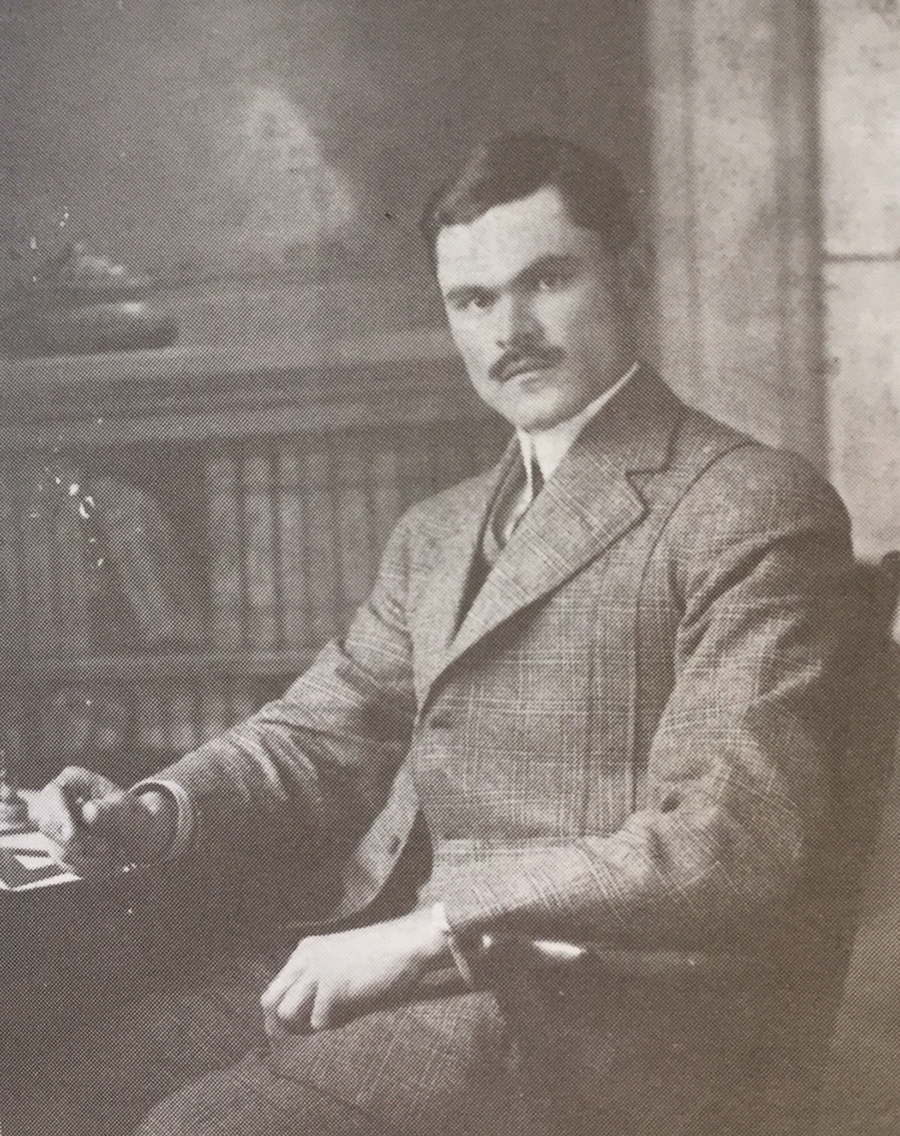
Born in 1892 to James Wicker and Lucretia Mills, Rassie attended a one-room schoolhouse in his birthplace in nearby Cameron. It does not appear that he received any formal schooling in Pinehurst after James moved the family there in 1902. But, like Abraham Lincoln, Rassie read everything he could get his hands on, up to and including the Sears & Roebuck catalog.

Rassie’s father found that his cabinetmaking skills were in high demand in the 7-year-old community. Setting up shop near where the Manor Inn is now located, James received the bulk of his woodworking projects from Leonard Tufts, who assumed control of the family’s privately owned resort and town in the wake of James Tufts’ death, also in 1902. The young Rassie found work in the company town, too, starting as a delivery boy in the pharmacy. An enterprising teenager who nonetheless had time for a bit of fun (lanky and raw-boned, he participated in a farcical local baseball game in a red and green suit), Rassie quickly came into contact with the print shop employees who worked in the same building as the pharmacy. Soon, he had two jobs. Given the daily menu alterations at the Carolina Hotel, there was an unending flow of printing work, and it was not long before he mastered that trade.

The young man’s aptitude for catching on quickly wasn’t lost on Tufts, who used Rassie in a wide variety of roles. He assisted Pinehurst’s electrician, Owen Farrey, and lineman, Seward McCall, in cutting down the trolley line after Leonard decided to discontinue the service. When the installer of the first elevator in the Carolina Hotel walked off the job in a huff, leaving the elevator stranded at the top floor, it was Rassie who got the call. Despite knowing next to nothing about the equipment, he managed to bring the lift to the ground and, with typical dispatch, returned it to working order. Under the tutelage of civil engineer Francis Deaton, he helped survey the properties Leonard was buying, selling or developing. Rassie relished solving the kind of mathematical problems where there was only one right answer, and surveying required the same sort of exactitude. In an effort to enhance his knowledge, the largely self-educated Rassie passed the entrance exam into North Carolina College of Agriculture and Mechanic Arts (now North Carolina State University).

After completing the 1911-12 academic year in Raleigh, he was back working in Pinehurst, spending an ever-increasing percentage of his time in surveying. Though he never completed his studies, Rassie was permitted to hang out a shingle as a registered civil engineer since his work in the field predated the state’s establishment of educational requirements. In 1912, someone convinced him to run for Moore County surveyor and he cruised to victory. There was only one problem: At the swearing in, Rassie learned he was one year shy of meeting the position’s minimum age requirement of 21. Accordingly, he stepped down.

Rassie’s surveying work required him to spend considerable time out of doors in the forests and fields of Moore County, and he reveled in the observation of nature. With three friends, he organized a five-day paddle down the Little River from Vass to Fayetteville, constructing two homemade boats for the voyage. Upon arriving at the party’s destination, Rassie reported to the Pinehurst Outlook that “we tied up to wharves of that old town; changed our river clothes for railroad style, bode our (homemade) boats farewell, and bought tickets to Aberdeen.”

By 1917, Rassie was already considered a person of prominence in Pinehurst. The Outlook listed him among those who “built the community.” He married his sweetheart, a 21-year-old Cameron native, Mary “Dolly” Loving and, like his son after him, left almost immediately for military service overseas. He survived the Western Front physically unscathed and returned to Pinehurst in 1919. Jim was born in 1920, and Eloise came in 1922. In 1923, the burgeoning family moved into the house that Rassie built at 275 Dundee Road in Pinehurst.

In addition to surveying, Wicker ran the movie projector at the new Carolina Theatre in Pinehurst. He supervised a five-man crew building houses for Leonard Tufts, an assignment he was unable to perform as expeditiously as Leonard would have liked. Despite Rassie’s crew completing construction of 10 homes inside of 11 months, Leonard expressed his dissatisfaction. “(Y)ou should have completed 47 houses,” complained the tough taskmaster. The beleaguered Rassie informed his boss he was incapable of meeting such an unrealistic target, and he voluntarily excused himself from further homebuilding. Leonard appears not to have taken the resignation personally, since he continued to inundate Wicker with other assignments.

One task involved preparing a detailed map of the entire Sandhills area — a job Rassie, Francis Deaton and James Swett undertook in 1921. Much of the area was still unsettled dense pine forest. Land elevations and precise paths of Moore County’s watercourses were unknown. The laborious and meticulous work took nearly a decade to complete. One result of this effort was the decision to focus on development in the triangle between Pinehurst, Southern Pines and Knollwood. The Pilot reported in November 1931: “Rassie Wicker has been in the field on the proposed extension of Pennsylvania Avenue from the top of the hill in ‘Jimtown’ (Western Southern Pines) to the boundary of Pinehurst.”

While mapping unidentified creeks, Wicker took it upon himself to name them. According to Tony McKenzie’s “Tribute to Rassie Wicker,” Rassie called one offshoot of a creek “Joe’s Fork” in honor of a Jamaican, Joe Melton, who “drove an oxcart from hotel to hotel collecting food scraps and taking them to the Pinehurst piggery.” Republican political operatives once again began floating Rassie’s name as a candidate for county surveyor. He wryly shot down that trial balloon with a Will Rogers’ style quip. The Pilot reported that Wicker “denies the allegation and spurns the allegator.” Rassie went on to say, “ I always was, is, and always will be a Democrat.”

Rassie’s work in Pinehurst brought him into contact with the landscape architect Warren Manning, a protégé of the man who designed New York City’s Central Park, Fredrick Law Olmsted. As the Tufts’ architect-in-charge, Manning had the final say regarding nearly all plantings in the village. A sponge for absorbing the insights of experts, Rassie’s acquaintance with Manning enabled the younger man to learn how the interrelation of selected plantings could enhance a home or streetscape. Rassie opened his own business, Pinehurst Landscape Service, by the mid-1920s to capitalize on the numerous opportunities for a landscaping enterprise in a village less than 20 years old built on pine barrens.

By the end of the Roaring 20s, Leonard Tufts’ son Richard began to supplant his oft-ailing father in running Pinehurst’s affairs. The father and son, however, shared their appreciation of Rassie Wicker. In a personal letter, Richard raved, “You are getting a reputation with us as an architect, landscape designer, and the sort of handyman to refer things to when we want something that looks extra nice.”

Rassie was given the responsibility for locating and laying out new streets along with the water and sewer lines. According to Tony McKenzie, Wicker “took the liberty of giving all the newest streets names. He chose to use the last names of the people who provided manual labor to build Pinehurst.” They included Graham, Short and Caddell. He supervised construction of the Given Library and the hangar for the Moore County Airport. Leonard entrusted Rassie with the preparing and placing of historic markers identifying the ancient Yadkin Trail, four of which still remain.

Everything Rassie encountered seemed to pique his curiosity. Though often racked with migraine headaches, he invariably finished three books in a three-day period — the allowable bookmobile lending policy at the time — then scoured National Geographic and the Encyclopedia Britannica, front-to-back and A-to-Z. Surveying and mapmaking led him to an interest in the historic derivations of land titles in Moore County. His research dated back to the initial grants of the king of England. The completion of that project spun off into a deeper history of the county and ultimately the state. He became an organizing member of the North Carolina Society of Historians and a valued contributor to the Moore County Historical Association. He wrote numerous columns he titled “Historical Sketches” in The Pilot. One of his writings described his successful search for the North Carolina homes of Scottish heroine and Revolutionary War figure Flora MacDonald. His research culminated in the publication of a book that continues to be a leading reference for county historians, Miscellaneous Ancient Records of Moore County, compiling a massive amount of 18th century data.

His landscaping work led to the study of the local flora and fauna. After locating a sweetgum tree in Pinehurst, he took the time to compare its characteristics with other known varieties of the species. It turned out there existed no other known sweetgum tree with similarly shaped lobes on its leaves. The uniqueness of the discovery was subsequently confirmed by a nationally known expert at Harvard University.

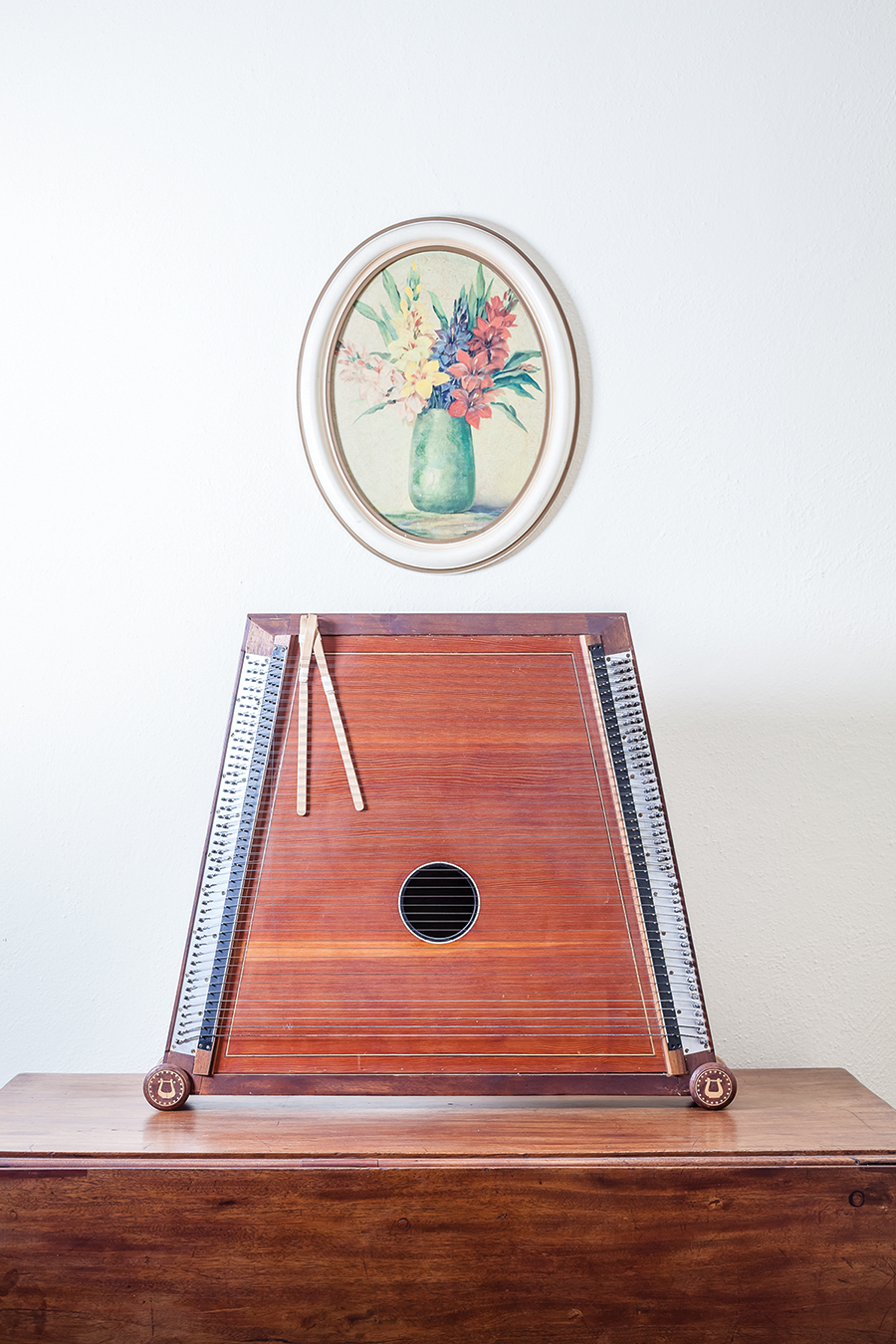
As if those pursuits weren’t enough, he had hobbies, too, including playing the piano, making his own dulcimer, singing in a chorus, acting in the occasional theater production, beekeeping and orchid growing. Perhaps Rassie’s most unique interest was sparked after he found a nest of orphaned quail in his yard and adopted them as pets. His care and feeding of the birds ultimately led to their taming. He cultivated wild plants he thought might improve their diet. His domesticated “Peewee” even fluttered its way into feature stories in The Pilot and Pinehurst Outlook.

His never-ending pursuit of learning took him beyond this world to a study of the heavens. He became an astronomer. Wanting a telescope to gaze more closely at the stars, Rassie fabricated one himself. In 1935, he contributed periodic columns to the paper with the purpose of educating its readers on locating the planets — “The Heavens in October,” etc.

Wicker was an inveterate writer of letters to local newspapers. Rather than pontificate he would raise issues overlooked by everyone else. And, though usually soft-spoken, he could launch into vituperative commentary when circumstances warranted. Concerned that a proposed constitutional amendment would transfer power from the “common people” to the state legislature, he colorfully opined that “(i)f it does, then it should be hung higher than Haman, drawn and quartered, boiled in oil, beheaded, disemboweled and buried in the deepest sea, and its tomb forgotten.” As part of the war effort, in 1944 Wicker was working as an engineer in Sanford for General Machinery and Foundry when he learned that his son, Jim, was missing in action.
The Wicker family tried to stay strong, but that was next to impossible. Jim’s wife, Nancy, wrote daily letters to her husband, holding them in safekeeping that he might one day have an opportunity to read them. Earl Monroe, Rassie’s best friend, noted that the interminable waiting for news about Jim drove Rassie, “a little crazy.” Finally on September 23rd, a telegram arrived confirming that Jim, after safely parachuting to the ground, had been captured by the Germans and was being held as a prisoner of war. The Wicker family was overjoyed. The only other survivor of the midair collision from his B-17 was the waist gunner, Clyde Matlock.

Jim was held in captivity at Stalag Luft I until May 1, 1945, when the camp’s guards fled as the Russian Army approached from the east. The Russians liberated the prisoners at 10 a.m. Two weeks later, Jim arrived at Camp Lucky Strike in France to await transport home. He soothed his anxious family, telling them, “All of you stop worrying now. I’m practically in the front yard.” And fittingly, it was Independence Day when he finally arrived home. Jim later received numerous commendations for his heroic service, including the Distinguished Flying Cross.

Rassie returned to his usual activities in Pinehurst, but managed to spend increasing amounts of time with Earl Monroe, his son Bud, now 80, and Tony McKenzie at the blacksmith shop at the corner of Rattlesnake and McCaskill roads. Bud recalls that Rassie loved working there as well as in his small workshop at home. Rassie welded and woodworked, like his father had. He gave away everything he made to his friends and children, including intricately crafted grandfather and grandmother clocks.

Bud Monroe proudly shows off several of Wicker’s handmade wooden pieces at his Murdocksville Road home. “How on earth are you going to go about describing what an incredible wizard Rassie Wicker was?” asks Monroe.

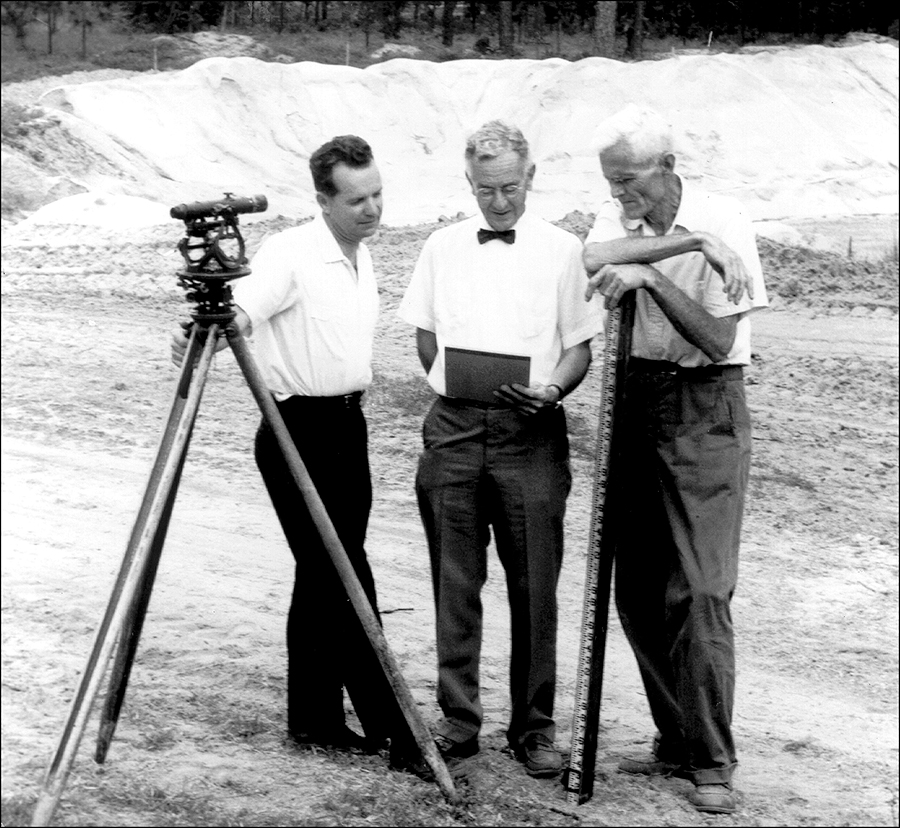
Wicker kept surveying until very late in life. A familiar and welcoming site in Pinehurst was Rassie driving his old Chevy down Cherokee Road with his surveyor’s rod protruding out the back window. As he aged, the white-haired Rassie began “taking on something of the majesty of an Old Testament prophet.” His community sought ways to honor him. In December 1971, he was the recipient of the Sandhills Kiwanis club’s Builders Cup for “the year’s most outstanding contribution to the county, made without thought of personal gain.” He passed away the following October at age 80. Dolly would die 16 years later.

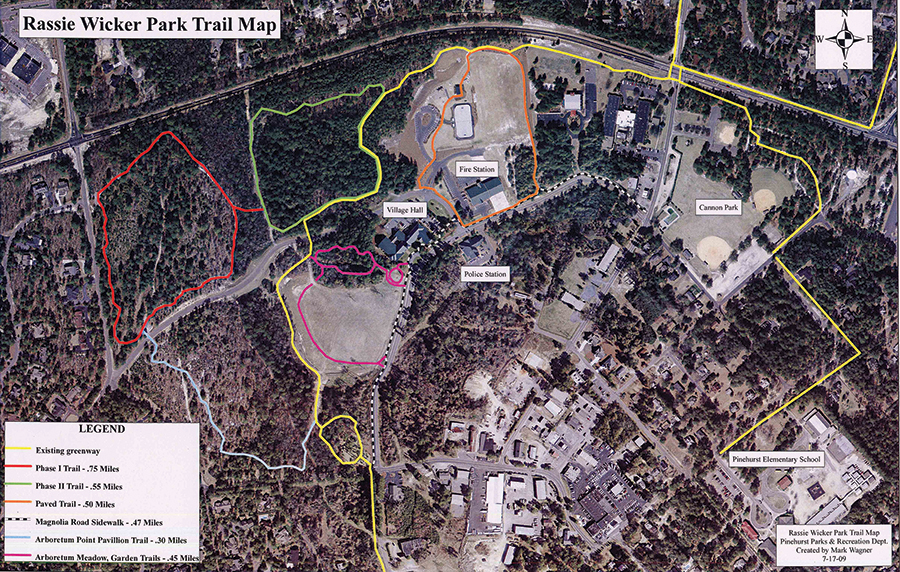
Recognition continued to come to Rassie posthumously. On Sept. 18, 1995 Pinehurst’s Village Council held a ceremony at the World Golf Hall of Fame to celebrate the naming of its newly acquired 100-acre recreational site, Rassie Wicker Park.

Jim Wicker piloted airplanes in the military for 21 years, and continued in aeronautic related activities thereafter. He and Nancy had two children, Jim, Jr., and Jill Wicker Gooding, both of whom maintain homes in Pinehurst. Rassie and Dolly’s daughter, Eloise, emulated her father’s penchant for scientific inquiry. She graduated from the University of North Carolina with a degree in botany and became Chapel Hill’s curator for its herbarium, part of the North Carolina Botanical Garden.

In a heartfelt message to Eloise who had just graduated from college, Rassie Wicker wrote, “I (and you too) know the pleasure — the deep and soul-satisfying pleasure — of having knowledge as one of your possessions. Not a knowledge confined to one subject, but a broad intellectualism which gives you a deep appreciation, not only of the distant and unapproachable things, but also of the little, homey, everyday creatures and incidents of which everyone’s life is made up … a bug or a worm or a plant each going about [its] appointed task, not haphazardly but in conformity with some great plan. These things come to me occasionally with overpowering force, but I have learned to keep them to myself except to a certain very few people who have seen this picture.”

Rassie Wicker did his best to see the whole picture. His passion flowed from a strongly held belief that the more he studied the world, the more he would be able to discern recurring patterns, to see how everything in it — the beauties and the mysteries — fit together.  PS

Pinehurst resident Bill Case is PineStraw’s history man. He can be reached at Bill.Case@thompsonhine.com.