The Omnivorous Reader

Revolutionary Scars

A revealing look at the cost of civil strife

By Stephen E. Smith

They’re called “uncle books,” popular histories you gift to your Uncle Leo so he can kick back in his easy chair and read about political and military luminaries such as Washington, Adams, Jefferson and Hamilton. These lengthy narrative histories, which are generally revisionist in intent and convey idealized portraits of their subjects, have done much to shape our beliefs about the founding of the Republic. What they haven’t done is examine the plight of ordinary Patriots, Loyalists, British and Continental soldiers, African-Americans, Native Americans and German auxiliaries, the brave, long-suffering souls who did most of the fighting and dying during the Revolutionary War.

In Scars of Independence: America’s Violent Birth, Holger Hoock attempts to set the record straight by revealing the brutality of our first civil war, and describing in graphic detail the torments endured by ordinary soldiers and innocent noncombatants on both sides of the Revolution. Hoock writes: “For two centuries this topic has been subject to whitewashing and selective remembering and forgetting. While contemporaries experienced the Revolution as frightening, messy, and divisive, its pervasive violence and terror have since yielded to romanticized notions of the nation’s birth.”

Hoock supports this thesis with statistics that suggest there was suffering aplenty. Per capita, 10 times as many Americans died in the Revolutionary War as in World War I and five times as many as died in World War II. Among prisoners of war, the death rate was the highest in American history. Between 16,000 to 19,000 Continentals died while confined by the British. And Hoock argues convincingly that Loyalist noncombatants routinely suffered imprisonment and torture at the hands of Patriots.

Hoock offers as an example the experience of Edward Huntington, who was convicted of being a traitor to the Patriot cause and was sentenced to spend “the rest of his life sixty to eighty feet underground in a dark, damp, claustrophobic tomb.” Huntington was transported to an infamous copper mine in Simsbury, Connecticut, and was lowered deep into a dismal cavern where he could not stand upright. He shared his incarceration with “violent criminals serving sentences from one year to life for horse thievery, aggravated burglary, highway robbery, sexual assault, and accessory to murder.” The subterranean chambers had no natural light, limited air circulation, constant dampness and employed a communal tub as a toilet, a breeding ground for “fevers, influenza, respiratory problems, dysentery and typhoid.”

Patriots employed arson, rape, confiscation and public shaming against their Loyalist neighbors, but tarring and feathering was the preferred punishment. The case of John Malcom, a Boston customs official, is cited as typical. After having hot tar and feathers applied to his naked body, Malcom spent two months in bedridden agony before fleeing to England, where he petitioned Parliament for monetary redress by sending pieces of his skin as proof of his loyalty. When such punishments failed to satisfy Patriot vengeance, many Loyalists were “killed by mobs or at the hands of marauding bands, hanged by order of councils of safety or assemblies of various states, or executed following court-martial.”

Hoock gives British atrocities, including Banastre Tarleton’s dishonorable conduct at Waxhaw, passing mention, but his primary focus is on lesser known campaigns, such as Washington’s genocidal response to Iroquois raids in the Wyoming Valley of Pennsylvania. Washington’s objective in punishing the Six Nations was “the total destruction and devastation of their settlements and the capture of as many prisoners of every age and sex as possible.” To that end, the Continental Army destroyed 45 towns and all of the Native Americans’ crops and food stores, plunging the tribes into starvation. Iroquois retaliated by torturing and mutilating Continental soldiers. Patriot  Lt. Thomas Hubley recorded the barbarity in his diary that “their heads Cut off, and the flesh of Lt. Boyds head was intirely taken of and his eyes punched out. . . his fingers and Toe nails was bruised of, and the Dog had eat part of the Shoulders away likewise a knife Sticking in Lt. Boyds body.”

The fate of African-American combatants is, as one might expect, particularly disturbing. In most cases, slaves were promised their freedom by the government for which they fought, but their treatment was at best exploitive and their well-being of little concern to those who tendered assurances. Many slaves who served the Revolutionary cause found that promises weren’t kept, and the British treated African-American soldiers as disposable laborers, abandoning thousands to die of disease, before transporting the survivors to Nova Scotia, or Jamaica and other West Indian islands.

The bitterness occasioned by the Revolution lingered long after Cornwallis had surrendered at Yorktown, and acts of vengeance and retaliation took the form of physical violence and executions. Hoock recounts the 1782 hanging of Joshua Huddy, commander of a New Jersey Patriot militia, and the Patriots’ retaliation — known as the “The Asgill Affair” — in which Gen. Washington ordered that a British officer, Capt.Charles Asgill, be executed. Eventually, Asgill was released, but a generation of brutal warfare had habituated Americans to a thirst for revenge that no treaty could assuage.

Although Scars of Independence isn’t a pleasant read, it makes a significant contribution to our knowledge of the Revolution, and it’s another reminder that brutality is the norm in war, especially in civil wars. The question for readers is this: Are we obligated to acknowledge the abominations committed by our forefathers? As Maxim Gorky, a man who knew something of the horrors occasioned by civil strife, wrote: “I have no desire to make anyone miserable, but one must not be sentimental, nor hide the grim truth with the motley words of beautiful lies. Let us face life as it is. All that is good and human in our hearts needs renewing.”

Stephen E. Smith is a retired professor and the author of seven books of poetry and prose. He’s the recipient of the Poetry Northwest Young Poet’s Prize, the Zoe Kincaid Brockman Prize for poetry and four North Carolina Press awards.

Golftown Journal

Random Walks

The pleasures of carrying the load

By Lee Pace

Perhaps it was prophetic that the very month I signed a deal with UNC Press to write a book about the joy of playing golf by foot and foot alone I was presented by the golf gods, neatly wrapped with a ribbon and bow and sweat band, a case study illustrating my renegade approach to the game.

We teed off at 8 a.m. on July 22 at Finley Golf Course in Chapel Hill, me walking with my bag slung over my shoulder along with three riders. Did I feel antisocial by leaving a single in a cart? Certainly not, as why should I accede to his preference of riding in lieu of my own desire to walk? I did tell him, incidentally, I’d help with the cart if he got stuck in a jam.

My two primary goals every time I peg it up are to get some exercise and break 80. Studying the golf course and reveling in nature come next. Enjoying the companionship of my playing partners is important as well — all the better if that’s split three ways while walking along rather than spending four hours-plus with one guy in a cart. Betting? Lame jokes? Pounding beverages? Way down or even off the scales.

One of golf’s earliest appeals was its health-giving benefits, the player walking some four miles over varied terrain with his strength and endurance key elements of the sport. Too often today that component has been lost, with many golfers playing in a default mode of mandatory riding in motorized carts.

“Such uninterrupted exercise, cooperating with the keen air from the sea, must, without all doubt, keep the appetite on edge, and steel the constitution against all the common attacks of distemper,” Tobias Smollett wrote in a 1771 novel of the golf experience in the Scottish town of Leith.

So I knew on this day with the temperature at 76 degrees when we teed off and forecasts for highs in the upper 90s that breaking 80 would be a challenge indeed. Beating the golf course and beating myself were all that mattered. Yet I’d played two weeks earlier, same morning tee time, nearly but not quite as hot, and shot 80. My game was coming into mid-summer form as it always does and, if I’d just make a full turn in good posture and not get quick at the top, I felt I could shave a couple of shots and land in lucky-70s nirvana. I was heartened that day two weeks earlier by having clipped two shots off my front nine total on the back — indicating fatigue was not an issue.

“All I can say is — stay hydrated,” the starter counseled on the first tee.

I stood 5-over on the 13th tee, having slaked several bottles of water, a Powerade at the turn and seeking shade when convenient. Some of that shade I found to the left of the 17th fairway when we were looking for a wayward tee shot. I enjoy taking photos of my collection of lightweight, simplistic carry bags juxtaposed against interesting architectural features for social media posts, so I took a quick snap of my bag in the cool shadows (out in the sun it was 92 with a heat index reading of 105) and later posted it on Twitter.

“Surely you’re not walking,” responded one follower.

“I am amazed and aghast at the same time,” another wrote.

To me, it was just another day at the golf course. And it was with no small amount of satisfaction that I played the last five holes plus-1, penciled in a 78 and enjoyed my favorite hamburger afterward in recovery mode. (And look, I’m not stupid; I’m not saying I’d have walked and lugged if my tee time had been at 1 p.m. that day.)

To hell with Mark Twain, who supposedly once said, “Golf is a good walk spoiled.” Poppycock. To me and a passionate and resolute minority, “Carts are great golf ruined.”

“I’m pretty much a traditionalist. I feel walking is the way the game is meant to be played,” says Spartanburg’s Todd White, a top mid-amateur who played in the U.S. Amateur Four-Ball at Pinehurst in May. “There is so much to enjoy between shots if you’ll just take the time to do it. To me, a golf cart takes away quite a bit from that. In a cart, you rush to your ball to sit there and wait. If you’re walking, you can experience the environment.”

“Walking No. 2 in the evenings is such a peaceful experience,” says Pinehurst member Jason Richeson, a member of the club’s Executive Golf cadre that meets every Tuesday for twilight golf on No. 2. “There’s hardly anyone else out there; you’ve got the sun setting through the pines. It’s amazing. It’s almost a surreal atmosphere.”

Mike Harmon is the director of golf at Secession Golf Club in Beaufort, South Carolina, which opened in 1992 as a walking-only course (they have two golf carts for players with doctor-verified health conditions). The club has an excellent caddie program and will allow members to carry their bags late in the day. Harmon often goes out with a Sunday bag and nine clubs.

“Obviously walking is the healthy way to play,” he says. “I always play better walking, and I nearly always play just nine clubs just putzing around the club. You find out how well you’re swinging when you have nine clubs. You have an 8-iron shot but you’ve got to pick the 7 or 9. You have to figure that one out.”

I never begrudge others their preferred method of playing. As golf architect Tom Fazio notes, the invention and proliferation of the golf cart has been in large measure “very positive” for the game.

“I’m not sure we’d have had the growth in golf and as many people playing if not for the golf cart,” says Fazio, who’s designed and built five Sandhills area courses. “We have built courses in hilly terrain, in mountain areas that wouldn’t be accessible if not for the cart. I’d bet there are a couple thousand courses in America that would not be there if not for carts. On a grand scale, you’d have to put a plus for golf carts.”

Yet in the next breath, Fazio will admit to moving heaven and Earth to hide the visual pimples of paths on his golf courses, and that his No. 1 golf experience is playing Pine Valley Golf Club — where no carts are allowed. In other words, he’ll build what the market dictates.

The market, certainly, will be limited for my forthcoming book. The vision is some 200 pages, coffee-table format, the content built around stories of courses and clubs across the two Carolinas where the course is walkable and a healthy walking culture exists. It’s an acquired taste, as they say, but fortunately the astute numbers-crunchers at the venerable Chapel Hill publishing house are confident the readers and buyers are there.

Case in point is Jay Mickle, a Southern Pines farrier who grew up playing McCall Golf & Country Club in suburban Philadelphia in the 1960s. Carts were not part of the equation.

“Carts were high-society, resort stuff,” he says.

He moved to the Sandhills a decade ago and is a regular hoofing it about Pine Needles and Mid Pines — once walking 18 holes at Mid Pines as a twosome in one hour, 55 minutes — and relishes the late afternoons. One twilight we were walking from the tee on the 15th at Mid Pines, the setting sun at our backs and filtering through the trees to cast a golden patina on the furrows within the ancient fairways.

“It’s the magical time of day,” he says. “This is perfect.”

Mickle notes that many northern courses add an upcharge to ride, while it’s typical in the Carolinas to add it to the greens fee.

“People think, ‘I paid for it, I’m going to take it,’” he says. “Well, they can take it to their grave when their arteries are all clogged up.”

I might not get a better quote than that over the next two years, but I’m sure going to try.

Send Lee Pace an email at leepace7@gmail.com if you share his passion for walking golf and have a story to tell.

Story of a House: Rose Cottage

Rose Cottage

James Tufts’ first foray into vacation homebuilding, once again a showplace

By Deborah Salomon   •   Photographs by John Gessner

rose is a rose is a rose . . . 

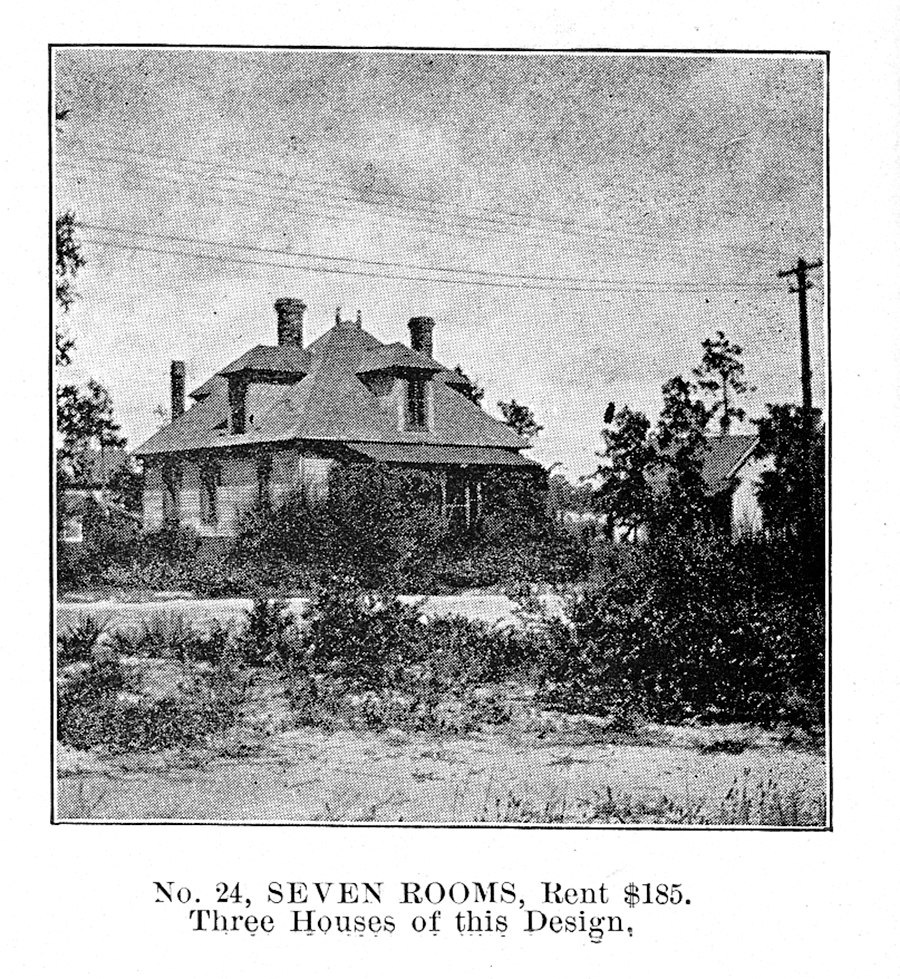
However, Rose Cottage looks and lives very differently than when it was built by James Tufts in 1895 — among the first of about a dozen. This house, intended as a rental, then sold in 1905 for $1,050, had few neighbors and a clear view to the Carolina Hotel and nascent Pinehurst village. Its tight floor plan, consisting of seven rooms, a small sun porch, and one bathroom, begged expansion accomplished by subsequent owners over the next three decades, culminating, circa 1940, with the colorful Razook family. F.R. Razook, a Lebanese immigrant, and his wife Rose had established a haute couture ladies’ boutique in Blowing Rock, N.C. They followed the money to Pinehurst, Palm Beach, Manhattan and Greenwich. While the Great Depression wiped out some clientele Razook’s thrived on survivors. Gen. George Marshall’s wife (with a home in Pinehurst) reportedly purchased the gown she wore to Queen Elizabeth II’s coronation from Mme. Razook.

However, by the 1960s, this rose had faded. The younger Razooks came down for holidays only. Modernization stalled after 1940. Gorgeous heart pine floors slumbered beneath ratty broadloom. Critters overran the attic. The layout had been chopped into a warren of small rooms of indefinite purpose. The kitchen was a period piece and the bathrooms . . .

***

Lisa and Bill Case — retired lawyers who married in 2008 — weren’t looking to rebirth a landmark. They knew what such projects entailed after living in the German Village section of Columbus, Ohio, a revitalized neighborhood on the National Register of Historic Places. Bill first visited Pinehurst with his father, on a business trip in 1964. He brought Lisa, a new golfer, with increasing frequency, telling her during a Thanksgiving jaunt, “You have to play No. 2.”

Slowly, as retirement took shape, Pinehurst looked promising — not only for golf. “We were footloose, could go anywhere, but we kept coming back here,” Lisa says. They liked the climate and population potpourri. However, this time Lisa wanted a sleek modern residence, “No curlicues, easy to keep clean.” A Realtor gave them the tour; they passed Rose Cottage without going inside. Yet the charm of the old place caused them to ask for a walk-through.

They returned to discover the house a mess, old and tired from not being occupied. But quality materials, location and antiquity left an impression.

“Bill’s eyes were like saucers,” Lisa recalls.

Options were discussed and decisions were made during the 8-hour drive back to Columbus.

“As long as you give me rooms for guests and a kitchen that I love . . . ” Lisa said, having recently remodeled hers. “We could see ourselves living here.”

They took the leap in 2013 with a lowball offer. Their Columbus house sold in a day. Down they came with one dog and two cats, hired a designer and builder, rented a condo for the duration.

Bill: “I thought we’d gut the bathrooms and kitchen and do the rest later,” which, as it happened, was like being a little bit pregnant. Their builder wisely advised a “one fell swoop” plan, to avoid tearing the place apart twice.

And tear it apart they did, moving interior walls, combining cubbies, creating spacious bathrooms and storage, opening up the staircase with a transom and handsome banisters all without altering the footprint.

***

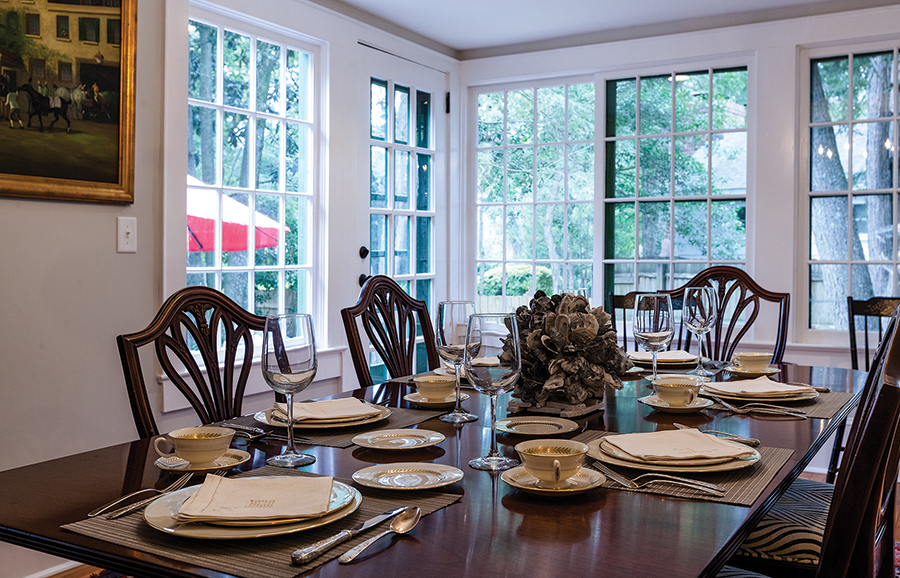
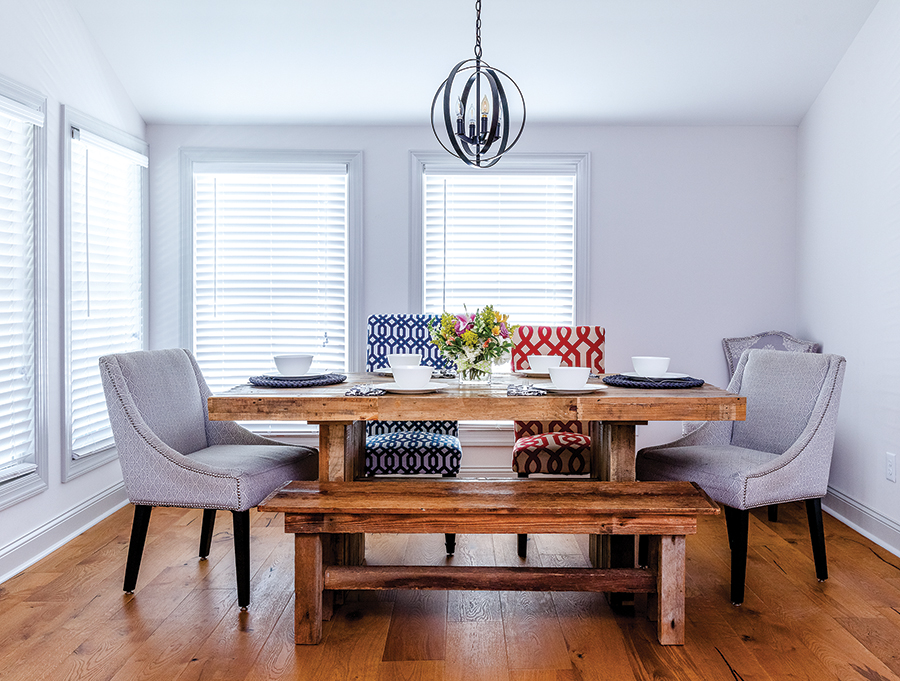
The result begs questions, reveals surprises. What purpose, the room just inside the front door? Larger than a foyer — likely a parlor before the enormous solarium was added. To the immediate left, the dining room with an off-center fireplace could have been a ground floor bedroom for grandma, as was common in houses of that era; formal dining rooms weren’t required since the first Pinehurst cottagers ate communally. Windows at the end of the dining room suggest a small sun porch. Ceiling beams, now painted white, could be original or an addition. Then, in a bay window area connecting dining room to kitchen, the Cases created a conversation nook/butler’s pantry/bar.

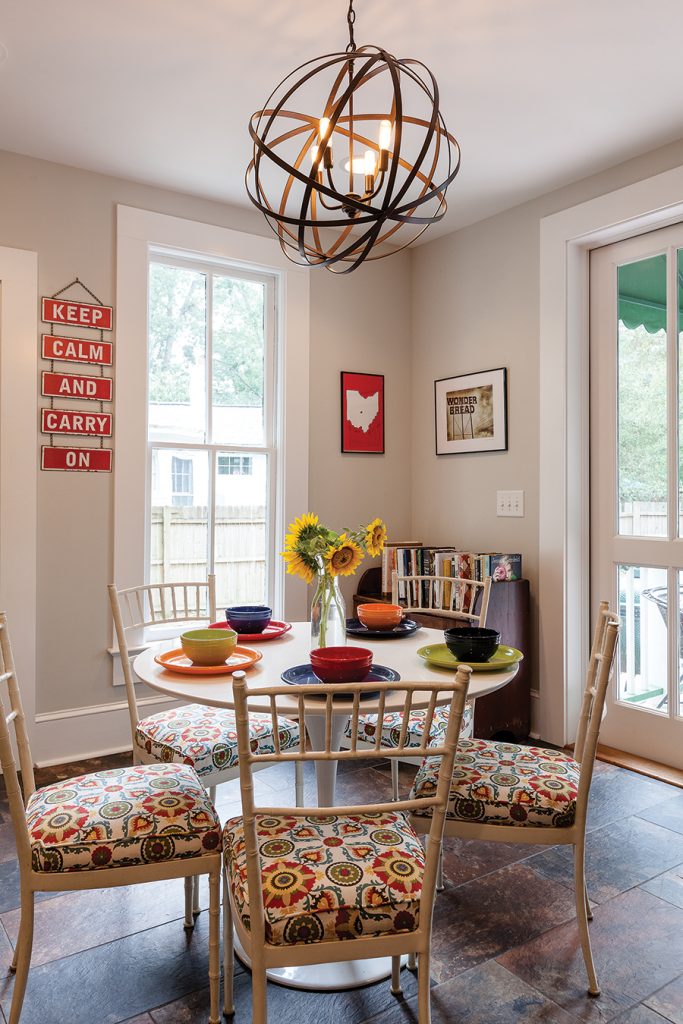
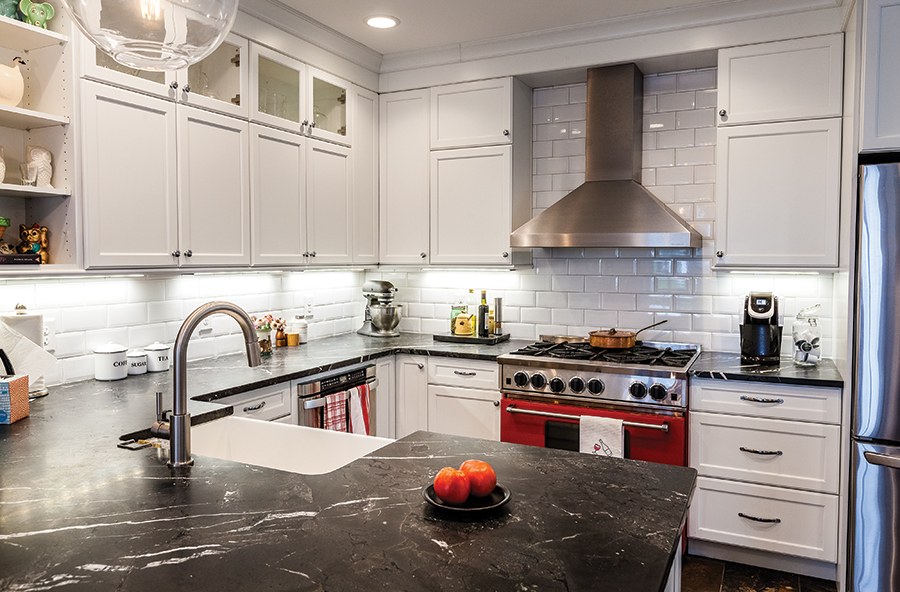
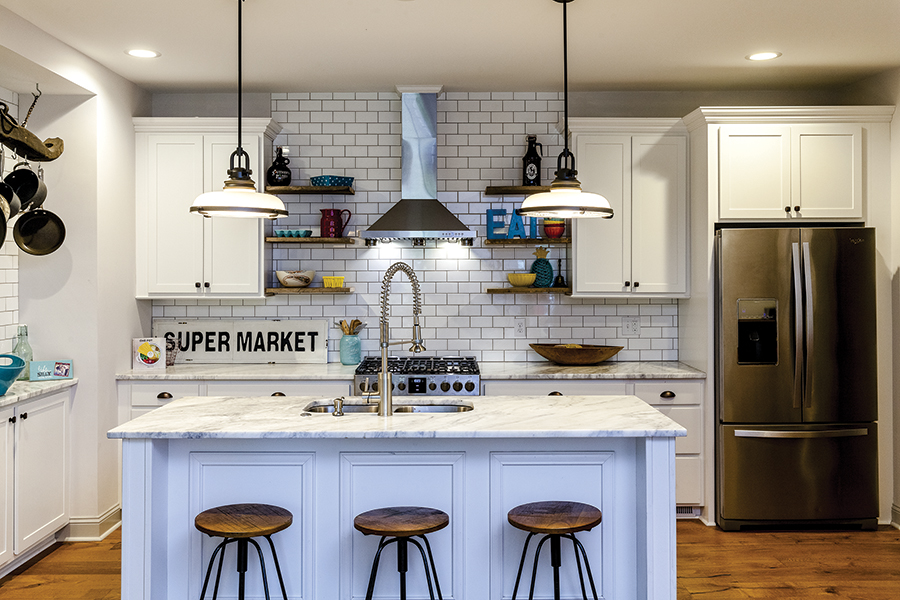
As stipulated, much attention went into Lisa’s kitchen. “We splurged on the soapstone counters,” she admits. They are black, the walls throughout a soft, soothing grey, the cabinets white. Color pop comes from her unusual red gas range and dishes in a variety of bright primaries. French doors open onto a brick patio, which they added.

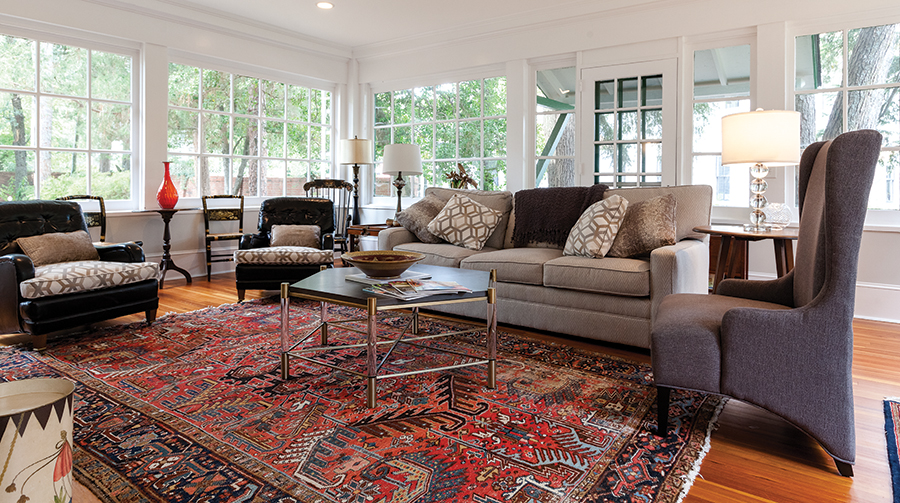
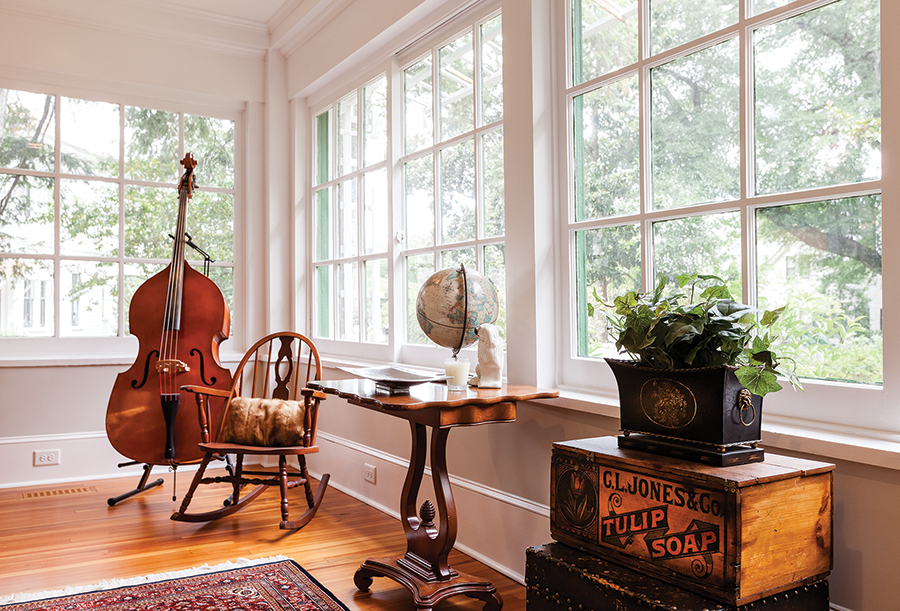
The real main floor knockout, however, is that 30×20 foot solarium, a veritable fishbowl with three complete window walls not covered by shutters, shades or drapes. Here, the Razooks held high society soirees. Now, Bill’s stringed bass fills a corner, silent but decorative.

“People look in  . . . we wave to them,” Lisa says. 

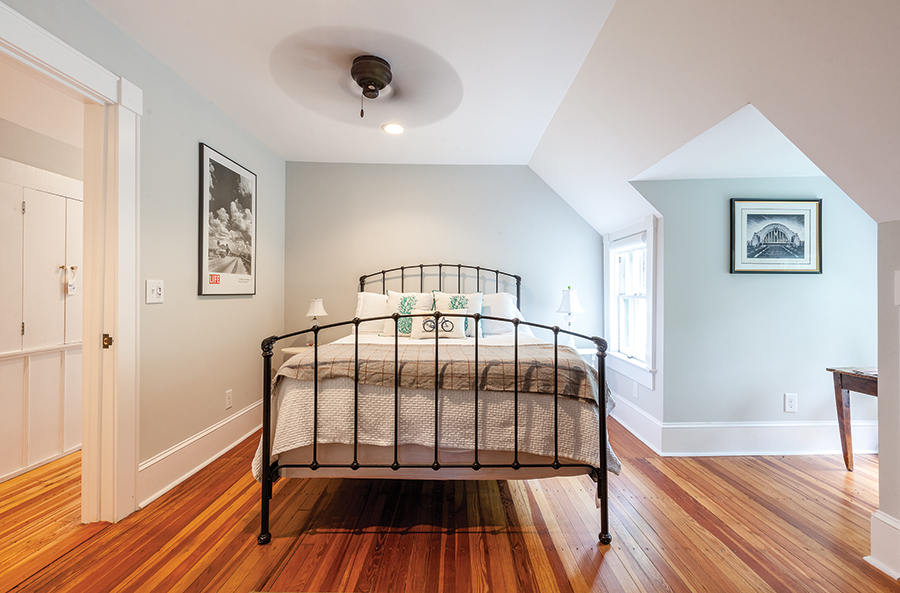
Upstairs a narrow hallway, sloping from age, leads to three bedrooms with niches and windows set low on the mansard walls, creating a treehouse effect.  Nobody knows why the Juliet balcony off the master bedroom lacks a door. Obviously, it wasn’t planned for sitting.  “We crawl out the window and decorate it for Christmas and July 4th,” Lisa says.

Ever the conservationists, Bill and Lisa created sliding pantry doors from original hinged, moved the porcelain kitchen sink into the laundry room, made free-standing cabinets from removed built-ins and salvaged old knobs for pegs. Since no clawfoot bathtub survived, Lisa chose a reproduction.

Because all but one room is moderately sized, the house doesn’t feel like 3000 square feet, “But we use every inch,” Lisa says.

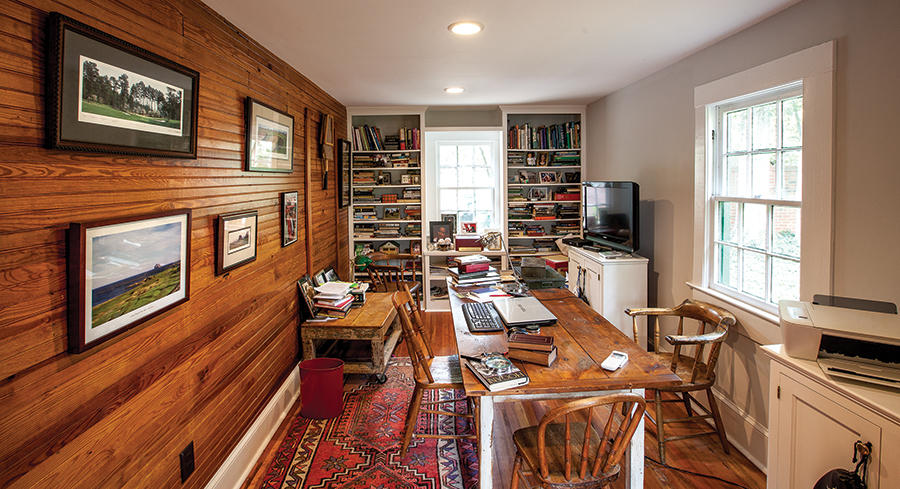
Across the garden, a former carriage house/garage has become Bill’s man cave, repository of baseballs and books, where he researches and writes. Bill appreciates history and its icons: he owns a mint-condition 1954 Mercury used in the Johnny Cash film bio Walk the Line. A Waring blender with glass canister has been converted to a lamp. And on the walls hang a continuation of golf course art, both paintings and photos, appearing throughout Rose Cottage. “We marshaled at St. Andrews in 2015,” Lisa says proudly. Other wall décor includes their “happy place” beach in Scotland, archival photos and documents relating to Rose Cottage, personal mementos, and a Columbus landmark — the Wonder Bread factory sign.

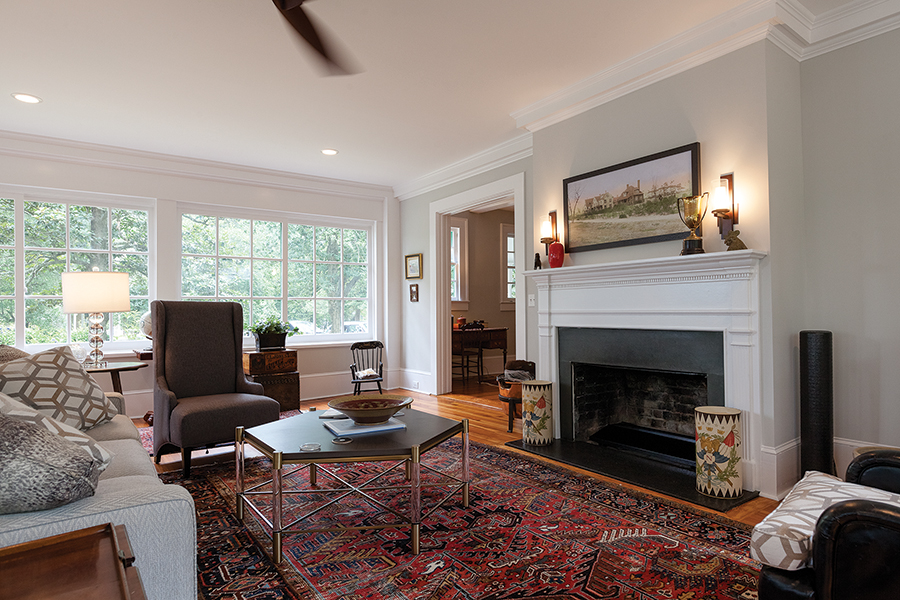
The couple’s furnishings — his, hers and theirs — stretch the eclectic concept. An heirloom sideboard looms over the dining room like a frigate. A round English-manor hall table centers that mysterious front parlor. On the mantel stands a trophy dated 1941, won by Bill’s mother at the (prophetically) National Rose Show. Lisa found fertile hunting grounds in Moore County consignment shops — everything from an ornate French chateau desk reproduction and carved settee to tables and chairs with contemporary Scandinavian lines. When pushed to feature a color, as in the master bedroom, Lisa chose “cat’s eye” green, a pale avocado evocative of bygone days.

“Doing the outside is my next project,” says Lisa, who completed a Master Gardeners’ course. As yet, neat plantings neither overwhelm nor detract from the house itself. Lisa is learning what grows well in this warmer climate. “I’m thinking about a pollinator garden, but so far, it’s a work in progress.”

All in all, Lisa and Bill have adapted the prototype Pinehurst cottage to active retiree living: original wide baseboards and doorframes meet recessed lighting. Long halls become gallery space. The black-and-white magazine kitchen co-exists with a Welsh cupboard. An exterior painted the white and money-green, popular mid-20th century, gives no hint of what lies within.

Bill and Lisa are pleased. “We’ve learned ‘porching’  . . .  sitting outside with a bourbon at four in the afternoon, watching the world go by,” says Lisa. “Our neighbors are wonderful. This house has good vibes.”

With one ghostly exception: “I was lying in bed and Bill was watching TV. I swear I heard somebody standing by the bed. She whispered, ‘This is my house.’”

To which Lisa rightfully replied, “Oh no, this is MY house now.”

The Kitchen Garden

The Root Doctor

How a Pinehurst endodontist created a produce paradise

By Jan Leitschuh

As a successful health professional, he deliberately chose to live here, in the heart of one of the nation’s foremost golf-mad regions. He and his wife found a graceful, red-brick house off the traffic circle, one that backs right up to the National Golf Club.

But while “keep your head down” might be common advice in the Pinehurst ‘hood, Dr. Jim Corcoran is looking down at green beans and garlic, not golf balls. When he speaks of cabbage, it ain’t deep rough. His garden spot has nothing to do with a tee shot. This Pinehurst endodontist does not golf for leisure. He grows vegetables. Passionately. Wholeheartedly. Pulling roots or performing root canals, here is a man who enjoys working with his hands.

Step through the tall pines, past a child’s dream of twin tree houses, the playground for his brood of three. Open a trim gate to a garden where luxurious foliage overruns neatly-aligned, raised beds. Vines crawl up a side fence line, blueberries hedge the back, and hanging gutters of strawberries fill up the vertical space. A resident Eastern box turtle patrols, eating bad bugs and discarded strawberries. “This is a working turtle,” Corcoran says proudly. Calmness descends, quietude sings. The effect is peaceful — and productive.

Welcome to the green retreat of a busy professional. Not a golf ball in sight. The garden is a restorative, neatly fenced, 30-foot by 40-foot horticultural meditation on the nature and cycles of life.

“It’s as much therapy for me as it is for the vegetables,” he admits. He’s a fan of Dawn Patrol: “I’ll get up early on a weekend and come out here with a cup of coffee and putter. When the kids wake up, they know to come out here and find me.”

It’s also a peaceful space for cultivating privacy and marriage. As a member of Pinehurst Endodontics, “I work just on the other side of the traffic circle,” says Corcoran. “I’ll come home for lunch, and Amy (his wife) and I bring our meal out here, sit down in the shade, and talk.”

Not that the produce itself isn’t also welcome. In season, says Corcoran, “I love to steal my wife’s salad bowl every night and come out here, and fill it up with blueberries. I leave it on the kitchen counter, and the kids grab a handful for snacks until it’s gone. And then I fill it up again.”

Tomatoes climb skyward, and potatoes, cucumbers, squash and pumpkins spill over the sides of this modern-day Victory Garden. Herbs grow neatly in pots at the back, along with a few creative bonsai. The soft greenness disguises the hard work and daily discipline within.

“I’m still very much a novice at this,” he says modestly, amidst the verdant abundance that is his backyard garden. But despite his protests to the contrary, he’s evidently no duffer. “I’ve had good teachers,” he insists. “My neighbor. Joe, and dental patients that are gardeners — I’ll pick their brains.”

“More than anything,” he says, “having a neighbor like Joe made the difference, encouraging us to come out here and do this.”

That would be Joe Sullivan, the garden mentor next door, Corcoran’s horticultural Bagger Vance helping him find his “authentic swing” in the garden.

Sullivan’s elegant, diverse and well-planted backyard adjoins the Corcorans’. “He’s like the Irish version of Clint Eastwood, “ says Corcoran with a chuckle. “He’s super-cool.”

It all started when Corcoran was helping Sullivan clear out a tree that blew down in a hurricane near the back of their joint property line. Looking at the newly available sunlight, Sullivan said, “You should have a garden here. Do you want to get a garden together?”

So Corcoran pulled the pine straw away and turned over the sand beneath, planting peppers and tomatoes into his new little bunker.

How did that work out? “Best weeds I ever grew,” he says with a grin. “Maybe I got one small tomato.” It was, in his view, an unplayable lie. “I decided to work with Nature.”

A handy sort, Corcoran installed some raised beds in 2012. Pressure-treated 2×10 inch pine, stained brown, made attractive beds 20 inches high. He determined the spacing between boxes by trundling a wheelbarrow through his staked-out beds. Aisles were filled with pine straw mulch to squelch weeds.

Now, seven boxes worth, his raised beds range from a small 6×8-foot bed to a longer 6×22 feet. “Six feet is about the length of my reach, so that became the bed width,” he says with a laugh. Simple, practical planning, grounded in reality, became a theme.

Quality soils were brought in by a family pickup truck — he estimates 15 trips — that he and son Robert unloaded into the beds. Hard work and discipline. Forget golf — who needs a gym when you have a garden?

“The garden is great for the kids too,” he says of his three children. “They see the hard work and then the results.”

That hard work sometimes entails delayed gratification. Three years ago, the family went to the beach. The garden was peaking, lush with almost-ripe harvests. Upon his return, Corcoran immediately went straight to the garden. When he didn’t come back inside, Amy came looking. Jim was standing among green nubs. “The deer had mowed it all down. They had eaten absolutely everything. Amy got worried because I was gone so long.”

After some experiments with rabbit fencing, last year Corcoran took a mulligan and put up a 7-foot deer fence and installed gates. The deer are at bay at last.

Corcoran’s strawberries — plants donated by neighbor Sullivan — grow in rain gutters from Lowe’s Home Improvement. No slouch with a drill, the endodontist-gardener drilled holes in the bottom for drainage, then lined the gutters with landscape fabric, and filled them with quality soil. “Irrigation is the key there,” he said of the shallow containers hanging vertically, and so installed a simple system to deliver water. The raised beds were also irrigated.

This spring, neighbor Sullivan issued the challenge to young Robert: “Let’s have a pumpkin-growing contest.” Generously, Joe shared some seedlings of plants that he said would grow to 300 pounds. But the Corcorans have a twist — they also found a packet of prize-winning  pumpkin seed stock from Weeks Seed Company, some of which have grown up to 1300 pounds.

“That’s our secret weapon,” says Corcoran, chuckling.

“And Miracle Grow,” adds Robert.

“And Miracle Grow,” agrees his dad. “Lots and lots of Miracle Grow.” They plan to switch to potassium as the flowers set and start making pumpkins, then trim down to one pumpkin per vine, the best one, so the vine can pour all of its nourishment into what they are sure will be their prizewinner.

Corcoran is no stranger to hard work and discipline.

He was in combat operations in Operation Desert Storm at age 19, then stationed at Fort Bragg for a year, exposing him to the glories and beauty of the Sandhills. Following a three-year stint as an airborne ranger, stationed at Hunter Army Airfield in Savannah, Georgia, he went to college on the GI Bill, completing undergraduate studies in three years at the same time he was working construction 30 hours per week.

“Part-time construction worker, full-time student,” he jokes.
Dental school was on an Army scholarship. From ‘97-’01, he attended University of Missouri-Kansas City School of Dentistry where he met his wife, Amy. They moved to Fort Campbell, Kentucky, on active duty for his residency. A second residency to study the specialty of endodontics followed in 2003 at Fort Bragg. 

“That’s where my wife and I really fell in love with the Sandhills,” he says. Later, he taught endodontic dentistry to general dentistry residents at Fort Campbell for another three years.

“I got out and came running back here,” he says. In June of 2008, he joined Pinehurst Endodontics. He loved the small but vibrant towns in the area: “It’s such a fantastic place. A small town, family, friends, great schools, the talent here, and quality of medical care. And I don’t even play golf!” 

He is, however, an avid runner. During a marathon in Myrtle Beach  at roughly the 18-mile mark, a man ahead of  him fell. As Corcoran approached, it was clear the man was having a heart attack. Corcoran began CPR, an exercise he performed for a full 11 minutes until the ambulance arrived.

“I broke his ribs with the CPR,” he says, ruefully. But the man, a veterinarian from Knoxville, Tennessee, survived his coronary blockage and eventually connected with his Good Samaritan for an emotional phone call.

Garden drama happens on a much quieter scale. Plants flower, fruit and bear. They are pulled and laid down to compost. It’s his happy place.

“Gardening is a lot like dentistry,” he says, “finding the right therapeutic dose to get the results you want. Everything worthwhile in life requires effort. It’s a wonderful thing for my children to experience, to see the hard work and then results.” The freshest produce around.

Retreat, role modeling, and fresh veggies. Such, he feels, is his horticultural equivalent of a double eagle.

Jan Leitschuh is a local gardener, avid eater of fresh produce and co-founder of the Sandhills Farm to Table Cooperative.

The Comeback Kids

The Comeback Kids

There’s no place like home. Even if it takes moving away to discover it

By Casey Suglia     Photographs by John Gessner

Something about home calls you back. Maybe it’s the sweet scents of the kitchen during the holidays or when spring blooms at the top of its lungs. Backyards lock away memories as if they were bank vaults, and porches welcome them in like old friends. We’re not the same place we were a quarter century ago though our collective history lingers in the pines like an autumn fog. If success is passion, it can be found in many places, wearing many faces. But, it seems, it’s never quite as cherished as it is at home. The people portrayed on the following pages grew up here, built a life there, then came back to us. They have used their wings and kept their roots. They’re The Comeback Kids, fresh from working for companies large and larger, in cities big and bigger. Yet, their lives led them to where everything began.

Anthony Parks spent his childhood in the early 70s riding bikes and skateboarding in downtown Southern Pines. Now, he’s the one who watches the kids go by — or, more often, stop in. His father, Harry, owned the gas station on the N.E. Broad and Connecticut Avenue. Many a day included a trip to the Ice Cream Parlor, the Broad Street institution (then and now) Anthony owns 30 years later.

After graduating from The O’Neal School in ’93, he attended college at the University of North Carolina—Greensboro where he studied business. “I had a plan that I would come back and run the family business,” Parks says, who worked at his father’s convenience store from the time he was 10 years old. “But after two months of being away, I knew that I was definitely not coming back. I liked being in a bigger city and being close to things.”

First in Greensboro, then Winston-Salem, Parks found himself learning the ins and outs of the restaurant industry from local entrepreneurs, Chris Lester and Kayne Fisher who opened Natty Greene’s Brewing Company in 2004. After two years of running restaurants, he decided Winston-Salem wasn’t the optimal place to raise a family and began to miss the pace of small-town life.

Anthony returned to Southern Pines in 2002 with the intention of opening a pub. But when Karen and Larry Daugherty, the owners of the Ice Cream Parlor, heard that Parks was looking to run something, they thought he would be the perfect person to succeed them. He bought it and immediately fell in love with his customers. Parks regularly sees people he grew up with bringing their kids into his restaurant. “You never know who will walk through the door,” Parks says. “It was too perfect of a full circle.”

Although Anthony’s back, some city influences still show. Parks helped begin the First Friday concert series and stays active in the community and local business associations, preserving the town that means so much to him.

“I owe everything to this town,” Parks says. “It’s important for me to give back.”


Amity Aldridge moved to Southern Pines with her family when she was in the second grade and spent her childhood jumping on the trampoline in the backyard of the family home on Indiana Avenue, just around the corner from the house on Ridge Street where her mother, Emily Matthews, grew up. A ‘94 graduate of Pinecrest High School, she studied marketing at the University of North Carolina—Wilmington where a friend and a plan led her to Atlanta, Georgia.

“I had set my sights on New York City,” Amity says, “so I was ready to be in a large city. When you’re from here, you can’t wait to get out. But, living in a big city made me appreciate my small town.”

In Atlanta, she worked for the furniture company Havertys in their media and marketing department before moving to Raleigh in 2000 to work at the Tate Advertising Agency and to be closer to family. She met her husband, Freddie, and through clients of the Tate Agency made a connection with her future employer, Carolina Canneries Inc., where she’s worked for the past 14 years.

The job with Carolina Canneries allowed Amity to locate wherever her heart desired and that place was Southern Pines. In 2004, she and Freddie moved back and started a family. Amity and Freddie are parents to three daughters, 10-year-old Georgia and 8-year-old twins, Harper and Lyla.

“We made the decision to start having kids and felt strongly we wanted to be closer to my parents,” Amity says. “I wanted them to grow up in the same place and in the same way that I did.”

Quite literally. In 2006, Amity and Freddie moved back to the same house on Indiana Avenue in Southern Pines where she grew up.

“The height charts from when I was a kid were still in the home and the same trampoline was still in the backyard,” she says. “It was weird but very cool. We renovated it and made it our own.”

The family outgrew the childhood home, but remain surrounded with memories. Her daughter’s kindergarten class at Southern Pines Primary School was the same room where Amity went through the 5th grade.

As ready as she was to be in a big city, she’s comfortable being out of one now.

“It’s a trade off,” she says. “I love running into people I’ve known my whole life and supporting the businesses of people I grew up with.”


Angela Sanchez’s love of food and wine took her all across the Southeast but, ultimately, would lead her and her partner, Chris Abbey, back home. Sanchez grew up on her family’s farm between Carthage and Whispering Pines and graduated from Union Pines High School in 1992. She studied Political Science and American History at the University of North Carolina—Chapel Hill but dreams of attending law school changed during a trip home.

“I worked part time in a small wine shop in the Village of Pinehurst during my summers,” Sanchez said. “When I graduated I felt that I needed to work before going back to school.” At her boss’s urging, Sanchez applied to be a distributor for a wine and beer company in the Raleigh area. Working in a fully stocked warehouse, she was thrown headlong into the scene, selling wine and beer to restaurants and bars throughout North Carolina.

At a party thrown by a mutual friend Sanchez met Abbey, a ‘90 graduate of Pinecrest High School. The rest is history. The two moved to Charleston, South Carolina, in 2002, where Sanchez continued to work as a distributor and Abbey worked at the Medical University of South Carolina in the gastroenterology lab for almost 12 years.

“It was a beautiful place to live,” Sanchez said. “But the dynamics changed, and we knew we needed to be back home. There was a pull to get back here.” They wanted to be closer to family and found a way to make that happen — a Southern Whey.  The original owners of the Southern Pines cheese shop and provisions store on N.E. Broad Street wanted to sell, and Abbey had gone to school with one of them.

“There was also a desire to own our own small business and not work for anyone else,” Abbey says.

Abbey and Sanchez customized the business to their personalities. Fresh eggs, cheeses, and provisional goods from farms and businesses both local and across the state are sold in their display cases.

“It is fun to educate people on what we do,” Sanchez says. “We love to support local items, make things in-house, and see people coming in just for that.” Sanchez’s family farm, which is still going strong, contributes flowers, eggs and vegetables to be sold at Southern Whey.

“We love being a part of the change in the community and seeing that change,” Sanchez said. “We’re so happy to be close to family and be a part of the farm.” Sanchez and Abbey started doing seasonal pop-up dinners, highlighting local produce, chefs, and their talents.

“It is a way for everyone to show our life experiences, the things we’ve done over the years, and put it out together,” Angela says.


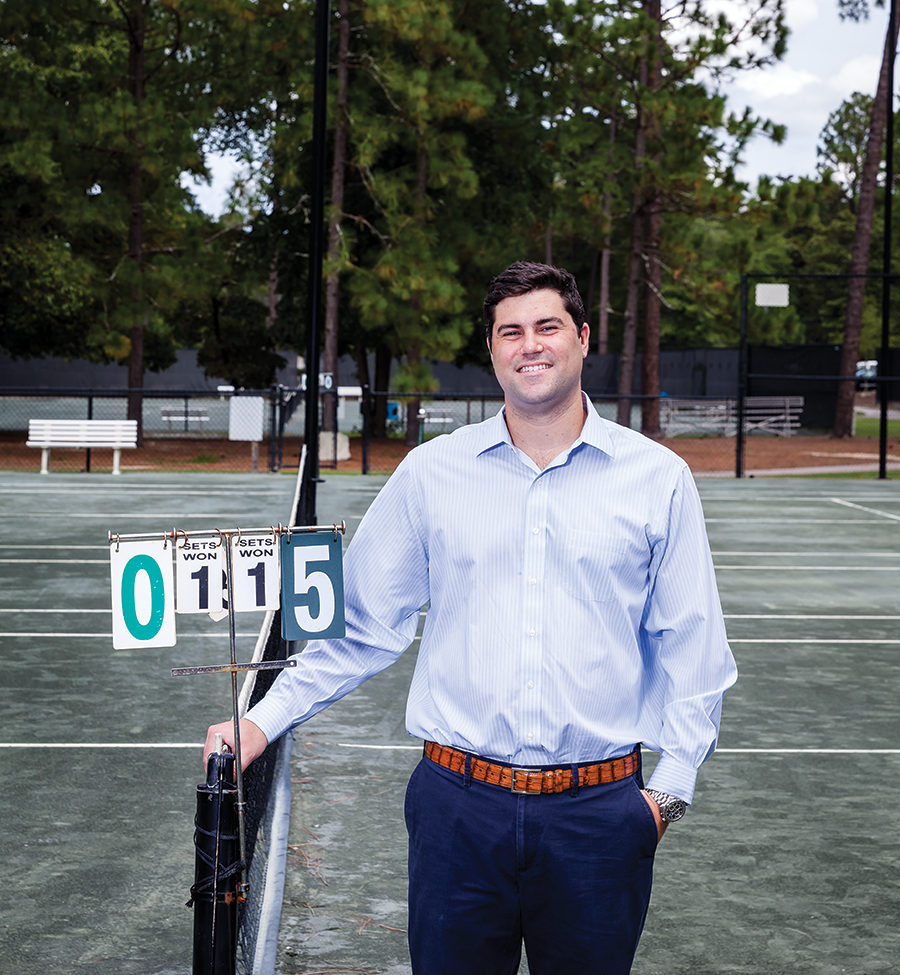
Marc Subin took an educational tour of the Southeast and a professional one of Manhattan, before finding the perfect match in his past. The son of recently retired orthopedic hand surgeon, Dr. Glen Subin, and dermatologist Dr. Diane Subin, Marc grew up in Pinehurst playing competitive tennis with his older brother, Eric, and younger brothers, Bert and Brian.

“I really enjoyed growing up here,” Marc says. “Looking back, this was the perfect place.”

After graduating from The O’Neal School where he played varsity tennis, Marc spent a year at the University of Miami in Florida before transferring and graduating from Clemson University. He followed that with a degree from the Charleston School of Law.

“I went from a class of 99 students in high school to being one of 10,000 in college,” Marc says. “There wasn’t much of a culture shock but Charleston just felt bigger.” New York definitely was.

In the fall of 2013, Marc passed the New York State Bar and joined his older brother at their uncle’s law firm, Subin Associates, LLP, a group of personal injury lawyers who have been in the business more than 50 years.

“I wanted to go to New York City and experience what my life would be like there in my 20s,” Subin says.

Working for a personal injury litigation firm in a Broadway office was far different from sitting in a classroom off Airport Road. “My days were very busy with no downtime,” Marc says. “I was doing different things but spending my time in court all day. Up there, 9-to-5 doesn’t exist. There is so much going on all of the time and such a high volume of cases coming in.”

After being in Manhattan for three years, Marc was ready for a change and moved back to Pinehurst in 2016.

“I had grown accustomed to being from a small town and started to miss North Carolina and the parts of home that suited me. I’m spending more time outside, living a slower pace of life,” he says. “I will never complain about driving again.” In February, Marc took and passed the North Carolina State Bar and has joined the firm of West & Smith LLP.

“I envision myself being here for the long term,” he says. “The experience I had in New York will help me here. This is a great area to practice law, and I am excited for the future.”

Simple Life

Old No. 7

Two aging road warriors strike out in search of the American past

By Jim Dodson

As summer’s end approached, I hit the road for research on a new book, though I wasn’t sure how far I might get — or where I might end up.

The start of any book project brings with it a humbling sense of vertigo, a feeling that the road ahead will be challenging and possibly full of wrong turns and maddening dead ends. But this particular project held special meaning because it’s a book I’ve been thinking about, in one form or another, for almost 40 years.

It’s a book about a road.

But not just any road — the Great Wagon Road.

You may or may not have heard of it. But if you happen to be a Southerner with deep roots in the region, you may well be here because of it.

The Great Philadelphia Wagon Road, as it was called early on, became the most traveled road in Colonial America. It ran from Philadelphia to Augusta, Georgia, and was the road that opened the American South to exploration and settlement and pushed back the western frontier.

During the 18th and early 19th centuries, the road was the way to a new life for tens of thousands of Scots-Irish, German and English settlers — Amish, Moravians, Quakers and Presbyterians — who landed on our shores seeking a fresh start in a new world. Daniel Boone hunted along the road, and Thomas Jefferson’s daddy named and surveyed it. A young captain named George Washington served as an Indian scout along the GWR and no less than three major wars, the French and Indian, American Revolution and Civil War — four if you care to count the Whiskey Rebellion — were fought along it’s meandering way. Fittingly, the ingenious Conestoga wagon that carried later generations of settlers across the Great Plains to settle the Far West was created by German artisans by the Conestoga River near Lancaster, Pennsylvania.

Both wings of my family came down the GWR in the mid-18th and early 19th centuries respectively. My pretty blond mama’s sprawling German clan (the Kessells), hopped off around Hagerstown, Maryland and settled along the south branch of the Potomac River on the West Virginia side in the early 1800s. Half a century earlier, my daddy’s Scottish and English forebears (the Tates and the Dodsons ) filtered down the road over the Dan River through Walnut Cove before settling in the Hawfields near Mebane, where they formed churches and grist mills and made furniture. A few of them even went on down to Wilmington and the Cape Fear region.

I first heard about the Great Wagon Road four decades ago when a pretty girl named Rebecca Robinson and I stayed out all night on a date and wound up attending the sunrise service at God’s Acre in Old Salem. The Moravians originated the service in 1732 in Saxony. While standing among the ancient gravestones of that famous Moravian — men separated from women, a democracy of death, as has been described — we struck up a conversation with an older gent who turned out to be a professor of history at nearby Salem College. When I happened to mention my family name, he smiled and commented that my forbears, like his, probably  came down the Great Wagon Road about the same time” in the late 1700s.

He explained that the GWR subsumed the remains of the so-called Great Indian Warrior Trading Path used by the Iroquois tribes such as the Cherokee, and other nations, including the Catawba and Tuscarora Indians until the Treaty of Lancaster in 1744 opened the western frontier to European settlement, pushing the native peoples farther into the mountains.

Cities such as Lancaster and York in Pennsylvania; Winchester, Roanoke and Lexington in Virginia; (Winston-)Salem, Salisbury, and Charlotte in North Carolina, and Camden in South Carolina, began either as trading post river fords or market towns that owe their origins directly to the Great Wagon Road.

Thirty-five years after that sunrise service, during the year I served as the Writer in Residence at Hollins University (which happened to lie along the GWR in a vale just north called “Big Lick,” now Roanoke), my fascination with the road was powerfully rekindled. I began moseying along Virginia’s winding and beautiful U.S. Route 11 and found all sorts of surviving references to the Great Wagon Road in various forms — place names of inns, family farms, townships, churches, battlefields and no shortage historical roadside standards.

On my trips home to Maine up Interstate 81, I realized that I was, in fact, traveling the same path my forebears had followed once upon a time in America, on the Great Wagon Road.

By the end of my time at Hollins, I’d resolved to someday drive the Great Wagon Road’s 700 miles in order to investigate how a young nation was born and how my native South grew up along what may be the most historic road in the land.

_

Someday finally arrived when I loaded up my own Great Wagon and set off for Philadelphia just after dawn one morning in late July.

My Great Wagon happens to be a vintage 1996 Buick Roadmaster Estate wagon, an iconic American road car that automotive historians consider the last true production American station wagon built before Detroit switched to making SUVs.

Almost on a lark — or was it the sweet hand of Providence? — I bought it a decade ago from a nice lady in Pinehurst whose widowed papa had recently given up driving and had to “let go of his baby.”

Well-maintained Roadmasters, I soon learned, can fetch a tidy sum and are greatly in demand among collectors of vintage automobiles.

This one turned out to be a gem.

Its odometer had only 59,000 miles on it. The lovely fellow who’d owned it actually kept velvet on the dash. The seats were comfy and roomy, like leather La-Z-Boy recliners. It’s famous Dynaride suspension system made the vehicle glide over the road like a dream, and a 350-horsepower V-8 engine was the same one Chevy put in its Corvettes. The air conditioning system could have cooled a deli meat locker and the killer cassette audio system had the acoustics of a concert hall.

True, there were a few tiny dents and peeling paint in its fake wood grain side panels — but hey, there were in mine, too. We were perfect for each other.

I bought the car an hour after driving it.

Our four kids were amused and maybe a little embarrassed when they laid eyes on my newly acquired land yacht that Christmas.

“It’s so, well . . . big,” said one son with a
wary chuckle.

You should give it a nickname,” suggested another, the family comedian. “How about The Beast?”

I didn’t care for The Beast. The car was nothing if not an iconic work of American automotive art, an aged beauty whose name said it all — Master of the Road.

One ride in it, however, and they all changed their tunes. Three of the four asked to take the car to college. Not on your life, I said, though I did consent to let them drive it whenever they were in residence.

My work colleagues were also amused.

The publisher of this magazine suggested I call her the “Dirty Pearl,” as if my beloved land yacht were an old pirate ship.

That nickname was cute but never seemed quite right to me.

While researching the Roadmaster’s distinguished automotive history — it’s the car that basically helped Buick survive the Great Depression and became the symbol of 1950s suburban America — I discovered a website that listed the Roadmaster Estate wagon among “Top Ten Best Vehicles for the End of the World,” capable of handling “nuclear winter, economic collapse or a zombie takeover.”

My 1996 Roadmaster was No. 7 on the list. The photograph was even identical to my Great Wagon — “The Modern American Power Wagon Exemplar,” noted the editor of Popular Mechanics, in effect the Conestoga Wagon of Vacationing America.

I finally had the perfect nickname.

My Great Wagon, after all, had survived the lives of two large and rambunctious American families, three teen drivers and decades of moving everything from entire households to countless garden shrubs, not to mention made dozens of beach trips and backcountry camping expeditions with a large canoe lashed on her roof. My Great Wagon was nothing if not a proven survivor.

So this summer, after 21 years of life and 159,000 miles, following a tune-up from Clark the mechanic who has faithfully looked after the old gal for years, we set off together up the Great Wagon Road to begin the first leg of our long journey from Market Square in Colonial Philadelphia to Augusta, Georgia.

Old No. 7 handled Philly’s congested tourist traffic like a summer breeze off the Delaware and cruised west on the Lincoln Highway as if she were right off of the showroom floor.

After Philadelphia, where I walked in the footsteps of our founders and boned up on my heroes Jefferson and Franklin, the Old No. 7 led me to an expert on Colonial furniture making and allowed me to dine with a historian of Amish life. Among other things, I dropped by America’s oldest farmer’s market (1745), explored four famous battlefields, hiked in a state park, visited the nation’s first commercial pretzel maker, learned about the birth of the Conestoga wagon and watched the sun rise on Cemetery Hill where Lincoln gave his deeply moving Gettsyburg Address on a November afternoon in 1863. My notebook runneth over.

After five days out, we came home to rest a bit before resuming the next leg of the long road from Winchester to Old Salem later this autumn. The Road’s original travelers sometimes took four or five months to reach their new homes in the Southern Wilderness. Old No. 7 and I hoped to finish our travels in about the same amount of time.

According to her odometer, we covered 179 miles of the Great Wagon Road, which by my reckoning means there are many more miles of great discoveries to come.

Contact Editor Jim Dodson at jim@thepilot.com.

The Cake Lady’s Best

By Jim Dodson     Photograph by Mark Wagoner

Before our second official date two decades ago, my wife-to-be Wendy put me to work boxing up wedding cakes.

Please note that I said “cakes.” For there were more than 100 of them — perfect little wedding cakes meant for two, gorgeously decorated confections created for a Bridezilla who believed all guests deserved their own personal wedding cake.

“She saw it in a magazine and went to all the local bakeries but nobody wanted to take on the job,” Wendy explained with a laugh as we set about carefully boxing up the baby bridal cakes. Once they were packaged, they were ferried into the kitchen by various neighbors in her cul-du-sac in Syracuse, N.Y., who’d graciously offered their refrigerators for storing the miniature works of art.

Following the delivery, she even rewarded me for my assistance with a cake that didn’t make the final cut. It was spectacularly good, some kind of buttery white cake with a raspberry filling. The bride, for the record, was over the moon with the diminutive delicacies.

Over dinner later that night, I asked Wendy how she had developed her cake-making chops. She explained that she’d always been the natural baker in her family of three daughters, but really found her footing when Karen, her middle sister (Wendy is the eldest) needed a wedding cake. Wendy offered to make it, expertly copying an elaborate cake fromMartha Stewart’s 1995 bible on nuptials, Weddings.

The cake apparently was a big hit and word quickly circulated. Within a relatively short time Wendy had developed a cottage industry she called The Cake Lady and saw a steady stream of folks wanting cakes for all occasions showing up on her suburban Syracuse doorstep. By then she had deepened her considerable knowledge of cake-making by taking an advanced course in the craft and by devouring every classic and modern book she could find on the subject of making cakes.

One afternoon not long after my serious courtship of her commenced, I breezed into her kitchen and saw a large wicker basket filled with fresh-popped popcorn sitting on her kitchen counter. I blithely grabbed a handful of it, discovering, to my horror and embarrassment, that I was holding a gooey glob of icing. The cake was actually a groom’s cake, meant for a fellow whose favorite snack food was popcorn.

I was caught literally licking my fingers — the icing was excellent — when my own unflappable girlfriend entered the kitchen, took one look at my boneheaded gaffe, laughed it off and got to work repairing the damage. Soon that basket of “popcorn” was as good as new — and I knew without question this gal was the one for me.

Two years later, she made our own stunning wedding cake crowned by a bouquet of beautiful summer flowers for the rowdy lobster bake and reception we threw under a harvest moon on our forested hilltop in Maine. A crowd of 100 was expected. A crowd at least half again that size showed up.

The cake was gone within minutes after we cut the first piece, which I never even got a taste of (only the remnant cake tops saved in the refrigerator), an indication not only of how beautiful Wendy’s cakes typically are but — far more important in her view — how delicious.

Over the next decade, as the schoolteacher, wife and part-time baker made cakes for every sort of occasion for friends, co-workers and relatives — rarely charging anything save for major wedding cakes — I was often pressed into service as the cake delivery man and general factotum.

There were some memorable near disasters — like the three-pedestal all-butter cream wedding cake some mad bride in love with the fountains of Versailles ordered for the hottest summer day in Maine. As it sat in an unair-conditioned alumni house on the Bowdoin College campus, there was an interminable delay during which the butter cream began to melt and the entire back of the cake ran downhill. I received a remarkably calm telephone call from Wendy asking me to bring several of our children’s wood alphabet blocks, a screwdriver and some shims to the alumni house. By the time I got there, she’d managed to somehow recreate the back of the cake and soon stabilized the pedestals with the aforementioned blocks. Talk about grace under fire — or heat wave, as it were.

Then there was the wedding party where, moments after we delivered the cake, the groom’s auntie slapped the bride’s mother and all hell broke loose — almost taking Wendy’s beautiful cake with it.

After that, Wendy more or less hung up her wedding cake apron and concentrated simply on making outstanding cakes for friends and family. In our household, the joke is that mama’s cake tops — the portion sliced off the top of a baked cake to allow a flatter surface for decorating — are works of art in and of themselves and never fail to disappear to the last crumb.

Requests for her cakes always seem to surge at the holidays and in summer, when friends are going away and need something special for family dinners.

These two summer standouts are my favorites: a spectacular coconut cake and a strawberry-whipped cream cake that never fails to set picky brides aswoon.

Like all gifted bakers, the former Cake Lady is happy to share her favorite recipes — especially since her husband no longer has to worry about delivering them.

Coconut Cake

Icing:

6 cups confectioners’ sugar

6 sticks (1/2 cup each) of unsalted butter

1 tablespoon vanilla

1/4 cup coconut milk

Combine all ingredients in the bowl of an electric mixer and beat on high for 10 minutes.

Cake:

2/3 cups of unsalted butter

2 1/2 cups of sifted cake flour

1 2/3 cups of sugar

1 teaspoon salt

3 1/2 teaspoons of baking powder

1 1/4 cups milk

1/2 cup coconut milk

3 eggs

1 teaspoon vanilla

One large bag of unsweetened, grated coconut

Preheat oven to 350 degrees.

Lightly butter and flour the bottom and sides of two 9-inch cake pans (or use Baker’s Joy spray).

In the bowl of an electric mixer, combine the flour, sugar, salt and baking powder. Mix for 30 seconds.

Add the remaining butter and 1/4 cup milk and coconut milk and start beating. While beating, add another 1/2 cup milk.

Add eggs, the remaining 1/2 cup milk and vanilla. Beat 2 minutes longer. Pour equal amounts into each pan and bake 35 to 40 minutes.

Let pans stand for 5 minutes and then remove cakes to cooling racks.

To Assemble:

Set one layer on a cardboard round. Spread one cup of icing on the top of the first layer and generously sprinkle grated unsweetened coconut on top. Place second layer on top and ice the top and sides with the coconut icing. Sprinkle coconut on top and sides of cake, pressing coconut into sides as you go. Serve!

Whipped Cream Strawberry Cake

Icing:

6 cups confectioners’ sugar

6 sticks (1/2 cup each) of unsalted butter

1 tablespoon vanilla

1/4 cup heavy cream

Combine all ingredients in the bowl of an electric mixer and beat on high for 10 minutes.

Remove 1 1/2 cups of icing and beat in 1/3 cup of strawberry purée (recipe below)

Strawberry purée:

2 cups fresh or frozen strawberries (if using frozen store-bought strawberries, use unsweetened)

1 teaspoon sugar

Combine and purée in the bowl of a food processor.

Cake:

2 cups sifted cake flour

1/2 teaspoon salt

3 teaspoons baking powder

3 egg whites

1 cup (1/2 pint) heavy cream

1 1/2 cups sugar

1/2 cup cold water

1 1/2 teaspoons vanilla extract

Preheat oven to 350 degrees. Lightly butter and flour the bottom and sides of two 8-inch cake pans (or use Baker’s Joy spray).

Sift the flour, salt and baking powder together three times and set aside. Beat the egg whites until stiff but not dry. Whip cream until stiff and fold into eggs. Add sugar gradually and mix well, folding in with a rubber spatula. Add dry ingredients alternately with water in small amounts, beginning and ending with the flour mixture. Blend well. Pour equal amounts into the pans and bake until the center is set, about 30–40 minutes. Let cool in pans for 10 minutes and then remove to cooling racks.

To Assemble:

Spread the strawberry icing in the middle. Top with second layer and cover the entire cake with the vanilla frosting. Add decorative boarders on top and bottom. Fill in top with fresh strawberries. Serve with additional strawberry purée on side.  PS

Kings of the Castle

An architect out to conquer the world blazes a trail through Vineland

By Deborah Salomon     Photographs by John Gessner

North Page Street has a certain aura, a whiff of bygone times — a neighborhood apart from elegant Weymouth a few blocks east. The faded houses sit back aways, sheltered by towering magnolias. Even the ones in disrepair appear family-friendly, with wide porches where kids played on rainy days. Residents once strolled down these streets of an evening. Yards twinkled with fireflies, waiting to be caught in Mason jars.

Children skipped up to Broad Street for ice cream.

Back then, time was marked by passing trains. Now, the early summer haze is shattered by hammers and saws wielded by sweating hard-hatters working for Dean King: architect, developer, builder, entrepreneur, businessman, preservationist. A boyish 40, Dean exudes the enthusiasm of a teenager out to conquer the world.

“I want to build for myself. I want to take risks, flip houses, make money,” he says.

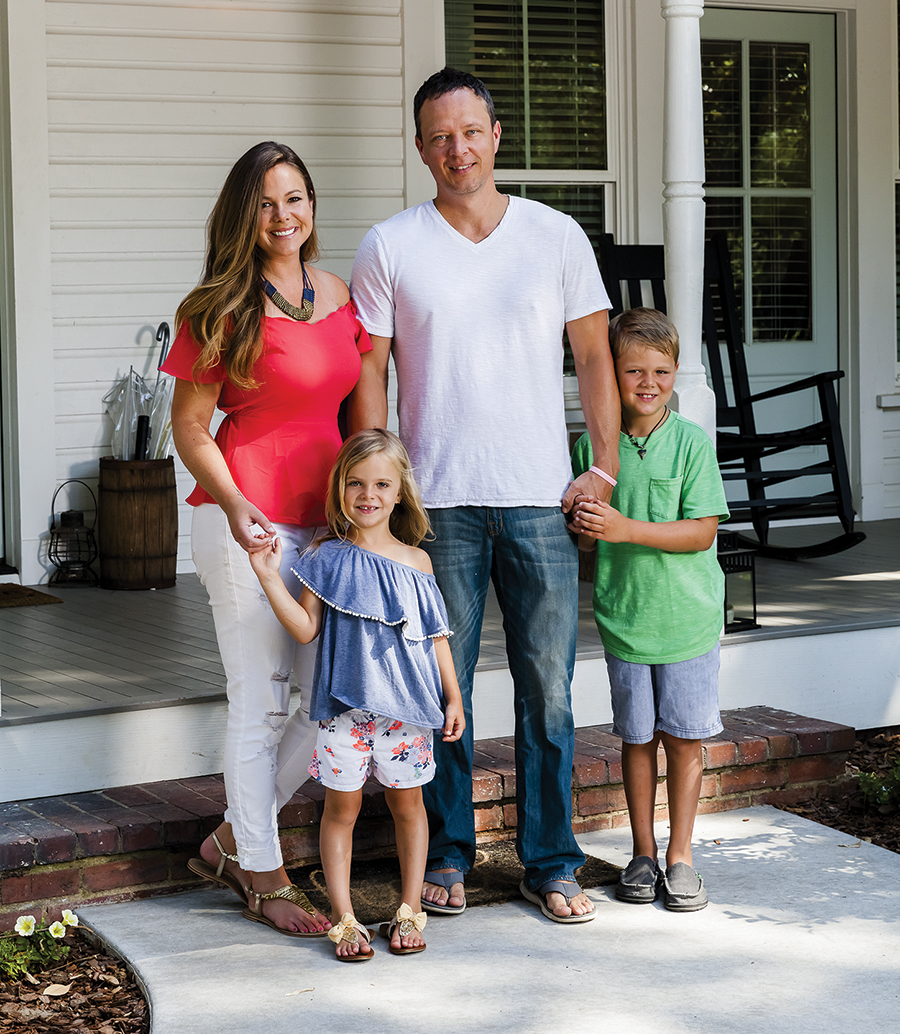
Not only does he walk the walk and talk the talk . . . he lives the life. Dean, his beautiful wife, Tori, and adorable children, Levi and Josie, occupy, for now at least, half of a rambling Southern Victorian guest house — Magnolia Lodge — which he bought, tore down to the studs and built back as a duplex, which he will eventually rent, as he does the other half, probably to military families.

Annie Oakley slept here. So did Al Adams, whose mother operated the guest house with nine units beginning in 1936.

“It was a wonderful house to grow up in,” says Al, who lived there from age 4 to 19. He recalls climbing the magnolia tree to eat scuppernong grapes from the arbor — and getting cornered by a wasp. At mealtime, he rang a bell calling boarders, mostly retired Northern ladies, to the table. After dinner, they would play croquet on a court where the garage now stands.

Much as they love millennial transformation, the Kings will move when Dean finishes renovating the rambling classic a few hundred yards away. Tori’s on board; in 11 years they have moved nine times, saving thousands by taking advantage of the two-year tax deferment.

How so, these urban nomads?

Dean grew up in Rockingham. His talents surfaced early. “I was always artistic, liked to build stuff,” meaning a kids’ hideaway and a two-story tree house constructed with scrap lumber. He parlayed his skills into a degree in architecture, from UNC Charlotte, then lived high in North Carolina’s largest city. By day, he worked for a company that designed hotels. By night, “I enjoyed myself like a young man living downtown and making good money should.”

Not good enough. “I didn’t want to sit in an office — and hotels didn’t excite me.”

A friend who started Pinnacle Development Design Build in Southern Pines suggested he move. Dean knew the area, realized the potential. Tori, a high school teacher and photographer from Ohio, supported the idea.

They relocated in 2005. With partners and associates, Dean designed several projects, including The Pinnacle Lofts on West Pennsylvania Avenue and Broad Street Lofts, both examples of the urban redevelopment trend which entices people to live downtown, or nearby, in new units or repurposed buildings, with services within walking (or biking) distance. The concept took hold in the ’90s as decaying factories in Manhattan’s Soho, Tribeca and Meat Packing District became fashionable condos. Abandoned tobacco warehouse and textile mill residential developments in Durham and elsewhere followed suit.

Dean was convinced: “Urban density is the way to go.” A younger demographic was discovering downtown Southern Pines, one that could afford west of the tracks (formerly Vineland) but not the historic district, where “cottages” designed in the Roaring Twenties by Aymar Embury have been rebirthed as mini-mansions.

Building Pinnacle Lofts was straightforward new construction, but buying an entire block of North Page Street (with a partner) in 2014 seemed risky, since 100-year-old structures like the Magnolia are usually money pits.

“I was scared to death,” Dean admits. Removing asbestos alone cost $25,000.

The house had stood vacant for half a dozen years. Dean describes the interior as “gross,” which actually proved inspiring. Since nothing but the bones and chimneys were salvageable, he could follow his imagination.

Because “imaginative” best describes the interior.

But first, the porch — 48 feet long, with a slanted ceiling and original posts and floorboards that Dean labored to preserve. Before social media, people connected on porches. Here, Tori and Dean sit for hours on rockers and a church pew they salvaged from a fire pit. “I like to think how many people have sat on this front porch in the last 100 years,” Tori says. The porch is especially useful, since the house has no conventional living room. Instead, just beyond the front door, what Adams remembers as Magnolia Lodge’s lobby became the foyer and family dining area with a sloping ceiling, built-in shelves under the stairs and a bay of paned windows. Tori’s office with separate entrance, formerly Al’s bedroom, is off to the right.

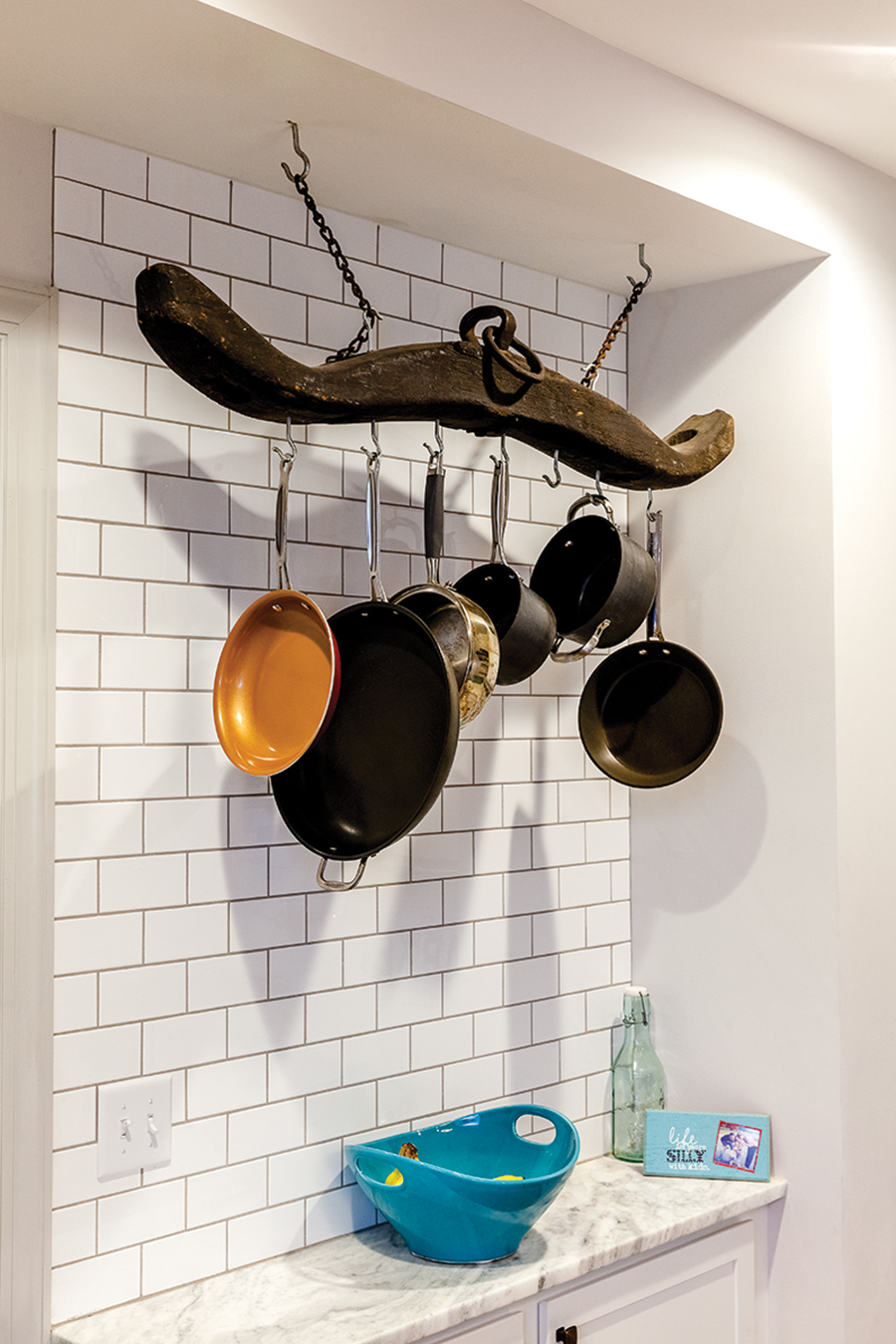
Front, center and open stands the kitchen — something that would have been hidden out back in the early 1900s when the house was new. A massive butcher block from White’s Grocery in Rockingham, a business run by Dean’s family, represents the past, along with simple cabinetry, exposed shelving, an oxen-yoke pot rack, ceramic tile backsplash, a bank of brightly painted school lockers, original doors and windows with wavy glass. Tori has brightened snow-white walls, moldings and columns with faux antique signs and vivid pottery. The original floorboards, some approaching 20 feet, must have been milled from tall local heart pine. Exposed brick chimneys, board-and-batten walls, panel doors and moldings provide texture.

Off the kitchen is a narrow sitting room — more TV den than parlor — which suits the young family. Bath and powder rooms, none quite the spa variety, were wedged into the tight layout.

“Dean is good at maximizing space,” Tori says.

Wall décor is limited to poster-sized art photos of the children.

A narrow flight of stairs with original banister and newel posts leads to the bedrooms — adequate but not huge. “People don’t spend time in the master bedroom anymore,” Dean reasons. But he did provide a dressing room and closets, often tiny in even spacious Southern Victorians.

At the top of the stairs a sunroom with original stained glass panels and a low table and chairs is where Levi and Josie draw and play games. “My mother used to grow flowers there,” Al says as he points to where the bedrooms had been, even remembering names of the boarders.

The house has a third floor with more bedrooms, but given its condition, Dean “left it for the ghosts.”

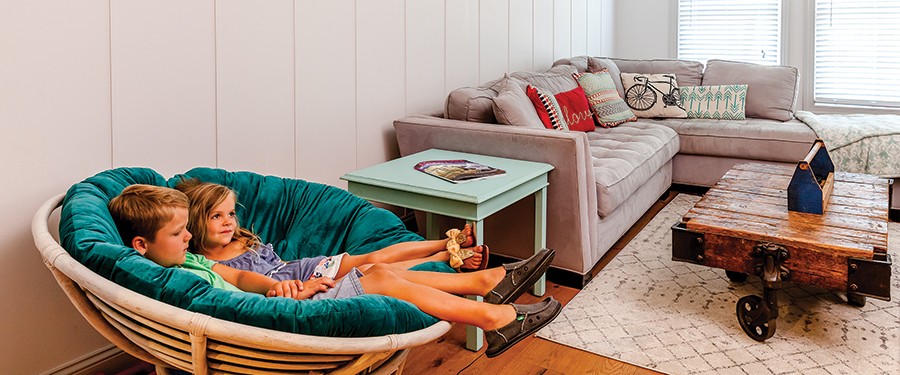
Except for a few old pieces, the furnishings throughout pit Ikea against Pottery Barn — sleek, tasteful, utilitarian, perfectly suited to a young family on the move. Tori boldly mixes formal upholstered dining room chairs with a rough picnic table and benches. An old railroad trolley serves as a coffee table in front of a modern sectional sofa with a side table painted pastel turquoise. Woven rugs in geometric patterns complete the casual look.

An attached double garage is, Dean admits, a necessary anachronism. He will tuck one around back, out of sight, in their next address, just down the street.

“But I’m not sure we’ll ever have a forever home,” Dean admits. Until then, “We’re living in a brand new 100-year old house . . . with good vibes.”  PS

Love Your Skin

And be careful what you put on it

By Karen Frye

Nature’s Own recently enjoyed a milestone birthday. When our health food shop turned
30 this past April, nothing in the store was mainstream. Not even soy milk.

Over the past 10 years, information about eating healthy and reading labels has reached more and more people. Folks have discovered that the foods they eat affect how they feel and that many conditions may even disappear by a change in diet. Grocery stores have expanded their inventory to meet the growing demand for fresh and organic foods. But while we’re paying more attention to what we put in our bodies, not as much notice is given to what we put on our bodies. Our skin is our largest organ. Would you really consider slathering toxic lotion on your liver?

The Enviromental Workers Group is a nonprofit, nonpartisan organization working to educate consumers about the products we buy: if they’re safe; if they’re environmentally friendly; and more. Their website is a reliable source of research and information. When it comes to body care, EWG has rated many of the top brands for safety.

The body care industry has few guidelines, and often there are inert ingredients in products not listed on the label. Some can be harmful, especially with long-term use. Parabens, phythalates, formaldehydes, triclosan and synthetic colors are prevalent in nearly all creams, lotion, lipstick, makeup, shampoo, nail polish, etc. They are typically filled with petroleum by-products as well.  There is a cascade of symptoms that can stem from the toxins you use on your skin daily, including hormone imbalances and premature aging of the skin.

Even sunscreen can be problematic. Most agree that sunscreen use is important to prevent sunburn and skin cancer. We think we are doing the right thing by daily applying sunscreen to protect ourselves from sun damage, and dutifully apply it to our children as well. But some chemicals pose risks of their own. Shop for a sunscreen that is made without oxybenzone and petroleum by-products.

The supplement astaxanthin — the pigment responsible for the reddish color in salmon and trout — is particularly useful in skin and eye health due to its powerful ability to absorb ultraviolent rays, especially UVB rays. It acts like an internal sunscreen, reaching all the layers of the skin. It also slows down the aging of the skin, reducing wrinkles and fine lines. The antioxidant activity of astaxanthin is 6,000 times greater than vitamin C.

Aloe is what we think of for sunburn relief, but my favorite remedy is calendula (a resin from calendula flowers). Bodyceuticals create an excellent calendula, aloe, coconut and kukui nut oil and spray for skin discomfort like sunburn and to relieve itching and redness, diaper rash and windburn. This nourishing oil will help to maintain your tan and minimize peeling. After your long summer days working or playing in the sun, be careful what you put on the beautiful skin you’re in.  PS

Karen Frye is the owner and founder of Natures Own and teaches yoga at the Bikram Yoga Studio.

A Reunion of Memories

The beach brings them all back

By Tom Bryant

Over the last 10 years I’ve become somewhat of a specialist in setting up our little Airstream in preparation to camp. I don’t care how many times I’ve done it, I still have to refer to my mental checklist or I could leave out something important, and invariably, it will come back to bite me. It’s fun, though, and sometimes I remind myself of the dad in the holiday classic A Christmas Story, when he was timing himself while changing a tire on the old family Dodge. My record, from start to finish, including connecting to electric and water and lowering the stabilization jacks, is 20 minutes. I’ve yet to break that record, but every new campground offers me a new challenge.

On our last early summer trip to Huntington Beach State Park in South Carolina, I thought I’d broken the record, but Linda, my bride, reminded me that the awning wasn’t out, and in the summer, that’s part of the contest. So the 20-minute record still stands. We were camped on a site right across from a huge grassy field surrounded by live oaks. The sites along the edge of the field were filled to the brim with four large tow-behind campers surrounded by a bunch of kids who appeared to be from 6 to 12 years of age, all supervised by young parents. After I put the awning out, I grabbed a couple of folding chairs from the Cruiser and a cold drink from the fridge and kicked back to watch the doings right across the campground road.

They were having fun. The kids were running from here to yonder, riding bikes, pulling wagons and, in general, having a great time. I called to Linda, who was still inside sorting stuff that we had let ride on the bed coming down from Southern Pines. “Hey, Babe, come on out here and watch this. See what it reminds you of.”

Linda made herself some lemonade and joined me under the awning. “Wow, look at all those kids,” she exclaimed.

“I tried to count them, but the way they’re moving, it’s like trying to count new puppies in a box. What does it remind you of?”

“When we were young and used to rendezvous at the beach with your family.”

I agreed, and we watched for a while as the adults restored some order, and they all packed up and headed to the beach. They had a little convoy of youngsters and wagons packed with beach umbrellas, games, snacks and a couple of the youngest children.

“There was a bunch of us, but I don’t believe we ever had as many as those folks across the road.” We talked and reminisced about the vacations when we would meet at the beach with my mother and dad, brother and sisters and all our children. We did that for years until the kids got married and started having their own children. Eventually, the numbers became unmanageable, even with two houses. Nowadays when we get together we do so in a more sedate fashion.

“I miss our family beach trips,” Linda said. “I wish we could do it again, but I know it’s impossible. Everybody’s spread out all over the country.”

“Yeah, I even miss the big family reunions we used to have on the farm. Do you remember the year we had the last one?”

“No, it was so long ago. It’s getting late. I guess I’d better start supper. How about tuna salad?”

“That’s good for me. Can I help?”

Linda replied that she had it under control and went into the little Airstream. I sat and watched as sea gulls soared at treetop level out toward the ocean. I tried to remember the last big family get-together on the old plantation and couldn’t. When my grandparents were alive, we had them every five years.

After our last reunion, I put together a few observations of the extended family gatherings, and Mom used them on the back of a brochure she had printed with the addresses of relatives. Those descriptions from long ago help me remember those wonderful times:

— Cars with license plates from all over the country parked in the front yard.

— Everyone greeting one another and trying to talk at once.

— Older folks trying to figure out whose son or daughter you are.

— Kids running through the big house, slamming the front screen door.

— Brothers, sisters and cousins remembering past reunions when Uncle Jim and Uncle Fred played tricks on each other.

— New babies showing up every year. Older faces missing.

—The old house reverberating with laughter from family members who have been separated too long.

— Kids swinging each other in the long rope swing that’s tied to the ancient pecan tree.

— Different members of the family setting up lawn chairs under the huge oaks trying to catch the noon breeze, while a few diehards suffer the heat on the long rain porch.

— Ladies in the kitchen preparing food for the buffet tables in the dining room, and people everywhere catching up on family news.

— And at last, dinner, after a blessing thanking the Almighty for everything that’s good.

— Relatives trying to eat a little of everything from Uncle Tom’s barbecue to Aunt Sylvia’s pound cake. Covered dishes everywhere with food galore.

— Babies and old folks napping in the shade of the giant oak trees after a memorable old-fashioned dinner and more talking about family and friends and family history.

— And as the day slowly wanes, family members gather children and belongings, and after hugging and kissing everybody, climb into their cars and head back home. 

— Finally, the house grows quiet again, and it seems as if the ghosts of reunions past walk the old halls smiling.

A strong breeze came off the ocean and I could smell rain. Cumulus clouds inland began to grow darker, and faraway grumbles of thunder could be heard. I began to batten down chairs and tables in anticipation of a summer storm. Down the little camp road, I spotted the folks from across the way coming back from the beach. They were laughing and shouting to one another and as happy as only a young energetic bunch can be.

It was catching. I smiled as I watched the adults herd the children to where they needed to go, then take a much needed breather in chairs pulled into a circle around a fire ring. It was a pleasure watching them have fun.

Good folks, I thought. They’ve got a lot of living to do.  I wish them well.  PS

Tom Bryant, a Southern Pines resident, is a lifelong outdoorsman and PineStraw’s Sporting Life columnist.