
SPORTING LIFE
Gearing Up
September, a personal new year
By Tom Bryant
You could feel it coming in late August, when the shadows grew longer and the dogs were not digging in the shrubbery, trying to find some cool. And sometimes early in the evening, a soft breeze would settle in for a spell, making everything a little cooler. September was about here, and my new year was about to start.
Most folks I know celebrate their new year the first of January. A new start, in with the new, out with old. Good for them. I used to be like that, but the older I got and the more time I spent in the great outdoors, September became my renewable time. Mornings were brisker. The warm, misty grayness was gone from the atmosphere, replaced by a little crispness in the air and a promise of things to come. It was a time to get out surf fishing gear, pull out the shotguns and rifles, and make sure everything was in order for the busy, exciting times ahead.
Late August was kinda like the first days of December. The real fun time was ahead, but planning all the fun things was as important as celebrating the actual event. Dove season was the kickoff, usually beginning the first Saturday before Labor Day. Good time things got started and didn’t slow down until the end of January, when duck season expired.
Even going back to school in September had a few redeeming values. The new jeans and crisp shirts and even sometimes a brand new pair of leather shoes eased the pain of school regimental requirements. You got to see old friends you hadn’t seen since June and make friends with the newcomers, sometimes even a pretty girl or two. Football practice was cranking up; a sense of excitement prevailed those first few early days of September school.
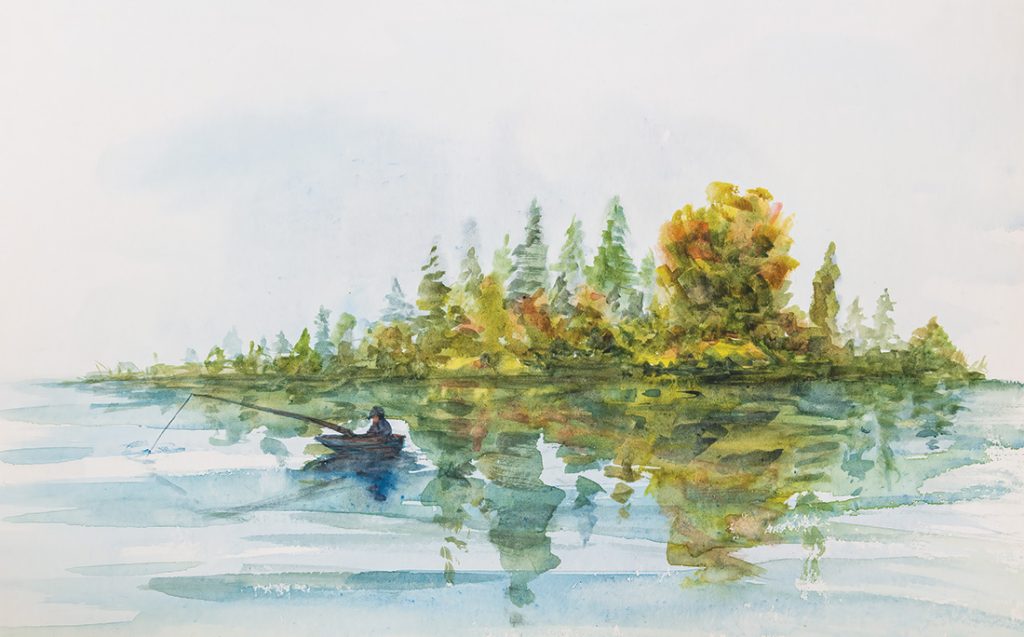
Before I had a summer job and the beginning of responsibilities, probably about the ripe old age of 13, I’d spend the last couple of weeks in August down in the Low Country of South Carolina on my granddad’s farm. Now Granddad was a stickler for work when the time was ripe for it, but he was also just as enthusiastic for a good time when the work was done. His idea of a good time was fishing on the Little Pee Dee River. And when he went fishing, he went fishing. None of this afternoon, or just a day, of the sport. He would go for a week or 10 days. I was fortunate at a young age to go with him on these long fishing forays.
Granddad had a fish camp on the river, nothing fancy, a one room shack built with rough boards and a salvaged tin roof, a makeshift bed on one side of the little space and a counter on the other. There was an old aluminum sink that drained into the side yard. The counter had open shelves where the cast iron skillets were stored. Put it all together and you had a kitchen. Shelves were built on the back wall to store gear, and there was one screened-in window over the bed. An outdoor privy was about 40 yards behind the compact camp. A watchful eye for snakes was required if you had to venture to the facility in the dark.
I never knew when Granddad would pull the plug on work. Late August and early September were the money months. All the spring and summer plantings held forth for harvest, predicting a good or bad year, a time of celebrating, or a time to batten down the hatches and survive to another planting season. Even though modern farming has more up-to-date information and science to help forecast a successful crop, it’s still a gamble. I reckon most folks who make their living successfully from the fields are good poker players.
My last late summer and early fall weeks spent on the farm came during a breathing space for farmers. A record tobacco crop promised happy times along with a good crop of corn, soybeans and milo.
Granddad was a smiling man when we loaded the pickup for our trek to the river. We’d get to the camp a little before dark, and he would check out the little cabin before we carried all our gear inside. “Let me go in first, son. After being away from here for a while, I’ve found a snake or two lying about in the shack. They like to get out of the heat in the middle of the day.”
I was perfectly willing to let him go right ahead. The Little Pee Dee grew some mighty big cottonmouths.
After we unloaded all the gear, it was time for supper. Granddad was a stickler for good eats, and eggs usually played a big part in his menus. He had a small two-burner Primus gas stove that had almost a permanent home in the pickup. It was his favorite tool for cooking and on any outing that required his country culinary art, it was right there. We carried mostly fixin’s: eggs, bacon, ham, beans, grits, bread, homemade butter, a can of Crisco and coffee. Sometimes Grandma would bake us a pound cake to tote along for dessert. As for the rest of our meals, we lived off the land, and that meant fish, mostly fried.
“The menu tonight, son, is ham and eggs and grits and toast and a little red-eye gravy. What do you think?”
I’ve had the opportunity in my lifetime to eat at some of the finest restaurants all across this country, and I have never found one to beat those simple meals cooked on the banks of that blackwater river.
Cooking aside, the next day we got down to business and some serious fishing. That summer of my 13th year went by too fast, and it was the last I would spend fishing with my granddad.
In those early days of my outdoor learning, I didn’t think much about time passing. It just seemed I was always in a hurry, wishing for one season or another. In the fall, dove shooting and surf fishing. Winter ushered in duck and deer hunting. In spring, there was camping and pond and river fishing. Summer opened a plethora of outdoor fun and adventures, mostly camping and river fishing. As a youngster, all those good times rolled around pretty fast.
Now in fall, winter, spring and summer, when I really think about the seasons and my time of life, every month is a blessing and the dawn of good times ahead.