


Bookshelf

BOOKSHELF

September Books

FICTION

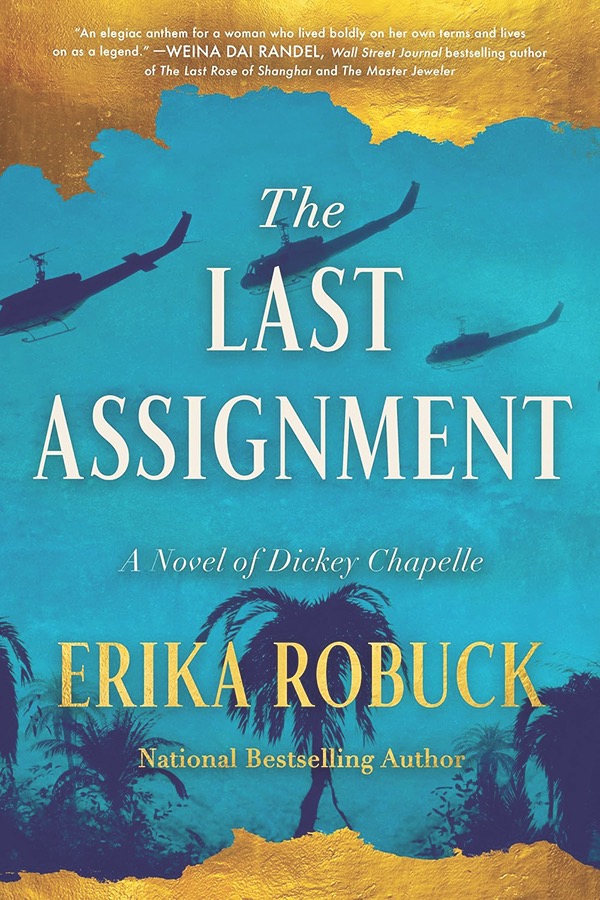
The Last Assignment, by Erika Robuck

It’s the fall of 1956 and award-winning but often-maligned combat photojournalist Georgette “Dickey” Chapelle works for the International Rescue Committee — started by Albert Einstein during the Second World War — to bring the plight of the world’s war refugees to the attention of the American people. Still grieving the death of her mother, just two years after the death of her father, and in the midst of a prolonged and painful separation from her philandering husband, Dickey identifies deeply with displaced people — particularly women, children and orphans. After a refugee rescue goes wrong, Dickey finds herself imprisoned in a Soviet camp, and it’s there that a flame is lit deep inside her to show the world what war really means. Her journey places Dickey in the most perilous of dangers where she realizes that, in trying to galvanize support to save oppressed peoples, she is saving herself.

Saltcrop, by Yume Kitasei

In Earth’s not too distant future, seas consume coastal cities, highways disintegrate underwater, and mutant fish lurk in pirate-controlled depths. Skipper, a skilled sailor and the youngest of three sisters, earns money skimming and reselling plastic from the ocean to care for her ailing grandmother. But then her eldest sister, Nora, who left home a decade ago in pursuit of a cure for the world’s failing crops, goes missing. When Skipper and her other sister, Carmen, receive a cryptic plea for help, they must put aside their differences and set out across the sea to find, and save, Nora. As they voyage through a dying world both beautiful and strange, encountering other travelers along the way, they learn more about their sister’s work and the corporations that want what she has discovered. The farther they go, the more uncertain their mission becomes: What dangerous attention did Nora attract, and how well do they really know their sister — or each other?

NONFICTION

Somebody Is Walking on Your Grave: My Cemetery Journeys, by Mariana Enriquez

Fascinated by the haunting beauty of cemeteries since she was a teenager, Enriquez visits them frequently on her travels around the world. When the body of a friend’s mother who was “disappeared” during Argentina’s military dictatorship is found in a common grave, Enriquez begins to examine the complex meanings of cemeteries and where our bodies come to rest. She journeys across North and South America, Europe and Australia, visiting Paris’ catacombs, Prague’s Old Jewish Cemetery, New Orleans’ above-ground mausoleums and the opulent Recoleta in her hometown of Buenos Aires. Enriquez investigates each cemetery’s history and architecture, its saints and ghosts, its caretakers and visitors, and, of course, its dead. Fascinating and spooky, weaving personal stories with reportage, interviews, myths, hauntology, personal photographs, and more, Somebody Is Walking on Your Grave reveals as much about Enriquez’s own life and unique sensibility as the graveyards she tours.

The Psychology of Money: Timeless Lessons on Wealth, Greed and Happiness, by Morgan Housel

Doing well with money isn’t necessarily about what you know. It’s about how you behave. And behavior is hard to teach, even to really smart people. Investing, personal finance and business decisions are typically taught as a math-based field, where data and formulas tell us exactly what to do. But in the real world people don’t make financial decisions on a spreadsheet. They make them at the dinner table, or in a meeting room, where personal history, your own unique view of the world, ego, pride, marketing and odd incentives are scrambled together. In The Psychology of Money, Housel shares 19 short stories exploring the strange ways people think about money and teaches you how to make better sense of one of life’s most important topics.

CHILDREN'S BOOKS

Fox and the Mystery Letter, by Alex G. Griffiths

Fox has a mystery to solve — and a friendship to fix! In the dense forest, in a lonely cottage, there lives Fox. Fox is perfectly happy all by himself until one day, a letter arrives: “Dear Fox: I know how much you enjoy puzzles. I bet you can’t resist this one . . . Head to the forest path to begin your journey. From an old friend.” Fox doesn’t need any mysterious puzzles or adventures . . . still, it can’t hurt to look at the first clue. Of course, one clue leads to the next. Fox follows arrows in the mud; notes taped to trees; swirling smoke signals; a map from a bottle; and gifts from fellow animals — on the trail of a friendship that once was. (Ages 3-5.)

A Spoonful of the Sea, by Hyewon Yum

On her birthday, a girl is presented with a bowl of miyeokguk — seaweed soup —  instead of the cake she wants. As she stirs her soup, her mother tells her how mothers eat it after giving birth and how it is served on birthdays to honor them; about haenyeo — women who dive into the ocean’s depths to harvest shellfish and seaweed; and how, many mothers ago, a pregnant haenyeo saw a whale eating seaweed after giving birth and tried it after having her own baby — creating a tradition that would continue for generations of daughters to come. In her picture book Yum has crafted a luminous and heartfelt celebration of motherhood, heritage, and the deep-rooted connection between women and nature. (Ages 4-8.)
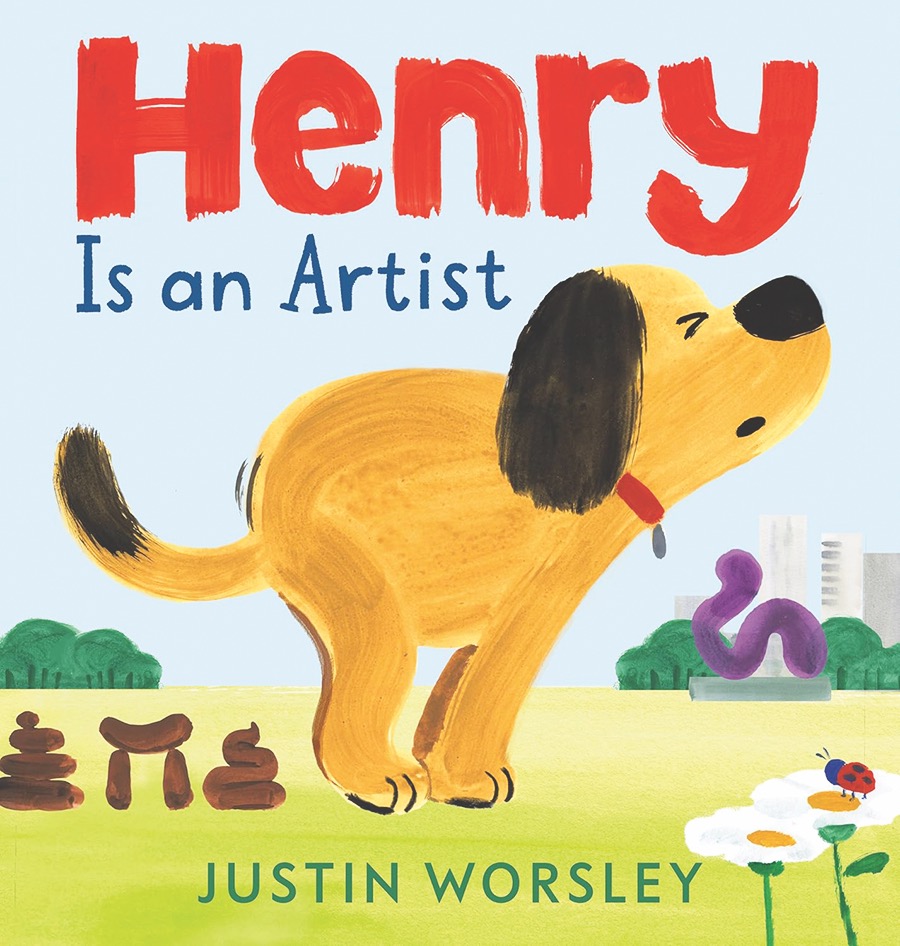
Henry Is an Artist, by Justin Worsley

Henry is a dedicated artist, a master sculptor, and . . . a dog. Each day on his walks to the park, he leaves his new “art” for people to admire. But his sculptures keep getting tossed in the garbage without even being noticed! That is until, one day, when someone quite unexpectedly falls in love with his work and, at last, Henry has his moment to shine. This truly unique picture book about creativity, perseverance, and, well, poop, is a hilarious ode to undiscovered artists everywhere. (Ages 4-8.) 

Almanac September 2025

ALMANAC

September

By Ashley Walshe

September is the letter you don’t see coming. The one you will memorize. The thorn and the balm for your aching heart.

Dear one, summer writes in florid longhand. This won’t be easy. I love you, and I must go.

Your head spins. You can smell her on the pages, in the air, on your skin — the spicy-sweet amalgam of pepperbush, honeycomb and night-blooming jasmine. You steady yourself and keep reading.

Her tone is as soft as lamb’s ear, gentle as butterfly, warm as field mouse. Still, your heart feels like an orchard floor, each word a plummeting apple. Not just the fruit wears the bruise.

You can never lose me, she writes. Close your eyes and feel me now.

Sunlight caresses your face, chest and shoulders. At once, you’re watching a movie reel of summer, recalling the riot of milkweed, the tangles of wild bramble, the deafening hum of cicadas.

Picnics and hammocks. Daydreams and dragonflies. Puffballs and palmfuls of berries. It’s all right here.

When you open your eyes, you notice a lightness in your chest — a shift.

Yes, a yellow leaf is falling. But, look. Wild muscadine climbs toward the dwindling sun, singing silent vows in golden light.

You can chase me if you wish, she writes, her script now hurried. Or, you can be as fruit on vine: purple yet unbruised, ripe with sweetness and steadfast as the seeds you hold within you.

Bird Candy

If you think our flowering dogwoods put on a show in early spring — striking white (or pink) bracts popping against the still-leafless woods — just wait until month’s end, when its ripe berries bring in waves of avian passersby.

Of course, there are the usual suspects: mockingbirds and jays; woodpeckers and warblers; cardinals, catbirds, thrashers and thrushes. But if you’re lucky, those clusters of brilliant red berries could conjure migratory wonders such as the scarlet tanager, the rose-breasted grosbeak or even a rowdy troupe of cedar waxwings to your own front yard.

According to one online database (wildfoods4wildlife.com), the flowering dogwood berry ranks No. 29 on the “Top 75” list of wildlife-preferred berries and fruits. While blackberries top the list, flowering dogwood ranks above persimmon, plum and black cherry (note: ranks were determined by the number of species that eat said fruit, not by its palatability). If curated by tastiness — or mockingbird — sun-ripened figs would have surely made the cut.

Lucky Charms

On Sept. 19, three days before the Autumnal Equinox, look to the pre-dawn sky to catch a thin crescent moon hovering ever close to brilliant Venus. Although a lunar occultation of the Morning Star will be visible from Alaska and parts of Canada (that’s when the moon passes directly in front of the planet), we’ll witness a conjunction more akin to charms dangling from an invisible chain.

Character Study

CHARACTER STUDY

Oh, I Can Make That!

Andrea Jones tailors the Pines

By Jenna Biter

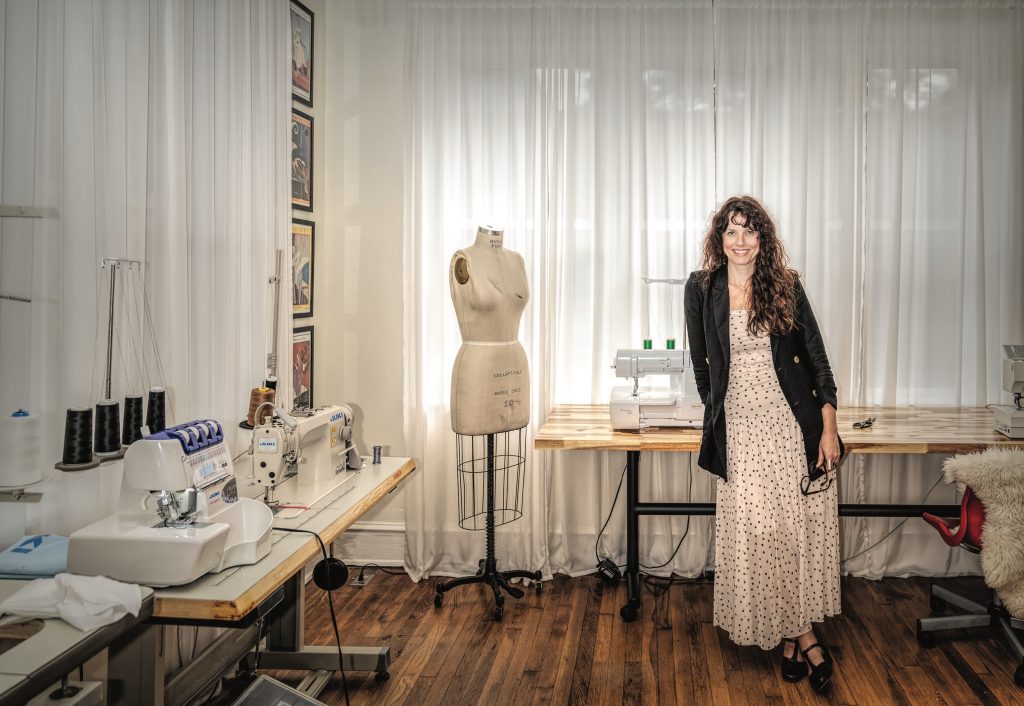
Brass picture lights illuminate a wall of black and white photographs. One shows a vintage Courier sewing machine. Another shows the workspace of a white-haired tailor in Modena, Italy. He’s mid-stitch with a garment beneath his hands.

Andrea Jones’ father lived in Modena for a year or two, and he captured the scene at his daughter’s request. She couldn’t pass up the opportunity to have an Italian craftsman inspiring her from the wall of her tailoring shop in Southern Pines.

Jones opened Andrea Marie Tailoring last July. Within the month, she’d already served six brides, and filled and refilled an industrial clothing rack with incoming and outgoing alterations. A year later, she’s even busier.

“I need to wipe this down because I had a bride in here last night,” Jones says. The alterations platform glitters like a diamond. “She had sparkles.”

She smiles at the beautiful mess and resolves to sweep it up later. Her auburn curls swing out as she turns on a dime, walks past the Italian tailor and makes an immediate right between the check-in counter and a bench upholstered in denim.

“It’s still a work in progress,” Jones says, surveying her space. Her buoyant tone suggests she’s more excited about what’s to come than hung up on what hasn’t.

Thousands of clients burdened by pants too long or too short, a bridesmaid’s dress in need of “some work” or a thrifted suit that seemed like a good idea at the time have made a beeline for the back left corner of Belvedere Plaza. Oversize, golden letters spell “TAILOR” above black double doors. Welcome to Andrea Marie Tailoring.

The space was originally part of the historic Belvedere Hotel in Southern Pines and more recently housed a tattoo parlor. Sewing machines and spools of thread have replaced the tattoo guns and permanent ink. Though different, the hum of machinery drones on.

A typical week might include sewing on rank for promoted soldiers, mending holes in well-loved denim and nipping in a bridal bodice.

“My two loves right now are suiting and bridal,” Jones says, trying the combination on for size. “I like the juxtaposition of those two different worlds.”

After living in the Sandhills for seven years, Jones decided to bring her more than two decades of professional tailoring experience to her very own shop. The decision was a lifetime in the making.

“To be honest, I just couldn’t afford to go out and buy new clothing,” Jones says, remembering her humble beginnings. Her mother, Rosaline, taught her how to make the dresses she couldn’t afford to buy. With a needle in hand and knowledge in head, she threaded her way through school, constructing her own homecoming and prom dresses. She didn’t need a fat wallet to purchase the latest fashions by Gucci or Prada; all she needed was lookalike acid-green lace, a sewing machine and the muscle memory in her hands.

“It feels like a superpower,” Jones says with a laugh. “Oh, I can make that!” She slices her finger through the air like Fairy Godmother conjuring Cinderella’s glittering gown out of sooty rags. In a world where so much is done by swiping and typing, there is something almost magical about the physical work of the hands.

Jones nurtured her superpower while studying at Brigham Young University, where she spent off-hours working in the school’s tailoring department.

“I knew I had some skills, so I applied for that, got the job, and they taught me everything,” she says.

“Everything” was a lot to learn.

“We’re talking hundreds of suits coming in at all times,” Jones says.

She altered wedding dresses for brides, mended uniforms for the university and even fielded the occasional head-scratcher. “Some guy came in one day and asked, ‘Can you put a zipper in my turtleneck?’”

The pace was high, and Jones was an achiever. She worked her way into management and eventually supervised students just like herself. After marrying and having a baby, she bid goodbye to the department, and the young family bounced around the country as military families do.

“I’ve worked with whoever I could, whenever I could,” she says.

Jones worked long hours at dry cleaners, created custom bridal gowns, altered vintage clothing for herself, designed dresses for manufacture, built a community with other home sewists, and started social media channels to share her know-how. She even sells her own home-sewing patterns online through her company, Mark Patterns. If it involves a needle and thread, fabric or clothing, Jones has probably tried her hand, or she’ll be getting to it soon.

Omnivorous Reader

OMNIVOROUS READER

Horrors at Sea

The sordid tale of the Zorg

By Stephen E. Smith

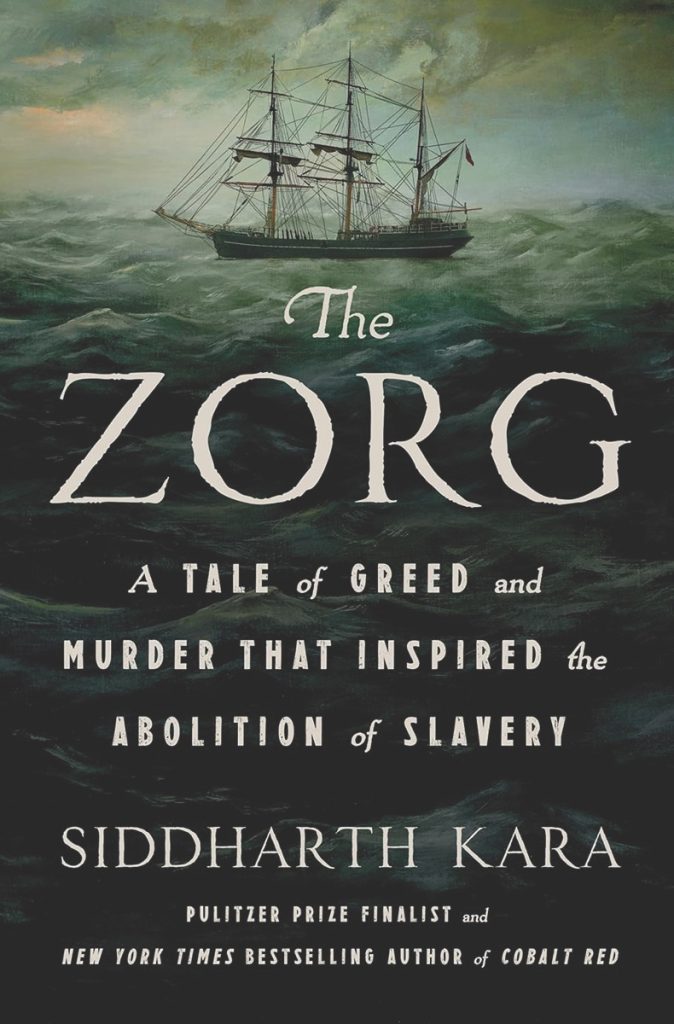
A few chapters into Siddharth Kara’s The Zorg: A Tale of Greed and Murder That Inspired the Abolition of Slavery, you might consider putting the book aside. After all, we live in a world fraught with grievance. Why burden ourselves with crimes committed 245 years ago?

The answer is obvious: Ancient injustices are the source of contemporary injustices. Cruelty begets cruelty. So you’ll likely continue reading The Zorg, despite the graphic inhumanity it depicts.

Kara is an author and activist who studies modern slavery. He has written several books on slavery and child labor, including the New York Times bestseller and Pulitzer Prize finalist, Cobalt Red, and he has much to tell us in his thoroughly researched and skillfully crafted narrative of the Zorg massacre, which serves as a disturbing yet obligatory lesson for contemporary audiences. 

In late 1780, the Zorg, a Dutch ship, set sail for Africa’s Gold Coast to take on a cargo of Africans to be sold in the New World. Such slaving enterprises were common. It’s estimated that more than 12 million captive human beings were transported on 35,000 voyages between the 16th and mid-19th centuries, so the Zorg was unusual only in the exceptional misfortunes that befell its crew and captive cargo.

After reaching its initial destination in Africa, the Zorg was captured by British privateers, and the ship was loaded with more than 440 enslaved humans, twice the number it was equipped to carry. The British captain, who had little experience commanding a slave ship, and his crew were ill-prepared to make the journey; nevertheless, they set sail for Jamaica. Poor seamanship, faulty navigation, rough seas, and a lack of food and water plagued the enterprise. The Zorg missed Jamaica and had to retrace its journey. The human cargo suffered greatly, sickness took its toll on the crew, and the ship’s water supply ran low. Eventually, the crew had to decide who would live and who would die.

The first to be tossed overboard were the women and children, followed by the weaker male captives. It was a heartless and brutal business, and 140 human beings were sacrificed for the “greater good.”

Such atrocities were not uncommon in the slave trade. Still, Kara’s graphic, novelistic description of these events is compelling without being gratuitous. The massacre of the innocent Black captives will be disturbing for anyone unfamiliar with the horrors of the Middle Passage, and those readers schooled in the inhumanity of the slave trade will find themselves moved to a new level of compassion. Kara’s skills as a writer and his deft storytelling bring history to life, and readers with any sense of empathy will react with genuine horror.

But the story of the Zorg doesn’t end there. When the captain, crew and surviving slaves found their way to Jamaica, the slave trading syndicate that had financed the voyage made a claim against the insurers of the enterprise, hoping to recoup the value of the human cargo that had been jettisoned. A trial followed, and a jury found that the murder of Africans was legal — they were simply a commodity — and the insurers must pay. Each lost slave was valued at $70, about the price of a horse.

Still, the controversy might have faded from memory — what was the loss of a few African captives? — but it was soon learned that the Zorg had arrived in Jamaica with a surplus of fresh water that had been taken aboard during a storm at sea. With the water supply replenished, the crew continued to dispose of the weaker captives so they might obtain more insurance money — in other words, the captain and crew committed insurance fraud. The verdict was appealed, and a protracted legal battle ensued between the insurers and the trading syndicate. The resulting public uproar catapulted the sensational story onto the front pages of England’s most prominent newspapers, transforming what might have been an insignificant controversy into a protracted struggle that would end the English slave trade with the Slave Trade Act of 1807, which in turn ignited the abolitionist movement in the United States. It would take the cataclysmic Civil War to decide the matter in America.

Slavery may be outlawed in every country, but it persists. According to the latest Global Estimates of Modern Slavery (2022) from Walk Free, the International Labour Organization and the International Organization for Migration, 49.6 million people live in modern slavery in forced labor and forced marriage, and roughly a quarter of all victims of modern slavery are children. The concept of slavery — the notion that a dominant culture or race remains superior to a once enslaved race — has not been purged from our hearts and minds.

For readers who aren’t interested in history but are fascinated by horrific tales, The Zorg fits the bill. The Russian writer Maxim Gorky, who knew something about imprisonment and slavery, understood our fascination with the terrible. “I know of genuine horrors, everyday terrors,” he wrote, “and I have the undeniable right to excite you unpleasantly by telling you about them in order that you may know how we live and under what circumstances. A low and unclean life it is, and that is the truth . . . one must not be sentimental, nor hide the grim truth with the motley words of beautiful lies. Let us face life as it is.”

At the very least, Kara’s skillfully crafted narrative will leave readers wondering how future generations will perceive the inequities and struggles of the tragic times we live in.

The Zorg will be available online and in bookstores Oct. 14.

Simple Life

SIMPLE LIFE

Gone East

How a love affair that never happened changed my life

By Jim Dodson

September may be the ultimate month of change.

As summer’s lease runs out, the garden fades, and days become noticeably shorter and sometimes even cooler, hinting at autumn on the doorstep. After Labor Day, summer’s farewell gig, in 39 percent of American households — those with school-age kids — the days bring new schedules and an accelerated pace of life.

Just down the street, a dear neighbor’s firstborn is settling into her dorm at Penn State University. Her mom admits to having tender emotions over this rite of passage.

I know the feeling well. I remember driving both my children to their respective universities in Vermont and North Carolina, sharing stories with their mother on the way about their growing up and marveling how time could possibly have passed so quickly. Without question, dropping my kids off at college was a ritual of parting that stirred both pride and emotion.    

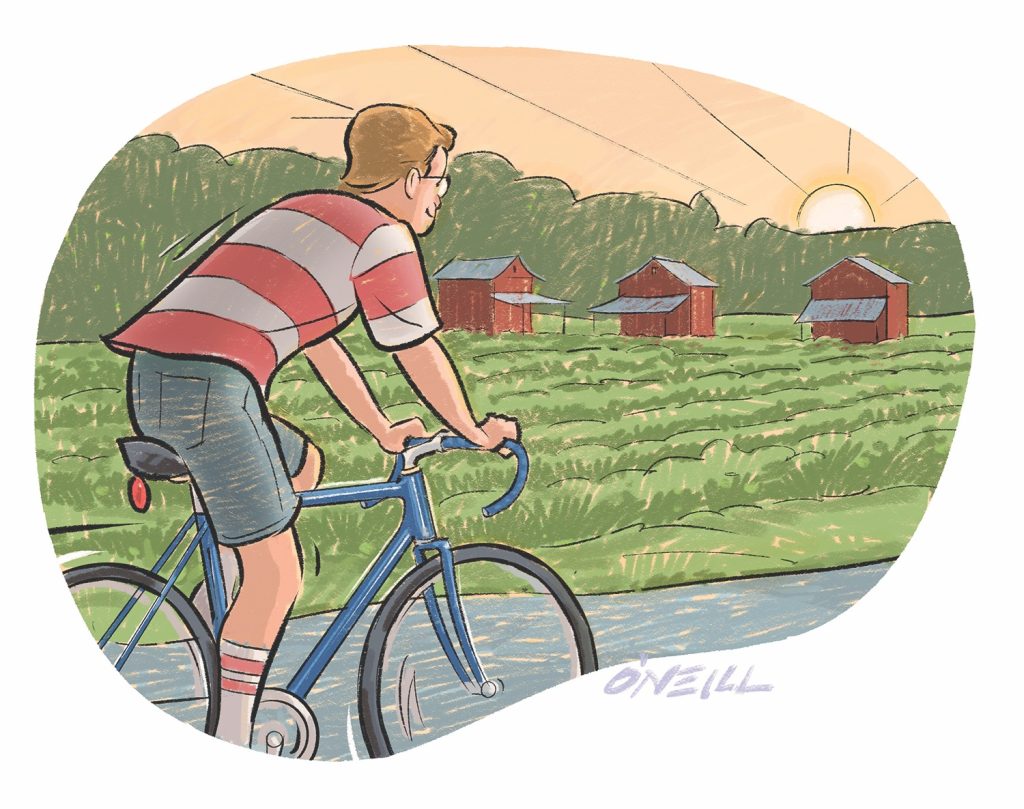
On a funnier note, September’s arrival reminds me of my own unexpected journey to East Carolina University half a century ago. On a blazing afternoon, my folks dropped me off at Aycock dorm, now Legacy Hall, with my bicycle, a new window fan and 50 bucks for the university food plan.

Not surprisingly, my mom hugged and kissed me, and wiped away a tiny tear; my dad merely smiled and wished me good luck. He also looked visibly relieved.

“You made the right decision, son,” he said. “I think you’ll really enjoy it here.” 

The previous winter, you see, I fell hard for a beautiful French exchange student at my high school named Francoise Roux. During the last few weeks before she headed home to France, we had a two-week courtship that included long walks and deep conversations about life, love and the future.

I was too nervous to kiss her. Instead, on the last night before she flew away, sitting together by a lake in a park, I played her a traditional French lullaby on my guitar, an ancient song her father sang to her when she was little. During the drive back to her host’s residence, we even discussed the crazy idea that, when I graduated in the spring, I might forego college in America for the time being in favor of finding a newspaper job in France so we could stay together.

As we said goodbye under the porch light, she leaned forward and gave me our first — and last — kiss. 

It was a sweet but improbable dream. Yet, having won Greensboro’s annual O. Henry Writing Award the previous spring (and consumed far too much Ernest Hemingway for my own good), I decided to skip applying to college and seek a job in Paris. Touting my “major” writing award and one full summer internship at my hometown newspaper, I brazenly applied for a job as a stringer for the International Herald Tribune’s Paris bureau. 

Amazingly, I never heard back from the famous newspaper.

Come middle May, still waiting for a reply, I was having lunch with my dad at his favorite deli when he casually wondered why “we” hadn’t yet heard from the four colleges I’d applied to for admission.

“Actually, Dad,” I said, “I didn’t apply to them. I have a better plan in mind.”

I sketched out my grand scheme to spend a year working in Paris, where I would cover important news stories and gain valuable life experience in the same “City of Lights” that he fell in love with during the last days of World War II. I mentioned that I was waiting for a job offer from the International Herald Tribune.

He listened politely and smiled. At least he didn’t laugh out loud. He was an adman with a poet’s heart. 

“This wouldn’t have anything to do with a certain pretty French girl named Francoise, would it?”

“Not really,” I said. “Well, a little bit.”

He nodded, evidently understanding. “Unfortunately, Bo, you will have to get a draft number this September. And if you get a low number and aren’t in a college somewhere, you might well be drafted. That will break your mother’s heart. How about this idea?”

He suggested that I simply get admitted to a college somewhere — anywhere — until we could see how things panned out with the draft. There were rumors that Nixon might soon end it. Until then, a college deferment would keep me from going to Vietnam.

Reluctantly, I took his advice and applied to several top universities. None had room for me, though UNC-Chapel Hill said I could apply for the spring term. Too late to be of use.

On a lark at the end of May, my buddy Virgil Hudson said he was going down to East Carolina University for an orientation weekend and invited me to tag along. I’d never been east of Raleigh.

On our way into Greenville that beautiful spring afternoon, we passed the Kappa Alpha fraternity house, where a lively keg party was happening on the lawn. I’d never seen more beautiful girls in my life. Young love, as sages warn, is both fickle and fleeting.

“Hey, Virge,” I said, “could you drop me off at the admissions office?”

The office was about to close, but the kind admissions director allowed me to phone my guidance counselor back home and have my transcripts faxed. I filled out the form and paid the $30 admission fee on the spot, leaving me 10 bucks for the weekend.

By some miracle I still can’t fathom, ECU took me in.

The first thing I did on the September morning before classes got underway was get on my bike and ride due east toward New Bern. As a son of the western hills, I simply wanted to see what this new, green countryside looked like.

The land was flat as a pancake and the old highway wound through beautiful farm fields and dense pine forests. A couple hours later, I stopped at a roadside produce stand to buy a peach and had a nice conversation with an older farming couple who’d been married since the Great Depression. 

I had no idea how far I’d pedaled. “Why, sonny, you only have 10 more miles to New Bern,” the old gent told me with a soft cackle. I got back to my dorm room after dusk — having fallen in a different sort of love.

There was something about this vast, green land with its rich, black soil and friendly people that quietly took hold of my heart.

My freshman year turned out to be a joy. My professors were terrific, and my new friend and future roommate was a lanky country kid from Watts Crossroads, wherever the hell that was. His name was Hugh Kluttz.

We are best friends to this day.

Having “gone east and fallen in love,” as my mother liked to tell her chums at church, I became features editor of the school newspaper — artfully named The Fountainhead — where I wrote a silly column that undoubtedly shaped my writing life.

In 2002, upon being named Outstanding Alumni for my books and journalism career, I confessed to an audience of old friends and university bigwigs that “going east and becoming an accidental Pirate turned out to be the smartest move of my young life — one I indirectly owe to a beautiful French exchange student I never saw again.”

Funny how life surprises us. A few years ago, out of the blue, I received a charming email from Francoise Roux, wondering if I was the same “romantic boy who once played me a lullaby on his guitar?”

We’ve exchanged many emails since then, sharing how our lives have gone along since that first and last kiss under the porch light. Francoise is a devoted grandmother and I’m about to become a first-time grandfather around Christmas. Soon enough, I’ll be playing that old French lullaby to a new baby girl, marveling alongside my daughter and her husband as they embark on their own, uncharted journey.

NC Surround Sound

NC SURROUND SOUND

A Musical Life

Creating space for art to thrive

By Tom Maxwell

Seminal producer, songwriter and musician Mitch Easter remembers the intersection where he was stopped when Big Star’s power pop masterpiece “When My Baby’s Beside Me” came on his car radio in the 1970s. “It just sounded so great,” Easter says. “The thing is, mainstream radio stations avoided stuff with guitars back then. You heard a lot more electric pianos and Carpenter-types. So, when you would hear a rock song like that — with all these great sounding guitars — it really popped out.”

Big Star was a short-lived Memphis band that left a lasting legacy. Easter thinks his local Winston-Salem FM station played them for a couple of weeks almost by accident. “Radio stations were more independent back then,” he says, “and I think somebody took a shine to that song.”

Those two weeks would help shape the rest of Mitch Easter’s life. Big Star had such an effect on the young musician that in 1978, he and two friends went to Memphis to meet their idols, even though the band had broken up several years previously. “Somewhere along the way we’d been given information about how to find (co-founder) Chris Bell,” Easter says. “So we went out there and hooked up with Chris. He was working at Danvers, this roast beef place that his parents owned. We passed a note back from the cashier and this guy came out, like, ‘Who’s looking for me?’”

Bell took them to Sun Studios, where former Big Star frontman Alex Chilton was making a record. “I don’t think Chris and Alex had seen each other in a while. So, it’s cool if we were some kind of icebreakers.” Bell would be dead before the year was out, killed in a car accident a couple of days after Christmas. He was 27.

Soon after his Memphis trip, Easter followed other musician friends to New York. “We were all big fans of the punk scene coming out of New York,” he says, “even though none of us were really punk rockers per se. It was a proper music scene. There were little labels popping up, and there was Trouser Press and New York Rocker magazines.”

Easter planned to open a recording studio in New York. He had a keen interest in recording technology and by this time had racked up considerable experience experimenting in his parents’ basement with reel-to-reel multitrack tape machines. “I remember very distinctly reading in an electronics magazine a description of what really happens in the recording studio and laughing it up because it was completely mysterious to me,” he says. “I used to imagine that on the early Beatles things when George Harrison was playing acoustic and then there was a solo, I thought somebody threw him an electric guitar really fast and he started playing it.”

That New York life wasn’t meant to be. In his own words, Easter “chickened out” and moved back to North Carolina, but the Triad had changed. Original bands were forming left and right; local college stations were playing post-punk bands like the Buzzcocks; and a cool new club called Fridays opened up in Greensboro. “It was really a pizza joint,” Easter says, “but they had the new-type rock bands play on the weekends. It was full of the kind of kids that I saw in New York. The other thing I observed was people dancing. It was like it had been rediscovered.”

In short order, Easter addressed his quarter-life crisis by opening a recording studio named Drive-In Studio, because it was situated in his parents’ two-car garage in rural Winston-Salem. One of his early bookings was a weekend spent recording demos with a young band out of Athens named R.E.M.

“There was this big split back then,” Easter says. “A lot of the recording studios were still operating on the fumes of disco — and the fumes were pretty strong. So, there was a vibe that the bands did not dig about ‘real’ recording studios. Maybe in New York and London these punk bands were working in nice studios, but there wasn’t anything like that here. There were either real funky garage studios or the big studios. The perception of Drive-In was that this was a studio oriented for you, which it kind of was. It was really humble.”

Happy with their demos, R.E.M. soon returned to make a proper record. In 1982, Easter produced their dazzling debut EP (extended play), Chronic Town.

Meanwhile, Easter was writing, singing and performing with his own group, a power-pop trio named Let’s Active, which he formed with then-girlfriend Faye Hunter and drummer Sara Romweber, sister to Chapel Hill rocker Dexter. In 1983, Easter co-produced R.E.M.’s first full-length Murmur and wrote pure pop gems with Let’s Active, like “Every Word Means No,” issued on the band’s debut EP Afoot.

This, then, became Mitch Easter’s busy musical life for the next decade. Along with R.E.M.’s sophomore album Reckoning, he produced visceral power pop records with bands like X-Teens, Game Theory, The Connells, Velvet Elvis and Love Tractor. Let’s Active carried on making albums until its dissolution in 1990, an act that led to newly formed groups from nearby scenes in Chapel Hill and Raleigh.

Drive-In Studio closed in 1994, when Easter opened a new “residential” studio near Kernersville called Fidelitorium. “I’m a great supporter of making records in bedrooms and all that kind of stuff,” Easter confided, “but there’s a thing about going to a dedicated space that’s really useful. It focuses your effort, especially with a group. A lot of people need to get away from their house.”

And there’s art in the studio beyond the music. “The other thing that dawned on me is that you take a whole lot better pictures in a proper studio, right?” Easter says. “I love those electric Dylan-era pictures from Columbia Studios in New York, those great black and white pictures of big rooms that don’t have much in them but very cool looking musicians. You could only do that in a proper studio. I’m sorry that these big places are going away because they were very romantic to me.

“Even uncool studios were important because if they hadn’t existed, you might not have had that unbelievable scene in Boogie Nights, when they want their tapes back and they haven’t paid for them. I just hope that the big places don’t totally go away or only do soundtracks for epic blockbusters. There’s a meeting place thing about a proper studio that’s kind of beautiful.”

Easter, a portrait of the artist as an older man, will turn 71 in November. “It’s funny about music,” he says. “You’ve got a long trajectory of possibilities. Little kids can be really good at music in a certain mechanical way, and sometimes they’re pretty expressive, too. I might have played the best when I was in my mid-30s, but I have more sense about it now. When your fingers do a bunch of stuff, that’s great, but maybe you’re not thinking about it quite enough, or you’re doing too much. The thing that’s so cool about pop music is there is a place for all those stages. It’s funny that rock music has finally allowed people to be old. It’s a really wonderful thing in these everything-is-falling-apart times to think that there is good stuff to do throughout your life when you’re a musician.”

Tea Leaf Astrologer

TEA LEAF ASTROLOGER

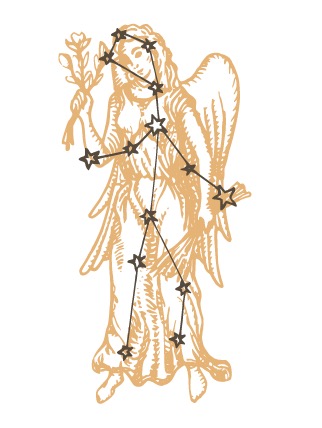
Virgo

(August 23-September 22)

Perhaps this will come as a shock: You don’t have all the answers. Let the mystery ignite your passion this month. Let it be juicy. Let it break your snarky gremlin of an ego. When Mercury guides your focus inward on Sept. 2, mind the negative self-talk as you strive toward new growth. On the 19th, Venus will shine a spotlight on unrealistic expectations. Take note. And on the 21st, the new moon and solar eclipse spell new beginnings. But not without a pickle of an ending. 

Tea leaf “fortunes” for the rest of you:

Libra (September 23 – October 22)

Inhale and lengthen the spine; exhale and gently twist.

Scorpio (October 23 – November 21)

Taste as you go.

Sagittarius (November 22 – December 21)

Just say what you mean.

Capricorn (December 22 – January 19)

Lace up your dirt-kicking boots.

Aquarius (January 20 – February 18)

It’s time for a new novel.

Pisces (February 19 – March 20)

Deep clean the fridge, stat.

Aries (March 21 – April 19)

Bring your journal along.

Taurus (April 20 – May 20)

Three words: Almond oil, darling.

Gemini (May 21 – June 20)

Your only job is to listen.

Cancer (June 21 – July 22)

Someone needs a salt bath.

Leo (July 23 – August 22)

Sign up for the workshop.

The Ladder

THE LADDER

The Ladder

Fiction and Illustration by Daniel Wallace

She kept the ladder hidden against the far side of the house, on its side, behind an array of shrubbery and a small pyramid of partially charred firewood. It was a metal ladder, and heavy, yellow and blue, and picking it up involved several challenging moves — lifting, leaning, pushing, and prying it into its sturdy inverted V. Harder now than ever but still doable. The hinges adjoining the two sides of the ladder sometimes stuck, and with her bare hands she had to thwonk them until they were perfectly straight. The meaty part of her palm had been pinched more than once during the course of this procedure; her Saran Wrap-thin skin roughly torn like a child’s scraped knee. All this happened at night, in almost complete darkness, the only light from the dim bulb in the laundry room, casting a soft, milky glow through the dusty windows onto the thorny leaves of a winterberry. Once the ladder was open she shook it, made sure the ground was level. Usually she’d have to adjust it, moving the legs this way and that a few times before it felt secure. Then she climbed, step by step, testing her balance on each flat rung, falling into a worry that made her take special care not to slip or get her slacks caught on anything. It was especially dangerous when she got to the very top, where it was written in serious, Ten Commandant letters: THIS IS NOT A STEP. Here there was a sharp metal protrusion, the final test that she had, so far, nimbly passed. She got on her knees on the step that wasn’t, and with her forearms on the shingles drug herself onto the sloping edge of the roof, turned herself around, and sat breathing. She brushed the dirt off her forearms. Another breath and she was fully there.

This is what she did for her cigarette, the only one she allowed herself, once a night every night, for almost all her adult life. She didn’t even have to hide it anymore, because there was no one here to secret it from. But it had become a part of who she was, a tradition she could not and would not and did not want to end until she couldn’t make the climb. It was necessary. It was her spot, her perch. There was no great view to be had, really, just the cross-the-street neighbors, a young couple in the modest, red-brick split-level, their lives ahead of them, as they say, as if all our lives weren’t ahead of us, some just farther along than others. Sometimes she could see them — the Shambergers? — as they moved from room to room, miniature people, busy as little ants. It was like watching a movie from a thousand feet away.

She smoked, and the smoke rose and quivered from the red and orange coal into a dreamy cloud, then off into a dreamy nothing. But most of the smoke was inside her, in her lungs and her blood. It made its way to her brain and she felt lighter, lighter. She felt like she could follow the smoke if she wanted. The cigarette didn’t last very long, never as long as she wanted it to, but always time enough to review the plot points of her life, the highlights, good and bad, the husband and the children and now the grands, the cars, the planes, the ships, the glam, and the struggle, the love, the sex, so much of it really it didn’t seem fair that one woman should have it all. So much. But every night she climbed the ladder’s rungs and sat here, here on top of the world, smoking, she wondered what it meant that out of all of it, out of every single second she remembered, this was the best, the very best, the moment she lived for, surrounded by the invisible world beneath the moon and long dead stars, sharing her own light with the dark.

Dissecting A Cocktail

DISSECTING A COCKTAIL

Mia Khalifa

Story and Photograph by Tony Cross

There are many alternatives to cocktails and alcoholic beverages these days. I’ve tried plenty, but the ones containing kava have captured my heart.

Kava is a plant native to the South Pacific, traditionally used for its calming and euphoric effects. The active compounds, kavalactones, are found in the root of the plant, which is typically ground, soaked and strained. It’s not much to look at — when ready for consumption, kava has a brownish, muddy appearance. On its own, the flavor is earthy and root-like, a bit of an acquired taste.

I was introduced to drinking kava on a date at Wana Navu Kava Bar in Fayetteville. I was familiar with the plant as a supplement but had never consumed it as a drink. Looking at the cocktail menu, I was floored by the variety of intricate blends of ingredients and the bold names for the drinks. Wana Navu owners Chloe Benhaim and Casey Fox helped me navigate the menu, offering a quick history of the root and explaining the effects of various ingredients.

Some drinks are combined with vitamins, kratom, or Delta-9, making for a highly personalized experience. I settled on a drink from their “Kavafornication” category, which features cocktails built on a kava base and infused with functional ingredients like B6, B12, L-theanine and ashwagandha. My go-to? The Mia Khalifa — a blend of those very ingredients, plus hibiscus flowers and lemongrass. The kava flavor is still present, but beautifully balanced. Did I mention these drinks contain zero sugar, carbs or calories? I ordered another. And then another.

Last year, Chloe and Casey opened a second location, this time in Sanford — what they proudly call their “Feel Good Bar” — which has quickly become my local stomping ground. 

Specifications

Hibiscus

Lemongrass

Vitamins: D, B6, B12, milk thistle, iron, ashwagandha, L-theanine

Execution

Get in your car and take a trip to Wana Navu Kava Bar at their Fayetteville or Sanford locations and place your order.

Golftown Journal

GOLFTOWN JOURNAL

The U.S. Kids Catapult

A stepping stone to the top

By Lee Pace

There is a chance by the time these words hit your mailbox or coffee table that Ben Griffin of Chapel Hill will be teeing it up at Bethpage Black in the 2025 Ryder Cup. At the end of July, he was within reach of an automatic berth for the American team or being a captain’s choice by Keegan Bradley by virtue of his breakthrough year — solo victory in Fort Worth, team win in New Orleans and a total of eight Top 10 finishes, including the U.S. Open and PGA Championship.

And if not this year, another, perhaps.

Whatever success, including and beyond making a Ryder Cup team, that the 29-year-old might enjoy, he can look back to three years from 2009-11 competing in the U.S. Kids summer competitions in Pinehurst as a bedrock to his development:

2009 — Ninth place in the age 13 division.

2010 — First place in the 14 division.

2011 — First place in the 15-18 division.

“Ben had quite a run in Pinehurst,” says his dad, Cowan Griffin, who caddied for his son all three years. “It was a perfect environment to learn what competitive golf was all about. You were around class acts. The U.S. Kids produced a young man that respected his opponent, was courteous and kind, you treat each other fairly. You’re honest. It promotes just a slew of great traits for your future. That’s exactly what it did with Ben.”

More than a decade later, with his son among the elite of the PGA Tour, Cowan thinks back on that three-year run and enjoys the reflections. He chuckles at the memory of taking Ben to Pinehurst No. 6 in 2009 and having no idea that parents generally caddied for their children in U.S. Kids events. He dashed  to the Belk store in Southern Pines for shorts, sneakers and golf shirts. He remembers Ben asking — and Cowan refusing to answer — where Ben stood through 16 holes in the final round in 2010 at No. 8, then being gratified to see the boy refocus, birdie the par-5 17th and win by one. He marvels at having watched Ben’s creative recovery shots on No. 2 in collecting the older boys’ division title in 2011.

“Ben was a real gritty player, and if he got in any trouble, he could manipulate his hands and make the ball hook or cut or go straight up in the air, almost like Phil Mickelson-type hands,” Cowan says. “Anywhere he was, he had an answer. “

As the U.S. Kids Teen World Championship was hitting its 20th anniversary in Pinehurst in early August 2025, Ben Griffin was an hour away, teeing it up on the PGA Tour in the Wyndham Championship in Greensboro, shooting four rounds in the 60s and finishing in a tie for 11th. He was seventh on the money list with $8.1 million.

That’s an amazing story for someone who inhaled the game of golf until their mid-20s, chucked the dream for a year in 2020 to enter private business, and a year later came back with a new set of priorities, and a refreshed game and mindset.

“It’s been an incredible journey, but since I’ve come back to golf I’ve put my mind to being one of the top players in the game, getting into the majors, getting into contention and winning on the PGA Tour,” Griffin says. “I’ve checked a lot of those boxes now, but I have to continue to keep the pedal down.”

Griffin was a golfer from near infancy. Cowan got into golf because his father, Douglas, loved the game, and he outfitted young Ben with a set of clubs as soon as Ben could walk. He was smitten from the beginning.

“We called him ‘Little Ben’ around the club,” says Rick Brannon, the Chapel Hill Country Club head golf pro from 1983 to 2017. “I can remember him on the range at 5 years old. He had a set of hand-me-down irons that were an inch longer than standard. The golf club was bigger than Ben almost. He had a motorcycle grip early on because that was the only way he could hit those long clubs.”

The talent he wielded at Pinehurst with U.S. Kids evolved over the years. Competing for East Chapel Hill High, Griffin won two state 4-A titles. And he shot 61 in the Dogwood Amateur at Druid Hills in Atlanta.

There was never any question about where Griffin would play collegiately (both of his parents are UNC grads), and he was in the Tar Heels’ starting lineup all four spring seasons from 2015-18. After leaving college, Griffin bumped around the various “minor league” tours, traveling to Canada, Latin America and across the U.S. on the Korn Ferry Tour. Then COVID-19 hit in the spring of 2020, and the golf season on the PGA Tour and all the satellite circuits were cancelled. Griffin was in debt to his sponsors and had nowhere to play.

“I wasn’t making any money,” Griffin says. “I wasn’t able to pay my own rent without help from parents, and health insurance, whatever it might be. I was 24, 25 at the time, and I was like, it’s a point in my life where I don’t want to have to rely on my parents for anything.

“It wasn’t necessarily like I disliked golf or anything. I still loved it. I was actually getting better. I felt like I was doing some really good stuff with my coach. But financially, I was in such a big hole. I didn’t see myself digging a way out of it.”

That’s when Griffin decided he was done with professional golf. He landed a job in early 2021 as a residential mortgage loan officer with Corporate Investors Mortgage Group in Chapel Hill and began working each day at the company’s headquarters at East 54, just a couple of hundred yards from the 16th hole at Finley.

“When I stepped away from golf, I was completely done,” he says, adding he envisioned golf as being a weekend distraction and a way to help his professional career with client golf.

As the summer of 2021 wore on, he started having second thoughts. His grandfather died on July 15, and the obituary included a reference to his love of golf. Doug Griffin’s motto was “hit them long and straight.”

Soon after, Griffin was driving to work one morning and absentmindedly turned onto Finley Golf Course Road instead of into the East 54 complex.

“I wasn’t thinking that much about golf at all, but these little signs kept popping up,” Griffin says. “Reading my granddad’s quote made me realize my dreams are on the golf course. I’d lie awake in bed and say, ‘Do I need to chase this dream one more time?’”

Griffin decided that he did. He has never looked back.

Lord Abbett CEO Doug Sieg organized an investor group to underwrite Griffin’s return to traveling the tour, and that November, he shot 71-74-64-71 and tied for 29th at Korn Ferry Tour Q-School. That locked up Korn Ferry Tour membership for 2022 (no more Monday qualifying), where he finished eighth in points to get a PGA Tour card for 2023.

“It’s easy to get caught as a mini-tour golfer, stuck like, man, this is so hard, my back is against the wall,” Griffin says. “So instead of that mindset, I had a more forward-thinking mindset of I’m already one of the best players in the world. I just have to go out there and prove it.”

They’ve known of that potential around Pinehurst for more than a decade.