Magical History Tour

MAGICAL HISTORY TOUR

Magical History Tour

Scavenger Hunt

Photographs by John Gessner & Ted Fitzgerald

How to Play

1. If this scavenger hunt does nothing more than encourage an exploration of the fascinating history of the Sandhills, we’ll consider it a success. You’ll find yourself trekking across the county, though probably not in need of a survival kit — maybe a full tank of gas. Not many of the destinations are one-offs, so may we suggest a bit of pre-planning to avoid a lot of to-ing and fro-ing? It’s the age of GPS, so you’re going to have to work awfully hard to get lost.

2. Note to selfie. We’ll not require you to pose in front of anything specific at these locales. Use your best judgment. Don’t do anything dangerous or illegal. (That’s our official disclaimer.) All we ask is that we can identify you and the place in question. It’s perfectly all right if you want to have your trusty companion take the picture for you. After you’ve documented each stop on the tour upload your photo to our gallery at www.pinestrawmag.com/scavenger. The last chance to submit is midnight Oct. 31.

3. Hail to the victors! If you visit all 14 we’ll salute your accomplishment in PineStraw. Your name will be added to an honor roll that will, undoubtedly, be passed down from generation to generation. Bonfires will be built. Poems will be written. Songs will be sung. There might even be swag. And if you don’t manage them all — or even any of them — but enjoy exploring and learning a little bit along the way, you’ll be a winner in our book.

Thanks for playing!

Bethesda Cemetery

The Old Bethesda Presbyterian Church on Bethesda Road in Aberdeen was founded in 1788 by Highland Scots. The Gothic Revival building, used today mostly for weddings and other special events, was built in 1860 and dedicated in 1862. The congregation, having outgrown Old Bethesda long ago, still meets there once a year in a “homecoming” service on the last Sunday in September. During the Civil War, Sherman’s army camped on the church grounds during its march through North Carolina. The building was added to the National Register of Historic Places in 1979. Adjacent to the church is the Bethesda Cemetery, in continual use since the early 1700s. Some of the important historical figures buried there include Aberdeen’s founder, Allison Francis Page (1824-1899), known as the Lumber King, who established the town after buying 14,000 acres of Moore County timberland. The cemetery also contains the tomb of Walter Hines Page (1855-1918), whose journalism career included staff positions at the New York Evening Post and the Atlantic Monthly. He became a partner in Doubleday, Page & Co. publishing a long list of world-class authors, including Rudyard Kipling. During World War I Page was appointed U.S. ambassador to Great Britain by President Woodrow Wilson. Pay your respects.

Our Donald

You can drape your arm around the shoulders of the most prolific golf course architect of the game’s “Golden Age” and grab a sandwich at the same time in the middle of the village of Pinehurst. Raise your hand if you’ve heard all this before: Donald Ross was born in Dornoch, Scotland, in 1872. Encouraged by Harvard astronomy professor Robert W. Willson, he took a job at Oakley Country Club in Massachusetts. In 1900 he was hired by James Walker Tufts to be Pinehurst’s golf professional, where he began his architecture career. Ross is credited with designing over 400 courses. A fine player, he finished eighth in the 1910 British Open and competed in the U.S. Open seven times. His brother Alexander, “Alex,” won the U.S. Open in 1907 at the Philadelphia Cricket Club. The life-sized version of the Ross statue, sculpted by Gretta Bader, is behind the 18th green of his world-renowned No. 2 course, the site of four U.S. Opens with more to come.

Pine Knoll

The majestic Pine Needles Golf Hotel, five stories high with its distinctive Jacobean-Tudor architecture, opened in 1928 and, for an all too brief time, was the “in” place to stay in the Sandhills. The hotel rises behind what was originally the first hole (now the second) of the Donald Ross-designed golf course. The stock market crash of 1929 and the ensuing Great Depression forced it to close. Beginning in early 1942, the Army Air Force Technical Training Command was headquartered there. After World War II the hotel was sold to the Catholic Diocese of North Carolina and reopened in 1948 as the St. Joseph of the Pines Hospital. In 1953 Warren and Peggy Kirk Bell, along with their partners Julius Boros and Frank and Masie Cosgrove, bought the golf course. The old hotel now has 86 independent living apartments owned by St. Joseph of the Pines.

SCC Gardens

There’s something in bloom every month of the year at the Horticultural Gardens at Sandhills Community College. Regardless of the season, the grounds are a cornucopia of statuary art among its flowering trees and plants. Kim, created by Gary Price, is a statue of a boy holding a bird. He also did Circle of Peace, pictured below. Sleep is an imposing head of carved stone in the Japanese Garden. Sara is a girl with a watering can in the Hackley Garden, also by Gary Price. Ciao Bella, by Mike Roig, depicts a Japanese maple. The Dog Ate My Homework, created by Randolph Rose, is a bronze of a girl and a dog on a bench in the Hoad Children’s Garden. Eric Bruton’s Red Oak is in the Conifer Garden. Karen, another piece by Gary Price, is a statue of a girl stepping toward a creek outside the Succulent Garden. And Dragon Tail is a stainless steel tail rising out of the ground with a mobile of the moon and stars dangling from it, on display in the Conifer Garden.

Tufts Archives

The Tufts Archives, housed in the back room of the Given Memorial Library on the Village Green, is at its core Pinehurst’s history museum. The archives has a complete and unparalleled collection of artifacts, documents and images from the time when the village was nothing more than barren land, through its extraordinary rise to become one of America’s premier golf destinations. On display are items from the Tufts silverplate collection and the American Soda Fountain Company, the source of founder James Walker Tufts’ wealth. You can view china that was in use at the Holly Inn in 1895; holiday menus from the Carolina Hotel; hand-colored postcards, posters and other ephemera; a playing card shot-through by Annie Oakley; dozens of the more than 150,000 historic images (many taken by John G. Hemmer); hundreds of original golf course drawings created by Donald Ross himself in addition to pin flags from many of the courses Ross designed; and thousands of cataloged historic documents. The archives holds the world’s largest collection of Ross memorabilia.

Center of Pinehurst

Hidden on a brick path in a garden area adjacent to the Village Green in Pinehurst is a plaque affixed to a large rock near a bronze sculpture of two children on a bench reading. The plaque commemorates the spot where, in June 1895, James Walker Tufts drove a stake into the ground to mark the center of the new community he was going to build on the 5,800 acres of land he was accumulating in parcels at the cost of roughly $1 per acre. Letters from Tufts written just a few weeks later mention the plans for the village drawn from topographical maps by the New York firm of Olmsted, Olmsted & Eliot, so it seems likely that in marking the spot he was following the design of the famed landscape architect Frederick Law Olmsted, whose vision would be executed by Warren H. Manning, an employee of the firm. Manning would later consult on projects for the Rockefeller family in Westchester, New York, and Newport, Rhode Island. He was a driving force in the formation of the American Society for Landscape Architecture.

Poplar Street Entrance

Near the intersection of Fourth and Poplar streets in Aberdeen, a cement gateway of terra-cotta tile and cement marks the entrance that never was. The “Spanish” structures are all that remain of Montevideo Park, the development envisioned and designed by Harry A. Lewis, J.J. Stroud and W.D. Shannon in the 1920s and ultimately doomed by the stock market crash of 1929 and the ensuing Great Depression. The 530-acre project, written about extensively in a 1927 February edition of The Pilot, was to have a four-story Spanish Colonial-style hotel with a tiled roof and 227 guest rooms, a dining room that could seat 1,000, a sunken garden, tennis and croquet courts, a grill room in the basement that included an artificial ice rink that could double as a dance floor (what could go wrong?), riding stables, a golf course designed by Donald Ross’ right-hand man, Frank Maples, 12 miles of streets, private dwellings, a boat club with access to Aberdeen Lake, and gondolas on Aberdeen Creek.

Aberdeen and Rockfish

Aberdeen is your basic two-caboose town. Both are artifacts of the Aberdeen and Rockfish Railroad. Caboose No. 309 is outside the old Aberdeen train station that houses a museum, while caboose No. 303, for display only, is adjacent to the present day Aberdeen and Rockfish offices, a short line railroad that continues to run freight to Fayetteville. The railroad was built in 1892 by John Blue to get timber and turpentine products to market. In the next 10 years a number of lines were extended and/or abandoned as need be. Passenger service ended in 1949. The Union Station Railroad Museum, open by appointment only, contains artifacts and memorabilia. Built around 1900, the station — listed on the National Register of Historic Places — was designed by T.B. Creel and features Victorian architecture. Caboose No. 309 is renovated and sits on the tracks nearby.

Shaw House

Be honest, you drive by it all the time. Well, it’s time to stop in. The Shaw House is located on its original foundation at the intersection of Morganton Road and what was Pee Dee Road on the edge of Southern Pines. The Pee Dee Road was an ancient Indian trail running south to Cheraw, South Carolina, while Morganton Road provided access to the market town of Fayetteville and the Cape Fear River. Charles C. Shaw, a first-generation Scottish settler, acquired 2,500 acres and built the house around 1820. The date of 1842 on the chimney is thought to have been the year that the front porch and the two attached guest rooms were added. A kitchen was built sometime in the 1920s. One of Charles Shaw’s 12 children, Charles Washington Shaw, inherited the property and became the first mayor of Southern Pines in 1887. The house remained in the Shaw family until it was acquired in 1946 by the newly formed Moore County Historical Association in an effort to ensure its preservation. The house is far more modest than seacoast plantations, its simplicity characteristic of the Scottish families who settled the area. The interior features simple pine furniture, a pair of hand-carved fireplace mantels and early examples of Moore County pottery.

Bellview School

According to a National Park Service registration form dated 1997, the Bellview School, a one-room schoolhouse on the grounds of the Moore County Schools Central Office in Carthage, was in all likelihood one of the 15 Rosenwald schoolhouses built in Moore County between 1918 and 1924. Rosenwald schools, named for the philanthropist Julius Rosenwald, helped fund schools for Black children in the Jim Crow South. Roughly 5,000 Rosenwald schools were built throughout the South in the early 20th century, benefiting over 600,000 students. According to the Park Service form, while the building lacks a number of architectural characteristics common to Rosenwald schools, it is believed  to have been the Tory Hill School, a one-teacher schoolhouse built in 1920 east of Robbins. The building was restored and moved to the Moore County Schools Administration grounds in 1974.

Buggy Mural

Painted by Chapel Hill artist Scott Nurkin, the mural in downtown Carthage celebrates the Tyson & Jones Buggy Company. The business, founded in 1850 as a wheelwright shop, was purchased in 1856 by Thomas B. Tyson and Alexander Kelly, the county sheriff. William T. Jones, a freed man, was a talented buggy painter who joined the company in 1857 and quickly became a partner. Born into slavery, Jones was the son of an enslaved woman and her white owner. With the beginning of the Civil War in 1861 the buggy company ceased operation, and Jones was among the many who enlisted in the Confederate Army. He was captured and imprisoned. Using food scraps, Jones began making moonshine for his Union guards. At the end of the war he returned to Carthage substantially wealthier than when he left it. Jones used the money to reinvigorate the buggy company, eventually buying out Kelly. At its height the company employed 100 people and was turning out 3,000 buggies a year. Tyson died in 1893 and Jones in 1910. Tyson’s grandson, Thomas B. Tyson II, ran the business until his death in 1924. Legend has it that Henry Ford visited Carthage, proposing that they use their assembly line to install engines in his new vehicles. The company took a pass. The last buggy was delivered in 1929.

The House in the Horseshoe

Built in 1772 by Philip Alston, the House in the Horseshoe in Glendon was the site of the 1781 battle between British loyalists under the command of David Fanning and patriot militia, called Whigs, headed by Alston. The revolutionaries, camped at the home, were attacked by Fanning’s Tories in retaliation for  the grisly murder of Kenneth Black. During the skirmish, Fanning’s forces attempted to set the house on fire by rolling a cart filled with burning straw against it. Alston’s wife, Temperance, emerged with a flag of truce, and her husband was taken prisoner. There was a darker side to Alston. In December 1785 testimony was presented to the state assembly that Alston had murdered one Thomas Taylor. As Taylor had been a Tory and Alston was commanding a corps of militia in the service of the state at the time of Taylor’s death, the committee thought he should not be tried and instead was pardoned by Gov. Richard Caswell. Later, a deep-seated enmity would develop between Alston and George Glascock, a first cousin of George Washington. In 1787 Glascock was murdered, and evidence suggested Alston had ordered an enslaved person, Dave, to commit the crime. Alston was imprisoned for his part in the murder. In 1798, the home was sold to Benjamin Williams, who would become governor of North Carolina from 1799 to 1802 and again in 1807–1808.

Dewberry Cafe

Once you’re ruled the dewberry universe, what worlds remain to be conquered? The dewberry, as we’ve come to learn, is a somewhat larger and sweeter kissin’ cousin of the blackberry. For reasons unknown to us, it seems to thrive in our sandy soil. The Lucretia dewberry was introduced to Moore County in 1892, and by the early 1900s farmers were bringing crates of them into Cameron for auction and then transport north to Philadelphia or New York and west to Chicago or St. Louis. From 1910-20 somewhere in the ballpark of 60,000 to 90,000 crates of dewberries were shipped annually from Cameron, earning it the designation of “Dewberry Capital of the World” — with all the rights and privileges attached thereunto. One of the privileges is using the name on a little café housed in the downstairs of the Old Hardware Vintage Depot on Carthage Street. You’ll find an old-fashioned soda fountain with stools and a vintage (please don’t touch) jukebox loaded with 45s.

Astronaut Mural

Robbins native Capt. Charles E. Brady Jr., M.D. (1951-2006), flew aboard the shuttle Columbia in 1996 on a 16-day science mission. During that flight, he was one of the first operators of the Shuttle Amateur Radio Experiment allowing astronauts to talk with ham radio operators around the world. While with NASA, Brady was chief of space station astronaut training before leaving to return to Navy duty. A graduate of UNC-Chapel Hill and the Duke University medical school, Brady was a sports medicine specialist before joining the Navy in 1986 and becoming a flight surgeon. His assignments as a medical officer included duty aboard the aircraft carrier Ranger and serving as flight surgeon for the Blue Angels. In 1998, he had an asteroid named in his honor, officially called Minor Planet (7691) Brady. The mural in Robbins was painted by Elizabethtown’s Hunt Cole and restored in 2016 by Scott Nurkin.

Marooned by the NFL

MAROONED BY THE NFL

Marooned by the NFL

The Champions from Coal Country

by Ron Johnson

In the sweltering late summer of any given year, frenzied and potentially delusional NFL fans wake up thinking this might just be their year. Inside the generally hospitable confines of establishments like Jimmy’s Famous Seafood in Baltimore, Chickie’s and Pete’s in Philly and Bobby Hebert’s Cajun Cannon just outside New Orleans, you might even hear someone yell, “Super Bowl!” The story lines and scenarios spun by NFL fans are too numerous, and often too ludicrous, to follow.

In 1925, however, not a single hewer, pitman or digger in the rugged coal country of southeastern Pennsylvania was delirious enough to believe the Pottsville Maroons, just months out of a semi-pro B-League, would play well enough to win the National Football League Championship. But that’s exactly what they did.

The Maroons officially entered the National Football League in September of that year when Dr. John “Doc” Striegel, a local surgeon thought to be a bit on the eccentric side, paid a $500 franchise fee and a $1200 cash guarantee on behalf of the upstart crew from Pennsylvania’s hard coal country to join the league of 20 teams.

The Maroons were on something of a hot streak, having won the title the previous year in the Anthracite League. As if you couldn’t guess from the name, it was essentially a coal miner’s alliance, and the Maroons captured the 1924 title in their one and only year as members.

From 1920-23, even before competing in the Anthracite League, they had been an independent franchise called the Pottsville Eleven. Pottsville was something more than a wide spot in the road, but not much more. It was a town of roughly 20,000 people, many of whom were involved in coal mining after a significant coal seam was discovered there in 1790. King Charles II granted the land that would become Pottsville to William Penn. The town was named after John Pott, who had an anthracite forge there in 1795. Later, in 1829, D.G. Yuengling opened what many people consider to be the oldest brewery in the United States, in Pottsville. So, when you are hoisting a Yuengling Lager on game day, the can or bottle you are drinking from will still list “Pottsville, PA” as the city of origin. And while anthracite coal fell out of favor after World War II, Yuengling is still the beer that makes Pottsville semi-famous.

Modern Pottsville is not an unpleasant place — even charming in an old-school kind of way. Like many aging coal mining towns, there are signs of decline, but Pottsville still has a busy main street with businesses, retail stores and small hoagie shops churning out cheesesteaks, “wit or wittout.” There is little crime. Families thrive. The Yuengling Brewery sits on the side of a hill and continues to be one of the little city’s focal points. And, posted right in the middle of the central business district, is a historical marker that tells the story of the beloved Maroons of the National Football League. 

The Maroons got their name in 1924 when Doc Striegel asked Joe Zacko, a local sporting goods store owner, to supply 24 uniforms to upgrade the team’s look. When the order form asked what color he wanted the suits to be, the box was not populated. So, when the outfits arrived in maroon, the team had its name. No Miners, Rocks, Mountaineers, Brewers or anything else — they were the Pottsville Maroons.

Coming off the 1924 Anthracite League Championship, Dick Rauch, the player/coach, knew he had a diverse mixture of skilled players and rugged brawlers on his squad — a combination of good college performers and tough coal miners. But were they good enough to compete at the top tier of football? After all, this was the NFL, even if it was an embryonic NFL.

Many of the Maroon players were locals themselves and typically had second jobs. Some pushed heavy coal carts, others were surveyors or land men for coal companies. Some had professional careers in engineering and dentistry.

Coach Rauch was no joke. Besides being a football player and coach, the Penn State graduate was a noted ornithologist, an electrician, a steelworker and a graduate engineer. He spent his off seasons studying the nesting habits of various birds. He was an accomplished poet and later explored the Antarctic for the U.S. government, studying our frozen feathered friends at the bottom of the world. On the gridiron, he was the first professional football coach to institute daily practices and is credited with inventing the screen pass.

In the early days of the NFL, the building of a team roster was an informal process. Players were often selected from a pool of free agents, mostly on a regional basis, and from colleges close to the team’s base of operation. The wealthier teams could cast a somewhat wider net. There was no formal way of procuring players until 1936, when Philadelphia Eagles owner Bert Bell suggested, and the league unanimously accepted, a method that would become the NFL draft.

In the league’s inaugural draft, the University of Chicago’s Jay Berwanger, the Heisman Trophy winner, was the first pick, chosen by Bell’s Eagles. Instead of playing for Philadelphia, Berwanger opted out, choosing a more stable and safer career — he became a foam rubber salesman.

In their initial NFL season, the Maroons suited up Tony Latone, nicknamed the “Human Howitzer,” a bona fide star of the era. The Chicago Bears’ Red Grange, the “Galloping Ghost,” said of Latone, “For my money, he was the most football player I have ever seen.”

Latone, a player of Lithuanian descent, did not attend college and had worked in the nearby Pennsylvania coal mines beginning at age 11. He later said he was paid $125 for daytime games and $75 for night games, more than he made hauling coal by the ton. Many people regarded him as the most productive rusher during the decade of the ’20s. Bears owner George Halas once commented, “If Latone had gone to college and played college ball, he would certainly have been one of the greatest pro players of all time.”

Charlie Berry, an All-American at Lafayette College, an hour’s drive from Pottsville, played end for the Maroons and led the league in scoring on his way to being named All-Pro. Berry also caught for three major league baseball teams and was an umpire in Major League Baseball’s American League, as well as a head linesman in the NFL for more than 20 years, officiating 12 NFL championship games. In Major League Baseball, he umpired five complete World Series and five All Star Games. In fact, Berry umpired the World Series, officiated an NFL game and worked the College All-Star Game (a long defunct exhibition between college stars and the NFL champions), all in one year. He was inducted into the College Football Hall of Fame in 1980.

Walter French, a West Point grad who had a .303 lifetime batting average with Connie Mack’s world champion Philadelphia Athletics, was a late addition to the backfield for the Maroons and averaged 5.4 yards per carry during the 1925 season. Because of his mobility, French was the perfect complement for the bone-breaking Latone. After his dual careers in football and baseball were over in 1936, French returned to the U.S. Military Academy to coach baseball from 1937-1942. He was a Reserve officer in the Army and after World War II went on active duty with the U.S. Air Force, retiring as a lieutenant colonel.

It was clear Rauch had more than a random band of misfits.

The Maroons were covered by the Pottsville Republican’s young reporter John Henry O’Hara, who would become a star in his own right, later joining the staff of The New Yorker and writing Butterfield 8 and Appointment in Samarra. When they took the field in Minersville Park, a 5,000-seat facility comparable to a modern-day high school stadium, most fans expected their spirited entrance — fueled by the brass of the local high school band — would be the only highlight of their NFL debut. They opened with what was essentially an exhibition game against a team from a Philly suburban neighborhood, Colwin-Darby, and won it, 48-0.

A week later, the time came for the NFL schedule to start, and there was a noticeable buzz about town. Maroons games were suddenly big events, and as one local put it, “They had taken on the significance of a heavyweight fight.” It was not unusual for Pottsville to draw 10,000 ecstatic fans, half the town’s population and double the capacity of Minersville Park.

The Maroons started their NFL slate with a resounding 28-0 victory over Buffalo, before dropping a sloppy and uninspired 6-0 decision to Providence in their second outing. It was not lost on coach Rauch that the team was one-dimensional and predictable. After adding the elusive French to the roster, Pottsville then shut out its next four opponents. They went into the game with the Frankford Yellow Jackets (forerunners to the Philadelphia Eagles) with a strong 5-1 record but lost ignobly to their natural rival from 100 miles south, 20-0. Rauch rallied his troops and the Maroons won their next seven games, including a 31-0 victory over Curley Lambeau’s legendary Green Bay Packers. During that run, they stunned the Yellow Jackets in a rematch, 49-0.

When the regular season ended, the teams with the two best records had not crossed paths. Realizing money had been left on the table, the arrogant and over-confident Chicago Cardinals challenged the Maroons to a season finale, which was immediately billed by the media as the league championship game. The Cardinals never dreamed they could lose. A throng of fans from eastern Pennsylvania accompanied the team to Chicago while others watched the progress on cardboard cut-outs parading across the stage in a Pottsville theater. The Chicago Tribune wrote, “In the face of a driving attack by the Eastern eleven, the Cardinals curled up and were smeared in the snow on the gridiron of Comiskey Park yesterday, 21-7.” The Maroons got off the train in Pottsville and were greeted by a large contingent of celebrating fans. The impossible had happened, and some members of the league apparently didn’t take it well. 

As the coal dust cleared, Pottsville finished the league season 10-2-0, the NFL’s best record. As they celebrated their championship with two meaningless exhibition games to end the season (both of which they won), the word got around Pottsville that something was brewing — not at Yuengling but in the dusty NFL offices in Columbus, Ohio.

Playing with the Best author Lenny Wagner writes, “In November of 1925, after the game the Maroons had lost to the Frankford Yellow Jackets, a Philadelphia promoter by the name of Frank Schumann approached the teams proposing that the top NFL team play a post-season exhibition game against the Notre Dame All-Stars, which were led by the famous backfield known as the Four Horsemen. Presumably, the game would be played in Philadelphia. Both owners signed on for the game. Sheppard H. Royle, president of the Frankford franchise, assuming that the team to play Notre Dame would be his Yellow Jackets, never raised the issue of territory, or anything else. However, on November 29th, the Maroons turned the tables on Frankfort, pummeling them 49-0. After the Maroons beat the Cardinals the following week, in a post-season game arranged by the Chicago team, by a score of 21-7, they were declared the NFL champions and were in line to play Notre Dame at Shibe Park in Philadelphia. It was at that point that Royle made a protest to the league, which was backed by then-commissioner Joe Carr, and the other owners.”

What would happen following the Notre Dame game would be devastating to the Maroons and their faithful. The All-Stars comprised the bulk of Norwegian-born coach Knute Rockne’s unbeaten ’24 team famously nicknamed the “Four Horsemen and the Seven Mules,” considered by some to be the greatest college team ever assembled. The game was to be played at Shibe Park, later named Connie Mack Stadium, home of the Phillies and Athletics, and the birthplace of Philly’s legendary penchant for booing.

But there were few boos on that day. The exhibition was expected to draw a large crowd of more than 10,000, which it did. The Maroons won the game 9-6, behind former Penn State fullback, Barney Wentz, and an opportunistic defense. Charlie Berry kicked a field goal to give the Maroons a lead they never relinquished. The victory, along with exhibition wins over Colwyn-Darby and the Atlantic City Roses, made the Maroons overall season record 13-2-0.

Things came apart rather quickly after the Notre Dame game when the commissioner of the league, Joe Carr, a former sportswriter who some later called “the Father of Professional Football,” ruled that Pottsville had never gotten permission to play the game in Philly and was infringing on Frankford’s territorial rights, essentially playing an unauthorized exhibition game, even though there was no clear prohibition in any franchise agreement. Carr not only stripped away the NFL title and awarded it to the Chicago Cardinals, but also suspended the Maroons from the league entirely and fined them $500. In any event, the Chicago-St. Louis-Arizona Cardinals have the trophy in their case. And no number of protests, political maneuvers or prods have been able to pry it loose.

Some people believe the Cardinals — the oldest team in professional football, founded in 1898 — to this day carry a curse related to their stolen championship, but there are lots of takes on the subject.

“It’s just not right,” said Steelers owner Dan Rooney. “When you are talking about the birthplace of professional football, you are talking about Pennsylvania, you’re talking about the Maroons.”

Red Grange, one of the greatest players of all time, said, “The Pottsville Maroons were the most ferocious and respected players I ever faced. You know, I always thought the Maroons won the NFL championship in 1925. They were robbed.” He promoted the Maroon’s championship throughout his life.

The Maroons never got their day in court, much less a judgment in their favor. And the court of public opinion in a small coal mining town didn’t matter all that much to the elitist big city power brokers of the NFL.

Despite their championship run in 1925, and a respectable 1926 season, the Maroons never again amounted to much. Players moved on, and opposing teams got stronger. They relocated to Boston in 1929 and became the Boston Bulldogs before Depression-related financial pressure forced them out of business at the end of that season. In Boston, they played their games at Braves Field, where Warren Spahn started his career and Babe Ruth ended his. The Boston Bulldogs were the first of several franchises that attempted to set up shop in Boston, without success. Not until the Boston/New England Patriots pitched their tent in 1960 did a professional football team establish itself in New England. 

According to his great niece, the Maroons’ colorful owner, Doc Striegel, died in 1969 in the bar of the Flamingo Hotel in Philadelphia, on his feet, pouring himself a drink. He was one day shy of his 84th birthday. Minersville Park is long gone with the King’s Village Shopping Center sitting on its former site along Route 901.

In 1925, the NFL was ruled by a czar in a small office in Ohio, influenced by powerful team owners. There was no way a bunch of coal miners from Pottsville was going to put an NFL Championship trophy in their building, if they even had a building.

The Maroons’ title was lost on a shaky technicality in what would become the biggest and most powerful league in one of the most popular sports on the planet. There were no controversial plays. No clandestine activities. No deflated balls. No ineligible players. It was more about money, greed and elitism.

The NFL may have given the trophy to Chicago — and the cursed and hapless Cardinals will likely never give it up — but as far as the city of Pottsville is concerned, the Maroons are still champions. Their beloved team won the 1925 NFL Championship on the field by virtue of having the best record in the National Football League. That much cannot be disputed and can never be taken away. 

Sandhills Photo Club

SANDHILLS PHOTO CLUB

M is for . . .

The Sandhills Photography Club was started in 1983 to provide a means of improving members’ photographic skills and technical knowledge, for the exchange of information, and, by club activity, to develop membership potential and public interest in the art of photography. For meetings and information visit www.sandhillsphotoclub.org.

Tier 3 Winners

Tier 3, 1st Place: Mucho Motivacion by Pat Anderson

Tier 3, 2nd Place:

Marriott Marquis by Donna Ford

Tier 3, 3rd Place:

M is for Murder by Dave Powers

Tier 2 Winners

Tier 2, 1st Place:

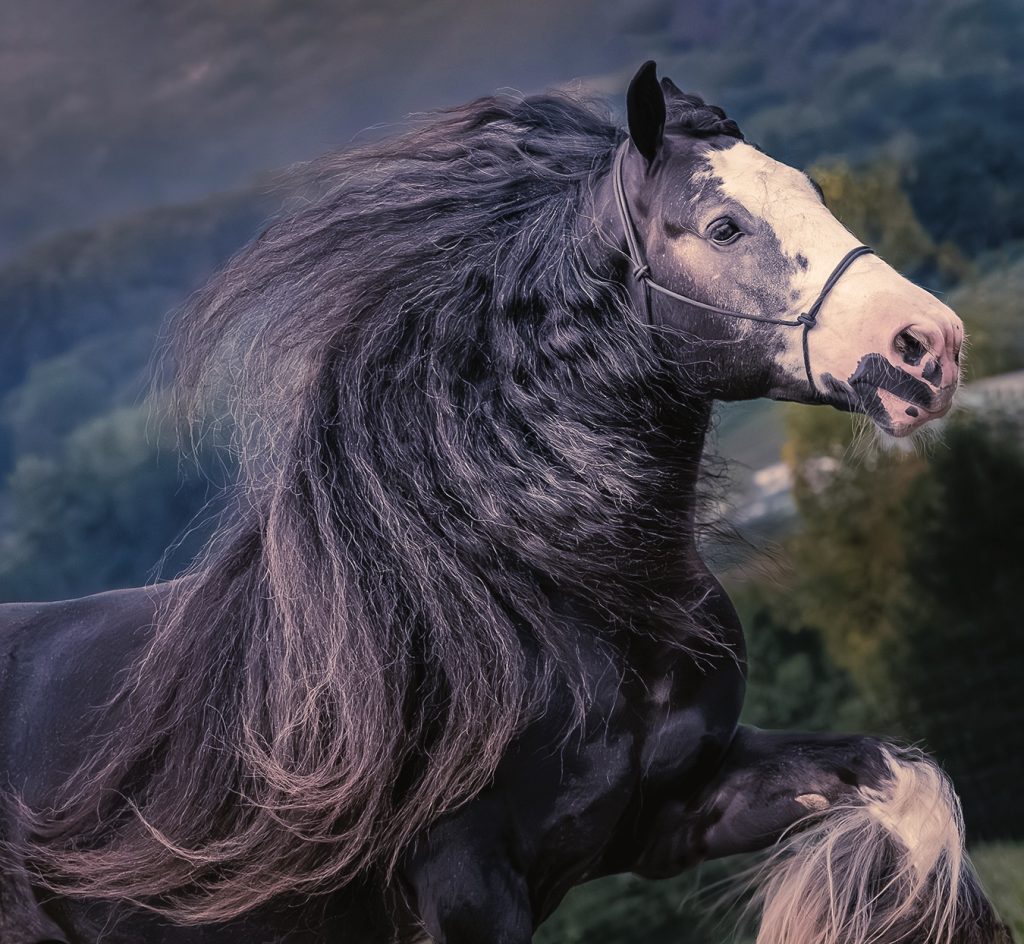
The Mane Event by Pam Jensen

Tier 2, 2nd Place:

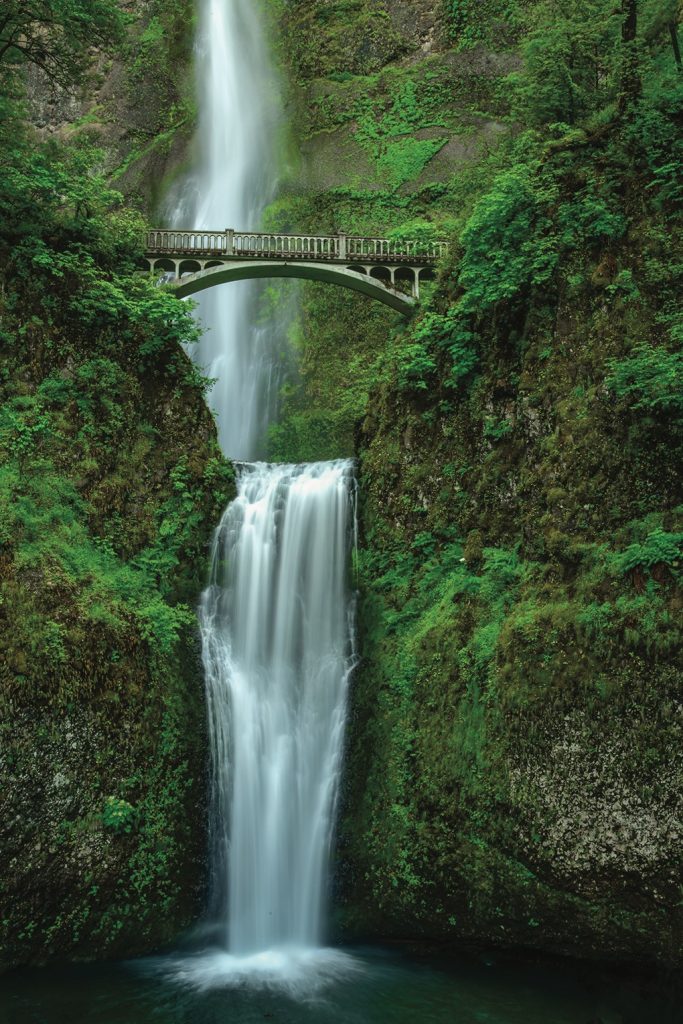
Multnomah Falls by Donna Sassano

Tier 2, 3rd Place:

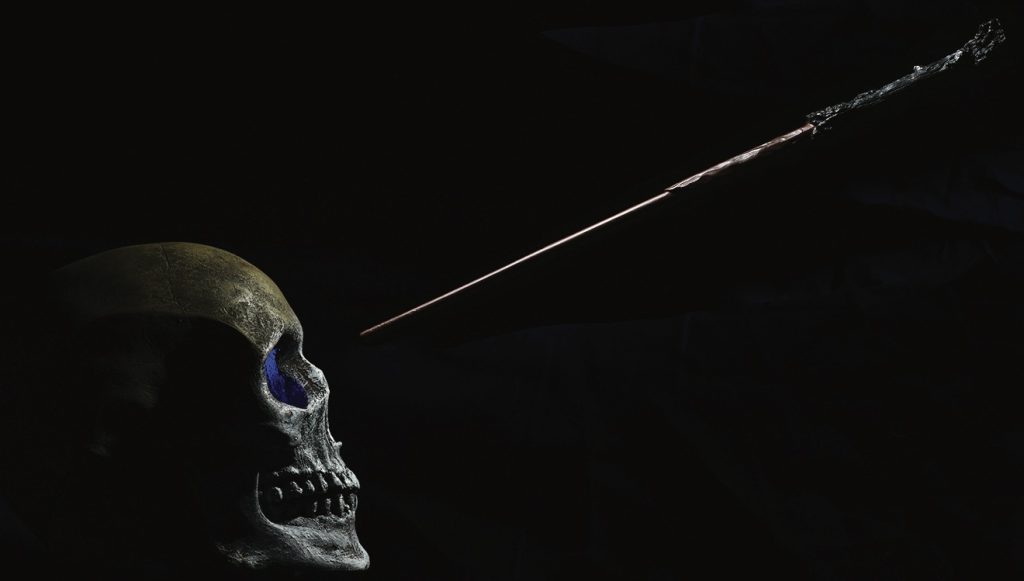
M is for Magic Wand by Joshua Simpson

Tier 1 Winners

Tier 1, 1st Place: Maniac on a Motorcycle by Jameson Everett

Tier 1, 2nd Place:
The Measure of our Hands in E Minor by Hilary Koch

Tier 1, 3rd Place:

Mailboxes by Donna Arnold

Tier 1, Honorable Mention:

Mom Making Music by Mary Bonsall

Bookshelf

BOOKSHELF

October Books

FICTION

Heart the Lover, by Lily King

Jordan’s greatest love story is the one she lived, the one that never followed the simple rules. In the fall of her senior year of college, she meets two star students, Sam and Yash, from her 17th Century Lit class. The boys invite her into their intoxicating world of academic fervor, rapid-fire banter and raucous card games. They nickname her Jordan, and she quickly discovers the pleasures of friendship, love and her own intellectual ambition. But youthful passion is unpredictable, and soon she finds herself at the center of a charged and intricate triangle. As graduation comes and goes, choices made will alter these three lives forever.

Decades later, the vulnerable days of Jordan’s youth seem comfortably behind her. When a surprise visit and unexpected news bring the past crashing into the present, she returns to a world she left behind, and must confront the decisions and deceptions of her youth.

The White Octopus Hotel, by Alexandra Bell

London, 2015: When reclusive art appraiser Eve Shaw shakes the hand of a silver-haired gentleman in her office, the warmth of his palm sends a spark through her. His name is Max Everly — curiously, the same name as Eve’s favorite composer, born 116 years prior. And she has the sudden feeling that she’s held his hand before . . . but where, and when?

The White Octopus Hotel, 1935: In this belle époque building high in the snowy mountains, Eve and a young Max wander the winding halls, lost in time. Each of them has been through the trenches — Eve through a family accident and Max on the battlefields of the Great War — but for an impossible moment, love and healing are just a room away . . . if only they have the courage to step through the door.

NONFICTION

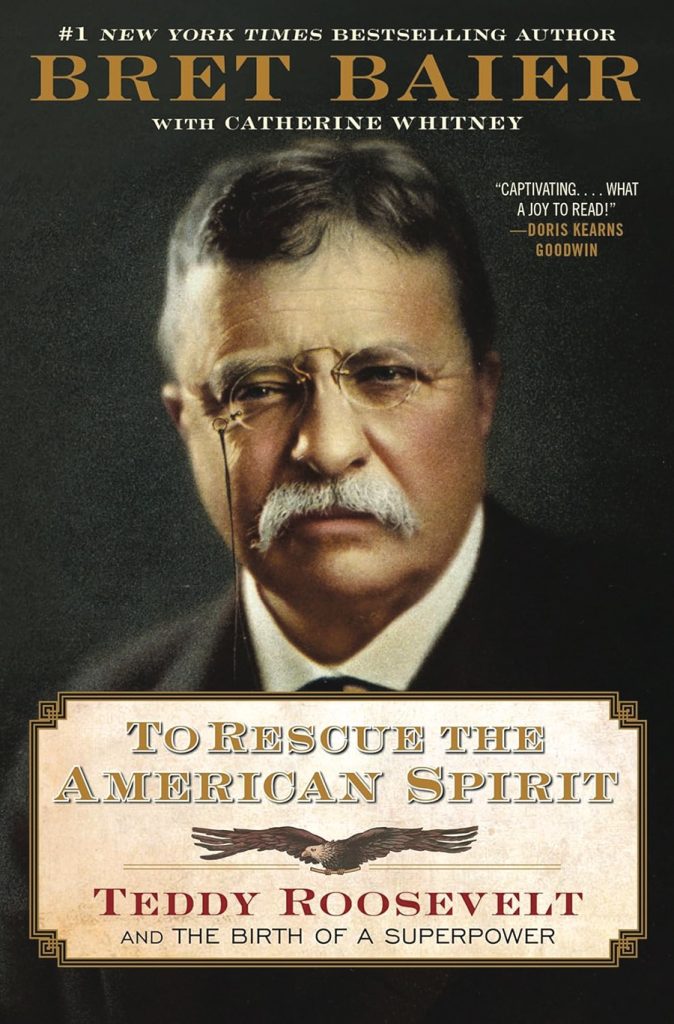
To Rescue the American Spirit: Teddy Roosevelt and the Birth of a Superpower, by Bret Baier

An iconoclast shaped by fervent ideals, Theodore Roosevelt’s early life seems ripped from the pages of an adventure novel. Abandoning his place in New York aristocracy, he was drawn to the thrill of the West, becoming an honorary cowboy who won the respect of the rough men of the plains, adopting their code of authenticity and courage. As a New York State legislator, he fought corruption and patronage. As New York City police commissioner, he walked the beat at night to hold his men accountable; and as New York governor, he butted heads with the old guard to bring fresh air to a state mired in political corruption. He was a passionate naturalist, conservationist and hunter who collected hundreds of specimens of birds and animals throughout his life.

A soldier and the commander who led a regiment of “Rough Riders” during the Spanish-American War, Roosevelt’s show of leadership and bravery put him on the national map. As president, he brought energy, laughter and bold ideas to the White House, pursuing a vigorous agenda that established America as a leader on the world stage. Baier, Fox News Channel’s chief political anchor, reveals the storied life of a leader whose passion, daring and prowess left an indelible mark on the fabric of our country.

The Uncool: A Memoir, by Cameron Crowe

This long-awaited memoir by one of America’s iconic journalists and filmmakers is a joyful dispatch from a lost world, a chronicle of the real-life events that became Almost Famous, and a coming-of-age journey filled with music legends as you’ve never seen them before. Born in 1957 to parents who strictly banned the genre from their house, he dove headfirst into the world of music. By the time he graduated high school at 15, Crowe was contributing to Rolling Stone. His parents became believers, uneasily allowing him to interview and tour with legends like Led Zeppelin, Lynyrd Skynyrd, Bob Dylan, Crosby, Stills, Nash and Young, and Fleetwood Mac. The Uncool offers a front-row ticket to the 1970s, a golden era for music and art when rock was young. Crowe spends his teens politely turning down the drugs and turning on his tape recorder. He talks his journalism teacher into giving him class credit for his road trip covering Led Zeppelin’s 1975 tour. He embeds with David Bowie as the sequestered genius transforms himself into a new persona: the Thin White Duke. Youth and humility are Crowe’s ticket into the Eagles’ dressing room in 1972, where Glenn Frey vows to keep the band together forever; to his first major interview with Kris Kristofferson; to earning the trust of icons like Gregg Allman and Joni Mitchell. It’s a magical odyssey, the journey of a teenage writer waved through the door to find his fellow dreamers, music geeks and lifelong community. The path leads him to writing and directing some of the most beloved films of the past 40 years, from Fast Times at Ridgemont High and Say Anything . . . to Jerry Maguire and Almost Famous. His movies often resonate with the music of the artists he first met as a journalist, including Tom Petty and the Heartbreakers, The Who and Pearl Jam.

The Uncool is also a surprisingly intimate family drama. For the first time, Crowe opens up about his formative years in Palm Springs and pays tribute to his father, a decorated Army officer who taught him the irreplaceable value of the human voice, and offers a full portrait of his mother, whose singular spirit helped shape him into an unconventional visionary.

CHILDREN'S BOOKS

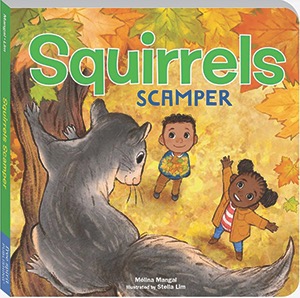
Squirrels Scamper, by Mélina Mangal

Two young children — cousins Kamali and Josiah — notice the squirrels moving fast outside their window and venture to the backyard to watch them. They practice using their sense of balance to gain confidence while they climb, jump and move like the squirrels do. Taking in a beautiful fall day, they help rake the yard before jumping in their pile of leaves, noticing how their own work and play are parallel to a squirrel’s day. Squirrels Scamper is part of the Outside Our Window Board Book series, encouraging children — especially those in urban environments — to explore, protect and delight in nature.

The Five Wolves, by Peter McCarty

Across oceans, through fields and down tunnels, five daring wolves traverse the planet in search of wonders to draw and paint. All the while, a disembodied narrator spins the tale of their absurdist adventure and asks big questions. What is art? And who does it belong to? Part epic picture book, part graphic novel, The Five Wolves defies genres. With intricate ink work and meticulous hand-lettering, McCarty has crafted an exquisitely illustrated epic poem and a testament to the power of art and artists.

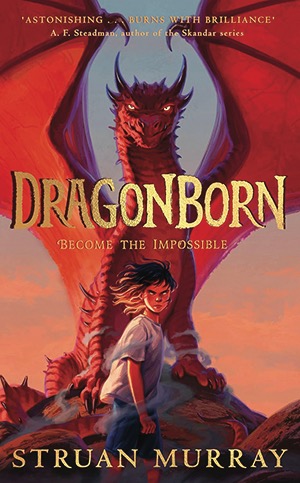
Dragonborn, by Struan Murray

There is a secret world of dragons that lurks at the edges of our own. But dragons also live among us. These Slumberers have been human for so long they have forgotten their true selves — until something awakens the dragon within. Twelve-year-old Alex Evans is about to wake up. Ever since her father’s death, Alex’s overprotective mother has smothered her with unbreakable rules and unspoken fears. Feeling trapped, Alex’s frustration has become too big to hide away. Burning inside, she erupts into a fierce, fiery roar. A new school and a new life await her on the legendary island of Skralla, one of the last surviving dragon havens. There, she will train alongside other young dragons who are wild, untamed and — unlike Alex — skilled at transforming and embracing their dragons within. As dark factions begin to rise, Alex finds herself in a race to unlock her long-dormant power before Drak Midna, the greatest dragon of all, rises to wage war against the human world.

Simple Life

SIMPLE LIFE

The Comforts of October

Cooler days, evening fires and scary-good cookies

By Jim Dodson

My late mother liked to tell how, once upon a time, I loved to stand at the fence of the community-owned pasture behind our house in North Dallas feeding prairie grass to a donkey named Oscar.

I was barely walking and talking.

“You weren’t much of a talker, but seemed to have a lot to say to Oscar, far more than to anyone else,” she would add with a laugh. “We always wondered what you two were talking about.” 

Oscar’s kind, old face, in fact, is my first memory. Though I have no idea what “we” were talking about, I do have a pretty good hunch.

My mom also liked to tell me stories about growing up in the deep snows of Western Maryland, which sounded like something from a Hans Brinker tale, fueling my hope to someday see the real stuff. Quite possibly, I was asking Oscar if it ever snowed in Texas. 

I finally got my wish when we visited my mom’s wintery German clan for Christmas, days after a major snowstorm. It was love at first snowball fight with my crazy Kessell cousins. We spent that week sledding down Braddock Mountain and building an igloo in my Aunt Fanny’s backyard in LaVale. I hardly came indoors. I was in snowy heaven.

My mom took notice. “You’re such a kid of winter,” she told me. “Maybe someday you will live in snow country.”

Her lips to God’s ears.

Twenty years later, I moved to a forested hill on the coast of Maine where the snows were deep and winters long. My idea of the perfect winter day was a long walk with the dogs through the forest after a big snowstorm, followed by supper near the fire and silly bedtime tales I made up about our woodland neighbors as I tucked my young ones into bed. On many arctic nights, I lugged a 50-pound bag of sorghum to a spot at the edge of the woods where a family of white-tailed deer and other residents of the forest gathered to feed. Tramping back to the house through knee-deep snow, I often paused to look up at the dazzling winter stars that never failed to make me glad I was alive.

Perhaps this explains why I love winter as much as my wife does summer.

The good news is that we find our meteorological balance come October, a month that provides the last vestiges of summer’s warmth even as it announces the coming of winter with shorter days and sharply cooler afternoons. We share the pleasure of October’s many comforts.

As Wendy can confirm, her baking business ramps up dramatically in October as customers at the weekend farmers market clamor for her ginger scones, carrot cake and popular seasonal pies — pumpkin, pecan and especially roasted apple crumb — which typically sell out long before the market closes at noon. October marks the beginning of her busiest and happiest baking season.

Meanwhile, back home in the garden, I will be joyfully cutting down the last of the wilted hydrangeas, cleaning out overgrown perennial beds, spreading mulch on young plants and already planning next summer’s garden adventures — that is, when I’m not raking up piles of falling leaves, a timeless task I generally find rather pleasing until the noise of industrial-strength leaf blowers fire up around the neighborhood.

Their infernal racket can shatter the peace of an October morn and make this aging English major resort to bad poetry, with apologies to Robert Frost:

I shall be telling this with a sigh

two roads diverged in a yellow wood

and I one weary gardener stood

and took the path less traveled by

with rake in hand and shake of fist

oh, how these blowers leave me pissed! 

With the air conditioning shut off and the furnace yet to fire up, on the other hand, October brings with it the best time of the year to fling open bedroom windows and sleep like footsore pilgrims at journey’s end. At least our three dogs seem to think so. Our pricey, new, king-sized marital bed begins to feel like a crowded elevator on chilly October nights.

Among October’s other comforts are clearer skies, golden afternoon light and the first log fire of the season, celebrated by a wee dram with friends and thoughtful conversation that drifts well into the night until the host falls asleep in his favorite chair. That would be me.

Everything from my mood to my golf game, in fact, improves with the arrival of October. And even though my interest in all sports seems to dim a little bit more with each passing year (and the worrying growth of online betting), the World Series and college football can still revive my waning boyhood attention on a brisk October weekend.

Halloween, of course, is the grand finale of October’s comforts. What’s scary is how much money Americans shell out annually on costumes, candy and creepy, inflated yard decorations (something like $11.6 billion last year, according to LendingTree), which suggests to me that being happily frightened by the sight of lighted ghouls on the lawn and kids who come in search of candy dressed as the walking dead is simply a welcome break from the daily horrors of cable news.

Our Halloween routine is one I cherish. Wendy’s elaborately decorated Halloween cookies disappear as fast as she can make them (I’m partially to blame, but who can resist biting the head off a screeching black cat or a delicious, bloody eyeball?) and I take special pleasure in carving a pair of large jack-o’-lanterns, one smiling, the other scowling, which I light at dusk on Halloween. Years ago, I used to camp on the front steps dressed as a friendly vampire until I realized how scary I looked, with or without the makeup.

Now, the dogs and I simply enjoy handing out candy to the parade of pint-sized pirates and princesses and other creatively costumed kids who turn up on our doorstep.

The best thing about October’s final night is that it ushers in November, a month of remembrance that invariably makes me think of my late mother’s stories of snow and a gentle donkey named Oscar.

Last year, my lovely mother-in-law passed away on All Souls Day, the morning after Halloween. Miss Jan was a beloved art teacher of preschool kids, whose creativity and sparkling Irish laugh brought joy and inspiration to untold numbers of children.

And me.

What a gift she left to the world.

Pleasures of Life

PLEASURES OF LIFE

Fair Enough

Americana in the autumn

By Peter Doubleday

Ever dine in a Waffle House at 3 a.m.? Well, welcome to the fair.

In 50 years of announcing horse shows, I’ve attended over 30 state and county fairs, from Texas to New York, Florida to Colorado, and each and every one of them is a true slice of Americana — hold the grits.

Growing up in Syracuse, New York, my father hosted an early morning (around milkin’ time) agricultural radio show for WSRY — 570 on the dial — and served as a board member and horse show announcer at the Great New York State Fair.  He was at the radio station by 4:30 in the morning, on air from 5 to 7, then off to the fairgrounds until well into the night talking to throngs of spectators and producing the horse show.

When I was 6, I couldn’t wait to watch the train pull in from Buffalo (its county fair was the week before) like a rolling midway. Most of the rides arrived by truck, but the vast number of tents, generators, animals and all the carnies I could count traveled by train. The vagabond equipment came from James E. Strate Shows in Florida. I thought it was so cool that I created my own Strate Show train and vehicles on my HO scale train set in the basement of my house.

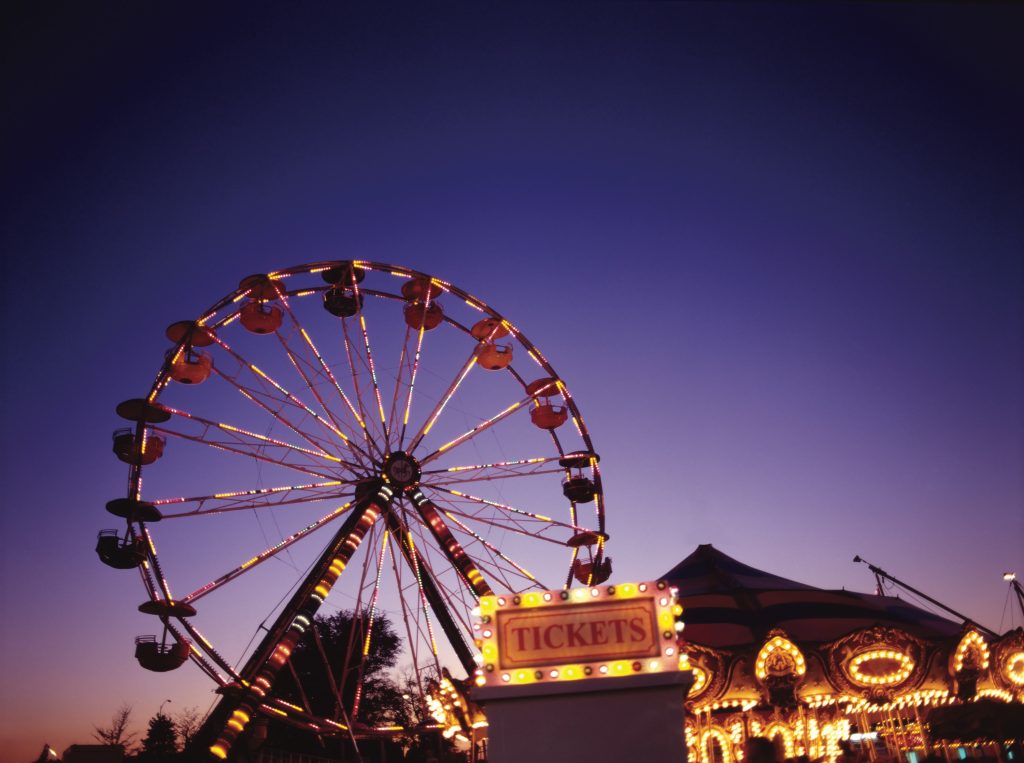
In those days fairs had agriculture, history and competition components, but the midway was always the centerpiece. Forget OSHA; how dizzy could you make yourself on the spinning and rattling Tilt-A-Whirl, and how many times in a row did you dare ride it? The view from the very top of the double Ferris wheel was impressive enough that it yielded my first kiss at the ripe old age of 11.

Every game on the midway had its own barker and its own tricks. Why couldn’t anyone make a basket? Was the ball too big or the hoop too small? One year the guy overseeing the ring toss felt so sorry for me he gave me a stuffed animal out of pity. At the Erie County Fair in Hamburg, New York, there was a giant tent with rows of stools and small boxes arranged like a bingo card. The speaker would call out “number one,” and people hoping to win a set of kitchen china would throw tiny red rubber balls that had as much chance of staying in box number one as a bowling ball has of floating. I couldn’t wait to see the bearded lady, the snake boy of Borneo and the alligator man. And I thought it was all real.

Features at fairs ranged from old-time stock car racing to its ultimate icon, the Demolition Derby. At a county fair in western New York the 3,000-seat grandstand was sold out, with people watching their neighbors destroy cars for nothing more than bragging rights at the local garage the next morning. The last time I watched a derby there were 75 cars and a completely superfluous announcer, since you couldn’t hear a word he said once the crunching began. The fire department got a major workout.

Every fair has a smell and aroma all its own, a combination of hundreds of different forms of food, fried in unimaginable combinations. Some of the most bizarre treats I’ve seen included a burger cooked inside a doughnut. If I could have figured out the overhead and net from selling fully loaded baked potatoes I could’ve been a millionaire.

Dairy and beef cattle, goats, sheep and pigs were judged, and the horse shows at the fair featured every imaginable breed. Every fair, it seemed, had its own “world’s largest pumpkin.” And how, exactly, does one judge a hay contest?

One of my fondest memories of the New York State Fair was the day my name was announced over the entire fairgrounds to report to the State Police exhibit in Hall A. I was 7 years old and my name had been drawn to win a German shepherd puppy. I named him Trooper. It had a better ring than Bumper Cars.

Out of the Blue

OUT OF THE BLUE

Sound It Out

A serious case of onomatopoeia

By Deborah Salomon

Lately, when trying not to think about the mess this world is in, my mind wanders to the etymology, history, development, significance of words, especially when uttered by powerful people. Words are free. Anybody can invent a word. Maybe it will enter the lexicon, maybe not. I attempt a colorful vocabulary as a writer and, before that, a student. Nothing a professor likes better than a term paper livened with 50-cent words. Spelled and used correctly, of course.

My favorite words showcase onomatopoeia . . . quite a whopper itself, meaning imitating the sound it defines. The usual illustration is Edgar Allen Poe’s “The Bells,” where sing-song repetition (and alter-whoppers like “tintinnabulation”) suggest Quasimodo pulling the ropes at Notre Dame. The cathedral, not the university. Strange how Americans pronounce those two words differently when referring to the dames residing in Paris and South Bend.

Next conundrum: Which came first, the sound or the word? My mind began spilling out more candidates than M&Ms on an assembly line — a gross exaggeration called hyperbole. Yeah, there’s right much hyperbole floating around these days.

Consider “whistle.” In order to articulate the word, one must purse the lips — as though to whistle. How about “gallop’’ which, when rhythmically repeated mimics the clip-clop of a horse’s hooves. “Soar,” dragged out a bit, allows the kite, then the voice, to rise before leveling off.

“Peck” is as staccato as a hen wandering the barnyard. “Pitter-patter” has no meaning, except how a toddler sounds running across a bare floor in his or her first real shoes. Sadly, it faces obsolescence since most contemporary kiddie footwear belongs to the rubber-soled variety, formerly sneakers until diversified to fit a variety of sports, yet stubbornly called “running” shoes.

Maybe I’m putting the cart before the clip-clop. Not if you agree that “thunder” owns an unspoken rumble that influences enunciation. Same with “scream,” commonly accompanied by a facial contortion, à la Janet Leigh in a Bates Motel shower.

Occasionally, a trope inspires physical rendering, the best being “describe a spiral staircase without using your hands.”

I even dredged up a few words that connect only to their sound, without a clear meaning, like the ocean that “laps” the shore. Lap? Maybe a kitten lapping milk from a saucer —more peaceful than a runner going once around the track in rubber-soled footwear.

Some words, of themselves, trigger action. Say “blink” without blinking.

Once upon a time, meaning what follows may be apocryphal, schools divided their curriculum into headings. My favorite was Language Arts, which likens the study of English to painting sunflowers, a lily pond, maybe a girl with a pearl earring. Right on, especially when active verbs move the brushstroke along. “Mona Lisa smiles . . . ” captures the action better than “Mona Lisa is smiling,” which she isn’t, according to cognoscenti, who mention bad teeth. “Noah fears the water” hits harder than the passive “Noah is afraid of the water.”

Good thing he got over that.

But my best word is “exacerbates,” which shivers like sharp edges clashing.

Conclusion: Words began as a collection of rumbles, splashes, whispers, clicks, chimes, growls, grunts and rustles. Written or spoken, words have become the palette, the gradations, the pictograms, an evolving commodity and, thank goodness, the only thing for which I’m rarely at a loss.

Focus on Food

FOCUS ON FOOD

A Pearfect Composition

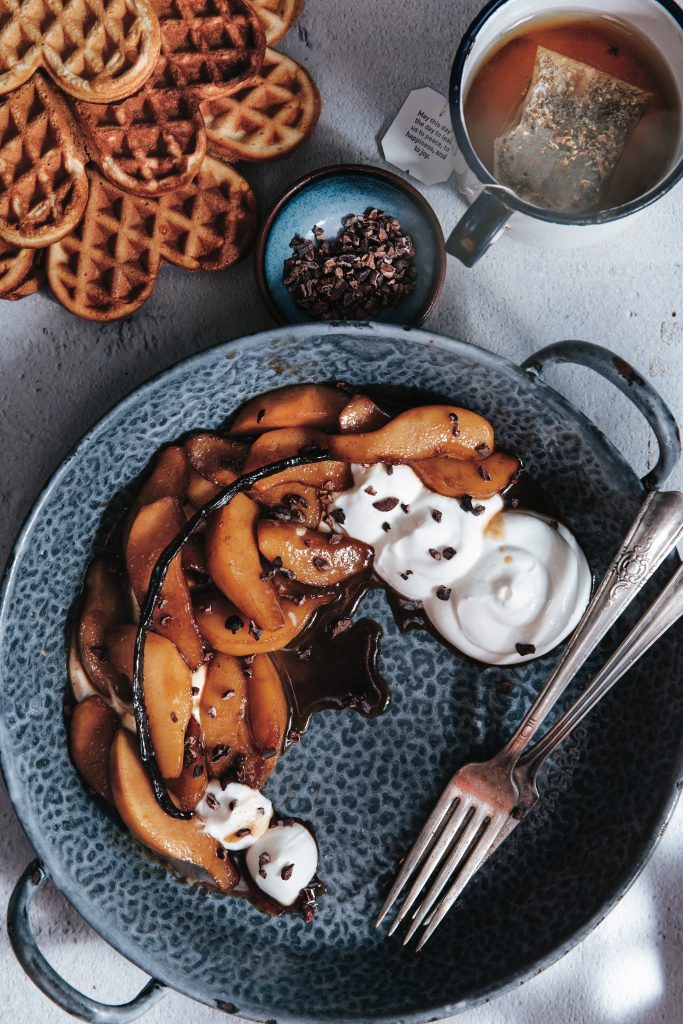
Poire belle Hélène, compote-style

Story and Photograph by Rose Shewey

Say what you will about King Louis XIV of France — often characterized by his foes as a pompous, philandering tyrant — but he got at least one thing right: The “Sun King” declared the pear to be a royal fruit. Among his more celebrated traits was his passion for fine art and culinary excellence, and with that, the French king recognized the gastronomic value of the often underrated pear.

In the royal kitchen garden at Versailles, the Potager du Roi, Louis XIV planted over 140 different varieties of pear trees! That’s roughly 130 more than the U.S. knows today. There are only 10 key varieties grown commercially across the United States. Europe fares a tad better in this regard: While supermarket pear varieties are also limited, hundreds of heirloom pear types are conserved and fostered by private growers and boutique tree nurseries.

The story of the rise of the pear to Olympic heights continued in France — where else? When composer Jacques Offenbach premiered his hugely successful operetta La belle Hélène in 1864 in Paris, no other than Georges Auguste Escoffier, the “king of chefs and chef of kings,” took it upon himself to create a dish in celebration of the beautiful Helen, the namesake of a dessert that should be known around the globe.

The genius of the recipe for “Poire belle Hélène” lies in its simplicity: poached pears, vanilla ice cream, chocolate. Variations are numerous, and I’m adding my own, slightly simplified version. Instead of a poached whole (or half) pear, I make pear compote, which only takes minutes on the stove and boasts flavor through and through. Vanilla ice cream is hard to top, but a vanilla creme made of yogurt and heavy cream is a stellar, slightly more versatile substitute. Don’t omit any chocolate on my behalf — but cacao nibs are a lovely addition that adds some crunch, in more ways than one.

Pear Compote with Vanilla Crème

(Serves 2)

Vanilla Crème

1 vanilla bean

200 grams heavy whipping cream

1-2 tablespoons sugar

200 grams Greek yogurt

Cut vanilla bean lengthwise and scrape out seeds into a tall bowl, or the bowl of your stand mixer. Add heavy whipping cream and sugar and whip, using a hand mixer or stand mixer, until cream is semi-whipped. Start adding spoonfuls of yogurt while continuing to whip until you have a thick cream, then refrigerate.

Pear Compote

3-4 pears (about 400 grams), such as Bartlett or Red Anjou or any other variety of your choice

3 tablespoons butter

2-3 tablespoons muscovado sugar (or other dark, rich sugar)

Pinch of salt

Wash and peel pears, then cut them lengthwise into thin slices or dice, as desired. Melt butter in a heavy bottomed pan on medium/low heat and gently toss pears, until they are lightly sautéed, about 3-4 minutes. Add muscovado sugar and simmer on low heat until liquids turn syrupy and pears are softened. Add a pinch of salt and serve warm with vanilla creme.

Birdwatch

BIRDWATCH

Cleanup on Aisle 9

The unparalleled scavenger

By Susan Campbell

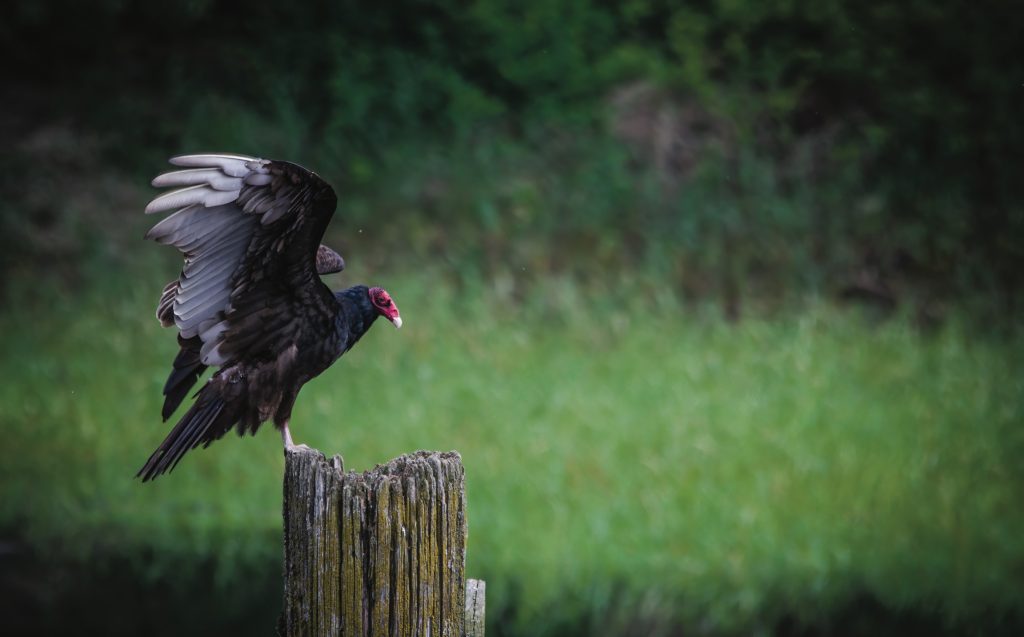
There! By the edge of the road: It’s a big, dark bird. It looks like it could be a wild turkey. But . . . is it? A closer view reveals a red head and face with a pale hooked bill, but a neck with feathers and a shorter tail. Definitely not the right look for a turkey — but perfect for a turkey vulture. This bird is also referred to as a buzzard or, for short, a “TV.”

Making an identification of these odd-looking individuals is somewhat harder these days since wild turkeys have made a good comeback in the Piedmont of North Carolina. Turkey vultures and turkeys can occasionally be seen sitting near one another in an agricultural field where they may both find food or are taking advantage of the warmth of the dark ground on a cool morning.

Turkey vultures, however, are far more likely to be seen soaring overhead or perhaps perched high in a dead tree or cell tower. They have a very large wingspan with apparent fingers, created by the feathers at the end of the wing. The tail serves as a rudder, allowing the bird to navigate effortlessly as it’s lifted and transported by thermals and currents high above the ground. These birds have an unmistakable appearance in the air, forming a deep V-shape as they circle, sometimes for hours on end.

It’s from this lofty vantage that turkey vultures travel in search of their next meal. Although their vision is poor, their sense of smell is keen. They can detect the aroma of a dead animal a mile or more away. They soar in circles, moving across the landscape with wings outstretched, sniffing all the while until a familiar odor catches their attention.

Turkey vultures are most likely to feed on dead mammals, but they will not hesitate to eat the remains of a variety of foods, including other birds, reptiles and fish. They prefer freshly dead foods but may have to wait to get through the thick hide of larger animals if there is no wound or soft tissue allowing access. Toothed scavengers such as coyotes may actually provide that opportunity. Once vultures can get to flesh, they are quick to devour their food. With no feathers on their head, there are none to become soiled as they reach into larger carcasses for the morsels deep inside.

Vulture populations are increasing across North Carolina — probably due to human activity. Roadways create feeding opportunities year-round. Landfills, believe it or not, also present easy meals. In winter, the northern population is migratory and shifts southward, so we see very large concentrations in the colder months. The large roosting aggregations can be problematic. A hundred or more large birds inhabiting a stand of mature pines or loitering on a water tower does not go unnoticed. 

Except for birdwatchers and those who live near a roost site, most people overlook these impressive birds. Often taken for granted, they are unparalleled scavengers, devouring the roadkill our highways inevitably produce.

Hometown

HOMETOWN

Keep on Truckin’

New life for old wheels

By Bill Fields

My mother drove until she was in her early 90s, an age-defying feat that made me happy until it made me scared.

I witnessed things on successive visits that caused concern. After Mom dropped me off early one morning at the Southern Pines train station to catch Amtrak’s Silver Star to New York, from the platform I noticed she lingered a long time in the parking space before leaving.

When I was in town the next time, she took more than an hour to return with a bag of groceries from Bo’s (the former A&P and now an arcade), arriving as I was calling the store to see if someone had any knowledge of her whereabouts. Mom claimed nothing was out of the ordinary, but it seemed likely she had gotten lost making the 1 1/2-mile trip home from Bo’s, a route she knew like the back of her hand.

Not too long after that incident, one of my sisters drew the unpleasant task of telling Mom it wasn’t safe for her to be behind the wheel anymore — even on the very short in-town trips that had become the extent of her driving — and that we were taking away the car keys for her safety and that of others. As our mother stewed about the blow to her independence, we children deliberated about where to hide the keys.

In 1982, two years after becoming a widow, Mom had upgraded from an aging Mustang to a gray Honda Civic, her first new car since our family splurged on a 1969 Ford Fairlane from Jackson Motors. She drove that Civic for a decade and a half, trading it in not long before her 75th birthday to purchase a new 1997 Honda Civic.

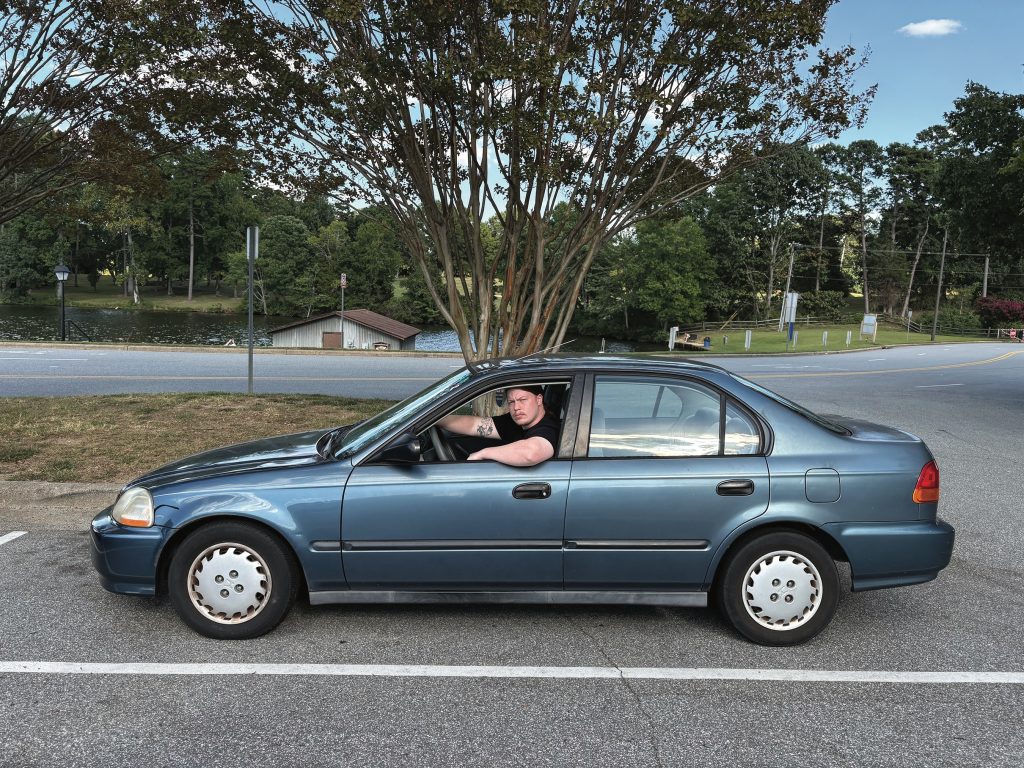
Mom’s second Civic, “cyclone blue metallic” in color, provided reliable transportation around Moore County and on occasional trips to visit my sister Sadie in High Point, which she was comfortable making until age 87. Once my mother stopped highway driving, I would take the Honda for an engine-exercising spin when I was home, driving north on U.S. 1, getting it up to 65 or 70 miles per hour before turning around in Dunrovin and heading back south.

More than once when taking Mom’s car to get the oil changed, I had someone ask if I was interested in selling it, so clean was the body and so low was the mileage.

I’m so glad I never entertained those offers. In 2018, a year after my mother went to live in an assisted-living facility, my nephew John and his son, Tristen, picked up the Civic, which had only 35,000 miles on the odometer. Tristen has driven “Old Blue,” as his dad calls the car, since getting his driver’s license in 2019.

Tristen is a muscular, 22-year-old college student who was an all-conference defensive lineman in high school, but he fits in the small sedan — and it has been a great fit for him. 

“I’m very blessed that my car is still working perfectly fine and giving me the transportation I need,” said Tristen, who has doubled the mileage on his great-grandmother’s former vehicle since it became his. “The only things I’ve done is gotten new tires, a new radiator and new fuel injectors. My dad talks about getting me a bigger car, but honestly I don’t need it. I enjoy my car, and I’d rather keep driving it until I can’t.”

Only 5 percent of the cars on the road today were manufactured in the late 1990s. The oldest car among Tristen’s friends is a 2012 model. He just drove the 28-year-old car on its longest journey, 400 miles to Pennsylvania and back, to attend a friend’s wedding.

“Just a couple of tanks of gas and no problems whatsoever,” Tristen reported. “I don’t have plans for another trip like that anytime soon, but if I need to, I’ll have even more faith that it’ll make it.”

I have friends with Hondas that have more than 250,000 miles. Mom’s former car might be in the family for a while, and that is fine with its second owner. “I think,” Tristen said, “I will always be an old-car guy.”