Birdwatch

BIRDWATCH

Swamp Song

A liquid stream of notes

By Susan Campbell

To most folks, especially non-birders, a sparrow is just a sparrow — a small brown bird with varying amounts of streaking and a stubby little bill. Not very impressive. However, in Central and Eastern North Carolina, and especially in winter, nothing could be further from the truth.

Although few sparrow species can readily be found during the breeding season in our area, we have 10 different kinds that regularly spend the cooler months here. These range in size from the husky fox sparrow down to the diminutive chipping sparrow. Without a doubt, my favorite in this group is the swamp sparrow, whose handsome appearance and unique adaptations make it a definite standout.

At this time of the year, these medium-sized sparrows are a warm brown above with black streaking — like so many others — but swamps have a significant amount of chestnut apparent in the wings. The gray face, dark eye line and crown streak contrast sharply with the white throat and breast. The tail is relatively long and rounded, a very good rudder for moving around in the tight quarters where these birds live.

As the bird’s name implies, it is usually found in wetter habitat year-round. With longer legs than their conspecifics, swamp sparrows readily forage in the shallows, searching not only for fallen seeds and berries, but also for aquatic invertebrates. Individuals are even known to flip submerged vegetation with their bills in search of a meal.

The song is a liquid stream of notes that we rarely hear during the cooler months. The call note, however, is very loud and distinctive and uttered frequently. I hear far more of these birds calling from thick, wet habitat than I see along our coast. Swamps give themselves away with a metallic “chink.” If they are disturbed, they are hesitant to fly — probably due to their excellent camouflage. Instead, these birds usually choose to run from potential danger. They can maneuver deftly through sticks, stems and branches when pursued.

If a swamp sparrow does fly, it will not be over a great distance. A leery individual will sail to the nearest perch and survey the source of the disturbance, and then it will quickly vanish into thick vegetation.

Birds of wet areas such as these can be attracted to your yard even if you do not live in a coastal or riparian area. They may show up during the spring or fall migration if you can create cover for them. Adding low, thick shrubs such as blueberries or gallberry will help. A simple brush pile adjacent to your feeding station may be enough to get their attention, but in order to really up the odds of attracting a few swamp sparrows, consider creating a small wetland garden. A small depression will attract more than just this species: It will provide for a multitude of native critters and can be used to naturally treat (i.e., filter) household wastewater. Water features of all sizes have become a very popular way to increase wildlife, even on small properties.

Swamp sparrows have been studied for almost a century. It was one of the first species to be banded by ornithologists using modern methodology in the early 1900s. In fact, a banded bird from Massachusetts in October 1937 was relocated in central Florida in January of 1938 having covered a whopping 1,125 miles. This information was some of the earliest data produced on the migration of songbirds in the United States.

The next time you are out walking along the edge of a marshy area or paddling in the shallows, watch and listen for this neat little winter resident. One may pop into view and treat you with a short look. 

Southwords

SOUTHWORDS

Blue Light Special

By Ruth Moose

Spooked. She, who had never had a single mark on her driving record, was now full of nerves anytime she was on the road. OK, maybe the first ticket was funny.

The little, sort of Barney Fife-scrawny highway patrolman even apologized when he gave it to her. He was so young and looked younger. Maybe it was his first day. “Ma’am,” he said after she handed him her vehicle registration, “did you know you were speeding?”

“No,” Lucy said.  “I truly was not aware I was speeding.”

She’d never been a fast driver. Just the opposite. Maybe she was enjoying her double espresso milkshake too much. She’d never had an espresso milkshake before, much less a double. But it was so cold and sweet and creamy and yummy. 

“You were doing 70 . . . in a 55-mile zone.”

“Oh, dear,” she said. “I know I had to pass that gravel truck.” She’d already had one windshield replaced.

“The date on the ticket is when you go to court,” the kid said. His hand shook when he wrote out her ticket. “You drive safe now.” He tipped his hat.

“Why honey, you were only doing your job,” she said.

Well, it was her fault, or maybe the espresso milkshake.

Later her son said, “You’re going to get points and your car insurance is going to skyrocket.” Her grandson laughed. He couldn’t wait to tell his friends his grandmother got a speeding ticket. His grandmother!

“Maybe there’s a lawyer who can take your money and make it disappear,” her son said.

“How much?” Lucy asked. “Do I still get points?”

“I’ll check,” her son said, “but it’s not going to be cheap”

Her grandson just kept laughing.

She ended up writing a hefty check to the secretary of some lawyer she never saw in a dark, backstreet office.

“I hope this teaches you a lesson,” her son said. “You are too old to be driving that fast.”

Espresso. She thought. Double espresso. It had been the best milkshake she’d ever had. And the most expensive.

She couldn’t believe her second ticket! Not again, she sighed when she saw flashing blue lights in her rearview mirror. She pulled over, shaking her head. Surely there had to be some mistake. She had been so careful, she thought.

This officer wasn’t anything like the first. He almost yelled. “Lady, do you have any idea how fast you were going?”

“No,” she said. “I thought I was being careful.”

“Don’t you know how to read signs? They’re there for a purpose,” he motioned for her license and registration.

By now she knew the routine.

He went back to his patrol car, icing her.

She waited. “I can’t believe this,” she kept saying. Two tickets in two weeks. Damn, damn, damn.

“Seventy,” he said when he came back, writing. “Seventy. You shouldn’t even be on the road.”

“Twice in two weeks,” she said.

His pen stopped moving. “What did you say?”

“I said this is my second ticket in two weeks.”

“Stay here.” He went back to his patrol car.

“This one . . . the one I’m writing you right now is the only one I saw.”

Well, at least she knew the money she paid the backstreet lawyer had been well spent.

When she told her son about the blue lights, he groaned. “This one is really going to cost you. Your lawyer might not even handle it.”

Wrong. It cost her $500.

Then, six weeks later, on the very same road, really reading and watching all the traffic signs — and driving like an old lady, which she was — the blue lights, flashing, flashing, flashing pulled her over again.

This time the trooper was tall, lean, graying at the temples.

They danced the dance of the documents.

“Lady,” he said handing them back. “How old are you?”

“I am 82 years old last week,” she said, pulling on the steering wheel to draw herself up an inch or two.

“Eighty-two,” he started laughing. “OK. I’m going to give you a late birthday present.”

He put his ticket book back in his breast pocket, patted it and started toward his patrol car.

No ticket!!!! No ticket!!!

She pulled out slowly and drove on.

Happy birthday to me. Maybe, she thought, she would treat herself to a double espresso milkshake. 

Out of the Blue

OUT OF THE BLUE

We Have a Day for That

From groundhogs to presidents

By Deborah Salomon

One thing Americans excel at, regardless of political affiliation: assigning a persona or a product or an event to every month, ostensibly to inform, otherwise for profit.

Is there another reason to glorify a rodent on national TV, on Feb. 2?

February is top-heavy with such occasions, most celebrated by eating specific foods, beginning with Groundhog Day.

Huh?

No, braised groundhog is not on the menu. Then why the fuss? Something about a shadow and the remaining days of winter despite such a wide weather variant from Maine to the Carolinas that its significance is lost, especially in the era when AI does the thinking and people, the heavy lifting.

Next: Abe Lincoln’s birthday, which for ages was correctly observed on Feb. 12. Then the Uniform Monday Holiday Act of 1968 had the effect of merging Abe with George Washington, born on Feb. 22. When the new law bumped George to a Monday, Lincoln inevitably came to join him, anchoring Presidents Day weekend, which made ski resorts positively ecstatic.

Let Congress do the advertising! French onion soup baked in a crock, a skier’s delight, replaced George’s cherry pie. Lincoln wasn’t much on food. Hence the gaunt cheeks and bony fingers. His favorite meal: corned beef and cabbage.

Sorry, Abe. That doesn’t happen ’til March.

No mention of the other two February birthday boys: Ronald Reagan and William Henry Harrison.

Chinese New Year, a moveable feast this year occurring Feb. 17, is a huge deal in big-city Chinatowns. First parades, then multi-course banquets, each food representing a wish for the coming year (including luck and money), are a prized invitation from chefs wanting to thank loyal customers.

Just don’t ask too many questions about ingredients, in this Year of the Horse. Fire Horse, that is.

Oops, we jumped right over Valentine’s Day, Feb. 14. Maybe that’s a good thing, given chocolate has almost doubled in price since Cupid last launched an arrow. Another conflict: Feb.17 is also Mardi Gras, “Fat Tuesday,” a final splurge before the Lenten deprivations. I visited New Orleans just before Lent, in the Cajun-crazed 1990s, and learned to simmer a gumbo, throw together a po’ boy sandwich. Divine and quite different from bread fried in bottom-of-the-barrel lard used up by European peasants.

Then, certain holidays have been mismatched with their modernized versions. I learned that Thanksgiving, a harvest feast, probably originated in October — and seafood, bountiful off the Massachusetts coast, would have been favored over scrawny, flat-chested wild turkeys spit-cooked over an outdoor fire.

But plump lobster meat dipped in butter . . . fantastic. Ditch Butterballs. Make mine a Butterclaw.

February recalls a poignant memory.

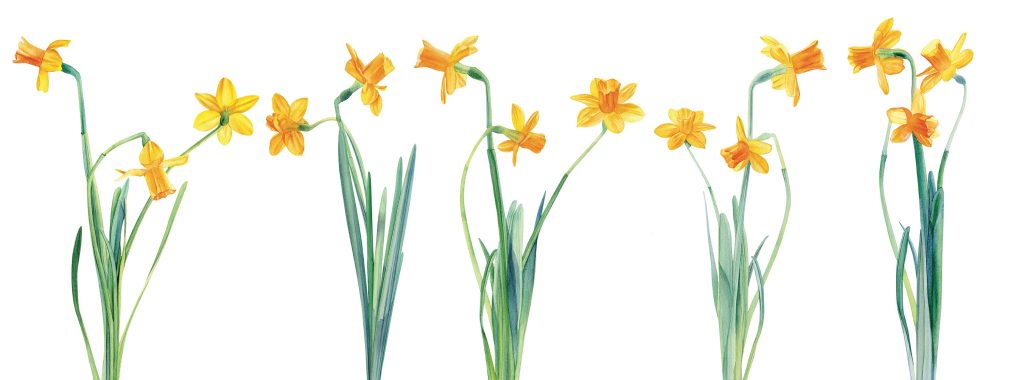
My grandparents lived in Greensboro, on Lee Street, in the house where my mother and her brothers were born. That meant fireplaces, a wood stove, one bathroom tacked onto the back, a half-acre garden where Grandaddy grew a winter’s worth of vegetables that Nanny “put up,” along with pears falling from the tree and grapes from the arbor. The southeast side of the house got full, unobstructed sunshine all winter. By late February Nanny’s daffodils poked through the ground and leaned against the clapboards. She would pick a few still in bud, wrap them in damp rags and then a plastic bread bag, secure the bunch in a cardboard box and mail them to me, stuck in wintry Manhattan. Once in water and sitting on the windowsill, buds burst into bloom.

Nanny was gone (followed soon by Granddaddy, who had come to live with us) when the city appropriated their land, knocked down the house, uprooted the pear tree to widen, and in 2013 rename the street Gate City Boulevard. In February I still mourn Nanny’s faithful daffodils, a promise that spring would eventually warm the concrete city where I waited, impatiently, for my reward. 

The Naturalist

THE NATURALIST

The Ginger Dogs of Eagle Springs

Surprising encounters with the crafty red fox

Story and Photographs by Todd Pusser

The bite from the frigid December air numbed my fingers as I fiddled with the latch on my trail camera. Mounted to the side of a tree bordering a tiny creek, for the past five years the camera has recorded the comings and goings of the critters that call this Eagle Springs forest home every single day, 24 hours a day, seven days a week. A strong Arctic cold front had pushed through the state the previous evening and the forest was eerily quiet. Not a creature was stirring, not even a cardinal. It was as if all the animals had decided to sleep in on this frosty morning.

Extracting the memory card from the camera, I sat down on a nearby log and loaded it into my laptop. Thumbing through the videos, I quickly noted raccoons foraging in the shallow water on most nights since I last checked the camera 10 weeks prior. On Halloween night, a plump opossum ambled slowly by. Thanksgiving Day revealed two large bucks staring curiously at the camera. There were numerous daytime videos of gray squirrels, turkeys, American robins, even a brown thrasher. A bobcat walked through at dusk in early December. As did a cottontail rabbit.

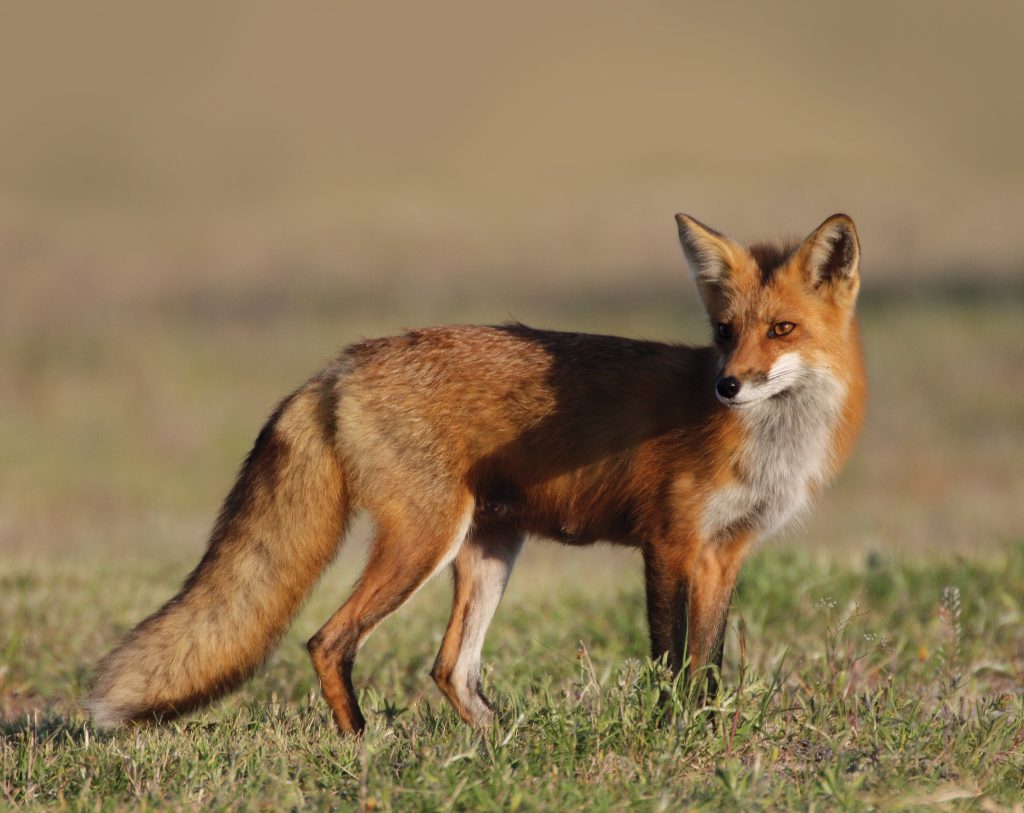
But it was a video from the night of Oct. 18 that really caught my attention. I paused and stared at the computer screen, not sure if my eyes were deceiving me. I replayed the video to be sure. Just before midnight, a lanky critter entered the camera’s field of view from the left, quickly walked through the frame, and exited stage right. It was only a few seconds of footage but long enough to make out the salient features — a pointed nose, triangular ears, white-tipped tail and four long legs that appeared to be wearing black socks. No doubt about it. It was a red fox, the first I have seen around Eagle Springs in many, many years.

Long believed to be introduced into the South by early European Colonists for sport, a 2012 genetic study revealed that red foxes are indeed native to the region. Turns out, the crafty canids naturally made their way from the boreal regions of North America and points farther west as the vast Eastern forests were cleared for agriculture purposes at the time of our nation’s founding.

When I was young, the red fox was the most ubiquitous of our native canids, and I observed them regularly around the Sandhills. North Carolina’s other native fox, the gray fox, was also around, but I rarely encountered it. With a fluffier tail, tipped in black instead of white, gray foxes are easy to distinguish from red foxes. About the only time I saw them in my youth was during their early winter breeding season, when the occasional individual could be seen skulking along the edge of our yard on moonlit nights.

By comparison, red foxes were seemingly everywhere. I vividly recall observing one dashing across a green of Seven Lakes Golf Club on a bright spring afternoon while teeing it up with my old man when I was around 12 years old. I regularly saw one along the entrance road to Pinecrest High School throughout my teenage years. Up until the turn of the new millennium, it was not uncommon to see the lifeless bodies of red foxes dotting highways throughout the Sandhills, all victims of hit and runs. Soon thereafter, for reasons unknown, I started seeing fewer and fewer red foxes in the region.

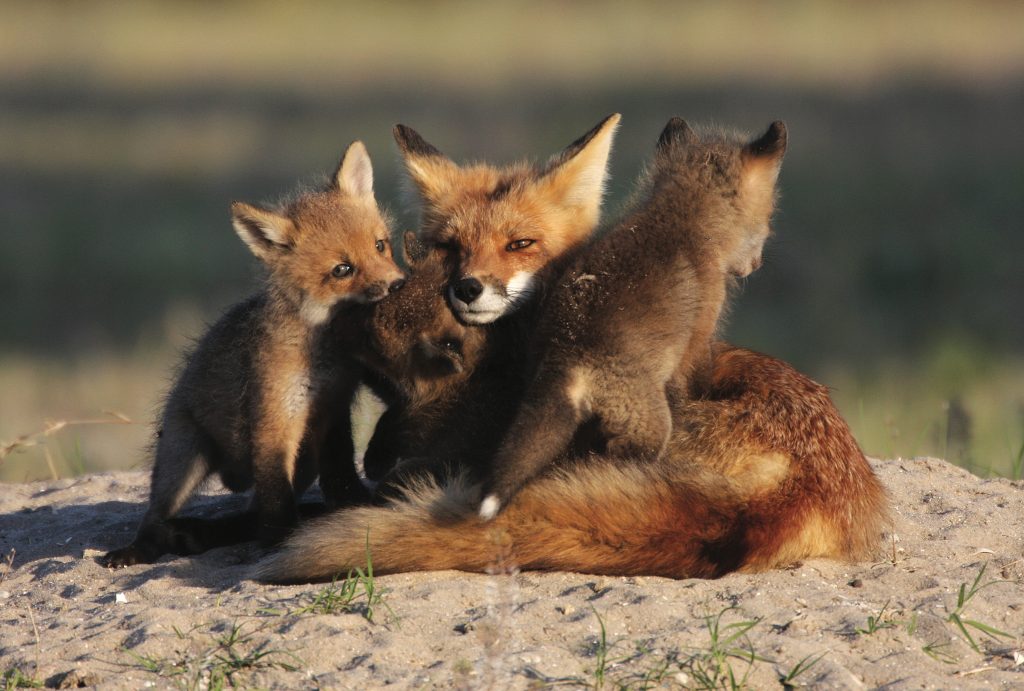
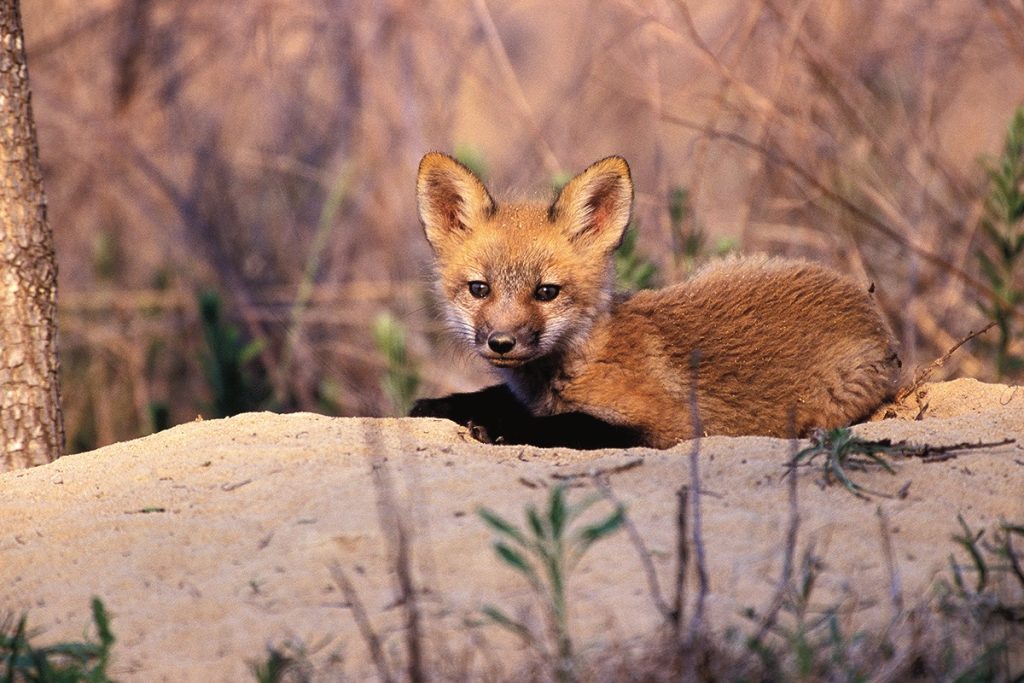
The last time I had an opportunity to photograph an Eagle Springs red fox was in the spring of 2003, when I found an active den near my parents’ house. Sitting in a blind nearby, I watched as the adorable pups roughhoused and played on a sand berm beneath a turkey oak while their parents were away foraging for food. Soon after that spring, sightings of the ginger dogs became more and more infrequent. My field notes from that time record no sightings of red foxes for years. It was as if the species had completely disappeared from the landscape. Did a disease, such as distemper or rabies, wipe out the local population?

A clue came the following year, when I saw my first coyote in Eagle Springs, a hefty adult walking across a plowed field on a moonlit night. Soon thereafter, I found a road-killed coyote a half mile from my parents’ house. Around the same time, local hunters began reporting more and more sightings of coyotes in Sandhills forests during deer season.

Like red foxes before them, coyotes arrived in North Carolina from points farther north and west, albeit much more recently. A 1982 study by the North Carolina Museum of Natural Sciences documented only three specimens of coyotes recorded from the entire state. By the early 2000s, it was becoming clear that coyotes were full-time residents in the Sandhills. Did these large, adaptable canids cause the decline of our local red foxes? Possibly. Studies in other areas have shown that the larger coyote will displace foxes from their territories in an effort to tamper down competition for food resources. It may not be a coincidence that red fox numbers plummeted around the same time that coyotes started to show up in decent numbers on the Eagle Springs landscape.

Reviewing iNaturalist (a popular citizen science app), I noted a dozen or so sightings of red foxes in the Sandhills over the past few years. Recent conversations with rangers at Weymouth Woods Nature Preserve and biologists working on the Sandhills Game Land have also revealed sightings. These anecdotes, along with my trail camera photo, offer a bit of excitement for those interested in our local wildlife.

Perhaps the ginger dogs of Eagle Springs are making a comeback. 

From the Archives

FROM THE ARCHIVES

The March King

By Audrey Moriarty

John Philip Sousa, recognized throughout the world as the March King, was a frequent visitor to Pinehurst and his friend Leonard Tufts. The composer of America’s beloved military marches was not, however, coming for the golf. In an early attempt at the game up North, an eyewitness report described Sousa’s numerous lost balls, two broken windows, the need for more than one forecaddie (he called them “Hook” and “Slice”) to keep track of his wildly errant shots, and “driving through two estimable ladies who happened to be playing on a neighboring fairway.” He was quoted as saying that he “would play golf once he was too old for any other physical activity.”

The 17th director of the U.S. Marine Band — and the first to record it on a phonograph — Sousa was the composer of “Stars and Stripes Forever,” “Semper Fidelis,” “The Liberty Bell” (oddly, the theme song for Monty Python’s Flying Circus) and over 130 other known marches. He came to Pinehurst for something far different than golf: He wanted to shoot trap at the Pinehurst Gun Club.

Sousa began shooting in 1906 and would become part owner of a 2,000-acre preserve near the village, though he considered the killing of animals for sport “wicked.” When an English minister read that Sousa had bagged a “number of pigeons,” he wrote a letter to him asking that he repent from the “murderous practice.” Sousa responded by sending a number of broken clay targets and suggesting that the minister broil them before eating.

When in Pinehurst, he and his wife, Jane, stayed at the Holly Inn, where they were well-liked. The Pinehurst Outlook described him as having a genial personality, a keen appreciation of humor and a natural gift for storytelling.

Sousa loved trap shooting and believed that “like love, trapshooting levels all ranks.” In 1919 he was the top shooter of the three-man Navy team in an Army vs. Navy competition in Pinehurst. He is in the Trap Shooting Hall of Fame, with a registered 35,000 targets. Sousa said, “ . . . that just about the sweetest music to me is when I call ‘pull,’ the old gun barks, and the referee, in perfect key, announces, ‘Dead.’”

Sousa’s last visit to Pinehurst was in1929. Three years later, on March 5, 1932, he conducted “Stars and Stripes Forever” while rehearsing for a concert in Reading, Pennsylvania, and died early the next morning at the age of 77. 

Omnivorous Reader

OMNIVOROUS READER

The Theft That Wasn’t

The tale of the lost and found Picasso

By Anne Blythe

Most of us have heard that old cliché “Kids say the darnedest things,” but few of us could imagine getting the kind of phone call that Whitcomb Mercer Rummel Sr. received in March 1969 from his eldest child. There was nothing cliché or cutesy about it.

“Hey, Dad, I accidentally stole a Picasso,” Bill Rummel said to his father nearly 57 years ago. What happened afterward is a bit of creative skullduggery that has been concealed in the annals of one family’s history far longer than one of the key participants would have liked.

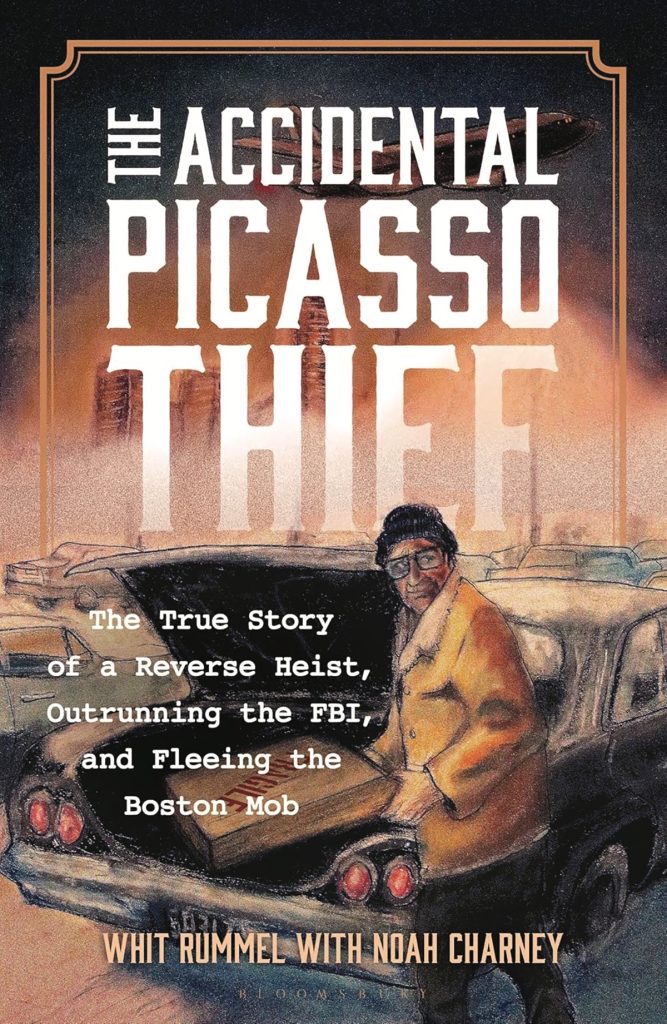
Whit Rummel Jr., a filmmaker who lives in Chapel Hill, and Noah Charney, an American art historian and fiction writer based in Slovenia, have written The Accidental Picasso Thief: The True Story of a Reverse Heist, Outrunning the FBI and Fleeing the Boston Mob to share that story with the rest of the world.

Disclosure: I have known Whit Rummel, the author, for many years, relishing in his stories and adventures. Although I’ve heard bits and pieces of this story before, this is the first time I’ve been able to soak it all in.

As Whit Rummel, the only surviving member of the trio that pulled off the so-called “reverse heist” writes, the book — part memoir, part true crime — “is the story of one of the oddest art crimes in American history.”

It’s a tale Rummel has wanted to share in full for decades but couldn’t — for reasons ranging from fear of the famous mobster Whitey Bulger, to respect for a brother’s wishes and a dogged hunt for the location of the painting. In June 2023 The New York Times ran a story titled “Hey Dad, Can You Help Me Return the Picasso I Stole?” but Rummel had more to say.

It begins in 1969. Whit Sr. was an empty-nester with his wife in Waterville, Maine. He was the owner of a popular restaurant near Interstate 95 and an ice cream store with in-house creamery serving up unique and enticing flavors like Icky Orgy.

Bill Rummel was in his mid-20s at the time, working as a forklift operator at Logan Airport in Boston moving crates around the world for Emery Air Freight. A historic snowstorm hit the East Coast, leaving chaos in its wake. As flights were delayed and diverted, Bill loaded several flats into the trunk of his car from pesky “orphan” piles clogging up the outbound area. Wrapped up in one of those flats was a Pablo Picasso original, Portrait of a Woman and a Musketeer, that was en route from Paris to a gallery owner in Milwaukee.

Unlike his younger brother, Whitcomb Mercer Jr., Bill wasn’t particularly interested nor appreciative of art and didn’t realize a valuable painting was in his possession. When he found out what he’d inadvertently done, he called his brother, a passionate art lover, who was at Tulane University at the time. After several phone calls, Bill and Whit decided it was time to call their dad, a man they called “the fixer.”

Whit Sr. and his wife, Ann, had moved to Maine in the ’50s and raised their sons there. The boys had a mischievous streak in them, perhaps inherited from a father who relished taking them on “wild goose chases.”

Whit and Bill, now in young adulthood, needed their father’s guidance. What should they do with the stolen Picasso? This was no wild goose chase. They had heard the FBI was on the hunt for the painting. To make matters worse, rumor was that Whitey Bulger’s notorious Winter Hill Gang also was searching for it, threatening anyone trying to move in on their airport turf.

“Our father, after all, was the grand fixer. The one guy who’d always been there for us, pulling us out of whatever kind of jam we’d found ourselves in (and there had been many),” Whit writes. Their dad reeled off several options. One was keep the painting, bury it under the floor of the Waterville restaurant and uncover it some years later, feigning shock and surprise. The other option? “He said maybe there was a way to return it. Without letting anybody know who took it,” Bill told his brother.

That’s the option they chose. Whit Jr. got instructions from his dad. “I want you to write a brief note to accompany the return of the painting,” his dad said. “Nothing long or complex. Just a few mysterious sentences to put them off the track of someone like Bill.”

To this day, Whit chuckles at the note he composed with intentional “grammatical quirks.”

PLEASE ACCEPT THIS TO
REPLACE IN PART SOME OF THE PAINTINGS REMOVED FROM MUSEUMS ACROSS THE COUNTRY. —  ROBBIN’ HOOD.

Whit Sr. and Bill would don costumes, fake mustaches and fedoras, get in a Chevy Impala and set off to return the Picasso at the Boston Museum of Fine Arts. An unexpected sighting of an employee near the loading dock upset their plans, but eventually the painting made it to the museum. A blurb announcing its return was in the news, and the Rummels went on with their lives, though their dad would die suddenly just a few years later, in 1972.

As the years went by Whit wanted to make a movie about the unwitting theft, but his brother wanted it to remain a secret, though Bill did do an interview about the incident with This American Life that never aired. He passed away in 2015.

There are some differences in the version Bill told then and what Whit remembers from their phone calls when his brother first told him he had “a friggin’ Picasso.” In the book, Whit shares both versions of how his brother recounted coming into possession of the crate. Though Whit never accuses his brother of knowingly taking the painting, he acknowledges there could be doubts about his intentions.

The book details the surviving Rummel brother’s search for the painting now and his hope to one day have his picture taken in front of it with his son, another Whit Rummel, and a nephew who shares their name, too. If that were to happen, the three — named for “the fixer” — would be “smiling proudly and loudly now, because our story has finally been told.”

For anybody who cares about art, the creation of it, and the quirkiness that makes families special, it’s a story worth telling, reading and even telling again.

Bookshelf

BOOKSHELF

February Books

FICTION

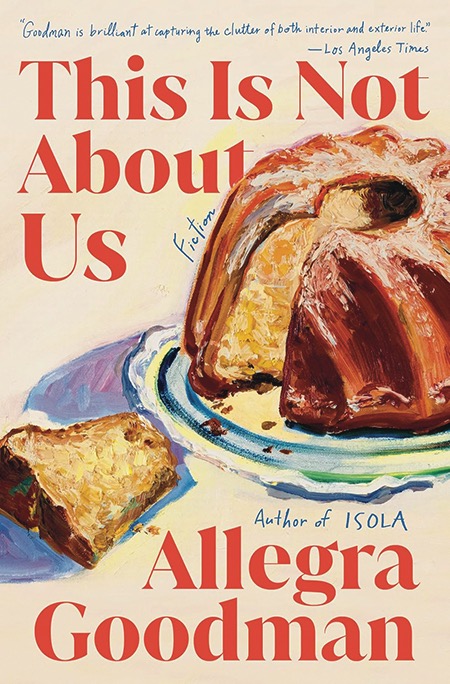
This Is Not About Us, by Allegra Goodman

Was this just a brief skirmish, or the beginning of a 30-year feud? In the Rubinstein family, it could go either way. When their beloved older sister passes away, Sylvia and Helen Rubinstein are unmoored. A misunderstanding about apple cake turns into decades of stubborn silence. Busy with their own lives — divorces, dating, career setbacks, college applications, bat mitzvahs and ballet recitals — their children do not want to get involved. As for their grandchildren? Impossible. Sharply observed and laced with humor, This Is Not About Us is a story of growing up and growing old, the weight of parental expectations, and the complex connection between sisters.

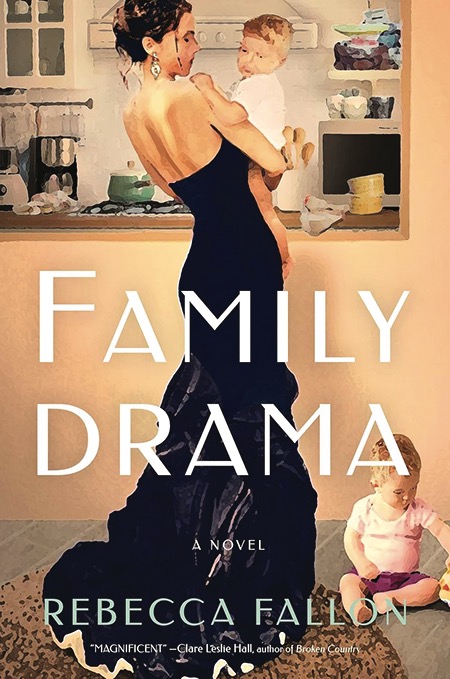
Family Drama, by Rebecca Fallon

It’s 1997, and snow is blanketing a New England beach. Two befuddled 7-year-olds watch as their mother’s body is tipped overboard from a crumbling boat. A Viking funeral, followed by a raucous wake. A sendoff fit for a soap opera star: Susan Bliss. Fifteen years earlier, Susan is a blazing, beautiful young woman, passionate about her art. It’s impossible not to fall in love with her, and so Alcott, a practical professor, does— hopelessly. And so begins the love story of Susan’s two-paneled life: an unconventional, jetlag-filled arrangement that takes her back and forth between her life in New England as a wife and mother to young twins, to the bright lights of Los Angeles, where she becomes the beloved star of a daytime soap. In the present, Susan’s twins grow up in the shadow of her all-consuming absence. Sebastian, a sensitive artist, cleaves to her memory, fascinated with the artifacts of her starry past. Viola, resentful of her mother’s torn allegiances, distances herself from the memories of her. But when Viola runs into her mother’s old co-star Orson Grey — now a renowned Hollywood star — she finds herself falling deeply in love with him and begins to put together the pieces of a mother she never really knew.

NONFICTION

The Powerful Primate: How Controlling Energy Enabled
Us to Build Civilization,
by Roland Ennos

From our bipedal ancestors wielding simple tools to modern humans mastering complex machinery, Ennos takes us on a gripping journey through the evolution of human dominance. Learn the fascinating history of how humans have progressively harnessed energy from sources such as wood, animals, water, wind, sun, fossil fuels and even atomic nuclei to fuel our rise as the most powerful species on Earth. Our ancestors’ ability to hit harder, throw farther and cut deeper than any other animal laid the groundwork for the development of agriculture, industry, and ultimately, modern civilization. Yet, this power has come at a cost: Environmental degradation and societal challenges have arisen from our relentless pursuit of energy and technological advancement. There is hope, however: The same engineering skills that have brought us here can pave the way for a more sustainable future.

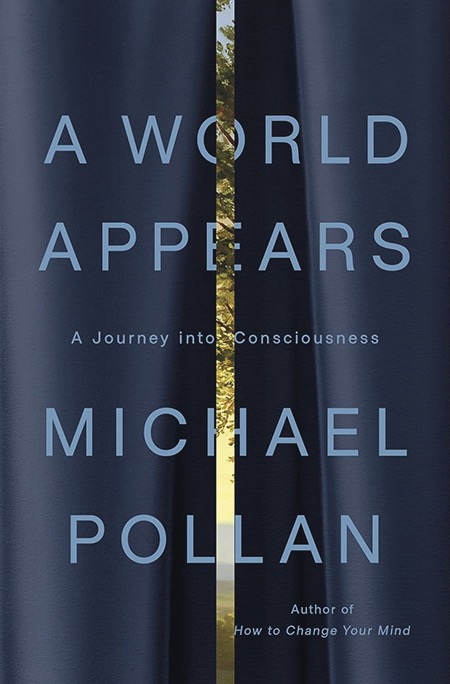
A World Appears: A Journey into Consciousness,
by Michael Pollan

The fact that we have subjective experience of the world remains one of nature’s greatest mysteries. How is it that our mental operations are accompanied by feelings, thoughts and a sense of self? In A World Appears, Pollan traces the unmapped continent that is consciousness, bringing radically different perspectives — scientific, philosophical, literary, spiritual and psychedelic — to see what each can teach us about this central fact of life. When neuroscientists began studying consciousness in the early 1990s, they sought to explain how and why three pounds of spongy gray matter could generate a subjective point of view — assuming that the brain is the source of our perceived reality. Pollan takes us to the cutting edge of the field, where scientists are entertaining more radical (and less materialist) theories of consciousness. In a dazzling exploration of consciousness, he discovers a world far deeper and stranger than our everyday reality.

CHILDREN'S BOOKS

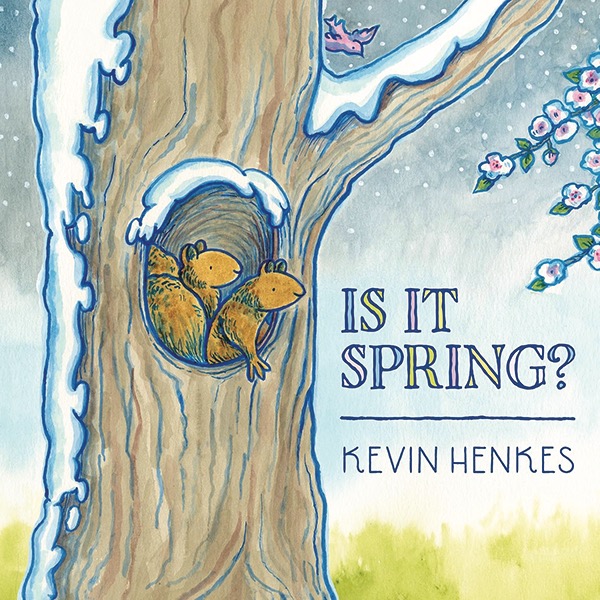
Is It Spring?,
by Kevin Henkes

A masterful and classic picture book that combines an evocative call-and-response text with delicate and lovely illustrations, readers will be left assured that the sun — and spring — will always come again. (Ages 4-8.)

The Lions’ Run, by Sara Pennypacker

Petit éclair. That’s what the other boys at the orphanage call Lucas DuBois. As tired of his cowardly reputation as he’s tired of the war and the Nazi occupation of his French village, Lucas longs to show how brave he can be. He gets the chance when he saves a litter of kittens and brings them to an abandoned stable. Lucas begins to realize they are not the only ones in the village with secrets. Emboldened by the unlikely heroes all around him, Lucas is forced to decide how much he is willing to risk making the most courageous rescue of all. (Ages 8-12.)

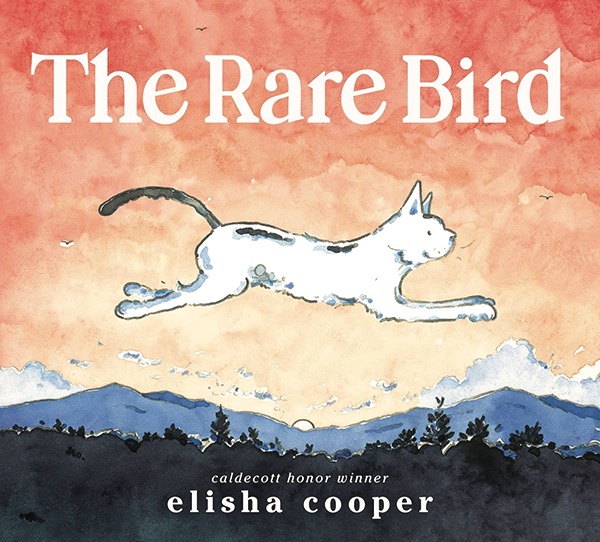
The Rare Bird, by Elisha Cooper

The imagination of one housecat takes him to unexpected adventures as he dreams of spreading his wings as a “Rare Bird.” A Rare Bird can do anything! Fly fast through the forest, or splash in the bird baths, or meet animals from faraway lands . . . Readers will fall head over heels for this extraordinary tale of dreaming, the power of imagination, and the freedom of creativity. (Ages 4-8.)

Poem February 2026

POEM

February 2026

Past Life

On the night you read my cards, 

you told me the spiraling moth

was my dead grandfather but you did not 

tell me we’d be lovers, had been lovers 

since the first sound waves collided 

on the ocean floor. 


Now I know why I felt like crying

when you traced the lines across my palm.

Why you looked away when the fire hissed.

If you’d kissed me, I would have kissed back. 


When I left the dead moth for you 

in the morning, paper wings outstretched

like a faerie scroll across the Three of Swords, 

I did not know I was seeing my future, 

spiraling toward your light until the end.

          — Ashley Walshe

Vinegar Valentines

VINEGAR VALENTINES

Vinegar Valentines

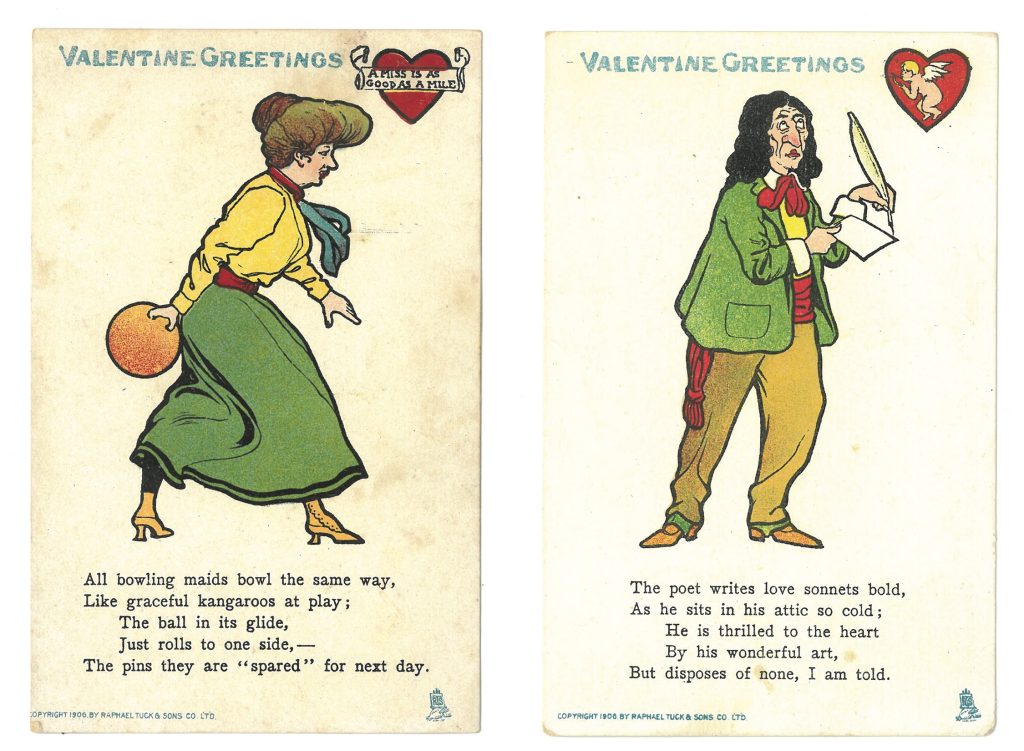
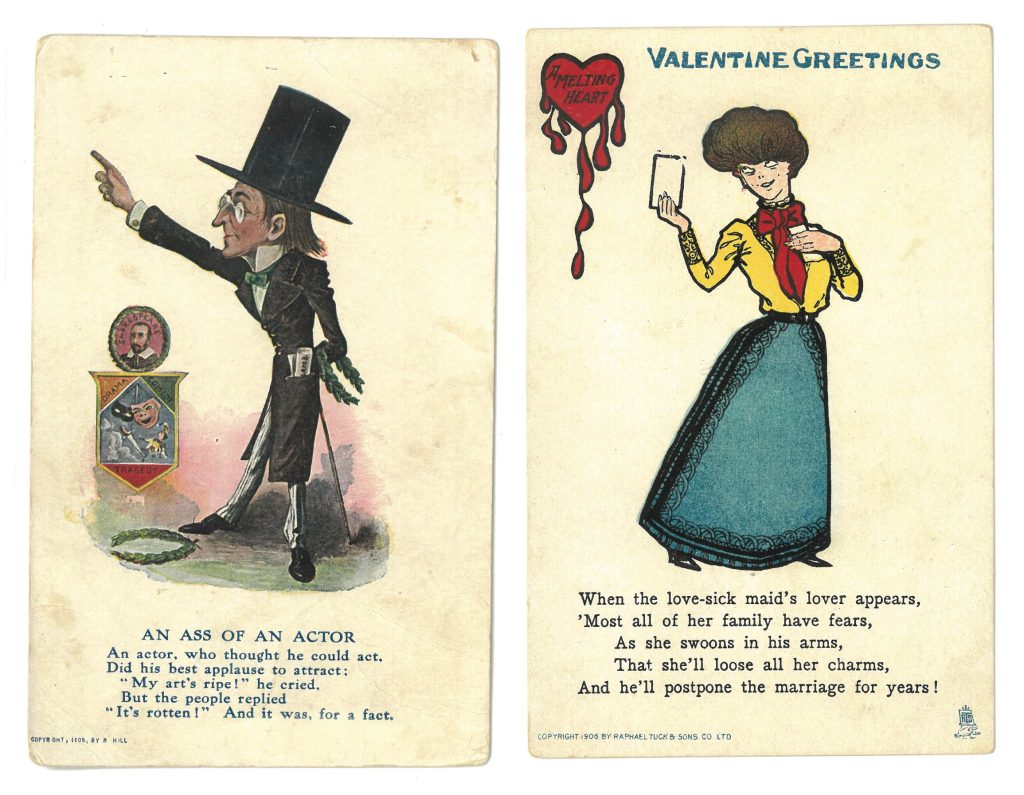
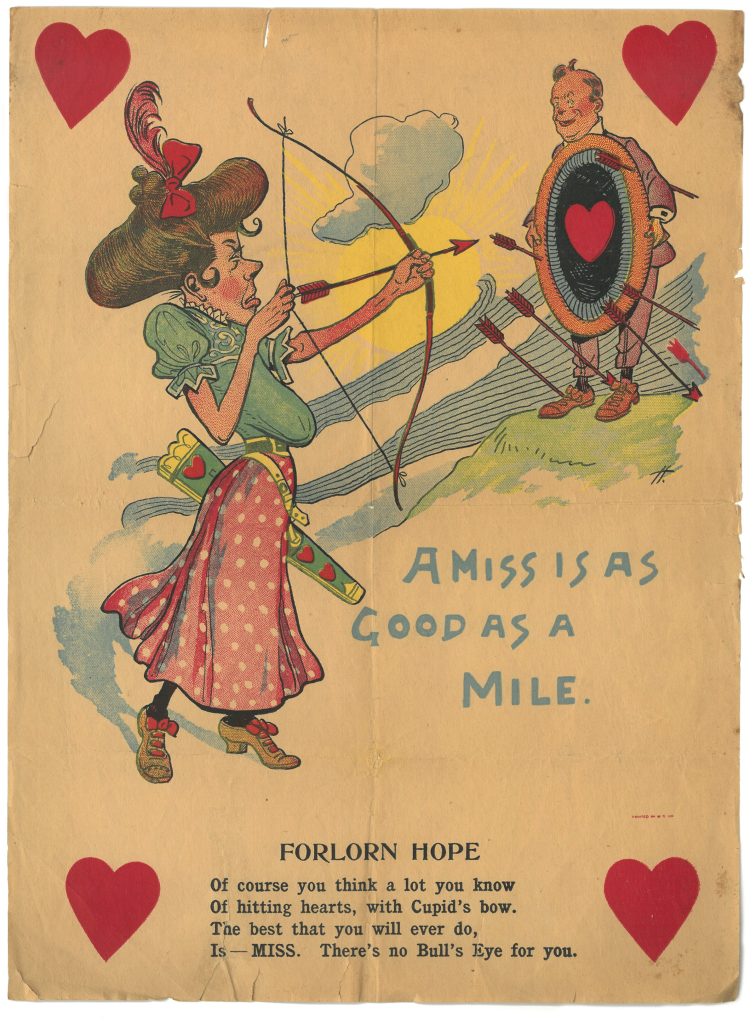
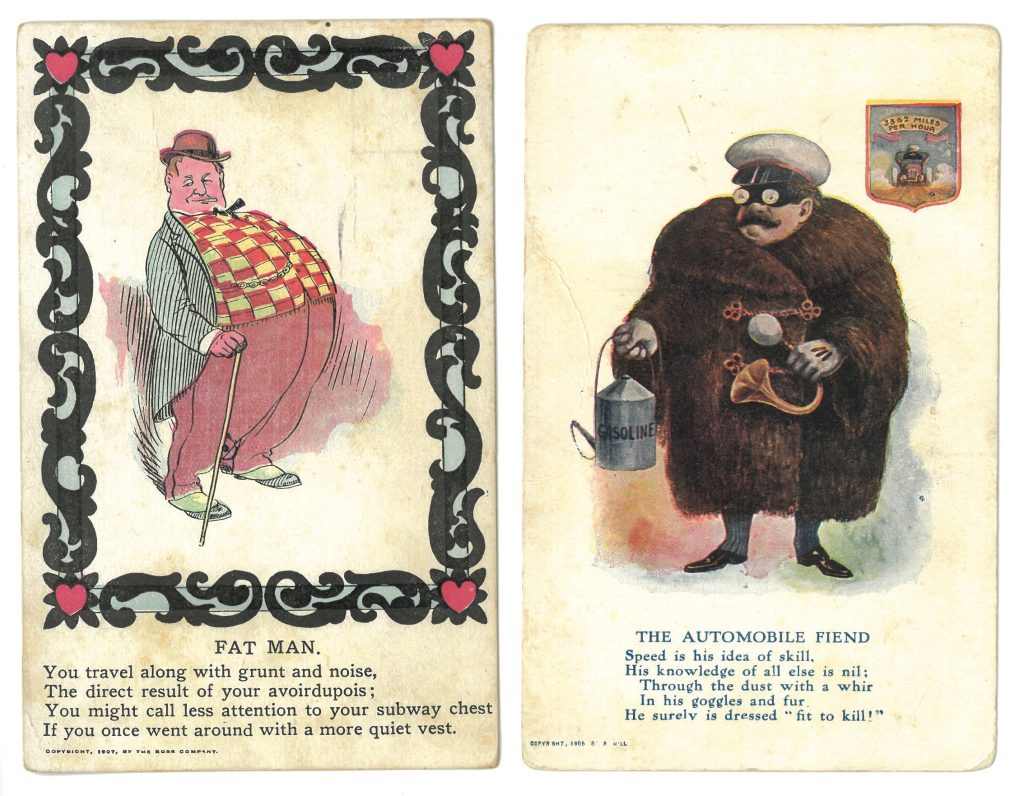
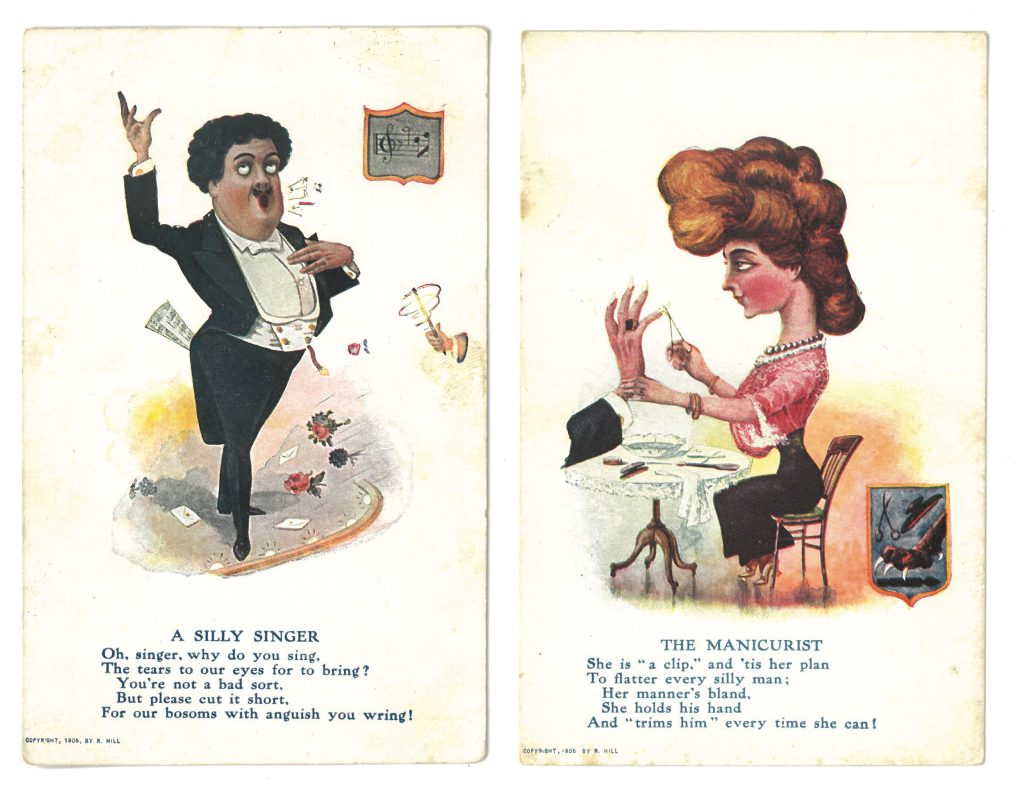
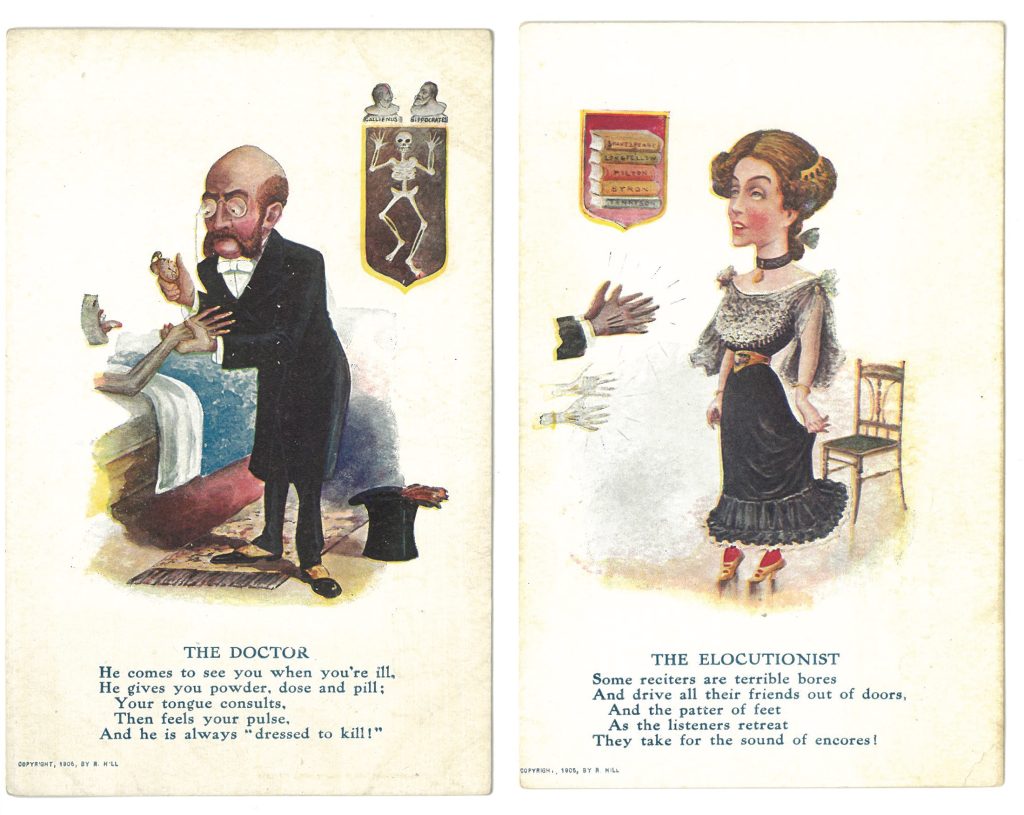
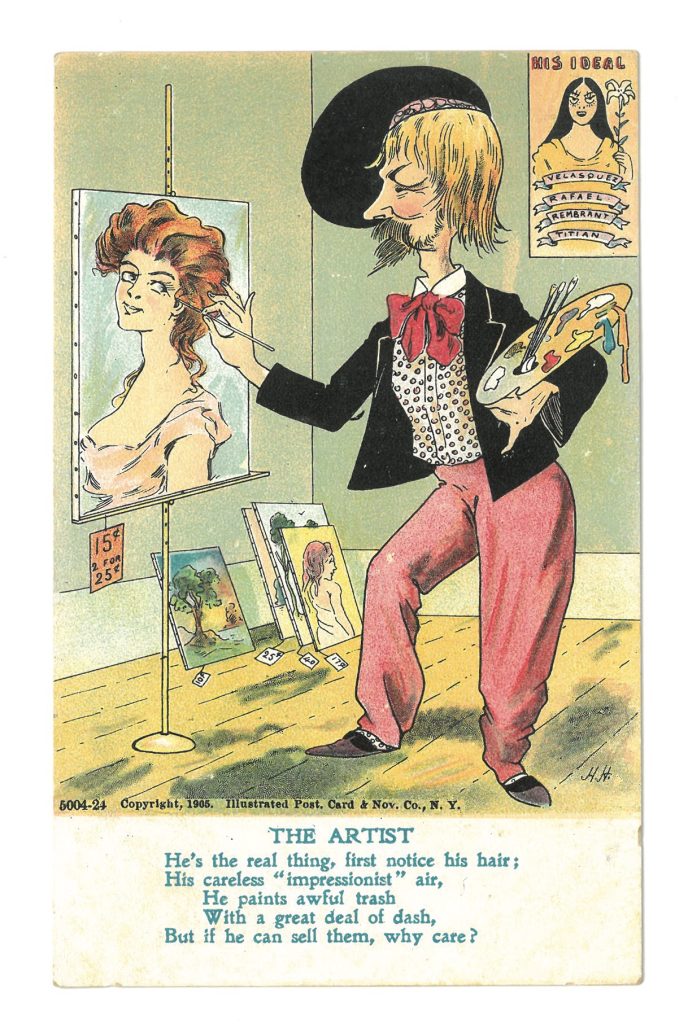
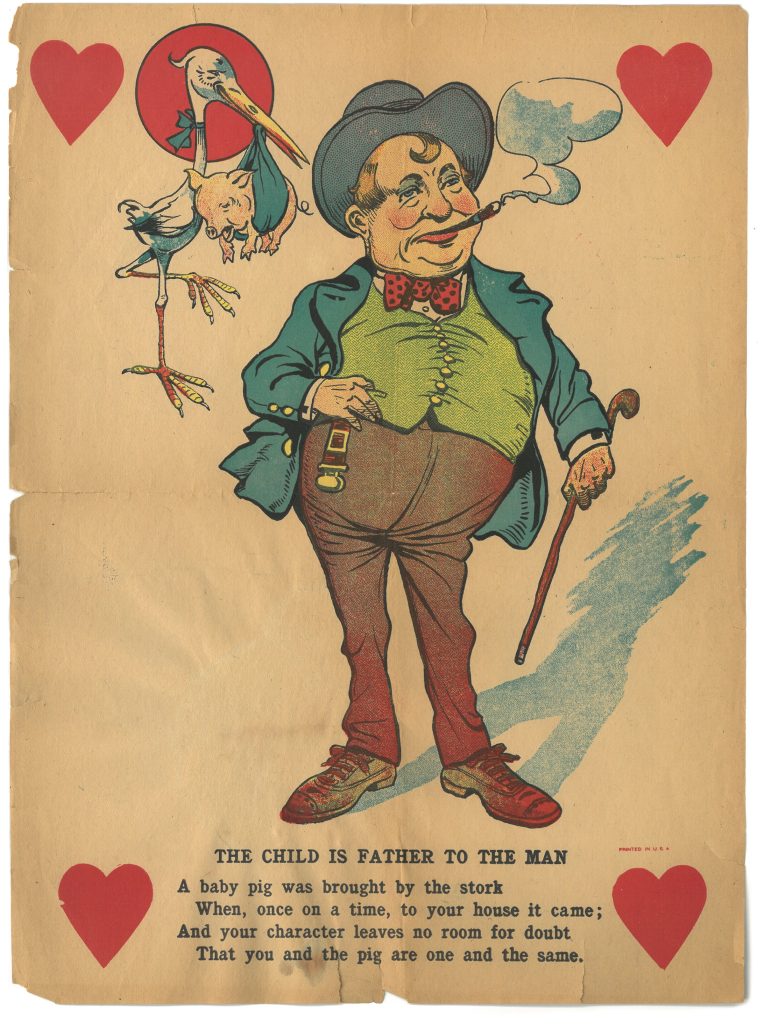
When matters of the heart are in decline There’s sure to be a warning sign. The postman rings twice In your fool’s paradise Delivering your vinegar valentine.

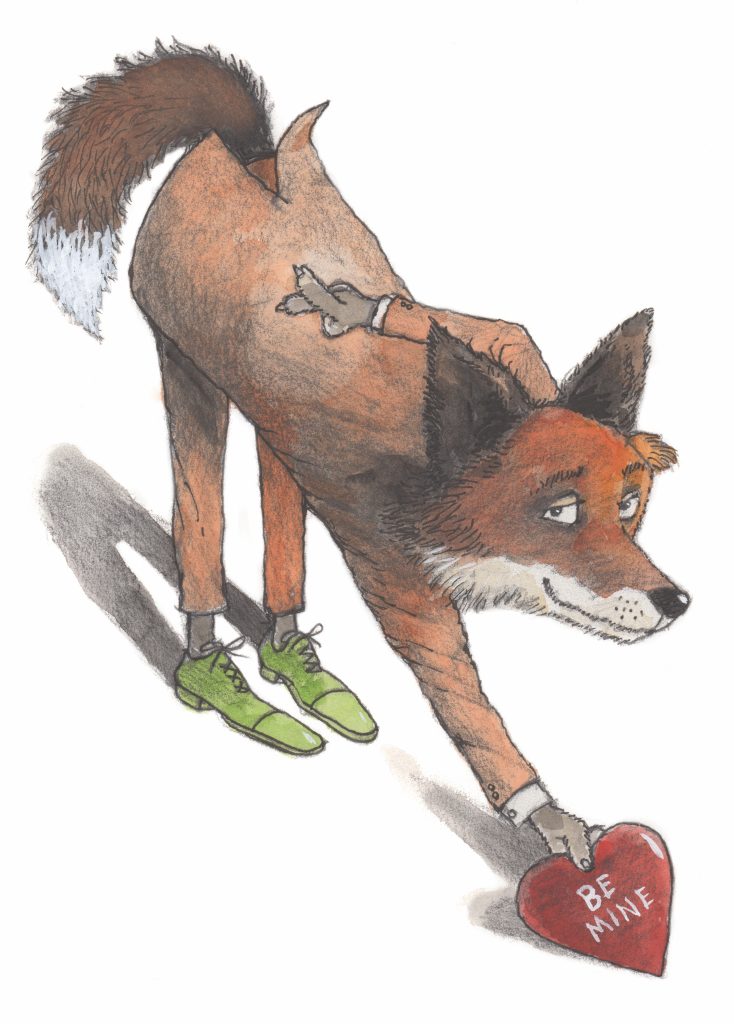
Illustration by Harry Blair

Is there an easier holiday to lampoon than Valentine’s Day? We’re betting the answer is “No.” As proof, here is a collection of “Vinegar Valentines.” The cynical, sarcastic cards began to appear in the middle to late 1800s. By the turn of the century cartoonists were creating their own lines. Most of the cards reproduced here — with the exception of our contemporary “Postman” — were published in the early 1900s.