Dissecting a Cocktail

DISSECTING A COCKTAIL

Kettle to the Coil

Story and Photograph by Tony Cross

Years ago, I was commissioned to create a cocktail for a local event celebrating the famed author Tom Wolfe, who was a frequent Sandhills visitor. The book being highlighted was The Right Stuff, and the committee that hired me thought Tang, the orange drink mix, would be a great ingredient to include as an homage to the earliest astronauts. After a little persuasion, I was able to change their minds. The resulting cocktail that I called Kettle to the Coil did indeed include orange, but not in a powdery form. Instead, I infused the fruit and its oils in a blended Scotch whisky. I also incorporated a syrup with a wine base — pinot noir. Everyone loved the drink, and it ended up on my bar’s menu that year.

A great cocktail to serve during the cooler months, the whisky is rounded out with the orange oils, and the spices added to the pinot noir syrup scream fall weather. You can try this syrup in other cocktails that include whisk(e)y and sugar. It’s also great on its own with sparkling water. Some people get excited for pumpkin lattes this time of the year. I get excited for whisky and red wine.

Specifications

1 1/2 ounces orange oil-infused blended whisky*

1/2 ounce Drambuie

3/4 ounce fresh lemon juice

1/2 ounce pinot noir syrup**

Execution

Combine all ingredients with ice in a shaking vessel. Shake hard until the tin becomes frosted. Double strain into a chilled Nick & Nora glass. Express the oils of an orange coin over the cocktail. Lay orange coin on top.

*Orange Oil-Infused Blended Whisky

Using two 16 ounce Mason jars, add the following: flesh and peel of one medium orange; 1/2 bottle blended Scotch whisky (I use The Famous Grouse). Tighten jar and let sit for three days (shake or swirl the jar for 15 seconds once each day). When ready, pour infusion through a mesh strainer and then again though a coffee filter. Rebottle in the same whisky bottle.

**Pinot Noir Syrup

1 bottle (750 milliliters) pinot noir (preferably a lighter pinot like Willamette Valley)

3 cups granulated sugar

3 cinnamon sticks

1/2 apple (sliced)

1 tablespoon star anise pods

1 tablespoon whole cloves

1/2 tablespoon cardamom pods (crushed)

1/2 teaspoon fresh ground nutmeg

Zest of 6 oranges

Combine all ingredients in a medium saucepan over medium/high heat and bring to a simmer. Let simmer to the consistency of a rich syrup, 15-20 minutes.

Golftown Journal

GOLFTOWN JOURNAL

Doctor of Sport

Mind games with Bob Rotella

By Lee Pace

It’s not often you get an audience with a man who invented an entire industry.

But here on a June afternoon is Bob Rotella — 79 years old, sharp as a tack and fit as a fiddle — rummaging around his basement sports psychology laboratory outside Charlottesville, Virginia.

There are three rooms in his home in the Club at Glenmore community east of town where he has welcomed the likes of Rory McIlroy, Padraig Harrington, Tom Kite, Davis Love III and John Calipari for overnight visits to explore the art and science of the body and the mind in the field of competition. One room is a bedroom. Another is a workout facility. Then there is a “great room” of sorts with mirrors on the walls, a putting carpet and all manner of decorations, from a signed photo from Ben Hogan to a Claret Jug given to Rotella by Harrington after one of Harrington’s two Open Championship victories.

And of course, a couch. What shrink doesn’t have a couch?

“I love competing and playing,” says Rotella, a lifelong athlete and former college basketball and lacrosse player, “but I like helping people’s dreams come true more than anything. That’s pretty much what I do. I try to find something inside an athlete they never knew was there. I mean, I’ve had a lot of fun.”

My assignment to write and publish a coffee table book celebrating the impending centennial of Farmington Country Club (est. 1927) just west of Charlottesville has brought me to Rotella, who used his Farmington membership in the 1970s and ’80s as kind of a research lab to develop theory and practice on how the mind affects sports performance. Old-time members recall the sight of a young Rotella armed with pen and notebook interviewing golfers after matches to probe the depths of how their minds functioned with some hardware on the line.

Growing up in Rutland, Vermont, Rotella was a quarterback and safety in football, and played basketball and lacrosse at Castleton University. He wanted his life’s calling to be in teaching and coaching but over time began to ponder why it was, for example, he and his coaching mates would spend hours ruminating about how to get a player to take his sterling practice skills into the heat of competition and how to get a player to not let a mistake in the first quarter infect his performance the rest of the game.

“The people who were doing psychology with athletes in the early ’70s were all psychiatrists working with drug problems or serious clinical problems,” Rotella says. “I started thinking about it from a coaching perspective and performance enhancement. Some of the stuff these psychiatrists were writing, I thought, ‘What in the hell are they talking about?’”

In 1976, he moved to Charlottesville and joined the faculty at the University of Virginia to teach sports psychology and coach lacrosse. Soon after he got an offer for a tenure-track position that would include starting masters and doctoral programs in sports psychology and working directly with Cavalier athletic teams. He did that for 20 years and in 1996 left to devote full time to his sports psychology practice.

As of mid-2025, he had clients in golf who have won more than 80 major championships and was pegged by Golf Digest among the top 10 golf instructors of the 20th century. He’s ventured off the golf course for relationships with Red Auerbach, Greg Maddux, Tom Brady and Serena Williams, among many others. His work in the 1970s and into the ’80s was the domino that fell and led to a landscape in 2025 that has nearly every professional sports team having a “sports performance” or “sports psychology” consultant on the payroll.

“I took a few things that worked for me in competition and recognized how important the mind is in all forms of competition,” he says. “I got lucky and made a career out of it.”

Rotella has authored a half-dozen books, including his bestseller Golf Is Not a Game of Perfect. The one with most relevance for many golfers in the Sandhills entering turn four of life (present company included) is The Unstoppable Golfer — Trusting Your Mind & Your Short Game to Achieve Greatness. The premise of the book is that as golfers age and lose physical strength, they still have the ability to embrace their mental resources and develop their skills in getting up-and-down from 100 yards in. The short game, he says, is the path to “unstoppable golf.”

“To win this battle with yourself, you must have a good short game,” he writes. “Few of us can  blast the ball 300 yards off the tee. But nearly all golfers have the physical ability required to pitch the ball, to chip it, to putt it.”

This focus on sharp execution of pitching, chipping and putting is nothing new. Players with great short games “should be the cockiest players on the planet” wrote the great English champion Harry Vardon in the early 1900s. “You won’t fulfill your potential as a golfer unless you embrace your short game, love your short game, take pride in your short game, and stop wishing you had someone else’s long swing.”

Unstoppable Golf provides a hard reset of a golfer’s approach to the game. Part of it is mental and developing the ability to believe you have a lethal short game. That comes through practice repetition and taking your skills to the golf course and executing shots under pressure.

“You are what you have thought of yourself, and you will become what you think of yourself from this moment forward,” Rotella says. “Your brain is a faithful servant.”

He hammers hard the human tendency to dwell on the negative, to carry the memory of that chunky 45-yard wedge shot well down the road but dismiss the time you executed a perfect bunker save to break 80.

“I talk a lot about getting people to have an instant amnesia of their mistakes but a long-term memory of their good shots and putts,” Rotella says. “Most people have a tendency to attach strong emotions to their bad stuff and have no emotion attached to the good stuff.”

Rotella’s wisdom applies to all golfers but makes most sense to the senior cabal. An hour to practice? Devote at least half that time, if not more, to the short game area. Take a lesson with your pro around the chipping green, not the full swing turf. Take that $600 you’d spend on a new driver and instead get a set of custom-fitted wedges.

“No matter what level a golfer plays at, the majority of his shots will be within 100 yards of the hole,” Rotella says. “The easiest way to take five to 15 shots off the average player’s handicap is by taking fewer shots around the green.”

Rotella offers the very same advice to a 15-handicapper playing in the club championship that he’d offer to McIlroy or Harrington on the final day of a major championship: Stay focused on your target, visualize the shot, commit to routine, and accept completely whatever happens to the golf ball.

“A lot of people have a dream, and then they’re scared to death they’re not going to get it,” he says. “I really want everyone to see the shot they want, so I want their eyes and their mind to be into where they want the ball to go rather than where they don’t want it to go. It’s really no different from a tour player to a 25-handicapper.”

I’m sold. No more signing up for demo days at the club in lustful pursuit of a driver that might add five yards. Let’s hit 25 pitch shots each from 20, 40 and 60 yards and then climb in the bunker. Do that, Rotella says, and you can evolve into the kind of golfer he pegs as “the silent assassin.”

That has a nice ring, for sure.

Tea Leaf Astrologer

TEA LEAF ASTROLOGER

Scorpio

(October 23 – November 21)

There’s a fine — and in your case, blurred — line between passionate and possessive. When Venus struts into Scorpio on Nov. 6 (where she’ll glamp out until month’s end), that line is primed to become a short leash if left unchecked — and nobody wants to be on the other end of that. A word of advice: Don’t smother the fire. Tempted as you may be to cling fast and tight, a little space will keep the coals glowing red hot.

Tea leaf “fortunes” for the rest of you:

Sagittarius (November 22 – December 21)

Stick to the recipe.

Capricorn (December 22 – January 19)

Pack a lint roller.

Aquarius (January 20 – February 18)

Thaw before cooking.

Pisces (February 19 – March 20)

Don’t overwork the potatoes.

Aries (March 21 – April 19) 

The shortcut won’t be worth it.

Taurus (April 20 – May 20)

Go easy on the garlic.

Gemini (May 21 – June 20)

Cling wrap, baby.

Cancer (June 21 – July 22)

The dishes are piling up again.

Leo (July 23 – August 22)

Shake the rug, darling.

Virgo (August 23 – September 22)

Dare you to bust out the fine china.

Libra (September 23 – October 22)

Serve yourself an extra slice of grace.

NC Surround Sound

NC SURROUND SOUND

Sounds of a City

Music with a connection to place

By Tom Maxwell

Alex Maiolo is a creature of pure energy. It’s not that he talks fast or acts nervous — he’s simply an ongoing conversation about electronic music, geography and whatever else happens to capture his interest. He’s also a singular kind of globetrotter, one who doesn’t sound pretentious about it. He loves Estonia’s capital, Tallinn, so much he made music with the place, a 2021 conceptual performance he called Themes for Great Cities.

Conceived as one of his two main pandemic projects — the other was getting better at making pizza — the musical idea took on a life of its own even as the flatbread faded. He invited Danish musician Jonas Bjerre, Estonian guitarist and composer Erki Pärnoja and multi-instrumentalist Jonas Kaarnamets to collaborate. What resulted was something that felt improvised, unpredictable and exhilarating.

“Even though I was living in Chapel Hill, I was trying to think about, well, what do you miss when you miss a city?” he says.

The obvious things — favorite restaurants, familiar streets — were only part of it. Beneath that, Maiolo sensed a deeper, subconscious connection to place that might be expressed musically. He seized upon the idea of treating the city itself as a collaborator. “I wanted to write a love letter to this incredible city by gathering elements of it and assembling them in a new way,” he says. Sounds and light readings became voltages; voltages became notes. “Every synthesizer is just based on the assemblage of voltages,” Maiolo says. “So, if you have voltages — particularly between negative five and plus five volts — you can make music.”

The group collected source material across Tallinn: gulls shrieking overhead, rainwater rushing down a gutter, chatter in a market, the squeak of trams, cafeteria trays clattering at ERR (Estonia’s equivalent of the BBC). A custom-built light meter called the Mõistatus Vooluringid — “mystery circuit” — captured flickering light and converted it into voltages. These inputs were then quantized, filtered and transformed into sound. Tallinn became what Maiolo called “our fifth band member. And just like with any band member, you can say, ‘Hey, that was a terrible idea’ or ‘way to go, city — that was a good one.’”

From the outset, the goal was to create something that felt alive. “We wanted happy accidents,” Maiolo says. “Quite frankly, I wanted to be in a situation where something could go wrong.” Unlike a pre-programmed, pre-recorded synthesizer session, Themes for Great Cities was designed to court risk through completely live and mostly improvised performance — to create the same adrenaline rush that test pilots might feel, only with much lower stakes. “No one was going to crash,” Maiolo says.

That philosophy made the project’s debut even more dramatic. Originally slated for a 250-seat guild hall built in the 1500s, the show was suddenly moved to Kultuurikatel, a former power plant that holds a thousand. Then came another surprise: The performance would be broadcast live on Estonian national television, with the nation’s president in attendance. “It was far beyond anything I had imagined,” Maiolo admits. “I thought we were going to play to 30 people in a room.”

Visuals by Alyona Malcam Magdy, unseen by the musicians until the night of the show, added a surreal dimension. Estonian engineers captured the performance in pristine quality. “It all came together,” Maiolo says. “The guys I was doing this with are total pros.” The recording was later mixed and pressed to recycled vinyl at Citizen Vinyl in Asheville. Unable to afford astronomical mailing expenses, Maiolo split 150 LPs between Estonia and the United States, carrying them in his luggage.

Though imagined as a one-off, Themes for Great Cities continued to evolve. The group returned to Estonia in 2022 for a new performance in Narva, reworking parts of the score and staging it in a former Soviet theater. “We didn’t record that one because it was similar to the first. But when we do Reykjavik, we’ll record that one and hopefully release it,” he says. Yes, Iceland looks like the next destination. The plan is to work partly in the city and partly in the countryside, where light, landscape and weather can all feed into the music.

The ensemble has grown tighter, but Maiolo emphasizes the lineup will be flexible, with an eye toward incorporating local musicians. Vocals may be added in future versions, perhaps improvised or even converted into voltages to manipulate the electronics. “Anything is possible,” he says.

Though he now lives in San Francisco, Maiolo continues to think of North Carolina as part of his creative geography. He still has his house in Chapel Hill, stays connected to Asheville’s Citizen Vinyl, and carries his records home through RDU.

Maiolo and his partner of seven years, Charlotte, are to be married in Saint-Germain-des-Prés in Paris. Her father, a German who came of age during World War II, once spent a year in San Francisco immersing himself in jazz. Even now, as he struggles with dementia, he plays clarinet and listens to Fats Waller and Oscar Peterson. The sense of music as a lifelong companion, capable of anchoring memory and identity, is yet another thread running through Maiolo’s work.

Ultimately, what began as an experiment has become an ongoing series of collaborations. Each city brings its own textures, rhythms and surprises. Each performance is both a portrait and a partnership. “At the end of the day, it just kind of sounds like music,” Maiolo says nonchalantly, as if jamming with an entire city is an everyday thing.

PinePitch November 2025

PINEPITCH

November 2025

Swifties Unite

Get November off to a Swift start with “Are You Ready For It? A Taylor Experience” at 7 p.m. Saturday, Nov. 1, in BPAC’s Owens Auditorium, 3395 Airport Road, Pinehurst. A national touring Taylor Swift tribute band recreates the pop star’s Eras Tour complete with a live band, performances from every era, all the costume changes, multi-media and audience participation. Will Travis Kelce be there? (We don’t think so because the Chiefs are playing the Bills in Buffalo the next day.) For information or tickets go to www.ticketmesandhills.com.

Classical Concert Series

The Arts Council’s Classical Concert Series hosts pianist Miki Sawada, who has performed at Carnegie Hall, the Toronto Music Festival, the Banff Centre, and with the North Mississippi Symphony Orchestra and Portland Columbia Symphony. She founded the “Gather Hear Tour,” traveling with a piano in a rented van with a mission to connect with Americans across socioeconomic and political divides. “Gather Hear” has given over 90 free performances in seven states and is currently touring North Carolina. The concert, from 7:30 p.m. to 9 p.m. on Monday, Nov. 3, at the Sunrise Theater, 250 N.W. Broad St., Southern Pines, also features Christopher Thompson, a performer-composer who merges contemporary art music, jazz, percussion and notated rap. For information go to www.ticketmesandhills.com.

Open for Art

Meet the members of the Artists League of the Sandhills at the opening reception for its fall exhibit and sale on Friday, Nov. 7, from 5 p.m. to 7 p.m., at 129 Exchange St., Aberdeen. The sale continues on Saturday from 11 a.m. to 3 p.m. For more information go to www.artistleague.org. A few miles up U.S. 1, the Arts Council of Moore County will hold the opening reception for its show “Framing Form” at the Campbell House, 482 E. Connecticut Ave., Southern Pines, from 6 p.m. to 8 p.m., also on Friday, Nov. 7. Call (910) 692-2787 or go to www.mooreart.org for additional information. Both exhibits hang until deep into December.

Stand Up Straight and Salute

The annual Veterans Day Parade is Saturday, Nov. 8, from 10 a.m. to 2 p.m., on Broad Street in Southern Pines. Bring the whole family, wave, applaud and be grateful. If you are a veteran, join the parade and let us honor you. For information call (910) 692-7376 or go to www.sandhillsveteransfestival.com.

Turkey Trot

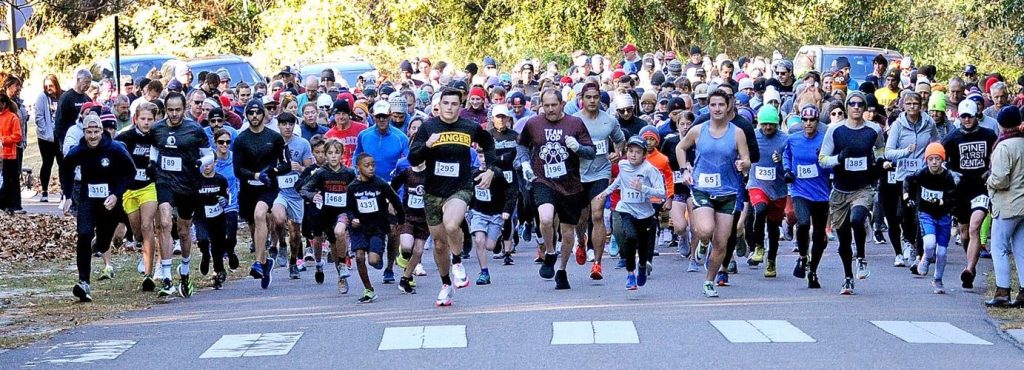
Make room in advance for those Thanksgiving pounds with a run through the streets and neighborhoods of the village of Pinehurst on Saturday, Nov. 22. There will be a 5K run and a Little Gobbler 1-mile fun run. Races begin at the Village Arboretum, 375 Magnolia Road, Pinehurst. For more information visit www.vopnc.org.

The Last First

Shed a tear and party on at the last First Friday of the 2025 season when Joslyn & the Sweet Compression brings its magical mix of funk and soul to the greenspace beside the Sunrise Theater, 250 N.W. Broad St., Southern Pines, on Friday, Nov. 7. The free-for-all show begins at 5 p.m. and closes down at 9. Y’all know the drill by heart but, just in case, no pets larger than a palmetto bug — and it has to be on a leash — and no outside alcohol. If you need more info go to www.sunrisetheater.com.

Let There Be Light

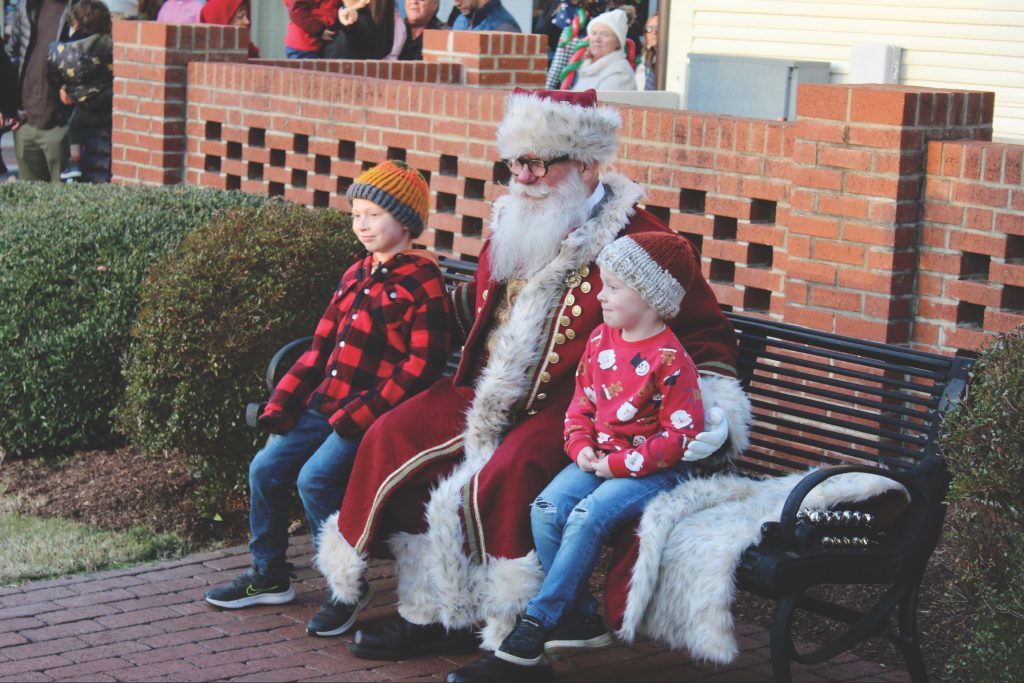
The Southern Pines tree lighting celebration begins at 4:30 p.m. on Saturday, Nov. 29 in the downtown park. Lighted trees line the streets and Santa can’t be too far away. He’s even available for pics if you have your own camera. What’s a camera you ask? It’s an app on your cell phone. If you need more information about Christmas tree lights or Santa Claus, feel free to call (910) 692-7376.

Author, Author, Author, Author, Author

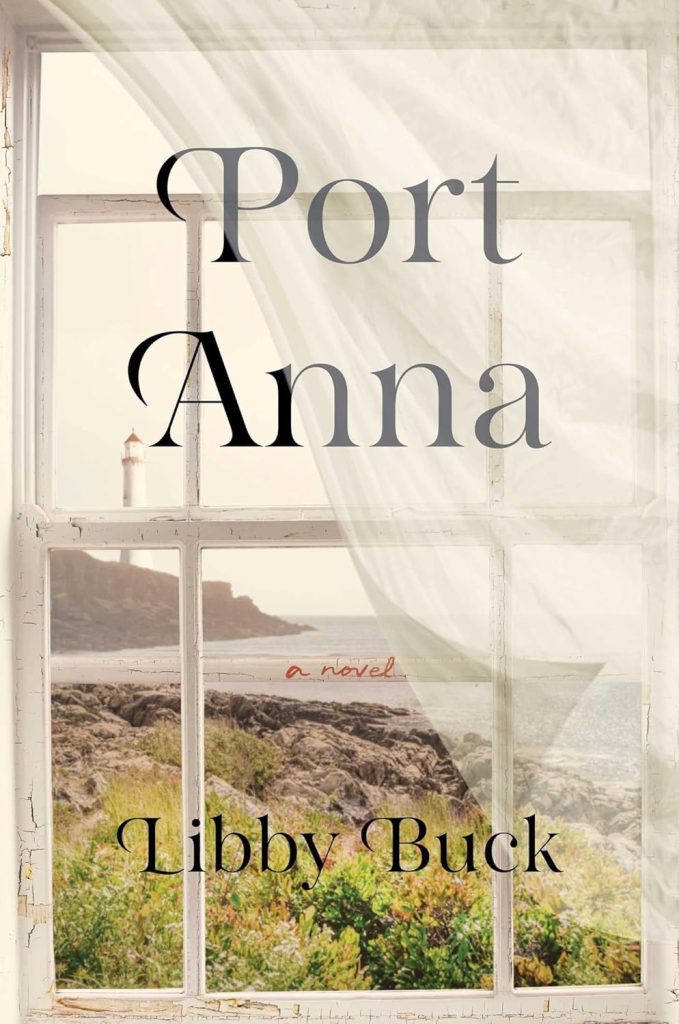
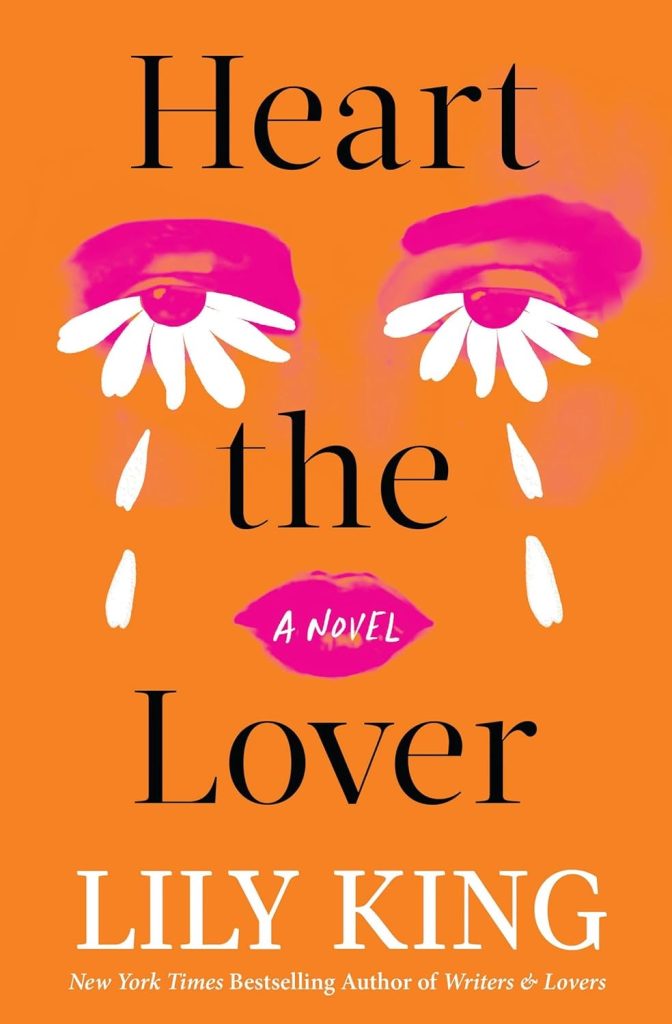
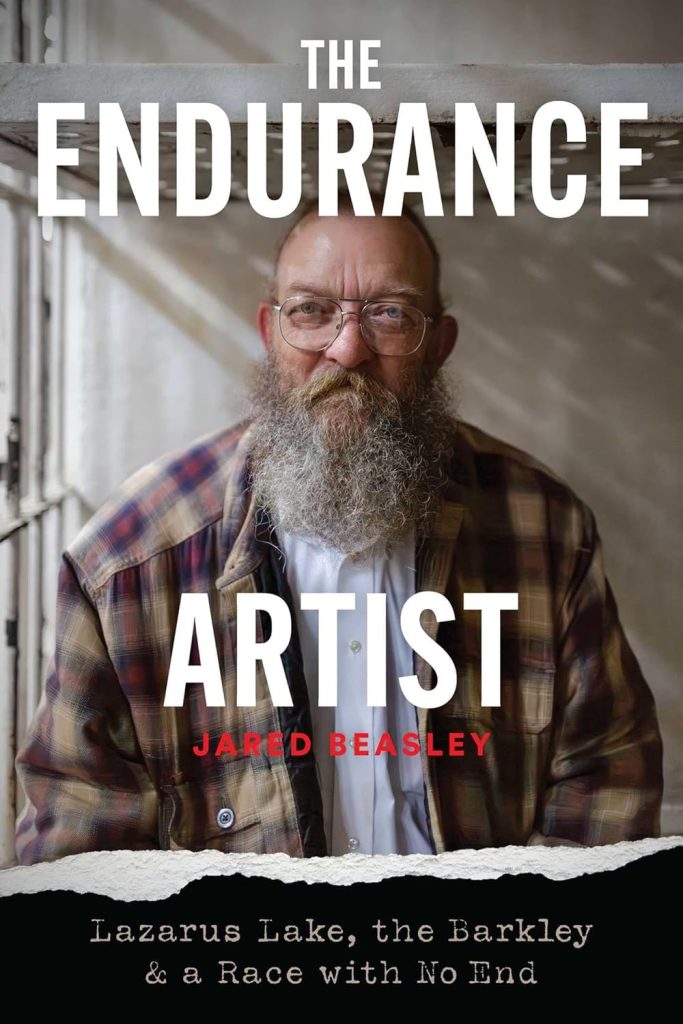
Lily King discusses her new novel, Heart the Lover, at the Country Club of North Carolina, 1600 Morganton Road, Pinehurst, beginning at 2 p.m. on Sunday, Nov. 9. On Monday, Nov. 10, there’s a book launch for Katrina Denza’s new short story collection, Burner and Other Stories, at 6 p.m., at the Weymouth Center for the Arts & Humanities, 555 E. Connecticut Ave., Southern Pines. On Tuesday, Nov. 18, Libby Buck talks about her debut novel, Port Anna, at The Country Bookshop, 140 N.W. Broad St., Southern Pines. Pace Yourself Run Company and The Country Bookshop will partner for a meet-the-author event with Jared Beasley discussing his new book, The Endurance Artist, on Friday, Nov. 21, at 6 p.m. at the bookshop. Last but not least, Livia and Maya Benson will be at The Country Bookshop at 2 p.m. on Sunday, Nov. 30, to talk about their cookbook Cookies Every Day. For more info on all go to www.ticketmesandhills.com.

Out of the Blue

OUT OF THE BLUE

Fashionista Frocks

Be-wear the bell bottom

By Deborah Salomon

No, no. Say it isn’t so.

Bell bottoms are back, either solo or as the mean end of a neon pantsuit, maybe with a nipped-in jacket.

Who’s wearing them? Start with the fashion forward TV anchors not yet born in the ’70s, when a similar craze swept America. Of course then they were stretched across the lean, lithe body of John Travolta, gyrating in Saturday Night Fever.

Have you seen him lately?

This second coming snuck back last spring, first as “relaxed” or “unstructured” pants that relieved decades of stovepipe straights and skin-tights. Trouble was, they just looked baggy. Pajama-bottom baggy, especially the jeans.

Jeans, I realize, are like martinis, not to be messed with. Boot cut? Maybe. But never baggy.

Bell bottoms, which flare below the knee, became part of the British Royal Navy uniform in the 1800s. They could be rolled up to prevent getting wet when wearers swabbed the decks. Sailors were even instructed to, in an overboard situation, remove their pants, fill the legs with air, tie them together and use it as a flotation device. I immediately pictured King Charles II thusly occupied and fell over laughing.

Bell bottoms have no place on cowboys, either. Flapping denim might become entangled with stirrups. Boot cuts were as wide as you needed to go to fit over, well, your boots.

Fashion has become a quixotic state of affairs, an art form that reveals much about its wearer. Amish apparel, for example, reflects the tenets of their faith and their extreme modesty. In the secular world our eyes become so accustomed to a fashion that a sudden variant provokes consternation. I remember when, after a decade of miniskirts, the maxi came into vogue, provoking gasps of horror until eyes and minds adjusted.

Horror belongs on the same page as bell bottoms. These pants, as well as leisure suits and sideburns, opened the door to generations of severely repressed men, to whom wearing a pink button-down was practically a federal offense. Ditto earrings and psychedelic prints. “Free at last,” the former preppies shouted as they boogied across the dance floor to “Stayin’ Alive.”

New for fall, ladies can puzzle over the baby doll dress with high waist and very short circular skirt worn over bare legs. In truth, fashion has been an issue since Eve wore fig leaves. Giorgio Armani’s recent funeral turned into a glitterati fest. The clock missed a tick or a tock when Anna Wintour retired from Vogue. And Mona Lisa continues to smirk as she fills out a frumpy brown frock revealing an inch of cleavage. Now, like a fat bear approaching hibernation, I will cease my occasional fashion appraisal, pull on some sweats and take a nap.

Southwords

SOUTHWORDS

Gee, I Really Love You

Car ride after car ride, song after song

By Jenna Biter

I peer into the rearview while the Dixie Cups keep singing.

Goin’ to the chapel, and we’re, gonna get ma-a-a-rried. Goin’ to the chapel, and we’re, gonna get ma-a-a-rried. . .

I drop an octave.

Gee, I really love you, and we’re . . .

I go back up.

. . . gonna get ma-a-a-rried. Goin’ to the chapel of love, oh, baby.

She’s staring blankly into space. The 1,000-yard stare, I call it. And the song loops.

Goin’ to the chapel, and we’re, gonna get ma-a-a-rried.

OK. I’m paying attention the whole time this time, all two minutes and 50 seconds. I reposition my hands on the steering wheel and focus on the double yellows.

Spring is here. The-uh-uh sky is blue. Whoah-oh-oh.

I waggle my head back and forth.

Birds will sing, as if they knew, today’s the day, we’ll say, ‘I do,’ and we’ll ne-ver be lonely any more. Because we’re . . .

Hard stomp, jazz hands, move toward the camera. That’d be perfect, I think. Costuming would be, hmmm, I don’t know, hard shoes? For sure, to emphasize the “hard stomp.”

. . . goin’ to the chapel of love.

Ugh. I stopped listening again. I glance in the rearview; still awake.

Bells will ring. The-uh-uh sun will shine. Whoah-oh-oh. I’ll be his, and he’ll be . . .

I used to wonder why music apps have a repeat mode. Actually that’s not true. I didn’t wonder. I just never used it.

. . . goin’ to the chapel of love.

OK. Now I’m really going to listen.

Goin’ to the chapel, and we’re, gonna get ma-a-a-rried.

I drum my fingers on the leather.

Goin’ to the chapel, and we’re, gonna get ma-a-a-rried. Gee, I really love you, and we’re, gonna get ma-a-a-rried. Goin’ to the chapel . . .

I wonder, when the Dixie Cups recorded “Chapel of Love” in 1964, did they think anyone would loop the song for hours on end? Doubt it, though they might’ve dreamed it.

I take another look.

“Yes!” I exclaim — in my head, not out loud.

She’s “reading labels.” That’s what I’ve named it, when she turns her head to the side, middle through pinky fingers in her mouth, lolling eyes trained on the labels on the sidewall of her car seat.

To give proper credit, my dad was the first to ponder whether the Dixie Cups could have imagined the staying power of their pop love song. My parents originally sang the tune to my older brother 30-plus years ago. We don’t know why it puts babies to sleep; we just know it does. And you don’t mess with success.

I turn down the volume.

Goin’ to the chapel, and we’re . . . 

I look in the mirror. Out like a light.

The Dixie Cups strike again.

Omnivorous Reader

OMNIVOROUS READER

From Poetry to Prose

Creating a finely crafted debut novel

By Stephen E. Smith

On an unseasonably cool August night in Charleston, South Carolina, I’m sitting in Kaminsky’s Dessert Café with Linda Annas Ferguson, whose first novel, What the Mirrors Knew, arrived that day in the form of 500 paperback and hardcover books. (The official release date was Sept. 21.) She’s glowing with that nervous anticipation felt by every author of a freshly published work — she’s proud, exuberant, anxious and pleasantly overwhelmed by her achievement. She’s seen the germ of an idea to completion, and the fruits of her labor are contained in a beautifully designed novel of almost 400 pages that pleads to be read by appreciative readers.

This isn’t Ferguson’s first book. She began her writing career as a poet and has successfully published and marketed five books of poetry. Her poem “On the Way Home” appeared in our September issue.

Still, I am keenly aware that writing poetry can, oddly enough, be an encumbrance. When a writer proficient in one genre tests his or her talent in a different form — a novelist writes poems, a playwright turns to poetry, etc. — we’re often skeptical, wondering how much professional skill will carry over. Who can recite one of the poems from Hemingway’s first book, Ten Poems? How many of us have read Faulkner’s The Marble Faun? So here’s the question: Will the accomplished poet become the clumsy apprentice to the novel?

Turns out that narrative poetry was Ferguson’s training ground, so she experienced a natural transition to prose. Upon reading her novel — having escaped the shadow of Kaminsky’s Tollhouse Bourbon Pecan Pie to delve into the haunting darkness of What the Mirrors Knew — it’s apparent that her poetic skills are readily transferable.

“My writing life began with telling stories through poetry,” Ferguson says. “Unlike many writers who were influenced at a young age, I only started writing seriously when I was around 30 years old. I scribbled my family stories in journals which eventually became poems.”

Ferguson’s novel is a lyrical blend of spirituality and philosophy, featuring sharply drawn characters who emerge as wholly believable. Her use of dialogue is sharp and sparse, and the narrative is enriched by an energized prose style that propels the reader ever forward. Stir in a touch of philosophy, spirituality, mystery and romance, and you’ve got a first-class novel that reads like the work of a seasoned professional. More importantly, the narrative embodies a strong sense of resonance, a lingering afterglow that will leave the reader pondering the moment.

“In some ways my novel is similar to a long poem, with one particular chapter in it serving as a volta, a turning point, as in a sonnet. I haven’t written a great deal of sonnets, but many poems, even free verse and especially narrative ones, have a turning point about two-thirds of the way through.”

Ferguson is also influenced by film, conceiving her chapters as scenes from a movie. “I visualize it all in my mind as if I am present in each scene,” she says. “I’ve always enjoyed the transition from scene to scene in films. At the end of one chapter I have a bee beating its wings against a glass window, and the next chapter begins with a friend rapping on the back door glass. Because of what film has instilled in me, transitions seem to come without much conscious plotting.”

Leaving Charleston’s blessedly cool weather behind, the question that occurs to me in the moment is what strategy Ferguson has contrived to promote her novel. She’s had experience running a small bookstore and obviously has “a business head,” but the marketplace for books is highly competitive. Chain and local bookstores have partnered with major publishers to feature readings by their new authors. The competition is keen for time and space to make appearances, often squeezing out small, independent presses. Moreover, online platforms featuring books can place another barrier between the writer and consumer. Unless you’re John Grisham, Stephen King or James Patterson, your books aren’t likely to fly off the shelves without some vigorous umph from a promotional entity.

But Ferguson has a plan. “Creating good content on social media is critical in this environment of cyberspace interaction,” she says. “My first step was to expand my presence to two Facebook accounts, two Instagram accounts (one personal and one professional), and one LinkedIn account. I have quite a few followers on Facebook, but I don’t just create posts. I build friendships as I congratulate other writers on their accomplishments, and they connect with what I am doing. I join groups where we can share our successes and issues and support each other.”

Initially, Ferguson vacillated about creating a video trailer for the book, but she’s glad she did. It includes a narrator, music, quotes from the novel and a beautiful video of Ireland. Besides posting it on social media, she can upload it to a personal YouTube platform.

“And one thing I would add, which readers will find prevalent in my writing, is that I take stock in how the universe seems to help those who have a dedication to their path, regardless of where they are on it. ‘Intention, attention, and commitment’ are good promises to make to yourself. Keep writing and publishing!”

Which is precisely what Linda Annas Ferguson has done. She’s liberated her imagination, pressed the power button on her computer and written a novel. She’s done something that anyone who’s determined to write a book can do — if they have the skill, nerve and determination to do it. The big job, the hard work of putting it in the hands of readers, lies ahead.

Almanac November 2025

ALMANAC

Almanac

By Ashley Walshe

November is the mother of quiet wonders.

Rainbows in spider silk. Wood ducks, migrating by moonlight. The slow-beating heart of a box turtle in brumation.

She gives and gives, offering her final mild days, her cool-season greens, the last of her berries, nuts and seeds. 

“Eat up,” she says to the wild ones. “There’s plenty here to go around.”

Bird and squirrel delight in her sweet and earthy fruit. Fox and deer, too. A feathery frost gilds mottled oak leaves on the first frigid morning.

When weary spider spins her silken sac, a cradle for a thousand eggs, the mother leans in close.

“Go now,” she whispers to the weaver. “Your work is done. Your babes shall know the tender kiss of spring.”

Wren song rings through chilly air. The last colored leaves gleam like stained glass in a light-filled cathedral. The altar remains blessed with beautyberries, acorns, persimmons and rosehips.

“Nourish yourself well,” the mother commands, folding moldy fruit and spoiled nuts into her womb-dark soil, where even the dead leaves are precious.

“I can use this,” she murmurs of what’s gone to rot. “Nothing will be wasted.”

Deciduous trees drift toward dormancy. Black snakes seek out burrows. Wood frogs prepare to freeze solid.

By and by, the great mother readies herself for winter’s deep, long sleep.

Surrendering her beauty back to the hard, damp earth, she strips away all she has to give: a humble banquet for the wild ones; what precious light remains; a bouquet of blessings in the name of quiet wonder.

But there is always a November space after the leaves have fallen when she felt it was almost indecent to intrude on the woods . . .     
— L.M. Montgomery,
Anne of the Windy Poplars

Inner Peace Casserole

A no-fuss recipe you’ll return to again and again. Simple, nourishing and gentle on the system, this soothing side dish is an unexpected crowd-pleaser at the most dynamic of family gatherings — and a treat the day after, too.

Prep and cook time: n/a

Yield: immeasurable

Ingredients

6 bushels of gratitude

3 pecks of grace

1 heaping cup of humor

4 dollops of kindness

1 pinch of forgiveness

1 dash of compassion

A dusting of birdsong

A breath of fresh air

Sunshine (if available)

Directions

Combine all ingredients. Stir and breathe slowly. Break for a kitchen dance party. Repeat.

Note: Modify ingredients to your taste. Sprinkle in some new ones. Leave out what doesn’t serve you. Make this recipe your own.

Do the Mashed Potato

If one plans to mash potatoes for the Thanksgiving masses, one knows they must double the batch. But does one have a plan for that whopping load of leftovers?

Three words: mashed potato pancakes.

If you haven’t tried them (there are several recipes available online), do yourself a favor and whip out the skillet. This isn’t a maple syrup-type situation. Think sour cream and chives. Think breakfast, lunch or dinner. Think no further.

You’ll thank yourself for mashing the extra mile. Especially if the fam is still visiting.

Simple Life

SIMPLE LIFE

I See the Birds

How I learned to look up and live more fully

By Jim Dodson

November is the month I take stock of the year’s happenings, the ordinary ups and downs as well as the unexpected challenges and graces that come with being alive and kicking in 2025. This year,
however, I’m looking back a bit further.

Two years ago, seemingly out of the blue as my oldest golf buddy, Patrick, and I were setting off on a golf adventure across Southern England, celebrating our mutual 70th birthdays and 60 years of friendship, I was diagnosed with prostate cancer. Talk about a trip buzz killer. 

Naturally, I was surprised to discover that I was one of a quarter million American men who annually develop prostate cancer. But perhaps I shouldn’t have been.

My dad, you see, discovered his prostate cancer at age 70. He chose to have his prostate surgically removed and went on to live a productive and happy life for the next decade. My nickname for him was “Opti the Mystic,” owing to the extraordinary faith and unsinkable optimism that carried him to the very end.

A few  years later, as I was completing work on my friend
Arnold Palmer’s memoir, A Golfer’s Life, the King of Golf was also diagnosed with the disease. Likewise, Arnie had just turned 70. He went straight to the Mayo Clinic and had his prostate removed. He lived a full life, reaching 87 years.

Experts say that most prostate cancers occur in men without a family history, though they concede that there may well be a family gene factor involved. In retrospect, I like to think that I was simply destined to follow the leads of the two men I admired most — a unique medical case of “like father, like son, plus his favorite boyhood sports hero.”

Joking aside, I chose a different treatment path than my dad and Arnie because, as I learned, there have been tremendous medical advances in prostate cancer treatment since their dances with the disease, providing modern patients a much greater chance of living out their natural life expectancy.

Thus, under the direction of an outstanding urologist named Lester Borden and veteran Cone Health oncologist Gary Sherrill, I chose six weeks of targeted radiation therapy followed by 24 months of a relatively new “super drug” my oncologist called “the Cadillac of prostate treatment.” 

During the discussions of options, I quipped to Lester (a fellow golfer) that I hoped to publish at least three more books on golf before I exited the fairways of life and someday shoot my age, the quest of every aging golfer. I also assumed that the golf trip to England was now out of the question.

Lester smiled. “You’ll have three books and maybe more,” he said. “Meanwhile, the best thing you can do now is to go play golf with your buddy in England and have a great time. That’s the best medicine.” 

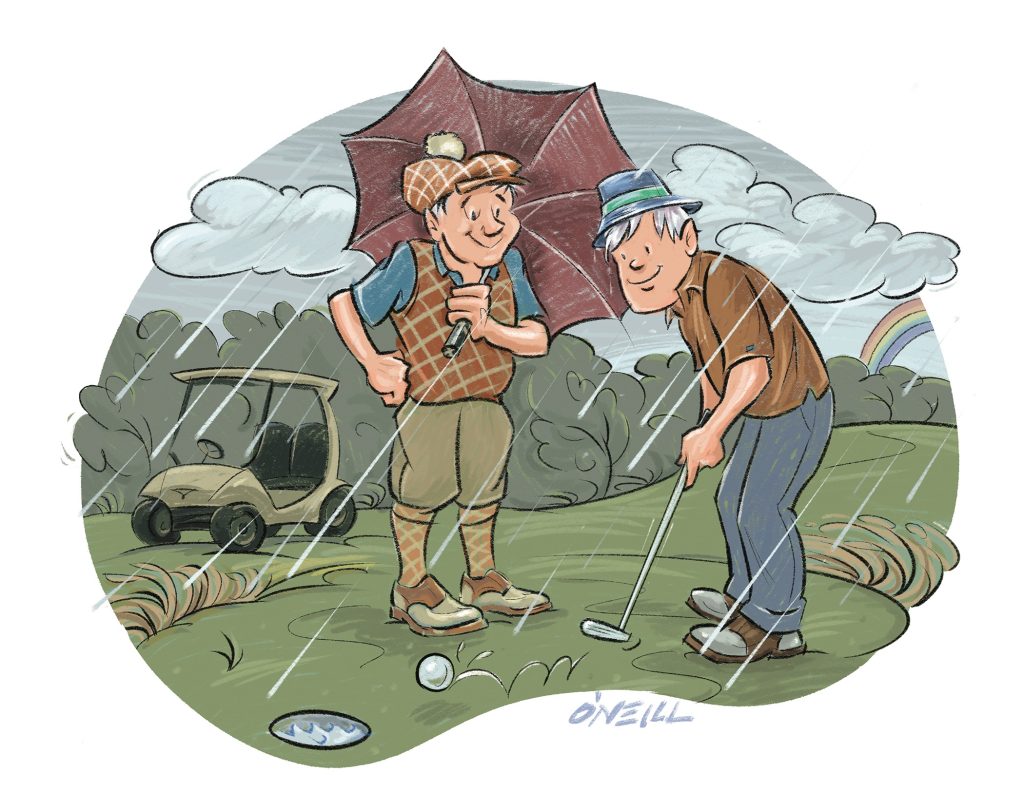
So, off we went. And though it turned out to be the statistically wettest week since the  Magna Carta, Patrick and I had a wonderful journey from Southern England’s east coast to west, seeing old friends and playing 18 nine-hole matches through howling winds and sideways rain over seven of Britain’s most revered golf courses. Somehow, amazingly, our roving golf match wound up being tied — in retrospect, perhaps the perfect ending and just what the doctor ordered. My prostate problem hardly entered my mind.

During our last stop at a historic club called Westward Ho, where we were both overseas members for many years, we had a delightful lunch (probably for the last time) with our dear friend, Sir Charles Churchill, 90, a legend in British golf circles, who reveled in our soggy tales of a golf match nobody won. The real winner, Charles reminded us, was our enduring friendship.

As anyone who makes the cancer journey understands, or quickly discovers, optimism and faith are essential tools in the fight against this merciless disease. 

Upon our return I resolved to spend the rest of my days with more optimism, good humor and a deeper gratitude for the life and work I’ve enjoyed — along with an awakened empathy for others who aren’t as fortunate.

The tools in my kit include a keen (if somewhat private) spiritual life that I exercise every morning when I chat with God under the stars. Plus, I often ask his (or her) advice throughout the day, especially when I’m watching birds at the feeders in early morning or late afternoon.

One of the surprising gifts from this period was a song I heard by chance — or maybe not? — called “I See the Birds,” by a gifted songwriter named Jon Guerra.

I was stuck in heavy city traffic, late for a lunch date and stewing over the insane way people drive these days, when this incredible song from God-knows-where mysteriously popped up on my music feed.

I see the birds up in the air

I know you feed them

I know you care

So won’t you teach me

How I mean more to you than them

In times of trouble

Be my help again   

By the end of the song, I was fighting back tears. It’s from a beautiful album simply titled “Jesus” that’s based on the Book of Matthew.

That song became the theme of my two-year journey back to health. I still listen to it at least once a day.

I also turned to the timeless wisdom of the old friends who line my library bookshelves.

“Don’t waste your life in doubts and fears,” advised Ralph Waldo Emerson, one of my favorite non-golfing heroes. “Spend yourself on the work before you, well assured that the right performance of this hour’s duties will be the best preparation for the hours or ages that follow it.”

With that guidance, the work before me during my cancer journey included the pleasure of publishing my most rewarding book and finishing a landscape garden that I’ve worked on for a decade. I also received a new left knee that might someday improve the quality of my golf game.

Best of all, we learned that my daughter, Maggie, is pregnant with a baby girl, due Christmas Eve, finally making me a granddad. Talk about a gift from the universe.

The final touch came last week when oncologist Gary Sherrill provided the good news. “You’re doing great,” he said. So, I’m doubling down on the things I’ve learned from my unexpected journey.

To judge less and love more. To thank my maker and see the birds up in the air.

Who knows? Maybe someday this budding grandpa may even shoot his age.