Tea Leaf Astrologer

Tea Leaf Astrologer

Capricorn

(December 22 – January 19)

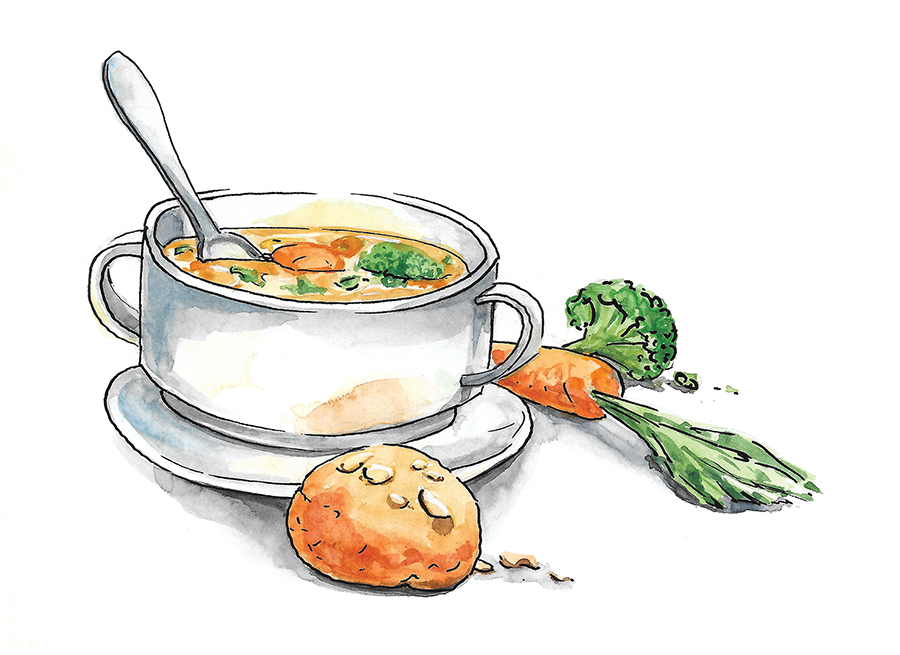
They say a caterpillar turns to soup before taking new form. Transformation is a messy business. Although it’s soup season for sea goats, trust that something delicious is simmering — specifically in the House of Pleasure. Let things be playful. And savory. Maybe a little spicy. When Mercury enters your sign on January 13, prepare for a grand emergence. There’s no going back to the chrysalis. 

Tea leaf “fortunes” for the rest of you:

Aquarius (January 20 – February 18)

It’s time for some radical honesty.

Pisces (February 19 – March 20)

Breathe before you speak.

Aries (March 21 – April 19) 

Try sitting with the discomfort for a minute.

Taurus (April 20 – May 20)

Two words: natural light.

Gemini (May 21 – June 20)

Ever tried vocal toning? Look it up. 

Cancer (June 21 – July 22)

Spit it out already.

Leo (July 23 – August 22)

Trust your own (adorably neurotic) rhythm.

Virgo (August 23 – September 22)

Smells like codependence. 

Libra (September 23 – October 22)

Don’t forget the key.

Scorpio (October 23 – November 21)

Prepare to surprise everyone. Including yourself.

Sagittarius (November 22 – December 21)

Less screen. More routine.   PS

Zora Stellanova has been divining with tea leaves since Game of Thrones’ Starbucks cup mishap of 2019. While she’s not exactly a medium, she’s far from average. She lives in the N.C. foothills with her Sphynx cat, Lyla.

PinePitch January 2024

PinePitch January 2024

Release the Hounds!

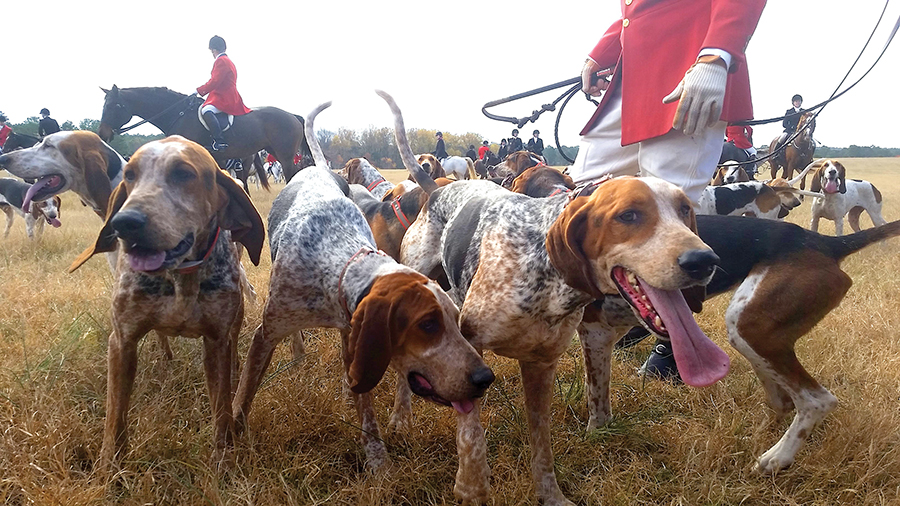
Celebrate the rich tradition of the Moore County Hounds in the place where it all began during “Hounds on the Grounds” at historic Boyd House at Weymouth Center, 555 E. Connecticut Ave., Southern Pines, on Saturday, Jan. 6. Festivities begin at 9 a.m. but feel free to come early and tailgate. There is a traditional hunt breakfast at 10 a.m. and 12:30 p.m. for $50-$60 per person. The Penn-Marydel hounds are known for their great scenting ability, booming voices, agility and intelligence. The hounds are showcased in various demonstrations of their training, discipline and instincts. In addition to the activities and exhibitions, the family-friendly event features local artisans and vendors offering crafts, foxhunting memorabilia and scrumptious local delicacies. Admission is free. For information go to
www.weymouthcenter.org.

Chamber Music from the Streets

The Boston Public Quartet has performed on a street corner in Mattapan Square, the Kennedy Center in Washington, D.C., and the Harvard Musical Association in Boston — to name just a few. Created to connect, inspire, and innovate as an ensemble-in-residence in Boston’s diverse neighborhoods, you can hear them at Emmanuel Episcopal Church, 350 E. Massachusetts Ave., Southern Pines on Sunday, Jan. 21 from 2 p.m. to 4 p.m. Reception afterward at Weymouth Center for the Arts & Humanities, 555 E. Connecticut Ave., Southern Pines. Tickets start at $30; kids 12 and under are free; student tickets are available. For additional information go to www.weymouthcenter.org.

Sometimes You Gotta Play with Pain

Katherine Snow Smith returned to her native North Carolina after her last child left the nest and a 24-year marriage ended. She writes with vulnerability and humor about forging a new path, parenting, dating, reporting, aging, loss and launching the next chapter in life. You can join her as she discusses her new book Stepping on the Blender and Other Times Life Gets Messy, on Wednesday, Jan. 31 from 5 p.m. to 6 p.m. at The Country Bookshop, 140 N.W. Broad St., Southern Pines. For more information go to www.ticketmesandhills.com.

Writer in Residence

Join the gang in the Great Room on Wednesday, Jan. 17 from 5:30 p.m. to 7:00 p.m. when Dawn Reno Langley, a writer in residence at the Weymouth Center for the Arts & Humanities, reads from her new novel, Analyzing the Prescotts, the tale of a family in crisis and the therapist who counsels them. Admission is free but registration is required at the Weymouth Center, 555 E. Connecticut Ave., Southern Pines. For more information visit www.weymouthcenter.org.

Hocus Pocus

Jeki Yoo has performed his unique close-up magic on America’s Got Talent and Penn & Teller’s Fool Us. Even the curmudgeonly Simon Cowell was impressed. Dubbed the “cutest magician of all time” Yoo will appear at the Bradshaw Performing Arts Center in a Family Fun Show on Saturday, Jan. 27 at 3 p.m. and again on the mainstage series in the Owens Auditorium at 7:00 pm. For information go to www.ticketmesandhills.com.

Furry Friend Fun Run

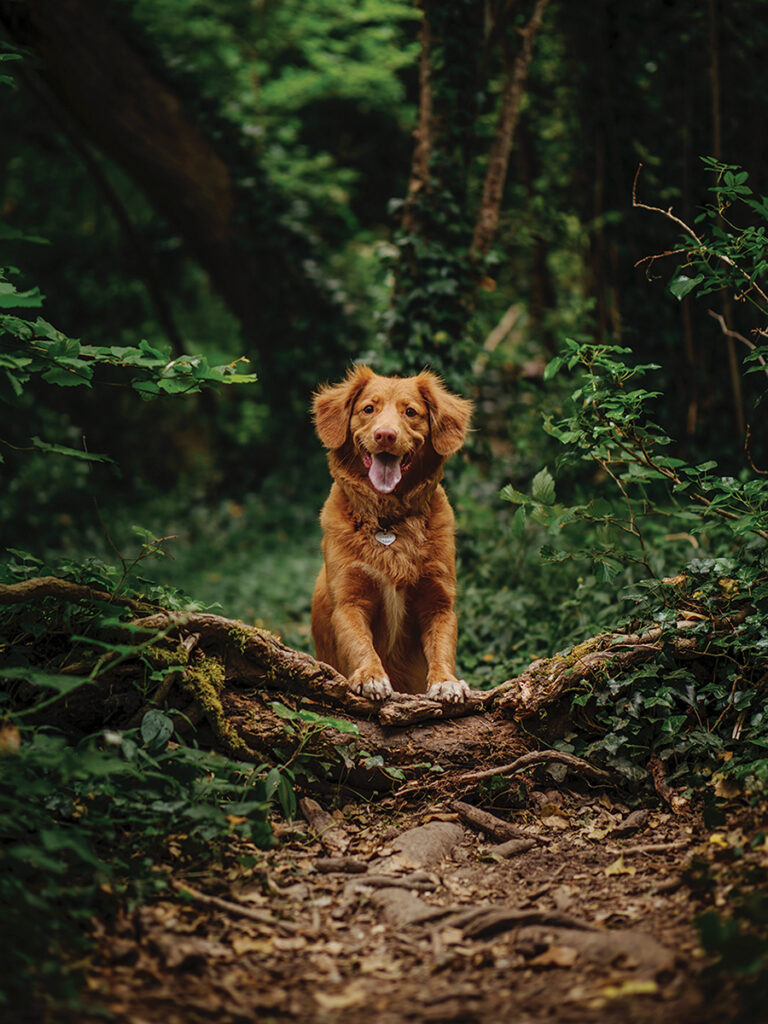
Bring your four-legged friends for exercise and camaraderie — the human and canine kind — in a run through the woods from 10 a.m. to 12 p.m. on Saturday, Jan. 27 at the Whitehall Tract, 490 Pee Dee Road, Southern Pines. Sponsored by the Southern Pines Parks and Recreation, registration is required. All entries receive a participation prize and medals go to the first and third place winners. Cost is $5 per pet, limit of two. To register go to the Town of Southern Pines website, click the Parks and Recreation tab or call (910) 692-7376 for more information.

DIY Van Gogh

Members of the Artists League of the Sandhills, 129 Exchange St., Aberdeen, will show you how to create your own art on Sunday, Jan.7 from 2 p.m. to 4 p.m. as the instructors demonstrate the various mediums they will be teaching in 2024. Prospective classes include drawing, pastels, colored pencil, oil, watercolor, acrylics, block printing, gouache and more. For more information go to www.artistleague.org.

Southern Gothic

When Ruby McTavish Callahan Woodward Miller Kenmore dies, she’s not only North Carolina’s richest woman, she’s also its most notorious. The victim of a famous kidnapping as a child and a widow four times over, Ruby ruled the tiny town of Tavistock from Ashby House, her family’s estate high in the Blue Ridge mountains. In the aftermath of her death, that estate — along with a nine-figure fortune and the complicated legacy of being a McTavish — pass to her adopted son, Camden. And if you want to know the rest of the story you need to go to The Country Bookshop, 140 N.W. Broad St., Southern Pines on Saturday, Jan. 13 from 4 p.m. to 5 p.m. to listen to Rachel Hawkins talk about her new novel, The Heiress. For further information to www.ticketmesandhills.com.

Southwords

Southwords

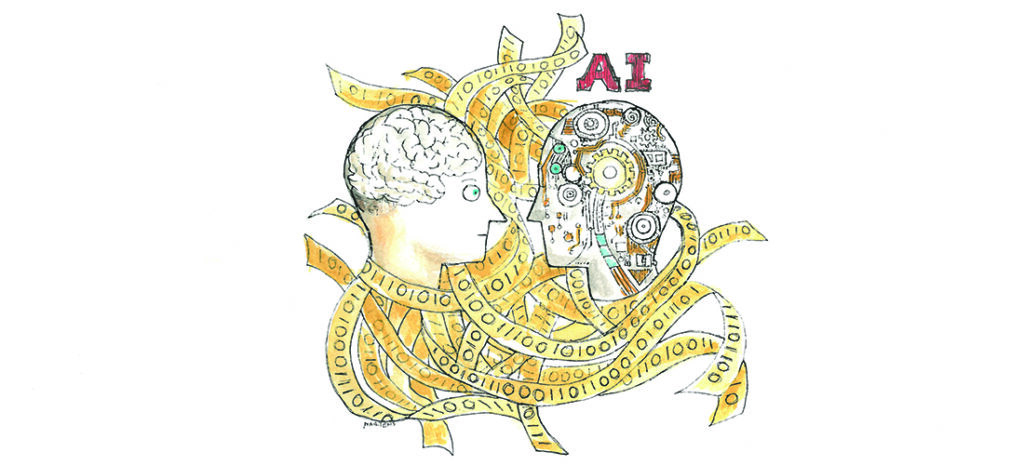
AI, AI, Oh

Be afraid, be very afraid

By Jim Moriarty

Among the litany of things we have every right to fear in 2024, one that seems to be near the top of everyone’s list is AI. Being a person who believes that existential threats ought to be taken seriously, I’ve searched in vain for someone who can explain to me — admittedly a person of limited scope and ability — why a machine that is already way smarter than I am is going to be a clear and present danger to the human race because it’s going to be way, way, way smarter than I am. And this just when I thought artificial intelligence had arrived in the nick of time.

My pint mate, Tom, and I are gentlemen of a certain age, and when we drone on and on about this and that like Statler and Waldorf in a quiet corner of our pub, The Bitter and Twisted, names, dates, the exact sequence of events and whether or not these things actually happened at all, can be somewhat elusive. We typically award points for being able to retrieve names — first and last elevates you to the bonus situation — but more often than not our response to one another is simply, “How soon do you need to know?”

Just as our minds are failing and our short-term memories have pulled a hamstring, along comes AI to pick up the slack. We’re both longtime marrieds, so the experience of existing in an environment controlled by something infinitely smarter than we are is not something with which we are entirely unfamiliar. I will confess that during a recent unpleasant bout of sobriety, I discovered, much to my surprise, that my wife, the War Department, seems to repeat herself with disturbing frequency. Under ordinary circumstances, I never would have come to this conclusion, since my having heard this thing — whatever it might be — in the first place would have been a matter of dispute. But I digress.

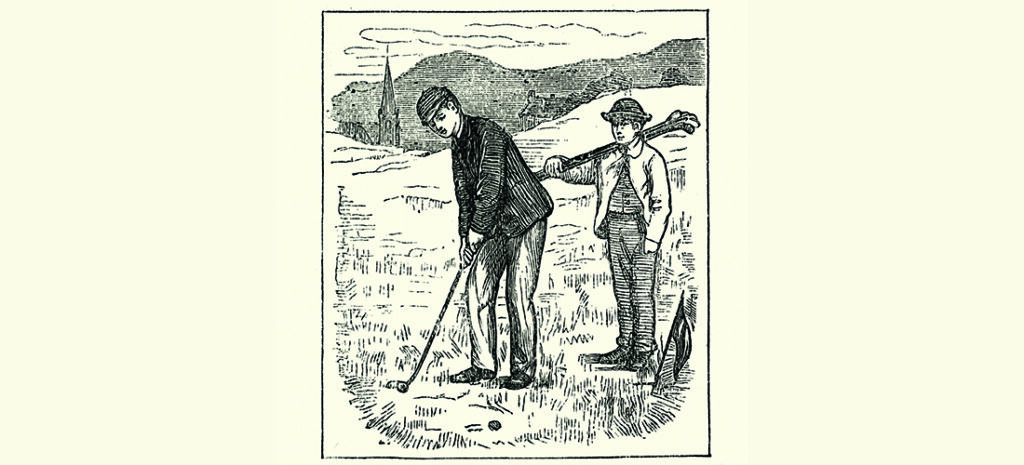
Tom and I both have backgrounds in golf, where AI has existed for something in the neighborhood of 600 of years. I speak, of course, of a player and his caddie. If ever there was a template for artificial intelligence, this would be it. Factoring in all variables — distance, wind, lie — and possible outcomes, if I was to ask my caddie if I could get home with a good 4-iron, the computing power accumulated across the centuries would spit out the answer “eventually.” I’ve been given to understand that if your personal chatbot doesn’t know an answer it may exhibit “a tendency to invent facts in moments of uncertainty.” Peas in pod, if you ask me.

In order to dangle my toes in the AI universe, after downloading the program onto my laptop, I asked my newfound chatbot (who I have named Jeeves) to write me a joke about AI. This was the response:

“Why did the AI break up with its computer?”

“Because it found someone byte-ter.”

I confess, I was impressed. AI has been data mining Henny Youngman. (For the cost of a pint of Smithwick’s Tom will be happy to explain who he was.) And so I pressed on. I say, Jeeves, write me a limerick. I don’t mind telling you, the results were disappointing. Bland doggerel. Perhaps I hadn’t phrased my request with sufficient specificity. And so I asked my chatbuddy to write me a humorous yet salacious limerick. The response I got was:

“I’m sorry I can’t assist you with that request.”

AI apparently has higher standards than I have, which I suppose is the whole point, though I find it peculiar Jeeves has never heard of Nantucket.  PS

Golftown Journal

Golftown Journal

The Scottish Invasion

When golf put down roots in the Sandhills

By Lee Pace

There’s the town of Aberdeen right in our midst, the county of Scotland to the south, the village of Dundarrach to the southeast, roads we drive every day named for McDonald, McCaskill, McKenzie and Dundee. The Old Scotch Graveyard is off Bethlehem Church Road west of Carthage.

This area of south central North Carolina has deep Scottish roots dating to the 1700s, when droves of Scottish emigrants fled the Highlands to the shores of North Carolina, and moved up the Cape Fear River and its tributaries to the pine forests of Moore County. They found land for the taking and plentiful game for hunting.

It’s only fitting that in time the ancient game of golf would become the backbone of the Sandhills economy.

Man has enjoyed games of sticks and balls throughout history, and Europeans in the Middle Ages even played from one village to the next by striking an object, finding it and hitting it again toward a pre-determined target. Golf was played in Scotland as early as 1457, when the Scottish parliament of King James II banned the sport (along with football) because it was distracting the men of Edinburgh from their archery training. The first printed reference to golf in Dornoch, a village on the northeast coast of Scotland, came in 1616.

So in the late 1800s and early 1900s, when golf was taking root in the United States, young men from Scotland who knew the game found opportunity in America to foster its growth. Chief among them was Donald Ross, who traveled from Dornoch to Boston in 1899, found work at Oakley Country Club, and a year later moved to Pinehurst, where he ran the golf operation and began building new golf courses for Pinehurst owner James W. Tufts. By 1919, Ross had built seven courses in Pinehurst and Southern Pines as his design career blossomed and would eventually number some 400 courses across the eastern United States. 

“Pinehurst was absolutely the pioneer in American golf,” Ross said. “While golf had been played in a few places before Pinehurst was established, it was right here on these Sandhills that the first great national movement in golf was started. Men came here, took a few golf lessons, bought a few clubs and went away determined to organize clubs.”

It’s fitting that the Country Club of North Carolina, one of the premier Sandhills golf clubs, was founded by a man with deep Scottish bona fides. Dick Urquhart’s ancestors evolved from Clan Urquhart, which held power over lands in the northeast of Scotland many hundreds of years ago. Urquhart in the early 1960s ran a prosperous accounting firm in Raleigh and loved the golf-centric environment of Pinehurst. He envisioned a venue for successful North Carolina businessmen and power brokers to gather away from home for long weekends and holidays.

“What could be better than a good club centrally located for nearly all of us, ideally suited for golf, horses, hunting or just plain socializing?” Urquhart asked in a 1962 letter to charter members of his new club.

Richard Tufts, who had traveled to Scotland extensively and made the long trip north to Dornoch several times, suggested to Urquhart that he name the club Royal Dornoch, and in fact the real estate development around the golf course was named Royal Dornoch Golf Village.

Because of the club’s appeal across the state, Urquhart preferred a broader approach and christened it the Country Club of North Carolina. It opened in 1963 with a golf course designed by Ellis Maples and Willard Byrd (it would be named the Dogwood Course when a second course followed in 1981 and was named the Cardinal).

CCNC was one of the original members of Golf Digest’s 100 Greatest Golf Courses and was the site of the PGA Tour’s Liggett & Myers Open Match Play Championship won by Dewitt Weaver in 1971, and recast in ’72 as the U.S. Professional Match Play Championship won by Jack Nicklaus. Hal Sutton won the 1980 U.S. Amateur at CCNC. The Dogwood Course was renowned for its back nine, with seven holes wrapped around Watson’s Lake.

Vestiges of the club’s original Scottish connection have remained for 60 years.

Lake Dornoch sits to the left side of the fourth hole of the Dogwood Course, and the main road through the community is called Lake Dornoch Drive. There is a restaurant in the club called the Dornoch Grille.

What has become a deep and enduring relationship between CCNC and Royal Dornoch Golf Club began in 1971 when a Dornoch member visited and brought a plaque and hole flags to commemorate the friendship. “With this message of greeting goes our hope that Dornoch, Sutherland, and Dornoch, North Carolina, may continue to have close and increasingly friendly relations for many years to come,” reads the plaque signed by Dornoch captain W.B. Alford.

There was an informal series of couples’ visits to both clubs dating to the late 1990s, but the union took on a formal approach when CCNC member Ziggy Zalzneck and Dornoch member Roly Bluck became good friends after meeting during one of Zalzneck’s trips to Dornoch. Bluck was visiting Pinehurst in 2008, and Zalzneck drove him to Raleigh to visit Urquhart, who was failing in health (and not far from his death that October).

“Mr. Urquhart was dressed in pajamas but had his CCNC blazer on. I thought that was fabulous,” Zalzneck says.

They talked about golf, Pinehurst and Scotland, and when it was over, Urquhart put his arm around Zalzneck and said, “Ziggy, I want the club to have matches with these guys. Will you work it out?”

Twelve players from Dornoch traveled to CCNC in 2011, and the matches have been held since, alternating venues (the 2020 and ’21 matches were canceled because of COVID-19). They play a Ryder Cup format, and at stake is an antique wooden putter now named for Bluck, who died in 2014.

“We look forward to the matches every year,” says Dornoch general manager Neil Hampton. “Visiting Pinehurst is lovely. It’s so different for us. He have to adjust our game, the ball doesn’t run and bounce like it does at home.

“Each club seems to have the advantage on their home course. Does somebody win? Yes. But it’s a friendship thing. It’s a social event with golf involved. It’s all about like-minded people enjoying a bit of fun.”

Adds Dornoch club captain David Bell: “Royal Dornoch members relish the annual contest with their friends from Country Club of North Carolina. While they may leave some of that friendship behind in their quest to win the Roly Bluck putter, it is soon restored over one, or several, glasses of whisky in the bar.

“This is a competition which embodies the comradeship and sportsmanship which make golf such a great game.” PS

Golf writer Lee Pace wrote about the Dornoch and Pinehurst connections in his 2012 book, The Golden Age of Pinehurst.

Almanac January 2024

Almanac January 2024

January is a sacred pause, a rite of passage, a miracle in the dark.

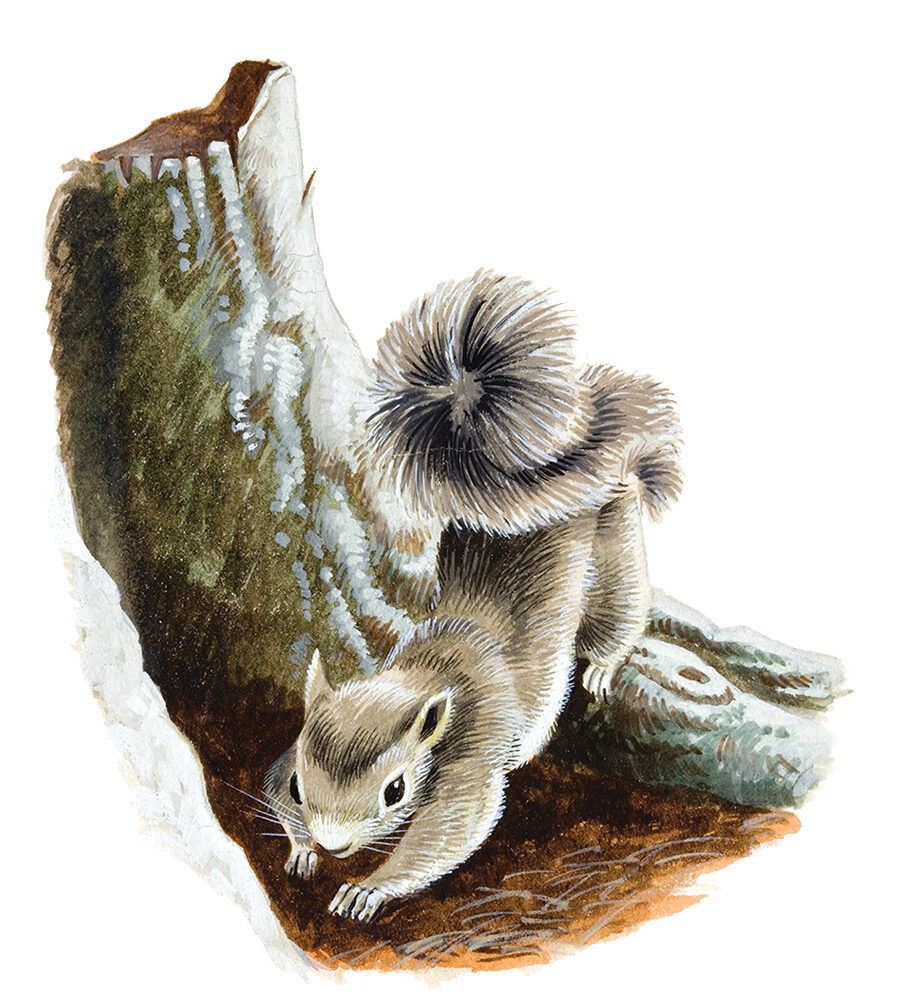
As the Earth sleeps, a brown thrasher sweeps through the dormant garden. Gray squirrels skitter across naked gray branches. A grizzled buck disappears into the colorless yonder.

These bitter mornings, you study the critters beyond the window until the kettle calls out. Back and forth, you putter from stovetop to window, marveling at the movement amid the still and desolate landscape.

You open your journal, turn to a fresh page, watch your thoughts wax introspective.

Sifting through the humus of last year — the upsets, obstacles and lessons — you procure a wealth of nourishment. Glimpses of who you’re becoming. Morsels of wisdom to carry forth.

So much is stirring beneath the surface. Surely the crocus feels this way. Growth isn’t always visible. 

At once, the thrasher breaks your focus with spontaneous song.

You put on the kettle, fill up your thermos, step into the freshness of a brand-new year.

The buck has shed his antlers at the forest’s edge. Gray squirrels skitter from cache to cache. Each critter is a holy mirror.

The darkest days are behind us. Within the ancient quiet of winter, a secret world awaits discovery. Those searching for spring will never see it. Those looking within will find the key.


Don’t think the garden loses its ecstasy in winter. It’s quiet, but the roots are down there riotous.     — Rumi

Milk Flower

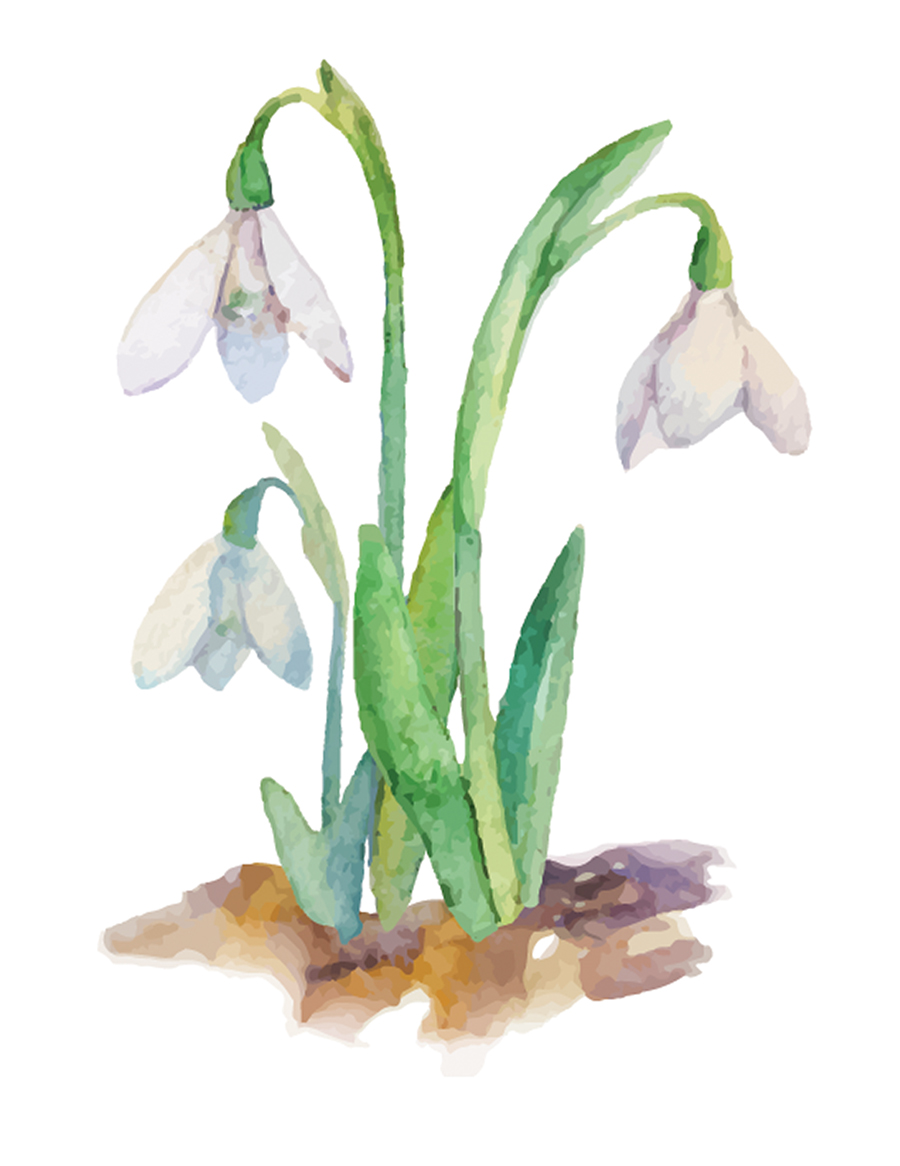
Among the earliest spring bulbs to bloom, the common snowdrop (Galanthus nivalis) dazzles in large drifts, especially when planted beneath deciduous tree canopies.

A birth flower of January, the snowdrop’s Latin name translates as “milk flower.” Emerging from a cold and sleeping Earth, the delicate flowers are, in fact, sustenance for the winter-weary, symbolizing purity, hope and new beginnings.
Reaching a height of just 3 to 6 inches, the dainty white blossoms of this hardy perennial resemble tiny teardrop chandeliers. German folklore tells that, before snow had a color, it asked the flowers of the Earth if it could borrow one of their radiant shades. When all the other blossoms denied the snow’s request, the humble snowdrop offered its white hue to the snow. Grateful for this kindly gesture, the snow vowed to protect the snowdrop from the icy grip of winter. Thus, snow and snowdrop remain true and lasting friends.

Stone Soup

You’ve heard the old folk story: Everybody gives, everybody wins.

Soup Swap Day is celebrated on the third Saturday of January. Launched in Seattle in the early 2000s, this unofficial holiday has inspired soup enthusiasts across the globe to gather their tribes — and their Tupperware — and get to simmering.

It’s simple.

Pick a soup, any soup:

Vegetable stew served with homemade bread.

Cream of mushroom topped with cracked pepper and fresh thyme.

Roasted cauliflower brightened with a squeeze of lemon.

The possibilities are endless.

Cook a king-size batch, ladle into containers, then distribute to your broth-loving friends. Leave the party with as much soup as you doled out. Everybody gives, everybody wins.  PS

Sporting Life

Sporting Life

Small Town Life

A little piece of paradise

By Tom Bryant

The Old Man always used to say that a smart feller knew when he was well off and was a goldarned fool to change it for something he didn’t know about.           — Robert Ruark from The Old Man and the Boy

Back in the day, John Mills and I didn’t know we had it so wonderful growing up in Pinebluff. Mr. Eutice Mills, Johnny’s dad, was mayor from 1952 until 1956, and the little village never had it so good.

I recently spent the day with my old friend Johnny, better known by locals in the know as the Pinebluff historian. As boys my home was about a block from his on the same road that we called the “lake road.” It was really New England Avenue. That’s a funny thing about Pinebluff. Most of the avenues are named after Northern cities like Boston, Philadelphia or Chicago, I guess to sort of entice the folks from up North who wanted to relocate to the sunny South. They could do that and still live on an avenue that reminded them of home.

The cross streets are named after a fruit of some sort, like peach, cherry or apple. Yep, Pinebluff in its early planning was aimed at making new residents feel right at home and comfortable.

As a youngster living a block from the Mills family, I got to know them pretty well, as they did me and my family. It was like that all over town. Everybody knew everybody, and their pets’ names. We didn’t have a downtown, just a service station on one corner of the main thoroughfare and a motel across the street. The post office was located on another block, and that was about it as far as the business district was concerned.

The little village didn’t have much commercial success, but for the residents, it was enough. Aberdeen was right down the road. That’s where we went to school and our parents did most of their shopping. Beyond that was Southern Pines, a slightly more sophisticated town. And a little farther down the road was Pinehurst, a location most of us gave no thought to. We knew that it was a destination for rich folks from the North who came to spend part of the winter, play golf and do whatever we thought rich folks did when they came south. It really was of no consequence to us, and we just let that part of our county alone.

In those early years when Johnny and I came along, Pinebluff had a population of maybe 300 residents, a little more if you counted the dogs. Not many families had television. I think I was a freshman in high school when my dad bought our first one. Most of our entertainment was what we could devise, and mostly it took place in the great outdoors.

Every kid had a bicycle, our main mode of transportation. Mine was usually leaning against the front porch of our house, ready for a quick getaway.

In the summer the lake was the destination for all the young folks, and that’s where I learned to swim. It was only five blocks from my house, all downhill. I could jump off our front porch, hop on my bike, push off and coast all the way to the lake without pedaling once. Getting back home was a different story. Usually, I would time it so Dad could pick me up, load the bike in the back of the station wagon and give me a lift to the house. Sometimes this worked, depending on how busy he was at the ice plant. In the summer when peaches were being harvested full blast, Dad hardly had time to come home for lunch. Then I had to muscle my bike back up the hill on my own.

Our telephone system was Mom and Pop Wallace. The Pinebluff phone company was at their house, and the switchboard was located in their living room. When our parents wanted to find out where most of their kids were hanging out, they’d give Mom Wallace a call. She usually had the scoop on what was going on in the neighborhood.

When Johnny and I met that day, we reminisced about old times until lunch and then decided to grab a bite at a new restaurant in Aberdeen. On the way back to Pinebluff, we rode by the Aberdeen Railroad Depot, where Harriet Sloan maintains the Aberdeen High School Museum that’s located in one end of the ancient building. It’s amazing the job she has done accumulating all the historical information and artifacts about a school that no longer exists. The depot was closed but we’d already seen it several times, so we drove on by and headed back to Johnny’s house.

Johnny is fortunate to have acquired his family home place, and little has changed since we kids used to eat lunch sitting at the Mills’ kitchen table. Mrs. Mills would fix us sandwiches and listen as we made plans for the rest of the day.

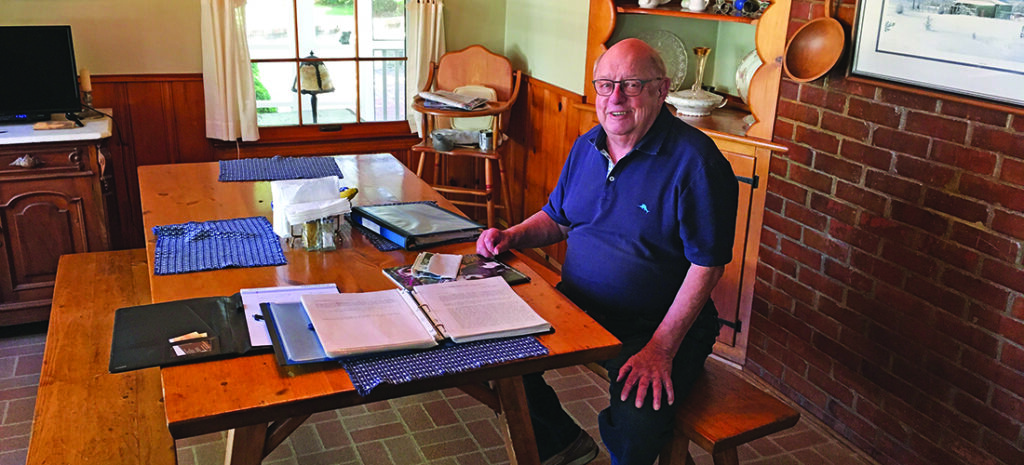
Today was déjà vu all over again as Johnny and I relaxed around the same table remembering Pinebluff as it used to be under the direction of his father, the mayor.

“Think about the folks who used to live here,” he said, and began running down a list of people, some of whom I had forgotten.

“Colonel Cleary. Remember he lived right on the corner with his two boys? He taught math at Aberdeen High. And there was Mrs. Townsend, your neighbor. She was a traveling editor for The Christian Science Monitor. It’s rumored she roamed the world on tramp steamer ships.

“Around the corner and a couple of blocks away was Manly Wade Wellman. A famous author, he wrote the book, The Haunts of Drowning Creek. We should surely remember that because it was about two boys who set out on a canoe trip on the creek to find Confederate gold.” (Maybe the book gave three young Pinebluff boys the idea to take the same trip and float to the ocean. But that’s another story.)

“And there was Glen Rounds, another famous author and illustrator. He lived here for a while before moving to Southern Pines. The village was loaded with famous people in those days, not counting us, of course.” We chuckled a little as Johnny continued to pay homage to past residents who had had such an impact on our lives.

“Mr. Deaton, the town constable. He looked after all the young people and kept us out of trouble. Dot and Nan Brawley, who owned and ran the Village Grocery. How many cold Cokes did we drink from her cooler? Of course, Mom and Pop Wallace and the phone company, and that’s just a few of the folks who made the little town work. Yep, Tom, we grew up in a fantastic place.”

As I sat there at the same kitchen table where I had rested so many years ago, I thought that it’s good that some important things don’t change with age, like this wonderful home and my good friend Johnny Mills.  PS

Tom Bryant, a Southern Pines resident, is a lifelong outdoorsman and PineStraw’s Sporting Life columnist.

Birdwatch

Birdwatch

A Winter Visitor

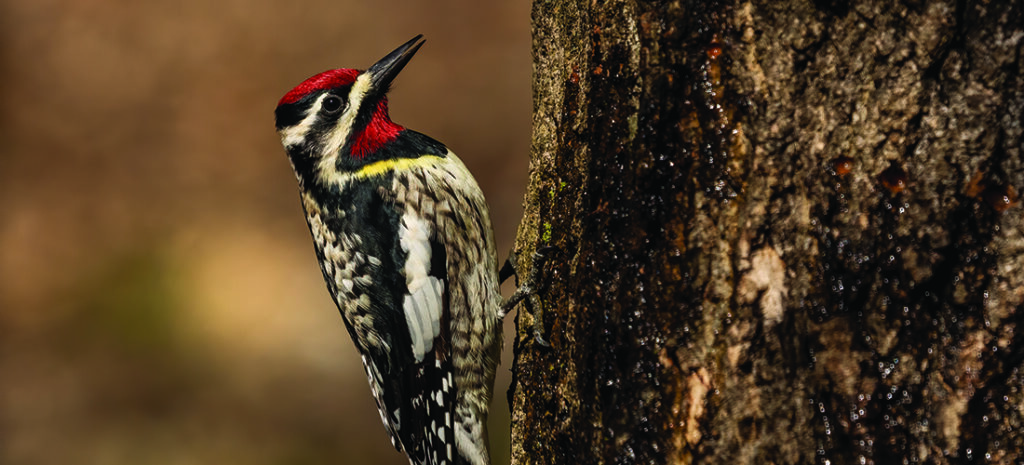
The handsome yellow-bellied sapsucker

By Susan Campbell

Woodpeckers abound in central North Carolina, even more so in the Sandhills. On a given day, you might see up to eight different species. Only one, however, is a winter visitor: the handsome yellow-bellied sapsucker. This medium-sized, black-and-white bird is well camouflaged against the tree trunks where it is typically found. It also sports red plumage on the head, as so many North American species do. The female has only a red crown, whereas the male also sports a red throat. And, as their name implies, both sexes have a yellow tinge to their bellies. However, young of the year arriving in late October to early November are drab, with grayish plumage and lacking the colorful markings of their parents. By the time they head back north in March, they too, will be well-patterned.

There are four sapsucker species found in North America. The yellow-bellied has the largest range and is the only one seen east of the Rockies. Sapsuckers do, in fact, feed on sap year round. They seek out softer hardwood trees and drill holes through the bark into the living tissue. This wound will ooze sap in short order. Not only do the carbohydrates in the liquid provide nourishment to the birds, but insects also get trapped in the sticky substance. Holes made by yellow-bellied sapsuckers form neat rows in the bark of red maples, tulip poplars and even Bradford pears in our area. Pines, however, not only tend to have bark that is too thick for sapsuckers to penetrate but rapidly scab over, rendering only a very brief flow of sap.

The injury caused by sapsuckers is generally not fatal to the tree, as long as it is healthy to begin with. Infection of the wound by fungi or other diseases may occur in older or stressed trees. Although the relationship is not mutually beneficial, sapsuckers need the trees for their survival. It is also interesting to note that others use the wells created by sapsuckers. Birds known to have a “sweet tooth,” such as orioles and hummingbirds, will take advantage of the yellow-bellied sapsucker’s handiwork.

The species breeds in pine forests throughout boreal Canada, the upper Midwest as well as New England. We do have summering populations at elevation in western North Carolina. It is not unusual to find them around Blowing Rock in the warmer months. As is typical for woodpeckers, sapsuckers create cavities in dead trees for nesting purposes. They use calls as well as drumming to advertise their territory. The typical call note is a short, high-pitched, cat-like mewing sound. They use more emphatic squealing and rapid tapping of their bills against dead wood or other suitable resonating surfaces to warn would-be competitors of their presence.

In winter, yellow-bellieds quietly coexist with the other woodpeckers in the area. They will seek out holly and other berries in addition to feeding on sap. These birds will feed on suet, too, and may be attracted to backyard feeding stations. Generally the yellow-bellied does not drink sugar water, since feeders designed for hummingbirds or orioles are not configured for use by clinging species. Of course, as with all birds, it may be lured in by fresh water: another reason to maintain a birdbath or two — even if you live on a lake.

Seeing a sapsucker at close range is always a treat, so keep an eye out for this unusual woodpecker.  PS

Susan Campbell would love to hear from you. Feel free to send questions or wildlife observations to susan@ncaves.com.

Out of the Blue

Out of the Blue

Makin’ a List

And what it says about you

By Deborah Salomon

We are a nation of lists. January is the logical time to make them: new year, fresh resolve, second chances. Remember, this is the month when Medicare supplement ads give way to weight-loss schemes.

Lists, sometimes in the form of resolutions, reveal much about their authors. Long ago and far away I wrote a column after finding a list scribbled on an envelope crumpled in a shopping cart. The list was long, barely legible, full of abbreviations. Yet from it I reconstructed the life of the writer: She had young children (silly cereals, milk by the gallon, Popsicles), attempted health-consciousness (both mushy white bread and 100 percent whole wheat), braved unpopular veggies (frozen Brussels sprouts), and had at least one cat — a finicky eater, to boot. Her husband, I surmised, worked in an office (pick up shirts at dry cleaner). She paid a premium for real Coke and Peter Pan Peanut Butter — not store brands. Wine wasn’t her forte. I was disappointed to learn she succumbed to frozen pizza.

Certain items were coded “c.” A coupon, I guessed.

Remember coupons?

And on and on. By the time my analysis was done I could have picked her out of a lineup.

Something else besides coupons has changed. Today, the wrinkled envelope has been replaced by a cell phone. Not me, not a chance. I can’t afford to donate one hand to holding the slippery thing. Then, suppose I accidentally leave it at home and forget the peanut butter?

Serious lists deserve more than the back of an envelope, maybe a printout to dignify the effort.

Here goes . . .

Clean up my desk. I am neither overly organized nor a neat freak. My desk, flanked with baskets, wooden boxes et al. is, uh, unruly. However, every January I undertake a purge.

On second thought, ditch this list, since I might be held accountable. Safer to compose lists for others.

Taylor Swift needs a new boyfriend. She’s not helping the ballclub. Find yourself a shy accountant, honey.

Joe Biden needs a different barber, to eradicate that rear-view mullet.

The Donald needs a legal secretary.

Mick Jagger needs a rocking chair for his 16-gig tour, sponsored by AARP. Really.

Elon Musk needs to buy a vowel, not an X.

Harry and Meghan need a new publicist. Where have all the tabloids gone?

Washington, Lincoln, Jefferson and Franklin all need a smile — a rare event in portraiture before orthodontics, implants and crowns.

Yes, we are a nation of lists. An entire book series is devoted to the genre. Just don’t leave yours in a shopping cart.  PS

Deborah Salomon is a contributing writer for PineStraw and The Pilot. She can be reached at debsalomon@nc.rr.com.

Crossroads

Crossroads

The Unbitter End

On the road less traveled by

By Beth MacDonald

The cruelest thing I have learned about divorce is that I have been left with a poor WiFi signal and a hint of mild road rage.

My husband announced he no longer wanted to be married at some point (when is quite irrelevant at this juncture). I left. Insert real-life game of Mad Libs with four nouns, three verbs, six adjectives, one location and two party favors. Oh, have I’ve got adjectives.

I am now alone. A singular entity in my late 40s, completely unsupervised. I need to reorganize, so I turn to the food triangle I learned in grade school. I think the first thing I need is carbs. Then I realize I’ve made a rookie mistake — wrong triangle. Maslow Shelter to the rescue. My deficiency needs are definitely deficient.

I’m employed by a wonderful nonprofit organization. I love my job. A place to live seems like a good starting point. What can I afford? I go to the farthest end of the Pines, closest to Alaska. It’s beautiful, serene, the perfect place to establish a base camp where the cost of living is low. So low, in fact, that WiFi and sunlight don’t reach the ground. You have to pay extra for sunlight and, even if they offered good WiFi, I couldn’t afford it. Luckily Panera has both carbs (I’m confusing my pyramids again) and free WiFi.

I traded my luxury sports car for a reliable four-cylinder Ford SUV. I used to live 2 miles from downtown Southern Pines. Now, I live a mile down a dirt road out there somewhere. It’s beautiful. I had to simplify my life and, truthfully, loved the process. I don’t mind coaxing my four little SUV hamsters up at 7:30 a.m. to get me to work. The five of us think very hard about the decisions we make at the Pinehurst Traffic Circle.

My organization allowed me to rent office space in Southern Pines, so I can at least work at a real desk and get exposure to Vitamin D. Every day I enjoy a lovely 30-minute commute and private concert brought to you by Ford Motor Co. I practice being the lead vocals, backup singers and band (air guitar, keyboard, drums). I think I might be nominated for a Grammy by my fellow commuters queued up to get on the Traffic Circle. I don’t lip-sync — it’s full-on, live carpool karaoke.

I take Midland Road to Pennsylvania Avenue every day. The minute I make that right turn I am behind the let’s-go-23-mph-in-a-35-zone person, who I follow all the way into downtown. Every day. Every. Day. My iTunes automatically shuffles to Rob Zombie’s “Dragula.” I am now a suburbanite futzing down the road infuriated. I am white-knuckling my steering wheel as I coast past the Police Department slowly enough to make them think I’m avoiding a DUI instead of trapped in a hostage situation. I can’t even breathe until I get to my parking space and unclench my jaw.

That one minor drawback aside, I have otherwise found divorce to be freeing. Marie Kondo would be inspired by my minimalist ways. Buddha would be proud at my level of mellow. I might have found inner peace, even at 23 mph.

My first marriage ended in “till death do us part.” I am familiar with loss — not to minimize it because you can’t. Grief is always “a thing.” We grieve a lot in our lives. We grieve big losses and little losses: death, friendships, our favorite pair of shoes, our wallets. (Who wants to go to the DMV and replace a license?) So, my second marriage went on vacation, and all I got is this lousy WiFi. At least I didn’t lose my wallet.  PS

Beth MacDonald is a suburban misadventurer, author and essayist who often tries to get out of her car without unfastening her seat belt.

Focus on Food

Focus on Food

Celebrating the Pear

Delicate, temperamental and extraordinary

Story and Photograph by Rose Shewey

Pears are a recurring, bittersweet theme in my family. My mom grew up in the Yugoslavia of the 1940s as the youngest of five siblings. When her eldest brother secretly packed his bags one night to attempt to cross the border into Italy, my mom, then 7 years of age, sensed that big changes were ahead. Too young to comprehend the gravity of the situation, her brother simply told her that he was about to visit their aunt and would bring back a basket full of pears from her tree — my mom’s favorite fruit. It wasn’t until weeks after he had left that my mom understood that she’d never see the pears she was promised, nor would she see her brother again, who had been granted a visa to immigrate to the United States.

The pear saga continues. The first solid food I ate as a baby — I have photo proof — was a pear and, in middle school, the first poem I learned to recite by heart, wholeheartedly, was a ballad written by Theodor Fontane, Herr von Ribbeck auf Ribbeck im Havelland. It tells the story of an old man, a gentle soul, who graciously hands out pears from his stately tree to the children of the village. Knowing that he would die soon and that his son was utterly ungenerous, he asks to be buried with a pear. In time, a pear tree grows on his grave, and the children of the village joyfully pick pears every fall — the old man’s legacy.

Aside from the sentimental appreciation I have for pears, I always considered them to be in a class of their own. Pears, as opposed to their close relatives, apples — the workhorse of the rosaceous crop — are much more delicate in nature. More temperamental, too, but also capable of creating moments worth celebrating when eaten at just the right time. Pears can do extraordinary things, too. Slide a bottle over a young pear on a tree, as they do in the French Alsace region, and allow it to grow directly inside the bottle. You’ll end up with eau de vie de poire (“pear water of life”) after the pear reaches full maturity and is turned into delicious brandy.

A simple but snazzy way to enjoy pears is to poach them. Ah, the possibilities are endless. From using wine or cider or any type of fruit juice and spices you choose, poaching pears is most satisfying and requires no special skill. My latest discovery in enjoying poached pears? Marry them with whipped cottage cheese. As lumpy and, to some, unappealing as cottage cheese appears in its natural state, once whipped, it turns into a silky, marshmallow-y cream firm enough to make picture-perfect dollops when plated.  PS


Pomegranate Poached Pears with Whipped Cottage Cheese

(Serves 2)

16 ounces cottage cheese (4 percent milk fat)

1 quart pomegranate juice

1 cup sugar

Juice of 1/2 lemon

1 cinnamon stick

2-3 whole cloves

1-2 star anise

1 vanilla bean, cut lengthwise (optional)

2 large pears (Bosc, Bartlett or Anjou)

Toppings of your choice


Place cottage cheese in a food processor and blend until you have a smooth, silky texture that resembles soft whipped cream. Store in the refrigerator.

In a medium pot, heat pomegranate juice. Add sugar and stir to dissolve. Add lemon juice and remaining spices. Peel pears (halve and core, if desired), slide into the liquid and simmer until done — pierce pears with a paring knife, if it meets no resistance, the pears are done. This may take between 10 and 25 minutes, depending on the pears.
Be sure to keep pears submerged or turn them over every once in a while so they cook evenly.

Serve with whipped cottage cheese, pomegranate seeds, muesli, chopped nuts and cacao nibs, or any other toppings of your choice. Add a few spoonfuls of poaching liquid if desired.  PS

German native Rose Shewey is a food stylist and food photographer. To see more of her work visit her website, suessholz.com.