Art of the State

Art of the State

Wild Clay, Ancient Art

Takuro and Hitomi Shibata shape pots — and their community

By Liza Roberts

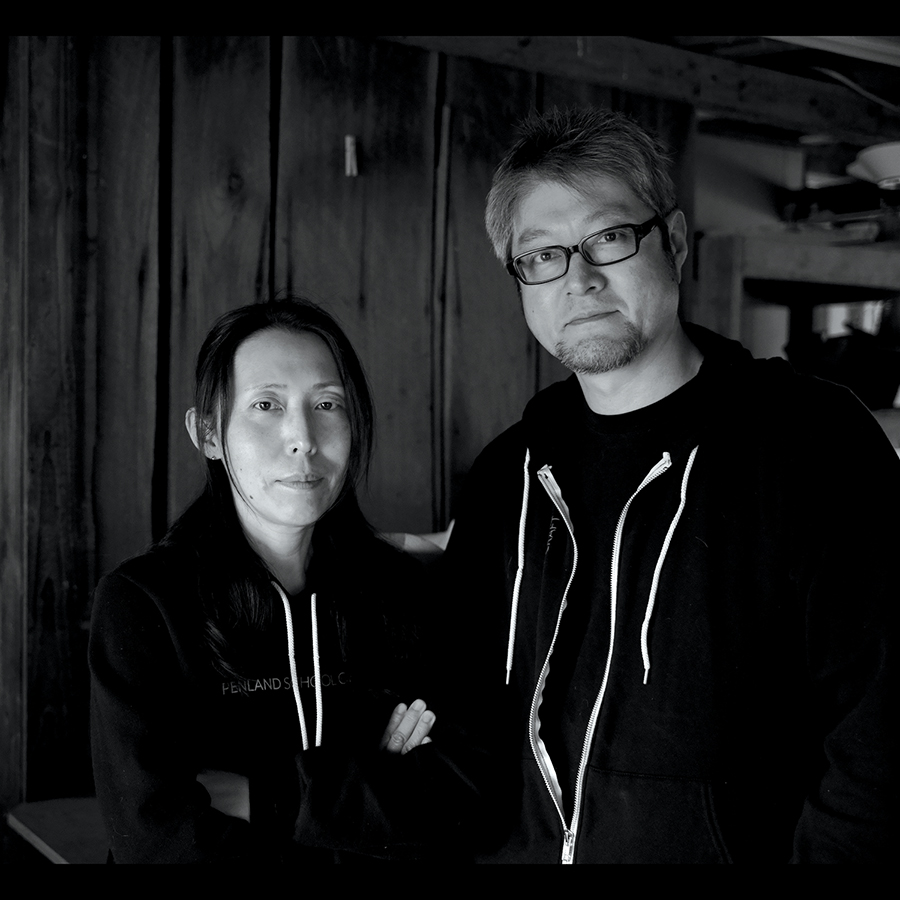
Eighteen years ago, when ceramic artists Takuro and Hitomi Shibata moved to Seagrove from the ancient pottery village of Shigaraki, Japan, they had with them nothing but a couple of suitcases, a rescued stray cat and plans for a short adventure.

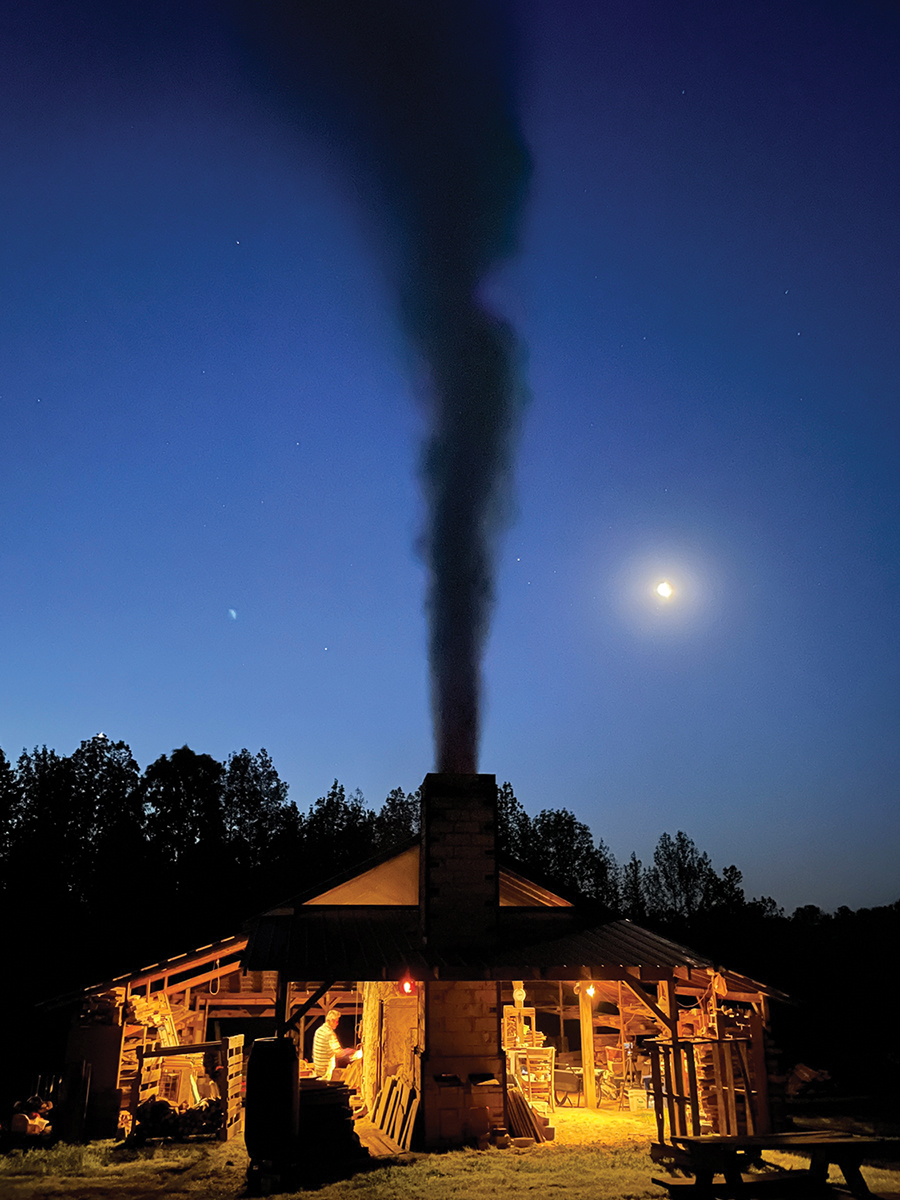
Today they are pillars of the community. Hitomi is a respected and prolific Seagrove ceramic artist, and Takuro, a fellow potter and the procurer and refiner of most of the area’s local clay, is a community fulcrum. They live with their two American-born sons on Busbee Road in a striking modernist house designed by a protégé of famed architect Frank Harmon, built in part with their own hands. Their wood-fired kilns are a stone’s throw from its front door, and the tiny farmhouse where they first lived on the property now serves as a gallery for their work. Their former garage is now their studio.

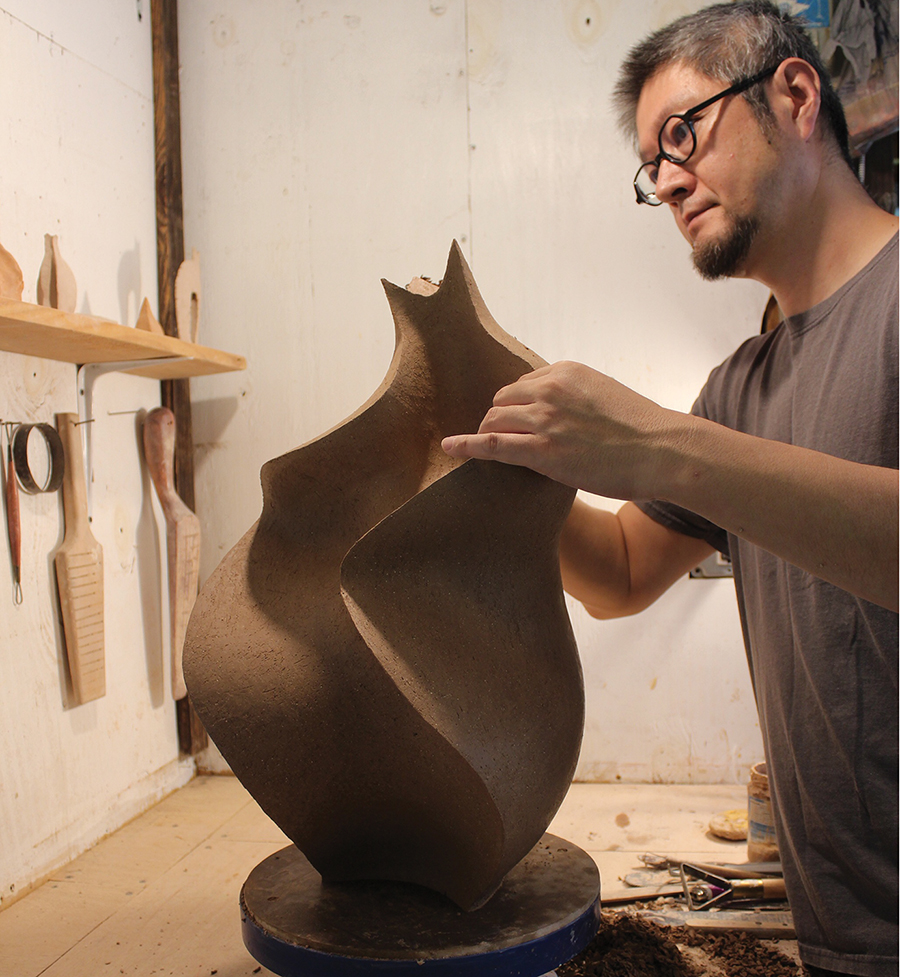
The art they make here and sell under the Studio Touya name is distinctly their own. Hitomi’s sculptural pieces have the rounded, organic shapes of abstract feminine nudes. Takuro’s are distinct for their architectural geometry, acute angles and jutting planes. It’s impossible to see the couple’s pieces side by side and not admire the harmony of their yin and yang. 

A reverence for local clay is at the heart of the couple’s individual art and their mutual business. They put that shared love and knowledge into Wild Clay: Creating Ceramics and Glazes from Natural and Found Resources, a book they co-wrote and published with Herbert Press in 2022. Its publication took their local story to an international audience, changing their business and their work in the process.

“We have been very busy doing more exhibitions and workshops outside of North Carolina, nationally and internationally,” Hitomi says. “Especially after releasing our book, we were invited to ceramic conferences, meetings and workshops to talk about our clay stories from Shigaraki to North Carolina.” When so much time on the road meant less time for making pots, the couple decided to refine their work. “We tried to improve the quality of our art,” Hitomi says. “Also, using beautiful wild clays and natural materials, which we have been doing for many years, became even more important for our artistic practices.”

Finding Home 

The couple credits the Seagrove community and its native clay for nurturing the art they originally learned in Shigaraki. The first time they saw this place, they had a feeling it would be important to them. “We were surprised,” Hitomi recalls. “There were so many pottery studios. We realized Seagrove was the biggest pottery community in the United States.” 

They’d come down from a Virginia artist’s residence on a Greyhound bus at the invitation of Nancy Gottovi (now executive director of nearby arts hub Starworks) and her husband, Seagrove potter David Stumpfle, who had visited Shigaraki a few years earlier.

The Shibatas loved what they saw, but their visas were up.

Two years later, Gottovi called again. She was working with Central Park NC, an organization dedicated to preserving the natural and cultural assets of central North Carolina, and offered Takuro, who has an engineering and chemistry degree, an opportunity to establish a clay factory to serve Seagrove’s potters.

The Shibatas jumped at the chance. People in Seagrove, they believed, truly understood the value of pottery. In other places, Hitomi says, “people love art, but they don’t think that pottery is the same thing as art. But here, people are so crazy about pottery. They love the tradition, they have so much appreciation . . . it’s part of the history of the state.”

The Pottery Ecosystem

Today, Starworks Ceramics is an integral part of the Seagrove pottery ecosystem, and it’s growing. “We went through a tough time during the pandemic,” Takuro says, “but now we have more people working, and it’s a great team. Our clay is getting more popular, and potters and artists support not only our clays, but the story of a clay factory.”

The process is laborious: Takuro takes raw clay dug from the earth and turns it into a viable material. The equipment he and his assistants use to refine it is massive and low-tech, the stuff of a fairy-tale giant’s bakery. Some of it is from the 1940s. There’s a shredder, a mixer, a separator and a vibrating screen; there are things called filter presses and pug mills. All of it fills a cavernous warehouse room. Massive buckets of what looks like sticky dirt go in one end; several days of man and machine power later, neat clay cubes come out the other. These cubes are sold in increasing numbers to potters in Seagrove and around the world.

“Using wild clays for pottery in the studio is a growing trend in American ceramic art education and in small pottery businesses,” Takuro says. “It’s good for people to think about sustainability and the environment. However, these methods have been used and improved for thousands of years all over the world. Nothing is new.”

He hopes his clay and the couple’s book inspires more potters around the country to learn about the clay histories in their own regions: “Our clay story is very personal, and our clay experience doesn’t cover all wild clays, but we heard from readers that many places in the world have interesting histories, communities and people who work in clay. We believe clay is universal.”

At the same time, Takuro knows that what makes and sells at Starworks can’t be found just anywhere. “North Carolina clay is special,” he says. “It’s high in silica, it can be fired at high temperatures and it is from this place.”  PS

This is an excerpt from Art of the State: Celebrating the Art of North Carolina, published by UNC Press.


Dissecting a Cocktail

Dissecting a Cocktail

Transfusion

Story and Photograph by Tony Cross

Unless you’ve frequented a golf course, you may never have heard of the Transfusion cocktail. Over the past decade, it’s become just as popular, if not more than, a John Daly. This three-ingredient cocktail of vodka, ginger ale and grape juice is a staple with some non-beer-drinking golfers. It’s refreshing to drink, and bartenders can make them with ease. The Transfusion has become such a hit, and my business got so many requests to make them on draught, that I finally caved and deliver them in kegs and growlers — easy access.

So, where did the Transfusion originate? Story has it that President Dwight D. Eisenhower asked a beverage attendant what was available, picked the three ingredients he liked, and sipped it from a tall glass with ice. Ever since, he enjoyed them after his round. Presidents can be very influential, I’m told, so I doubt he drank alone. One thing is for sure: Many will be concocted (and delivered) at this year’s U.S. Open.


Specifications

2 ounces vodka

4 ounces ginger ale

1 ounce Concord grape juice

Lime wedge for garnish


Directions

Combine vodka, ginger ale (Reverie uses our homemade ginger beer) and grape juice over ice in a tall glass — or plastic if you’re in a golf cart. Stir gently and garnish with a lime wedge.  PS

Tony Cross owns and operates Reverie Cocktails, a cocktail delivery service that delivers kegged cocktails for businesses to pour on tap — but once a bartender, always a bartender.

Golftown Journal

Golftown Journal

Jump in a Lake

The rebirth of a great design

By Lee Pace

Cara Spencer remembers the 1990s when her parents and sisters spent most every weekend during the summer at their house at Woodlake Country Club in Vass. They swam. They learned to fish and water ski. They rode inner tubes and drove their boat around the 1,200-acre Lake Surf. They played golf and sipped strawberry daiquiris by the pool.

“Those were the glory days. Woodlake was the place to be,” Spencer remembers. “Our family has a strong sentimental connection to Woodlake.”

Woodlake certainly distinguished itself from its Sandhills competitors with a lake with 13 miles of shoreline; 36 holes of golf designed by Ellis Maples and Arnold Palmer; recreational amenities from swimming to golf, fishing to Jet Skis. One Fourth of July, The Embers blared out “I Love Beach Music” and other summertime shagging favorites.

“It’s laid back. We’ll have more fun in two weeks than some places have in two years,” longtime club professional and Woodlake resident Stuart Taylor liked to say.

That idyllic life at Woodlake for some 2,000 residents was rocked beginning in 2016 when torrential rainfall from Hurricane Matthew set in motion a domino effect that included a breach of the dam, the lake being drained by the State of North Carolina for flood control purposes, the golf courses closing, and the German ownership group losing the facility to bankruptcy.

Five years later, the community and club got a new lease on life when Atlantic National Capital bought Woodlake at auction for $3.5 million, and began negotiations with the county and state lawmakers to repair the dam. The new owners are headed by Fayetteville businessman Keith Allison and his three daughters, Cara Spencer being one of them. As Allison was growing his Systel Business Equipment company into a significant independent dealer of official equipment in the Southeast in the 1980s and ’90s, the family enjoyed their weekend retreat at their home in Woodlake.

“My daughters learned to ski at Woodlake,” Allison says. “My family and I have a longstanding association and sentimental attachment to Woodlake.”

The first move in the fall of 2021 was to hire golf architect Kris Spence to take a look at the overgrown Maples golf course that opened in 1971 and provide a resurrection plan (the 1996 Palmer course will remain closed). Spence remembers Spencer giving him a tour of the overgrown fairways.

“Nature had totally reclaimed it except for a few areas where it looked like homeowners had been cutting some grass,” Spence says. “Cara asked what I thought it would take to get it back open. Hell, I couldn’t even see it. The fairways were 6 feet tall, and there were trees in the bunkers.”

Spence knew from the outset that if the course was designed by Ellis Maples, there were likely some good bones underneath the jungle. Maples grew up in golf design and maintenance, his father Frank serving as the longtime Pinehurst superintendent under Donald Ross, and Ellis started working in golf construction and maintenance at the age of 14. In 1948, he supervised the construction of Ross’ final design project, Raleigh Country Club, and worked for five years as the course superintendent. Maples then went into private practice in 1953 as a golf course architect.

His most notable works include the Dogwood Course with Willard Byrd at the Country Club of North Carolina (1963); and Grandfather Golf and Country Club in Linville (1968). Spence was intimately familiar with the Dogwood Course, having handled a renovation of that course in 2015-16.

Spence hired subcontractors in the fall of 2021 to start clearing the Woodlake corridors and spent considerable time himself on a bushhog machine around the green complexes.

“The more I looked at the golf course, the more I realized this was some really good work by Ellis Maples,” Spence says. “We got the greens cleaned up, and I started to study them. I got excited. After a month, I went back to Cara and said, ‘I don’t think you know what you have here. You have one of the best golf courses in North Carolina.’ That’s saying a lot, especially for this region.”

The first four holes wrap around the lake and then venture into typical Sandhills ground with sandy soil and gently undulating slopes, and the course does not return to the clubhouse after nine, always a good sign that the architect was allowed to find the best 18 holes without the restraint of bringing the ninth hole back to the start.

Spence built a few new tees to add some length and adjusted some fairway bunker placements to catch the longer drives of today, versus the 1971 club and ball standards. Many of the bunker complexes are dotted with the wiregrass so indigenous to the Sandhills, along with acres of hardpan sand. The greens were sprigged with Tif-Eagle Bermuda.

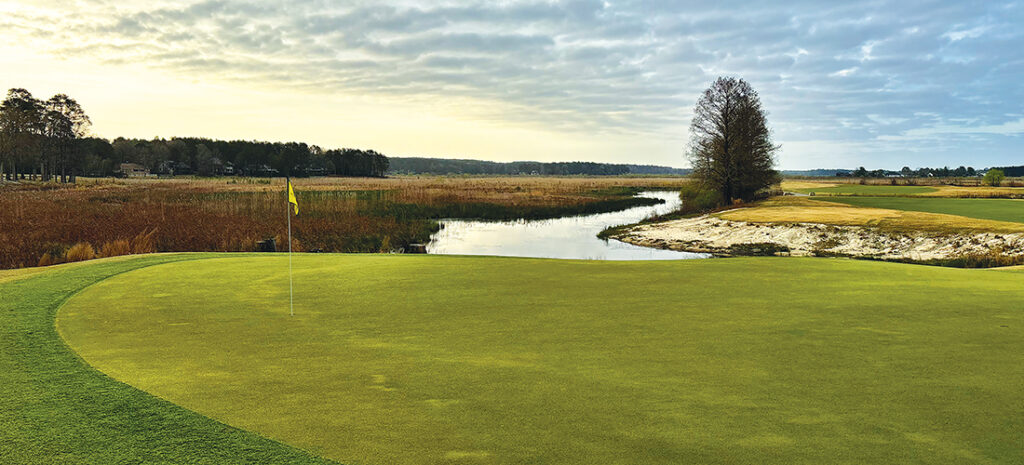
The course reopened in September 2023, and will mark a complete renaissance when the dam and lake work are completed in early 2025 and the lake is restored. The golf shop has been renovated, a new restaurant has opened, and the course is open to outside play.

“Hole after hole you could pick as a signature hole,” says Woodlake General Manager Jeff Crabbe, a veteran of the area golf community and former staff professional at Pinehurst Resort. “There’s not a bad hole on the golf course. Once the lake comes back, it’s going to be pretty special. The vision of the ownership is to make this one of the most sought-after communities in the area and the state. We started from zero in a new membership program and are at 115. We’re proud of that growth.”

Spence compares the view across the lake to something you might see in the South Carolina low country and has been heartened with the opinions from a handful of visitors with high golf I.Q.s who have toured the course since it reopened.

“It’s been fun to watch people’s reaction to it,” he says. “They are like, ‘Wow, I hadn’t expected that.’ This is one terrific golf course. I don’t fall in love with golf courses per se, but I really admire this and appreciate what Ellis did 50 years ago. It is amazing that a golf course of this quality had escaped attention and recognition for so long. It was very satisfying to play a role, to put it back in its rightful place.”

Cara and husband Tommy Spencer live in Fayetteville and keep the family Woodlake tradition alive with a home of their own. One Friday evening in March, they jumped into a golf cart with their three children for the short drive to the Woodlake clubhouse and the first members dinner of the season.

“It was a nostalgic moment for me, thinking back to being a kid and my experiences here, and now having that for my own kids,” she says. “That’s why preserving Woodlake is so important to us.”  PS

Lee Pace has written four books about the evolution of Pinehurst, its golf courses and village. His most recent is The Golden Age of Pinehurst. Write him at leepace7@gmail.com and follow him @LeePaceTweet.

Simple Life

Simple Life

When Losing is Winning

Seeing the world through missing glasses

By Jim Dodson

“Oh I have been to Ludlow Fair. And left my necktie God knows where.” – A.E. Houseman

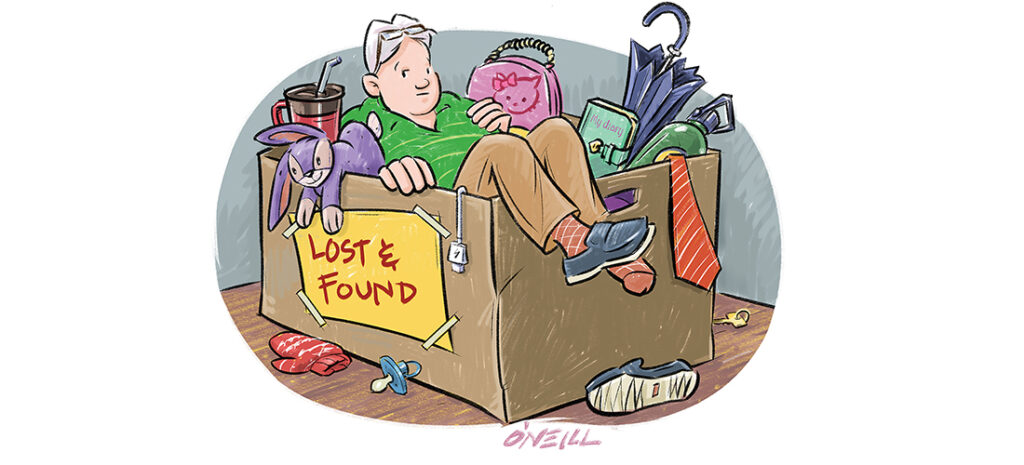
The other day, I lost my latest pair of expensive eyeglasses. Sadly, I seem to lose my spectacles on a regular basis. My wife, Wendy, jokes that she keeps a running account with Warby Parker.

Just for fun, I made a rough count of eyeglasses I’ve lost over the past 23 years of our marriage. I gave up the count after six, which happens to be this year’s total alone. At least one of those pricey pairs of specs was never found. It vanished into the magical Land of Lost Things without a trace. Of the remaining missing five, Wendy found two pairs in the pockets of old work shirts and a third in a sports coat I haven’t worn since Christmas. The fourth pair turned up in a rose bush where I was doing some early spring pruning. The fifth and final missing pair — my hip, whiskey-hued tortoiseshell sunglasses — finally revealed themselves in my golf bag, where I left them two weeks ago.

Dame Wendy’s theory to explain my penchant for losing my glasses is that I have so much on my mind — i.e. deadlines, books to read, garden stuff, my aging golf swing, the general state of the world, etc. In short, there’s little room remaining to remember where I leave things that I don’t particularly deem essential.

My explanation for this perpetual problem comes from my being nearsighted and only needing glasses to see objects in the distance, including, but not limited to, golf balls, birds at the feeder in the yard, street numbers, the fine print on billboards, UFOs and interesting cloud formations. When I’m reading, writing or examining something up close, I typically remove them and — apparently — forget where I put them down. Out of sight, out of mind.

All of this invariably has me pondering lost things in this world, including people.

We Americans are obsessed with winning and losing. The worlds of politics and sports are the most obvious examples. One presidential candidate calls people “losers” and insists that America will cease to exist if he isn’t re-elected Commander in Chief next November; while the other declares that democracy is doomed if his opponent somehow wins. Meanwhile, billions of dollars from wealthy team supporters flood our college sports, where winning is the only name of the game.

Up on Wall Street, meanwhile, where predicting winners and losers is the holy writ of American commerce, we watch the record Dow rise as if we’re running with the bulls, staying one step ahead with the nettlesome awareness that what goes up inevitably comes down. As the gap between the haves and have-nots ever widens, we associate wealth with winning and poverty as a stubborn inconvenient truth. Jesus, after all, said the poor will always be with us. He also asked what profit it is for a man to gain the whole world, but lose his soul?

Sometimes being lost or losing is the best thing that can happen to you.

Last year, I lost 40 pounds and have never felt physically better. I’ve even managed to give up (mostly) my gifted baker wife’s unearthly delicious cookies, pies and cakes, though I draw the line at giving up her lemon-ginger scones and a daily large chai tea latte.

More than once I have been lost on America’s country back roads in some of the most beautiful cities in the world, only to discover wonderful people, places and things I would never would have encountered otherwise. One of the sad truths of our GPS-equipped smart phones is that we can never truly be lost anywhere in the world these days unless the juice runs out.

Losing one’s fear of those who don’t share our opinions, tastes, gender, lifestyle, religion, race or brand of politics can be a courageous and very healthy thing, quite possibly the first step toward regaining the kind of social civility that could heal this divided country and bring us all a step closer together as Americans.

Many years ago, due to my  work and strengthening faith, I even lost my fear of dying by choosing to believe that each day is actually a reason to feel grateful for being alive — even on so-called “bad” days when nothing seems to go right.

Losing a loved one to disease or tragedy, on the other hand, exists in a category all its own, though the passage of time and memories can often be an unexpected path to healing and awakening. I lost both of my parents more than two decades ago, yet today I seem to hear their wonderful voices and wise words clearer than ever.

My mom was the one who stressed the importance of losing one’s fear and judgment of others in a multi-hued world where everyone is different, a value system I saw her live every day of her life. It’s something I aspire to but admittedly still struggle with at times. Forever a work in progress, I suppose.

My dad was a fine baseball player in his youth and, later in life, became a terrific golfer. Following in his wake, I was something of a hotheaded kid who hated to lose at either of those games. It was he, however, who pointed out that my boyhood sports hero, the great amateur golfer Bobby Jones, said he never learned anything from winning a golf tournament.

In truth, it took me many years — and no shortage of lost games and golf matches — to appreciate my old man’s belief that being a good loser is, in fact, the road to someday being a gracious winner. When I was about 10 years old, he placed a framed copy of Rudyard Kipling’s poem “If” on my bedroom wall. I can still recite my favorite passages by memory.

And I don’t even need glasses to see the timeless vision of these words.

If you can make one heap of all your winnings

And risk it on one turn of pitch-and-toss,

And lose, and start again at your beginnings

And never breathe a word about your loss;

If you can talk with crowds and keep your virtue,   

Or walk with Kings — nor lose the common touch,

If neither foes nor loving friends can hurt you,

If all men count with you, but none too much;

If you can fill the unforgiving minute

With sixty seconds’ worth of distance run,   

Yours is the Earth and everything that’s in it,   

And — which is more — you’ll be a Man, my son! PS

Jim Dodson can be reached at jwdauthor@gmail.com.

Character Study

Character Study

Rainy Day Wisdom

The golfing legacy of Uncle Bill

By Robert Kowalski

The coffee can full of golf tees was my Uncle Bill’s. He’s gone almost 20 years now, but I found it where he had left it, way in the back of the garage, stuffed behind a half-used can of WD-40.

Uncle Bill had no vices. He didn’t drink, gamble or swear. He delivered the mail for a living. His stride was quick, his hands weather-beaten. A member of the Greatest Generation, he knew who he was and who he wasn’t.

Uncle Bill was a public links player. He never got invited to corporate outings, never played at a country club or took a lesson. Breaking 90 was rare. He didn’t keep a handicap. Didn’t wear a glove when he played. No shorts. No logos. He played in the age of blades, balata balls and spike marks.

His power wasn’t in the rhythm of his swing but in the way he played golf: with precision and economy and joy. Uncle Bill’s advice was timeless and simple: “Keep your head down and don’t swing too hard. Don’t try to kill it!” When my drive ended up in the pond, he put his hand on my shoulder. “Golf is like life. It’s all about avoiding waste.”

Uncle Bill grew up poor during the Depression. He lost friends in Europe during World War II. He became a widower at 40 when a drunk driver took the life of a young man’s wife. He would never remarry.

Every part of his life found its place in his golf. The jalopy he drove mirrored the rickety old pullcart he used. The maintenance he put off on his house reflected the sad state of his golf shoes. The sacrifices he made as a single parent echoed his resistance to buying a new set of golf clubs, clubs that were only marginally better than the ones he gave me. Once, when I noticed his grips were worn down to the steel shafts, I suggested a new set might make a nice birthday gift. He shook his head and said, “Don’t waste your money. I know exactly where to put my hands now.”

Uncle Bill said his most cherished club was his ball retriever. He protected his better balls — the ones he called gems — by employing his rock strategy. Rocks were the scuffed, cut and beaten balls he kept in a separate pocket to use on holes where danger lurked. His gems were too precious to risk if there was a water hazard in play. “Funny,” Uncle Bill would say, after hitting a good shot with a rock, “somehow not caring whether you lose the ball always leads to a better swing.”

In the parking lot after a round Uncle Bill took the golf balls he found that day out of his bag. A good round was finishing with more than when you started. Then, he’d empty his pants pockets, filled with the tees he’d collected. Looking at those balls and tees lying in the trunk, he’d smile with great satisfaction and say, “Not a bad haul today.”

Only after a full accounting did the scorecard come out of his back pocket. He’d tally up the strokes he wasted before he totaled the score. The 3-putt on the 5th annoyed him. The time he failed to get up and down from the fringe on the 9th was tough to take. The face he made when he thought about leaving it in the greenside bunker on No. 12 said it all. The cruelest cut was the lost gem he hit out of bounds on 16 and never found. But even after all his agonizing over wasted shots, Uncle Bill found balance on his card — for every hole that should have been better, he found one that could have been worse.

I asked him once why he kept collecting tees in coffee cans when he already had so many. “For a rainy day, my boy. For a rainy day.” What Uncle Bill left behind was far more than 1,000 wooden tees.  PS

Robert Kowalski is a transplanted Midwesterner who is glad to be living in the Sandhills of North Carolina.

Southwords

Southwords

Buckle Up

Welcome to the U.S. Open

By Eddie Pearce

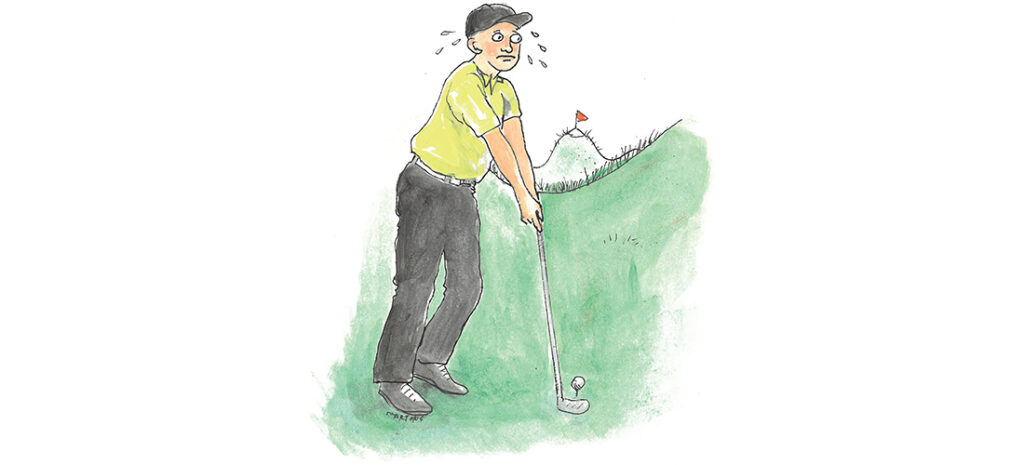
The U.S. Open is different. You’re on a razor’s edge the whole time. You play in your club championship you’ve got a gallery of 80 or 100 people following you and it feels like 10,000. On Tour you learn to block the gallery out. But in the U.S. Open you can hear a fly because your radar is up. Every nerve is firing.

You think the U.S. Open is fun? Maybe if you’ve got a cold beer and a hot dog in your hands. Not if you’re a player. Remember the massacre at Winged Foot? I’ll never forget it. Hale Irwin won at seven over par. Seven. I shot 84-78 the last two days. I was brutalized and so was everybody else. It rained Sunday and I couldn’t play fast enough. It was miserable. It was just so draining. It was the pressure of the Open, for one, and then it was the condition of the golf course. You could never relax. Jack Nicklaus bogeyed the first four holes he played. Most miserable week of my life.

It starts on the tee box. You’re visualizing your tee shot but then here comes, in the back of your head: Don’t hit it right. Don’t hit it left. And the greens? I played in the Open at Oakmont in ’73. The putting green runs from the back of the 9th green to the clubhouse. You could flick a ball from the clubhouse steps and it would roll all the way down and through the 9th green. We never saw stuff like that. That was the year Johnny Miller shoots 63 on Sunday and the next year we get massacred at Winged Foot.

But, hey, not all my memories of the U.S. Open are nightmares. The best finish I had in a major was in the Open at Medinah in ’75 — a T14, good enough to get me into the Masters the next year. My best friend was a dentist in Orlando. He got married right before the Open started and he called me up and said, “I figured out where I’m going for my honeymoon. I’m coming to Chicago to follow you around in the Open.” He and his wife flew up and he followed me every hole for his honeymoon. Kept me relaxed. His wife never did like me.

You do all kinds of things to get ready to play in an Open. Hell, you’d carry a baseball bat instead of a 3-wood if you thought it would help. Before Oakmont I went to the Cobra factory. The Baffler had just come out. We tested it in San Diego by putting the ball in the crack of the sidewalk at the plant and hitting it over the freeway. It came right out of that lie and I said, “I need this for Oakmont.” I used it a lot, too.

The Masters isn’t anything like an Open. The Open Championship isn’t anything like an Open. You can’t get aggressive. They won’t allow you to do that. Golf’s always been 80 percent mental but it’s 95 percent mental in the U.S. Open. You’ve got to be physically strong and you’ve got to be mentally strong — and have no fear.

Pinehurst No. 2 is a great driving golf course but you’ve got to keep it in play. Where they can put those pins, you’ve got to have it off the short grass to be able to position your second shot. If you miss a fairway, then it’s luck. You get in a clump of that love grass, you’ve got a problem.

If you’re an American, the U.S. Open is the deal. You want to win your national championship. There’s no other tournament. I don’t care what you say. There’s no other tournament that even comes close to the pressure that you put on yourself. That’s golf. You answer to yourself and that’s the only person you answer to. Now you’re playing for the biggest deal in the world. It’s a tough enough game without all that stuff running in your head. In the game of golf, it’s the ultimate tough man competition.  PS

Long before he became part owner of Southern Pines Nissan Kia, Eddie Pearce — winner of the 1971 North and South Men’s Amateur on Pinehurst’s No. 2 course — was one of the most highly regarded amateur and young professional players of the 1970s. Between 1968 and 1979 Pearce played in eight U.S. Opens. 

Out of the Blue

Out of the Blue

Generation Gaps

You are who they say you are

By Deborah Salomon

Napoleon Bonaparte is credited, perhaps apocryphally, with calling England “a nation of shopkeepers.” One thing is certain: Whoever said it first did not intend it as a compliment. The USA might answer to a nation of classifiers: We lump entire populations/decades under letters of the alphabet (Gen Z) or cryptic headings like “The Lost Generation,” then memorialize them in novels like The Sun Also Rises or The Great Gatsby.

Some categories lump generations together. Does the women’s liberation movement mean suffragettes marching down Main Street or female corporate vice presidents banging their heads on the glass ceiling?

Why do we need these groupings, anyway? The Roaring Twenties and Fabulous Fifties sound good enough. For answers I trolled, what else, the internet.

Ernest Hemingway attributed the term “Lost Generation” to Gertrude Stein in an epigraph to his novel The Sun Also Rises. Tom Brokaw lauded “The Greatest Generation” in his 1998 classic book.

Generational groupings are listed by the Pew Research Center, a non-partisan, self-described “fact” tank that informs the public about “trends shaping the world.”

Golly. Quite the responsibility.

They publish a list which places me, by birth, in the Silent Generation, 1928-1945, then integrates me with the baby boomers, whom I babysat through high school. The boomers, of course, acquired their title after GIs returning from WWII caused the birthrate to explode. Boys will be boys.

Reading on, I learned that Gen X was the first to grow up with widespread cable TV which, I gather, made a difference in their consumption of news, entertainment and prescription drugs.

According to Pew, Gen Z, immersed in social media since toddlerhood, seems nervous when forced to spend time away from their electronic devices. What is lost? Conversation. Books with pages that turn. Department stores. Daydreaming. Doodling. Moving around. Helping out. Folding a map. Playing a board game . . . on a board. 

True, we borderline Silent Generationists are known for glorifying the recent past while bellyaching about electronics. We love residential AC and microwave ovens but won’t buy the idea that just because you can do something, you should. That applies to omnipresent, omnipotent cellphones. Which means I’m wary of hand-held electrocardiogram widgets and self-propelling vehicles. I think all drivers should master a stick shift, just in case. Vinyl records are back, so you never know.

And what is air-fried chicken besides an oxymoron?

Too bad advances in AI aren’t enough for Gen Now astrophysicists who float the idea that readying another planet for colonization makes more sense than fixing what’s happening to this one.

There. This Borderline Boomer has had her say. Beam me up, Scotty.  PS

Deborah Salomon is a contributing writer for PineStraw and The Pilot. She can be reached at debsalomon@nc.rr.com.

Pleasures of Life Dept.

Pleasures of Life Dept.

Links to the Past

A view from the back nine

By Scott Sheffield

As I eagerly anticipate the playing of the 124th U.S. Men’s Open Golf Championship, I find myself becoming somewhat nostalgic and maybe a little wistful. I have watched every U.S. Open since the late 1950s either on television or in person, and this year’s tournament marks the 60th anniversary of the first Open I watched from the grounds.

The ’64 U. S. Open was held at Congressional Country Club in Potomac, Maryland, a suburb of Washington, D.C. I was 17 years old and a junior member of Belle Haven Country Club in Alexandria, Virginia, also a suburb of D.C. That year the Open Organizing Committee decided to use junior golfers from the area as hole marshals. I was chosen to be one of them.

My uniform consisted of a solid dark blue, collarless shirt fashioned from some sort of thin mesh material; a solid red baseball-style cap; and a round white metal badge. In a blue ring around the edge of the badge were the obligatory words stating which Open it was and where it was being played — but what was in the center of the badge is what impressed me. Superimposed over the logo of the club was the word COMMITTEE in bold red letters. I was a member of the Committee! Or at least I thought so then, and never to this day have I tried to discredit that assumption. (The only reason I can state with authority what the badge looked like is because I still have it.)

My assignment was the green on the 15th hole, a par-5. It was situated at the back of the property abutting a fenced personal residence. Some large trees near the fence offered shade, which, as the week progressed, became a welcome and much needed haven from the unusually intense heat and humidity. That area was a refuge for marshals and spectators alike, especially when the kids that lived beyond the fence started selling lemonade at prices that undercut the on-course concession stands — 50 cents for a large, 20-ounce cup and a quarter for 8 ounces, if memory serves. I must have downed 20 large cups or more that week.

I’m convinced volunteers at the championship have it much easier today than in ’64. Our assignments were for the whole day, every day (including practice days), not just a few four-hour shifts. It’s true, volunteers now have to purchase their uniforms, but at least they are well made and can still be worn later. After the tournament in ’64, one of the hottest on record, there was nothing usable left of my uniform. My cap was so sweat-stained I had to throw it away (I wish I hadn’t), and my flimsy shirt literally disintegrated, leaving the badge as my only souvenir.

I have attended six U. S. Open championships in person, three as a volunteer (1964 at Congressional, 2005 and 2014 at Pinehurst No. 2), and three times as a spectator (1973 and 2007 at Oakmont, and 1997 at Congressional). The memories stay with me to this day.

I’ll never forget what Ken Venturi looked like plodding down the last fairway on Saturday afternoon in ’64. Venturi, who under normal conditions appeared thin, looked gaunt and emaciated. As he made his way down the hill toward the green, his shoulders slumped, his gait almost a limp, his color nearly as white as his shirt. I feared he might pass out before he finished the hole. For a while, a golf cart followed the players, apparently in the event Venturi would require medical attention or have to be whisked off the course at a moment’s notice. Thankfully, none of that proved necessary. He parred the hole and won the tournament. We wouldn’t learn until later how serious his condition had been. In ’64, and in most of the years prior, the Open was played over three days — 18 holes on Thursday and Friday, and 36 on Saturday. After Venturi’s struggles, the championship would be contested over four days instead of three. The double round became a relic of the past.

Before I joined the gallery following Venturi, I asked the kids behind the fence how much money they had taken in. They said they were still counting, but the final amount was probably going to be around $3,000. Not a bad haul 60 years ago.

Even though I was only 17 and accustomed to playing 36 holes of golf a day, that week took it out of me. When the Open returned to Congressional in 1997, I went only on Sunday for the final round. At the ripe old age of 50, that was enough for me. I did visit the fence on the 15th that day. Sadly, there was no one there to sell me cut-rate lemonade.  PS

Scott Sheffield is a contributing writer for PineStraw and The Pilot. He may be reached at ssheff@nc.rr.com.

Focus on Food

Focus on Food

“Midsommar” in the Pines

Scandi-style potato salad for summertime festivities

Story and Photograph by Rose Shewey

Midsummer, which marks the longest day and shortest night of the year, is quite possibly the least eventful, most anticlimactic holiday in our neck of the woods. With our proximity to the equator, we gain a modest three hours of daylight in the first part of the year until we hit the summer solstice, and an imperceptible reversal begins. On the bright side, quite literally, our winters are sufficiently sunlit to stave off any form of seasonal depression, so we have that going for ourselves.

Meanwhile, midsummer is nothing short of spectacular in other parts of the world — above the Arctic Circle and the northernmost parts of Scandinavia, Canada and Alaska never lose daylight during this time of the year. In my home pastures of Germany, the sun doesn’t set until almost 10 p.m. during the summer months.

Even though midsummer, or “midsommar,” as it is known throughout northern Europe, has been celebrated in many cultures across the globe, Sweden, Norway and Denmark take the cake when it comes to honoring this day. City dwellers will migrate to the countryside. There will be picnics, bonfires and nights reveling under the open sky; girls will wear flower crowns and dance around the midsommar pole into the wee hours.

At the mention of Sweden, if anything in terms of food comes to mind, it’s usually “Köttbullar” — Swedish meatballs. In part, this is owed to the blue- and yellow-logoed furniture chain that popularized this dish throughout the world. Sweden has many other national delicacies on the menu, though. Especially popular during the summertime is potato salad seasoned with dill pesto. With an abundance of dill, which grows rampantly in northern Europe, and coastal areas supplying fresh fish, it’s a logical step to mince dill into pesto and get creative with it. Dill has a brilliantly fresh, citrusy aroma that pairs incredibly well with seafood — but also makes a stunningly flavorful potato salad.

So, whether you add smoked salmon to this dill pesto potato salad or serve it with boiled eggs as a light lunch or dinner, it has the potential of becoming your new summertime (or year-round) favorite.

Dill Pesto Potato Salad

(Serves 4, as a side dish)

Ingredients

18 ounces cooked new potatoes (skin on)

1 bunch fresh dill

2-3 cloves garlic, peeled

3/4 cup walnuts, almonds or pignolias, chopped

Dash of lemon juice

2 ounces Västerbotten cheese (or Parmesan), grated

80-120 milliliters extra-virgin olive oil


Remove tough stems from the dill, discard the stems and add dill to a food processor together with garlic, nuts and lemon juice. Chop roughly, then add cheese and a little bit of olive oil at a time and pulse until you have a thick paste. Add more olive oil for a smoother, sauce-like pesto. In a large bowl, combine potatoes and pesto. Mix until potatoes are well coated and serve right away.   PS

German native Rose Shewey is a food stylist and food photographer. To see more of her work visit her website, suessholz.com.