Almanac

ALMANAC

Almanac February

By Ashley Walshe

February is a vision quest, a serenade, a love note in the wide open wood.

On this day, though winter’s grip seems only to have tightened, the cloudless sky is otherworldly-blue. The vibrancy of color hones your senses. At once, a dreary world is clear and bright.

Follow your breath toward the luminous yonder. Above, a red-tailed hawk settles in a web of silver branches. Below, dead leaves perform their unbecoming, spilling into humus at the speed of dirt. What more is there to know?

Wander noiseless as a doe. Can you fathom the vastness of sky, the medicine of silence, the wisdom of barren earth? Can you grasp the full potential of this frozen pause?

As the cold air stings your face and lungs, a shock of yellow rises from the forest floor. Daffodil buds, swollen with promise. Look closely. Do you see your own reflection? Do you feel the inner workings of your own becoming?

Walk gently. Feel the sun caress your back and shoulders. Listen to the whisperings of trees.

The deeper you drift, the more you can sense your own emptiness and fullness. The days begin to stretch. Ensembles of daffodils open. A cardinal sings a song of spring.

Winter has changed you. Prepared you for your own luminous unfurling. There was no other way but through.

Give thanks to this frozen pause, the sting of cold, the promise that was always here. Even when you couldn’t yet see it.

Year of the Snake

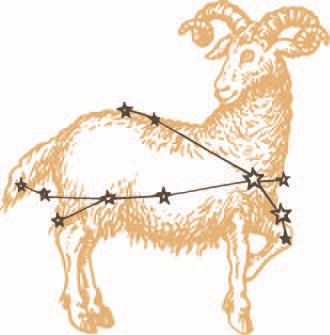
The Chinese Lunar New Year, which began on Wednesday, January 29, culminates with the Lantern Festival on the Full Snow Moon (February 12). Cue the paper puppets for the Year of the Wood Snake. Ancient myth tells that 12 animals raced to the Jade Emperor’s party to determine which order they would appear in the zodiac. Sneaking a ride round the hoof of swift-and-mighty horse, snake was sixth to complete the great race, crossing the finish line before horse, ram, monkey, rooster, dog and pig. Those born in the Year of the Wood Snake are known to be highly perceptive, intuitive and adaptable. How will the wood snake shape your destiny? The Times of India predicts a year of profound transformation and growth. If you’re searching for direction, you’ll find it within.

Love Songs

Perhaps nothing says spring is nigh so clearly as the sudden swell of chorus frogs screaming from the wetlands and darkening woods. Spring peepers, whose hypnotic high-pitched calls stretch throughout the night, have but one objective. The louder and faster they peep, the better their chances of attracting a mate. Do you hear that? Love is in the air indeed.

Art of the State

ART OF THE STATE

Wishes into Art

Paper and fiber artist Elizabeth Palmisano’s particular alchemy

By Liza Roberts

For Charlotte artist Elizabeth Palmisano, inspiration comes from many sources: the material she works with, often handmade paper and fiber; her community, which includes students, fellow artists and complete strangers; and lately and most importantly, from a deeply felt calling to collect and transform the hopes and wishes of those people into art.

That art is often three-dimensional and always colorful. It typically makes a bold statement through scale, composition or unexpected materials, but does so disarmingly, with a beguiling beauty. Her work has been exhibited at Charlotte’s Mint Museum and McColl Center, and Palmisano has twice been voted Best Visual Artist by the Charlotte’s Queen City Nerve newspaper.

It’s not surprising that her community — which she incorporates into nearly everything she does — loves her back. As a self-described wishkeeper, Palmisano has been actively collecting their anonymously submitted wishes to use in her art for the last few years, most recently gathering more than 1,000 handwritten ones to incorporate into a massive, multidimensional mural on Charlotte’s 36th Street. Completed in September, NoDa Cloud Wall transforms a 23,000-square-foot parking garage wall into a colorful skyscape featuring three-dimensional clouds inscribed with those wishes.

“It’s really beautiful to see all the similarities that people have, from all walks of life,” she says. “We all kind of want the same things: Always love, then wishes for family, or for children. Love and family are always first. It’s wild to me how vulnerable people will be if you give them an anonymous spot to ask for what they want.”

The pandemic started it all. “It was really hard for me,” she says. “I’m an artist with a capital A first and foremost, but I teach classes and workshops because I love being with people. And I couldn’t do anything like that. So this was my way to collaborate with people without being in the same room. I asked them to digitally submit a wish, and it could be anonymous, and I was going to make a piece of art for each wish submitted. Those were my first wishes, 58 wishes, and I created a piece of art for each one.” One recent morning, at uptown’s McColl Center, Palmisano was busy printing a limited series of card decks that feature her illustrations alongside wishes and affirmations: “I love fiercely, beginning and ending with myself” was one.

She jokes that her focus on affirmations and wishes allows her to be “a professional fairy princess at 40 years old,” but “because I’m an artist, I can get away with it.”

Still, so much outward, public focus can take an artist away from her own center, her own source of creativity. A recent fellowship at the McColl Center, during which she made paper vessels and curated an exhibit, “iminal Divine,” that included her work and that of six other McColl fellows, inspired her to look back within.

“I want to make art for me for at least the next six months or so,” she says. “So I’m diving really deeply back into my handmade paper and fibers.” The paper vessels at McColl and a recent commission to create a 60-foot-long piece of handmade paper and fiber to hang indoors allowed her to return to the delicate medium that she started with.

As a child in South Carolina and as a young adult living on her own without a high school diploma, Palmisano not only had no access to art materials, she didn’t know “artist” was something someone could be. “I grew up in poverty, in a culture of poverty,” she says. Those roots underpin everything she does today. The first time she took discarded scraps of paper and fiber and reworked them entirely into a piece of handmade paper and sold it at an art show, she says, it was a revelation; she felt she’d performed a work of alchemy.

“It made me think of the way I grew up and where that came from,” Palmisano says. “Using someone else’s trash. You figure it out when you have no other choice. You can’t say, ‘I’m not going to eat today.’ Or, ‘I’m just not going to get to work today.’ Or, ‘I’m just not going to have clean clothes today.’ You figure it out. And I think that has served me well.”

In late 2019, when she filled a giant wall at the Mint Museum with Incantation, an ethereal, abstracted skyscape made of handmade paper, paint and collage, it was the first time many viewers had encountered fiber art in a blue-chip museum.

“Boundary-pushing” is how the museum described the piece, both for its use of recycled materials and for “breathing new life into objects not typically considered for use in the creation of art.”

It’s clear that the process of taking something discarded, breaking it down to its elements, and reworking it into something valuable and beautiful is not just empowering for Palmisano, it’s metaphoric.

And it’s always new. “Right now, I’m leaning deep into: ‘what do I want to make?’ I’ve got a lot of experimentation underway,” she says. “In the spring, I’m sure there’ll be something. I’ll be excited, like a kid walking up and handing you a dandelion they just picked: ‘Here’s my offering.’ Good work takes time, and I really want to give myself that time, because I want to continue to be able to do this work.”

Dissecting a Cocktail

DISSECTING A COCKTAIL

Scotch + Apple

Story and Photograph by Tony Cross

Every now and then, I’ll come across a cocktail from an influencer on Instagram that intrigues me. A few months ago ex-bartender Chris Leavitt posted a reel for a drink he’d tasted at the annual New Orleans cocktail festival, Tales of the Cocktail. “My memory served me that it was just two ingredients: blended Scotch and fresh apple juice,” wrote Leavitt. “However, the results online provided the addition of lime juice (I assume for a boost of acid) and some Drambuie (a honey/Scotch liqueur). I don’t regularly have Drambuie, so I opted for honey syrup to achieve the sweetness it provided.”

The only time I’ve worked with fresh apple juice is when I carbonated Reverie Cocktail’s version of an appletini. It turned out so well that I knew right away I wanted to try this with whiskey. I’m happy to report that the Scotch + apple is crushable: The fresh apple juice and malt/smoke from the Scotch are a great pairing. What’s fun about this cocktail is that you can play around with the specs and still have a great drink. I swapped out the Scotch and replaced it with a split base of rye and applejack (switching the lime juice with lemon, too) and loved it as much as the original.

Note that this drink will not work if you’re using store-bought juices. The apple and lime juices need to be freshly squeezed. When juicing your own apples — or if you stop by a store that can do it for you — make sure to add a little bit of ascorbic acid (you can break apart a vitamin C capsule and use the powder inside) to the juice immediately after it’s pressed to keep it from browning. 

Specifications

1 1/2 ounce blended Scotch (Monkey Shoulder is great)

1/2 ounce honey syrup*

1/2 ounce lime juice

Top with fresh-pressed apple juice (Leavitt used Granny Smith apples in his reel)

*Honey syrup: Combine 3 parts local honey with 1 part hot water. Stir until evenly mixed. Let cool and store in glass bottle. Refrigerate. Lasts for at least one month.

Execution

Combine lime, honey syrup and Scotch into a highball glass with ice. Stir to incorporate. Top with freshly pressed apple juice. Garnish with an apple slice.

Pleasures of Life

PLEASURES OF LIFE

What’s in a Name?

Stelis hallii ‘Southern Pines Hallmark’ makes its debut

By Jason Harpster

Philadelphia has its cheesesteak and Chicago has its deep-dish pizza. Although people are more familiar with its golf and equestrian heritage, Southern Pines has a rich history with orchids that goes back to the 1920s, when Cattleya orchids were grown for cut flowers and shipped on rail to cities for corsages. Carolina Orchid Growers Inc. started in 1927 in Southern Pines and published its first catalog in 1933. At the height of its popularity, the business had a collection that spanned 17 greenhouses and included over 25,000 plants.

Southern Pines is the place the late Jack Webster chose to call home as he traveled and collected orchids from across the globe. Born in Buenos Aires to English parents in 1926, Webster worked in South America as an advertising executive and chose to relocate his family to Southern Pines in 1982. In addition to starting multiple orchid societies across North Carolina, he amassed a collection of over 2,000 orchids and received a total of 16 American Orchid Society awards over 30 years. He shared his love of orchids with others by organizing shows across the state, including three beloved shows at the Weymouth Center for the Arts & Humanities in Southern Pines.

Known for being an artful negotiator, Jack worked with customs and vendors from Brazil, India, Thailand and the Philippines to import plants for local orchid societies. He named all of his awarded plants after his wife, Jean Webster. You can still find divisions of orchids for sale today with her name.

The town of Southern Pines has multiple orchids named after it including, most recently, Stelis hallii ‘Southern Pines Hallmark.’ It was awarded a certificate of horticultural merit on June 15, 2024, at the monthly meeting of the Carolinas Judging Center in Concord, North Carolina. Since this is the first award on record for the species, additional photographs and measurements had to be taken to verify the validity of the species.

When an orchid is awarded by the AOS, a clonal name is recognized to distinguish the plant from others of the same species or grex. ‘Southern Pines Hallmark’ is an aptly chosen name given its showy, distinctive flowers, which are yellow and orbicular. Other species in the genus tend to be less vibrantly colored, with diminutive flowers. Stelis is a genus of over 500 species found in cloud forests in Central and South America. These plants need high humidity, cool to intermediate temperatures and bright indirect light to thrive.

For the botanical enthusiast, the award description is: 58 flowers and 27 buds alternately arranged on 17 basal, sequential inflorescences to 26-centimeters long borne on a 48-centimeters wide by 35-centimeters high plant grown on an 8-centimeters by 14-centimeters wooden mount; leaves oblanceolate, ascending, 2.5-centimeters wide by 11-centimeters long; sepals broadly ovate, light yellow-green, petals and lip darker minute, yellow-green; column and anther cap yellow-green; substance firm; texture matte; recognized for rarity in cultivation and attractive flowers; native to Colombia, Ecuador and Peru; exhibitor noted that longest inflorescences had been in bloom for over one year.

If a town can be called great based on the things named after it, Southern Pines may not taste as good as Philly or Chi-town, but it’s a lot prettier. 

Simple Life

SIMPLE LIFE

The Pleasures of a Good Old Age

Miracles can come true, it can happen to you

By Jim Dodson

Not long ago, I heard an elderly gentleman in a coffee shop comment to a younger friend, “Someday, when you’re as old as I am, you will look back on your life and realize that everything is a miracle.”

His words brought to my mind Albert Einstein’s famous quote on the subject: “There are only two ways to live your life. One is as though nothing is a miracle. The other is as though everything is a miracle.”

Though it varies slightly from country to country, age 72 is the global median lifespan of most people on the planet — the statistical onset of “old age.”

This month, I turn 72.

Am I worried? Not so much. True, I walk more slowly and with more care these days due to a pair of arthritic knees, the painful legacy of 40- to 50-year-old sports injuries and having probably walked too many golf courses for one duffer’s life. By the time you read this, however, I hope to have a new left knee replacement for the new year with a second one on the way. Talk about a miracle.

Like many older folks my age, I’ve also survived cancer once and am winding up a second waltz with the dreaded disease, reportedly doing quite well, thanks to my brilliant young doctors and the miracles of modern medicine.

Despite these physical challenges, I’ve never felt happier or more productive. This seems to be a common trait among active elders who find the arrival of so-called old age to be a liberating force and an opportunity to experience life on a new and more meaningful level. A true case of attitude is altitude, as the saying goes.

One of the rarely mentioned gifts of being old is realizing what you no longer need or care about.

Two years ago, I donated half of my home library, roughly 300 books, to a pair of charities. This year, I plan to give another 200 away, leaving me approximately a hundred books I cherish and will continue to read again and again until my light in this world permanently dims.

At my pragmatic wife’s suggestion, I also went through my clothes closet and sent a large donkey cart’s worth of fine clothing I haven’t worn in more than two decades to a wonderful thrift shop owned by Freedom House, a local organization that provides drug rehabilitation programs to women. I hope whoever purchases the two fine custom suits, five Brooks Brothers blazers, nine crested-wool golf sweaters, eight pairs of worsted-wool slacks and 19 golf shirts will enjoy them with my blessing. Seriously, who needs 21 solid white golf shirts anyway?

Speaking of gratitude — and something of a miracle — I’ve reached an age where watching sports of any sort feels like a colossal waste of time. I’d rather take a long walk with the dogs, read a new book or watch seasonal birds at the feeder.

This is no small change. Once upon a time, now fading fast into memory, I was the original sports-mad kid who played every game in every season and died a little death anytime my favorite golfers and favorite professional sports teams lost. A decade ago, as my passion for all sports mysteriously began to wane, I wondered if this was because I’d changed — or if the games themselves had?

The answer is probably both. The sports teams I once worshipped, college and professional alike, were generally true hometown affairs where you could name (and root for) every player on the roster. This made the games feel much more personal and relevant. Today, almost all sports are shaped by staggering amounts of money flowing through their ranks. Not long ago, I heard about a local high school junior who recently signed with a major college program and pocketed $50,000 in NIL money. Add legalized sports betting to the state of our games and you may have a fast road to ruin for millions of fans who care less about the games than their payoff.    

The real beauty of aging, I long ago realized, is the light that comes from the soul. Reaching statistical old age brings with it freedom to do your own thing along with the opportunity to forge new paths and adventures.

“A good old age can be the crown of all our life’s experiences,” wrote Helen Nearing, “the masterwork of a lifetime.” Considerably late in life, Nearing and her husband, Scott, became world famous advocates of simple living and pioneers of the organic farming movement in America. Helen lived to be 91. Scott, 100.     

As Helen points out in her lovely book, Light on Aging and Dying, Socrates learned to play the lyre — and wrote his most famous poems — in his dotage. Thomas Edison was still inventing at age 92; Michelangelo did some of his finest work past 80; and Frank Lloyd Wright, at age 90, was considered the most creative architect in the world.

Likewise, numerous poets and artists proved to be at their creative best in their good old age. Thomas Hardy, Robert Frost and Carl Sandburg did some of their best work past 80. Ditto artists Goya, Titian, Manet, Matisse and Chagall. Shortly before his death at 91, Picasso said, “Age only matters when one is aging. Now that I have arrived at a great age, I might just as well be 20.”

Almost every day, we read about some octogenarian who still runs marathons or a septuagenarian who just climbed Mount Everest — for a second time. The list goes on and on.

“I am so busy being old,” wrote author and playwright Florida Scott-Maxwell in her 90s, “that I dread interruptions.”

As for this relatively new septuagenarian, one who will soon have new knees but no interest in running marathons or climbing mountains, I find the simple beauty of the natural world, a deepening spiritual life, a love of dogs and friends, plus an unquenchable passion for writing books reason enough to celebrate arriving at the ripe old age of 72.

The truth is, I’ve always enjoyed being with older people. And now that I’m one of them, I have no intention of slowing down.

That’s proof that everything really is a miracle

Southwords

SOUTHWORDS

Culture Shock

Experience This

By Ron Green Jr.

It was July 11, 1967, and I was walking into the Charlotte Coliseum — the original one with the silver dome that still hosts events on Independence Boulevard — with my mother, my brother and all of the pre-teen excitement that came with the promise of seeing The Monkees, live, in person, and in concert.

I knew The Monkees like they were my best friends. Mickey Dolenz. Michael Nesmith. Peter Tork. Davy Jones. (Full disclosure, my buddies and I didn’t like Davy that much because the girls thought he was heartbreakingly cute.)

The Monkees were a made-for-television quartet, patterned very loosely after The Beatles in as much as there were four of them and music was involved. They burned white-hot for a time, starred in a top-rated television show that gets credit, or blame, for spawning music videos years later, and they left us with “Daydream Believer” and “I’m A Believer” to put smiles on our faces even now.

What I didn’t know that July evening — the temperature had topped out at 87 degrees that day in the pre-global warming era — was that Jimi Hendrix was performing before our generation’s Fad Four.

The Jimi Hendrix Experience, all loud guitars and evolutionary rock music, was on stage after Lynne Randell, followed by The Sundowners and, as the late great guitarist would lament, immediately before the four guys everyone had come to see and hear. It was a curious cultural moment, a concert pairing as unlikely as anchovies and ice cream at the dinner table, and it only lasted for eight shows.

But we were walking into one of them.

This was the summer of love, and the distance between Charlotte and the Haight-Ashbury district in San Francisco in 1967 was greater than the 2,700 miles stretching between the two. The world was changing, more dramatically than any of us probably realized, but Charlotte was still a small Southern city, connected to the rest of the country by what we saw on television and heard on the radio.

That summer, at least in my comfortable world, it meant The Monkees.

As the son of a sportswriter, I was introduced early to what were then called press gates. That’s where sportswriters, television cameramen and other muckety-mucks with connections to the building’s manager could enter without mixing with the masses.

That meant walking halfway around the outside of the big round building, which also meant walking past the elephant doors, the giant entryway built to accommodate the annual visit from the Ringling Brothers and Barnum & Bailey Circus as well as the occasional load-in for concerts, usually country music shows featuring Loretta Lynn, Johnny Cash or a new artist named Dolly Parton.

And Elvis. Always Elvis.

As we were heading to the press gate, our mother was telling us what to expect at our first real-life concert. Among her nuggets of wisdom was this: The Monkees are going to look different in person than they do on television.

Admittedly, this was long before anyone imagined HD television, but how different could they look? We were young, impressionable, and we figured anyone who could fry chicken as well as our mother did must know what she was talking about.

A moment after she told us about what television can do to a person’s appearance, a black limousine pulled up to the elephant doors as we were walking past. There they were, about to get out of the car, just a few feet away.

Out stepped Jimi Hendrix.

My 10-year-old mind tried to make sense of what and who I was seeing.

Mickey Dolenz really does look different, I thought. He has an Afro.

It wasn’t until an hour or so later that I realized why Mickey didn’t look like himself. While it may have caused me to doubt some things my mother said as I grew older, it’s a moment that still brings a little smile when I hear “Hey Joe” or “I’m Not Your Steppin’ Stone.”

And when Mickey and his mates took the stage that night — after Hendrix had stomped off with the echo of the guitar he tossed to the floor reverberating through the arena — they looked just like they did on television.

Had we been able to hear them over the screaming, they probably sounded the same, too.

Poem February 2025

POEM

February 2025

The Fog

Some say strong winds and hard rain sing,

but I love the more subtle things:

stillness as mists make frost and dew,

the time between crickets and wren

before the cruel light crawls in

and work takes me away from you.


Drunk with sleep but almost aware

that we are more real than dreams,

but much less sure and far more rare.


Not cold silence, that’s too extreme

though the loudest leaves go quiet

as fog fills in what we forget.


The sun starts showing silhouettes.

Stalled clocks whisper: “Not yet. Not yet.”

— Paul Jones

Hometown

HOMETOWN

Clear as Cursive

The handwriting on the scrawl

By Bill Fields

Hunting recently through a box of old stuff, most of which would have been thrown out long ago if I didn’t have a little pack rat in me, I found something I was glad hadn’t been tossed.

Over the years, I’ve filled many a reporter’s notebook. It’s a 4 x 8-inch lined pad with spiral rings at the top and cardboard covers, an essential tool for any journalist. Before the inconspicuously functional notebooks were widely available, while covering the turbulent civil rights movement in the American South for The New York Times in the 1950s and 1960s, Claude Sitton improvised them by cutting wider stenographer’s notebooks in half.

My discovery was of one of the first reporter’s notebooks I slipped into a back pocket, dating to 1979 when I was a student sportswriter for The Daily Tar Heel covering far less consequential events than Sitton — later the longtime editor of Raleigh’s News & Observer — was chronicling for the Times.

Beneath a creased and discolored front cover on its wide-ruled pages were my notes from assorted sporting events: North Carolina’s exhibition against the New York Yankees (green ink); a UNC-Duke baseball game (black ink); a spring football update from the Tar Heels’ second-year head football coach Dick Crum (blue ink).

“Going to keep it low and inside. Might even ask ’em to put the screen in front of the mound,” Carolina pitcher David Kirk told me the day before facing the two-time defending World Series champions. “If I get it up high, could be history. Chris Chambliss might hit one into Chase Cafeteria.”

“Sixth — P.J. Gay double off warning track.”

“OLB — Lawrence Taylor.”

Flipping through those old pages, I was pleasantly surprised that I could make out the vast majority of what I’d jotted down. Quotes from George Steinbrenner. “I’ve got professionals. Anybody who counts the Yankees out of the race because of spring is wrong.” Observations in the Yankees locker room before game time. “Pinella — cards, puffing cigarettes. Chambliss — 2 championship rings.” It wasn’t the neatest penmanship in the world, but it was readable.

I have notes from only a month ago that are harder to decipher.

That would no doubt be a disappointing admission for the person who taught me handwriting, Southern Pines third-grade teacher Peggy Blue, to hear. “Fine beginning in cursive writing,” Miss Blue noted on my report card in the fall of 1967. I earned straight As in “Writing” that year.

When it comes to notes taken on the job, there is a logical reason why I’ve become a sloppier notetaker. When I was in college, and for years afterward, tape recorders weren’t commonplace among journalists. Reporters took handwritten notes. In the case of a lengthy interview, if you weren’t on a tight deadline, you might type them up back in the office before writing a story. If you hadn’t written them so they were legible, you were out of luck.

Over the years, tiny digital recorders — and more recently, smartphones — have made it more convenient for journalists to record interviews. Convenient, verbatim audio leaves no doubt about what a subject said, but the technology has led to less thorough notetaking. Still, looking back on the period when I relied on pen and paper, I don’t recall being accused of misquoting anyone. Perhaps I inherited just enough of my mother’s steady, graceful penmanship, learned as a pupil of the Palmer Method in the 1930s, which endured into her 90s. 

I can’t imagine not having learned how to write longhand, with joined letters. In this century, though, there has been a trend away from mandatory instruction in elementary school. I was stunned to find out that a young relative, who is now about the same age as I was when I wrote those notes in 1979, wasn’t taught cursive and only knew how to print block letters. About 15 years ago, many states removed longhand as a requirement. “The handwriting may be on the wall for cursive,” an ABC reporter quipped in the lede to a 2011 story about the trend.

Since then, however, education officials have realized that even in a predominantly digital age there is practical and cognitive value in knowing cursive writing. Many schools have reinstituted it as part of the third-grade curriculum. And someday, a budding reporter might even write down the profound thoughts of a coach, as I did with Dick Crum 46 years ago: “We want to play fundamentally sound football.”

Out of the Blue

OUT OF THE BLUE

In a Word . . .

Finding new life in language

By Deborah Salomon

In 1914, George Bernard Shaw captivated London playgoers with Pygmalion, the story of a highfalutin’ professor of linguistics who transforms a grubby Cockney flower girl into a lady.

How?

By scrubbing her down and dressing her up, of course. Even more important, dressing up her diction and her vocabulary.

“Words, words, words!” Eliza complains, this time to music, in My Fair Lady, the musical adaptation that opened on Broadway in 1956, then on film in 1964, sweeping awards for eons.

Words (and accents, to a lesser degree) are a force, a knife that cuts both ways. The right word (le bon mot, a useful French expression) makes a favorable impression, while a pale one falls flat and an incorrect one can be an embarrassment.

Worst are overused words, like “eclectic,” a favorite of speakers trying hard.

Ideally, an unfamiliar word will be defined by its sentence, therefore appreciated, even celebrated.

Example: Every year, The Pilot enters state and national newspaper competitions. Reporters select their best work for consideration. Last year, I didn’t have much, so just for fun, I entered a food column about using my grandmother’s bent and stained aluminum pot lid, the only extant artifact from her kitchen. The narrative mentioned a friend who buried her burned, worn-out pots in the garden. No, I commented, I’m not that anthropomorphic.

The column was ordinary, bordering maudlin. The recognition it received, I’m sure, was for the quirky placement of that perfect word — a favorite, second only to onomatopoeia, whose definition mimics its sound. Think “meow.” Or “rustle.”

I get teased about using “big” words, mostly for variety. Nobody with a full closet wears the same old shirt every day, so why use the same old words?

One culprit is shrinkage. These days, communications must be concise. Get to the point. Speak clearly. Detailed emails — a pain. Is there an app? Just text, uh, txt me.

Enriching one’s vocabulary, however, has a bright side. You don’t need a university degree or online class, just some intelligent reading material where the writer uses words to paint a landscape, or a portrait, in nuanced shades. Find a thesaurus (a dictionary of words with their synonyms), online or on paper, and pick a word a week, something ordinary, like “quotient” for “amount.” “Unearth” for discover. Slip it into conversation. My favorite orphan word is “provenance,” which sounds not at all like its definition, but which I’ve used to investigate a beaded cashmere sweater found at Goodwill.

Don’t get too hoity-toity. Go literal rather than vague and obscure.

Or not. Better, maybe, go with whatever AI composes, since term papers, dissertations, business letters and short stories will soon flow from its omnipotence, sufficient but lacking moxie.

Great word, moxie.

In the end, words are like clothes; they reveal much about personality, mood, life, taste, experience. The right word livens a conversation like the maraschino cherry saves canned fruit cocktail from dessert oblivion. The study thereof is called etymology and can be achieved sans Henry Higgins, whose motive for upgrading Eliza became more, uh, ulterior than academic . . . if you get my drift.

As for Eliza’s “Words, words, words, I’m so sick of words!” rage, that’s what I call moxie. 

Bookshelf

BOOKSHELF

February Books

Fiction

This Is a Love Story, by Jessica Soffer

For 50 years, Abe and Jane have been coming to Central Park, as starry-eyed young lovers, as frustrated and exhausted parents, as artists watching their careers take flight. They came alone when they needed to get away from each other, and together when they had something important to discuss. The park has been their witness for half a century of love. Until now. Jane is dying, and Abe is recounting their life together as a way of keeping them going: the parts they knew and the parts they didn’t always want to know. Told in various points of view, these voices weave in and out to paint a portrait as complicated and essential as love itself.

Three Days in June, by Anne Tyler

Gail Baines is having a bad day. To start, she loses her job — or quits, depending on whom you ask. Tomorrow her daughter, Debbie, is getting married, and she hasn’t even been invited to the spa day organized by the mother of the groom. Then, Gail’s ex-husband, Max, arrives unannounced on her doorstep, carrying a cat, without a place to stay, and without even a suit. The true crisis lands when Debbie shares with her parents a secret she has just learned about her husband-to-be. It will not only throw the wedding into question but also stir up Gail and Max’s past.

Harlem Rhapsody, by Victoria Christopher Murray

In 1919, a high school teacher from Washington, D.C., arrives in Harlem excited to realize her lifelong dream. Jessie Redmon Fauset has been named the literary editor of The Crisis. The first Black woman to hold this position at a pre-eminent Negro magazine, Jessie is poised to achieve literary greatness. But she holds a secret that jeopardizes it all. W.E.B. Du Bois, the founder of The Crisis, is not only Jessie’s boss, he’s her lover. And neither his wife nor their 14-year age difference can keep the two apart. Amid rumors of their tumultuous affair, Jessie is determined to prove herself. She attacks the challenge of discovering young writers with fervor, finding 16-year-old Countee Cullen, 17-year-old Langston Hughes, and Nella Larsen, who becomes one of her best friends. Under Jessie’s leadership, The Crisis thrives. When her first novel is released to great acclaim, it’s clear that Jessie is at the heart of a renaissance in Black music, theater and the arts. She has shaped a generation of literary legends, but as she strives to preserve her legacy, she’ll discover the high cost of her unparalleled success.

Nonfiction

Fearless and Free, by Josephine Baker

Published in the U.S. for the first time, Fearless and Free is the memoir of the fabulous, rule-breaking, one-of-a-kind Josephine Baker, the iconic dancer, singer, spy and Civil Rights activist. After stealing the spotlight as a teenage Broadway performer during the height of the Harlem Renaissance, Josephine then took Paris by storm, dazzling audiences across the Roaring ’20s. In her famous banana skirt, she enraptured royalty and countless fans — Ernest Hemingway and Pablo Picasso among them. She strolled the streets of Paris with her pet cheetah wearing a diamond collar. With her signature flapper bob and enthralling dance moves, she was one of the most recognizable women in the world. When World War II broke out, Josephine became a decorated spy for the French Résistance. Her celebrity worked as her cover, as she hid spies in her entourage and secret messages in her costumes. She later joined the civil rights movement in the U.S., boycotting segregated concert venues, and speaking at the March on Washington alongside Martin Luther King Jr. First published in France in 1949, her memoir will now finally be published in English. Through her own telling, we come to know a woman who danced to the top of the world and left her unforgettable mark on it.

Children's Books

Ten-Word Tiny Tales of Love,
by Joseph Coelho

Some go on and on expressing their love, but what if you had to condense your adoration into just 10 words? This stunningly illustrated coffee table-worthy picture book is filled with simple 10-word expressions of love to make your heart sing. Includes illustrations from Jon Klassen, Ken Wilson-Max, Sydney Smith and more! (Ages 7-10.)

Akeem Keeps Bees! by Kamal Bell

Knowing, growing, and flowing . . . a read-together title featuring the humans and bees from Sankofa Farms in Durham, North Carolina. The perfect choice for a nature lover, foodie or a young one who might BEE curious about where honey comes from. (Ages 4-7.)

Your Farm; Your Forest; Your Island, (three books)
by Jon Klassen

Who hasn’t dreamed of having an island, a forest, or a farm all your own? Klassen is that rare author who can create a board book that’s poignant for babies and adult readers alike. This tiny trio is a must for any bedtime bookshelf. (Ages 2-4.)

American Wings, by Sherri L. Smith and Elizabeth Wein

In the years between World Wars I and II, auto mechanics Cornelius Coffey and Johnny Robinson, nurse Janet Harmon Bragg, and teacher and social worker Willa Brown created a flying club, flight school and their own airfield south of Chicago. This incredible true story reads like an “I Survived” novel, telling the story of a few brave and daring individuals who followed their dreams, teaching both Black and white students to fly in an era of strict segregation. (Ages 12 and up.)