Splainin’ Stuff

Home for the holidays, where it’s not necessary

By Haley Ray

“I bet it’s because you grew up in the South,” my Southern California born and bred college roommate asserted one evening. We had been discussing food, and I shared my loving, yet turbulent, relationship with dessert. Cadbury chocolate bars, pecan pie, bread pudding, crème brûlée, cheesecake, I do not discriminate when it comes to sugar. Sometimes the addiction runs rampant and I find myself racking up two to three sweet treats a day. When that happens, I have to go cold turkey and swear off all dessert for weeks, like breaking up with a boyfriend you know is bad news but has a charmingly consistent way of wriggling back into your heart.

My roommate, who “really doesn’t like eating dessert,” had reasoned that this appalling sugar habit must be unique to the Southeastern chunk of the United States, where sweet tea is king and comfort food, queen. Bless her heart. I informed her that I had actually spent my formative years in North Carolina eating meals comprised of grilled salmon and veggies. Sugar consumption had a strict parental control, and it was rare to find a box of cookies or a pint of ice cream in the kitchen. I had to get my fix at friends’ houses. I didn’t taste sweet tea until high school, since my parents — Michigan natives — thought it was a disgusting excuse for iced tea.

Still, despite the evidence proving otherwise, my roommate couldn’t be pried from her initial conviction. I didn’t know what else could help her understand that this was a nationwide epidemic, and not at all special to the South. The fact that the third roommate in our Los Angeles apartment was from Boston and also possessed a sizable sweet tooth did nothing to sway her. And Massachusetts doesn’t even have sweet tea.

So I let the issue slip from conversation, certain that no matter what I said she would still hold poor North Carolina accountable for corrupting my food preferences. Since moving west, misconceptions of my home state were a common theme in conversations. I grew accustomed to defending the South, usually to people who had grown up in the promised land of California. The Southern variety of Californians, specifically long-term residents of Los Angeles and Orange County, seemed to think I had been raised deprived of modern culture, eating fried chicken for breakfast, and driving unpaved roads. 

After getting over the insult, I was entertained by the confidence behind their assumptions. After knowing me for all of two weeks, one friend wondered why my parents didn’t simply uproot their lives and follow me to California if they missed their only child. “I think they would be much happier here,” she commented, as we idled in brutal Los Angeles traffic, watching a smoggy sunset. I’m sure the suggestion came from a good place, no more controversial than recommending vitamin C for a common cold or yoga for a tight hamstring. To her, crowded SoCal probably seemed like a wonderful spot to live out retirement years, though she had yet to visit any state in the South, much less Pinehurst, North Carolina.

I don’t blame Californians for this particular strain of regionalism. The left coast state has a long tradition of existing as the land of milk and honey, the golden paradise of America where anything is possible. This tradition has saturated California’s caricature in the media for decades, and will most likely continue for decades to come.

Californians are accustomed to transplants, lured by the state’s promises of success and wealth, all perpetuated by popular culture. Shows like The O.C., Beverly Hills, 90210, Entourage and Baywatch splash palm trees and beautiful coastal California homes on television screens. Iconic movies including La La Land, Vertigo and Clueless sculpt the nation’s collective view of the state. They, on the other hand, believe Gone With the Wind and The Dukes of Hazzard are the pinnacle of Southern culture. Portrayals of the Southern pace of life are unerringly unmodern, the accents thick, and the characters slow to understand essential contemporary values, like good education and dentistry. Most media depictions contain overarching stereotypes, but those of Dixie feel far more dated.

As a North Carolinian living in California, I started smiling when people balked at my lack of twang or how frequently I ate avocado, and accepted that they might never understand the virtues of my homeland. The open-minded, diverse communities of the American West have their advantages, but I’ll happily forfeit a coast of balmy palms to celebrate Christmas in the land of pines.  PS

PinePitch

The Lighting of the Trees

The Village of Pinehurst Christmas Tree Lighting celebration will take place on Friday, December 1, from 5 to 7:30 p.m. The festivities will include hay rides through the Village center, musical entertainment and photo ops with Santa. The Christmas tree lighting is at 6:30 p.m. Admission is free. Food and beverages will be available for purchase. Please bring canned goods and non-perishable items for the Food Bank of Central & Eastern North Carolina. The fun takes place at Tufts Memorial Park, 1 Village Green Road W., Pinehurst. Kirk Tours will provide free shuttle service from the Village Hall, 395 Magnolia Road. Info: (910) 295-1900.

If you miss Santa in Pinehurst on the 1st, be at the Depot in Historic Downtown Aberdeen Tree Lighting on Thursday, December 7, at 6 p.m. Santa is sure to make an appearance there, as well. For more information, call (910) 944-7275.

The Murphy Family Christmas Show

The Murphy Family will be back at the Sunrise Theater on Sunday, December 10, at 3 p.m. Expect to hear American popular standards, jazz, rock, and gospel-inspired Christmas arrangements as Paul Murphy and his family carry on a Pinehurst tradition that Paul and his father started decades ago. Cost: $18 general admission; $15 children 12 and under; and $22 VIP. Sunrise Theater, 250 NW Broad St., Southern Pines. For more information, call (910) 692-3611 or visit sunrisetheater.com.

Spiderella on the Shelf

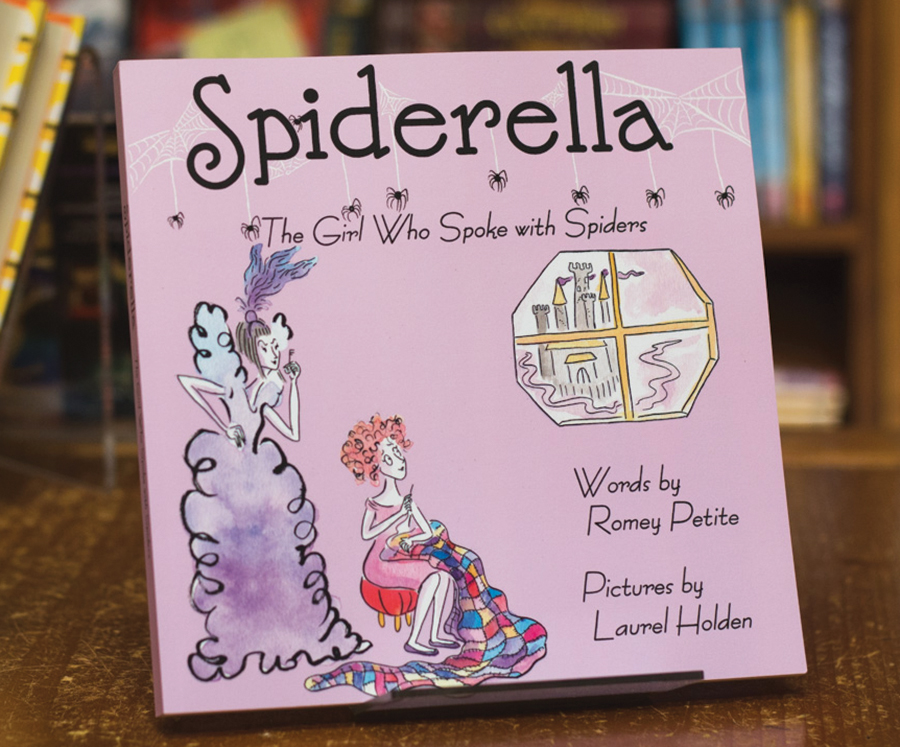
Written and illustrated by Southern Pines residents, Romey Petite and Laurel Holden, Spiderella is the first book in a three-part series about Eleanor, the girl who could sew faster than any seamstress in the kingdom — thanks to the secrets she learned from her friends, the spiders. Trapped in an attic and forced by her boss, Minerva, to work without pay, Eleanor has three days to make all the costumes for a birthday ball being thrown for the moody young prince.  With some help from the spiders and little bit of magic, Eleanor just might finish the costumes and manage her escape. Perfect for ages 7–10, Spiderella teaches young girls and boys to believe in their ideas and their own talents. Teased and misunderstood, Eleanor’s gifts take her soaring toward marvelous adventures. Spiderella is available at The Country Bookshop, 140 NW Broad Street, Southern Pines.

Homes for the Holidays

The Boyd House will be all dressed up for the Christmas Open House at Weymouth Center from Thursday, December 7, to Sunday, December 10. Take a walk through the 25 rooms and the stables decorated with live greenery artfully arranged by designers and community organizations. Enjoy complimentary refreshments and music in the Great Room. Hours are 10 a.m. to 3 p.m. Thursday through Saturday, and 1 to 4 p.m. Sunday. Tickets are available at the Weymouth Center Office, Campbell House, Country Bookshop, Lady Bedford’s Tea Parlour, Given Memorial Library and Eloise Trading Co. The Weymouth Center is located at 555 E. Connecticut Ave., Southern Pines. For information and ticket prices, call (910) 692-6261 or visit www.weymouthcenter.org.

The Christmas Open House at the Shaw House will be Friday through Sunday, December 8, 9 and 10, from 1–4 p.m. Take a tour of the historic house, decorated as it would have been in the 1800s; and slip back in time with music, warm apple cider and homemade cookies. Peruse the Gift Shoppe for unique items and collectible treasures. Free admission. The Shaw House is located at 110 W. Morganton Road, Southern Pines. For information, call (910) 692-2051 or www.moorehistory.com.

The Episcopal Day School Candlelight Tour of Homes invites you into five historic houses on Sunday, December 10, from 1–5:30 p.m. Each dwelling will be decked out in holiday finery, unique in spirit and character. Tickets are $20 in advance in the Episcopal Day School office (340 E. Massachusetts Ave., Southern Pines) or at The Given Library, The Estate of Things, Country Bookshop, Lady Bedford’s Tea Parlour, Thyme & Place, and Eloise. Tickets will be $25 on the day of the event. For more information, call (910) 692-3492.

There Once Was a Girl from Aberdeen…

Fire up the Google rhyming tool. Against the advice of the wisest legal minds in Moore County, PineStraw magazine is soliciting your finest, original, unpublished Valentine’s Day–themed limericks. The best of breed, after being subjected to the grueling, gimlet-eyed scrutiny of a Blue Ribbon committee (think Pabst), will appear either in the pages of the February edition or in the dumpster behind Chef Warren’s. We’ll rely on the good taste and discretion of the citizenry at large to keep both the libidinous and libelous content to an absolute minimum. Deadline for all submissions is January 1, though we feel certain we’ll be able to recognize the ones written late on the evening of December 31st. Email your best efforts to:  pinestrawpitch@gmail.com.

11th Annual Reindeer Fun Run

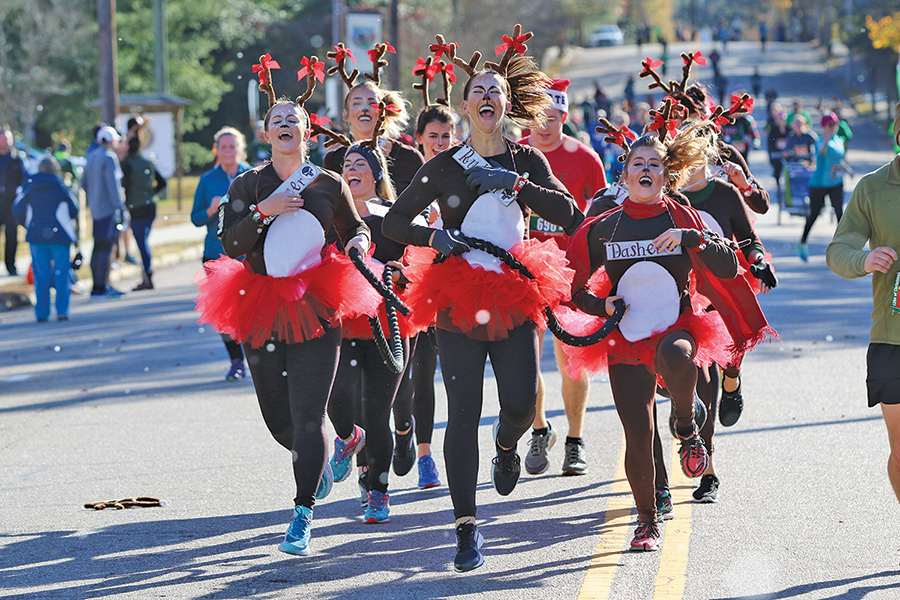
A community event for everyone from serious runners to recreational walkers, families and pets. The 5k Reindeer Fun Run/Walk on Saturday, December 2 begins at 9:30 a.m. and curves through Aberdeen’s historic downtown neighborhoods with rolling hills and wide turns. The 12ks of Christmas Run beginning at 9 a.m. incorporates the 5k route along with a scenic tour of Bethesda and the Malcolm Blue Farm. Both courses finish on a sloping downhill toward downtown and the historic Union Station. For kids, the 1/2 Mile Egg Nog Jog & Kids Zone at 10:30 a.m. is a holiday must and fan favorite. All proceeds go to the Boys & Girls Club of the Sandhills. For more information, www.reindeerfunrun.com.

A Medieval Frolic

The lords and ladies of the Congregational Church of Pinehurst invite you to their 4th Annual Madrigal Dinner on Friday, December 8, or Saturday, December 9, from 6:30 to 8:30 p.m. You will be entertained by choristers, jokesters, dancers and raconteurs. The Peasant’s Repast will include homemade stew, vegetable soup, hearty breads and apple crisp. Costumes are welcome, but not required. Tickets are $20 for adults and $10 for children under 12 and are available at Given Outpost and The Country Bookshop, or from Nancy at (910) 695-6727. Advance purchase required. The festivities take place at the church, located at 895 Linden Road, Pinehurst. For more information, contact Anne at (910) 639-9096 or  www.youarewelcomehere.org.

The Holiday Parades

Saturday, December 2, from 11 a.m.–12 p.m.: The Annual Southern Pines Holiday Parade features local marching bands, festive activities and an appearance from Santa Claus! The parade begins at Vermont Ave. and proceeds down the west side of Broad St. in the historic district of Downtown Southern Pines. For more information, call (910) 315-6508.

Saturday, December 9, from 11 a.m.–12 p.m.: The Aberdeen Christmas Parade will proceed through historic downtown Aberdeen. For more information, call (910) 944-7275.

Saturday, December 9, at 1 p.m.: Head over to Southern Pines for the delightful Christmas Carriage Parade. Members of the Moore County Driving Club decorate their horses and carriages for this annual ride through the historic district of downtown Southern Pines. For more information, call (910) 639-2359.

The Rooster’s Wife

Rounding out the season’s delights
are these stellar performances:
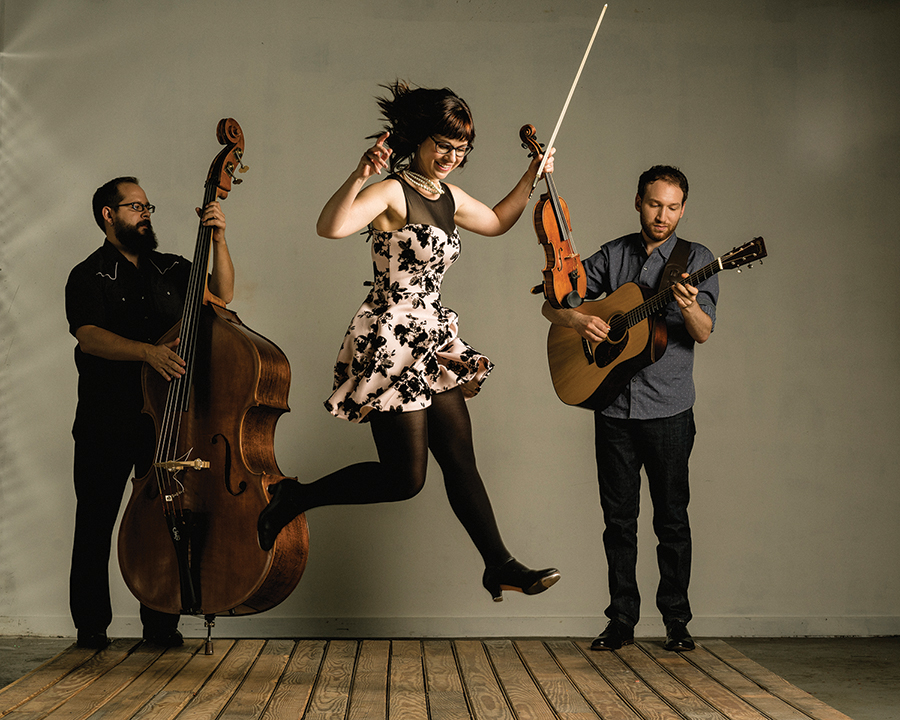
Sunday, Dec. 3: Celebrate the season with a very special evening of bluegrass performed by Joe Newberry, prize-winning guitarist, fiddler, banjo-player and singer; and the captivating April Verch, a champion fiddler and step dancer. $20.

Friday, Dec. 8: Keeping themselves in the best of company, Anthony da Costa and Kimber Ludiker are usually found on stage with Sarah Jarosz and Della Mae, respectively. Huge guitar and fiddle chops underpin great songs on this rare duo show. $10.

Sunday, Dec. 10: Jonathan Byrd and Corin Raymond tell stories with their guitar, mandolin and fascinating words. The poetry in their songs will open your mind and your heart to amazing possibilities. $20.

Doors open at 6 p.m. and music begins at 6:46 at the Poplar Knight Spot, 114 Knight St., Aberdeen. Prices given above are advance sale. For more information, call (910) 944-7502 or visit www.theroosterswife.org for tickets.

Did She Say That Out Loud?

Favorite utterances I have known and used

By Susan S. Kelly

Southerners are big on sayings that are peculiar, well-worn, and whose origins — never mind meanings — are vague. “Bless her heart” comes to mind. We also love our book-or-movie lines that translate well to reality: “Frankly, my dear, I don’t give a damn.”

For my money though, nothing beats the casual comments friends and family have unwittingly uttered in the presence of a writer — me — who keeps entire notebooks of minor observations such as new wallpaper smells like Band-Aids, and what people have in their Costco cart. Herewith, a few of my everlasting favorites.

Scene: Driving my 87-year-old mother on the Interstate.

Mother: “Do you ever use the left lane?”

Me: “When I need to pass a car, but otherwise, you’re supposed to stay in the right lane. The left lane is for speed, and for passing.”

Mother: “I drive in the left lane all the time.” Pause. “I consider it my privilege.”

Ensuing jaw drop.

Scene: Discussing acquaintance X with my friend Trish.

Trish: “Anyone with hair that long at her age is bound to be tough.”

Ensuing fall off the chair laughing before wryly agreeing.

Scene: Charlestonian pal Ginny visiting Greensboro, wandering through the rooms of my house: Ginny: “I forget how much stuff y’all have up here.”

Interpretation: It’s so tropical in Charleston that rugs and objets are superfluous and just make you feel even sweatier.

Ensuing anxious reassessment of household décor previously considered cozy and now viewed as cluttered.

Scene: Someone my friend Sarah and I slightly knew in college moves to town.

Me to Sarah: “You and I should probably have some kind of welcome get-together for her.

Sarah, with slow blink: “I have all the friends I need.”

Ensuing appreciation of Sarah’s chop-chop ‘tude freeing me from entertaining responsibility.

Scene: Dressing room of bathing suit marathon try-on with sister Janie.

Janie: Big sigh, followed by: “I just look better with a few clothes on.”

No interpretation needed.

Scene: Discussion with friend Marsha about recent debatable behavior of hers, mine, and others’.

Marsha: “Well, who cares? I’d rather be controversial than boring.”

Ensuing decision to be controversial rather than boring.

Scene: My great-aunt comes to pick up my grandmother for a luncheon in early April. My grandmother is dressed in a lavender crepe suit and, as frequently happens in April, it’s 48 degrees outside.

Great-aunt: “Jewel, aren’t you freezing?”

My grandmother Jewel: “Sure, but I look good, don’t I?”

Ensuing decision upon being told this story: Never to name anyone Jewel.

Scene: My mother-in-law telling her friends that her son is getting married to “just the nicest girl.”

Friends: murmurs of assent and congratulations.

Mother-in-law: “And the best part of it is, she’s already Episcopalian!”

Ensuing gratitude for whatever makes my mother-in-law happy that I didn’t have to work at.

Scene: Famous writer turns to me at a dinner party, and out of the blue asks, “Have you ever had a serious operation?”

Scene: Friend Anna’s withering riposte to being wronged by others: “I have a big mouth and a wide acquaintance and intend to use both to your detriment.”

Ensuing decision to: 1. Stay on Anna’s good side, and 2. Adopt this adage myself.

And, in the spirit of the season, a couple of Christmas-themed favorites.

My older son to his sister: “I’m outsourcing my Christmas thank-you notes this year. Interested?”

His sister: Withering look.

My sister to me: “I’m giving my children electric blankets for Christmas this year. Do you think it will give them cancer?”

Me: Withering eye-roll.

Morals:  1. You can’t make this stuff up, and 2. Sooner or later, a writer is going to bite the hand that feeds it, and use your unforgettable utterances.  PS

Susan Kelly is a blithe spirit, author of several novels, and proud new grandmother.

A Case of Twitter Jitters

Forever is a long time in the electronic world

By Deborah Salomon

During end-of-year holidays, whichever you chose to celebrate, people tend to ruminate on this and that, especially what’s wrong with the world and how to make it better. Well, ruminate no more because I’m going to tell you what’s wrong with the world: Twitter. Twitter represents TMC (too much communication), related to TMI (too much information). Not all is accomplished with words, a good thing since Twitter, once limited to 140 characters has doubled to 280. Text messages arrive littered with emojis, essential if one assumes that one emoji is worth, well, a cliché or two. But the problem lies not with Twitter and text alone. Information — whether printable or not — lives forever. Surveillance cameras are everywhere. Cellphone positioning reveals your location. Emails never die, even though they bow to texting. These days, when I want to send my grandson a newsy email I must text him to check it, since communication between young adults employs only essential words, often phonetically spelled minus capitalization and punctuation.

To wit: Secrets no longer exist. Hiding anything — impossible.

This creates a dependence foreign to love letter and diary writers. Your IT guy is more important than dentist, hair stylist, car mechanic, plumber or obstetrician. Because when a system’s down, life, even in the slow lane, comes to a halt.

Not that life before the information super highway (ISH) was much smoother:

First off, we wouldn’t be singing “O Little Town of Bethlehem.” Mary and Joseph lived in Nazareth but, by Caesarean decree, traveled to Joseph’s birthplace for the census. How accurate could it have been? Now, although some census information is gathered on foot everything else happens electronically. Nobody treks back to Ohio.

Then, had Julius utilized electronic eavesdropping he wouldn’t have been blindsided by Brutus. Then again, the world might lack the treasures in King Tut’s tomb had he not suffered (pre-genetic counseling) abnormalities resulting from his mother and father being siblings. The boy pharaoh died at 19, more likely from these abnormalities than a chariot accident, since his club foot would have made the rough ride impossible. Poor boy, the potentates intoned. Let’s bury him surrounded by gold.

With Twitter in place, no need for Paul Revere to take that midnight ride “through every Middlesex, village and farm” immortalized by Longfellow.

On the dark side, Twitter and other instant communications have enabled people to speak “off the cuff.” Incidentally, this expression originated in the 1800s, when men’s shirt cuffs were made of stiff paper — handier for taking notes than even an Apple iPad Air2. The problem is, folks attached to cellphones will devour the tweet immediately, then re-tweet the juicier ones. This spontaneity has proven more ruinous than Prince Charles’ late night phone sex with Camilla. Wars have been fought over less inflammatory remarks than what POTUS tweets daily. Maybe another one will.

Besides, “tweet” (remember Tweety Bird?) is a silly word to be bandied by serious newscasters or in U.S. Senate chambers. To speak of a president’s tweets sounds vaguely disrespectful, as though describing an undergarment. Perhaps this flippant title gives license to insult or demean or threaten.

You think?

Therefore, looking back over 2017, I can postulate that without Twitter, mankind wouldn’t be in such a dither. Humans won a few wars, conquered polio and smallpox, transplanted hearts, cracked genetic codes, broke the sound barrier, landed on the moon and Mars with nary a tweet. The Ten Commandments require more than 140 characters, as does the Pledge of Allegiance. And most political pooh-bahs have learned to count to 10, at least, before pressing “send.”

That said, I’m wishing you all a sweet, tweet-free holiday season and a more conscionable New Year — or else heaven help us all.  PS

Deborah Salomon is a staff writer for PineStraw and The Pilot. She may be reached at debsalomon@nc.rr.com.

Let It All Hang Out

On the refrigerator door, of course

By Deborah Salomon

OK, I confess. My refrigerator is still covered with magnets, as gauche as frilly kitchen curtains and rooster wallpaper. Several are meant to be decorative — like the Charlie Chaplin mask (shades of a former Chaplin-themed bathroom, complete with life-sized Little Tramp shower curtain) or sassy, like a ’50s couple bearing the legend “I married Mr. Right; just didn’t know his first name was Always.” Another, by Thoreau, waxes more philosophical, reminding me to “Go confidently in the direction of your dreams! Live the life you’ve imagined.” Maybe next time, Mr. T. My favorite of this genre has to be the Good Humor Ice Cream truck logo recalling the happier days of a marginal childhood.

I just love those flexible plastic magnets that oil companies, insurance agents, taxi drivers and pizza parlors send at Christmas to keep their names in sight, therefore in mind. I love them so much that I have a 2013 calendar holding up my next dentist appointment card.

Which brings me to the reason for their obsolescence. First, beyond our control, some fridge surfaces no longer attract magnets. The fancier ones are treated with a substance that either protects the metal, or mimics it. Besides, you wouldn’t want a body shop logo on a Sub-Zero, or Chiquita Banana on an Insta-View three-door with glass panel revealing contents, or the Pillsbury Doughboy on Samsung’s four-door with embedded TV/computer screen. Second, all the reminders, photos and calendars previously attached in plain view are now stashed in an electronic device.

Example: photos, in flexible magnetic sleeves that lie flat and neat. I adore them. A dozen cling to my fridge, all taken with film and printed on heavy paper. When was the last time a proud Daddy pulled a photo out of his wallet and handed it around? Usually, folks just whip out the phone.

But mine are in plain sight, year after year, protected, loved and unfaded.

I also put a magnetic frame around the last Mother’s Day card from my daughter Wendy — a simple cartoon figure of a bedraggled mama with cats hanging off her shoulders and a dog rubbing against her legs . . . me, obviously. I have it close by all day, every day, even though Wendy has been gone for 26 years. Another photo was snapped at my 50th high school reunion, of me and three friends. Ten years later one is dead, another hospitalized with Alzheimer’s.

Enough sad stuff. Why three flexible magnets of the same New Yorker cover? Because each time my subscription is up for renewal they ply me with offers I cannot refuse, and “gifts.” Not that a magnet softens the price. But it works. I still affix appointment cards, passwords, emergency phone numbers (who wants to search through a contacts list when the toilet is overflowing?), silly kitty stuff and pithy cartoons from, where else?

But be careful what you post. My husband and I were invited to dinner at the home of a Vermont barbecue sauce producer I had written about. His daughter and son-in-law were there. After a glorious meal we drifted into the kitchen for coffee. The fridge was covered with magnets and clippings. One was the daughter’s wedding announcement, from the New York Times, no less. My husband turned ashen as he read it. The groom, our dinner partner, was the son of his high school girlfriend who, 40 years ago, looked like Elizabeth Taylor I had been told multiple times.

Were I a mental health professional during the fridge magnet heyday I would make house calls so as to read the writing on the wall, er, the refrigerator: a life chronicle, health history, family tree, pet succession, brag-board, unmade recipe trove, heaven knows what else. Whereas today, the only appropriate magnet is a dinosaur held in place with double-stick tape. PS

Deborah Salomon is a staff writer for PineStraw and The Pilot. She may be reached at debsalomon@nc.rr.com.

Ready to Rock

The Cradle, Pinehurst Resort’s latest gift to American golf, is short and oh so sweet

By Lee Pace

An entrepreneur from Boston believed in the late 1800s this barren and arid land in south-central North Carolina ideal to establish a colony for treating consumptives, and soon after he launched full bore into the peach growing industry. But the contagious nature of what became understood as tuberculosis and a pest infestation into the fruit crop stopped both those ideas dead in their tracks.

James Tufts was nothing if not nimble.

The sport of golf was taking root in America, and when Tufts observed some hotel guests flailing away in the dairy fields south of the Village Green with crude implements and rubber balls, he arranged to have nine holes constructed. A fence surrounded the premises, and sheep provided the grass maintenance. But Tufts wasn’t sold on the game’s prospects and inquired of the manager of the Holly Inn, Allen Treadway, if he thought nine more holes would be a good idea.

“Save your money,” answered Treadway. “Golf is a fad and will never last.”

Treadway later went into politics (he served as a Massachusetts Congressional Representative). Enough said there. And Tufts trusted his gut and built more golf. The first 18-hole course at Pinehurst opened in 1899 and ran over ground now occupied by the first and 18th holes of the No. 2 course, the “Maniac Hill” practice range and the area to the south of the existing clubhouse, where until recent times, the first holes of the No. 3 and 5 courses commenced.

“Golf is our third business model — and this one stuck,” says Tom Pashley, president of Pinehurst Inc.

Pinehurst’s quick ascension in the golf world over the first two decades of the 20th century — four courses open by 1919, all available to the traveling public — led to it being called the “St. Andrews of American golf” and the “Cradle of American golf.” Donald Ross, a young greenkeeper and clubmaker who emigrated from Scotland in 1899, developed an aptitude for course design and became quite prolific at it as golfers came from all points in the Northeast and Midwest, enjoyed the experience and enlisted Ross to come to their towns and build 18 holes.

Over time, Ross’s tour de force in the No. 2 course would serve as the venue for seven of golf’s most prestigious competitions — the PGA Championship, Ryder Cup, U.S. Amateur for men and women, U.S. Open for men and women and U.S. Senior Open. Replica trophies for each of those events are housed in a glass case just inside the clubhouse door.

“There’s no other collection of trophies like that in the country,” says Pashley. “Those trophies help give us a sense of place like no other.”

That sense of place has been buffed up in the last half dozen years.

The first domino to fall was the successful conversion in 2010-11 of No. 2 from a burnished and monochromatic green presentation to a rough-hewn and jagged-edge template more in keeping with Ross’s original vision. Then followed a new starter’s hut on the first tee as a replica of the one at St. Andrews and an expansive putting course called Thistle Dhu, also patterned after the Himalayas course at St. Andrews. The resort in the fall of 2016 turned a retail shop overlooking the 18th green into a lively restaurant and veranda bar called “The Deuce” — complete with vintage photos and an appetizer featuring gourmet tater tots and candied bacon.

The latest chapter to Pinehurst’s efforts to be innovative and cutting edge without losing sight of its roots is a nine-hole course called The Cradle, harkening to those early holes from 120 years ago. Pinehurst officials removed the first holes of courses No. 3 and 5 and reconfigured them within the existing routings on the west side of Hwy. 5 and gave that 10-acre parcel to Gil Hanse and partner Jim Wagner. They started work in early June and over the summer sculpted a 789-yard course with holes ranging from 48 to 120 yards long.

The course opened in late September and one of the debut functions held for members and the golf media featured the strains of funk and alternative rock music bellowing out of speakers near the first tee. One golfer played barefoot. Others played with wooden-shafted niblicks, and most carried three or four clubs around in customized Sunday bags — white canvas with leather and tartan trim.

“I have never been to one of our openings where Red Hot Chili Peppers and Cage the Elephant were playing across the sound system,” said Hanse, the 54-year-old architect whose resume includes the 2016 Olympics course in Rio de Janeiro, Brazil and Castle Stuart in the Highlands of Scotland. “Fun has started from the word ‘Go.’ That’s the operative word with The Cradle — fun.”

Hanse’s engagement to design and build the short course sprung from his connection with the resort announced in the fall of 2016 when he was commissioned to redesign course No. 4 at the behest of Pinehurst owner Bob Dedman Jr. and Pashley. They envisioned a companion piece to No. 2 with Bermuda greens and a Sandhills flavor of hardpan, wire grass and raw edges. Dedman had long wanted a par-three course somewhere in the Pinehurst menu, and the idea was hatched to build it and simultaneously redesign the Thistle Dhu course that first opened in 2013, moving it closer to the clubhouse from its footprint a hundred yards away.

“We’d be out on the bulldozers this summer and every time you’d get off and look at this clubhouse and Putter Boy and kind of pinch yourself,” Hanse says. “I mean, really? Are we really getting to work here, in the front yard of Pinehurst?”

The south facade of the clubhouse is vintage Pinehurst, the weathered brick steps and white columns heralding days when the likes of Ben Hogan and Harvie Ward stood there to accept North and South trophies — as pros or amateurs. Today it overlooks The Cradle, with its canted putting greens, meandering bunker shapes and dimensions that run from 56 yards uphill on the sixth to 112 yards downhill to a shallow green on the ninth.

“I love how you see the clubhouse the entire time you’re out here,” says Director of Golf Ben Bridgers. “It’s sort of like Shinnecock in that regard.”

“I think The Cradle will be a great benefit to players’ short games,” adds Pashley. “This course will help them feel how far a 60-yard shot is versus 85 versus 105. Most of us don’t practice those shots often enough and struggle with the feel required to hit shorter distances.”

Hanse applauded the first two aces on The Cradle — one from a 14-year-old, the other from an 84-year-old.

“That encapsulates exactly what we were hoping for,” he says. “We have built a playground where kids and elders can enjoy the game — they can hoot and holler and high-five all they want. It’s a relaxed and comfortable feeling.

“We all remember what brought us into golf in the first place — to hit it hard and laugh and giggle. No one at the beginning sweats over a three-foot putt. Hopefully, we can connect with that innocent, fun part of the game.”

Pinehurst management is noodling all manner of special events built around The Cradle and Thistle Dhu, which has 18 holes laid out and marked with wooden tee markers. The Cradle will cost $50 for an all-day pass, and kids 17 and under play free with a paying adult. The putting course is free. Both are open to the public.

“There are no links in the South to be compared to those at Pinehurst,” noted the local newspaper upon one course opening at Pinehurst, “and they will prove the great magnet of attraction to lovers of the game.”

True in 1898. True as well in 2017.  PS

Long-time PineStraw golf columnist Lee Pace recorded the fifth hole-in-one on The Cradle, cozying in a 66-yard sand wedge on the third hole on Oct. 4.

November Books

FICTION

Heather, the Totality, by Matthew Weiner

The explosive debut novel — about family, power and privilege — from the creator of the award-winning Mad Men. Mark and Karen Breakstone have constructed the idyllic life of wealth and status they always wanted, made complete by their beautiful and extraordinary daughter Heather. But they are still not quite at the top. When the new owners of the penthouse above them begin construction, an unstable stranger penetrates the security of their comfortable lives and threatens to destroy everything they’ve created.

Future Home of the Living God, by Louise Erdrich

The New York Times best-selling, National Book Award-winning author of LaRose and The Round House paints a startling portrait of a young woman fighting for her life and her unborn child against oppressive forces that manifest in the wake of a cataclysmic event. The world as we know it is ending. Evolution has reversed itself, affecting every living creature on Earth. Science cannot stop the world from running backward, as woman after woman gives birth to infants that appear to be a primitive species of humans. Cedar Hawk Songmaker, the 32-year-old adopted daughter of a pair of big-hearted, open-minded Minneapolis liberals, is as disturbed and uncertain as the rest of America. But for Cedar, this change is profound and deeply personal. She is four months pregnant. A chilling dystopian novel both provocative and prescient, Future Home of the Living God is a startlingly original work from one of our most acclaimed writers: a moving meditation on female agency, self-determination, biology and natural rights that speaks to the troubling changes of our time.

The End We Start From, by Megan Hunter

A searingly original debut, The End We Start From heralds the arrival of Megan Hunter, a dazzling and unique literary talent. As London is submerged below floodwaters, a woman gives birth to her first child, Z. Days later, she and her baby are forced to leave their home in search of safety. They head north through a newly dangerous country seeking refuge. The story traces fear and wonder as the baby grows, thriving and content against all the odds. A modern-day parable of rebirth and renewal, of maternal bonds, and the instinct to survive in the absence of all that’s familiar, The End We Start From is an indelible and elemental first book.

The Story of Arthur Truluv, by Elizabeth Berg

For the past six months, Arthur Moses’ days have looked the same: He tends to his rose garden and to Gordon, his cat, then rides the bus to the cemetery to visit his beloved late wife for lunch. The last thing Arthur would imagine is for one unlikely encounter to utterly transform his life. Maddy Harris is an 18-year-old introspective girl who visits the cemetery to escape the other kids at school. One afternoon she joins Arthur — a gesture that begins a surprising friendship between two lonely souls. Moved by Arthur’s kindness and devotion, Maddy gives him the nickname “Truluv.” As Arthur’s neighbor Lucille moves into their orbit, the unlikely trio band together and, through heartache and hardship, help one another rediscover their own potential to start anew.

Artemis, by Andy Weir

The best-selling author of The Martian returns with an irresistible new science fiction thriller — a heist story set on the moon. Jazz Bashara is a criminal. Well, sort of. Life in Artemis, the first and only city on the moon, is tough if you’re not a rich tourist or an eccentric billionaire. So smuggling in the occasional harmless bit of contraband barely counts, right? Not when you’ve got debts to pay and your job as a porter barely covers the rent. Everything changes when Jazz sees the chance to commit the perfect crime, with a reward too lucrative to turn down. But pulling off the impossible is just the start of Jazz’s problems, when she learns she’s stepped squarely into a conspiracy for control of Artemis itself. Her only chance at survival lies in a gambit even more unlikely than the first.

Strangers in Budapest, by Jessica Keener

Budapest is a city of secrets, a place where everything is opaque and nothing is as it seems. It is to this enigmatic city that a young American couple, Annie and Will, move with their infant son, shortly after the fall of the Communist regime. Annie hopes to escape the ghosts from her past; Will wants to take his chances as an entrepreneur in Hungary’s newly developing economy. But only a few months after moving there, they receive a secretive request from friends in the U.S. to check up on an elderly stranger who also has recently arrived in Budapest. When they realize that his sole purpose for coming there is to exact revenge on a man who he is convinced seduced and then murdered his daughter, Will insists they have nothing to do with him. Annie, unable to resist anyone she feels may need her help, soon finds herself enmeshed in the old man’s plan, caught up in a scheme that will end with death. Atmospheric, secretive, much like the old Hungarian city itself, Strangers in Budapest is an intricately woven story of lives that intersect and pull apart, perfect for fans of Celeste Ng’s Everything I Never Told You and Chris Pavone’s The Expats. Keener has written a transporting novel about a couple trying to make a new life in a foreign land, only to find themselves drawn into a cultural, and generational, vendetta.

NONFICTION

The Written World: The Power of Stories to Shape People, History, Civilization, by Martin Puchner

On this remarkable journey, the power of literature to shape people, civilizations and world history is explored through 16 key stories from over 4,000 years of literature — from the Iliad and its influence on Alexander the Great to J.K. Rowling’s impact today. In this delightful and important book, Martin Puchner tells stories of people whose lives and beliefs led them to create groundbreaking texts that affected the world they we were born into, and the world in which we live today. Puchner offers a worldwide perspective, beginning with the Epic of Gilgamesh, through the Book of Ezra, The Tale of Genji, Cervantes’ Don Quixote, up to the present. Fascinating facts and insights about people (Gutenberg, Ben Franklin, Goethe) and inventions (writing technologies, the printing press, the book) and how they shaped religion, politics and commerce are also explored. Puchner brings literature alive and changes the way we view the power of great stories, past, present, and future, as he tells the story of literature in 16 acts.

What Unites Us: Reflections of Patriotism, by Dan Rather

At a moment of crisis over our national identity, Dan Rather has been reflecting — and writing passionately almost every day on social media — about the world we live in, what our core ideals have been and should be, and what it means to be an American. Now, in a collection of original essays, the venerated television journalist celebrates our shared values and what matters most in our great country, and shows us what patriotism looks like. Writing about the institutions that sustain us and the values that have transformed us, Rather brings to bear his decades of experience on the frontlines of the world’s biggest stories. After a career spent as a reporter and anchor for CBS News, where he interviewed every living president since Eisenhower and was on the ground for every major event, from the assassination of John F. Kennedy to Watergate to 9/11, Rather has in the last year become a hugely popular voice of reason on social media, with more than 2 million Facebook followers and an engaged new audience who help many of his posts go viral. With his famously plainspoken voice and a fundamental sense of hope, Rather has written the book to inspire conversation and to remind us how we are ultimately united.

God: A Human History, by Reza Aslan

The No. 1 New York Times best-selling author of Zealot explores humanity’s quest to make sense of the divine, and sounds a call to embrace a deeper, more expansive understanding of God. In Zealot, Aslan replaced the well-worn portrayal of Jesus of Nazareth with a startling new image of the man in all his contradictions. In his new book, Aslan takes on a subject even more immense, God, writ large. More than just a history of our understanding of God, this book is an attempt to get to the root of this humanizing impulse in order to develop a more peaceful, universal spirituality unencumbered by the urge to foist our human characteristics upon the divine. Whether you believe in one God or many gods or no god at all, God: A Human History will transform the way you think about the divine and its role in our everyday lives.

A World Without “Whom”: The Essential Guide to Language in the BuzzFeed Age, by Emmy J. Favilla

When it comes to language these days, there is no such thing as correct style. Favilla believes in a language that is playful, flexible and ethically aware. Communication is an art, not a science, and artistic license is especially crucial to the internet age, when language is evolving faster than ever before. Now considered the go-to expert, Favilla has written a profoundly funny, engaging, provocative book about how language evolves, a work as full of humor and charm as it is practical advice. With wry cleverness and an uncanny intuition for the possibilities of expressiveness, Favilla argues that rather than try to preserve the sanctity of the written language as laid out by Strunk and White, we should be concerned with the larger issues of clarity and accuracy, with preserving the natural patterns of speech, and with being politically sensitive and respectful. Her ideas will fascinate believers and naysayers alike, and her approach to the new rules will delight anyone who has ever considered the question of “whom” (phase it out!), the singular “their” (phase it in!) or whether to hyphenate sideboob (never!).

President McKinley: Architect of the American Century, by Robert W. Merry

Republican President William McKinley, assassinated in 1901, six months into his second term as president, transformed America into an imperial power. Although he does not register large in either public memory or historians’ rankings, in this revealing account, Merry unfolds the mystery of how this bland man managed such profound change. McKinley settled decades of monetary controversy by taking the country to a strict gold standard; in the Spanish-American War he kicked Spain out of the Caribbean and liberated Cuba; in the Pacific he acquired Hawaii and the Philippines through diplomacy and war; he developed the doctrine of “fair trade”; forced the “Open Door” to China; forged our “special relationship” with Great Britain. He expanded executive power and managed public opinion through his quiet manipulation of the press. McKinley paved the way for the bold and flamboyant leadership of his famous successor, Teddy Roosevelt, who built on his accomplishments (and got credit for many of them). Merry writes movingly about McKinley’s admirable personal life, from his simple Midwestern upbringing to his Civil War heroism to his brave comportment just moments before his death. Lively, definitive and eye-opening, President McKinley resurrects this overlooked figure and places him squarely on the list of our important presidents.

The Vanity Fair Diaries: 1983-1992, by Tina Brown

Summoned from London in hopes that she can save Condé Nast’s troubled new flagship Vanity Fair, Brown is immediately plunged into the maelstrom of the competitive New York media world and the backstabbing rivalries at the court of the planet’s slickest, most glamour-focused magazine company. She survives the politics, the intrigue and the attempts to derail her by a simple stratagem — succeeding. In the face of rampant skepticism, she triumphantly reinvents a failing magazine. Here are the inside stories of Vanity Fair scoops and covers that sold millions — the Reagan kiss, the meltdown of Princess Diana’s marriage to Prince Charles, the sensational Annie Leibovitz cover of a gloriously pregnant, naked Demi Moore. In the diary’s cinematic pages, the drama, the comedy and the struggle of running an “it” magazine come to life. The Vanity Fair Diaries is also a woman’s journey, of making a home in a new country and of the deep bonds Brown shares with her husband, their prematurely born son, and their daughter.

Kiss the Ground: How the Food You Eat Can Reverse Climate Change, Heal Your Body & Ultimately Save Our World, by Josh Tickell

Discover the hidden power soil has to reverse climate change, and how a regenerative farming diet not only delivers us better health and wellness, but also rebuilds our most precious resource — the very ground that feeds us. Josh Tickell, one of America’s most celebrated documentary filmmakers and director of Fuel, has dedicated most of his life to saving the environment. Now, in Kiss the Ground, he explains an incredible truth: by changing our diets to a soil-nourishing, regenerative agriculture diet, we can reverse global warming, harvest healthy, abundant food, and eliminate the poisonous substances that are harming our children, pets, bodies, and ultimately our planet. Through fascinating and accessible interviews with celebrity chefs, ranchers, farmers and top scientists, this remarkable book, soon to be a full-length documentary film narrated by Woody Harrelson, will teach you how to become an agent in humanity’s single most important and time sensitive mission. Reverse climate change and effectively save the world — all through the choices you make in how and what to eat.

CHILDREN’S BOOKS

William’s Winter Nap, by Linda Ashman

William is all tucked in bed and ready to fall asleep in his cozy cabin when there is a tap on the window.  Outside stands a chilled chipmunk who says, “My toes are cold, my tail is too, OK if I come in with you?”  The night brings a succession of forest critters, each larger and colder than the last.  The result is a delightful forest full of animals joining William in his snuggly warm bed.  What results for readers are giggly preschoolers asking to read this charming winter story again and again.  (Ages 2-5).

Robinson, by Peter Sis

A young boy discovers the best adventures await when he chooses not to follow the crowd, but instead take the lead of his own dreams.  Written and illustrated by the award-winning Sis, this lovely book will be on every child’s “read it one more time” list. (Ages 3-6).

Thelma the Unicorn, by Aaron Blabey

Fame, fortune, glitter, sparkles, a horn! Thelma wanted it all.  But when her Unicorn wish comes true, will it be all she hoped?   Silly fun with a gentle message about loving yourself, Thelma the Unicorn is a great giggle-inducing read aloud. (Ages 3-6).

Nevermoor: The Trials of Morrigan Crow, by Jessica Townsend

Unlucky Morrigan Crow’s birthday present was an unusual one . . . a black umbrella. Even more unusual, it was given not by a parent but by Jupiter North — a member of the Wunder Society and her sponsor.  Fans of The Unwanteds, Savvy and the Mysterious Benedict Society will devour this fast-paced adventure in which hotels can grow and change, umbrellas are modes of transportation, and unlucky children can rise to the highest heights if only they are honest, determined, brave and talented enough to pass the Wunder Society Trials. (Ages 8-14).

YOUNG ADULT

Long Way Down, by Jason Reynolds

Wow. Just wow. In less than 300 pages, with a few simple (yet blindingly poignant) words on each page, and a story that spans only the brief time it takes an elevator to go from the sixth floor of Will Holloman’s apartment building to the ground floor, brilliant author Jason Reynolds has crafted a masterpiece that will absolutely blow readers away.  Strikingly relevant, tragic yet beautiful, this brilliant novel in verse is a great choice for fans of both Angie Sage’s The Hate You Give and Kwame Alexander’s Crossover. (Ages 12 and up).  PS

Compiled by Kimberly Daniels Taws and Angie Talley.

Hey, Toss Me a Packa Nabs

Good things can come in small packages

By Tom Allen

Occasionally, my wife’s Georgia family observes Thanksgiving another day that week, depending on when everyone arrives. One year, halfway to Georgia and close to lunchtime, our mini-van pulled up to a gas pump. A memorable and moveable Thanksgiving feast found the four of us, dining in a convenience store. The menu included the contents of our cooler — chicken salad and Dr. Pepper — along with grapes, pretzel sticks and the Southern go-to snack, Nabs.

If the word “nab” conjures peanut butter sandwiched between orange crackers, chances are you’ve lived below the Mason-Dixon line. The Southern snack has become a staple for mill workers and attorneys alike. Throw a pack into a kid’s bookbag. Toss one to a hunting buddy. Nabs travel well in a golf cart. Lunch? Bedtime? Tear open a pack of Nabs with your front teeth. Wash down with a diet Mountain Dew. That’ll tide you over till supper or you’ll sleep guilt free. Be forewarned — orange cracker crumbs leave sticky evidence. Nibble with caution.

Nabisco (short for National Biscuit Company), known for good eats like saltines and Oreos, introduced its Peanut Butter Sandwich Packet in 1924. “Nabs” soon appeared at soda fountains, filling stations, and vending machines. Fifty years later, Nabisco discontinued production but Lance, a Charlotte snack company, had been cranking out its own version of the salty wafer since 1915.

In 1913, Phillip Lance loaned a customer a few bucks. The fellow paid up with 500 pounds of peanuts, which the inventive Lance roasted and sold for a nickel a bag. Those roasted goobers made money for the entrepreneur. Two years later, when Mrs. Lance and her daughters spread peanut butter between two crackers, the Lance “Nab” was birthed.

Speaking of birth, my wife lived off Nabs while pregnant with our first child. When waves of morning sickness rolled in, Lance came to the rescue. A pack of Toast Chee kept things stable until lunch. I can imagine a prescription: “Eat one cracker every hour, for six hours, with sips of ginger ale.”

Cracker competition was fierce, maybe not on the same level as Duke’s and Hellmann’s, but folks definitely had a preference. Tom’s Foods, another Charlotte-based snack company, had their own brand of the salty snack wafer. By acquiring Tom’s in 2005, Lance cornered the market on peanut butter crackers. The most popular brand is marketed as Toast Chee but most folks simply refer to the iconic Southern snack as “Nabs.” Nip Chee, with a cheddar center, is my favorite.

Snack cracker customers want options, so Lance introduced Toasty — real peanut butter (is there any other kind?) spread between two round buttery crackers. Grape jelly eventually entered the mix — a Toasty PB & J. Lance squared up their rectangular soup and salad staple, Captain’s Wafer, and glued it together with a layer of cream cheese and chives. Voilà! A cracker fit for high tea. Today, a Captain’s Choice variety Pack features the cracker with peanut butter and honey, a grilled cheese-flavored spread and jalapeño cheddar.

For a bit more sweetness (and an elegant scalloped edge) consider Nekot, a sugary wafer spread with peanut butter or lemon cream. A buddy who worked as a Lance driver confirmed the correct pronunciation — “knee-cot.” Urban legend has it that Lance approached the maker of a popular cookie, the Token, and asked to make a peanut butter version. The company declined. Lance made the cookie anyway, reversing the spelling. While Toast Chee goes well with a Coke or Dr. Pepper, the more substantial Nekot dunks nicely in a cuppa joe.

In recent years, Lance introduced new bold flavors, something for the not-so-faint of tongue. Smokehouse Cheddar and Buffalo Ranch find their way into everything from quilted lunch bags to tackle boxes. A whole grain snack cracker was produced for the health-conscious. Packaging advertises protein grams and proudly declares “No Trans Fats.” Lance’s newest offering, the PowerBreak, boasts 12 grams of protein, boosted by peanut butter and a granola-based cracker.

Holiday trips to Georgia remain a family tradition. A Ford Explorer replaced the minivan. One daughter is married, the other in college. But the next time we take a road trip, if someone hankers for a nosh, I’ll toss ‘em a pack of Nabs. Thankfully, variety packs offer something for everyone.

Is biscuits and gravy or pumpkin spice latte the next snack cracker coming down the line? I hope not. Let Cracker Barrel do the biscuits and gravy thing. Leave pumpkin spice lattes to Starbucks. In this season of gratitude, give me family and a traditional meal with all the fixin’s. Just don’t be surprised, when the pigskin rivalries begin, if you find me tearing open a pack of Nip Chee, then dozing off with a happy stomach, a content soul . . . and orange, salty fingers.  PS

Tom Allen is minister of education at First Baptist Church, Southern Pines.

The Bald Eagle Flies Again

Though still endangered in these parts, our national symbol is on the rise

By Susan Campbell

Anyone who has had the good fortune to spot a bald eagle, whether soaring overhead or perched along a waterway, cannot help but be awed by its noble appearance. And to think: This large raptor, the only eagle found solely in North America, narrowly missed becoming our national symbol. Benjamin Franklin lobbied hard for the wild turkey, the only endemic bird species to the United States, but Congress decided on the bald eagle in 1782, as a result of the bird’s perceived fierce demeanor. In actuality, bald eagles are mainly carrion eaters, although they will attack wounded mammals, birds and aquatic animals, as well. They are very opportunistic and will also snatch prey from crows when given the chance.

During the first half of the 20th century, eagles were erroneously and relentlessly persecuted by raptor hunters, often by ranchers who were attempting to protect their investments. They were also affected by metal toxicity as a result of feeding on game containing lead shot. Additionally, during the period of broad scale DDT application, as most people know, the toxin tended to accumulate in carnivores at the top of the food chain. And, as was the case in several bird species, it caused eggshell thinning to the extent that eagle eggs broke long before they could hatch.

Bald eagles were declared an endangered species in 1967. Following the ban on DDT and the passage of the Endangered Species Act in 1973, their numbers began to rebound. On June 28, 2007 the species was declared recovered. Here in North Carolina they are being closely monitored by state biologists. Although the number of nests and young has been increasing, they are still considered threatened here.

In the Sandhills, there are year-round sightings of individuals, most commonly on our larger lakes such as Lake Surf (Woodlake) or Lake Pinehurst. Farther north they can be frequently spotted around Falls or Jordan Lake in the Triangle. In February of 2012, O.Henry documented the avid eagle-watching activities at Lake Higgins, Brandt and Townsend (issuu.com/ohenrymag/docs/ohenry_february_2012/53) in Greensboro.

In mid-winter birdwatchers and endangered species biologists are on the lookout for eagle nests. Bald eagle pairs return to their breeding territories and lay eggs ahead of most other raptors (the exception being great horned owls that begin breeding activities a bit earlier). Their sizable platforms of dead branches and large sticks may or may not be easy to spot. Eagle nests, if they are reused from year to year, will be gradually enlarged but not massive affairs. But newer nests can be well concealed in the top of a live evergreen or large snag.

Eagle young, who typically fledge in April, take three to four years to mature. They will not successfully attract a mate until they have a fully white head and tail. Should you see an adult early in the New Year, keep an eye out for a second bird. A pair of adults may mean there is a nest somewhere nearby. If you suspect that you have found a nest, definitely give me a holler!  PS

Susan would love to receive your wildlife observations and photographs at susan@ncaves.com.

Floured Hands

Thanksgiving recipes and Moore County memories

By Jan Leitschuh

Holiday and family memories are so often shaped by food. 

The smells of baking pies, ham, turkey and all the sides, a whiff of browning biscuits or cornbread, the sight of the sideboard stuffed with good things to eat — these things can whisk us right back to an earlier time, to loved ones no longer with us, to new bonds with those with whom we now celebrate.

One of my Southern husband’s earliest memories is seeing his Grandma Miller cut out biscuits on the floured surface of an old oak table. She used an old orange juice can to get the perfect cut. He now owns that old oak table. The memories are his connection to an earlier generation. But Grandma Miller’s favorite biscuit recipe is gone.

A new cookbook preserves the memories of Moore County meals past. Gathered from the clean-out of a 200-year-old home, added to by Sandhills women with recipe collections dating back 70 years, the new cookbook brings together older family recipes from the women of our community.

“We had Christmas lunch at one grandmother’s, and Christmas dinner at another, with two or three cakes on the sideboard, pies, cookies and the meats . . . turkey and Scottish lamb,” recalls Patti Burke of Carthage. “That picture you see when you walked into your grandmother’s, where the desserts were alluring, and you wanted to eat those first.”

The community cookbook, Generations of Floured Hands, recalls a slower-paced time, one with women in the kitchen, men on the land, food made from scratch with simple ingredients. It recalls family gatherings on Sunday, after church, or the kind of meals we generally make today only for the holidays or special family occasions. 

Food ties memories and generations together. “That’s when you talk,” says Burke.

Sisters Burke and Mary Ruth Whitaker started cleaning out the old Blue house five years ago, when their mother died. “The family has been in the house for 200 years,” said Burke. “And they kept everything. Everything!”

The sisters are the sixth generation to grow up on this land. “This land” is the very pretty Highlanders Farm off Highway 22, near Carthage. Their ancestor, River Daniel Blue, voyaged from Scotland in 1800. He and his brothers boarded ships in the Old World to start anew, only to be separated when a storm blew his brothers off course to New York. There, they settled. Only River Daniel landed in North Carolina, to travel up the Cape Fear and into the Sandhills.  

In 1804, River Daniel settled in what is now the Blue family house, which still displays a framed land grant from the king. All River Daniel brought with him was a Scottish pot (now one of only two in the world), a Gaelic Bible and a trunk. “Generations lived in that house,” said Burke, caretaking the family history. “There’s even a teapot there from General Patton.”

In cleaning, Burke and her sister came upon a treasure trove of old family recipes. “My Grandmother Blue loved to cook; she lived on the farm, right behind us. At noon, she would watch this Lady Cook show and be writing these recipes down as they scrolled by.” The sisters enjoyed reading the scripts of meals past, in their mother’s and grandmother’s writing. And they found even older recipes, carefully saved. The recipes were much used, well-loved, often spotted with grease from buttery fingers. There were instructions on how to make “snuff,” and salt-rising bread.

The sisters took their finds to their local Extension Community Association (ECA) Club. ECA, formerly the old Home Demonstration Club, began in the late 1920s. Sponsored by the government’s Extension Services, the clubs quickly spread across the U.S. and were designed to assist women in “making” a home. 

“ECA was very popular once,” said Burke. “There were 66 clubs in Moore County at one time. The women didn’t work outside the home, and this was their social life, a chance to gather with other women. The purpose was to learn home skills, how to make mattresses, curtains, things to build a more quality life.”

Besides homemaking, the clubs worked up a head of steam for needed community projects. “They worked for healthy children, vaccinations; they wanted to improve family life,” said Burke. “And I think they wanted a purpose; they wanted to have a voice. This way they joined together and were stronger than being at home alone. And they were instrumental in a lot of things in Moore County. They were responsible for the first lunches in school — they brought in home-canned tomatoes at the start. They were instrumental in getting the first libraries.” 

ECA Clubs declined as women began to go off to work. “And there are lots of service-type clubs now, where before there weren’t,” said Burke. “So I think it splintered.”

ECA still survives locally, in a smaller fashion. Patti Burke keeps going because of her mother, and also “because it brings together different, interesting people you might not otherwise meet.”  PS

Jan Leitschuh is a local gardener, avid eater of fresh produce and co-founder of the Sandhills Farm to Table Cooperative.