And the Winner Is

Sports gambling, coming to a state near you

By Jim Moriarty

It’s that time of year when, at long last, the heat breaks. Geese check out of their quaint Vermont inns and follow their GPS to Currituck Sound. Hordes of unruly monarch butterflies make a thunderous racket flapping off to Mexico. And, inevitably, the mind turns to the gimlet-eyed assessment of point spreads.

Thanks to a 6-to-3 United States Supreme Court ruling last May, the legality of sports wagering has devolved to the states, as the Founders no doubt intended. It was George Washington, after all, who covered the spread against Lord Cornwallis at Yorktown.

Though hard evidence is scant, rumors of gambling in our part of the world predate the Supremes. There is some suggestion that games of chance took place at the infamous Dunes Club and that, in that bygone era, the local constabulary was in the habit of placing phone calls to various establishments around the county to give advance warning of police raids. A few decades ago there was a private club on Broad Street in Southern Pines where it was possible to get those old-timey, pre-internet football betting cards. I know this only because my wife got them every week, inexplicably circling the exact opposite of my own picks while looking over my shoulder. Her winning streak remains unparalleled in the annals of wagering.

Charles Price, the great golf writer, spent his final years in Pinehurst and brought with him the memory of his father, who had been something of a professional at it. “He was acquainted with every notorious hood, cheat and racketeer on the East Coast, and he was afraid of none of them,” wrote Charley. “He was accustomed to being entrusted with large amounts of other people’s money. He always kept his mouth shut about other people’s affairs. And he was scrupulously honest. These were the qualities which set him apart from ordinary gamblers and which enabled him to walk the underworld, if need be, with no more armor than his pin-striped suit and the incongruously flamboyant neckties he always wore.”

When it came to gambling Price’s father played off scratch. We are not all so genetically favored. I, myself, inherited what can only be described as the chump gene, a marker of utter futility in anything involving wagering. I once bet on a horse at the Stoneybrook Steeplechase that decided, rather than gallop along with the crowd, to take off in the exact opposite direction, settling peacefully in the infield as if he was a late-arriving guest delivering Swedish meatballs to a tailgate party.

The worst of it is that there is an element of contagion associated with my particular affliction, a fact that became glaringly obvious to Dick Altman. When I met Alty he was one of the instructors in the Golf Digest Schools. He’d also been one of the magazine’s editors in its early days. It was more than hearsay that Dick enjoyed placing the occasional bet. Sometimes using bills of impressive denominations.

In 1989, in addition to taking photographs and writing stories for Golf Digest, I shot home football games for Clemson University. One of the games that year was Clemson vs. N.C. State. I remember that Saturday as a sunny day. Certainly it was sunnier for me than for Dick Altman.

N.C. State was coached in those years by Dick Sheridan. The Wolfpack was unbeaten, 6-0, and Sheridan’s teams had defeated Clemson three straight times. Clemson was 5-2 at that point. They’d been shellacked at home by Georgia Tech the previous week. Their other loss was to Duke. Yes, that Duke. Can you see where this is going?

Terry Allen was Clemson’s star running back. He may be the toughest running back I ever watched up close. I once saw him get hit high, low and in-between, simultaneously, by three guys near the Clemson sideline, crawl off the field on his hands and knees, puking his guts out, and come back in the game two plays later. For other unrelated reasons, it looked very much like Allen was going to be sitting out the N.C. State game.

Here’s the kicker: State was the underdog. I forget the actual point spread but it wasn’t insignificant. Five or six. “Alty,” says I, “it’s the lock of the century.”

Well, Clemson came bounding down the hill that sunny day in all orange, top of the helmet to tip of the toe, and ran N.C. State right out of the other end of Death Valley. It felt like the Tigers were ahead 56-0 by the end of the first quarter. In reality, they won 30-10 but the game wasn’t remotely as close as even that lopsided score would indicate.

It’s fair to say that if Facebook had existed in 1989, I’d have been on the fast track to a fuming unfriending. Had Alty been able to take our case all the way to the Supreme Court, I’m pretty sure I would have ended up on death row.  PS

Jim Moriarty is the Senior Editor at PineStraw and can be reached at jjmpinestraw@gmail.com for anything except gambling advice.

My New Food Home

By Clyde Edgerton

This is a story about a way to get healthier without medicine, through food. No, don’t stop reading, please.

I had 20 migraines between October 2016 and April 2017. I didn’t know what to do. I thought about hitting myself in the head with a hammer, then decided to see my doctor. She gave me a prescription for migraines. One pill made me feel so bad I decided I’d rather have the headaches. I checked in with a neurologist, who basically told me he didn’t know what I should do, beyond keeping a migraine diary to discover my “triggers.” I envisioned a life of diary writing with continued migraines. I wanted quick relief — I wanted a relief app.

A friend suggested a book: The Migraine Brain. I read it. It had a bunch of “Don’t Eat This” lists, and while the lists didn’t always agree, they did overlap on certain foods. I was desperate. I went cold turkey and stopped eating or drinking anything beyond veggies, brown rice, fruit, and water — with beans for protein, and sparkling water for some pizzazz in my life.

I admit that I’ve silently looked down my nose at vegetarians. I once wrote in a book that when new parents get the baby seat all situated and fastened into the car, a cousin is going to come along, say it’s not put in right and then call the authorities. That cousin, I said, will be a vegetarian. If that’s funny, I’ve told folks, it’s because it’s true. Now I are one myself. (From that old joke: “I always wanted to be a grammarian and now I are one.”)

Here I was looking to become not only a vegetarian, but also a vegan — somebody I once visualized as soft-spoken and polite, wearing flip-flops, apt to be found sitting in a dark back room, listening to a podcast about . . . oh I don’t know — animals. 

I was willing to sit anywhere and drink spinach smoothies and listen to even classical music if that would help stop the headaches. I would become a veggie vegan spokesperson. A veggie vegan warrior, maybe — if by chance the headaches stopped.

I cut out all gluten, sweets, dairy products, alcohol, soy, bananas (the only fruit on most all the no-eat lists in the book I read), eggs, coffee and meat. I was that desperate.

Beans and rice, with sautéed onions and peppers, became my first island of refuge — my first meal friend.

This meat/potato/biscuit puppy was surprised that the world didn’t collapse. My fresh food list led to a new — I’ve got to say it — happiness. Because the migraines stopped cold — as if a miracle had descended — and a respite from the pain of migraines made up for any initial worry about food.

During the first month of different eating habits, I discovered excellent gluten-free breads in the freezer section at the grocery store while rediscovering simple cornbread (no gluten), corn chips, oatmeal, and ah . . . homemade granola. Refried beans became a favorite — and in any Mexican restaurant I could find a friendly meal. (Hold the cheese, please.)

More and more restaurants are catering to people who eat the way I now eat. You might be surprised. I’ve found great sushi. Sometimes with sushi I cheat a tad with a little white fish meat, as in the “Lean Queen” specialty roll at Yoshi Sushi Bar in Wilmington. I’ve called for it for takeout so many times — they see the incoming number and answer with, “Got it.”

When you are somehow restricted, a result may be liberation. Narrowed choices may bring greater enjoyment.

I discovered a bean burger cut up on a salad at PT’s.

I started satisfying my sweet tooth big time with cantaloupe, honeydew melons, and sweet potatoes — two in the oven on aluminum foil, hit 350 degrees and the timer for 1:37. And a rice cake with almond butter and honey is succulent.

And, listen . . . ice cream. I’ve screamed for it all my life. Several non-dairy, non-sugar (or very low sugar) ice creams are out there. Try it before knocking it. I make a tiny milkshake several times a week: a few ounces of almond milk and with a couple scoops of Nada Moo or S.O. ice cream substitute.

I lost 20 pounds in three weeks — and a year later, I’m still down 20. It helps that I’m walking two miles a day.

Narrowed choices have forced my finding really good recipes. I look forward to breakfast like never before: a layer of frozen blueberries, a layer of gluten-free granola with a few roasted pecans or maybe some trail mix for crunch, then a layer of a favorite in-season fruit with a dash of salt. Top off with ice cold almond milk (or hemp milk or flax milk). A dessert for me is often pecans and strawberries with strong decaf coffee. My old molecules have accepted new molecules coming through the door. Did I mention homemade granola? Or toast, avocado and fresh tomato? Gluten free pizza crust — served in many pizza parlors now?

I did try one steak a couple months ago. It landed in my stomach like a hiking boot.

My last physical exam showed lower cholesterol than ever, lowest weight in 50 years (by 20 pounds), and lower blood pressure than ever. You are what you eat.

My impetus to change my eating habits was 20 migraines in a few months. I’ve heard that a new habit materializes in two weeks to a year. I’ve passed the one-year mark. And yes, I’ve adjusted a bit: I’m back on an occasional egg and a serving of fish. But there are many reasons not to yield — not to return to my old-food home. I have a new new, better, tastier food home.

If you think you could feel better — consider cutting the gut-makers. Go lean. At least don’t scoff at us vegetarians, vegans, and hybrids. Consider joining us. Try it for one month.  PS

Clyde Edgerton is the author of 10 novels, a memoir and most recently, Papadaddy’s Book for New Fathers. He is the Thomas S. Kenan III Distinguished Professor of Creative Writing at UNCW.

Ask Me Another, Please

Here are a few of the usual suspects

By Angela Sanchez

Being a sales person in the wine industry for almost 20 years, and now working with my own wine program, I have fielded quite a few questions over the years. Here are a few of the most common:

What is your favorite wine?

I almost always drink rosé, almost every day, all year long. Mostly because, to me, it is the perfect balance between red and white wine and goes with just about anything you want to eat. My favorite red varietal is grenache. Whether it’s full-bodied, deep and full of the aromas of pencil lead from Priorat in Spain or blended to give Southern Rhône wines roundness, fruit forwardness and generosity on the palate, I love it. Anytime I am in the mood for a red wine to have with a nice steak or lamb dinner or just to have a nice glass, following rosé, I choose a nice grenache or a wine blended with it. Also, I always drink bubbles on Sunday. If not Champagne then something more budget-friendly, like Italian Prosecco or Cremant from France or dry styles of California sparking. Look for them to say brut on the label. I do have my favorite producers and regions for my favorite wine styles, but I always keep an open mind and eye to try new ones.

What wine should I serve at my party?

I like parties and wine and fun and, together, parties and wine are fun. I suggest wines that are crowd pleasers, that don’t need a lot of discussion and are easily enjoyed. Keep it simple. You want guests to have something they can feel comfortable with. Something sparkling because nothing says party, or fun, like bubbles. A red and a white. For the white, I recommend an easy drinking style with little or no oak used to age the wine. My favorites come from regions where you can find great value these days, like sauvignon blanc from South Africa or Chile, or a nice blend, usually grenache blanc and viognier, from the South of France. As far as red goes, I prefer something that has not seen a lot of oak aging. Great value areas where you get a lot of bang for your buck are Chile, Argentina and Spain. Try an Argentinian malbec, Chilean cabernet or Spanish grenache. For bubbles, the best bets for quality and price come from Prosecco from Italy and Cava from Spain. Also a nice choice, but a bit higher priced would be a sparkling wine from Napa, California, made using the traditional méthod champenoise.

How long will my wine last?

Are we talking about the bottle you just opened; the bottle your boss gave you for your birthday; or that bottle of 1996 Screaming Eagle Cabernet? If it’s the bottle you just opened, in my case, it wouldn’t last past tonight. If it’s the bottle your boss gave you as a gift and you aren’t familiar with the name, Google it. The winery will have a description and most likely tell you if it’s ready to drink now, within the next year, or hold, and for how long. If it’s a bottle of 1996 Screaming Eagle, it’s ready to drink, so drink it. If it is another bottle worthy of aging and collecting, please make sure to keep it somewhere cool, dry and out of direct sunlight. Aging times vary based on the varietal, style, vintage and producer. Some varietals naturally need longer to develop their full potential — think cabernet and merlot-based Bordeaux. The vintage and producer usually dictate aging. A great producer makes good wine even in a bad vintage, but a bad vintage can make lesser producers struggle to make a wine that can last over time and, as a result, it would need to be consumed young, or as a critic might say, now.

I am always happy to answer questions. I ask a lot of them myself. These are just a few of the frequent flyers. They have one common theme — drink what you like, when you like, and you won’t be disappointed.  PS

Angela Sanchez owns Southern Whey, a cheese-centric specialty food store in Southern Pines, with her husband, Chris Abbey. She was in the wine industry for 20 years and was lucky enough to travel the world drinking wine and eating cheese.

A Whole New World

It was a marvel when the pros came to town

By Bill Fields

Seeing the U.S. Open played at Pinehurst No. 2 three times in the last 20 years — and the U.S. Women’s Open, too, in 2014 — has been wonderful. For many years the prospect of holding the national Open here was as unlikely as landing an NFL franchise. The negative chorus was loud: too small, too remote, too you-name-it. But the championships went off without hitches, and a fourth Open is already penciled in for 2024.

My best memories of elite competition on No. 2, though, pre-date the majors and are of a time when people didn’t go to golf tournaments to shop or drink, when “corporate hospitality” was not yet a glint in a marketer’s eye, when knuckleheads weren’t shouting inanities after someone’s shot. 

I didn’t know then, more than four decades ago, that Donald Ross’ masterpiece design had lost its way architecturally, with acres of Bermuda rough, soft putting surfaces and love-to-hate grass planted in all the wrong places. If you were a young, aspiring golfer — and there weren’t a lot of us around in those days, Mecca of the game or not — it seemed just shy of magical that the PGA Tour came to town.

Arnie. Jack. Lee. Raymond. Chi Chi. Even Sam, more than 30 years since the first of his three victories in the North and South Open on No. 2, the golf gods having given him not only glorious tempo but the gift of time.

And there were the tour rabbits that came out of the Monday qualifying hat to fill the field in a given season, players such as George Cadle, Bunky Henry, Lyn Lott, Ed Sabo, Curtis Sifford and Alan Tapie.

All ours for a week — or two, in the case of the inaugural World Open in 1973, which copied the State Fair without the cotton candy and candy apples. But to a local golf-loving teenager who knew the difference between Terry Diehl and Terry Dill, even though their surnames sounded the same in our accent, the tournament was plenty sweet.

Watching the pros in the flesh, particularly while carrying a scoring standard on weekends at the World Open from 1974-76, was inspiring but also sobering, like seeing my swing for the first time on our Super 8 movie camera. What they (best in the world) and I (decent high school golfer) were capable of seemed galaxies apart. Everything looked orderly, coordinated, purposeful. Putting a cabretta glove in a back pocket before putting was origami. No one got grass stains, even on dewy mornings. The sound of their spikes on a hard concrete path even played a different tune.

Tom Watson was a decade older than me, but he and caddie Bruce Edwards looked impossibly young the several times I drew a grouping that included the rising star who fearlessly made his way around No. 2. Stray tee shot? No problem. Missed green? No worries. Almost every time I thought I was going to have to denote a dropped shot on my standard, he holed a putt. That this par-saving machine went on to win at Pinehurst in consecutive years (1978-79) was no surprise.

Before or after my volunteer shifts inside the ropes, or after school on Thursday or Friday, it was never hard to see the action in the low-key atmosphere so different from the gallery choke points during the Opens when so many spectators made roomy No. 2 seem claustrophic in places. In 1975, late on Sunday afternoon, I hustled back to the 15th hole for the start of a playoff between eventual winner Johnny Miller, Frank Beard, Bob Murphy and Jack Nicklaus. I was sitting so close to the players I felt like I could reach out and grab Murph’s long iron when he made his signature pause at the top.

Some of my friends picked up work with ABC Sports when the Pinehurst stop got televised, one of them dispatched to a drug store to buy hair spray for Jim McKay. My paying gig was limited to the Mondays after the World Open when our golf coach would get us out of school.

For $20 and a sandwich apiece, a handful of us would collect the gallery stakes and ropes, somehow managing to avoid hurting ourselves and invariably pausing on a couple of tees to make air swings, the only times I never missed a fairway.   PS

Southern Pines native Bill Fields, who writes about golf and other things, moved north in 1986 but hasn’t lost his accent.

September Books

FICTION

Waiting for Eden, by Elliot Ackerman 

A mortally wounded Marine, Eden, has been in a burn unit for three years. His wife never leaves his side. Believing that he is close to death, she agrees to allow the hospital to ease his way out of this world. But they realize the clacking of his teeth is a code and he’s trying to communicate. Although he is ready to end his life, they decide not to help him on that route in this moving tale of love, loss, loyalty and betrayal.

Transcription, by Kate Atkinson 

In 1940, 18-year-old Juliet Armstrong is reluctantly recruited into the world of espionage. Sent to an obscure department of MI5 and tasked with monitoring the comings and goings of British fascist sympathizers, she discovers the work to be both tedious and terrifying. After the war ends, she presumes the events of those years have been relegated to the past forever. Ten years later, after becoming a radio producer at the BBC, Juliet is unexpectedly confronted by figures from her past. A different war is being fought now, on a different battleground, and she finds herself once more under threat.

The Labyrinth of the Spirits, by Carlos Ruiz Zafon

The internationally acclaimed New York Times best-selling author returns to the magnificent universe he constructed in his novels The Shadow of the Wind, The Angel’s Game and The Prisoner of Heaven in this riveting series finale — a heart-pounding tale of suspense that introduces a sexy, seductive new heroine whose investigation shines a light on the dark history of Franco’s Spain.

The Collector’s Apprentice, by B.A. Shapiro

It’s the summer of 1922, and 19-year-old Paulien Mertens finds herself in Paris — broke, disowned, and completely alone. Everyone in Belgium, including her own family, believes she stole millions in a sophisticated con game perpetrated by her then-fiancé, George Everard. She creates a new identity and is hired by the eccentric and wealthy American art collector Edwin Bradley. She soon finds herself caught up in the Parisian world of post-Impressionists and expatriates as she travels between Paris and Philadelphia — where Bradley is building an art museum — and things get complicated as she tries to clear her name.

NONFICTION

Heartland: A Memoir of Working Hard and Being Broke in the Richest Country on Earth, by Sarah Smarsh

The anthem of a Midwestern childhood rises from the pages of this poetic, truth-telling memoir. Set in Kansas in the 1980s, Smarsh unapologetically tells the history of several generations of her family rife with physical abuse, substance abuse, poverty and nomadic upheaval. The product of an emotionally unattached mother, she shares the story of her childhood with her imagined, never-to-be-conceived daughter, August. Her people were hardworking and hard-partying, and would give the shirts off their backs to anyone in need, while never quite getting ahead themselves. This is an important sociological examination of the isolation and distrust in a class of people as overlooked and misunderstood as the “flyover” states of our nation’s heartland.

Small Fry, by Lisa Brennan-Jobs 

The fact that Brennan-Jobs’ father is Steve Jobs is part of the story, but it’s not the whole story in this well-written and engaging memoir. Transporting us to her childhood in California with detached perspective, she writes about a man who is fully himself, flaws and all, with the love, compassion and unapologetic care that a daughter can share.

Whiskey in a Teacup, by Reese Witherspoon 

A lifestyle book with recipes and menus for entertaining and celebrating holidays, and ideas for making special occasions truly special, Whiskey in a Teacup is also full of personal essays about Witherspoon’s childhood memories; why she idolizes Dolly Parton; the importance of female friendships; her love of literature; portraits of family members; and her secret recipe for hot-rollering your hair. Peppered throughout with fun sidebars (“Let’s Talk about the Steel Magnolias Beauty Parlor Scene”; “How to Catch a Frog with Your Bare Hands”), the book’s voice is all Reese — chatty, funny, down-to-earth, open and enthusiastic.

In Pieces, by Sally Field

With the humility and authenticity her fans have come to expect and the pitch-perfect prose of a natural-born writer, Field brings readers behind-the-scenes for the highs and lows of her star-studded early career in Hollywood and deep into the truth of her lifelong relationships — including her complicated love for her mother. Powerful and unforgettable, In Pieces is an inspiring and important account of life as a woman in the second half of the 20th century.

How Do We Look: The Body, the Divine and the Question of Civilization, by Mary Beard

Conceived as a gorgeously illustrated accompaniment to the Civilizations shows How Do We Look and The Eye of Faith on PBS, renowned classicist Mary Beard has created this elegant volume on how we have looked at art. Focusing in Part I on the Olmec heads of early Mesoamerica, the colossal statues of the pharaoh Amenhotep III, and the nudes of classical Greece, Beard explores the power, hierarchy, and gender politics of art in the ancient world, explaining how it came to define the so-called civilized world. In Part II, she chronicles some of the most breathtaking religious imagery ever made — whether at Angkor Wat, Ravenna, Venice, or in the art of Jewish and Islamic calligraphers — to show how all religions, ancient and modern, have faced irreconcilable problems in trying to picture the divine. With this classic volume, Beard redefines the Western and male-centric legacies of Ernst Gombrich and Kenneth Clark.

CHILDREN’S BOOKS

The Truth About My Unbelievable School, by Davide Cali and Benjamin Chaud

Ho, hum. Every school has art, PE, science and a giant jellyfish for a class pet. Oh, wait, maybe not that pet thing. And maybe not an Olympic champion for a PE teacher. And possibly not a Ferris wheel or a principal’s office that . . . well, lets not talk about the principal’s office. Let’s just say that this school is unbelievable, and in a world of “school can be scary” back-to-school books, this book is, well, unbelievable, too. (Ages 4-6.)

Interrupting Chicken and the Elephant of Surprise, by David Ezra Stein

Every great story has an elephant, um, element of surprise, and Little Red from the Caldecott Honor-winning Interrupting Chicken is back with a big surprise of her own. A very “pun-ny” read-aloud just perfect for story time, Interrupting Chicken and the Elephant of Surprise is a ton of fun. (Ages 4-6.)

Running on the Roof of the World, by Jess Butterworth

Tash and her best friend, Sam, live in Tibet where, as practicing Buddhists under the strong arm of the occupying Chinese soldiers, they must never utter two words: Dalai Lama. So, when Tash’s parents are arrested following a local uprising, Tash and Sam, along with Eve and Bones — two absolutely wonderful borrowed yaks — make their way across the treacherous mountains to carry an urgent message that could just save everything and everyone they hold dear. Running on the Roof of the World is a fast-paced adventure that will leave curious young readers on the edge of their seat. (Ages 10-14.)

I Am Still Alive, by Kate Alice Marshall

Tense and brilliantly written, I Am Still Alive grabs you on the first page and doesn’t let go. After the death of her reclusive father, Jess and Bo, a half-wild almost bear-sized dog, scavenge for sustenance in the wilds of Canada. A great choice for a long, rainy day or, better yet, a snowed-in blackout blizzard night, I Am Still Alive is a must read for anyone who loves to see just what people are made of when pushed to the brink of existence. (Ages 14 and up.)  PS

Compiled by Kimberly Daniels Taws and Angie Tally

Here Today, Gone Tomato

Nothing says Southern cooking more than a plate of fried green tomatoes

By Jane Lear

The tomato is a tropical berry — it originated in South America — and so it requires plenty of long, hot sunny days to reach its best: the deep, rich-tasting, almost meaty sweetness many of us live for each summer. When September rolls around, though, it’s a different story. It’s not that I’ve gotten bored with all that lush ripeness, but I develop a very definite craving for fried green tomatoes.

If you grow your own backyard beefsteaks, unripe tomatoes are available pretty much all summer long, but this is the time of year they start getting really good. In the early autumn, the days are undeniably getting shorter, and thus there are fewer hours of sun. That and cooler temperatures result in green tomatoes with a greater ratio of acid to sugars.

And my cast-iron skillet, which tends to live on top of the stove anyway, gets a workout. Fried green tomatoes, after all, are terrific any time of day. In the morning, they are wonderful sprinkled with a little brown sugar while still hot in the skillet, right before you gently lift them onto warmed breakfast plates. If you’re a brunch person, serve them that way, and you’ll bring down the house. At lunchtime, embellishing BLTs with fried green tomatoes may seem like a time-consuming complication, but those sandwiches will be transcendent, and you and yours are worth it.

When it comes to the evening meal, fried green tomatoes are typically considered a side dish, and there is nothing wrong with that. But in my experience, they always steal the show, so I tend to build supper around them. I rely on leftover cold roasted chicken or ham to fill in the cracks, for instance. Or I make them the center of a vegetable-based supper in which no one will miss the meat. They play well with corn on the cob or succotash, snap beans or butter beans, ratatouille, grilled zucchini and summer squash with pesto, or grits, rice, or potatoes. Pickled black-eyed peas (aka Texas caviar) are nice in the mix, as are sliced ripe red tomatoes, which, when served alongside crunchy golden fried green tomatoes, add a great contrast in texture and flavor.

If you are fortunate enough to have a jar of watermelon rind pickles in the pantry, my Aunt Roxy would suggest that you hop up and get it. I ate many a meal in her cottage on Harbor Island, and early on I learned watermelon and tomatoes have a curious yet genuine affinity for one another. I imagine Aunt Roxy would greet today’s popular fresh tomato and watermelon salads with a satisfied nod of recognition.

We always had a difference of opinion, however, over cream gravy, a popular accompaniment for fried green tomatoes. It’s not that I am morally opposed to lily gilding, but I have never seen the point in putting something wet on something you have worked to make crisp and golden. A butter sauce on pan-fried soft-shelled crabs, chili or melted cheese on french fries, a big scoop of vanilla on a flaky double-crusted fruit pie: I don’t care what it is, the result is soggy food, and I don’t like it.

When it comes to the actual coating for fried green tomatoes, the most traditional choice is dried bread crumbs. I sometimes use the crisp, flaky Japanese bread crumbs called panko, but like Fannie Flagg, I am happiest with cornmeal. It can be white or yellow, fine-ground or coarse. It doesn’t matter as long as it is sweet-smelling — a sign of freshness. And if you happen to have some okra handy, you may as well fry that up at the same time. Trim the pods, cut them into bite-size nuggets, and coat them like the tomato slices. Although rule one when frying anything is not to crowd the pan (otherwise, the food will steam, not fry), there is always room to work a few pieces of okra into each batch of tomatoes. And whoever you are feeding will think you hung the moon and stars.

Fried Green Tomatoes  (Serves 4)

When cutting tomatoes for frying, aim for slices between 1/4 and 1/2 inch thick. If too thin, you won’t get the custardy interior you want. And if the slices are too thick, then the coating will burn before the interior is softened.

About 1 cup of cornmeal

Coarse salt and freshly ground pepper

1 large egg, lightly beaten with a fork

4 extremely firm (but not rock-hard) large green tomatoes

Vegetable oil or bacon drippings (you can also use a combination of the two)

Preheat the oven to low. Season the cornmeal with salt and pepper and spread in a shallow bowl. Have ready the beaten egg in another shallow bowl. Cut the tomatoes into 1/2-inch slices (see above note).

Pour enough oil or drippings into a large heavy skillet to measure about 1/8 inch and heat over moderate heat until shimmering. Meanwhile, working in batches, dip one tomato slice at a time into the egg, turning to coat, then dredge it well in the cornmeal. As you coat each slice, put it on a sheet of waxed paper and let it rest for a minute or two. (This is something I remember watching Aunt Roxy do. It must give the cornmeal a chance to absorb some moisture and decide to adhere.) By the time you coat enough slices to fit in the skillet, the fat in the pan should be good and hot.

Carefully, so as not to dislodge the coating, slip a batch of tomato slices into the hot fat (do not crowd pan) and fry, turning as necessary, until golden on both sides. Drain the slices on paper towels and transfer them to a baking sheet; tuck them in the oven to stay warm and crisp.

Coat and fry the remaining tomato slices in batches, wiping out the skillet with a paper towel and adding more oil or drippings as needed. Be patient and give the fat time to heat up in between batches. You may find yourself eating the first slice or two while alone in the kitchen, but be sweet and share the rest.  PS

Jane Lear was the senior articles editor at Gourmet and features director at Martha Stewart Living.

Book Tour Blues

At Bespoke Coffee and Dry Goods

By Wiley Cash

Photographs By Mallory Cash

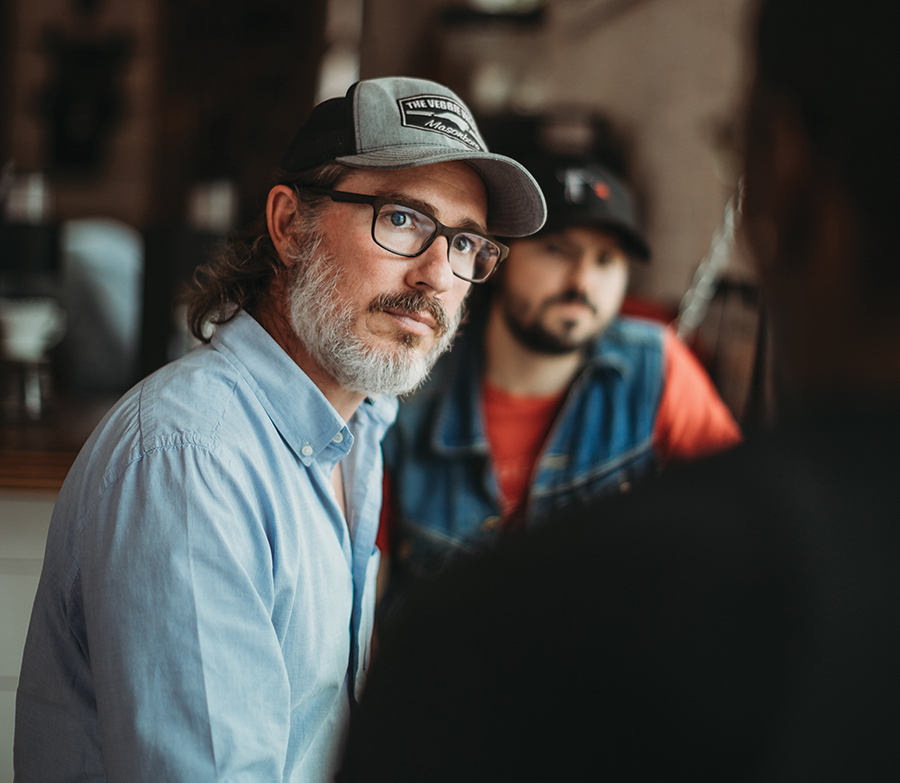
Bespoke Coffee and Dry Goods at the corner of Princess and 2nd streets in downtown Wilmington seemed like a good place to meet my friends and fellow writers Jason Mott and Taylor Brown for several reasons. First, the place is absolutely gorgeous. Huge windows pour light into a high-ceilinged space that is grounded by checkered tile, hardwood floors and countless succulent plants that lend soft pops of natural color to the industrial furnishings. Second, Bespoke’s coffee is just as outstanding as the curated list of local beers they have on tap. Finally, I knew Taylor would already be there, just as he is every afternoon.

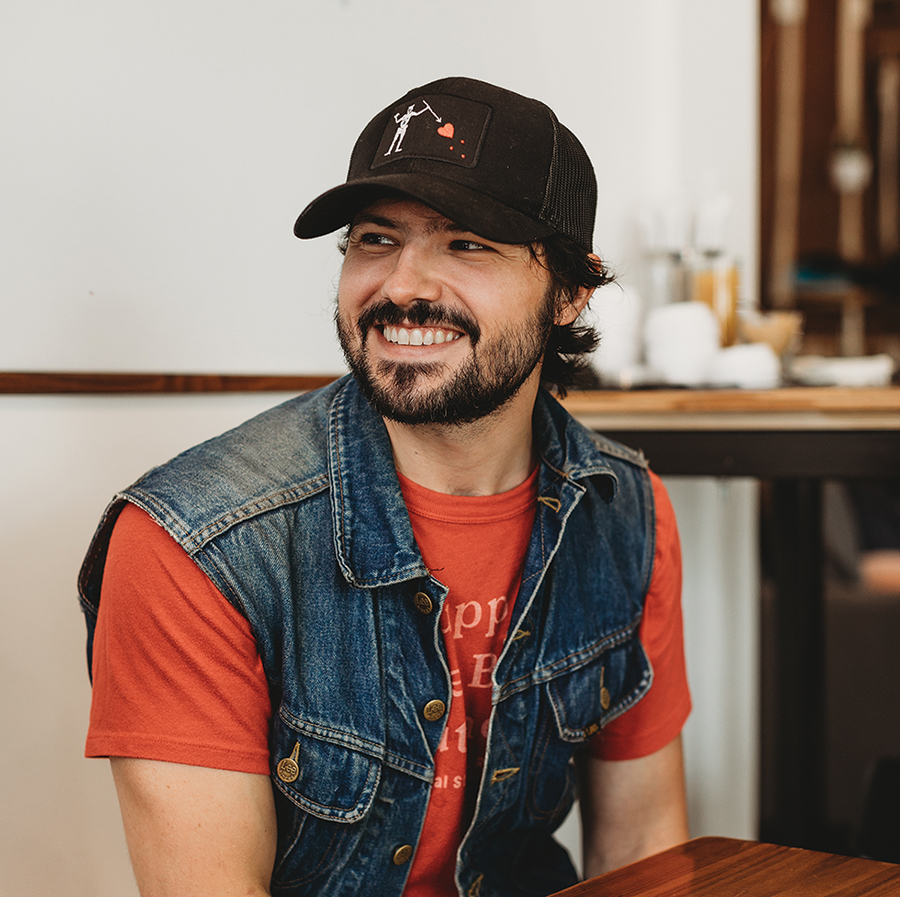
I find Taylor at his spot near the register, sitting at the window that looks out on 2nd. When I say “his spot” I really mean it; a small gold plaque on the counter reads This space is reserved for Taylor “The Bodyguard” Brown.

“I spend hours writing here every afternoon,” he says when I ask him to tell me the story of the plaque. “When they first opened, I would stay until closing at 7:00 p.m., and then I would walk out with the staff.” He smiles, looks down at his open laptop where it sits just below the plaque. “They started calling me the bodyguard.”

I have known Taylor since an advanced reader’s copy of his debut novel, Fallen Land, found its way to me in the months leading up to its publication. The novel, which was released in 2016, was a huge success, and it was followed by the novels The River of Kings in 2017 and Gods of Howl Mountain in 2018. He has just recently returned from a long book tour that had him crisscrossing the country.

“How are you feeling after all that travel?” I ask.

“It gave me mono,” he says.

I laugh.

“No, seriously,” he says. “I went to the doctor last week.”

Jason walks in the door while we are talking. Like Taylor, he has just arrived home from a long book tour himself. We all shake hands, and Jason asks how we are doing.

“Book tour gave Taylor mono,” I say.

“I almost died on book tour, too,” Jason says.

I gesture toward the bar.

“Let’s get some drinks.”

We get our drinks — iced coffee for Taylor, water for Jason, and an IPA from Wilmington Brewing Company for me — and grab a table just inside the front door.

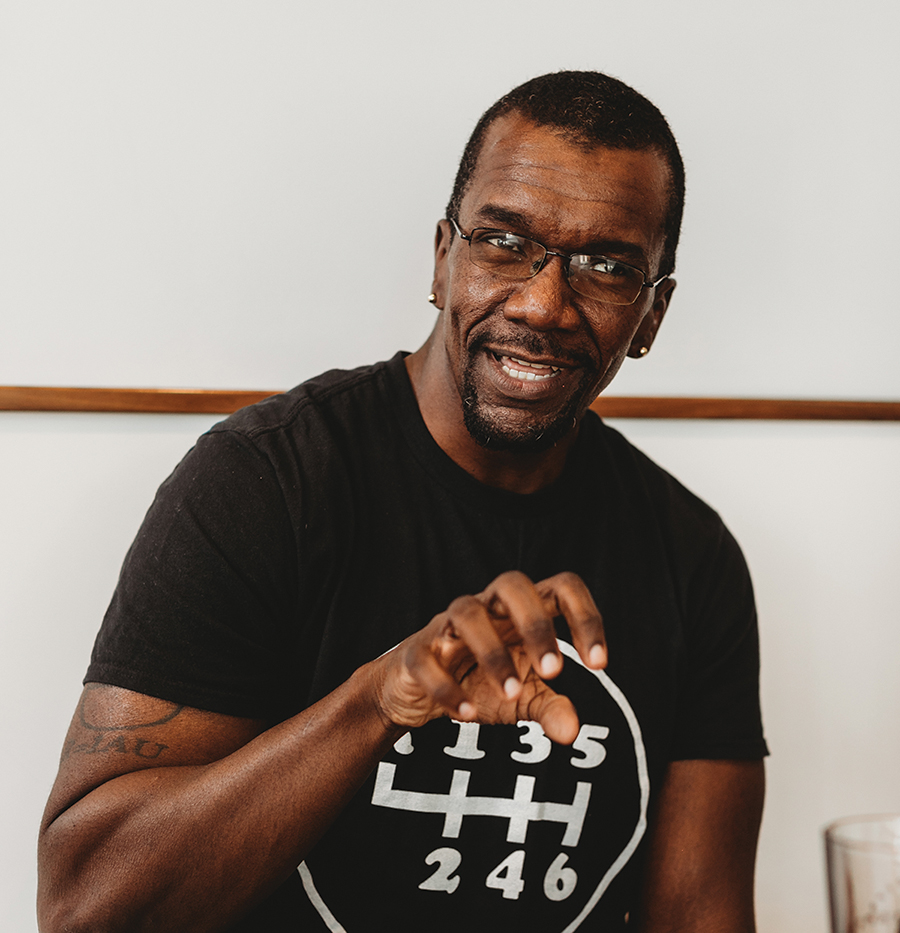
I have known Jason since my parents introduced me to him in 2013, when his first novel, The Returned, was released. The book was optioned and produced as a television show for ABC before it was even published, and my mom watched it and loved it, and then she and my dad went to one of Jason’s book signings. She fell for him because of his books, and my dad fell for him because of his cars. To say that Jason Mott is a car enthusiast is an understatement. He buys them, repairs them, modifies them, and races them. My dad had spent much of his young life doing the same. Finally, a writer both my mother and father could support.

Jason’s second novel, The Wonder of All Things, was released in 2014, and his novel The Crossing was released this spring. I ask him to expound upon his near-death experience on book tour.

“Hospitality driver,” he says. “He almost mowed down someone crossing the street in Seattle. He slammed on the brakes, and I thought I was going through the windshield. He told me he hadn’t seen the guy because he’d been about to pass out.”

“What did you do?” Taylor asks.

“Well, I was starving, and I figured if he was about to pass out, then he might need food. We stopped at Burger King and ate dinner before heading to the bookstore.”

“The glamour of book tour,” I say.

Our conversation quickly turns to surprising, horrifying and hilarious things that can happen when you are on book tour alone, staying in bad hotels, catching red-eye flights, and always feeling like you are supposed to be somewhere else.

“I’m actually working on a novel right now about a writer who goes on a book tour where insane things happen,” Jason says. “I wrote it as a screenplay, and the folks out in Hollywood said it may get more interest if it’s a book first.”

“I’ll read it,” I said.

“I’ll read it and blurb it,” Taylor said.

We tell more stories, finish our drinks, and then stand to leave. As someone who drives a toy-littered Subaru Outback with two car seats in the back, I watch Jason leave and try to imagine what kind of car he will be climbing into. Taylor heads back to his seat where his laptop still rests below his plaque.

“How late will you stay?” I ask.

“They close at 6:00 p.m. now,” Taylor says. “They felt bad for running me out of here an hour early, so they gave me a key to lock up.”

“Are you serious?” I ask.

He smiles and holds up a brass key on his key ring.

I say good-bye and step out into the heat. As I settle into my car and turn on the A/C, I imagine Taylor a few hours from now, closing down his laptop, turning off the lights at Bespoke Coffee and Dry Goods and locking the door behind him, glad to be home.  PS

Wiley Cash lives in Wilmington with his wife and their two daughters. His latest novel, The Last Ballad, is available wherever books are sold.

Soul Soothing

A place and a person to remember

By Tom Bryant

You are not dead until there
isn’t a crumb of memory left
anywhere in the world.

— John D. MacDonald,
The Empty Copper Sea

There is a place hanging on a mountainside right off the Blue Ridge Parkway where a person can rest his soul. The place is known as the Sourwood Inn. It’s a lot more than the common definition of a bed and breakfast. There are 12 bedrooms situated in a classic mountain lodge, overlooking a beautiful, almost mystic valley. The lovely inn was built for rest, relaxation and, as I mentioned, restoring the soul.

It had been a sad, gray, melancholy time. A good friend had suddenly keeled over and was gone before the EMS could arrive. A cousin I hadn’t seen in years passed away with heart trouble. And my mother, 99 years old and still with the grace and fortitude of a Southern lady, passed away quietly after a small stay in the hospital and an even shorter visit to hospice. It was as if she didn’t want to inconvenience the family with a long, drawn out, sad time of dying. She was that kind of lady, always thinking of others.

My sister’s call about Mom came late one evening. It had been a typical Sandhills summer day, hot with a high humidity that sent folks searching for air-conditioning. I had waited until late in the afternoon to beat the heat and do some much needed yard work. With that finished, I sat back in the sunroom enjoying a cold beer. My cellphone was still in my pocket, and I answered its persistent, buzzing ring.

“Tommy.”

“Hey, Bonnie, how’re things on the farm?” My sister had been Mother’s caregiver, and they lived in the old plantation house that was built in 1830.

“Not good. Mom’s in the hospital. She fell this morning and is not doing well. I’m on my way back over there to talk to the doctor now.”

“OK. Linda and I will come on down as soon as I clean up a little.”

“No, don’t come now. Wait until I find out from the doc what’s going on. This could be it, Tommy. Mama looks terrible.”

After a short stay in the hospital, Mom was moved to hospice. It was exactly as we feared. She was ready, after all her years, to give up the fight.

Linda and I made it to the hospice building a little after 11 the next morning and entered the room to see Mom.

“Hey, Mom, it’s Tommy. I love you.” Mother was past communicating with anyone. She was in the bed, eyes closed, breathing hard. I couldn’t take it and went back out in the hall.

In just a few minutes, Harriet, my cousin, an excellent nurse who had been observing the efforts of the hospice nurses, came out behind me and said, “Tommy, your mother is gone.”

My other sister, Billie, standing next to me, said, “It’s as if she was waiting for you.”

The rest of the week was a blur. Folks from the old Mizpah Church did a wonderful job with Mom’s funeral. The pastor, an easy-going, caring young man, presented the service just as Mom had wanted, and members of the church put together an afternoon meal for the family.

Mother was laid to rest beside my dad, who died almost 50 years ago. They were finally reunited.

On the drive home, Tom, our son, was dozing in the passenger’s seat, and Linda was in the back seat.

“It was great for Art, Bryan and Sandy and Bob to drive all that way,” she said. Bob and Sandy live nearby in Southern Pines, and we don’t see them often enough. Art lives in Albemarle and is part of our duck-hunting crew; and Bryan, another hunting buddy, drove down from Burlington.

“Yep, remember what Mom always said, good friends are gold.” I was quiet as we motored toward home, thinking about her and all her wise sayings and how she would be missed.

“Babe,” I said. “We really need to get away for a while. What if we go up to the mountains and stay at the Sourwood for a few days? We could kick back, read and maybe ride into Asheville for a bit.”

“That’s a wonderful idea. I’ll call them right now and see if they have a room available.”

We were in luck. Susan, the young lady who runs the inn, said that our favorite room was available and we were welcome. The room that we have stayed in several times is located on the second floor and has screened French doors leading to a small balcony overlooking the valley and mountain ridges beyond.

After a four-hour ride out of the sweltering heat of the Piedmont, we breathed a sigh of relief when we finally saw the mountain ranges to the west. We reached the Parkway; then it was just a short distance to Elk Mountain Road and the little one-lane, firebreak-wide driveway to the inn.

After we had unloaded and settled in our room, Linda went down to the great room and brought back homemade cookies and lemonade. I, on the other hand, decided to kick back on the balcony with three fingers of good Scotch I had been saving for a special occasion. The sun was beginning to set and a smoky gray mist was rising out of the valley.

Linda had put together a little picnic supper knowing that the inn would not be serving dinner that Wednesday evening, and we didn’t want to ride into Asheville after our five-hour trek across the state. We ate out on the balcony and watched as the sun set behind the inn and darkness crept over the valley. Linda went inside to read, and I watched the shadows and listened as nocturnal wildlife started calling and moving about the woods. After a while I went in, picked up the book I was reading and got ready for bed. I left the doors to the outside open, only latching the screens.

In the middle of the night, I was suddenly awakened. It was as if something or some noise had jolted me from my deep sleep. Groggily, I sat on the side of the bed, trying not to wake Linda, and heard the culprits that had roused me from my slumber. It was a pair of barred owls. They were evidently having a dispute over territorial rights and were arguing like a couple of Southern lawyers. I eased out to the balcony to listen.

The dark sky, full of stars, looked as if it had been sprinkled with diamonds, and the Milky Way seemed to be hovering right over the inn. I watched and listened as the owls moved down the ridge toward the valley, and I thought about Mother and a conversation we had before she became so conflicted with dementia.

“Tommy, don’t you be so upset when I leave this Earth. I’ve had a good life and I’m ready.”

“Mom, you’re going to be here for a lot more years,” I replied.

“No, son, I’m not. And listen to me. My death is not going to be an ending. It’s a new beginning. Think of it as if I’m just heading out on a big adventure and will see you again some day. I won’t see you anytime soon, though, because you have a lot of living yet to do in this world.”

I listened as the sounds of the owls faintly drifted up from the valley, and then they were silent. A meteor streaked across the northern sky. I stood and stretched so hard I could hear my tendons creak. It was as if a heavy weight fell from my shoulders, and I silently went back into the room and to bed.

I dreamed about meteors and stars and Mother.  PS

Tom Bryant, a Southern Pines resident, is a lifelong outdoorsman and PineStraw’s Sporting Life columnist.

Gifts from the Sea

Add a powerhouse of nutrients

By Karen Frye

Walking along the shoreline in the northernmost part of Maine and into Canada at low tide, you will find beautiful sea vegetables on the rocks. Edible seaweed grows in an area of the ocean’s edge called the intertidal zone, a fertile area where the land’s organic mineral matter meets the ocean’s mix of water and sunlight.

Originating in Japan, the macrobiotic diet promotes the use of sea vegetables for improving health and includes them in many recipes. The Vikings carried dried seaweed on their voyages for sustenance.  Early New England whalers chewed on seaweed for its high vitamin C content to keep scurvy away. The Japanese incorporated sea vegetables in their diet regularly and used them in shrines and ceremonies.

Adding edible seaweed to your food will bathe your cells with a powerhouse of nutrients. Seaweed pioneer Evelyn McConnaughey has collected references from around the world of seaweed being used in the treatment of goiter and other thyroid problems, kidney ailments, ulcers, obesity, high cholesterol, hardening of the arteries and hypoglycemia. Traditional Oriental medicine has always promoted the use of seaweed to lower the risk of heart disease. High in potassium and low in sodium, it reduces the risk of high blood pressure and stroke.

Some of the sea vegetables found easily are:

— Alaria: perfect in soups, loaded with calcium and vitamin A.

— Arame: mild flavor, soak for a few minutes and add to salads or stir-frys.

— Dulse: a reddish-purple seaweed that can be enjoyed as a snack out of the bag, or added to sandwiches, salads and soups.

— Kelp: the all purpose sea veggie, it comes in shakers to sprinkle over food (an alternative to salt); exceptionally high in all minerals, especially calcium, potassium and magnesium.

— Kombu: usually found in strips, you can tenderize (by soaking in water for a few minutes) before use; excellent to add to soups, stocks and beans; very high in iodine.

— Wakame: a very mild taste, cooks quickly; traditionally used for miso soup. 

— Nori: if you’ve eaten sushi, you’ve eaten nori; it has a mild, nutty taste, use it for wraps, or crumble it over foods; the highest protein content of the sea veggies with significant amounts of the B vitamins.

Here is an easy soup recipe that is delicious and can get you on your way to making sea vegetables a part of your life.

Basic Miso Soup

6 cups water or vegetable stock

1 medium carrot, sliced diagonally

1 3-inch piece of wakame or kombu

2 scallions, thinly sliced diagonally

3-4 tablespoons miso paste (found in the refrigerated section)

Bring water or stock to a simmer, add carrots and cook until tender.  Soak the seaweed in cold water while carrots cook, then drain.  When carrots are tender, add the seaweed to the stock and simmer for a minute. Add the scallions and simmer for another minute. Remove from the heat.  Dissolve miso in some of the broth and return to pot.  Allow to steep briefly before serving. You can remove the seaweed because all the nutrients are now in the soup. You can add other vegetables like celery, onion and ginger. Sprinkle with fresh chopped parsley before serving.

Many health care professionals promote following a plant-based diet.  Don’t hesitate to include the sea vegetables as well. You’ll be glad you did.  PS

Karen Frye is the owner and founder of Natures Own and teaches yoga at the Bikram Yoga Studio.

The Back Deck

Where there’s enough for everyone

By Renee Phile

The green, grassy yard is a triangular shape, lots of plants: basil, rosemary, pansies, and other flowers that look cool, but I don’t know their names. Bird feeders — the whimsical ones — are scattered in the yard. The hoi polloi squirrels eat peanuts from kitchen pans on picnic tables. The birds chirp, the highway beside the house roars softly, the wind tingles against my skin. It’s a cool September morning in Nags Head, and I can smell the ocean. My best friend’s grandma reminds me of my own. Delicate but not breakable. I’m sitting right beside her on the back deck. Just the two of us. I hear a buzz. A bee. Then a hummingbird. I see trees full of birds I can’t identify any more than I know the flowers. I hear a car honk. A door shut. She is reading her devotional book, The Upper Room, and I remember my Gram reading the same book. She reads her Bible at the same time, the books balanced in her lap. Flips pages in her Bible. Points her finger along the page like a palm reader tracing the heart line. Reads. Flips more pages. Reads. Rubs her worn, delicate hands together. Flips more pages. Reads. Rubs her wrist. Peers down at a verse. Reads it to herself. The words almost loud enough for someone to hear. Sips her coffee. I sip my own and continue to write in a notebook. A blue jay hops close to me. She looks up. Throws it a peanut. “Uh, oh,” she says as another one swoops down, snatches it, and flies into a tree. She throws a second peanut for the first blue jay, the one that got pushed to the back of the line, but the one in the tree flies down again, and there is a little scuffle. Bird stuff. “There’s enough for everyone!” she laughs. I laugh too.  “This house was built in 1990, and we bought it in 1998,” she explains. I nod. “We have been here ever since.” I nod. She tells me about the house. Two stories. She tells me about her children. Two live close by, they can smell the ocean. One lives on the other side of the world.  She tells me about her husband, who passed away this year. He was a wonderful man. She lays her hand flat on the page of the book. There are doves on the roof of the house, looking like a conference is taking place. Bird stuff. I wonder what they are talking about up there. “The blackbirds eat up everything!” she says as she throws a peanut to a squirrel. It hops up to the deck and devours the nut. She reads, and I write. I breathe in the ocean air. I never want to lose this. Instead I will store it away and come back to it whenever I need it. The blue jay swoops down again, greedy.  PS

Renee Phile loves being a teacher, even if it doesn’t show at certain moments.