True South

Reminders

A milestone birthday

By Susan S. Kelly

This is the month that I turn 65. I suspect I’ll have a breakdown.

I don’t put much store by birthdays typically. As a child, a July birthday meant that my friends were away on family vacations, so no one was around for a party. A summer birthday meant no cupcakes in elementary school, or care packages from Hickory Farms — the standard-but-thrilling gift — at boarding school. As an adult, I seem often to be at the beach, where my mother annually suggests that we have a “nice piece of fish” to celebrate my birthday — a roll-eye refrain the entire family now uses whenever we’re referring to celebrations of any kind.

My sister has a breakdown every time we leave the beach, crying and honking the car horn until she’s out of sight. She’s worried that by the next time we’re all together again, someone will have died, divorced or been irreparably altered in some way.  Cheerful, no? I made her a Breakdown CD full of mournful songs from James Taylor, Pachelbel’s Canon, the themes from To Kill A Mockingbird and The Thorn Birds, so she’ll have background music to wail with during the four-hour drive home.

The last time I had a breakdown birthday was 3 1/2 decades ago, when I turned 30. I was waiting at a stoplight and was suddenly just  . . .  overcome. I bowed my heard and laid my forehead against the hard, ridged, steering wheel and wept. I did not want to be 30 with children and a mortgage and a yard. I wanted to be a sorority girl wearing Topsiders and drinking beer at The Shack with my hair pulled back in a grosgrain ribbon on a Thursday afternoon. There was nothing for my despair but for my husband to take me to Chapel Hill for the weekend. But The Shack was a parking lot. Beers at the gleaming wood bar in Spanky’s didn’t cut it.

The good part about A Big Birthday year means that my friends are turning 65 too.  Bridge buddies, hiking homies, college pals, boarding school classmates — all of us. Meaning that every day brings a veritable blizzard of emails filled with dates, pleas, opinions, rebuttals, suggestions, complaints, reminders, asides, and the occasional joke, all in the service of organizing what I term Girl Gigs. Girl Gigs deserve a column of their own, but I’ll give you a teaser: One friend, for a Girl Gig in the mountains every January, flies in from Greenwich, Connecticut, and brings nothing but a mink coat and 3 pairs of pajamas. Stay tuned.

I don’t care a whit about getting old, or dying (proved by my Funeral File, a topic addressed earlier in these pages). I’ll admit to a fear of my house smelling like old people, and wondering whether it’s time to go ahead and lock into what one friend calls a “terminal hairdo,” the one you wear to the grave. And I drive a Mini Cooper, which seems to be the universally acknowledged car for females of a certain age. But otherwise, nope. No fear, no dread, no anxiety.

I also have zero regrets about those things in the past that I’ve done or left undone, or shoulda, woulda, coulda. Furthering my career? More me time? Taken that trip, accepted that offer? No, no, and no. Do-overs don’t interest me.

Wherefore the melancholy, then?  Just this: 1,277 photographs — give or take a couple dozen travel pictures — on a digital frame. A New Year’s resolution labor of love with a scanner that rotates continuously all day, every day, showing me 1,277 times what I cannot have back. That summer twilight evening of my oldest in his tacky polyester pajamas blowing dime-store bubbles in the driveway before bedtime. That child wearing a mask while he watches television, oblivious that he’s even wearing a mask. That child blowing out candles on what is surely the most hideous homemade birthday cake ever, shaped and iced like a sharpened pencil. The grin the day the braces came off. A husband mowing the lawn with a toddler draped around his neck like a pashmina.

What was I doing during these ordinary, everyday moments?  What was I saying, thinking, hoping, cooking, even?  I don’t want to time travel, to swallow a magic youth pill, to go back and re-live. What stops and saddens me is the simple yet incontrovertible fact that, no matter what, I cannot get that Tuesday morning in that picture, where the child with the trike, or the new backpack for the first day of school, or that Sunday afternoon when a young husband tosses free throws at the driveway basketball goal — long since vanished — back. Not a single, commonplace, inconsequential second of them. Nothing I can do will return them to me. No begging. No money. No who-you-know. No good deeds. No nothing.

Thornton Wilder knew the kind of grief I’m talking about, and in his play, Our Town, has Emily Webb, who’s dead, ask the Stage Manager, “Does anyone ever realize life while they live it . . . every, every minute?”

“No,” the Stage Manager replies. “Saints and poets maybe . . . they do some.”

And I’m neither.

So, this July, if you see someone pulled over with her head against the steering wheel, it’s just me, in my Mini, in the breakdown lane.  PS

Susan S. Kelly is a blithe spirit, author of several novels, and a proud grandmother.

Golftown Journal

The Game of the People

Build it and they will come

By Lee Pace

Hugh MacRae stood before the Wilmington City Council in the early 1920s with a bold proposal to build a municipal golf course on land his family owned several miles east of the city. MacRae was going to retain the services of Donald Ross, the noted golf architect from Pinehurst, to design the course, but the idea was falling on deaf ears with the city fathers, who would pay for the construction of the course.

“Mr. MacRae, you’re talking pipe dreams,” the mayor told him. “Golf will never be available to the average man. It’s a rich man’s sport.”

MacRae, whose family traces its roots to the Isle of Skye in Scotland, was quick with a rebuttal.

“No, Mr. Mayor, it’s not,” MacRae answered. “I’ve seen golf in Scotland. Almost every course there is a city-owned course. Everyone in the town of St. Andrews plays golf.”

MacRae’s argument worked. The mayor and council conceded his point, approved the plan, and in 1926 Wilmington began construction on its new public layout.

Some 80 years later, MacRae’s grandson smiled considering the story he heard often many years ago.

“Today that golf course plays more than 70,000 rounds a year,” Hugh MacRae II said in 2007. “You can’t have a golf course with much more history than that — ties to St. Andrews and Donald Ross. My father and grandfather were very familiar with golf in Scotland. They foresaw golf becoming very important to the average man, not just the wealthy man.”

Ross’ early ties in American golf were with the affluent — his first job was in 1899 at Oakley Country Club in the Boston suburbs, and a year later he established a base at Pinehurst Country Club — but his Scottish roots allowed him to stay anchored in the idea that anyone could and should have access to quality golf.

“There is no good reason why the label ‘rich man’s game’ should be hung on golf,” Ross wrote at some point before 1914 in a manuscript that was later published in the book Golf Has Never Failed Me. “The development of municipal golf courses is the outstanding feature of the game in America today. It is the greatest step ever taken to make it the game of the people, as it should be. The municipal courses are all moneymakers and big moneymakers. I am naturally conservative, yet I am certain that in a few years we will see golf played much more generally than is even played now.”

Municipal and daily-fee golf courses are important cogs to the golf machinery in the Carolinas. According to the National Golf Foundation, the two Carolinas had 923 regulation courses at the end of 2018, and 659 of them were daily fee or municipal courses. That is just over 70 percent of courses being “public” versus those owned by a private club.

One of the oldest public courses in the Carolinas is Aiken Golf Club, which opened in 1912. The Highland Park Hotel opened in Aiken in the late 1860s, and the golf course was in its amenity package. The course was sold to the town in 1939 when the hotel company encountered financial ruin, and today is run by Jim McNair Jr., son of the noted amateur player James McNair, the winner of the Carolinas Amateur in 1946 and ’48.

The town of Southern Pines commissioned Ross to build a course on ground just south of Morganton Road and east of Broad Street that would be owned and operated by the town, and the original 18 opened in 1913, with nine more following a decade later. The town struggled to maintain the course during the Depression and World War II, and sold the course in the mid-1940s to a Connecticut businessman named Mike Sherman, who dispatched a young accountant and aspiring golfer named Julius Boros to town to keep the books and hone his golf game in his spare time.

Sherman sold the course in 1951 to the Benevolent & Protective Order of Elks, which remains the owner today. The greens were rebuilt by architect John LaFoy in 1998 to accommodate faster putting surfaces, and he added a tee on the 15th hole to lengthen it from a par-4 to a par-5. The course plays 6,354 yards to a par of 71.

“What struck me most about Southern Pines was that you had a really fine layout,” LaFoy says. “It’s just a really, really good layout. It’s outstanding. That’s what Donald Ross did so well — his routings. He used the topography very well.”

Charleston businessman Claudius Bissell Jenkins donated 112 acres to the city of Charleston in the late 1920s to be used for a public golf course. Jenkins and his sons were developing the Riverland Terrace suburb on James Island, just west of the Country Club of Charleston, and saw the civic and commercial appeal of having accessible golf nearby. The Charleston City Golf Course opened in 1929 and has been the site annually for the Charleston City Amateur.

“Its rates are such that young people from families of modest resources, working folk and retirees have access to the game of golf,” Charleston Mayor Joseph P. Riley Jr. said in 2004. “The city’s commitment is that it will always be an affordable and accessible golf course, and I think it’s a very valuable asset.”

The course is set for a $3 million renovation that will begin in December 2019 and encompass fixing drainage problems, reshaping tees, fairways and greens, and removing some trees to promote healthy turf growth. The work will be done nine holes at a time, and the city will pay for it half with recreation bond funds and half with a private fundraising drive.

Ross visited the mountains on the opposite side of the Carolinas to survey the site for a new municipal course east of Asheville in the mid-1920s, and The Asheville Citizen noted the occasion with a large headline: “Municipally Owned Golf Courses Needed Here Says Donald Ross On Arrival.”

“It is the consensus of opinion of almost all that a municipal course will go a long way toward drawing winter and summer tourists,” the story said, then quoted Ross that a new course would “prove one of the chief assets in advertising for visitors.”

Asheville Municipal Golf Course opened a year later and was dedicated on May 21, 1927, and an exhibition four-ball featured trick-shot artist Joe Kirkwood and head pro Ray Cole against the pros at the other two Asheville clubs — Frank Clark of the Country Club of Asheville and George Ayton of Biltmore Forest. It was the state’s first publicly owned golf course.

“The course places Asheville in the ranks of other Southern cities which have provided a modern up-to-date course open to the general public,” The Citizen remarked. “The course is expected to add fully fifty percent to Asheville’s golf population, opening the game to hundreds who know of golf only through the newspaper accounts.”

“It cost one dollar to play golf back then,” says Billy Gardenheight, a caddie at all of the Asheville private clubs in mid-century and an avid golfer himself at the muni. “Guys would come from all over and stay in rooming houses and play golf.”

Today seniors with knee replacements and heart problems show up at 7:30 a.m., five days a week, and walk the front nine, routed in a valley with little topographic undulation. Others go a full 18 and venture onto the back nine, which winds its way up and back down the Beverly Hills subdivision.

“A lot of people come by even though they don’t play golf,” says Cortez Baxter, who has been a starter at the course since 1967. “They play cards, watch TV, tell lies. It’s just a big family. Sometimes you get older and don’t have anywhere regular to go.”

Meanwhile, back in Wilmington, golfers today are enjoying the results of a major renovation that is now five years old. Wilmington Municipal head pro and general manager David Donovan realized that Ross’ original greens had never actually been built, that to save money the town had merely built round circles of sand and clay that were eventually covered with Bermuda grass. He convinced the city to hire architect John Fought to build the green to Ross’ specifications, and that happened in 2014. The $1.4 million project includes new greens complexes, bunkers and putting surfaces on all 18 holes, 24 new/rebuilt tees, some tree removal to improve sunlight and air flow, and the removal/repositioning of cart paths in some areas.

Heralding the results of the project are new tee signs that read at the bottom: A Donald Ross Tradition.

“Now, that fits,” Donovan says. “What we have now I think is true to what Donald Ross envisioned at the beginning.

“I think this has put us on the map now. On Mondays, when the private clubs are closed, we’re getting players from Porter’s Neck, Landfall and Cape Fear. This meets their standards now. That’s a big deal.”  PS

Lee Pace has written about the Pinehurst area golf scene for more than 30 years. Write him at leepace7@gmail.com.

Hometown

The Gift of Years

A farewell to Mother Fields

By Bill Fields

When I saw that a voicemail from one of my sisters had landed in the middle of the night, I didn’t have to call her back to know what had happened.

Our mother’s long, largely happy and healthy life had come to an end less than two months from her 96th birthday. The day we laid Juanita Henderson Fields to rest was sunny and warm, much different from our father’s burial on a chilly spring forenoon nearly 40 years ago, when it was hard to tell the tears from the rain.

Different weather seemed appropriate, because a life that is over at 95 is not the same as a life cut short at 59. That gift of years also was our present.

How lucky I was to be able to go home for so long — much longer than most folks can — to East New Jersey Avenue and those familiar rooms and all those memories, of cookouts and penny poker games, giddy Christmas mornings and sunny Easter afternoons, looking for dyed eggs in the yard, one inevitably hidden in a hydrangea.

My sisters always called her “Mother,” and she was “Mom” to me. After becoming a grandmother, in the early 1970s, she also was “Mother Fields.” That sounded like a gospel singer on tour through the South, but it fit. By any name, she was a good wife, mother, daughter, sibling, aunt and friend. She was good, in the broadest definition of that short word. Someone who came by the funeral home called her classy. Mom was that too, along with being well-dressed, sneaky-funny, generous and, especially in her last decade, stubborn as a tight jar lid.

I’m convinced part of Mom’s stubbornness to leave her home, to stay a couple of innings too long there, was rooted in her desire for us to have that home to return to as long as possible because it was something she could do for us. Once we had finally gotten her into assisted living, we had to tackle cleaning out the house. By the end of that week, our backs were sore but our souls were full, having gotten to explore Mom’s life as we dealt with the many possessions.

We found out our mother really, really liked clothes. We discovered she was Most Improved in the Tar Heel Bowlerettes in the 1964-65 season, wearing the white and green shirt of Citizens Bank. We found autograph books and a West End High School diploma, in the days when she was a raven-haired beauty, and a steno pad of tender notes Dad wrote to her as he recovered from an operation that temporarily stilled his voice.

She let us learn from our mistakes when we were kids, and she respected our decisions when we were adults — even those she didn’t agree with. The older I’ve gotten, the more I’ve appreciated that aspect of her parenting because not all mothers are that way.

Women had just gotten the right to vote a few years before Mom was born in Jackson Springs. She lived through the Great Depression, a world war, profound technological and societal change. About half of her life was lived in a segregated South. But in 2008, when she was recuperating from a back injury and was allowed to vote curbside from a car I was driving, I got to see her vote for our country’s first African-American president. Eight years later, she voted for a woman for the same office.

I got Mom an iPad for Christmas when she was 90, and teaching her the basics wasn’t easy. Despite the steep learning curve, she got the hang of it well enough to check email and check The Pilot’s website, although she still bought a print edition downtown on Sundays as long as she was able. Smartphones amazed her the most, all the things those tiny devices can do.

As private as she was, I think Mom might be happy I used mine to slyly record a voice memo of a conversation with her in December of 2016. According to the wizard inside the phone, it’s 10 minutes and 33 seconds long. One day, I’ll listen to it.  PS

Southern Pines native Bill Fields, who writes about golf and other things, moved north in 1986 but hasn’t lost his accent.

The Accidental Astrologer

Grins and Giggles

Cancerians bring light and light-heartedness to the darkness

By Astrid Stellanova

A whole lot of July Star Children are born with a funny streak, and live for shenanigans. One is that high-larious actor Ken Jeong, the doctor and comedian who just so happens to be a Page High School alum. Recently he revisited his local roots to deliver the commencement at UNCG — and delivered the grads from taking themselves too seriously.

The fun and fabulous Sofia Vergara, Will Farrell and comic genius Robin Williams were born under the sign of Cancer. How ironic that the sign of the crab should produce so many big wits and comedians. Like the stars, they light the darkness.

Cancer (June 21–July 22)

That double-dang double-crosser who broke your trust will get theirs, and you won’t have to lift a pinky. Not to worry one second. Let’s put it this way: If you were a comic book hero, you’d be known for your super power of . . . judgey-ness. You have super powers you have never even explored. Like an incredible talent for sussing up a situation and knowing when to hightail it outta Dodge.

Leo (July 23–August 22)

While you were busy monkey-branching like you were Tarzan, you forgot to look down. If you had, you would have noticed some circling hyenas waiting for you to slip and fall. Those are some of the pack you used to run with, and now, Sugar, you need to outrun them. Put your past waay behind you.

Virgo (August 23–September 22)

This is classic you: not exactly inclined to give a rat’s you-know-what or a gnat’s little patootie for status or approval. And Honey, you get a lotta lovin’ for that! Next up: letting down the old guard and making yourself vulnerable. Trust ain’t just a banking term.

Libra (September 23–October 22)

You didn’t just lose touch with reality. Sugar, you broke the whole handle off things trying to get a grip. A new work opportunity is golden, but your domestic situation is suffering. Take care of those who tend to the hearth and home.

Scorpio (October 23–November 21)

The tee-nine-sy part of you that likes approval took over your whole world. If you want to win friends, Darling, let’s put your “I Know It All” merit badge away in a drawer. Sure you earned it. But it has not helped your sex life or friendships one bit.

Sagittarius (November 22–December 21)

The juice just ain’t worth the squeeze, Sugar. You have worked hard to make good on a promise to yourself and another. Now you have a significant situation that has escaped you and is calling your name. Time to squeeze and release.

Capricorn (December 22–January 19)

By the time you can say tickety-boo you let the cat out of the bag. Not your fault; a trickster you know so well made you spill. No worries. There is time to clean up the mess on Aisle Five before anybody’s the wiser.

Aquarius (January 20–February 18)

Rinse and repeat. Words to live by. Works real good for stains and also works good for self-love and redemption. Forgive yourself, Darling, for letting a situation get a little gray and a whole lot dingy. It will all come out in the wash.

Pisces (February 19–March 20)

Fireworks don’t have a place in your life except for Independence Day. Dial back emotions, and just recognize somebody set a tripwire for you because they are more volatile than a pig in a hailstorm. They only wish they had your self-control. 

Aries (March 21–April 19)

Looks like you stuck the baster in the wrong end of the chicken, Honey. You have been in such a dizzy place that you forgot your purpose and dang near lost your marbles. Recalibrate. Breathe. Meditate. Honey Bun, just do anything but knit your brows.

Taurus (April 20–May 20)

Pigs were flying when you (praise Jesus) decided to zip it and keep the peace just when your nemesis made a total jerk out of himself. Take a bow. You have just zoomed to the front of the astral line for having passed a major spiritual challenge.

Gemini (May 21-June 20)

Sometimes you open your mouth and your Mamma falls out. Life has been a little too boring for your tastes, so you decided to pull the plug on a very good idea and watch it all go right down the dang drain. It will not be boring to reconnoiter.  PS

For years, Astrid Stellanova owned and operated Curl Up and Dye Beauty Salon in the boondocks of North Carolina until arthritic fingers and her popular astrological readings provoked a new career path.

PinePitch

Compiled by Haley Ledford

Fourth of July

Take your pick of freedom festivities! Fourthfest on Wednesday, July 3, at the Pinehurst Harness Track, 200 Beulah HIll Road S., Pinehurst, begins at 6 p.m. with a free concert and fireworks. Gates open at 4 p.m. and fireworks begin at 9:15 p.m. For more information, call (910) 295-1900 or go to www.vopnc.org. If you’re closer to Aberdeen, check out the July 4th celebration at Aberdeen Lake Park, 301 Lake Park Crossing, Aberdeen, from 5 –10 p.m. Celebrate America with live entertainment, food and vendors. Entertainment begins at 6 p.m. and fireworks begin at 9:15 p.m. For more information, call (910) 944-7275 or go to www.townofaberdeen.net.

Abe and Mary: Courtship and Murder Mystery

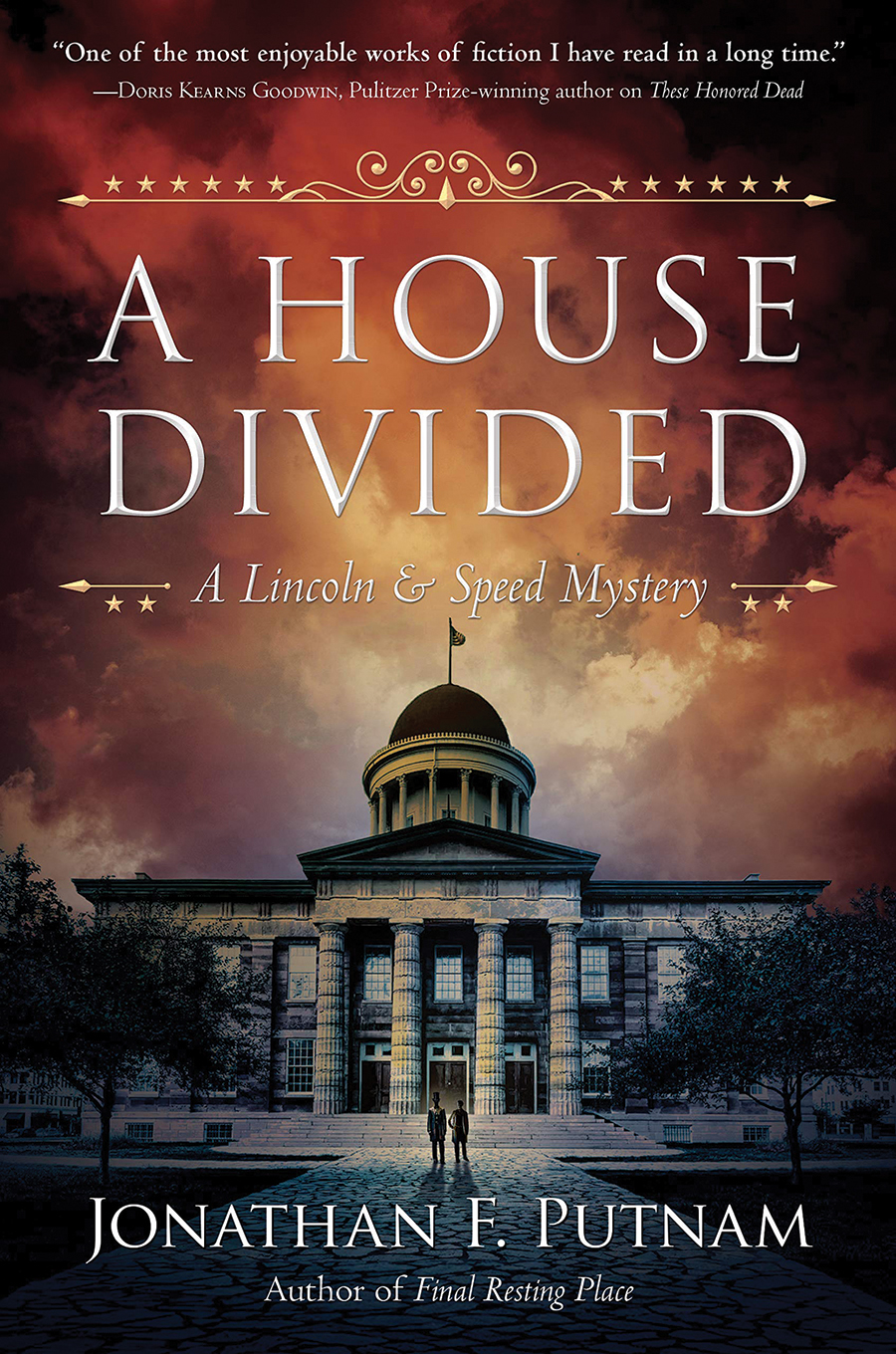
Join author and Lincoln scholar Jonathan F. Putnam at The Country Bookshop, 140 N.W. Broad St., Southern Pines, on July 17 at 5 p.m. to discuss the courtship of Abraham and Mary Todd Lincoln, and the murder mystery at the heart of Putnam’s newest release, A House Divided. Delve into this historical mystery highlighting this famous but misunderstood romance. For more information, call (910) 692-3211 or go to www.thecountrybookshop.biz/event.

An Evening with General Cornwallis

Step, into history on Thursday, July 25, at Pinehurst Country Club, 1 Carolina Vista Drive, for a dinner and lecture benefit to preserve the chimneys at the House in the Horseshoe, a Colonial-era North Carolina State Historical Site, to preserve the chimneys. Tickets are $100 at ticketmesandhills.com. For more information, call (910) 315-2152.

Sunday Exchange Concert: The Tams

Come listen to The Tams on Sunday, July 14, in downtown Aberdeen at The Exchange Place Lawn, 129 Exchange St., as part of The Sunday Exchange Concert Series. The event is free and open to the public, with food trucks on-site and a BYOB option. Music begins at 6 p.m. For more information, call (910) 944-4506.

Summer Classic Movie

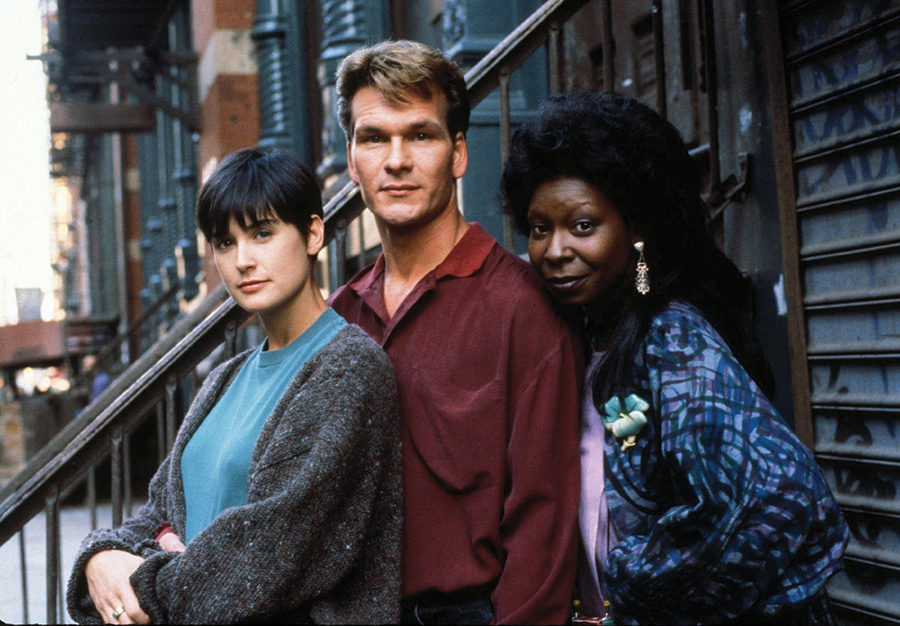
Experience a classic movie, Ghost, at a classic theater, the Sunrise, 244 N.W. Broad St., Southern Pines, on Wednesday, July 10, at 7:30 p.m. For more information, call (910) 692-3611 or go to www.sunrisetheater.com.

Where’s Waldo?

Join the search for Waldo in downtown Southern Pines from July 12 – 22, by looking in participating downtown stores for a chance to win exclusive prizes. First, go to The Country Bookshop, 140 N.W. Broad St., to get your Waldo passport. For more information, go to www.thecountrybookshop.biz.

First Friday

The July 5 edition of First Friday features The Travers Brothership on the First Bank Stage at the Sunrise, 250 N.W. Broad St., Southern Pines. Music begins at 5 p.m. with food trucks and alcohol for purchase. For more information, call (910) 692-8501 or go to www.sunrisetheater.com.

Christmas in July

Visit Seagrove on Friday July 19, for a gallery crawl from 9 a.m. – 5 p.m., celebrating “Christmas in July.” Mr. and Mrs. Claus will be present at the shops on North Broad Street, Seagrove, all day. For more information call (336) 707-9124.

An Evening with General Cornwallis

Step, into history on Thursday, July 25, at Pinehurst Country Club, 1 Carolina Vista Drive, for a dinner and lecture benefit to preserve the chimneys at the House in the Horseshoe, a Colonial-era North Carolina State Historical Site, to preserve the chimneys. Tickets are $100 at ticketmesandhills.com. For more information, call (910) 315-2152.

The Rooster’s Wife

Wednesday, July 3: Michaela Anne. An introduction to Michael Daves changed this songwriter’s path from jazz to the more traditional sounds of bluegrass and folk. Yep, rock artist Micheala Anne makes her Aberdeen debut celebrating Independence Day early. Cost: $15.

Sunday, July 7: Rob Ickes and Trey Hensley. This unique collaborative effort between two gifted musicians is bound to be a revelation to traditional music fans. Ickes is a longtime, well-established instrumental giant, and Hensley is newly arrived in Music City, bursting with talent both as a vocalist and guitarist. Cost: $20.

Saturday, July 13: Amythyst Kiah. Blending masterful blues guitar skills with a deep knowledge and scholarship of African-American roots music, Kiah’s repertoire runs from old-time music through classic country to contemporary R&B. Cost: $15.

Thursday, July 18: Open mic with the Parsons. Free to members.

Sunday, July 21: The Shakedown. Nothing beats the thrill of live music. The Shakedown brings people together in the seats and on the dance floor. Join us for a fabulous party. Cost: $10.

Thursday, July 25: Mike Farris, Jeanne Jolly. There aren’t many singers who use their voices to soar, float and deliver material with the spiritual commitment of Grammy winner Mike Farris. Singer-songwriter Jeanne Jolly brings the earthiness of American roots music with a hint of jazz sophistication to her opening set. Cost: $27.

Saturday, July 27: Dawn Landes, Sinner Friends. Disciples of vintage country and old-time gospel music, Sinner Friends tread their own path to confront the contradictions that dwell in the space between Saturday night and Sunday morning. Originally from Louisville, Kentucky, Landes has released five full-length albums, touring extensively in the U.S., Europe and around the world. Her songs have been featured in popular films and TV shows, including The Good Wife, Bored to Death, Skins, House, Gossip Girl and United States of Tara. Cost: $10.

Tuesday, July 30: Sand Band Birthday Bash. Celebrating the end of the summer season for the Rooster’s Wife with our favorites, beach music with a whole lot of soul! Cost: $10.

Unless otherwise noted, doors open at 6 p.m. and music begins at 6:46 at the Poplar Knight Spot, 114 Knight St., Aberdeen. Prices above are for members. Annual memberships are $5 and available online or at the door. For more information, call (910) 944-7502, or visit www.theroosterswife.org or ticketmesandhills.com.

The Kitchen Garden

Sandhills Berries, Part 3

It’s blueberry pickin’ time

By Jan Leitschuh

We are in it now, the thick of summer.

Our Sandhills area is so horticulturally blessed. We have been celebrating the stellar trio of local berries available in the Sandhills, and our last berry star is the rabbiteye blueberry so abundant this month of July.

Go on, sprinkle blueberries over everything you eat. You know you want to. Your taste buds — and health — will thank you.

True, local blueberries have peeped forth in June. Those were the Southern highbush (SHB) blueberry bushes. Now, I love those early berries, and seek them out at farmers markets. But as a kitchen gardener, I have never had terrific luck harvesting a large crop from my 15-year-old SHBs.

Perhaps, since they bloom earlier, they’ve been nipped by our increasingly erratic spring temperature swings. I’ve heard SHBs need an even lower pH than the rabbiteye varieties and that I could add a little sulfur to the soil, though my leaves are nice and green (as opposed to yellowing), indicating happiness. I’ve heard the “Legacy” variety of SHB is more forgiving.

However, since local blueberry professionals seem to do just fine, in the future, I’ll leave the SHBs to the pros and enjoy their precocious products at the you-picks and farmers markets. I sure do like nibbling those early highbush berries. But in my garden, I’ll focus on rabbiteye blueberries.

Blueberry quality and flavor from the supermarket is unpredictable and often terrible. That’s why I prefer to grow my own — plus, I know they are organic because I grew them that way.

I have long said that the rabbiteye blueberry is the ideal Sandhills edible landscaping shrub. I know some mighty fancy places in Pinehurst and Southern Pines that have rabbiteye blueberries gracing their property, quietly incorporated into their overall landscape plan. Unless one knew where and when to look, they might never be noticed.

First of all, rabbiteyes are easy. They need little effort and maintenance to thrive well in a home garden or landscape. Rabbiteyes bloom later, so are less susceptible to damaging late frosts, and they tolerate higher pH and mediocre soil conditions. They tolerate a little shade.

Native to our region, Vaccinium ashei loves our hot, humid Carolina summers and easy winters. It makes a nice, head-high shrub over time, although if pruned right after the berries have been picked, you can keep the bush height lower.

Besides being a food source for man and bird, the rabbiteye blueberry shrub has four-season landscape interest.

In spring, when rabbiteyes flower as the nights shift between frosty and mild, we enjoy seeing the delicate white blueberry flowers being worked by the harmless and workaholic solitary Southeastern blueberry bees, as well as honeybees, bumblebees, even carpenter bees. Come summer, rabbiteye bushes will produce buckets of sweet, crazy-healthy, edible berries for years to come — with little effort. Their bright cool green spring and summer foliage is an attractive foil to darker plants.

Come fall, the rabbiteye turns a beautiful reddish-burgundy color that persists somewhat into winter, where the shrub’s sculptural framework also adds textural interest.

Rabbiteye blueberry is a plant which benefits from cross-pollination and will produce more berry crops when at least two varieties are planted near each other. Don’t be impatient to pick. They may look blue and ready, but sample a few first before picking your winter freezer supply. Rabbiteye blueberries need to ripen awhile on the bush. Wait until the berries are fully ripe before you pick them or the fruit will not be very sweet, even bitter. If you let the rabbiteyes hang on the bush long enough, they really do taste good. The problem is, they turn that beautiful blue color before they are really ripe.

Then the birds come eat them. Some people use that nasty plastic netting, and we did too. But after tangling with the lawnmower blades and finding the occasional snared bird, we abandoned that. We have so many berries, we generally just share with the local songbirds that give us much pleasure (although I have swathed a particularly late bush in tulle fabric just before harvest to extend my season).

If you choose to plant your own, stick with the rabbiteyes to start. Avoid completely the Northern highbush varieties grown in Maine and Vermont. Here in mid-North Carolina, they will be a disappointing and expensive waste of space, producing little. Rabbiteyes are embarrassingly productive, and after eating your fill and filling your freezer, you’ll have some leftover to take to friends.

If you want to put some rabbiteye bushes in, consider selecting your site now and digging in some peat moss or decomposing pine bark. Chances are, you won’t add lime but gypsum can supply both calcium and sulfur, and not raise the pH like lime will. Blueberries need a pretty acid soil, a pH of 4.0 to 5.3, more so than even azaleas. Your soil may be fine, or you may need to add sulphur; testing is better than guessing for this long-lived and generous perennial shrub. Moore County Cooperative Extension can guide you in testing your soil and selecting proven varieties like Climax, TiffBlue, Premier, Onslow, Columbus and Powderblue.

That makes a pretty happy base for a shallow-rooted blueberry. Then, come late fall or winter, you can plant a couple of varieties of dormant plants on a slight mound or hill — it’s counterintuitive, but those shallow roots like to be a little higher than the surrounding soil. Mulch well with shredded leaf mulch or aged pine bark (not fresh). I beg my landscaper husband to bring home bags of fallen crape myrtle and Japanese maple leaves, since these small leaves decompose into a terrific mulch, and eventually enrich the soil. I would use the tougher oak leaves if they were well shredded.

That first summer, keep an eye on watering these new sets well, and you’ll be rewarded with future blueberry pies, cobblers and pancakes. We used to say that the rabbiteyes were basically pest-free, but in recent years there has been evidence of damage from an invasive little pest, the spotted wind drosophila. Again, Extension can advise you on management if this pest is an issue.

If blueberry Belgian waffles are on the menu this weekend, rest assured that blueberries are the healthiest part of the recipe. An entire cup contains only 84 calories, with 15 grams of carbohydrates. Calorie for calorie, this makes them an excellent source of fiber, vitamin C and vitamin K.

High in anthocyanin — the antioxidant that paints blueberries their namesake color — they offer powerful inflammation-fighting and cell-protecting properties. Besides containing the same resveratrol as red wine, blueberries contain another, similar compound, pterostilbene — which displays many of the same properties as resveratrol. It not only acts as an anti-inflammatory and antioxidant, but it also has anti-diabetic, cardio-protective, neuro-protective (good for the brain and eyes) and anti-cancer properties.

One study has shown that once absorbed, pterostilbene may hang around our bodies offering its many health benefits up to five times longer than resveratrol. Few commonly eaten foods are as rich in pterostilbene as blueberries, so we may be looking at a fruit that is even more unique than previously believed in terms of its ability to support our health.

And a recent study on rheumatoid arthritis reports that the one food that best relieved inflammatory autoimmune symptoms was simple and delicious blueberries.

So we know you’ll get your health on when you spoon these over pound cake, or whip up a batch of blueberry-lemon muffins. But what else can you do with these sweet puppies?

Given that June’s tender baby zucchini have by now mutated into green baseball bats and you are making zucchini bread, toss generous handfuls of blueberries into the batter to up the flavor and health benefits. July’s morning smoothies demand blueberry nutrition — and for a beach afternoon or evening, search out online recipes for boozy blueberry floats, or icy sips like blueberry-basil-infused vodka. If you’re feeling too slowed by the summer heat to make jams, or even pie, search out a Blueberry Crumb bar recipe.

Blueberries play well with chocolate, so chunk some into your summer brownies. A savory blueberry-onion jam or blueberry-chicken mole may intrigue you. Too hot for even that? Churn up some blueberry-lemon ice cream, or spoon out some chilled blueberry soup for starters.

Blueberry Summer Soup (or Sauce)

3 cups fresh blueberries (frozen, if you must)

1 cup water

2 tablespoons sweetener — honey, sugar or substitute

2 teaspoons lemon juice

1 cinnamon stick, optional

2 teaspoons cornstarch

1 teaspoon lemon zest

Yogurt, crème fraîche or whipped cream for serving, if desired

Toss all ingredients  but the cornstarch and lemon zest into a pan and bring to a gentle boil. Stir the cornstarch into 1 tablespoon of warm water to make a slurry, then stir this into the cooked berries. Bring back to a very gentle boil and cook, stirring, until sauce starts to thicken, about 2 minutes. Remove from the heat and stir in the lemon zest.  Serve warm over pound cake, pancakes, cheesecake or waffles. Or chill and serve later as a cold soup with a creamy garnish.  PS

Call Moore County Cooperative Extension for a list of local You-Pick berry farms: 910-947-3188.

Jan Leitschuh is a local gardener, avid eater of fresh produce and co-founder of the Sandhills Farm to Table Cooperative.

Simple Life

The Road to Happiness

It’s an upward climb filled with twists and turns, but joy is in the journey

By Jim Dodson

A dear friend phoned the other day just to say hello, a gifted young poet I hired many years ago as our organization’s first staff writer, who went on to become the senior editor of this magazine. I always knew the time would come when Ashley would fly away to new horizons, which she did after many years of our working together, moving to the mountains where she became a teacher, artist and musician. Lucky for us, her soulful perspective continues to grace the magazine’s pages.

As old friends do, we spent a full half hour catching up on each other’s lives.

I was pleased to learn about her current boyfriend and their travels to art festivals across the Southeast, where they sell handmade crafts created from sea glass, answering the muse and enjoying life on the road.

“You sound pretty happy,” I ventured at one point.

“I am. Maybe never happier. How about you?”

I replied that I was happy at that moment because I was talking to her while sitting in a well-worn Adirondack chair on the lawn where I begin and end most of my day in quiet reflection, watching the dawn arrive and the day depart, usually with Mulligan the dog and Boo the cat by my side. When she called, my companions and I happened to be watching the first fireflies of the season dance in the dusk.

During our years working together, Ashley and I often fell into lengthy conversations about life, love, matters of faith and favorite poets. Among other things, we share an Aquarian sensibility about the future and how we must spiritually evolve in order to get there in one piece as a race of scattered and fractured human beings.

I wasn’t surprised when she asked what things make me happy these days.

I gave her my short and simple list: rainy Sundays, walks with my wife and our dogs, working in my garden, driving back roads, early church, books and movies that stir the heart, phone calls from my grown children and suppers on the porch with friends.

“What about writing?” she asked.

“Cheap therapy.”

She laughed.

“Maybe you should write a book about happiness.”

This notion made me laugh.

Somewhere I’d read that there are more than 500 books on the subject of happiness in print, proving happiness is purely in the eye — or soul — of the beholder.

Besides, I confessed, my kind of happiness was increasingly fueled by things I’d given up or simply no longer needed for the journey, a list that included, but was not limited to, late-night fears of failure, desires for wealth or fame, judging other flawed human beings, even my once all-consuming love of sports was practically gone.

True to the spirit of our talks, I turned the question around on her. Ashley didn’t hesitate.

“I think happiness comes when you are following your heart and doing good things for others.”

Her prescription reminded me of something I’d just read in commentator David Brooks’ outstanding new book The Second Mountain — The Quest for a Moral Life.

“Often,” Brooks writes, “we say a good life is a happy life. We live, as it says in our founding document, in pursuit of happiness. In all forms of happiness we feel good, elated, uplifted. But the word ‘happiness’ can mean a lot of different things.”

Brooks makes an important distinction, for instance, between things that make us happy — a good marriage, a successful career, a sense of material achievement — and the rarer experience of joy.

“Happiness involves a victory for the self, an expansion of self. Happiness comes when we move toward our goals, when things go our way. You get a big promotion. You graduate from college. Your team wins the Super Bowl. You have a delicious meal. Happiness often has to do with some success, some new ability, or some heightened sensual pleasure.”

Joy, on the other hand, he posits, has to do with some transcendence of self, comes almost unbidden when “the skin barrier between you and some other person or entity fades away and you feel fused together. Joy is present when mother and baby are gazing adoringly into each other’s eyes, when a hiker is overwhelmed by the beauty in the woods and feels at one with nature, when a gaggle of friends are dancing deliriously in union. Joy often involves self-forgetting.

”We can help create happiness,” Brooks concludes, “but we are seized by joy. We are pleased by happiness, but we are transformed by joy.”

The day after catching up with Ashley, I was on a winding road deep in the Blue Ridge mountains of Virginia, chasing pieces of Wagon Road history and human stories for my next book — something that always makes me happy — unable to get our conversation about happiness out of my head.

The art of happiness, if there is such a thing, my version of it anyway, seems to be about an inward journey cultivated by intentionally making room in life for small restorative acts and daily rituals that invite you to step out of your hectic, overscheduled life into what Irish mystics called a thin space, a place where duty and obligation are put on hold and deeper mindfulness is possible. Without my early morning communion with the stars and the grateful prayers I send up like sparks from a signal fire to the gods, my day is curiously never fully complete.

For what it’s worth, I also agree with Ashley the poet and Brooks the wise counselor that service of the smallest order to others in a world where there is so much isolation, loneliness and suffering may be the truest pathway to a happier, more meaningful life, a true “Second Mountain” existence.

Since most of my days are spent in quiet working isolation — Hemingway, not a happy camper, called writing the “loneliest art” — I find myself these days almost unconsciously seeking out opportunities to commit some kind of tiny random act of kindness to a fellow stranger in need. The other day, I chased down a harried mother’s runaway grocery cart in the parking lot of Harris-Teeter. She had an infant on her hip and was struggling to unlock her SUV. Her grateful smile and warm thanks were like a liberating breeze to a weary brain that had been arm-wrestling words and sentences onto the page most of that day.

During our pre-dawn walks around the neighborhood each day, my wife began stopping by the house of an elderly shut-in lady to walk her newspaper from the curb to a chair by her front door. We’ve never seen our neighbor’s face. But the dogs insist on stopping to deliver her paper the final 50 feet. To paraphrase C.S. Lewis on prayer, this minuscule act of neighborliness may do nothing whatsoever for God, but it sure makes us all feel a tiny bit happier.

The 17th-century Buddhist monk Gensei wrote, “With the happiness held in one inch-square heart, you can fill the whole space between heaven and Earth.”

Sometimes, we need to be reminded of this fact. A friend who works with the homeless explained to me that perhaps the hardest things homeless people deal with on a daily basis is a feeling that they are not worthy of noticing or speaking to — are, in effect, invisible travelers in our midst.

This prompted a change a shift in my awareness and behavior, from that of feeling uneasy and even slightly resentful whenever I reach into my pocket to offer whatever modest sum may be there, to making a point of looking in the eyes and sharing a few words of ordinary greeting or simple recognition, maybe even learning a name and sharing mine. We are, after all, all traveling the same road between Earth and heaven.

It’s a lesson I seem destined to repeatedly learn. Watching Notre Dame cathedral in Paris burn live on CNN back in the spring, I was suddenly transported to a rainy July day 18 years ago when my son, Jack, then 10, and I were coming out of the famous cathedral in a thunderstorm. Surrounded by a swarm of tourist umbrellas dashing for cover, as we hurried past a lone ragged man with blind eyes standing in the downpour, simply holding out an upturned palm, a character straight from Victor Hugo, a dignified beggar for God.

No one was stopping. But when I saw my son glance back, something stopped me. I gave my son 100 francs and asked him to go and give it to the man. Without hesitation, he threaded back through the on-rushing umbrellas and placed the folded money into the man’s outstretched hand.

What happened next still gives me goose bumps of unexpected joy — the kind of self-forgetting transcendence David Brooks speaks of.

The blind man placed his free hand gently on Jack’s head, as if bestowing a blessing. Watching, my eyes filled with tears, or maybe simply rain. Or both. “What did he say to you?” I asked as we hurried off to find a dry lunch in a cozy Left Bank bistro.

“I don’t know,” he said with a happy smile. “But it was in French and it sounded nice.”

Last summer, at the end of a walking pilgrimage across Tuscany with my wife and 30 other pilgrims, I skipped the private tour of the Vatican’s famous Sistine Chapel in favor of climbing a leafy Roman hill to a small Greek Orthodox Church where I sat on a simple wooden pew for God knows how long listening to morning prayers being sung in Greek by three exquisite voices.

Save for an elderly woman manning a small stand at the rear entrance of the church, I was the only worshipper in the building, sitting beneath the tiny dome of a stunning blue ceiling painted with stars, angels and saints.

Time completely vanished, taking my weary feet with it.

Unexpectedly, it was the happiest moment of my long journey that week.

On the way out, the old woman smiled and waved me over to her stand, handing me a small gilt-framed portrait of an Eastern Saint. I’m still not sure which one.

When I reached into my pocket to pay, she gave me a gentle smile and nod, waving me on with gentle words.

I have no idea what she said to me. I believe it was in Greek and it sounded nice.  PS

Contact Editor Jim Dodson at jim@thepilot.com.

The Omnivorous Reader

Ferlinghetti’s Torrent of Words

Little Boy offers little wisdom

By Stephen E. Smith

Here’s the theory: If a writer drags his audience into unknown intellectual territory — even if the journey’s destination is an unpleasant one — he’s lifted his readers out of the familiar and allowed them to perceive the world from a new and revelatory perspective. Lawrence Ferlinghetti’s A Coney Island of the Mind did that for a generation of poets, and the book remains one of the best-selling collections with over a million copies in print.

Ferlinghetti also achieved literary fame by publishing and defending in federal court Allen Ginsberg’s Howl. The lengthy First Amendment trial became a literary cause célèbre, and in the years since the Howl controversy, Ferlinghetti has continued to support leftist social and political causes while producing his own volumes of poetry and prose.

His latest book, Little Boy, was published on the author’s 100th birthday and immediately climbed the best-sellers list. Billed by its publisher as “a novel” and “last will and testament,” the book isn’t a novel, not in the traditional sense, and it isn’t the last word on anything. Call it bait and switch or simple misrepresentation, but Little Boy is, for better or worse, an adventurous, effusive, stream-of-consciousness rant that begins promisingly as a memoir complete with punctuation, plot and character development, and lapses almost immediately into an unpunctuated acerbic toxic word dump that occasionally sweeps up the reader in its rebellious energy.

If the designation “novel” is misleading, Ferlinghetti manages to hide a cursory explanation deep in his tangled text: “Ah yes indeed I must revert instead to the recounting and accounting of my own fantasies my ideas and agitations and dumb contemplations of the workings of the mind and heart  . . .  And so do I return to the monologue of my life seen as an endless novel simply because I don’t know how to end any life.”

The opening 15 pages of Little Boy recount how Ferlinghetti was separated from his mother shortly after birth, grew up in both privilege and poverty, and eventually graduated from the University of North Carolina at Chapel Hill, completing his doctoral study in comparative literature in France — all of which is conveyed in straightforward third-person prose.  Then the structure of the narrative abruptly transforms, launching into a torrent of words sans grammatical niceties, e.g.: “ . . . the Greeks really all gone now down the drain And shall we tally it up now and see what’s left after capitalism hits the fan But in any case now it’s time it’s high tide time to try to make some sense or cents of our little life on earth and is it not all a dumb show of mummery a blindman’s bluff a buffoon’s antic asininities with clowns in masks jumping over the moon as in a Chagall painting or as if we each were dropped out of a womb into this earth so naked and alone we come to this world and blind in our courses, where do we wander and know not where we go nor what we do, with no assigned destinies . . . .”

There’s nothing new about this narrative technique (Joyce gave us Molly Bloom’s monologue more than a century ago), and Ferlinghetti’s deluge of words wears thin with surprising alacrity.

With the exception of an occasional brief interlude of traditional storytelling, he continues in this vein for the remainder of the novel. Since the monologue is essentially plotless, he rails again about global warming, capitalism, fascism, socialism, people with cellphones — “can you imagine millions of them a whole new generation on earth computing their lives in pixels” —  and the world in general: “. . . it’s all like the old film The King of Hearts in which the inmates of an asylum consider themselves the only sane people in the world, while the people outside go forth every day to murder their dreams and ecstasies in the general conflagration of everyday life in the twenty-first century . . . .”

Allusions abound, most of them employed as similes or used as foils or objects of derision as in “‘Tea Ass’ Elliot” or twisted into puns as in “Let’s not fall deep into romanticism again for the warming world is too much with us late and soon . . . .” And there are literary references galore, if you can identify them: “Let us go then you and me-me-me . . .” “Drive she said,” or “a tale of sound and furry animals.”

And the name-dropping goes on ad nauseam: Thorstein Veblen, Nelson Algren, Louise Brooks, Mikhail Lermontov, J. M.W. Turner, Jean-Jacques Rousseau, Sri Aurobindo, Giacometti, Edward Bellcamp, etc., personages with whom most readers are probably unfamiliar. Unfortunately, Ferlinghetti makes no use of these allusions. He’s in a position to supply important scholarly insights into Ginsberg, Burroughs, Corso, Beckett, Kerouac, Sartre, etc., but the mention of literary celebrities has all the intellectual import of the cover of the Beatles’ Sgt. Pepper’s or an academic adaptation of Where’s Waldo? Readers can research the luminaries Ferlinghetti mentions — how likely is that? — or they can let the allusions ride and go plunging through the text, which is, of course, the more likely scenario.

Readers might presume, given Ferlinghetti’s appetite for social and political causes, that he’d have something to say about the political state of the country in which he’s lived for a century. It’s not unreasonable, after all, to expect a little wisdom from our elders, but Ferlinghetti disappoints on this count. Perhaps he’s correct when he writes: “. . . so I am just an onion peeling myself down to the core to find there is nothing there at all. . . .” The opening lines of his Coney Island poem “I Am Waiting”— “. . . and I am waiting/for the American Eagle/to really spread its wings/and straighten up and fly right . . .” — has more political oomph than all the words in Little Boy, and the sum of all the complaints and observations spewed forth in the novel tell us little more than we learned in A Coney Island of the Mind

Ferlinghetti’s longevity and literary reputation have earned him the right to offer a parting public thought. For better or worse, this might be it: “. . . so bye-bye civilization as we know it and should I just let everybody else die as long as I got my piece of prime cheese oh man it’s all beyond me-me-me . . . .”  PS

Stephen E. Smith is a retired professor and the author of seven books of poetry and prose.
He’s the recipient of the Poetry Northwest Young Poet’s Prize, the Zoe Kincaid Brockman Prize for poetry and four North Carolina Press awards.

Sporting Life

Keepin’ It Cool

Fans, porches and a visit to the ice plant

By Tom Bryant

Good night nurse, it was hot! Fry-an-egg-on-the-sidewalk kind of hot, and I was in the woods at a little farm pond trying to fish. The morning had started off pleasant enough. I was up and at ’em early, anticipating the scorcher promised by the Weather Channel, another of their disaster predictions, and I hoped to catch a mess of bream before the sun could cook my brain.

Fishing was slow, as I knew it would be, and I was going at it the lazy way. I cast a couple of lines baited with night crawlers, anchored the rods securely on the bank, and looked for some shade. The tree line was too far from the pond, so I pulled the old Bronco close to my set and kicked back on a camp chair in her shade. That made it right tolerable.

Growing up when air-conditioning meant an opened window and, if we were lucky, a strong window fan, I think people knew how to handle the scorching summer heat. As kids, we would head to Pinebluff Lake. It was fed by springs and a little creek, and I can still remember swimming into a cool spot created by one of the natural springs. We spent hours in the little lake, devising all kinds of games to play in the naturally cool water.

Probably one of the reasons I don’t like swimming pools today is that I feel like I’m cooped up in an oversized bathtub.

I was also fortunate that my dad ran the massive ice plant located next to the railroad tracks in Aberdeen, and if the summer temperatures got completely out of hand, I could always cool down in one of the storage rooms that were wall-to-wall with ice. Typically, I didn’t stay long. The average temperature in those rooms was about 28 degrees. It’s a pretty good shock to your system when it’s summer outside and, all of a sudden, you’re freezing.

We kids had a routine: Pinebluff Lake in the morning, home for lunch and a nap, and back to the lake in the late afternoon. It was not just a normal nap. Dad had installed a window fan in my sisters’ bedroom, the kind of fan that had four speeds and was reversible, and I knew exactly how to make that thing work. My little brother and I had the bedroom right across the hall from our sisters. We were upstairs so I could close the door at the bottom of the stairs, open our bedroom doors, put the fan blowing out, switch it to “high,” and stand back. That fan would have the curtains in my bedroom standing straight out from the window, and the cool breeze was constant. The sound of the fan and the cool air wafting through the room were almost hypnotic, and in no time I was in the midst of a great nap. I think that’s the reason I nap today and have a sound machine nearby.

I was jolted out of my reverie by the zinging of one of my rods as the line was being pulled in the lake. I raced to catch it and yanked to set the hook. Nothing. Whatever was on it was gone. I reeled in, rebaited the hook and went back to the Bronco. The sun had angled around the corner of the truck, so I rearranged the chair and kicked back again.

The lake, naps and ice plant weren’t the only ways we had to cool down. Most of the Aberdeen downtown businesses were just beginning to install air-conditioning, and the movie theater was one of the first. The mothers in Pinebluff alternated carpooling us kids to the theater on Saturday afternoons. It was 15 cents to get in, 5 cents for a drink and 10 cents for popcorn; and we really got our money’s worth when there was a double feature. The cowboys — Roy Rogers, Gene Autry, Lash LaRue and Rex Allen — reigned supreme in those early movies. Air-conditioning, a novelty at first but soon to become a necessity, made for a kid’s great afternoon of fun.

My ancestors in the 1800s weren’t so lucky. A South Carolina low country summer could be unbearable. Our old family home place was built to provide a little relief from the heat.

First, there’s a rain porch that stretches across the entire front of the house with columns to the ground. The roof’s overhang is far out from the edge of the porch so that during a storm, a person won’t get wet while relaxing in the swing. Next, a long entrance hall runs the length of the house to the back door that opens onto a screened sleeping porch. The house also faces east to catch the prevailing breezes, and the foundation pillars are about 4 feet tall and connected with latticed skirting, allowing air to flow beneath the house. Big rooms with 14-foot tall ceilings and 8-foot windows also helped.

All of these features were great in the summer, but winter was another story. Every room has a fireplace, and in those days, using them kept at least one person busy hauling wood. I guess those early relatives thought that frostbite was preferable to heat stroke.

I checked the lines on the fishing rods to make sure they still had bait, went to the back of the truck for a cool libation, moved my chair to the diminishing shade, and sat back down. The ride home was going to be a hot one because the Bronco doesn’t have air-conditioning.

That thought got me thinking about our first air-conditioned car, a 1969 Buick LeSabre. Prior to that, I thought air-conditioning a car was an expensive add-on that we could do without. Needless to say, after a couple of summer trips to Florida in our un-air-conditioned 1962 MGB, my bride, Linda, helped me to think otherwise. So, along came car air-conditioning.

The sun was now almost directly overhead, so I decided to give up the fishing expedition and try again in a few days when it got a little cooler. I felt a little like a wimp, though, as I loaded the gear in the back of the Bronco. Back in the day, I would have stuck it out till dark, and did that many times. It made me wonder if the reason we suffer so much from the heat is that, as a general population, we’ve become softer and more acclimated to modern conveniences.

That observation needs more study, I thought, something to think about when I take my afternoon nap. I hope Linda turned down the air-conditioning. I fired up the Bronco and headed home.  PS

Tom Bryant, a Southern Pines resident, is a lifelong outdoorsman and PineStraw’s Sporting Life columnist.

Good Natured

Liver Helper

Artichokes to the rescue

By Karen Frye

One of the hardest working organs in our body is the liver. It’s at the center of every metabolic process. Everything, from what you eat and drink, the medications and supplements you take, even the body care products you apply to your skin and hair, gets filtered by the liver. Consuming certain foods on a regular basis or adding effective supplements will help keep the liver working properly.

Artichokes are one of the best liver-friendly foods to add to your diet. In fact, you will often find artichoke extract in many of the liver-detoxifying supplements. The artichoke is high in many antioxidants and a great source of silymarin (also abundant in milk thistle). Silymarin helps to protect and nourish your liver.

Fresh artichokes may be a little intimidating to prepare, although once you get the hang of it they may be on your plate more often. Artichokes are relatively easy to prepare by trimming the base, and steaming them till tender. Dip the leaves in a bit of warm butter and lemon juice — it makes a nice appetizer to share, and you might find your new favorite food!

Here is a simple recipe for summer meals that includes artichokes. The lentils are also good to eat on a regular basis. They are a high source of fiber, especially soluble fiber, which helps to control blood sugar. The microbiome (the microbes that live in our bodies) loves fiber, feeding on it and promoting a healthier gut. Tomatoes are an important ingredient in this recipe as well, as they are rich in lycopene — a potent antioxidant especially helpful for prostate health.

Easy Artichoke Lentils

2 teaspoons avocado or olive oil

2 large shallots, diced

1 large red bell pepper, diced

1 large zucchini, diced

2 teaspoons Italian spice blend (in the summer substitute fresh basil and parsley)

1 15-ounce can lentils, drained and rinsed

1 15-ounce can quartered artichoke hearts, drained

1 15-ounce can diced tomatoes, undrained

2 tablespoons balsamic vinegar

Salt and freshly ground pepper to taste

Heat oil in large saucepan over medium heat. Sauté shallots, pepper and zucchini until just tender. Stir in spice blend, lentils, artichoke hearts and tomatoes. Cook until hot. Stir in the vinegar, salt and pepper just before serving. You can serve this hot or chilled. Add a green salad with all the good things from your garden and you have a delicious healthy meal.

P.S.  Remember to drink your chilled hibiscus tea through these hot summer months.  PS

Karen Frye is the owner and founder of Nature’s Own and teaches yoga at the Bikram Yoga Studio.