Tea Leaf Astrologer

Tea Leaf Astrologer

Cancer

(June 21 – July 22)

Your capacity to experience the gamut of human emotions is extraordinary. And yet, while you’re busy making an Olympic sport out of mood swings, those who love you are left floundering. This month, prepare to stick a landing that will dazzle even your most grounded of companions. Use this sober moment to communicate your heart’s desires. Because here’s the gold: Your high lifts up the world.

Tea leaf “fortunes” for the rest of you:

Leo (July 23 – August 22)

Try not to pick at the scab.

Virgo (August 23 – September 22)

Step one: Relax your shoulders. Step two: Seriously? Shoulders first.

Libra (September 23 – October 22)

May as well enjoy the ride.

Scorpio (October 23 – November 21)

Cut yourself some slack.

Sagittarius (November 22 – December 21)

The sign couldn’t be more obvious.

Capricorn (December 22 – January 19)

The heart always knows.

Aquarius (January 20 – February 18)

You’re in the clouds again.

Pisces (February 19 – March 20)

But is it your monkey? Your circus?

Aries (March 21 – April 19) 

Just because it’s uncomfortable doesn’t mean it isn’t good for you.

Taurus (April 20 – May 20)

Cleanup on aisle life.

Gemini (May 21 – June 20)

You’ll hear what you want to hear.  PS

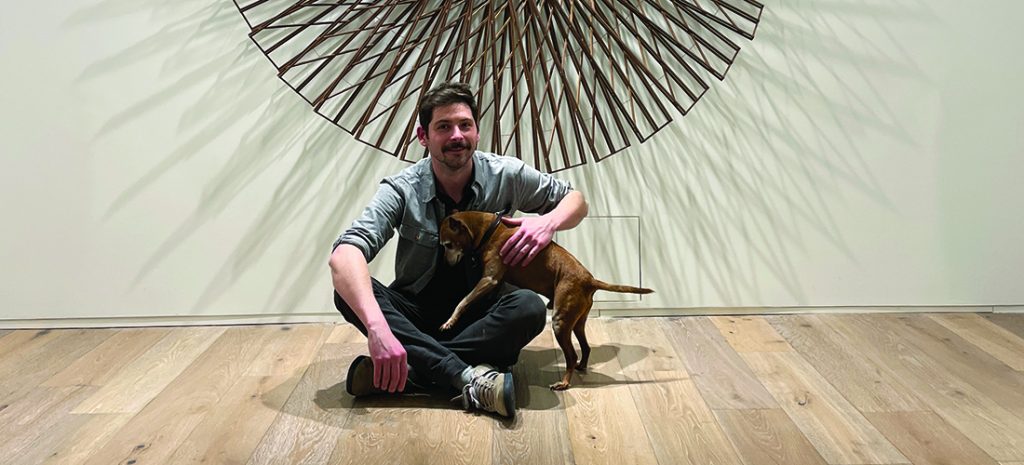
Zora Stellanova has been divining with tea leaves since Game of Thrones’ Starbucks cup mishap of 2019. While she’s not exactly a medium, she’s far from average. She lives in the N.C. foothills with her Sphynx cat, Lyla. 

Southwords

Southwords

Just Roll With It

By Emilee Phillips

I may have grown up in a small town, but stories of faraway places were as close as a Fourth of July picnic with my well-traveled family members and their extensive passport stamp collections. What a lovely thing it would be to be worldly, I often thought. Someone who knows a thing or two about a thing or two. Imagine the conversations I could have, sitting on the beach with friends and a cooler of White Claws. “Cannes? Oh, dear, it’s simply too crowded this time of year.”

As luck would have it, I have friends who live in Germany. A situation ripe for exploring. This would be my gateway to European sophistication. My plan was simple — an eight-day nonstop odyssey. Joined by my friend Olivia, we would cross more borders than the Mongol hordes. The EU was there for the taking. 

I hit foreign soil running. First side trip: France. Oui, these Americans were going to grab some French culture by its breadsticks. Strasbourg was just a high-speed train hop away — if we hadn’t missed the connection. Let’s call it part of the learning curve. Luckily, there were plenty of (much slower) trains to get us there and, in a couple of hours, we were strolling the streets of this storybook city. 

Strasbourg, we discovered, is a lovely, confusing border town. Its traditionally German-looking buildings have some very French-sounding names, and the food seemed an odd blend, as if two households were forced to work in one kitchen with neither willing to give up on their own way of doing things. The language situation was no less confusing, so we opted to bounce between French and German, giving ourselves a 50-50 chance of being right. We listened to street performers, window-shopped and, because one can’t go to France without indulging oneself, did a wine tasting at a shop flush with wines from the Alsace region. We relied on a kindly French woman to translate for us and somehow walked out with six bottles that we had to lug around the rest of the day. Worldliness, it turns out, is a process.

So is planning, which we admittedly didn’t do very well. (See high-speed train, above.) In my head, getting back to home base in Germany would be no issue. We were doing things the European way, laissez-faire. Traveling the rails in Europe is as easy as driving a golf cart in Pinehurst . . . right?

Mais, non. 

High-speed train? Whoosh. Already gone. Next up, a regional train, which is something of a different beast. Despite trying to purchase tickets hours before departure, the one we wanted was fully booked. No restrooms, no cushioned seats, no bar car for us.

We stood at the ticket machine weighing our options long enough to make us look illiterate. “Désolé,” I said to the clearly annoyed man waiting in line behind us, hoping I chose the right language to apologize in. Our next option was the two-and-a-half-hour journey that included multiple stops and changes.

All Dorothy had to do to get out of Oz was click her heels together three times. We, on the other hand, had multiple delays and two trains announcing, in a language I barely understood, that we needed to switch lines. The last change involved sprinting, along with our fellow travelers, down one set of stairs and up another while hauling our six increasingly heavy bottles of wine. The train we jumped on was full but we squeezed in anyway, because who knew when the next one would be or if there would even be a next one. The learning curve was getting steeper.

Crammed in, I could feel the breath of the person behind me down my neck. By then, it was now close to 1 a.m. We were one stop away from our parked car, and the train came to a halt in the middle of a tunnel. This was it. My final straw. I was completely exhausted and would have laid right down on the floor if I had been able to move an inch.

I let out a pitiful sigh and looked to my left. While the rest of us were packed together like a box of crayons, holding onto whatever piece of train could double as a handrail, two women were sitting in the window seats, unbothered. One was dressed in head-to-toe black and the other in all white — including a white, fur-trimmed coat.

The epitome of chic, they were sipping Champagne brut. Out of real glasses. Where they got the drinks I couldn’t tell you. I do know I was getting a good dose of culture that day. I tried my best not to stare during the 30 minutes we were stuck on the tracks but I was in awe, jealous, and frankly, in desperate need of a drink.

When the train finally began moving, the herd of smooshed commuters began to cheer. All I heard, though, was the polite clink of glasses as the two women toasted. No language barrier got in the way this time. They seemed to say “C’est la vie,” an attitude I plan to carry with me more often.  PS

Emilee Phillips is PineStraw’s director of social media and digital content.

Out of the Blue

Out of the Blue

Smoothing Out the Kinks

With 40 winks

By Deborah Salomon

Everybody understands what “Stop and smell the roses” means. That’s easy.

What about “Stop and take a nap”?

Naps aren’t a sure cure for fatigue, like peanut butter and jelly are for hunger. Neither is sleep a bodily function activated by command. Sometimes it comes as soon as head hits pillow. Other times, the brain dredges up worries . . . like having trouble falling asleep.

I love naps, perhaps because of a 25-year deprivation. A quick nap wasn’t worth removing contact lenses. After my eyes finally rejected the invasion I had surgery that restored vision except for reading, when I wore glasses. What a joy to hit the couch for 15 minutes of shut-eye. No more panic if I drifted off during a Blue Bloods rerun.

Naps are especially important given my sleep patterns in place since high school: rising (way) before dawn to bake, care for pets, fold laundry, exercise and write. I once had neighbors call the police because they heard noises coming from my apartment at 4:30 a.m.

Burglars, they discovered, don’t empty the dishwasher.

But sleep, even short-term, can be tricky, as Hamlet warned . . . “perchance to dream, aye, there’s the rub.”

No scientist, not even Freud, has successfully codified the origin of dreams. Maybe Scrooge was correct when he attributed Yuletide nightmares to “a crumb of cheese.” Lately, I have noticed a shift. My dreams have taken on minute details of weather, clothing, dialogue as in paintings displaying count-the-hairs realism. People I haven’t seen in ages appear and reappear — soap opera dreams, I call them, most with upsetting plot lines that may cover years during a quick nap. Others create a need, like to cook what I’ve dreamt about. That’s me, stirring up arepas at midnight. I’ve never been to South America, where these cornflour pancakes are staples, but I’ve read about them and, conveniently, had the ingredients on hand.

Then, after a long-ago surgery, I learned from medical staff that Demerol, a pain medication, invites jungle animals into the unconscious. Sure enough, here come the lions and tigers.

These deterrents don’t keep me from a 15-30 minute nap most early afternoons, a practice left over from having three kids under 4, who needed a snooze almost as badly as Mom.

As luck would have it, I can sleep through the bumpiest flight, especially if we steerage passengers are allowed blankets on cold, dark mornings. But please give me an elbow when I doze off in a waiting room.

Naps are part of certain cultures, notably Spanish, where a siesta — entirely different from a quick “power” nap — following the midday meal, usually heavy, has been credited for a 37 percent reduction in coronary mortality due to reduced cardiovascular stress. Closer to home, some woke businesses provide partitioned nap rooms with recliners and headphone/alarm clocks for their employees, resulting in a happier, more productive workforce.

But NASA offers the most convincing stats. Their study concludes that a 40-minute nap improved astronauts’ alertness by 100 percent, performance by 34 percent.

Unfortunately, sleep can be addictive, withdrawal unpleasant. Life interferes. Having a cat helps, since naps are a hard-wired behavior they gladly share.

I’m painfully aware that some mental health professionals view sleep as an escape. Maybe so, in excess. But what’s wrong with a little non-drug, non-alcohol induced escape?

While you ponder that, I’m going to turn the phone off, plump the couch pillow, pull up the fuzzy throw, summon my kitty and speak only in ZZZZZs.  PS

Deborah Salomon is a contributing writer for PineStraw and The Pilot. She can be reached at debsalomon@nc.rr.com.

Freeze Frame

Freeze Frame

Art Direction by Brady Gallagher

If J. Geils isn’t available, maybe Paul Simon is. Give us those nice bright colors. Give us the greens of summers. Makes you think all the world’s a sunny day. Oh, yeah. We’ve got a Nikon camera. And we used it to give some classic album covers a special Sandhills spin. As Taylor Swift might say, we’ve got pictures to burn.

What: Chris Stamey/Winter of Love

Who: John Gessner, local photographer

Where: the Gessner record collection

Photograph: Self-portrait


What: Stevie Wonder/Hotter than July

Who: Joseph Hill, local photographer

Photograph: Tim Sayer


What: Blur/Leisure

Who: Julia Lattarulo, Realtor Berkshire Hathaway HomeServices Pinehurst Realty Group by day, swim coach by night

Where: FirstHealth Aquatic Center

Photograph: John Gessner


What: David Bowie/Aladdin Sane, Diamond Dogs, Hunky Dory

Who: The Violet Exploit, local band

Where: Create Studio

Photograph: Tim Sayer


What: Carlos Santana/Santana’s Greatest Hits, 1974

Who: Jeff Moody II, DC

Where: Pinehurst Chiropractic Center

Photograph: John Gessner


What: Culture Club/Colour by Numbers

Who: Alex Weiler, local musician and artist

Where: Swank Coffee Shoppe

Photograph: Tim Sayer


What: Bruce Springsteen/Born in the U.S.A.

Who: Tyler Cook, owner of Latitude Builders

Where: current construction site

Photograph: John Gessner


What: Michael Jackson/Thriller

Who: Courtney Kilpatrick

Where: Courtney’s Shoes

Photograph: Tim Sayer


What: Craig Fuller Eric Kaz

Who: Craig Fuller, then and now

Photograph: John Gessner


What: Grease     

Who: Red’s Corner founders, Bill and Rachel

Where: Red’s Corner       

Photograph: Tim Sayer

Kristiana Wade + Teno Benitez

Kristiana Wade + Teno Benitez

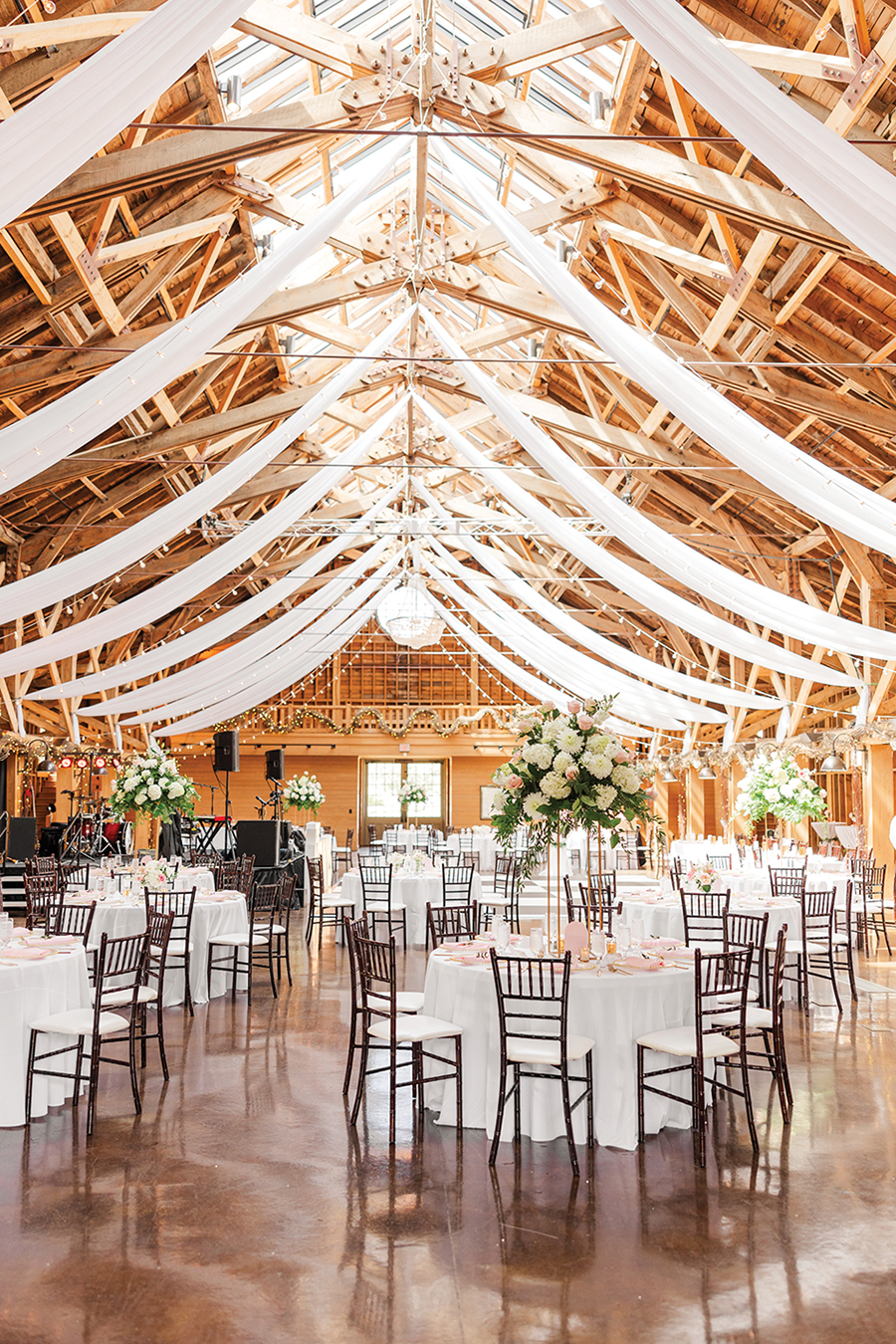
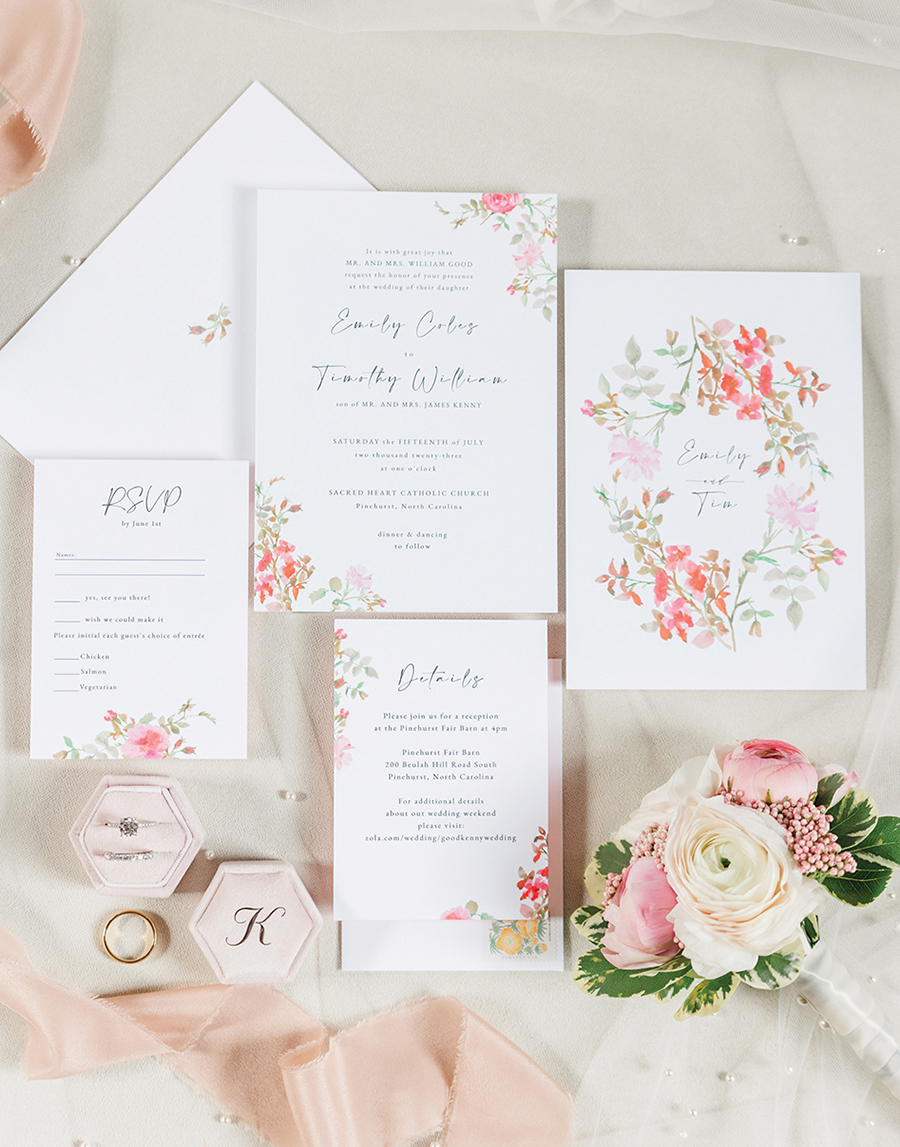
Kristiana Wade and Teno Benitez grew up in Moore County and met in high school theater class in 2015. Six years later, Teno asked Kristiana to marry him while touring the sprawling grounds of the Biltmore Estate in Asheville.

“It was just the two of us surrounded by the beautiful garden,” Kristiana says.

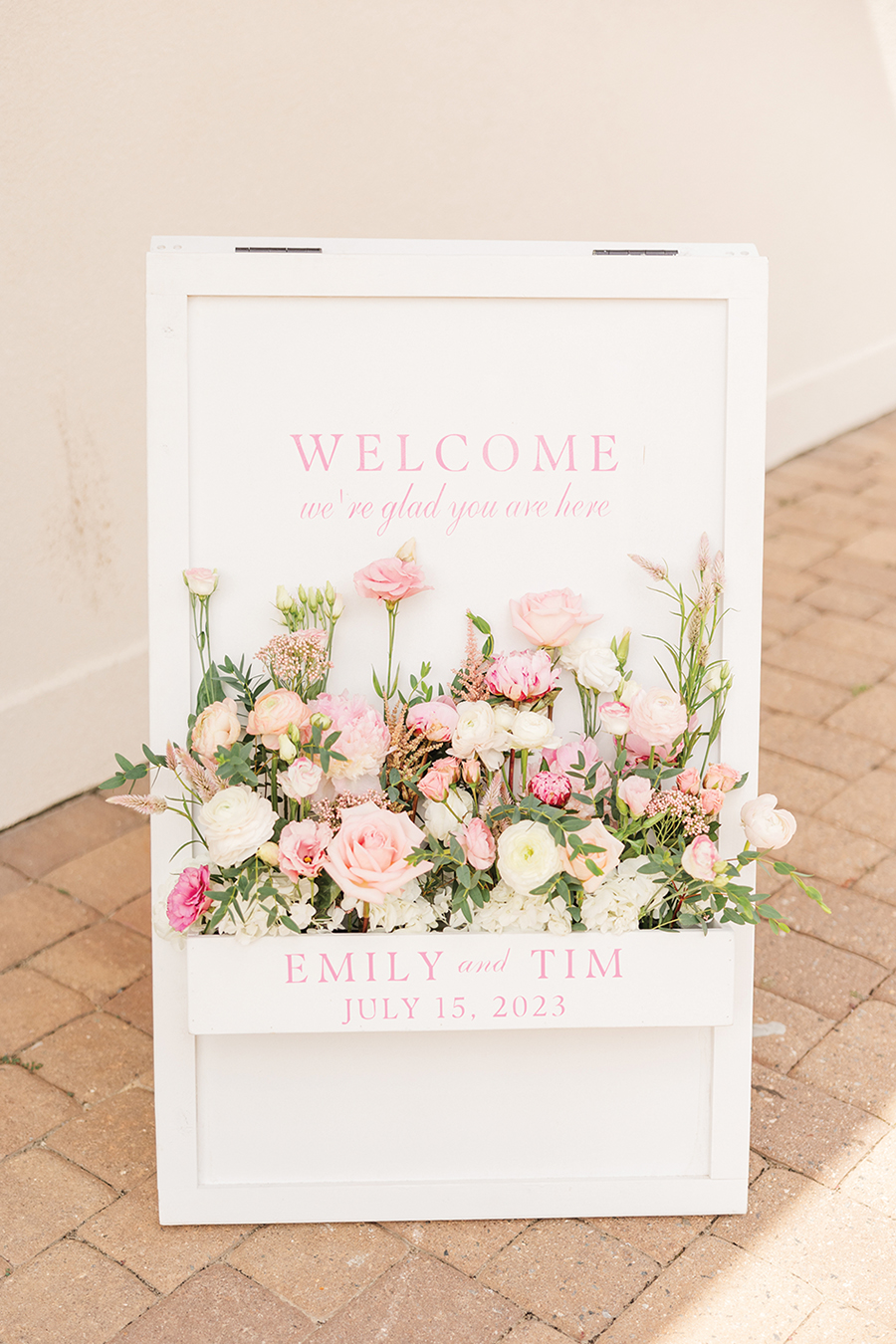
Gardens, flowers, and the outdoors are a throughline in Kristiana and Teno’s love story. Besides their engagement on the Biltmore’s grounds, the couple designed their entire wedding day around the first bouquet Teno gave to his bride.

Hollyfield Design took that inspiration and ran with it, creating oversized arrangements of ivory, soft pink, and purple blooms, accented by trailing greenery. The floral displays, plus the lavender and gray color scheme, gave the June nuptials a fairy-tale vibe.

“Our ceremony was held at the Pinehurst Arboretum,” Kristiana says. “We chose this location because we both wanted a beautiful outdoor ceremony.”

The bride and groom exchanged vows under a flower arch before heading to the Fair Barn for dinner catered by Elliotts on Linden and a storybook evening with family and friends.

photographer: Jennifer B. Photography
ceremony: The Village Arboretum
reception: The Fair Barn
dress: Gilded Bridal
hair & makeup: Merlot Beauty Bar
bridesmaids: David’s Bridal
groom & groomsmen: Men’s Warehouse
cake: C.Cups Cupcakery
catering: Elliotts on Linden
flowers: Hollyfield Design Inc.
rentals: Greenhouse Picker Sisters
transportation: A Ride Transportation

Reflections at 40

Reflections at 40

Four decades of photos, art and fun

By David Kiner

What do you feel and visualize when you hear the words solitude, neglect, passion, joy, surprise or isolation? Do you think you could capture each in a photograph? You could. We all have the gift of imagination and creativity and, like all beautiful artwork, photography tells simple stories.

This year marks the 40th anniversary of the Sandhills Photography Club. Established in 1983, it’s an integral part of this community, attracting photographers of all skill levels, from an amateur with a cellphone to gifted professionals with a trunk full of gear. “We have a wonderful complement of experience and skill levels among our members,” says Jacques Wood, president of SPC. “Regardless of experience level, club members love photography, are ready to learn new techniques, and enjoy sharing and seeing the work of others.”

Brian Osborne, owner of The Photo Classroom and founder of the Professional Photography Group, Charlotte’s largest professional photography team, had this to say about the club: “Over the years, I have spoken to a wide variety of camera and photography clubs but SPC is hands down my favorite. The thing that I love most about this organization is not only the community they share, but their earnest desire to learn and grow.”

Photography has changed dramatically over the past four decades but the principles have remained the same — finding ways to capture moments, stopping time through light, composition, texture and color. In 1983 the Club began with nine members and grew quickly to 25, with many knee-deep in the chemicals found in their darkrooms. Today the club is 100 strong and its members are knee-deep in pixels instead.

Local artist and founding member of the Artists League of the Sandhills and SPC, Betty Hendrix, remembers those early days. “We were still using slides to view our work, or physically bringing photos in for display. And the word Zoom was a children’s TV program,” she says.

Linda Piechota has been a member of the club for 34 of its 40 years. “I recall, way back then, being kind of ambivalent about entering a contest, and showing my first photo. How silly of me. We are more like a family than a club. None of us could have imagined how things have changed with technology. But one thing that hasn’t changed is the passion I see in our members.”

The club is impressively comprehensive with its own website, a monthly newsletter called “In Focus,” workshops, field trips, exhibitions and competitions. The William Stoffel Awards, named after one of the club’s co-founders, are presented annually to members accumulating the greatest number of competition points in each of the competitive tiers. The competitions are held every other month with the themes identified in advance. It’s the job of the photographer to capture what they feel best describes that theme. Submitted photographs are judged by an outside professional who both encourages and provides constructive feedback, an essential part of the growth of the members.

Like a composer who writes musical compositions, photographers don’t simply take snapshots. They can capture distant galaxies or extreme closeups. The heavens are vast and astonishing, but so are the tiniest of details found in the pistil of a flower or the mystery in the face of an insect. To see what others don’t is a common theme among those who fall in love with photography. You become increasingly aware of what’s around you.

“Hard work and staying with it is the key, and not being afraid to shoot, shoot, and shoot more,” says Walter Morris, an early club member and its second president. Once, on a two-week trip to Africa, Morris took over 7,000 photos. He kept “the 20 I liked. What makes a photo great? Well, you know it when you see it.”

Like all artistic endeavors, photographers grow by learning from others and exploring new scenes. “In this club, we learn so much from each other,” says Susan Bailey, coordinator of the club’s outings and a board member. Her love affair with photography started over 40 years ago. She’s in charge of full-day or half-day outings that range from trips to the beautiful gardens in Raleigh or Durham, pontoon excursions on Jordan Lake, or even the marvels of the North Carolina Zoo. “It’s wonderful to go on the club’s group outings,” says Bailey. “There is as much laughter as there is the clicking of our cameras.”

The club is also known for its two- or three-day field trips, headed up by Gary Magee, another long-standing member and a former two-term club president. This past spring the members went to Murrells Inlet, South Carolina. Other trips have taken members to the North Carolina mountains, its beaches, or even to the marshes and dunes of Amelia Island, Florida. “The idea of traveling in a group is very special,” says Magee. “We can dine together, stay at the same hotel and enjoy the beautiful gifts of living in the South.”

As with most of today’s activities, new technologies have continued to be a driving force for all the members. During the pandemic, the Sandhills Photography Club quickly adopted Zoom. Now its members and guests, far and wide, can participate in the vast number of activities the club offers. “Zoom made such a positive impact on us. At first it was just a means to stay together, to hold our sanity. But to our surprise it has expanded our membership base,” says Jerry Kozel, co-chairman of the club’s competition committee. “We have folks from all over the United States, South Africa and Australia involved.” Zoom also allows the club to reach out to professional photographers from all over the country who serve as judges in its bi-monthly competitions. “These are men and women with enormous experience who give such worthwhile advice,” says Kozel. “We store that information on our website so members who have missed a meeting can watch it at a later date.”

Technological advances extend well beyond communications software. Today’s cameras are getting smaller, more sophisticated, and moving to mirrorless models. Improvements in image sensors and lenses are astronomical. Cameras have more automated features like face and object recognition. Who knows what artificial intelligence software will bring? But one thing never changes — the conversation between the artist and the viewer. In the meantime, the members of the SPC will continue to find solace and joy in their love of photography.  PS

David Kiner is a member of the Sandhills Photo Club and a former faculty member at Syracuse University.  He happily resides in Southern Pines and can be reached at dbkiner@gmail.com.

The Great Unknown

The Great Unknown

What surprises lurk in Pinehurst’s next U.S. Open?

By Jim Moriarty

Feature Photo Caption: Jason Gore on the fourth tee in the third round of the 2005 U.S. Open.

A U.S. Open is guaranteed to surprise. It’s built into the DNA. Because an Open is just that — open — it is the moon shot destination of every Tin Cup Roy McAvoy, every Caddyshack Carl Spackler, every Goat Hills assistant pro, every whistlestop, RV-driving, 4 o’clock in the morning coffee-drinking golfer with 14 clubs, a rainsuit that doesn’t leak and the most peculiar of ideas: that they can flat-out play this idiotic game. And every U.S. Open will have one of those guys you never heard of up on the leaderboard, posting a low score and a sweet story. In the 2005 U.S. Open at Pinehurst’s No. 2 course, that guy was Jason Gore. And the story was bigger than he was.

A refugee from the PGA Tour’s minor league —the Nationwide Tour in those days — with the thick-chested physique of a stevedore and a neon smile as wide as all 88 keys on a baby grand, Gore’s self-deprecating grace quickly earned him favorite son status when he joined two-time U.S. Open champion Retief Goosen and tour veteran Olin Browne (who may be more famous these days as the father of the country/soft rock singer Alexandra Browne) at the top of the leaderboard after 36 holes. Golf World, the ultimate insider’s magazine first published in Pinehurst in 1947, described Gore as a “cross between Cinderella and the Michelin Man.”

It was an apt description, since the tires were among the few things left when Gore’s car was ransacked in Asheville en route to the national championship he would make, in many ways, his own. After getting through second stage qualifying in Atlanta, Gore flew to Knoxville, Tennessee (site of that week’s Nationwide tournament), to pick up his car, a black Ford Expedition with dark tinted windows and fancy chrome wheels. He, wife Megan and their 8-month old son, Jaxson, who was sporting two ear infections, headed east on I-40. “There was a thunderstorm coming through and it’s 2 o’clock in the morning and the walls are starting to close in,” Gore recalls, so they stopped and checked into a hotel.

Exhausted, they left most of their belongings in the car. In the morning Megan went to get a change of clothes and came back in tears. “They’d punched out the keyhole on the driver’s side and popped it open, tore out the dash, the Alpine stereo, took everything except the baby seat,” says Gore. “They cut themselves when they were tearing out the dash and there was blood and wires hanging everywhere.” Missing were all of Megan’s clothes and Jason’s briefcase with his laptop and his U.S. Open credentials. As luck would have it, his clubs had gone ahead of him with his caddie, Lewis Puller.

Gore rolled into Pinehurst in the jerry-rigged SUV version of Apollo 13, talking his way past a phalanx of security guards. “Go ahead,” one uniformed officer finally told him, “we heard about you.” By the weekend, every golf fan in America had.

Gore was the kind of player known to golf’s cognoscenti, if not to the general public. He and his Pepperdine University teammates won the NCAA team championship at Conway Farms Golf Club in Chicago in ’97, with Gore making double bogey on the last hole to lose the individual title to Clemson University’s Charles Warren by a shot. He won the California State Open and California State Amateur that year along with the Pacific Coast Amateur. His accomplishments earned him a spot on the victorious U.S. Walker Cup team at Quaker Ridge Golf Club where he accounted for 2 1/2 points. Then, the morning he was leaving for Boise, Idaho, to play in his first professional event, his mother, Kathy, found his father, Sheldon, on their living room floor dead from a heart attack.

“I had kind of a rough start to my golf career,” Gore told the media in ’05 when speaking about his father. “It’s taken a little while to get over that and try and become myself again.” At the age of 31, Gore had already bounced back and forth between the PGA Tour and its primary satellite twice. That he could play well wasn’t a shock. But could he play well enough to win a U.S. Open?

After his second round of three under par 67, Gore low-keyed it by describing the other time he led the U.S. Open. He was one of the first players on the course at the Olympic Club in ’98, drove it through the fairway into a bunch of “crap” (as he described it) on the opening hole, pitched out and holed a 90-yard wedge shot for a three. There was a leaderboard on the second tee and his name was at the top. Gore with a red -1. “So, this is old hat for me,” he said with that wide grin. His run in ’98 was short-lived. A 77 that day put a quick end to his Olympic feats.

Jason Gore tees off on  the second hole during the final round of the 2005 U.S. Open.

On Friday evening Gore made a foray to fill his car with gas and get a prescription at Eckerd’s for Jaxson’s ear infections. Had he been promoted to recognizable celebrity status? “I got a couple of waves when I was putting gas in the car,” he deadpanned.

Unknown to Gore, on Saturday while he was on the course the Golf Channel had his Expedition cleaned and pressed. “They took my truck, fixed the air conditioning and put a new stereo in. It was so awesome,” he recalls. “They had me up on set on Saturday night after I played and showed me the video. It was Rich Lerner. Rich covered the NCAAs in ’97. We were all kids. It was just the nicest gesture. I’ll never forget that.”

Lerner, golf television’s most gifted essayist, has fuzzy recollections of their good deed. “I do remember that being a part of the J. Gore story that everybody fell in love with — how good-natured he was about all of it,” Lerner says. “He was down on his luck but he didn’t wear it that way. He came across as a guy who had all the good fortune in the world and that’s what I think resonated with so many people.”

Gore’s two-over-par 72 on Saturday put him at level par for the championship and three shots behind the leader Goosen, the odds-on favorite to add Pinehurst to the championship venues he’d collected at Southern Hills Country Club and Shinnecock Hills Golf Club. They would be playing together in the final twosome on Sunday. That it was Father’s Day was not lost on Gore.

It didn’t go well for either player. Goosen, the quiet, intense South African who, as a young boy, survived being struck by lightning, didn’t survive Pinehurst’s greens. His 81 dropped him from first to a tie for 11th and opened the door for the eventual champion, New Zealand’s Michael Campbell, to stroll through.

It was worse for Gore, described this way by Golf World: “The solid tee-to-green game Gore had sustained for three days abandoned him, and he hit only four fairways and eight greens. Despite a front nine 40, Gore still was only three off the lead, but four bogeys, a double and a triple coming home — capped off by a sloppy four-putt on the 72nd green — made for a sour end to his dream.”

That four-putt also cost him five bucks. “We hadn’t had much to say to each other all day,” Gore remembers of his Sunday with Retief. “We’re in the final round of the Open so we’re not going to talk about the weather, right?” Then, as they were walking from the 15th green to the 16th tee, both having played themselves out of it, Goosen turned to Gore and said — and here Gore produces a very fine South African accent in his retelling, “Have you ever played cricket?” Gore told him he hadn’t, to which Goosen replied, “We’re having a helluva a day of cricket because we both have so many overs.”

Gore started laughing and asked Goosen if he wanted to play the last three holes for five bucks. Might as well play for something, right? That made Goosen laugh. And so the game within the game was on. They were tied playing the 18th where Gore’s four-putt six lost to Goosen’s par four. Did he pay off? “I saw him at the TaylorMade trailer at Disney. I walked in and handed him five bucks. He laughed and took it,” says Gore. As luck would have it, they were paired together two years later in the final round of The Players Championship. Gore asked if he could get his five bucks back. Goosen said sure. Gore shot 70 and finished T23. Goosen shot 71 and ended up T28. “I still haven’t seen my five bucks,” Gore says with that Cheshire cat grin. “At this point I don’t even want him to pay me because it ruins the story.”

Jason Gore at his condo in Florida

After his final round 84, after Campbell had wrapped his arms around the silver trophy and Tiger Woods’ caddie, Steve Williams, had wrapped his arms around his fellow New Zealander Campbell, after the throngs had fled the village of Pinehurst, Gore stopped in the dark downstairs bar at Dugan’s Pub for a quiet beer and even quieter reflection. “That day was such a blur,” he says. “It’s not that I didn’t play well, I just played incorrectly. I tried to win which, at Pinehurst in a U.S. Open, you don’t do that. You have to stick to your game plan. I learned a lot that day.” After Dugan’s Gore went back to his hotel room at the Pine Needles Lodge. Campbell, joined by a cast of thousands, was in the room directly above Gore’s. “I got to hear him party all night,” he says.

Turning a negative into a positive was something Gore had done after losing the NCAA individual title and he did it again after losing the U.S. Open. He won three times on the Nationwide Tour in July and August of ’05 (his seven career wins on the developmental tour are still a record), then won the 84 Lumber Classic in September for the only PGA Tour victory of his career. Though Gore was born and raised in California, his mother was from Monroeville, east of Pittsburgh, not too far from the Nemacolin Woodlands Resort, site of the 84 Lumber. Gore visited for a month every summer as a kid, cutting his teeth at nearby Manor Valley Golf Course. He was the favorite son once again.

“After I won, I thought I had to continue to get better and do more stuff and I kinda lost my game,” Gore says. Shoulder and back injuries didn’t help. By 2018, he was in the insurance business. Then the USGA came calling, asking Gore to become its first managing director of player relations, a position he held for three-and-a-half years before taking a similar job — senior vice president, player adviser to the commissioner — at the PGA Tour. People who run championships often don’t see things the way people who play in them do. Gore has helped both organizations clear that hurdle.

“My wife and I were high school sweethearts. We grew up in Southern California, born and raised there,” says Gore, who moved east with Megan, Jaxson and his sister, Olivia, after the USGA hired him. “Until we lived in New Jersey I thought snow came out of those machines.”

Now Gore has temporary digs in Ponte Vedra, Florida, and commutes back and forth to New Jersey. His personal possessions in the condo are sparse: a wooden block with Vin Scully’s farewell line from his last L.A. Dodgers’ game and a few guitars. Musically, Gore refers to himself as a 12-handicap. “I’m the guy who shows up in the pro-am with the $10,000 set of clubs and thinks he’s going to beat the pro. That’s me with guitars. You walk into my house in New Jersey, you’d think Slash lived there. I just think they’re works of art. I love them.”

Gore describes his son, Jaxson — he of the double ear infections who’s almost 19 now — as someone with high-functioning autism. “He writes screenplays. We got him a talk-to-text. He’s super, super sharp but there’s a chance he could live with us for the rest of his life, which is fine. He can’t cook an egg but he makes up for it in so many different areas. He sees life through a different set of glasses and it’s awesome. He’ll sit in the basement and just write and create and I’m, ‘Come on, Jax, let’s go out somewhere and see reality.’ And he goes, ‘Dad, I don’t really like reality.’ And I’m like, ‘Yeah, me neither.’”

In 12 months, Pinehurst No. 2 will become reality once again for the best players in the world. “It’s the U.S. Open,” said Gore in 2005 with a grin that still refuses to vanish, “crazy things happen.”

If we’re lucky.  PS

Jim Moriarty is the Editor of PineStraw magazine. He can be reached at jjmpinestraw@gmail.com.

Almanac June 2023

Almanac June 2023

June is a daydream; a picnic; a long, sweet song.

Beyond the sunlit meadow — thick with thistle and crickets and Queen Anne’s lace — the grandfather oak has gone moony. Most days, he is patient. Steadfast and uncomplaining. But on this day, when the painted lady drifts past the sea of red clover, he is fraught with expectation. The children of summer are coming.

As they float through the meadow, blankets and baskets in tow, the oak is awestruck. They could go anywhere. Bring their banquet to the altar of some other worthy tree. But they don’t. As they make their way through towering thistle, past bee balm and poppies and raves of day lilies, the grandfather knows: The children of summer will be here soon.

They come singing. Come with just-picked daisies. Come with a spread of luscious offerings:

A palmful of wineberries.

Pickled cucumbers.

Mint, marigolds and beets.

Roasted potatoes.

Dandelion shortbread.

Honeysuckle and homemade mead.

In the shade of the grand old tree, the children sprawl in dappled light, laughing and feasting and giving thanks. For them, hours pass like minutes. For the oak, time stands still.

When you’ve seen as many summers as he has — not to mention all the winters — these are the days you live for. Days of abundance. Days of praise and cicadas. When youth is a state of the heart, each breath is a banquet, and nature gets a glimpse of its own reflection.

Citronelly! Citronelly!

A summer without mosquitos isn’t a summer. No way around ’em, but we’ve got allies. Citronella, anyone?

Also known as scented geranium, citronella is one of the best-known pest repellents to add to the garden. But there are others.

Basil: Not just for pesto! This fragrant, prolific herb deters both mosquitos and flies. Learn how to trim it for larger yields. 

Rosemary: Likes it hot. Thankfully, the woodsy aroma that we know and love sends the swamp devils onward. 

Marigolds: Easy to grow? Check. Better yet, their lovely flowers attract predatory insects.

Bee balm: Out with the nippers, in with the bees and skippers.

Other plant allies include lavender, mint, lemon grass, catnip, sage and allium. Play around to see which plants work best for your garden. Besides mosquitos, what do you have to lose?


Strawberry Moon

The full Strawberry Moon rises on Saturday, June 3. It won’t be pink, but it will appear golden just after sunset, reaching peak illumination by midnight.

A new moon on Sunday, June 18 — Father’s Day — means clear skies for stargazing. See if you can spot Boötes (the herdsman), Libra (the scales), Lupus (the wolf) and Ursa Minor (the little bear) this month. Bonus points for a firefly constellation.   PS

Art of the State

Art of the State

Visual Language

Jennifer Meanley creates kaleidoscopic realities

By Liza Roberts


Center: As if smoldering and smoke were oneness evoked by thought and expression, oil on paper mounted on panel, 15 x 15 inches, 2019.

Right: Milk-Ersatz, spilt, oil on canvas, 48 x 56 inches, 2017.

Intimate but alienating, lush and allegorical, Jennifer Meanley’s paintings appear to capture the moments upon which events hinge. Figures, often out of scale with their environments, gaze at odd angles within untamed, kaleidoscopic settings, more consumed with their interior lives than with the discordant scenes they inhabit. Animals, alive and dead, sometimes share the space. Something’s clearly about to happen, or might be happening, or perhaps already has happened. Are her subjects aware?

“There is often a sense of lack of synchronicity between how we experience our bodies and how we experience our mind, our emotional states,” Meanley says. Her paintings “often register that paradox, whether that’s with the animals, or the symbolism with the space itself . . . or whether the figure seems to be looking and registering and connecting” to reality. Or not.

At UNC-Greensboro, where she teaches drawing and painting, Meanley paints these large-scale depictions of human experience. Simultaneously capturing the spheres of action, memory, participation and observation, she invites a viewer to examine the parts and absorb the whole. Like poetry, her works reveal themselves in stages and elements: image, rhythm, tone, vocabulary, story. Color plays a major role. “I’ve always had a penchant for really saturated colors,” she says, especially as a way to indicate atmosphere, like light, air, wind and the grounding element of earth.


Left: Midnight Filigree, oil on canvas, 18 x 24 inches, 2020.

Right: Repertory Lights in Deep-Night, oil on canvas, 61 x 72 inches, 2020.

Does she begin with a narrative? Not really, or not always. In a painting underway on her working wall — in which a caped, gamine figure gazes upon a flayed animal, possibly a deer, within a riotously overgrown landscape — the New Hampshire native describes her impetus: “I was thinking of this sort of crazy Bacchanal,” she says, “or of a surplus, imagination as a kind of surplus.” Anything is possible in the abundant realm of the imagined, she points out. The real world is another matter.

It’s no surprise to learn that Meanley writes regularly in forms she compares to short stories that emerge from streams of consciousness. It’s a process she describes as if it’s a place where she goes: Language is “like a field that I experience, stepping in and noticing punctuation, noticing the spaces between things, or the pauses, the way breath might be taken. That’s all really, really fascinating to me.” When she’s teaching, she tries to create a corollary to visual language in much the same way: “What does it mean to literally punctuate a drawing, in a way that you would take a sentence that essentially had no meaning, and make it comprehensible?” she asks her students. “Through timing, and space, and rhythm, and breath.”

All of which connects to physical movement, another practice Meanley credits with fueling her creative process. Long walks with her dog in the woods spark marathon writing sessions, which then engender drawings and paintings.


Left: Migratory Inflection, oil on Canvas, 18 x 24 inches, 2019.

Center: Roil, Oil on Canvas 18 x 24 inches, 2019.

Right: Beloved, oil on canvas, 72 x 190 inches, 2017.

In the last year, her writing sessions have taken on new importance, Meanley says. Writing “is a way for me to deepen my personal exploration of my own psychic space, which is the origins of the paintings as well.” Though she doesn’t intend to publish these writings, Meanley is open to the possibility of including some of her words in new paintings. “I think the world that I’m exploring has to do with the idea of psychological interiority and how that can find representation” through words and images. In the meantime, the kinetic activity of walking continues to fire her imagination.

It has also attuned Meanley to the natural environment of the South, so different from what surrounded her in New Hampshire, where she grew up, and where she also earned her BFA at the University of New Hampshire, or even at Indiana University, where she received her MFA. In and around Greensboro, she finds nature so lush, so green, so impressive. “I started realizing that there’s this battle within the landscape. Just to even maintain my yard, I feel like I’m battling the natural growth here. It did amplify that sense of tension, of creating landscape as a narrative event . . .  as an important space to contemplate hierarchies of power.”

Summer, with its time away from the demands of academia, provides Meanley with more time for outdoor exploration and for contemplations of all kinds. She’s also looking forward to having time to tackle larger works, with the hope of a solo exhibition later this year or in 2024. “Doing a solo show is an endeavor,” she says. “Right now I’m gearing up.”  PS

This is an excerpt from Art of the State: Celebrating the Art of North Carolina, published by UNC Press.


In The Spirit

In The Spirit

Classic Remix

Making something out of something

By Tony Cross

Almost all cocktails on menus in today’s bars and restaurants are a spin on the classics — my keg cocktails are no exception. A few months back, my company debuted a spin on a vodka tonic. It wasn’t anything super fancy or anything — we added St. Germaine Elderflower liqueur and our small batch tonic syrup, TONYC. The result was delicious. Here’s how to make your own elderflower tonic at home followed by a couple other classics worth a tweak or two.

Elderflower Tonic

All you’re doing is adding three-quarters of an ounce of Elderflower liqueur. That’s it! Well, kind of. It seems like there are myriad tonic waters (and syrups, for that matter) on the market. Decisions, decisions. If you want the quick way out, Fever Tree tonic water is a no-brainer. However, this is how God intended you to make the drink, with the devilish addition of TONYC.

1 1/2 ounces vodka

3/4 ounce St. Germaine Elderflower liqueur

3/4 ounce TONYC syrup

4 ounces sparkling water

In a Collins glass, add all ingredients, give a quick stir, and then add ice; top with sparkling water, and lightly stir again; take the peel from an orange, expressing the oils over the cocktails, and placing peel into the glass. Cheers!

Jungle Bird

This tiki hall of famer (and I’m totally quoting liquor.com on this) was created in the 1970s by bartender Jeffrey Ong at the Aviary Bar located inside the Kuala Lumpur Hilton. But it was tiki guru Jeff “Beachbum” Berry’s book Intoxica that brought the Jungle Bird out of hiding. The drink originally called for “dark rum” and a ton of pineapple juice — four ounces. Berry switched the specs, calling for Jamaican rum, and scaling down the pineapple juice. The other three ingredients are fresh lime juice (which adds tartness), Campari (the amaro adds some bitterness), and demerara syrup (equal parts demerara sugar and water), to round everything out. Over the past decade I’ve seen lots of riffs on this drink, and they all look tasty. If you want to get jiggy on your own, perhaps try another amaro besides Campari, or you might want to swap out or infuse your rum. Banana infused rum could be delicious! What follows is Dante’s Jungle Bird from the Greenwich Village bar Dante NYC. I found this recipe on punch.com, which, by the way, has a ton of great cocktails on its website. The original recipe is shaken but Dante’s is not. Why? Probably because they only use one-quarter ounce of lime juice, instead of the traditional one-half ounce. That small amount of juice doesn’t need to be aerated, which is achieved by shaking your cocktail.


3/4 ounce rum (preferably Plantation Stiggins’ Fancy Pineapple Rum)

1/2 ounce Campari

1/4 ounce Zucca Rabarbaro Amaro

2 1/2 ounces pineapple juice

1 barspoon lime juice

Combine all ingredients in a small water glass over ice; stir to integrate; garnish with orange wedge, Luxardo cherry and pineapple frond.

Caipirinha

Brazil’s national cocktail is one of my favorite drinks. I love cachaça (a sugar cane-pressed rum native to Brazil) because of this cocktail, and it’s my go-to when I reach for the rum in my bar. Simple to make, the caipirinha has only three ingredients: cachaça, lime, and sugar. Easy enough, and lots of ways to make this your own. Any fruit that you enjoy could work — think strawberries, blackberries, blueberries, etc. You can also infuse a sugar syrup with the fruit, a move that would cut down on the amount of fruit smashed in your cocktail glass. Either way, there are lots of ways to tackle the caipirinha. Traditionally, the cocktail is built in a glass with the quartered limes and sugar muddled, the cachaça and ice added, and then stirring. I prefer to use a simple syrup, do a quick shake and dump everything into a rocks glass. Here’s a take I did on the caipirinha years ago, called “One Way Trigger.” By infusing my cachaça with pineapples and using a ginger syrup, I was able to completely transform the cocktail, while keeping it a three-ingredient drink. Here’s how to make it:

2 ounces pineapple-infused cachaça*

1/2 ounce ginger syrup**

6 lime wedges

In a shaker, combine limes and ginger syrup together and gently press (and twist) muddler, making sure to extract juice and oils from limes without pulverizing them; add pineapple-infused cachaça and ice; shake hard for 5 seconds and pour everything into your rocks glass.

*Pineapple-infused cachaça: Dice one pineapple, place in a container and add 750 milliliters of cachaça; seal container and let sit for five days; strain out pineapples through cheesecloth and add the infused cachaça back into the bottle; keep refrigerated for a longer shelf life.

**Ginger syrup: Take and peel 100 grams of organic ginger; dice and add to pot; add 1 cup of sugar and 1 cup of water; bring mixture to a boil and let simmer for 5 minutes; let cool and strain out pieces of ginger; keep syrup refrigerated. Will hold for 2-3 weeks.  PS

Tony Cross owns and operates Reverie Cocktails, a cocktail delivery service that delivers kegged cocktails for businesses to pour on tap — but once a bartender, always a bartender.