A Bookshop Mystery

A Bookshop Mystery

The collected letters of an American hero

By Bill Case


Right Photo: Lt. Alexandre Stillman, bottom row middle

Last July an unidentified patron entered Pinehurst’s Given Tufts Bookshop, went to the rear of the building and placed a bound volume at the shop’s drop-off table for donated books. Tightly bound with a black, white and red-trimmed cover, the volume’s outward appearance didn’t raise any eyebrows. Curiously, though, its title, Thumbs Up, was not accompanied by any identification of the author.

Before donated materials can reach the shelves for resale, shop manager Jessica Flynn inspects them. When she looked at Thumbs Up, she was both intrigued and puzzled. Far from a traditional book, the volume comprised typed letters in chronological order on 167 pages of onionskin paper, dated from 1940 to 1945. The letters had been written by a World War II Navy pilot detailing the entire sweep of his wartime service, culminating in piloting a B-24 Liberator bomber in the Aleutian Islands and then in unidentified locations in the Pacific theater as he flew missions off the coast of Japan.

Who this pilot was, however, was not altogether clear. None of the letters in Thumbs Up are signed, suggesting the onionskins are carbon copies of originals. One letter, roughly halfway through the book, left a space for a signature and underneath it the words “Lt. A. Stillman — officer in charge, Air Operations.” In another letter sent to the author’s mother, he expresses satisfaction that a newborn relative had been named after him: “Jean Joseph Alexandre.” Could the “A” in “A. Stillman” stand for Alexander?

The volume also contained several pasted-in pen and ink drawings and photographs, including one of the pilot and his crew. It was clear that Thumbs Up was a one-of-a-kind historical document worthy of preservation. Perhaps a family member — if one could be found — would treasure this collection from the front lines of the air battle in the Pacific. But first a positive ID had to be nailed down.

Initial inquiries on U.S. Navy websites turned up nothing pertaining to an A. Stillman, pilot of a B-24 Liberator in the Aleutians and the Pacific. Though dubious that a mere Google search of “Alexander Stillman” would produce any useful information, I went through the motions anyway. On the “Find a Grave” website, I discovered a studio portrait of someone named Alexander Stillman in fully decorated military uniform. The confident-looking, mustachioed officer in the picture bore an uncanny resemblance to a young Ernest Hemingway. The website said this Alexander Stillman was born in 1911 and died in 1984. He would have been 29 to 34 years of age during the period when the Thumbs Up letters were written, a good fit. But was the man in the online photograph and the author of the letters one and the same?

In the pilot’s squadron photo on the first page of Thumbs Up, the man kneeling in the middle of the first row was a smiling mustachioed officer. It was undoubtedly the same man.

Alexander Stillman, it seemed, was the author-pilot, and furthermore, I now had two pictures of him. But, aside from birth and death dates, I knew little else about the man. It was time to chase Alexander Stillman to the end of the internet. Googling on, I located the website of the Stillman Nature Center in South Barrington, Illinois, outside Chicago. The SNC is described as “a private, nonprofit center for environmental education, located on 80 acres of woods, lake, and prairie.” Many birds of prey, including grey owls, populate the preserve. Alexander Stillman, who lived on Penny Road in South Barrington, had donated the land.

The fact that Stillman had the kind of money that would allow him to donate a large tract of valuable acreage to charity suggests a man of independent and rather significant means. And he was. His father, James A. Stillman, it turns out, was the chairman of National City Bank of New York, and the holder of a vast family fortune. In 1901, James married Anne “Fifi” Urquhart Potter. The couple had four children: Anne, Bud, Alexander and Guy (who, like Alexander, was a wartime lieutenant in the Navy). In 1921, James and Fifi became embroiled in a divorce fit for the salacious Page Six of the New York Post — if such a thing existed then — involving charges and countercharges of infidelity. News of the contentious court filings was reported nationwide.

The couple reconciled for a time but the marriage finally ended in 1931. After her divorce was finalized, Fifi again became the subject of national gossip when she married Fowler McCormick, a man 20 years her junior, who was heir to the International Harvester fortune. Fowler had previously been Fifi’s son Bud’s roommate at Princeton University.

A short biography of Stillman on the nature center’s website, researched and written by a one-time student intern named Helen Reinold, praised Stillman’s advocacy for environmental causes, in honor of which he received a Certificate of Life Membership from the National Audubon Society. Though Reinold didn’t, it would seem, have any knowledge of Stillman’s World War II correspondence, she does mention a letter he wrote to his sister-in-law, Guy’s wife, about his grandmother, a famous stage actress named Cora Brown Potter. In the letter Stillman writes of his grandmother that “she had abandoned her only child in order to flee her very dull marriage to Grandfather, going to London to pursue her career as an actress . . . the Toast of London, being so it was inevitable that she should meet the Prince of Wales. The Prince of Wales, later Edward VII, had very little to do except change his clothes four times a day, overeat and drink, of which he died of, and court the most beautiful women of his day. Inevitably Grandmother became his mistress of a long line, but she was one of the last three and to whom he was longest faithful.”


Reinold goes on to detail Stillman’s penchant for international travel. The countries stamped into his passports included France, Colombia, Honduras, Nicaragua, Guatemala, Peru, Brazil, Argentina, Bolivia, Chile, Venezuela, Panama, Ecuador, Egypt, France, Hong Kong, Thailand, Cambodia, India, Denmark and the Bahamas. And, of course, she highlights his heroic military service. “Over the course of three attacks in May and June of 1945,” she writes, “Stillman is credited with the sinking of four enemy Merchant Vessels, two large fishing boats, and a Whale Killer. In addition, he tracked an enemy cruiser and warded off attacks by an enemy plane.” She notes that he received a number of medals and commendations, at least one of which Stillman, himself, describes in Thumbs Up.

VPB 102

1 August 1945

Ma, Bow, Meme and Lou

The night before I broke out a clean khaki shirt, a pair of pants, a cap cover. My shoes were mildewed, twisted and sorry. I put a crease in the pants, wiped the dust off my hat and went to town on the shoes.

Coming down at 9.30 a bit rocky (the boys had broken several bottles over my head the night before and they were still rumbling inside) to the Squadron, I find all the PCCs out of their sack, and the pilots, and the men. My men look beautiful in clean work clothes and bran [sic] white hats. God knows where they got them.

The Skipper says “well, come on” and we stream out and straggle up the blazing sunshine between the tens of planes lined up on the white white coral.

We line up. Under the prop of a plane, and the rest wheel, and face us. A Commander comes out and tells us we can smoke a cigarette. Three of us start and then throw them away. It’s very hot.

The Admiral drives up and walks in front of us.

I stand at attention in front of him; I listen to the citation, look at his stars and my gaze wanders over his head and down between the rows of silent planes resting on the coral “and while attacked by a twin-engine fighter’s” tired planes with holes, controls shot out “sinking a third ship”, engines to be changed but we have no engines, fix and fly “and for extraordinary heroism.”

Dismiss.

If Alexander Stillman enjoyed a certain level of comfort after the war, during it he endured the same deprivations as every other soldier, sailor or Marine. In Thumbs Up, which begins with a letter to his mother written on August 1, 1940, and finishes with a letter dated 13 July 1945 from “somewhere in the Pacific” written on an aircraft carrier headed home, Stillman doesn’t exactly complain about the grueling hours, horrible conditions and continual dangers, but he doesn’t sugarcoat them either. In his July 19, 1945 letter to stepfather Fowler McCormick, he writes: 

“One day I fly 13, 14, 15 hours. Next day I work on the planes. And the next we fly. . . . Have you ever done anything where you sang all the time? This is death, destruction, and hell. We have poor food, no heat, no fresh water. We live 30 people to 40 ft; we have air raids, and we average 5 hours sleep a night. Yet, I do.”

In August of 1944, when Stillman was in Kansas training on his Liberator, he writes to a woman who has professed her affection for him, fatalistically cautioning her:

“You have falled [sic] in love with a flyer and it is perhaps not a good thing. We don’t live in the past and now in our third year of war soon to go out again, we are on borrowed time. Do you realize?”

In addition to the photographs and numerous pen and ink drawings, the book includes the occasional bit of verse. To make his point that the flying conditions in the Aleutians are invariably poor and risky, in June of 1943 he cites “an Alaskan nursery jingle”:

There are bold Alaskan pilots

And there are old Alaskan pilots

But there are no old bold Alaskan pilots.

After 69 missions over Japan, flown from Tinian and Iwo Jima, and numerous others in the Aleutians, the bombings of Hiroshima and Nagasaki brought an end to the war with Japan. On an aircraft carrier bound for home Stillman wrote:

All today over the roaring radio we have listened to crowds in New York, Atlanta, Hollywood, Cleveland going wild. It seems to make us more quiet in the wardroom. Perhaps we remember but don’t want to, the rows of white crosses, the burials we had, the useless searches in acres of ocean, the lousy chow, the brass, the impossible flights, coming in on 40 gals. of gas and will. One lieutenant for the second time on good record, all fair, said “Don’t you feel let down?” I agreed.

And he finishes:

Tonight a carrier takes us home, Eve 91, over the blue and bloody waters, eastward, to the dawn of tomorrow.

I spoke to two of Alexander’s nieces, Alexandra (“Alex”) Stillman, of Alcata, California, and Sharee Brookhart, of Phoenix, Arizona. They remembered their uncle, whom they called Aleck, as a tall, lanky, handsome man who never married or fathered children. They recalled that their father, Aleck’s brother Guy, once confided that Alexander had flown so many missions during the war that many in his squadron feared going up in the air with him, worried Stillman’s “number” had to be coming up soon.

The two sisters thought that perhaps their uncle’s wartime service in the Pacific may well have been the high point of his interesting life. He chose a military funeral in Honolulu at the National Memorial Cemetery of the Pacific. His interment was accompanied by a 21-gun salute.

Whether it’s serendipity or destiny, two of Alexandra’s granddaughters attended Chapman University in Orange, California. Chapman is the home of the Center for American War Letters Archive, something that grew out of the “Legacy Project” begun by Andrew Carroll.

“Just about every aspect of World War II has been written about,” says Andrew Harman, the collection’s archivist. “What we’re trying to dive into now is the mundane, the individual aspects, the experiences that people were writing about in the first person at the time. Our mission is to preserve but, being a part of Chapman University and an academic library, we’re very big on access and research. It’s a room full of white pages if no one is looking at them.”

The Given Tufts bookstore has donated Stillman’s collection to the Center for American War Letters.

The mystery of the identity of the author of Thumbs Up has been solved, and Stillman’s letters now reside in an appropriate home. But who had delivered this fascinating volume to a used bookstore in Pinehurst and why? That, we may never know, but we’re glad they did.  PS

Pinehurst resident Bill Case is PineStraw’s history man. He can be reached at Bill.Case@thompsonhine.com.

Up, Up and Away

Up, Up and Away

Chasing dreams across the sky

By Jenna Biter

There’s a staccato chhh, followed by a smell almost like sulfur. Both emanate from a wicker basket sitting on a driveway in suburban Vass. Inside the odd, oversized vessel crouches a man fiddling with the knob of a propane tank. Positioned just so, his polo shirt embroidered with the kaleidoscopic logo Balloons Over America, his shock of pepper-gray hair barely visible over the basket’s rim, it looks as if the man is the elusive first course of a giant’s picnic lunch. As it turns out, Mark Meyer isn’t the protagonist of Jack and the Beanstalk, though he, too, makes trips into the sky. No, Mark is an aeronaut, preparing to demonstrate just how he hornswoggles gravity so that his hot air balloon can fly.

“The reason that the baskets are still made out of wicker is, if you have a propane leak, it sinks to the bottom of the basket and wicks right out,” Mark says, running a hand over the caning, as gaps of light leak between the reeds. “If the basket was plastic, and there was ever a propane leak, it would all sit right here, and then the ignition source . . . it would go boom. Makes for a bad day.”

Lucky for Mark, not even his worst ballooning days have included explosions. Though incidents are rare, the man of the sky has been gored by a cactus; narrowly and simultaneously missed both a barbed wire fence and a nearby interstate; and scuffled with a mulberry tree while a good friend, Jon Hartway, was along for the flight.


“I look at Jon and say, ‘This ain’t going to be pretty,’” Mark tells the story with feigned sobriety. “So we gift-wrap this mulberry tree, and we’re stuck up against the trunk. Then the balloon comes down, and there are all these purple mulberries just falling all over us.

“Meanwhile, John is laying in the bottom of the basket about to piss himself, he’s laughing so hard. I ask, ‘What is so funny?’ He says, ‘Mark, we got 1,000 hours of combat. We’ve been shot up, aircraft tore up, and never once have you said, ‘This ain’t going to be pretty.’”

Mark belly laughs and catches his wife, Missy’s, eye as she joins in. Missy has been along for the ride since her aeronaut first took flight, either flying beside Mark in the basket or serving as crew chief in the ground-bound chase vehicle.

The fruit salvo from the mulberry tree left fuchsia welts on the balloon, but the story was worth a few stains. In 2014, Hartway died in an Apache helicopter crash while flying a training mission with the Idaho National Guard, making the memory of the mulberry incident all the more precious. The story — and all the others that the Meyers have collected on their adventures in the sky — have colored the couple’s life with the rosy hue of fond memories, nearly three decades’ worth. Mark first piloted a hot air balloon in the mid-’90s, when his daughters, now grown, were still in the house.


“We wanted to buy an aircraft of some sort, but with three daughters, we couldn’t afford a six-seater plane, like a Cherokee Six or something like that,” Mark says matter-of-factly. For nearly 40 years, he served as an Army aviator by day, piloting helicopters — Hueys and Black Hawks — and then fixed-wing turboprops later in his career. Why not share his passion for flight with his family?

“The first balloon, the girls got to pick the color,” Mark says of his daughters Amanda, Morgan and Madison. The Meyers bought their first used setup before their only son, Max, was born. “Never ask three little girls what color balloon they want — because it’s hot pink.”

“When we would go to festivals, little girls would scream, ‘It’s the Barbie balloon!’” Missy says, smiling. In much the same way a new mother insists her baby boy will only be called James but by middle school he’s inevitably Jimmy, the balloon’s official name was Pink Passion, but it was never called anything other than The Barbie Balloon. Though Barbie deflated long ago — for the time being On the Fly is the Meyers’ go-to passenger balloon — the hot pink original flies on in the family house, immortalized in album pages and picture frames on the walls.


At first glance, the Meyer house is a shrine to ballooning. In one side room sits a retired basket rimmed with a bar top and wrapped in twinkle lights. In the same room, a second basket, an antique from 1984, serves as top-shelf liquor storage. Together, the baskets make up something of a fantastical pedal pub that tourists might crowd around, exchanging small talk as they cycle through the clouds. Back in the foyer is a painting of Missy with the reflection of a purple balloon in her sunglasses. A game of “I Spy” the hot air balloon could entertain guests for hours, but the stories behind every photo, keepsake and figurine could occupy them for weeks, the odds and ends representing the memories that come with a full life.

Back outside — and still standing in the middle of his basket — Mark reaches for the double metal burner perched overhead. Click. Then he makes another motion. Vooooosh. A hungry flame climbs into the air, rising higher than the roofline. A passing van bucks to a stop. The driver, like most passersby on a regular Wednesday night, is startled by the biblical pillar of fire. Had the balloon been attached, the burner would have warmed the air and inflated the fabric sack until it stood upright. In the next instant, as quickly as the flame appeared, it disappears — perhaps the first genie to go willingly back into its bottle.

Though the fire has gone out, its warmth hasn’t. After an evening of picking through memories, the Meyers seem to be floating up among the clouds, though they hadn’t left the ground.  PS

You can book a hot air balloon ride with Mark and Missy Meyer at balloonsoveramerica.org.

Jenna Biter is a writer and military wife in the Sandhills. She can be reached at jennabiter@protonmail.com.

Hometown

Hometown

Teach a Man to Fish

Or just get in line at Hoskins

By Bill Fields

In a modest fishing career that produced nothing for the wall and little for the table, I wish I’d caught one flounder, because I sure ate plenty of them.

Other than whatever mystery-from-the-sea comprised the fish sticks in the freezer that would be supper if my working mom had a particularly long, tough day, flounder was the fish of my childhood. It would have made my beach vacation to land a summer flounder, but Paralichthys dentatus was as elusive as winning a large stuffed animal at Skee-Ball in the Ocean Drive arcade.

On a good outing, Dad and I, equipped with the gear we usually took to Moore County ponds in pursuit of bream or bass, would catch our share of tiny spot, croaker and whiting from the Tilghman Pier, trinkets from the surf. But even if I could convince him to splurge on “flounder rigs” that kept the hooks baited with shrimp floating just above the bottom where the species supposedly liked to dine, instead of flush on the ocean floor where the less desirable fish scavenged, we’d come up as empty as the shark-fishing men with heavy-duty tackle at the far end of the pier.

There was no chance of Curt Gowdy reaching out to us to appear on The American Sportsman.

The futility of fishing for flounder went away, though, if our family was going to Hoskins Restaurant that evening. The Ocean Drive eatery had lost a needed apostrophe in its sign sometime between when it opened in 1948 and when we were patronizing the place a couple of decades later but maintained a mastery of fried seafood — particularly flounder.

Hoskins was one of the first things we’d sight when driving into Ocean Drive headed for the rental cottage or motel where we were staying. It wasn’t a matter of if we were going to go there during our stay, but how many times.

No one got out of sorts if there was a wait to get in. We knew the air conditioning would be cranking — at a time when AC still wasn’t commonplace — and we could count on the quality of the food. I went through a fried shrimp phase but always went back to the flounder.

The filets of the mild-tasting flatfish were sizable and the outside golden brown and never heavy. Paired with the can’t-eat-just-one hushpuppies, there was nothing better. Even a midday sno-cone and corn dog from a strand vendor couldn’t compete with a Hoskins’ flounder plate.

Fortunately, we had fried flounder options the other 51 weeks of the year.

Russell’s Fish House on Highway 22 on the outskirts of Southern Pines opened in the mid-1960s offering all-you-can eat fish for $1.50. We went many a Friday or Saturday night, and I eventually worked there, first as a busboy, then in the kitchen. I cooked the hushpuppies for a time and some of the other teenagers working for owners Larry and Mary Russell handled the fries and manned the grill.

The flounder, though, was the purview of an older man named Herbert, who masterfully tended his bubbling fryer of peanut oil and didn’t want the youngsters messing with his fish. We could be a loose bunch, no strangers to horseplay while cleaning up at the end of a long night, but we obeyed Herbert.

Given the volume of fish that was served, the quality of the flounder was consistently good even if some of the fillets weren’t as plump as those we ate on vacation. My appetite for flounder would wane occasionally because I was around it so much for several years, including filling lots of takeout boxes, but there were still times when I savored a plate for my meal at the end of a busy shift.

Our third option for flounder in those years was at my brother-in-law Bill’s restaurant in High Point. Everything was good on the broad menu at Brinwood — fried chicken, country-style steak, spaghetti, meatloaf — but his fried flounder was especially tasty.

After enjoying my brother-in-law’s light, never-greasy fish for several meals, I was convinced the only thing Hoskins had on Brinwood was the beach down the street.   PS

Southern Pines native Bill Fields, who writes about golf and other things, moved north in 1986 but hasn’t lost his accent.

Golftown Journal

Golftown Journal

Ticking the Ross Boxes

When a passion becomes a book

By Lee Pace

It was an inauspicious beginning to a golf career, this young investment banker with a background in surfing and tennis being recruited by his boss to fill out a foursome on Pinehurst No. 2 one day in 1973. Brad Becken’s job at Goldman Sachs was managing the firm’s business in the Southeast, so he regularly attended the North Carolina Banking Association annual meeting at Pinehurst.

“Usually, I played tennis with the wives,” he says. “The second year, my boss needed a fourth for golf. I said, ‘I don’t play golf.’ He said, ‘Well, you are today.’

“I was in sneakers with rental clubs and picked up nearly every hole so as not to ruin it for the others. I thought that was it for my golf career. But the next year, he asked me to play again. I thought, ‘You’ve gotta be kidding.’ It was the same result.

“He mercifully never asked me again. My first taste of golf and Pinehurst was memorable, though not necessarily in a good way.”

Becken did, in fact, get serious about golf when he moved to Los Angeles with the firm in the mid-1980s and later joined Los Angeles Country Club. Over the next three decades, business travel and client relationships were perfect for fueling an evolving love for the game. He retired in 2005, and he and wife, Ann, decided to return to the East, settling in Chapel Hill.

He joined Chapel Hill Country Club and, in 2010, took a friend visiting from Los Angeles to play golf. Afterward club pro Rick Brannon suggested they play Hope Valley, a 1926 Donald Ross design just a few miles away in Durham. Brannon made a phone call to set up a game, and Becken was enthralled with the old-world charm of the neighborhood and the way the holes were laid on the hilly ground by Ross, working without heavy machinery and his design perspective spawned from his roots in Dornoch and St. Andrews, Scotland.

“I immediately figured out I’d joined the wrong club,” Becken says. “I liked the variety at Hope Valley and the fact that the design never felt forced. And like most Ross courses, you didn’t feel overwhelmed if you weren’t a great golfer. You don’t have to be a great golfer to enjoy a Donald Ross course. For a higher handicapper like I am, there is a way to play his courses. You can plot your way around and enjoy it.

“I told Rick how much I liked it and he said, ‘Well, there are a lot of Ross courses in North Carolina.’”

Becken soon joined Hope Valley and set off to quench this newfound thirst for Ross golf courses. He joined The Donald Ross Society in 2012, was elected to the board in 2016, and in 2023 was serving the last of a five-year run as president. He realized around 2015 that he had played some 225 Ross courses.

“Up until then, I had never really contemplated trying to play them all,” he says. “I was having fun and the more I saw, the more I liked it. So I kept at it. I was averaging 120 courses a year.”

By the end of 2017, Becken had played 359 Ross courses, give or take a few that have closed since the quest began, and thought he had played every Ross course that was still open. Then he came across Chris Buie’s book, The Life & Times of Donald Ross, and learned there were about half a dozen more courses he’d not played. He knocked them out so his total stands at 365 courses.

“As this was going along, people said, ‘You ought to write a book,’” Becken says. “I said, ‘I’m a banker, not a writer.’ As president of the Ross Society, we were always getting questions. We would sort of answer them, and I said, ‘We can do better than this.’ I started analyzing what I had learned. By then I had copies of every hole and green drawing I could find. I might have had 1,500, plus all the photos I had taken and collected. Finally, I started to think about a book but didn’t know where to get started.”

In 2020, he was invited by Golf Club Atlas editor and co-founder Ran Morrissett to answer a litany of questions for the site’s “feature interview.” Morrissett provided the questions and Becken sat down to write his answers.

“That was January 2020,” says Becken, 75. “That got me started. I just expanded from there. That finally got me going.”

The result is a book published in the fall of 2022 by The Classics of Golf. The Golf Architecture of Donald Ross is as mammoth as Ross’s body of work from 1900 through his death in 1948 and Becken’s quest to play them all. It’s 9×12 inches, 352 pages, an inch-and-a-half thick, weighing three pounds. The tome includes gorgeous spread photos of Ross courses, hole diagrams, telegrams and correspondence. Becken draws heavily on his ever-present camera as he played the courses and his insatiable appetite for detail. He created a spreadsheet matrix covering more than 30 data points and observations for each hole and uses that research to analyze the parts that result in the whole of Ross’s design inventory.

“As the title suggests, this is a comprehensive look at Ross’ architecture from routings to bunker schemes to greens to breakdowns of his best one-, two- and three-shotters,” Morrissett says. “If you are an architecture geek, you will get lost in the book for days.”

Of local interest he notes there are no drawings for three of Ross’ Sandhills-area masterpieces — Pinehurst No. 2, Pine Needles and Mid Pines.

“Since he spent half of each year in Pinehurst, where he could supervise the work, there was no real need for drawings,” he says.

Further, Becken uses his inventory of Ross drawings and his experiences having putted across more than 6,500 Ross greens to draw an opinion on the nature of No. 2’s ubiquitous inverted-sauce putting greens. 

“Many Ross fans associate the turtleback greens on Pinehurst No. 2 as emblematic of his work, but that is not the case,” Becken asserts. “In fact, looking at the body of available drawings, such greens appear to be more of an exception, leading some to attribute the shape to years of top dressing and other maintenance practices rather than what was originally envisioned by Ross.”

An important tenet to the book is Becken paying tribute to The Donald Ross Society, which was formed in 1989 and since has grown to some 500 Ross aficionados. Proceeds from sales of the book are being divided equally between The Donald Ross Society Foundation and The Tufts Archives in Pinehurst. He estimates the Ross Society has given $150,000 to the Tufts Archives over the years, and the group recently gave $30,000 to Asheville Municipal Golf Course for a master plan to serve as the cornerstone to a $3.5 million renovation of the 1927 Ross course that had fallen on hard times.

“We believe Donald Ross was superior to any golf course architect practicing today, and his courses are works of art that should be treated as such,” Becken says.  PS

Chapel Hill-based writer Lee Pace has written histories of five clubs featuring Ross courses — Pinehurst, Pine Needles, Mid Pines, Forsyth Country Club and Biltmore Forest Country Club.  Reach him at leepace7@gmail.com and follow him on Twitter @LeePaceTweet. 

PinePitch

PinePitch

Red, White and Blue

The annual Independence Day Parade through the village of Pinehurst takes place on Tuesday, July 4, from 9:45 a.m. to noon. Bring Rover along or put a leash on Darwin the goldfish and participate in the pet parade. Don’t forget the poop bags. Entries in the parade are free of charge and accepted from nonprofits, businesses, civic groups, churches and families. When all’s said and done, the Sandhills Farmers Market will open for business at Tufts Memorial Park, 1 Village Green Road, Pinehurst. For information go to www.vopnc.org.


Throwing a Pottery Party

Help Eck McCanless Pottery celebrate its 12th anniversary on Saturday, July 15, at his shop at 6077 Old U.S. Highway 220, Seagrove. Eck will demonstrate his unique brand of agateware pots made by turning multiple colors of clay on the wheel to create a colorful spiral, then carving his pots to create beautiful patterns. He’ll also have signed and numbered limited-edition pieces in a plum purple pottery. Refreshments will be served. For more information call (336) 873-7412 or go to www.eckmccanlesspottery.com.


On the Small Stage

The Judson Theatre Company will present the musical I Love You, You’re Perfect, Now Change from 8 p.m. to 10 p.m. on Friday, July 21, in the intimate McPherson Theater at the Bradshaw Performing Arts Center, 3395 Airport Road, Pinehurst. The second longest running, off-Broadway musical in theater history, the show follows the highs and lows of first dates, first loves, marriages, babies, in-laws and growing old together, paying tribute to those who have loved and lost, and to those who have dared to ask someone out on a date. There will be six additional performances through Sunday, July 30. For information, additional dates, times and tickets go to www.ticketmesandhills.com.


Ooooohh! Aaaaahh!

Break out the lawn chairs and blankets to celebrate Independence Day with fireworks and a free concert at the Pinehurst Harness Track, 200 Beulah Hill Road S., on Monday, July 3. Gates open at 4 p.m. for parking; the celebrating begins at 6 p.m. There will be bounce houses and other distractions for the kiddos, and a wide range of food and beverages for purchase. Picnic baskets are allowed. The Charlotte-based duo The Parks Brothers will be performing eclectic selections, covering tunes from the ’60s to today, along with their original music. The fireworks begin at 9:15 p.m. If you need more info visit www.vopnc.org.


We’ve Got the Blues So Bad

The Blues Crawl, a summer Southern Pines tradition, has been redubbed Bluesfest 2023, a two-day festival on Friday, July 14, and Saturday, July 15, hosted at the Sunrise Theater, 250 N.W. Broad St., Southern Pines. There will be live performances on both the indoor and outdoor stages. Artists include Vasti Jackson, Idlewild South, Linwood Taylor, Harvey Dalton Arnold, Jason Damico, Corey Congilio, Jonathan Robinson Band, Baxter Clement & Friends, Daniel Anderson, the Neon Rooster blues competition winners and more. For more information call (910) 420-2549 or go to www.ticketmesandhills.com.

Almanac July 2023

Almanac July 2023

July is a recipe for pie.

As the birds blurt out their morning devotions, your mantra is singular and succinct: blueberries. Even the word feels ripe and juicy. You snag a sunhat, load up on water, gather the vessels for the great summer harvest.

Before the heat consumes the day, you step into the balmy morning, bright-eyed and unwavering. The walk to the woody temple is more than a core memory. You know it in your bones. As the robin chants his ancient hymn, you whistle along:

Blue-ber-ries, ber-ries, ber-ries, blue-ber-ries . . . 

At last, you stand before the altar of the sun-loving shrubs, awestruck. Clusters of plump berries nearly drip from sweeping branches. The ripe ones tumble at your touch.

You find your rhythm: three for the basket; one for the tongue. You’ll need six cups for pie. Seventy berries per cup.

One for the basket, three for the tongue. The pop of sweetness fuels you. Pie is nice, but fresh berries are the best berries. Just ask the whistling robin.

As the air becomes syrup, you reach for one last cluster, coaxing a final palmful with purple-stained fingers. One, two, three for the tongue.

On the trek back, belly and baskets brimming, you are one with the great summer harvest. The horizon holds visions of sugar and lemon and lattice crust. Yet nothing could be sweeter than this sun-drenched moment, the salt on your skin, fresh blueberries on the tongue.


Like a Charm

Black-eyed Susan is blooming. Jewelweed, too. And, did you see that brilliant flash of yellow?

At last, it’s nesting season for the American goldfinch. Where the thistle grows wild and thick, female finches line their nests with — that’s right — fluffy white thistle down.

These late-season breeders undulate through the air as they fly, foraging for thistle and grass seeds in wide-open meadows. Spotting one is a delight. But should you ever see a flock of them (they’re gregarious year-round), consider yourself charmed. A congregation of goldfinches, after all, is called a charm.


Better than any argument is to rise at dawn and pick dew-wet red berries in a cup.    — Wendell Berry


In the Garden

Snap beans and melons and snakes! Oh, my.

The summer garden is brimming with goodness and — if you’re lucky — perhaps a resident garter snake. Harmless to humans (although they may bite in self-defense), these carnivorous wonders feast on slugs, cucumber beetles and other garden pests. They’re not here for the Silver Queen or Cherokee Purples. 

This time of year, female garters may be eating for two. Or, rather, a wriggling knot of live young. Learn how to identify these slithering allies should you peel back the vines to a surprise garden party. Don’t forget your stripes!  PS

Poem July 2023

Poem July 2023

Clay Banks

The creek is old and its banks are steep.

Its flow never stops its work of remaking.

Clay like this wants to keep its form

though scoured by the storm-carried silt,

pitted as by earthbound lightning strikes.

Water is turned by jutting granite,

milky quartz, even soft sandstone,

all of it red with rust going green

as first the ferns unroll their fronds

and vines tease the air with soft thorns

the way childhood returns in old age.


A friend told me how his mother, who

is now constantly looking for her home,

who can’t recognize him or his sister,

was happy to play ball with his toddler,

with his new puppy. She tossed the ball

against the brick patio wall with a spin.

The dog and child ran with confused joy.

Sometimes they fell over each other.

His mother always caught the ball.

She was the only one who seemed to know

exactly where the ball would bounce.

— Paul Jones

Paul Jones is a professor emeritus at The University of North Carolina at Chapel Hill. His latest collection of poetry is called Something Wonderful.

In the Spirit

In the Spirit

Ain’t No Cure for the Summertime Blues

Except a new bottle of booze

By Tony Cross

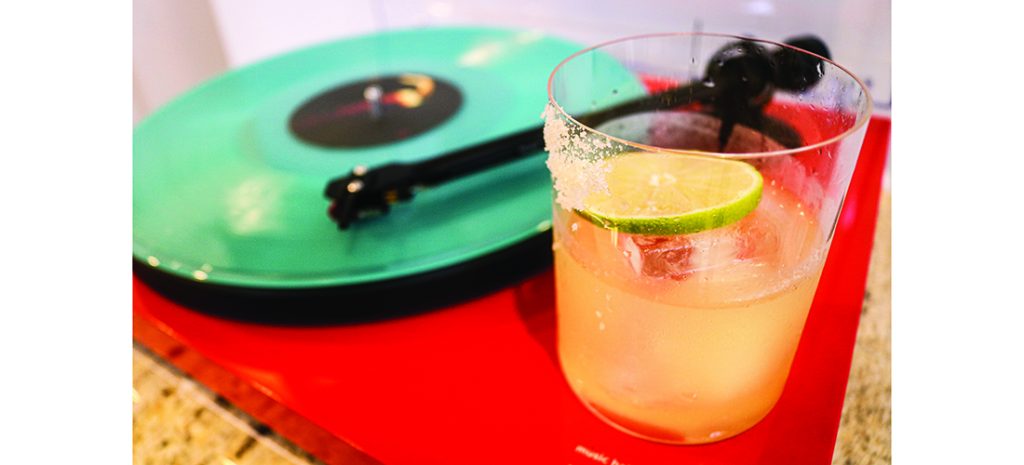
It was my birthday last month so, to treat myself, I ordered a bunch of rum online. I’ve been on a tiki kick lately, making “how-to” videos for my social media pages. Plus, picking out a few new spirits keeps me inspired. The same week my pallet of liquor arrived on an 18-wheeler, a dear friend also gifted me a trio of super unique gins from Africa. So, let’s dive right into three different styles of spirit that could pique your interest.


Batavia-Arrack von Oosten

It’s not that I’ve never held onto a bottle of arrack or anything, but for its backstory spirit historian David Wondrich has us covered. In his book Punch, he writes that arrack was “derived from the Arabic word for ‘sweat’ or ‘juice’ and is generic throughout the Middle East and South, Central and Southeast Asia for a distilled spirit.” Though there are a few different types of arrack, Wondrich says Batavia Arrack von Oosten is the go-to. He goes on to explain how it’s made. “Rice was boiled and molded into cakes. These cakes were put in baskets over a vat, and as they fermented, a liquid dripped into the vat. That was collected, mixed with almost double its volume of molasses and a splash — less than a tenth of its volume — of palm wine, presumably to aid fermentation.”

But how does it taste and how do you take it? It’s like a rum. It’s funky, that’s for sure. But it also has a little bit of smoke. Perfect for a punch or a South Seas Swizzle, the specs courtesy of the importer, Haus Alpenz.

South Seas Swizzle

2 ounces Batavia Arrack van Oosten

1/2 ounce lime juice

1/2 ounce green tea syrup*

1 dash Regan’s Orange Bitters

Add all ingredients in a tall glass and fill halfway up with crushed ice. Using your hands and a swizzle stick, move the stick left to right quickly with the palms of your hands, integrating all ingredients with ice for about 15 seconds. Fill the rest of the glass with crushed ice. Add fresh mint and grate nutmeg over the cocktail.

*Bring 1 cup of water to a boil and add 2 tablespoons of loose-leaf green tea. Let steep for 5 minutes. Strain tea and add 2 cups of sugar. Stir until sugar completely dissolves. Put in glass container and refrigerate for up to a month.


Hamilton “Beachbum Berry’s Zombie Blend” Rum

Hamilton is known for having a variety of top-notch rums, and this collaboration with Jeff “Beachbum” Berry is no different. Almost 20 years ago, Berry uncovered the original Zombie cocktail recipe, and published it in his book Sippin’ Safari. “Fourteen years later,” as his website reveals, “Ed Hamilton — the swashbuckling Caribbean trader turned crusading ‘pure rum’ importer and blender — was drinking with the Bum at Latitude 29 [Berry’s tiki bar] when our talk turned to the challenge of recreating the complicated exotic cocktails of the last century. Over the next two years we experimented with umpteen rum mixes trying to create a one-bottle blend that could reanimate your Zombie.” This rum is most definitely high-test, coming in at 59 percent ABV, and blends the holy trinity, if you will, of rums: Jamaican, Puerto Rican and demerara. Sugar, spice and everything nice is in this bottle. And though you can mix up a ton of different tiki cocktails with it, let me leave you with what it was originally intended for, the Zombie.

Zombie

2 ounces Beachbum Berry’s Zombie Rum Blend

3/4 ounce lime juice

1/2 ounce grapefruit juice

1/2 ounce falernum

1/2 ounce cinnamon syrup

1/4 ounce grenadine

8 drops Pernod (or absinthe)

4 dashes Angostura bitters

Power blend with 3/4 cup crushed ice for no more than 5 seconds. Pour into a tall glass and add ice to fill. Garnish with mint. Freaking yum.


Procera African Juniper Gin (Green Dot 2021 Vintage)

As I mentioned earlier, this gin — along with the Blue and Red Dot vintages — was gifted to me by a friend who’s a badass bartender and collector of spirits. In order for a gin to be “gin” it must contain juniper. Almost all gins on the market have juniper blended with many other spices and citrus peels. The Green Dot Procera Gin only has juniper. That’s it. Technically, it contains the young foliage tips, fresh “never-dried” berries, toasted heartwood and dried berries. Before I tried this for the first time, I thought, “not sure how there’s going to be a lot going on with this one.” I was so wrong. It’s the best gin I’ve ever had in my life. I can’t even describe to you what I tasted, but there’s a small note that accompanies the bottle and they nail it: “It starts with a creamy, rich mouthfeel from fresh, never-dried, Juniperus procera berries. Then, the leaves impart a piney, sap-like note on the mid-palate, before toasted heartwood delivers a dry, complex, almost spicy finish.” In-freaking-deed. Even though I haven’t mixed one for myself yet, I recommend having a martini with this. I’m making mine this weekend.

Martini

2 1/4 ounces Procera Green Dot Gin

3/4 ounce Dolin Dry vermouth

Combine the gin and vermouth in a chilled stirring vessel. Add ice and stir until proper dilution has occurred. Strain into a chilled martini or coupe glass. Garnish with whatever you’d like, but I’m going with a lemon peel, expressing the oils over the cocktail before adding it to the drink.

Quick tip: Put your gin, or at least the 2 1/4 ounces of it, in the freezer before mixing. You want your martini piercingly cold.  PS

Tony Cross owns and operates Reverie Cocktails, a cocktail delivery service that delivers kegged cocktails for businesses to pour on tap — but once a bartender, always a bartender.

A Perfect Fit

A Perfect Fit

Historic bungalow made-to-measure

By Deborah Salomon

Photographs by John Gessner


Residentially, Pinehurst is a many splendored thing, from Tudors to Taras, Cape Cod cottages to contemporaries mostly upward of 3,000 square feet. They have long pedigrees, and are furnished in family heirlooms with designer upgrades. Built in the age of maids and cooks, their utilitarian kitchens tucked out back have become appliance/gadgetry showcases and their bathrooms, spas.

Now emerges a separate class that defies classification: modest cottages built for resort support staff in a fringe neighborhood called Power Plant because, of course, that’s where the power plant was. The same applies to Laundry Hill and just plain Community Road. A list of Tufts’ employees reveals names like Shaw, Kelly, Fields and McCaskill, forever memorialized on street signs in toney Old Town.

Once left to graceful decay, these bungalows are on the comeback trail, renovated by retirees fascinated by their history, their ghosts.

In May, PineStraw featured an iteration of the cottage Rassie Wicker built for his family — Wicker being Tufts’ legendary engineer, historian, builder and town planner. Its current owner-renovators, Lisa and Bob Hammond, retired medical professionals who performed much of the labor themselves, are vibrant young grandparents captivated by Wicker and the Pinehurst saga.


But before Rassie provided a house for his wife and children, in 1919 he built a tiny cottage for younger brother Roswell Egbert Wicker, known as Bert. Bert installed the area’s first telephones and managed Pinehurst Electric Company. Since Bert and his wife had no children, the size of the home — under 1,000 square feet — was sufficient.

The cottage was named Merrimac. Why, nobody knows.

In 2012, its third owner undertook a major renovation and enlargement with attention to quality and detail, including fabricating a tool to produce moldings that matched the original ones. Heavy paneled doors were refinished; knotty pine floors scraped and stained a rich cherrywood brown; the bathroom modernized and a modestly sized but stunning black and white kitchen installed; screened porch and patio added; ceilings and roof lines modified; and so much more. Then, the owners furnished it with finds of quirky provenance: a Shaker cabinet, an oversized leather sofa beside a coffee table made by shortening the legs of an English kitchen table, a massive hand-hewn Amish dining table, bent-twig chairs, lace café curtains, and Tiffany-esque sconces.


Beadboard is lavished on walls and backsplash, even on a vaulted ceiling in the family-room addition.

The fireplace burns wood, not gas.

Merrimac became a rental property, smaller than most, but prettier than many.


Lorelei and Paul Milan — outgoing, fit, energetic retirees — met at tiny Elmira College in upstate New York. He was from Massachusetts, she from Buffalo. For 32 years they lived and owned a commercial cleaning business in Raleigh. They raised two children in a 3,500-square-foot house with a pool and horses in the backyard. But for retirement they wanted a small town with less bustle. Pinehurst had been a golf destination. Why not drive down, take a look? Their “look” lasted two years since, like many retirees, they wanted something in the village that had already been renovated, preferably a property retaining a charter membership at the resort.

“Let us know if you find a cottage with character,” Lorelei told the real estate agent.

Four days later she got a call. “We walked in and bought it.” Not just the house. All the furnishings. “I wanted it turnkey.”


That meant disposing of their furnishings and settling into a setting more Martha’s Vineyard B&B than Old South. Lorelei extended one kitchen cabinet for drawer space and replaced the stove with a duel fuel model. White walls became fresh pastels. They added two leather chairs and a rug to the family room and a king-sized slated sleigh bed that fills the master bedroom.

By admission, Lorelei is an anti-hoarder, so no clutter. Only her grandmother’s salt and pepper collection on a windowsill and her great-grandmother’s demitasse cups made the cut.

Then, they embarked on a major project: converting a small cart-and-pony shed into an extra bedroom (no bathroom) for visiting children, while also turning a building on the lot line into a three-bay garage, all using materials that matched the house. One bay houses their golf cart, another a giant closet for Lorelei’s outfits and, of primary importance, a third as the “beer fridge.”

About that off-premises closet: Closets had not entirely replaced armoires by the Wicker era. Paul gets the single narrow bedroom closet. He also has custody of the desk facing the front door, which makes this intended sitting room look like an office except for a plaid loveseat.


“Paul is a problem-solver,” his wife explains. Solutions, paperwork and his playlist come together easier when seated at a desk. Besides, friends know to enter through the screened porch into the kitchen which, although compact, exemplifies good design. On its wall hangs a framed photograph of Bert Rassie’s original cottage appearing rather drab compared to its update.

Lorelei misses having a pool, but Merrimac offered a new interest: Moore County history. She has researched the Wickers, their professions and properties, with the help of Jill Gooding, Bert’s grand-niece, who provided information from the Wicker family Bible. Lorelei compiled her findings into booklets, part of a submission to the Village Heritage Foundation, which in 2020 awarded this cottage — and Rassie Wicker’s — Pinehurst Historic Plaques.

Whether Bert enjoyed the decade he lived here is not known. Lorelei and Paul Milan’s delight is obvious. They can sit on the terrace and wave to passers-by. They are only a few minutes from world-class golf, a pool and other club amenities. Their home is small enough to be cozy, large enough to entertain. True, they have only one guest room plus the guest cottage, which their daughter reminded them won’t be sufficient for grandchildren. Paul’s eyes twinkle, as he whispers, “Hotel.”

The criteria for historic preservation varies. Nobody disallows air conditioning or WiFi. The best examples retain the ambience of antiquity. Old maps of young Pinehurst decorate the walls of Merrimac. Its paned windows remain wavy glass, and its dimensions, with the exception of the family/living room addition, match the needs of original occupants, who were skilled worker bees, not captains of industry from Pittsburgh, New York and Boston. A century old, this little gem is, above all, serendipity for modern retirees Lorelei and Paul Milan.

“It’s perfect,” Lorelei says, before dashing off to meet an old friend for golf. “We live in every square foot, every day. Aren’t we so lucky?”  PS

Focus on Food

Focus on Food

Red, White and Scoop

Homemade ice cream with natural dyes

Story and Photograph by Rose Shewey

America, my sweet home away from home. Thirteen years ago in August, you literally took my breath away when I immigrated via Orlando International Airport and, exiting through the sliding doors of Terminal A, was swallowed up by a thick cloud of heat and humidity that momentarily stopped me in my tracks.

While I have yet to adapt to the climate in the Southeast — a mild day in April resembles an average Central European midsummer day — I have reached expert level in managing sweltering summer heat and refining cool-down techniques. If migrating north between the months of June and October is not an option, the least one can do to survive these long, hot summers is get a season pass for the pool and eat lots, and I mean lots and lots, of ice cream.

In honor and celebration of The Star-Spangled Banner, I am shining the spotlight on food dyes and I’ll let that cat right out of the bag — you do not have to use artificial dyes to achieve stunningly vibrant, saturated colors, in ice cream or any other foods. There are a couple of all-natural brands on the market that produce gorgeous vegetable dyes that will knock your socks off. But do not fret, I have also had great success with some fantastic home-dye options.

Red

Powdered raspberries or strawberries will not just give your creation a beautiful blush color (or light red if you use large quantities), but also add an attractive flavor to your food. Red beet powder (not juice) is a decent colorant, and surprisingly, does not impart the quintessential earthy root vegetable flavor. It does, however, turn slightly more magenta than red, in my experience.

Blue

My favorite blue coloring agent is blue butterfly pea flower. This powder turns into a pastel blue with lavender undertones, but it depends on what you color and how much you use. Blue spirulina is another reliable and potent dyeing agent for a vivid blue color.

Advising on the exact measures is tricky when it comes to natural food dyes. The outcome depends on so many factors, such as the pH level of the food you are dyeing and the freshness of your colorant, to name just two. It takes some experimenting but it is so rewarding to draw from Mother Nature to refine home-crafted treats.

All romantic notions and sweet childhood memories aside, making ice cream is cold, hard science. With commercial ice cream as the gold standard in terms of texture and viscosity, homemade ice cream tends to disappoint (think large, grainy ice crystals), but by understanding the ideal ratio of the basic components of ice cream, as well as inviting all-natural texture boosters into your kitchen, the perfect hand-crafted scoop is well within reach.


Blank Canvas ’n’ Ice Cream

(Makes 1 quart ice cream)

(A basic dairy and egg-free ice cream recipe that can be adapted to any flavor)

4 cups dairy-free milk (see notes)

1/4 cup sweetener (e.g., granulated sugar or honey)

1 teaspoon agar flakes

2 teaspoons tapioca starch

1/2 cup smooth nut butter (e.g., almond butter or coconut manna)

Pinch of salt

1 teaspoon vanilla extract (optional)

In a medium skillet, bring the milk to a boil, whisk in sugar and agar flakes, and simmer for 8-10 minutes. Stir frequently to completely dissolve agar flakes. Meanwhile, prepare a tapioca starch slurry: In a small cup, combine tapioca starch with about 1 tablespoon of cold water and mix well. Turn off heat and whisk tapioca starch slurry into the milk, allowing the residual heat to cook the starch. For best results, add your ice cream base to a blender together with your nut butter, salt and vanilla extract and, if desired, food dye, and process until smooth. However, you can also mix in the remaining ingredients by hand. Allow the mixture to completely cool off in the fridge, pour into your ice cream maker and churn according to the manufacturer’s directions.

Notes

This recipe was tested with both homemade nut milk (almond milk and cashew milk) and store-bought nut milk with zero additives (no added gums or emulsifiers).

For a bright white ice cream base, use white granulated sugar or a light-colored honey and coconut manna (coconut butter).  PS

German native Rose Shewey is a food stylist and food photographer. To see more of her work visit her website, suessholz.com.