Supper on the Porch

Old friends, a well-traveled table, a summer evening to remember

By Jim Dodson

On a fine summer night not long ago, seven friends came to supper on the porch.

They arrived bearing good wine, eager to see what we’d done with the old house we purchased six months ago. Since five of the seven guests were also serious wine buffs, bottles were quickly opened and the party moved out to our huge screened porch where my wife had set our antique English wedding table for supper.

The porch is a large screened affair that spans almost the entire back portion of the house. It features a floor and foundation made from antique brick and exposed beams with large old-style ceiling fans overhead.

Quite honestly, when we first saw it, we weren’t sure what to do with such a large empty space. The screens were old and dusty and the floor was uneven in places. Moreover, off the west end of the porch was a terrace with brick planters overgrown with English ivy set beneath a large pergola that had clearly seen better days. Since I knew this house as a boy — it sits two doors from the house where I grew up and was my favorite house in the neighborhood as a kid — I remembered how the Corry family seemed to live on this porch way back when, in part because it sat beneath hundred-year-old white oaks and a lower canopy of dogwoods and silver bell trees, providing deep shade and a cool retreat on the hottest of summer days. I remembered Mama Merle loving her big sprawling porch. 

One early thought we had was to replace the screens with oversized weather-tight windows and create a four-season family room that could function as a small ballroom in a pinch. We also contemplated halving the porch in size and adding an outdoor fireplace — or even removing the rambling old extension altogether to expand a yard that resembled an urban jungle.

“Let’s live with it a while,” proposed my ever-practical bride. “The porch may grow on us — and tell us what we should do.”

In the meantime, over the winter and early spring, I knocked apart the aging pergola and opened up the terrace, cleaning out the overgrown planter beds and filling them with young hosta plants. I also removed a dozen wicked Mahonia plants and a small acre of English ivy and runaway wisteria, and began creating a Japanese shade garden beneath the dogwoods and silver bells.

By the time true spring arrived my back garden was looking rather promising, but the big old porch remained empty until my wife had an interesting idea.

“Let’s move our wedding table out there and make this our three-season dining room,” she said, pointing out that the size of the porch made it essentially indifferent to weather.

Our dining table is a beautiful old thing I spotted in a Portland, Maine, English antique shop and purchased for my fiancée as a wedding present two decades ago. It’s an early 19th-century English farm table from Oxfordshire that came with its own documenting papers listing at least a dozen a family names that had allegedly owned it before us. Beyond its impressive strength and workmanship, the thing I most love about it are the nicks and dents and discolorations of time that mark the table’s long journey through this world. Our family has gathered around it for every holiday meal since the day it arrived in our household, and sometimes as I listen to the eddies of conversations that take place around it, I can’t help but think about the voices that table has heard over the past century and a half, the intimate stories, the debates and conversations, fiery oaths and whispers of love.

Before moving it out to Miss Merle’s porch, however, my wife set about cleaning every surface of the porch including the elegant ceiling fans and screens while I got to work on the floor, leveling the bricks and using a distressing technique to paint the brick floor a faded woodland green.

That’s when a kind of alchemy began to take place.

The big room suddenly seemed to come alive with a human charm all its own. Soon we added plants and an antique sideboard that had never fit the in the main house even found a destined spot on the porch. I hung the custom-made iron candelabra from our old house in Maine and my bride strung small clear white lights along the roofline as a finishing touch. We suddenly had the perfect place for a pair of fine old wicker chairs we’d kept in storage forever, and an antique iron table and reading lamp that had never quite found their place. A large sisal rug Wendy found online was the final piece of the puzzle.

By the time our first supper on the porch was well underway, our guests were all commenting on the beauty of the room beneath the trees.

“I don’t think I’ve seen a more beautiful porch,” said my childhood friend, Susan, who lived in Charleston, South Carolina for years and has a designer’s eye for everything. “It’s so rustic and simple.”

“Don’t change a thing about this porch,” urged Joe, a buddy from high school who is an exceptional builder and expert on wood. He made some excellent small suggestions about replacing the vinyl soffits with wooden panels with inset lighting that would make the room even more dramatic.

The lively dinner went on much longer than expected. The stories flew, the candles flickered, the wine flowed, and the earthy scent of my restored garden drifted through the screens. At their end of the table, the wine buffs had a fine time swapping tales of their intricate journeys toward grape enlightenment.

Sipping my French sparkling water, it was enough for me to simply sit and listen to my friends go on about life and wine in ways I suspect that old wedding table had heard before over the years, taking its own pleasure in our screen porch fellowship. Don and Cindy talked about their extensive wine tours out West. Susan told a charming tale about being whisked away by a friend to Europe where she was put up and feted at a pair of the most elite vineyards in France and Italy. “It was like something from a fairy tale,” she admitted. 

Somewhere about the time the strawberry and whipped cream cake was being served, my closest table companion leaned over and mentioned to me that she was thinking of walking home. It wasn’t far, only a few blocks, and the night was gorgeously moonlit. “They won’t even notice I’m gone,” Terry said with a coy smile, finishing her own glass of white wine.

Terry is my oldest friend Patrick’s wife. I’ve known her since we sat near each other in high school choir 45 years ago. A few years back Terry and Patrick sold their big house on the north side of town and moved back to the old neighborhood, a move that in part inspired my wife and me to do the same. We now lived just three long blocks apart.

“Mulligan and I will walk with you,” I proposed, prompting my favorite dog to dutifully bolt for the kitchen door.

So off we went beneath a nearly full moon that displayed one exceptionally bright planet just beneath its southern rim. Terry asked me if I knew the planet’s name but I couldn’t be sure — I guessed Mercury, incorrectly.  Still, it was lovely strolling along our darkened street with its ancient trees making the darkness seem even deeper, the neighborhood even quieter. As it happened, Terry and I both had recently undergone similar kinds of surgeries. We made little jokes about that fact — at least I did — and Terry, who is one year older and many years wiser, admonished me that I would feel fatigued for many weeks yet to come, not to push myself back into my usual 15-hour work routine.

“The world will still be there after you take time to rest and heal,” she pointed out.

“Suppers like tonight may help,” I said.

“That porch is wonderful,” she came back “I’m so glad you didn’t change it.”

“I think it changed us,” I agreed, kissing her cheek goodnight. 

On the walk back to our house, I was thinking how all it took was a little time and Wifely creativity, a well-traveled table and a circle of close friends breaking bread and drinking wine to transform a big empty space into something intimate and special. Objects, like people, respond to love, and since that first night of supper and fellowship, the big old porch has become my favorite spot where I do everything, from writing before dawn to reading at night. It is my sanctuary where I just sit and plot my garden or simply daydream and maybe even heal.

Halfway home, something else wonderful happened. A large night bird swooped low over my head and rose to an arching limb 20 feet above Old Man Dodson and his dog. I shined my light upward and discovered, rather startlingly, a large snowy owl staring down at me with an imperturbable calmness. The only one I’d ever seen was back home in Maine. I knew that snowy owls nested in the Arctic tundra and wondered how far this old fellow had come — or had yet to go.

Back in our driveway, the departing wine buffs were looking up at the moon with celestial-reading apps on their I-phones. What an age of wonders, I thought. An ancient owl and phones that could decipher the night sky — all within the same block.

I told them about the snowy owl visiting just down the street.

“There’s a sign of some kind,” said Susan with a husky laugh.

Joe the naturalist pointed out that eagles and northern species of owls had been returning to the city’s northern lakes of late, adopting new habitats in an ever-changing world.

He also pointed out that the bright planet was, in fact, Jupiter, and that at least three of Jupiter’s four moons were visible at that moment, a rare celestial event.

“That makes two in one night,” I heard myself say, thinking how far we’ve all come, how far we’ve yet to go.  PS

Contact Editor Jim Dodson at jim@thepilot.com. Read more about Opti the Mystic and Mulligan in The Range Bucket List, Dodson’s new book, available everywhere.

The Wizard of Pinehurst

Sandhills’ Renaissance man Rassie Wicker

By Bill Case

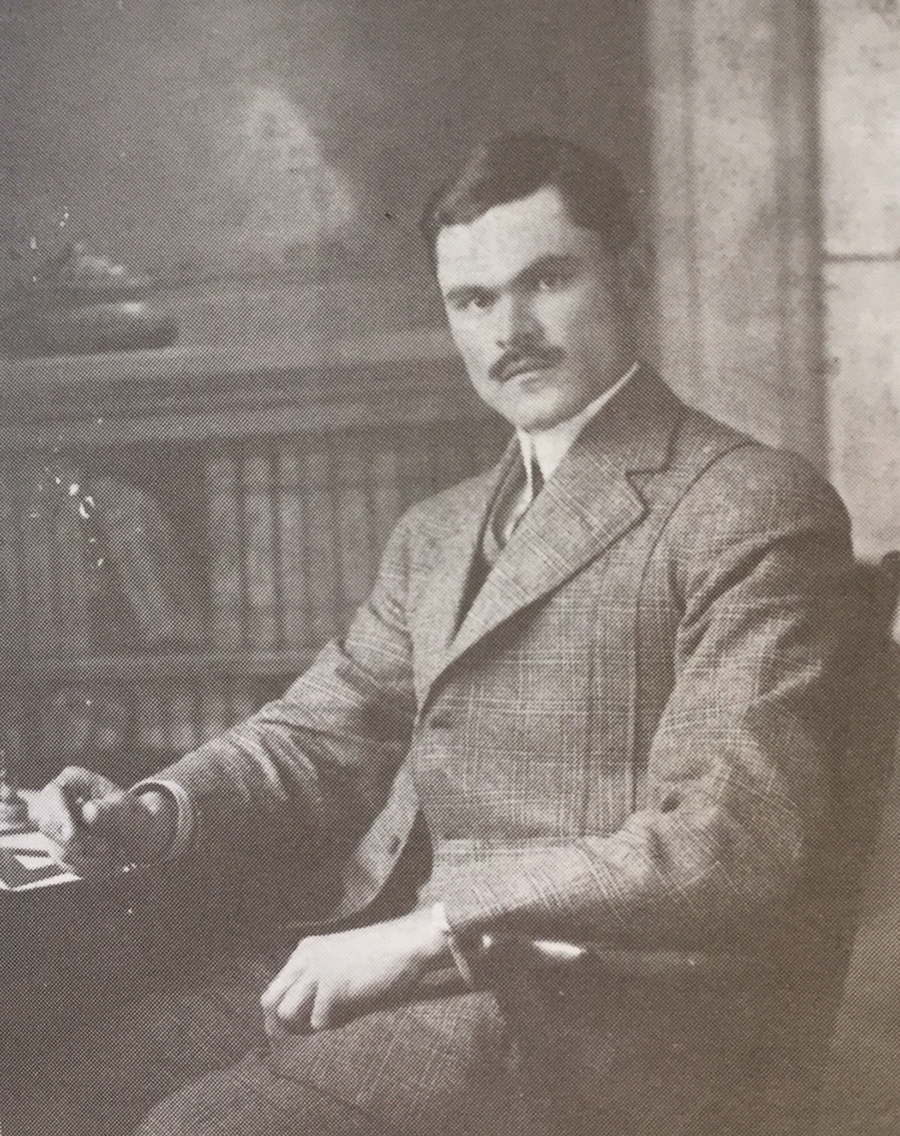
It was accepted as Gospel in Pinehurst that Rassie Wicker’s ability to perceive, study and comprehend the world around him bordered on the supernatural. Hardly any subject escaped his quest for knowledge. He seemed to understand everything and could fix anything.

That was until July 22, 1944, when the War Department message dreaded by every serviceman’s family arrived. The telegram said that Lt. Jim Wicker, Rassie’s 23-year-old son, had been missing in action since July 7, barely a month after the Allies landed on the beaches of Normandy. A veteran of 27 bombing missions over Germany, Jim had been lost over Holland when the B-17 Flying Fortress he co-piloted collided in mid-air with another B-17. Most of the 10-man crew had perished. Jim and two enlisted men were unaccounted for.

Home on leave seven months earlier, Jim married Nancy Richardson, his high school sweetheart and the daughter of Pinehurst’s postmaster. It was the young bride who shared the news of the War Department’s wire with Rassie, his wife, Dolly, and Jim’s sister Eloise, casting the twin clouds of fear and uncertainty over the entire family.

Rassie was no stranger to the horrors of war, having soldiered on the front lines in the Meuse Argonne Offensive, the largest and bloodiest operation of World War I that cost over 26,000 American lives. When Jim revealed his intention to sign up for cadet training as an Army Air Corps pilot in 1942 — unbeknownst to his family he had already taken flying lessons — Rassie cautioned him that wartime service was “ugly, spirit-breaking labor, done under strict orders and under the most heartbreaking conditions.” If he was determined to serve, Rassie urged him to seek placement in a photographic post. After all, Jim had already been trained as a civil cartographer. Rassie admonished his son, “I thought I made it plain enough that I was not agreeable to your going into the air force as a pilot, bombardier, or navigator of combat ships.”

Rassie practically begged his son to reconsider. “The thought of your having to go through what I know would be ahead of you would be enough to unbalance what little reason of which I am possessed, and I don’t know what it would do for your mother,” he wrote. “The loss of you to us would mean the wreck of us both.” The son disregarded the father’s advice and reported to Nashville for officer’s flight training.

Now, with Jim missing, Rassie faced the potential — even probable — loss of his son. What possible comfort could there be in having been prescient? If anything, it made his grief all the more palpable. Rassie had gained a reputation in Pinehurst as a man of exceptional capability who adroitly performed any task he set out to do, regardless of its complexity. While his primary occupation was that of a surveyor and civil engineer, the 52-year-old Wicker’s versatility was such that those who knew him, if asked to name the skill at which he most excelled, could easily have given any of a dozen responses. Instead, he sat helpless.

Born in 1892 to James Wicker and Lucretia Mills, Rassie attended a one-room schoolhouse in his birthplace in nearby Cameron. It does not appear that he received any formal schooling in Pinehurst after James moved the family there in 1902. But, like Abraham Lincoln, Rassie read everything he could get his hands on, up to and including the Sears & Roebuck catalog.

Rassie’s father found that his cabinetmaking skills were in high demand in the 7-year-old community. Setting up shop near where the Manor Inn is now located, James received the bulk of his woodworking projects from Leonard Tufts, who assumed control of the family’s privately owned resort and town in the wake of James Tufts’ death, also in 1902. The young Rassie found work in the company town, too, starting as a delivery boy in the pharmacy. An enterprising teenager who nonetheless had time for a bit of fun (lanky and raw-boned, he participated in a farcical local baseball game in a red and green suit), Rassie quickly came into contact with the print shop employees who worked in the same building as the pharmacy. Soon, he had two jobs. Given the daily menu alterations at the Carolina Hotel, there was an unending flow of printing work, and it was not long before he mastered that trade.

The young man’s aptitude for catching on quickly wasn’t lost on Tufts, who used Rassie in a wide variety of roles. He assisted Pinehurst’s electrician, Owen Farrey, and lineman, Seward McCall, in cutting down the trolley line after Leonard decided to discontinue the service. When the installer of the first elevator in the Carolina Hotel walked off the job in a huff, leaving the elevator stranded at the top floor, it was Rassie who got the call. Despite knowing next to nothing about the equipment, he managed to bring the lift to the ground and, with typical dispatch, returned it to working order. Under the tutelage of civil engineer Francis Deaton, he helped survey the properties Leonard was buying, selling or developing. Rassie relished solving the kind of mathematical problems where there was only one right answer, and surveying required the same sort of exactitude. In an effort to enhance his knowledge, the largely self-educated Rassie passed the entrance exam into North Carolina College of Agriculture and Mechanic Arts (now North Carolina State University).

After completing the 1911-12 academic year in Raleigh, he was back working in Pinehurst, spending an ever-increasing percentage of his time in surveying. Though he never completed his studies, Rassie was permitted to hang out a shingle as a registered civil engineer since his work in the field predated the state’s establishment of educational requirements. In 1912, someone convinced him to run for Moore County surveyor and he cruised to victory. There was only one problem: At the swearing in, Rassie learned he was one year shy of meeting the position’s minimum age requirement of 21. Accordingly, he stepped down.

Rassie’s surveying work required him to spend considerable time out of doors in the forests and fields of Moore County, and he reveled in the observation of nature. With three friends, he organized a five-day paddle down the Little River from Vass to Fayetteville, constructing two homemade boats for the voyage. Upon arriving at the party’s destination, Rassie reported to the Pinehurst Outlook that “we tied up to wharves of that old town; changed our river clothes for railroad style, bode our (homemade) boats farewell, and bought tickets to Aberdeen.”

By 1917, Rassie was already considered a person of prominence in Pinehurst. The Outlook listed him among those who “built the community.” He married his sweetheart, a 21-year-old Cameron native, Mary “Dolly” Loving and, like his son after him, left almost immediately for military service overseas. He survived the Western Front physically unscathed and returned to Pinehurst in 1919. Jim was born in 1920, and Eloise came in 1922. In 1923, the burgeoning family moved into the house that Rassie built at 275 Dundee Road in Pinehurst.

In addition to surveying, Wicker ran the movie projector at the new Carolina Theatre in Pinehurst. He supervised a five-man crew building houses for Leonard Tufts, an assignment he was unable to perform as expeditiously as Leonard would have liked. Despite Rassie’s crew completing construction of 10 homes inside of 11 months, Leonard expressed his dissatisfaction. “(Y)ou should have completed 47 houses,” complained the tough taskmaster. The beleaguered Rassie informed his boss he was incapable of meeting such an unrealistic target, and he voluntarily excused himself from further homebuilding. Leonard appears not to have taken the resignation personally, since he continued to inundate Wicker with other assignments.

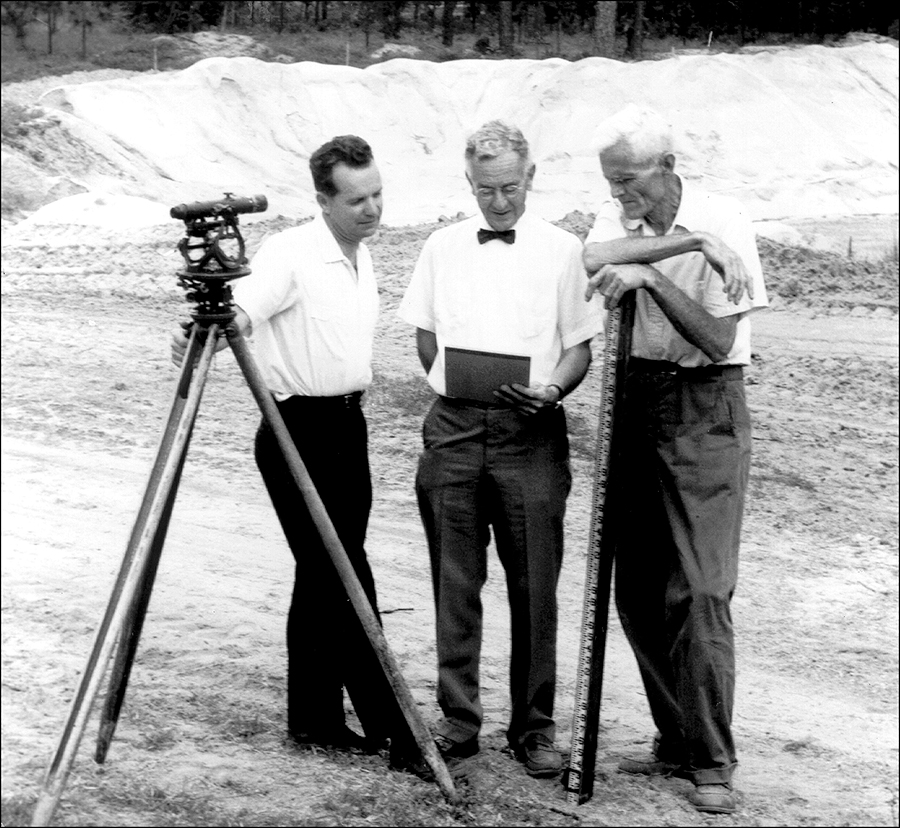
One task involved preparing a detailed map of the entire Sandhills area — a job Rassie, Francis Deaton and James Swett undertook in 1921. Much of the area was still unsettled dense pine forest. Land elevations and precise paths of Moore County’s watercourses were unknown. The laborious and meticulous work took nearly a decade to complete. One result of this effort was the decision to focus on development in the triangle between Pinehurst, Southern Pines and Knollwood. The Pilot reported in November 1931: “Rassie Wicker has been in the field on the proposed extension of Pennsylvania Avenue from the top of the hill in ‘Jimtown’ (Western Southern Pines) to the boundary of Pinehurst.”

While mapping unidentified creeks, Wicker took it upon himself to name them. According to Tony McKenzie’s “Tribute to Rassie Wicker,” Rassie called one offshoot of a creek “Joe’s Fork” in honor of a Jamaican, Joe Melton, who “drove an oxcart from hotel to hotel collecting food scraps and taking them to the Pinehurst piggery.” Republican political operatives once again began floating Rassie’s name as a candidate for county surveyor. He wryly shot down that trial balloon with a Will Rogers’ style quip. The Pilot reported that Wicker “denies the allegation and spurns the allegator.” Rassie went on to say, “ I always was, is, and always will be a Democrat.”

Rassie’s work in Pinehurst brought him into contact with the landscape architect Warren Manning, a protégé of the man who designed New York City’s Central Park, Fredrick Law Olmsted. As the Tufts’ architect-in-charge, Manning had the final say regarding nearly all plantings in the village. A sponge for absorbing the insights of experts, Rassie’s acquaintance with Manning enabled the younger man to learn how the interrelation of selected plantings could enhance a home or streetscape. Rassie opened his own business, Pinehurst Landscape Service, by the mid-1920s to capitalize on the numerous opportunities for a landscaping enterprise in a village less than 20 years old built on pine barrens.

By the end of the Roaring 20s, Leonard Tufts’ son Richard began to supplant his oft-ailing father in running Pinehurst’s affairs. The father and son, however, shared their appreciation of Rassie Wicker. In a personal letter, Richard raved, “You are getting a reputation with us as an architect, landscape designer, and the sort of handyman to refer things to when we want something that looks extra nice.”

Rassie was given the responsibility for locating and laying out new streets along with the water and sewer lines. According to Tony McKenzie, Wicker “took the liberty of giving all the newest streets names. He chose to use the last names of the people who provided manual labor to build Pinehurst.” They included Graham, Short and Caddell. He supervised construction of the Given Library and the hangar for the Moore County Airport. Leonard entrusted Rassie with the preparing and placing of historic markers identifying the ancient Yadkin Trail, four of which still remain.

Everything Rassie encountered seemed to pique his curiosity. Though often racked with migraine headaches, he invariably finished three books in a three-day period — the allowable bookmobile lending policy at the time — then scoured National Geographic and the Encyclopedia Britannica, front-to-back and A-to-Z. Surveying and mapmaking led him to an interest in the historic derivations of land titles in Moore County. His research dated back to the initial grants of the king of England. The completion of that project spun off into a deeper history of the county and ultimately the state. He became an organizing member of the North Carolina Society of Historians and a valued contributor to the Moore County Historical Association. He wrote numerous columns he titled “Historical Sketches” in The Pilot. One of his writings described his successful search for the North Carolina homes of Scottish heroine and Revolutionary War figure Flora MacDonald. His research culminated in the publication of a book that continues to be a leading reference for county historians, Miscellaneous Ancient Records of Moore County, compiling a massive amount of 18th century data.

His landscaping work led to the study of the local flora and fauna. After locating a sweetgum tree in Pinehurst, he took the time to compare its characteristics with other known varieties of the species. It turned out there existed no other known sweetgum tree with similarly shaped lobes on its leaves. The uniqueness of the discovery was subsequently confirmed by a nationally known expert at Harvard University.

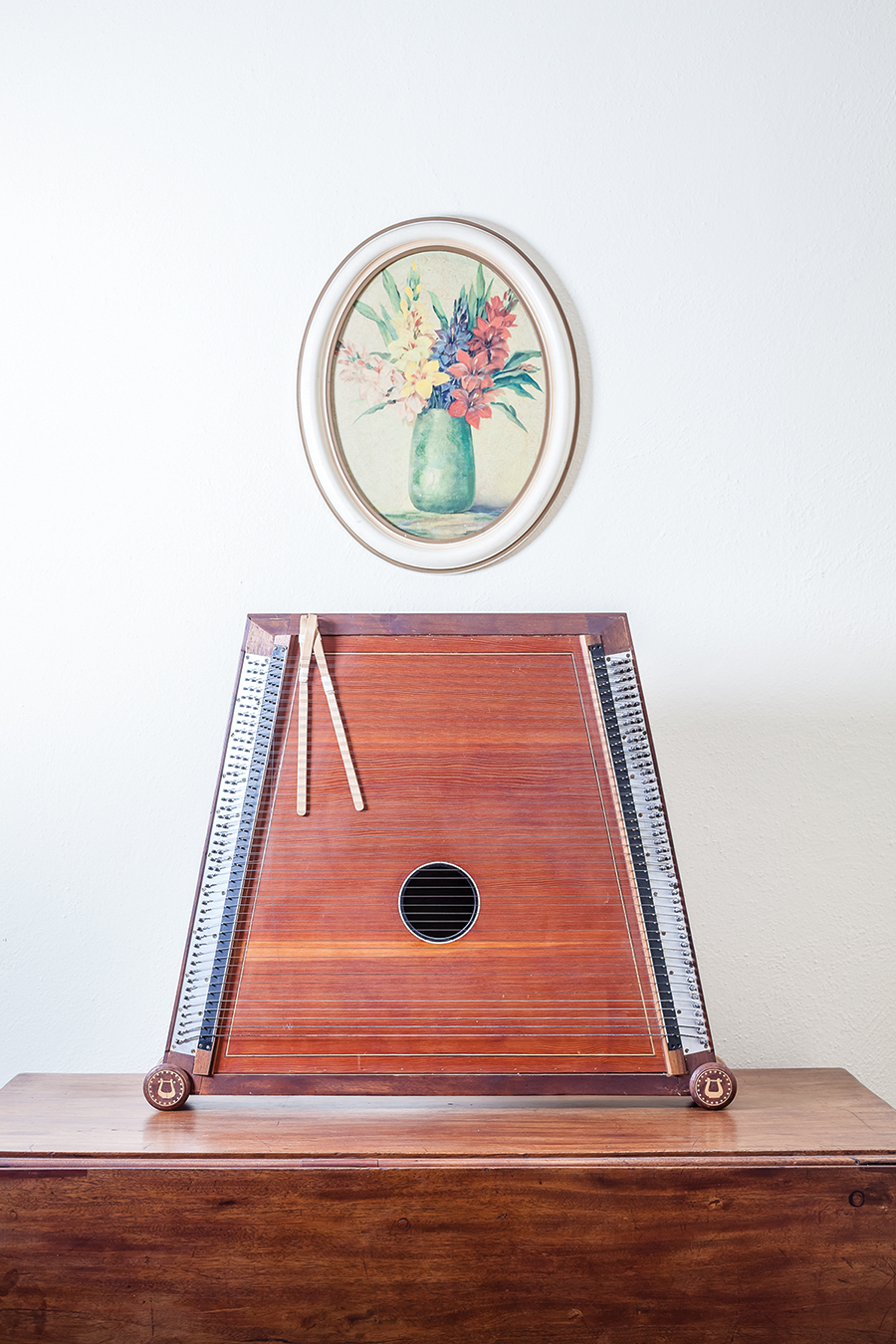
As if those pursuits weren’t enough, he had hobbies, too, including playing the piano, making his own dulcimer, singing in a chorus, acting in the occasional theater production, beekeeping and orchid growing. Perhaps Rassie’s most unique interest was sparked after he found a nest of orphaned quail in his yard and adopted them as pets. His care and feeding of the birds ultimately led to their taming. He cultivated wild plants he thought might improve their diet. His domesticated “Peewee” even fluttered its way into feature stories in The Pilot and Pinehurst Outlook.

His never-ending pursuit of learning took him beyond this world to a study of the heavens. He became an astronomer. Wanting a telescope to gaze more closely at the stars, Rassie fabricated one himself. In 1935, he contributed periodic columns to the paper with the purpose of educating its readers on locating the planets — “The Heavens in October,” etc.

Wicker was an inveterate writer of letters to local newspapers. Rather than pontificate he would raise issues overlooked by everyone else. And, though usually soft-spoken, he could launch into vituperative commentary when circumstances warranted. Concerned that a proposed constitutional amendment would transfer power from the “common people” to the state legislature, he colorfully opined that “(i)f it does, then it should be hung higher than Haman, drawn and quartered, boiled in oil, beheaded, disemboweled and buried in the deepest sea, and its tomb forgotten.” As part of the war effort, in 1944 Wicker was working as an engineer in Sanford for General Machinery and Foundry when he learned that his son, Jim, was missing in action.

The Wicker family tried to stay strong, but that was next to impossible. Jim’s wife, Nancy, wrote daily letters to her husband, holding them in safekeeping that he might one day have an opportunity to read them. Earl Monroe, Rassie’s best friend, noted that the interminable waiting for news about Jim drove Rassie, “a little crazy.” Finally on September 23rd, a telegram arrived confirming that Jim, after safely parachuting to the ground, had been captured by the Germans and was being held as a prisoner of war. The Wicker family was overjoyed. The only other survivor of the midair collision from his B-17 was the waist gunner, Clyde Matlock.

Jim was held in captivity at Stalag Luft I until May 1, 1945, when the camp’s guards fled as the Russian Army approached from the east. The Russians liberated the prisoners at 10 a.m. Two weeks later, Jim arrived at Camp Lucky Strike in France to await transport home. He soothed his anxious family, telling them, “All of you stop worrying now. I’m practically in the front yard.” And fittingly, it was Independence Day when he finally arrived home. Jim later received numerous commendations for his heroic service, including the Distinguished Flying Cross.

Rassie returned to his usual activities in Pinehurst, but managed to spend increasing amounts of time with Earl Monroe, his son Bud, now 80, and Tony McKenzie at the blacksmith shop at the corner of Rattlesnake and McCaskill roads. Bud recalls that Rassie loved working there as well as in his small workshop at home. Rassie welded and woodworked, like his father had. He gave away everything he made to his friends and children, including intricately crafted grandfather and grandmother clocks.

Bud Monroe proudly shows off several of Wicker’s handmade wooden pieces at his Murdocksville Road home. “How on earth are you going to go about describing what an incredible wizard Rassie Wicker was?” asks Monroe.

Wicker kept surveying until very late in life. A familiar and welcoming site in Pinehurst was Rassie driving his old Chevy down Cherokee Road with his surveyor’s rod protruding out the back window. As he aged, the white-haired Rassie began “taking on something of the majesty of an Old Testament prophet.” His community sought ways to honor him. In December 1971, he was the recipient of the Sandhills Kiwanis club’s Builders Cup for “the year’s most outstanding contribution to the county, made without thought of personal gain.” He passed away the following October at age 80. Dolly would die 16 years later.

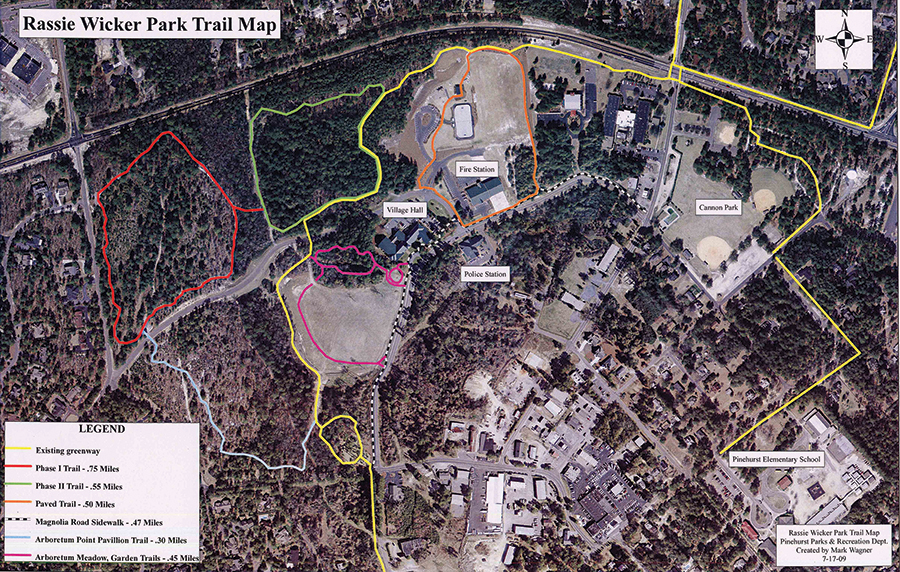
Recognition continued to come to Rassie posthumously. On Sept. 18, 1995 Pinehurst’s Village Council held a ceremony at the World Golf Hall of Fame to celebrate the naming of its newly acquired 100-acre recreational site, Rassie Wicker Park.

Jim Wicker piloted airplanes in the military for 21 years, and continued in aeronautic related activities thereafter. He and Nancy had two children, Jim, Jr., and Jill Wicker Gooding, both of whom maintain homes in Pinehurst. Rassie and Dolly’s daughter, Eloise, emulated her father’s penchant for scientific inquiry. She graduated from the University of North Carolina with a degree in botany and became Chapel Hill’s curator for its herbarium, part of the North Carolina Botanical Garden.

In a heartfelt message to Eloise who had just graduated from college, Rassie Wicker wrote, “I (and you too) know the pleasure — the deep and soul-satisfying pleasure — of having knowledge as one of your possessions. Not a knowledge confined to one subject, but a broad intellectualism which gives you a deep appreciation, not only of the distant and unapproachable things, but also of the little, homey, everyday creatures and incidents of which everyone’s life is made up … a bug or a worm or a plant each going about [its] appointed task, not haphazardly but in conformity with some great plan. These things come to me occasionally with overpowering force, but I have learned to keep them to myself except to a certain very few people who have seen this picture.”

Rassie Wicker did his best to see the whole picture. His passion flowed from a strongly held belief that the more he studied the world, the more he would be able to discern recurring patterns, to see how everything in it — the beauties and the mysteries — fit together.  PS

Pinehurst resident Bill Case is PineStraw’s history man. He can be reached at Bill.Case@thompsonhine.com.

First in Film

The Founders highlights a new Sandhills festival

By Jim Moriarty

It may not be the seismic shift that occurred when talkies came to town in 1929, but when the curtain goes up on Tar Heel Shorties, a one-day film festival on July 8 at the Sunrise Theater, it will have the same kind of ground floor appeal. The festival is being curated by Dan Brawley, the director of the enormously successful Cucalorus Film Festival now in its 23rd year in Wilmington.

Cucalorus already has one satellite festival, Surfalorus, in its sixth season in Dare County, and Brawley, also the president of the international organization Film Festival Alliance, hopes to find the same kind of traction in the Sandhills he found in the surf. “There are so many talented young filmmakers in North Carolina,” says Brawley. “If we develop this properly over the next several years, we could be drawing students from every university. The barriers to making really high quality films have all vanished. The history of Cucalorus is all about being deeply connected to local creators and then bringing people in from the outside and making connections. That’s what we’re really trying to do, cultivate creative talent, make connections with other creative talent and then, it’s sort of off to the races.”

Tar Heel Shorties will begin at 5 p.m. with a “shorts block.” There will be a meet-and-greet party from 6 to 7:30 p.m. followed by a full-length feature, the recently released film about the 13 founding members of the Ladies Professional Golf Association, titled The Founders. The producer and director of The Founders, Charlene Fisk, will be one of the artists in attendance.

Brawley’s selection of films, beginning with The Founders, is tailored to the community. He spun through 690 shorts in the Cucalorus database to winnow the selection down to between eight and 11. One of them will be What It Was, Was Football, by Duncan Brantley, a short from Cucalorus’ third season incorporating the famous Andy Griffith routine. “It’s funny, funny, funny stuff,” says Brawley. “An essential part of the film festival experience is going to see a shorts block. For one, you see the directors who will be famous in 10 years. You also see the art form developing and evolving in front of your eyes. You’ll see something clever or innovative that’s really groundbreaking in a short film, then four years later it’s in a feature film. The short films this year are either by kids or about kids, a very family-oriented block.”

Bringing the festival to the Sandhills is something of a homecoming for Brawley. He has an uncle in Southern Pines, but more than that, the ’96 Duke University graduate spent a couple of summers boarding at the Pine Crest Inn. Slight of build with flyaway red hair and a beard and mustache that could slip undetected into any artists’ co-op, he was the No. 2 player on the golf team behind longtime PGA Tour veteran Joe Ogilvie. “I’d wake up every morning and I’d walk over to the country club and practice with my golf coach, Eric Alpenfels,” says Brawley, of his pine Crest days. “I’d head back there at night. I’d have dinner in the dining room. I knew all the waitresses. I’d play solitaire in the corner of the lobby every night.” And, as a bonus, he made a small fortune hustling tourists chipping golf balls into the fireplace.

Obviously, The Founders is a film with deep roots in the Sandhills. While the LPGA doesn’t officially acknowledge Peggy Kirk Bell as being among the original 13, the founders themselves all viewed her as No. 14. Mrs. Bell appears in a lot of the movie’s archival footage. “There were two or three things that we had to lose in the film that we labored over,” says Fisk. “No. 1 was Peggy Kirk Bell. The remaining founders all have that same respect for her and include her in that group. She’s so important. After Karrie Webb saw the film, the one thing she brought up was Peggy.”

At the time of the film’s making there were four living founders and, naturally, the movie focuses on them, with Babe Zaharias and Patty Berg as stars in absentia. “The first person I called was Louise Suggs,” says Fisk of the project’s genesis. “She said, ‘Who are you and why are you making this film?’ She just read me the riot act, and when I got off the phone I kind of was in tears. I can’t do this. They obviously don’t want to do it. She was very protective of the story. I called Marilynn Smith next and she’s Miss Personality and she had the exact opposite reaction. ‘Oh, my gosh, honey, we’ve been wanting to tell the story. I can’t believe you want to talk about it.’ That was the beginning. Five years later, we’re releasing it.”

While it s form is documentary, with all the reality that implies in the interviews, the movie captures the sheer determination of a group of young women and the drama of the all-too-human jealousies. The archival footage alone is a treasure for golf fans, but the storytelling lends the narrative its universal appeal.

“To get all this archival content was the most impossible task,” says Fisk. There were five women putting the film together working out of Fisk’s Atlanta loft. They started with the USGA, went through the families of the founders, then on to the families of other players. “We were getting boxes of stuff people had never even looked at. Boxed up in garages and basements. We went and got old vintage projectors. It was like Christmas every time we’d get a box. That opening shot of that swinging golfer, that was a film reel that Betty Hicks’ family sent us. The footage of Babe sticking her face in the camera is from Bonnie Bell. It was kind of crazy that these 30-year-old women could be so elated by footage of these women from the ’50s.”

Getting things off the ground, whether it be Tar Heel Shorties or The Founders, is never easy. “We would have no money,” Fisk recalls. “I would be super frustrated. We were just hitting wall after wall after wall. One day one of the writers, Dana Lee, said, ‘You know what, we’re just like the founders. Nobody helped them. They had to keep doing it and doing it and doing it. They did it because they believed in it. Don’t forget. That’s why you’re doing it.’”

Now, it’s at a theater near you.  PS

Jim Moriarty is senior editor of PineStraw and can be reached at jjmpinestraw@gmail.com.

Saturday, July 8

Tar Heel Shorties
Film Festival

5 p.m. – Shorts Block:

Swimlapse / Eddie Schmit

In the shadow of a chilling accident, a young lifeguard struggles to return to work while teaching a reluctant girl to swim.

Sugar / Kristin Pearson

An animated collage of the futility of a good night’s sleep.

Courtesy Call / Jim Haverkamp

A free agent for decency tries to reach out and touch someone – usually, someone who doesn’t like to be touched.

Ignite / Christopher Zaluski

Ron Killian has big art dreams. On the brink of age 50, he’s worried that time may be running out. As a way to reinvent himself, he has created a new art medium using fire. He now spends his days inside his Asheville, N.C., bungalow burning canvas, paper and paint, creating unique pieces that the world may never see.

What it Was, Was Football / Duncan Brantley

A naïve country preacher accidentally finds himself at a football game. He has no idea what he is seeing, but describes it as best he can. A visual recreation of Andy Griffith’s classic radio comedy routine.

Bernerd / Marshall Johnson

Bernerd, the controlled burn spokesman, is here to teach us about fire safety. Unfortunately he’s lost his way and now his method mostly involves a trail of lit cigarettes and smoldering ruins. Come with Bernerd as he teaches one family the importance of random fire.

The Private Life of a Cat /Iris Monahan

In 1947, Alexander Hammid (the cinematographer husband of the famous experimental filmmaker Maya Deron) made a silent documentary chronicling his cat having kittens. Fifty years later, Iris Monahan and her dad Dave added cat voices, funky music, and a few laughs.

Acito on the Mound / Shawn Lewallen

The spirit of baseball lives on long after players leave the field. A visit to the pitching mound after saying goodbye to a friend brings back memories of a rough game.

6 p.m. – Meet & Greet with Attending Filmakers

7:30 P.M. – Feature Film

The Founders

They were not supposed to be athletes. They were not supposed to get paid to play. They were not supposed to call the shots. But in 1950, 13 amateur women golfers battled society, finances and sometimes even each other to create the Ladies Professional Golf Association.

The Wickedest Town in the West

An OK place to visit, but you wouldn’t want to live there

By Stephen E. Smith

In the mid-1980s, actor Robert Mitchum appeared on a late-night talk show to promote his latest film. The host asked if the movie was worth the price of admission and Mitchum replied: “If it’s a hot afternoon, the theater is air conditioned, and you’ve got nothing else to do, what the hell, buy a ticket.”

Readers should adopt a similar attitude toward Tom Clavin’s Dodge City: Wyatt Earp, Bat Masterson, and the Wickedest Town in the American West. If you’re not doing anything on one of these hot summer afternoons, what the heck, give it a read.

Dodge City is a 20-year history of the Kansas military post turned cow town that has come down in popular culture as the Sodom of the make-believe Wild West. No doubt Dodge had its share of infamous gunfighters, brothels and saloons, including the Long Branch Saloon of Gunsmoke fame, and there were myriad minor dustups, but nix the Hollywood hyperbole, and Dodge City’s official history is straightforward: Following the Civil War, the Great Western Cattle Trail branched off from the Chisholm Trail and ran smack into Dodge, creating a transitory economic boom. The town grew rapidly in 1883 and 1884 and was a convergence for buffalo hunters and cowboys, and a distribution center for buffalo hides and cattle. But the buffalo were soon gone, and Dodge City had a competitor in the cattle business, the border town of Caldwell. Later cattle drives converged on the railheads at Abilene and Wichita, and by 1890, the cattle business had moved on, and Dodge City’s glory days were over.

Clavin focuses on the city’s rough-and-tumble years from 1870 through the 1880s, explicating pivotal events through the lives and times of the usual suspects — Bat Masterson, the Earp brothers, Doc Holliday et al. He fleshes out his narrative by including notorious personages not directly linked to Dodge City — Billy the Kid, John Wesley Hardin, Wild Bill Hickok, “Big Nose” Kate, Buffalo Bill Cody, Sitting Bull, the Younger brothers, and a slew of lesser characters such as “Dirty Sock” Jack, “Cold Chuck” Johnny and “Dynamite” Sam, all of whom cross paths much in the manner characters interact in Doctorow’s Ragtime. Also included are abbreviated histories of Tombstone — will we ever lose our fascination with the 30-second shootout at the O.K. Corral? — and Deadwood.

If all of this sounds annoyingly familiar, it is. There’s no telling how many Wild West biographies, histories, novels, feature films, TV series, documentaries, etc., have been cranked out in the last 140 years, transforming us all into cowboy junkies. Our brief Western epoch has so permeated world ethea that blue jean-clad dudes in Tashkent, Uzbekistan, might be heard to say, “I’m getting the hell out of Dodge,” in Uzbek, of course.

Clavin offers what amounts to a caveat in his Author’s Note: “. . . Dodge City is an attempt to spin a yarn as entertaining as tales that have been told before but one that is based on the most reliable research. I attempted to follow the example of the Western Writers of America, whose members over the years have found the unique formula of combining strong scholarship with entertaining writing.”

So what we have is a hybrid, a quasi-history not quite up to the standards of popular history, integrated into a series of underdeveloped episodic adventure tales that ultimately fail to entertain. If Doris Kearns Goodwin and David McCullough are your historians of choice, you’ll find that Dodge City falls with a predictable thud. It’s simply more of the same Western hokum. The writing isn’t exceptional, the research is perfunctory, most of the pivotal events are common knowledge, and the characters are so familiar as to breed contempt.

If you have a liking for yarns by writers such as Louis L’Amour, Luke Short and Larry McMurtry, Dodge City isn’t going to make your list of favorite Westerns. Without embellishment, the narrative loses its oomph, and the episodic structure diminishes any possibility of a thematic continuity, which is, of course, that the lawlessness that marked Dodge City’s formative years is a metaphor for the country as a whole, that violence and corruption are a fundamental component of American life.

On a positive note, readers of every persuasion will likely find the book’s final chapter intriguing. Clavin follows his principal characters to the grave. Wyatt, the last surviving Earp brother, ended his days in Los Angeles at the age of 80. Doc Holliday died in Colorado of tuberculosis at 36, his boots off. “Big Nose” Kate, Doc’s paramour, lived until 1940 at the Arizona Pioneers’ Home, dying at the age of 89.

Of particular interest is Bartholomew William Barclay “Bat” Masterson, Wyatt Earp’s dapper buddy in the “lawing” business. Whereas Earp’s claim to fame ended with his exploits as a Western peace officer and cow town ruffian, Masterson went on to a life of greater achievement. He became an authority on prizefighting and was in attendance at almost every important match fought during his later years. He was friends with John L. Sullivan, Jack Johnson and Jack Dempsey. In 1902, he moved to New York City and worked as a columnist for the New York Morning Telegraph. His columns covered boxing and other sporting events, and he produced op-ed pieces on crime, war, politics, and often wrote of his personal life. He became a close friend of President Theodore Roosevelt and remained a celebrity until his death in 1921.

It promises to be a long, hot, unsettling summer. If you’ve got nothing better to do, turn off cable news, slap down $29.99 and give Dodge City a read. It’s little enough to pay for a few hours of blessed escapism.  PS

Stephen E. Smith is a retired professor and the author of seven books of poetry and prose. He’s the recipient of the Poetry Northwest Young Poet’s Prize, the Zoe Kincaid Brockman Prize for poetry and four North Carolina Press awards.

Back at the Pound

Reflections on the Fourth

By Clyde Edgerton

Dog : What was all that shooting last night?

Dog 2: Wasn’t shooting, it was fireworks. July 4th.

It was going until after midnight.

I know.

What is July 4th?

Independence Day.

What does that mean?

It means that America got its freedom from England on July 4th, 1776 — and citizens have been celebrating ever since. Once a year.

Gosh, that was a long time ago.

You bet.

Did anything change for dogs after 1776?

Naw. Same old stuff. Good owners; bad owners; some in-between.

What was wrong with England?

They had a king — and since we were part of England, he was our king.

What was wrong with that?

Well, nothing as long as the king was a good king. If he was a bad one, like the 1776 one was — I think his name was Louis the 15th — then bad things happened to people and dogs because they didn’t have a chance to say what they wanted or needed. See, with a bad king, somebody could come into your owner’s house and shoot you and the king wouldn’t do anything about it.

Really?

That’s right, but then when America got free, Americans, under the Founding Fathers, made a lot of rules that were better than the rules in England.

Like what?

Well, if somebody goes into somebody’s house in America and shoots a dog then the police goes and gets the shooter, arrests him and then the justice system makes things right.

Really?

Oh, yes.

Who pays for that?

Well, the dog owner pays for that, of course. The dog owner has to buy property insurance to protect against the unwarranted and surprising destruction of a citizen’s property — like if somebody breaks in a human being’s house or steals a car, all that.

Really?

Oh yes. It’s done with something called “insurance.” Since nobody makes humans buy property they have to pay the policeman — on each policeman visit — a “co-pay.” Somewhere between 15 and 90 dollars. Then insurance, bought by the citizen, pays the rest. Sometimes an employee might pay part of it somehow, something called Propertycaid. But the protection of a human’s property is a human’s responsibility in the end, so they pay for that protection out of their own pocket — it’s not a “right.”

But wouldn’t everybody want to pitch in and help everybody else take care of their property? Like a big community where everybody looks out for everybody else. So that the police could be free? Maybe paid by taxes?

Oh no. Protection of property is not a right, it’s privilege that people must pay for individually — or in groups.

I don’t get it. What about when a germ invades a human’s body — why shouldn’t people have to buy their insurance for that? Something like health insurance.

Humans can’t predict if a germ is going to ruin their health or if cancer will invade their body.  They pay taxes to take care of that kind of stuff — we band together as a community to take care of that since health is more important than property. That’s why health care is free and police protection is not. Or is it the other way around? Hmmmm. Let me think. Surely property is not considered more protectable than health. Oh well, just be happy that since July 4th is over we don’t have to worry about all that human noise until next year. And we don’t have to worry about bad kings anymore either, thank goodness.  PS

Clyde Edgerton is the author of 10 novels, a memoir and most recently, Papadaddy’s Book for New Fathers. He is the Thomas S. Kenan III Distinguished Professor of Creative Writing at UNCW.

What’s in a Southern Nickname?

By Susan Kelly

Next to rappers, I’m pretty sure Southerners have the corner on nicknames. I’m not talking “Dukes of Hazzard” or country music Cooters or Scooters or Bubbas or Buds. Ditto Liz-for-Elizabeth or Jack-for-John or Meg-for-Margaret. I’m talking the ones that get acquired or bestowed, usually in high school or college, and then “stuck.”

When it comes to those sorts of monikers, nobody cares about body shaming, ergo my friend Duck, for the way he walks. Or my uncle, known lifelong as Squirrel for his dentist’s-dream buck teeth. An Atlanta pal is known as Dirt because of his grooming, or lack thereof. My frat friend Picture Window, because his hair framed his face just so. Or my square-jawed, bespectacled-since-6 husband, who, innocently brushing his teeth as a new boy sophomore at boarding school, looked up from the communal sink, caught a senior’s eye in the mirror, and has born the nickname Catfish ever since. Because he looks like one.

Nicknames trump passports, birthmarks and bumper stickers for identification purposes, since the origins can be traced like a zip line to character and personality. Hence Zero, for the classmate who had, well, zero personality; somewhat akin to Goober and Simple and Wedge, the latter being the simplest tool known to man, so you can draw your own conclusions about the individuals they were tagged to. Aesop, for the frat bro with a tendency toward lying; Eeyore for the eternally gloomy one; Preacher for the rule-follower. Bullet, which neatly covered both head shape and disposition. (All the references in this article are absolutely authentic. Actual names are omitted to protect myself from libel lawsuits and horn-mad assassins.)

Last-name logic plays into some nicknames, such as Blender, for the last name Waring. You must be of a certain age to understand that one. In fact, you have to be of a certain age to understand that I was called by my last name for a decade because every fourth girl born in the ’50s was named Susan. For a female, it’s sometimes best just to let a name go, without prying for an explanation. Hungry Dog is one. And T-Ball, for example. I just do not want to know. T-Ball’s brother’s name is Re-Ball. That, I get.

The only nickname you legitimately get to select is your grandparent name. (Purists who claim to “wait and see what comes out” get what they deserve.) And when it comes to that category, the hands-down prize belongs to the grandmother friend who dubbed herself Favorite. Wish I’d thought of it first.  PS

Susan Kelly is a blithe spirit, author of several novels, and proud new grandmother.

North Carolina State Toast

Here’s to the land of the long leaf pine,

The summer land where the sun doth shine,

Where the weak grow strong and the strong grow great,

Here’s to “Down Home,” the Old North State!

Here’s to the land of the cotton bloom white,

Where the scuppernong perfumes the breeze at night,

Where the soft southern moss and jessamine mate,

’Neath the murmuring pines of the Old North State!

Here’s to the land where the galax grows,

Where the rhododendron’s rosette glows,

Where soars Mount Mitchell’s summit great,

In the “Land of the Sky,” in the Old North State!

Here’s to the land where maidens are fair,

Where friends are true and cold hearts rare,

The near land, the dear land, whatever fate,

The blessed land, the best land, the Old North State!

Photograph by Tim Sayer of the oldest longleaf pine tree

Common Sense Direction

In the age of satellite positioning

By Deborah Salomon

“I don’t have GPS.”

The young woman whom I asked for directions to her house sounded startled, even shocked. I could have announced “I don’t wear underwear,” with less reaction.

GPS is my line in the sand. I don’t have it because I don’t need it. I own a functioning brain — not that getting from point A to point B is rocket science. I have experience. Also what used to be called a “sense of direction,” meaning the most-times ability to point north or south, east or west, by looking up, by memory, or by instinct.

I figure this might come in handy if the Russians or the Martians capture the satellite that tells folks to turn right at McDonald’s.

“So, how do you find places?” she asked.

“A map.”

Not online maps. Paper maps that convey the bigger picture. A map lays out where you start, where you end, everything in between — especially useful when traveling long distances. A map allows selecting alternate routes, or scenic detours. A map doesn’t malfunction, leaving you lost and desperate, especially in an area lacking cell service.

This, like everything else (according to Freud), started in childhood.

New York City is laid out on a grid, with numbered streets. A subway map and a modest sense of direction suffice.

When I was 10 we moved to Asheville and, for the first time, we had a car. Trips were few but before each my job was to pore over maps (free at gas stations, along with windshield washes) to plot the journey. Once underway, while my parents bickered over this and that, I navigated. What fun! I learned that a legend wasn’t necessarily a folk tale, that highways were represented in different colors according to number of lanes and access, and that one inch represented X number of miles so I could estimate distance with a ruler.

How important I felt.

At 16 I became both navigator and driver, often alone, on short trips and long. Before leaving I would plot my course and write the steps on white cardboard with black marker, to prop against the dashboard. I still do, whether the distance be 60 miles or 600. When MapQuest happened, I tried it. You wouldn’t believe how often it’s incomplete or just plain wrong, whereas the stars and planets, on a clear night, aren’t.

I never got that far but gained new appreciation for explorers who sailed uncharted waters with planetary guidance.

Yo, Columbus! Way to go, Marco Polo!

Magnetic compasses weren’t invented until two centuries B.C.; still, you don’t see ancient Egyptians or Greeks wandering around, lost.

Getting back to GPS … seems like certain electronics rob us of actions that develop senses and sensibilities. Nowhere is this more evident than at an airport, where 99 percent of passengers are hooked up to one or more devices, thus missing the world’s greatest people-watching. Security personnel warn “See something, say something.” Fat chance. I’d wager Brangelina and their six kids — let alone a suspicious man wearing hoodie and dark glasses, carrying a rifle case — could waltz through LaGuardia unnoticed.

Fitbit, the latest must-have, may create an obsession, like people who weigh themselves after every meal. Here, gimme your wrist. I’ll take your pulse, and you can too, with a watch that has a second hand and, after a little experience, not even that.

Of course I can’t count your steps, order pizza, spit out text messages or baseball scores.

GPS has also withered another skill: giving directions. Few folks estimate distance correctly. “Go about a mile down the road and turn left at the school bus crossing,” was actually less than half a mile with nothing indicating a school bus which, in that neck of the woods, stops at almost every house. Then, “go right at the church on the corner” in a rural area where every corner has one church, sometimes two.

Traveling snowy, muddy Vermont backroads I was directed to “take the dirt road at the Y and we’re about five minutes from the burned-out barn.”

Five minutes at what speed?

I can’t count the times I’ve been directed to turn the wrong way onto a one-way street. Rotaries are impossible: “It’s the second exit not counting the one you’re at.”

Compared to these, the classic “bridge too far” seems helpful.

“Sense” of direction is different, mostly instinct. Animals travel miles to get home. I once captured a pesky raccoon and relocated him a few miles away, in a lovely wooded area. The next morning, he was, as usual, raiding the bird feeder. Can you retrace your steps, in reverse, in an unfamiliar city? Does your brain automatically absorb and store landmarks? A disturbing study just published indicates that the earliest sign of Alzheimer’s might be disorientation and inability to navigate familiar environs. We are told the importance of keeping the brain alert as we age. Maybe that means besides watching Jeopardy! we shouldn’t delegate common functions to electronic surrogates.

Not that they’re all bad. Heaven knows, without the horn beeper on my car key I’d be walking home from the supermarket just about every day.

But at least I’d know which way to walk.  PS

Deborah Salomon is a staff writer for PineStraw and The Pilot. She may be reached at debsalomon@nc.rr.com.

The Galloping Stroller

What is it we will tell our toddlers? Don’t run!

By Renee Phile

One Saturday morning a few Julys ago, Kevin, then around 3 years old, and I decided to walk to downtown Southern Pines. By “walk,” I mean I walked and pushed him in his stroller with one wobbly wheel, a stroller I am pretty sure he had outgrown anyway since his head hit the top and his feet scraped the pavement. Still, he insisted on “taking a wide.” We stopped at the farmers market for some cucumbers, green peppers and tomatoes, and then wobbled on over to our main destination, the park.

Kevin played in the sand, while I parked myself on a bench. An hour or so passed and my stomach started growling. Kevin continuously slid down the big metal slide that stung his legs, since it was so hot. Right after he landed with a thump in the sand, he brushed himself off, ran back up the ladder to the scorching hot slide and started again. After watching him go up and down around 37 times, I decided I was starving, but not enough to break out the cucumbers and green peppers I had in the stroller. I told him he had five minutes, which turned into 17 since he had this ritual of saying goodbye to each part of the park he had come in contact with.

“Goodbye swing. Goodbye yellow slide. Goodbye ’nother swing. Goodbye little slide that goes reaw fast.” After every piece of playground equipment and the sand, yes, the sand, heard Kevin’s goodbyes, I loaded him in the stroller and we started back to our house. We lived probably a mile from the park, so it was a good 15-20 minute walk. Usually good.

After about five minutes, my stomach reminded me that I didn’t have much more time before I turned into an evil, hungry human. I decided to jog and push Kevin’s stroller. After all, I had seen other people run while pushing a stroller. Now, I know his stroller had one wall-eyed wheel and was not an officially sanctioned “running/jogging stroller,” but I still decided to give it a shot. I took off in a trot and he scraped his feet on the pavement — a definite drag on our progress. “Put your feet up, Kevin!” He did for a minute, and I ran, er, jogged the best I could. The stroller was hard to maneuver, but would work OK for a minute before a rock or dent in the road hampered our mission.

“Go faster, Mommy!” the foot-dragger squealed.

At this point, I was feeling pretty good. Confident. Upbeat. I thought I must look really cool to all the cars passing by. Surely they would think, “Wow, there’s a woman running with her son in the stroller . . . in this heat too . . . she must be dedicated . . . wait, why are his feet hanging out like that? Is that a child or a teenager in that stroller? Hmmm . . . awkward.”

Then, I tripped over a rock or maybe a stripe painted on the road, or maybe my own feet. And fell.

HARD.

Face down. On the pavement.

Kevin squealed. The car that just passed us squealed.

“Are you OK?” an extremely handsome military-looking guy yelled out his window.

“Yes, just fine, thank you,” I murmured, utterly embarrassed, avoiding eye contact, pebbles imprinted in my forehead.

“Are you sure?”

“Yes, thank you.”

The car sped off and I stood up too quickly and blacked out for a few seconds and sat back down on the pavement again.

“Mommy! What’s wrong?” Kevin cried.

I couldn’t answer or get up for a minute or so. I felt like I was going to throw up, and the trees above me were spinning. I had the stroller whirlies.

Finally, the haze diminished enough that Kevin and the stroller and I could wobble the last half mile back to the house. My ankle and face were killing me and sweet 3-year-old Kevin, clearly a bit traumatized, kept asking if I had died and come back to life — which I eventually did, as a cheese quesadilla.

So, do not think you’re cool running in the summer heat, showing off mad skills you don’t possess with a shaky stroller filled with farmers market vegetables and an overgrown 3-year-old. The hot slide is the cooler option.  PS

Renee Phile loves being a mom, even if it doesn’t show at certain moments.

July Books

Kick back reading

By Romey Petite

Fierce Kingdom, by Gin Phillips

While watching her 4-year-old son Lincoln play, Joan’s only care is making sure they both make it out of the zoo before closing time. When she hears a loud bang, Joan tries not to panic, but secretly fears the worst. By the time she and her son spot the bodies and the gunman, it is too late to make a break for the exit gate. Instead, they retreat deeper into the zoo among the animal habitats to stay one step ahead of the danger. Between Joan’s wry wit and love for her son, Phillips brings to life not only a powerful character, but a compelling one, too. Joan will do anything to protect both Lincoln and the fantasies he inhabits — worlds of myths and monsters — with a kind of self-sacrifice that may cost her life. Readers will find Phillips’ Fierce Kingdom nearly impossible to put down and a thrilling ride from beginning to end.

Caesar’s Last Breath, by Sam Kean

The best-selling author of The Tale of the Dueling Neurosurgeons, The Disappearing Spoon and The Violinist’s Thumb returns with a breathtaking macro and micro look at the very air we breathe. Kean’s sense of wonderment is as infectious as an airborne contagion, taking readers on a delightful stroll down the periodic table, through the chaotic chemical interactions at work in our atmosphere, and delving into some of the strangest theories ever posited — cloud seeding, spontaneous combustion, and Soviet-era weather wars. Inviting us to be conscious of the ever-flowing currents traveling in and out of our bodies, Kean points out the ramifications of the laws of conservation implied in the title Caesar’s Last Breath, postulating that both the past and the future, the living and the dead, are all contained in the very molecules around us.

What We Lose, by Zinzi Clemmons

Thandi’s visit to her father to give him the news that she is pregnant and intends to marry her boyfriend, Peter, becomes the framing device for this debut novel. Born and raised in Pennsylvania, Thandi can never know her ancestral home of Johannesburg — not as her late mother did. While her father’s family is from New York, Thandi’s mother’s mixed-race South African heritage remains both inaccessible to her and yet, ubiquitous. Her story is strung together from heartfelt anecdotes, vignettes, dreams and snapshots, creating a kind of map. Readers will appreciate the way Clemmons’ juxtaposition of prose and pictures has a kind of piercing immediacy that seizes readers and brings them along as she searches for closure and awaits her baby’s birth.

My Sister’s Bones, by Nuala Ellwood

A dedicated and decorated foreign correspondent, Kate Rafter has made it her mission to report on the stories of ordinary people who find themselves confronting the ongoing tragedy of war. After receiving news of her mother’s death, Kate is forced to leave the chaos in Syria and return to the vestiges of a home she has avoided. Kate reconnects with her lingering alcoholic sister, Sally — her abusive father’s favorite daughter. She begins experiencing hallucinations, encountering a child in a neighbor’s garden who claims to have died in Aleppo. As Sally continues to contradict Kate’s memories of what did and didn’t happen during their childhood, Kate begins to doubt herself. Uncertain if these visions are related to PTSD from the horrors she’s seen in Syria or if she is actually in contact with a ghost, she begins to question her own objectivity. Readers will find Ellwood’s debut novel calling to them as they attempt to satisfy their craving for a psychological page-turner worthy of Paula Hawkins’ The Girl on the Train.

All We Shall Know, by Donal Ryan

The author of The Spinning Heart, winner of the Guardian First Book Award and the EU Prize for Literature returns with a new novel about secrets in a small town. Melody Sheen, a 33-year-old tutor, is pregnant by one of her students, a 17-year-old “traveller” boy named Martin Toppy. Immediately abandoned by her equally unfaithful husband, Pat, Melody’s journey in the months leading up to the baby’s arrival involves dealing with unusual bouts of nausea as well as confronting feelings once-buried that begin to resurface — desolation, vindictiveness and remorse. Worst of all, Melody finds herself haunted not just by the fragments of her fraying marriage, but something far worse, her feelings of guilt over the death of her girlhood best friend, Breedie Flynn. Ryan has crafted All We Shall Know with a dark, dispassionate, premeditated cadence, wrenching readers through each revelation with a knifelike twist.

The Stars in Our Eyes: The Famous, the Infamous, and Why We Care Way Too Much About Them, by Julie Klam

Take a wistful foray into the nature of celebrity, how stars are born, and what our culture chooses to celebrate with the The New York Times best-selling author of You Had Me at Woof, Love at First Bark, Friendkeeping and Please Excuse My Daughter. Klam approaches the topic of celebrity with a restrained fanaticism, acknowledging the absurd way fame and the paparazzi pervert both public and private lives — spinning snapshots of stars into the fantasies of mere mortals. Klam doesn’t stop at the pantheon of old and new Hollywood. She approaches the topic of viral video stars, Vine and Instagram personalities. Self-aware and decidedly droll, The Stars in Our Eyes is filled with Cinderella stories, colorful quotes, hearsay tales, and the near-misses of brushes with fame from Quinn Cummings, Harry Shearer, Ringo Starr, Audrey Hepburn, Rex Harrison, Jennifer Aniston, Justin Bieber, Mick Jagger, P. Diddy, George Carlin, and Princess Diana, among others

The Almost Sisters, by Joshilyn Jackson

Leia Birch Briggs is a 38-year-old comic book writer and artist with a brand-new book deal and a baby on the way. Commissioned to write and draw an origin tale for one of her characters, she finds her life in synchronicity, embarking on her own coming home story. Leia has a go-with-the-flow attitude — she met her baby’s father at a comic book convention and doesn’t remember much about him except that he was dressed as Batman. Now, Leia has to make the announcement to her traditional Southern family. Before she can break the news, she receives word of a complication, the dissolution of her stepsister Rachel’s seemingly happy marriage of 16 years. After they are reunited, the pair sets about cleaning the old Victorian house belonging to their Grandmother Birchie, who suffers from dementia. In the attic they find the relics of a ghastly murder — a secret dating back to the Civil War. Throughout The Almost Sisters, the best-selling author of Gods in Alabama displays the chemistry of her word choice, comedic timing and a discerning eavesdropper’s ear.

Children’s Books

By Angie Talley

Refugee, by Alan Gratz

At first seeking to remain invisible to those in power but eventually determined to speak out — to do something — to stand up for human kind, Refugee tells the story of three children: Josef, fleeing Nazi Germany in 1939; Isabel, escaping Castro’s Cuba in 1994; and Mahmoud, seeking refuge from the horrors of Syria is 2015. Alan Gratz, the critically acclaimed author of the N.C. Middle School Battle of the Books title Prisoner B 3087, wildly popular with readers ages 12-16, will be at The Country Bookshop at 4 p.m. on Saturday, July 29. Refugee is available for pre-order and will be published on July 25. Ages 12 and up.

Raymond, by Yann and Gwendal LeBec

Raymond the dog is just your regular family pet until, one day, he thinks, couldn’t he just … sit at the table, go to the movies, get a job, go out for a cappuccino? Soon Raymond begins to leave all his canine ways behind, and so do all the other dogs in town. But is Raymond’s new gig all work and no play? He doesn’t even have time for family dinner! Maybe, just maybe, Raymond misses the dog’s life. Comedic and genuine, this tale about appreciating the simpler things in life reminds us all that work can wait — after all, there are more important things (like getting your ears scratched in just the right place). Ages 3-6.

Summer of Lost and Found, by Rebecca Behrens

When city girl Nell is forced to spend her summer in North Carolina, she becomes involved with the centuries-old mystery of the Lost Colony of Roanoke. Her “boring” vacation turns into an adventure she never could have imagined. Ages 10-12.

Saturday with Daddy, by Dan Andreasen

For little elephant, Saturday with Daddy is the best day of the week.  With a trip to the hardware store, a cookout in the backyard, Frisbee tossing and an end-of-day nap in the hammock, what could be a better way to spend a day? Ages 2-4.  PS