Pinehurst No. 2 prepares to test the best
By Lee Pace
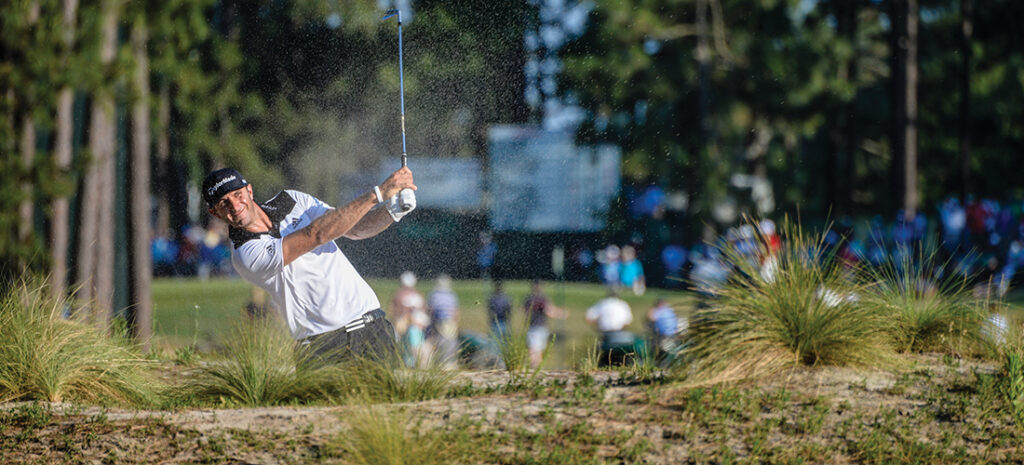
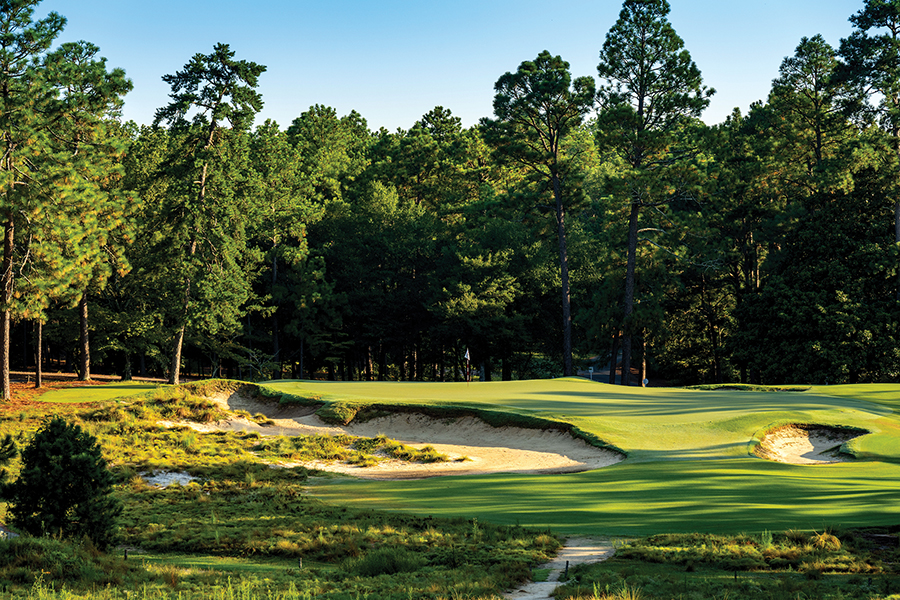
Feature Photo: 2014 U.S. Open Photograph by Joann Dost
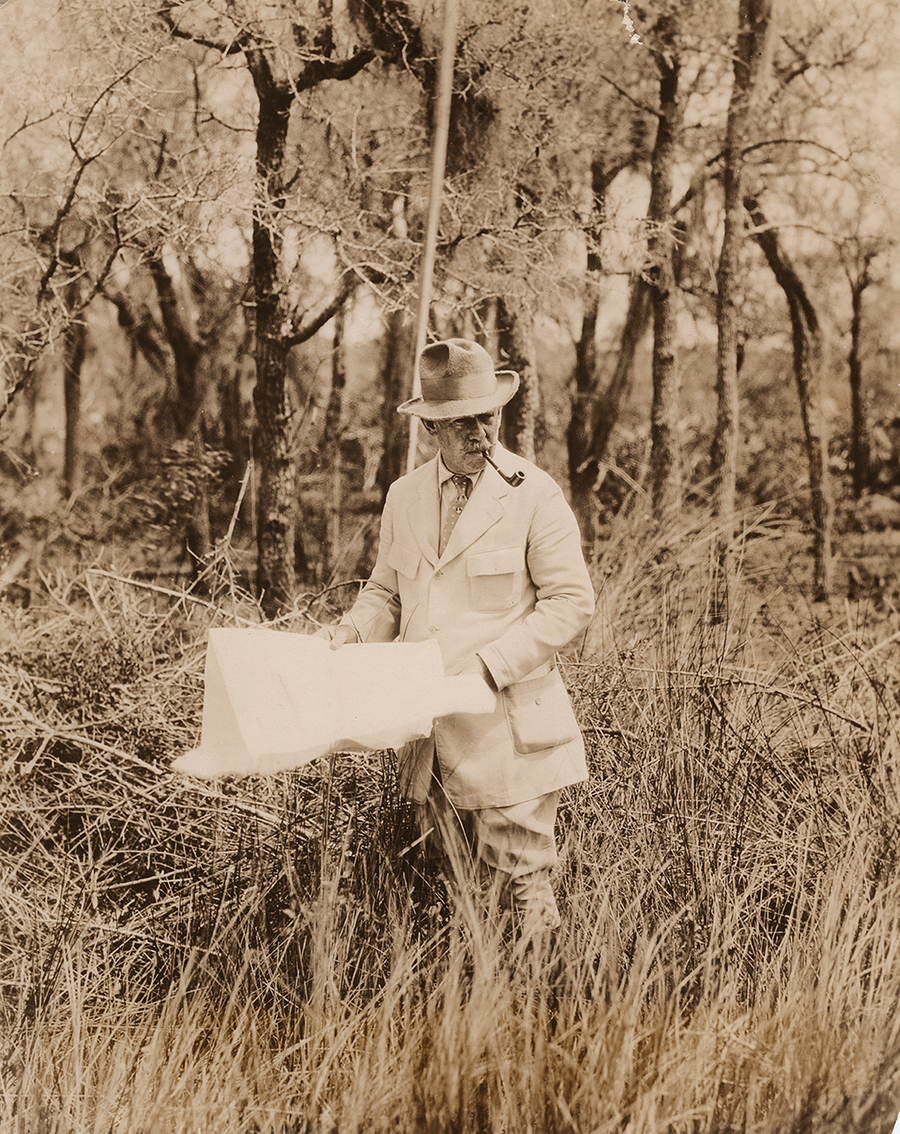
A December day in 1935. A man approaches the house at 120 Midland Road in Pinehurst, notices the Scottish-style stonework and arches of Dornoch Cottage, and rings the bell.
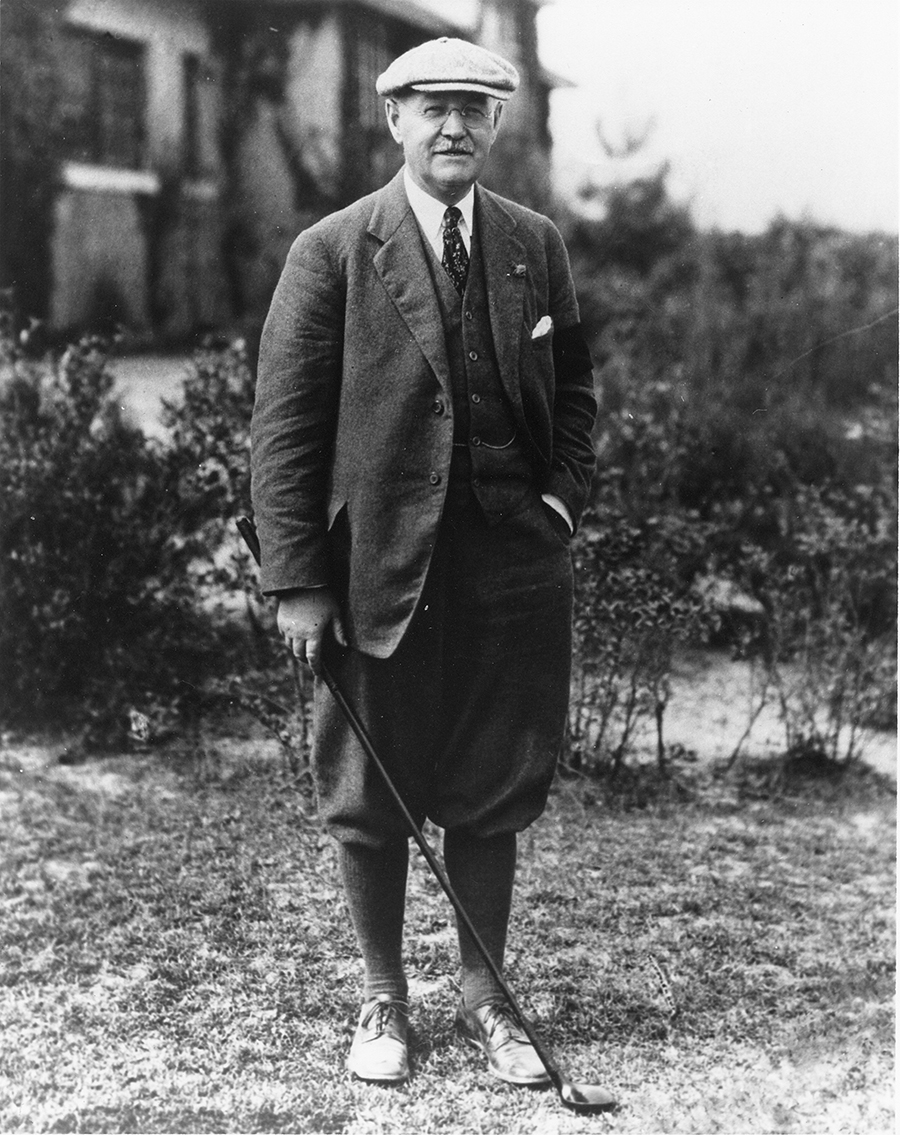
Donald Ross opens the door and greets A.W. Tillinghast.
What a meeting of the minds of the early days of golf course architecture.
Ross, 63, the son of a Scottish stonemason, apprentice in his 20s to legendary pro Old Tom Morris at St. Andrews, an immigrant to the United States who set up shop in Pinehurst in 1900 and designed notable courses across the eastern United States — from Seminole Golf Club in Florida to Inverness Club in Ohio to Oak Hill Country Club in upstate New York. His tour de force, Pinehurst No. 2, sits just behind his house.
And Tillinghast, 59, the son of a wealthy rubber goods magnate in Philadelphia, who grew up playing cricket and fell under the spell of golf on a visit to St. Andrews in 1896 where he established a mentor-mentee relationship with Morris. Tillinghast’s design acumen was on display across the land as well — from San Francisco Golf Club on the West Coast to Winged Foot Golf Club and Baltusrol Golf Club in the shadows of the New York City skyscrapers.
Oh, to have been a fly on the wall, to hear these friends and sometime competitors talk about their shared experiences — their formative years at St. Andrews, their design philosophies, the challenges of maintaining businesses and servicing clients when travel was by train and communication by post.
Surely Tillinghast espoused, to some degree, his belief that “a round of golf should present eighteen inspirations, not necessarily eighteen thrills.”
And no doubt Ross would have looked at the 72-hole facility at Pinehurst Country Club and talked about how it had become the epicenter of golf in America. “I wholeheartedly believe in golf,” Ross once said. “A country which gets golf-minded need not worry about the honor, the integrity and the honesty of its people.”
Tillinghast’s visit came at the behest of the PGA of America and his role as a consultant with the organization which in 11 months would conduct its flagship competition, the 1936 PGA Championship, on Pinehurst No. 2. They carried their golf clubs past Ross’ masterful rose garden in the backyard, through the wrought-iron gates and onto the third green.
Ross showed his guest the green complexes that he had just converted, with the help of green superintendent Frank Maples, from their previous flattish sand/clay structure to undulating Bermuda grass, shaping the sandy soil around them into a cacophony of dips and swales. He noted the roll-offs around the greens, how they penalized shots even slightly mishit and propelled balls into the hollows nearby.
Ross led Tillinghast to the fourth tee and explained how he had just added that hole and the fifth to the routing, taking them from a previous employee-only nine holes, and had arrived at the final (and current) configuration after originally unveiling the course in 1907.
They felt the taut turf under their feet, reveling in how the drainage qualities of the sandy loam made for the ideal golf playing surface. As they went, Ross explained the choices golfers had off the tee — on the par-4 second, for example — showing his friend what a lovely view it was into the green from the left side of the fairway but pointed to the gnarly bunker complex a player had to flirt with to get there. Ross nodded to the native wiregrass that grew in profusion along the fairways and how it reminded him of the whins of his native Scotland.
Did the man known in the business as “Tilly” dip into his bag for a flask and a wee snort as he was wont to do? Did Ross grouse that this new and improved No. 2 was better than any new-fangled effort from Bobby Jones and Alister MacKenzie down in the red clay of north Georgia?
All of this, we’ll never know. What we do know is what Tillinghast said after his visit.
“Without any doubt Ross regards this as his greatest achievement, which is saying a great deal,” Tillinghast offered. “Every touch is Donald’s own, and I doubt if a single contour was fashioned unless he stood hard by with a critical eye. As we stood on hole after hole, the great architect proudly called my attention to each subtle feature, certain that my appreciation of his artistry must be greater than that taken in by a less practiced eye. Nothing was lost on me, and after our round together, I told him with all honesty that his course was magnificent, without a single weakness, and one which must rank with the truly great courses in the world today.”
And, 89 years later, the show goes on.
Pinehurst No. 2 would continue to be the site of the North & South Open on the PGA Tour through 1951, with Ben Hogan, Sam Snead, Byron Nelson and Ross himself among the winners. It would host the 1936 PGA (won by Denny Shute) and the 1951 Ryder Cup (won by the Americans, 9 1/2to 2 1/2, over the team from Great Britain and Ireland).
But it wasn’t in the mix to host a U.S. Open.
Through the 1970s that union was simply impossible because Pinehurst shut down for the summer (the founding Tufts family and the staff went to Linville or Roaring Gap in North Carolina or traveled north to Maine), and the American national championship was played always in June.
When the resort went to air-conditioning and a year-round operating calendar, the idea was still problematic because of the USGA’s preference for playing courses with firm and fast greens, a challenging task on Southern courses during hot weather months. The U.S. Open was not played in the muggy Southeast until venturing to Atlanta Athletic Club in 1975, though it had already visited hot spots in Houston, St. Louis, Dallas and Fort Worth.
About the time Jerry Pate was winning in Atlanta, officials at Pinehurst Country Club began floating the idea of an Open for No. 2. The Diamondhead Corporation was five years into its ownership of Pinehurst after purchasing it in 1970 from the Tufts family, whose patriarch, James W. Tufts, launched the town and resort in 1895 as a refuge from the cold winters of New England. The Diamondhead president, Bill Maurer, conceived the World Open on the PGA Tour and the World Golf Hall of Fame in the early 1970s and wanted all the traffic, attention and accolades he could muster for Pinehurst and its No. 2 course.
It took two more decades to figure out how to bring the National Open there.
First, there was the dodgy financial bona fides of the resort and club, which eventually went bankrupt and was taken over by eight banks for two years beginning in March 1982. Robert Dedman Sr. and his Club Corporation of America bought the facility in 1984 and provided what has turned into four decades of stability, innovation and financial security, with Robert Dedman Jr. taking the baton after his father died in 2002.
Second, there was the issue of the playing surfaces.
Pinehurst and other golf courses in the Mid-Atlantic, or so-called “transition zone,” have forever been vexed over the choice for their putting surfaces between Bermuda grass, the de facto choice for Florida and warm weather climes, and bent grass, which thrives in the North. Pinehurst officials experimented with new strains of both over the 1970s and ’80s, walking that tightrope between offering smooth and playable greens for members and resort guests for 12 months of the year, and yet having the ability to get them lightning-quick while not dying in the summer for an elite competition. Pinehurst old-timers still remembered Hale Irwin and Johnny Miller taking dead aim at flagsticks during PGA Tour competitions on No. 2 in the late summer and their approach shots going splat and stopping mere feet from the hole (Hale Irwin shot 62 and Johnny Miller 63 in mid-1970s birdie-fests).
Donald Ross must have raged in his grave.
By the early 1990s, the USGA and Pinehurst officials agreed that advances in grass technology and green foundation construction would allow them to rebuild the greens and have them stand up to the world’s best players on a 90-degree day in June. The USGA announced in June 1993 that it would conduct the 1999 Open at Pinehurst. The competition was a rousing success from the perspective of ticket sales, corporate support, traffic ebb and flow, housing and, certainly, the golf course itself.











 M
M