The kitchen garden

September Pears

Yard decoration or just plain delicious


By Jan Leitschuh

Tough to grow on a commercial basis, local Sandhills homeowners can still enjoy home-grown pears and spring bloom in their landscapes.

Now is the harvest season for pears, so get ready to enjoy this sweet fall fruit, whether you’ve grown it or purchased it at the grocery as prices drop.

The cute little “Honeysweet” pear tree I planted six years ago has at least half a dozen little pears on it this year. Way to amortize a $50 investment, eh? That’s about $6 a pear, this year.

In the Honeysweet’s defense, it has borne a few good fruits in the last few years, and is planted in a very hot, dry and sandy section of the property — so props for even surviving, much less bearing sweet little treats. It adds pretty spring blossoms to our edible landscape and keeps a trim size, so the sweet treats are a bonus. Let’s see your crabapple or dogwood do all that.

In North Carolina, pears are not a big commercial crop, mostly due to the disease called “fire blight,” a bacterial withering many pear varieties are susceptible to. The affected young tips look as if they were blasted with a flame-thrower. The browned ends curl into a characteristic “shepherd’s hook” shape. If you do find fresh pears at roadside stands, it will likely be more toward the mountains in apple-growing areas.

But a homeowner without a financial stake can plant a decorative, blight-resistant tree or two and reap the benefits in good years, as well as enjoy the lovely spring bloom.

The other pear issue is their tendency to bloom early and get whacked by a late hard frost. This is a disaster for a commercial operation, but a homeowner can toss a quilt over a small tree, or find other temporary means to keep the cold night temperatures at bay, removing the covers in the morning so the bees can pollinate the blossoms.

Pears are one of the world’s best known and favored fruits. And while a homeowner can plant a pear tree or two for successful fun — our Southern Pines neighbor has a very prolific bearer — the good news is that the supermarkets are full of the seasonal fruit right now, and for the next few months.

My husband and I love to combine two fruits that peak about now. Come the end of August and into September we love to pick our backyard figs and simmer them with pears and a little lemon juice into a delectable pear/fig sauce we then freeze in little tubs and serve all fall with pork chops, or on sweet potatoes. The leftover pears go into salads with different creamy cheeses, or into a pear crumble.

So even if the little Honeysweet fails, we have plenty of backup for our favorite annual fruit sauce, fresh eating, pear tarts and salads — and so do you. Beautiful varieties such as Anjou (red and green), Bosc (an artistic tan), Seckel (the “sugar” pear), Bartlett, Comice and more — your favorite market will have them on special this month as the harvests in California and the Northwest come in.

Let’s say you want to try your hand at a little edible landscaping. Your best bet is to plant a fire blight-resistant variety. There are several. The old Kieffer variety gives a pretty reliable harvest. (I’ve noticed several homes in the Sandhills with Kieffer pear trees.) The fruit is a bit coarse, and not the smooth quality of the highly fire blight-susceptible Bartlett, but I’ve eaten it fresh and it makes a great pear/fig sauce, as well as jams, preserves and canning. Also look for newer, more blight-tolerant varieties such as Moonglow and Magness. The teeny but quite delicious Seckel variety is also somewhat fire blight resistant and puts out lots of fruits, ripening in late August.

New varieties are being released and might be worth an experiment. Some North Carolina folks give up on conventional pears and plant the fairly blight-resistant Asian pear, enjoying its unusual apple-like crunch. You can buy these in stores now, too, to decide if you like them.

Luckily, the Sandhills has a few pluses for kitchen-garden pear production, even if our humidity and dew encourage fire blight. Cold air flows downhill, so a higher Sandhills site might offer better frost protection and airflow than at the bottom of a slope. Our deep sandy soils make the pear’s vigorous root system happy. They don’t like a tight clay. Like apples, they detest “wet feet,” poorly drained sites. Plant your tree in November and water well. Don’t use fertilizer in the hole, as it will burn roots.

High nitrogen fertilizers are also a no-no, since that encourages rapid growth of the juicy green new growth so susceptible to fire blight. Simple compost or a low nitrogen fertilizer should do the trick. Google fire blight to recognize the browned tips, and prune them off well into healthy tissue, dipping your clippers in alcohol after each cut to avoid spreading the bacteria. Also, keep the weed eater away from the sprouts that form at the base of a pear — prune those in winter. Follow simple shaping advice. It’s easy to find it online. Whatever you do, don’t whack your tree back to prune it. The vigorous root system will send up useless, vertical shoots from every branch. Prune judiciously.

Pear-picking timing is a little different from many fruit harvests. Pears should be harvested when fully formed, but not ripe. If you have a tree with fruit, start looking closely in early August.

When to actually pick a pear takes some trial and error. The size and shape should look like a ripe pear, and the pear’s color should have a slight yellow undertone. The squeezing texture morphs slightly from rock-hard to just firm, and it should pick easily, twisting off. Don’t be afraid to pick a few to experiment with and make a mistake because the changes are subtle.

After picking, refrigerate your pears for a couple of days. You can also hold them for a while at this stage in the vegetable crisper of your fridge. To ripen them, remove and let stand four or five days at room temperature. Once you have a feel for your particular variety, you can chill pears and ripen them at your convenience.

Or, get thee to a supermarket pear special
this month.

Fall Balsamic Pear Salad with Walnuts and Gorgonzola

Balsamic Vinaigrette:

1/3 cup extra virgin olive oil

2 1/2 tablespoons balsamic vinegar

1 tablespoon honey

1 teaspoon Dijon mustard

1 1/2 tablespoons finely diced shallot

Salt and freshly ground black pepper to taste.

Salad:

2 pears, ripe, sliced thin

Lettuce/spinach blend

1/2 cup chopped walnuts (candied optional)

2 ounces Gorgonzola or other blue cheese, crumbled

(Optional: sprinkling of dried sweetened cherries or cranberries)

Whisk up the dressing. Slice ripe pears shortly before serving to avoid browning. Layer salad and pears. Top with walnuts, cheese and more pears (and dried fruit, if desired). Drizzle with dressing just before serving.  PS

Jan Leitschuh is a local gardener, avid eater of fresh produce and co-founder of the Sandhills Farm to Table cooperative.

After the Barns

The art of David Ellis

By Jim Moriarty

The painted barns of Cameron are mostly overgrown, tumbled-down boxes — tar paper and old boards defying gravity by the grace of a rusty nail. In some cases, it seems as though all that’s holding them up is the paint. Well, the paint and the idea that made them something more than old barns outside a tiny town that grew up over a century ago at the end of an ancient railroad. Twenty years have passed since David Ellis gathered up a bunch of his friends, artists from New York to Tokyo, to come to his hometown to do what they do, make art. Described in those days as a “street artist,” Ellis brought Brooklyn and the Bronx to the barns Earl and Juanita Harbour offered up as canvases.

“There were two massive trips with like 30 people each time, and then there were several trips when it would be me and a couple of people,” says Ellis of the group that became known as the Barnstormers. He’s sitting at the kitchen counter in his small Brooklyn apartment, having a toasted bagel for breakfast. Fresh paintings lean against the wall behind him. His architect wife, Kouki Mojadidi, tends to the plants on the porch. He’s working on his next one-man show, still two years over the horizon.

When Ellis talks, he looks off to the side, not because the answer’s out there, but because that’s where he sees all the questions. He’s interested in the questions.

“A lot of those barns we kind of patched up a bit. The roofs were blowing off. There were vines covering them. Oftentimes, there’s a sweet spot. The vines start to overtake something. It fades, it peels. It’s like the patina of time itself. It may be faster on the exterior of a weathered barn, but the fact of the matter is all of this fades — every bit of it — even in the most climate-controlled space. The elements will take it all at some point. Might be a thousand years, might be a 100 years.”

Significant as it was in the moment, what Ellis left behind in Cameron turns out to be far less than what he took with him. “When I do return to Cameron, when I did paint those barns, there’s a cadence and a spirit in the people from Cameron that’s a big part of me,” says Ellis. “It’s who I am. It folds into everything I do and everywhere I go. Cameron people are special people. Real soulful people.”

Ellis and his younger brother, John, are the sons of a Presbyterian minister, Stewart, and his wife, Grace. Stewart nurtured the flock in a small town church. Grace nurtured the art. David has had solo exhibitions in places as far-flung as Texas, California, New York, New Zealand, Ohio, Japan. Two of his pieces have been on display in New York’s Museum of Modern Art. The main gallery representing him is Joshua Liner Gallery in New York, but his work can be found in London, Paris and L.A., too.

John is a musician who also lives in New York. His main instrument is the tenor saxophone, and he has appeared with Ellis Marsalis, Charlie Hunter, Dr. Lonnie Smith, Kendrick Scott Oracle, Helen Sung and Lionel Loueke, among others. With all due respect to N.C. 24/27, there are apparently two roads leading out of Cameron:  professional wrestling (Shannon Moore, the Prince of Punk; Trevor Lee, the 2017 Impact X Division Champion; and the Hardy Boyz, Matt and Jeff); and art.

In Cameron, a boy’s rite of passage included time in the tobacco fields. “I must have been like 12, 13, 14 — that age,” says David Ellis. “Two or three summers. It was tough but you really appreciated getting to the end of the row. I think the reward was a Pepsi and a little pack of Nabs. You’re just so drained and you’re covered in the resin that sort of seeps out of the little hairs on the leaves. It really cuts through your skin. You take Dramamine and that kind of helps with the sickness you get. I got so sick my last summer, I couldn’t do it anymore. But I love that smell. When it’s curing in the barns, when it turns that golden brown and they truck it through town, that smell that permeates the air is just one of my favorite smells in the world.”

Ellis incorporated more than the barns into his art. He took the tobacco with him, too, using it to prepare the paper he drew and painted on. “I brought back like a whole burlap sheet of tobacco from Cameron on one of those barn trips. I used that for years to stain the paper,” he says. “I’d lay a whole floor of paper out with as many sheets as I could fit in the footprint of the studio. I’d brush and pour the stain on and let it evaporate overnight, really soak in. These amazing pools and forms would show up the next day. They’re not so much backgrounds as they are foundations. I like having something to react to, to riff against. It activates different memories. Just the smell I remember growing up — that time period, 13, 14, when you really start to find the impulses you chase your whole life.”

When Ellis couldn’t stomach priming tobacco anymore, he turned to Earl Harbour’s car wash, where the hiss of soapy water and the flapping of soft brushes danced to hip hop tunes. He’d stay up late with the volume turned down to listen to DJ Gilbert Baez on D103 FM out of Fort Bragg. The whole notion of percussion, beat, rhythm, seeped into his work as deeply as a day in the fields. He talks about his love of music in a statement on his website, davidellisstudio.

“The first nine months of your development you were listening to one of the best bass drums in the world until yours kicked in with it and you heard the best polyrhythms ever . . . I think everybody’s got a lot of music in ’em. I think that’s why you find marching bands and percussion in every form in every corner of the planet.”

That music, those rhythms, melded with one of his earliest childhood memories to form another of Ellis’ expressions, his kinetic sculptures. “Maybe I was 3,” he says, just months before his family moved to Cameron. “I remember seeing this piano play by itself.” The player piano was at an uncle’s house in Raleigh, the home of another jazz enthusiast. “It really went back to trying to figure out how these things work. I went online and I found all these discussion boards for people who restore these things. I made all the machines and bellows and stuff from scratch.”

The sculptures are collections of everyday objects, paint cans, empty bottles, stuff. View them here. Using a scroll, almost identical to the one in a player piano, he pulls tones and rhythms from the sculpture. “A painting, essentially, is a drum. It’s a membrane stretched over a frame. We think of them for the visual resonance but when you’re preparing a panel you often tap it. The under layers of rabbit skin glue dries, it tightens up the pores of the canvas, and you get a drum sound. And I wanted to go more in the sonic direction.” Examples like The Message, True Value and Trash Talk — some done in collaboration with Roberto Lange — can be viewed on his website.

Not long after abandoning the car wash, at 16 Ellis was off to the North Carolina School of the Arts. “It was clear to me and to everyone around me at a very young age that I was totally absorbed in making things. I didn’t have a lot of patience for a lot of things, but making things, painting things, drawing things, sculpting things — I’d just spend days on them,” Ellis says.

“I think you would call him a prodigy,” John Ellis says of his older brother. “He might resist that characterization, but it’s certainly what it seems like to me.” John, in fact, followed David to the School of the Arts, where both brothers blossomed.

“In terms of formal education I’d say maybe that school added the most fuel to what I was already working with,” says David. “The dean of the art school was Clyde Fowler. He was the drawing teacher, but the drawing class was way more than just drawing. He was showing us film and painting techniques. He just blew everybody’s mind. If you wanted to have your mind blown, it was blown. He passed away not to long ago. He helped a lot of people with their dreams.”

With their boys at the School of Arts, the parents moved to Winston-Salem. Stewart, now retired, aligned with Trinity Presbyterian Church there, and Grace wrote poetry (Sam Ragan published some of her work in The Pilot in their Moore County days) and plays, something she’d begun doing in Cameron when she penned Through the Depot Door to celebrate Cameron’s centennial. She’s been a member of Greensboro’s Playwright’s Forum for more than 20 years and has started a group called the Triad Playwright’s Theater, which recently performed one of her works, Rhonda’s Rites of Passage. David Ellis finished his formal education in New York at the School of Visual Arts and then The Cooper Union.

Though the Barnstormers took on something of a life of their own, there aren’t any card-carrying members. It was never meant to be a “thing,” a traveling carnival of artists. There have been projects since Cameron, but they’ve been few. In 2004 a group of them came together to do a project for the Southeast Center for Contemporary Art in Winston-Salem.

“We took one of the Harbours barns apart piece by piece, put it on a flatbed, drove it to Winston, rebuilt it in the museum and we shot time lapse (video) of it coming down and coming back up,” says Ellis. “Over the course of two months we’d fly artists down from New York, Tokyo, some other places, to paint the barn. That was filmed. Then the next person would come in and paint over that thing. That was filmed. Then we took the barn apart and put it back up in Cameron and covered it with tar paper.”

There was one other Barnstormer family reunion, at the Joshua Linear Gallery — a Barnstormers version of The Band’s The Last Waltz. “It was never really meant to be all that formal,” says Ellis of the group. If an invitation for another collaborative project was to come down the road, Ellis isn’t even sure he’d want to call it Barnstormers “out of respect for what we’ve all done together.”

The kind of time-lapse painting he brought to Winston-Salem is another of his core expressions, what he calls his motion paintings. They can be viewed here. “It was a way for me to look back and be like, ‘Oh, man, I wish I’d stopped there,’ or ‘It’s interesting I changed that.’ And then it became this fluid, creation, destruction, creation, destruction sort of moment. It wasn’t, for me, about a start-to-finish thing. It was about this thing is constantly changing. I still return to that. I think it taps into the improvisational kind of music side of the brain. I go back to that Tibetan idea that no condition is permanent. Like the mandalas that are painted with sand, then the wind blows them away and you make it again.”

Walter Robinson, an editor of Artnet Magazine, wrote, “Whatever Ellis makes in one moment is erased in the next. What was just done is gone before you can even see what it is. The stop-action is mesmerizing and magical but at the same time it’s no mystery, anyone can see how it’s done, just pictures, pictures, pictures, painted one after the other step by step. But it adds up to a perfect art film . . . .” It was one of his motion paintings, this time of a moving van in Osaka, Japan, that found its way to MOMA. Some of his motion paintings, sometimes solo, sometimes in collaboration, can be viewed on his website, as well.

When the Barnstormers were in Cameron doing what they do best, Cameron did what it does best — it threw a pig pickin’. “You get one artist making something, there’s a lot of energy generated,” says Ellis. “You get like 20, 30 artists all working in a compressed amount of time with a community where it’s a little bit out of the ordinary for that to happen, the energy that was generated between the artists and the people of Cameron, that was amazing. The feedback we had, the sitting down and having a pig pickin’ covered in paint. . . it was electric.”

It was the sweet spot.  PS

Jim Moriarty is senior editor of PineStraw and can be reached at jjmpinestraw@gmail.com.

Bookshelf

September Books


FICTION

The Edge of America, by Jon Sealy

As chief financial officer for a Miami holding company and CIA front, Bobby West is on the edge. In the go-go ’80s financial culture, he’s over-leveraged his business and turned to a deal-with-the-devil money laundering operation with a local gangster in the high-stakes world of South Florida’s drug culture. When the operation goes south and $3 million goes missing, West must reckon with the fallout. With echoes of Iran-Contra and the Orwellian surveillance state, The Edge of America is a stunning thriller about greed, power and the limits of the American dream.

The Dutch House, by Ann Patchett

Once upon a time, there was a house, an impossibly lavish house, in Elkins Park, Pennsylvania. Generations of two families would come and go, but there would always be the house. The Dutch House. Cyril Conroy was a man with a vision following WWII, buying and selling real estate. He bought the house and all the belongings of the former family as a surprise for his young wife. Unfortunately, the house and the lifestyle were too ostentatious for her, so she fled, entering a life of nun-like service while leaving her husband and two small children behind. The story skillfully navigates back and forth in time through the honest and, often humorous, voice of the son, Danny, who was primarily raised by his steadfast older sister, Maeve, and the household staff. Life changes drastically the day their father introduces a conniving young stepmother and her two daughters. Through love, loyalty, loss, treachery and wit, Patchett spins a tale impossible to put down.

The Water Dancer, by Ta-Nehisi Coates

Tobacco has finally leeched the lands of the Virginia plantations, and the “Quality” people are facing desperate times, leading them to even more horrific acts upon their “Tasked.” Hiram Walker is a young slave whose voice rises from the pages. His father is his owner, his mother a slave. Early on, it becomes apparent that he has certain abilities and even powers of “Conduction,” which lend a fantastical element to the story. These strengths will serve Hiram well as he enters the world of the Underground, joining Harriet Tubman and countless others in the quest to free all those entrapped in the maw of slavery. A powerful story by the essayist and literary force behind The Black Panther, the words that pour from Coates are pure magic. The Water Dancer is nothing short of brilliant.

Cold Storage, by David Koepp

Meet Cordyceps Novus, a highly adaptable fungus that wants just one thing, to take over the world. After being contained underground for 40 years, conditions are finally perfect for a comeback. Several floors above, two young night-shift security guards decide to track down the source of the mysterious alarm below. Koepp’s debut novel is both terrifying and humorous, a thrilling combination. After getting an inside look at the growth and spread of this fungus, you might never look at a mushroom the same way again.

This Tender Land, by William Kent Krueger

In Minnesota in 1932, the Lincoln School is a pitiless place where hundreds of Native American children, forcibly separated from their parents, are sent to be educated. It is also home to an orphan named Odie O’Banion, a lively boy whose exploits earn him the superintendent’s wrath. Forced to flee, he and his brother Albert, along with their best friend, Mose, and a brokenhearted little girl named Emmy, steal away in a canoe, heading for the mighty Mississippi and a place to call their own.

The Testaments, by Margaret Atwood

When the van door slammed on Offred’s future at the end of The Handmaid’s Tale, readers had no way of telling what lay ahead for her — freedom, prison or death. With The Testaments, the wait is over. Atwood’s sequel picks up the story 15 years after Offred stepped into the unknown, with the explosive testaments of three female narrators from Gilead. “Dear Readers: Everything you’ve ever asked me about Gilead and its inner workings is the inspiration for this book. Well, almost everything! The other inspiration is the world we’ve been living in,” writes Atwood.

NONFICTION

Yale Needs Women: How The First Group of Girls Rewrote the Rules of an Ivy League Giant,
by Anne Gardiner Perkins

The experience the first undergraduate women found when they stepped onto Yale’s imposing campus was not the same one their male peers enjoyed. Isolated from one another, singled out as oddities and sexual objects, and barred from many of the privileges an elite education was supposed to offer, many of the first girls found themselves immersed in an overwhelmingly male culture they were unprepared to face. Yale Needs Women is the story of how these young women fought against the backward-leaning traditions of a centuries-old institution and created the opportunities that would carry them into the future. Perkins’ unflinching account of a group of young women striving for change is an inspiring story of strength, resilience and courage that resonates today.

Talking to Strangers: What We Should Know about the People We Don’t Know, by Malcolm Gladwell

The host of the podcast Revisionist History and best-selling author of The Tipping Point, Blink, Outliers, What the Dog Saw and David and Goliath, offers a powerful examination of our interactions with strangers — and why they often go wrong. Talking to Strangers is a classically Gladwellian intellectual adventure, a challenging and controversial excursion through history, psychology and scandals taken straight from the news. He revisits the deceptions of Bernie Madoff, the trial of Amanda Knox, the suicide of Sylvia Plath, the Jerry Sandusky pedophilia scandal at Penn State University, and the death of Sandra Bland — throwing our understanding of these and other stories into doubt. Something is very wrong, Gladwell argues, with the tools and strategies we use to make sense of people we don’t know. And because we don’t know how to talk to strangers, we are inviting conflict and misunderstanding in ways that have a profound effect on our lives and our world. In his first book since David and Goliath, Gladwell has written a gripping guidebook for troubled times.

How to Raise a Reader, by Pamela Paul and Maria Russo

An indispensable guide to welcoming children — from babies to teens — to a lifelong love of reading, written by two editors of The New York Times Book Review. Combining clear, practical advice with inspiration, wisdom, tips and curated reading lists, How to Raise a Reader shows you how to instill the joy and time-stopping pleasure of reading. Divided into four sections, from baby through teen, each section illustrated by a different artist, this book offers something useful on every page, whether it’s how to develop rituals around reading or build a family library, or ways to engage a reluctant reader. A fifth section, “More Books to Love: By Theme and Reading Level,” is chockfull of expert recommendations.

CHILDREN’S BOOKS

I Love My Glam-Ma,
by Samantha Berger

Why would anyone want a plain old Grandma, when they could have a Glam-Ma! From fort building to rocking and rolling to hosting the event of the season, there’s not much a Glam-Ma cannot do. Celebrate Grandparents Day Sunday, Sept. 8. (Ages 3-6.)

Stormy: A Story About Finding a Forever Home, by Guojing

Readers (and non-readers) of all ages will fall in love with this stunning picture book that explores trust, patience and kindness through the eyes of a lonely young woman and a homeless dog. This little book is sure to be a big hit with animal lovers everywhere. (Ages 3-6.)

Stay, by Bobbie Pyron

“Everyone loves a good story, especially one with a dog in it,” says Piper Trudeau’s mom as Piper steps on stage at school to share the story of Jewel, a homeless woman, her dog, Baby, and their incredibly difficult situation. The author of A Dog’s Way Home and A Pup Called Trouble brings a captivating story of hope, determination and just plain compassion that is just perfect for animal-loving middle-schoolers. (Ages 8-12.)

Last Kids on Earth and the Midnight Blade, by Max Brallier and Douglas Holgate

Zombies! Monsters! Adventure! Laughs! The Last Kids on Earth series has it all and it comes to life Saturday, Sept. 21, at 2 p.m., when author Max Brallier brings his tricked-out Last Kids on Earth truck to The Country Bookshop. This free event will feature the fifth book in the New York Times best-selling series about a group of kids who defend themselves and their treehouse against the monster apocalypse. The book is available beginning Sept. 17. (Ages 9-13)  PS

Compiled by Kimberly Daniels Taws and Angie Tally

Golftown Journal

Down Highway

A gem sparkles in Aiken


By Lee Pace

Before Henry Flagler laid the first railroad tie or built the first ornate hotel room in South Florida, before James Walker Tufts scraped his first rudimentary golf hole out of the sandy loam around Pinehurst, there was Aiken, South Carolina, a small town built on a plain just 15 miles from Augusta, Georgia, and along a key intercontinental railroad stop connecting the major cities of the East to New Orleans.

At first they came in the summertime just after the Civil War from Charleston and surrounds to escape the threats of malaria and yellow fever. Then in the 1880s it became all about the horses — riding, breeding, playing polo, running steeplechases. Streets were named Ruffian and Saratoga. The clay-based soil was ideal for horses’ hooves and traction, the winter temperatures were mild, and the area’s mineral springs thought to be health-giving. There were tennis courts and ample wild game roaming the woods. The Vanderbilts, Goodyears, Appletons, Pinkertons, Graces and Astors wintered there. Kings and presidents visited. 

Aiken was Palm Beach before there was a Palm Beach.

Golf followed as well, first at Palmetto Golf Club in 1892 with a four-hole course that expanded to a regulation 18 by 1895; and then at Highland Park Golf Club in 1912, that course built as an amenity to a new hotel and residential community that has an interesting connection to the Tufts family, Donald Ross and Pinehurst. 

Pinehurst, Camden and Aiken shared the common heritage of being perfectly located circa 1900 to offer warmer winter weather within one day’s train ride from New York, Philadelphia, Boston and other northern climes. This was before Florida had evolved and certainly long before the advent of commercial air traffic. The train coming from the north passed through Raleigh, went to Southern Pines, and from there it was 90 miles to Camden and another 80 to Aiken. 

The Kirkwood Hotel was located in Camden next to the train station and was a 200-room facility that boasted among its amenities in 1903 a nine-hole golf course. Walter Travis, a three-time U.S. Amateur champion who dabbled in course design in the early 1900s, redesigned the original course, and then Ross visited in 1938 to reconfigure the layout known today as Camden Country Club and convert the greens from sand to grass. 

“Camden is one of the special places in the Carolinas,” says Charleston’s Frank Ford III, an accomplished Charleston golfer with multiple championships on state and regional levels. “I’ve had a love affair with that golf course since the first time I saw it. It’s just so much harder than it looks.”

Following James Tufts’ death in 1902, Leonard Tufts took over the operation of the village of Pinehurst. He knew that beyond the resort amenities themselves, convenient accessibility was paramount to being successful in the travel business. The planning, construction and maintenance of good highways became an interest and priority of Tufts, who led the resort until his retirement in 1929, when he turned the reins over to son Richard. 

Leonard was the moving force in building what became Midland Road, connecting the train station in Southern Pines to Pinehurst. At various junctures he would serve as president of the Capital Highway Association and the U.S. Good Roads Association. He was also chairman of the Moore County Good Roads Committee. 

The Atlantic Highway was part of the original National Highways Association created by the federal government in 1911 to create and maintain some 50,000 miles of public highways. The Atlantic linked Maine to Miami and was the precursor to U.S. Highway 1. The road ran from the north through Southern Pines and turned southwest toward Camden, Aiken and Augusta before veering south toward Savannah. 

Tufts by virtue of his perch on these important highway boards could see where opportunities lie. And one area of exploration he thought was to have a series of resort hotels along this key highway running into South Carolina. 

A group of Aiken businessmen in 1912 launched a company to build a hotel, golf club and real estate project on the site of the original Highland Park Hotel, a grand destination with 125 rooms operating from the late 1860s until burning down in 1898. They did so with some unknown degree of consultation, encouragement and perhaps even financial investment from Tufts. The course opened with 11 holes in 1912 and expanded to 18 three years later as Highland Park Golf Club, and remains in business today as Aiken Golf Club. 

“Building hotels and golf courses along Highway 1 was big business in the early 1900s,” says course owner Jim McNair Jr., who inherited the course from his father and personally led a restoration and rebuilding effort in the late 1990s. “We found old newspaper stories talking about Leonard Tufts visiting and helping put a deal together. At the time, no one thought the South was good for anything but resorts — getting people down from the North out of the cold.”

Donald Ross by 1910 was devoting his time almost exclusively to designing golf courses across the eastern United States and apparently was going to route and build the course at Aiken. But his schedule was too jammed, so a fellow Scottish golf pro who had immigrated to the United States named John Inglis did the work with input from Ross. The fortunes of the Highland Park Hotel and its golf course followed that of many enterprises in the Roaring ’20s — success out of the gate and then a devastating collapse in the early 1930s. The town of Aiken eventually took the property over, tore down the hotel and sold the golf course to Jim McNair, a top amateur golfer of the mid-1900s and winner of the Carolinas Amateur in 1946 and ’48. 

McNair Jr. took the operation over in 1986 following his father’s retirement and spent a decade noodling ideas of how to improve the facility and bring back some of the early design features from Inglis and Ross. He pursued Bill Coore and Ben Crenshaw in the mid-1990s to visit the course and consider a restoration job, and Coore looked at the course in 1997 when in town to visit Palmetto Golf Club, which sits just a mile and a half away. McNair took Coore’s advice and suggestions to renovate the course “in-house,” and over two years, McNair and his crew removed some 10,000 trees, rebuilt the greens, put in a new irrigation system, and crafted some broad swaths of sand and assorted vegetation.

“We’ve got more than a century of tradition and have a fun, accessible golf course,” McNair says of his daily fee operation. “But we’re still not the oldest club in town.” 

Today AGC is a terrific experience with a $27 weekend green fee, its 5,800-yard, par-70 measurements belying the challenge of hitting off uneven lies all day and navigating the small and quirky greens (there is even a links-style double green for the first and 17th holes) and the twists and turns through the surrounding neighborhood. It’s on the National Register of Historic Places and is replete with stories like the stone and grass staircase leading from the tee of the par-3 16th down to the green. The curious dimensions of the staircase — requiring at least one or two extra steps at each level before going down the next riser — prompted dancing virtuoso Fred Astaire to navigate them with a makeshift tap dance when he played there during the winter entertainment season.

The evolution of Florida in the first half of the 1900s certainly changed the winter resort business in the South. But fortunately both Palmetto and Aiken Golf Club have survived all manner of economic and wartime obstacles and remain viable today, each with its own niche in a golf-rich environment that includes the shadow of Augusta National down Interstate 20 and another ultra-private club just outside of Aiken, the Tom Fazio-designed Sage Valley. 

Less than a quarter of a mile to the east of the first tee of Aiken Golf Club is U.S. Highway 1, and tracing the left side of the first five holes is the railroad, keeping the Pinehurst-Camden-Aiken connection viable today. PS

Lee Pace’s adventures exploring many of the interesting old golf courses of the Carolinas will be included in a forthcoming book from UNC Press, Good Walks—Strolling Across the Carolinas Golf Landscape, due out in 2020.

Jordan + Daniel

JORDAN + DANIEL

Photographer: By Colette Photography Wedding Planner: Kelli, Perfect Plan North Carolina

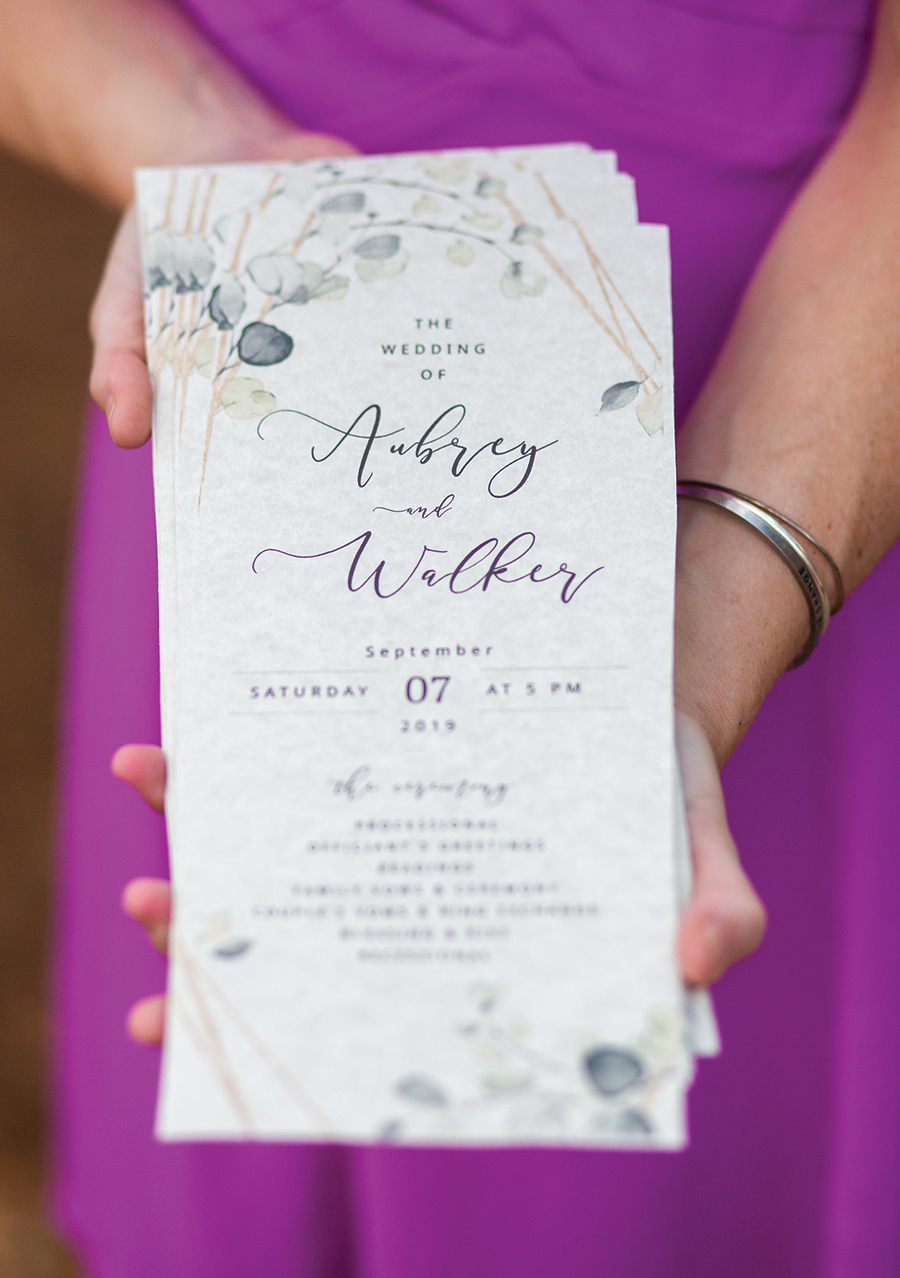
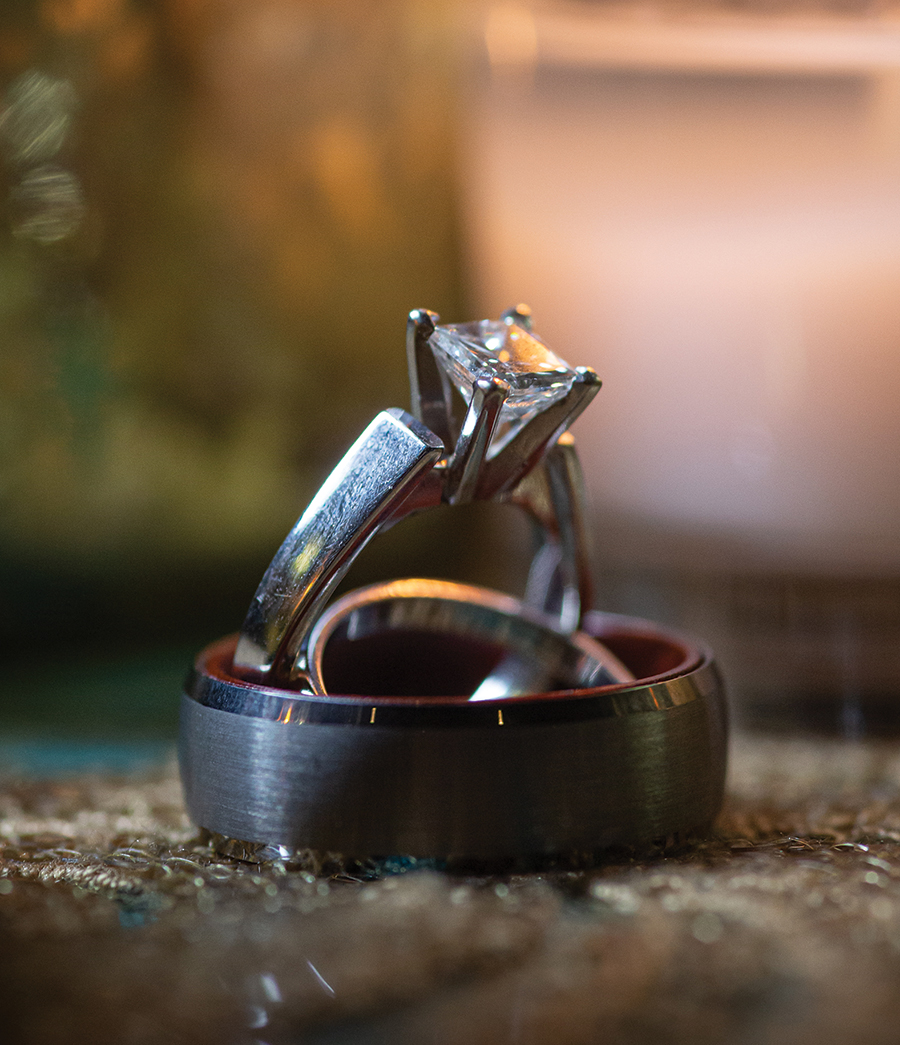
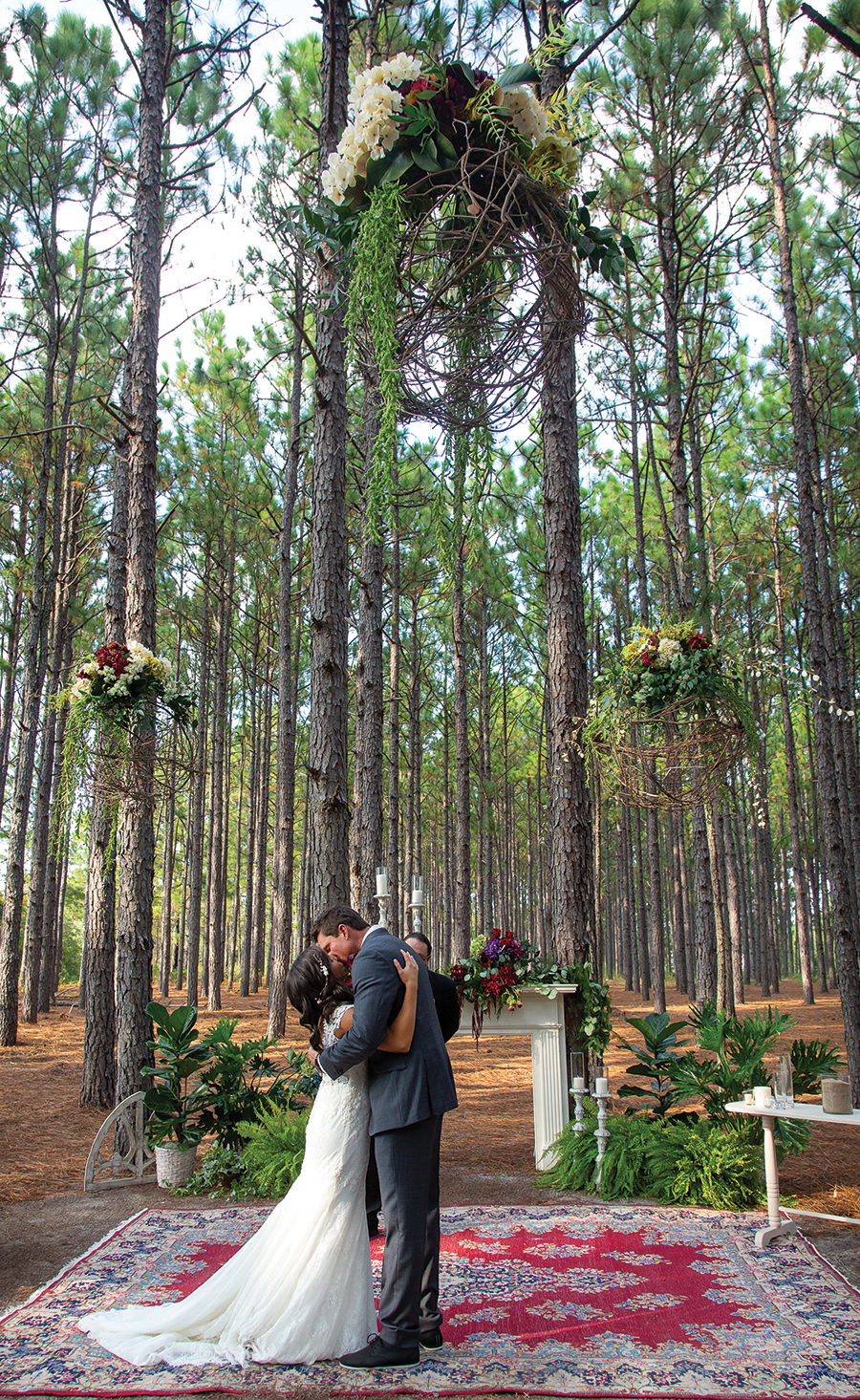
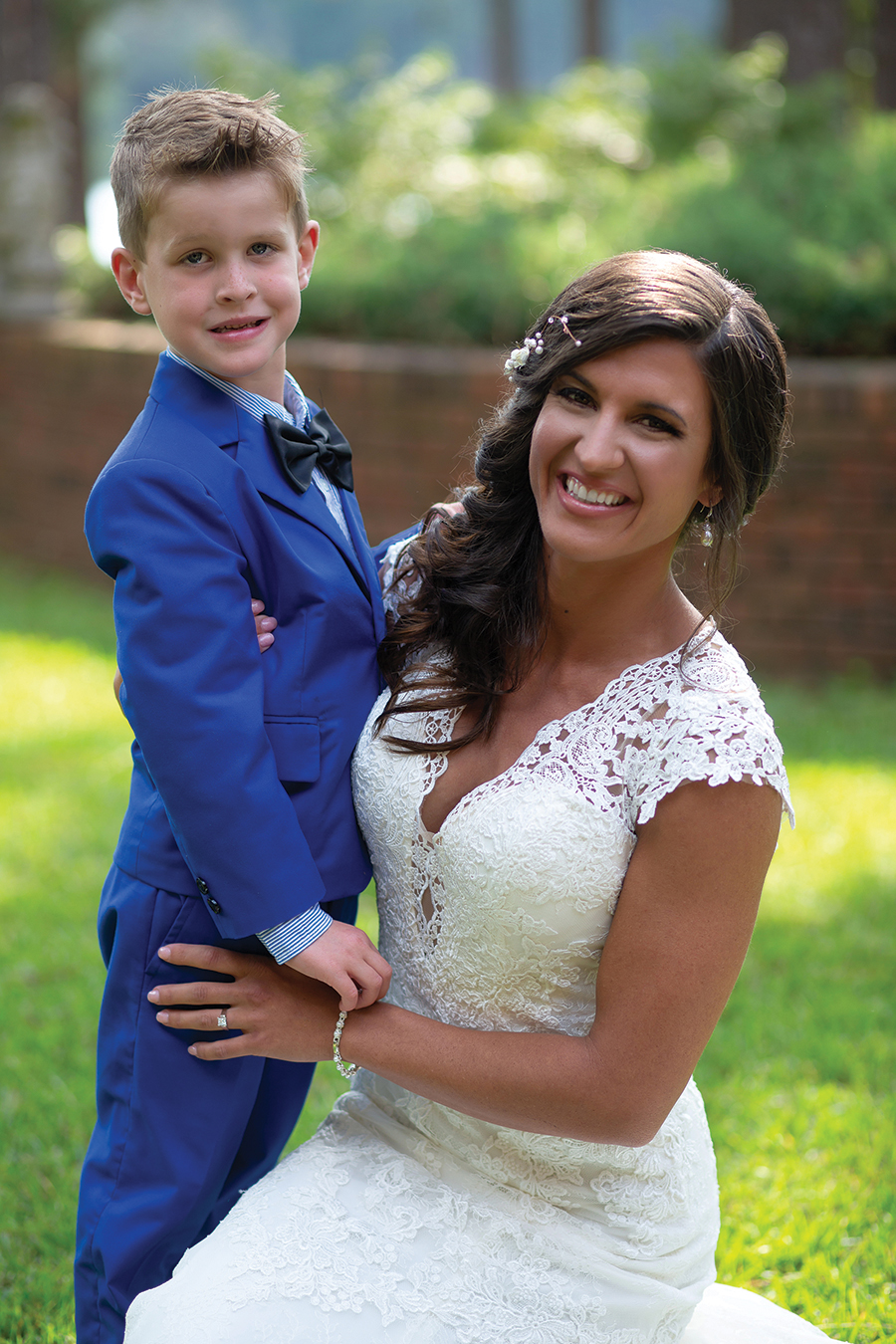
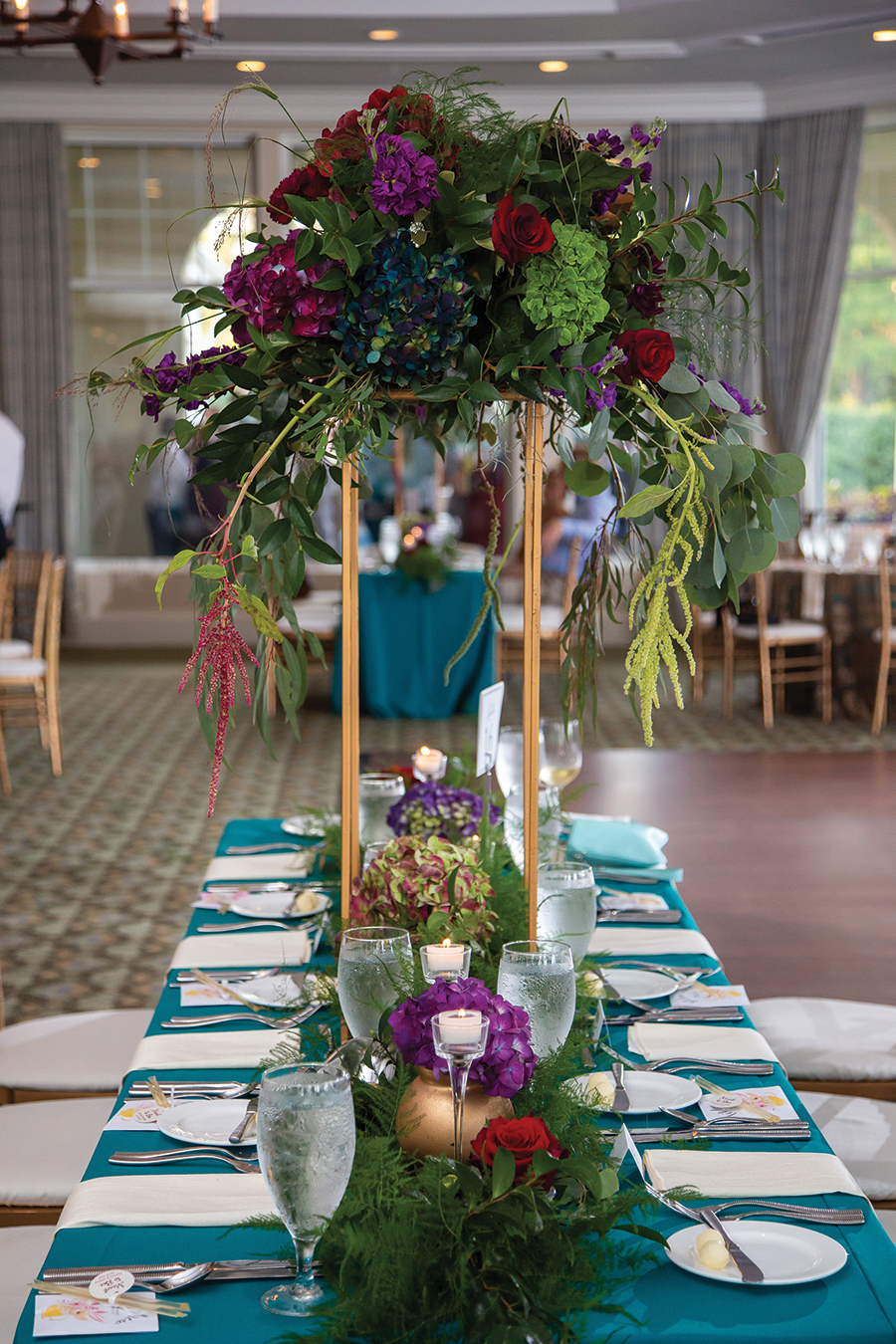
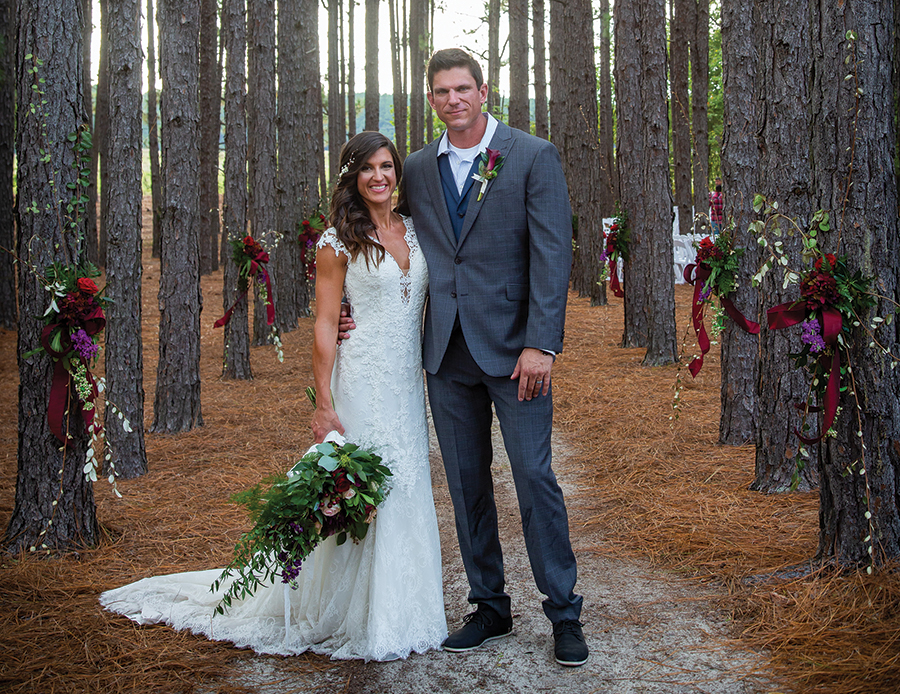
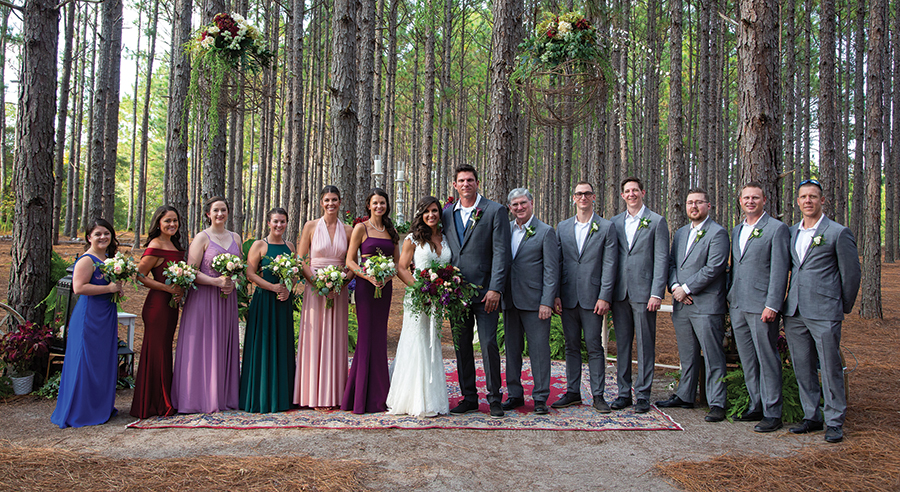
When planning their future, Jordan and Daniel looked to the past — starting with a proposal atop a hotel overlooking the ancient city of Jerusalem. The two followed that with a service that honored each of their family traditions at Sacred Heart Catholic Church, and a reception styled as an English garden party (and guests styled with appropriate headwear). All and all, this couple’s nuptial was one for the history books; but for Jordan, it will go down as the day her dreams came true.

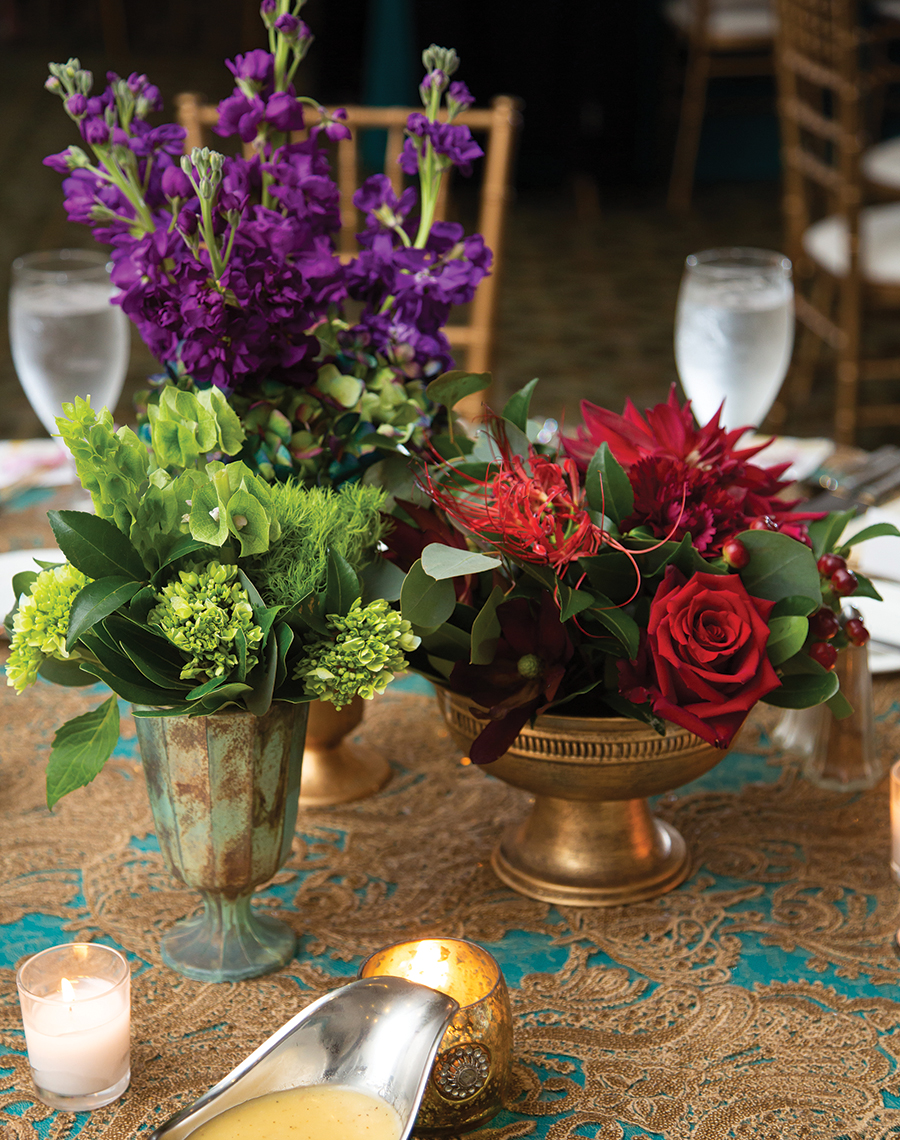
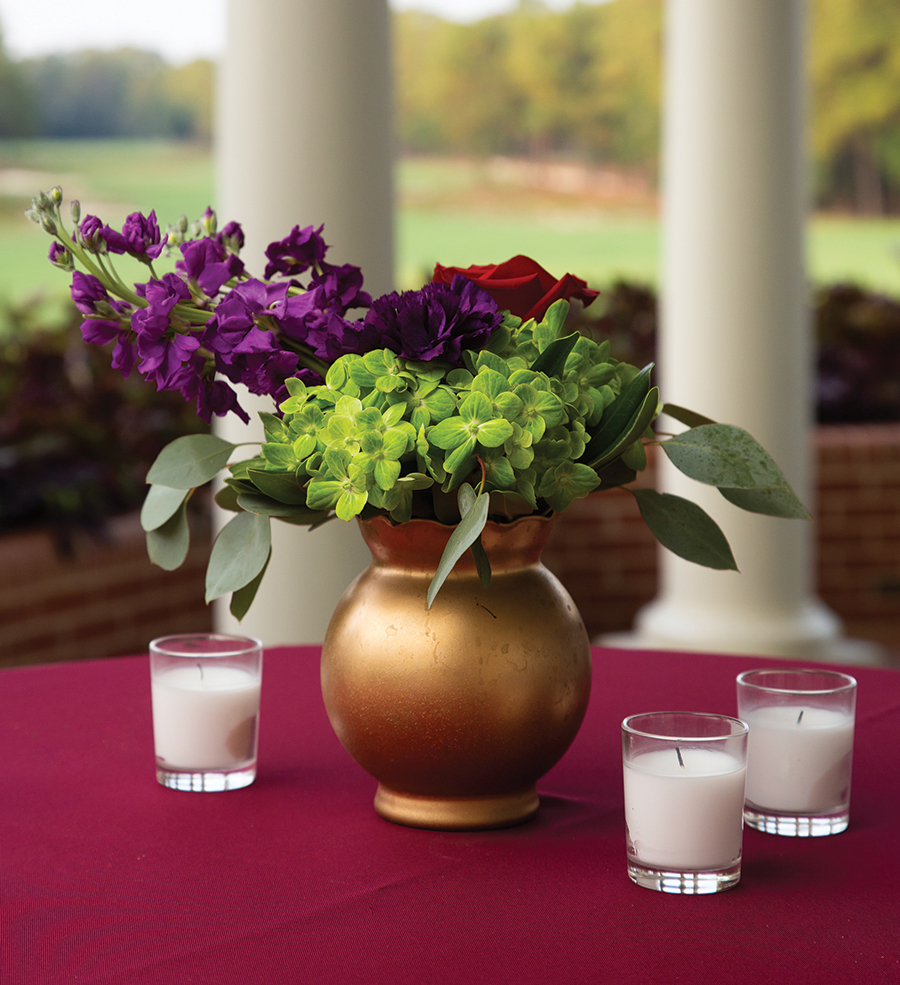
Ceremony: Sacred Heart Catholic Church | Reception: Weymouth Center for the Arts & Humanities | Dress: Customized Josephine by Milla Nova | Shoes: Badgley Mischka Hair & Makeup: The Bardot, Raleigh | Jewelry: Honeycutt Jewelers | Bridesmaids: Brideside | Flowers: The Foraged South | Cake: The Bakehouse | Catering: The Leadmine | Rentals: Richmond Rentals


Simple Life

The Reluctant Pilgrim

By Jim Dodson

Two decades ago, on the eve of the new millennium, the acclaimed Cambridge biologist Rupert Sheldrake was asked what single change in human behavior could make a better world.

Every tourist, he replied, should become a pilgrim.

Sheldrake earned the distinction of being the “world’s most controversial scientist” because he rejected the conventional belief that nature and the universe can only be explained by scientific data. 

His journey from atheism to an ever-expanding spiritual awareness and eventual embrace of his Christian heritage produced several fine books on the subject along the way, but it began with his simple curiosity about the common spiritual practices of the world’s religious traditions, highlighted by pilgrimages that awakened and expanded his own evolving views of human consciousness. 

What Sheldrake was getting at, I think, was that a tourist travels the world in search of new experiences that provide superficial pleasure or delight, a material quest, if you will, that looks outward rather than probing inward.

A pilgrim, on the other hand, travels over unknown territory with an open mind and spirit willing to face any physical obstacle that arises, stepping out of the daily routine to deepen one’s awareness of a divine presence and the journey within. Pilgrimages are as old  and varied as the world’s many religions, personal journeys that mean different things to every pilgrim. 

Two decades ago, I took my dying father on a journey back to England and Scotland to play the golf courses where he learned to play the game as a lonely airman just before D-Day. Ours wasn’t a conventional spiritual pilgrimage, I suppose, though in retrospect I see it as something akin. For 10 days we traveled and talked about his life and mine, leaving nothing unspoken between us, ushering his long journey to a beautiful close and enriching mine in ways I’m still counting up today.

A couple of years later, in the midst of an unexpected divorce, my young daughter, Maggie, and our elderly golden retriever spent an entire summer camping and fly-fishing our way to the fabled trout streams of the West. Like a couple of modern-day pilgrims from Geoffrey Chaucer’s Canterbury Tales — or maybe a Hope-and-Crosby road movie — we went in search of new meaning and old rivers, lost the dog briefly in Yellowstone, blew up the truck in Oklahoma, saw soul-stirring countryside and met a host of colorful characters who made us laugh and cry, creating a bond my daughter and I share to this day.

When Maggie’s little brother, Jack, asked to have his own mythic adventure, we took off the summer before 9/11 hoping to see every wonder of the Classical World. Owing to events in a suddenly unraveling planet, age-old conflicts in the Middle East, China and Africa, we only got as far as the island of Crete before turning for home. But traveling together through the ruins of a mythological world — following the footsteps of Homer and Herodotus, Marcus Aurelius and Aristotle — brought us both a deeper understanding of how we got here. Today, my son works as a documentary journalist in the Middle East, still trying to make sense of its age-old conflicts.

As it happens, I wrote books about these family adventures, which in my mind perfectly fit the definition of a spiritual pilgrimage, a journey over unknown ground that mystically leaves the traveler changed for the better.   

Last August, my wife and I joined 30 other pilgrims from our Episcopal Church for a more traditional spiritual walk along the Via Francigena — the ancient pathway linking Canterbury to Rome. In Medieval times, Christian pilgrims traveled the long road to pay homage to the tombs of the apostles Peter and Paul before catching ships to the Holy Land. 

I’ll confess, at first I was hesitant to go — a reluctant pilgrim who prefers to walk alone — or with only one or two others on such travels.

In a sense, my wife and I reversed this ancient tradition by making our first trip to the Holy Land weeks before our Tuscan walk to attend my son Jack’s wedding to a lovely Palestinian gal he met in graduate school at Columbia University.  The wedding festivities lasted several nights in Old Jaffa, the ancient port town next to Tel Aviv, where legend holds that Saint Peter received his vision to take Christianity to the gentiles of the Levant.

For the father of the groom, perhaps the most moving moment of this life-changing journey came on the morning of the ceremony when my wife, daughter and her fiancé Nathanial went for a swim on the beautiful beach that links the modern city of Tel Aviv to the ancient one of Jaffa. Afterward, following Arab tradition, I walked to the Char family patriarch’s house to ask permission for his beautiful granddaughter to marry my son. Tannous, 77, smiled and gave his blessing and we shared an embrace as both familiess applauded and music broke out.

An hour or so later, the wedding took place at a stunning basilica on the bluffs over the Mediterranean Sea. The rooftop celebration went on well after midnight beneath a full summer moon, prompting my own bride and me to slip away and stand on Jaffa’s famous Bridge of Wishes, where we quietly renewed our own wedding vows — for it was our wedding anniversary, too.  As we walked home to bed through Jaffa’s moonlit streets, I suddenly remembered that I’d left my watch on the beach where we swam that afternoon.

True, it was only an inexpensive Timex Expedition watch, one of half a dozen Expeditions I’ve owned — and lost — over the decades. But in this instance, it seemed like a metaphor for our travel through time and space.

The last full day of this family pilgrimage was spent following a scholar from Hebrew University through the familiar and rarely explored corners of Old Jerusalem, whose famous public spaces — the Wailing Wall, the Via Delorosa, the Church of the Sepulcher, the Dome of the Rock — were jammed with tourists throwing down money on “holy” relics and cheap souvenirs while young Israeli guards kept watch with Uzis in hand, a stunning contrast that made these famous pilgrimage sites feel oddly oppressive.

It was only in the much quieter Armenian and Christian sectors of the old city, where tourists rarely venture and the churches are spectacular, airy and cool, that I found myself breathing easier and wondering why the so-called holy sites had felt anything but.

An answer of sorts revealed itself weeks later when we set off on foot with our fellow pilgrims on the Via Francigena, an 80-mile walk through the stunning countryside and soulful hill towns of Tuscany.

On our first day out, we walked 18 miles through lush vineyards and olive orchards — sampling ripening grapes and recently cured olives as we went — traversing a forest where the annual wild boar hunt had just begun. Owing to my dodgy knees, I volunteered to be a sweeper bringing up the rear of the group, a pattern I repeated all week. This allowed me to walk at my own pace, get to know other pilgrims who took their turn bringing up the rear, and travel at my leisure, frequently by myself for hours at a time, entirely off the clock of the world and my lost Expedition watch — as our group leader Greg liked to say — off the hamster wheel of our lives.

At the end of each grueling hike, I enjoyed getting to know my fellow travelers over pasta and good red wine, rowdy fellowship and swapping tales of blistered feet and the day’s ah-ha! moments.  The excellent gelato cured a lot of what ailed my aching feet and muscles.

For this pilgrim, however, it was the quiet hours of walking alone or with my wife that I came to savor most, following a stony trail traveled by untold thousands before us across the ages, through deep forests or over sweeping hilltops where distant villages and Medieval abbeys — our destination each day — sat like painted kingdoms in a Medici fresco.

My only real concern was the fabled Tuscan heat of late summer. But after walking for two days in the heat, something rather marvelous happened.

I emerged from a deep glen where I’d stopped to look at chestnut trees and wild mushrooms to find Wendy waiting for me on a rise in the stony road, just as a thunderstorm broke and a cooling rain fell. Over the hill, we came upon idle orchards and an abandoned farmhouse being reclaimed by the wild. 

We sheltered there for a while, soaking in the glorious rain, looking at the vacant rooms, wondering about the people who once called this beautiful ruin a home half a century ago or just last year.

Unexpectedly, I found this to be the most moving moment of the entire pilgrimage, a reminder of our own brief walk through the storms of life and a changing universe. Wendy was kind enough to take a photograph of it.

The rain mercifully followed us to Siena and Rome, where the skies cleared, the sun bobbed out, the heat returned and the summer tourists swarmed over the Vatican and its celebrated museums.

I bailed out halfway on the official Vatican tour, feeling as oppressed by the grandeur of  monumental Rome as the holy relics of Old Jerusalem, concluding I must either be a poor excuse for a Christian pilgrim or a true country mouse.

Back home, I had a friend who is a gifted artist secretly paint the abandoned farmhouse, and gave it to my wife for Christmas.

She loved the painting but joked that it was really for me. I couldn’t disagree, pointing out that I also gave myself a new Expedition watch for our next pilgrimage.  PS

Contact Editor Jim Dodson at jim@thepilot.com.

Southwords

Mark Twain and Me

A fascinating seat at the table

By Gayvin Powers

As far as American writers go, Mark Twain is as iconic as Halley’s comet. That’s why I jumped faster than Huckleberry Finn onto a river raft when given the opportunity to have dinner with this immortal being.

Now, I know that Mark Twain isn’t immortal. However, he certainly has been eternal for over a century due to his writing and for 63 years after that, thanks to Hal Holbrook, who created the touring show “Mark Twain Tonight!” before he hung up his white suit for good in 2017.

When I was an aspiring writer in my 20s and madly in love, my boyfriend was putting on “Mark Twain Tonight!” at Stanford University. From the moment Hal sauntered across the stage, I didn’t see him, I saw Twain. I was captivated as Twain came back to life with his white handlebar mustache and stylistic speech, monologuing about subjects of race and equality.

After the performance, a private dining table was set for us with a single yellow rose on it.

“Like my grandfather’s roses,” I thought, waiting for Hal to de-Twain himself. Throughout my life, my grandfather gave me roses from his garden when they were in season. When Hal arrived, he was looking like himself again and accompanied by a bald man with a serious face.

They were clearly not expecting company. Our first interactions could be described as excited on my part, and reserved and guarded on theirs.

Hal’s eyes looked tired, and I couldn’t blame him. He’d just given his Tony award-winning performance under the hot lights for two hours. The most relaxing thing he did on stage was sit in a winged back chair and smoke a cigar — he probably wanted more of that and a glass of whiskey. Instead, he got a plucky Gen-X-er who looked like apple pie but was more like a Red Bull.

I introduced myself. Hal was courteous while the short man grumbled his name.

“That’s my manager,” Hal said. They were quite a pair: Hal was tall with mischievous, curious eyes, and his manager was like a stout boxer.

The four of us ate steak and potatoes while Hal and I talked between bites. I wondered if he had been to the Clifford Powers’ grandchild training academy because every time I asked him a question, he asked one back. Growing up, I was accustomed to talking with my grandfather, which was more like an interview. Hal was just shy of achieving this level of interrogation.

“You enjoyed the show?” he asked me.

“It was amazing! How did you come up with the idea to perform Mark Twain?” I asked. He took a bite, letting the question hang in the air. “Did you write it too?” I added.

“Do your parents live near here?” he replied.

“No. My mother passed away a few years ago,” I said, fluttering my eyelashes to force the tears back down. “And I’m closer with my grandfather than my dad.”

“I was an actor,” he said, giving me the version that one gives a youngster. “I wanted to act. Making the show let me to do that.”

I found out later that Hal had invented his celebrated performance out of necessity. He was out of work, his wife had postpartum depression, his parents were gone, and he was alone. Prior to “Mark Twain Tonight!” he had never read any of Twain’s books. His manager recommended he create the one-man show, and Hal did it to feed his family.

Later he asked, “Did you know, Mark Twain created the Angel Fish and Aquarium Club for girls after his wife and daughter died?”

I had no idea. Hal clearly admired Twain. He shared how Samuel Clemens, Twain’s real name, went on tour when his fortune ran dry — even though he hated touring.

“So, both of you were on the road, leading similar lives,” I said.

“In a way.”

With the last of the crème brûlée devoured, Hal said, “You should take the rose.”

“Thank you,” I said. “I think you should have it.” He looked puzzled. “Then you can take it home to your wife, and she’ll know that you thought of her while you were on the road.”

As if seeing me for the first time, his eyes softened as he said, “Why, thank you. I’ll do that.”

He put the flower in his lapel.

“Gayvin, what do you want to do?” Hal asked me.

“I want to be a writer.”

“Then you need to write. Write your own material. Don’t wait for someone else.”

With that, he gave me a hug goodbye, and for a brief moment I felt like one of Twain’s Angel Fish.  PS

Gayvin Powers is author of The Adventure of Iona Fay series and writing coach at Soul Sisters Write. She can be reached at hello@gayvinpowers.com.


Golftown Journal

In the Loop

No Pinehurst but plenty of character

By Lee Pace

Had the producers of the new film Loopers: The Caddie’s Long Walk been able to get to Pinehurst to interview some of the men who have toted golf bags on the venerable No. 2 course, they could have heard Thomas Trinchitella speak of working for former President George H.W. Bush for two days in 2003, or carrying for Tiger Woods for two rounds prior to the 2005 U.S. Open.

“This was the week before the Open,” Trinchitella, who has been caddying at Pinehurst since 2001 and is one of 18 members of the Pinehurst Caddie Hall of Fame, would have told them. “Tiger gave (regular caddie) Steve Williams the week off. We go off at 7 a.m. and the fog’s so thick I can’t tell where the flag is on the first green. I knew it was middle or back. So I give him the back yardage.

“I’m sweating walking up to the green. We get there and I see his ball 20 feet left of the flag. It was the right yardage, just left. That just determines whether he’s going to believe what you say or whether you’re just the bag-toter. He just went by my yardage the rest of the day. It was a great experience. He talked about anything and everything. Couldn’t have been nicer.”

Had they gotten to Willie McRae before his death in October 2018, McRae could have regaled them with stories of 75 years of caddying and strolling the fairways with five presidents, baseball great Mickey Mantle, basketball icon Michael Jordan, and golf hall of famers Gene Sarazen and Sam Snead. He could have shared some of his favorite one-liners, like the one when a putt had a chance to fall but veered off at the end.

“That was a mother-in-law. It looked good leaving,” McRae liked to say to guffaws all around.

Alas, the producers made it to Scotland and Ireland, to Pebble Beach, Bandon Dunes and Augusta National. But not to Pinehurst, where men carrying golf bags have been part of the landscape since the late 1880s.

“It would have been great to get to Pinehurst,” says Ward Clayton, one of the producers. “But in the end, we could only get to so many people. There are so many great stories about caddies all over the country.”

The Loopers documentary opened in early 2019 and by early summer had been seen in 30 states across the country and in the United Kingdom. The one-hour, 20-minute film will be out on DVD in late August and is available for golf clubs to rent for private showings. Actor and comedian Bill Murray, who starred in the 1980 movie Caddyshack and caddied as a boy in Illinois, narrates the lively film that traces the history of the caddie and his evolution through centuries of the game.

“What a great tribute to a profession that is so important to the game of golf,” Pinehurst President Tom Pashley told a group of resort caddies after a showing in June at the Sunrise Theater in Southern Pines. “We absolutely recognize how important the four or five hours you spend with a player is to their overall experience at Pinehurst. We celebrate the tradition of the player-caddie relationship.”

The film is the union of ideas and passions from two golfers from opposite sides of the country.

Jim Packer had spent 25 years making movies in Hollywood (Jersey Boys, Winter’s Tale of recent note) and in his spare time playing golf at Bel-Air Country Club in Los Angeles and developing a close relationship with his regular caddie.

Clayton, a native of Durham who has spent his career in golf journalism and public relations, developed a reservoir of stories about old-time Augusta caddies and the Masters Tournament when he was sports editor of The Augusta Chronicle from 1991-2000. He turned those tales of colorful characters with nicknames like Iron Man, Pappy, Cemetery and Stovepipe into a 2004 book, Men on the Bag: The Caddies of Augusta National.

Packer thought there was a story to tell, that caddies had never been properly saluted in a quality, full-length documentary. Reading Clayton’s book helped further develop the idea.

“Jim always thought that caddies got the short straw — what they do, how they deal with people in guiding them around the golf course and interacting with them psychologically — he felt that story needed more depth and could be told,” Clayton says. “The intention of this was not only for the people that are golfers, but for people who are outside of golf, to understand what role the caddie has and what they do. If you think of any sport, it’s the only one where you have somebody standing right beside you when you hit your shot.”

They hired a team of directors, cameramen, writers and editors to produce the film, Packer as executive producer and Clayton a producer.

“The essential message of the film is this: If you’ve never played a round of golf with a caddie, you’re missing out,” says Clayton, today a PR and communications consultant in Jacksonville, Florida. “I don’t know what percentage of golfers have ever played with a caddie. I was 17 or 18 when I first had a caddie. I was with some friends from Durham in Pinehurst and we got on No. 2 and took caddies. It was an awesome experience.”

The film tells the story of loopers at esteemed clubs like St. Andrews, Carnoustie and Prestwick in Scotland, and Ballybunion and Lahinch in Ireland. It tells of Arnold Palmer’s relationship with Augusta caddie Nathaniel “Iron Man” Avery and interviews Fuzzy Zoeller about how he won the 1979 Masters playing at Augusta for the first time with the help of a local caddie named Jariah “Jerry” Beard.

It explores Ben Crenshaw’s relationship with Augusta caddie Carl Jackson, Nick Faldo’s with Fanny Sunesson and Tom Watson’s with Bruce Edwards. Other professional caddies interviewed include Williams (Woods’ former caddie), Pete Bender (Greg Norman and others) and Michael Greller (Jordan Spieth).

The movie traces the evolution of the Evans Scholars Program, in which high school caddies can earn college scholarships, and ferrets out lesser-known tales like that of Greg Puga, who grew up in East Los Angeles, learned to caddie at Bel-Air, and rode the passion he developed for golf into eventually qualifying as an amateur to play in the Masters.

Clayton says one of the most gratifying elements of working on the film was taking the sad tale of a long-deceased Augusta caddie and doing him a good turn.

“Iron Man” Avery caddied for Palmer at Augusta until the late 1960s and was on the bag for all four of Palmer’s Masters wins (1958, ‘60, ‘62, 64). But in later years, Avery had a difficult life, died in 1985 at the age of 46, and was buried in Augusta in an unmarked grave. Through the process of making the film, Clayton was able to find a donor who contributed funds to have a grave marker produced and placed on Avery’s grave. 

“For 37 years his grave went unmarked,” Clayton says. “Now it has a headstone with his name and lists his Masters wins with Arnold Palmer. It’s the coolest thing.”

The film makes a concerted effort to challenge the old saw that a caddie’s job is to “Show up, shut up and keep up.” Michael Collins, a former PGA Tour caddie now an ESPN reporter, says, “If that’s all a player sees in his caddie, he’s not winning today.” By probing under the surface of the relationships of top professionals and their caddies, the message comes across loudly that the caddie is so much more at the top level of the game — part psychologist, friend, servant, conversationalist and swing coach.

Of course, it’s a little more basic on the one-off resort level like Pinehurst.

“That’s the old standard, right?” says Trinchitella of that simplistic definition of a caddie’s job. “It’s not a bad policy until you figure out what your player wants. The first thing you do is help them relax and feel comfortable. On No. 2, everyone’s nervous on the first tee. First, it’s a famous golf course. And second, you’ve got someone else watching your golf game. A lot of people aren’t used to that if they’re a 20 or 25 handicapper.

“You just try to get them to relax. There’s nothing I haven’t seen and nowhere I haven’t been.”  PS

Lee Pace has written about the Pinehurst golf scene for more than 30 years. For more information on the movie and its availability in theaters, go to loopersmovie.com. Clubs and golf associations can set up private showings by clicking loopersmovie.com/request-a-screening. 

The Kitchen Garden

Sandhills Melon

Slice it any way you like

By Jan Leitschuh

When the heat is on, the kitchen is the last place you want to be, unless it’s rummaging in the refrigerator. Luckily for the Sandhills, the melon bonanza of July — starting with the first local watermelons on Independence Day -— continues on through the first few weeks of August. So don’t delay if you haven’t gotten your summer Sandhills melon on.

Sandhills melons are dessert in a rind. Breakfast too. Crisp. Juicy. Cool and sweet. And healthy. What’s not to devour?

On a hot and thirsty day, they are hydrating with their high water content — up to 90 percent, making for a juicy and sweet texture. Blended with a little mint or basil, it’s the ultimate healthy electrolyte sports drink, refreshing after mowing the lawn.

The Sandhills grows melons quite well. Apparently, this viny fruit enjoys our “light land,” that is, the sandy soils, which don’t hold certain nutrients that promote vine growth at the expense of fruit. The sand helps concentrate flavor instead of growing rampant greenery. Wholesale buyers are said to pour in from other areas because of the delectable sweetness of our Sandhills melons.

Melon versatility is another mark in their favor. A simple slice enhances any meal as a colorful and healthy sideshow. Melon can be eaten as dessert in combo with other fruits, or with prosciutto as a light meal. Melon bits can be added to salads, blended into cold summer soups, as fruit slurry added to boozy cocktails, as drinks and juices, as sorbets and granitas. Where does something so tasty get off being healthy? Melons contain folate, niacin, vitamin B6, vitamin A, copper, iron, phosphorus and manganese.

Melons are members of the Cucurbitaceae family, which makes them the sweeter relatives of squashes and juicy cucumbers. Although often grouped together, most sweet melons fall into two broad categories: watermelons and muskmelons. You may have heard folks referring to cantaloupes as muskmelons — all cantaloupes are muskmelons, but not all muskmelons are cantaloupes.

Another benefit of buying local melons comes from the way they are harvested. Not having to ship them long distances, a Sandhills grower can let the melon linger to ripe perfection, at which point it “slips” from the vine. Slip-ripe melon should be eaten within a day or two because they are . . . wait for it . . . ripe. Peak melon here has a flavor that is next to impossible to sample out of season. Dive in! They won’t hold. And slip-ripe Sandhills melons deserve to be eaten at their peak. This is one of the supreme benefits of local food — the taste of a fully mature melon.

Although melons are refreshing when served chilled, refrigeration does diminish their flavor, so serving at room temperature is ideal. Or try grilling them: Cooking concentrates their sugars even further. I have even dried melons in a dehydrator for healthy hiking snacks — you don’t end up with much volume but, wow, what a zing of flavor.

In choosing a good melon, first look at the stem scar. A smooth, hollowed scar indicates that the melon was harvested slip-ripe. If a piece of the stem remains, it may have been harvested too early.

For thinner-skinned melons, press very gently on the bottom of the melon, opposite the stem end. If the skin is easy to depress, the melon is ideal for eating.

That wonderful melon fragrance is another clue. A sweet, musky aroma, produced by enzymes that generate more than 200 different fruit esters, also signals ripeness.

Inspect the outside. Does it have any bruising, cracks, moldy patches or soft spots? If there is, pass it by. You should always inspect the melon’s skin, or rind, before you do anything else, because if there are any imperfections on the outside of the melon, there is likely something wrong with the inside as well.

While you’re inspecting your melon, make sure you pick it up and test how heavy it is. If you notice the melon is larger and heavier than expected, it’s a good melon to choose.

The thump test really is “A Thing.” Take the palm of your hand and tap the melon a few times on its skin. If you notice a sound that is very hollow in nature, your melon has promise.

Some common types you’ll find in area markets and farm stands are:

• Cantaloupes. Common, and the most nutrient-rich of our Sandhills melons. The exterior has a rough “netting” atop its creamy rind. The rich, pale orange flesh has a light and sweet flavor, and it can grow from less than one pound to several pounds in weight. Cantaloupes are high in Vitamin A and numerous antioxidants. These netted melons are easy to digest, contribute to vision and eye health, and have a high beta-carotene content, which is great for knocking out free radicals. A sun-warmed, slip-ripe cantaloupe just begs to be paired with prosciutto. Or blend chunks with frozen mango or orange juice. A splash of Grand Mariner liqueur would not be out of place.

• Honeydews. The green counterpart to cantaloupes, pale green honeydews and peach-colored cantaloupes are often paired together in salads. Honeydews have a higher sugar content than either watermelons or Sandhills cantaloupes. As a honeydew ripens, its rind develops a sticky, velvety feel and turns from green to creamy pale green. The honeydew melon usually grows in a round or oval shape, with a very smooth rind, weighing from a pound to several pounds. Honeydew is popular as a dessert ingredient, but I love to juice it for drinks and frozen ices. Blend chunks of honeydew with mint, lime and a little sweetener, then freeze, beating periodically to reduce the ice crystals. Non-alcoholic honeydew mojitos, practically. Scoop the frozen crystals as snow cones for the kids, or serve as a palette cleanser if you want to go all “Downton Abbey.” Another tangy option is to combine honeydew chunks with lime and basil and do the same. Serve as a sorbet, or add rum, triple sec, tequila or a spirit of choice for a grown-up porch-sittin’ sipper.

• Watermelons. Everybody eats these thick-rind fruits. There are almost 50 varieties of watermelon. They taste similar but vary in size, flesh color (mostly pink or red but also yellow, white and orange), and are seedless or seeded. The most popular red-fleshed varieties are rich in the useful antioxidant lycopene. It carries the highest lycopene per serving of any fruit or vegetable. Watermelon can be sliced and chunked, pickled, candied, fermented, injected with one’s favorite spirits or made into a syrup, and its spit seeds have provided children with amusement for generations. The newer “icebox” varieties are handy if you are not feeding a picnic crowd. They tend to be smaller, and virtually seedless. Still, watermelon takes up room in the fridge, so if you are short on space, cut it into chunks and discard the heavy rind. Fresh watermelon chunked in a spinach salad with feta cheese is a cool summer classic. A ripe watermelon has dull, not shiny, skin, and the lighter colored part of the rind, where the melon rested on the ground, should be yellow or creamy, not green or white. A light tap to the rind should produce a hollow sound.

• Sprite melons. Here is the answer to big melons. This little personal-sized melon is perfect for a small treat. It’s about the size of a baseball or softball. Serve half for breakfast with some berries or a prune in the center. The sprite melon looks like a tiny cantaloupe, complete with a round shape and seeds on the inside. The skin of the sprite melon is ivory in color, and it develops brown markings when it ripens. The flavor is delicious. To me, it has a subtle pear flavor in with its melon-ness. A sprite is up to 35 percent sweeter than any other type of melon, so popular with fruit lovers. This is a true dessert melon.

• Canary melon. Named for its bright yellow rind, that yellow skin is as bright as a canary bird. This oval-shaped melon has a hard skin and a pale flesh, and weighs a pound or three. I’m very fond of canary melons, and grab them whenever I find them. The cream-colored flesh has a mild, sweet, slightly tangy flavor and a texture similar to a pear. Originally from Persia, canary melons pair well with citrus and herbs, such as basil and cilantro, and are good for making sorbets and granitas.

• Korean melon. You might find these small cuties around the Sandhills, although they are not common. Snag one if you see them. Another smaller, personal-sized variety, this little elongated yellow-and-white striped melon is cheerful. Korean melon is smaller than the other melons. It has white color flesh and unique flavor. It’s mildly sweet, juicy and is delicious when eaten in a salad. Its small size is perfect for those just wanting a melon “taste,” but don’t want to deal with a larger melon. The flavor is between a honeydew and a cucumber. In fact, it makes an interesting salad sliced with cucumbers and dressed in balsamic vinegar. The sweetness is lower than other western melon varieties but very juicy — 90 percent water — and refreshing.

• Crenshaw. You can sometimes find these around the Sandhills markets. Again, grab them when you find them, as they probably won’t make a reappearance. It’s a hybrid type of melon with a sweet, juicy salmon-orange flesh. It’s ovoid in shape with greenish-yellow skin. This variety is popular, and pretty in a fruit salad.

The Sandhills melon season is brief but worthy. Grab a slip-ripe melon from a local farmer and enjoy.  PS

Jan Leitschuh is a local gardener, avid eater of fresh produce and co-founder of the Sandhills Farm to Table Cooperative.


Sporting Life

An Ear to the Ground

Sometimes you can hear the past

By Tom Bryant

It was a child’s trick remembered from early days growing up in proximity to the railroad tracks. I leaned down, put my ear to one of the rails and listened. The sound was barely discernable: a thin, humming, almost-not-there pitch. If I hadn’t done it before, I wouldn’t have known what the sound represented.

I was in Pinebluff, my old stomping grounds, aimlessly riding around the area, recalling days when I was a youngster and how much fun we had camping, exploring, growing and learning. I was standing in the middle of the railroad tracks, looking south toward Addor. I left my old Bronco parked off Pinebluff Road under an ancient pine and walked north on the tracks to locate the little sand pit that used to be nestled on the east side of the railroad.

As Boy Scouts, we camped in the area many years ago. The little cut-back in the short brush to the camping spot was easy to find, and the site looked basically the same as it did when our old Scout Troop 206 used it, maybe a little smaller. To me, as an adult, everything in Pinebluff seems smaller.

On the way back to the Bronco, I remembered how to put my ear on the track to see if I could hear an approaching train, an old trick discovered by the native Americans when they were fighting the railroads and “iron horses,” as they called the black smoke-belching locomotives. I probably learned the trick from a Roy Rogers Western in the old, long-gone Aberdeen Theatre.

It worked. There was a definite hum when I placed my ear to the rail. The sound was growing louder, but I couldn’t see anything because of a slight curve in the tracks to the south. I slowly climbed the embankment that overlooked the tracks and settled down to wait and see if the noise in the rails turned into a rumbling iron horse.

The whistle of the freight train in the distance indicated it was getting close, so I performed another tradition just as we youngsters did in the old days. I hustled down the slight incline and placed a penny on the rail. Shoot, what the heck, inflation has caught up with us, so I put a quarter beside the penny and went back to my observation point.

In just a few minutes, the huge freight train rumbled around the bend, moving slowly as it labored up the slight grade toward Aberdeen. It was massive; and as always, the sight of the big engines blowing diesel smoke had not lost its magnificence to me as I watched it move on north and out of sight.

It took a while to find the flattened quarter, and I never did find the penny, probably stuck to the wheel or lodged in the underbelly of the rail car. I took one last glance up the track toward Aberdeen and hiked back to the Bronco.

A lot has changed since, as a youngster, I walked the tracks from the ice plant in Aberdeen to our home in Pinebluff, hunting along the way. I would range out in the woods on either side of the tracks like a close hunting bird dog. I was hunting for anything in season. The game bag usually leaned heavily toward squirrels, though. When I got home, I’d clean the game, and Mom would store it in the freezer until we had enough for a real wild game feast.

My attraction to trains began early, at least according to my mother. During World War II, while Dad was moving around the country being trained for the Navy, Mom and I, an infant not yet 1 year old, followed him. We would find a small apartment and stay there until he moved on to the next training camp. Like most of the rest of the country, during those war-torn years, we always traveled by train.

After the war, Dad mustered out of the Navy in Washington D.C., boarded a slow-moving passenger train and rode it home to South Carolina. I think that was his last train ride. Although he didn’t travel by train anymore, they were an integral part of his work experience. He was the superintendent of the ice plant in Aberdeen. The plant, City Products Inc., loomed over the tracks a couple of miles south of the town. Fruit and produce freight car activity was constant 24 hours a day. A platform off to the side in the middle of switching tracks could handle 50 freight cars and enabled the plant to get ice into bunkers to refrigerate products on their way north or west.

Ice plants were strategically positioned along the north-south freight train run, enabling timely icing all the way north. I can remember plants in Florida at Miami, Lakeland, Sanford and Jacksonville, and in Florence, South Carolina, and Aberdeen, North Carolina. Aberdeen was the most productive and could manufacture and store 25,000 tons of ice. The plant was built to accommodate the Seaboard Railroad’s largest switching yard near Hamlet, North Carolina. This was where trains were made up for their ultimate destination. Seventy-five trains could be assembled for points north, south and west. It was a huge operation, and the ice plant in Aberdeen played a major part in Seaboard’s shipping plans. It was so important that the railroad had a fully staffed office in the ice plant with personnel who kept up with rail cars that needed refrigeration. The Seaboard official’s office was immediately adjacent to my dad’s.

On several occasions, I accompanied my father when he called on Seaboard offices at the switching yard in Hamlet. The yard was massive and always filled with activity with yard switching engines assembling trains for their ultimate destination. Hamlet was dubbed the “Hub of the Seaboard,” with five Seaboard Air Line railroad lines leading from the town and, at its high point, 30 passenger train departures each day.

A few days after my sojourn to the railroad tracks in Pinebluff, Linda, my bride, and I made the short ride to Hamlet to visit the restored railroad depot and see the old switching yard of the Seaboard. The CSX railroad company now owns the yard and uses it for the maintenance of freight cars.

The depot is magnificent. It received the Historic Preservation of North Carolina’s 2005 Carraway Award for outstanding restoration work by public agencies. The station is also listed on the National Register of Historic Places. It is one of the finest restored depots I’ve ever visited and was well worth our trip.

The switching yard is now more dedicated to maintenance, and not much was going on when we were there. I’ve even heard a rumor that CSX is slowly putting it in mothballs.

The Hamlet railroad depot? Amtrak does not provide ticketing or baggage service now, and only two trains come through a day.

The City Products ice plants are history. Not one left. Shortly after my return to Southern Pines, I drove down the narrow dirt road that was the only way to get to the plant by car. Nothing can be seen of the massive original structure, which was, in the past, Moore County’s largest building and you might even say Aberdeen’s skyline. All that remains is broom straw and pine trees.  PS

Tom Bryant, a Southern Pines resident, is a lifelong outdoorsman and PineStraw’s Sporting Life columnist.