The Naturalist

The Natural History of Pumpkins

There’s more to the orange gourds then just pie and jack-o’-lanterns

Story and Photographs by Todd Pusser

Pumpkins have always evoked strong memories of childhood and my Moore County home. I vividly recall each fall season my parents taking me to view the giant pumpkin display at the county fair in Carthage. I would stand dumbfounded, staring at the enormous behemoths weighing hundreds of pounds, and wonder how on earth a vegetable could grow so freakishly large.

As October rolled around, pumpkin decorations plastered the halls of West End Elementary School. My class would gather in the library to watch Ichabod Crane dodge a flaming pumpkin tossed by the Headless Horseman in the old 1949 cartoon The Legend of Sleepy Hollow. Speaking of cartoons, I’m pretty sure I can repeat every line from Linus’ Halloween ritual of waiting through the night, in his most sincere of pumpkin patches, for treats from the mythical Great Pumpkin. Thank you, Charles Schulz. 

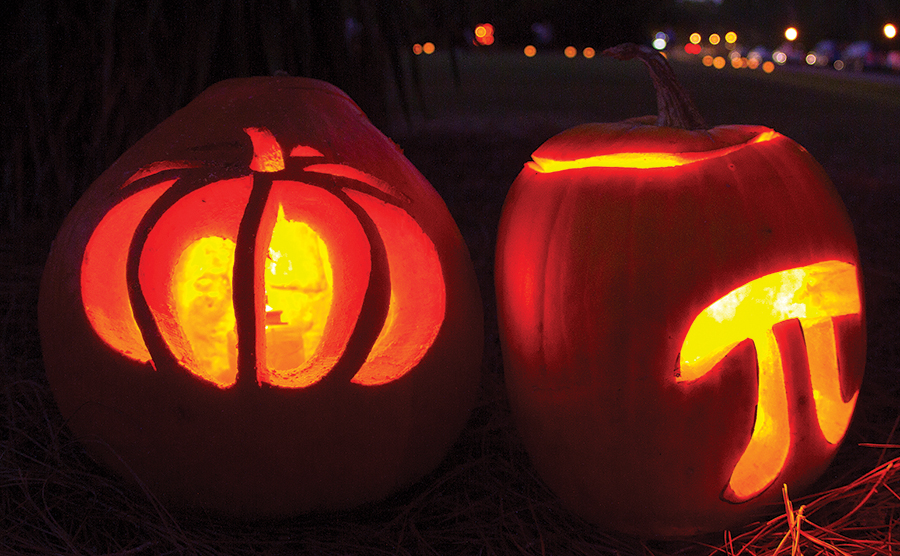
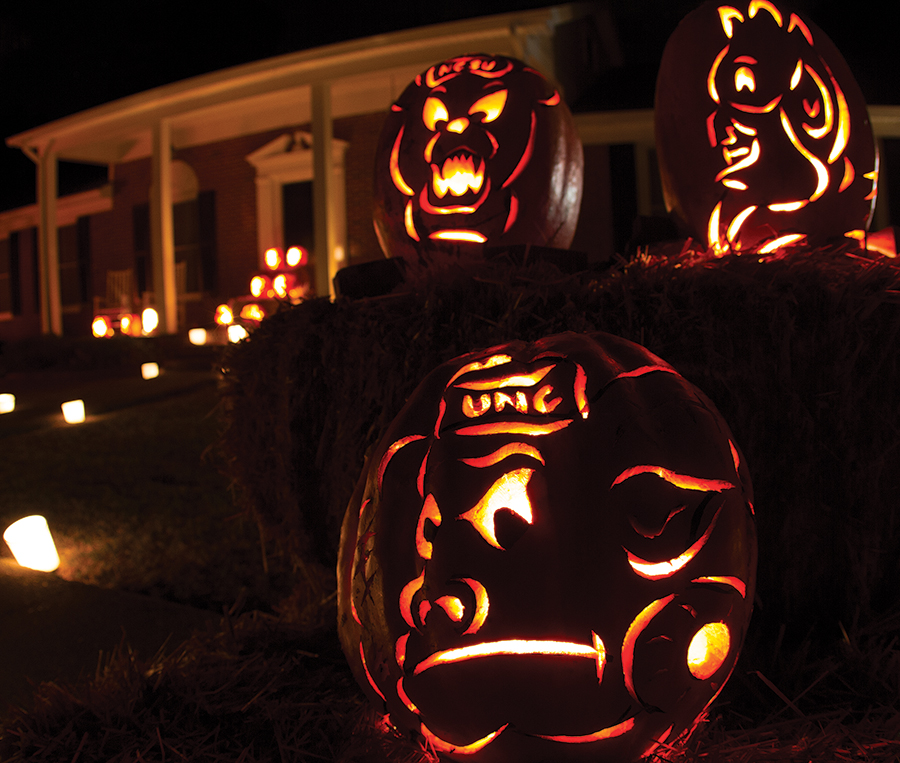
However, it was Otis Boroughs who really sparked my interest in pumpkins. Otis grew several acres of pumpkins, and throughout the 1980s, he, along with his wife, Nancy (who happened to be my kindergarten teacher), hosted an incredible jack-o’-lantern display each Halloween. People would travel from all over the state to their farm in Eagle Springs to see his artfully carved faces of famous cartoon characters, sports mascots and wild creatures. It was a magical feeling, standing beneath starry skies, staring at the flickering light dancing from the jagged cuts of dozens of pumpkins. Heat, given off by candles deep inside the large, orange orbs, created a scent of warm pumpkin pie that permeated the night air.

Realizing how much I liked the pumpkin display, Otis and Nancy invited me over one Saturday, to teach me how to carve jack-o’-lanterns. This was long before the days when you could buy mass-produced pumpkin carving kits at Walmart. For much of that afternoon, Otis, using a special handsaw, patiently taught me how to carve Mickey Mouse and the Demon Deacon mascot of Wake Forest University (my father, a fan, was dismayed when I later attended the University of North Carolina in Chapel Hill). Otis sent me home with a couple of large pumpkins to practice on, and from that day forward, I was hooked on carving jack-o’-lanterns.

When Otis and Nancy finally retired from showing their jack-o’-lanterns to the masses, I wanted to continue the tradition, so I took up the baton and started my own pumpkin show nearby. As well as traditional scary faces, I cut everything from Star Wars characters to rattlesnakes into the orange gourds, some years carving as many as 200 jack-o’-lanterns.

The simple act of placing a candle inside a carved pumpkin has long been a staple of Americana. According to Cindy Ott, author of Pumpkin, the Curious History of an American Icon, one of the first illustrations of a pumpkin jack-o’-lantern appeared in an 1867 edition of Harper’s Weekly. The image depicts a trio of young boys lifting up a carved pumpkin with triangle-shaped eyes, a triangle nose, and a jagged mouth, to the top of a fence post on a family farm. The candlelight emanating from the sinister face appears to frighten two young girls (perhaps their sisters) and a small dog walking down a dirt path.

Today, pumpkins are the quintessential symbols of the fall season, like conifer trees are to Christmas and rabbits are to Easter. Pumpkin pie is a prerequisite for a traditional Thanksgiving dinner. Images of pumpkins adorn horror movie posters and the covers of children’s books. In recent years, a pumpkin spice craze has swept the country, due in large part to the popularity of Starbucks lattes featuring the mix (typically a blend of clove, cinnamon, nutmeg, and ironically, very little, if any, pumpkin). One can find hundreds of pumpkin spice products, everything from beer to granola and doughnuts to potato chips, in the aisles of grocery stores come October. There is even such a thing as (blech) pumpkin spice toothpaste.

Yet, for all its cultural familiarity, have you ever stopped to think about exactly what a pumpkin is or where it comes from?

It is a common misconception to think of a pumpkin as a vegetable. (I even refer to pumpkin as a vegetable at the beginning of this piece, but hey, I was only a kid, so what did I know?) Pumpkins, by botanical definition, are a fruit, just like apples, bananas and berries. They are essentially a seed case covered in a wall of flesh (the plant’s ovaries), formed when the flower of the plant is fertilized through pollination. Vegetables, like lettuce and celery, are just the non-fruit part of plants, such as leaves, stems and roots.

Pumpkins are herbaceous vines of the gourd family found within Cucurbita, a genus of plants that contain well over a dozen species. The true ancestors of pumpkins looked nothing like the head-shaped, orange globes we all know and love today. Originating in Central America and Mexico, early pumpkins were small (just a few inches in diameter), thin, hard-shelled gourds. Archaeologists found 10,000-year-old domesticated pumpkin seeds in the Oaxaca Highlands of Mexico, making them among the first plants to be cultivated by humans in North America.


Since that time, Cucurbita have been selectively bred into many of our grocery store staples, such as zucchini, acorn squash, yellow squash, butternut squash, and, of course, pumpkins. The sheer number of pumpkins cultivated today is mind-blowing. With catchy names such as Ghost Rider, Casper, Sugar Baby, Big Mac, Jack Be Little, and Possum-nosed (a personal favorite), pumpkins come in an infinite variety of colors, shapes, and sizes. Some are even larger than small cars. Consider the current Guinness World Record Pumpkin, which, at a hefty weight of 2,624 pounds, is 600 pounds heavier than a Mitsubishi Mirage.

Of course, if it were not for pollinators, we would not have any pumpkins, or any of our food crops for that matter. The primary, natural pollinators of pumpkins are bees, especially squash bees of the genus Peponapis. Like most native bees, squash bees are solitary and nest in the ground. Typically, they forage for nectar and pollen at pumpkin plant flowers during early morning hours. To help increase yield, farmers often enlist the aid of honeybees, a species native to Europe, to help supplement pollination of pumpkin crops.

Unfortunately, in recent years, honeybees, as well as one-quarter of North America’s 4,000 species of native bees, have seen dramatic declines in their population numbers. As to why so many pollinators are being affected, scientists are not exactly sure. It is likely due to a combination of factors, including the increase use of pesticides, extensive loss of habitat, and a warming climate.

One thing is more certain. Pollinators keep this planet functioning, and without the services they provide, free of charge, crops would fail, ecosystems would falter, and Earth, in general, would be less habitable.

That is a thought more scary then even the most frightening of jack-o’-lanterns.  PS

Naturalist and photographer Todd Pusser works to document the extraordinary diversity of life both near and far. His images can be found at www.ToddPusser.com.

The Naturalist

The Road Home

Well-traveled trails still hold surprises

Story and Photographs by Todd Pusser

Unlike much of the rest of Moore County, State Road 1137 has changed very little since the days of my youth. Running north to south for just over 4 miles and through two different ZIP codes, the weathered two-lane blacktop is still bordered by open fields and pine forest. Interspersed here and there along its route is the occasional ranch-style house and double-wide trailer, all pretty much looking exactly the way they did in the early 1970s.

About the road’s midway point, in a sharp bend that cuts through a patch of turkey oak and longleaf, is my childhood home. It is a modest, single story, red brick house, with tall white columns extending up from the front porch, and a grey tin roof surrounded by a large well-manicured yard of centipede grass and acres of forest. The property sits atop a gently sloping hill in the far western edge of the Carolina Sandhills, near where the sandy, xeric soils of the Coastal Plain meet the densely packed clay-based soils of the Piedmont.

The skies here are wide open and free of light pollution. At night, the stars shine thick and bright and the Milky Way feels so close you can almost reach out and touch it. By day, the sky is the most brilliant shade of blue. On summer afternoons, deep purple clouds mushroom up from the east, and the sound of thunder echoes through the pines. During mid-winter, on those rare days when snow falls from somber grey clouds, one can actually hear the flakes hitting the ground.

The road itself is not much to look at and is easily taken for granted. It is not an especially scenic drive and looks pretty much like any other rural strip of asphalt throughout the Sandhills. The fields and forests that line its border do not reveal their secrets easily. But rest assured, there are wonders here.

Drive its route often enough and pay attention, as I have for nearly 47 years, and you will learn its rhythms. On most winter evenings, as the sun dips over the horizon, herds of white-tailed deer feed in the open fields that border the north end of the road near its junction with Hwy. 211. By day, brightly colored kestrels, North America’s smallest falcons, perch on the power line that cuts through those same fields. Early mornings in spring will find shiny black fox squirrels, the size of housecats, standing upright on the road’s shoulder near grandmother’s house with pine cones clasped tightly between their front paws. Blue flowers from Sandhills lupine brighten the roadside. Drive slowly on moonlit nights in May, with the windows rolled down, and you will be serenaded by the frenetic calls of whip-poor-wills. Come summer, abundant blackberries provide tasty treats for those who know how to spot their thorny shrubs growing beneath the power line cut. Heat lightning dances across the sky on most humid evenings, and fireflies blink on and off beneath the pines. The turkey oak leaves turn a deep burnt umber color in late October signaling the onset of fall. Eyeshine from grey foxes slinking across the road in front of the car late in the night is a common sight this time of year.

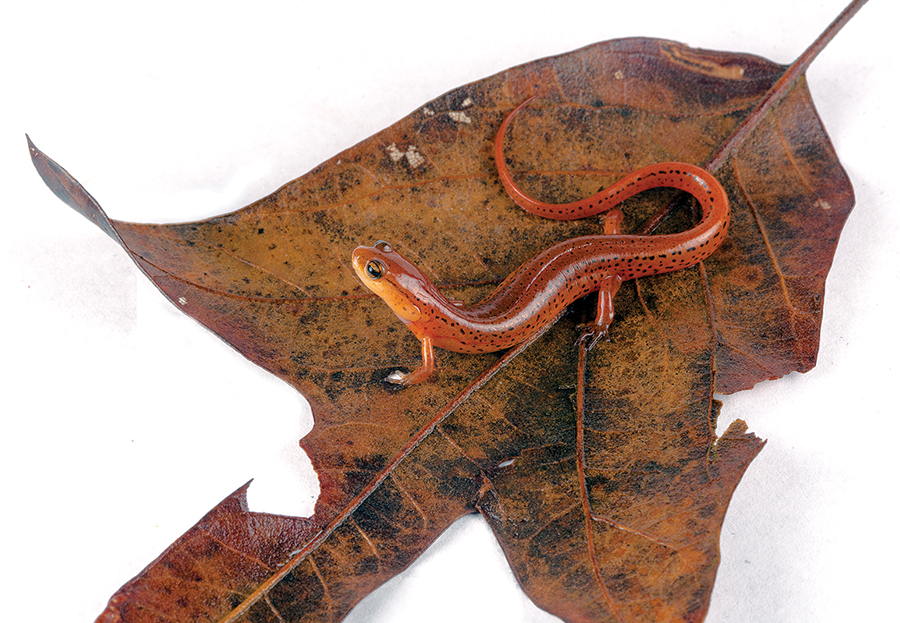
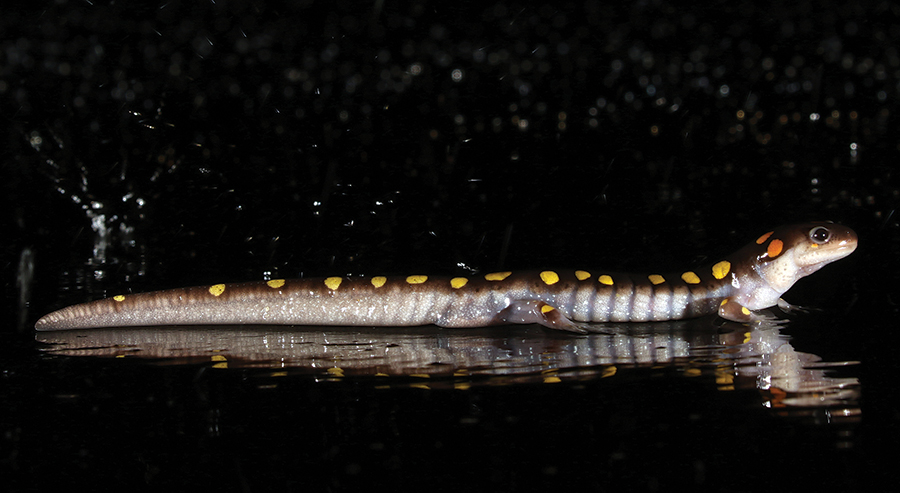
Yet, for all its familiarity, the road can still surprise. Just this past January, on an evening when torrential rains had supersaturated the ground for much of the day, the car headlights revealed a miniature marvel not far from the driveway to the house. Hopping out into the steady drizzle with flashlight in hand, I approached to find a 6-inch-long spotted salamander, so named for the brilliant dayglow yellow spots decorating its body, slowly walking across the road. Over all the years and thousands of times driving the road, I have never before observed this beautiful amphibian here.

Spotted salamanders need ephemeral ponds (temporary bodies of water that dry up for part of the year) to breed and lay their eggs. After a few weeks, the eggs hatch into a larval form complete with long tails and a bouquet of gills. When the ponds dry up in the spring, the larvae transform, like frog tadpoles, into terrestrial adults. The adults leave their pond and migrate far away, sometimes up to 1 mile, and then bury themselves underground, where they will remain for a year until the next breeding season’s rains begin and they start the cycle all over again. Considering the fact that spotted salamanders can live 30 years, I may well encounter the adult found near the edge of the yard once again.

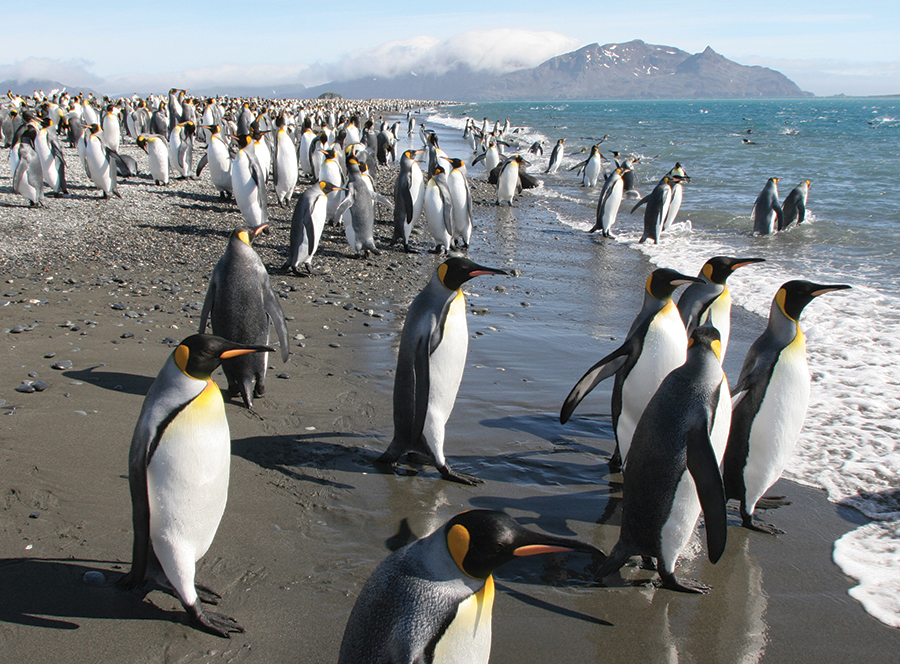
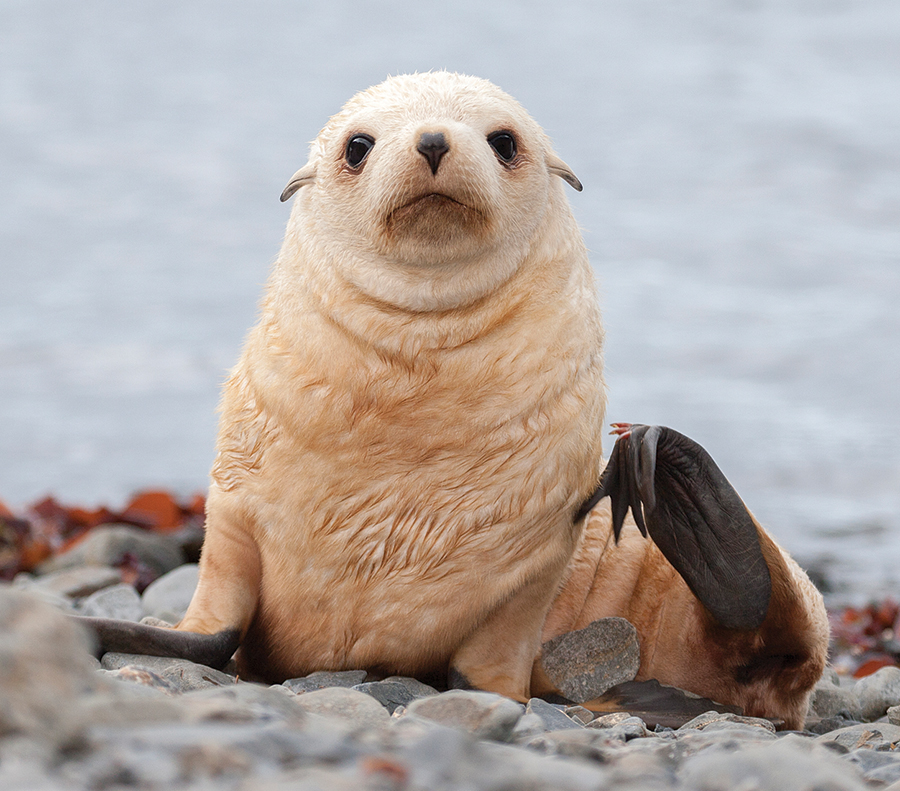
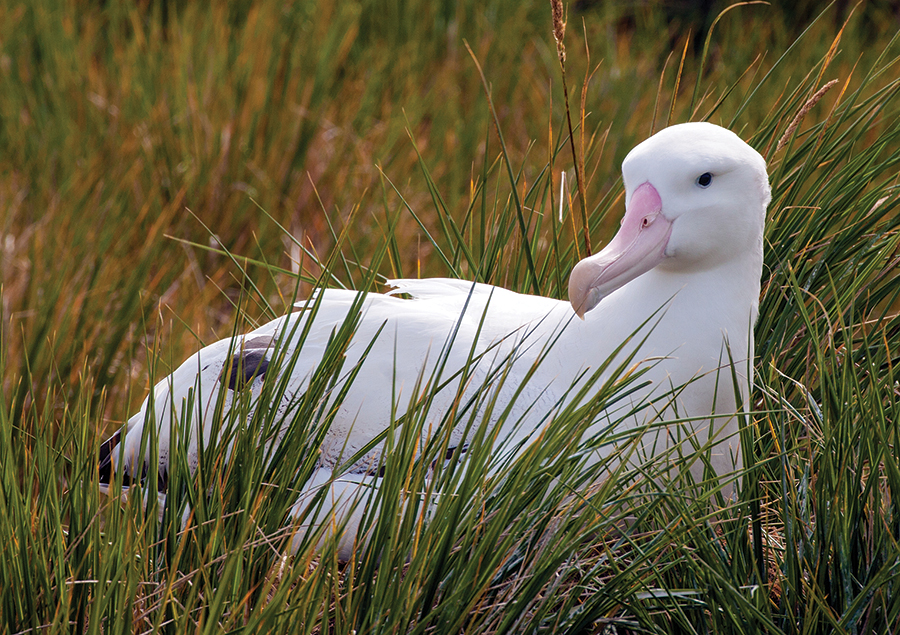
My whole childhood was oriented toward animals and the outdoors. The natural curiosity was innate. And, like many kids in rural towns, I longed to get away. Eagle Springs just seemed too small. Magazines, such as Ranger Rick and National Geographic, as well as television shows like The Undersea World of Jacques Cousteau, fueled my daydreams of exploring far-off lands in search of exotic beasts. I wanted to swim with the sharks and catch snakes in tropical jungles.

Fortunately, I have been able to live out most of those daydreams. My work has taken me around the world. I have dived with great white sharks off Mexico and caught snakes in the rainforests of Panama. After two decades of travel, I have developed a deeper appreciation for the natural world and all its wonders, from the exotic to the familiar.

Though I live far from the Sandhills today, I try to get back as often as I can. The last time I turned down the road home, it was just after sunset in late May and the sky was filled to the brim with stars. As I so often do here, I turned off the radio and rolled down the windows. About a half-mile or so from its junction with Hwy. 211, the bright beams of my headlights illuminated a herd of two dozen deer standing in the middle of the field, their eyes glowing a greenish yellow. Many lifted their heads with mouths full of grass calmly staring at the approaching vehicle. Another half-mile down the road and a grey fox dashed across the highway. Eagle Springs seemed anything but small.

Rounding the bend to the old brick house, a whip-poor-will called.  PS

Naturalist and photographer Todd Pusser will be a regular contributor to PineStraw. He works to document the extraordinary diversity of life both near and far. His images can be found at www.ToddPusser.com.