December is a bed of ash and embers, an ancient ritual, a deep and permeating warmth.
The songbirds are stirring. You slip on your work gloves, slip out the back door, fade into the arms of the dark and wintry morning.
On the walk to the woodshed, the cold air stings your lungs. You gather the kindling and hardwood. You gather yourself for the long journey inward. The leaves crunch gently underfoot.
Back inside, where the sleeping cat resembles a furled frond, the hearth becomes a sacred alter. You kneel down, offer the gifts of summer’s storms: walnut, oak and maple limbs. In a moment of deep silence, the wood speaks. The fire keeper listens close.
Once the kindling catches, time slows. And as the logs begin to pop and crackle, the dancing flames transport you to every fire you have ever known. You are transfixed — enchanted. Here and many places, as if all timelines have merged.
At once, something breaks you from your trance: a primal knowing. It’s time again to feed the fire. You add another log, shift your focus from the flames to the glowing embers, the source of true and lasting warmth. The sleepy cat unfurls.
Soon, you’ll slip on your gloves to return to the woodshed. Back and forth you will go, all winter. The cold air will sting your lungs, but you’ll be ready for it. You’ll embrace it. An ancient fire will glow within you, will guide you through the darkest days of winter.
Gift from the Magi
Gold? We get it. But frankincense? Because the trees that produce this fragrant resin flourish only on the coast of the Arabian Peninsula, in India and the Horn of Africa, there was a time when, like myrrh, this sap was as valuable as gold. Used for perfumes and incense, as well as for its antiseptic and anti-inflammatory properties, frankincense has a heavenly (yet earthy) aroma that has long made it a coveted offering for religious ceremony. Its scent is believed to reduce anxiety and stimulate the immune and respiratory systems. And did you know that, when burned, its smoke repels insects? A wise gift indeed.
Peppermint Tea
Eggnog and wassail have their place.
But peppermint tea requires no hubbub.
It’s sweet, but not too sweet.
Caffeine-free.
And unlike nog, which doesn’t exactly leave you feeling light and airy, peppermint tea promotes healthy digestion.
For a ritual for one, bring a cup of purified water to a boil. Place seven peppermint leaves into a favorite teacup, then add hot water and steep with fresh tarragon leaves and a quarter-inch slice of vanilla bean. Stir in a spoonful of local honey.
Ritual for two? Double it up.
Winter is the time for comfort, for good food and warmth, for the touch of a friendly hand and for a talk beside the fire: it is the time for home.
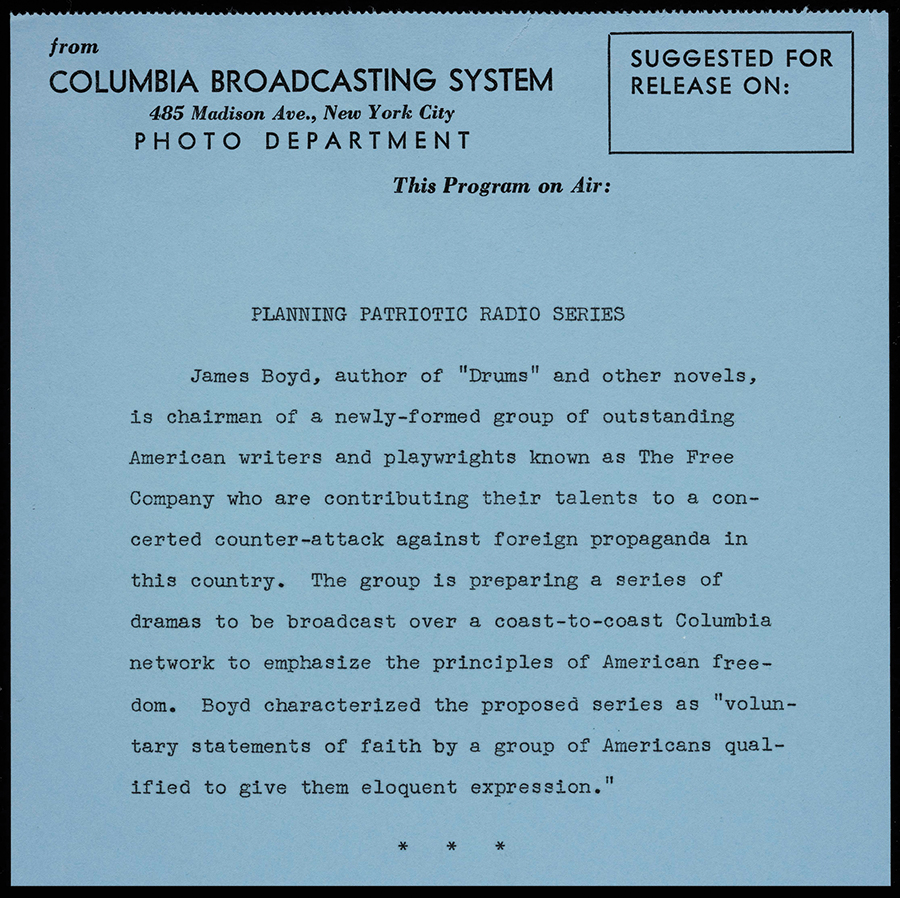
It seemed unfathomable, but it was an unavoidable truth: By September 1940, freedom, democracy and civil liberties had become nonexistent in much of Europe. Nearly all its countries were suffering under the yoke of tyranny. During the preceding year, Adolf Hitler’s military “blitzkrieg” had established Nazi hegemony over much of the continent. Other fascist strongmen controlled Italy and Spain, and Stalin ruled Communist Russia with an iron fist.
While Great Britain remained free, it was fighting the Nazis alone. Many feared the British would not survive the onslaught of the German war machine, especially after the Luftwaffe began regularly bombing London on Sept. 7. Germany’s propaganda campaign of lies and misinformation directed by Joseph Goebbels justifying its repressive actions was having telling effects too, not only in Europe, but in some quarters of this country as well.
These happenings were viewed with alarm in the United States, but not to the point where Americans were inclined to go to war. A hands-off policy toward the conflict had become the prevailing sentiment. Leaders of the “America First Committee,” like Charles Lindbergh, saw neither a strategic nor moral justification for America to rush to the aid of Great Britain, let alone the rest of Europe. Moreover, President Franklin Roosevelt, running for a third term, had pledged to keep America out of the war, though in retrospect that appears not to have been his ultimate intent.
In contrast, two thoughtful men felt that many of their fellow Americans were taking their rights and liberties for granted and needed to be reawakened to their importance. Francis Biddle and James Boyd were gentlemen of the patrician class who had accomplished much in their chosen fields. A Pennsylvania native, the Harvard-educated Biddle was serving as the solicitor general of the United States in 1940. He would become U.S. attorney general in 1942.
Coal-mining scion and Princeton grad James Boyd had burst on the national literary scene in 1925 with the publication of Drums, a work of historical fiction regarded by numerous critics as the finest novel written about the Revolutionary War. In the following 14 years, Boyd authored four more historical novels, crafting them at Weymouth, his Southern Pines country estate where he lived after moving from his home state, also Pennsylvania, in 1920.
Biddle and Boyd had come to know each other years before through their shared passion for fox hunting. Boyd and his brother, Jackson, owned and managed the Moore County Hounds. While riding with the Boyds in the local hunt, Biddle crashed into a fence and broke his collarbone. Boyd and wife Katharine insisted that Biddle lodge with them at Weymouth until he healed. A close friendship resulted.
The pair envisioned combating the insidious Nazi propaganda by creating, producing and broadcasting a series of radio plays designed to illustrate in dramatic fashion the liberties granted by the Bill of Rights. In Biddle’s autobiography, In Brief Authority, he claims the plays were Boyd’s idea. Boyd’s writings, on the other hand, assign credit to Biddle. What is known is that by September 1940, the two friends had begun considering the necessary steps to bring their project to fruition. They hoped that if a department of the Roosevelt administration sponsored the productions, perhaps writers, actors and a radio broadcasting company would consent to work for free out of a sense of patriotic duty.
Biddle thought his boss at the Department of Justice, Attorney General Robert Jackson, could be persuaded to have DOJ serve as that sponsoring agency. On Sept. 25, 1940, Boyd drafted a memorandum outlining the proposed project for Jackson. His memo pointed out that DOJ was the federal agency most concerned with protecting the rights of Americans, and that its sponsorship would help bring about “a renewed appreciation of their value.”
But what if the listening public concluded that the plays were really Roosevelt administration propaganda? Boyd anticipated that concern and attempted to head it off. “The radio companies, the actors and the writers would be asked to contribute their services. This would counteract suspicion of paid propaganda,” he wrote. “The writers would be given complete freedom of expression. In a word, the Department would act only as a medium through which they would receive an opportunity to present in dramatic form and to the widest possible audience their faith in this country.”
Boyd provided a tentative list of authors and actors, recruiting the greatest names in literature and stage. John Steinbeck, Eugene O’Neill, William Faulkner, Paul Green, Sherwood Anderson, Carl Sandburg, Sinclair Lewis, Orson Welles and Ernest Hemingway were among the writers Boyd would be soliciting to author plays. His wish list of potential actors included marquee names like Burgess Meredith, Charlie Chaplin, Helen Hayes, Paul Muni, Katharine Hepburn, Melvyn Douglas and John Garfield. Boyd figured each weekly broadcast would run 30 minutes. He called the enterprise “The Free Company,” in recognition that all participants would be working without pay, and the authors would be entirely free to speak their respective minds.
On Oct. 7, Biddle sent Boyd a handwritten letter indicating that the attorney general had approved development of the program, and that DOJ was “very glad that you have acceded to our request to come here and take charge of it for us.” Boyd would become a nominal governmental employee working for a dollar a year.
During the preceding 15 years, Boyd had lived the life of a successful novelist, accountable only to his publisher, Charles Scribner’s Sons, and that firm’s legendary editor Maxwell Perkins. Now he would be managing famous writers, some with towering egos, riding herd on them to produce finished plays gratis and on tight deadlines. The Columbia Broadcasting System, which agreed to broadcast the plays, planned to air the first on Sunday, Feb. 16, at 2 p.m. That was just four months away. As if that was not enough to occupy his time, Boyd was also engaged in exasperating negotiations to purchase The Pilot newspaper in Southern Pines, where assorted “Oh, by the ways” kept roadblocking the sale.
Still, Boyd was confident he could meet the daunting CBS timeline, likely assuming he would have little difficulty coaxing scripts from writers, since many of them were friends. Paul Green and Sherwood Anderson had bunked in with the convivial Boyds at Weymouth, as had legendary authors Thomas Wolfe and F. Scott Fitzgerald. Wolfe, however, had passed away in 1938, and Fitzgerald’s own death was imminent.
Though he was The Free Company’s national chairman, Boyd couldn’t manage its wide-ranging operations alone. Burgess Meredith (who in later years played the role of the Penguin in the Batman television series and the crusty trainer, Mick, in Rocky) agreed to serve as chair of the actors’ division. William B. Lewis, of CBS, became chair of the radio division, rounding up the network’s directors, composers and musicians to staff the productions. Robert Sherwood (Pulitzer Prize winner for his play Abe Lincoln in Illinois) was named writers’ division chair, but it would be Boyd who did the heavy lifting in recruiting and coordinating the authors.
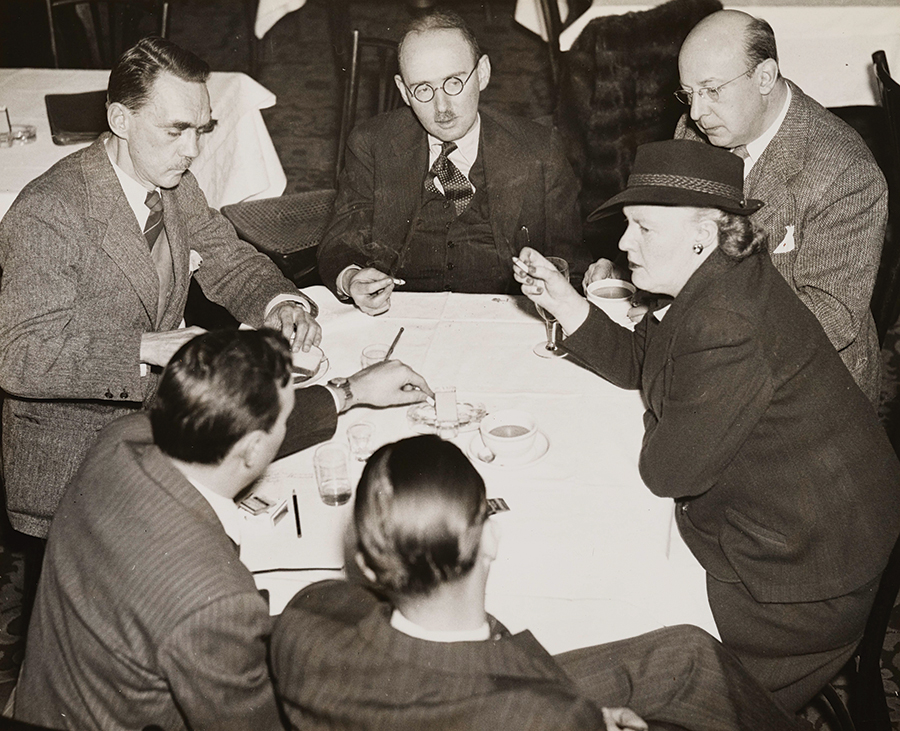
James Boyd, Stephen Benet, Marc Connelly, Dorothy Thompson
From October 1940 to January 1941, Boyd sent a torrent of letters to leading American writers urging them to join The Free Company’s ranks. He took pains to personalize each one. He stroked Ernest Hemingway’s ego this way: “Believing as I do in the plain people, the people to whom Lincoln talked, I think that if you have anything to say to these people, you — perhaps above anyone else in this country — ought to do what I am asking.”
Few of Boyd’s targets rejected his entreaties outright, more often begging off for the time being. Eugene O’Neill was not in the best of health. Sinclair Lewis indicated he would like to contribute but could not because he was “absorbed night and day for a number of weeks.” Louis Bromfield expressed concern that he had no experience writing plays for radio and asked to be excused.
But other writers agreed to produce plays for The Free Company. They included Robert Sherwood, Archibald MacLeish (winner of three Pulitzer Prizes and then the Librarian of Congress), Marc Connelly (Pulitzer Prize winner for The Green Pastures), Stephen Vincent Benet (Pulitzer Prize for poetry winner and author of The Devil and Daniel Webster), William Saroyan (winner of the 1940 Pulitzer Prize for The Time of Your Life), Sherwood Anderson (author of Winesburg, Ohio), George M. Cohan (Yankee Doodle Dandy), Paul Green (Pulitzer Prize winner and author of The Lost Colony), Maxwell Anderson (author of Anne of a Thousand Days and What Price Glory?), and Elmer Rice (Pulitzer Prize winner for The Street Scene). John Steinbeck expressed support and permitted his name to be listed on The Free Company’s letterhead, though nothing in Boyd’s papers indicates the Grapes of Wrath author made an express commitment to deliver a script.
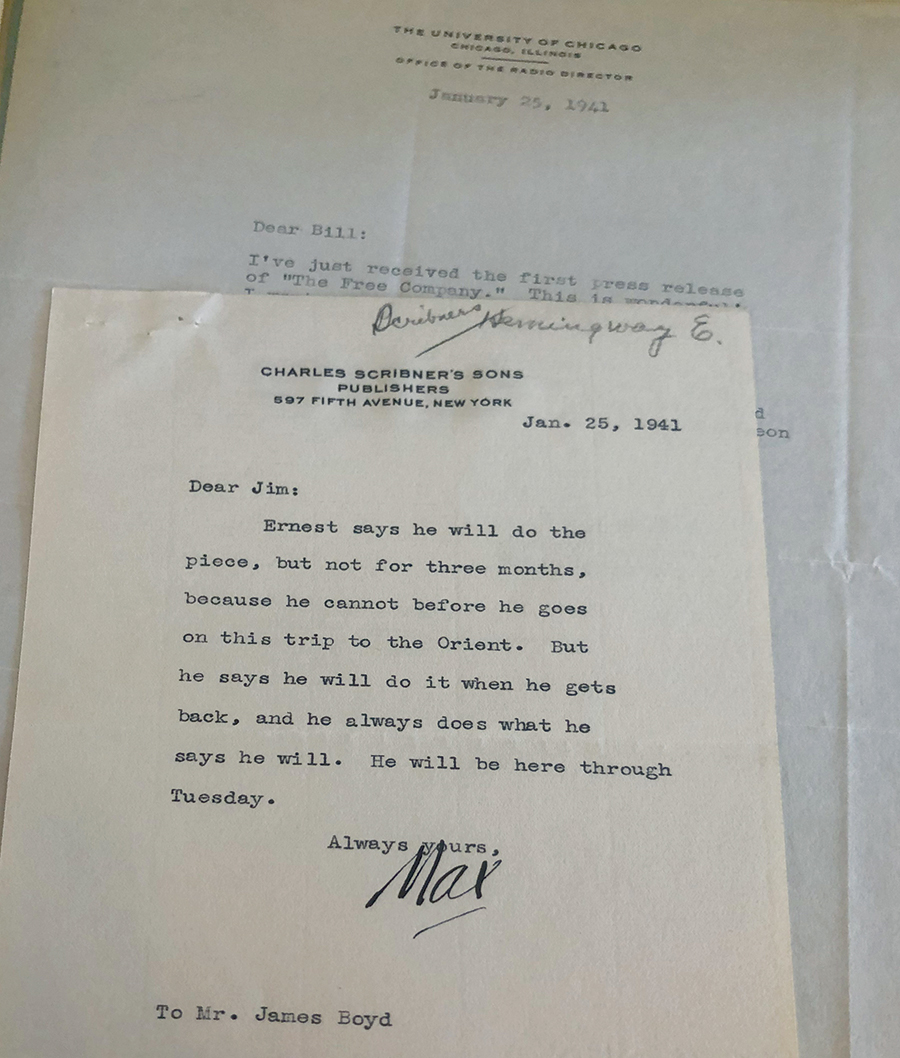
Boyd was undoubtedly elated when Max Perkins reported Hemingway would produce a piece, though, “not for three months because he cannot before he goes to the Orient.” Perkins noted, however, that Hemingway “always does what he says he will.”
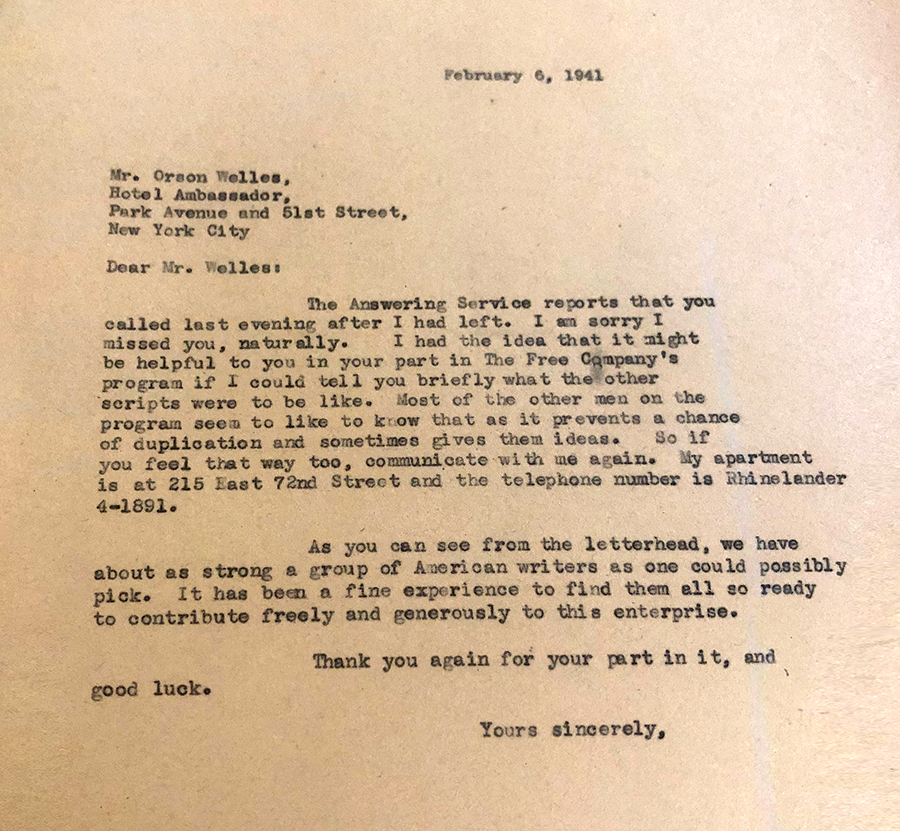
Boyd bagged another major trophy when 25-year-old wunderkind Orson Welles agreed to contribute a play addressing freedom of assembly. But before proceeding, Welles, then in the throes of putting the finishing touches on Citizen Kane, needed an answer to a fundamental question. In a telegram to Boyd dated Dec. 15, 1940, Welles wanted “facts from you regarding censorship of my material. Am I right in assuming there will be none?” Boyd gave his assurances.
Saroyan, who declined his Pulitzer Prize out of a belief that commerce should not judge the arts, was also concerned about censorship and whether the prospect of government sponsorship could pose an issue. “Some writers may feel that this sort of work may hem them in — make propagandists out of them,” he pointed out to Boyd. “You may have a job in putting over that they are as free as they have always been.” These concerns ultimately led to a minimizing of DOJ’s anticipated role. The early Free Company broadcasts never mentioned DOJ’s involvement. However, Biddle and other DOJ higher-ups kept in touch with Boyd throughout the project, mostly offering marketing advice.
Boyd thought that an endorsement by someone in the highest ranks of government might jumpstart promotion of the broadcasts, so he inquired of Biddle whether Charles Evans Hughes, chief justice of the U.S. Supreme Court, could be cajoled into making a statement during the first broadcast, stressing the importance of America’s civil liberties. He was rebuffed. Boyd then asked MacLeish to work his personal connection with Franklin Roosevelt in hopes of persuading the president to introduce the first broadcast. He tried, but reported to Boyd that “the answer, alas, is no.” Changing his pitch, Boyd sought a brief written testimonial from the president. That gambit failed as well. Running The Free Company, Boyd confessed, was causing him to develop, “the persistence of an Armenian rug vendor.”
Boyd unabashedly lobbied the media. He begged for coverage from stalwarts like columnist Walter Lippmann, New York Times Washington bureau chief Arthur Krock, and New York Post columnist Franklin P. Adams. When Adams asked Boyd to be more specific, he responded, “Simply mention us, derisively, contumaciously, patronizingly, adoringly — any way you will. As one of us, surely you know that writers, like other children, would rather be cuffed than ignored. So say anything you like.” With his tongue placed solidly in his cheek, Boyd added, “If you print this letter, I am a lost man.”
Krock applauded the notion of dramatic plays highlighting civil liberties, but expressed skepticism about the authors chosen to write them. “You have among your scenario writers about five whose views of the meaning of American freedom alarm me somewhat,” Krock wrote. “But maybe they won’t when I hear them on the air.”
Krock was not alone in criticizing The Free Company’s lineup. Philadelphian Francis Henry crafted this sneering message to Boyd: “Your committee seems to be made up of parlor-pinkos and leftists . . . How did George M. Cohan get mixed up with this bunch?”
It is probable that Boyd, a middle-of-the-road Democrat, gave little thought to the political affiliations of the writers. He simply wished to have the cream of America’s writers on board. It is true that MacLeish, Connelly, Hemingway and Welles had expressed sympathy with various liberal causes. As a result, some firebrands on the right labeled those writers “fellow travelers” of the Communist Party.
Boyd spent much of the first quarter of 1941 in The Free Company’s small office in New York coordinating the writers’ activities and beseeching them to submit their scripts on time. There were pitfalls; MacLeish and Welles requested and received extensions because of their need to attend to paying work. Boyd also had to make sure the writers were not preparing scripts covering the same subject matter — free speech, for example. He could not afford to rely on a potluck dinner approach. By Jan. 25, 1941, he had arrived at a tentative timetable for 14 weekly productions, debuting, as CBS had requested, on Feb. 16. Boyd anticipated that the series would open with his own play. It was slated to end on a high note May 18, with a work from Hemingway — American literature’s reigning superstar.
Matters seemed to be well in hand. Sherwood and Saroyan delivered their scripts, and Benet, Anderson and MacLeish were promising completion posthaste. Boyd expected to receive scripts for later in the series from Steinbeck, Hemingway and Elmer Rice. He also arranged for the printing of the texts of each individual play. The booklets could be purchased for 10 cents apiece, covering the cost of printing and mailing.
Then things began unraveling on several fronts. Steinbeck was out. He wrote an apologetic letter requesting a rain check. Another project was distracting him. “When I’ve tried to do two things at once,” he explained, “neither of them were any good.” Rice did not deliver a play either. But the worst blow came when Perkins advised Boyd that Hemingway was out, too. The editor reported that the writer would not be returning to the states “until early June” and was “worn out from finishing ‘the Bell’ (For Whom the Bell Tolls).” Try to “get him early” for the next series, he counseled.
Another devastating blow occurred with the sudden demise of Sherwood Anderson, who had sketched out a treatment of his play Above Suspicion (dealing with freedom from police persecution) prior to departing on an ocean voyage to Panama in early March. He became sick on board and his illness worsened once he arrived. He died there on March 8 of peritonitis, caused by a swallowed toothpick. George M. Cohan stepped up to finish Anderson’s script.
The number of plays to be aired by The Free Company and CBS was down to just 10. Boyd partly backfilled the hole with Walter Van Tilburg’s existing play, The Ox-Bow Incident, in which a hanging by vigilantes denied the victim his right to trial by jury.
To Boyd’s further alarm, CBS requested changes to several scripts, including Boyd’s own play, Jim Crow. His play took place in a small Southern town where a Black man, Jim Crow, shoots and kills a prominent white man in self-defense. A venomous mob appears at the jail bent on lynching Crow. The mob overwhelms the local sheriff, but a white citizen of the town, Thad, steps forward to confront the mob, demanding that Crow be afforded a trial. Unmoved, the vigilantes kill Thad. Horrified by having murdered one of their own, the mob’s members disperse, and Crow’s life is saved. CBS wanted to change the ending to have Crow die while attempting to save the sheriff, or alternatively, Thad. Boyd considered CBS’s proposed scenario preposterous and missing the point. Rather than acquiesce to such interference, an irritated Boyd withdrew the play and substituted another.
The network also sought script alterations to maximize the speaking lines of the plays’ more celebrated actors. Boyd drafted a letter to CBS venting his displeasure. It is unclear whether he actually mailed it, but nonetheless, the surviving copy provides a window into his agitated state of mind. “Such handling of the writers we want is bound to alienate them,” Boyd wrote. “They are men who stand where they do because they know what they want to say and how to say it. They will not accept peremptory suggestions to alter their scripts radically for the worse.”
Boyd warned that the writers would view CBS’s editing as an attempt to create “just another sustaining program which Columbia is getting out of them for nothing under the guise of patriotism . . . I suggest you let me handle the writers.” In the end, CBS mostly backed off.
Another brouhaha occurred after Boyd circulated the script of his substituted play, One More Free Man. To Boyd’s surprise, Burgess Meredith was upset with the play’s tone. In the plot, the protagonist, John, speaks the truth whatever the consequences. While employed as a manager in a mining operation, he acknowledges to the workers they have the right to unionize. John’s boss demands that John sign a document indicating he said no such thing. John refuses and is fired. As he is unable to support his family, John’s wife leaves him. He eventually finds another job and becomes a union member. Observing that the local union’s president is corrupt, John makes accusations against the leader at a meeting and as a result is ostracized. The story has a happy ending when John’s fellow union members come to realize he was right and recruit him to run for the leadership of the organization.
Meredith, an active leader of the Actors’ Equity Association, considered the play reactionary. In his view, Boyd had cast unions in an unfavorable light. Boyd explained that the plot was balanced by also showing unscrupulous conduct of management. Meredith seems to have been mollified as the two men enjoyed cordial relations for the remainder of the project.
The debut of the first play produced by The Free Company was moved back a week, to Feb. 23. Rather than opening the series with his own work, Boyd decided to lead off with Saroyan’s, The People With Light Coming Out of Them. The play did not contain a civil liberties theme, per se, but it did set a positive tone for the more substantive broadcasts to follow with a message that good citizens emit a positive “light” that benefits the whole of society. Meredith, John Garfield, Tim Holt and Nancy Kelly starred.
Initial reviews of the new show were glowing. The New Republic noted that The Free Company has “roots in American history. Tom Paine, Horace Greeley, and Harriett Beecher Stowe were factors in past crises — strong factors and always on the side of freedom.” Fifteen hundred letters praising Saroyan’s play arrived at the network. A delighted Biddle expressed to Boyd his “great satisfaction” with the creativity of the first production.
The second play, which aired March 2 and featured Melvyn Douglas, Claire Trevor and Charles Bickford, was more controversial. Marc Connelly’s The Mole on Lincoln’s Cheek involved a dispute between a school board and a teacher. Upset that a textbook used by the instructor included unflattering, albeit accurate, information regarding figures in American history (John Hancock was a smuggler; George Washington had false teeth; John Adams was a political boss, etc.) the board members branded the book “un-American” and threatened disciplinary action against the teacher. Connelly’s play mirrored a contentious debate over school textbooks then taking place in the country. A series of books written by Harold Rugg proved popular with progressive educators, but some school boards sought to ban the texts, claiming that Rugg advocated socialism.
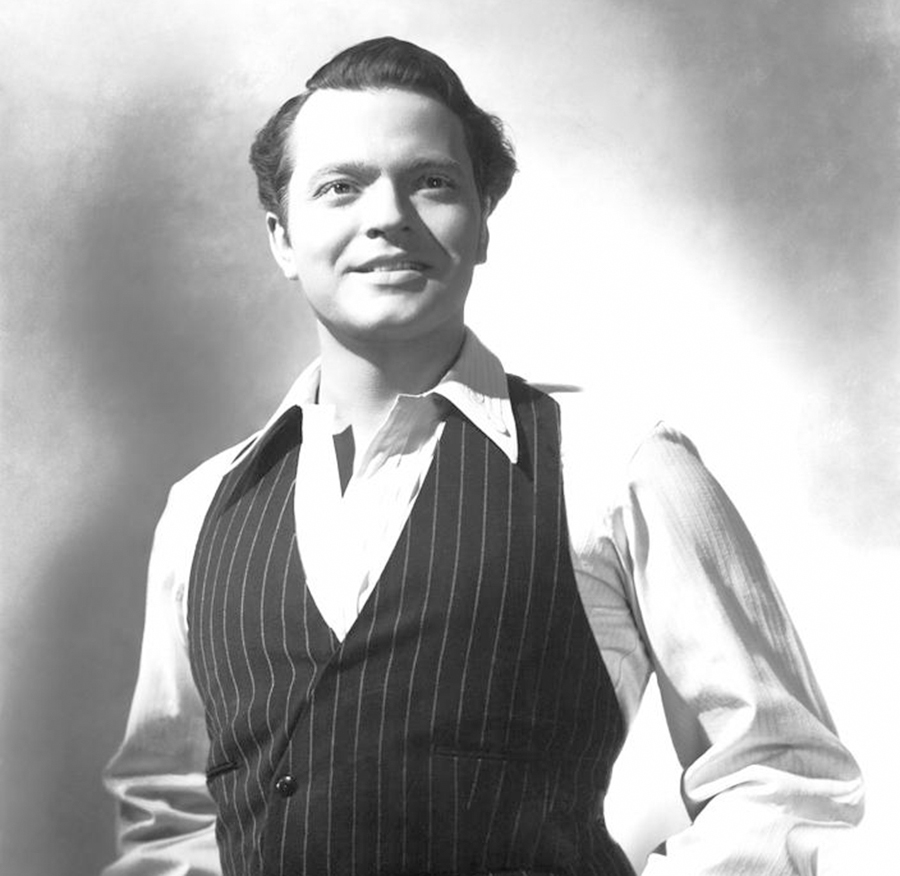
Orson Welles, circa 1941
An indignant letter writer, Helen Vance, complained that The Mole on Lincoln’s Cheek was “a very thin disguise for the destructive and anti-capitalist propaganda as defended in the books of Prof. Harold Rugg . . . I am sure that CBS will wish to subject to closest scrutiny any further scripts.” But any negative reviews of The Mole were outweighed by favorable reaction to other early broadcasts in the series, including Sherwood’s An American Crusader on March 9 (the story of Elijah Lovejoy, a newspaper publisher martyred for publishing unpopular anti-slavery views); Boyd’s aforementioned One More Free Man on March 16; Benet’s Freedom’s a Hard Thing on March 23 (a Southern slave catches the untreatable disease of “freedom”); and, Van Tilburg’s The Ox-Bow Incident on March 30. Walter Winchell gave two-thumbs up to the series, saying, “The Free Company, one of the delights of the networks, is easily one of the toppers of dramatic programs.”
On Sunday, April 6, Boyd, himself, introduced the seventh play of the series, His Honor, the Mayor, by Orson Welles. The play featured several cast members from Citizen Kane, including Agnes Moorehead, Ray Collins and Everett Sloane. The play, narrated by Welles, involved a scenario in which the mayor of a Southwestern border town faces intense pressure from local citizens demanding he stop a scheduled meeting of the “White Crusaders,” a group that is anti-Jewish, anti-Mexican, and anti-everything liberal.
Though sensitive to public sentiment, the mayor is reluctant to act. He feels the group is entitled to meet because the Bill of Rights guarantees freedom of assembly. In an early scene, a White Crusader partisan informs the mayor that the group’s primary goal is to eradicate “the Reds” in town. The perplexed mayor responds that there is only one Communist in town, and he’s 87 years old. “Besides,” says the mayor, “there is nothing illegal about being a Communist.”
In a subsequent scene, the same lone, aged Communist citizen urges the mayor to follow the will of the people and break up the meeting. After all, he maintains, it was Lincoln who said that once the people grow weary of their existing government, “they can exercise their constitutional right of amending it or exercise their revolutionary right to overthrow it.” The mayor rejects that advice and successfully defuses the situation by holding a counter demonstration during the White Crusaders’ meeting.
Welles’ play resulted in a firestorm, courtesy of media titan William Randolph Hearst and FBI director J. Edgar Hoover. Believing that the lead character in Citizen Kane represented a thinly veiled and unflattering caricature of himself, Hearst unleashed his immense power in a no-holds-barred effort to suppress the movie and ruin Welles. Hearst-run newspapers across the country denounced Welles as a Communist and sought his blacklisting by the film industry. Taking their cue from the mogul, various leaders of the American Legion found evidence of Welles’ Communist sympathies in His Honor, the Mayor. The mayor’s statement that it is not illegal to be a Communist and the use of Lincoln’s quote regarding the peoples’ right to overthrow their government were cited as proof.
The Free Company got caught up in the ensuing crossfire. The chair of the Legion’s National Americanism Commission claimed that the radio plays were “cleverly designed to poison the minds of young Americans.” Another Legion spokesman said, “The name itself, Free Company, sounds suspiciously Communistic.” Moreover, Hoover, presumably at Hearst’s behest, opened a file to investigate the allegedly subversive activities of Welles and other members of The Free Company. Boyd was mentioned in the investigation, though the FBI concluded that it was not “deemed advisable to pursue additional inquiries” concerning him, maybe because of his close relationship with Biddle.
Other newspapers, not controlled by Hearst, saw things differently. The Chicago Sunday Times observed, “William Randolph Hearst is piqued with Orson Welles. The rest is camouflage.” But nevertheless, Hearst’s attacks succeeded in causing a nosedive for Welles. Film historians say his long career never got fully back on track.
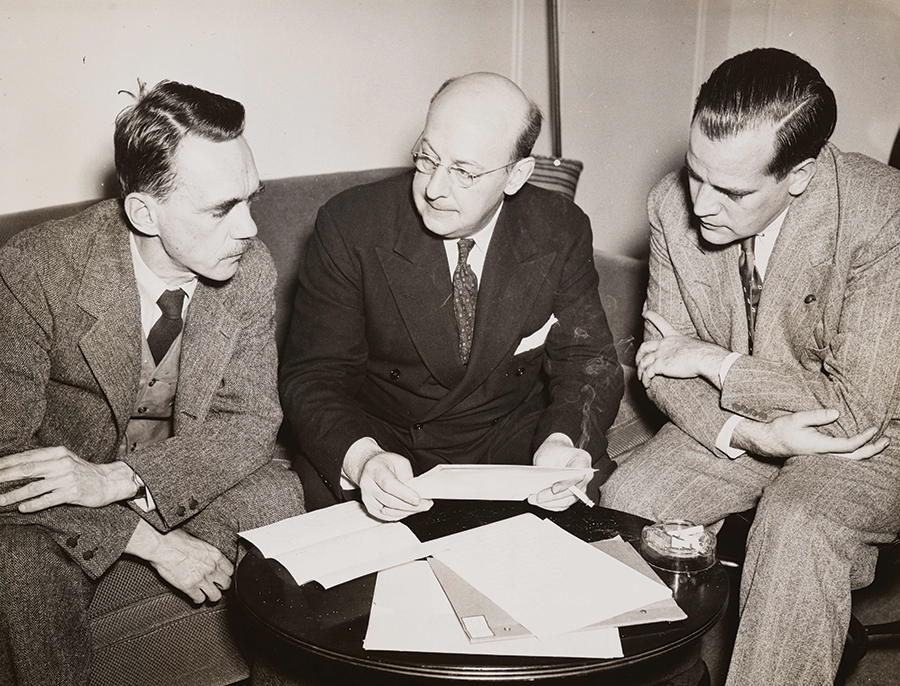
James Boyd, Marc Connelly and W.B. Lewis
After the dust-up, Burgess Meredith rebutted the diatribes against the writers by mentioning for the first time on air that the attorney general and solicitor general endorsed the plays. He also dispelled whiffs of the writers’ supposed anti-Americanism by enumerating their impressive military service records. Among them was Boyd, who had honorably served in the U.S. Army Ambulance Service in Italy during World War I.
The final four plays of the series were Paul Green’s A Start in Life, concerning the travails of a Black family (April 13); Archibald MacLeish’s The States Talking (April 20), in which the states respond to the criticisms of America by the Axis powers; Maxwell Anderson’s Miracle on th Danube, focusing on religious liberty, starring Paul Muni and Meredith (April 27); and lastly, Sherwood Anderson’s Above Suspicion, with George M. Cohan and Paul Henreid in the lead roles (May 4). A hard-cover anthology of the plays hit the nation’s bookstores on May 5.
To Boyd’s gratification, radio ratings increased following the Welles-Hearst debacle. On May 6, he reported to Biddle that a recent broadcast had attracted at least 5 million listeners, attributing the uptick to the “Hearst-American Legion attacks on the Free Company.” Boyd reported that CBS was interested in a second series, but he rejected the idea. He told Biddle that “aside from the question of my own time, it would be impossible to continue to get scripts of the same high caliber. There are not many other writers of the same standing available, and we could not ask the writers who had already contributed their work without compensation to do so again so soon.”
After closing down The Free Company, Boyd seemed to harbor doubts whether its activities had achieved any measurable impact. In correspondence with Perkins, he noted his despair. “I feel sickened by this blank sickness of the world and just now see no light,” he wrote. “There is nothing to do but stand as firm as we can by the best we are able to believe in. I can only hope that there are enough of those who will do this to save some fragments from the cataclysm.”
Thereafter, James Boyd turned to other affairs. He consummated the purchase of The Pilot in May, providing a new writing outlet that was entirely in his control. He turned from historical novels to poetry. His final book, Eighteen Poems, was published on Jan. 1, 1944, just a month before his untimely and sudden death at age 55 in Princeton, New Jersey, where he’d traveled for a speaking engagement at his alma mater.
Seven months after The Free Company’s final broadcast, the Japanese bombed Pearl Harbor, and the country plunged into World War II. Americans came together overnight, united in a struggle against tyranny and in defense of the freedoms written about by The Free Company. Boyd may not have envisioned that it would take a war to awaken Americans to the importance of their freedoms, but he and The Free Company had sounded the alarm bell.PS
Pinehurst resident Bill Case is PineStraw’s history man. He can be reached at Bill.Case@thompsonhine.com.
Agora Café is the new Pinehurst bakery and eatery where Southern hospitality meets French bistro — think biscuits topped with herb butter, fresh salads and craft lattes for sale at the counter. Chef Emmy Hirengen relocated to the Sandhills all the way from Oregon just to helm the new gathering place co-owned by Ginny and David Tran, Robert and April Bortins, and David and Bethany Morgan.
The café is Ginny’s brainchild. She started making macarons while raising three, now four kids, as a stay-at-home mom. “Baking was her outlet,” David says about his wife. In short order, Ginny’s macarons became popular, and she and a friend launched a baking business from their home kitchens in Raleigh. Then the Trans relocated to the Sandhills for David’s job. “We kind of took a leap of faith and said, ‘OK, let’s do this, let’s create a bakery,’” he says. The café officially opened in September.
But Ginny didn’t want Agora to be just a bakery, she wanted it to be a gathering place, particularly for moms. In ancient Greek city-states, agora, which literally means gathering place or assembly, was the hub for conversation, debate and buying and selling wares. “She wants to build this community of stay-at-home bakers that we’ll buy from wholesale, or we’ll do whatever we can to promote them in the shop,” says David.
Robert and April Bortins and their children Lily, Trey, and Jonah and Ginny and David Tran and their children Banks, Lila, Colbie, and Lincoln)
Turkey, ham and tomato chutney with melted muenster, gruyère, and Havarti cheeses on multigrain bread; fresh-made French croissants.
The Block
290 W. Pennsylvania Ave., Southern Pines
Husband-and-wife restaurateurs James and Keena Lam opened The Block in mid-August as a merger of their former Southern Pines’ eateries Bambu Boba Café on Broad Street and Steve’s TK Pizza & Subs on Morganton Road. “Even though both spots were within a minute or two of each other, the idea of them being here together, allowing us to focus on the quality of the food, that was the main thing for us,” James says.
Agreeing on the merger wasn’t an easy decision. Steve’s had been a popular establishment on Morganton Road for six years, and uprooting the eatery worried the Lams. But the risk proved worthwhile. “It has been insane,” James says, commenting on business since The Block’s launch. “We’ve been selling out every other day. Even though we loaded up with food, it’s hard to keep up.”
The Block caters to the whole family, from picky eaters to foodies, in a one-stop shop. “You’ve got Asian dishes, pizzas, subs, teriyaki, you name it,” he says, “burgers, fries, just a little bit of everything.” That includes Boba tea, the popular Asian drink that’s chock-full of chewy tapioca balls.
The Lams’ authentic Vietnamese food is always droolworthy, but pizza is their up-and-comer. “Our pizza was good before, but with this pizza oven,” he says, motioning toward the kitchen, “it’s a couple of levels higher.”
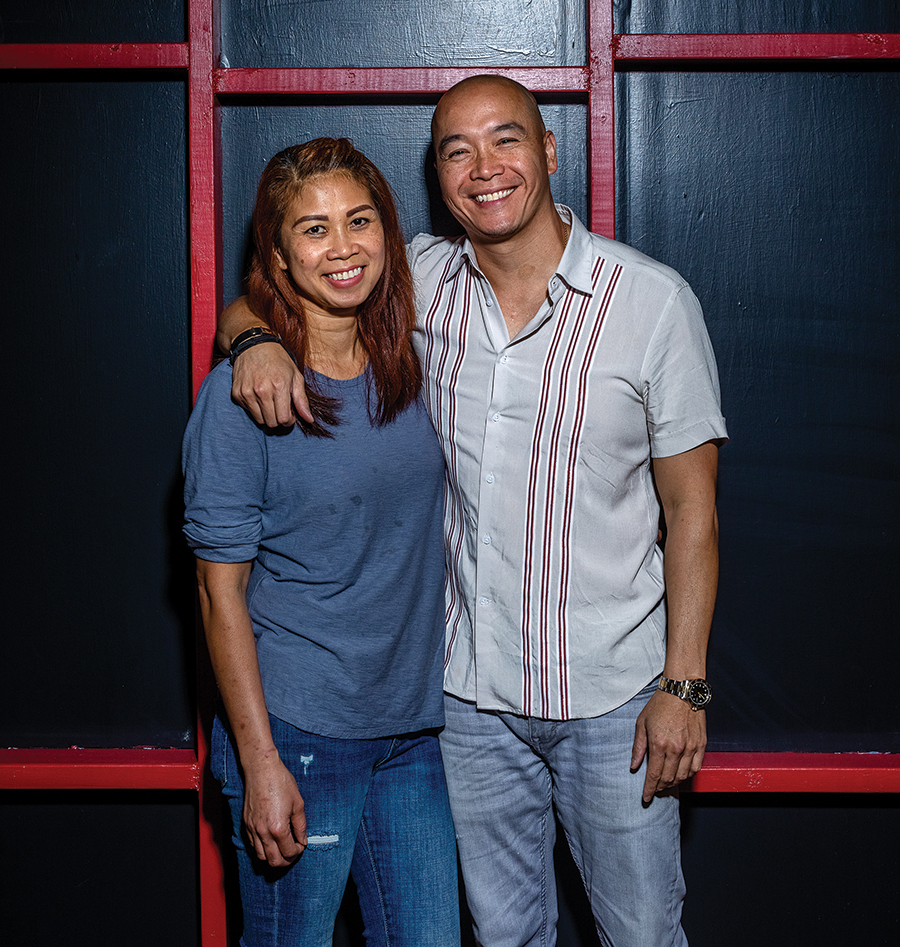
Keena and James Lam
Chicken curry ramen, Vietnamese beef pho noodle soup, woodfire house pizza, pulled pork banh mi tacos with house spicy chili sauce, fresh spring rolls.
Jaya’s Indian Cuisine
169 N.E. Broad St., Southern Pines
Ekambaram “Maran” and Jayarani “Jaya” Elamaran started selling their Indian food while working at Nature’s Own Natural Foods Market in Southern Pines. Karen Frye, the owner of the market, gave the Elamarans the opportunity to start selling Jaya’s Indian food in a daily, prepared-foods case in her store about six years ago. “We would sell from the daily case five to 10 meals every day,” Maran says, describing how they dipped their toes into the food industry.
Word started to spread about Jaya’s Indian cooking, so the Elamarans decided they wanted to purchase a food truck. Complications put that plan on hold, and they opened their former takeout location on May Street in 2018. About 200 people showed up to the opening. “We got nervous, me and my wife,” Maran says, thinking back to the long line of customers on that cold day. But too many customers is a good problem to have, and the food was worth the wait.
About four months after their takeout location opened, they finally got their food truck and ran both operations in tandem. Then customers started asking about dining. “So, we thought, ‘OK, we need dining,’ because we know that people will come,” Maran says. After three years of takeout, the Elamarans moved out of their May Street location and opened their new dine-in restaurant on Broad Street in July, serving up much-loved favorites like chicken tikka masala and vegetable samosas.
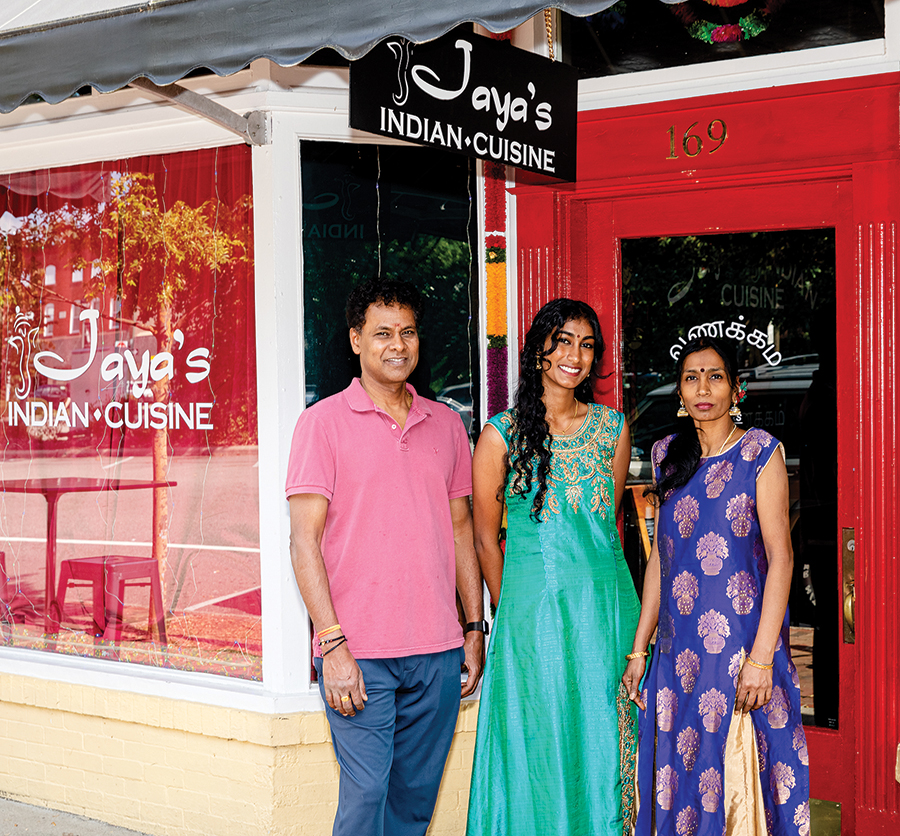
Maran, Ria and Jaya Elamaran
Chicken tikka masala thali comes with raita, garlic naan, chickpea masala, basmati rice and gulab jamun for dessert; vegetable samosas served with mint chutney and tamarin chutney.
Neko Thai and Sushi Bar
70 Market Square, Pinehurst
“My girlfriend, she loves cats; Neko means cat in Japanese,” says Phon, owner of Neko Thai and Sushi Bar in downtown Pinehurst. The restaurant’s logo is the maneki-neko Japanese figurine, a “beckoning cat” intended to bring good luck to the business owner.
Neko marks Phon’s debut as a restaurateur, but he has worked in the restaurant industry in a variety of positions ranging from server to manager to sushi chef for over 10 years. “I did so many things, it was time for me to open a restaurant myself,” he says. “It was a gamble, but everything worked out well.”
Phon relocated from Florida to the Sandhills just to open his new Asian fusion restaurant after scouring Midwestern and Southern states for the ideal spot. “People that live in the village always come here two or three times per week, so I’m really happy,” he says. Neko opened in April, and Phon says business has been steady almost from the start.
Phon is Thai, but he’s an experienced sushi chef, so Asian fusion made sense as his restaurant concept. It made even more sense because he saw so many Asian fusion restaurants succeed in Florida. “When you come here with your family, maybe your dad doesn’t like sushi, but he might like Thai food, so you’ve got something for everybody,” he says.
Phou Neti
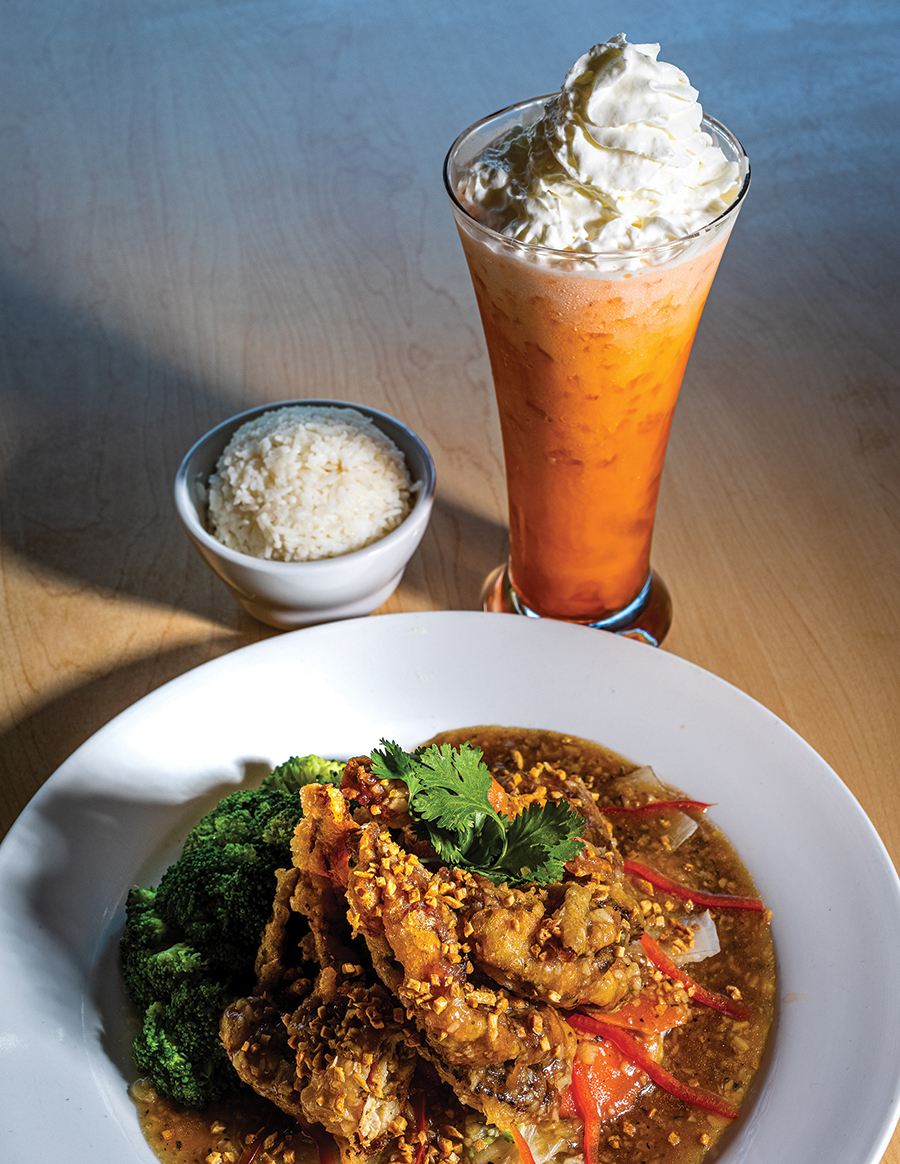
Neko shrimp tempura roll topped with a spicy mayo crab-imitation mixture, Tom Yum soup with shrimp, garlic soft-shell crab over steamed mixed vegetables, Thai iced tea with whipped cream.
The Workshop Tavern
106 W. Main St., Aberdeen
When Nathan Lonnen’s best friend from college nudged him to open a restaurant in downtown Aberdeen, he did, making the move from Charlotte to the Sandhills. He has worked in the restaurant industry since college and has helped several restaurants open, but The Workshop Tavern is the first he’s owned.
“It was the perfect chance to blend my woodworking and creativity into what I want in a restaurant,” Nathan says. In five months, he built out the restaurant almost entirely by hand, from the wooden bar and tables to the accent wall in the back. He even painted the artwork that hangs on the tavern’s walls. Nathan wanted to create a down-to-earth atmosphere that embodies the craftsman’s journey, whether it’s in woodworking or crafting a pulled pork sandwich and an old fashioned.
“My roots are in upstate New York, and I just always remember big food with a lot of flavor,” he says, and that’s what he wants for The Workshop Tavern. “The community has embraced us a lot. It’s been great. It definitely makes the long hours worthwhile when people come in, and they’re happy to be here.
“I just want to say thank you to everybody that’s supported us in this endeavor throughout the eight months that we’ve been open — it’s been a ride so far.”
Nathan Lonnen
Street-style pork carnitas tacos with roasted tomatillo avocado salsa; six-cheese macaroni and cheese topped with slow-roasted spicy chicken, house-pickled jalapeños and secret hot sauce.
YellowBird Southern Table and Bar
100 Pavilion Way, Suite B, Southern Pines
“The concept is Southern brunch — fried chicken and champagne,” says Orlando Jinzo, owner of YellowBird Southern Table and Bar with Sonja McCarrell. They’ll be serving up sweet and savory waffles, smoked brisket deviled eggs, fried green tomatoes, wagyu and bison meatloaf and, of course, chef-driven craft cocktails. But the Southern fare will be fresh and seasonal, so patrons don’t feel bogged down.
“Believe it or not, I grew up in Arizona, but most of the food we ate was Southern because those were the cookbooks my mom had,” Orlando says. “So, I grew up eating fried chicken and biscuits and cornbread in the Southwest.” Sonja grew up on Southern food, too, but right here in North Carolina.
Orlando and Sonja also own Leadmine Whiskey Bar and Kitchen in Southern Pines. After their plans for a second Leadmine in Raleigh serendipitously fell through, YellowBird was born. “Leadmine isn’t family-oriented,” Orlando says. “We play explicit rap music on the weekends. Here? It’s family-friendly. It’s literally opposite sides of the coin.”
YellowBird will be serving up brunch all day after their soft opening on Tuesday, Nov. 2, and their grand opening on Sunday, Nov. 14.PS
Jenna Biter is a writer, entrepreneur, and military wife in the Sandhills. She can be reached at jennabiter@protonmail.com.
Sonja McCarrell and Orlando Jinzo
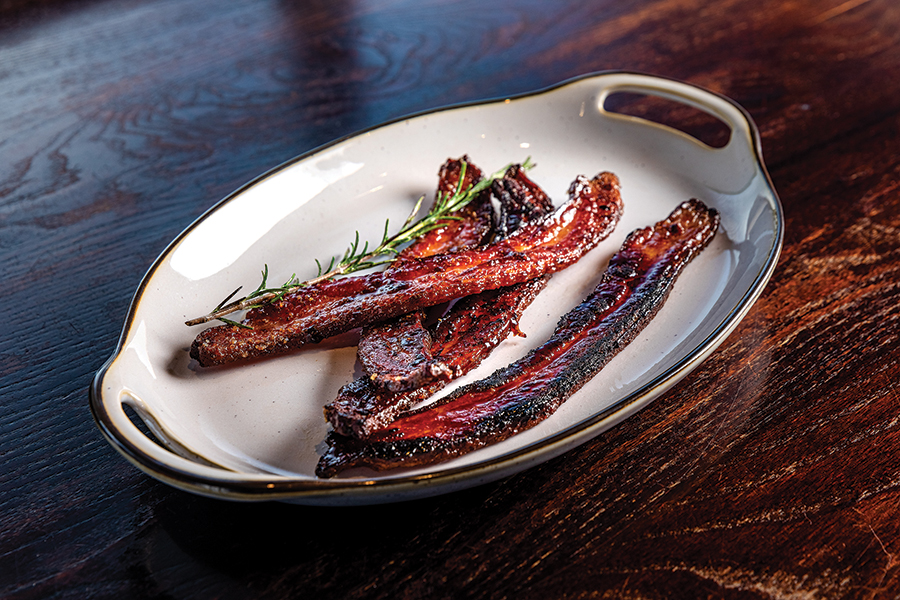
Malted waffle topped with Southern fried chicken; chocolate-hazelnut waffle with berries and cream; brown sugar brûlée bacon steaks; white cheddar macaroni and cheese.
After being driven into a virtual existence by the worldwide pandemic, the Judson Theatre Company returns to the stage with live performances in the regional theater premier of Yes, Virginia, a heartwarming, witty holiday play written and directed by Stan Zimmerman. There will be four performances, Nov. 18-21, in Owens Auditorium of the Bradshaw Performing Arts Center at Sandhills Community College.
In 1985 Zimmerman, who co-wrote Yes, Virginia with Christian McLaughlin, was an acting major fresh out of NYU when he and longtime writing partner James Berg were hired for the first season of a new sitcom, The Golden Girls. Their work on the popular show launched a career that has, among other things, included writing for the Gilmore Girls and Roseanne. Zimmerman’s two-person play stars Mindy Sterling, a regular on The Goldbergs who Sandhills audiences will remember as Frau Farbissina summoning the fembots in the Austin Powers movies; and Arnetia Walker, who has starred as Nurse Annie Roland in the series Nurses, and in Dreamgirls and The Wiz on Broadway.
Judson Theatre Company, along with Laguna Playhouse, Pop-Up Playhouse and Millbrook Playhouse, produced Yes, Virginia virtually last December. “We knew we had to do this play on stage in Pinehurst after the show’s opening night on Zoom,” says Judson’s executive producer and Moore County native Morgan Sills. “People were pouring their hearts out about it — how funny they found it to be; how true they thought the play was. We wanted Judson Theatre to come back to live performances, and a smaller show means a safer show. So, Yes, Virginia with its cast of two turns out to be the perfect choice.”
The play takes place on New Year’s Eve in the home of Denise Miller (Mindy Sterling), who is taken by surprise when her former maid, Virginia Campbell (Arnetia Walker), shows up at her door even though she had been “let go” a few months before.
“It’s New Year’s Eve and Denise is watching tennis, like my mother did, and talking to her son in California, like my mother did,” says Zimmerman, who draws on his life growing up in suburban Detroit as the basis for the characters. “He wants her to move out of the big, scary house with the big, scary stairs. And the door opens and it’s Virginia. She tells her son, ‘I let Virginia go months ago. What is she doing here?’ Virginia has a slight fall in the kitchen. She ends up on the couch. It’s a kind of role reversal where Denise is taking care of Virginia, the maid.”
Both characters are dealing with the vagaries of aging. Denise is suffering from macular degeneration and Virginia is beginning to show signs of dementia, and the questions become: What are we going to do? Where are we going to live?
“When my parents went through a messy divorce — which is part of the play — my mother would be in her bedroom with the shades shut and very depressed, and I would cheer her up and make her laugh,” says Zimmerman. He found a friend and confident in the woman who was his family’s housekeeper, whose real name was Virginia Campbell.
“I just remember having these long talks with her on my shag carpet, looking up at her — I don’t know why I was lying down on the shag carpet — just talking to her about how I was feeling and what I was going through. She was so easy and fun to talk with. Years later, when my mom was living in Santa Barbara and she started having to deal with dementia, we just begged her to move and she didn’t want to. She was a very proud woman. One day, she said, ‘Why doesn’t Virginia come live with me?’ I said, ‘Well, one problem. She’s dead.’ But, driving home, I thought, wait a minute, that’s a really good concept for a play. What if these two people ended up later in life together, helping each other out in kind of a role reversal?
“So, that inspired this comedy/holiday concoction. I use pieces of my own life, but it’s artistic license. There’s a part where Mindy’s character talks about being in New York and going to Studio 54. That didn’t happen to my mother, but it did happen to me when I was at NYU. I did go to Studio 54 and Andy Warhol did take pictures of me and, like an idiot, I told him to stop. What was wrong with me?”
Walker, whose first role on Broadway came when she was just 16 years old in Lorraine Hansberrry’s The Sign in Sidney Brustein’s Window, has as visceral a connection to Virginia as Zimmerman. “She reminded me of my aunt who raised me,” says Walker. “My mom died when I was an infant. I lived with my aunt in Georgia — she had taken me and my brother. It was during the waning days of Jim Crow. My aunt was a domestic worker. She would often have to leave us to take care of somebody else’s children. She was very warm and loving and I immediately felt a connection to Yes, Virginia. I found it so odd, how could a white man understand and write a character so real as this Black woman who was really part of my life, part of my past?”
Sterling and Zimmerman have worked together often after she appeared in his directorial debut, a 30th anniversary production of Gemini: A Play in Two Acts. “Ever since then she’s kind of been my muse,” he says.
“We say that there’s a clause in every contract that I will be in all his plays,” says Sterling. “I love working with him. There’s always a message and there’s always something heartfelt.”
In 2017 Sterling received an Emmy nomination for a role in Zimmerman’s web series secs & EXECS. “That was very exciting,” he says, “not only having created the role with her in mind but having directed her in it. Mindy and Arnetia have the same birthday. How weird is that? They have this chemistry. It’s so fun to watch them together. They’re two comic geniuses. They get to be funny, but they also get to be real and poignant and tell touching stories about family and children and being a mother and getting older.”
Tickets for Yes, Virginia can be purchased on the Judson Theatre Company website at https://judsontheatre.com.
If you love The Golden Girls, join sitcom writer Stan Zimmerman on Sunday, Nov. 14, at 7 p.m. at Owens Auditorium in the Bradshaw Performing Arts Center for “An Evening on the Lanai,” hosted by Alex Rodriguez. Zimmerman’s show, which sold out in May and June in Palm Springs, California, revisits the year he and his writing partner, James Berg, were creating quips and delivering lines for Betty White, Bea Arthur, Rue McClanahan and Estelle Getty. “It’s just a really cute evening of games, quizzes and contests, and a lot of gossip of what went on that fateful first season as the show was taking off,” says Zimmerman. Tickets are $25 in advance and $30 at the door. They can be purchased on the Judson Theatre Company website at https://judsontheatre.com. PS
Pinehurst: Retirement nirvana for the fortunate few who have played the best courses, traveled the world, appreciated good food, good company and reasonable health.
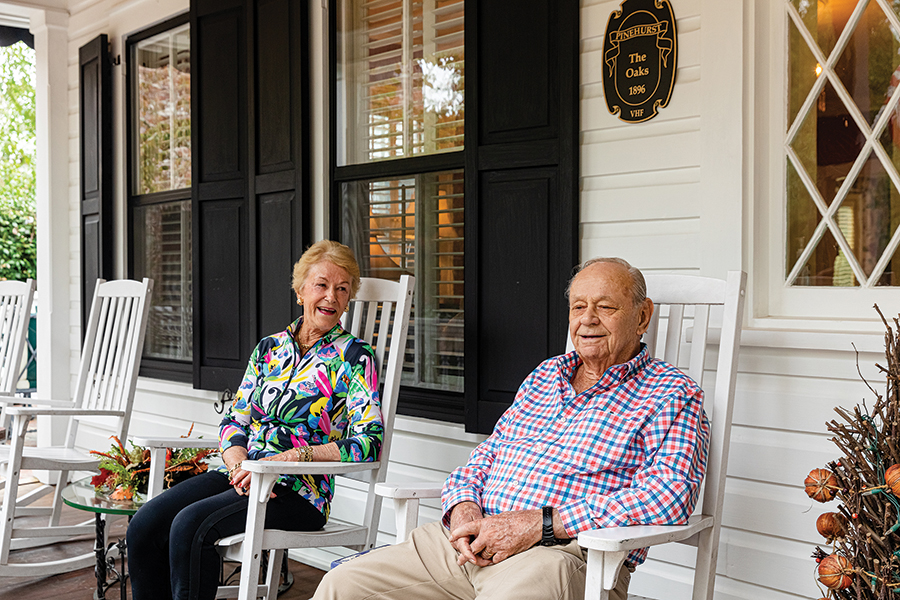
That would be Carnie and Sharon Lawson.
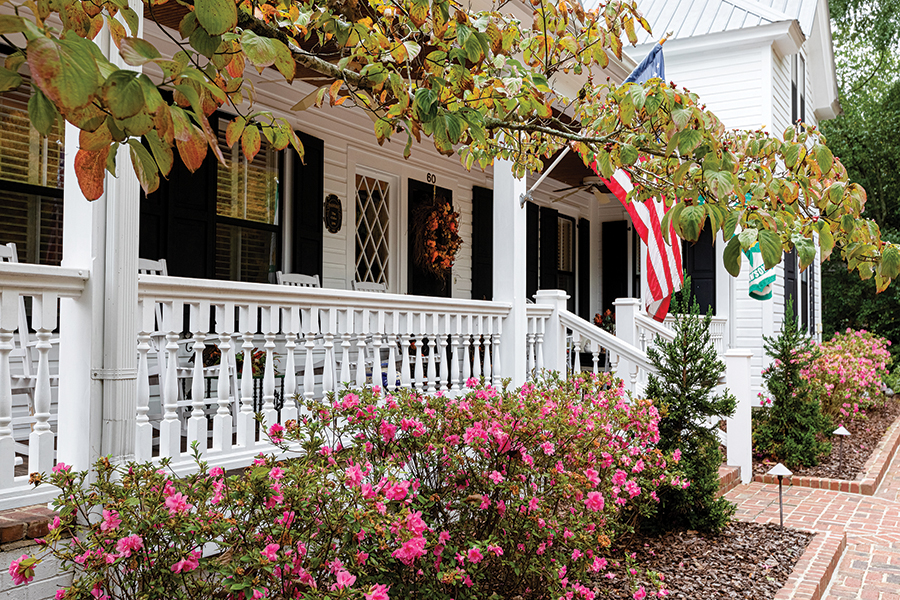
Previous inhabitants — together or separately — of impressive Northeastern residences, the Lawsons found an original Tufts-built “cottage” already upgraded, remodeled and enlarged to the hilt with exquisite taste in the village center. While rocking on their front porch they can smell the spices wafting from Theo’s Taverna, watch guests arrive at the Magnolia Inn, and wave at friends strolling by on an autumn’s eve.
Ah, the very, very good life.
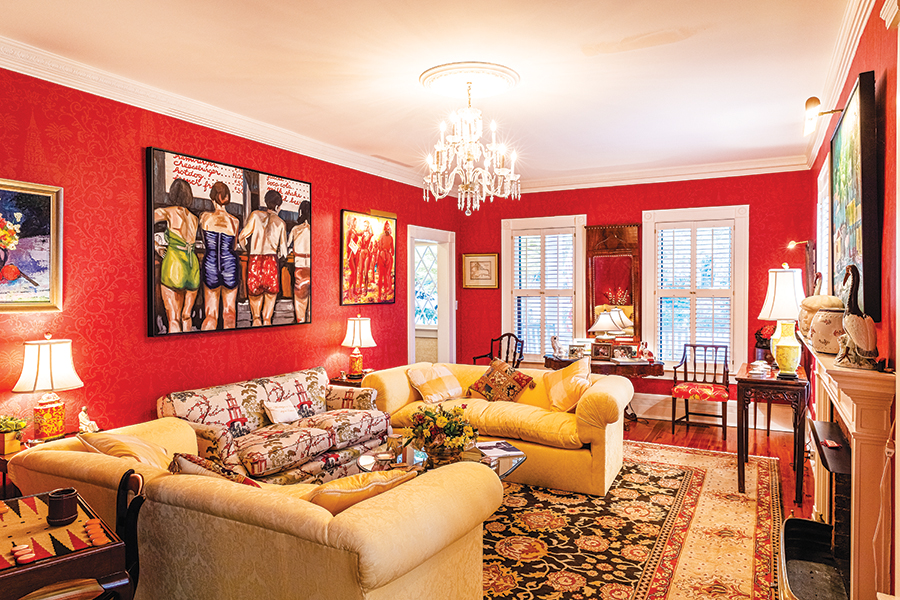
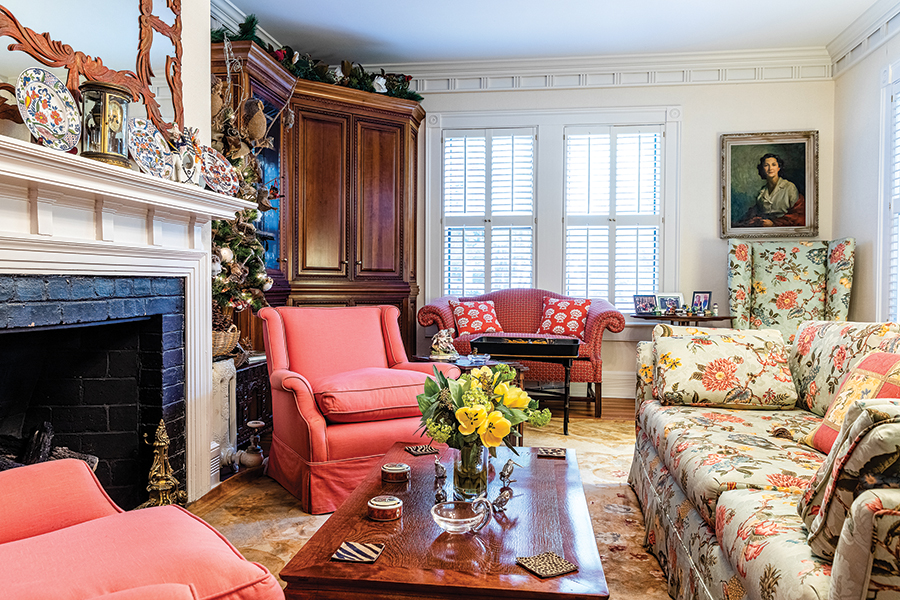
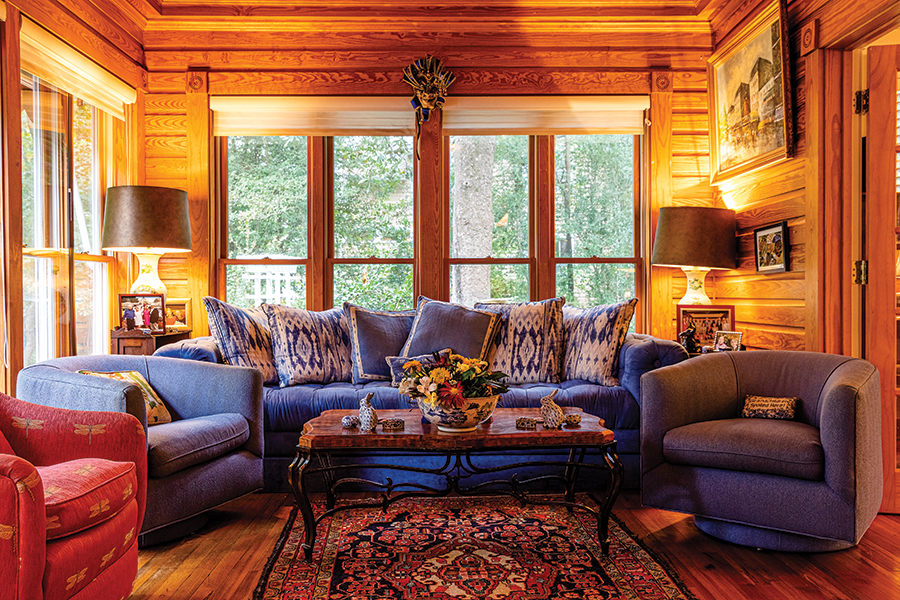
But wait: A surprise lurks inside The Oaks, as their home is named. Imagine hibiscus blossoms on a holly bush. Hot pink, acid green, lemon yellow, cerulean blue, aquamarine and coral splash across fabrics and walls in rooms furnished with carved mahogany, inlaid cherrywood, 19th century tables and chairs, bureaus and cabinets, desks and breakfronts — a titillating juxtaposition that works. One created by New Englanders (Connecticut and Massachusetts) who for years wintered sea and land in St. Lucia.
Note the 4-foot model of Carnie’s boat, La Gitane — French for “gypsy girl” — that he hopped aboard after retiring from the financial world at 47. “My parents died young. I wanted to enjoy life,” says the man 37 years later.
A closer inspection reveals a décor composed of more than souvenirs. Between them Sharon and Carnie have five daughters and nine grandchildren whose photos cover tabletops, shelves, walls. Their original art reinforces the Cole Porter lyrics for Anything Goes. Over a luxurious down-filled sofa, upholstered in a Chinese print, hangs a nouveau folk art canvas of four derrières lined up at a bar. It was painted by Sharon’s daughter. Carnie smiles. “I call it beach buns.”
Flanking the fireplace in a smaller gathering room is a year-round, table-top Christmas tree. The two rooms are ground zero when the Lawsons entertain.
Elsewhere, a collection of tiny Limoges pillboxes covers a tabletop. A display of Chinese dragon roof ornaments is arranged on another. Big metal Tonka trucks fill a bookcase. Miniature clowns cavort in a shadowbox. Masks from carnivale in St. Lucia appear here and there. Even a ceiling fixture has a history, removed from the Île de France, the first ocean liner built after World War I, launched in 1926.
Who needs to dream about a Tuscan villa when you’ve got 6,000 square feet (including five bathrooms, some with original claw-foot tubs) of prime Pinehurst real estate, all of it utilized when the children, their spouses and grandchildren gather for Thanksgiving, filling the house proper, the guest quarters and an apartment over the garage?
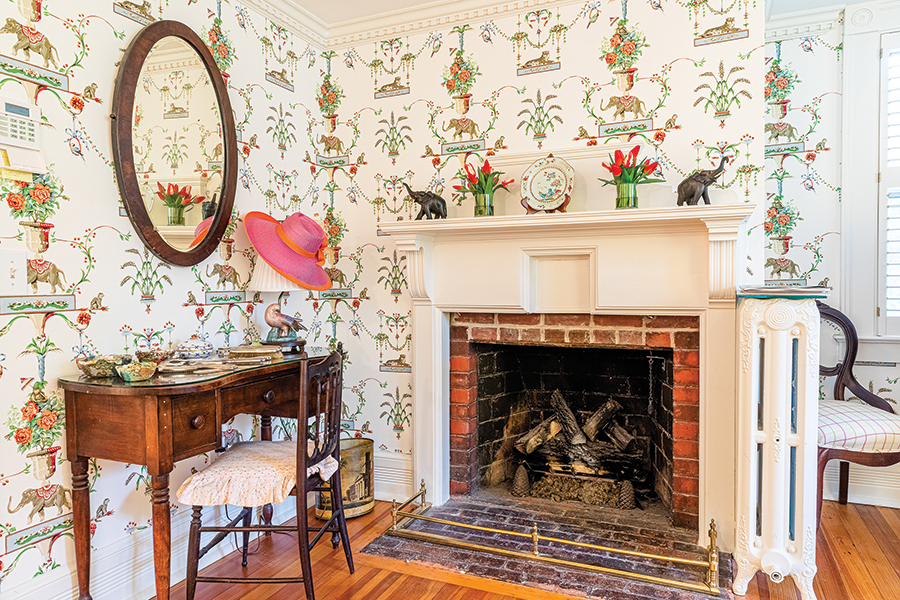
Yet, what grabbed Sharon’s attention on first perusal was the wallpaper, practically everywhere, with Asian/Indian/Indonesian motifs: lions and tigers and costumed natives; wild flora and fauna that riot across the walls, enlivening a small under-the-stairs powder room, a windowless kitchen, and a sunny master suite.
“We’ll take it,” Sharon said in 2010.
James Walker Tufts would not recognize the simple four-room cottage first dubbed The Nest (no kitchen, no bathrooms, no electricity or central heat) he built in 1896, the same year as the Magnolia Inn, for approximately $1,600.
The Nest was renamed The Crown when it doubled in size in 1901. That’s also when it was occupied by J. Ernest Judd, D.D.S., operating the Crown Dental Parlor, described as “a completely equipped establishment for up-to-date and sanitary dentistry which removes the terror of dental operations.” Among its modern features was a “fountain cuspidor.” Sir Laurence Olivier in Marathon Man would have been envious. Or not. The house was redubbed The Oaks by 1902.
Among other early residents were Fredrick Bruce and his spinster sister, Mary Bruce, a socially prominent duo from New York who purchased the home in 1907. A year later landscape architect Warren Manning created the much-admired garden behind the house. After the death of his sister, Fredrick continued living there until he passed away in 1928. Subsequently, the cottage was sold in 1931 to what seems to be a rather short-lived organization called The Oaks Club. Membership dues were $100 a year, $125 for non-residents. Coincidentally, perhaps, Prohibition ended on Dec. 5, 1933, and in 1934 the house was bought at auction by Franz Hugo Krebs, a Northeasterner who had been a frequent guest at the Holly Inn.
Cathy and the late Bill Smith, of the Southern Pines Ford dealership, accomplished a further enlargement, remodeling and retooling of the home in 1996, its 100th anniversary, with wallpaper added by interior designer and resident Cassie McCord.
The result: a modest frontage behind a picket fence that spreads backward into an outsized — by cottage standards — house with a fenced garden, home to a fountain, a pineapple (symbol of hospitality), light stand and five birdhouses.
Carnie knew Pinehurst from a family golf jaunt when he was 10. He and Sharon were dividing their time between homes in St. Lucia and Chappaqua (New York) when they decided to consolidate, settle down, and trade sailing for golfing.
“Where would you like to live?” Sharon asked her husband.
“How about Pinehurst?” he answered, recalling a resort community resembling a New England village but with a temperate climate.
Sharon had grown up in a historic house. She appreciated that component but wasn’t ready to take on a renovation. Been there, done that. She wasn’t keen on a gated community either. Carnie didn’t want a swimming pool. Been there, done that, too. But they both appreciated a house with character and found one in this extended cottage with its convention-defying layout.
“I have no idea what this was supposed to be,” Carnie says of a room between kitchen and sunroom, itself an addition. Perhaps for dining? Happily, they owned a billiard table (constructed in 1896, same as the house) to fill the space while allocating formal dining to a smallish octagonal music room with built-in china cupboards and woodwork transplanted from a house in England.
Remembering that Tufts’ “cottage colony” homes had no kitchens — guests ate at the Casino building, a communal dining hall — the one added to The Oaks falls outside contemporary glamour norms. Raised-panel cupboards are painted a pale yellow, more pineapple than lemon. A black ceramic tile backsplash adds an art deco touch. In the absence of windows, natural light is conveyed through skylights. A rack holds wide, brightly colored service plates from St. Lucia. The kitchen’s main attraction is an Aga range, the Rolls-Royce of appliances, crafted in the United Kingdom from a Swedish prototype, which cooks with radiant heat and is always “on.”
Outside the kitchen, a dining deck with long table and retractable awning suits a crowd.
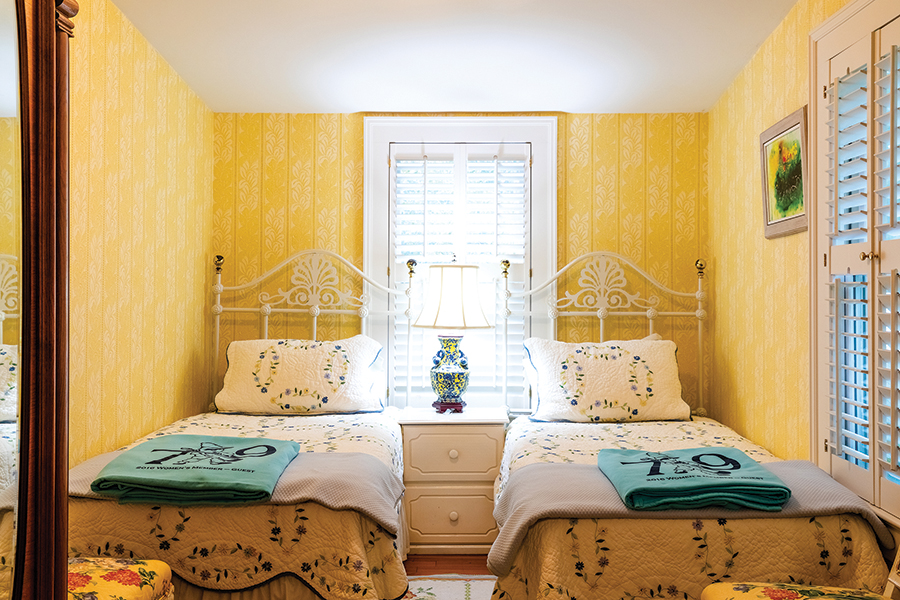
Up a narrow flight of stairs, the bedrooms, done in white and pastels, offer the freshness of a Nantucket Bed-and-Breakfast. Queen Victoria may have reigned when The Oaks was built, but her era doesn’t dominate its rooms, awakened instead with the vibrant island hues common to the queen’s contemporary, Paul Gauguin.
Not all retirees choose to live on a bustling lane within sight of shops and bistros. Some want a compact layout, on one floor. Sharon and Carnie Lawson still require space for possessions and memories. “I like to sit and look around; each piece reminds me of something that happened. I call this a big little house,” says Sharon.
“I loved living in St. Lucia and New Hampshire,” adds Carnie. “The people have lived there for many generations. But here, everybody’s from someplace else . . . they are open to new friendships.”
November is the rush of wind through leaves, the rush of leaves through wind, a cradle song before a long night’s sleep.
In the garden, the unblinking statue has seen it all before, will see it all again: birds, here and gone; the explosion of color; the great release; the withering; the nothingness; the sweet and glorious rebirth.
Today, light feels soft and precious. The air is cool. The garden statue, barnacled from yet another sleepless year on watch, holds a stone bird in cupped hands — the weight of the world; the burden and the gift of the silent witness.
As tree limbs bend and sway on high, leaves and squirrels scatter across the earth in dramatic bursts.
Soon, when the wood frogs sleep, the roving cat will make its way from the rose bed to the back porch, press its paw against the glass panel door, give up its wanderings for a place by the hearth. The crickets play their final tune as the snake enters brumation.
In its quiet meditation, the statue sees and hears what most do not. It knows that summer’s light is still here, pulsing within all living things; that spring is autumn’s waking dream; that there is magic in the heart of winter’s stillness.
A whirl of golden leaves descends. An aster blooms. And in the fading autumn light, a pregnant doe plucks freshly planted bulbs, nibbles dwindling grasses, steps boldly toward the night.
The statue neither smiles nor frowns. It simply watches, listens as the world goes quiet.
Pass the Gravy
Autumn’s color show does not stop at the swirling leaves. Inside, where golden milk simmers on the stovetop, the spectacle continues.
Behold a rainbow spread of roasted beets and carrots. Collard greens flaked with red pepper. Cranberry-pear chutney garnished with orange peel.
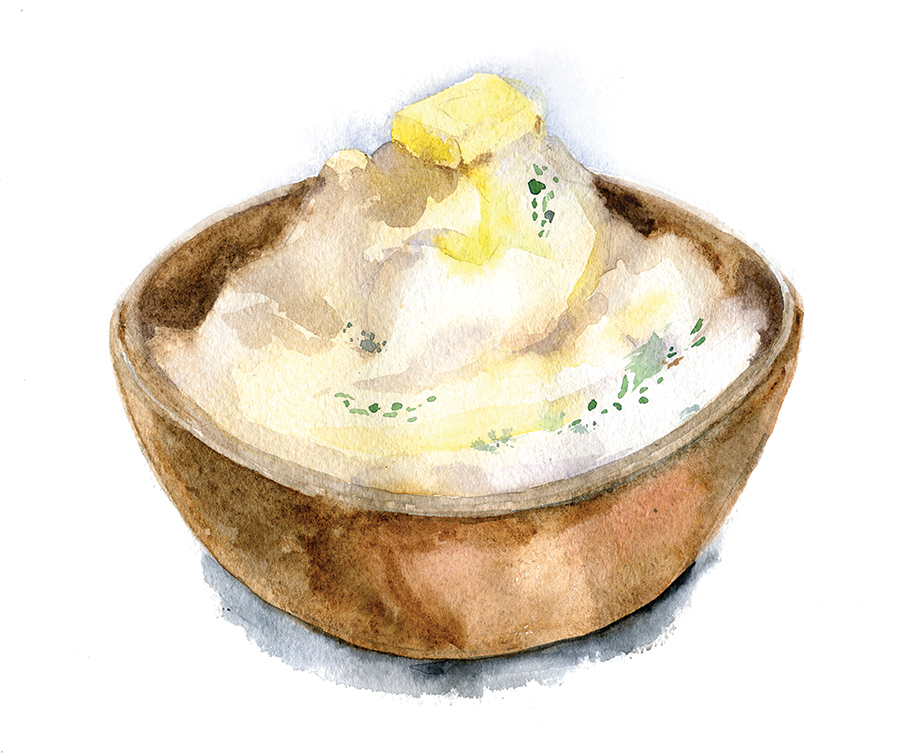
Come Thanksgiving, add warmth and color any way you can. We all know it: The mashed potatoes need the contrast.
Despite how you serve them — smooth and creamy; hand-mashed and skin-on; loaded with garlic and butter — there’s no denying that mashed potatoes remain a holiday favorite.
Unlike green bean casserole, which Campbell’s introduced in the 1950s through their Cream of Mushroom soup, mashed potatoes have been a Thanksgiving staple since the 1700s.
Sure, add a dollop of sour cream and a little cheddar. Or fresh rosemary from the kitchen garden. Just don’t go messing up a good thing.
Hold the Dairy
How to make vegan mashed potatoes? Two words: vegan butter. And as for vegan gravy? Ditto. Sub pan drippings for nutritional yeast, soy sauce, Dijon mustard, onion powder and the like. There are dozens of recipes out there. No need for the vegan you love to go without.
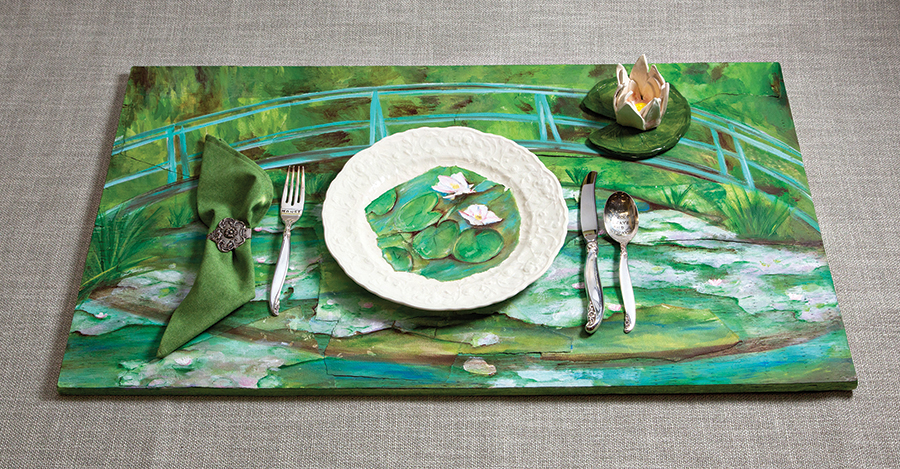
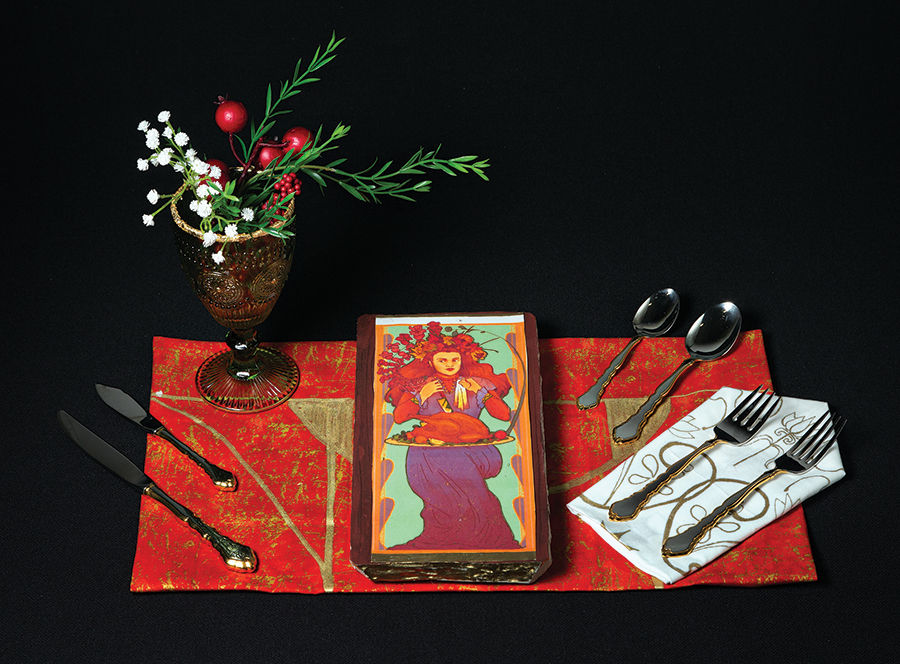
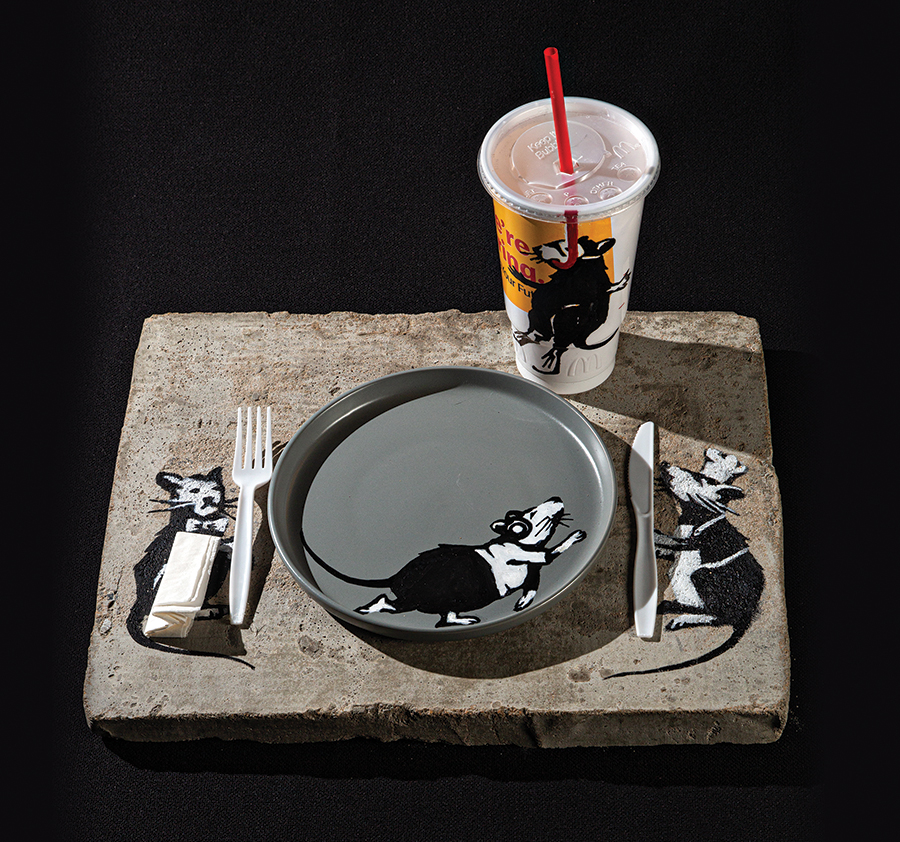
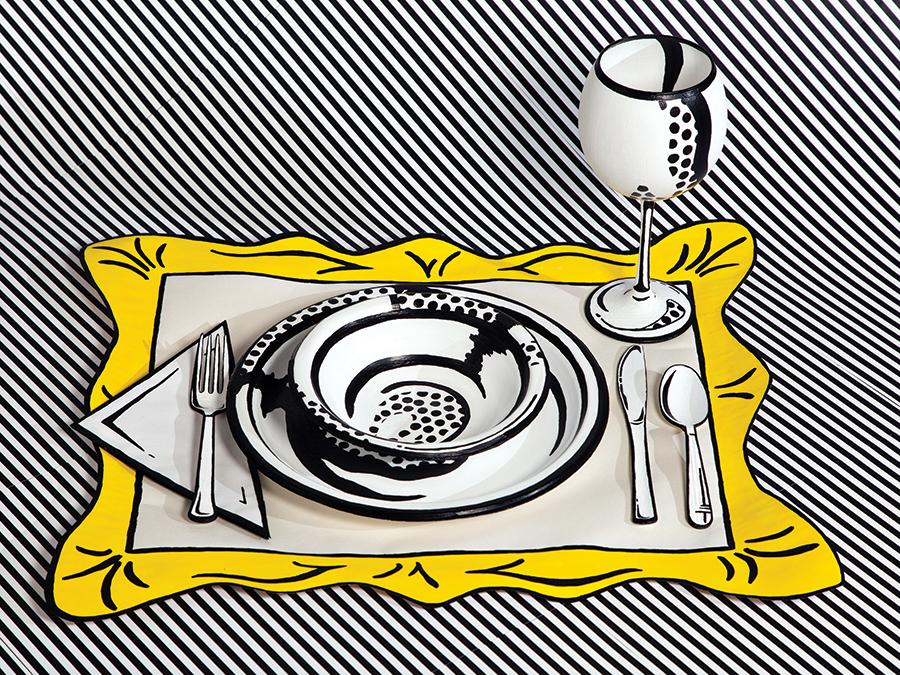
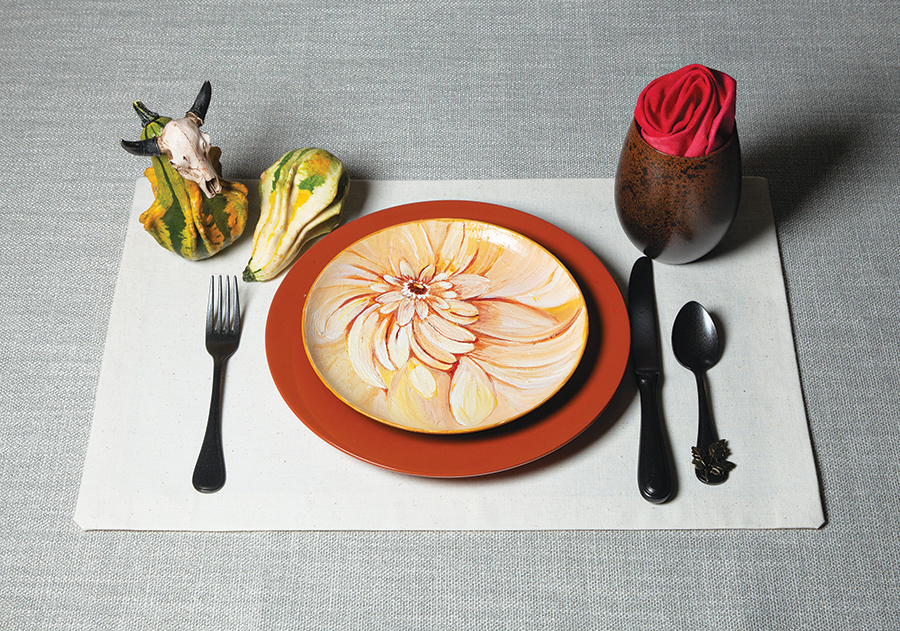
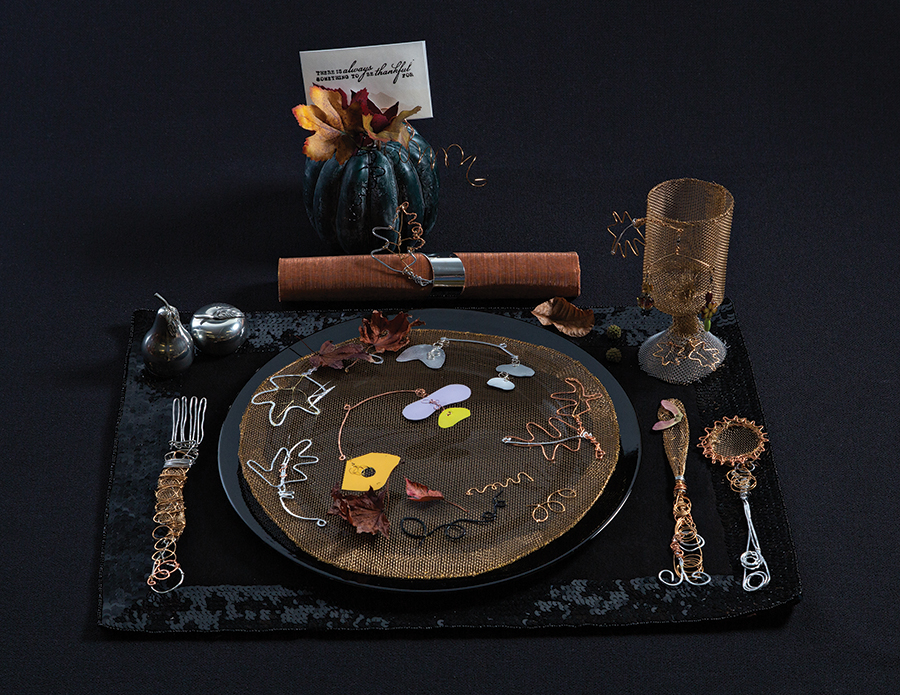
Sit down to a serving of great art as Sandhills artists Mary Davis, Laurie Deleot, Jill Hartsell, Aedan Peters, Kim Reidelbach and Ines Ritter discover their inner Georgia O’Keeffe, Alexander Calder, Claude Monet, Roy Lichtenstein, Alphonse Mucha and Banksy, respectively, in these playful place settings. This is truly a Thanksgiving with all the trimmings.
Produced by Denise Baker • Photographs by Tim Sayer
Claude Monet
by Jill Hartsell
Jill Hartsell is passionate about teaching art to young children, spending the last 19 years of her two-decades-long career as an educator in the Moore County schools. She loves all forms of art whether it’s painting, quilting, redoing furniture, making clothes or fashioning jewelry. “Being creative brings me peace, joy and freedom,” she says. Playing on Monet’s famous water lilies, the deckle-edged china has small embossed flowers, and the clay drinking vessel is fashioned into a lily pad.
Alphonse Mucha
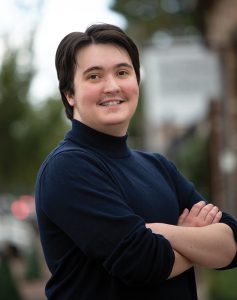
by Aedan Peters
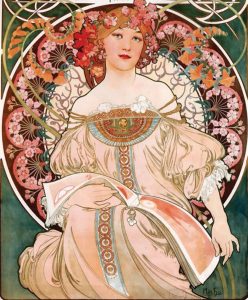
Aedan Peters was born in 2001 in Rottenburg, Germany, while his parents were stationed overseas. He moved to Carthage in 2010 and has lived in the area off and on ever since. From a young age, his mother and father fostered a deep appreciation of art within him. This piece brings back memories of the times his parents would help him and his sister recreate famous pieces like Van Gogh’s Starry Night and Chagall’s The Blue Violinist. Peters chose Alphonse Mucha because of the way the artist’s work lends itself to the maximalist ornateness. He plans on moving to Asheville next fall to continue his art education.
Banksy
by Ines Ritter
Ines Ritter is the owner of RUNT Graphic Design in Southern Pines. She creates digital designs ranging from logo art to package and trade fair displays, and has done book illustrations, sculpture, pastels and painting. Growing up near Frankfurt, Germany, she found graffiti and street art inspiring, especially the simple yet impactful style of Banksy, the anonymous graffiti artist. Banksy often paints on trash, hence the paper cup and plastic utensils. Notice how Ritter has poured her own cement block for a place mat, mimicking a wall.
Roy Lichtenstein
by Kim Reidelbach
Kim Reidelbach is a freelance artist living in Whispering Pines and working at The O’Neal School. She is a mixed-media artist often combining photography, painting and sculpture, using humor to communicate personal reflection in response to current events. She has freelanced as a muralist, once worked in a foundry, and has collaborated with other artists for shows in Washington state, Haiti and Florida. She captures Roy Lichtenstein’s style by contrasting the black and white with the place mat’s shape and bright yellow color. The optical illusions create a Ben-Day dot effect.
Georgia O’Keeffe
by Mary Davis
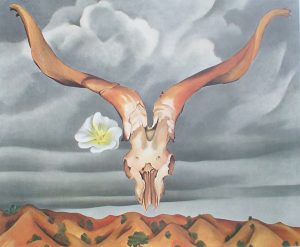
Mary Davis is a North Carolina-based artist who began her professional journey in Florida in 2005 as an interior muralist. She draws inspiration from nature and life experiences and is inspired by artists like O’Keeffe, who push boundaries, demand a presence and continue a forward motion in life. She features O’Keeffe’s flower image as the center of the place setting and filled her glass cup with a hand-dyed napkin to mimic a rose. The skull represents one of the New Mexico desert objects O’Keeffe frequently painted.
Alexander Calder
by Laurie Deleot
Laurie Deleot is a multi-media artist who is focused on non-objective and abstract art. Her work is colorful, full of whimsy and joyful. She saw her first Calder piece in Chicago 53 years ago, which began her fascination with his work. Calder, who was the youngest living artist ever to have a retrospective at New York’s Museum of Modern Art, called his mobiles “drawing in space.” Deleot chose different metallic wires, working in the essence of his style, to sew her “mobile” place setting, even knitting the outside edges with wire.
Just because “big” and “beautiful” start with the same letter doesn’t signify a relationship. What could be prettier than a modest house filled — not crowded — with carefully chosen objects, where nothing matches but everything fits?
Should the house and contents also reflect its occupant, bravo.
Virginia Gallagher teaches yoga. She lives yoga. Her artifacts and décor reflect its tenets and practices. Crystals cover many surfaces. She speaks of chakras, the body’s seven energy centers. Even the uninitiateds absorb the calm.
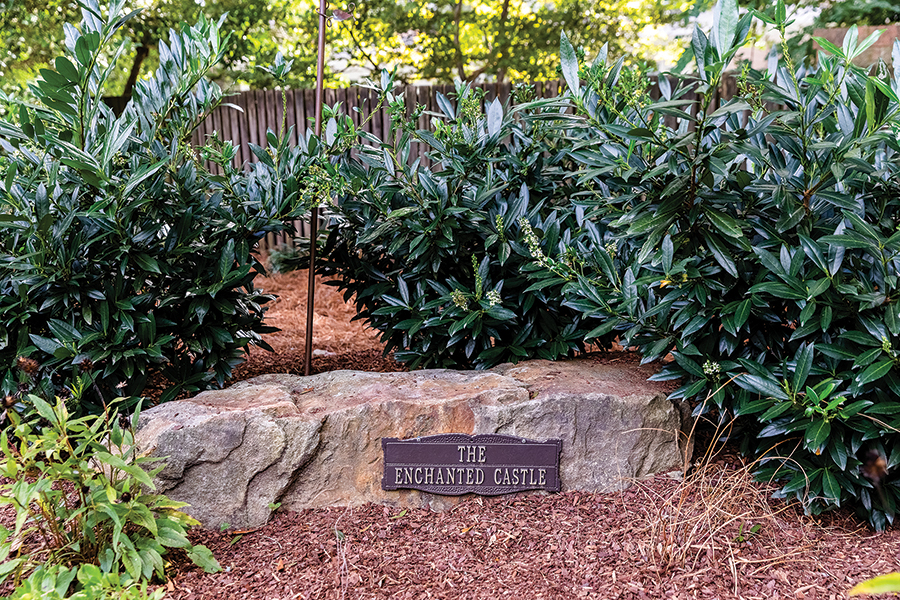
That calm begins on the front walkway, composed of stepping stones, rimmed with perennials, then weed-free grass, where a small sign announces the Enchanted Castle. The clapboards are painted a green south of avocado. Celery, maybe? The front porch ceiling is sky blue, considered a good omen. Hanging from it, a white woven rope hammock from Mexico, where Virginia led an instructors’ retreat. “I love the Mayan culture, the spirituality,” she says.
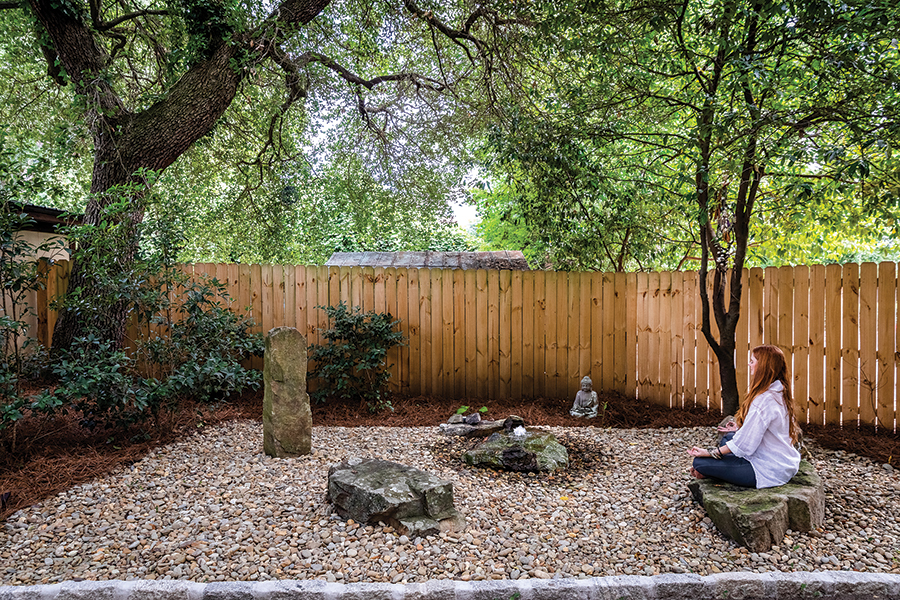
The foliage attracts birds, which Virginia identifies with a guide kept nearby. Ancient trees and vines shelter the meditation garden from summer’s heat. Gingerbread rims the roof lines of a dwelling built in 1924, according to a brick set into the vestibule floor . . . but by whom? Mother Goose? Lewis Carroll? J.R.R. Tolkien?
Virginia — an adult aficionado of Alice’s wonderland — doesn’t know. Most likely a shopkeeper who appreciated walking to Broad Street as much as Gallagher likes walking to Hot Asana, her teaching studio. However, beware of bricks bearing dates; documents provided by the Moore County Historical Association move construction back to 1895, commissioned by C.T. Patch of Peacham, Vermont, a partner at downtown business Patch & Robinson. Another 20 years would pass before snowbirds and townies of substance hired architects to design fancier cottages uphill from the train tracks.
Then, as now, people kept time by the trains, which bother Virginia not at all. “The sound is comforting,” she says.
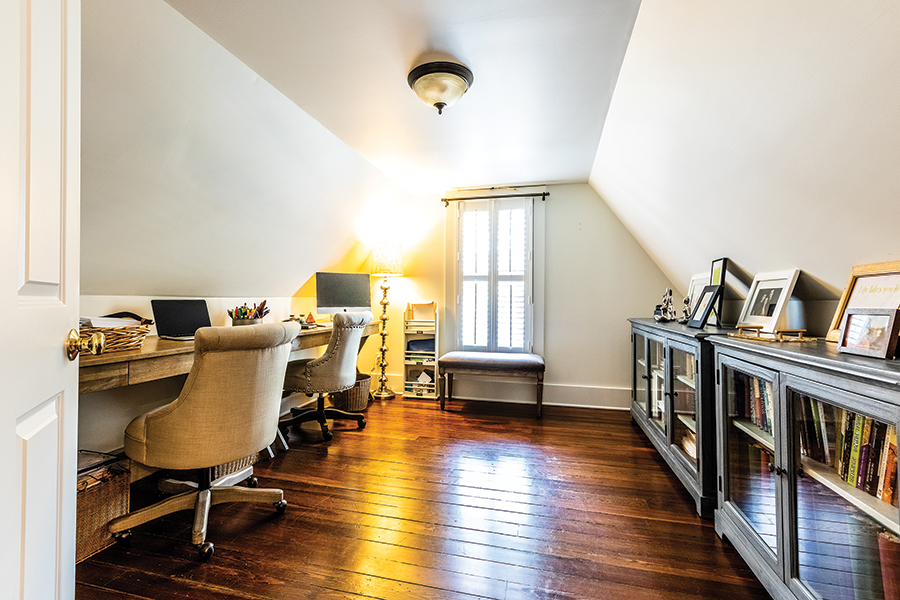
Gallagher’s décor, too, answers to “comfortable.” A pair of upholstered chairs fill her sitting room, with bay window. Everything is child-friendly. Virginia has six. Kevin, a son killed in a tragic accident, is memorialized throughout the house. The others know her door is open — and often take advantage of a “boys’ suite” in the converted attic with slanted ceilings: two bedrooms, a bathroom, a sitting room with TV. Simple. Practical. Comfortable.
This cottage represents Gallagher’s second lifestyle — the first being traditional wife and mother — living in a house fronted by tall pillars in a fashionable neighborhood. Once single, she discovered yoga through a friend: “I was overweight and unhealthy. I went to yoga to get skinny and flexible. After the first class I thought ‘weird,’ and that I’d never do it again.”
That was 2007. Weight loss attributed to the lifestyle captured her mind and body. By 2009 she had become an instructor. In 2010 Virginia opened Hot Asana adjacent to the Sunrise Theater, a short walk away from home. It’s only natural that her house includes a small yoga room where she Zoomed classes during the virus shutdown.
A Southern Pines native and enthusiastic downtowner, Gallagher rented the Enchanted Castle for two years before deciding to buy in 2012. Other possibilities didn’t come with “a story.” Neither did this one so, relying on the presence of previous residents, she made one up.
“I get energy from them,” she says.
Equally gratifying: “This is the first house I ever purchased by myself, with money earned by my own hands and skills.”
Ownership allowed adaptations, not always in the expected places.
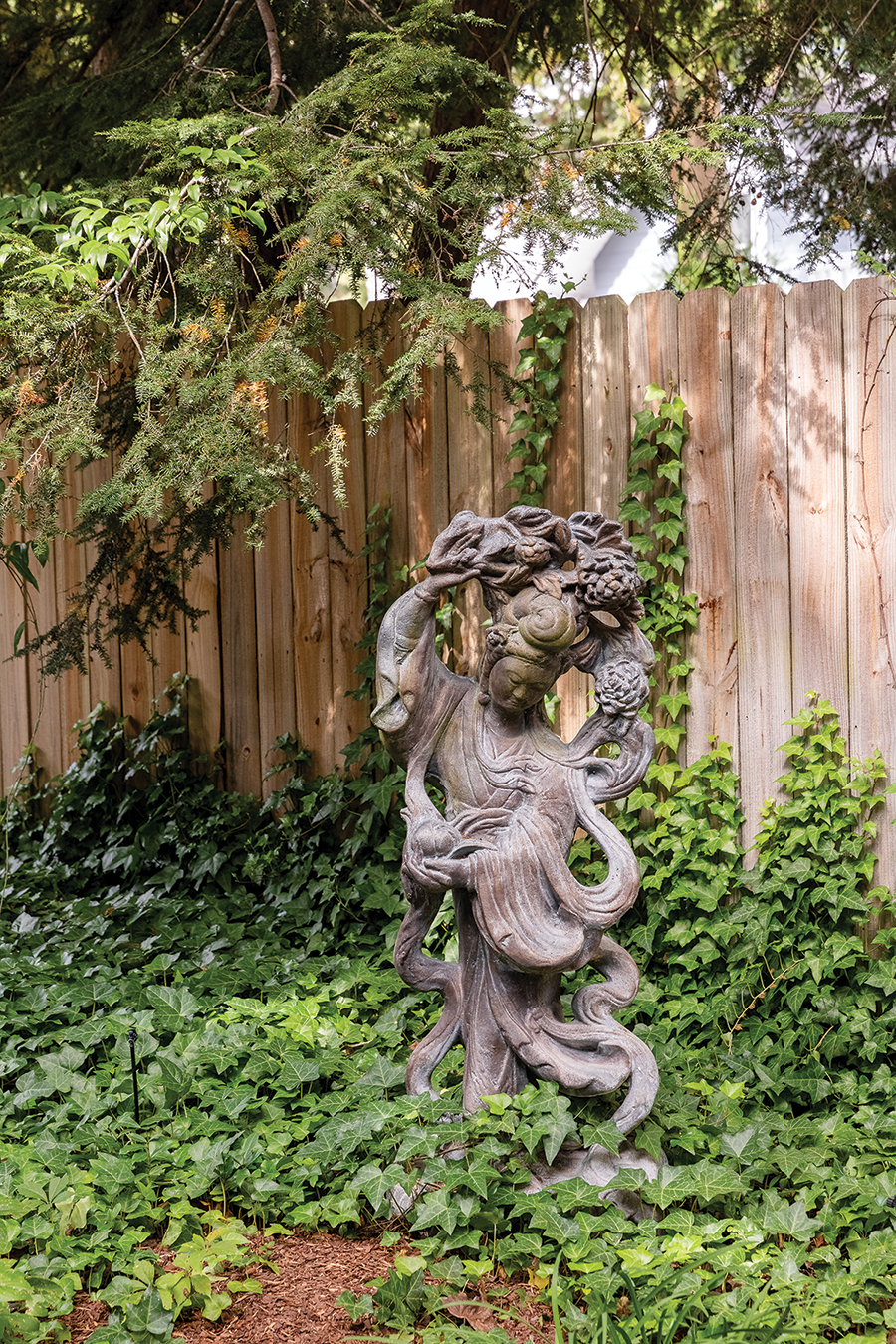
“I love a big bathtub,” which wasn’t possible given the long, narrow bathroom that had been added onto her front-facing bedroom. Instead, she installed a hot tub in the fenced backyard. Next, multi-level decks with a trellis-covered dining table, sectional sofas, a swinging bed, gardens with a bubbling fountain shaded by an ancient pin oak, and statue of Kwan Yin, Buddhist goddess of peace and harmony.
“It’s just heaven out here,” Virginia says of her al fresco year-round living space.
No single word, not even eclectic, describes the interior, with a floorplan that appears to have been rearranged and enlarged, helter-skelter, by previous owners. Opposite the small sitting room is a master bedroom, filled almost entirely by a king-sized bed with elaborate headboard, that looks out onto the front porch. “So I could see how late the kids came home,” Gallagher says. A crystal mini-chandelier hangs over the bed. Her dresser is painted metallic silver, the walls yet another shade of green.
Floors are original pine, stained dark, partially covered by colorful crewel rugs. Throughout, Virginia strives for a feminine presence, something missing in her previous homes.
Beyond the sitting room, walls appear to have been rearranged to create a dining room, large for a cottage of its era. The table, made of distressed wood slats, is surrounded by a variety of seating: bench, upholstered and other chairs. Over it hangs a light fixture built from the top third of an enormous glass water jug hanging by cords emerging from the narrow neck. A contemporary glass china cupboard displays pottery in Virginia’s favorite turquoise. What’s the good of having pretty things if you can’t see them, she explains.
An elongated kitchen attached by a previous owner appears to stretch into tree branches visible through windows on three sides. Even kitchen colors — brown and an earthy green — suggest bark, moss and leaves, rather than white-and-granite glamour. Instead of an island, a long worktable down the center holds glass jars filled with beans and grains and seasonings common to a healthy lifestyle cuisine.
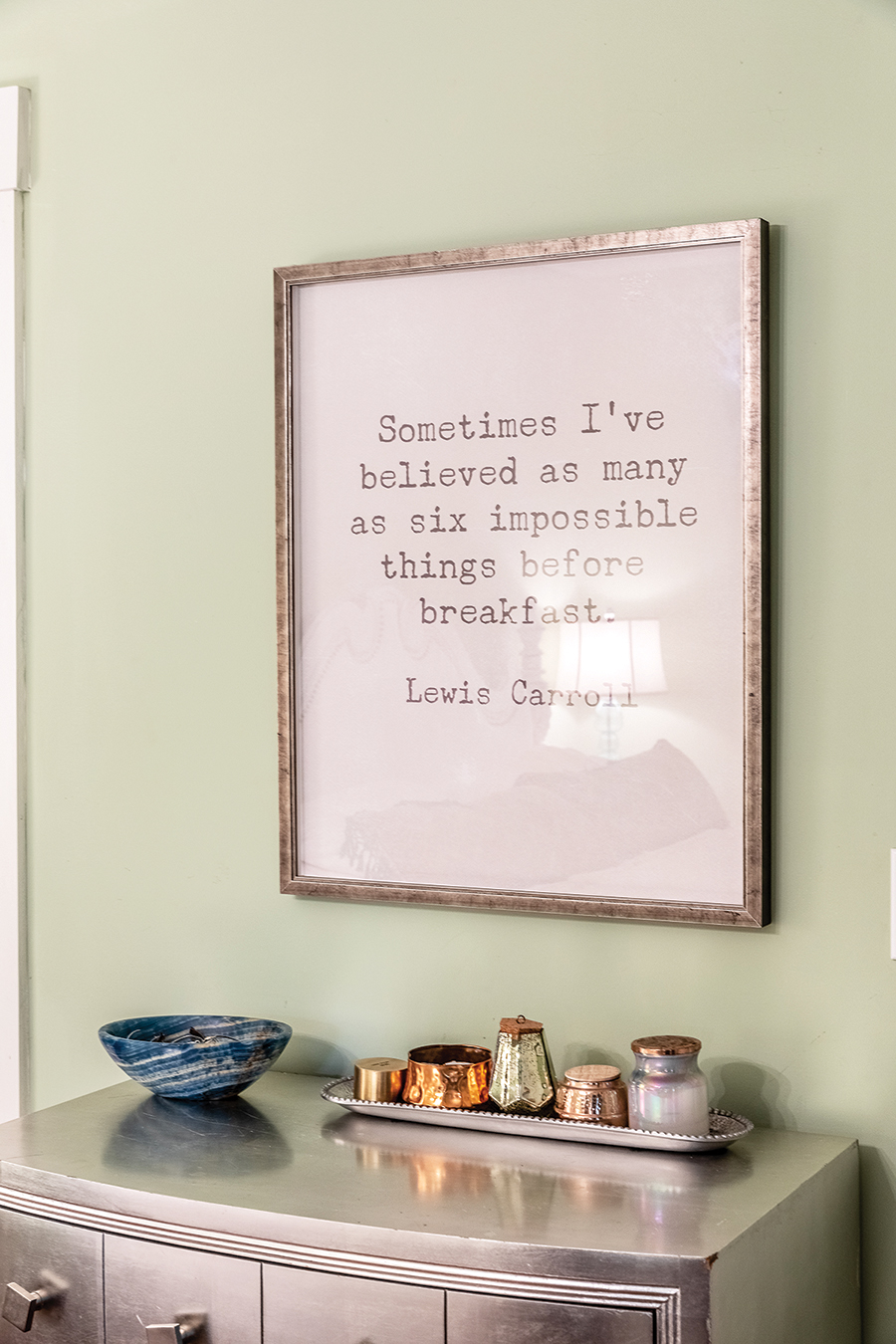
Art is what you make of it. Or what it makes of you. For Virginia, this means framed quotations from favorite books. An enlarged photograph taken in Alaska of horses frolicking through the snow, printed on canvas to resemble a painting, is vaguely mystical — a gift from a friend. A barn quilt pattern hangs outside, in Kevin’s memory. Family members have tattoos in the same design.
Completing the scene are a friendly Toto-dog named Baxter and Luna, a mostly blind marmalade cat.
The template for this serene environment is not completely rooted in yoga. Gallagher grew up in her grandparents’ house in Hamlet, where her grandfather owned the local Coca-Cola plant. “I identify with my grandmother, and their home,” she says. “It had lots of nooks and crannies. I was allowed to touch things. The way it felt was magical.
“I was loved in that home.”
These experiences, past and present, influence her attitudes as well as her living space. “What I learned about yoga is that it helps you feel more comfortable in your body. And home — more comfortable than refined — is a practice of yoga.”PS
Used to determine whether a user is included in an A / B or Multivariate test.
18 months
_ga
ID used to identify users
2 years
_gali
Used by Google Analytics to determine which links on a page are being clicked
30 seconds
_ga_
ID used to identify users
2 years
_gid
ID used to identify users for 24 hours after last activity
24 hours
_gat
Used to monitor number of Google Analytics server requests when using Google Tag Manager
1 minute
_gac_
Contains information related to marketing campaigns of the user. These are shared with Google AdWords / Google Ads when the Google Ads and Google Analytics accounts are linked together.
90 days
__utma
ID used to identify users and sessions
2 years after last activity
__utmt
Used to monitor number of Google Analytics server requests
10 minutes
__utmb
Used to distinguish new sessions and visits. This cookie is set when the GA.js javascript library is loaded and there is no existing __utmb cookie. The cookie is updated every time data is sent to the Google Analytics server.
30 minutes after last activity
__utmc
Used only with old Urchin versions of Google Analytics and not with GA.js. Was used to distinguish between new sessions and visits at the end of a session.
End of session (browser)
__utmz
Contains information about the traffic source or campaign that directed user to the website. The cookie is set when the GA.js javascript is loaded and updated when data is sent to the Google Anaytics server
6 months after last activity
__utmv
Contains custom information set by the web developer via the _setCustomVar method in Google Analytics. This cookie is updated every time new data is sent to the Google Analytics server.
2 years after last activity
SourceBuster is used by WooCommerce for order attribution based on user source.
Name
Description
Duration
sbjs_current_add
Timestamp, referring URL, and entry page for your visitor’s current visit to your store
session
sbjs_migrations
Technical data to help with migrations between different versions of the tracking feature
session
sbjs_session
The number of page views in this session and the current page path
30 minutes
sbjs_udata
Information about the visitor’s user agent, such as IP, the browser, and the device type
session
sbjs_first
Traffic origin information for the visitor’s first visit to your store (only applicable if the visitor returns before the session expires)
session
sbjs_current
Traffic origin information for the visitor’s current visit to your store
session
sbjs_first_add
Timestamp, referring URL, and entry page for your visitor’s first visit to your store (only applicable if the visitor returns before the session expires)