Eternally Fall

A football odyssey for a father and his sons

By Charles Marshall     Photographs by Joshua Stedman

Growing

up in North Carolina, my life unfolded along a well-worn path of I-85 between Atlanta and Washington, D.C. In the sporting world, this is ACC territory, with the possible exception of exit 106, the gateway to Athens. For the most part, the college towns of the SEC and the Big 10 remained remote outposts in lands beyond the exits I knew so well. Some had strange sounding names like Tuscaloosa, or stadiums menacingly referred to as The Swamp.

One Saturday in November 2009, the sights and sounds of Georgia battling Auburn on TV were juxtaposed with my elementary school-age kids — Foster was 7 and Drake was 5 — slamming doors, tearing apart train tracks and bouncing balls. I thought about the decade I had before the oldest would leave for college, and I began recalling the allure of the old-school car trips of my youth. AM radio, hotel pools, breakfast buffets, souvenir T-shirts to show off back at school, and the long unbroken spells of time where, if you’re lucky, kids begin to talk to you about things that really mattered.

Once I began mapping routes to the meccas of SEC and Big 10 football, I realized most were less than a full day’s drive away. If I could grab an unsweetened tea by 6 a.m., my boys and I could transport ourselves into the scenes I’d spent years watching from my den. So, we would go. Ten years, 10 stadiums, 10 games. The only rule was that we had to drive.

Year One: Alabama 23, Ole Miss 10

I met my friend Britton Stutts at a summer camp near Brevard, North Carolina, when we were both 14. He was from Birmingham, Alabama, and I was from Charlotte, North Carolina. We kept in touch over the years. We were even in each other’s weddings. He went to college at the University of Alabama. I went to UNC-Chapel Hill. Britton was the obvious person to jump-start our tour.

His parents decked out my boys in ’Bama gear, and we rode to Tuscaloosa together for the 9 p.m. kickoff. After a buffet meal at a fraternity that had the feel of being at someone else’s family reunion, we strolled through the campus and its manicured quads on a clear, cool October evening before settling into our seats in Bryant-Denny Stadium. Myself, Foster, Drake and 100,000 other people. Only two of our seats were together, so the three of us crammed into them. After the national anthem, during the fevered anticipation of kickoff, I knelt in front of my boys and shouted to them over the crowd that we were going to do this every year for the next 10 years. They stared at me and nodded.

Alabama’s Greg McElroy threw two touchdown passes. The games were on.

Year Two: Florida 33, Tennessee 23

Foster loved Tim Tebow, so Florida was an easy next choice. Without a host family like we had at Alabama, we would be making it up as we went along. Because the night before a game, hotels in college towns cost more than a hip replacement, we stayed in Jacksonville and drove into Gainesville in the morning — without GPS or a clue. We paid $30 to park in the front yard of an older woman’s single-story white house. She took our money seated in a lawn chair and, in an act of kindness, let us use the bathroom inside her home.

We went off hunting and pecking our way through Florida’s sprawling campus, embarking on what would become a long-suffering tradition of watching Drake agonize over what fan gear he would purchase. After sorting through racks and racks of gear at several stores, an orange T-shirt from a stadium vendor that simply said “Gators” made his day.

It was mid-September, hot and muggy for the late afternoon, nationally televised game. We watched the sun go down in the fourth quarter over the corner of the orange-colored stadium that said “WELCOME TO THE SWAMP,” and suddenly being there in person seemed surreal.

Year Three: Georgia 48, Vanderbilt 3

On a spin through Atlanta the night before the game, we stopped at The Varsity, a legendary hot dog joint, and the World of Coke, the museum of the global cola icon, and went to the Midtown Music Festival, where we saw the Avett Brothers and Foo Fighters with 50,000 other people.

Our seats for the September evening game “between the hedges” in Sanford Stadium in Athens were behind a colorful array of fraternity kids with an equally colorful vocabulary. A bigger impression was the cheering for Todd Gurley and Keith Marshall, two North Carolina high school standouts who played running back for Georgia. Foster wondered aloud why UNC didn’t land them but the reality began to sink in — in 2012, this was a bigger stage. Vanderbilt was supposed to make the game competitive, but they failed miserably.

We left at halftime only to find the car’s battery dead — the biggest disaster of our vagabond decade. It took a good two hours to solve the issue as my boys watched me alternate between problem-solving, frustration and fury. Once we were on the road we drove as far as Commerce, Georgia, where we rented a hotel room and watched the end of the Florida State-Clemson game on television while an oversized roach crawled across the ceiling.

Year Four: Ohio State 31, Wisconsin 24

On the way into Columbus we listened to a local sports talk radio station deconstructing in mouth-watering detail how to eat a particular corned beef and pastrami sandwich from a particular downtown deli. Sadly, it was closed by the time we rolled into town, and we had to settle for chicken wings and cornhole in a brewpub across the street from our hotel.

In the SEC, tailgaters often bring elaborate spreads of pre-cooked food and avoid firing up charcoal on 100-degree days in a crowded asphalt parking lot — a rookie move that once betrayed my ACC roots. The Big Ten, on the other hand, is where meat goes to get burned. As we walked through the Ohio State campus on a glorious Saturday morning, the tailgaters were already busy. One was serving ribs and brats hot off the grill by 9 a.m. The heavenly odor was everywhere, in parking lots, in grass lots, and floating in the spaces in between. The tailgating particularly piqued the interest of my son, Foster, leading to our own charcoal-cooking experiments at home testing an array of homemade sauces and rubs on friends and neighbors.

Urban Meyer was in his second season coaching Ohio State and had yet to lose a game. Among the 105,000 or so fans in “the Horseshoe” for the 8 p.m. kickoff was a guy seated right behind us who went on and on about how Meyer couldn’t hold a candle to Jim Tressell as a coach because Meyer “hadn’t scheduled anybody any good.” It was a reminder of the impossibility of coaching college football. You’re undefeated and you’re still a bum.

Year Five: Oklahoma 45, West Virginia 33

“But have you seen a game in Morgantown?”

I’d heard about the beer, the moonshine and the burning couches. So why not take your kids to see what the fuss is all about? If Morgantown seemed deserted before the 7:30 p.m. game, it was only because everyone was in the parking lot of Mountaineer Stadium. We found a tailgate of a friend of a friend of a friend — who wasn’t even there — and I was immediately offered beer and moonshine out of a Mason jar. We were surrounded by friendly strangers sipping from similar jars and spewing profanities about Pitt. “Dad,” one of my sons said to me quietly, “they aren’t even playing Pitt today.”

The game was as boisterous and fun as I’d imagined. Our seats were on the end of an aisle across from the Oklahoma band. The band would play Boomer Sooner right up to the snap of the ball, but the West Virginia fans angrily accused the band director of playing past the snap. There was a fight brewing and the police were summoned but, overall, the atmosphere was exhilarating — and the fans were warm and hospitable toward my boys throughout the game.

Oklahoma was ranked second in the country, and the expectations for an upset were off the rails. On the way into town, the local sports radio station was inviting callers to predict the outcome of the game by imagining what the headline in the newspaper would be the next day. The forecasts were creative, funny, irreverent, and wrong. West Virginia put up tons of points, but Oklahoma put up more.

On the way out of town, my boys announced that since we had made it through a West Virginia game “we could probably handle LSU.”

Year Six: Arkansas 24, Tennessee 20

My sons and I thought we were geniuses for picking this game. Both teams had new coaches and were supposedly “on the rise,” and this was to be the year for each. Their favorable schedules made it seem possible both could come into this early October game unbeaten, making an ESPN Game Day visit to Knoxville feasible. But here was Tennessee at 2-2 and Arkansas at 1-3. It rained and rained and rained but we marched ahead — to Calhoun’s On the River for amazing ribs, chicken, potatoes and dessert; past the Vol Navy; through campus and “accidentally” through the off-limits practice facilities. (They thought we were boosters on an exclusive tour.) We even stood outside to watch the Vol Walk in a downpour. So, it became an important game anyway.

The rain let up for the 7 p.m. kickoff and the teams fought until the last set of downs. The visitor wins.
Year Seven: Penn State 24, Ohio State 21

We invited my father as well as my brother and his two boys to join us. We toured the hallowed grounds of Gettysburg National Military Park the day before the game. Three generations of our family learned about the heroism of the 20th Maine on Little Round Top, walked in the footsteps of Pickett’s Charge, and solemnly listened as the tour guide detailed the mind-blowing carnage on both sides.

The drive from Gettysburg to State College is a seat-burner. After the farms come long stretches of forest, mountains and hairpin turns. Beaver Stadium is a mammoth structure even when judged against the other massive stadiums we had already visited. It reminds you of a giant erector set. We got swept up in the pre-game “whiteout” hysteria where the entire stadium dresses in white. We purchased some last-minute gear and thought it smart to settle into our seats an hour early for the late October game. Wrong. It was in the low 40s with 20-mile-per-hour winds and rain destined to turn to sleet. We were frigid.

The game, though, was electric. It proved to be a breakout for both quarterback Trace McSorely and running back Saquon Barkley. By halftime we had been in our seats almost three hours, the sleet was coming down hard, and the hot chocolate had run out. When I suggested we consider watching the second half from the hotel, my dad was willing to brave the elements but my son, Drake, dressed only in a sweatshirt, eagerly led the way out. Ninety minutes later we were in a temperature-controlled hotel room in Altoona watching Penn State pull off the upset of the year.

As the fans stormed the field, my son — the same one who had blazed our trail out — was in full denial, blaming the rest of us for leaving and promising he would have stormed the field, too.

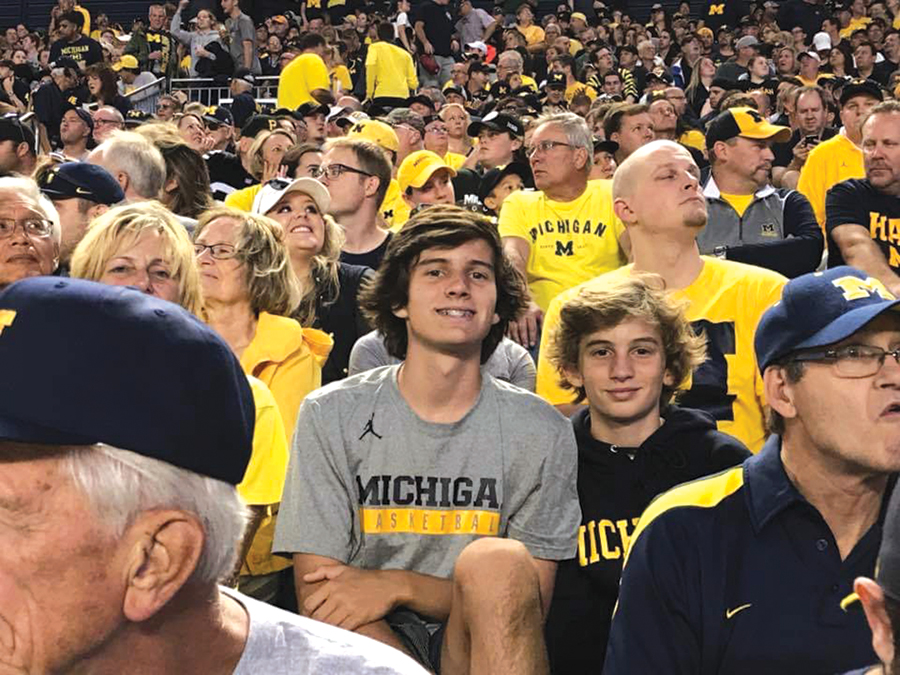
Year Eight: Michigan State 14, Michigan 10

It’s a long way to Ann Arbor, but during the last hour of our drive we learned the Pistons were playing a preseason game against Atlanta in Detroit. While my boys bought tickets online, I navigated the downtown parking. Within minutes we were inside the arena enjoying footlong hot dogs, nachos and some impromptu NBA basketball.

On campus the next day, we stumbled onto a midday fraternity party in full swing. Boozy undergrads were taking a sledgehammer to an old car that was painted in Spartan colors and logos. When a drunken Michigan State fan tried to intervene and stop the destruction, a fight broke out and spilled into the street. In the midst of this early afternoon chaos and tomfoolery, Drake observed, “I thought it was hard to get into Michigan.” I couldn’t think of an answer that would have made any sense in that moment.

The Big House was everything that has been said about it. That evening 100,000 fans sat in a single bowl with the intimate feel of a giant high school football game. The game quickly retreated into a defensive struggle that ended in an unseasonably warm October downpour during the fourth quarter.

The drive home to Raleigh was long and somewhere in southwest Virginia, we stopped at a Shoney’s breakfast bar. The waitress brought me a note from an anonymous customer — who had already left — thanking me for spending time with my boys and paying for our breakfasts. My boys were awed by the charity, humility and anonymity of the act. It spoke more to them than a thousand words from me.

Year Nine: LSU 22, Auburn 21

This was our penultimate year and Foster was a junior in high school, so we were touring colleges. My wife, Fraley, and our daughter, Sadler, wanted to come along for this one. We fled Hurricane Florence in North Carolina and arrived in Auburn for what my wife still refers to as the hottest day she’s ever endured. September. Alabama. 93 degrees. A 3:30 p.m. kickoff.

By this point, my sons were tailgate aficionados. Unimpressed by the companies that do everything for you, they gave high marks to the families slogging their own gear and setting up their own space. This was a game played before Joe Burrow was Joe Burrow, but I vividly remember him throwing the ball downfield several times on LSU’s first possession. My sons had fantastic lower bowl seats while my wife and daughter and I were five rows from the top of the second level. The young alumnus next to my wife celebrated each successful play with a swallow of bourbon and repeatedly offered her a swig — which she declined. Eventually he had to be escorted out by friends. A few minutes after that LSU escorted Auburn out with a walk-off field goal to win.

As night began to fall, we passed a woman packing her family’s tailgating gear into an SUV by herself. Her crew had undoubtedly spent all week planning the food, the drinks and the decorations, cooked all day and night on Friday and got up early to pack the car, only to spend the entire day setting up, hosting, cleaning, breaking down, and now loading up for the drive home. Maybe those companies aren’t so bad after all.
Year Ten: LSU 58, Ole Miss 37

Foster is a high school senior now, so this was his year to pick the game. He chose Oxford, Mississippi, and we invited two of his closest friends plus their dads and younger brothers. We had Friday lunch on the Square, caught a basketball game on campus Friday night, and walked through The Grove — the tailgate area in the center of campus — where SEC Game Day was setting up shop.

The next morning the dads fixed breakfast and sent the boys on foot to see Game Day live while we watched it on television. By lunch The Grove was wall-to-wall tents decked out with rugs, televisions, and button-down shirts with blazers. We knew some North Carolina friends hosting a large tailgate with their Memphis relatives and used that as a sort of headquarters.

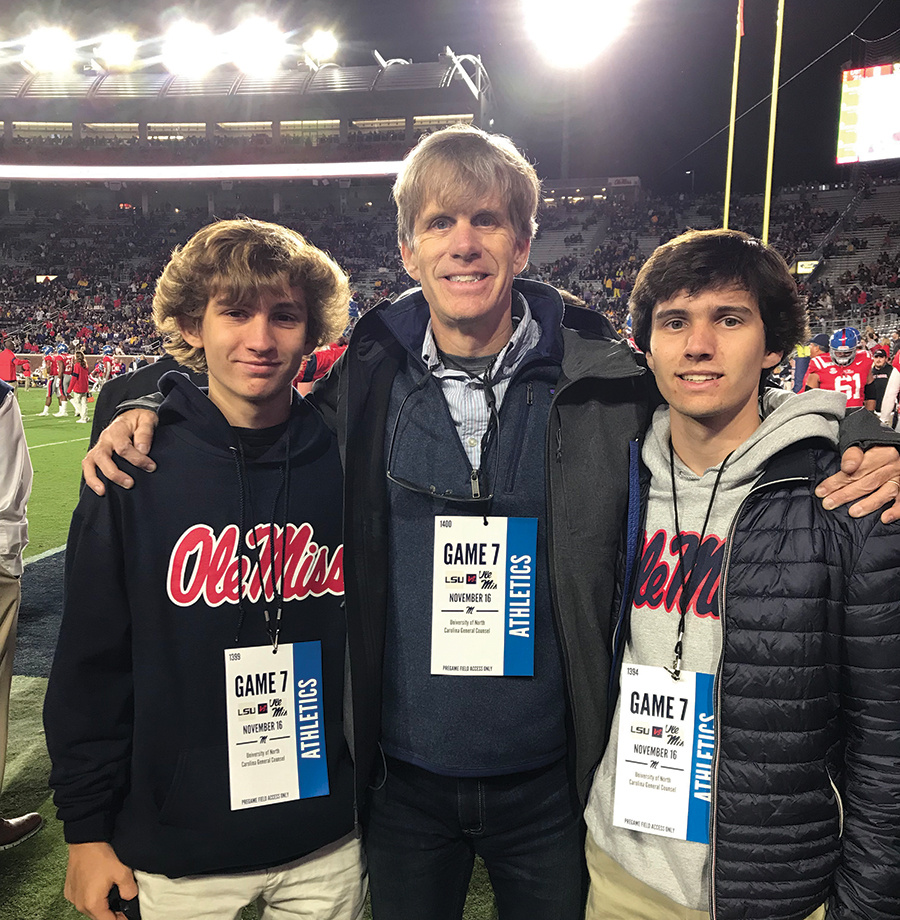
Around 4 p.m., I made up an excuse to march my boys to the stadium three hours early. When we got there, we were greeted with pre-game access lanyards and made our way down to the field as guests. We walked around both sidelines taking in the sights and sounds of warm-ups as the atmosphere began to build. Recruits were ushered onto the field, and then the players began coming out in full game gear. 

As the sun began to set, I tried not to ruin the moment with a mistimed life lesson. When the game started, we were back up in our seats. At one point Drake went to the restroom, still wearing his field pass. A fan mistook him for a recruit, and he couldn’t have been happier to tell the rest of us. When I suggested that it would be hard to mistake an undersized high-school sophomore soccer player for an SEC football recruit, he clarified that the fan “thought I was a kicker.” This was a game when Joe Burrow had become Joe Burrow, and it was like watching an NFL team.

The next day we began a 13-hour drive with the best doughnuts I’ve ever eaten on one of the best mornings I’ve ever had.

Before

we left home for that final game, I asked my boys if they remembered my commitment to them in Bryant-Denny Stadium that we would go to a different game every year for 10 straight years. They both remembered thinking that I was serious but that I was unlikely to make good on my plan. It was a fair point — I have always been stronger on the idea side and weaker on the execution.

That winter, my wife and I returned to Tuscaloosa with Foster for a final college visit. It was sunny, in the mid-60s, and we saw Alabama’s basketball team beat a ranked LSU-team in the final minutes. After a lively dinner at Taco Mama’s and another evening stroll through the campus, Alabama was his final answer.

I wondered whether these annual adventures shaped his college search more than I imagined or intended. Did they make big schools seem less intimidating? Was there something about the first trip to Alabama that held a special foothold in his memory? My son confesses that he doesn’t really know, and in the end, it doesn’t really matter. What matters are the memories that we made together — late nights in the tiny hotel pools, the glories of a breakfast bar, listening to a high school football game on the radio, and the long, unbroken stretches of time where, when I was lucky, my boys began to talk about things that really mattered.  PS

Charles Marshall is a lawyer who lived in Southern Pines with his family during the pandemic so that his son and daughter could attend The O’Neal School. He still has the sand in his shoes.
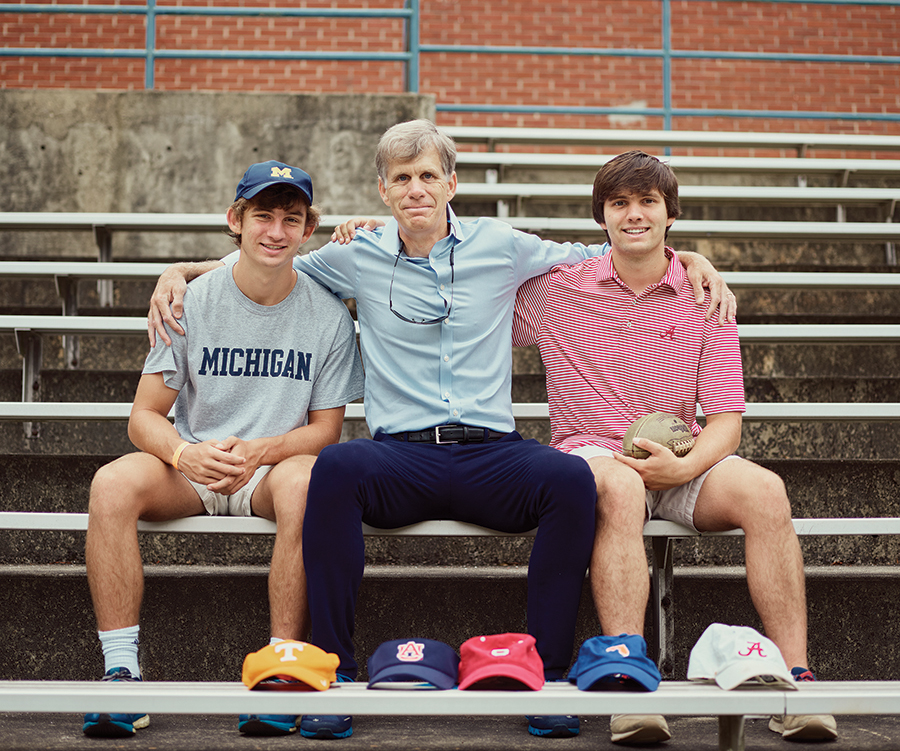
Pop Culture Doppelgängers

Produced by Brady Gallagher     Photographs by William McDermott

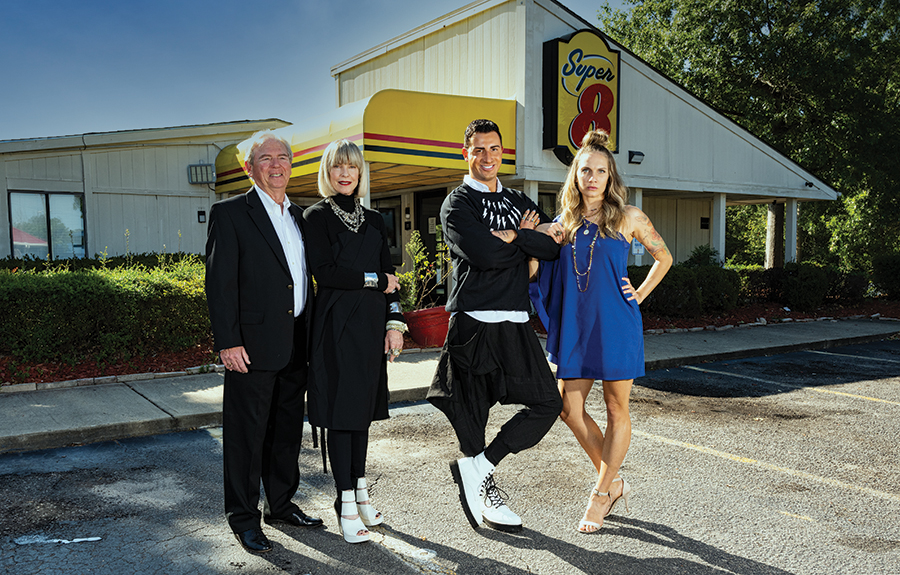
Schitt’s Creek

Mark Hawkins as Johnny Rose

Mark is a master craftsman who has been designing fine jewelry and restoring your most cherished pieces in his Southern Pines store since 1978.

Eve Avery as Moira Rose

Eve opened her eponymously named boutique of meticulously chosen women’s clothing and accessories in Southern Pines in 2001.

Julian Hagner as David Rose

Julian gracefully waltzed in from Germany to provide a European touch at the Karma Spa Lounge and Beauty Bar in Southern Pines.
Daena Rae as Alexis Rose

Daena teamed up with Abi Ray in 2019 to create Legacy Kids Magazine, a publication for, and by, military kids.

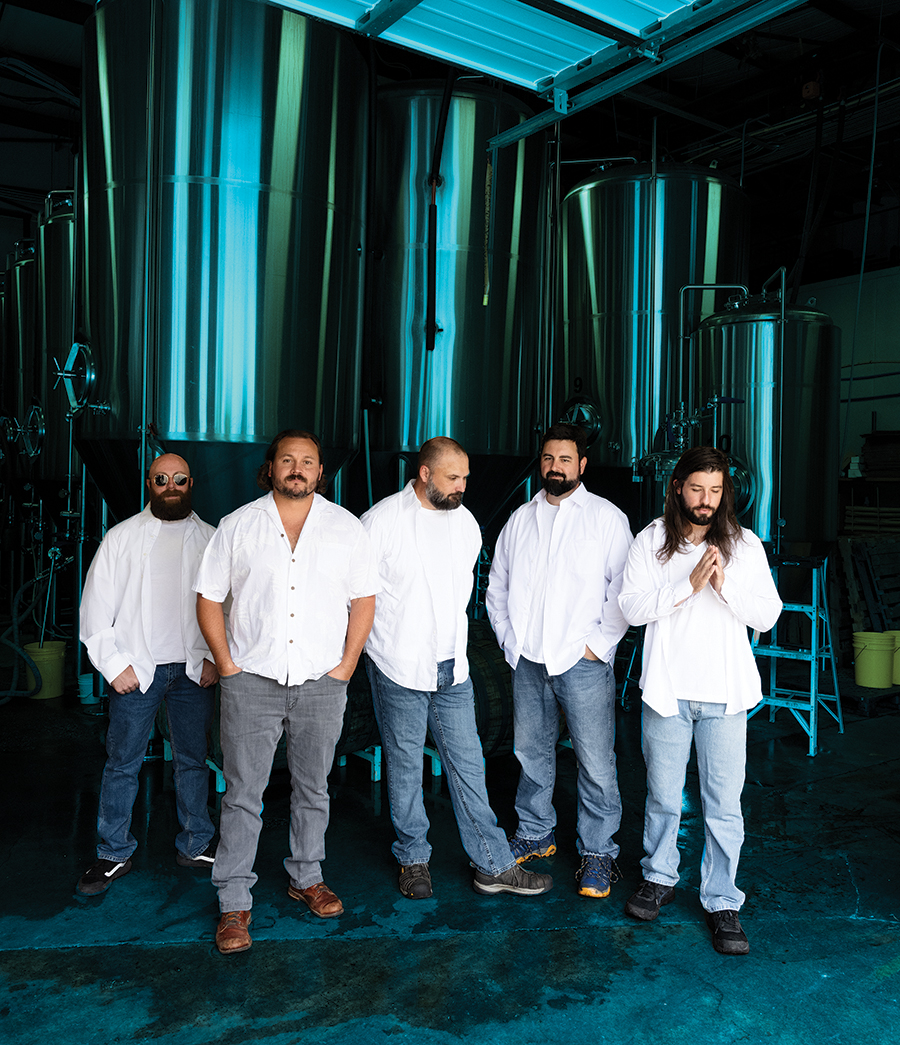
Backstreet Boys

From a new downtown location to some killer beer slushies, Southern Pines Brewing Company has got you covered. While the front-of-the-house staff fills the glasses, it’s the hard work of the boys in the back who keep the liquid flowing all across North Carolina. You can view these larger than life characters through the glass as they work. If you still feel like two worlds apart, you can catch the guys at Southern Pines Brewing on Pennsylvania enjoying a cold one. Stop and say hey to them. They’d want it that way.
Tupac

Chad Norris is the master mixologist for the Leadmine Whiskey Bar and Kitchen in Southern Pines.

Thelma and Louise

Sundi McLaughlin as Thelma

Sundi will bring a smile to your face when you step inside Mockingbird on Broad, her eclectic shop filled with furniture, home accessories, jewelry and more in Southern Pines.

Virginia Gallagher as Louise

Whether it’s meditation, travel or hanging out with crystals, Virginia, founder of Hot Asana Yoga Studio in Southern Pines, can make magic happen for you.

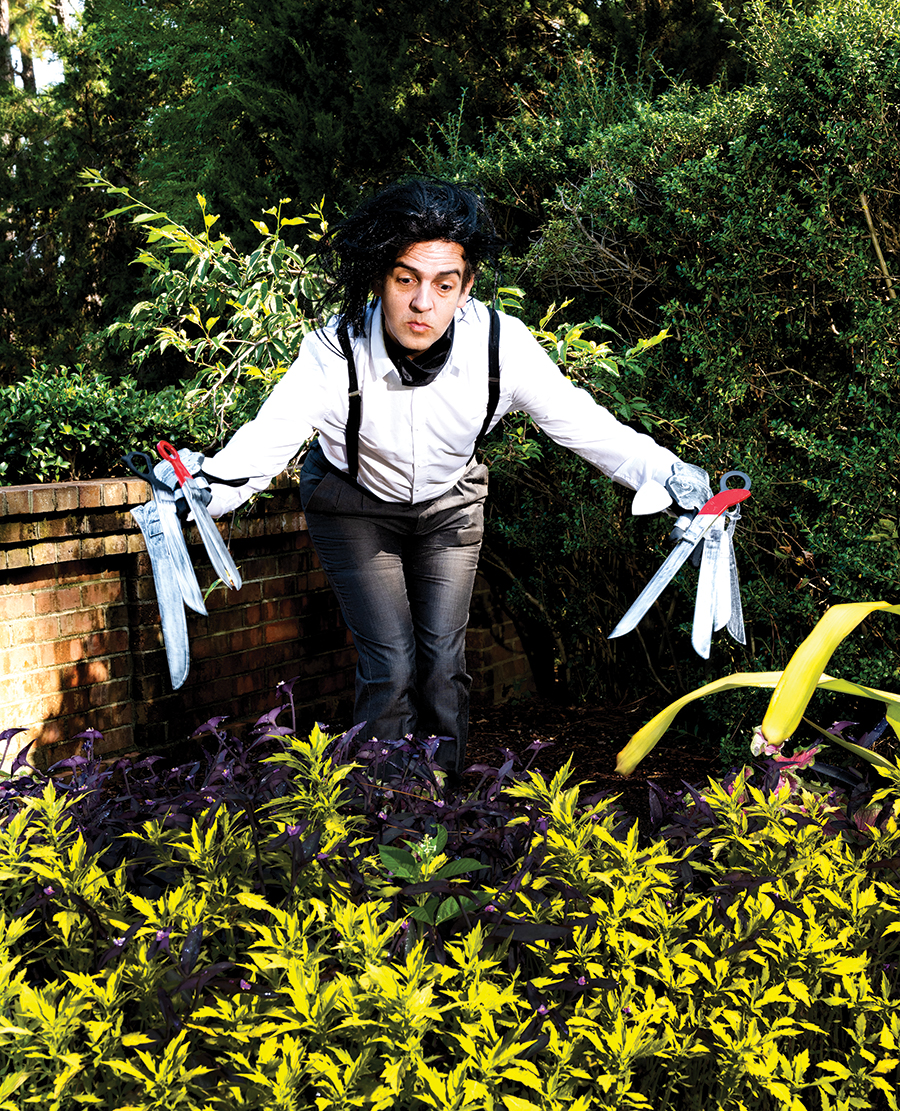
Edward Scissorhands

Baxter Clement  is owner of Casino Guitars in Southern Pines, a world-renowned destination for aficionados of stringed instruments.

“Sunrise”

Raising the roof and bringing down the house

By Bland Simpson     Photograph by Tim Sayer

Stephen Smith — teacher, journalist, poet, and the witty and imaginative inventor of the Bushnell Hamp tales — has over many years graciously kept me involved with Moore County, and for that I owe him quite a lot. Though the doors of the old Pine Crest Inn at Pinehurst or those of the Sunrise Theater across from the vintage Seaboard Coast Line Railroad depot in Southern Pines are each only an hour and fifteen minutes’ drive from our Clover Garden home, what a world of difference that short drive always made, as we drifted from the mixed Piedmont oak and loblolly pine and hickory woods to the rolling sandhills and longleaf pine, turkey oak, and blackjack.

An invitation came to me from Stephen and Audrey Moriarty, the fine, elegant Pinehurst archivist and author, to join in and do a short set for a “Raise the Roof” fundraiser at the movie house, the Sunrise, which the community was all about repairing and returning to its status as a small legitimate theatre and concert venue. The multifaceted evening, a musical revue, also included the first-tier Moore County musicians Craig Fuller (songwriter and lead singer of Pure Prairie League’s lovely ballad “Amie,” which he sang this night backed by Fayetteville’s Bill Joyner and Danny Young) and Jimmy Jones (coauthor of “Handyman” and lead singer of “Good Timin’”) — the place was packed, and Jimmy sat on a high stool downstage to lay out extended versions of his two major hits, introducing “Handyman” with a tale.

Seems Jimmy had once hit a rough patch in his career and, against his common sense and better judgment, he called upon a New York City loan shark he knew, and he was about to take out an extortionary loan that he knew would be bound to hurt him. But just before he signed in blood and took the cash, Jimmy got an urgent call from a close friend saying, “Jimmy, don’t do it — James Taylor is just about to release his version of ‘Handyman’! You won’t need that loan anymore!” The crowd, knowing both versions of the song, roared with laughter, and Jimmy then said, “I stood up, said ‘Thank you so very much,’ and backed out of that loan shark’s office just as fast as I could!”

And there and then in the Sunrise, Jimmy Jones, still laughing at his own tale, lit into “Handyman” with an unmitigated joy, while a racially integrated cadre of senior women in green and red sateen hot pants, a dancing group from a nearby Moore County fitness parlor, poured forth from the wings and, surrounding the R&B hero, kicked, shuffled, and ball-changed for him from start to finish, as we all sang with him: “I fix broken hearts — I’m your handyman!”

If joy could be bottled, jugged, or jarred, the contents would sound and feel and even taste something very like what all was present in this little old Southern Pines theatre that moment, that night. Like one of Faulkner’s characters, I felt both humble and proud to be a part of it, or even just to see and hear it, too.  PS

From North Carolina: Land of Water, Land of Sky by Bland Simpson, photography by Ann Cary Simpson, Scott Taylor, and Tom Earnhardt. Copyright 2021 by Bland Simpson. Used by permission of the publisher, www.uncpress.org.

Fairy Lands of North Carolina

Those with “the Sight” claim there are wee folk among us. Do you believe?

By John Hood     Illustration by Harry Blair

That rock in the river was a big one. Big enough to sit on. That’s what the woman did, in fact, while her husband spent the afternoon fishing upstream. She waded out to the rock, found a comfortable seat, and took out a book to read. What happened next was like something out of a book — but not the one she was reading.

Hearing footsteps and voices, the woman glanced up and saw two boys cavorting along a trail, their distracted father trudging along behind. As the boys approached the water’s edge, something else entered her field of vision. “It started coming up the river,” she later recalled.

What was “it”? A “pale-skinned, water-logged-looking” creature, she said, “with black hair and sharp, serrated teeth showing in a smile.” Paying no attention to the woman perched on the rock, it “focused on the boys” and moved rapidly through the water toward them.

She wasn’t the only one who saw it. The boys did, too. They picked up sticks and pointed them at the mysterious swimmer. The woman never found out if their makeshift weapons would have done any good. Although apparently unable to see the creature that was now just a few feet away from his boys, the father nevertheless decided they were playing too close to the water and ushered them back to the trail.

That the boys were briefly in peril, though, the woman never doubted. “It watched them move up the trail away with a creepy look on its face,” she said, “and then moved on upriver out of sight.”

Maybe you think you know what was really in that river. A bullfrog. A bottom-feeder. A bumpy log converted into something sinister by an overactive imagination. But the woman in question is convinced she saw a fairy. Just a few years ago. Right here in North Carolina.

It’s not our state’s first fairy sighting. It won’t be the last. Oh, it’s easy to scoff at those who claim to see wee folk wading in rivers or slinking through forests or dancing on hilltops. How childish. How backward. How unscientific. Well, sure. But I bet you know someone who still carries a lucky charm or wears a lucky sweatshirt whenever the Wolfpack play the Tar Heels. I bet you know someone who watches Ancient Aliens or Ghost Hunters, hits up psychics for advice or thinks Bigfoot just might really be out there somewhere, camera-shy but furtively flattered.

By the way, what’s your sign?

Generations ago, all the smart people thought universal schooling would disabuse the masses of such fanciful superstitions. They thought the relentless march of science would muscle old faiths and folk traditions aside — confining them, converting them into historical curiosities. “Rationalization and intellectualization,” the sociologist Max Weber famously predicted a century ago, would bring “the disenchantment of the world.”

Then a great many of these same smart people went out and got their palms read. Or sat in seances. Just for the experience, you know.

The magical, the paranormal, the supernatural are not so easily banished. According to a recent Harris Poll, 42 percent of us believe in ghosts, 36 percent in UFOs, 29 percent in astrology and 26 percent in witches. Fairies — by which I mean the broad swath of legendary little people, not just tiny Tinker Bells with translucent wings — rarely get included in American polls. But surveys in other countries find significant minorities still believe in fairies. In some places, such as Iceland, believers form a majority.

Among the believers is the woman I mentioned earlier. I wish I could tell you more about her and the fairy encounter she claimed to witness from that big rock. Unfortunately, I can’t even tell you her name. Anonymity was the promise made by folklorist Simon Young in 2014 when he began soliciting first-person accounts of fairy sightings. Published four years later as The Fairy Census, Young’s research spans hundreds of stories from around the world — including several from our state.

I can tell you the woman says it wasn’t her first sighting. “I have seen them since childhood, different ones,” she told Young. “My granny from Ireland says I have ‘the Sight’ like her.” The woman describes fairies as “beings from another world” that can have good or bad intentions. “I was always taught to never talk to them or let them know I see them.”

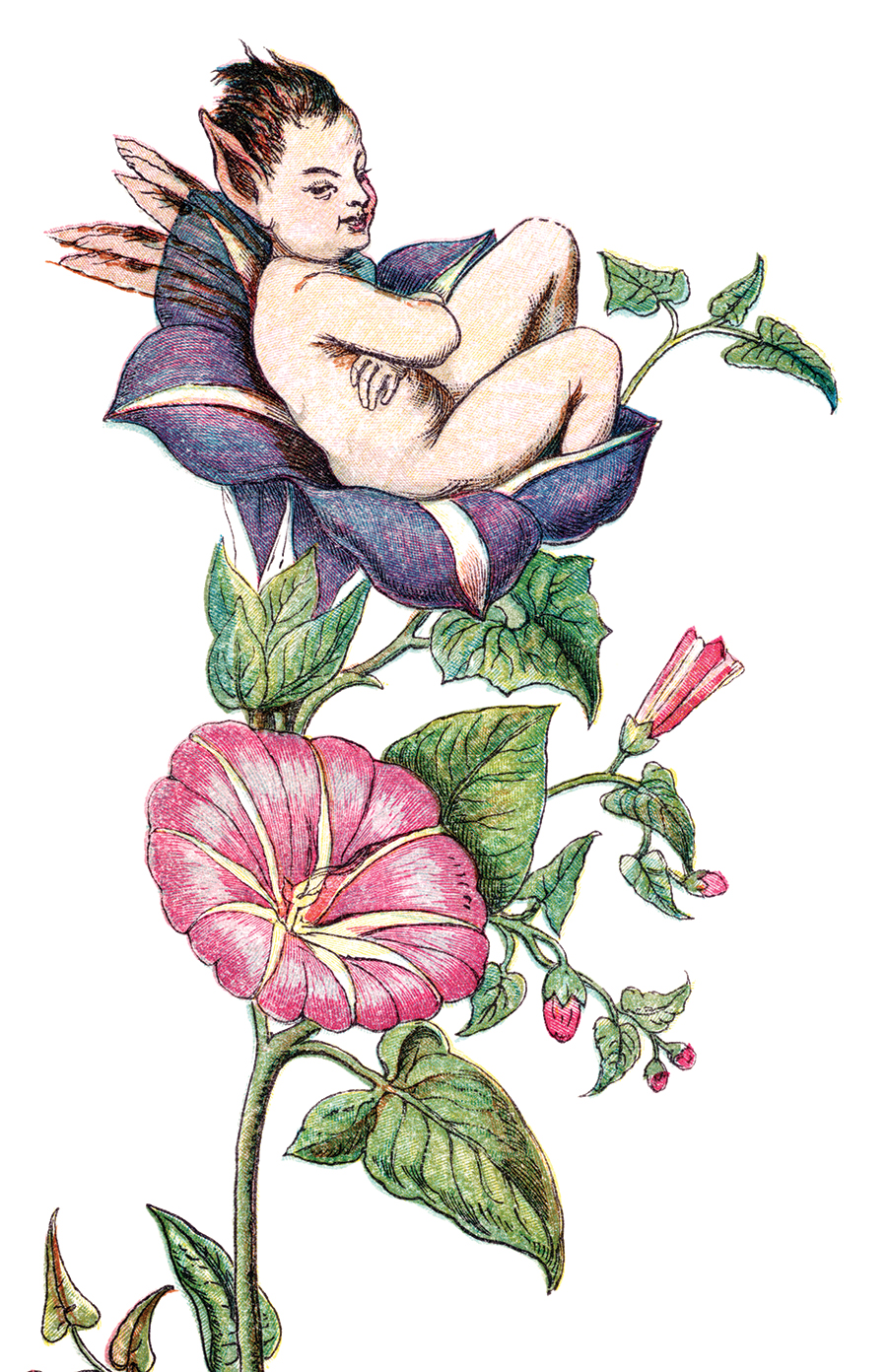
I can also say that, if you believe her story and hope to see your own fairy one day, there are plenty of places in our state worth exploring. While researching my new historical-fantasy novel Mountain Folk, largely set in North Carolina during the American Revolution, I learned a great deal about the fairy lore of our ancestors. Some of it developed locally, tied to specific Carolina landmarks. Other beliefs were brought here from afar — from the British Isles, from Northern Europe and the Mediterranean world, from West Africa. It turns out that almost all cultures have stories of wee folk. Accounts vary, of course, but a surprising number of them converge in key details: creatures two to three feet tall, invisible to most if they wish to be, infused with magic, attuned with nature, prone to pranks but also willing to trade favors for something they covet.

Based on the woman’s description, for example, you might find her rocky seat in some Piedmont river or mountain stream. The original inhabitants of those parts of North Carolina often told tales of such creatures. Among the Cherokee, for example, they were called the yunwi amayine hi, or “water dwellers,” and had the power to boost fish catches and promote healing.

In one story, a water dweller disguises herself as human to attend a dance. Smitten by her charms, a Cherokee man follows her to a riverbank and professes his love. He must be persuasive, for she agrees to become his wife. Eyes sparkling, she dives in the river and beckons him to follow. “It is really only a road,” she says. He takes a deep breath and leaps. Finding a wondrous world hidden beneath the river, he lives there happily as her husband. Later, when he leaves to visit his parents, they turn out to be long since dead. Generations of Cherokee live and die during the few years he lives among the water-dwellers.

Alternatively, maybe what our eyewitness saw was not a diminutive humanoid from native folklore but something scalier. The place where the Haw and Deep rivers converge in Chatham County to form the Cape Fear is nicknamed Mermaid Point. Just before the Revolutionary War, a man named Ambrose Ramsey ran a tavern nearby. When the locals left Ramsey’s tavern late at night to stumble home, they’d pass a sandbar. On numerous occasions, they spotted small figures luxuriating there in the moonlight. Figures with the heads, arms and torsos of beautiful women and the lateral lines and shiny tails of a fish. If the patrons were quiet and kept to the shadows, they could watch the mermaids laugh, play, sing and comb their long hair. But if the men tried to speak to them, the fairies would disappear into the water.

Rivers are hardly North Carolina’s only sites for fairy lore. Another folk from Cherokee legend, the Nunnehi, are associated with such locations as Pilot Mountain (both the famous monadnock in Surry County and a lesser-known peak near Hendersonville) and the modern town of Franklin, where the Nunnehi were said to have helped defeat a Creek invasion and, much later, a raid by Union soldiers. On the other side of the state, in and around the Great Dismal Swamp, the mythology of Iroquois and Algonquin speakers mingled with European and African-American legends to produce a rich folklore of eerie lights, dark shapes and magical creatures.

Moreover, as the Fairy Census reminds us, our sightings aren’t limited to old tales preserved in old books. They still happen. A 30-something woman reported “staring at the foot of the bed at the light coming in through a large window when I saw a fairy suddenly appear on one side of the room and fly across the bed toward the window.” She described the creature as brown-haired and gaunt, about three-feet tall with sharp features “not very pleasant to look at.”

The woman wasn’t alone. But her husband, lying next to her, never saw the fairy. “I think it is strange that I had this experience in my house in suburban North Carolina, of all places,” she said.

Another North Carolinian described an encounter she had in her youth with a fairy “about two to three feet tall, dressed entirely in red, with a solid red face, tiny white horns on the top of his head, and with a red, pointed tail.” He was standing next to the stump of a tree that had been his home until it was felled during the construction of the girl’s house. She ran to get her parents. But they couldn’t see it.

The more you study both folklore and modern-day sightings, the more you come to appreciate the commonalities. I decided to include several in Mountain Folk, such as the extreme time difference between fairy realms and the human world, the link between fairies and nature and the idea that only those rare humans possessing “the Sight” can pierce fairy disguises.

Do such commonalities suggest fairy traditions aren’t pristine, that they develop over time through cross-cultural exchange? Or that people claiming to see fairies are just mashing up distant memories of bedtime stories with drowsy daydreams and optical illusions? Could be.

There are many explanations for fairy belief. For some, it’s reassuring to believe that good and bad events aren’t just random. That powerful forces are at work, magical forces to be tapped or propitiated. For others, fairy belief is about rediscovering a sense of wonder — about reenchanting the world, as Weber might say, instead of settling for a cold, clockwork version.

That’s how some of your fellow North Carolinians feel, anyway. Whether out exploring their state’s natural beauty or just puttering around the neighborhood, they keep their minds open along with their eyes. They suspend their disbelief. They dare to hope that something utterly fantastic will happen. That something utterly fantastic can happen.

After all, it’s happened before. Or so they’ve heard.  PS

John Hood is a Raleigh-based writer and the author of the historical-fantasy novel Mountain Folk (Defiance Press, 2021).

Poem

Advice on Nighttime Caregiving

Know the bulk of night

will be sleepless and embrace it

with the weariest part of yourself.


Nothing but bitter tea will do,

steeped too long as you pour

another glass of water


another mouth will drink,

as you console another crying

child who values sleep


on different terms,

as you — deep in the black

hour when familiar constellations


wend into a strange topography —

walk the dog who will thank you

without language: she who eats


white clover by night,

sniffling through dark

grass sweetened with dew.


Now sleep or wake — let go

of what you hold. The untouched

tea is as cool as morning.

— Benjamin Cutler

Benjamin Cutler is the recipient of the Susan Laughter Meyers Poets Fellowship and the author of The Geese Who Might be Gods.

Almanac

October Almanac

By Ashley Wahl

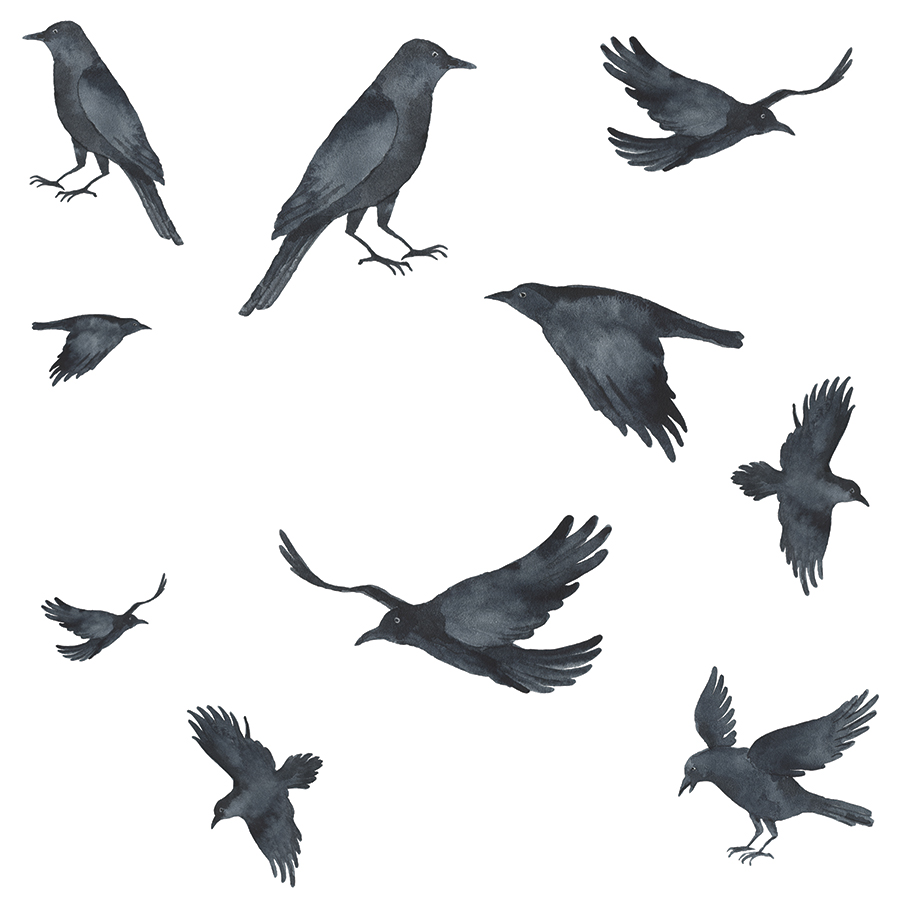
October is the language of crows: playful, dark and mysterious.

On a crisp, gray morning, swirls of golden leaves dance round like Sufi mystics and a plump squirrel quietly munches seeds beneath the swinging feeder. The air feels charged — electric — and from the silver abyss, a crow caws five times, the staccato rhythm stabbing the ether like a haunting, dissonant chord. 

Caw. Caw. Caw. Caw. Caw.

In the crooked branches of a distant tree, a council of crows rattles back and forth as if casting their clicks and grumbles into an invisible cauldron. Their crude chatter grows louder and increasingly harsh, escalating until it reaches a roiling cackle.

The coven has spoken.

One by one, the black birds take wing, flashing across the sky in glorious and raucous splendor.

Below, asters spell out messages on the leaf-littered lawn. Only the crows can read them. And when they chant the words aloud — their many raspy voices one — you are equal parts delighted and disturbed.

Ca-caw! Ca-caw!

A single crow descends upon the wrought iron fence, pivots round in three slow circles, then cocks its head in silence.

The squirrel has scurried off.

A flurry of leaves jumps as if spooked by wind.

The crow tilts back its head and lets out three chilling squawks.

Trick-or-treat?

There is a bird who by his coat,

And by the hoarseness of his note,

Might be supposed a crow.

— William Cowper

Let’s Grow Together

Everyone who’s tried to grow them knows: Tulips are deer candy. But if you haven’t tried planting them alongside grape hyacinths (Muscari armeniacum) — deer and rabbits don’t like them — there is hope for your spring garden yet.

The ideal companion for tulips (and daffodils, which said critters also avoid), grape hyacinths protect and complement this bright and showy bloomer. Think about it: waves of vibrant purple flush against rows of red, orange and yellow blossoms. The treasure is the rainbow itself. Come spring, the deer can admire it from afar. And you, the deer. But it’s time to plant the bulbs now.

Autumnal Brew

The full Hunter’s Moon rises on Wednesday, October 20. Autumn has settled in. As you begin to do the same, here’s an herbal tea redolent with spices that could rid you forevermore of your pumpkin-spiced neurosis.

Star Anise Tea

Ingredients:

1 cup water

1 bag green or black tea

2 pods star anise

1 stick cinnamon

Honey or agave to sweeten (optional)

To brew a cup, bring water to a boil. In a favorite mug, pour hot water over tea bag, star anise and cinnamon stick. Let steep for five minutes. Add sweetener or not. Enjoy the glory of autumn sip by sip.  PS

Lunch with Winston

My father’s “brush” with history

By Tony Rothwell

“I’ve often noticed that when coincidences start happening they go on happening in the most extraordinary way. I dare say it’s some natural law that we haven’t found out.”

— Dame Agatha Christie

My mother, Myra Hardman, grew up in Manchester, England, in a house called “Como.” In 1937, she married my father, Bill Rothwell, a hotelier. At the outbreak of war in 1939, Dad enlisted in the Lancashire Fusiliers. In 1943, by then commanding a squadron of Churchill Mk.IV tanks, Capt. Rothwell took part in the Salerno landings in Italy, part of a massive plan to drive the Germans out of the country. He remained in Italy until the end of the war in Europe, May of 1945.

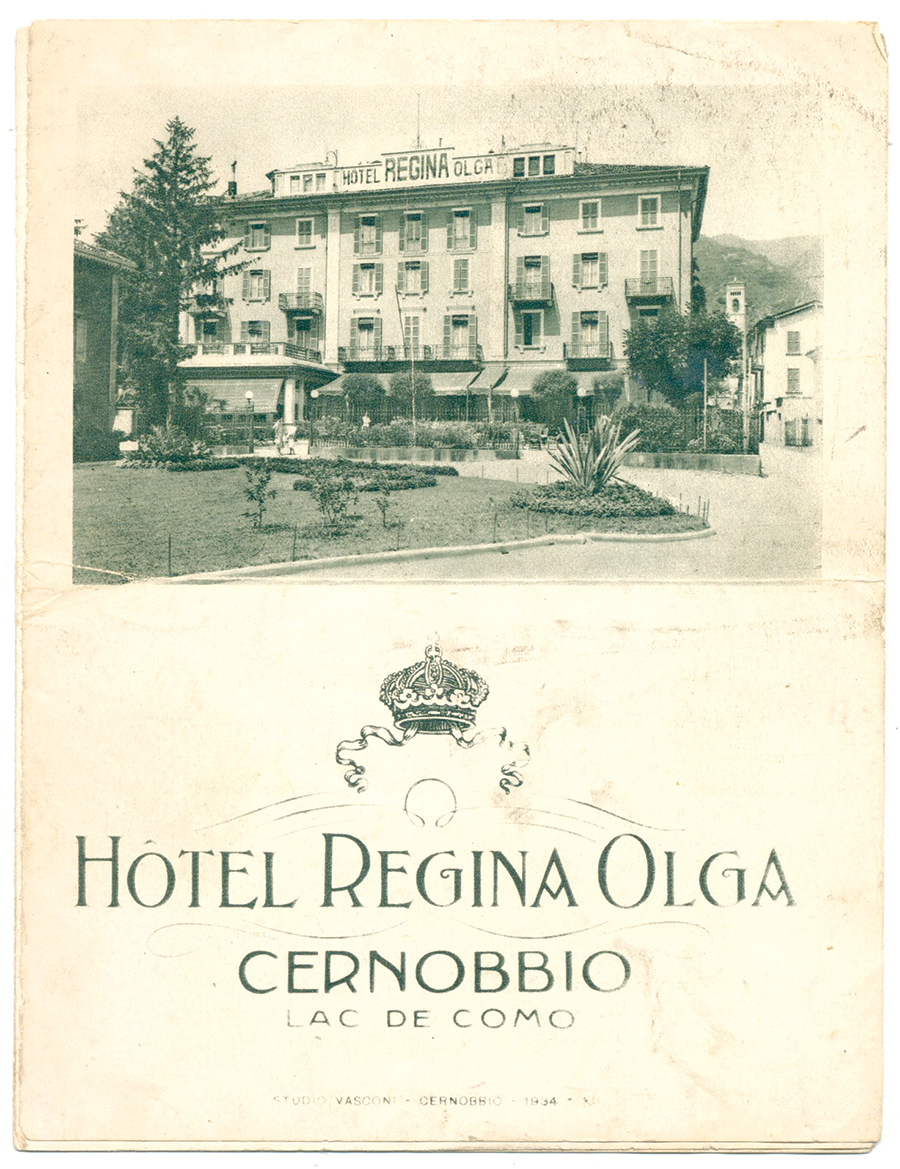
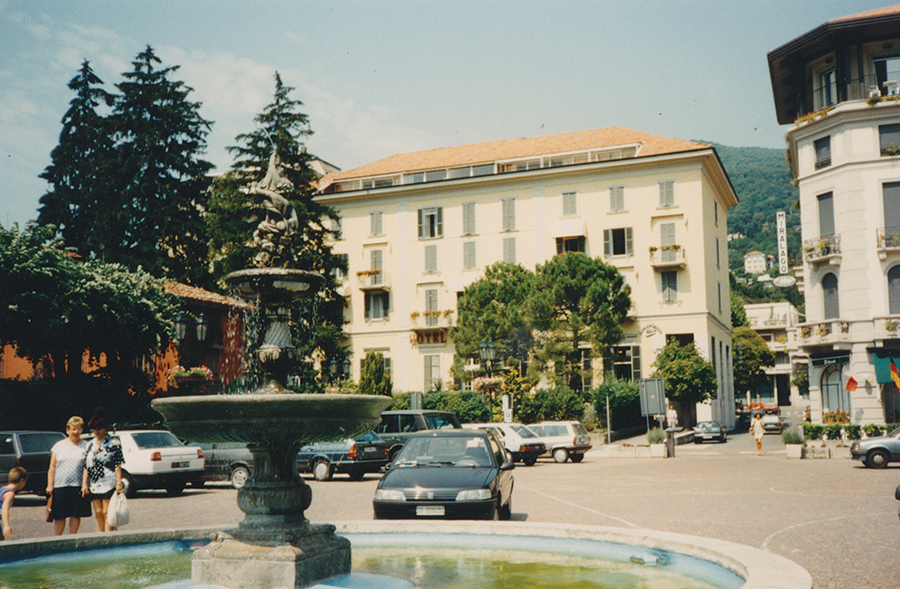
Like everyone else, Dad couldn’t wait to come home, but the Army had different plans. They needed a place for managing mopping-up operations and commandeered the Hotel Regina Olga on Lake Como. It was in good condition because the Germans had been using it as a hospital, but who was to run it? Looking through the lists of Army officers with hotel management experience and already in Italy, they found Dad. “Sorry, old boy, you’re not going home just yet,” they told him. “You’re running a hotel for us on Lake Como.”

That my mother had grown up in a house by the same name as the majestic lake where my father concluded his military service seems the merest of coincidences. But they don’t end there.

Back in Britain, Churchill’s Conservative Party was shockingly voted out of power in the July general election, and the Labor Party took over. The working class, the private soldiers on the front line, and the women left behind who had made so many sacrifices, were having their say. The man who had rallied Britain when it stood alone with his bulldog courage and commanding oratory was out.

So, what was Churchill to do? He was certainly not going to stay around for everyone to feel sorry for him. He decided he would go somewhere and paint, an interest he’d long neglected during the war years, and accepted an invitation to spend a month on Italy’s Lake Como. The Army, he was told, had a hotel there. And so off he went with his oils, his physician Lord Moran and his personal secretary.

And so, suddenly, out of the blue, the unimaginable. My father found himself looking after one of the most famous people on Earth. 

In a fascinating book written by Lord Moran, a compilation of his diaries for the years spent with Churchill from 1940 to 1965, the entry for their first day in Italy, Sept. 3, 1945, reads:

We had planned to set out about ten o’clock to reconnoître the surrounding country for a scene which Winston could paint: However, it was noon before we set off. As we drove round the lake Winston kept his eyes open for running water, or a building with shadows on it, but we stopped for a picnic lunch before he found what he wanted. The “picnic” arrived in a shooting break with his chair and a small table. A score of Italian peasants gathered in a circle and watched us eat. He was in fine spirits.

When he was satisfied that he had found something he could put on canvas, he sat solidly for 5 hours, brush in hand, only pausing from time to time to lift his sombrero and mop his brow.

After dinner Winston was ready to talk of anything: he only mentioned the election once. Eventually he gave a great yawn; when we thought he was about to go to bed he broke into a hymn and sang three verses of “Art Thou Weary.”

Over the next few weeks Dad sent sandwiches and drinks down to the lakeshore many times but on one occasion he joined Churchill for lunch and years later related part of their conversation to my brother and me.

“Do you have children, Rothwell?” Churchill asked.

“I have two boys, sir,” he replied. “In fact, I just received a letter from home with a photograph.”

“Let me have a look,” Churchill said. After studying the photo for a few seconds, he said, “They say all babies look like me.”

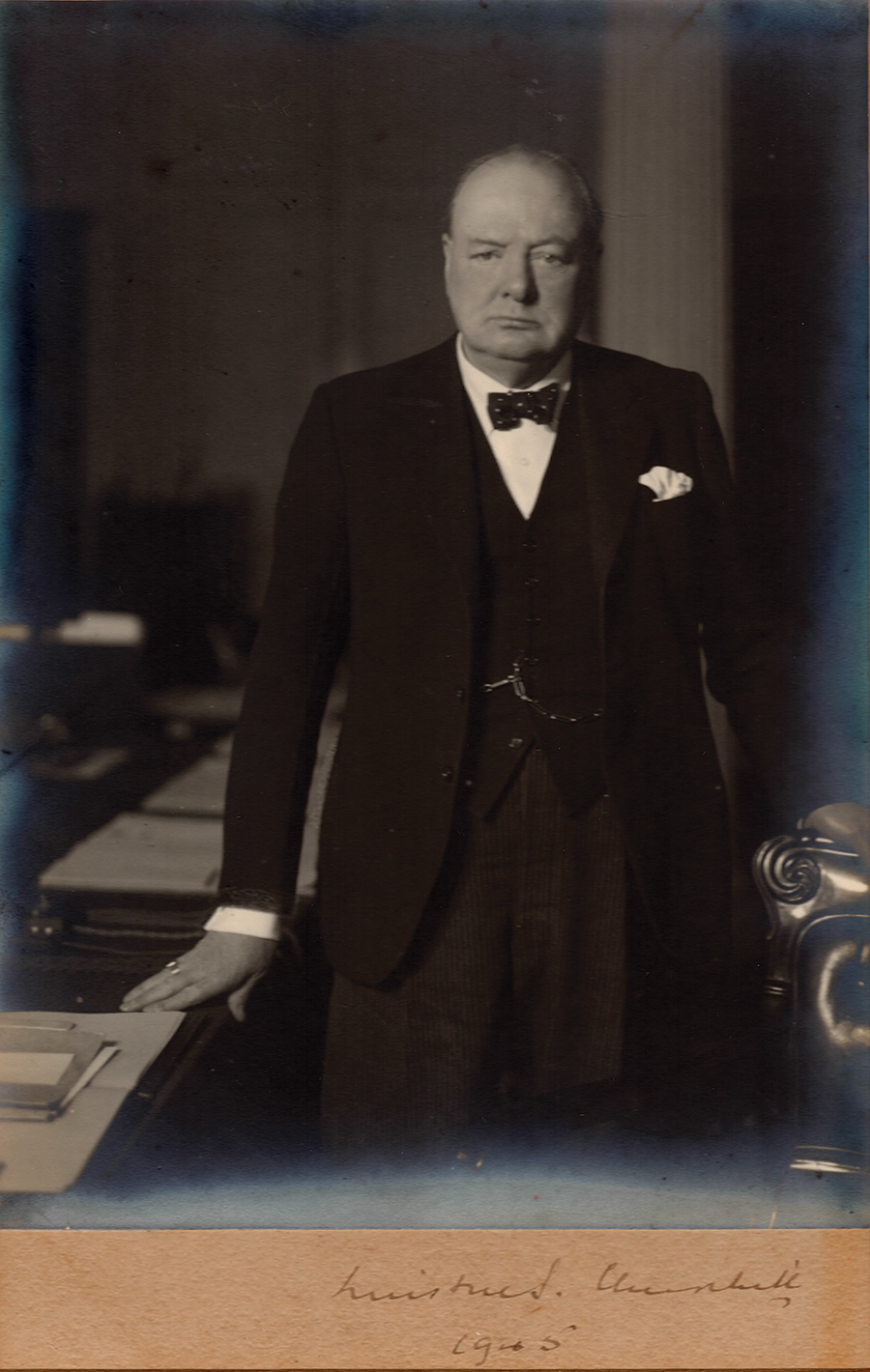
At the end of lunch Churchill got out his cigars and offered one to Dad, who had just lit a cigarette. Because he was smoking already, Dad felt it would be bad form to accept the offer and became, perhaps, the only man ever to refuse a cigar from Churchill. All was not lost. After Churchill’s return to England, he sent Dad a signed photograph, a prized family possession.

The great man died in 1965 on Jan. 24, aged 90. After he had lain in state for three days, the funeral took place in St. Paul’s Cathedral in front of one of the largest gatherings of world dignitaries ever assembled. Following the service, the coffin was taken by launch down the Thames, past the House of Commons, and then by train to Bladon in Oxfordshire for burial in the family site at St. Martin’s Church. This is close to Blenheim Castle, the seat of John Churchill, 1st Duke of Marlborough, Winston’s ancestor and a national hero, following his great victory at the Battle of Blenheim in 1704. Then 22, I commemorated the day of the funeral with a drawing. In yet another coincidence, my father’s last hotel before retirement was The Marlborough Head Hotel in Dedham, Essex, named for John Churchill.

Later, when I lived in London in the early 1980s, I worked for a financial investment company that had a hotel portfolio for which I was responsible. The owner of the company happened to live next door to Churchill’s house, “Chartwell,” south of London in Kent. My wife, Camilla, and I were among the guests invited there one weekend. After dinner that Saturday, our host asked us all to follow him through a door and down some stairs and along a narrow corridor. He opened a door and put on the lights. We were in a small, whitewashed room off which were a bedroom, a kitchen and a bathroom. He pointed to a sealed door and informed us that behind it was a tunnel that led to Churchill’s house, and that we were standing where Churchill worked when he came down to Chartwell during the war. It was presumed that spies watched Churchill’s every move, and by working under the house next door he stood a better chance of surviving if attackers somehow managed to blow up his house.

In 2015, Camilla and I visited London and made a point of going to the war rooms near 10 Downing Street to see where Churchill spent his days and nights during those dreadful years. Adjoining them is a small Churchill Museum. Of all the many exhibits we saw there, two items stood out: his school reports, which basically said he would never amount to anything, and — the last coincidence — out of the hundreds of paintings he did in his lifetime, there was just one on display. It was of Lake Como.  PS

Tony Rothwell, a Brit, moved to Pinehurst in 2017, exchanging the mind-numbing traffic of Washington, D.C., for less traffic, better weather and the vagaries of golf. He spent 50 years in the hotel business but in retirement writes short stories, collects caricatures, sings in the Moore County Choral Society, and with his wife, Camilla, enjoys the many friends they have made in the Sandhills. Email ajrothwell@gmail.com

Golf’s Unsung Hero

How a unique hobby helped restore a historic course

By Bill Case

In 2009, Bob Dedman Jr. and Don Padgett II, the gentlemen in charge at the Pinehurst resort, decided to dramatically overhaul Pinehurst course No. 2, one of America’s foremost championship golf venues. They sensed that the layout, built by Donald Ross in 1907 and periodically tweaked thereafter by the legendary architect until his death in 1948, had lost some of its character.

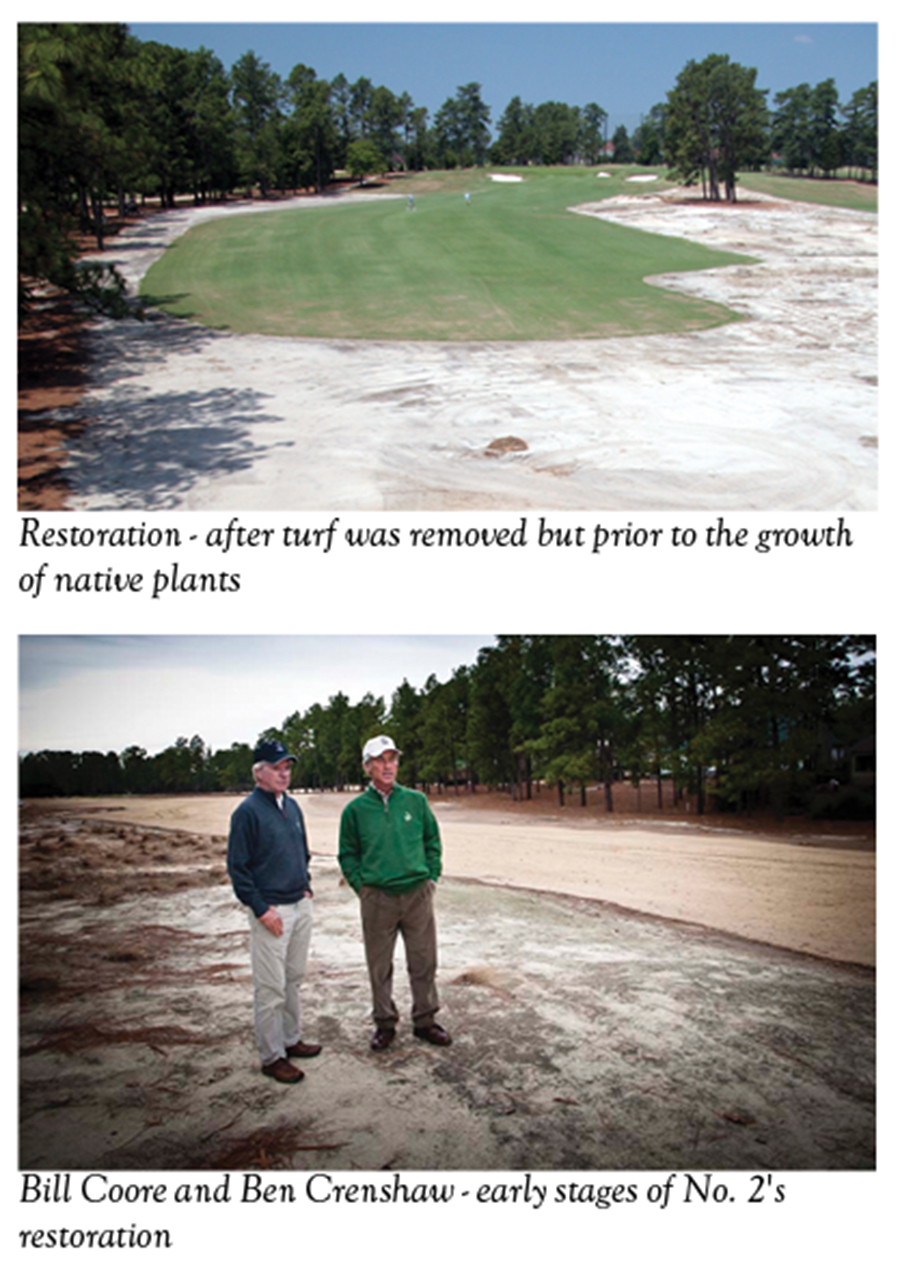
Starting around the early 1970s, Pinehurst had adopted the popular course maintenance formula of the era: lush green grass throughout the course, not just in the fairways. The native pine barren wire grasses and awkward sandy lies that confronted off-target golfers on No. 2 during Ross’ heyday largely disappeared. In their place came acres of 3-inch-deep irrigated grass. Too often, extrication from this cabbage could only be accomplished by hacking a wedge back to the fairway.

To restore No. 2 in a manner that approximated how Ross had presented the course, Dedman and Padgett called upon esteemed course designers Bill Coore and two-time Masters champion Ben Crenshaw. The Coore & Crenshaw website describes its design philosophy as a blending of Bill’s and Ben’s “personal experience and admiration for the classical courses of Ross, MacKenzie, Macdonald, Maxwell, and Tillinghast to create a style uniquely their own.”

The architects have a special connection to Pinehurst. Having already won in his professional debut, a 21-year-old Crenshaw nearly captured his second event as a pro, too, finishing second in the 1973 World Open, three strokes behind Miller Barber. The 144-hole marathon on No. 2 “stimulated my love for Pinehurst,” says Crenshaw. Coore, who grew up in Davidson County, North Carolina, was good enough to make Wake Forest University’s golf team and played No. 2 frequently in the 1960s, usually on $5 all-day passes. “There is no doubt,” he says, “that playing No. 2 gave me an appreciation of traditional, strategic golf courses that eventually pointed me in the direction of course architecture.”

While Coore & Crenshaw’s selection was applauded in golf circles, more than a few aficionados wondered about the potential impact of a drastic change. Why make major modifications to a course that only recently had held one of golf’s most dramatic major championships, the 1999 U.S. Open? What was the benefit of eliminating rough in favor of native waste areas? Didn’t the United States Golf Association prefer deep rough and narrow fairways? Could changing the character of No. 2 jeopardize its status as a championship venue?

Though they didn’t say so publicly at the time, Coore and Crenshaw also harbored misgivings. Coore knew that No. 2’s fairways had once stretched to nearly 50 yards in width. Now they averaged just 24 yards across. If the more generous dimensions were restored, would the USGA find fault or, worse yet, require the fairways be narrowed again for the 2014 men’s and women’s U.S. Opens?

The two architects had no interest in undertaking No. 2’s restoration if it might do more harm than good. Mike Davis, who had been in charge of setting up U.S. Open courses for years and who would become executive director of the USGA in 2011, promised that modifications resulting from the restoration would not be undone by the USGA. Indeed, Davis himself had broached the concept of restoring No. 2 in discussions with Dedman and Padgett.

But there remained a gnawing concern for Coore and Crenshaw — they wanted to know the precise details, dimensions and appearance of the course during the Ross era.

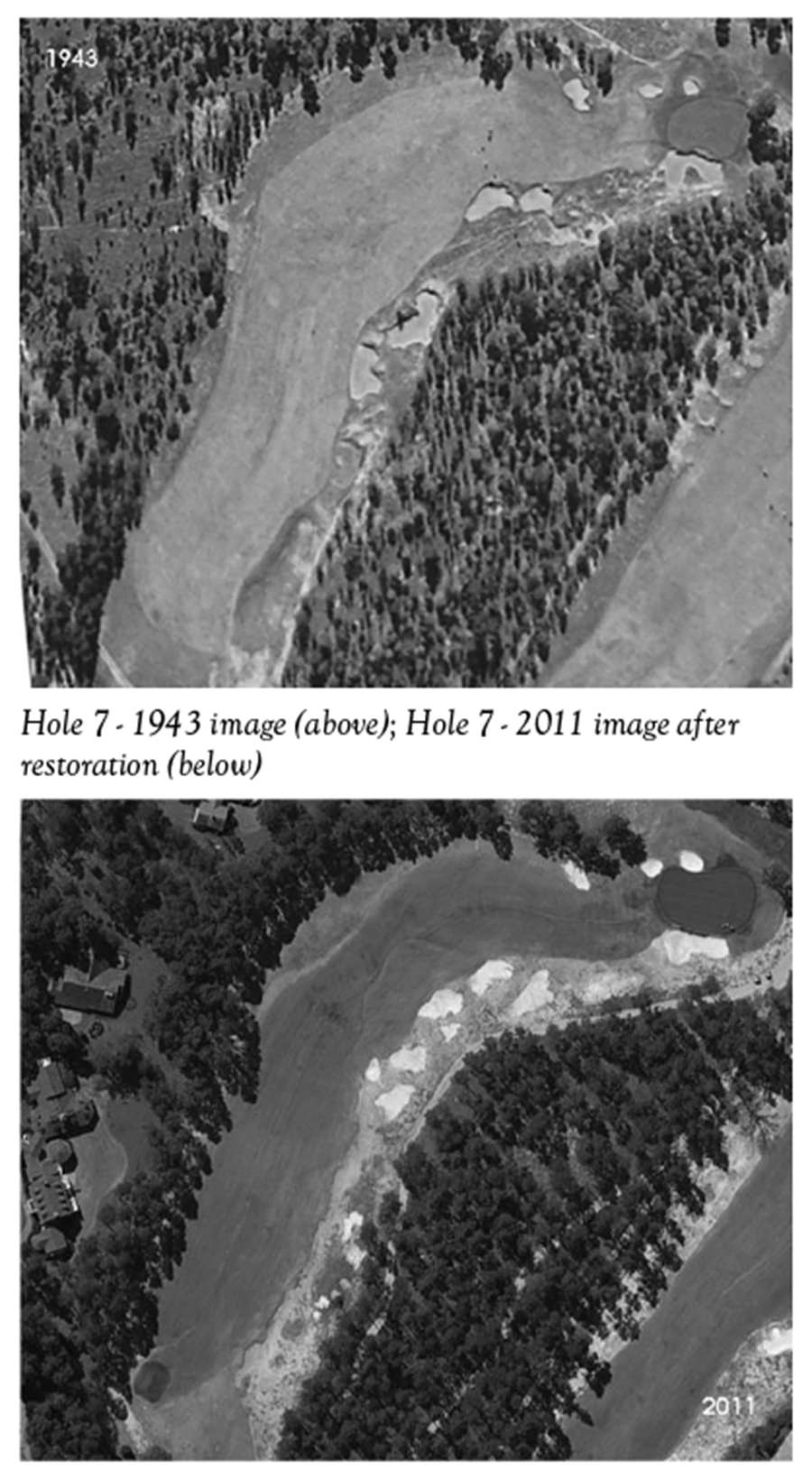
Bob Farren, the man in charge of maintaining the resort’s courses, provided an invaluable first clue. He advised that during the 1980s, his crew had uncovered the entirety of the abandoned fairway irrigation line that Ross had installed in 1932. Farren flagged the path of the defunct line for the architects. Its location confirmed that No. 2’s fairways had previously been configured in a more serpentine fashion. Due to mowing patterns, the fairways gradually became straighter in the 80 years following Ross’ placement of the irrigation line. Farren’s discovery enabled the architects to replot the location and dimensions of No. 2’s fairways to match the old Ross footprint.

But puzzles remained. What did the old native areas look like? Had the location and shape of greens, tees and bunkers changed any over the years? How did Ross sculpt the bunkers? To find answers, Coore and Crenshaw paid a visit to Pinehurst’s Tufts Archives and combed its remarkable collection of historic photos. Their research proved useful in providing an overview of the course’s general appearance, but photos illustrating hole-by-hole details were few. And those that did exist were snapped at ground level. Bill and Ben had hoped to find aerial photos that might provide a clearer, to scale, perspective of No. 2’s architectural details.

Though intimately familiar with Ross’ design style, absent more detailed photos, they were going to have to engage in a significant amount of guesswork. How could they be sure they were accurately restoring the course to the way Ross had left it or, at least, how he would be inclined to draw it up today? “Lord knows,” reflected Coore later, “we didn’t want to be known as the people who messed up No. 2.”

Unbeknownst to the architects, help would soon be coming their way, in the form of Craig Disher, a 65-year-old Washington, D.C., resident who was a decade into retirement after a 31-year career with the National Security Agency. Disher was an enthusiastic golfer, typically scoring in the low 80s at Manor Country Club in nearby Rockville, Maryland. His zest for the game ultimately steered him toward an avocation of his own creation.

It happened in 2004 after Disher read Lost Links, by Daniel Wexler. According to the book, various federal agencies had photographed vast portions of America from the air, and the millions of aerial images housed at Washington’s National Archives and Records Administration included many of golf courses. The United States Geological Service, the most prolific shutterbug among the agencies, had begun the process of photographing the country in the 1930s. There were various reasons for the program, one of which was inventorying America’s arable land. Even though crops aren’t customarily grown on recreational properties like golf courses, the USGS shot them anyway in the event the land might have to be used for food production or other necessities. This had actually taken place during World War II when “Victory Gardens” were patriotically planted on the nation’s courses, and cows grazed on the formerly pristine fairways of Augusta National Golf Club.

Disher thought it would make for an enjoyable project to search for aerial pics of his home course, Manor CC, designed in 1922 by noted golf architect William Flynn. Besides, the place where the USGS images were stored, NARA, was just a 15-minute drive from Disher’s home. After being directed to the cartography and map research room on the third floor, he got a crash course on the ins and outs of researching and retrieving aerial images from NARA’s vast catalog.

Finding images taken in the USGS project wasn’t a particularly difficult task. Rolls of large 9×9 negatives kept in stored cans were indexed by state, county and date. After identifying the rolls pertaining to a particular county, a researcher would request them, then generally wait a day or two before they were made available. Once the rolls were in hand, the researcher could sift through them on a light table, hunting for particular negatives.

The project was right up Disher’s alley. He enjoyed research and the patience, concentration, and persistence it required. A history major at Gettysburg College, his senior thesis (the evolution of Mao Zedong’s communist philosophy and politics) had necessitated innumerable hours wading through hundreds of magazines, newspapers and other documents at the Library of Congress.

“Organizing and cross-referencing them in the era before computers was great training,” Disher says. “My research at NARA mirrored that experience.”

His resourcefulness was augmented by life experiences. After college, during a stint in the U. S. Army, Disher received training in military interrogation at intelligence school and served as an interrogator during the Vietnam War. A significant portion of his employment at NSA had involved the deciphering of encrypted messages. As Disher puts it, that work, in contrast to library research, “primarily takes place in one’s head.”

From NARA’s index, Disher found that rolls of negatives taken in Montgomery County, Maryland (Manor CC’s location), were available. He found aerial images of Manor taken during the years 1940, 1948 and 1951. He photographed the negatives, then used Photoshop on a computer at home. This resulted in sharp black-and-white photographs that depicted the Manor course in riveting detail.

Delighted with the success of his search, Disher soon became a regular at the cartography and map research room, looking for and collecting aerial images of other golf courses in the Washington, D.C., area. It wasn’t long before his quest extended to courses that interested him around the United States. His most frustrating search involved the Lido Golf Club on Long Island, closed permanently due to wartime needs in 1942. Classic golf architecture devotees reverentially extoll this mystical links, ranking it among the finest ever built in the country. Locating aerial photos of Lido became something of a white whale for Disher, especially after he discovered USGS had not taken any photos in the area.

Undeterred, Disher considered whether the Department of Defense might have photographed Lido. Before and during World War II, DOD had arranged for military installations and areas of strategic importance to be photographed from the air. NARA had materials relating to these aerial flights, but researching them could be vexing due to a lack of indexing. However, NARA did hold records showing the flight patterns of planes that had flown on aerial photography assignments. The paths were depicted by the drawing of black lines of the planes’ tracks on acetate sheets. By superimposing those sheets over a geological map, a researcher could determine the general area where photography had taken place.

The information on the acetate sheets had been converted to microfilm. To search for Lido, Disher “had to look at all the microfilm rolls showing tracks of aerial photography planes in Long Island prior to 1942. Each roll of microfilm had to be viewed from start to finish, stopping at each track image to see if it passed over the area of interest.” Once those track images and the associated roll of negatives were identified, Disher would order the can containing them. The wait for the cans took additional time, since DOD images were in cold storage outside of D.C.

“It took me a month, but I finally found an undiscovered 1940 aerial photo of Lido,” he says. Disher shared the image with golf historians, and the highly detailed photograph subsequently appeared in several golf magazine articles, spurring an ongoing movement to someday recreate Lido’s majestic course.

Slowly, people in golf became aware of Disher’s research. Given the architectural trend of restoring classic courses to their original design, old photos — especially aerials — were in high demand. Without any thought of benefitting financially from his unique hobby, Disher cheerfully shared access to his collection gratis with grateful golf clubs and course architects who asked for his help. Disher furnished them 16×20 prints of aerial photos that were used in field work. Later the same prints often found their way to clubhouse walls.

In 2005, the avid golfer and his wife, Susan, acquired a vacation home in Pinehurst. This development, naturally, caused Disher to scope the USGS collection at NARA for images of No. 2. When he got wind of the fact that the Pinehurst resort intended to restore No. 2 to its original Donald Ross design, he thought the USGS photos might be of value to the architects. When he retrieved the images, Craig  found to his frustration they lacked sufficient detail to be of much use. He wondered whether there was a possibility DOD might have also photographed the course. Pinehurst was only 26 miles from Fort Bragg, a base Disher knew well. During his ’60s hitch in the Army, his basic training had been at Bragg. Disher knew area flights involving aerial military photography likely would have departed from nearby Pope Air Force Base. He knew Pope, too. In 1968, he was deployed from there to Vietnam, where he had joined a brigade of the 82nd Airborne Division.

Still, it was a long shot. Even if an aircraft had veered that far west, would the camera have been turned on and clicking after leaving the airspace over the base? Disher found and reviewed the track of a Christmas Day 1943 DOD flight of a plane photographing Fort Bragg. The track showed the plane had, indeed, traveled west toward Pinehurst, reaching the edge of the town before backtracking to Pope. Having identified the flight he was looking for, Disher asked to see the roll that would include the negatives. It would take a week before the roll arrived at NARA. Anxiously, Disher awaited the delivery of the Christmas Day flight photos.

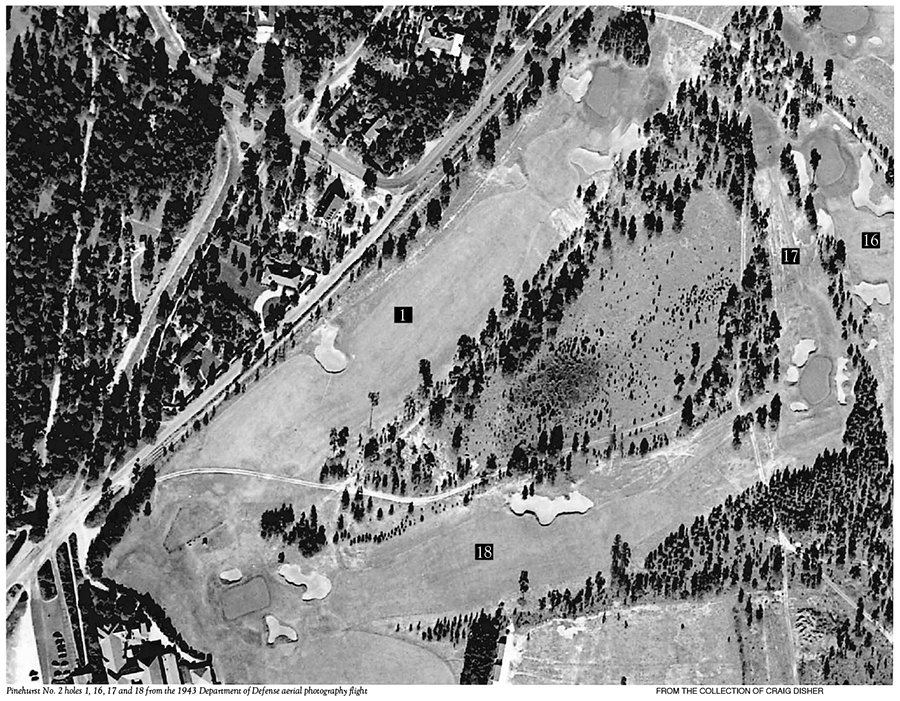
When he finally flashed through the roll, Disher found the images of No. 2. He eyed what were, perhaps, the clearest aerial photos of a golf course he had yet encountered. While aloft over No. 2, the plane had flown lower than was customary. Who knows, maybe the pilot played golf and wanted to take an up-close look at the famous course. Regardless, the details shown of the bunker contouring, tee and green shapes, trees and native areas were strikingly vivid. The aerial camera, clicking away every few seconds, had also captured excellent images of the Pine Needles and Southern Pines courses.

Through a mutual friend, Disher contacted Coore and informed the architect of his find. Arrangements were made for Coore and Crenshaw to stop by Disher’s home in Pinehurst to inspect the photos from the 1943 flight that encompassed the entirety of No. 2. Disher arranged them on his dining room table to appear as a single photograph.

The architects were astonished at what they saw. The photos depicted exactly what they needed to assure themselves they were on the right track. As Crenshaw put it, “it was the confirmation we had been looking for.”

With Disher’s photos serving as their guide, Coore and Crenshaw completed No. 2’s restoration in March 2011. Gone was the matted rough. In its place were the native areas that had characterized Ross’ course. Indigenous plants such as red sorrel, spiderwort and spotted beebalm now grew haphazardly off the fairways. Bunkers were reshaped with the scruffier edges that had marked their appearance in the 1943 aerials. Some bunkers were eliminated, others restored. Several tees were moved to restore the driving challenges Ross had envisioned. Based on the 1943 photograph, the 15th green was widened to its right side by one-third. With areas off the fairway no longer watered, the course looked browner and more natural. Seven hundred of No. 2’s 1,100 sprinkler heads were eliminated, trimming water use in half. Fairways were widened and shaped to approximate their dimensions during the Ross era, thus allowing for alternative routes for approaches into greens.

The restoration was universally praised in golf circles, and the 2014 U.S. men’s and women’s Opens proved to be memorable successes. Fears that the changes to course No. 2 would render it too easy proved overblown. Only three men, including winner Martin Kaymer, and one woman, Michelle Wie, broke par.

“Craig was so instrumental in our work at No. 2,” says Coore of Disher. “I’m not sure we could have accomplished what we did without him.”

Disher became the go-to source for aerial photos of historic courses and has been called upon by architects like Ron Forse, Gil Hanse, Kyle Franz, Jim Urbina and Davis Love Jr. Now 76, Disher is gratified that what began as a pleasant diversion ended up contributing so much to golf. “My research introduced me to some of the nicest people I’ve ever met and taken me to golf courses I never dreamed I would see,” he says. “If you are searching for something you think can’t be found, it probably can be.  PS

Pinehurst resident Bill Case is PineStraw’s history man. He can be reached at Bill.Case@thompsonhine.com.

Almanac

September

By Ashley Wahl

September is deliciously subtle. Like a sly smile in a moment of silent recognition.

The last wave of swallowtails graces the garden. Dinner plate dahlias resemble colorful mandalas and sun-dappled muscadines spill from the vine.

Life hums along. Hummingbirds drink from red spider lilies. The air, too, is like nectar — sweet as it’s been all summer — but something is different. Something not yet palpable.

The trees know, leaves whispering ancient incantations to merge with root and earth. The first to surrender glow with radiant splendor. They cling to nothing, unattached to their green summer glory or the luminous journey to come.

Weeks from now, tree swallows will gather by the hundreds at dusk, swirling across the sky like cryptic, flickering apparitions. But today, sunlight kisses goldenrod. Robins dip and shimmy in warm, shallow water. Plump bees float in endless circles.

By evening, the air is slightly cooler, or so it seems. And at twilight, when shadows dance in the periphery, a mourning dove cries out.

Coo-OO-oo.

Beyond a wild tangle of late summer flowers and grasses, a red fox flashes past, here and gone with the last whisper of golden light.

As darkness falls, all at once it’s clear: Elusive autumn has returned, creeping into consciousness like an impish melody — a dark, playful secret on the tip of your tongue.

The goldenrod is yellow;

The corn is turning brown;

The trees in apple orchards

With fruit are bending down.

— Helen Hunt Jackson, “September”

Harvest Season

The Autumnal Equinox occurs on Wednesday, September 22. The days are growing shorter. As for the glorious bounty of summer? It’s harvest time.

Praise for the apples, pears and figs. Cucumbers, peppers and eggplant.

As the garden gives and gives, offer thanks for the tender young salad greens; the last plump tomatoes; the earliest pumpkins and winter squashes.

And don’t forget the edible flowers.

Like lavender (sweet and minty), marigold (transform your stir fries) and snapdragons (bitter, perhaps, but they sure are gorgeous).\

The Meadow Queen

If you’re wondering where that faint yet lingering vanilla fragrance is coming from, stop and smell the purple joe-pye weed — unless you’re allergic.

As the story goes, Eupatorium purpureum received its common name — joe-pye — after a gentleman of the same name presumably used the wild plant to cure typhoid fever. An herbaceous perennial of the sunflower family, joe-pye is a native species that blooms in later summer and attracts a host of bees, butterflies and moths.

Also known as kidney-root, feverweed and Queen of the Meadow, when this towering beauty begins to bloom — clusters of pinkish-purple flowers exploding from 7-foot stalks — watch and listen closely: Summer’s swan song is nigh.

Georgia O’Keeffe and Friends

A new exhibit welcomes a modernist master

By Jim Moriarty

Beginning on the 10th of September the Reynolda House Museum of American Art will be throwing a welcoming party for a particularly interesting work by Georgia O’Keeffe, the renowned 20th century American modernist. The celebration, housed in two rooms, continues until March 6. As if to make the iconic painter of flowers and skulls feel at home in her new home, she’ll be accompanied by old friends, the artists she appeared alongside in famed photographer Alfred Stieglitz’s series of Manhattan galleries — 291, An Intimate Gallery and An American Place — and the ones she chose to surround herself with during the rest of her life in an exhibition titled “The O’Keeffe Circle: Artist as Gallerist and Collector.”

“We wanted to welcome the painting to Reynolda with a splash,” says Phil Archer, the museum’s deputy director.

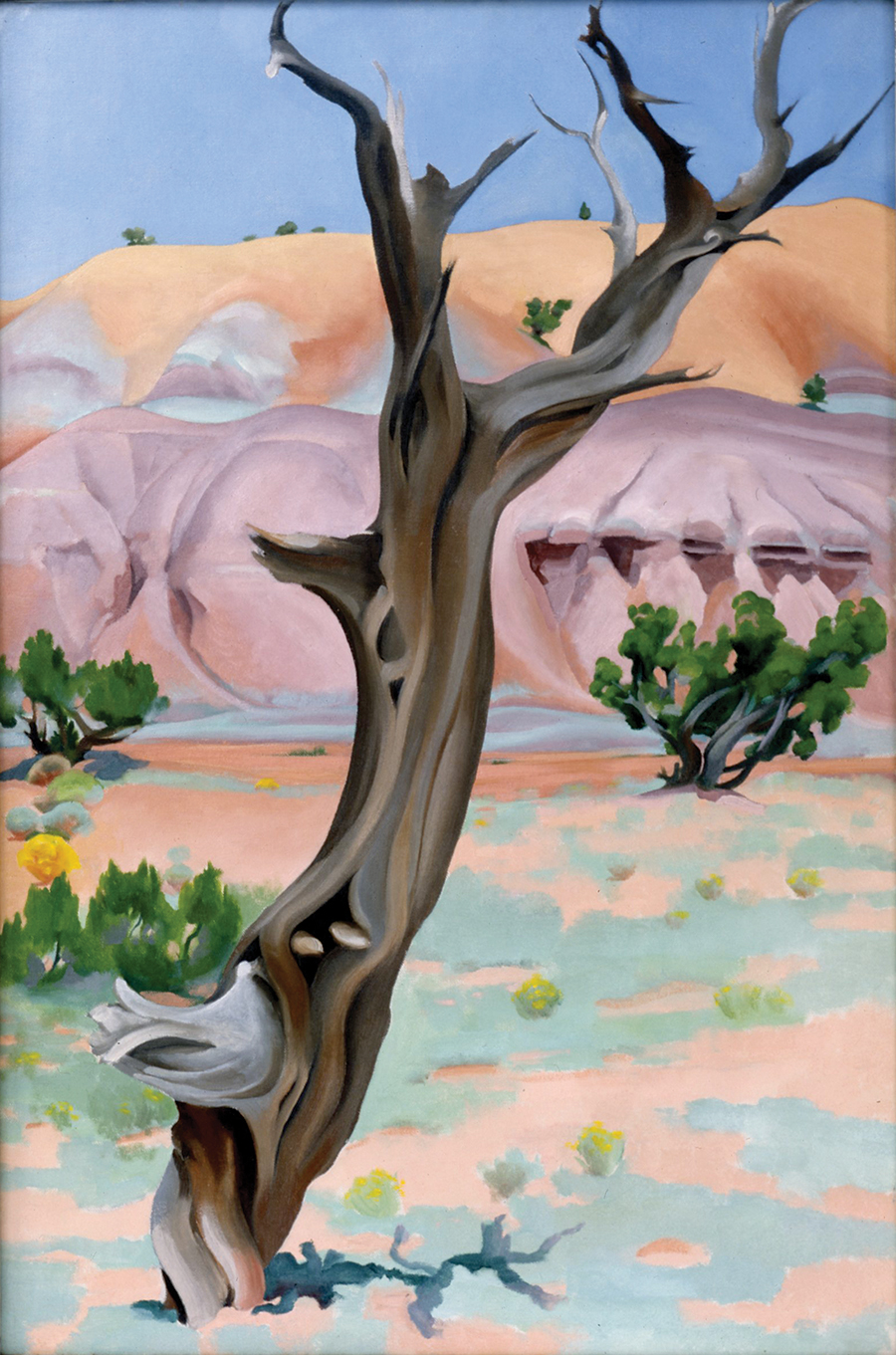
The work, a promised gift from Barbara Babcock Millhouse, the founding president of the museum and its primary donor, is Cedar Tree with Lavender Hills, one of O’Keeffe’s works depicting her beloved New Mexico landscape, first exhibited at An American Place in 1937 and purchased by Millhouse 40 years later. “I have O’Keeffe’s letter to her husband, Alfred Stieglitz, about doing that painting,” says Archer. “She says, ‘I can set it by the window and when I look at the painting and I look out the window, I have actually captured the way my world looks.’”

The painting will appear alongside another O’Keeffe work already in the museum’s collection, Pond in the Woods, Lake George. “It’s great for Reynolda because we’ll now have a painting from each of O’Keeffe’s main loci of inspiration,” says Archer.

Georgia O’Keeffe, Cedar Tree with Lavender Hills (1937), promised gift of Barbara B. Millhouse. © 2021 Georgia O’Keeffe Museum/ Artists Rights Society (ARS), New York

Joining O’Keeffe will be a brace of her contemporaries, including John Marin, Arthur Dove, Alfred Maurer, Marsden Hartley, Max Weber, Abraham Walkowitz and Charles Demuth, a flock of artists more often described as the Stieglitz Circle but who are recognized here for their effect on, friendships with and passion for O’Keeffe. “Stieglitz was always declaiming who was the next artist and why people should appreciate them,” says Archer. “The exhibit is kind of a pocket-sized pantheon of the great, early moderns. They’ve all drunk from the well of French modernism. They’ve all read Kandinsky about the spiritual potential of art and abstraction. There’s this kind of reckoning. What will Americans make of the new artistic world in the teens and twenties? That’s what Stieglitz was calling for — what will modernism mean for us?” And, in Stieglitz’s mind, the abstract movement went hand-in-glove with the elevation of photography as an art form all its own.

Demuth was not originally in the Stieglitz stable, but in 1921, when he became “one of us,” as O’Keeffe described him, she enjoyed his company immensely. A friend of the poet William Carlos Williams, he was elegant and urbane, a gay artist with a lively sense of humor but frail health. Though he turned to oils later in his life, he was best known as a lively watercolorist. As a mark of his friendship with O’Keeffe, when he passed away in 1935, he left all his oil paintings to her.

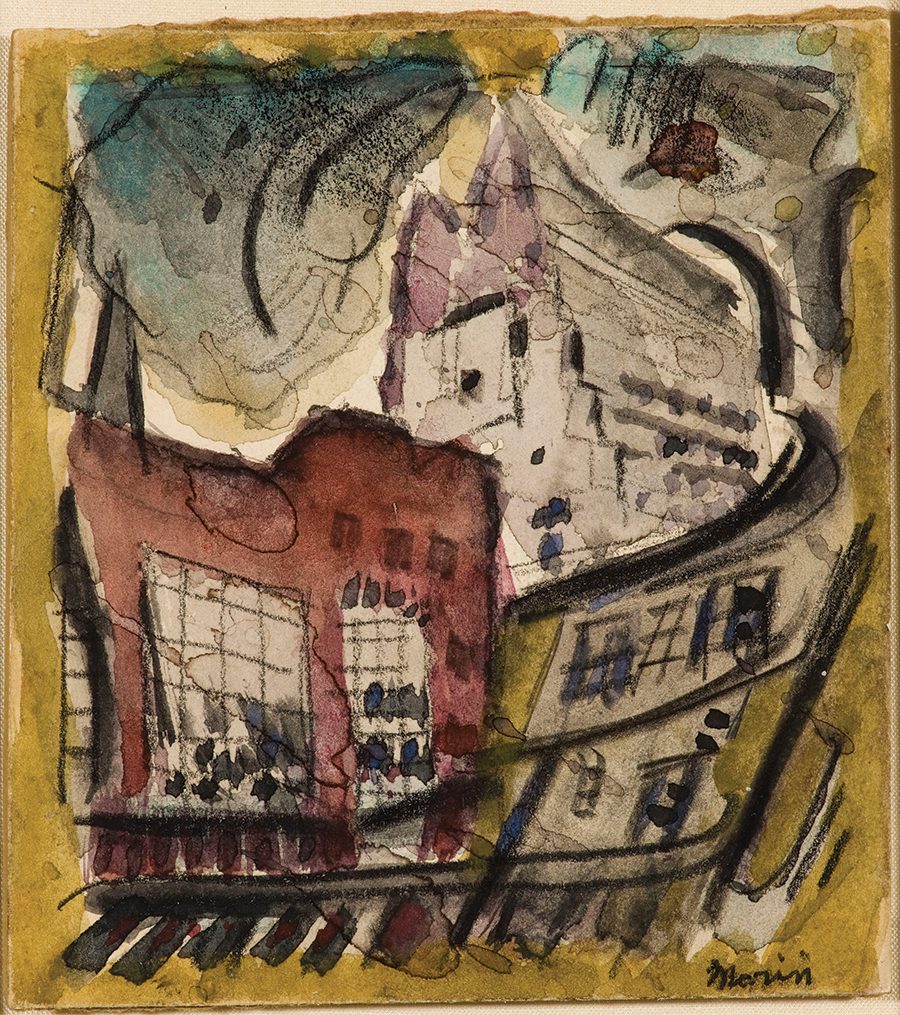
Marin was introduced to Stieglitz by his friend and fellow photographer Edward Steichen and became enough of a commercial success to buy his own small island in Maine, where he lived during the summer. O’Keeffe admired his work, including a blue crayon abstract drawing. In Georgia O’Keeffe: A Life, Roxana Robinson writes, “Its intimate scale and its clear aesthetic independence made it suddenly accessible to O’Keeffe: conceptually, this was very close to her own work. It occurred to her that if Marin could make a living selling this eccentric expression of a private aesthetic vision, then she might be able to do the same.” He was close enough to both Stieglitz and O’Keeffe to be a witness at their 1924 wedding.

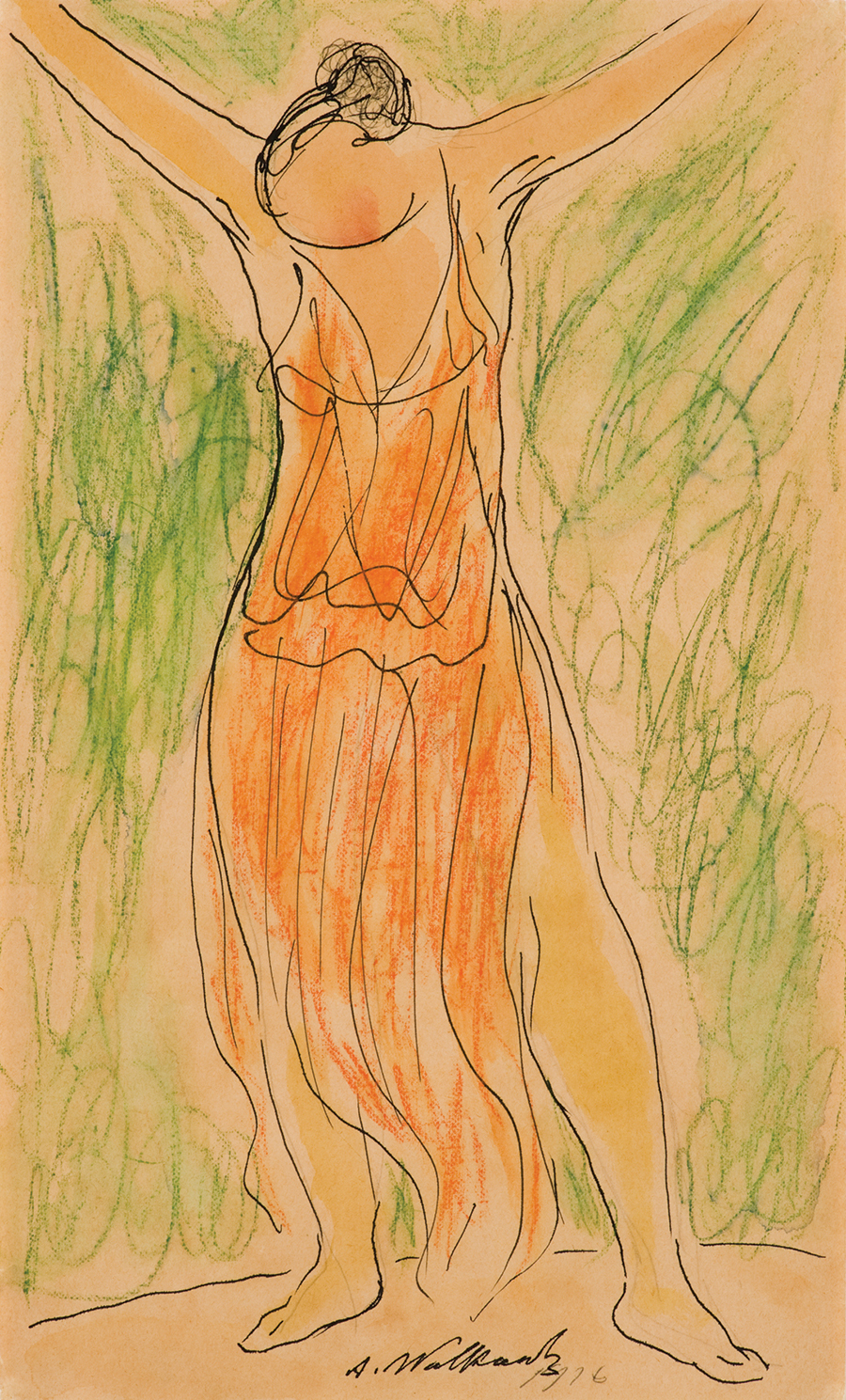
Abraham Walkowitz, Isadora Duncan (1916), colored crayon, watercolor, ink and graphite on paper, Gift of Mr. and Mrs. Joseph Hirshhorn in honor of Nancy Susan Reynolds

O’Keeffe’s first exposure to Dove at 291 was his painting Leaf Forms. After returning from Europe in 1909, Dove spent weeks camping alone in the woods. His abstract paintings “found a strong echo in Georgia’s developing aesthetic philosophy,” writes Robinson. “Dove’s work validated her own inclinations . . . she sensed the deep affinity between them.”

Dove was equally enamored. “That girl is doing without effort what all we moderns have been trying to do,” he said to the poet Jean Toomer.

Walkowitz worked so closely with Stieglitz at 291 that in 1912 and again in 1914 Stieglitz exhibited the work of the children Walkowitz was teaching in a Lower East Side settlement house. In this exhibit, Walkowitz is represented by one of his 5000-plus drawings of Isadora Duncan. “She had no laws. She did not dance according to the rules. She created,” Walkowitz said — words that he could have applied to O’Keeffe just as readily.

Paintings by Pablo Picasso, Henri Matisse and Paul Cézanne, and Auguste Rodin’s drawings were first shown in America at 291. Marin and Maurer appeared on their heels. Maurer, like O’Keeffe, had studied with William Merritt Chase. Maurer’s father created Currier and Ives lithographs and never approved of his son’s modernist leanings. Shortly after his father passed away at the age of 100, Maurer committed suicide. The mercurial Weber was responsible for Henri Rousseau’s first U.S. exhibit, and he helped introduce cubism to America, a thankless task in 1911. According to the art historian Milton Brown, he was rewarded with “one of the most merciless critical whippings that any artist has received in America.” And it was an exhibition of Hartley’s work that first brought O’Keeffe to the 291 gallery where she met Stieglitz. Soon they would be lovers.

John Marin, Downtown, New York, c. 1925, watercolor and graphite on paper mounted to board, Gift of Betsy Main Babcock, 1966.2.1 © 2021 Estate of John Marin / Artists Rights Society (ARS), New York
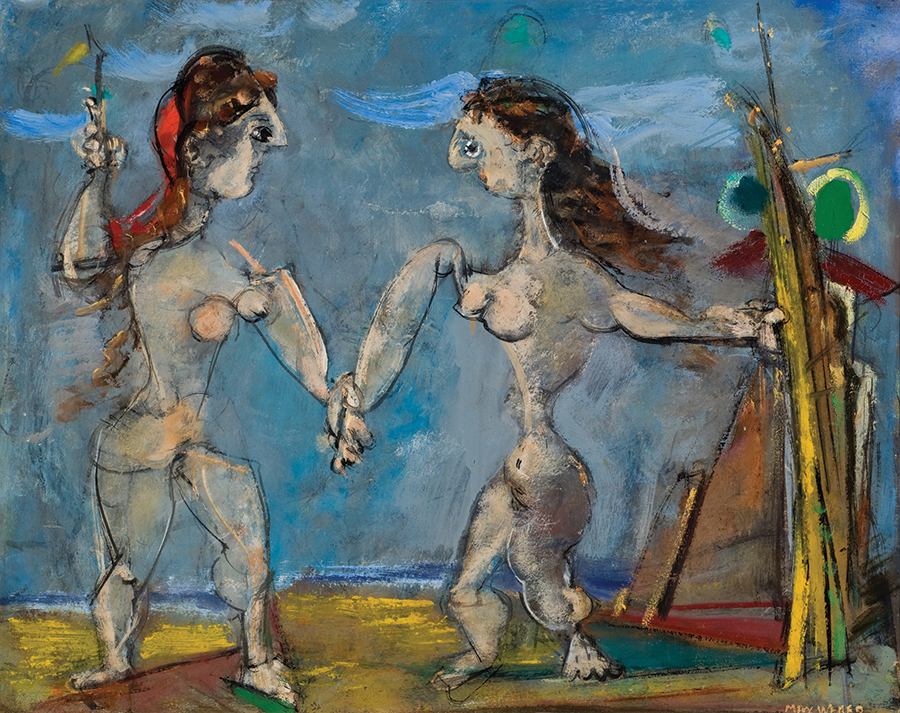
Max Weber, The Dancers (1948), oil on canvas, Gift of Dorothy F. and Maynard J. Weber, Reynolda House Museum of American Art

Though the works linked to O’Keeffe as a collector, or perhaps appreciator, in the exhibit are not the precise pieces she held in her collection, they are representative of those that were and of the relationships she enjoyed. Among the latter is her abiding friendship with Ansel Adams, who is represented by one of his prints of Yosemite Valley, a place O’Keeffe and Adams visited together. In a letter to Stieglitz, Adams wrote, “O’Keeffe is supremely happy and painting, as usual, supremely swell things. When she goes out riding with a blue shirt, black vest and black hat, she scampers around against the thunder clouds — I tell you, it’s something.”

The exhibit includes a photograph of Adams and O’Keeffe taken by Adams’ assistant, Alan Ross. “Ansel Adams was the first professional photographer to capture her on camera and then in 1981, close to both of their deaths, she went back to Carmel, California, and, as she’s setting up, she’s sort of smiling, his assistant took a quick snapshot,” says Archer.

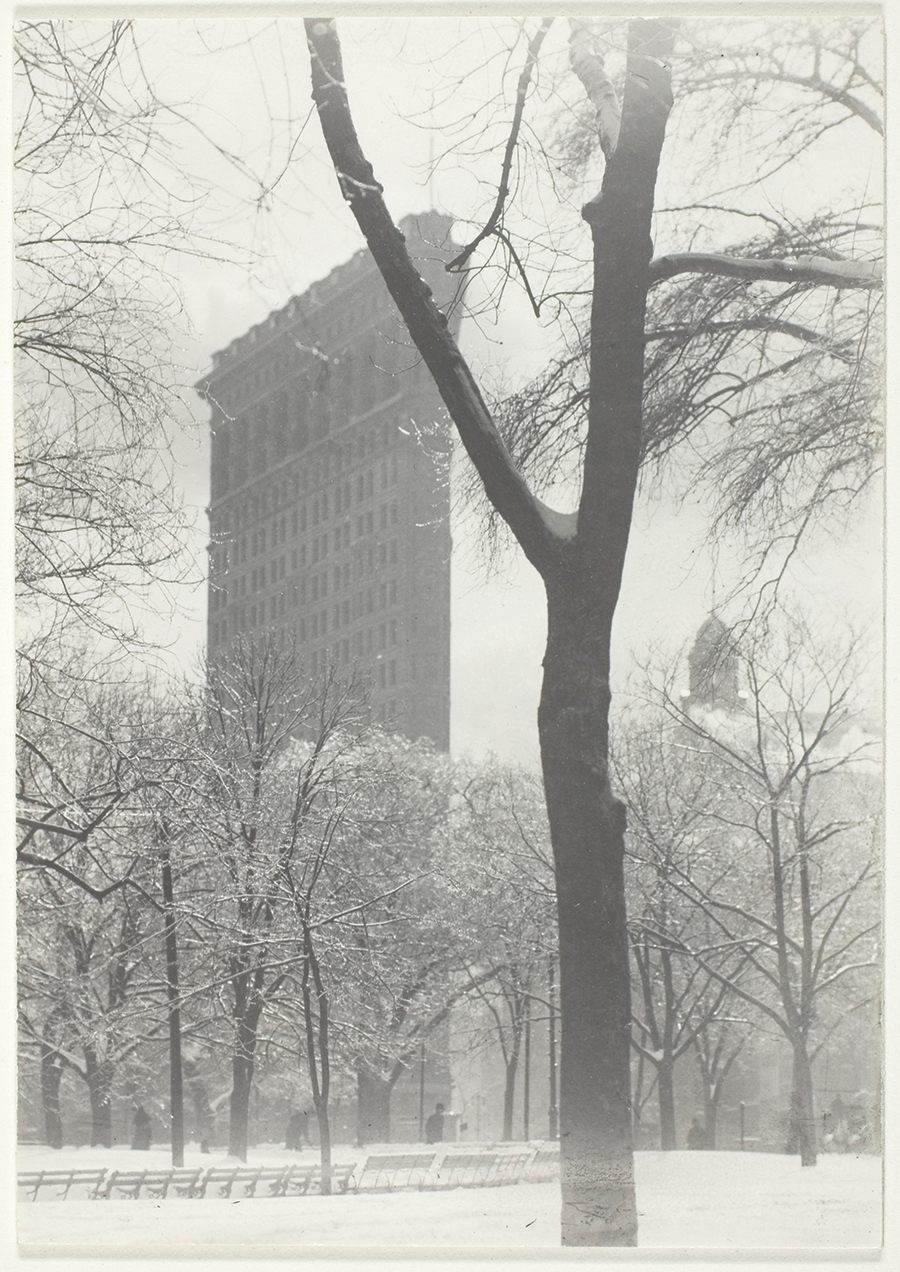
Also included in this section of the exhibit is an Akari paper lantern by Isamu Noguchi similar to the one O’Keeffe alternately hung over her dining room table or her bed in her house in Abiquiu, New Mexico. There is a mobile by Alexander Calder — who designed the OK pin O’Keeffe wears in countless photos — that is analogous to the one O’Keeffe hung in her New Mexico home. A triptych of snow scenes done in the 1850s by Utagawa Hiroshige is also included as an homage to a similar threesome of Hiroshige woodblock prints from the same period that lived on the wall in O’Keeffe’s New Mexico home and are now at the Metropolitan Museum of Art. And, naturally, there is a Stieglitz print, one of his most famous, also a snow scene. “I suddenly saw the Flat-Iron Building as I had never seen it before,” Stieglitz said. “It looked, from where I stood, as if it were moving toward me like the bow of a monster ocean steamer, a picture of the new America which was in the making.”

Alfred Henry Maurer, Landscape: Provence (circa 1916), oil on paper, mounted on board, Reynolda House Museum of American Art, Gift of Emily and Milton Rose

This intimate exhibition does not pretend to be, nor was it intended to be, an O’Keeffe retrospective. It does not deal with her complicated relationship with Stieglitz — who never ceased to promote O’Keeffe’s work — their lengthy affair before his divorce, their subsequent marriage and, later, his affair with his gallery director, Dorothy Norman. It doesn’t delve into her mental and physical breakdowns in the ’30s nor does it touch on the sexuality, male and female, that is often ascribed to O’Keeffe’s work and which she steadfastly refused to acknowledge.

Like Stieglitz’s photo of the Flat Iron Building, O’Keeffe saw grandeur in her subjects. “She wanted the small things in nature that she loved to be just as impressive as the new trains and new planes,” says Archer, “to stop you in your tracks like you were looking at a skyscraper.”

The tightly knit exhibit, like the Ross photo, is a snapshot of the artist. “I hope people will leave with a fuller image of O’Keeffe’s engagement with the art of her time,” says Archer. “She developed a persona — helped by Stieglitz — of the remote, contemplative, detached doyenne of the desert. But she was keenly interested in her contemporaries’ work and unstinting with both praise and criticism.”  PS

Jim Moriarty is the Editor of PineStraw and can be reached at jjmpinestraw@gmail.com.

Alfred Steglitz, The Flatiron (1903), photogravure on tissue, courtesy of a private collection