Birdwatch

Keep Your Eye on the Sparrows

Dark-eyed Juncos return to these parts in cold weather

By Susan Campbell

“The snowbirds are back!” No, not the thin-blooded retirees — you won’t see them until spring. But you will see the little black-and-white, sparrowlike birds that appear under feeders when the mercury dips here in central North Carolina. They can be found in flocks, several dozen strong in places. And, in spite of what you might think, they are far from dependent on birdseed in winter.

Dark-eyed juncos are a diverse and widely distributed species, with six populations recognized across the United States, Canada and Mexico. Some have white wing bars, others sport reddish backs, and the birds in the high elevations of the Rockies are recognized by the extensive pinkish feathering on their flanks. Our eastern birds are known as “slate-colored juncos” for their dark-brown to gray feathering. As with most migrant songbirds, their migratory behavior is based on food availability, not weather. Flocks will fly southward, stopping where they find abundant grasses and forbs. They will continue  traveling once the food plants have been stripped of seed.

Dark-eyed juncos can be found throughout North America at different times of the year. During the breeding season, juncos are found at high elevation across the boreal forests nesting in thick evergreens. Our familiar slate-colored variety breeds as close as the high elevations of the Appalachians. You can find them easily around Blowing Rock and Boone year round. Watch for male juncos advertising their territories up high in fir or spruce trees. They will utter sharp chips and may string together a series of rapid call notes that sounds like the noise emitted by a “phaser” of Star Trek fame.

In winter, flocks congregate in open and brushy habitats. Juncos are distinguished from other sparrows by their clean markings: dark heads with small, pale, conical bills, pale bellies and white outer tail feathers. Females have a browner wash and less of a demarcation between belly and breast than males. They hop around and feed on small seeds close to ground level. Some individuals can be quite tame once they become familiar with a specific place and particular people. Juncos do communicate frequently, using sharp trills to keep the flock together. They will not hesitate to dive for deep cover when alarmed.

So the next time you come upon a flock along the roadside or notice juncos under your feeder, take a close look. These little birds will only be with us a few months, until day length begins to increase and they head back to the boreal forests from whence they came.  PS

Susan would love to hear from you.  Send wildlife sightings and photos to susan@ncaves.com.

Out of the Blue

The Kitty Chronicles, Part VI

The odd couple and the cat lady

By Deborah Salomon

Happy New Year, and welcome to my annual kitty column.

Backstory: I love animals. More important, I trust and admire them. As a lifelong rescuer/adopter I have experienced many beautiful food-based relationships with stray and feral kitties, lost dogs, a retired racing greyhound, a pair of Pekin ducks and thousands of grateful squirrels, birds, possums and other wild creatures. Coyotes and foxes don’t make the cut, for obvious reasons.

Once I found homes for 32 kittens before capturing mama and having her spayed.

That year, when my family asked what I wanted for my birthday, I answered a Hav-a-Heart trap.

Enough, I thought, after moving here 12 years ago. I’ve done my part. Then a coal black kitty with satin-smooth fur and expressive eyes appeared at my door. He had been left behind by a family that moved. He made a nest beneath the bushes. I fed him outside for six months. Finally, on July 4, 2011, I opened the door to Lucky. He walked into the kitchen and sat down, awaiting bowl placement. After a good feed he hopped on the couch and fell asleep. He was home. I felt relieved.

Black cats are special, soulful. I cannot resist them. I probably needed him more than he needed me.

A year later I did the same for Hissy/Missy, who the neighbors called Everybody’s because she was fed by many. Hissy had a notched ear, indicating a spayed feral. She is a widebody, a patchwork of soft white underbelly fur and coarse mottled gray on top. One eye is crossed. She waddles.

Lucky — sleek and shiny — had been neutered and declawed (horrible) but no microchip.

I study them. I learn from them. They make me feel better.

Go ahead . . . laugh. At least I’ll never need opioids. And I’ve met interesting people, uh, pawing through bitsy cans in the cat food aisle.

Lucky has the best disposition I have ever encountered in an animal. He is a quiet gentleman, a thinker, a cuddler who literally looks before he leaps. I can honestly say that in eight years I have never heard Lucky hiss or growl, except when an unfamiliar cat passes by, and Lucky is safely behind a closed window. He gets along fine with a neighbor’s kitty. They hang out together on the porch, two old men sharing stories.

Hissy, in contrast, is a fussbudget. I almost named her Edith after Archie Bunker’s “Dingbat” from All in the Family. For the first month or so, she hissed at me, at Lucky, at everything. Hence the name. Then, suddenly, she became sweet as sugar so now it’s Missy, although she will always be Hissy to me.

They couldn’t be more different. But opposites attract, as evidenced by their relationship mimicking some marriages. He stands still when she grooms him. She follows him around, pushes him off his food bowl and his windowsill perch. He has nests all over the house, which she tries to share. When he asks to go out, she follows . . . and is not far behind when he meows to come in.

He accepts her affection and ministrations without noticeable response, let alone reciprocation. Except when Hissy was at the vet all day for treatment Lucky seemed unsettled, watchful.

They communicate by nuance, by intense stares and twitching whiskers.

“Supper could have been better,” Lucky twitches. “I like grain-free kibble laced with chicken livers best.”

Actually, he likes to lick the underside of my yogurt cup top best. Greek vanilla, please.

She reports the weather to him. “I went out. It’s raining. I came in. I went out again. Still raining. I came in. Went out again. Drizzling.”

Come winter, each has a flannel-covered heating pad on the bed. His, for an arthritic hip. Hers because she pushed him off his. I try to position one for me (arthritic shoulder) — a lost cause.

Since my catspeak is rusty we communicate physically. When Lucky wants something he finds me, paws my leg, makes eye contact and leads me to his objective — usually food or the door — front, in the morning, back in the afternoon, according to where the sun warms the chair cushion. If he wants laptime he just jumps. Missy is needy. She lives on attention, probably a result of a deprived kittenhood. Soon as I sit down, she’s there, kneading with her claws and purring. She thinks mealtime is whenever I’m in the kitchen. She rubs my legs, gets underfoot at the risk of having her paw stepped on.

At least she doesn’t wake me at 3 a.m., asking for treats, which I keep in the bedside table drawer to pacify Lucky when he quietly but persistently paws for a snack.

I rise early anyway, so I forgive him for reasons best expressed by Paul Simon:

When you’re down and out . . . when evening falls so hard . . .  I will comfort you . . . When darkness comes and pain is all around . . . I will lay me down, like a bridge over troubled water . . .

You think I’m crazy, right? Did you hear about Dean Nicholson, the Scottish welder who decided to cycle around the world? He found an abandoned kitten in Bosnia, did all the necessary vetting, bought Nala a vest, a leash and a bike carrier and continued his journey for thousands of miles. When Nala gets tired of the basket she drapes herself around Dean’s neck and falls asleep. Their story made The Washington Post.

As for sweet Lucky . . . and to a lesser extent, Missy, they prove that I’m a nutty old cat lady.

But they’re just cats, right?

Yes, just cats. That’s the best part. PS

Deborah Salomon is a staff writer for PineStraw and The Pilot. She may be reached at debsalomon@nc.rr.com.

In the Spirit

Oleo Saccharum

Three ways to create a simple base for your cocktails

By Tony Cross

Over the years, I’ve experimented with many ingredients, recipes and gadgets — all aimed at making my job easier. I mean, c’mon, my business is built on the premise of pulling a handle to get the finished product. You can’t get much lazier than that. Some of these experiments have been disastrous, but from time to time I’ll find a winner. In this case, the winner is oleo saccharum and a few ways to make it.

“A few ways to make what?” Oleo saccharum. It has the same number of syllables as REO Speedwagon, but is waaay better. Trust me. Latin for “oil-sugar,” this combination is the base for most punches and certain cordials/cocktails. (My very first article in PineStraw, circa 2015, touched on the subject briefly.) It’s a very simple process of mixing certain citrus peels — grapefruit, lemon or lime — with sugar. After some time, the sugar draws out oils from whichever citrus you used. Science! And this is coming from someone who failed high school chemistry. Let’s go over several ways to achieve this.

If you’re a beginner:

Combine the peels of one grapefruit and 250 grams of baker’s sugar (or plain granulated sugar) in a bowl. Use a muddler (or, if you don’t have one, a wooden spoon) and press the peels into the sugar for about 30 seconds. Cover the bowl with plastic wrap and let it stand about four hours, or even overnight. When you return to the bowl, you’ll see that what was sugar is now a syrup mixed with peels: oleo saccharum.

Now, you can do a couple of things. Add the oil-sugar to a pot with 1 cup of fresh squeezed (and filtered) grapefruit juice — it might help to add the juice to the bowl after trying to get all of the oleo saccharum into the pot. Once it’s all together, stir on medium heat for a couple of minutes. Strain out grapefruit peels and refrigerate after it cools. Or, you can skip the juice and simply strain out the grapefruit peels and refrigerate (if there’s undissolved sugar, muddle your heart out). You can mix this basic syrup, in sparkling water for a fresh non-alcoholic cooler, or you can whip up a quick little riff on the classic Champagne cocktail:

4 ounces chilled Champagne (or other dry sparkling wine)

1/4 ounce grapefruit oleo

2 dashes grapefruit bitters (or Angostura, if you don’t have any)

Add oleo and bitters in a flute glass, top with Champagne. 

If you’re a seasoned vet with a vacuum sealer:

Combine the same specs from above, but this time place in a food processor. Blend until all of the grapefruit peels are completely obliterated. Place the mix in a vacuum seal bag and use the vac-seal machine to suck out all of the air from the bag. Place it in the kitchen and come back in two hours, or put it in the freezer if you’d like to use it at another time.

If you’re a chemistry cowboy:

Bring out the sous-vide machine. Meaning “under vacuum,” this style of cooking has been very popular for years now, but I like to use it when making certain syrups, including oleo saccharums. I use the Anova Culinary model, but I’m sure there are a few others on the market that will do the trick. Ditch the food processor and combine the peels and sugar into the vacuum seal bag, and seal. Oh, and by the way, if you’re not a fan of grapefruit (who are you?), you can most certainly substitute lemons or limes. I recommend around 35 grams of lemon peels or 50 grams of lime. Grab your sealed bag and place it in a large bath of water. Hook up your sous-vide machine and set temperature to 130 degrees Fahrenheit, and the timer to 45 minutes. When the timer goes off, unplug the machine, and take the bag out of the water. Nothing but net! I mean, oil. Pretty cool.

Tying it all together:

OK, you’ve made your oil-sugar. What now? You can use it as a base for punch, or a simple syrup. I’ll leave you with a riff on a Tom Collins cocktail.

The Cleaner

1 ounce Durham Distillery Conniption Navy Strength Gin

1/2 ounce TOPO Vodka

1/4 ounce St. Germain Elderflower Liqueur

1 ounce grapefruit oleo saccharum cordial (syrup with the grapefruit juice, like in Step 1 from above)

1/2 ounce lemon juice 

Pinch of salt

Sparkling water

Combine all ingredients (sans the sparkling water) in a cocktail shaker. Add ice and shake hard for 10 seconds. Strain into a long (Collins) glass over ice. Top with sparkling water. Use a barspoon to stir together ingredients briefly. Garnish with a swath of a grapefruit peel.  PS

Tony Cross is a bartender (well, ex-bartender) who runs cocktail catering company Reverie Cocktails in Southern Pines.

Sporting Life

Black Dark

Sleet, snow, ducks and a dog

By Tom Bryant

Old duck hunters call it black dark. That’s when you crawl out of a warm bed at three in the morning, wander sleepily to the door of the cabin in your skivvies, stick your head out to check the weather, and report back to the boys. The guys are slowly muttering, pulling on long underwear and heavy socks before grabbing a cup of coffee. You report, “Men, it’s sleeting mixed with snow, colder than Aunt Sylvia’s horse holder in January, and black dark. It’s perfect!”

That’s the way it was on one of my last duck hunts at Bob Hester’s duck club right off Lake Mattamuskeet. Black dark. When we trooped out of the little motel where we were staying for the duration, sleet was falling, bouncing off our hats like little grains of sand. As we loaded up and drove out of town toward Bob’s barn, the headquarters for the day’s hunt, Bryan said, “Man, it’s black dark out there.”

The little town of Engelhard has a few pole lights on street corners, and some of the stores were lit with night lights, but it didn’t take long to leave the town with its soft glow and move into the blackness of the country.

Bryan followed up his darkness statement with, “I hope y’all brought your flashlights.” I remembered the little Mag flash I had repacked with new batteries. I remembered the batteries but didn’t remember putting the little light in my gunning bag. Could be trouble, I thought.

The headlights of the truck pierced the coal-black night with just enough brightness that we saw the turn to Bob’s farm as we rode by it. Bryan stopped the truck, backed up, made the turn, and it was a short ride to the barn where we would get our marching orders.

There were two big pole lights on either side of the barn, creating a halo effect with the sleet and snow reflecting back on the building. Bob was inside his walled-off office with his feet propped up on his desk, leaning back next to a glowing, cherry-red woodstove that radiated heat across the room.

Bob Hester is famous across the Southeast with diehard duck hunters. He has gained his reputation after many years of studying species of ducks and their habitats. As Big Tom, a resident of Fairfield and the owner of a thriving duck cleaning business, says, “Mr. Bob knows more about ducks than ducks know about ducks.”

“Well, boys,” Bob said as he dropped his feet off the desk and stood up, “I hope y’all are ready to do some serious ducking. The weather’s right, and the ducks are here. It ought to be a good hunt. Grab your gear and let’s load up. You’ll need flashlights. It’s black dark out there.”

We hustled to the truck, pulled on our waders, grabbed our gunning bags and shotguns, and lastly, pulled out our flashlights. Luckily, I found my light just where I had stowed it, in the top pocket of my bag. It’s one of those waterproof stainless steel Mag lights about the size of a candle and works great in close quarters, but if I had to light up any distance, I was out of luck.

We crammed ourselves in the open bed of Bob’s pickup, and he looked in the back just before cranking up and heading out. “You boys all loaded and ready? It’s about a 15-minute ride. Hang on to your gear. There’s a couple of wet spots I’ll have to negotiate before we get there. Could be some slipping and sliding.”

He was right. The dikes we were driving over had holes from the weather and from regular wear and tear. Muskrats didn’t help as they dug and undermined the sides of the dikes in some cases.

Bryan’s little dog, Babe, snuggled up under my legs trying to escape some of the snow that was coming down harder. Babe was a Wirehaired Pointing Griffon and will retrieve anything from a duck to a squirrel; and as it worked out, she would see a lot of action before the morning was over.

After a short time, Bob’s truck slowed and came to a stop. He stepped out of the cab and said, “OK, boys, this is the jumping-off point.” He shined his big handheld spotlight out across the black water. As we unloaded from the bed of the truck, we watched with some trepidation as the light illuminated the tree line.

“The boat with the decoys is right here on the bank. If I was you, I’d put my coats in the boat until you wade across the canal. The water is a little deep and will come up right high on your waders, probably wet your coats if you leave ’em on. The canal ends right yonder.” He pointed his light to the low growing brush at the beginning of the swamp on the other side of the deep black canal water. It was about 30 yards.

We loaded our gear along with our coats and prepared to shove the skiff off the bank. Bob pointed to me. “Tom, you’re the tallest, go ahead and step in so we can see how high the water is on you.”

“Why don’t I paddle the little boat over to the other side and then step in where it’s shallow.”

“Naw, wouldn’t work. That skiff wouldn’t hold you. She’d sink.”

I looked down at the inky dark water, took a breath, and eased myself down. The water came up over my hips, but I had enough free board on my waders to make it across, unless I stepped in a hole.

Bob shined his big light toward what looked like a cut in the brush on the other side. “See that hole in the brush? You can put your coats on when you get there. It’s relatively shallow after that. Red survey tape placed on some trees will mark the way to the blind. It’s a couple hundred yards. I’ll come back and pick you up around noon. Y’all wear ’em out.”

He climbed into his truck, and we watched as the glow of his taillights disappeared down the dike. It was black dark, and our little lights were like pinpricks in the darkness. It started sleeting in earnest, looking like little pebbles splashing in the canal channel.

Bryan put Babe in the small skiff, and I pulled it over to the cut in the brush, then put on my hunting coat. The sleet changed to snow.

It didn’t take long for us to assemble on the other side and start our forced march across the sleet-covered marsh toward the blind. Bryan’s little dog stayed in the skiff with the gear and decoys as if to say, “I ain’t getting out there. Are you crazy?”

The hunt was many years ago, and it was to go down in the journal as one of the best. Hester has since taken his club super private, which means I can no longer afford it. Neither can any of my hunting buddies. All we have now are memories of what Hester called the “woods blind,” the snow on that winter morning, and that expression of old duck hunters: The night was truly black dark. PS

Tom Bryant, a Southern Pines resident, is a lifelong outdoorsman and PineStraw’s Sporting Life columnist.

The Accidental Astrologer

Feeling Your Goats

Everyone will experience the Capricorn Effect in 2020

By Astrid Stellanova

Eat your peas and collards, Star Children. Tradition will matter. Soften your hearts and strengthen your minds.

On January 3, Mercury joins the Sun, Jupiter, Saturn and Pluto in Capricorn, meaning none of the signs can escape the Capricorn Effect in 2020.

Here’s what the sky says: The new year brings a new vision, and, er, caps off the past two years of tumult, transition, mergers and misfires, with calculation and transformations that will change our realities. As any astrologer will tell you: The Goat always triumphs.

Capricorn (December 22–January 19)

You have to think about your professional image, Sugar, or feel like you do. You’ve worried yourself half sick over how you stack up, because you pit yourself against an old nemesis with big juju. Basically everyone from Here Comes Honey Boo Boo could outclass this old blow-hard rival. Stop worrying.

Aquarius (January 20–February 18)

Confidential matters and family secrets have kept you knotted up. Listen, if karma won’t slap you, ole Astrid has to, because it’s time you noticed you don’t have to be the standard-bearer for integrity and discretion.

Pisces (February 19–March 20)

There are changes to your inner circle, and close networks that have been shifting. The old dynamic is completely changed, in case you didn’t notice. Want to be the ringmaster of the s*@t show? Don’t think so, Honey Bun.

Aries (March 21-April 19)

I’m thinking you seized the wrong freakin’ day, Ram. As your mission and position have changed, did you notice exactly what condition your condition was in? Right — you were too busy seizing. Let it go. Not yours to wrestle with.

Taurus (April 20–May 20)

You, Brothers and Sistahs, are sweet but twisted. Some of that blunt force you used will get you over the fence to new places this year, but also forces you to take a kinder view of the differences. That makes the new places mean something.

Gemini (May 21–June 20)

One side of you strongly wants to do the right thing. The other side of you wrestles with giving others their fair share, due credit and fair play. You insist it ain’t your pasture, not your bull crap, but, sometimes, Sugar, it is.

Cancer (June 21–July 22)

Focus on close relationships, Sweet Pea, like your partners at work and at home. It is worth remembering that they are the ham in your ham sandwich. The jam in your PB&J. The clapper in your Liberty Bell.

Leo (July 23-August 22)

You aren’t a fan of fitness or workouts, but your life and lifestyle demand a reboot. It will also need to be interior — think volunteering or offering your services. Don’t rush when you’re waiting for the last dang minute.

Virgo (August 23-September 22)

The next generation, Sugar, is writ large in your sign. Think babies, teens, pregnancies and young adults populating your life. Things are coming full circle. What does this signify? Why don’t you overthink it?

Libra (September 23–October 22)

Home, family and land are all at the center of your world. Given how outdone you feel by those near and dear, realize everybody knows your give-a-damn is busted all to pieces. But giving again, and communicating will be your redemption.

Scorpio (October 23–November 21)

You’re thinking, excuse me, Dante, but what circle of hell is this? Yet the things you excel at (even if you wish they would go away) include publishing, communicating and educating, and they keep offering opportunity. Take the stage, Sugar, and ascend.

Sagittarius (November 22–December 21)

Just show you the money. Everything you do concerning property, charity, and finance will work for you and benefit others. Keep your head up, Darlin’, or that crown will slide right off.  PS

For years, Astrid Stellanova owned and operated Curl Up and Dye Beauty Salon in the boondocks of North Carolina until arthritic fingers and her popular astrological readings provoked a new career path.

Bookshelf

January Books

FICTION

American Dirt, by Jeanine Cummins

On a sunny afternoon in Acapulco, a cartel massacres 16 members of a family at a barbecue. By a twist of fate, Lydia and her 8-year-old son, Luca, survive; and so begins their terrifying and interminable journey across Mexico in an attempt to cross the border. The tale exemplifies the struggle to elude the long-encompassing arms of the cartels. Who can be trusted? Propelled by fear and weighing the terror of what lies behind you against what lies ahead of you, to what lengths would you go to ensure the survival of your child? Cummins’ urgent and precise prose forbids you to stop reading until the end, then lingers long afterward.

The Truants, by Kate Weinberg

In a debut novel of suspense, Weinberg weaves a tale of obsession, deception and misguided love. Jess Walker is a young woman who enters an uninspiring university in East Anglia for the sole purpose of being a student of a charismatic professor of literature, Lorna Clay, who seems to have taken the position under a cloud of suspicion. Clay will be conducting studies on the life and work of Agatha Christie, with an underlying theme: “People disappear when they most want to be seen.” Jess not only falls under her thrall, but also that of her three new friends who introduce her to a lifestyle of excess and awakenings, with tragic and life-altering consequences. This is a moody, mesmerizing, literary read.

Run Me to Earth, by Paul Yoon

What happens when it seems that war and its atrocities are all you know, but somehow the instinct for survival and some semblance of childhood innocence prevail? That is precisely what Yoon has captured in this work, which is both elegant and spare, yet imbued with an incredible depth of emotion. The haunting story follows three orphaned children in Laos during the 1960s who find themselves working as couriers for a makeshift hospital with an enigmatic doctor. When an evacuation attempt forces the three in different directions, what follows is the tale of their lives through the decades. A magnificent read.

What I Carry, by Jennifer Longo

If a checklist exists for all the things a read requires, then this novel ticks off all the boxes. The number of foster homes Muir has found herself in far exceeds the 17 years of her life. She’s learned to pack light. Socks and toothbrush? Sure. Emotional attachments? Never. What she does have is an amazing, longtime social worker she can depend on, and what she finds is a new foster mom who is different from the rest, a for-the-first-time best friend, and a perfect boyfriend — all who actually “see” her. She also has a pillowcase resembling a blackbird’s nest of small objects acquired over the years to tell her story. Muir’s great love of the outdoors finds a home on a beautiful Pacific Northwest island as she comes to terms with her future and her imminent “aging out” of the foster care system in this unforgettable and exquisitely written book.

The Secret Guests, by Benjamin Black

A fictional account of the two daughters of the king of England, Elizabeth and Mary, who are sent to Ireland during the bombing of London. Keeping the girls’ location a secret is hard for everyone and the action starts when their secret is discovered.

Dear Edward, by Ann Napolitano

How do you go on living when the plane you’re on with your family crashes, and you’re the only survivor? That’s the dilemma for 12-year-old Edward, who is now living with his aunt and uncle, but doesn’t know how to stop feeling guilty. A wonderful story of how he discovers happiness again.

Lady Clementine, by Marie Benedict 

In 1909, Clementine steps off a train with her new husband, Winston. An angry woman attacks him from the crowd, shoving him in the direction of an oncoming train. Just before he stumbles, Clementine grabs him by his suit jacket. This will not be the last time Clementine Churchill will save her husband. Lady Clementine is the ferocious story of the ambitious woman at Churchill’s side, the story of a partner who did not flinch through the darkness of war, and who would not surrender to either expectations or to enemies.

Big Lies in a Small Town, by Diane Chamberlain 

North Carolina, 2018: Morgan Christopher’s life has been derailed. Taking the fall for a crime she did not commit, she finds herself serving a three-year stint in the North Carolina Women’s Correctional Center. Her dream of a career in art is put on hold — until a mysterious visitor makes her an offer that will see her released immediately. Her assignment: restore an old post office mural in a sleepy Southern town. Morgan knows nothing about art restoration, but desperate to leave prison, she accepts. What she finds under the layers of grime is a painting that tells the story of madness, violence, and a conspiracy of small town secrets.

North Carolina, 1940: Anna Dale, an artist from New Jersey, wins a national contest to paint a mural for the post office in Edenton, North Carolina. Alone in the world and desperate for work, she accepts. But what she doesn’t expect is to find herself immersed in a town where prejudices run deep, where people are hiding secrets behind closed doors, and where the price of being different might just end in murder.

What happened to Anna Dale? Are the clues hidden in the decrepit mural? Can Morgan overcome her own demons to discover what exists beneath the layers of lies?

Hunter Killer, by Brad Taylor

Pike Logan and the Taskforce were once the apex predators, an unrivaled hunting machine that decimated those out to harm the United States, but they may have met their match. While Logan and Jennifer Cahill prepare to join their team on a counter-terrorist mission in the lawless tri-border region where Argentina, Brazil and Paraguay meet, they are targeted in Charleston, South Carolina. A vicious explosion kills a friend, and the perpetrators have set it up to look like an accident. While the authorities believe this was not foul play, Pike knows the attack was meant for him. He and the Taskforce are under assault. Pike and Jennifer head to Brazil and run headlong into a crew of Russian assassins. Within days they are entangled in a byzantine scheme involving Brazilian politics and a cutthroat battle for control of offshore oil fields.

CHILDREN’S BOOKS

Croc & Turtle Snow Fun, by Mike Wohnoutka

It’s time for a playdate, but the two friends have come to an impasse. Croc wants to play outside while Turtle is determined to stay inside. The result is a fabulous compromise. Perfect for classroom or home reading — any place where young listeners may find themselves at odds with their fellow playmates. Croc and Turtle are the coolest new characters on the learning-to-read scene. (Ages 2-6.)

Bear Has a Story to Tell, by Philip Stead

Bear has a story to tell but, with all his friends busily preparing for the coming winter, will he ever get to share his thoughts before he must make his own preparations? A sweet winter read-together just perfect for story time or snuggle time. (Ages 2-4.)

Scientist Scientist,
Who Do You See?
by Chris Ferrie

Borrowing the rhythm from the classic Brown Bear, Brown Bear series, Ferrie introduces the youngest scientists to some of the most famous chemists, biologists, and meteorologists as well as pioneers in technology, artificial intelligence and space travel. The perfect book for new babies or budding young experimenters. (Ages 2-5.)

Camilla, Cartographer, by Julie Dillemuth

Camilla loves maps — old ones with crisping edges that show her home as it once was; maps left behind by summer hikers; and even maps of imaginary places. So when the snow falls deep enough to obscure all the known trails, Camilla delights in making a new map to help her friend Parsley find the path to the creek. Lovely, warm illustrations bring to life this fun title that reminds readers young and old of the value of thinking, creativity and exploration. (Ages 6-8.)  PS

Compiled by Kimberly Daniels Taws and Angie Tally

PinePitch

Watch the Birdie

Discover strategies to attract birds to your backyard, including information on feeders and types of food, in a program at Weymouth Woods-Sandhills Nature Preserve, 1024 Fort Bragg Road in Southern Pines, on Sunday, Jan. 12, at 3 p.m. You may even learn how to scare a crow or two. For information call (910) 692-2167 or go to www.ncparks.gov.

Artistic Pioneers

Author and lecturer Vivian R. Jacobson pairs Marc Chagall and Elvis Presley — innovators in their respective fields — in a presentation at the Bradshaw Performing Arts Center, Owens Auditorium, 3395 Airport Road in Pinehurst, at 7 p.m. on Wednesday, Jan. 9. Tickets can be purchased at www.ticketmesandhills.com.

Jammin’ the Beat

Bring an instrument and a love of music to a jam session and song circle on Tuesday, Jan. 28, at 6 p.m., at the Weymouth Center for the Arts and Humanities, 555 E. Connecticut Ave., Southern Pines. It’s free and open to the public. For more information call (910) 692-6261 or go to www.weymouthcenter.org.

The Phil Does Films

The Carolina Philharmonic Orchestra will present music from the Golden Age of Film at 7:30 p.m. on Saturday, Jan. 18, at the Bradshaw Performing Arts Center, Owens Auditorium, Sandhills Community College, 3395 Airport Road, in Pinehurst. For more information call (910) 687-0287 or visit www.carolinaphil.org.

Lecture Series

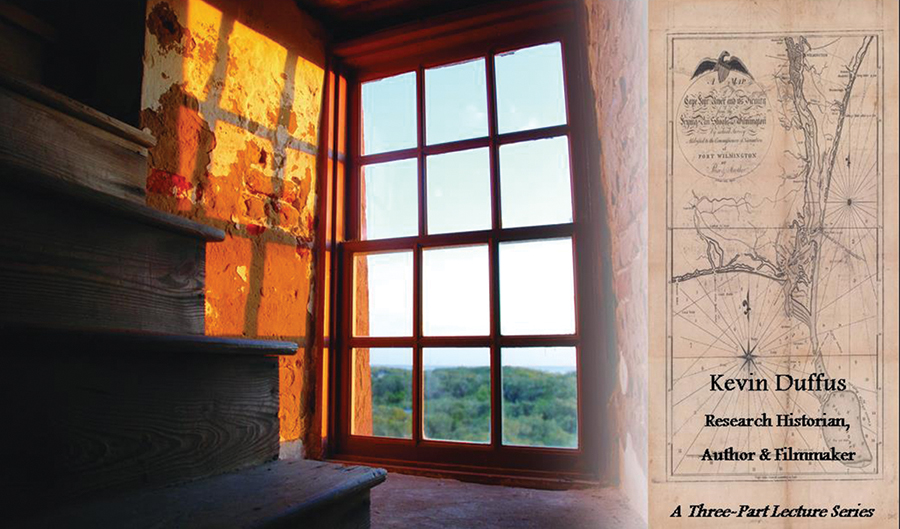
Historian Kevin Duffus begins a three-part lecture series on the Cape Fear and 500 years of American history at 2 p.m. on Sunday, Jan. 19, at the Weymouth Center for the Arts and Humanities, 555 E. Connecticut Ave., Southern Pines. For additional information call (910) 692-6261 or visit www.weymouthcenter.org. Tickets are available at www.ticketmesandhills.com.

A Day at the Opera

The Sunrise Theater’s Met Opera series continues on Saturday, Jan. 11, at 1 p.m., with Wozzeck, Alban Berg’s 20th century shocker staring baritone Peter Mattei in the title role. Groundbreaking visual artist and director William Kentridge unveils a bold new staging set in an apocalyptic wasteland. For information call (910) 692-3611 or visit www.sunrisetheater.com.

Get Well

Learn about Kombucha tea, CBD and essential oils at a holistic wellness expo running from 10 a.m. to 2 p.m. at The Pilot office, 145 W. Pennsylvania Ave., Southern Pines. Holistic health experts will exhibit and be available to answer questions. For more information contact mollie@firstflightagency.com. Tickets can be purchased at www.ticketmesandhills.com.

The Rooster’s Wife

Sunday, Jan. 5: The Gibson Brothers. The best brother duo in bluegrass makes its annual appearance with shows at 12:46 p.m. and 6:46 p.m. at the Poplar Knight Spot. Cost: $35.

Sunday, Jan. 12: The Kennedys with special guest, Grammy-winner Jon Carroll. Old friends and collaborators from the D.C. area meet at musical crossroads in Aberdeen. The Kennedys, Pete and Maura, have shared many stages, tour buses and studios with Carroll over the years, and they’re excited to catch up at The Rooster’s Wife. Cost: $20.

Friday, Jan. 17: An Evening with Chris Smither. Honing a synthesis of folk and blues for 50 years, Smither is truly an American original. Rolling Stone and The New York Times agree that Smither continues to be a profound songwriter, a blistering guitarist, and intense performer as he draws deeply from the blues, American folk music, modern poets and humanist philosophers. Cost: $30.

Sunday, Jan. 19: Tire Fire, Stoll Vaughn. Kentucky singer/songwriter Vaughn opens the show for this newgrass-jam-funk-groovemachine-headbangin’-electrified-party-band! Cost: $15.

Sunday, Jan. 26: Cliff Eberhardt with special guest Louise Mosrie. Eberhardt knew by the age of 7 that he was going to be a singer and songwriter. Living close to the Main Point, one of the best folk clubs on the East Coast, he cut his teeth listening to the likes of James Taylor, Joni Mitchell, Bruce Springsteen, Howlin’ Wolf, Muddy Waters, Bonnie Raitt and Mississippi John Hurt. At the same time, he studied great pop songwriters like Cole Porter, the Gershwins, and Rodgers and Hart, all of which explains his penchant for great melodies and clever lyrical twists. He’ll be joined by Louise Mosrie. Cost: $20.

Thursday, Jan. 30: DamnTall Buildings. Whether live or on record, the band radiates the energy of a ragtag crew of music students playing bluegrass on the street. Anchoring that energy is their instrumental chops, their strong songwriting, and their varied influences that stretch beyond bluegrass. Sharing lead vocals, instrumental solos and high-spirited harmony, DamnTall Buildings is more than the sum of its parts. Cost: $15.

Unless otherwise noted, doors open at 6 p.m. and music begins at 6:46 at the Poplar Knight Spot, 114 Knight St., Aberdeen. Prices above are for members. Annual memberships are $5 and available online or at the door. For more information call (910) 944-7502 or visit www.theroosterswife.org or ticketmesandhills.com.

Southwords

Four-Alarm Coffee

Breakfast with fire and rescue

By Beth MacDonald

I’d really like to be one of those calm, put-together people when a crisis strikes, someone who’s graceful and elegant. Someone who can keep their wits about them when everyone else is losing theirs. My husband, Mason, somehow pulls it off. I am more like Kevin from Home Alone, slapping my face and screaming. Catastrophe never seems to have the decency to strike after I’ve gotten dressed and applied fresh makeup.

Generally speaking, I wake up early, drink my coffee on my back porch in my pajamas and admire my garden. My hair looks Einstein-crazy and I’ve got the previous night’s makeup smudged on my face. Entertaining the Fire and Rescue Squad is not part of my normal routine.

One morning, coffee mug in hand, my dog was barking at what I naturally assumed was the usual — nothing.

“Shhh! Stop. Stop. Don’t bark. There are only deer out there.”

“Bark. Bark. Barkbarkbark.”

I rolled my eyes. I needed to engage the two useful brain cells that had awakened. I looked toward our garage and saw plumes of smoke rising above two trucks parked on the side of the detached building. I ran over, saw flames a few inches from the vehicles, rushed inside to wake Mason, and called 911.

Exactly two breathless seconds into the call, I wished I hadn’t skipped Pilates for, let’s say, the last month. Between wheezing gasps stating my name and address, I tried to express the potential urgency of the fire. I had to repeat myself three times. The 911 operator couldn’t understand me. I sounded like Darth Vader trying to make an emergency call that the Death Star was about to blow up. Heaving, hunched over, I was finally able to get out the basic details.

Mason calmly got out of bed, went directly to the source of the problem, took a shovel, and began to put the fire out at its base. I supervised. “Maybe you should get away from the gas tanks. They’re exactly six inches from the flames,” I said. He ignored me. He had on matching sweats, sneakers, his hair looked combed, and he was easily extinguishing a potential disaster. I looked like Garth from Wayne’s World.

I was still trying to catch my breath when the firetruck pulled up. I looked down at myself, and bolted inside (they probably thought I was in search of my oxygen tank). I tried to put my hair in a ponytail so I looked somewhat presentable, but my low pony only made me look like a young man in Colonial America eager to start his woodworking apprenticeship.

I went back outside. Vanity is useless when you’re at the mercy of others. Why was I even trying? The fire marshal was now on the scene and looking directly at our chimney, asking if we knew anyone who would have put hot ashes in the pine needles. Wait, what?

I looked at Mason, my eyes bulging. “YOU did this?”

“Yeah, I’m the dummy.” He said it so matter of fact, without shame.

“You took the ashes out of the galvanized bucket and put them IN the pine needles?”

“Yeah, uh huh, that happened.” He stood there, nodding, arms crossed, shoulders shrugging.

I put my hoodie over my head and pulled the strings shut. I slowly started backing away toward my neighbor’s house like I lived there and was just an innocent bystander. My neighbor was taking pictures of the firetrucks in front of my house so I tried to hide in the bushes instead.

Mason thanked everyone that came by to put the fire out. The town’s fire and rescue team was accommodating and kind, even though I knew we’d be the topic of a social media, public service announcement later. I could see it now, “Smokey Says Don’t Be a Moron.” I’m sure they wouldn’t use the word “moron,” they are much more professional than that. My internal monologue is not. Sometimes I think our lives serve as a living, breathing Public Service Announcement, a bold kind of volunteerism.

While we were very aware of the danger we put ourselves in, we were even more grateful that we had a capable and amiable Fire and Rescue Squad. Later, Mason dropped off a thank you note with some cookies our daughter made. He apologized and promised not to be left unsupervised again — a promise he’s not capable of keeping considering I have no idea where he is at this very moment, and I can hear the not so distant buzz of power tools.  PS

Beth MacDonald is a Southern Pines suburban misadventurer that likes to make words up. She loves to travel with her family, read everything she can, and shop locally for her socks.

Golftown Journal

The Boss

The wit and wisdom of Claude Harmon

By Lee Pace

Every morning in the late 1970s at Winged Foot Golf Club, Lex Alexander had three jobs: Make the toast, pour the coffee, and sit down with Claude Harmon and review Harmon’s lesson schedule for the day. From there, who knows?

Alexander, the young assistant professional, was ready for anything tagging along with the 1948 Masters champion and renowned head pro at the venerable club in Mamaroneck, New York. He would certainly be entertained, educated and regaled with insights and stories from Harmon’s lively career in golf. He’d do some physical labor, e.g., teeing balls up for the older members as Harmon tried to eke out a hair more clubhead release through their impact position. To be Harmon’s right-hand man at one of America’s finest clubs was high cotton for a boy from Charlotte.

“For four years, I had the best job in golf,” Alexander says. “You hung around ‘The Boss’ and listened to him tell stories, you watched him teach, you gave your own lessons and then you played or practiced. You got to play a lot of golf. He wanted you to be a good player. He said, ‘Don’t be going out there and shooting 78.’ He said, ‘You don’t have to answer the phone and sell gloves. I can hire other people to do that.’

“He was such a character. Boy, was he funny.”

Harmon was just 33 years old and working at Winged Foot when he won the Masters, beating Cary Middlecoff by five shots. The club pro business was better suited to Harmon during that era given he would have six children (with sons Butch, Craig, Claude II and Billy following him into the golf business), and there was meager money on the pro tour. So he served more than three decades at Winged Foot with winters spent at Seminole Golf Club in Palm Beach, Florida, and later at Thunderbird Country Club in Palm Springs, California.

Alexander fell into Harmon’s sphere of orbit in 1975 at the suggestion of John Buczek, a fellow Wake Forest University golfer who had worked at Winged Foot, and Davis Love Jr., who’d taught Alexander the game at Charlotte Country Club in the 1960s and was friends with Harmon. Lex played golf at Wake Forest in the early 1970s on teams that featured Lanny Wadkins, Curtis Strange, Jim Simons and Eddie Pearce, among others. He caddied on the PGA Tour for a couple of seasons out of college, then decided to test the golf instruction waters at Love’s suggestion.

Looking back four decades later, Alexander chafes that Harmon didn’t get the recognition and respect that Alexander feels he deserved. Harmon gave lessons to presidents Kennedy, Nixon and Ford, and the Moroccan king, Hassan II. He nurtured an impressive list of young pros like Mike Souchak, Dave Marr, Rod Funseth, Dick Mayer and Jackie Burke, in addition to his own sons.

“I would submit that Claude Harmon was a golfing genius,” says Alexander, who lives in Durham and is a regular at Duke University Golf Club. “Every lesson was awe-inspiring. His eyes were blue with a definite twinkle. With each shot, his eyes would dart from the set-up to the club as it swung back, then he took a mental photograph of the clubface position at the top. He had a keen sense of sound as well and would listen intently for clues when club impacted ball. Then he would pick up the flight of the ball and watch until it fell to the ground. He always said, ‘Lex, watch the ball. The ball doesn’t lie.’”

Harmon was famous for executing and teaching bunker shots and was pictured on the cover of Golf Digest in 1972 saying, “Get Out of Sand With One Hand!” 

“The Boss would do a clinic or an outing of some kind,” Alexander says. “He would say, ‘OK, here’s the deal! I’m going to explain the fundamentals of playing a bunker shot, then I’m going to hit a few, but once I make my first one, we are out of here!’

“I remember there was one night that he made the first shot, and, true to his word, he climbed out of the bunker and bid the crowd farewell.”

Harmon once had Alexander break a branch of about 4 feet in length from a nearby hedge and then swing the branch as if he were swinging a golf club. Harmon watched and turned to his pupil.

“Do you hear that noise?” Harmon asked, then gave the branch to the golfer and implored him to swing the branch and “Let me hear some noise!” Soon enough, the older fellow was cracking pure 5-iron shots.

“As we rode back to the clubhouse, the Boss said to me, ‘I hope you learned something here this morning because you just witnessed a miracle,’” Alexander says.

On more than one occasion Alexander can remember Harmon taking umbrage when a member told him he was flying to Florida and taking a lesson from Bob Toski, another prominent teacher of the era. After one such trip, Harmon queried the man about his session with Toski.

“What did Mr. Toski teach you?” Claude asked.

“He strengthened my left-hand grip,” the member answered.

Harmon didn’t flinch. “Did he teach you how to chip out of the woods?”

Harmon thumbed his nose at much of the convention in the golf instruction business. Among his pet peeves were articles and advice telling golfers to “Take it back low and slow” or “You need to slow your swing down.” He also took no truck in instructors who couldn’t play a lick themselves.

“The Boss used to say, ‘Teachers who never had any success playing, why would you listen to them? If they knew what they were talking about, they would make themselves a good player,’” Alexander says.

The rotund Harmon loved to eat and was at his best holding court at the dinner table with a cocktail and big piece of meat. Alexander laughs at a standard line when Harmon perused the menu in a new restaurant.

“Let’s get one thing straight,” he would tell the waiter. “I don’t want anything swimming or flying. Four legs on the ground for me.”

Harmon loved pork chops and eggs for breakfast and hated turkey at Thanksgiving. “If those Pilgrims had a taste of a nice rib eye, we wouldn’t have to eat this dry turkey every Thanksgiving,” Harmon said every November.

Overweight and ridden with high cholesterol, Harmon spent time in a cardiac program at a Houston clinic near where son Dickie lived and worked at River Oaks Country Club. Miserable at being starved and fed healthy food, Harmon one day paid a window washer $100 to bring him a meatball sub.

“It took him two hours to remove all the evidence,” Alexander says. “He had sauce all over his face and gown. He told the guy, ‘I don’t know where you’re washing windows tomorrow, but there is another $100 where that came from!’”

Harmon didn’t suffer fools well, and one of Alexander’s favorite stories involves a member at River Oaks who was struggling with his bunker play and came to Dick Harmon for help. Dick hit a wall in helping the guy and brought his dad in for a consultation. The Boss worked with the man for half an hour, then told him to adjust his hands on the club. 

“Pro, you want me to change my grip?” the man exclaimed. “I just won a toon-a-mint in Abilene! I can’t change my grip.”

The Boss said, “Dickie, what’s the soup in the grill room today? I’m all done!”

Alexander left the golf business when Harmon exited Winged Foot in 1979, and he his wife, Ann, moved to Durham, where they opened a health food store and later sold it to a burgeoning young company out of Austin, Texas, called Whole Foods. He stayed on as a consultant for many years with the flexibility to pursue interests in classical music, art, wine, gourmet cooking and playing golf with the guys at Duke and his summer club in the mountains, Blowing Rock Country Club.

The guys in Lex Alexander’s gang have had a steady diet of Claude Harmon stories for many years.  PS

Longtime PineStraw golf columnist Lee Pace remembers Lex Alexander’s rhythmic and flowing golf swing from covering the Durham Amateur in the early 1980s for the Durham Morning Herald.