In the Spirit

In the Spirit

Take It Outside

Patio cocktails that’ll make you social

By Tony Cross

There’s nothing quite like springtime in the Carolinas. Minus the pollen, I love everything Mother Nature has to offer this time of the year: the longer days, the warmer mornings and the cozy evenings. I even love the bees dancing from flower to flower. But I especially love that it’s patio cocktail weather. Not too cold, not too hot. . . just right. And with that, I’ll get right to it. Here are a couple of cocktails worthy of sharing on any patio — and one if you’re poolside, too.


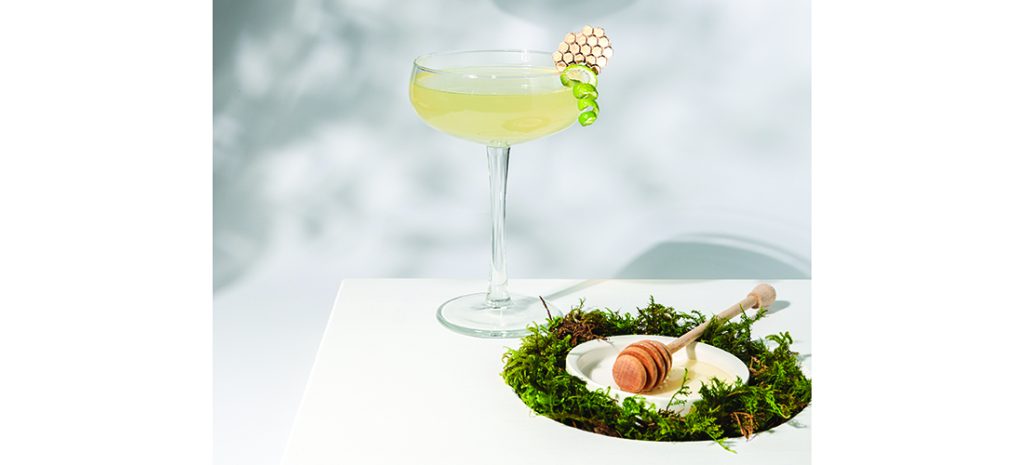
Bee’s Knees

Speaking of pollen, this three-ingredient cocktail is perfect for shaking up and sipping outside, while the worker bees do their thing. Though I’ve seen the drink attributed to a Frank Meier, who worked in Paris at the Ritz Hotel in 1921, and also to Margaret Tobin Brown, “Molly Brown,” in an issue of the 1929 Brooklyn Standard, the exact origin of the Bee’s Knees is unknown. It was probably created during Prohibition. The lingo in the States during that time frame had “the bee’s knees” right in there with “the cat’s pajamas.” More than likely, the honey was added to bathtub gin to mask the smell and soften the taste. But who cares who created this classic? It’s easy to make and incredibly balanced. Here’s how you do it.

2 ounces gin

3/4 ounce lemon juice

1/2 ounce honey syrup*

Lemon twist for garnish (optional)

Combine all ingredients in a cocktail shaking vessel, add ice, and shake hard for 10-15 seconds. Strain into a chilled cocktail coupe.

*Honey syrup: Combine 2 1/2 parts honey (you’re not doing it right if it’s not local) to 1 part hot water and mix until honey is dissolved. Once cooled, pour into a glass container, seal tight and refrigerate.


Colletti Royale

This spin on a margarita adds blood orange juice and rosé Champagne. How could you pass on that? It was created by bartender Julie Reiner at her bar, Clover Club, in New York City in 2013 for Valentine’s Day. Though I could drink this any day of the year, it tastes especially good outside during the month of May.

1 1/2 ounces reposado tequila

1/2 ounce Cointreau

1/2 ounce St. Germaine Elderflower liqueur

1/2 ounce blood orange juice

1/2 ounce lime juice

2 dashes Angostura Orange bitters

3 ounces rosé Champagne

Combine tequila, Cointreau, St. Germaine, juices and bitters into a shaker with ice and shake until vessel is chilled. Strain into a wine glass that’s filled with ice. Top with rosé Champagne, and garnish with a blood orange wheel.

A few notes: It’s hard to find blood oranges, especially during the warmer months. If you’re in a bind, you can substitute regular orange juice and Solerno Blood Orange liqueur (a fabulous addition to your home bar). Also, rosé Champagne isn’t cheap, so by all means find a less expensive, sparkling rosé that you would drink on its own.

Corona Cocktail

For those of you headed to the beach or pool who can’t take bar tools with you — or just don’t want the hassle — I give you the Corona Cocktail. That’s not an official name or anything. Actually, I don’t think this drink has a name, I’m just calling it that. But stay with me. All you’ll need is a shot glass for your measuring tool. I’m sure you can find it in yourself to let one of those tag along.

1 bottle Corona beer

1 ounce blanco tequila (splurge and make it Don Julio)

2 ounces orange juice

1/2 ounce grenadine

Squeeze of lime

Ready? Drink the Corona until the beer is level with the top of the label. Add tequila, orange juice and grenadine. Squeeze the lime into the bottle and pat yourself on the back: You’re officially a card-carrying mixologist. If you’re going to be one, however, you cannot, should not, and will not use store-bought grenadine — unless it’s an emergency and the ingredients are quality. Small Hands Foods, Liber & Co. and Jack Rudy are a few companies that make great grenadine. Better yet, save your money and make it at home. Equal parts turbinado sugar with POM pomegranate juice over medium heat until sugar is dissolved. Voilà! Now get out there and be social.  PS

Tony Cross is a bartender (well, ex-bartender) who runs cocktail catering company Reverie Cocktails in Southern Pines.

Golftown Journal

Golftown Journal

Ten Spot

Adding to the Pinehurst allure

By Lee Pace

Tom Doak was about 10 years old when he started taking family vacations and tagging along on his father’s business trips from their home in Stamford, Connecticut, to eminent golf destinations like Pebble Beach, Cypress Point, Harbour Town and Pinehurst. He had learned to play on a local municipal course named Sterling Farms, and it didn’t take much for the golf bug to bite. And there was a nascent sense that designing golf holes might be a cool way to spend a life.

“When I was a kid, all I wanted to do was to go outside and play,” says Doak, now 62. “When I discovered golf, I was amazed that such a large parcel of land would be devoted to a game. It’s a safe space where it’s OK to be excited about a good shot, to curse a bad one, to laugh at your friends, and to revel in the beauty of nature.”

One of his father’s business associates gave him a copy of the World Atlas of Golf, an early 1970s tome with text and images of courses from California to Scotland, Florida to Australia. “I pretty much memorized the book,” he says.

On a visit to Hilton Head, Doak picked up a small hole-by-hole guide to the Harbour Town Golf Links, which had just opened a few years earlier and was the toast of the PGA Tour and the golf world for the way Pete Dye routed the holes through the Spanish oaks and around the fingers of Calibogue Sound. The hole descriptions were crafted by Charles Price, the noted golf historian who was living in Hilton Head at the time, and was friends with Dye and island developer Charles Fraser.

“It had a diagram of every hole and a description of how to play it, just two or three sentences, very simple, something a 10-year-old could understand perfectly,” Doak says. “It hit me — this is why golf holes are built a certain way. I saw all these great golf courses at a very early age, and I thought, ‘They are all great, but they are totally different.’ I got a great understanding early on that there’s not a simple answer to why a golf course is great.”

He’s been chasing those answers ever since.

Doak pursued a degree in landscape architecture at Cornell University, graduating in 1982 and spending a year in the United Kingdom visiting more than 170 golf courses and caddying for two months at St. Andrews. He landed a job on Dye’s construction crew and helped build Long Cove Club on Hilton Head, then spent six years building courses for Dye while moonlighting as a writer, establishing a niche with Golf magazine as its golf course architecture chief. In the late 1980s, he began compiling short critiques of the hundreds of courses he’d played and seen and giving each a numerical rating of one through 10. The musings were first intended just for a network of friends but evolved into his 1996 book, The Confidential Guide to Golf Courses.

Pinehurst No. 2 was featured in that book as one of 31 courses designated as “The Gourmet’s Choice,” certainly with a 10 ranking, and Doak lauded the layout and the Donald Ross-designed green complexes. “Unquestionably his masterpiece, and a certifiable work of genius,” Doak wrote.

After the 2005 U.S. Open at Pinehurst, sometime around the 2008 U.S. Amateur held on No. 2, Doak was traveling through North Carolina with an intern on his now-established Renaissance Golf Design firm. They stopped in Pinehurst, and he walked the golf course again.

“I first saw No. 2 in the early 1970s,” Doak remembers. “I was 10 or 12 and was visiting with my parents. I’ve seen it at various times over 40 years. It’s always been one of my favorite golf courses. What made it cool was a bunch of little stuff, little ridges, touches of wire grass here and there. The strategy of the fairways stood out. There used to be places on the golf course where the fairway would widen out behind a bunker and you’d try to get way over in the left corner of the fairway to get at a pin on the right side of the green.

“On that last trip, it seemed like all of that had gone away. They were narrowing it up for major championships and getting the grass to grow nice and thick. All the texture and angles were gone. That’s what made the golf course — all the subtleties. I said that if I were to rate it again, I’d give it a seven or eight — but not a 10.”

He put his opinions out for the world to see on the message board of GolfClubAtlas.com. Among the comments he made was that No. 2 looked “like an aged relative with dementia. It was sad.”

Tom Pashley, at the time the marketing director for Pinehurst before ascending to the CEO position in 2014, saw the comment and printed out the entire thread of the message board conversation and passed it along to Don Padgett II, the president and CEO of the resort from 2004-14. Doak’s opinions were among a handful of observations that marinated in Padgett’s mind and led to the club hiring Bill Coore and Ben Crenshaw in the fall of 2009 to strip the course of its monochromatic green, and restore the textures and haphazard features and boundaries of the holes as they existed when Ross arrived at his final routing in 1935.

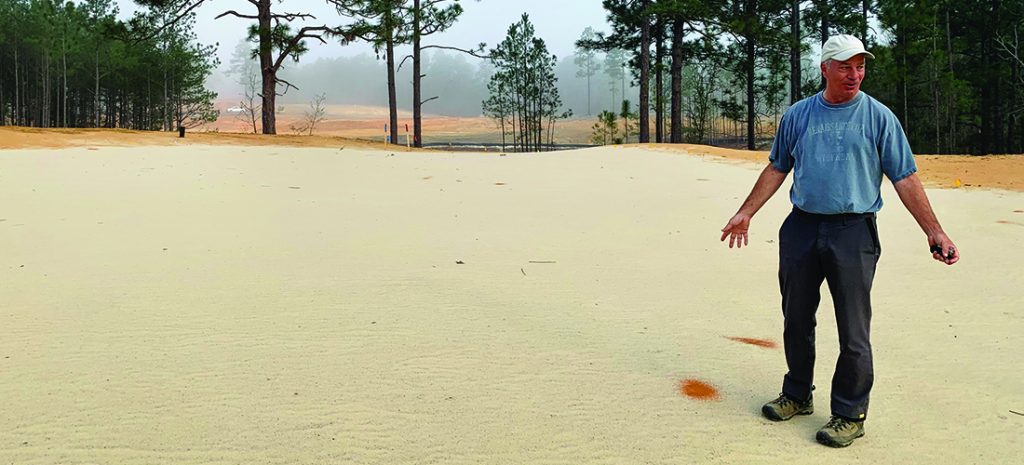
On this Sunday morning Doak smiles over breakfast at the Track Restaurant in Pinehurst, just minutes before driving 2 miles south to the site of the No. 10 course he’s building for Pinehurst on property that once housed the Dan Maples-designed Pit Golf Links. 

“I didn’t expect them to listen to me, and I know that’s not the best way to get the job to help them fix it,” he says. “But it was a great golf course and was not going in the right direction, and I just said something. Fortunately, Bill and Ben said pretty much the same thing, just much more subtly.”

In the decade since, the design operations of Doak and Coore & Crenshaw have each thrived as the golf marketplace has embraced their respective styles of hands-on attention and their preference to working on rugged, sandy landscapes, where ample drainage allows a limitless palette of design features. While working on the No. 2 restoration in 2010-11, Coore routed a course for Pinehurst that was going to be Pinehurst No. 9 — this before the resort bought the former Pinehurst National course in 2012 and made it No. 9. Now in the post-COVID glow of the golf industry explosion in general and the robust demand among members and the traveling public for Pinehurst’s existing nine courses, Pinehurst owner Robert Dedman Jr. and Pashley believed in 2022 it was time to pull the trigger on the new course.

Coore and Crenshaw was booked several years out but Doak had a hole in his schedule that would allow him to move construction personnel to Pinehurst in late 2022 and through the fall of 2023 to build a new course that could open in time for the 2024 U.S. Open set for Pinehurst. Now the little kid who was smitten with the look of Pinehurst No. 2 in the early 1970s before it got greened-over is leaving his mark in the Sandhills, positioning his course among some 40 others he’s designed, including the standouts at Pacific Dunes, Cape Kidnappers, Barnbougle Dunes, Ballyneal and Streamsong. 

“We’ve got a really cool piece of land,” Doak says as he navigates his truck through the sand and rough-cut passages of the pine forests and the stone quarry that sat there before a golf course was first built in the 1980s. On this morning, crews are just days away from beginning to sod some of the early fairways.

“This ground has more variety and a different feeling to it than any of the other courses at the resort,” Doak says. “There is a lot going on on this land. The course will start gentle, then it gets more dramatic at the quarry and then reaches the high ground, where we’ve got great long-range views. It’s a big piece of land, and you feel like you have all the pieces of the puzzle. It gives you the opportunity to do something really different.”

Doak is undaunted putting his ideas into the dirt in such close proximity to one of the world’s top courses. He designed Sebonack Golf Club on Long Island in the shadows of two of his favorite courses, The National Golf Links and Shinnecock Hills Golf Club, and built The Renaissance Club next door to Muirfield on the Scottish coast. He ignores the pressure and embraces the inspiration.

On one of his visits to Pinehurst, he stayed in Dornoch Cottage, the former Donald Ross home sitting near the third and fifth greens of No. 2.

“I’d take our guys out early in the morning and look at those greens,” he says. “‘This is what a great green looks like,’ I’d say.”

On this Sunday morning, Doak admits to having experienced a challenging day on Friday with his shapers, trying to get a couple of greens to look just so.

“I said let’s go to No. 2 and see what great greens look like and get back in the game.”  PS

Lee Pace has written over four decades about all of the golf architects at Pinehurst, from Donald Ross to Gil Hanse. Contact him at leepace7@gmail.com and follow him on Instagram at @leepaceunc.

The Omnivorous Reader

The Omnivorous Reader

The Great Escape

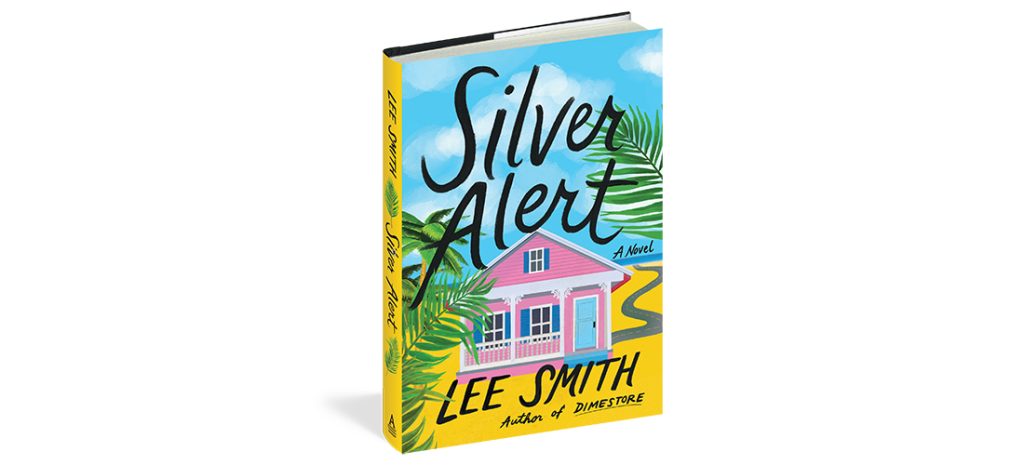
Silver Alert is a bewitching joyride

By Anne Blythe

Lee Smith, a treasure of the North Carolina literary world, takes you on an unusual journey in her newest novel, Silver Alert. She’s predictably funny in her typically marvelous, unpredictable way. Her characters are beguilingly quirky. Yet amid all the humor and occasional madness in this tale about an octogenarian’s “one last joyride,” Smith plunges her readers into the depths of tough topics such as aging, sex trafficking, emotional abuse, poverty and wealth.

There are two protagonists. One is Herb Atlas, a curmudgeonly but ever so lovable retiree on his third marriage who we meet in his lovely — and very pink — Key West home. In his golden years now, Herb is perpetually mining for the gold he really didn’t know he had in his youth as he does his best to care for his once lively, artistic, adventurous and beautiful wife, Susan. He longs for the fancy and fast cars of his earlier years, alluring courtships and an escape from the dementia that has relegated Susan to a rattan chair by the bay window, where she remains lost in her own world.

The other central character, Dee Dee, or Renee, or whatever name the victimized but optimistic woman from Appalachia decides to use, is a young pedicurist fleeing hard-knock days. She is whip-smart, resourceful and endearing. Her parents died when she was a child. She bounced from household-to-household, man-to-man, lives in a bread-shaped trailer with a pink roof and fends for herself in a world in which those she encountered rarely had her best interest at heart.

Dee Dee is running from her past with hopes of a brighter future. Herb wants little to do with his future and yearns for the past. Their paths converge in Key West, a place with celebrated sunsets and a seize-the-day vibe.

Key West is a character in the novel, too. Smith takes her readers down Duval Street and its offshoots, into shops, cafes, Laundromats, and the nooks and crannies where people come to remake themselves, start anew or sometimes disappear.

Herb is in his home at 108 Washington Street, “a primo address,” as Smith describes it, wearing red-and-black plaid pajama pants, lime green crocs and a Hawaiian shirt covering his considerable gut, when he opens the door, and his life, to Dee Dee.

Using Renee, instead of her real name, Dee Dee has come to give Susan a pedicure. “She looks like a kid, with those wide brown eyes beneath the blond bangs, her high, shiny ponytail swinging as she steps forward in her white, white tennis shoes,” Herb thinks to himself. He gives her an earful as he walks her back to his wife’s quarters. Susan’s daughter, Maribeth, “the hippy one,” as Herb calls her, and her partner Pat DeVine, “the bossy one,” who arranged the appointment, have come down to help care for his wife.

Herb is unenthusiastic. “I never asked them, you understand. I don’t need them, this is a classy operation. But this Pat, you can’t tell her no, you can’t tell her nothing.”

Dee Dee, dressed in jeans, a pink tunic and carrying a big bag of nail polishes, clippers and salon tools, is not just a pedicurist, it turns out. She has a knack for dealing with Susan. The “crazy whisperer,” as Herb dubs her, can make his Susan laugh, smile and even seem happy with colorful markers, a tablet and easel from the Walmart children’s section. For hours at a time, Susan sits in the garden in front of her easel, using only one color on each sheet of paper, drawing “crazy art.”

The makeshift art corner delights Herb as he tries to ignore the signs of aging thrust at him — the living wills, the health care power of attorney, confounding medical forms and that humiliating clock he had to draw for the nurse, showing the hands set at 7:15, to assess his mental acuity. Then there’s his constant urge to pee — “Old age is all about urine, who knew?” Smith writes.

Smith takes on some of the difficult topics of aging as she introduces her readers to the cast of adult children in Susan and Herb’s world. She shows the push and pull, and the sometimes painful juxtaposition, as children take on the difficult roles of being parents for their parents.

Smith craftily explores the wealth dichotomy so prominent in Key West as readers follow Dee Dee, whose hardscrabble beginnings have left her with few nickels to scrape together. Her travels take her from the trailer park where drug trafficking sometimes pays the rent to the affluence of the Atlas house and the “tree house,” where she has a romance with a well-to-do graduate student taking a break from his scripted life to live like a Bohemian and write poetry.

Herb and Dee Dee go about their business for much of the first half of the book at a pace that — like a child chomping at the bit to grow up — is not always as swift as desired.

Then Herb and Susan’s family stages an intervention and they can see their dreams unraveling. As the adult children talk about moving Herb into an assisted living facility in Del Ray with Susan, he fishes keys to his Porsche from his secret hiding place in a shoe and sets off with Dee Dee on a madcap adventure.

Herb’s last joyride is a joy for readers, as well. Even though there are cringing moments as the pair starts out along the streets of Key West, then on the highways north, eventually headed to Disney World, it’s difficult not to cheer them on.

Silver Alert will make you squirm over the wistfulness of aging, but it will leave you with a big smile from getting to know characters who worm their way into your heart.  OH

Anne Blythe has been a reporter in North Carolina for more than three decades. She has covered city halls, higher education, the courts, crime, hurricanes, ice storms, droughts, floods, college sports, health care and many wonderful characters who make this state such an interesting place.

Simple Life

Simple Life

“The Birds of Paradise”

The bad news Birds help a tired journalist find good news

By Jim Dodson

I hear a voice and look up. The face is much older, the voice deeper. But both are so familiar.

“Hey, Coach,” says Peter Gay, giving me what I used to call his sly fastball grin.

I stand up and we hug.

“You grew up, buddy.”

“And you grew old, Coach.”

“Funny how that happens.”

We both laugh.

Forty years ago, Pete and his brothers, Fred and Rodney, and their friend, Alvin, were the invincible infield of an inner-city baseball team I coached for two spring seasons called the Highland Park Orioles. I nicknamed them the Birds of Paradise because most of the players came from a tough inner city neighborhood where, by agreement with their anxious parents and guardians, I dropped them off near a street named Paradise after every practice and game.

Atlanta, in those years, was anything but a paradise. Due to the infamous “Missing and Murdered” crisis that besieged the city between 1979 and 1981, in which 30 Black kids and young adults were abducted and murdered by an unknown person or persons, the city that declared itself “too busy to hate” earned the distinction of being the “Murder Capital of America” for several years running.

Looking back, going out at my editor’s suggestion to write a sweet little feature story about the hopefulness of spring baseball tryouts in my Midtown neighborhood and getting strong-armed by a frantic league director to take on a wild bunch of Orioles whose coach never bothered to show up was one of the most fortunate things that ever happened to me.

In the spring of 1982, I was the senior writer of the Atlanta Journal-Constitution Sunday Magazine, the oldest Sunday magazine in the nation, where Margaret Mitchell worked when she wrote Gone with the Wind. During my six years there, I’d written about everything from unrepentant Klansmen to corrupt politicians, presidential campaigns to repo kings, a constant stream of violence and social mayhem. Upon reaching age 30, I decided that I was rapidly becoming a career burn out case. In a nutshell, I’d had enough of covering the sorrows of my native South.

An early tipping point came while working on a story about Atlanta’s famed medical examiner, Dr. Robert Stivers — reportedly the inspiration for the hit TV show, Quincy — when I actually saw my next-door neighbor, a med student, gunned down in his darkened backyard doorway by an assailant. The young man died as his hysterical girlfriend and I waited for the EMTs and cops to arrive. The cops took their own sweet time, shrugging it off as just another drug deal gone sideways. I followed the ambulance hauling my neighbor’s body downtown to the ME’s office to await his autopsy. Talk about art imitating life’s worst moments.

My editor, a charming true-blue Atlantan named Andy Sparks, who’d been on the magazine since the days of Margaret Mitchell, had spotted my brewing crisis and suggested I write about “lighter” subjects for a time. So I went over to the rutted ball field with pen and pad and not a lot of hope in hand.

Our first practice was chaos. The team horsed around and barely paid attention as I placed them into tentative playing positions. Somehow, I managed to get the four best players into key spots. Pete and Alvin would rotate between pitching and playing third; Fred at first base, and Rodney catching.

On the way home, I stopped at a popular neighborhood joint called Woody’s just two blocks from the ball field, foolishly thinking that if I bought them a milkshake and got to know them better, the four best players on the team might help me whip the Birds into shape. Instead, they hooted and hollered and made such a rude ruckus that the owners tossed us out and warned us not to come back unless we could learn to behave.

“I remember how you gave us a lecture about being gentlemen in public places,” Pete says as we sit together at Woody’s 40 years later. The place is now owned by a Black couple. Its milkshakes and steak-and-cheese sandwiches are better than ever.

Peter Gay is 53 today, a hard-working father of three grown children, and a popular volunteer football coach and recruiter for Booker T. Washington High in the center city. He’s dressed in the bright blue colors of the Washington Bulldogs.

Two years ago, he called me out of the Bulldog blue. 

“I remembered the story you wrote for the Reader’s Digest about us,” he explained on the phone that afternoon. “And I remembered that you left Atlanta to write books. That’s how I found you on the internet.”

“Tell me,” I said. “Is Woody’s still there?”

A day later, Pete sent me a photo of himself in front of the Woody’s sign. We made a plan to meet there when I came to Atlanta for my latest book research.

That first season, the Birds of Paradise never lost a game. Or if we did, I don’t recall it. We often won by football scores. Pete had a lethal fast ball. Alvin’s curve was unhittable. Rodney was an awesome catcher and Fred played first base like a pro. Even better, the Birds calmed down and became true gentlemen on and off the field, though I spent a small fortune on milkshakes once the other members of the team learned about my gambit and got in on the post-game treat.

“You kind of bribed us to behave with milkshakes,” says Coach Pete Gay today. “But I get that now. It really worked.”

Because of the Birds, I stayed for one more spring in Atlanta. In year two we went undefeated. A coach from the all-White northern suburbs even proposed a “Metro” championship game at his team’s immaculate facility north of the city. We set a date for the game, and I went out and purchased new orange jerseys with my own money. A few days before the match-up, however, my opposing coach called back to say that some of his parents were concerned that my kids might feel “intimidated about playing in such a nice facility.”

I assured him the Birds wouldn’t be intimidated. We both knew the meaning of his code words.

“Well,” he said uneasily, “maybe . . . next year.”

There was no next year.

After the season, the owners of Woody’s threw us a party and I left Atlanta for Vermont, where I learned to fly-fish, knocked the rust off my golf game and found a whole new career — and happiness — writing about people and subjects that enrich life. 

I also realized that the Birds of Paradise gave me a gift those final two years — a healing glimpse of what real happiness is like.

As another spring dawns, I’ve seen Pete and Fred several times and even attended the beautiful wedding of Pete’s daughter, Petera, last summer. Very soon, on my next trip to Atlanta, I’m planning to take my entire infield to a very nice, grown-up dinner, with or without milkshakes. OH

Jim Dodson is the founding editor of O.Henry.

Southwords

Southwords

A Happy Discovery

The Google machine reveals all

By Tony Rothwell

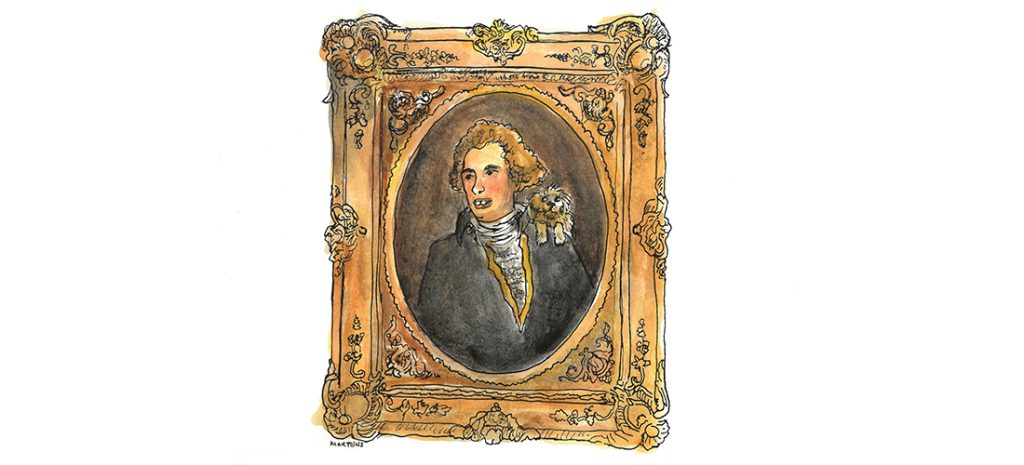
Our son Max, down from Washington, D.C., for a visit, pointed to a large portrait in a gorgeous gold frame hanging near the fireplace and asked, “Who is that anyway?” I said we had no idea, that we just liked it when we saw it in an antique show years ago and bought it. When people ask, we usually say it’s the Fifth Earl of Rothwell. With this he took out his phone, went to Google and took a picture.

“Looks like it’s William Pitt the Younger,” he said, in the blink of a facial recognition app.

“You must be joking,” I said. “Let me have a look.”

Sure enough, there was “our” portrait with the William Pitt caption, going on to detail his years, 1759-1806. The portrait was practically identical to one by George Romney, who painted many contemporary notables.

We were amazed to suddenly find ourselves in the presence of one of Britain’s most famous prime ministers. Comparing the two pictures, the facial expression of quiet confidence, the hair, the stock at the neck, the high-collared coat, yellow waistcoat and buttons were all virtually identical, but the Romney was a little more finished and showed more of the body.

This, however, did not lessen our excitement. William Pitt the Younger was so-called because his father was also named William Pitt and had been prime minister in the 1760s. The Younger became prime minister of Great Britain at the age of 24, the youngest ever to do so, before or since.

He was an outstanding administrator and surrounded himself with competent ministers. In all, he held the position for 18 years (38 percent of his life!), during which time he reformed the Tory Party, dealt with the war against Napoleon and the French, re-established trade with America after independence, and reduced the national debt. Although somewhat colorless, he was seen as a minister who was determined to cut out corruption in politics and was nicknamed “Honest Billy” by the general public. He worked extremely hard but found solace in port wine. Indeed, he became known as “a three bottle man,” but the combination of port and hard work did little for his health, and he died in office at the age of 47.

The irony of finding out who was in the painting was that for years it had been hanging over our large book of 18th century prints by the famous English caricaturist James Gillray, over 80 of which featured the self-same William Pitt. We didn’t tie them together, probably because Romney was kind to his sitter when he painted him. Pitt had a long, sharp nose which, while blunted in the portrait, was a signature feature exaggerated — as caricaturists are wont to do — in Gillray’s prints.

Was our portrait a trial run by Romney or a copy by another artist done in his style? We may never know. But the painting, still hovering over Gillray, has taken on a whole new meaning. So much for the Fifth Earl of Rothwell. Alas, we hardly knew ye.  PS

Tony Rothwell, a Brit, moved to Pinehurst in 2017, exchanging the mind-numbing traffic of Washington, D.C., for better weather and the vagaries of golf. He writes short stories, collects caricatures, sings in the Moore County Choral Society, and with his wife, Camilla, enjoys their many friends in the Sandhills.

In the Spirit

In the Spirit

Tips and Tricks

Arsenal for your cocktail Rolodex

By Tony Cross

I love to learn new tricks when it comes to making drinks. Whether it’s from a cocktail book or a YouTube post by a bartender, some of these tips have become mainstays in how I construct a cocktail. Though I could write a year’s worth of columns on everything from “washing spirits” to “how to make your own bitters,” like Sesame Street, I’ll begin with the letter S —  from syrups to saline — and finish at the “bitter” end. Relatively easy to make, these tips go a long way if you love making cocktails at home.

Rice Water Simple Syrup

Before you say “Eww, gross!” hear me out on this one. I was intrigued when I first heard about this for two reasons. First, I meal prep every Sunday and make a ton of rice. Second, I love velvety textures in shaken drinks (one of the main reasons I usually make a simple syrup with a 2:1 ratio). If you have any concerns about rice being a flavor in your syrup, don’t fret — any notes from the starch will be masked by the sugar.

To make: Soak your rice in water until cloudy. Measure 1 cup of starchy water and put it in a saucepan while adding 1 cup of sugar. You can use white sugar, you can use turbinado (I use cane) — it doesn’t matter. Let the mixture simmer, or stir quickly until the sugar is completely dissolved. Let cool and bottle. Holds for two weeks.

Super Juice

Super juice will save you money and time. By taking the peels from lemons, limes, oranges or grapefruit, and adding acids, water and just a little bit of juice from the peeled fruit, you’ll be able to multiply your juice margins tenfold. Even better, it’ll last weeks. Say goodbye to daily juicing.

To make lemon super juice: Weigh lemon peels on scale (start off with the peels from 3 lemons). Use the same amount of citric acid by weight (if you have 40 grams lemon peel, use 40 grams citric acid). Multiply the weight of the lemon peels by 16.66 to determine the amount of water. Combine citric acid with peels in a container. Seal, shake to coat peels with acid, and let sit for 2-3 hours. A sludgy/oily substance will fill the bottom of the container. Put everything from the container into a blender and use the water to get out the rest of the oils in the blender. (You can use an immersion blender, if you’d like.) Blend water, oils and peels together. Strain through a nut milk bag or cheesecloth. Juice the peeled citrus, strain it, and add to oleo citrate. Stir, and refrigerate. You’ll notice that lemon will last the longest before tasting any subtleties with the flavor profile. The juice will start to taste a bit metallic and bitter as the weeks go on, but all juices will be great for the first week. Make sure to taste before using/serving.

Salt Solution

This one is a no-brainer. Salt makes food taste better, whether it’s chocolate, soup or fruit. The same applies to cocktails. Try making a daiquiri with a pinch of salt — it’ll make the flavors pop. Or, you can make a simple saline solution. One or two drops will make all the difference.

To make: 20 grams salt mixed with 80 grams of water. That’s it. Put it in a tiny glass dropper bottle and you’re good to go.

Combining Bitters

While I won’t break out the specs on making your own bitters from scratch, I will share a quick and easy tip that I learned from my first Death & Company book way back when. It’s the recipe for their house orange bitters. It wasn’t the first time I’d combined bitters — I previously used Employee’s Only’s recipe for Absinthe bitters — however, the recipe for this orange bitters is much easier. What I love about this simple trick is how you get the sweetness from the Fee Brothers orange bitters, the spices of angostura’s bitters, and the bitterness of Regans. This is a great balance. Try a few dashes in your next old fashioned.

Death & Co.’s House Orange Bitters: Take 100 grams Fee Brothers West Indian orange bitters; 100 grams Angostura orange bitters; 100 grams Regans orange bitters, transfer to an empty glass bottle, seal, and shake. Keep at room temperature; the bitters will hold for one year.  PS

Tony Cross is a bartender (well, ex-bartender) who runs cocktail catering company Reverie Cocktails in Southern Pines.

Tea Leaf Astrologer

Change this heading to match Post Title

Aries

(March 21 – April 19)

Life gives us what we need even if we don’t have the RAM to ask for it. In your case: lessons in patience. While you’ve been through the wringer this year in more ways than one, trust that it’s not been in vain. The big picture begins to clarify this month — you’ll see — and when Jupiter enters your sign on April 22, it may well inspire some monetary gain. Things are looking up. Never mind that you’ve got a spending habit to match your fiery temper.

Tea leaf “fortunes” for the rest of you:

Taurus (April 20 – May 20)

Cash in your chips.

Gemini (May 21 – June 20)

Beware of the Freudian slip.

Cancer (June 21 – July 22)

Open a window.

Leo (July 23 – August 22)

Embrace the liminal space.

Virgo (August 23 – September 22)

Two words: Tupperware upgrade.

Libra (September 23 – October 22)

Keep a light on for grace.

Scorpio (October 23 – November 21)

The silence will tell you everything.

Sagittarius (November 22 – December 21)

Mind where the roots run deep.

Capricorn (December 22 – January 19)

Loosen your grip.

Aquarius (January 20 – February 18)

The tension is palpable.

Pisces (February 19 – March 20)

Consider a digital detox.   PS

Zora Stellanova has been divining with tea leaves since Game of Thrones’ Starbucks cup mishap of 2019. While she’s not exactly a medium, she’s far from average. She lives in the N.C. foothills with her Sphynx cat, Lyla. 

April Bookshelf

April Bookshelf

FICTION

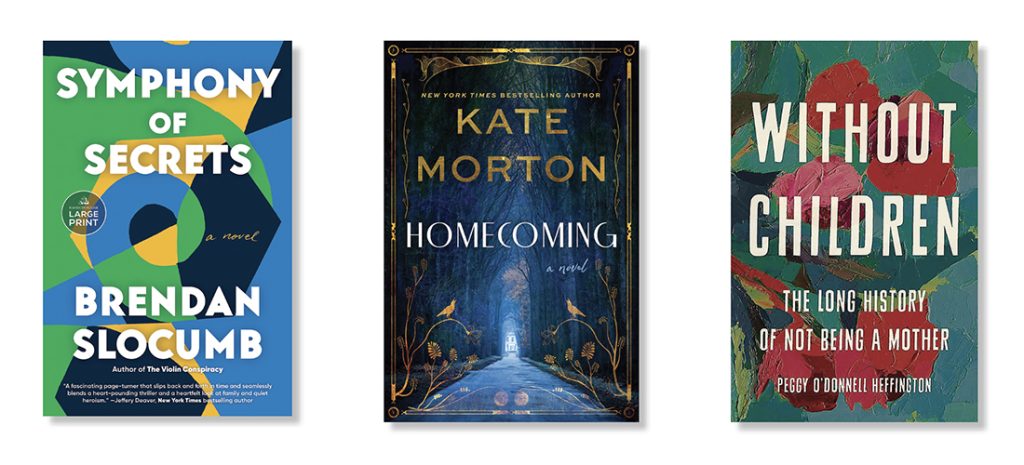
Homecoming, by Kate Morton

The highly anticipated new novel from the New York Times bestselling author of The Clockmaker’s Daughter is a sweeping saga with a thrilling mystery at its heart tracing a shocking crime whose effects echo across continents and generations. On Christmas Eve, 1959, a local delivery man makes a terrible discovery. A police investigation is called and the small town of Tumbeela becomes embroiled in one of the most shocking and perplexing murder cases in the history of South Australia. Sixty years later, Jess is a journalist in search of a story. Having lived and worked in London for almost 20 years, she now finds herself laid off from her full-time job and struggling to make ends meet. A phone call summons her back to Sydney, where her beloved grandmother, Stella, who raised Jess when her mother could not, has suffered a fall and been raced to the hospital. When Jess visits her in the hospital she learns Stella had been distracted in the weeks before her accident, and that she fell on the steps to the attic — the one place Jess was forbidden from playing when she was small. At loose ends in Stella’s house, Jess does some digging of her own. She discovers a true crime book, chronicling the police investigation into a long-buried tragedy: the Turner Family Tragedy of Christmas Eve, 1959. It is only when Jess skims through the book that she finds a shocking connection between her own family and this once-infamous crime — a crime that has never been resolved satisfactorily. For a journalist without a story, a cold case is the best distraction of all.

Symphony of Secrets, by Brendan Slocumb

From the author of The Violin Conspiracy comes a gripping page-turner about a professor who uncovers a shocking secret about the most famous American composer of all time — that his music was stolen from a young Black composer named Josephine Reed. Determined to uncover the truth and right history’s wrongs, Bern Hendricks will stop at nothing to finally give Josephine the recognition she deserves. As one of the world’s preeminent experts on the famed 20th-century composer Frederick Delaney, Hendricks knows everything there is to know about the man behind the music. When Mallory Roberts, a board member of the distinguished Delaney Foundation and a direct descendant of the man himself, asks for Hendrick’s help authenticating a newly discovered piece, he jumps at the chance. With the help of his tech-savvy acquaintance Eboni, Hendricks soon discovers that the truth is far more complicated than history would have them believe. In Manhattan of the 1920s, Josephine Reed is living on the streets and frequenting jazz clubs when she meets the struggling musician Fred Delaney. She’s a natural prodigy who hears beautiful music in the sounds of the world around her. With Josephine as his silent partner, Delaney’s career takes off — but who is the real genius? In the present day, Bern and Eboni begin to uncover clues that indicate Delaney may have had help in composing his most successful work. Armed with more questions than answers they move heaven and earth in a dogged quest to right history’s wrongs.

NONFICTION

Without Children, by Peggy O’Donnell Heffington

In an era of falling births, it’s often said that millennials invented the idea of not having kids. But history is full of women without children: some who chose childless lives, others who wanted children but never had them, and still others — the vast majority, then and now — who fell somewhere in-between. Modern women considering how and if children fit into their lives are products of their political, ecological, and cultural moment. History also tells them that they are not alone. Drawing on deep research and her own experience as a woman without children, Heffington shows that many of the reasons women are not having children today are ones they share with women in the past: a lack of support, their jobs or finances, environmental concerns, infertility, and the desire to live different kinds of lives. Understanding this history — how normal it has always been to not have children, and how hard society has worked to make it seem abnormal — is key, she writes, to rebuilding kinship between mothers and non-mothers, and to building a better world for us all.


CHILDREN’S BOOKS

Hard Boiled Eggs for Breakfast, by Jack Prelutsky

April is poetry month and what better way to celebrate than with some silliness by a poetry master? From tree-sitting cows to antelopes with fans, these fun poems, with illustrations by Ruth Chan, will delight and inspire young poets to create some of their own silliness. (Ages 5-10.)

Peek-A-Boo Haiku, by Danna Smith

This adorable board book is filled with haiku about hidden woodland animals with lift-the-flap illustrations on each page. It’s the perfect way to celebrate poetry month with little ones. (Ages 1-3.)

Twenty Questions, by Mac Barnett

What’s on the other side of the door? Who committed the dastardly deed? What happened here? These and other ponderances are presented in this fun book of questions from the Caldecott Award-winning team of Barnett and Christian Robinson. (Ages 5-adult.)

Slow Down and Be Here Now: More Nature Stories to Make You Stop, Look, and Be Amazed by the Tiniest Things, by Laura Brand

Frog tongues, dandelion puffs, snowflakes — all wonders of the world and all worth an extra minute of time in your day. This charming giftable nature guide/storybook encourages readers to slow down and enjoy all the amazing things in the natural world. (Ages 4-10.)  PS

Compiled by Kimberly Daniels Taws and Angie Tally.