PinePitch

TRUST BUT VERIFY: As our communities deal with the challenges presented by the novel coronavirus, please be aware that events may have been postponed, rescheduled or existed only in our dreams. Check before attending.

Art Here, Art There, Art Everywhere

The Campbell House Galleries’ May exhibition opens at 5 p.m. on Friday, May 7, and runs through May 28, featuring Jugtown Pottery, paintings by Sharon Ferguson, JLK Jewelry, and woodworking by Andrew Ownbey. Campbell House is at 482 E. Connecticut Ave., Southern Pines. For info call (910) 692-2787 or visit www.mooreart.org.

Also on May 7, the Artists League of the Sandhills, 129 Exchange St., Aberdeen, will hold a reception from 5 p.m. to 7 p.m. featuring the work of Kathy Lueck in an exhibition titled “Adventures with a Palette Knife.” The exhibition runs through May 27. For additional information, call (910) 944-3979.

Have Corkscrew, Will Travel

Enjoy wine, light hors d’oeuvres, silent auctions, a wine raffle and jewelry at “Ladies Wine Out” at the Weymouth Center for the Arts & Humanities, 555 East Connecticut Ave., on Thursday, May 6, from 5:30 p.m. to 7:30 p.m. The rain date is May 13. Tickets are $20 for members and $25 for nonmembers and are available at www.ticketmesandhills or by calling (910) 692-6261.

Mother’s Matinee

Celebrate Mother’s Day with a special showing of The Sound of Music at 2 p.m. on Sunday, May 9, at the Sunrise Theater, 250 N.W. Broad St., Southern Pines. Tickets are $10 per person, and masks are required inside the theater. For additional information visit www.sunrisetheater.com or call (910) 692-3611.

Cinema En Plein Air

The Sunrise Theater, 250 N.W. Broad St., in Southern Pines, will be featuring outdoor movies beginning with Mamma Mia! on Friday, May 7, and Saturday May 8, at 8:15 p.m.; and Ghostbusters on Friday, May 21, and Saturday, May 22, at 8:30. Tickets for the movies are $10 per person. In the event of inclement weather, the movies will be screened indoors. For more information call (910) 692-3611 or go to www.sunrisetheater.com.
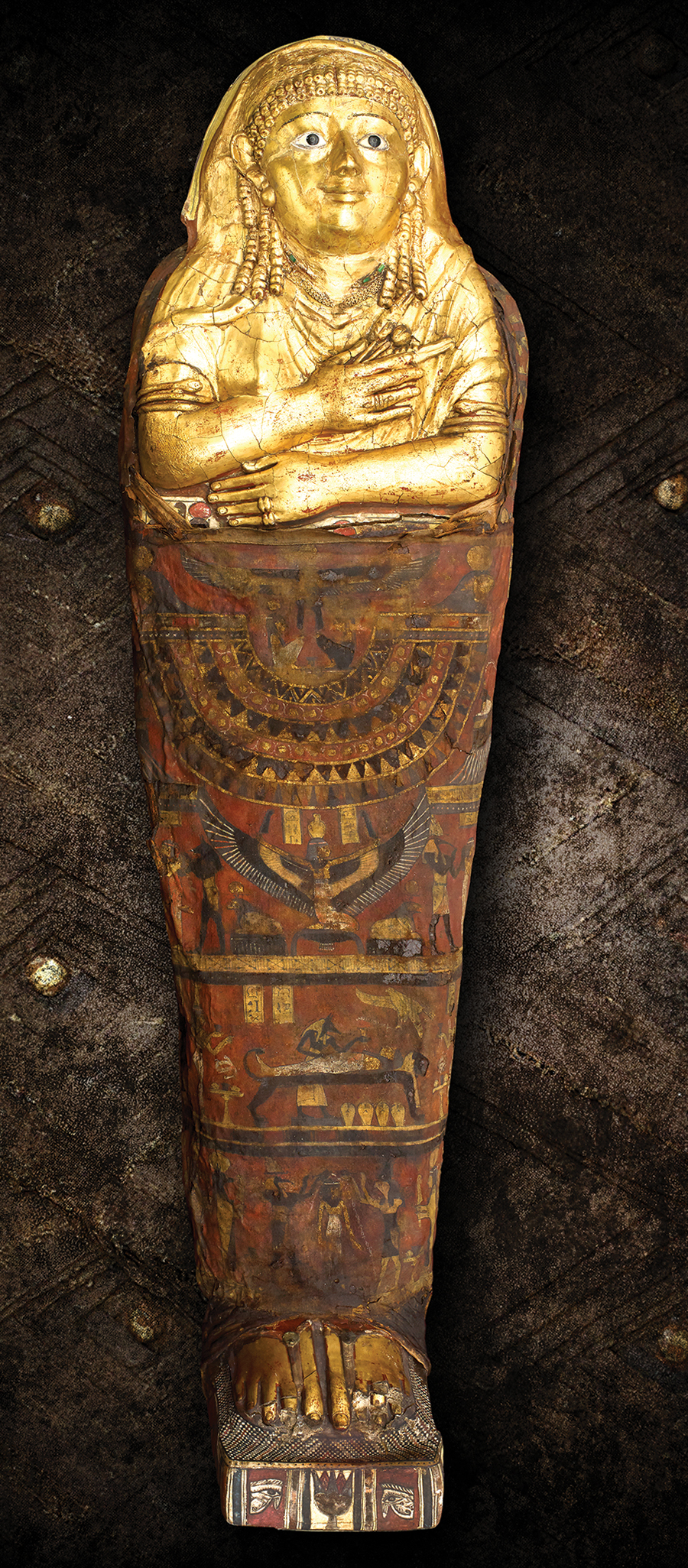
Gilded mummy called Lady Isaious. © 2020 Manchester Museum / Michael Pollard

Mummies Day

What says Mother’s Day more than a visit to the North Carolina Museum of Art’s exhibition of the Golden Mummies of Egypt? In a series of lavishly illustrated sections, the exhibition uses the collections of the Manchester Museum to showcase multicultural Roman Egypt (circa 300 B.C.E. to 200 C.E.) where diverse Egyptian, Roman, and Greek communities and influences were blended. Visitors will learn about the three mummies in the exhibition using interactives to see underneath the wrappings, thanks to digital radiography paired with multidirectional CT scanning. The exhibition runs through July 11. For tickets visit ncartmuseum.org.

Dig This

The Master Gardener Hotline will be back to talk you down off the horticultural ledge beginning Monday, May 3. Questions about lawns, plant care and sustainable gardening are all fair game. The Master Gardeners will be available from 10 a.m. to 12 p.m., Monday through Friday at (910) 947-3188. The program continues through Oct. 31.

Taste of North Carolina

Given Memorial Library and Elliott’s on Linden will team up for another delicious Given to Go on Tuesday, May 18. The menu will be a seasonal spring mix, grilled chicken breast, herb red bliss potato salad and assorted cookies. Pickup is from 5:30 p.m. to 6:30 p.m. at the Given Memorial Library, 150 Cherokee Road, Pinehurst. Tickets for the fundraiser are $22 per meal and sales end on Friday, May 14. Meals can be pre-purchased at the Tufts Archives at (910) 295-3642 or by email at giventufts@gmail.com.

Golftown Journal

Golf on Foot

The delights of having a bag on your shoulder

By Lee Pace

Howard Lee was an administrator in Gov. Jim Hunt’s administration in 1977 when he initiated what would become a walking trail of some 1,200 miles from the North Carolina mountains to the Outer Banks. “To be able to get out here and see the trees and the flowers and to be able to see the animals and the natural areas is just so relaxing and so soothing,” Lee said on the 40th anniversary of the Mountains-to-Sea Trail in 2017.

Lee finds exercise and solace on another trail, too — a golf course.

One April afternoon in 2019, Lee and I were walking the fifth fairway at Old Chatham Golf Club just east of Chapel Hill, with the green complex set amid a hillside resplendent in white and pink azalea bushes at full bloom.

“If you can’t be relaxed looking at this kind of beauty, I don’t know,” said Lee, 84 at the time. “And that’s the beauty of walking, whether it’s a trail or the golf course, you learn so much when you can commune with nature. There’s always something to appreciate, a bird or flower or something in nature.”

Over four hours and 6 miles you come to understand how Lee, the former mayor of Chapel Hill and N.C. state senator, is a poster boy for playing golf the old-fashioned way — on foot.

Slinging the bag over his shoulder after one tee shot: “I enjoy carrying the bag, so I just think as long as someone my age can walk, it would be a sin not to do it.”

Strolling up to another shot: “I’ve been struck by the number of young people who are riders. They just jump in the cart and off they go. I hate to see that.”

And on his surprise at seeing newfangled golf carts equipped with a means to power up a cellphone: “For what good reason would you put a USB port in a golf cart? Isn’t the whole point of golf to get away from your cellphone for a few hours?”

Howard Lee and I sing from the same hymnal — with choruses abounding on the joys of walking the golf course and avoiding, at all costs, planting your bum in an artificial contraption. And I found over the last three years there are many more of our ilk.

Which is why I’m delighted this month with the release of my book Good Walks — Rediscovering the Soul of Golf at 18 Top Carolinas Courses. The coffee-table format volume was published by University of North Carolina Press and is built around essays, photographs and historic artifacts from a blend of private, resort and daily-fee courses around the Carolinas. The goal was to weave the architecture, ambience and culture into an essay about each of the courses, tipping the cap to those already in the choir of the walking golfer and offering a welcoming gesture to those on the outside.

That there is even a hook for a volume like this is a sad commentary on the state of golf in America. Walking golf? What’s the angle? Of course you walk when you play golf. I played Mid Pines in Southern Pines one afternoon in June 2019 with Ran Morrissett, an avowed walker and traditionalist and co-founder of the Golf Club Atlas website built around stories, photos and conversation about golf architecture. We arrived at the golf shop, checked in and were on the way to the first tee when a young attendant approached and offered to put our bags on a cart.

“It’s a walking sport,” Morrissett told him in a pleasant but direct and matter-of-fact tone and never broke stride walking toward the first tee. Later we were striding down the first fairway, enjoying the day. “I get nothing out of riding through corridors of condos or houses. That will not lift my spirit. Walking will.”

I play golf for a myriad of reasons. One is the never-ending challenge and the occasional pat on the head from the golf gods with that sub-80 score. Another is exercise. A third is the meditative quality of walking the ground and embracing nature. Enjoying the companionship of my playing partners is important as well — all the better if that’s split three ways while walking along rather than spending four hours-plus with one guy in a cart. Betting? Lame jokes? Hearing a guy tell some careworn story when it’s his turn to hit? Pounding beverages? Those don’t even register.

One of golf’s earliest appeals was its health-giving benefits, the player walking some 5 to 6 miles over varied terrain, making strength and endurance a key element of the sport. Too often today that component has been lost, with many golfers playing in a default mode of mandatory riding in motorized carts. I remember setting a last-minute round in Pinehurst many years ago, getting a tee time and two others to play. One of them showed up and said he’d invited a fourth, which was fine.

“Might as well fill up the carts,” he said. Apparently, it did not even register that someone would prefer to walk.

The book tells the stories of a handful of top golf experiences across the Carolinas, beginning with the oldest, Palmetto Golf Club in Aiken, S.C, and ending just as the 21st century beckoned and Eagle Point in Wilmington and Old Chatham were christened. Eighteen seemed like a good number for a golf book, right? The front nine clubs are pre-World War II, the so-called “Golden Age” of golf architecture when Donald Ross and Seth Raynor and their contemporaries had neither the handicap of modern environmental restrictions nor the convenience of dynamite and dozers. The back nine begins with the story of Myrtle Beach’s Dunes Club, a course that helped ignite that coastal area’s meteoric golf growth over the second half of the 20th century and continues with many of the upper-echelon clubs that mirrored the Carolina’s sporting and economic evolution into 2000.

The blend of courses leans toward the vintage, as many modern courses are stretched out for real estate purposes and lack a passionate roster of golfers treading on foot. I wanted to canvass all nooks of the Carolinas and weave in the great architects — from Ross to Raynor, from the Joneses (Robert, Trent and Rees) to Pete Dye and Tom Fazio.

I was gratified over the three years I spent writing and editing the book to see more and more clubs relaxing policies on mandatory carts and restrictions on trolleys. Pinehurst, Kiawah and Sea Pines, the venues of three courses featured in the book (No. 2, the Ocean Course and Harbour Town) all allow walking on any course, any time, any mode. Roaring Gap in the North Carolina mountains now allows walkers on weekend mornings. Biltmore Forest in Asheville has always had an outstanding walking culture and now devotes one room in its already cramped clubhouse to trolley storage.

“Mandatory carts is just not the way to do it,” says John Farrell, Sea Pines director of golf. “If you’re physically able, the way to play is to walk. It’s the easy way to roll. Here we’re at sea level, the proximity of greens to tees is good, it’s better socially, and obviously it’s better physically. There are so many benefits to walking I can’t see why you wouldn’t.”

The benefits, indeed:

Converse with everyone in your group, not just your cart mate.

Cool your emotions in private after a bad shot.

Notice every nook and cranny on the course and all the architectural details you miss from the edges.

Feel ravenous after four hours of stout exercise.

I could go on and on. Which I did, actually, in Good Walks.

I’ll leave you with the dedication and an invitation to pick up the book and enjoy the game as those old gnarly Scots did before combustion engines:

“To fellow golfers who’ve cherished the ground underfoot, the clink of clubs on their shoulder, the sun on their face and wind in their hair, the ducks by the lake and hawks in the sky — and to those waiting in the wings.  PS

Lee Pace’s Good Walks is available at bookstores and golf shops across the Carolinas and from uncpress.org/book/9781469662862/good-walks/.

Simple Life

Simple Gifts

The secret to a good life? Less is more

By Jim Dodson

A friend recently wondered why I named this column “Simple Life.”

I joked that it was better than the original name I came up with — “Frankly, My Name Escapes Me.”

In truth, the title is as aspirational as it is functional, a useful reminder that the longer I live, the more I grow to appreciate the value of simplifying my life.

In her recent column, “Simplicity: The Neglected Value,” author and communications coach Bruna Martinuzzi points out that we time-enslaved, stressed-out, overworking humans simply don’t know what’s good for us when it comes to where we place our focus in life.

“We read and hear enough about its benefits in just about every facet of our lives,” she writes, “yet we walk past it, every day, in pursuit of the more complex, complicated, tangled and sometimes puzzling. There is no glitter in simple, not enough buttons to play with. We fear that simple equates with easy, light, too basic — unsophisticated.”

Leonardo da Vinci, in fact, declared simplicity the ultimate form of sophistication. As did the likes of Winston Churchill, Albert Einstein, Walt Whitman, Lao Tzu, Yogi Berra, Marcus Aurelius, Leo Tolstoy and Maya Angelou. Rumi called it the dust that hides the gold.

Whether planning a wedding or a war, simplicity is key to a successful outcome, knowing what’s not essential and eliminating it before things get out of hand.

A year ago, the combination of the pandemic and wedding plans that had grown far more complicated than expected prompted my daughter, Maggie, and her fiancé, Nate, to postpone and rethink how they wished to tie the knot. They’ve since envisioned an intimate gathering of close friends and family to celebrate their union when the moment is right, somewhere in nature, stress-free and away from the madding crowd.

One unexpected benefit of this strange year of distance and isolation, social scientists and trend-watchers report, is a broad refiguring of how we Americans live, work and appropriate our time.

While churches and bars — the yin and yang of modern cultural society — still struggle to stay open, life-enriching activities like meditation, Zoom yoga, home gardening, golf and bird-watching have mushroomed in popularity. According to more than one expert on the American workplace, mobile workspaces and home offices will be the engine that produces the next Industrial Revolution, spawning a vast new generation of home-grown entrepreneurs and inventive visionaries.

History holds some encouraging parallels. During the Great Depression and Second World War, an era of severe economic dislocation and public self-sacrifice, a generation of self-made engineers, tinkerers and inventors — many working in the isolation of their own garages and backyard sheds — managed to create everything from frozen foods to the first computers, color TV to dialysis machines, jet engines to Tupperware. That boom became the foundation for the consumer revolution and space age of the 1950s and ’60s. Your smart phone is the godchild of that time.

A couple years ago, while traveling the Great Wagon Road for my current book project about America’s original immigrant highway, I paid an afternoon call on a lovely Amish family, the Lapps, who live in the heart of Pennsylvania’s lush Lancaster County.

The “plain” ways of America’s Old Order Amish — such as their unadorned clothing, use of oil lamps instead of electricity and reliance on horses for transportation and farming — are an echo of our vanished agrarian past and a living reminder of the virtues of simplicity.

Amish and Mennonite farmers were the first European settlers to answer William Penn’s call to Lancaster County in the late 17th century, using their wise farming practices and love of the land and their animals to transform the county’s rich limestone soil into the most productive farmland in the nation. The so-called “Garden Spot of the Nation” is now regarded as the birthplace of American agriculture.

The Lapp family’s ancestors had been on their land since before the American Revolution, living as comfortably in accord with nature and the Divine as anyone I’ve ever met. After Mervyn showed me around his immaculate barns, we sat with his wife, Catharine, in the evening light, sipping delicious meadow tea — a drink made from boiling fresh mint gathered from surrounding fields — beneath a grove of old trees. They talked about their three grown sons, all of whom worked in the family’s masonry business, and how devotion to God, family and the pleasure of doing good work with their hands were the pillars of a rewarding life. It was one of the most pleasing interviews I’ve ever conducted.

For the record, there were even a few myth-busting surprises, including the fact that the Lapp men were all crazy about playing golf, and that Mervyn was a lifelong L.A. Dodgers fan who often watched games on his neighbor’s television.

“If you’re smart,” he told me during our walk through his beautiful stone barn, “you take stock of what’s really important in your life . . . and other things you can simply live without.” He paused and gave me a wry look. “Simple things are always best. That’s a key to happiness. But I do need my Dodgers.”

As I drove home to North Carolina on a winding backcountry road, I was reminded of my own aspirations of simplicity, beginning with my chosen route home. Getting anywhere fast is one thing I can do without.

In his 1939 classic, The Importance of Living, Lin Yutang points out that beyond the noble art of getting things done, there may be an even nobler art of leaving things undone. “The wisdom of life,” he writes, “consists in the elimination of nonessentials.” 

During this year of distance from friends and family, in place of going out to movies or dinner, an older couple I know took up reading to each other every morning from their favorite books, a practice they plan to continue indefinitely. “It’s been a wonderful discovery,” Harry reports. “A simple gift that’s brought us closer than ever. It’s now part of our lives.”

Over this same interlude, I began work on a large garden I have dreamed of making for many years, one that will probably take me many more years to complete. As any gardener knows, of course, a garden is never finished, so my education as a man of the soil — and my wonder at its constant gifts — will never cease, until I do.

Simply put, what a lovely thought.   PS

Jim Dodson can be reached at jim@thepilot.com.

Simple Life

My Wife’s Secret Life

And why I’m happily married, blissfully in the dark

By Jim Dodson

I recently discovered that my wife, Wendy, enjoys a secret life.

Actually, I’ve known about it for years. I just never let her know that I knew about it.

It’s also possible that she’s always known that I know about it (and has chosen to keep that a secret, too).

Either way, the woman is a master at keeping her husband happily married and blissfully in the dark.

Consider the high drama of our recent unplanned kitchen makeover.

One evening last spring, our fancy German dishwasher blew up like the Hindenburg and flooded the kitchen of the charming mid-century bungalow we’ve spent the last five years faithfully restoring.

I suggested we move to Scotland.

Within days, however, Wendy had rallied a small army of specialists with industrial driers, fans and blueprints for a complete renovation.

Curiously, they all seemed to know my wife by her first name.

Though I’m hardly the suspicious type, such fraternal bonhomie did make me momentarily wonder if Dame Wendy might have a private, second career as a kitchen subcontractor and home makeover artist.

One of her not-so-secret pleasures, after all, are the makeover programs playing around the clock on HGTV, brick-and-mortar dramas where — in the span of 45 minutes — unspeakably decrepit houses are transformed into suburban show palaces by clever couples who make witty remarks about shiplap and infinity tubs.

Not that I’m the jealous type, but my bride speaks so casually about home-rehab hosts Joanna and Chip Gaines or the dorky Property Brothers or that sweet, folksy couple redoing the entire town of Laurel, Mississippi, it’s as if she actually knows them. And I can almost picture the Good Bones gals whispering sweet nothings about rare Victorian beadboard or vintage crown molding in Dame Wendy’s wise conch-like ear.

Unlike the unreality of these home makeovers, our massive kitchen “reno” took nearly a year to complete, including endless delays due to COVID-19. We upgraded the subflooring, wiring and plumbing; installed a beautiful Tuscan tile floor; searched two counties for new granite counters; and outfitted the entire kitchen with new appliances. We also ordered so many takeout meals that I considered moonlighting for Grubhub.

I’ll confess, there were moments when I had beguiling dreams of misty Scotland — specifically a rather fetching one in which I am rowing a dinghy across Loch Lomond with a provocatively dressed (and pre-crazy) Kim Basinger sitting in the bow.

Strictly between us, I have no idea what this dream could mean. But I’m not dinghy enough to tell my wife about it because she’ll know exactly what it means, and I really don’t want to spoil the surprise if Kim and I ever reach the other side of the loch.

Besides, doesn’t a bloke deserve a few healthy secrets of his own?  Sadly, I don’t have many others. Unless you count the fantasy about being the first man in history to ride his John Deere lawn tractor across America. Of course, that dream died when Wendy sold my tractor at a yard sale in Maine right before we moved to Carolina. She claims there was no room for it on the moving truck, meaning I couldn’t at least drive it home to the South and make a few bucks mowing lawns along the way.

I recently heard a top marriage specialist on the radio insist that the secret to a long and happy marriage is “not having too many secrets, but enough to keep a marriage interesting.”

The specialist, a female psychologist, didn’t specify how many secrets keep a marriage interesting, or conversely, how many keep a marriage from collapsing like a $2 beach chair.

Fact is, I am perfectly happy operating on a strictly “need-to-know” basis. She knows that what I don’t know won’t hurt me, which may be the key to our own long and happy marriage.

Besides, we have an enviable distribution of domestic duties and responsibilities.

Wendy runs the house, pays the bills, makes most of the important decisions and never fails to find my missing eyeglasses/wallet/car keys or TV remote when it’s clear some thoughtless nitwit has mistakenly put them somewhere just to make me go crazy.

Suffice it to say, I know my proper place in our happy domestic realm, outside in the yard quietly missing my beloved John Deere lawn tractor.

On an entirely separate front, I have no idea how much money I earn from my so-called literary career. I simply put together words that amuse me, send them off to editors I’ve never met who (sometimes) like and (eventually) pay me real folding money for them.

It’s a sweet mystery how this magic happens. I frankly never know my precise material worth, year to year, but I assure you it’s no mystery to Dame Wendy how much money I make — or am due — down to the last farthing.

Home and family, however, are where Wendy’s secret life truly excels.

Our four fully grown and theoretically independent children constantly call up from faraway places to share their endless existential crises or ask her advice on all manner of discreet topics, confiding things they wouldn’t dream of telling the old man, whom they only call when they need more farthings to cover the rent.

But that’s OK with the old man in question. The older he gets, the less he knows and the happier he is.

For it’s all about perspective — i.e. my wife’s clever design for our happily married life.

One final example shall suffice.

The other afternoon, I popped into the house from trying to start up my walk-behind mower for the first lawn-cutting of the spring and discovered that my multitasking domestic Chief Executive was putting the final touches on our brand new fully renovated kitchen in a manner most unusual.

She’d just assembled an elaborate rolling cart she’d ordered from some chic West Coast design house and was dancing rumba-like to South African reggae music as she decorated Easter cookies for neighborhood kids.

“I’m thinking of painting the den a lovely new green for the spring,” she blithely announced, sashaying past me. “It’s called Mountain Air. What do you think?”

As our elegant new dishwasher purred away, she waved the sample color on her smart phone, which isn’t remotely as smart as she is but probably a good deal smarter than her husband.

After 20 years of happy marriage, I’m no April fool.

I simply told her that I loved it and headed back to my stubborn lawn mower, secretly dreaming about Kim Basinger riding a John Deere tractor through the misty Scottish Highlands.   PS

Jim Dodson can be reached at jim@thepilot.com.

Southwords

Gram “R” Us

From hymns to Chips Ahoy

By Renee Whitmore

“I’m going to do some warsh. Do you need anything warshed?” Gram asked as she carried the laundry basket full of dirty clothes through the living room.

Even as an 8-year-old, I burst into giggles.

“You’re going to what?”

“Warsh clothes.”

“What is warsh?”

A familiar gleam highlighted her hazel eyes. “Oh, Naisy! You just like to laugh at your old Gram.”

One Sunday when I was a teenager, I was in church with Gram and Gramps. Standing beside her, I could hear her singing, adamantly and off key: “What can warsh away my sins?” I excused myself and went to the bathroom to get my face straightened up. The hilarity seemed to escape most of the faithful.

Gram always pronounced “wash” as if there was an R in it. And every single time, even though I knew it was coming, I would explode with laughter. She knew this, too. Saying “warsh” was just a part of her antics.

Gram, whose name was Audrey, was born in 1934. She was a child of the Depression and World War II and saved everything. I remember going through her fridge and pulling out ranch dressing, two years expired.

“Gram, this is old. I’m throwing it away.”

“It’s probably still good, honey.”

The intense mold spotting through the glass looked like an evil science experiment. “Bye, ranch.” I tossed it in the trash can.

You know what else Gram saved? Cookies. She loved cookies, especially chocolate chip ones, but any would do. As a kid, I would sneak them out of her kitchen drawers and, as an adult, it wasn’t unusual for me to find a dozen half-eaten cookies wrapped in paper towels hidden here and there in her bedroom.

Gram and Gramps (his name was Ray) had three kids. The oldest is my mom, and I’m the oldest of six grandchildren. Gram worked all her adult life as a nurse, and she was a good one. She spent her days taking care of patients and knew how to bark out orders like a drill sergeant.

Even as dementia darkened her mind, her wit shined. Once, when she was a patient in her own hospital, I found myself talking to one of the attending nurses on the phone.

“I asked her what her name is,” the nurse told me. “She said, ‘Puddin’ Tane ask me again and I’ll tell you the same.’ She never would tell me her name.”

Gram was an avid reader of this magazine. She always had the latest one, and my columns were bookmarked with Post-it Notes. She could never remember what I had written, but she knew it was her granddaughter behind the words. That made me smile.

In her final years, when dementia won the day, she would recite her favorite Scriptures and sing her favorite hymns. She spent her last days in hospice care, and I sang some of her favorites to her, even if I needed a quick YouTube tutorial first.

Gram passed away peacefully on August 9, 2020. When I was writing her obituary, I asked my Mom, uncle, siblings and cousins to describe her in one word. Here’s what I got:

Tenacious. Feisty. Punchy. Driven. Caring. Steadfast. Faithful. Strong.

After Gram passed away, we were going through her stuff, as family does, and in the bottom of her walker, we found a bunch of half-eaten cookies, carefully wrapped in napkins and tissues. The ants had found them, too.

If Gram had still been alive and I asked her why she had half-eaten cookies in the bottom of her walker she would have said, “I was saving them for later. You never know when you may need a cookie.”

And I would have said, “Gram, we need to warsh your walker.”  PS

When Renee isn’t teaching English or being a professional taxi driver for her two boys, she’s working on her first book.

PinePitch

Return of the Shaw House

The Moore County Historical Association’s Shaw House grounds and properties will reopen for tours beginning Thursday, April 8, from 1 p.m. to 4 p.m. The gift shop containing unique items including books about Moore County’s history, vintage soaps and framed, pressed flowers will also be open. Tours will continue through April 30. Masks are required indoors. Please call the Historical Association in advance at (910) 692-2051 to book tours.

Authors in the Virtual House

Join The Country Bookshop for back-to-back, free virtual events featuring Kelly Mustian, the author of The Girls in the Stilt House, on April 5 at 7 p.m.; and Natalie Standiford, the author of Astrid Sees All, on April 6 at 7 p.m. For information and tickets go to www.ticketmesandhills.com.

Art on Display

The work of local artist Jude Winkley will be on exhibit in a show titled “All That Jazz,” beginning with a reception on Friday, April 2, from 5 to 7 p.m., at the Artists League of the Sandhills, 129 Exchange St., Aberdeen. For information call (910) 944-3979.

Charity on the Hoof

The auction of the Painted Ponies that have graced the streets of Southern Pines for over a month will be held live and online at www.eventgives.com/painted ponies on Saturday, April 3 from 5:00 p.m. to 6:30 p.m. All proceeds benefit the Carolina Horse Park Foundation. For more information go to www.carolinahorsepark.com.

Given to Go

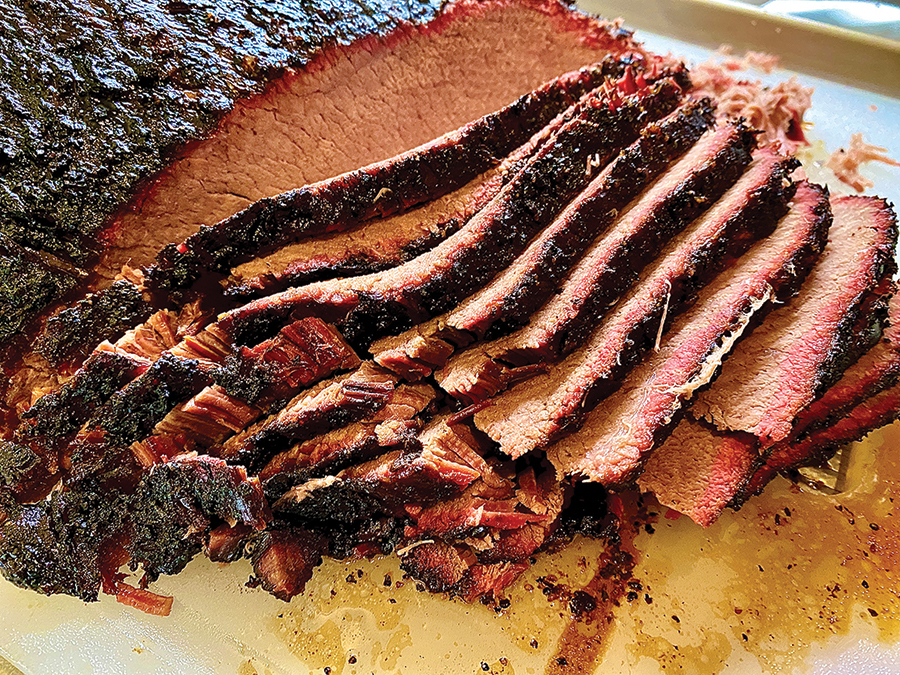
Elliott’s on Linden and the Given Memorial Library and Tufts Archives are partnering for a Given to Go fundraiser on Tuesday, April 13, featuring smokehouse brisket, buttermilk mashed potatoes, a vegetable medley and dessert. Tickets are $22 and can be purchased by calling the Tufts Archives at (910) 295-3642 or emailing giventufts@gmail.com. Meal pickup times are 5:30 p.m. to 6:30 p.m. at the Given Memorial Library, 150 Cherokee Road, Pinehurst.

Hitting the High Notes

A victim of the Year of Covid, the Moore County Choral Society hasn’t been able to hold a concert since the virus invaded the Sandhills. Its commitments — including the annual scholarship given to a local, budding musician — don’t stop, however, so the society whose catch phrase is “may you always have a song” has organized an online fundraising auction from April 21 to 26 at www.biddingowl.com/moorecountychoralsociety. There will be wines, antiques, rounds of golf, restaurant meals, paintings, crafts, gift baskets, home services, limited-edition prints and much, much more on offer, and all for a good cause. With any luck, the Moore County Choral Society’s Holiday Concert will return in December. In the meantime, bid like crazy. For additional information go to moorecountychoralsociety.org.

Showy Chapeaux

Wear you finest hats, cocktail dresses and seersucker suits for the live stream of the Kentucky Derby at the St. John Paul II Catholic School Derby Gala on Saturday, May 1, from 5:30 p.m. to 10:00 p.m. at the Pinehurst Country Club, 1 Carolina Vista Drive. There will be an open bar, sit-down dinner, music and a silent auction. Tickets are $125 at ticketmesandhills.com.

Dig This

The Pinehurst Garden Club will hold its annual plant sale fundraiser, including favorites like geraniums, vincas and begonias, on Sunday, April 18, from 9 a.m. to 3 p.m., at the Green Haven Nursery, 255 Green Haven Lane, Carthage. For more information call (910) 420-8214 or go to www.pinehurstgardenclub.com.


The Omnivorous Reader

Thriller Triumph

An evil character spices a Carolina plot

By D.G. Martin

Do you remember Hannibal Lecter, the psychotic doctor played by Anthony Hopkins in the film The Silence of the Lambs? Lecter was a brilliant but evil serial killer who dined on his victims.

We may have been horrified by Lecter, but we were mesmerized, too. Some publishers tell their authors that such over-the-top evil characters like Lecter can make a good story even better.

Kathy Reichs, one of North Carolina’s most successful crime fiction writers, uses the salt of just such an evil character to season her most recent book, A Conspiracy of Bones. In this 19th novel by the Charlotte-based and New York Times bestselling author, Reichs introduces Nick Body, who delivers conspiracy theories on a popular podcast.

Reichs is not new to designing intriguing evil characters. Her series of Temperance Brennan novels was the basis of the long running Bones television series. Brennan, like Reichs, is a brilliant forensic anthropologist. She uses her dead body-examining skills to solve complicated crimes perpetrated by her evil characters.

Nick Body’s ability to stir up his listeners reminds us of the late Rush Limbaugh, though Body goes to a whole other extreme. He kidnaps children and then stirs up his podcast listeners, who pay money to access his program and buy the products he offers that, supposedly, arm them against the coming violence.

Here is how Reichs sums up her character’s alarmist con games:

“Over the past decade, Body has been particularly vehement on two themes. Plots involving kids. Plots involving medical wrongdoing. Occasionally, his insane theories managed to combine both elements. Many of Body’s harangues focused on disease. Over and over, he returned to the theme of government conspiracy.

“A sampling: He claims that the Ebola epidemic in West Africa was a biological weapons test performed by America. That SARS was a germ attack against the Chinese. That AIDS was created and distributed by those in power in the U.S. That the anthrax attacks following 9/11 were orchestrated by the government. That banning DDT was a scheme to depopulate the Earth by spreading malaria. That Huntington’s disease is caused by a microbe and the government is conspiring to suppress a known cure. And, my personal favorite, that chemtrails are responsible for mad cow outbreaks.

“There were numerous variations on the evils of vaccination.” She continued, “In the old tried-and-true, Body alleged that vaccination causes autism. In a somewhat more creative twist, he argued that Bill Gates was behind the plot to use immunization for population control. In another series of tirades, he insisted that the government was sneaking RFID chips into children via inoculation.”

Reichs has Brennan figure out Body’s deadly schemes and bring him down, though the beginning of the story seemingly has nothing to do with the evil podcaster. What gets Brennan’s attention is a mutilated, unidentified body found in rural Cleveland County and sent to the medical examiner in Charlotte for identification.

The fictional Charlotte-Mecklenburg medical examiner, Dr. Margot Heavner, and Brennan have a long-standing and bitter rivalry. So Heavner does not ask Brennan to assist in the official identification process. Brennan is miffed and decides to conduct her own investigation. With the help of old friends in law enforcement, she tracks down multiple leads in Cleveland County, Winston-Salem (an ashram), Mooresville, Tega Cay near Charlotte, and all over Charlotte from Myers Park to Central Avenue and modest developments in west Charlotte. At every stop Brennan and Reichs teach readers lessons in science and technology. They show how good law enforcement can use such learning to track down leads and bring the bad guys to justice. In the end, Brennan connects Body to crimes that go far beyond his conspiracy theory exploitations.

Even more satisfying for Brennan, her superior work results in putting a negative spotlight on Dr. Heavner, who has to leave her job in disgrace. All this gives us hope that the next fictional Charlotte-Mecklenburg medical examiner will value Brennan and put her great skills to work.  PS

D.G. Martin hosts North Carolina Bookwatch Sunday at 3:30 p.m. and Tuesday at 5 p.m. on UNC-TV. The program also airs on the North Carolina Channel Tuesday at 8 p.m.

Hometown

Map Mysteries

Navigating the old-fashioned way

By Bill Fields

On a Golf World assignment in Nebraska in 2013, I procured something for the first time in many years. Not bubble gum, a baseball glove or bottle of Brut 33. I bought a road map.

I had decided, in addition to reporting on the action in the U.S. Senior Open at Omaha Country Club, to see some sand-green golf courses for the first time. There used to be a bunch of them in the Midwest and Southwest; only dozens remained. We were well into the GPS era by then, but as I discovered on my first late afternoon drive to explore the throwback brand of golf, a smartphone wasn’t so smart on the byways of rural Nebraska. The $6.95 map I purchased at a convenience store turned out to be as essential as my cameras and notebook as I drove hundreds of miles around the Cornhusker State.

Maps used to be free at gas stations for decades, of course, as anyone who remembers 40 cents a gallon or less is aware. From the 1920s through the 1970s, all the big brands — Esso and Shell, Gulf and Phillips 66 — offered them as a service and promotion. Sometimes an attendant dug them out of a drawer, but often they were in a display between the fan belts and the wiper blades. Put a tiger in your tank . . . and a map in your glove compartment.

They were tool and talisman, objects of both utility and aspiration. It wasn’t just about where you were going on this trip but where you might go on the next one if you twisted Dad’s arm just right.

A highway map was a neat 4 inches by 8 inches in its pristine state. Unfolded, the 16 panels would cover a lot of the backseat in the family Fairlane. A friend recently remembered how much of a master his father, an engineer, was in map usage, from pinpointing various routes to putting it away so the creases were like new on the next trip.

A map would not age as well in our possession. One trip from Southern Pines to Ocean Drive Beach and it would be rumpled and guaranteed to contain Toast Chee cracker crumbs and Salem ashes the next time it was put into action, perhaps accompanied by a line drawn in Magic Marker from the Sandhills to the shore. (When you got to Loris, South Carolina, you knew you were close.)

It was all there on the map, the size of towns and cities delineated by font and type size. As the state capital, Raleigh got boldface and all caps. Greensboro was bigger than Lexington, which was bigger than Thomasville. You knew Southern Pines had a bigger population than Vass. Hoffman, Candor and Tramway? Tiny places all.

Ours was a North Carolina/South Carolina map family because we rarely ventured out of the two states. But this edition, regardless of which gasoline brand distributed it, still provided for a bit of dreaming. The mileage chart always included Atlanta, a whopping 350 miles from Southern Pines. And there was some extra territory on the map’s edges: a tiny strip of Virginia, containing Danville; a wedge of Georgia denoting Augusta and Athens; a sliver of Tennessee showing Bristol, Johnson City and Kingsport. Also, on the Volunteer State portion, on the outskirts of green-shaded Smoky Mountains National Park, Gatlinburg.

My father was a let’s-get-there kind of guy, especially if home was the destination. He once set out from High Point to Southern Pines during a heavy snowfall, convinced it wasn’t that bad. I got a call that evening in my freshman dorm room at college from the Holiday Inn in Asheboro, where my parents were lodging because the roads were impassable.

After an early 1970s trip to Nashville to visit relatives, “Gatlinburg” became code for Dad’s road ways. Traveling east after our visit, my mother and I pestered him about stopping in Gatlinburg. It would be great, we assured him. He grudgingly relented and made the detour so we could see the wonders of this mountain town he thought was a tourist trap with little redeeming value.

Dad wasn’t always right, but he was right this time. Gatlinburg was all trinket shops. It was hard to find a parking spot. The miniature golf course was poor and crowded. We didn’t stay long. Dad got out the map, took a long look, passed it back to me for folding, lit a cigarette and put the car in gear. We would visit other spots on the map, names in both bold and light type, but as for Gatlinburg, it was definitely one and done.  PS

Southern Pines native Bill Fields, who writes about golf and other things, moved north in 1986 but hasn’t lost his accent.

Home by Design

Elbow Grease

Because the heart wants what the heart wants

By Cynthia Adams

Closing our eyes to our termite-riddled garage and a looming bathroom tear-out, we snuggled down by the telly, cuddling our dogs, and watched Escape to the Chateau

It is an ironic choice of escape from our to-do list.

The series offers comforting perspective from years of projects in our (almost) century-old home. These two do-it-yourselfers beavering away on an ancient, shuttered, abandoned chateau lend perspective to the months of sweat equity we poured into our own relatively modest abode.

This BBC program follows Dick and Angel Strawbridge, a British couple who bought a glorious French “pile” in 2015.

Pile is Brit-speak for a very large house. But the French call this a chateau. Larger than Sleeping BeautyP’s Castle (albeit smaller than the Biltmore), the couple’ ’s picturesque 19th century Château de la Motte-Husson is near the quaint village of Martigné-sur-Mayenne. They bought it for what they might pay for an unremarkable two-bedroom flat back in London: £280,000 pounds ($384,000) — a steal.

With 45 rooms, twin turrets, an actual moat and walled garden — all poetically set upon 12 acres of pristine countryside — it is a thing of singular beauty.

But one problem: this veddy beautiful chateau is in ruins.

No running water, heat or electricity. And after the purchase, the Strawbridges are left with an impossibly small budget for the kind of home improvements this pile will require.

Yet the couple dauntlessly ascribes to the motto “you eat an elephant one bite at a time” and rolls up their sleeves.

The Mister, 59, laughs like Santa and has the belly to match.

Meanwhile, the flamboyant and romantically inclined Missus, 40, twists strawberry-red hair into vintage curls and has a passion for red lipstick, arched brows, a hot glue gun, sewing, crafting and decoupage.

They are dauntless, energetic, cart-before-the-horse types — we were stunned by what they did with this moldering and long-abandoned property in just one season.

Years ago, I fell under the spell of an unusual Lindley Park home. It qualified as a “stockbroker Tudor” given that to afford its steeply pitched rooflines, many gables, brick and stucco features decorated with handsome half-timbers required a stockbroker’s bank account. As is unfortunately true of Tudors, the interiors were sunless. If the kitchen is the soul of a house, this one’s was dark.

The property was in a state of beautiful disarray that suggested its former splendor.

And I desperately wanted it.

Let’s just say, I should have a reality show titled, The Masochistic Homeowner: The Early Years.

One of the Tudor’s strangest interior details was a renovation gone wrong, so wrong you had to crawl out of an upstairs window and walk across a flat roof in order to access a room addition carved from an adjacent garage attic.

Whereas a smarter person would have viewed that matter alone as a deal breaker, I tried to figure out how to solve this dilemma, sleeplessly fantasizing about owning this home with a beautiful arbor and quirks. Which is why I so relate to Angel Strawbridge — sans her luridly done hair and turban.

When the Tudor’s home inspection report arrived, it, like the dour Strawbridge’s chateau analysis, filled a binder.

Leaking roof; problematic stucco; electrical and plumbing issues; even a terrifying problem with the fireplace and chimney.

If it wasn’t leaking, it was crumbling. If it wasn’t crumbling, it soon would.

I wanted it.

It took my practical partner to pry my fingers from the binder. My teary-eyed entreaties did not budge my engineer husband from NO to MAYBE.

Did I mention that Angel Strawbridge is an enchantress, 19 years younger than Dick?

Had she wanted my decaying Tudor pile, her besotted husband would have laughed nervously and followed her lead like a spellbound adolescent.

That is not my husband.

We did not make a counteroffer on the Tudor.

Which, by the way, sold anyway.

We found another house. One that had many issues that the inspection did not uncover, and which took all of our savings to salvage. It is the house we now live in and love.

This 1929 house renovation followed on the heels of a 1911 reno that was even harder and costlier. Yet, somehow, my husband was as taken as I was by its quietly stoic beauty including its thick windowsills, French doors, beautiful light and park view.

We both fell under its spell, even as we toiled.   

It was possible to bribe my husband into nightly work after our day jobs. He would plaster and paint; I would pick up pizza and bags of Twix bars before joining him. (If we carb-loaded, we could work till midnight, then do it all over again the next day.)

Like the Strawbridges, we undertook most of the work ourselves.

When the initial cosmetics were done, there was something . . . some indefinable something. As if the house warmly responded to our months of labor. It became a joy to step inside.

One day, my husband mused, “the house is smiling.” It liked being rescued from neglect; it reflected back to us the ministrations, the love.

No doubt, too, that Angel believes their French chateau is smiling at them having been liberated from decades of grime and neglect.

She is most definitely right.  PS

We agree that contributing writer Cynthia Adams should indeed have her own reality show. Go ahead and add The Masochistic Homeowner to your future Watch List.

Birdwatch

Ruby Ready

Ladies and gentlemen, start your feeders

By Susan Campbell

It’s that time, folks! North Carolina’s smallest bird, those winged jewels that have spent the winter in the tropics, are now headed back our way. Ruby-throated hummingbirds will be returning to gardens and feeders by mid-April. So, it’s time to get ready!

First and foremost, in spite of what you may have heard, these tiny dynamos are mainly insectivorous. Bugs of all kinds make up the majority of their diet. Anything small enough to fit down the hatch will be consumed throughout the day — followed up by a nectar chaser every now and then. Therefore, it is critical to be judicious year-round in your use of pesticides and herbicides, so that the invertebrates hummingbirds depend on will thrive.

Consider planting for your hummers. There is a wide array of plants that are easy to grow that will get the birds’ attention. The best are obviously native species such as trumpet creeper, coral honeysuckle, cardinal flower, bee balm, columbine and even butterfly weed. There are loads of non-native perennials that are a wonderful (and not invasive) addition to your hum-garden, like many of the salvias, Mexican sunflower, sultan’s turban and lantanas. Do not be surprised if you see a hummer hovering around the vegetable garden when your okra starts to bloom or your basil goes to seed. Keep in mind that the thicker the vegetation is in your yard, the buggier it will tend to be — a good excuse to let things go wild in at least a section of the property. And dense vegetation will also provide the birds with necessary cover for roosting, as well as protection from the elements and potential predators.

Of course, many of us have augmented our yards with sugar water feeders that will bring the tiny birds into view. While there are many brands on the market — with more being added every season — they vary in quality and effectiveness. No matter what kind you choose, be sure it can be opened up for complete cleaning and that the ports are large enough (at least 3 mm) not to cause bill injury. Hummer feeders need to be cleaned with hot water (no detergent) at least every three days during the heat of the summer, so easy access for effective scrubbing and rinsing is critical. A 10 percent bleach solution is fine later in the season when mildew can be an issue. Just be sure to rinse all of the parts very thoroughly before refilling.

The best choice for offering homemade nectar is a saucer-style feeder, such as a HummZinger, that pops apart for easy cleaning and refilling. The beauty of these feeders is that they do not tend to seep or drip and, as a consequence, are less likely to attract the bees and wasps that reservoir-style feeders do. Also, many designs now have a built-in ant moat that creates an effective barrier to those even tinier sugar-loving critters that abound in our area during most of the year.

Please avoid store-bought mixes. They can contain additives and preservatives that may not be good for the birds. A simple mix of 1 part sugar to 4 parts water is all you need to use. Adding color to the fluid is not recommended, nor is it necessary. Red dye is usually a petroleum-based compound that the birds cannot digest. Besides, ruby-throateds have phenomenal color vision and can see the red components of your feeder from over a half a mile away.

Last but not least, although hummingbirds do not use conventional bird baths, they do need to keep their feathers clean. There are specialty fountains on the market that are very shallow and may attract them to bathe, though it’s more likely you will see a ruby-throated rinsing off by making passes through your sprinklers. You could even have a close encounter with an overheated ruby-throated if you happen to be watering with a hose during the heat of the day. PS

Susan would love to receive your wildlife observations and/or photos at susan@ncaves.com.