


Ernõ Rubik, the inventor of the eponymous cube, once said, “If you are curious, you will find the puzzles around you. If you are determined, you will solve them.” Since there are no readers more curious or more determined than PineStraw’s, this month we’re offering up a cornucopia of puzzles. Solve them while you wait for a plane at RDU or under a Shibumi on a barrier island beach. Take your time. And enjoy.
To view all ten puzzles, grab a hard copy of Pinestraw at select locations or, simply view online.


By Ruth Moose
I LOVE magazines. Always have, always will.
A new magazine is like a gift box to open and unwrap its surprises, goodies, dreams. Even the feel of them: not too heavy, not too bulky. Just right to tuck in your carry-on, under your arm as you go out the door, hold upright in the good light as you read. Perfect for the beach. Who wants to add the weight of War and Peace to the towels, snacks, blankets, chairs, umbrella . . . all to heft and carry? It’s a vacation, not powerlifting.
Magazines are color, inspiration, ideas. They may not weigh much, but they open doors to other worlds.
I grew up in a house with few books: a big Bible (my grandfather was a Baptist preacher); a child’s storybook Bible; a dictionary; some cookbooks (including the red and white gingham covered Original Better Homes & Gardens); and books my wonderful aunt (who was a librarian) sent me for birthdays and Christmas. Mary Poppins, Little Women, Black Beauty and, of course, Robert Louis Stevenson’s A Child’s Garden of Verses. I cherished them all.
What was new and different and fresh every month, though, were our magazines. Good Housekeeping, McCall’s, Ladies’ Home Journal, Redbook and more. Reader’s Digest always. When a new issue came, my father would pick it up after supper and read out loud to my mother while she stood at the ironing board. “Life in These United States.” They would laugh together at the silly, harmless foibles of our common humanity. I did the vocabulary quiz after I browsed the articles. Sometimes, we’d get a Guidepost or Progressive Farmer. Though we lived in the city of Albemarle, both my parents had grown up on large farms. Our house was in the middle of some vacant lots where we raised vegetables for our table all summer, canning and freezing some for the winter.
Summers were long and hot and boring with little to occupy our days after Bible school’s two weeks ended. My mother had a daily rule: After lunch, which we called dinner, we had to observe “quiet time.” My brothers and I went to our rooms, closed the doors and were absolutely silent. No TV. No phones (of course). No talking. We didn’t have to nap, though sometimes we did.
What we had were our magazines. My brothers got copies of Boy’s Life and Wee Wisdom, maybe Ranger Rick. I got Seventeen for a few important years and felt very sophisticated. One of our neighbor girls, Jodie, was 5 years older than me and oh, so worldly. She loaned us True Story but my mother would never let me read it. That didn’t keep me from thinking up excuses to visit across the street and snatch some browsing time in Jodie’s under-the-mattress stash.
Meanwhile, Mother took her fresh copies of Better Homes & Gardens, McCall’s and Redbook to the front porch, where it was cooler, and she could browse at a leisurely pace all the new recipes, window treatments, and biographies of the rich and famous we all thought we knew. After devouring our magazines cover to cover, we’d pass them along to friends, family, neighbors.
They were what kept us current with the world, our vocabularies refreshed, our reading skills practiced. They made us feel richer in dreams, our universe widened with words and colors even when that universe didn’t extend much farther than the block we lived on.


By Ashley Walshe
June is a love poem, unrestrained.
Impossibly red poppies gaze upon achingly blue skies. Dragonflies bend for one another, clutching and curling like contortionists in flight. Swallowtails sup nectar, deep and sweet, enraptured by milkweed, sunbeams and endless summer days.
Can’t you see? All of life loses itself in itself. The rhyme is internal; the rhythm, organic; the imagery, holy refrain.
Each stanza surprises. Some, purple as passionflowers. Some, fussy as French hydrangeas. A precious few are sharp and true.
Bend your ear toward all that pulses. Get lost in the cadence of field crickets, the tranquil lilt of whippoorwill, the ballad of goldfinch and thistle. Find the harmony.
Complete the circuit. Behold poppies as poppies behold sky. Behold the dreamlike wonder.
Become a sunbeam. Become honey. Become, as wings, transparent.
Bow to the majesty of Queen Anne. Fashion a crown of singing daisies. Embellish your throne with honeysuckle and squash blossoms.
Are you dizzy yet?
Take a pause.
Rest in the dappled shade of sourwood. Let the hum of bees cradle you through afternoon. Come evening, swoon to the pink-and-yellow tune of rosy maple moth.
A good poem needs a good host. Can you be as milkweed to monarch? Sapsucker to birch?
Climbing oak to starry-eyed child?
Sup the sweetness of the moon-drenched night. Lose yourself in the wild beauty. Be, as green berry on vine, altered by the ardent kiss of
summer.

According to Navajo legend, Mother Earth and Father Sky were created as divine counterparts, their union essential to all life. Mother Earth gives us life. Father Sky offers the light of the sun, thirst-quenching rains and the endless mystery of the heavens.
In the spirit of Father’s Day (Sunday, June 15), consider looking skyward this month for a handful of celestial happenings.
The Full Pink Moon on June 11 is the last full moon of spring. No, it won’t be candy-colored. According to The Old Farmer’s Almanac, Native American tribes (Algonquian, Ojibwe, Dakota and Lakota) named this month’s moon to mark the harvest of June-bearing strawberries.
On June 16 (the day after Father’s Day), you can spot the pairing of Mars and Regulus with the naked eye. Look for the fiery red planet gleaming alongside Alpha Leonis, the brightest star in the constellation Leo.
The Summer Solstice occurs on June 21. On this day — the longest day of the year — give thanks for the warmth and light of the sun and the wild abundance bursting from the Earth. And when night finally falls, you just might glimpse an early participant of the June Boötids meteor shower, which takes place June 22 through July 2 and peaks on June 27.
Did you know there are 16 species of milkweed native to North Carolina? Sixteen! June is National Pollinator Month. Celebrate all that buzzes, hums and flutters by adding some native flowering plants to your little corner of the great, wide world.


By Ray Owen • Photographs by John Gessner
Surviving through myriad incarnations, Southern Pines’ Campbell House is one of the region’s most significant landmarks, owing its existence to the Boyd family. Once part of their Weymouth estate, for more than 100 years it has been a center of culture, informing, influencing and enhancing civic life.
It is an outstanding example of a Country Place-era estate created over time by a remarkable series of individuals who began settling in the region around the turn of the 20th century. The fledgling Sandhills resorts were rising from the dusty remains of a former turpentine and lumber industry outpost. The backdrop for this transformation was the greater social movement of the day, a reaction to the cultural upheavals brought about by industrialization and urbanization. The Sandhills fit perfectly within the country life paradigm, appealing to America’s growing fascination with vernacular culture and native folk.
The lives of Campbell House comprise four significant periods: first the home of James Maclin Brodnax, then expanded into the original James Boyd House with additions from local Colonial houses; next moved and enlarged at its present location by Jackson Boyd; later the home of General Motors heir Maj. William Durant Campbell; and now a municipal property, home to Southern Pines Recreation & Parks Department and the Arts Council of Moore County.
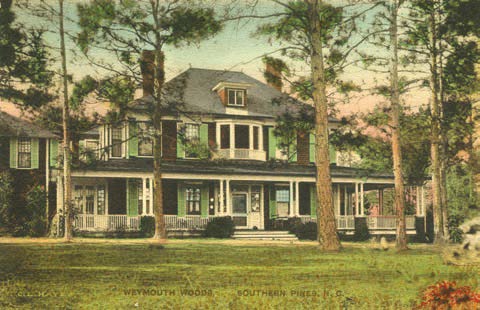
The house’s first period opens with James Boyd’s 1904 purchase of a sizable portion of land on the eastern ridge above downtown Southern Pines. Within months, the matter of building a residence was altered by the death of his kinsman, James Brodnax, who had built a two-story Colonial Revival-style home for himself on the property. James Boyd, grandfather of writer James Boyd and his brother Jackson, enlarged the Brodnax House into an imposing mansion, incorporating building elements dating from the late 18th and early 19th centuries. The Brodnax-Boyd House was located 100 feet in front of present-day Weymouth Center.
In 1921, the Brodnax-Boyd House was separated into two blocks and both moved by mule teams across Connecticut Avenue, where they became the core of two new residences. One part was refitted as a residence for Jackson Boyd (Jack) and his family, and it remained their home, following major rebuilding in 1936 after a fire. Another part of the Brodnax-Boyd House is now the dwelling standing at 435 E. New Hampshire Ave.
Jack and his brother, writer James Boyd, founded the Moore County Hounds in the winter of 1914. They saw this aristocratic sport in democratic terms and felt that it should belong to the town. Proper dress or not, anyone who wished to hunt was invited to come along, so huntsmen in formal attire rode with farmers on horses more accustomed to plowing than jumping fences.
As a captain in the Marines, Jack was in charge of canine training at Camp Lejeune. Being from blueblood hunt country, he was a trainer, breeder, master of 70 foxhounds. Jack taught his war dogs to march in cadence, heel on regular intervals, and perform ordered drills. More training prepared them for track and attack missions and watch duty. His division’s canine records included letters of commendation, citations and a discharge certificate. In many instances, a formal photograph of the dog was included upon promotion of the dog to sergeant.
Jack’s eldest son, John Boyd, was killed in action at Guadalcanal, and the local VFW post is named for him. Those who knew Jack Boyd say that his son’s death was a severe blow and he left Southern Pines shortly after the war.
In 1946, Major W.D. Campbell purchased the Jackson Boyd House and he made extensive changes, facing the unpretentious frame structure with ballast-brick from Charleston, South Carolina. The same brick was used in the formal landscaping and walled garden at the rear of the house. In 1966 the Campbell family gave their property to the town, asking that it be used for the cultural and social enrichment of the community.
Evidence of history can be found throughout the building, with a striking contrast between the formal entrance and the informality of the large pine-clad room on the east wing. This room, known today as the Brown Gallery, encompasses the most visible remains of Brodnax-Boyd House with its circa 1820s mantel and beaded hand-planed paneling.
In Jackson Boyd’s time the main staircase rose at the back of the foyer, but the Campbells reconfigured it to rise at the front, opening up the back wall with glass doors. The foyer and former dining room, now the White Gallery, remain unchanged from the late 1940s with marble-chip terrazzo flooring, marble staircase and decorative wrought-iron railing. A medallion graces the entry hall floor. Inscribed in Greek, it depicts an African antelope bagged by Maj. Campbell for the Museum of Natural History in New York.
The Campbells and their daughter, Margot, were active in many civic and community affairs. Mrs. Campbell was one of the founders of the Southern Pines Garden Club. Maj. Campbell’s interests included the Red Cross, Boy Scouts and model trains and he built the Train House to house his collection. An Eagle Scout in his boyhood, Campbell became a leader in the national and international movement, an activity that eventually called the family away from their home in the pines. Born in Flint, Michigan, Maj. Campbell was the grandson of William Crapo Durant, the co-founder of General Motors and Chevrolet, and the founder of Frigidaire. Campbell graduated from Princeton University in 1929 and initially pursued a career in banking. During World War II, he was a battery commander and retired from Fort Bragg in 1946 as a major. He became involved in Scouting as an adult at the suggestion of its British founder, Robert Baden-Powell. His travels convinced him that Scouting could do much for young people and he took a special interest in furthering the organization in developing countries with programs tailored to local needs. That philosophy and his personal commitment saw a doubling of the Scouts’ membership in the 1970s and 1980s, chiefly in the Third World. A philanthropist, Maj. Campbell was also on the executive committee of the Mystic Seaport Museum and a director of the National Audubon Society.

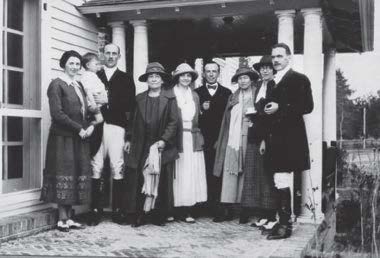
When the Campbells gifted the property to the town, a board of directors was appointed, bylaws were established, an on-site director was hired, and a vigorous program developed to put the property to use. The Southern Pines Information Center was installed in the main house, and the Stoneybrook Racing Association moved into its west wing office.
The Boy Scouts were among the early organizations at Campbell House, along with offices for the Humane Society of Moore County and Moore County Historical Association. In the late 1960s, a small golf museum was set up in the former dining room, and this collection was later turned over to the World Golf Hall of Fame.
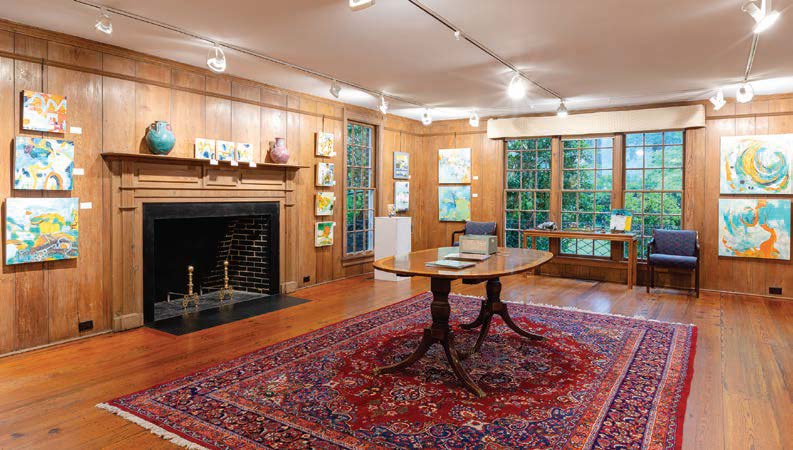
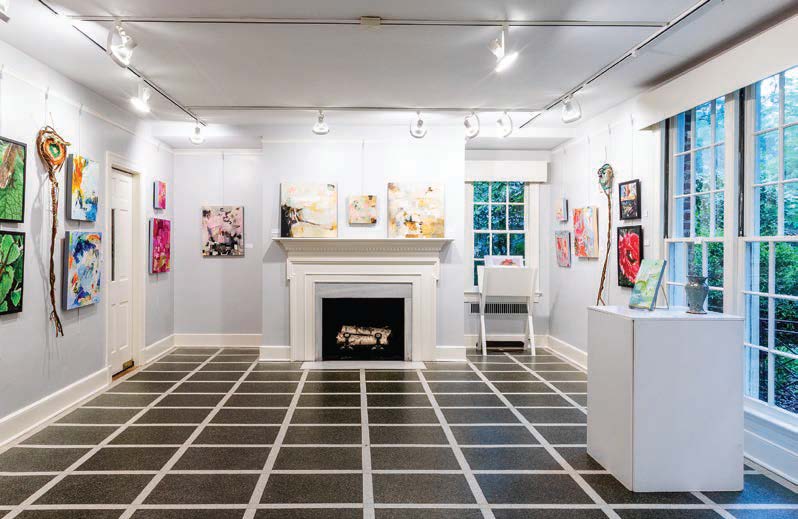
In 1972, Southern Pines established a year-round recreation and parks department centered on the property. This program is now the biggest user of the site with its offices on the second floor of the main house. The first floor is the headquarters of the Arts Council of Moore County, where they maintain two galleries that display the work of different artists every month and a sales gallery that showcases the work of regional artists.
Thousands of visitors have enjoyed Campbell House, hundreds of volunteers have given time and energy to the fulfillment of its purpose, and a small, dedicated group has taken personal responsibility for its success.
Moss gathers on the ancient lawn as azaleas bloom late against fading bricks. Across the lot, live oaks keep the view — if they could speak, what stories would they tell, wide spreading boughs, nothing missed in their branches. Some say the house is haunted and at twilight the apparition of a woman drifts across the stairs, a lingering reminder of lives that have come before.


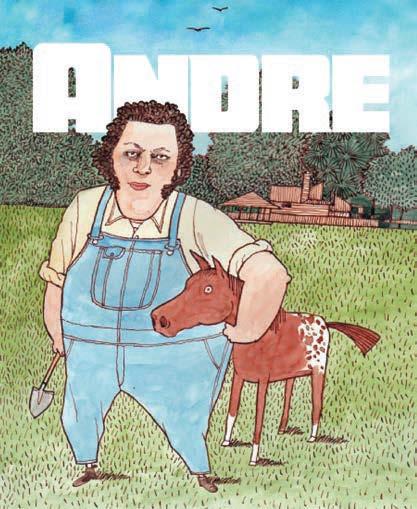
By Bill Fields
In a mild December morning at Dixie Burger in Ellerbe, North Carolina, several customers of a certain age at a corner table are remembering someone who once sat among them, shooting the breeze and drinking coffee.
“Was grand marshal at the racetrack and lifted a girl on each arm like it was nothing.”
“Used to be booths in here, but he wouldn’t fit.”
“Ate 12 chickens in one day.”
When he wasn’t wrestling, making a movie or otherwise being André the Giant, the man sometimes called the “Eighth Wonder of the World” lived in Ellerbe for more than a dozen years. He enjoyed his time in the Richmond County town of about 1,000 people and loved to kill part of a day at the short-order restaurant, whose tall hamburger sign is the most visible landmark on Main Street.
“André could sit there and talk to people,” says Jackie McAuley, who was a close friend. She, along with her first husband, Frenchy Bernard, a former pro wrestling referee, managed André’s home and cattle ranch on Highway 73. “They treated him just like anybody else they would have seen in town. It wasn’t, ‘Oh, can I have your autograph?’ He was just an average person when he was home in Ellerbe.”
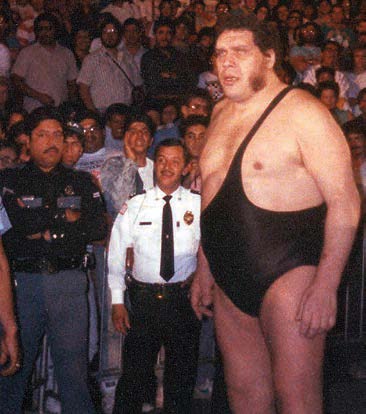
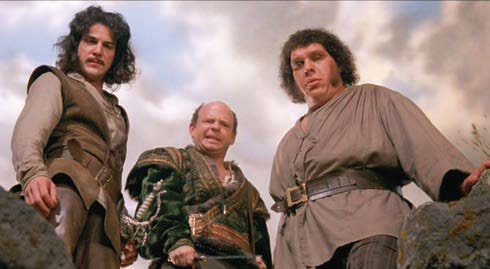
Notwithstanding the mannerly small-town treatment André René Roussimoff received, he was as close to being an average person as Ellerbe is to the Eiffel Tower. André the Giant — who died Jan. 27, 1993, at age 46 — was one of the most recognizable individuals of the 20th century. He was a genuine giant who emerged from the obscurity of his family’s farm in rural France, carrying armoires on his back up three flights as a Paris furniture mover, to become an iconic professional wrestler who drew large crowds around the globe and gained even wider fame playing Fezzik, the rhyme-loving giant in the 1987 romantic-adventure-comedy film The Princess Bride.
Standing 7 feet 4 inches — although there were skeptics who contended the wrestling hype machine bumped up his height so that he could be billed as the world’s tallest man — and weighing 520 pounds when he passed away of congestive heart failure, Roussimoff had acromegaly, a disorder that causes the pituitary gland to produce too much growth hormone in adulthood, resulting in unusual bone growth, including in the hands, feet and face.
His acromegaly was never treated, André refusing medical help when his condition was diagnosed, first during a visit to Japan in the early 1970s and again about a decade later at Duke University Hospital. Doctors there saved his life after fluid built up around his heart and wanted to operate on the pituitary gland to correct his acromegaly, but André, whose paternal grandfather also was outsized, wouldn’t agree to the procedure. “He said, ‘That’s how God made me,’ and he wasn’t going to change,” McAuley says.
To be around André once was to never forget his unique size.
His neck was 2 feet in circumference. It was nearly a foot around his wrist. A silver dollar could pass through one of his rings. In an exhibit devoted to André the Giant at The Rankin Museum of American Heritage in Ellerbe, a pair of his size 26 wrestling boots are on display. “Occasionally I could buy him T-shirts,” says McAuley, “if I could find 5 XL.” The Giant’s clothes were mostly custom tailored in Montreal or Japan to accommodate his 71-inch chest. Nellie Parsons, who ran Pate’s Cleaners in Ellerbe for 30 years, created custom hangers to accommodate the extraordinary width of his dress shirts.
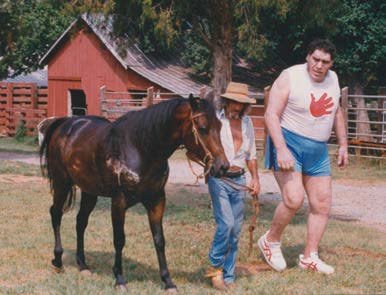
In 1983-84, Burke Schnedl was a pilot for a charter service at what then was called Rockingham-Hamlet Airport and flew André to wrestling matches in cities throughout the Carolinas and Virginia — Greenville, Fayetteville, Richmond — in a twin-engine Cessna 402.
“We had to take out a seat in the back so he could get in,” Schnedl recalls. “The doorway is not that big, and he would have to turn kind of sideways. It had a bench seat on the side. André sat there and used a seat-belt extender to cover a space where two people normally would sit. He was just a lot of guy. When you shook his hand, it was like putting a single finger in a normal-sized person’s hand.”
By the time André was 12 years old, he already stood 6-foot-2 and weighed about 230 pounds, too large for the bus that transported schoolchildren in his village of Molien, 40 miles outside Paris. The playwright Samuel Beckett, who lived nearby in a cottage that Boris Roussimoff, André’s father, helped him construct, filled the void by driving André in his truck.
Before long André, the middle of Boris and wife Mariann’s five children, had outgrown not only vehicles but the sleepy landscape he saw as an impasse stopping his ambition to be famous. Boris Roussimoff didn’t understand, and at 14 André quit school, left home and set out on his own.
“His father told him he would be back soon working on the farm, and André had something to prove,” says Chris Owens, a repository of André the Giant knowledge who authors a Fan Club page on Facebook and has been intrigued by Roussimoff since he was a boy in the Midwest and saw him wrestle televised matches. “He didn’t want to stay in rural France. To me, he was always a guy going after his dream who became a classic success story.”
As a teenager in Paris, André’s preferred game was rugby, although he also got immense pleasure from pranking friends by rearranging their parked small cars while they were dining or drinking. He got 7 or 8 inches taller and gained nearly a hundred pounds before he turned 21, impressing professional wrestlers who noticed him training in a gym. They introduced him to their game, taught him some moves, and by the mid-1960s André René Roussimoff was getting paid to perform as Jean Ferre, Géant Ferré, The Butcher Roussimoff and Monster Eiffel Tower — and he was loving all of it.
“Many men were afraid to go in the ring with him, especially after he reached his 20s, because he was so large and strong,” André’s first manager, Frank Valois, told Sports Illustrated in 1981. “For all his height and weight, he could run and jump and do moves that made seasoned wrestlers fearful. Not so much fearful that he would hurt them with malice, but that he might hurt them with exuberance. He was incroyable.”
Promoters sent him to Great Britain, Germany, Australia, Africa and eventually Japan, a country where he first wrestled as Monster Roussimoff and would have some of his most avid fans the whole of his career. He began to be billed as André the Giant in 1973 by Vince McMahon Sr., founder of the World Wide Wrestling Federation, who discouraged André from being very active in the ring — even though his body at that point still allowed it — and to play up the fact that he was an immovable mountain of a man. “He was taught to wrestle as a giant,” says Owens. “He had a limited set of moves, and his matches generally were kept fairly short.”
Under McMahon, André made a large six-figure annual income and became the most famous professional wrestler in the world who traveled the majority of each year for two decades, his luggage belying his size. “He carried an unbelievably small bag for his wrestling gear,” says McAuley. “I don’t know how he packed as much as he did in that small bag. But if he was packing up at a motel and something didn’t fit, he would leave it behind. There were things left all over, I’m sure. I hope the maids discovered what they had.”
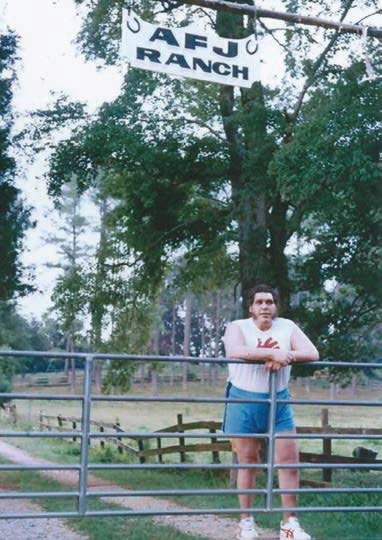
André was a creature of habit on the road because there was enough ducking and crunching just getting around that he didn’t like improvising unnecessarily. “If you gave me the name of the town he was in,” says McAuley, “I could tell you what hotel he stayed at, what restaurant he ate at and what bar he went to, and pretty much be right every time. There was security that came with the habit. He knew his size and where he could fit and couldn’t fit. If he had been going to a certain motel for 10 years and everyone else started going to a fancier place, he’d go to his usual one.”
Wherever André the Giant went, he amazed people with how much he could eat or drink if he was in the mood.
There are stories of his ordering every entrée on a menu, as McAuley witnessed one summer day in Montreal in the mid-1980s as she and Frenchy dined with André and several others. “We were at a small Italian place,” McAuley recalls. “André was in a good mood. He told the waiter he would like one of everything. The waiter said, ‘Seriously?’ Frenchy said, ‘Seriously.’”
Pro wrestler Don Heaton told the Los Angeles Times after the Giant’s death. “Everything came in twos,” he said. “Two lobsters, two chickens, two steaks . . . ”
There were nights of 100 beers, 75 shots, or seven bottles of wine lest any course of a special meal feel lonely.
“I can report with confidence that his capacity for alcohol is extraordinary,” Terry Todd wrote in his classic in-depth 1981 Sports Illustrated profile of Roussimoff. “During the week or so I was with him, his average daily consumption was a case or so of beer; a total of two bottles of wine, generally French, with his meals; six or eight shots of brandy, usually Courvoisier or Napoléon, though sometimes Calvados; half a dozen standard mixed drinks, such as bloody Marys or screwdrivers; and the odd glass of Pernod.”
Actor Cary Elwes recounted the making of The Princess Bride in his book As You Wish. He recalled going out barhopping with André in New York City after the movie’s premiere. The Giant’s beverage of choice that evening, as it sometimes was when they were filming in England, was what André called “the American,” a combination of many hard spirits.
“The beverage came, as expected, in a forty-ounce pitcher, the contents of which disappeared in a single gulp,” Elwes wrote. “And then came another. And they kept coming while I gingerly sipped my beer. We talked about work and movies, about his farm in North Carolina where he raised horses, his relatives back in France, and of course, about life. André was a man unlike any other — truly one of a kind.”
This unique character ended up living in Richmond County after coming with French-Canadian Adolfo Bresciano, who was billed as Dino Bravo in the ring, to visit Bravo’s stepdaughter in the late-1970s. She and her husband owned farm property in Ellerbe. André bought a nearby home, a three-story structure. The Bernards moved from Florida in the summer of 1980.
“We lived there and took care of things,” McAuley says. “If Andre needed something, Frenchy or I would get it. He just had the house for several years, with some cows and horses. Then the property down the road came up for sale, so we bought the ranch. Then he worked on getting the wooded property in the middle. André was in a bar in England once talking to a pilot who had Texas longhorns back home. So Andre decided we should have Texas longhorns, too.”
Some believed that Andre’s residence must have been built for his colossal frame, but it wasn’t. “Nothing could be further from the truth,” says McAuley. “The stairs were narrow. It was three floors. He didn’t care to have a house that was adapted to him because his life was in the real world. You’re not going to raise the light or the ceiling fan, because they’re not going to run into it. It becomes second nature. We really only did two things: We raised the shower faucet, so the water would hit him on the top of the head instead of the middle of the back, and we ordered him a large chair.”
André would often sit in his chair with McAuley’s miniature dachshunds tucked by each tree trunk of a leg. He loved riding an all-terrain vehicle around his property. In the summers, André favored gym shorts, sometimes with a T-shirt, sometimes not. He was an expert cribbage player, owing to his good math mind and so many hours playing before wrestling matches. He didn’t venture far from his property when he was home, but loved his iced coffee at Dixie Burger, weekend meals at Little Bo Club in Rockingham, cookouts at neighbors’ homes, and checking in the hardware or feed stores.
McAuley says she never heard her friend talk about any regrets, that he never second-guessed anything in his life. “I have had good fortune,” André told Todd in 1981, “and I am grateful for my life. If I were to die tomorrow, I know I have eaten more good food, drunk more beer and fine wine, had more friends and seen more of the world than most men ever will.”
In addition to the scary episode of fluid buildup around his heart in 1983, he began to have other health problems during his years in Ellerbe. André had neck and back issues and surgeries, and he sustained a broken ankle in a 1981 match, wrestling on it for days until the pain became too much. To accommodate his size, the largest cast ever prepared at Boston’s Beth Israel Hospital was utilized.
An opportunity to be in The Princess Bride came along at a good time, since wrestling was becoming increasingly difficult because of André’s deteriorating body. “He could feel his wrestling career closing down,” McAuley says. “He had been so agile when he was younger. It was tough to watch him wrestle near the end of his life because of how hard it was for him to get around.”
André had acted before — including portraying “Bigfoot” in a two-part episode of The Six Million Dollar Man — but he loved being part of the months-long production of The Princess Bride as Fezzik. “Doing Princess Bride gave him the most happiness,” says McAuley. “He’d call home and talk about all the silly tricks he was pulling, especially the week or so that Billy Crystal was there.” Around the set, as in his adopted hometown in North Carolina, André impressed with his disposition despite his acute pain.
“You could tell he was in tremendous pain, but would never complain about it,” actress Robin Wright remembered in As You Wish. “You could see it in his face when he would try to stand up from a seated position. But he was just the most gentle giant. So incredibly sweet.”
André never tired of watching The Princess Bride, but some of his friends did. “He drove the wrestlers crazy,” McAuley says. “Over in Japan, on a bus from the hotel to the matches, the boys would wait quietly until eventually he’d pull out the tape and say, ‘Let’s watch my movie again.’ They’d say, ‘Please boss. Not again.’ But they’d watch.”
The same year that The Princess Bride came out, André the Giant was headliner at WrestleMania III, where he was body-slammed and defeated by nemesis Hulk Hogan in front of a record crowd of 93,173 at the Pontiac Silverdome. He wrestled the last of his 1,996 matches (a record of 1,427-388-181) on Dec. 4, 1992 in Tokyo, his physical condition worsening. “His walking was compromised,” Owens says. “His posture had changed. He constantly needed something to hold on to or somebody to help him keep his balance.”
André’s last Christmas in Ellerbe was much different than the joyous first one a dozen years earlier. “He was just not himself,” McAuley says. “His color didn’t look good. I remember standing next to him and patting his stomach, which (had gotten larger). It didn’t dawn on me then that the first time that happened was ’83.”
In January 1993 André flew to France to be with his dying father. He stayed over after his dad’s death to be with his mother for her birthday on Jan. 24. On the 27th, André enjoyed a full day with boyhood friends from Molien. A driver was scheduled to pick him up at the Paris hotel where he was staying at 8 o’clock the next morning.
André didn’t pay attention to clocks, seldom wore a watch, and rarely was late. But he was not there to meet his driver, and he didn’t answer the phone in his room.
“The chain was on the door but they could see André in bed,” McAuley says. “The sheet was perfectly neat around him. He must have died as soon as he laid down, because André was one, when he woke up in the morning, the linen would be all shuffled around and when I would go to make his bed, I’d basically have to start over because the sheets would be in all different directions.”
The Roussimoffs were told André’s body was too big to be handled by any local crematoriums. A custom casket was constructed, and McAuley flew to France with her sister to accompany the body back to the United States so that André’s desire to be cremated, set forth in his will, could be carried out. Before returning, she visited Molien to meet André’s mother — “She was shorter than me and just adorable” — and siblings.
McAuley brought photo albums, pictures of “girls André knew” and his daughter, Robin Christensen Roussimoff, born in 1979, with whom he had little contact — a handful of visits and regular holiday phone calls. McAuley flew to the Seattle area once hoping to make André’s wish of a visit by his daughter to his North Carolina home a reality, but Robin, a young girl intimidated by the thought of a long trip to an unfamiliar place, declined.
André was returned to the land he had come to know so well on Feb. 24, 1993. Big-time wrestlers and small-town residents alike attended the ranch service, and after folks had spoken their remarks and paid their respects, Frenchy Bernard got on a horse with a saddlebag containing Andre’s ashes.
In death as in life André Roussimoff was larger than most. His remains weighed 17 pounds after cremation, nearly three times more than a usual adult male. They were spread in silence so different from the mayhem of the arenas and gyms where he had worked, finding their place, just like the man had.

The Ferry from Ocracoke to Swan Quarter
Laughing gulls hover:
a story below,
their shadows slide
and crux across the deck
of the Silver Lake —
painted white by convicts
from the Hyde County camp —
bound over the slick-cam Pamlico,
past a dredge-spoil island
where cormorants in black
frock coats congregate, exiled,
penitent, eyeing the ferry
with Calvinist reproach.
— Joseph Bathanti


By Lee Pace
The Pine Crest Inn opened in 1913 in the village of Pinehurst and nearly half a century later was purchased by Bob and Betty Barrett, of Erie, Pennsylvania. Barrett was a newspaperman who had visited Pinehurst regularly over the years — “At the beginning for two days, then for a week, then for two weeks,” he said.
They bought the inn for $125,000, and it has been in the Barrett family since, with the second generation taking over following Barrett’s death in 2005. By coincidence a home called the Chatham Cottage (built in the 1930s) was available directly across Dogwood Drive, and Barrett bought the house for his family to live in as they operated the inn, saying he didn’t want his two sons to grow up in a hotel.
For years, Barrett would use an extra bedroom in the house for Pine Crest overflow. Then, by the mid-1980s the family moved out, and it became an adjunct lodging option for the inn and was renamed the Barrett Cottage. There are groups who have been occupying the house the same week for more than three decades. The house has 16 beds with eight bedrooms and five baths.
Mike Close and a group of 16 to 28 golfers from Columbus, Ohio, have been visiting the Sandhills each October since 1996, making the Pine Crest and the Barrett Cottage their home base.
“It’s kind of like you’re going home; they treat you like a million dollars,” Close says. “This trip is all about friendships. We sit on the porch, smoke cigars, have a drink and tell stories. Some guys have known each other for 50 years or more. We love the Pine Crest. It’s quaint, it’s comfortable, and they have a great bar.”
There are just under 2,500 hotel rooms in the Sandhills area, ranging from the original lodging establishment that opened in 1895 to more recent facilities with brand names like Marriott and Hilton. All perform exactly as ordered — offering a comfortable bed and all the accouterments for golfers hopping from one world-renowned course to the next.
No one would label the Barrett Cottage as “luxurious.” It fits with the overall Pine Crest motif of ease and comfort you’d find in a visit to your grandmother’s. But increasingly in modern times, hoteliers and entrepreneurs have followed the concept of an adjunct, stand-alone lodging facility.
Travelers to the Pinehurst area today can drink a Scotch whisky in the home office Donald Ross occupied in the 1940’s, or play pool beneath the stained glass of a century-old church sanctuary. They can rock on the same screened-in porch where Mike Strantz quaffed a cold one after a day chiseling Tobacco Road out of the sand pits north of Pinehurst. And they can walk outside their five-bedroom house located 4 miles north of the village and play golf on a lighted par-3 hole with a fire roaring and the sound system at full blast.
“Golf groups would rather be all together under one roof versus being split up,” says Nikki Conforti, a golf package specialist at Talamore Golf Resort who frequently books guests at Talamore and its sister course, Mid South Club, into the Palmer Cottage fronting Midland Road between the two courses. “They can all hang out together at night after golf. It builds camaraderie and is a lot of fun. Our cottage is perfect for eight golfers, with a game room with a pool table, dining table and fire pit. If those walls could talk, I’m sure there would be some good stories.”
Talamore and Mid South were part of the 1990s golf boom when the Sandhills expanded its offerings. The Palmer Cottage is the result of additions, renovations and upgrades over nearly two decades to an existing house that Bob Levy, the resort’s owner and developer, bought in 2018. The cottage is marked on Midland Road with Talamore’s signature llama flag.
Another interesting lodging option is the Old Church at Pinehurst. Dan Keane, a regular visitor to Pinehurst from his home in New York City, was intrigued when he learned in 2020 that the Sacred Heart Catholic Church, located just behind the Carolina Hotel and serving the village of Pinehurst for more than a century, was for sale. Dan and wife Jenna bought the 5,300-square-foot church and renovated it into a destination with five sleeping spaces (four bedrooms and a loft) and a “great room” in the original sanctuary area, perfect for lounging, playing pool and meal functions.
“My wife and I have big families, so we’re all about having places for big groups to enjoy each other’s company. We saw the church was for sale and thought it was a good opportunity, not as much as a business decision, but it would be really cool to own and share with people,” Keane says. “It’s different from anything else. Watching a movie, having a game on, a bartender behind the bar — it makes for a cool experience. All churches are places for gathering. It speaks to why people visit the Sandhills — relaxing, enjoying, sitting by a fire pit, having a glass of wine. It’s everything you’d expect and more.”
Pinehurst Resort has seemingly infinite lodging options within four main facilities, the Carolina Hotel, Holly Inn, Manor Inn and Magnolia Inn. But it also has two outside-the-box offerings and in May opened the doors to yet another.
The Presidential Suite opened on the first floor of the Carolina Hotel in 2007 and offers 1,800 square feet of “wow factor” that would impress the CEO accustomed to the most opulent room in a midtown New York City hotel. In 2017 the resort purchased Dornoch Cottage, built by famed golf architect Donald Ross in 1925, and occupied by Ross and his wife until his death in 1948. Situated near the third green of Pinehurst No. 2, with four spacious bedrooms, a modern kitchen and Ross’s office still intact, Dornoch Cottage is made available to select guests and used as the site of parties and receptions.
In the 1990s the resort hired Tom Fazio to design a course to celebrate its 100th birthday in 1995, and the result was Pinehurst No. 8. Needing more beds for golfers in the post-COVID golf explosion, the resort has built a cottage village on a parcel of land between the eighth, ninth and 10th holes. Five cottages opened in May, and four more will follow in the fall, adding 52 new rooms in all.
Another premium spot in the Sandhills is the Stewart Cabin, tucked into the woods facing the pond on the par-3 14th hole at Tobacco Road in Sanford. The cabin is where Strantz stayed when on property designing the one-of-a-kind course that opened in 1998. The rustic two-bedroom cabin has been fully renovated with a full kitchen, outdoor grill and a fenced-in porch with rocking chairs.
Birdie Houses, billed as “luxury retreats powered by a global golf group chat,” is a product of the social media and Instagram phenomenon of the 2020s. The idea is to create a one-of-a-kind lodging facility in a famous golf destination and market it to golfers who wield their 7-iron by day and their phones by night, chatting and texting and posting about their experiences in golf. Birdie Houses has built a home on N.C. 73 north of Pinehurst that is the ultimate entertainment retreat with a 100-yard-plus golf hole, putting/chipping green, eight-person hot hub, gas fire pit, ping-pong table, NBA Jam, 85-inch TV and indoor simulator lounge.
The Pinehurst Birdie House is booked solid for all for 2025, proof once again you’d better queue up quickly for golf in the Sandhills.

Story and Photographs by Todd Pusser
There’s a shallow pond in Eagle Springs where memories run deep. On most summer weekends of my youth, Dad and I would venture out on its clear waters to try and catch a few fish.
Surrounded by a canopy of tall pines and dogwoods, the pond is a picture-perfect postcard of serenity. I still recall the low hum of the electric trolling motor on our old aluminum jon boat as we plied the still waters with Zebco 33 reels in hand. Here and there, turtles would poke their heads above the flat surface. Bluebirds sang from nearby perches. If we were lucky, we might spot a green heron skulking along the shoreline, or a red-tailed hawk soaring overhead.
The cooler would be packed full of Pepsis, Lance crackers and a Little Debbie or two — just enough unhealthy goodness to get us through the afternoon. Dad would attach a Beetle Spin to his line with hopes of catching some of the saucer-sized bluegills that frequented the pond’s deeper waters. My lure of choice was an old standby: a black plastic worm with a weedless hook threaded inside.
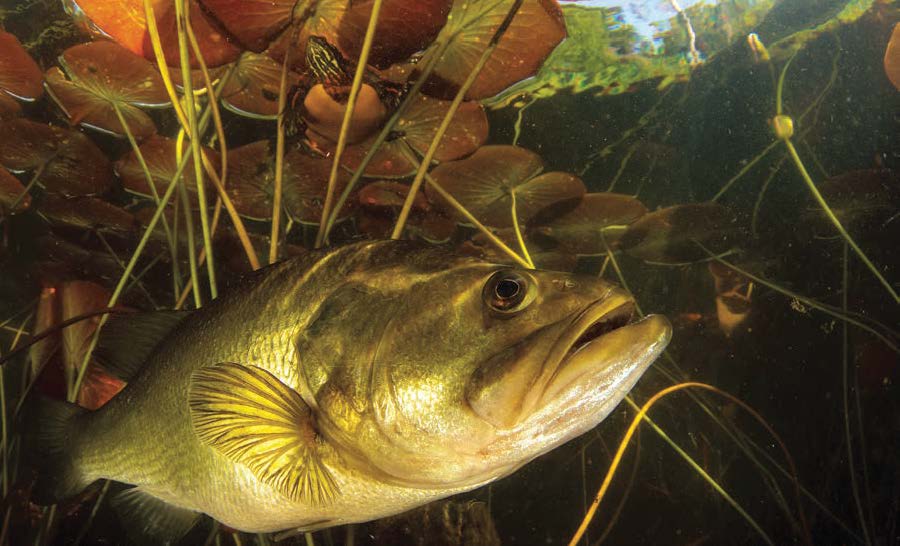
While I loved catching bluegills on my lightweight 8-lb. test line, I was after the much bigger largemouth bass that had been stocked in the pond years before. Dad’s high school classmate, whose house overlooked the pond, had caught numerous lunkers there over the years, including one that tipped the scales at nearly 10 pounds. I had youthful aspirations of catching not only a larger bass, but one that would rival the world record 22-pound, 4-ounce fish caught down in Georgia in 1932 by a poor farmer named George Perry — a record that stands to this day.
Largemouth bass are uniquely American, indigenous only to the North American continent, though they have been introduced into waters around the world, from Japan to Australia and Cuba to Brazil. According to the recently published book A Guide to North Carolina’s Freshwater Fishes, largemouth bass are native to every river drainage in the state, except for the New River. Over the years, they have been stocked into nearly every golf course pond, farm pond and manmade lake across the state.
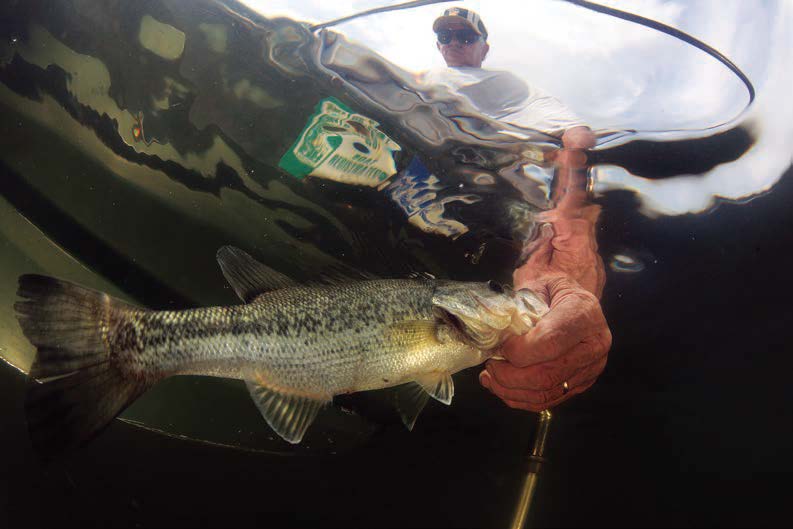
In 1802, French naturalist and politician Comte de Lacépéde bestowed the scientific name Micropterus salmoides upon the largemouth bass, mistakenly believing that the fish was a type of trout or salmon. Ichthyologists today recognize that the largemouth bass is actually a type of sunfish, closely related to bluegills. Despite the misnomer, the Latin name of the largemouth remains.
In the years following its formal description, largemouth bass were considered inferior fish by hoity-toity “sportsmen” of the era, most of whom preferred casting lines toward more upper-class finned quarry like trout. The winds started to change when James Henshall wrote The Book of Black Bass in 1881, an immensely popular tome that espoused, for the first time, that the largemouth bass was a worthy gamefish. Soon thereafter, President Theodore Roosevelt was championing fishing for largemouths.
Today, largemouth bass are instantly recognizable by most of the general public. Fishing for them adds billions of dollars to the economy each year, more so than other gamefish. To gauge just how popular the fish has become, simply walk into any Walmart from California to Florida and count the aisles that are stocked to the brim with rods, reels and countless lures dedicated to largemouth bass fishing. It seems that nearly every week, a largemouth fishing tournament is broadcast on some sporting channel. There are Bass Proshops in virtually every large city up and down the East Coast. Country music songs are even written about them.
I never did catch my record bass. The largest one I ever pulled from that Eagle Springs farm pond weighed no more than 4 pounds, though, depending on the social situation, I might exaggerate a little.
As I have aged, largemouth bass represent so much more than just a trophy. I have come to realize that they were a gateway fish to a lifetime of curiosity about the natural world. And, like so many who have spent time casting a line with their fathers, I have also come to realize those moments are finite and I will never get them back. Every cast, every tug of the line, every sunset I spent with my old man on that pond was precious.
A bass, however, wasn’t the biggest thing I hooked at that Eagle Springs pond. Dad and I laugh about it still, though it wasn’t all that funny at the time. I was 12 years old, give or take, and as always Dad and I would make our fishing trips into a friendly competition, judged by who caught the most fish, as well as the largest.
On this particular Saturday morning, we had just pushed off from shore in our old jon boat. I had a special Rebel Minnow topwater lure, recently purchased from a local bait and tackle shop, tied to my line. The lure, as the name suggests, mimics a tiny baitfish, and possessed a pair of barbed treble hooks at either end, near the head and tail. Dad was steering the boat toward a distant cove. In my eagerness to catch the first fish, I stared out onto the open water and immediately slung my rod far back over my shoulder. I belatedly heard Dad shout “No!” as I quickly followed through with my cast.
For a brief instant, there was a hard pull on the line, and then it suddenly snapped. Puzzled, I turned back toward Dad. To my horror, I saw the Rebel Minnow dangling down between my father’s eyes and resting on the bridge of his nose, a pair of hooks deeply embedded in his forehead. A droplet of blood trickled down over his brow and onto his shirt.
Panicked, I muttered a few choice words and apologized profusely over and over. Dad simply pointed the boat back toward shore. We got out of the water and walked up toward his old Ford pickup parked nearby. Despite me not having a driver’s license and barely being tall enough to reach the gas pedal, Dad handed me the keys and told me to drive over to his friend’s house on the opposite side of the pond.
At the time my father still smoked cigarettes — Marlboro Reds — and he calmly reached into the glove compartment, pulled one out, and lit it. Dad said no words at all. He simply took a few long drags off the cigarette as the fishing lure continued to dangle from his head, occasionally bouncing up and down with each pothole in the dirt road.
In what seemed like an eternity, but in actuality was just a few minutes, I pulled up to his friend’s house. Dad got out and rang the doorbell. I will never forget how all the color drained from his friend’s face when he saw that fishing lure stuck in Dad’s head. He quickly loaded Dad into his car and rushed him straight to the hospital. After a local anesthetic, a couple of stitches and a tetanus shot, Dad was as good as new. No scars at all. Well, at least physically.
Before leaving for the emergency room, Dad insisted I stay at the pond and continue fishing until they got back. I asked him what I should do while he was gone.
“Practice, son,” Dad responded. “Practice.”

By Susan Campbell
Everyone knows what a crow is, right? Well, no. Not exactly. It is not quite like the term “seagull,” which is generic for a handful of different species found near the coast. When it comes to crows, you can expect two species in central North Carolina in the summertime: the American crow and the fish crow.
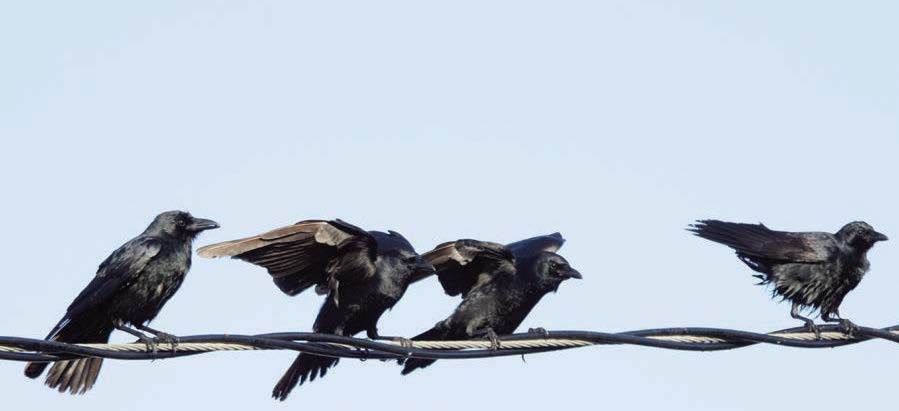
Telling them apart visually is just about impossible. However, when they open their beaks, it is a different matter. The fish crow will produce a nasal “caw caw,” whereas the American will utter a single, clear “caw.” That familiar sound may be repeated in succession, but it will always be one syllable. Young of the year may sound somewhat nasal at first, but they will not utter the two notes of their close cousin, the fish crow.
Both crows have jet black, glossy plumage. They have strong feet and long legs, which make for good mobility. They walk as well as hop when exploring on the ground. They have relatively large, powerful bills that are effective for grabbing and holding large prey items. Crow’s wings are relatively long and rounded, which allows for bursts of rapid flight as well as efficient soaring. The difference between the two species is very subtle: Fish crows are just a bit smaller. Unless you have them side by side, they are virtually indistinguishable.
Fish crows are migratory in our part of North Carolina. By the end of the summer flocks of up to 200 birds will be staging ahead of the first big cold front of the fall. Most of the population will be moving eastward come October. For reasons we do not understand, some fish crows will overwinter in our area. Other small groups are being found on Christmas Bird Counts each December across the region. Not surprisingly, the number of fish crows along our coast swells significantly by mid-winter. Visiting flocks do not stay long and are our earliest returning breeding birds, arriving by early February for the spring and summer. Almost as soon as they reappear, they begin nest building. Their bulky stick-built platforms are hard to spot, usually in the tops of large pines. Furthermore, crows tend to be loosely colonial, so two or three pairs may nest close together in early spring.
Although fish crows are often found near water, they wander widely. They are very opportunistic, feeding by picking at roadkill, taking advantage of dead fish washed ashore, sampling late season berries, digging up snapping turtle eggs, or robbing bird feeders all with ease. But they are also predatory. Even though they are large birds, they can be quite stealthy. It is not uncommon for these birds to hunt large insects in open fields, or frogs and crayfish at the water’s edge. Unfortunately, fish crows are very adept nest robbers and take a good number of eggs and nestlings during the summer.
These birds, as well as their American cousins, can become problematic. They are very smart and readily learn where to find an easy meal. At bird feeders, they will quietly wait until the coast is clear, especially if savory mealworms or suet can be had, and polish off every scrap in no time. Southern farmers, years ago, found an effective deterrent: hanging one of these birds in effigy to keep flocks from decimating their crops. Recently I acquired a stuffed crow from my local bird store in hopes this method would work around my feeding station. I have also been concerned about both species of crow preying on nearby nests. Amazingly, it does work, though I do move it regularly to keep the attention of passing would-be marauders. And it’s quite the conversation starter as well!


By Deborah Salomon
Now, in the sunset of my baking career, I realize that cookies, like clothes, define who we are. That definition is made possible by the plethora of commercial cookies in every shape, flavor and permutation, the poster child being Oreos. Yet questions remain: “How do you like your chocolate chip cookies? Crisp or mushy? Mini, regular or jumbo chips? Bittersweet or a sugar high? Homemade, bakery or commercial?”
For a baseline I offer this personal experience:
My mother adored sweets but never baked, unless you count brownies for the bridge luncheon and slice-and-bake icebox cookies in December, for people who “drop by.” Milano describes her prototype — two tongue-shaped wafers glued together with chocolate. So when push came to shove, she would spread a thin layer of simple chocolate frosting between two vanilla wafers. Back in the days of real vanilla, they were good. Now, the same ploy tastes like Styrofoam.
Milanos themselves have shriveled to nothing, but I love ’em anyway.
Back to matching cookie to personality.
Oreos: Do you twist and lick, or dunk whole? Each camp is battle-ready. Are you a classicist, who rails at Oreo yogurt, Oreo Cakesters?
Fig Newtons retain an almost biblical earthiness; their aficionados recall a time when Birkenstock meant more than a sandal, when only the co-op carried organic veggies. Strawberry Newtons miss the point, although dates might tempt the figgy crowd.
Lorna Doones? A favorite with proper Brits, who prefer a shortbread biscuit with their afternoon tea. Named after the central character in an 1869 British novel, LDs were introduced to the Colonies in 1912. Unpopularity/unfamiliarity now relegates them to an unreachable top shelf.
Garibaldi, the proper name for flat raisin cookies long gone from the monster roster, suited pranksters who insisted the raisins were squished bugs.
Biscotti, despite an Italian aura, belong to intelligentsia wearing plaid and cashmere for weekends at the cottage — a 14-room country manor in the highlands. Either that, or frequenters of the Seattle coffee scene, who know that “Starbuck” is a character lifted from Moby-Dick.
A person’s age may be determined by asking whether he/she remembers Social Teas, so plain and non-sweet I call them punishment cookies. However, they might rightly tempt dunksters with a texture that holds up to cocoa.
The emotionally stunted CEO whose mother denied him cookies because he wouldn’t finish his green beans now, to the ants’ delight, compensates by keeping a box of Nutter Butters in his desk drawer. After all, peanut butter is protein.
Graham crackers, for generations baby’s first treat (since they dissolve in drool), recaptured campfire folks’ attention as s’mores. Recognize s’mores-lovers by their burnt fingers, chocolate-stained T-shirts and faces. At least this mess is worth it.
Is lemon the new chocolate? Observe the interest in Oreo Lemon Thins and Sunkist Thin Shortbread with Lemon Crème Filling. They are cheerful cookies for the smiley-faced set. But watch out, you citrus-seekers. Not all that lemon zing comes from real lemons.
I was terribly upset when Biscoff jumped from passenger flights to supermarket shelves. Aloft, they cause crumbs and greasy fingers. The very mention dredges up memories of long delays, bumpy rides. They make me miss the cute little meal dispensed by flight attendants who weren’t Social Security eligible. When baggage flew free in the underbelly instead of a jammed-up overhead compartment.
A pox on Biscoff!
Picture a svelte 50-something Manhattan career gal, wearing a little black dress and real pearls, slicing a real chocolate wafer icebox cake made with real whipped cream. Alas, Nabisco has discontinued the cookie that made a million reputations. So far, urbanites have found no replacement. Don’t give up. If Voortmans can field an oxymoronic Zero Sugar Fudge Brownie Chocolate Chip cookie, anything’s possible.