Simple Life

SIMPLE LIFE

Bravo, Ben Franklin

And may there be more questions and answers on the road ahead

By Jim Dodson

My wife, Wendy, and I are a true marriage of opposites. She’s your classic girl of summer, born on a balmy mid-July day, a gal who loves nothing more than a day at the beach, a cool glass of wine and long summer twilights.

I’m a son of winter, born on Groundhog Day in a snowy Nor’easter, who digs cold nights, a roaring fire and a knuckle of good bourbon.

With age, however, I’ve come to appreciate our statistically hottest month in ways that remind me of my happy childhood.

Growing up in the deep South during an era before widespread air conditioning, I have fine memories of enjoying the slow and steamy days of midsummer.

Like most American homes in the late ’50s and early ’60s, the houses where we lived during my dad’s newspaper odyssey across the deep South were cooled only by window fans and evening breezes. The first time I encountered air conditioning was in a small town on the edge of South Carolina’s Lowcountry, where only my father’s newspaper office and the Piggly Wiggly supermarket were air-conditioned.

Trips to the grocery store or his office were nice, but I had my own ways to beat the heat. I’d pedal my first bike around the neighborhood or crawl beneath our large wooden porch, where I’d conduct the Punic wars with my toy Roman soldiers in the cool, dark dirt.

On hot summer afternoons, I’d sit in a wobbly wicker chair on the screened porch, reading my first chapter books beneath a slow-turning ceiling fan, keeping a hopeful eye out for a passing thunderstorm, probably the reason I dig ferocious afternoon thunderstorms to this day.

July also brings the Fourth of July, our national Independence Day, which I unexpectedly gained a new appreciation for during my long journey down the Great Wagon Road over the past six years. The Colonial backcountry highway brought my Scottish, German and English ancestors (and probably yours) to the Southern frontier in the mid-18th century.

My fondest memory of celebrating the Fourth was sitting on a grassy fairway at the Florence Country Club, watching my first fireworks display. My mother brought along cupcakes decorated with red, white and blue icing.

That same week, Mr. Simmons, a cranky old fellow on our street, told my best friend, Debbie, and me that “only Yankees celebrate the Fourth of July because they won the War Between the States.”

My dad, a serious history buff, told me this was complete hogwash and began taking my older brother and me to hike the Revolutionary War battlefields of South Carolina at Camden, Kings Mountain and Cowpens, drawing us into the story of America’s fight for independence from Great Britain. When we moved to Greensboro in 1960, one of our first stops was the  Guilford Courthouse National Military Park, where the pivotal battle of the Revolutionary War was fought.

My favorite Fourth of July celebration took place at Greensboro’s Bur-Mil Club in the mid-1960s. It was a lovely affair that featured races in the swimming pool and a par-3, 9-hole golf tournament for kids, followed by a huge company picnic in the dusk before a fireworks display.

That summer, I joined the club’s swim team and even briefly set a city record for 10-and-under in the backstroke, developing a daily routine that made beating midsummer heat a breeze. Every morning after swim practice, I played at least 27 holes under the blazing sun (bleaching my fair hair snow-white by summer’s end), grabbed a hot dog and Coke in the club snack bar for lunch, then headed back to the pool to cool off before my dad picked me up on his way home from work. Looking back, it was hard to beat that summertime routine.

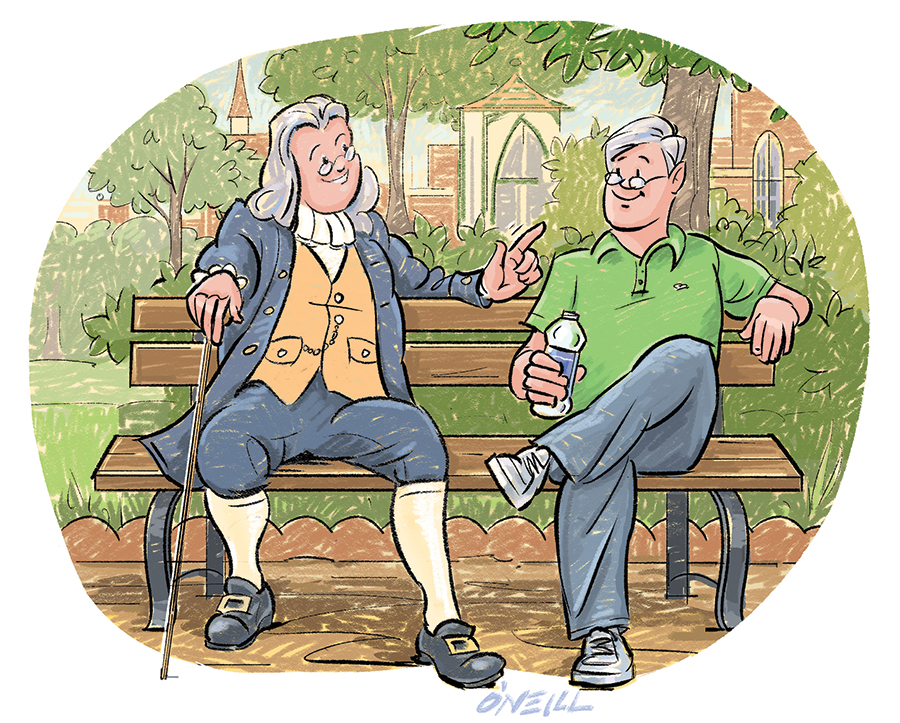
Fast forward several decades, I was thinking about these pleasant faraway summers on the first day of my journey down the Great Wagon Road, beginning in Philadelphia. The city was still draped in the tricolors of Independence Day amid a record-breaking heat wave. After a morning hike around the historic district, I walked into the shady courtyard of the historic Christ Church, hoping to find some relief, but found, instead, Benjamin Franklin sitting on a bench.

I couldn’t believe my good luck. Rick Bravo was a dead ringer for Philly’s most famous citizen and said to be the most beloved of Philly’s Ben Franklin actor-interpreters. 

He invited me to share the bench with him while he waited for his wife, Eleanor, to pick him up for a doctor’s appointment.

Over the next hour, Ben Franklin Bravo (as I nicknamed him) regaled me with several intimate insights about my favorite Founding Father, including how “America’s Original Man” shaped its democratic character and even had a hand in designing the nation’s first flag, sewn by Betsy Ross.

I thanked him for his stories and wondered if I might ask one final question.

He gave me a wry smile and a wink.

“God willing, not your last question nor my last answer,” he replied with perfect Franklin timing, casually mentioning that he was scheduled to undergo heart surgery within days.

I asked him what it was like channeling Benjamin Franklin.

Rick Bravo glanced off into the shadowed courtyard, where a mom and three small kids were cooling off with ice cream cones, chattering like magpies. My eyes followed his.

He grew visibly emotional.

“Let me tell you, it’s simply . . . wonderful. Next to my wife and children, being Ben Franklin is the most meaningful thing in my life.”

He told me how he met Eleanor many decades ago in the first of their many musical performances together, a major production of Oliver!

“Like America itself, we’ve weathered the ups-and-downs of life with lots of grace from the Almighty and a good sense of humor. As Ben Franklin himself observed, both are essential qualities for guiding a marriage or shaping a new country.”

Looking back, my hour with the man who was Ben Franklin proved the most memorable conversation of more than 100 interviews I conducted along the Great Wagon Road.

He even suggested that I drop by Betsy Ross’s shop over on Arch Street to buy a replica of the young nation’s first flag as a symbol of the birth of America.

Over the next five years, I carried this beautiful Ross flag, with its red-and-white stripes and circle of 13 stars, the only purchase I made during my entire 800-mile journey, down the road of my ancestors.   

To celebrate publication of my Wagon Road adventure this month, my Betsy Ross flag will proudly hang in front of my house for the first time, a gesture of gratitude to the dozens of inspiring fellow Americans I met on my long journey of awakening.

It will also hang in memory of my dear friend, Ben Franklin Bravo, my first interview on the Great Wagon Road, who died in January 2022.

I understand that Eleanor sang “Where is Love?” to him from their first musical together as he passed away.

The Great Wagon Road Odyssey

THE GREAT WAGON ROAD ODYSSEY

THE GREAT WAGON ROAD ODYSSEY

A pilgrimage half a century in the making

By Jim Dodson

Not long ago, during a breakfast talk in a retirement community about my forthcoming book on the Great Wagon Road, I was asked by a woman, “So, looking back, what would you say was the most surprising thing about your journey?”

“Everything,” I answered.

The audience laughed.

The first surprise, I explained, was that it took me more than half a century to find and follow America’s most fabled lost Colonial road that reportedly brought more than 100,000 European settlers to the Southern wilderness during the 18th century. As I point out in the book’s prologue, I first heard about the GWR from my father during a road trip with my older brother in December 1966 to shoot mistletoe out of the ancient white oaks that grew around his great-grandfather’s long-abandoned homeplace off Buckhorn Road, near the Colonial-era town of Hillsborough.

The first of many surprises was the discovery that my father’s grandmother, a natural healer along Buckhorn Road named Emma Tate Dodson, was possibly an American Indian who had been rescued and adopted as an infant by George Washington Tate, my double-great-grandfather, on one of his “Gospel” rides to establish a Methodist church in the western counties of the state.

A second surprise came during the drive home when the old man pulled over by the Haw River to show my brother and me a set of stones submerged in the shallows of the river — purportedly the remains of G.W. Tate’s historic gristmill and furniture shop.

“Boys, long ago, that was your great-great-granddaddy’s gristmill, an important stop on the Great Trading Path that connected to the Great Philadelphia Wagon Road that brought tens of thousands of European settlers to the South in the 18th century, including your Scottish, German and English ancestors.”

This was pure catnip to my lively eighth-grade mind. Owing to a father whose passion for the outdoors was only matched by his love of American history, my brother and I were seasoned explorers of historic Revolutionary and Civil War battlefields.

“Can we go find it?” I said to him.

He smiled. “How about this, Sport. Someday I’ll give you the keys to the Roadmaster, and you can go find the Wagon Road.”

I searched for years but found only the brief occasional mention of the Great Wagon Road in several histories of the South, but nothing about where it ran and what happened along it. The road seemed truly lost to time.

Forty years later, however, the Great Wagon Road found me.

On my first day as writer-in-residence at Hollins University in Virginia in 2006, I took a spin up historic U.S. Highway 11 — the famed Lee-Jackson Highway — and was surprised to come upon a historic roadside marker describing the “Old Carolina Road” that was part of the 18th century’s “Great Philadelphia Wagon Road.”

The sweet hand of providence was clearly at work, for the next day, while browsing shelves at a used bookshop in the Roanoke City Market, I found a well-worn copy of a folksy history called The Great Wagon Road: From Philadelphia to the South, by Williamsburg historian Parke Rouse Jr. I purchased the book (originally published in 1973 and long out of print) and read it in one night, taking notes. I also attempted to track down author Parke Rouse Jr. but discovered he’d been deceased for many years.

Still, the cosmos had cracked open a door, and I began collecting and reading all or parts of every history of America’s Colonial era that I could lay hands on for the next decade, eventually building a personal library of more than 75 books. About that same time, I purchased a 1994 Buick Roadmaster Estate station wagon from an elderly man in Pinehurst, almost identical to the one owned by my late father in the mid-1960s. Pinehurst pals playfully nicknamed it “The Pearl,” which turned out to be among the last true “wagons” built by Detroit before they switched to making SUVs.

I suddenly had my very own wagon. Now all I had to do was find the most traveled road of Colonial America to travel in it. 

Eight years later, thanks to the late North Carolina historian Charles Rodenbough and other history-minded folks, I discovered that I wasn’t alone in my quest — that, in fact, a small army of state archivists and local historians, genealogists, “lost road” experts, various museum curators and ordinary history nuts like me had finally cracked the code on the road’s original path from Philly to Georgia.

By the spring of 2017, I and my traveling pal, Mulligan the dog, were ready to roll when another big surprise — an exploding gallbladder and a baby carrot-sized tumor in my gut — required surgery and a four-month recovery.

Finally, on a steamy late August night, I began my journey (minus Mully, alas, owing to her age and one of the hottest summers on record) at Philadelphia’s historic City Tavern, which claims to be the birthplace of American cuisine. As I enjoyed a pint of Ben Franklin’s own spruce beer recipe and nibbled on cinnamon and pecan biscuits from Thomas Jefferson’s own Monticello cookbook, I eavesdropped like a tavern spy from Robert Louis Stevenson on three couples having a rowdy celebration of matrimony and a game of trivia based on American history that kept going off the rails.

At one point, a young woman called out a question in clear frustration: “Where and what year were the Articles of Confederation, the nation’s first constitution, adopted?”

None of her mates answered.

So, I did. “I believe it was York, Pennsylvania, in November 1777.”

Her name was Gina. She gave me a beaming smile and scooted her chair close to mine. “Correct! How did you know that?”

“Because it happened on the Great Wagon Road.”

What ensued was a delightful conversation about a frontier road that shaped the character and commerce of early America, the historic Colonial road that opened the Southern wilderness and became the nation’s first immigrant highway — the “road that made America,” as my friend Tom Sears, an Old Salem expert on Colonial architecture, described it to me.

Gina was thrilled to learn about it and apologized that she’d never heard its name.

I assured her that she wasn’t alone. Most Americans living today have never heard its name spoken, yet it’s believed that one-fourth of all Americans can trace their ancestral roots to the Great Wagon Road in one way or another.

Charmed and fascinated, Gina wondered how long it would take me to travel the road from Philly to Augusta, Georgia.

I mentioned that settlers took anywhere from two months to several years to reach their destinations depending on the weather and unknown factors like disease, getting lost or encountering hostile native peoples or wild animals.

“I plan to travel the entire road in three or four weeks,” I said. “I’ve spent years researching it.”

Silly me. God laughs, to paraphrase the ancient proverb, when men make plans.

A third big surprise came at the end of my third week on the road. I hadn’t even gotten out of Pennsylvania.

On the plus side, I’d met and interviewed so many fascinating people who were passionate keepers of their own Wagon Road stories, I realized I’d just tapped the surface of the trail’s saga.

Instead of writing an updated history of the Great Wagon Road, as originally planned, I borrowed a strategy from my late hero Studs Terkel and decided that the real story of the Wagon Road lay in the voices of the people living along it today, keeping its stories alive — the flamekeepers, if you will, of the “road that made America.” If it took a full year to complete my travels, so be it.

Instead, subtracting 12 months for COVID, it took six years and counting.

My focus on the storytellers proved to be deeply rewarding, introducing me to a broad array of Americans from every walk of life and political persuasion whose vivid and often untold tales about the development of a winding and once forgotten Colonial road (originally an American Indian hunting path that stretched from Pennsylvania to the Carolinas) carried our ancestors into the Golden West and shaped the America we know today, hence the book’s main title: The Road That Made America. Unexpectedly, their voices and stories ultimately restored my faith in a country where democracy — and civic discourse — was supposedly in short supply.

Looking back, this was the nicest surprise of all. For what began simply as an armchair historian’s quest to find and document America’s most famous lost road ended as nothing less than a powerful, emotional pilgrimage for me.

At the journey’s end, while I was heading home through the winter moonlight on a winding highway believed to be the path Lord Cornwallis took while chasing wily Nathanael Greene to the Dan River, I had a final revelation of the road’s impact on me:

. . . a true pilgrimage is said to be one in which the traveler ultimately learns more about himself than the passing landscape.

Perhaps this is true. But for the time being, it’s enough to think about some of the inspiring people and stories that gave me hope in a nation where democracy is said to be hanging by a thread: an old Ben Franklin and a young Daniel Boone, the Susquehanna Muse, real Yorkers, the candlelight of Antietam, a Gettysburg living legend, an awakening at Belle Grove Plantation, Liberty Man, the passion of Adeela Al-Khalili, good old cousin Steve, a lost Confederate found, a snowy birthday in Staunton, and final road trips with Mully.

Without question, my life and appreciation of my country have both been enriched by the people and stories of the Great Wagon Road.

This was the nicest surprise of all.

A Little Gem

A LITTLE GEM

A Little Gem

Sweet, small and smart

By Deborah Salomon 
Photographs by John Gessner

Pinehurst has become an enclave of castles and cottages, outdoor showers and indoor pools, antiques and art, dog grooming parlors and tech control rooms accommodating generals and musicians, bankers, brewers, judges and surgeons. From this residential potpourri a new genre emerges: the little gem.

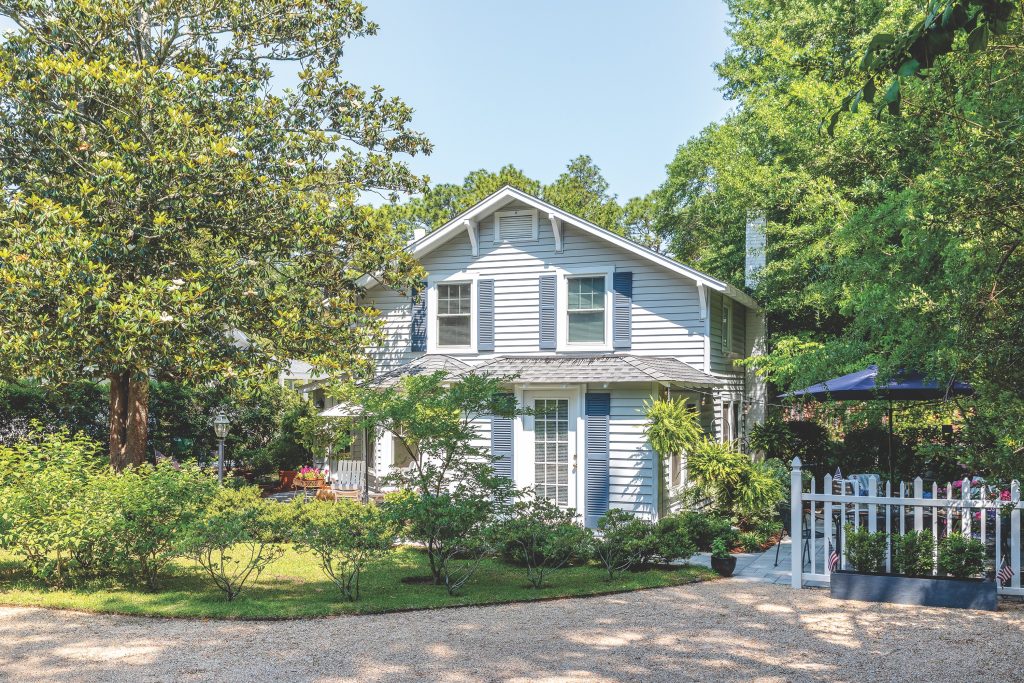
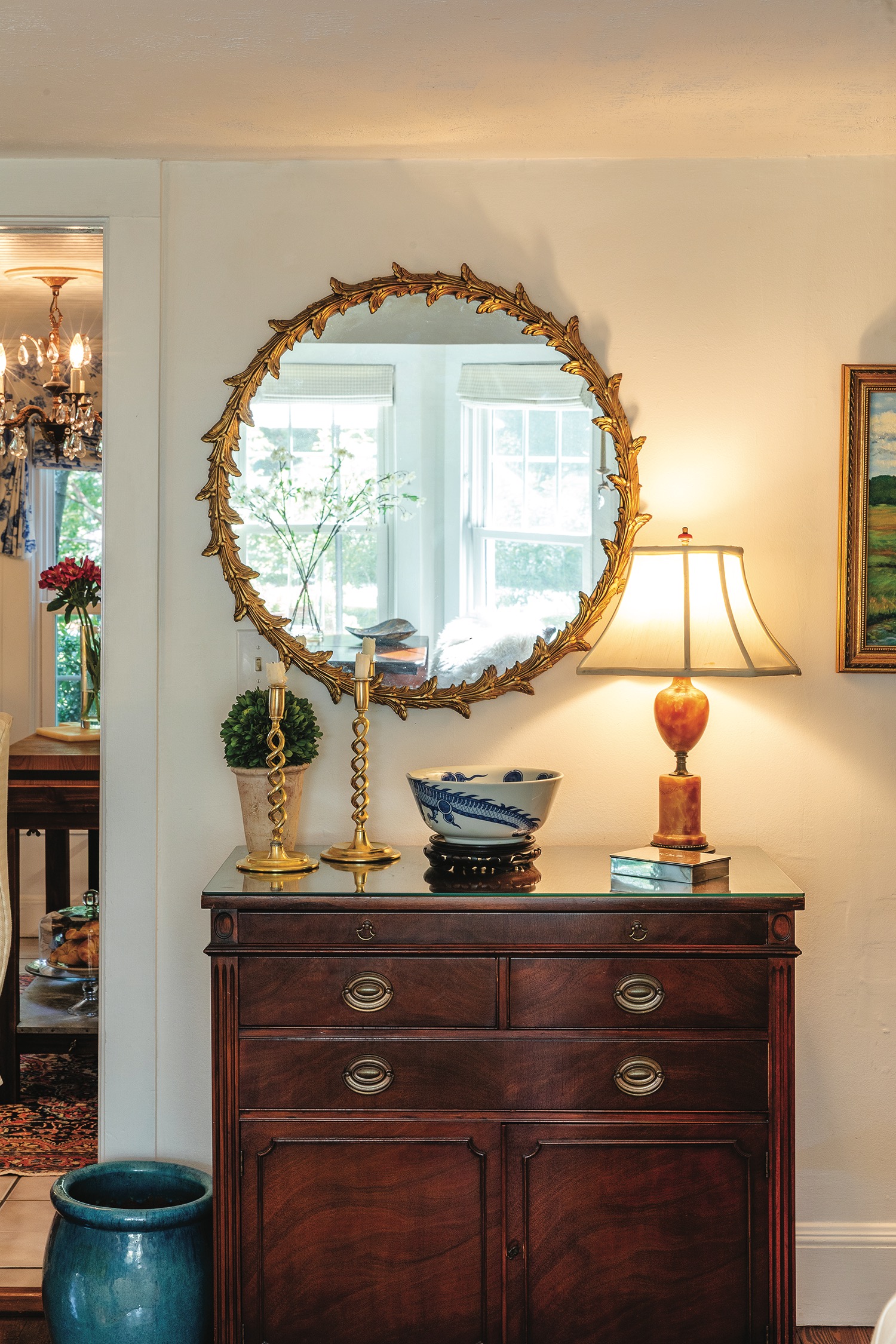
A prime example is the cottage tucked into a quiet, lesser known lane on the edge of a newish residential area. Pinehurst estates have garages bigger than its 820 square feet.

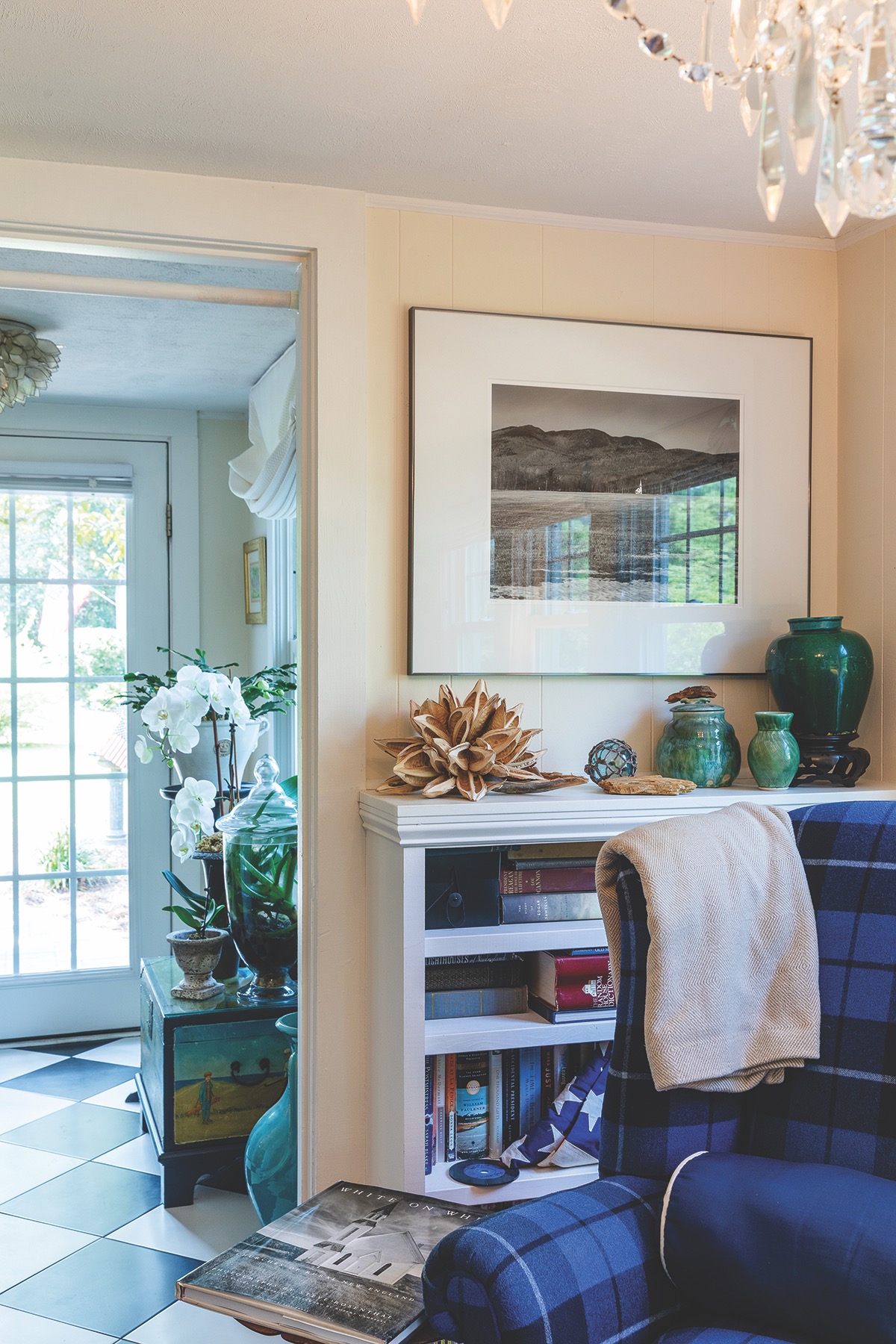
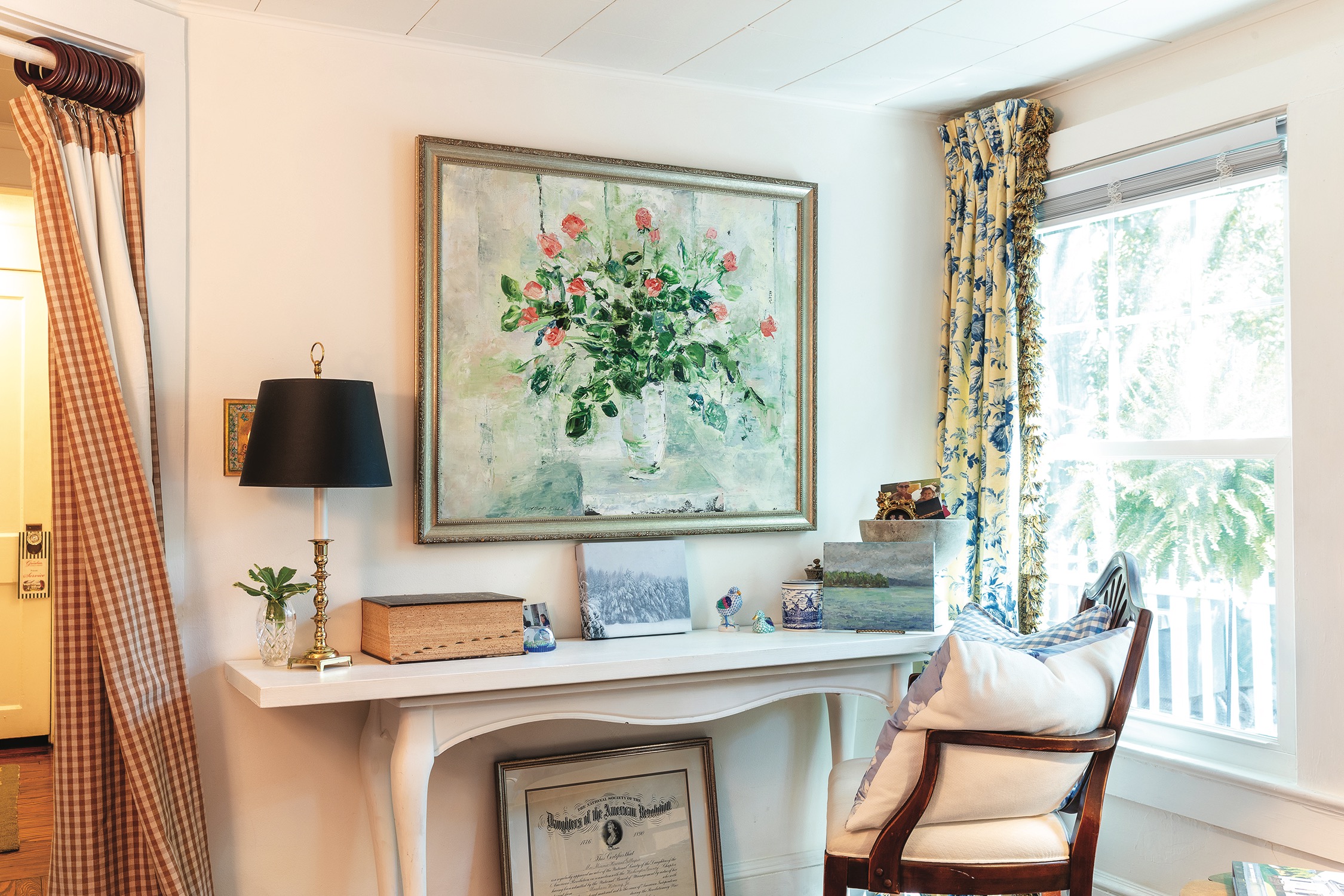
This little gem presents an optical illusion: classic furniture in dark woods is scaled for a larger house but sits comfortably uncrowded in small rooms with low ceilings and a patchwork of floorboards that suggest additions after its completion in 1941. Soon, its intimate parlor, with a few adjustments, will welcome a baby grand piano.

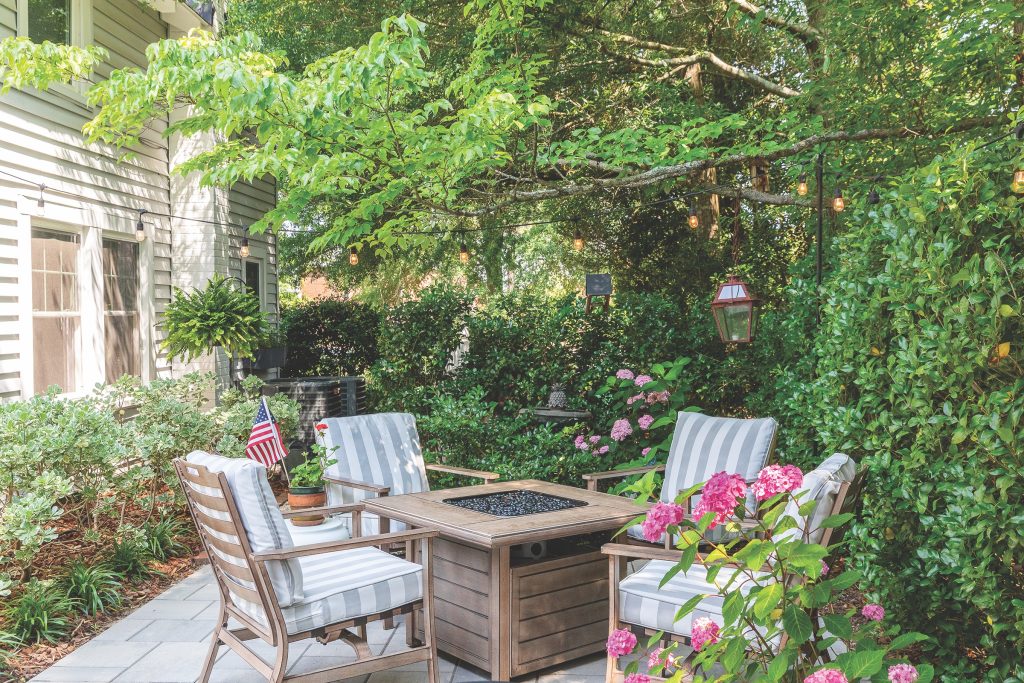
The sorceress performing this magic is Tess Gillespie, who also turned a patio into a garden with seating for a dozen guests — or her children and grandchildren. Bear in mind, the house has no dining room, just a drop-leaf table to pull out when required, and a sweet little bench in the kitchen, where two, maybe three, can add chairs for brunch.

Of course this one bedroom, one bathroom Lilliputian lifestyle requires some sacrifices: no bathtub; no giant TV screen; no walk-in closets; and, by choice, no dishwasher.

What was this residential iconoclast thinking?

The story opens as do many Pinehurst relocations. Tess grew up in the Boston area, loving the sea — hence seascape art dominating the walls. Like other Northern cosmopolites, she and husband Bill looked for a vacation home in a warmer climate rich in facilities, including golf. They tried Florida.

“We didn’t want a condo,” Tess recalls. Driving through Pinehurst they spotted a For Sale sign on the cottage and an adjacent building lot. They purchased the package in 2004, built a new house on the lot and moved into it a year later. Tess has such fond memories of their short time in the cottage that after Bill died in 2013 she worked it up and moved back in.

“We were happy here,” she says. Besides, she muses, “I’ve never been one who loves a big house. Downsizing is freeing.”

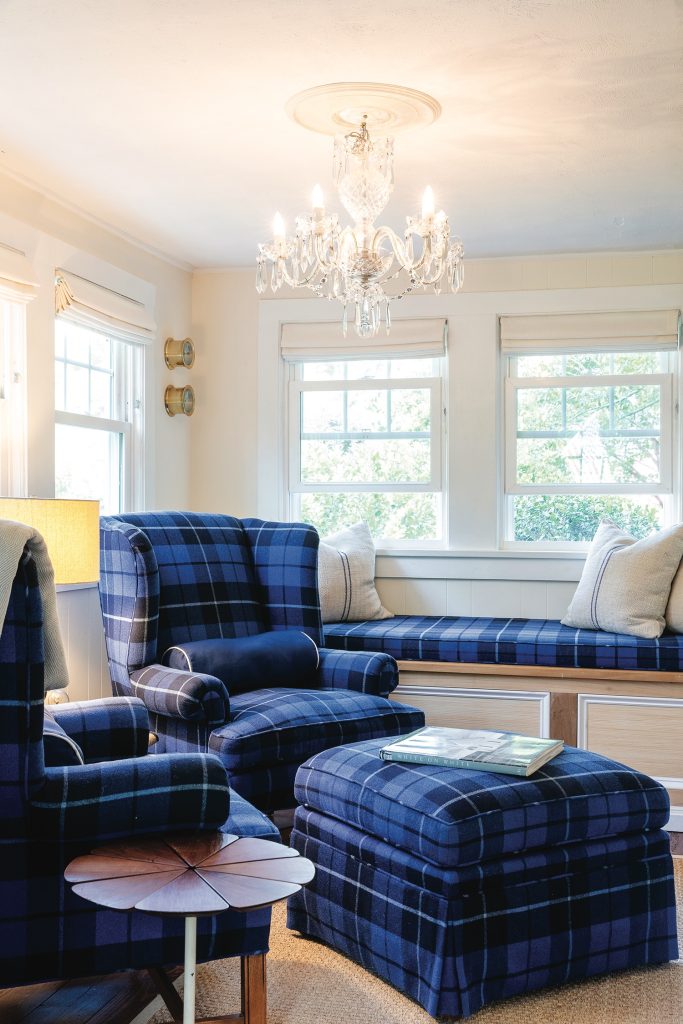
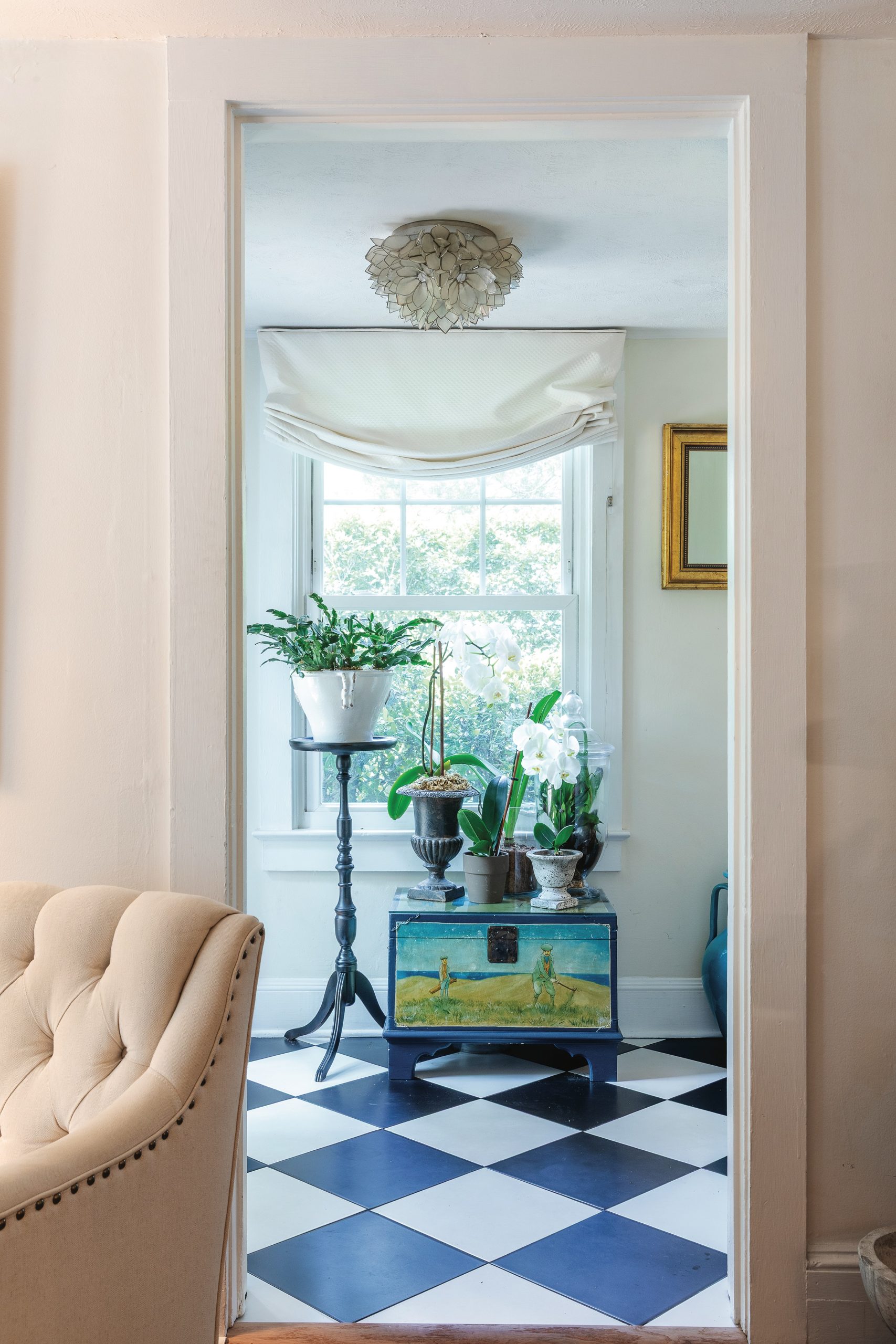
Tess brought experience and taste to the task gained while working for Laura Ashley, Lord & Taylor and other high-end fashion and home goods retailers. She decided on a milky/linen white for walls throughout, which she painted herself. Fabrics, where required, are printed in bright navy blue.

“My mother had a great eye for furniture,” Tess says. When she died, Tess and her sisters met and divided up these household treasures. “We cried, we laughed, we remembered . . . ” Results of this and other forays included large wing chairs and a one-armed settee in the living room. On the settee are cushions made from her father’s fisherman knit sweaters.

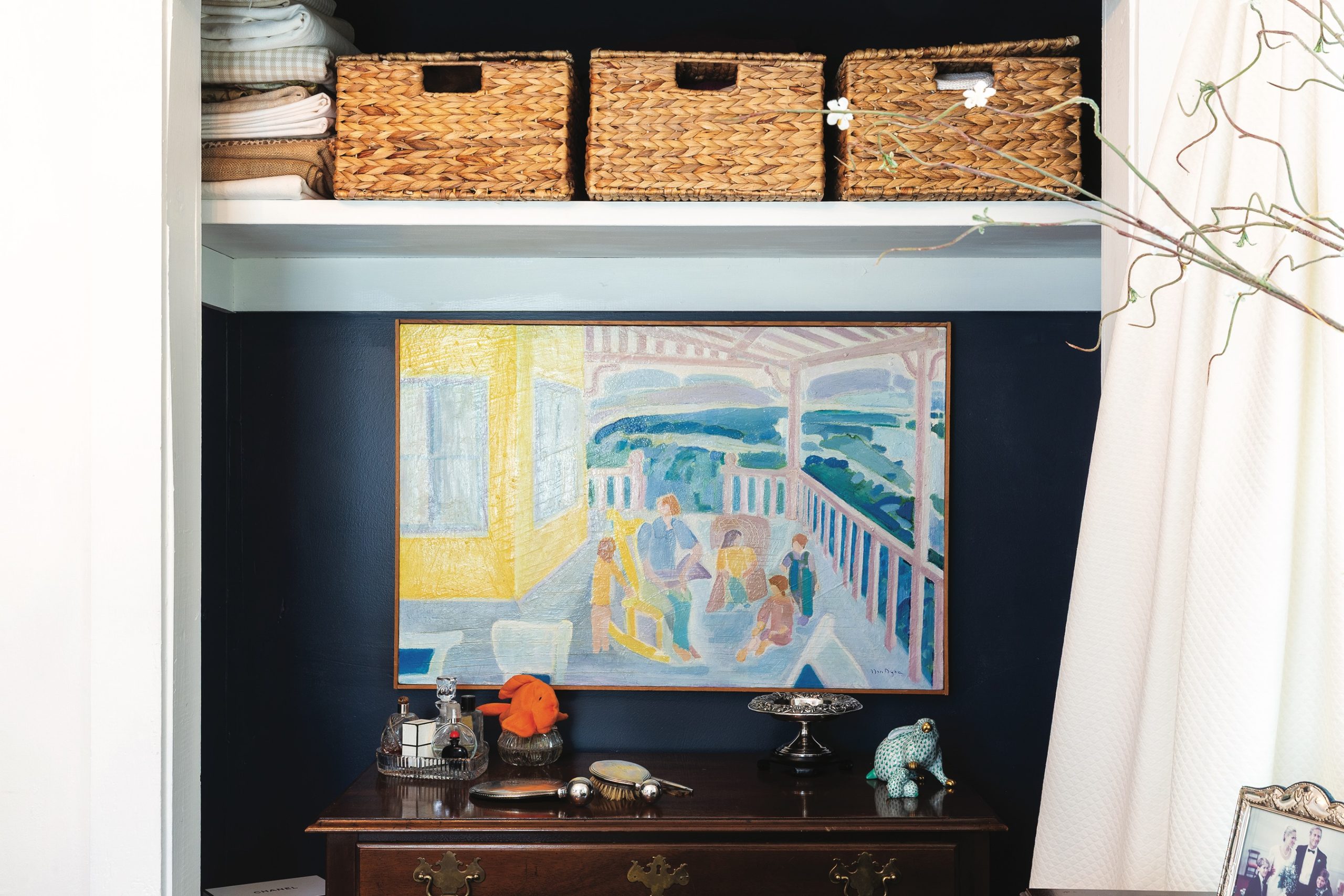
Tess replaced several space-gobbling doors with curtains and built a window seat with a mattress to accommodate any unexpected guests. The only true bedroom barely contains a queen bed and long dresser. The remodeled bathroom squeezes in a glass stall shower and stacked washer and dryer.

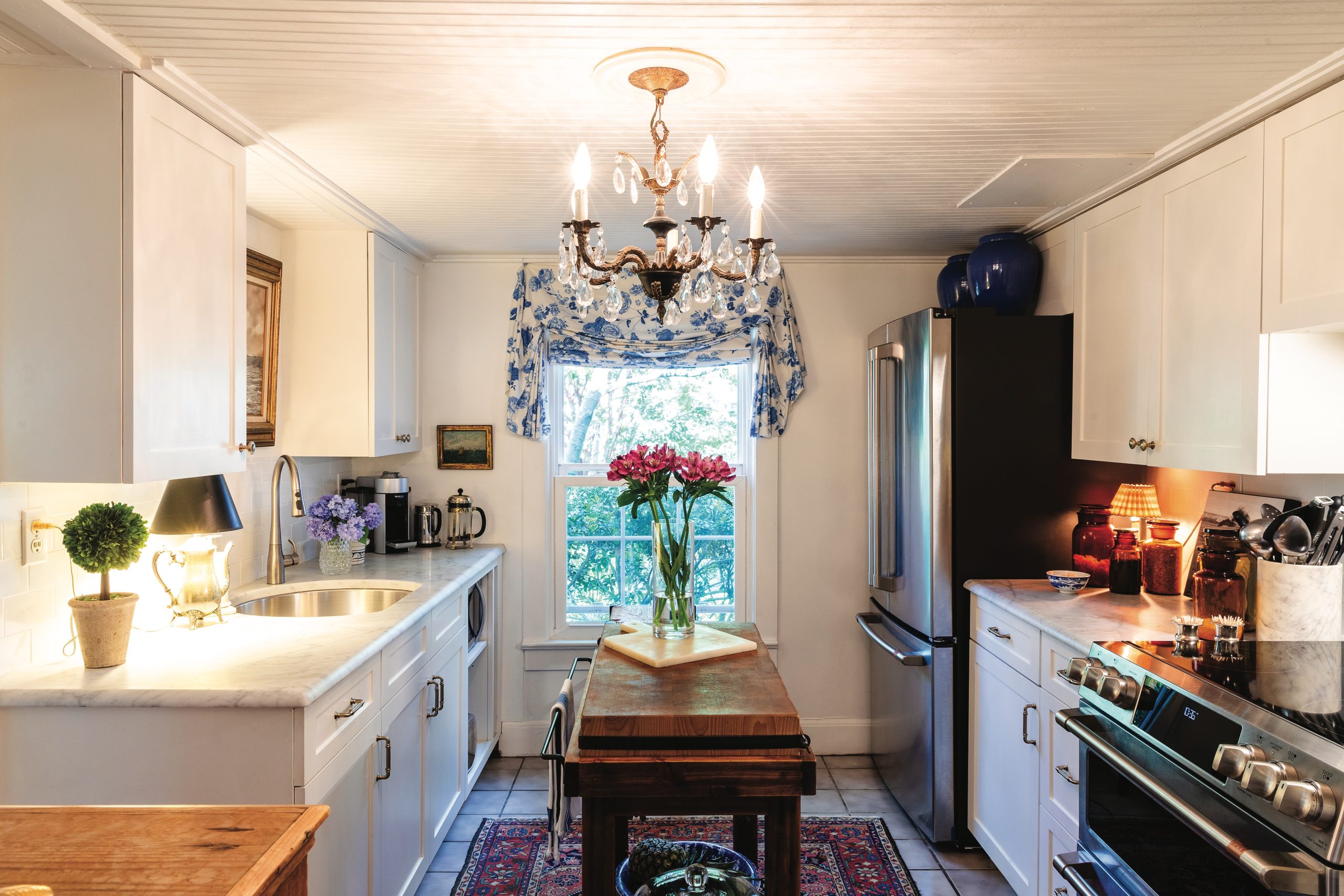
The kitchen, visible from the sitting room, is a slim galley with country French touches. Tess opened the space under the stairway to a second floor apartment (grandfathered as a rental) for a pantry displaying jars and baskets. The countertop is thick, heavy marble; the island, that dark, narrow wooden bench. The chandelier is weathered brass. Tess replaced the dishwasher with an oversized round metal sink, hearkening back to times she and her sisters would laugh, talk and do dishes together in their family home.

Tess, who works part-time in a local real estate office, has a way with flowers. White orchids bloom throughout the house. A small office overlooks her informal gardens, in full bloom.

As much as style and innovation, this mini-gem, barely visible from the street, represents the philosophy of a wise woman. “I have an independent spirit,” says Tess. “I know I can do things, and I’ve learned to compromise and do things myself.” Like create an environment, totally her, filled with talismans.

“I feel safe and secure here . . . the house makes me happy because this is where Bill and I started,” she says. “I don’t want ‘big’ or more stuff. Really, what more do I need?”

Out of the Blue

OUT OF THE BLUE

Mothers of Invention

A machine for every task

By Deborah Salomon

The happy truth is Americans have invented and popularized an appliance to perform almost any heretofore manual or mental task, from baby monitors to heart surgery and self-driving cars. The most ubiquitous: cellphones. I love how businesses assume every American owns and uses a cellphone to the fullest extent of its capabilities.

Don’t get me wrong. I’m certainly not knocking them. That would be like knocking Taylor Swift. Or penicillin. Cellphones save lives. But their presence, especially the apps, precludes down time, a blissful indulgence fading fast. There’s proof aplenty in any airport departure lounge, where I slouch in a corner seat, eyes closed, waiting out the delay, while fellow passengers watch Martha Stewart dunk biscotti or Cooper Flagg dunk a basketball.

How about gas fireplaces? A wood-burning fireplace is meant to warm a room. Its beauty and aroma are added attractions. The sight of a glowing log turning to ash doesn’t result from a flipped switch. Why not just put a crackling fire from Netflix on the flatscreen, take the money you saved and buy a cord of dry wood and a bundle of kindling?

Air fryer ovens are huge. Maybe Emeril Lagasse has a mile-long counter, but most kitchens barely accommodate a blender, toaster, food processor and coffeemaker. Yet the ads are so tempting. Let’s build an addition on the house.

Tankless hot water heaters? Sure, you won’t need a clumsy tank in the basement or utility closet. But a power failure shuts off hot water immediately.

I rise long before the sun — and turn on the TV, rich in ads for snake oil, love potions and gadgets like a pedal exerciser where, it seems, electricity pushes the pedals and feet/legs go along for the ride. “So quiet your co-workers won’t know you’re using it.” Personally, I prefer a side of noise and a splash of sweat with my exercise.

But I’d have a hard time living without residential AC.

I don’t hear much about “smart” homes anymore — the kind where you can turn up the heat, switch on the lights and sound system while you’re driving home on the Interstate. That always sounded creepy to me, maybe even dangerous.

Talk about creepy . . . computer-generated personal assistants like Siri, who provide information and answer questions. Most are female, perhaps some kind of 21st century continuation of the cute little secretary image?

And, when your self-driving, self-navigating, self-parking car suffers a fender-bender, how do police or insurance adjusters determine blame, aka, human error?

Occasionally, an improvement backfires. When digital clocks replaced analog, a generation of children had trouble telling time. Same thing, when Velcro replaced shoelaces and the overhand knot became an endangered species.

Of course these are exceptions leading up to the bogeyman called AI, which not even its formulators can explain.

No thanks. I have enough trouble with the real stuff.

PinePitch

PINEPITCH

PinePitch July 2025

Everything is Just Peachy

It’s Peach Week and time to stake out a spot on the lawn to enjoy PeachGrass Summer, an evening of bluegrass and folk music sponsored by the Pinehurst, Southern Pines, Aberdeen Area Convention & Visitors Bureau at the Weymouth Center for the Arts & Humanities, 555 E. Connecticut Ave., Southern Pines. The evening opens with Ice Cream for Breakfast, followed by North Carolina native Cooper Morona and the main event: The Red Clay Ramblers with Bland Simpson. Bring your lawn chairs, blankets, picnic baskets and settle in. Food trucks, beer, wine and special peach desserts will be on hand. For additional info go to www.weymouthcenter.org.

Book It

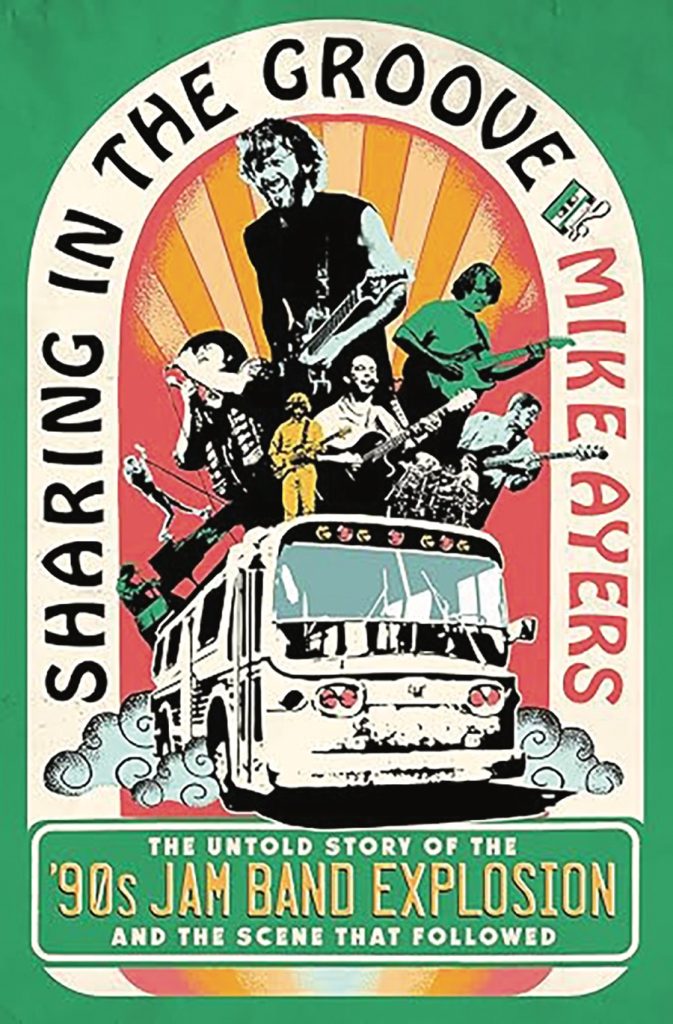
Jump on an online conversation between Mike Ayers, author of Sharing in the Groove, and Kimberly Daniels Taws from noon to 1 p.m. on Wednesday, July 23. Filled with anecdotes and stories directly from the musicians, promoters, managers, roadies, et al., Sharing in the Groove is the oral history behind the rise of Phish, Dave Matthews Band, Widespread Panic, Blues Traveler and other bands that helped define the 1990s music scene. Then, on Monday, July 28, The Country Bookshop, 140 N.W. Broad St., Southern Pines, welcomes Karen White to discuss her book The Last Carolina Summer, a tale of sisterhood and secrets set in the South Carolina Lowcountry. Registration for both events is through www.ticketmesandhills.com.

A Cool, Cool Summer

Judson Theatre’s Summer Festival kicks off July 11 in BPAC’s intimate black box theater with I Do! I Do!, a musical with book and lyrics by Tom Jones and music by Harvey Schmidt. Based on Jan de Hartog’s play The Fourposter, I Do! I Do! is the story of the ups and downs of Agnes and Michael over 50 years of marriage. The 10 performances run July 11-13 and July 17-20. It’s followed by 10 performances of Dear Jack, Dear Louise, beginning Aug. 1-3 and finishing Aug. 7-10. Dear Jack, Dear Louise, by Tony Award-winning playwright Ken Ludwig, is the true story of the courtship of Ludwig’s parents, two strangers — a military doctor in Oregon and an aspiring actress in New York City — who meet by letter during World War II and dream of being together though the war keeps them apart. For the first time Judson Theatre will offer reserved seating in the McPherson Theater at the Bradshaw Performing Arts Center, 3395 Airport Road, Pinehurst. Afternoon matinees of both plays feature talk-back sessions with the actors. Tickets begin at $34, excluding fees, and can be purchased at www.ticketmesandhills.com.

Oh, Say Can You See

America’s birthday celebration, Pinehurst style, begins on Thursday, July 3, with a free concert featuring the music of The Ray Band and a fireworks display featuring all kinds of ooohs and aaahs. There will be kids’ activities with food trucks and beverages on hand to keep the energy levels up. Fireworks begin at 9:15 p.m. Then, on the Fourth of July, the Pinehurst Independence Day Parade begins at 9:45 a.m. with the pet parade followed by the real deal through the streets of the village. Grab a spot at Tufts Memorial Park, 1 Village Green Road W., Pinehurst.
Need more info? Go to www.vopnc.org.

Seeing Stars

Teens ages 13 to 16 can visit the Morehead Planetarium and Science Center on the campus of the University of North Carolina in Chapel Hill from 1 p.m. to 6:30 p.m. on Saturday, July 19. The outing is sponsored by Southern Pines Parks and Rec and includes dinner at Raising Cane’s in Chapel Hill following the tour. Buses depart from the Recreation Center at Memorial Park, 160 Memorial Park Court, Southern Pines. Cost is $29 for residents and $40 for non-residents. For more information call (910) 692-7376.

Into the Great Wide Open

Join Somewhat Petty, the Asheville-based tribute band that plays the hits of Tom Petty and the Heartbreakers (and a Traveling Wilbury or two), on Saturday, July 19, from 8 p.m. to 11 p.m., on the stage of the Sunrise Theater, 250 N.W. Broad St., Southern Pines. Made up of of six musicians, the band has appeared in venues across the Carolinas including The Orange Peel, the Diana Wortham Theatre, the Grey Eagle Music Hall and Pub, The Ramkat and the Radio Room. Tickets start at $25 for general admission. For information go to www.sunrisetheater.com or call (910) 692-3611.

First Friday Welcomes August

It’s August 1. It’s Friday. It’s toasty everywhere. So might as well let The Jonathan Robinson Band turn up the heat from 5 p.m. to 9 .m. with their bluesy, country, Southern rock sound on the First Bank stage next to the Sunrise Theater, 250 N.W. Broad St., Southern Pines. All y’all know the drill. There will be tasty bites and cold brews for purchase, but Cujo needs to stay at home in the AC. For additional information go to www.sunrisetheater.com.

Drive for Dough, Too

Habitat for Humanity of the N.C. Sandhills will host its Women Build golf tournament Drive It Home! on Monday, July 14, at Forest Creek Golf Club, 100 Meyer Farm Drive, Pinehurst. All proceeds go to Habitat for Humanity. Both men and women are invited to play in the 9 a.m. shotgun, best ball event. The cost is $250 per person, including a bit of a nosh before and after. Be quick, deadline is July 1. For more information go to www.sandhillshabitat.org.
On the Downbeat

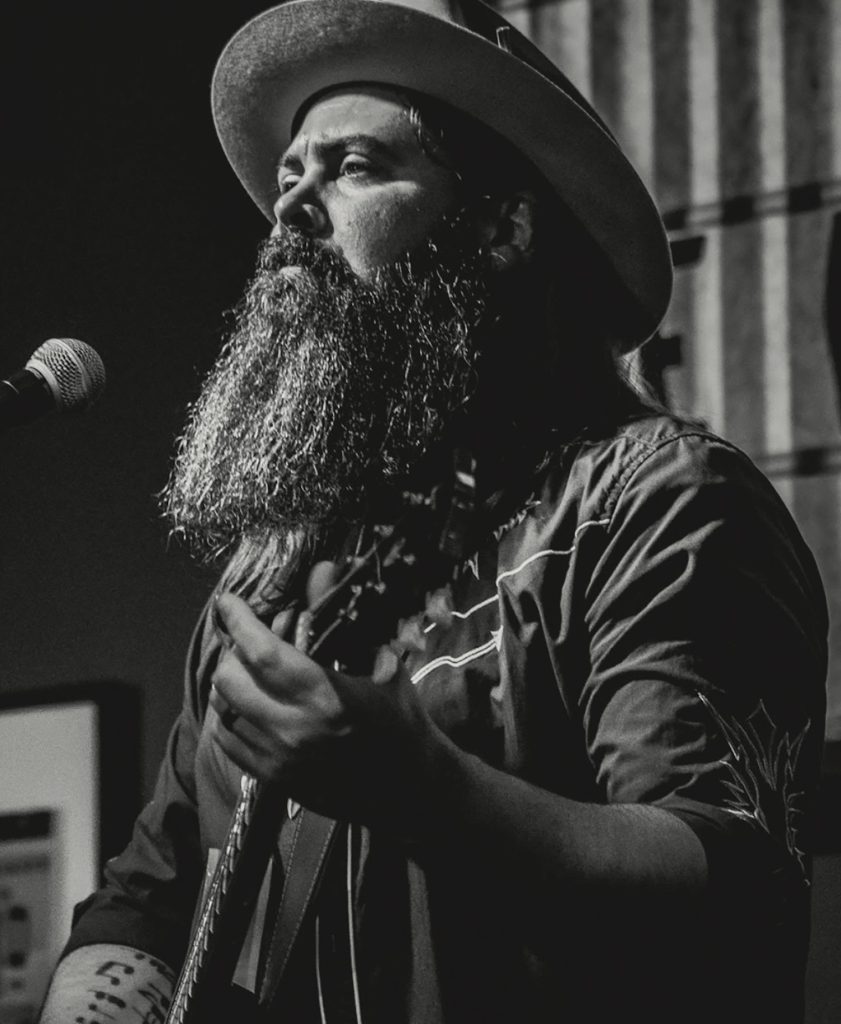
Ben Chapman, a Lafayette, Georgia, native who calls Nashville home, brings The Downbeat Tour, named for his recently released album, to the Sunrise Theater, 250 N.W. Broad St., Southern Pines, on Saturday, July 26, from 7 p.m. to 9 p.m. General admission begins at $25. In Downbeat, Chapman is at his most confident in his musical style, a “Southern-funk jam-band country thing.” Artists like Flatland Cavalry, Shelby Lynne, Muscadine Bloodline and The Steel Woods have cut his compositions, but now Chapman is focused on his own performances. For more information go to www.sunrisetheater.com or call (910) 692-3611.

Sporting Life

SPORTING LIFE

When Tobacco Was King

And the days were hard, hot and dirty

By Tom Bryant

“Hey, you guys. Did y’all see that special last night on tobacco barns? I think it was on PBS.” Bill Burger was holding forth. As the leader of our church men’s breakfast club that meets twice monthly at the venerable Sizzlin’ Steak or Eggs restaurant, he always has a good question to bring the conversation to the forefront, with everybody usually joining in.

The everybody includes seven or eight guys, or geezers if you will, with most of us in our 80s pushing forward, hoping to hit 90.

My ears perked up at Bill’s question because tobacco played a huge part in my formative years.

My grandfather was a big tobacco farmer in the early days. Early meaning when tobacco was king on most farms in the South. In my pre-teen years, I would spend a lot of each summer on the farm in South Carolina. Then, everything rotated around the tobacco crop. A labor-intensive cultivation, when planting time came, it was all hands on deck.

It was fun listening to the guys around the breakfast table talk about their experiences with tobacco. Bill Dixon, a retired Air Force colonel, said, “What about tobacco barns? I grew up near Wilson, the tobacco capital of the country. I know tobacco farms and barns.”

“Well,” Berger replied, “the TV report said that a lot of folks are remodeling the old barns into new houses. But since tobacco farming has gone away, there are not many barns left.”

It got me thinking about tobacco, my Grandad’s farm, and my education as a hunter and fisherman. All began right there in the swamps and Lowcountry of South Carolina. First, it was the acres of green tobacco, the money crop, special to the South, which brought wealth back to farms and enabled my outdoor learning.

Most folks who have hands-on experience with the harvesting of tobacco agree on one thing: It’s a hard, hot, dirty, intensive period of farming that requires constant attention. In those days, there was no room for error or slackness.

Bill Hamel, sitting right across from me, said, “Man, when harvest time came, it was everybody working, even the women and children. Nobody could sit at home. The ladies did the tying of the tobacco to the sticks, and then the sticks were hung in the barn where the curing took place.”

“Yeah,” Dixon said. “Once the fire was started, constant care was required to keep heat at a certain temperature necessary for curing. Many barns went up in smoke because of a fire stoker falling asleep.”

I was more an observer than a worker during harvest season, although Granddad did let me get dirty, literally, trying different jobs involved with bringing in the tobacco. A day of priming tobacco will make a person wonder if he will ever get clean again. Priming the stalks means breaking the leaves off the bottom of the stalk, leaving the rest to ripen further. There’s a real art to it, and after a day of back-breaking, dirty work, I decided I needed to do something else to help lighten the load. So, I asked if I could drive the sled pulled by Peanut, one of the farm mules.

Now a tobacco sled is about 16 feet long and 3 feet wide, with high sides and runners underneath. The sled fits perfectly in the tobacco row and holds all the leaves put there by the primers. When full, the sled is pulled to the barn by the mule, under the direction of the handler. Then the leaves are ready to be tied on tobacco sticks and hung in the rafters to cure.

When I asked Granddad about driving one of the sleds, he hesitated but then said, “OK, you can handle Peanut, but get one of the boys to make a couple of runs with you to make sure Peanut is doing right.”

One of the boys was Beau-weevil, the son of one of the tenant farmers who lived on the farm. I don’t know how he got his nickname, but he lived up to it. He was excited about showing me the ropes of mule driving because it got him away from priming for a bit. I also think Beau-weevil had a little evil in his heart. When I asked him about any peculiar traits ol’ Peanut might have, he said, “Naw man, he’s as reliable as an old dog. You just tell him what to do.”

He failed to tell me that you had better be on the way to the barn when sundown came, because Peanut was gonna go that way, like it or not. And worse than that, if it meant crossing a few rows of tobacco, so be it. Peanut knew when it was quitting time.

As a result, I ruined a few stalks of tobacco, but not enough to bother Grandad. He did say a few words to Beau after the fact, and I relished that.

My favorite time of tobacco season was July. The crop was in the ground and as Grandad said, “There’s not much more for us to do around here, son. We’ll leave the growing to the good Lord and let’s us go fishing. You run down to the tobacco patch right across from the barn and pick us a mess of tobacco worms. I’ll check out the catalpa trees and get some worms off them.”

Tobacco and catalpa worms were great fish lures. My Uncle Tom showed me how to turn a tobacco worm inside out to make it more attractive to a big bream. I’ll admit I really didn’t use that bit of advice, especially after eating a sardine sandwich. I was a straight worm-to-hook guy. And there’s no telling how many redbreast fish I hauled out of that fast flowing river using the worms for bait. “We’ll get Grandma to rustle us up some groceries, and we’ll be to the river by nightfall,” he said.

Now Granddad had a river cabin on the Little Pee Dee River. Not much as a cabin goes, just one room with bunk beds on one side and a corner, more or less, dedicated as a kitchen. An ancient sink dumped directly outside the cabin. And whatever water we had for washing dishes and ourselves we hauled from the artesian well located close to the river. The boats were pulled up on shore and chained to cypress trees to keep them away from wandering thieves and summertime floods after thunderstorm downpours.

We would usually be there for about a week, then Grandad would get a little antsy about seeing how the crops
were doing.

“Get a good night’s sleep, son. It’s back to the real world tomorrow,” he’d say. “We got to leave some fish in this old river for the next time.”

I was reading an article recently in SC Farming, a magazine put out by the South Carolina Farm Bureau, and a statistic in the story caught my attention: in 1987 there were 90,000 tobacco farms in the country; in 2022 the number had dropped to 3,000.

Tobacco farming has gone away, especially the way my grandfather did it, but it’s as fresh in my mind as if it happened yesterday. Peanut, the mule, my nemesis, has long been dead and buried close to the fields where he toiled for so many years. I haven’t touched a cigarette in over 40 years, can’t even stand to smell them. But they were part of my life experiences.

I can still remember going to sleep on the cot in the screened-in sleeping porch of the ancient farmhouse after a blistering hot day in the fields, listening to the night sounds as a barred owl called down close to the barn where Peanut rested. And I would think about the river and the big bass that got away and wonder what tomorrow would bring and if it could possibly get any better.

Sandhills Photo Club

SANDHILLS PHOTO CLUB

Rows of Things

The Sandhills Photography Club was started in 1983 to provide a means of improving members’ photographic skills and technical knowledge, for the exchange of information, and, by club activity, to develop membership potential and public interest in the art of photography. For meetings and information visit www.sandhillsphotoclub.org.

Tier 3 Winners

Tier 3, 1st Place:

Sun Drops
by Donna Ford

Tier 3, 2nd Place:

Private Stock by Neva Scheve

Tier 3, 3rd Place:

Fluff by Dee Williams

Tier 3, 3rd Place:

hUMP dAY aGAIN by Pat Anderson

Tier 2 Winners

Tier 2, 1st Place:

Rows of Lavender

by Donna Sassano

Tier 2, 2nd Place:

Ducky Six Pack

by Mary New Wheaton

Tier 2, 3rd Place:

Old Friends by Diane McKay

Abstract

Tier 1 Winners

Tier 1, 1st Place:

Rainbow Bottles

by Joshua Simpson

Tier 1, 1st Place:

Vicar’s Close

by Kate Annette-Hitchcock

Tier 1, 3rd Place:

Rows Awaiting Rowers by Cindy Murphy

Tier 1, 3rd Place:

Steps of Faith by David Kiner

Omnivorous Reader

OMNIVOROUS READER

The Essential Twain

The life of America’s premier writer

By Stephen E. Smith

Most Americans and a generous portion of the literate world — probably consider themselves experts on Mark Twain, even if they have never read a word he wrote. After all, the white-suited former riverboat pilot was his own best PR man. The cottony hair, drooping mustache, bushy eyebrows and cutting one-liners were all a product of his unrelenting quest for fame and fortune, and his physical and intellectual attributes remain ingrained in our national character. His knack for producing quotable and acerbic squibs has left us with the impression that he was an urbane 19th-century Yogi Berra. Which is reason enough to read Ron Chernow’s latest biography, Mark Twain. In 1,000 pages of beautifully crafted prose, Chernow explores in excruciating detail the life and times of America’s premier writer and consummate self-promoter, setting the record straight, for the time being.

Nothing about Twain is simplistic or straightforward. He was endearing, irascible, temperamental, plainspoken, mean-spirited, sentimental, generous, loving, neglectful, conscientious, lazy, etc. And he lived a triumphant and calamitous existence as a typesetter, riverboat pilot, journalist, failed businessman, stand-up comedian, world-renowned author, inventor, book publisher, political wit, and staunch campaigner for racial equality and against jingoism and imperialism. To his immense credit, he was the bane of every benighted politician, from presidents to school board members. He was also guilt-ridden, holding himself responsible for the fatal scalding of his younger brother in a boiler explosion and the death of his 19-month-old son, Langdon, whom he had taken out in inclement weather. He buried his wife and two daughters, and during his later years, his behavior was often problematic.

Chernow manages to include every significant detail of Twain’s life, and he supports his occasional judgments with meticulous research, including 180 pages of endnotes and citations. He also energizes the most mundane elements of Twain’s existence with his talent for narrative pacing and a prose style that reads effortlessly. It makes little difference if the reader is a longtime Twain aficionado or a superficial fan who learned of Twain’s achievements from Cliff Notes; Chernow’s narrative is so enthralling that his copious text seems vaguely insufficient.

More than half the book details Twain’s Horatio Alger years, his ascent from Hannibal to Hartford. The halcyon days of his literary success and blissful family life make for pleasurable reading, but the latter years of Twain’s existence — his descent from Olympus — will likely be a challenge for the casual reader.

The last quarter of the biography, which covers the three periods of Twain’s life that are the least fascinating and most disquieting, is not an easy read. His obsession with his “angelfish,” girls ages 10 to 16, with whom he surrounded himself, requires a lengthy and convoluted explanation that is likely to strike contemporary readers as, well, a trifle creepy.

After the death of his wife, Olivia, Twain sought out the company of young girls. These visits were frequent, occurring almost daily. In his 40s, Twain wrote, “Young girls innocent & natural — I love ’em same as others love infants.” Twenty years later, he said, “Nothing else in the world is ever so beautiful as a beautiful schoolgirl.” Twain didn’t find these liaisons embarrassing or shameful: “I have the college-girl habit,” he confessed, and when he visited Vassar to speak at a benefit, he surrounded himself with 500 college girls and noted that almost all were “young and lovely, untouched by care, unfaded by age.”

A few biographers have claimed that Twain was a latent pedophile, but Chernow maintains that Twain “had an insatiable need for unconditional love and got it from the angelfish, not from his daughters.” His daughters regarded the angelfish camaraderie with a mild degree of jealousy, but Twain had, over the course of his later years, intentionally disengaged from his grown children. Susy was dead at 24 of bacterial meningitis, Jean suffered from epilepsy, and Clara avoided her overbearing father by pursuing a singing career.

There is never a hint of sexual involvement with any of the angelfish. Chernow notes: “If Twain thrashed himself with guilt about many things, he never had regrets about the angelfish. Far from being ashamed, he was positively proud of this development and posed with the girls for the press.”

Twain’s writing and lecturing made him rich, but he was an incompetent investor. He poured money into the Paige typesetting machine, a device so complex that it never functioned correctly. He also lost money investing in a publishing company. Having made a small fortune by issuing the memoirs of Ulysses S. Grant, he frittered away the money on foolish projects. Eventually, the publishing company failed, and Twain went bankrupt and had to embark on a world lecture tour to repay his creditors. Chernow manages to untangle Twain’s complicated finances while holding the reader’s undivided attention.

Later in his life, a disconcerting soap opera entanglement developed within Twain’s household. After his wife, Olivia, died, he and his surviving daughters relied on Isabel Lyon as a stenographer, confidant and household assistant, and an ambiguity arose regarding Lyon’s position in the household. Was she an employee or a family member? Had she assumed the position of Twain’s late wife? As Lyon gradually took over Twain’s affairs, her attachment to Jean and Clara grew strained. She eventually contrived to have Jean hospitalized, and her relationship with Clara collapsed. Twain fired Lyon for misappropriating household funds and became embroiled in a series of scandalous and exasperating lawsuits.   

In setting the record straight, Chernow tarnishes Twain’s carefully crafted image, revealing a human being who could be greedy and vindictive, but also a writer whose words are as fresh and clear today as when he first wrote them.

Art is for Everyone

ART IS FOR EVERYONE

Art is for Everyone

Celebrating 45 years of the Fine Arts Festival

By Jenna Biter

Push through the double front doors of Campbell House and you’ll find refuge from the dog days of summer boredom. The walls and halls and nooks and crannies of the home of the Arts Council of Moore County’s first floor galleries will be bursting with art, from ceilings to baseboards.

Cats and dogs will chase each other across canvases, children will laugh in watercolor, and painted flowers will forever be in bloom. The doors to the Fine Arts Festival at the Campbell House galleries, 482 E. Connecticut Ave., Southern Pines, are flung open wide beginning July 23. The only theme is art.

Proudly put on by the Arts Council since 1980, the annual exhibition gives amateur and professional artists alike a time and place to show and sell their work. “As long as it’s suitable for public viewing,” says Chris Dunn, the executive director of the host organization, with a smile.

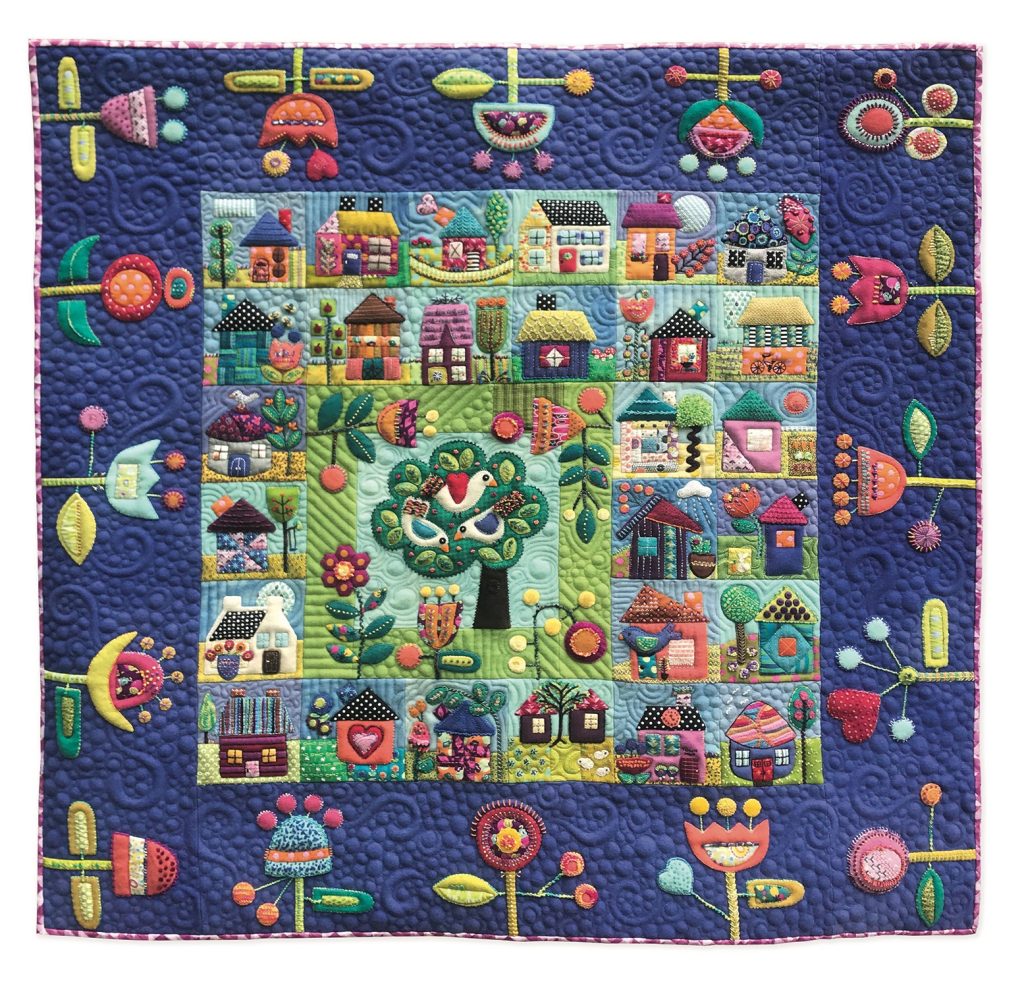
2020 People's Choice Award, "My LIttle Town" by Paula Parke
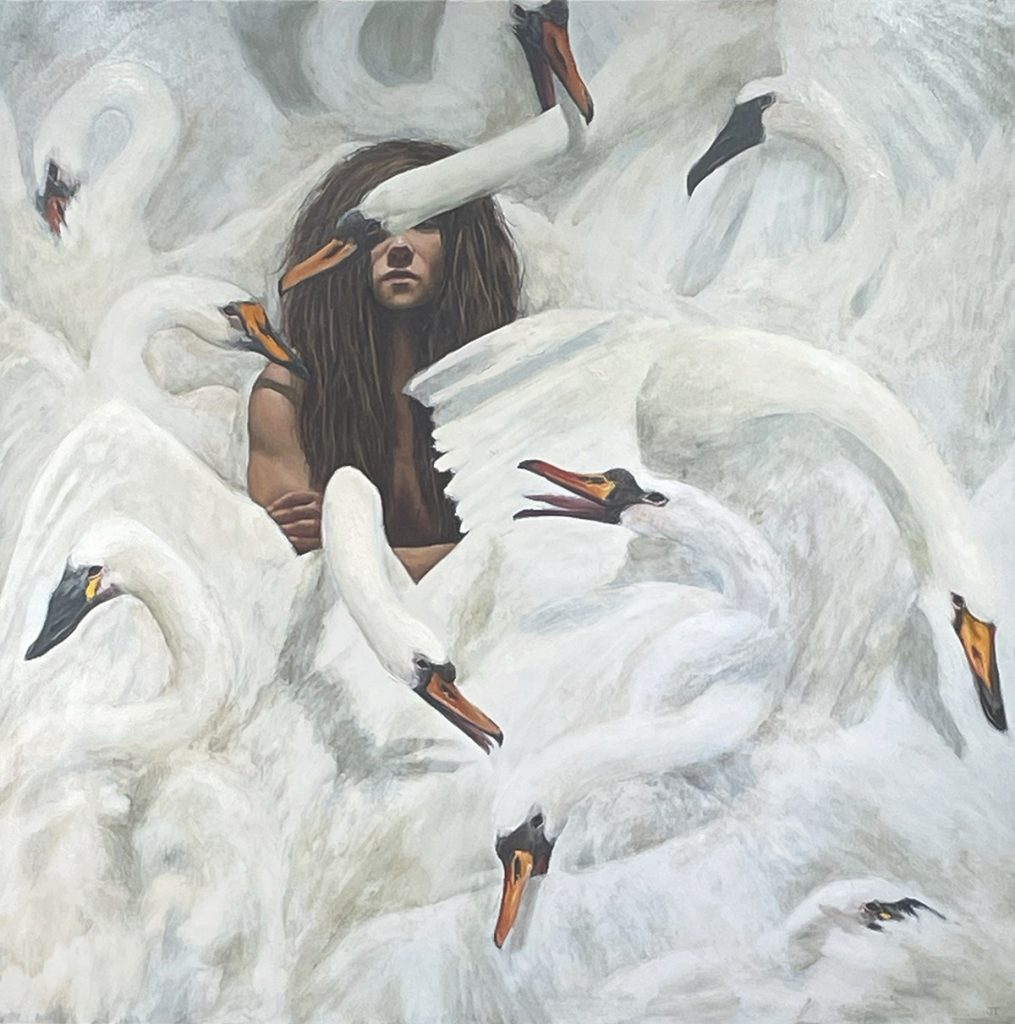
2024 Best in Show, "The Wild Swan" by Jo Tomsick

In its 45th year, the Fine Arts Festival fills the sprawling brick mansion with about 250 artworks each summer. Participants can submit one or two pieces. So long as a submission meets requirements — no bigger than this, no heavier than that, no older than two years, etc. — the art will make the show. “Anybody 16 and above,” says Kate Curtin, the Arts Council’s program and art gallery director.

Beyond that, the barrier to entry is a modest $20 or $30, depending on council membership. “I’ve enjoyed being part of this exhibit,” says Ellen Burke, a regular festival contributor. “And I love that my adult students participate in it.”

Burke is a retired arts educator who traded golden years in New England for arts festivals on Connecticut Avenue. She lectures at the council, helps award arts scholarships, and sometimes instructs workshops en plein air watercolor painting. Somewhere in this year’s show, you might see her study of a garden in the dead of a Massachusetts winter or a simple watercolor of peas in a pod. Although Burke made the move south, residency isn’t required to participate in the festival. Submissions come from across the county, the state and beyond.

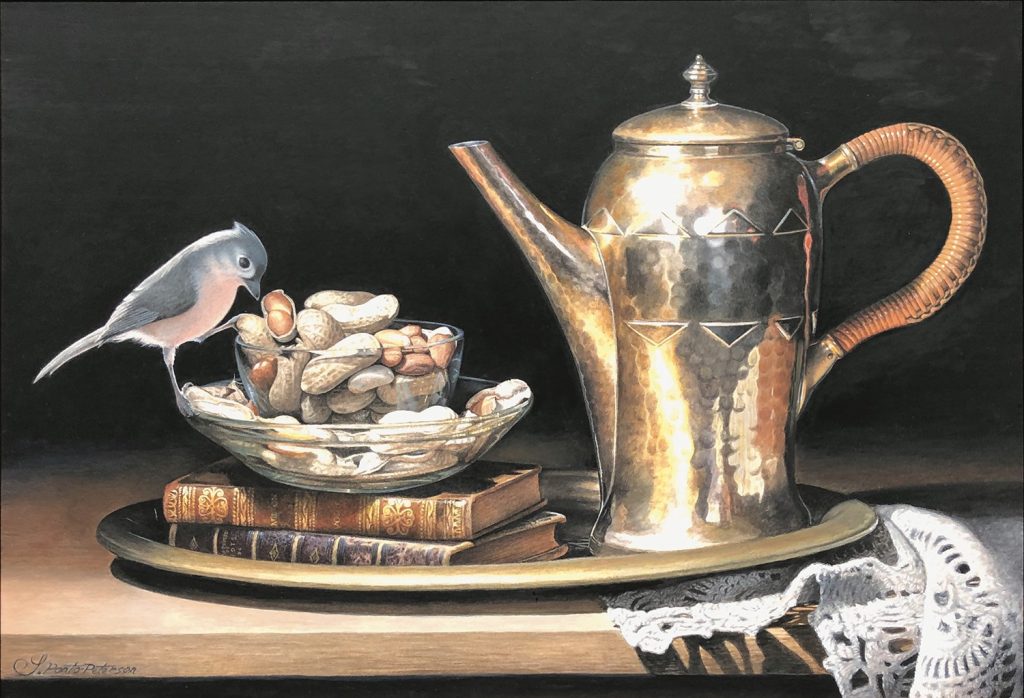
2020 Best in Show, "A Little Peanut Thief" by Lynn Ponto-Peterson
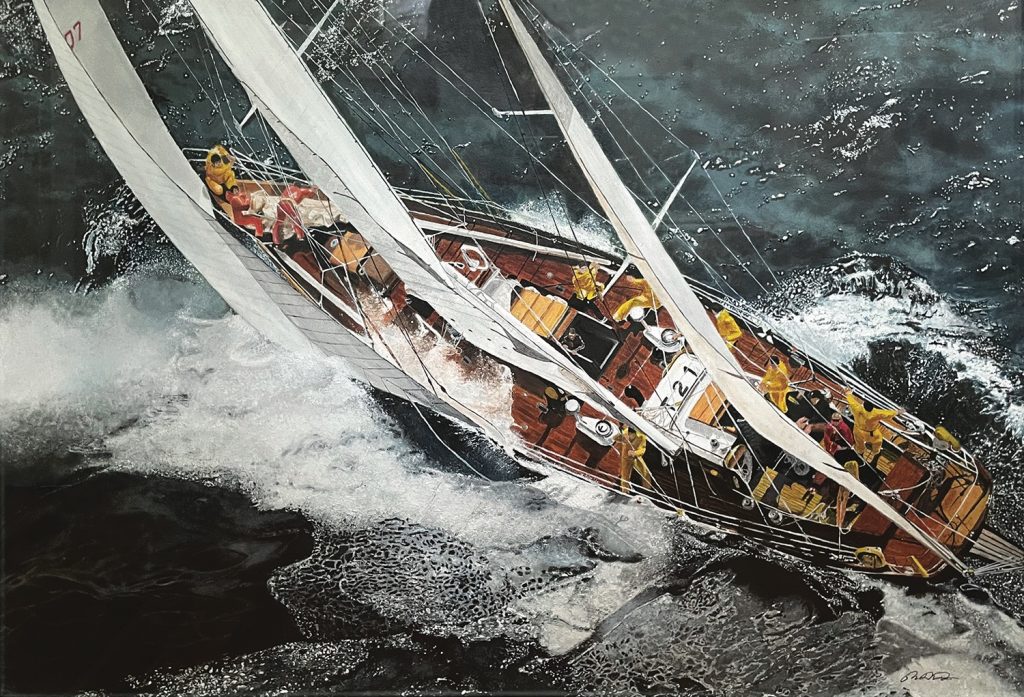
2022 People's Choice Award, "A Boat on The Ocean" by Michael Mention

Wander through the White Gallery or the Brown Gallery and somewhere you’ll find a horse studying its reflection in a pond, a scene painted by Betsey MacDonald. She’s a science-turned-art teacher who’s entered the festival consistently over the past decade despite living in horse country — not of the Sandhills, but of Rhode Island. When a good friend packed up and moved to North Carolina, she connected MacDonald to the Arts Council.

“I was crushed, but we’ve remained friends, and she set up a show for me,” MacDonald says.

The Fine Arts Festival began as a way for local artists to improve their skills, and showcase and sell their work. That first year, the exhibition hung at the Weymouth Center for the Arts & Humanities, across the street from its current home in the Campbell House.

“I don’t know the timeline, but we eventually landed here. And this became our galleries,” says Dunn, gesturing to the rooms of the historic house around him.

An Army spouse, Jo Tomsick moved to Sanford during the COVID pandemic. She’s pressing toward a full-time career in gallery art and, during her time in North Carolina, she’s pressed hard. Tomsick held her first solo gallery show, “Of a Feather,” at Sandhills Community College in 2023 and ships her art to galleries across the United States. “I have a piece that’s actually in Tokyo right now,” says Tomsick, a glimmer in her eye.

Last year, she submitted an oil painting to the Fine Arts Festival, her interpretation of how the princess might have felt in Hans Christian Andersen’s The Wild Swans. The painting won best in show and just sold a couple of months ago.

“I was mind-boggled,” Tomsick says. “People actually want the art that I make, which is so cool.”

Once all submissions have been delivered but before they have been hung, a judge looks everything over and selects winners. Since awards are assigned across a wide spectrum of seven categories spanning oil painting to photography, the judge must be a versatile veteran of the art industry and not locally connected. This way the art of the usual participants is unfamiliar, and submissions remain anonymous. Blake Kennedy, clay studio manager of N.C. State University’s Crafts Center, will shoulder the burden in 2025.

Every category has a first, second and third place award, each with a monetary prize, as well as an unlimited number of honorable mentions. Whether a piece wins or not, all the works hang throughout the Campbell House galleries, not necessarily by category but by what goes together, like, for example, a quiet set of blue florals entered by Paula Montgomery.

As many artists do, Montgomery started by copying masterpieces. She excelled at the practice and enjoyed it until someone nudged her in the direction of developing her own style, one that’s grown into something bold, geometric and fun.

Ulli Misegades was similarly motivated. As a child, she was told by a teacher that she “had no gift.” It’s the very sort of comment that might turn the faces of art educators like Burke and MacDonald purple. Fortunately, the callous remark didn’t stop Misegades from picking up drawing and watercolor during sleepless nights when her children were young. Eventually, she led a portrait group in Cary, and her art has won awards and been published in newspapers and magazines like The Pastel Journal. “I love children and I love dogs,” says the grandmother of six. “Those are my favorite subjects, and that’s what I usually enter.”

After an exclusive preview night for businesses and individuals who commit to making purchases, there will be a public opening reception the first Friday in August, from 6 to 8 p.m. Typically, it’s standing room only, not by design but necessity; more than 300 people attended last year. The popular event will likely remain cozy until the Arts Council completes its capital campaign for a 1,700-square-foot gallery addition to Campbell House.

Guests will nibble and sip as they swirl about the exhibition, looking for winners and determining their own. At that point, the only medalists not known will be the Sara Wilson Hodgkins Best in Show — which is revealed during the evening’s awards ceremony — and the Lee Barrett People’s Choice, which will be tallied from paper slips after the exhibition ends August 27.

“It’s never been the same,” Dunn says about the two biggest accolades. “To this day, it’s never been the same.”

Poem July 2025

POEM

July 2025

Balancing Act


I was once content with walking railroad
tracks to school, stone walls to church,
touching my toes to the sidewalk
for balance, stepping over cracks
that needed mending.

I balanced on city curbs,
my arms extended like wings
that would fly me to a nearby tree,
a wild turkey perching safely
on the lowest limb.

In school we balanced skinny legs
on beams six inches off the floor
to please Miss Brown,
especially proud
to do it backwards,

and I heard the story of
Dayton’s Great Flood of 1913,
how victims inched their escape
across telephone wires from the railway
station to Apple Street and safety.

Now I walk one tight rope after another,
and wonder about people
who tread on pavement with no cracks,
no broken mothers’ backs,
in sensible shoes, arms to their sides,
with no inclination to fly.

— Marsha Warren