Running Man

The unquenchable passion of Jef Moody

By Bill Fields     Photograph by Tim Sayer

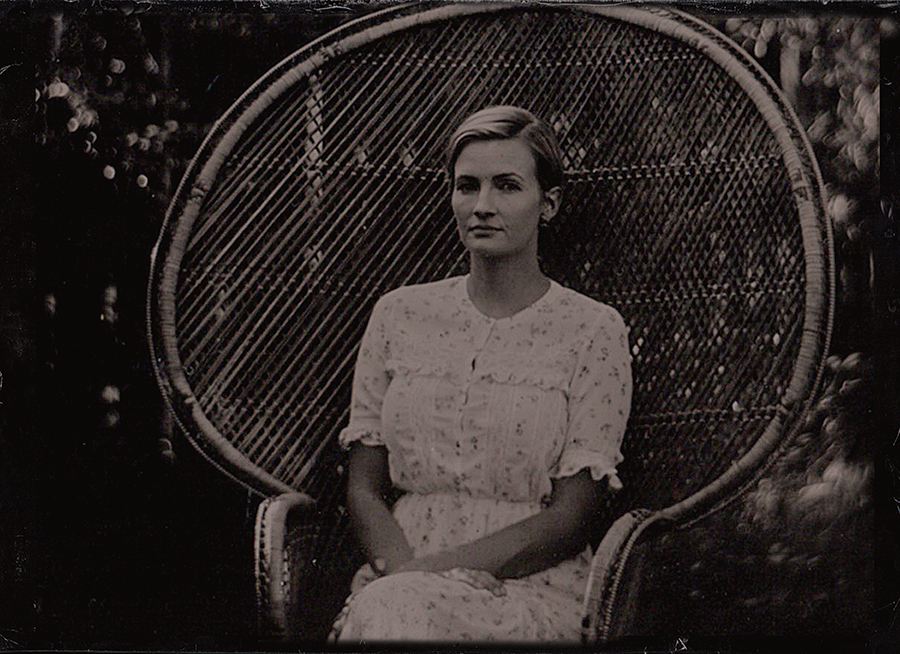
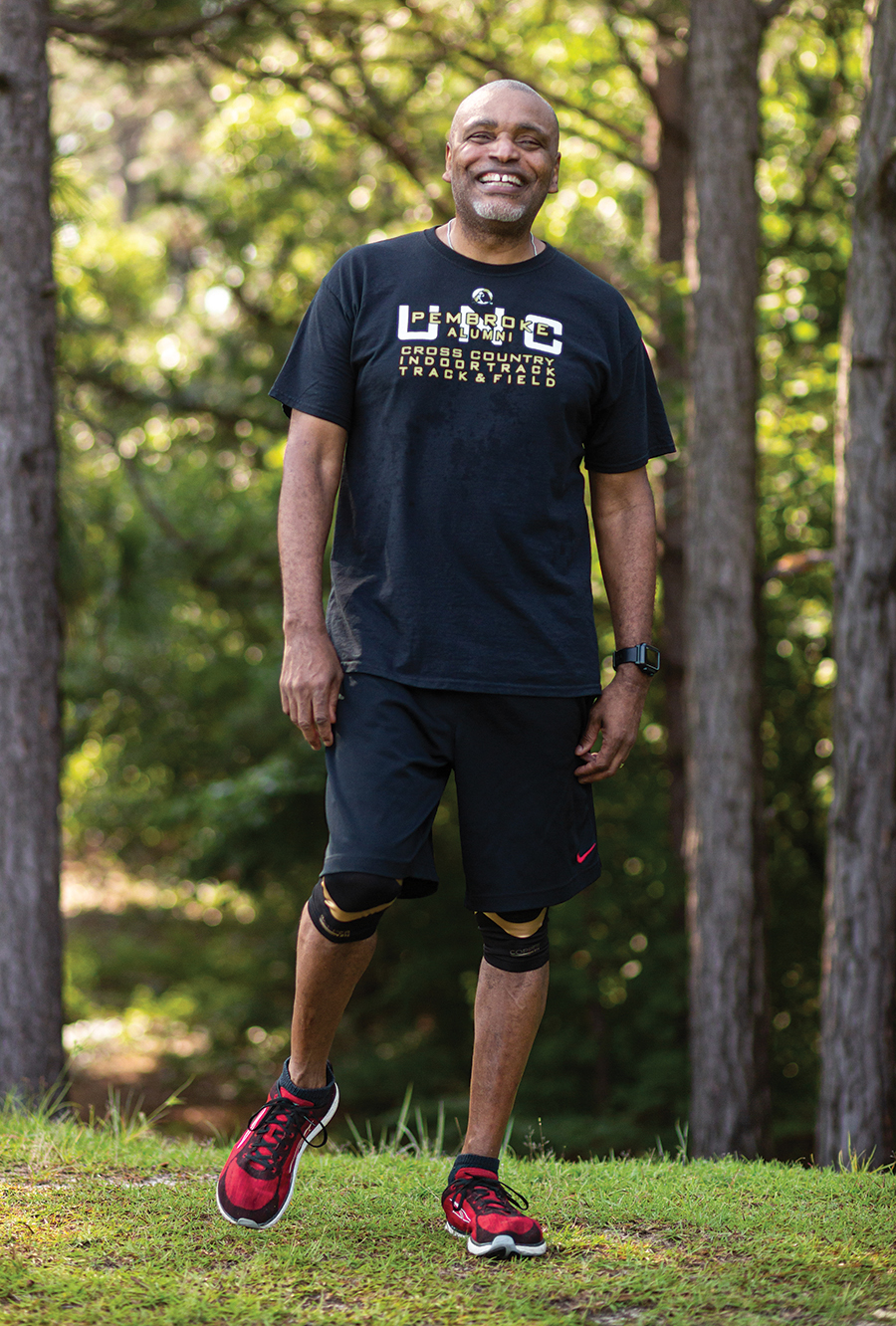
Most mornings between 6 and 7 o’clock, Jef Moody laces up his running shoes and goes to the starting line, a sandy trailhead next to his driveway in Taylortown. He will travel a couple of miles on paths through the pines and scrub oaks in about 45 minutes. It is, at age 63, as far and as fast as his body will allow unless he wants to move around like a much older man the following day.

He has logged 129,000 miles since he began keeping track as a child, more than half the distance to the moon or five times the circumference of Earth. “I remember once when I had gotten over 100,000, I finished my run and was sitting in the driveway and my wife (Nadine) asked me what was wrong,” Moody says. “I said, ‘I’ve run more than 100,000 miles and I feel like I did every one of them today.’”

A while back, someone called Nadine, and told her “a man was hopping down the road.” It was Jef, who says these days he goes “jopping,” a hybrid of jogging and hopping, because of the decades of wear and tear.

“I’ve got a good bad knee and a bad good knee,” he says of the arthritic joints, punctuating the description with a smile. “I wake up still thinking I can do a 4-minute mile, then my two feet hit the floor. But 90 percent of the time, the knees don’t hurt when I run unless I step wrong or go too fast. I’ve got to run slow. I hate running slow.”

Although any running is better than no running, if Moody felt differently about the pace of his current workouts, it would be a news flash. He spent the first third of his life becoming an elite cross country and middle distance runner, one of Moore County’s best all-time athletes, after moving to Southern Pines to live with his maternal grandmother, Geneva Mincer, as a fifth-grader in 1968. He was a star at Pinecrest High School and Pembroke State University (now UNC Pembroke). A member of Pembroke’s 1978 NAIA national-championship cross-country team and the 1979 NAIA 1500-meter national champion, Moody still holds eight UNC Pembroke school records, including the 800 meters (1:50.30) and 1500 meters (3:44.10) established in 1977.

“I never saw him finish a race,” says Gary Barbee, a Pinecrest cross-country teammate of Moody’s in 1972. “Jef would already have his warm-ups back on by the time I was done. He already was ‘the man.’”

During his stellar prep career, during which he was a national Junior Olympic champion in cross-country and 800 meters, Moody was recruited by 175 colleges. Kansas was among the many prominent schools to pursue him, and the Jayhawks enlisted a famous alum to make their pitch the second semester of Jef’s senior year at Pinecrest.

“My Grandma said there was a guy on the phone named Jim Ryun,” Moody recalls. “She didn’t know much about track, but she wanted to know who he was. I just told her he was a big-time runner.”

Ryun, the first high school runner to break the 4-minute mark in the mile and a three-time Olympian (1964, ’68, ’72), called Moody once a week for a month in the spring of 1975 to no avail. Pembroke coach Dr. Edwin Crain’s visits to the Moody home paid off.

By 1980, the year following his graduation from Pembroke and an NAIA national championship in the 1500 meters, Moody was a good bet to qualify at that distance for the Summer Olympics in Moscow. That dream dissolved when the United States and some of its Allies boycotted the games in protest of the Soviet Union’s invasion of Afghanistan.

When the 2020 Tokyo Olympics were postponed until 2021 because of the COVID-19 pandemic, it took Moody back 40 years. He was at the wheel of his red Fiat driving through South Carolina returning home from a race when he heard about the Olympic boycott on the car radio. 

“I had run a 5-miler in Columbia in 23:48, I think it was,” says Moody. “I was pretty much ready to go. The (Olympic qualifying) trials were coming up. I’d gotten my stuff for that. I was upset and decided I wasn’t going to go to the trials. When Nadine and I got married the previous November, I said to give me a year to get through the Olympics. I was crushed, but as they say, time heals.”

Moody is sitting in his “Track Shack,” a small, detached man cave/office in the shadow of the home where he and Nadine raised their children (Yarona, Jessica and Jeff II). The walls are covered with photos, ribbons, medals and uniforms — markers of Moody’s running life that began 475 miles and a world away from Moore County in a tough part of Philadelphia.

“I was 5 or 6 years old,” Moody says. “The doctor told my mom I had a heart murmur and it’d be good for me to exercise a little. She let me go out and run a little bit — run around the corner. That’s when I started to love to run.”

Moody found a kindred spirit in classmate Louis Pagano. From first through fourth grades the pair ran the half-mile to school in the morning, made a round trip at lunch and back home in the afternoon. The exercise and other hijinx — the boys rubbed the wax from Nik-L-Nip bottles on the soles of their dress shoes to slide across the playground — were a buffer against a difficult family situation. Mildred and Robert Moody Jr. separated. “My parents were apart and my mother was sick. We were homeless and it was North Philly, a rough part of the city.”
On March 3, 1968, Isaac Mincer, the uncle of Jeff (it was two f’s then) and his younger brother, Robert III, intervened. He put the children — Jef was a month or so from turning 11 years old — on a train to Southern Pines. “I was like, ‘Man, we’re leaving everything we’ve known,’” Moody says. “I remember telling my grandmother the first week that as soon as I finished high school I was out of here.”

But Moody made friends and charted a course for himself in the Sandhills, never returning North to live. Grandma Mincer’s yard with a large garden of fruits and vegetables was a stark contrast to Jef’s urban roots. “It was just a big garden,” he says, “but I felt like a farm boy.”

He soon began to immerse himself in running, motivated at first to win a live turkey in a 2-mile race for middle-schoolers held on a Midland Road horse track located where the Longleaf golf course exists now. Moody didn’t bag the bird in two tries — he laughs about ending his career with a frozen fowl-earning victory at a mid-1980s Pinehurst Turkey Trot — but developed an indefatigable work ethic to complement his athletic talent and competitiveness.

Moody’s Pinecrest coach, Charlie Bishop, an important mentor, told him to always win as convincingly as he could.   And Moody trained to make that possible.

“Since 1969, I don’t think I’ve missed a hundred days of running,” Moody says. “I had two streaks of six years and ones of five and four years where I didn’t miss a day.”

And on almost all of those days, Jef — who began preferring to spell his first name that way in 1994, after someone misspelled “Jeff” in a letter — pushed himself hard.

“He always ran one more lap after practice,” recalls Pembroke teammate Jim Miles, a pole vaulter who sometimes ran relay events. “I asked him why once, and he said, ‘Jim, somebody else out there is doing it too.’”

Crain worked his distance men hard, rain or shine, a thunderstorm the only thing that paused the training. “When freshmen got to campus, they sometimes wouldn’t come to practice if it was raining,” Crain says. “Jeff would go to the dorm and tell them that wasn’t how it works. He was a great influence on his teammates.”

Nothing could keep Moody away from his passion. During his final track season at Pinecrest, he suffered a stress fracture in his right foot running an indoor race in Greensboro. For a few weeks, he had the cast removed for a meet, then replaced. During the 1977 NAIA cross-country national championship in Kenosha, Wisconsin, the 5-mile course went through some woods. After glancing back at a teammate, Moody collided full speed into a tree.

“They said I finished the race but I don’t remember,” Moody says. “I don’t remember flying home. They were still pulling bark out of my eyes when I got to the infirmary. But the next morning I snuck out the window to go on a training run. I did the run and got caught climbing back through the window.”

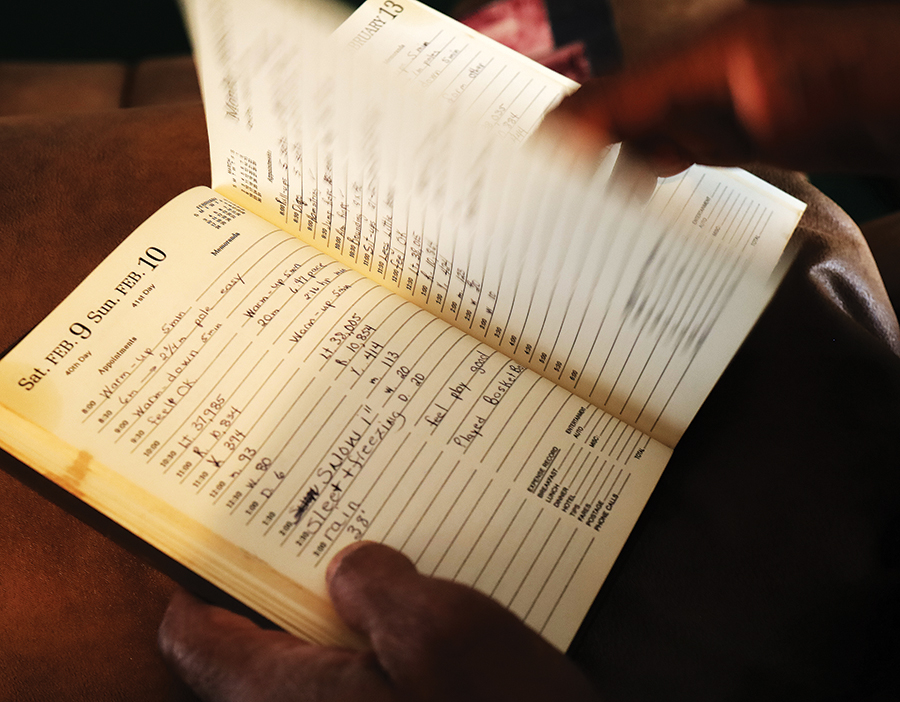
He ran a 5:30 mile in the seventh grade. In the eighth grade, he lowered his time to 4:51 after being motivated to break the school record of 5:14. As Moody got more serious about his training, he logged every workout on a calendar, a practice carried out with more detail in desk diaries and, later in adulthood, a computer. It was a habit, he discovered after his father died years later, that ran in his family.

“Going through his things, we found notes he kept on his daily life,” Moody says. “He wrote down everything he did during the day.”

Occasionally, the numbers Moody denoted in his log were staggering. As a Pinecrest sophomore, Barbee was on an activity bus making the 27-mile drive to Richmond County for a jayvee basketball game. As they passed through Pinebluff, Barbee saw Moody running beside U.S. 1. Later that evening, Barbee saw him in the stands spectating during the varsity game, having run all the way there.

Pembroke was loaded with talent during Moody’s time on the Robeson County campus. “I had 15 guys who could run five miles in 25:30,” Crain says. “If you sneezed, two guys would pass you — all the guys were good.”

Wayne Broadhead, who ran for the Braves with Moody, says, “We had to do 10 miles in under an hour just to get a uniform.”

Ten miles was a normal afternoon team practice schedule, with runners having done five miles on their own in the morning before class. Crain rode a bicycle alongside his charges as they ran, but Moody never needed much prodding. For hill work, Crain drove the Braves to a steep stretch of Hwy. 74 east of Rockingham, where they ran up and jogged back a handful of times.

“Jef didn’t miss a day of practice in four years,” Crain says. “He was a great leader, by voice and by example.”

Moody has run distances from 200 meters through a marathon. As a 128-pound high school freshman who couldn’t do a single pull-up, he tended to get jostled on a crowded track or cross-country field. He realized he needed to get stronger. “A lot of people don’t realize you can only run as fast as you can pump your arms. If you can’t pump your arms fast, you’re not going to run fast.” By his sophomore year at Pinecrest he was up to about 150 pounds. When he graduated, he could do 40 or more pull-ups.
“Remember those Michelin commercials with the tire digging into the road?” Miles says. “Most people ran on top of the track; Jef had a forceful stride that ate into the track. He could go sub-11 seconds in the 100 meters. That’s some great leg speed for a miler.”

Moody was running a time trial during a 1978 practice on the Pembroke track when he bettered four minutes in the mile for the first time. His teammate Garry Henry, a star long-distance runner, was a formidable foe and had speed too. Moody set out to just stay in front of Henry and did. “We showered and got dressed and coach told us what we ran,” Moody says. “I was 3:59.2.”

Moody’s confidence spiked when he defeated Dick Buerkle, world record-holder in the indoor mile, during a 1979 race in Georgia. Later that year he and Nadine, a fellow Moore County native, got married on the afternoon of Nov. 24 — after the groom tended to some other business in Raleigh.

“The race was 6.2 miles but I think I ran 7 because I was hustling to the car to get home for the ceremony,” Moody says.

He had begun what would be a long, successful career as an elementary school physical education instructor, guiding youngsters as Moore County educator-coaches such as John Williams, Joe Wynn and Nat Carter had influenced him, with direction and encouragement.

“Jef is definitely a people person,” says Larry Rodgers, retired UNC Pembroke track and field coach for whom Moody worked as a part-time assistant in the 2000s. “He communicates well and always has a positive attitude. The athletes really listened to him, and he always made them feel like they could reach their potential.”

As a teacher and coach, Moody always tries to connect with young people, often encouraging them to develop talents they weren’t aware they possessed.

“He’s always been great with kids because he’s still a kid at heart himself,” says Nadine.

Out of college and ineligible for the race he wanted to run more than any other, Moody was gearing up for a new school year teaching when the final of the 1500 meters at the Moscow Summer Olympics was held Aug. 1, 1980, at Lenin Central Stadium. Great Britain’s Sebastian Coe won the gold medal with a time of 3:38.4. It had required 3:43.6 to get through one semifinal and 3:40.4 in the other. The former time was just slightly better than Moody’s fastest time in the event.

In advance of the 1984 Summer Olympics in Los Angeles, Moody considered taking a stab at the steeplechase. He learned the requisite hurdling technique but was hampered by not having an available training partner. Moody shelved his Olympic hopes for good. “I ran in some little races here and there, but basically after 1980 my racing career was over.” He competed for the last time 21 years ago, in a 3000-meter masters run in the same city he raced the day he got married 20 years earlier.

Now a grandfather of five — “a relay team of boys and a girl,” he says — Moody continued to coach, including a stint at Sandhills Community College, where his expertise and dedication helped the Flyers succeed. It’s hard not to if you follow his mantra.

“I want to always get 100 percent out of myself,” Moody says. “That might not be my best, but it’s my best on that day.” He remains a volunteer with Sandhills Track Club, eager to help youth with the will to find a way.

“No, I didn’t get a shot at the Olympics, but I believe I’ve had a bonus of 52 years after moving down here,” Moody says. “I sit here and think about it and kind of tear up. Who knows what could have happened up in Philadelphia? It was a tough situation.”

As long as Moody can run, he will run. It is 2020 and he is on a rural path, but it could be 1965 on a city sidewalk, his lungs and legs taking him to a new place.  PS

Poem

Ritual Revived

She grows impatient waiting 

for gallons of water to boil

in the massive vessel.

Finally, back burner’s roiling ocean

receives a steel rack of jars packed

with marmalade — zesty orange,

piquant cranberry.

Ten minutes in water boiling

inches above metal lids. A rest,

and she lifts each glass carefully —

straight up from scalding bath.

A day to cool; labels affixed,

and the ’lades are now gifts:

holiday, birthday, any day . . .

Sweet memories led to this labor:

her parents on hot August nights, peeling,

slicing crops green, yellow, red, filling

Mason jars, hovering over the steaming kettle,

putting up peaches, beans, tomatoes,

from their small Victory garden,

enough to feed their children,

for yet another wartime winter.

— Barbara Baillet Moran

Great Beginnings

Hooked on summer reading

Let’s be honest, who among us sails on through the master class on whale anatomy if Herman Melville doesn’t write “Call me Ishmael” right out of the blocks in Moby Dick? At the top of every writer’s job description is the ability to kidnap the reader’s imagination and keep it, at least for a while. Since everything in the Year of the Pandemic is cloaked in a bit of the unknown, our Summer Reading Issue of 2020 is all about capturing imaginations. Who better to learn from than seven of the best writers North Carolina has to offer? And who better to help them than seven terrific artists and photographers? Some of these great beginnings were written specifically for this issue, some are the first few words of books appearing in stores near you soon, and others were just kind of kicking around on laptops. Each one is designed to grab your attention and hold it. Feel free to fill in the rest of the story yourself. — Jim Moriarty


Why I Love Pool Halls

By Bland Simpson   •   Photograph by Mark Wagoner

From the open upstairs windows of a plain two-story commercial building overlooking a bricked side street, Colonial Avenue in Elizabeth City, as a boy I used to hear the pouring out of loud jolly talk and laughter but most of all the hard clicks of cue balls breaking the racks, and spoken and sometimes shouted encouragements and disappointments, and the lighter clicks of wooden scoring beads, as men I could not see slid them along strung wires above the green felt-covered slate pool tables in that magic room above. A small sign hung by the streetside door, stating simply: 

City Billiards, Home of Luther “Wimpy” Lassiter, World Champion, 9-Ball.

In the nearby corner movie theater, the Center, my friends and I often sat, enthralled and forgetting we were only a hundred yards from a swamp river on its way from the Great Dismal Swamp to the sound and the sea, believing instead that we were riding along on horseback as we wove with the cowboys through some saguaro range or that we were stomping or swinging along with Tarzan of the Jungle through mamba-snake-ridden equatorial brakes. We even saw Zsa Zsa Gabor there, in Forbidden Planet, and knew this short interlude of imaginary space travel had brought us to our worshipful knees before the most beautiful and powerful woman in the Universe.

Yet when we emerged from these diversions, our riverport reality fell heavily upon us, and the sounds of smack and click kept spilling out from the pool hall on high, and we somehow knew that was where the real men, not boys, went to have their adventures, though all we could do, our ages still in single digits, was to stand on the sidewalk below and listen hard and try and make out what the hoots and hollers and howls, and the cussing, were all about, and what they all really meant.

Bland Simpson is the Kenan Distinguished Professor of English and Creative Writing at the University of North Carolina-Chapel Hill, the author of nine books, and a longtime pianist and composer/lyricist for the Tony Award-winning North Carolina string band The Red Clay Ramblers. In 2005 he received the North Carolina Award for Fine Arts.


The Pressing Spirit

By David Payne   •   Photograph by Laura Gingerich

And Jacob was left alone; and there wrestled a man with him until the breaking of the day.  — Genesis, 32:24

One minute I’m asleep, the next it’s as if the roof’s collapsed and pinned me under tons of rubble. Except it’s not the roof. The weight isn’t external; it’s inside me somehow. I’m paralyzed and pinioned. The greatest effort I can muster sets one eyelid aflutter, lets me crook — just barely — the digit of my index finger. And it isn’t dead, this weight, it’s living. There’s something with me in the bed, and not just with me, on me, and not just on me, in me.

I fight and strain, and suddenly like someone with his shoulder to a door when the door flies open, I’m bolt upright in bed. What happened? What the fuck just happened? Sweat pours off me. Silver in the silver moonlight through the shutter, steam rises from my shoulders in 40-degree air of the unheated bedroom. Boom! says the surf outside my window. Boom! and Boom! again like the percussion section of an orchestra. And I’m alone here, alone in this unheated, flimsy summer house that thrums and trembles like a spaceship on the launch pad as the January gale blows off the ocean. The roof’s intact, there’s no intruder. The bedroom door I closed when I retired is still latched the way I latched it, from the inside. Yet for a moment, several, staring at that door, I have the sense that it, It, whatever pinned me, is still here, just beyond, listening as I listen, breathing as I breathe, aware of me, as I’m aware of It.

Who’s there? I call.

No answer.

David Payne is the author of five novels and the 2015 memoir Barefoot to Avalon: A Brother’s Story, which The New York Times called “a brave book with beautiful sentences on every page.” A founding member of the Queens University of Charlotte Master of Fine Arts program, Payne also taught at Bennington College, Duke University and Hollins University. He recently completed a screenplay of Barefoot to Avalon for the Oscar-nominated director Giulio Ricciarelli.


The Last Wedding

By Frances Mayes   •   Illustration by Laurel Holden

The wine spilled. As I reached across the table, my sleeve grazed Austin’s glass. The big Brunello globe fell over in a quick crash. Dark, that carmine red spreading on the embroidered linen tablecloth. Austin stood up so fast his chair tipped backward. He found two napkins on the sideboard and helped spread them over the stain. Instinctively, I glanced at Annesley as her mouth fell open. She knew I’d spent the afternoon lavishing my attention over every place card and dessert spoon. I moved the flowers and water carafe over the napkins. “Doesn’t matter, Kate, good as new,” Austin said. He has unusual eyes. Hazel, I guess, but it’s the way he looks at you rather than their color, as if he’s surprised to see you. But glad. I had the odd thought that he might say I see you. Do you see me? I rinsed his glass in the kitchen and refilled. All solved, except not.

Frances Mayes is the celebrated author of the No. 1 New York Times bestseller Under the Tuscan Sun: At Home in Italy. A poet, essayist, author and professor, her recent works include Always Italy from National Geographic Books and See You in the Piazza: New Places to Discover in Italy. Her excerpt is the opening of a new book, The Last Wedding.


Being the Record of Hannah King,
born April 14, 1681, Salem Village

By Lee Zacharias   •  Photograph by Andrew Sherman

I was a girl, you understand. I had a girl’s sins. I wanted to know whom I would marry. We all did. Would our husbands be rich, would they have land? What would be their trade? Though Reverend Parris preached against magic as a trick of Satan, we knew ways to tell the future. And if we were predestined, what could be the harm?

I was 11 that year, two years older than the Reverend’s daughter Betty, the same age as her cousin Abigail, who lived with them. Abigail was an orphan. Many of the girls who would be afflicted were living as maidservants with relatives or others who might take them in, Mary Warren with the Proctors, Elizabeth Hubbard with Dr. Griggs, Mercy Lewis with the Thomas Putnams and their daughter Ann. Only Mercy knew who her parents were. They had been killed by Indians at Casco Bay, and for a brief time she stayed with the Reverend George Burroughs, who survived. How she came to Salem and the Putnams no one knew, but we could guess. Reverend Burroughs had once been pastor of the Salem Village Church, but he had left for Casco Bay in dispute over his salary, forced to borrow money from Thomas Putnam, who was known to hold a grudge. Mercy was older, as were Mary and Elizabeth, 17 or 18, old enough to marry, but orphaned girls had no dowries, and the question of the future was of much urgency to them, for if they failed to marry or displeased their masters, they would have nowhere to go.

The salary for Reverend Parris was also in dispute. The church in Salem Town accepted the Half-Way Covenant, but in the Village, Reverend Parris feared the Devil was among us and refused to baptize any child whose parents had not testified to how God had shown Himself to them. Only the converted could be members of the church. It was brutal cold that winter, with much snow, but the villagers refused to supply the Meeting House or Parsonage with firewood, and they argued with church members whether their tax revenues should be used to pay his wages. Betty was a sensitive girl, and though she was but 9, perhaps she too feared for her future.

I was drawn by curiosity alone, for I lived with my parents, brothers, and one sister. Surely my dowry was secure. And though I was marked, for underneath my shift there was a small brown mole near my hip, not so different from the marks of Satan that the Court of Oyer and Terminer would soon look for on the accused, that small spot was my secret, and I kept my secrets well, just as I kept Betty’s.

It was Abigail persuaded her. First they tried the scissors and the sieve, but when Goody Parris opened her basket, she did not find her scissors as they were, and she blamed their servant Tituba, the strange, dark-skinned woman Reverend had purchased in Barbados when he was a sugar merchant there. Nor were the girls discovered after they tried the Bible and a key, but neither sieve nor Bible yielded answers, and so they turned to the Venus glass. It is known that the shape an egg white takes when it is dropped into a glass of water will reveal your future husband’s trade. A plough foretells a farmer, a ship a man who sails the seas. Instead, Abigail saw a coffin, which caused her to faint dead away. In her fright, Betty became forgetful of her chores, her mind apt to wander during prayer, and when Reverend rebuked her, she fell into fits. They say she barked like a dog, crawled about the floor, and writhed most hideously. Abigail too took fits, but Reverend’s prayers failed to cure them, and he summoned Dr. Griggs, who could find no disease and concluded that they had been bewitched. When Reverend forced them to reveal who had possessed them, they named Tituba, the beggar woman Sarah Good, and the outcast Sarah Osborne, who was feuding with the Putnams over an inheritance.

Tituba was examined first, and she confirmed the spectres of both Sarahs. Despite the faults in her English, the confession she delivered to the court held such power that many of those present trembled as if stricken or fell to the floor. She did not will to hurt the children, she insisted. A tall, white-haired man in a black coat had forced her to torment them lest she die. She had looked upon the Devil, who took many shapes, a big black dog, a hog, black and yellow rats, a yellow bird. Again she said that she had seen the spectres of Sarah Good and Sarah Osborne, and over the next weeks the afflicted girls, especially Thomas Putnam’s daughter Ann, would name many more. Once a month all that summer we gathered upon Gallows Hill to watch the witches hang, including Reverend Burroughs, whom Mercy had accused. When he recited the Lord’s Prayer upon the gallows, some protested he must be innocent, but he was not spared. All of the hanged pled innocence, though Giles Corey refused to plead and was pressed to death instead, which is more grievous to endure.

But I have not yet told my part. I was a strong girl. I did not swoon or fall into fits. Neither accuser nor accused, I kept my secrets, that hidden mark, and this: for I too had gazed into the Venus cup, where I saw not ship, not plough, nor coffin. What I saw was a book. But I could not tell from the shape of it whether it was a Bible or that other book where the Devil made his minions sign their names in blood. I knew not whether I would marry a man of the cloth or pledge my troth to Satan.

Lee Zacharias is the author of three novels, a collection of short stories and a collection of essays. Her most recent novel, Across the Great Lake, was named a 2019 Notable Michigan Book, took a silver medal in literary fiction from the Independent Publishers Awards, and won both the 2019 North Carolina Sir Walter Raleigh Award and the 2020 Phillip H. McMath Book Award. Her fourth novel, What a Wonderful World This Could Be, will be released in June 2021 by Madville Publishing.


Rosalie Goodbody

By Celia Rivenbark   •  Illustration by Harry Blair

Rosalie Goodbody had been thinking lately when she woke up and felt every awful second of her 83 years that her last name was God’s ironic joke. But then she remembered, as she brushed her own teeth, stooped over the idiotic glass sink her son in Colorado had decided she needed on one of his rare visits home . . . God didn’t give her the name “Goodbody.”

No, that honor belonged to her dead husband, Raymond, whose own body had been slowly twisted and tortured with a combo platter of arthritis and being “bad to drink.” Dead at 66. Goodbody indeed.

So here she stood in her pink Walmart mules and a bright aqua housecoat she’d paid too much for just so she could talk to the nice lady at QVC, Rona something, spitting toothpaste with a pink tint of blood in it into this stupid sink. Damn this sink and damn Carl, who had flown in for just a couple of days.

Rosalie had thought they’d talk, at last, about Cliff. What were we all going to do about Cliff? But Carl had had other ideas, ideas involving ridiculous glass sinks from Lowe’s that sit on top of the vanity instead of down in it like God intended.

God. There was that name again. Rosalie realized that she was thinking a lot more about Him these days and whenever she did, she thought of Him in capital letters because to do otherwise might risk some kind of backlash. God. Him. Where was He, anyway? Didn’t He see how tired she was?

It was almost time to wake up Cliff, a chore she dreaded every single morning. She lingered for a moment, thinking that if she flossed, she could put it off for a few more minutes. But she’d seen the blood in the sink, so it was probably better not to stir up anything else.

Cliff was her big, retarded grown-up son. There was no nice way to put it so, for more years than she liked to think, if Rosalie saw someone eyeing them oddly in the Piggly Wiggly or wherever, she would just smile big and false and say, “Yes, that’s right. He’s my big grown-up retarded son and I love him!”

Cliff would just grin, of course, when Rosalie made this pronouncement to a total stranger whose only sin had been to stare a half second too long. Cliff was much more interested in the way a shipment of beach balls was contained in this elasticized box on the end of the canned meats aisle. Looking around first, Cliff pulled on the elastic, pinching it good, making all the balls jump a little inside their rubber corral. He did it a few more times until Rosalie reminded him that they still had a few more things on their list and didn’t he want her to get those nice Duncan Hines frozen brownies?

Good Christ, Rosalie thought to herself while running the same wide-toothed Goody comb she had used for more than two decades, through her sturdy gray hair. Good Christ but those brownies were her salvation some nights.

If Rosalie was being honest, and she really was most of the time except when she was talking to the cable company and said she only had one month to live and didn’t want to spend it watching a snowy picture of The Young and the Restless (you shoulda seen ’em move; everyone should try it), she loved Cliff more than Carl.

Celia Rivenbark is a New York Times bestselling author of seven humor collections, including You Don’t Sweat Much for a Fat Girl and We’re Just Like You, Only Prettier. Rivenbark writes a weekly political humor column syndicated by Tribune Media Services and is an award-winning playwright. Her next play, High Voter Turnout, will be staged in Wilmington in the fall of 2020, pandemic permitting.


What the Cat Knew

By Ruth Moose   •   Illustration by Emery Tiptoe

Under her feet the black cat lay curled. Occasionally he twitched his tail and half opened one eye, let the green of it shine meanly. The cat knew the girl in the chair was asleep; her breathing was slow and even. Sometimes she jerked her legs or let out a small, soft snore.

The cat knew the noise he had heard was not a normal one for this house. It was not a clock tick, nor chime, not the rackety dump of the icemaker, nor hum of the furnace.

The cat knew the footsteps that followed that small squeak when the front door opened did not belong to anyone he’d ever heard before.

The cat raised his ears.

The footsteps stopped, but there was the dull thud and a metal click of something heavy dropped in the hall.

A recipient of a National Endowment for the Arts Fellowship, three Pushcart nominations and the Sam Ragan Fine Arts Award, Ruth Moose taught creative writing at the University of North Carolina-Chapel Hill for 15 years, tacking on 10 more at Chatham County Community College. Her fifth collection of short stories, Going to Graceland, was published by St. Andrews Press in 2020. She is the author of six collections of poetry and two novels, Doing It at the Dixie Dew and Wedding Bell Blues.


Die Trying

By Michael Parker   •  Photograph by John Gessner

Carthage, Texas, 1973

Because his clothes were line-dried, they smelled to Earl of sun, grass, earth. But the girls on the bus said he smelled like creek mud. It was worse in the winter when he wore parkas donated by the Kiwanis Club coats-for-kids drive, easily recognized by the fake fur collars, which reeked of the kerosene used to heat their house.

At home, his family treated him like a second cousin much removed. “Oh, look, Earl,” they’d say after he’d been sitting quietly in a room for a half hour. He knew he was creek mud to them, too. And so he refused celery filled with peanut butter and dotted with raisins, because, seriously? Ants on a log?

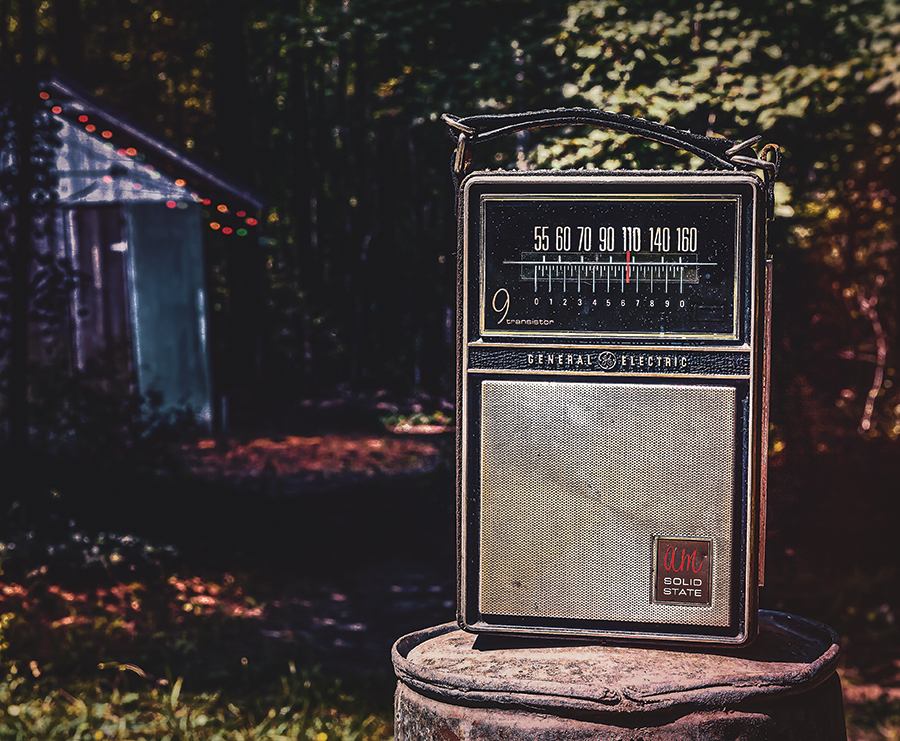
Into the smoke from neighbors burning their trash in rusty barrels slipped Earl, on the lookout for someone to whom he might define himself. But he always ended up in the woods, listening to the transistor radio his father had given him, or reading aloud from the biography of Leadbelly he carried with him always.

His people were proud Louisianans transplanted across the border to Carthage, Texas. His father was vaguely around. His mother talked all the time to her sisters in Bossier City, installing a 20-foot cord on the telephone so she could sit outside on the front stoop and smoke and ask her sisters about the fates of various men she might have married instead.

Prison, preacherman, gay, career military, meth-head, Port Arthur were the answers Earl imagined coming across the line. “Shoo now, Earl,” said his mother when she caught him snooping.

His father, when he worked, laid pipe. He claimed to be Acadian but his mother said he was out of Lawton, Oklahoma. Wherever he was from, his brothers and cousins soon arrived in Carthage and a compound of trailers and vehicles sanded down to primer or missing bumpers or outright wrecked beyond repair sprung up in the piney woods on the outskirts of town. Earl’s father once took him on a walk through the woods to a pond, where he taught him the words to “I’m so Lonesome I Could Cry.” Even when he disappeared for weeks, Earl had his transistor radio, on which his father claimed to have listened to stations out of Fort Wayne, Indiana, and Matamoras, Mexico, when he was a boy in his bed at night. Is there anything in the world more romantic than listening to radio stations from other countries illicitly after lights out?

Michael Parker was born in Siler City, North Carolina, and grew up in Clinton. He is the author of 10 books of fiction and taught in the Creative Writing Program at the University of North Carolina at Greensboro for 27 years. He currently lives in Austin, Texas. His excerpt is the beginning of his new book, Die Trying.

Story of a House

Sycamore No More

Classic cottage becomes serene showcase

By Deborah Salomon     Photographs by John Gessner

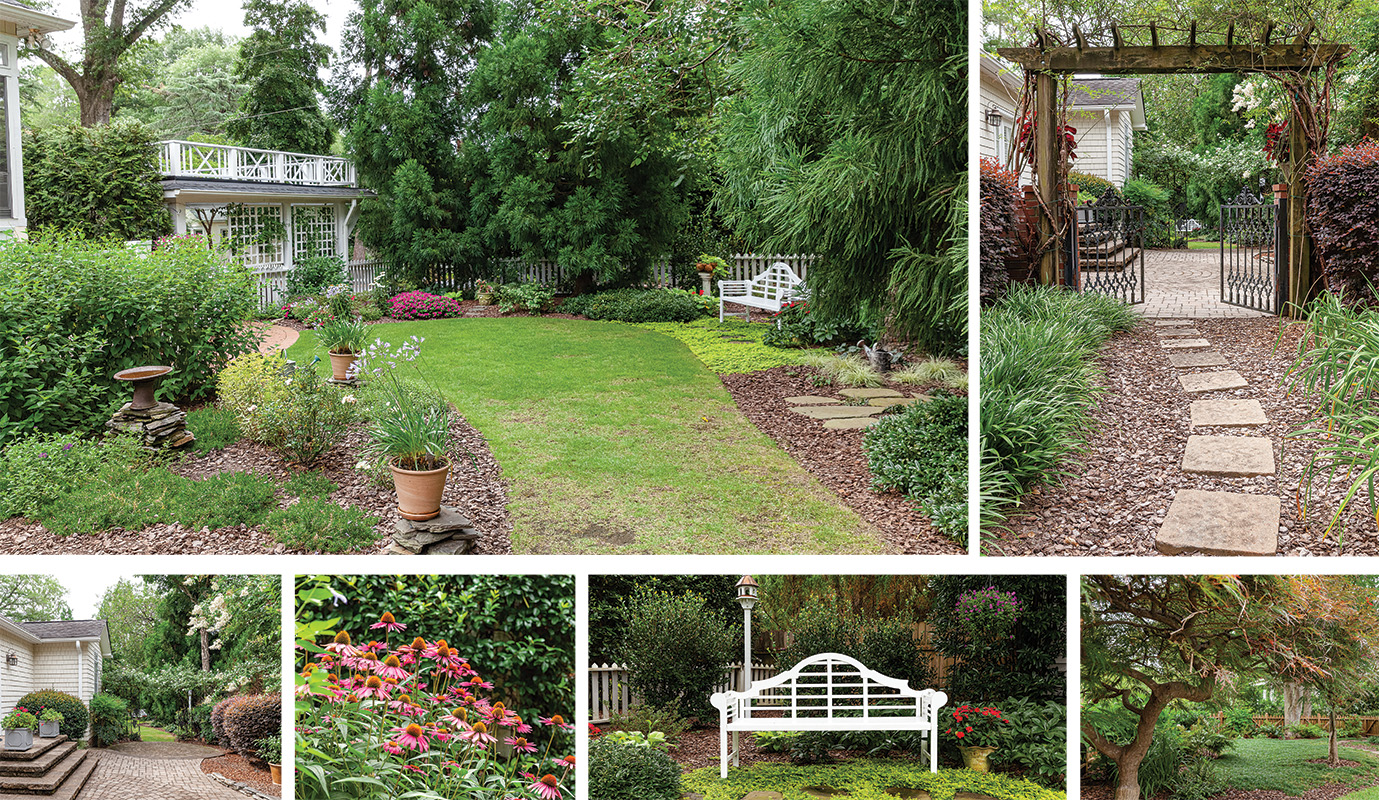
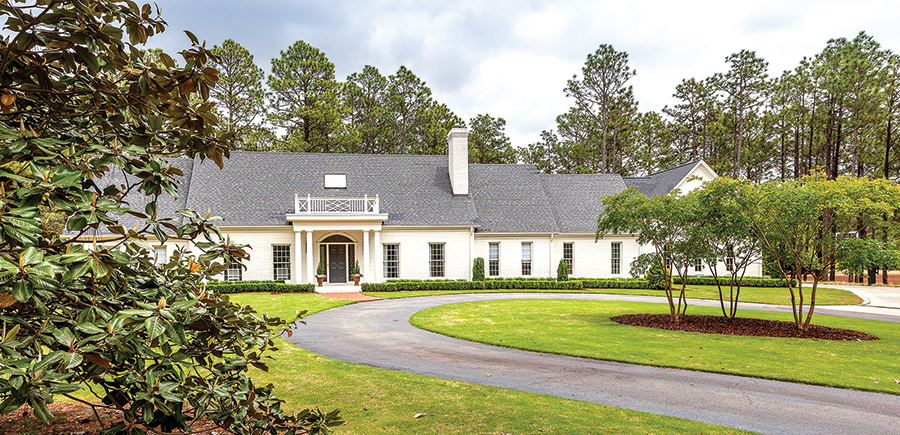
Media rooms come and wine cellars go, leaving turn-of-the-century cottages the true jewels of Pinehurst. Not that James Walker Tufts would recognize anything past the front door of Sycamore Cottage, where a yesteryear exterior surrounded by a well-tended garden becomes a study in clean, modern lines interspersed with textures bathed in Quaker gray.

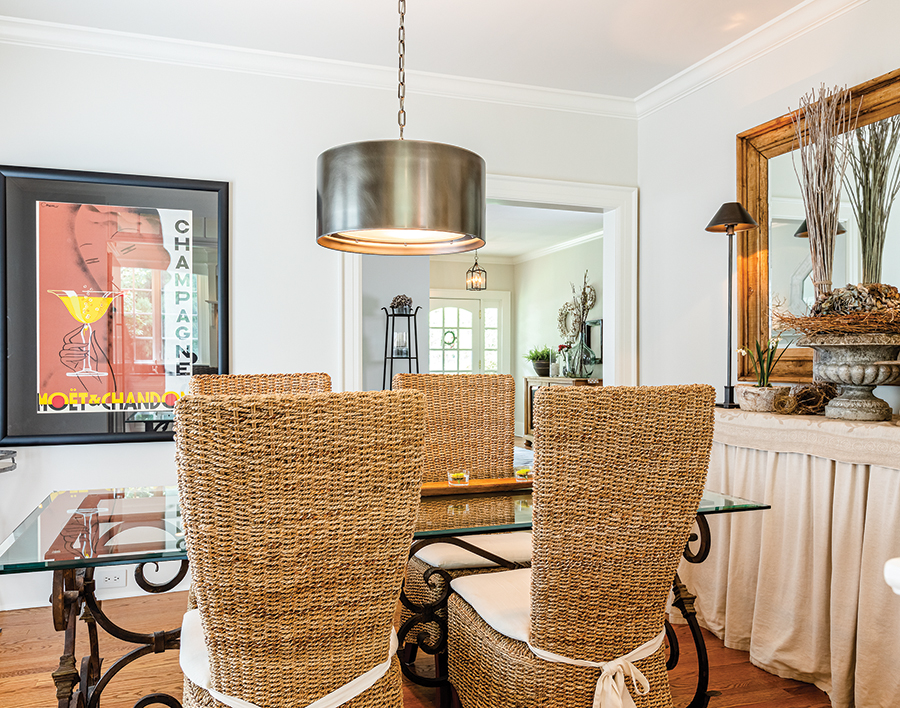
Soothing gray, serene gray fading to white, like pre-Technicolor movies. Gray, a suitable backdrop for fascinating light fixtures, weathered shutters hung as wall décor. Smooth gray against a nubby chenille slipcover, raffia chairs, wicker baskets in their natural, neutral beige. Gleaming heart pine floors, a white marble hearth and breakfast bar, creamy upholstery, mirrors framed in steely, hammered zinc and a dining room table topped with beveled plate glass.

No knickknacks.

Airy, calm, simple. Gorgeous.

Who wrought this environment?

A new Pinehurst demographic: career couple, well-traveled, no kids, who retired early from tech companies located in frigid urban jungles. He plays golf, she indulges a passion for art, perhaps via interior design. They cook in tandem, entertain, participate in social/cultural events.

They are busy, happy, productive.

Their home will be a showplace — but tasteful, low-key, top-quality.   

“We’re the putt-and-putters,” says Roxanne Vaitkus. “My husband (John Hagstrom) putts and I putter around.”

How they came to Pinehurst in 2016 reads like a fairy tale for couples of a certain age.

Roxanne and John lived in a Chicago suburb, where they renovated a historic craftsman-style home built in 1928. They knew the ropes. In 2012, the retirement subject came up.

“We should do something different,” Roxanne suggested. Like buying a beach cottage in  Carmel-by-the-Sea, California. Three years later they sold it during a real estate boom. Where now?

Maybe Palm Springs. “We couldn’t find anything, and it got really hot,” Roxanne recalls.

The couple had visited Pinehurst, where John played golf and Roxanne rented a bike to putter around the village. This time she sent him ahead to scope out possibilities.

The very day he arrived, Sycamore (also called Welcome Cottage) went on the market. “He knew I’d like it.”

They could walk to the village. The walled garden visible through the over-the-sink kitchen window was absolutely adorable. The master suite, created by removing a wall between two bedrooms, was on the main floor — a must for retirees. Roxanne could have a potting shed. Prices were good, compared to other areas.  Best of all, previous owners had completed the major overhaul, including systems, leaving only cosmetic details to be addressed.

Roxanne: “John put in an offer. When I came out and saw it I said, ‘You really do know me.’”

Their only concern was living, for the first time, some distance from a big city.

Now, the kicker. The buyer who snapped up the Carmel beach house wanted all their furniture. Roxanne and John had 10 days to vacate.

“I only took six pieces,” Roxanne says.

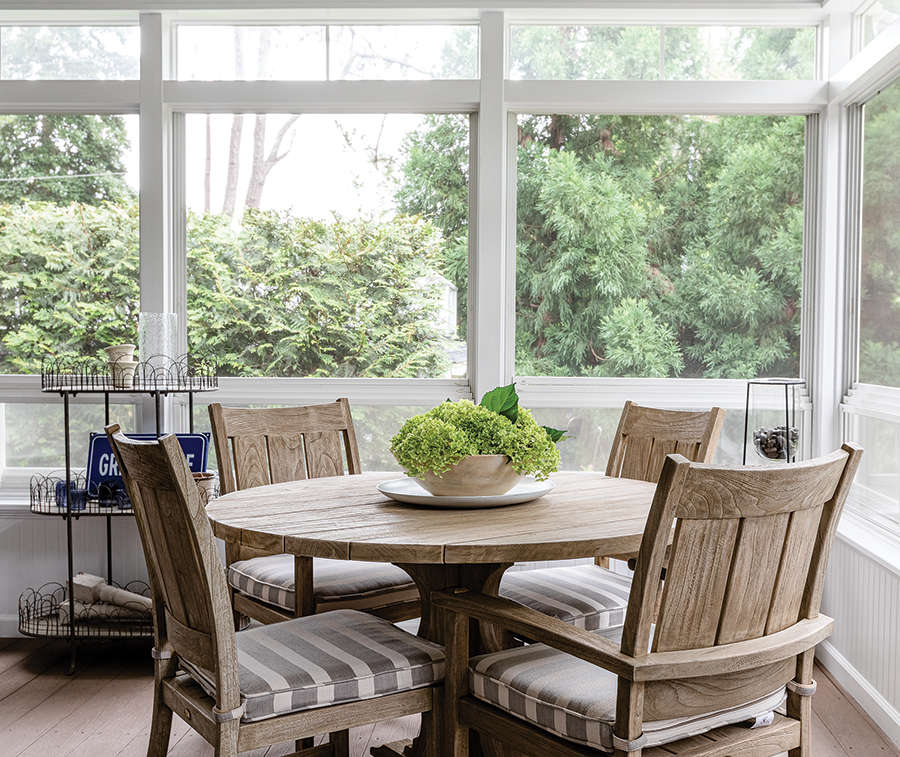
What fun . . . to putter through Habitat, estate sales, High Point showrooms, antique shops, fabric outlets feathering a retirement nest. They rented a house nearby while improvements in the bathrooms and elsewhere were made, doors replaced, moldings replicated and a roomy, south-facing porch with glass and screens added onto the back.

“This is my favorite room,” Roxanne says. “We had one like it in Chicago.”

Here, they lounge on a sectional sofa (gray, of course) and eat at a gray-washed wooden table. Even the carport visible through the porch window wall is a vision in white, vine-covered  trellises.   

Sycamore Cottage, built in 1896, probably had a sitting room, several bedrooms, small dining area, sun porch and kitchen on the main floor. Not all the cottages had eating and cooking facilities, since seasonal tenants took meals at the hotel. Upstairs, more bedrooms, perhaps for servants, in an attic-like space with angled ceilings.

From documents on file at the Tufts Archives, it appears the cottage was rented out until 1918. Dr. Walter Page (Doubleday Publishing empire) “and household” arrived in December 1912 for the winter social season, according to the Pinehurst Outlook. In 1934, a fire destroyed most of the house, which was rebuilt by then-owner B.U. Richardson, who used an insurance payout to modernize, especially the bathrooms. “Slop buckets” listed on an early rental check list were replaced by porcelain “lavatories.” Shingles replaced lap siding, but charred attic beams remain intact.

The floor plan in place when Roxanne and John took over bears little resemblance to the original. “Open but not wide open,” she describes it. Walls have been halved or removed for clear sight from the kitchen, at the back, to a conversation cove (originally a porch) with built-in cabinetry, at the front. In between, a compact dining room and sitting room with the original fireplace, which sports a new hearth made of white Lincoln Memorial marble, quarried in Colorado. Furniture-style kitchen cabinets were retained, painted white. Across from the sitting room, a den with giant TV was chosen because it receives little natural light. Roxanne calls it their cocoon. In keeping, the furniture darkens, beginning with an antique hickory cabinet-bar from France, one of the six pieces she shipped east.

Rugs throughout are simple, woven, striped or plain neutrals.

Roxanne prefers contorted metal bed frames and mixed-media light fixtures, many with an element of surprise. “I call it playing with texture,” which might include dried flowers from her pollinator garden, or birds’ nests. In the dining room, a wicker circle hanging from the ceiling drips crystal teardrops. The main floor powder room has a massive, bumpy-textured crystal bowl for a sink. The master bedroom light fixture is covered in wooden beads for a serpentine effect.

Surprises don’t stop there: A lamp base came from a Parisian bridge. Roxanne’s breakfront is draped to the floor in embroidered natural linen. Flanking it, two cylindrical baskets hold thousands of corks from good wine consumed on the premises. The base supporting that plate glass in the dining room originated as a French baker’s table. For a centerpiece Roxanne uses a 3-foot wooden baguette board, which can be filled with seasonal fruit or decorations.

A rough ceiling tile from an old general store in Iowa texturizes a blank spot over the range in the galley-style kitchen. John compares an upstairs stall shower done in black with chunky, metal fittings to a bank vault. Even the laundry room has shadowy gray stripes painted on the walls and gun-metal gray appliances.

Nothing looks better against gray than pale knotty pine. Another of the six holdovers — perhaps Roxanne’s most stunning piece yet tucked in a back hallway — is a glass-front buffet cabinet from the French countryside, displaying small treasures.

Except for occasional streaks of blue and a stylized wine poster, Roxanne has avoided color completely.

Bland? Heavens, no. Boring? Hardly.

Her next puttering will be for art, maybe not gray but surely calm, soothing, with Zen that matches a Sycamore Cottage Mr. Tufts could never have envisioned.

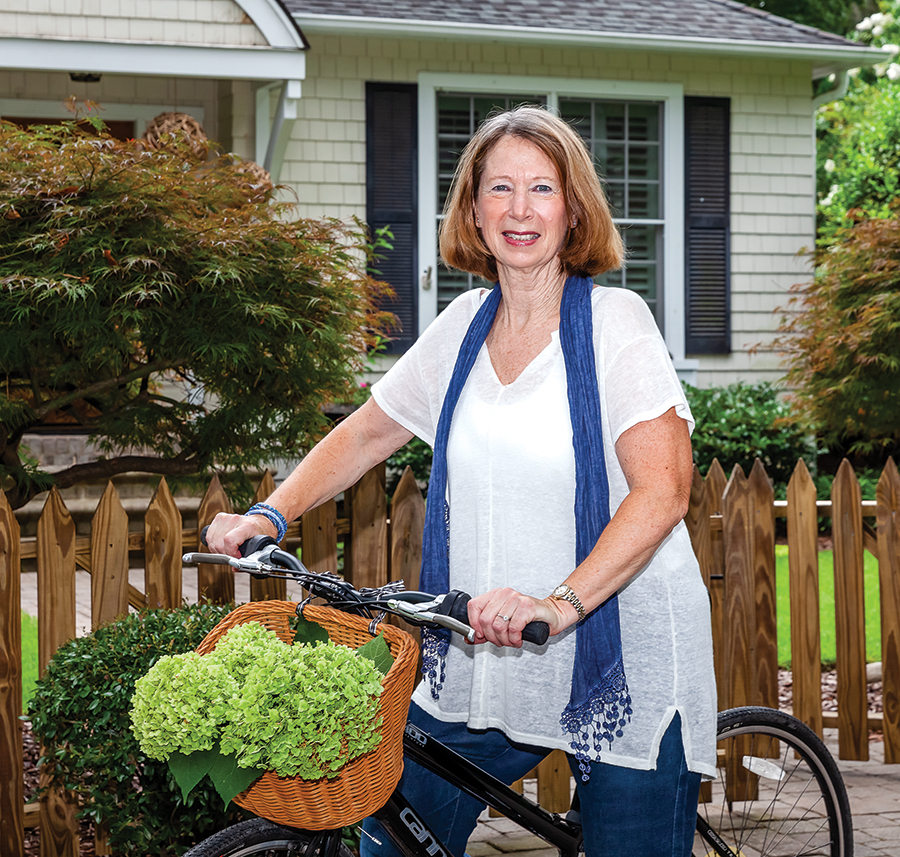
“Modern, but old,” Roxanne calls it, and pedals off in search of another treasure.  PS

Almanac

Weeks ago, before what felt like endless days of rain, two flats of tomato plants mysteriously landed on your porch (how’d they get there?), and so you planted them deep in the sunniest patches of your garden.

A Cherokee Purple here; two Lemon Boys there; a Park’s Whopper by the lush trough of sweet and purple basil; and sundry grapes and cherries scattered about in various pots and planters.

Now, the earliest fruits are ripening, and each new tomato is simply miraculous. One catches the sun, drawing you near — an heirloom cherry among a small cluster of green and yellow fruits. You hold it gently between your thumb and forefinger, can almost feel the life force pulsing inside. Days from now, that tomato will be ready for harvest. Patience, the garden whispers, and you know it’s true: Nature never rushes.

On the other side of the yard, where the Cherokee Purple is soaking up the earliest rays of light, you admire how strong and healthy the plant looks — how fully supported. The advice you were given echoes back like a dream: plant deep; don’t be afraid to bury a few of the leaves; the stem will sprout new roots.

Plump fruit heavy on the vine, you contemplate, is the gardener’s crystal sphere. It tells of the future, yes (tomato pies and homemade salsas). But it also tells of the past — the sunlight and rain; the good fortune; the “invisible” strength, growth, and magic that took root beneath the surface.

Patience, you whisper, reminding yourself that you, too, have much to offer, even if you can’t yet see it. Sunshine or rain, there is wisdom taking root. Be generous with yourself. Allow whatever space, care and time you require. 

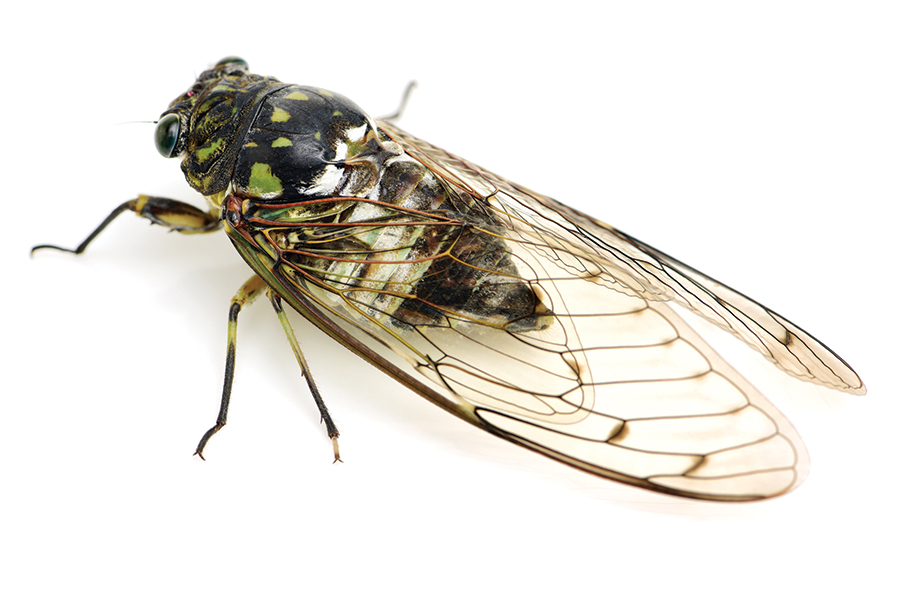
The cicadas have mastered this art form. Seventeen years underground, and here they are, screaming out in glorious ecstasy. Not a moment too late or too soon.

Homegrown Gourmet

If you find yourself with two pounds of homegrown tomatoes, and none of the following ingredients make you shudder (flour, mayonnaise, milk, cheese and butter), do yourself a favor and look up Laurie Colwin’s Tomato Pie. Summer supper seasoned with scallions and chopped basil, and can you say leftovers?

A world without tomatoes is like a string quartet without violins. — Laurie Colwin

The Goddess Tree

On more than one occasion, I have gasped at the crape myrtle’s likeness to a Greek goddess. The smoothness of its multicolored bark. How its trunk and slender branches seem to embody such poise and grace.

Now through September, the crape myrtle blooms, its bright pink flowers fragrant in the thick, summer air.

Although its English name derived from its myrtle-like leaves and crinkled, tissue-like petals, this ornamental tree is native to China, where its name means “hundred days of red.”

While the crape myrtle is not a true myrtle, the myrtle is known as the flower of the gods, and is specifically associated with Aphrodite, the Greek goddess of love.

Makes perfect sense to me.

The summer night is like a perfection of thought. — Wallace Stevens

The Grand Emergence

If you happened to hear — or are still hearing — the deafening hum of the million-plus “Brood IX” cicadas predicted to emerge in our state per acre after 17 years underground, then you have witnessed one of the fullest, most jubilant expressions of life on Earth.

Sometimes we forget how miraculous it is just to be here. And how wild. 

This dreamy month of summer, when the Earth is pulsing, buzzing, screaming with life in all directions, we remember. Ripe peaches and wild blackberries. Cornsilk and crickets. Butterfly weed and hummingbird mint.

It’s all a gift. 

The garden is ripe for harvest, and everything we need is here. Our only requirement, from time to time, is to celebrate our great fortune.

Happy Fourth of July, friends.  PS
Fiberglass is Forever

Not just another roadside attraction

By John Wolfe     Photographs by Andrew Sherman

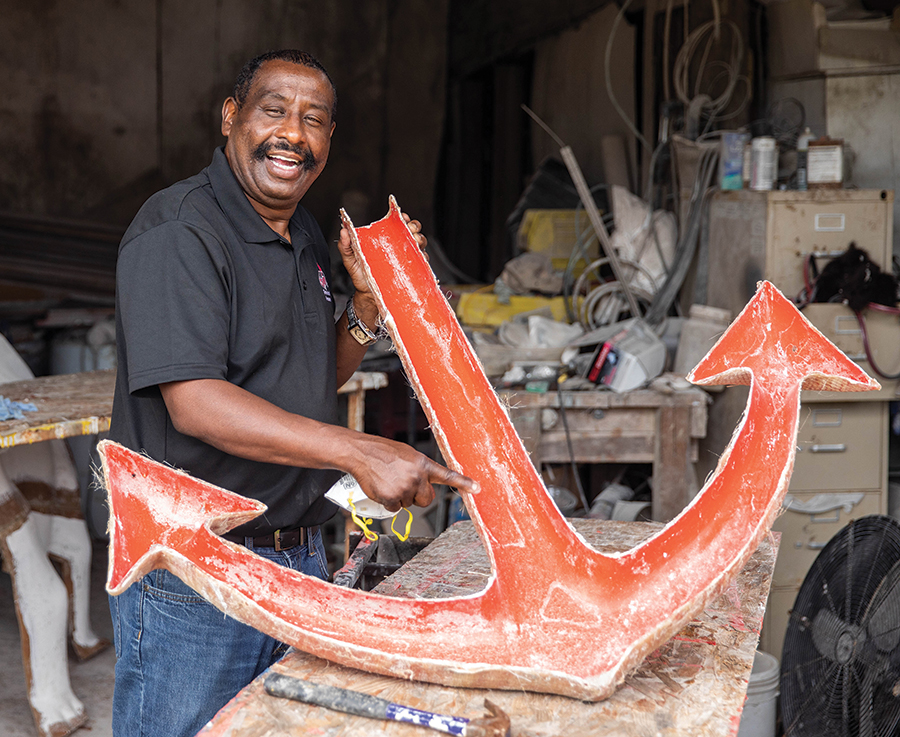
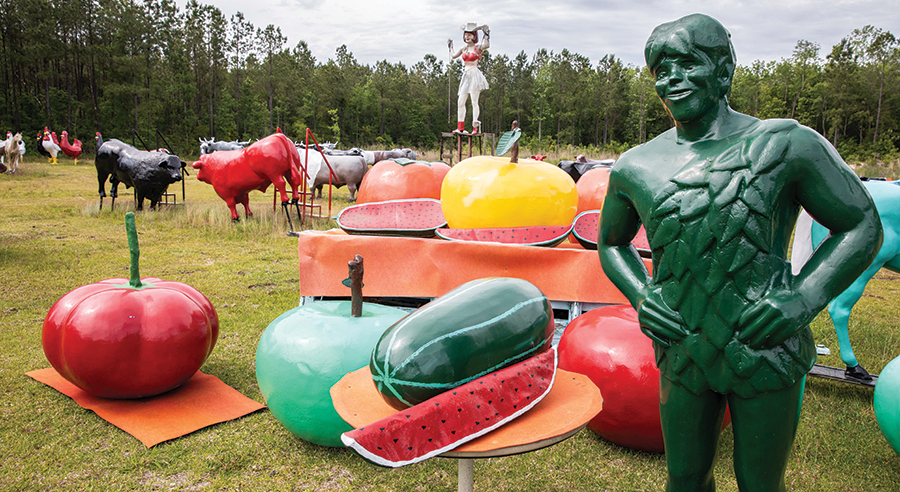
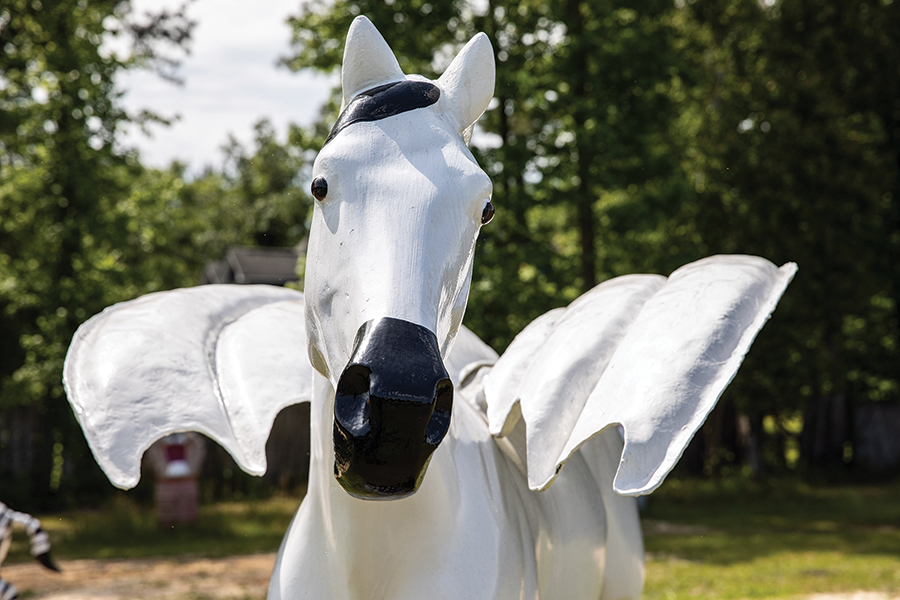
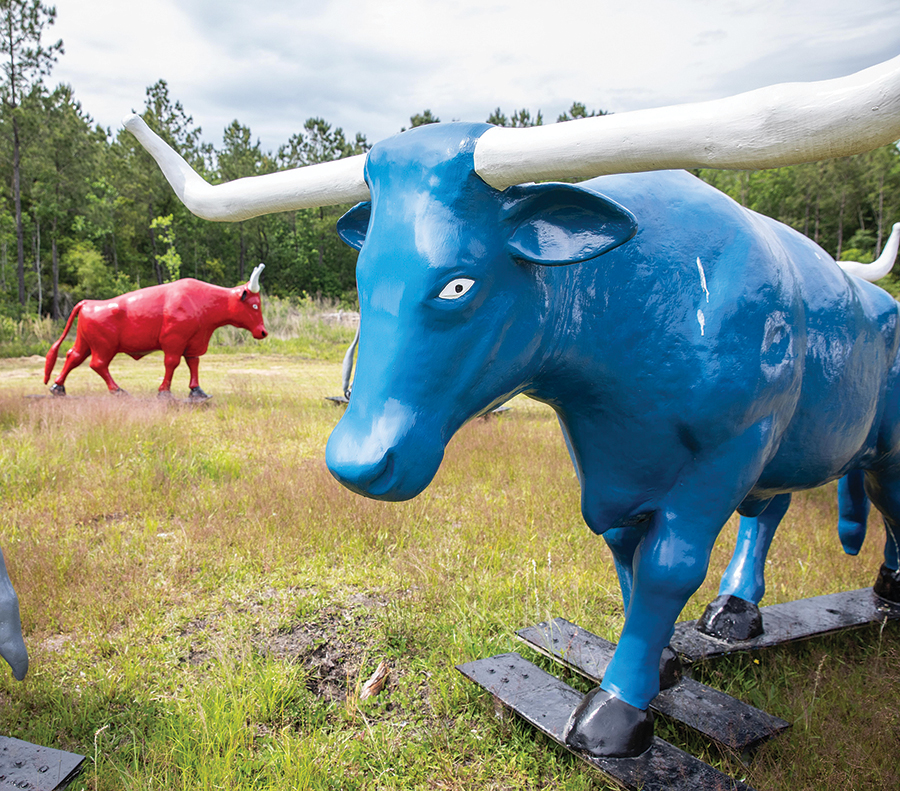
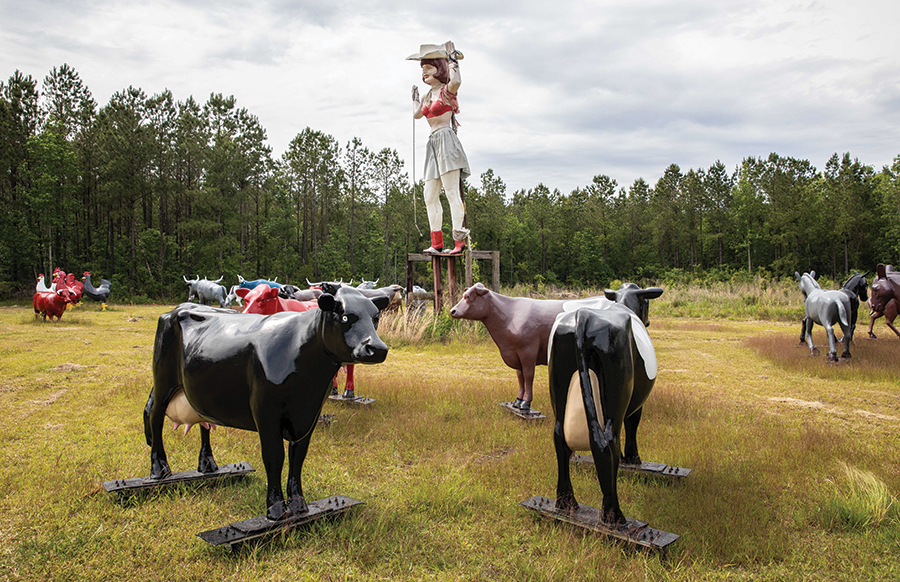
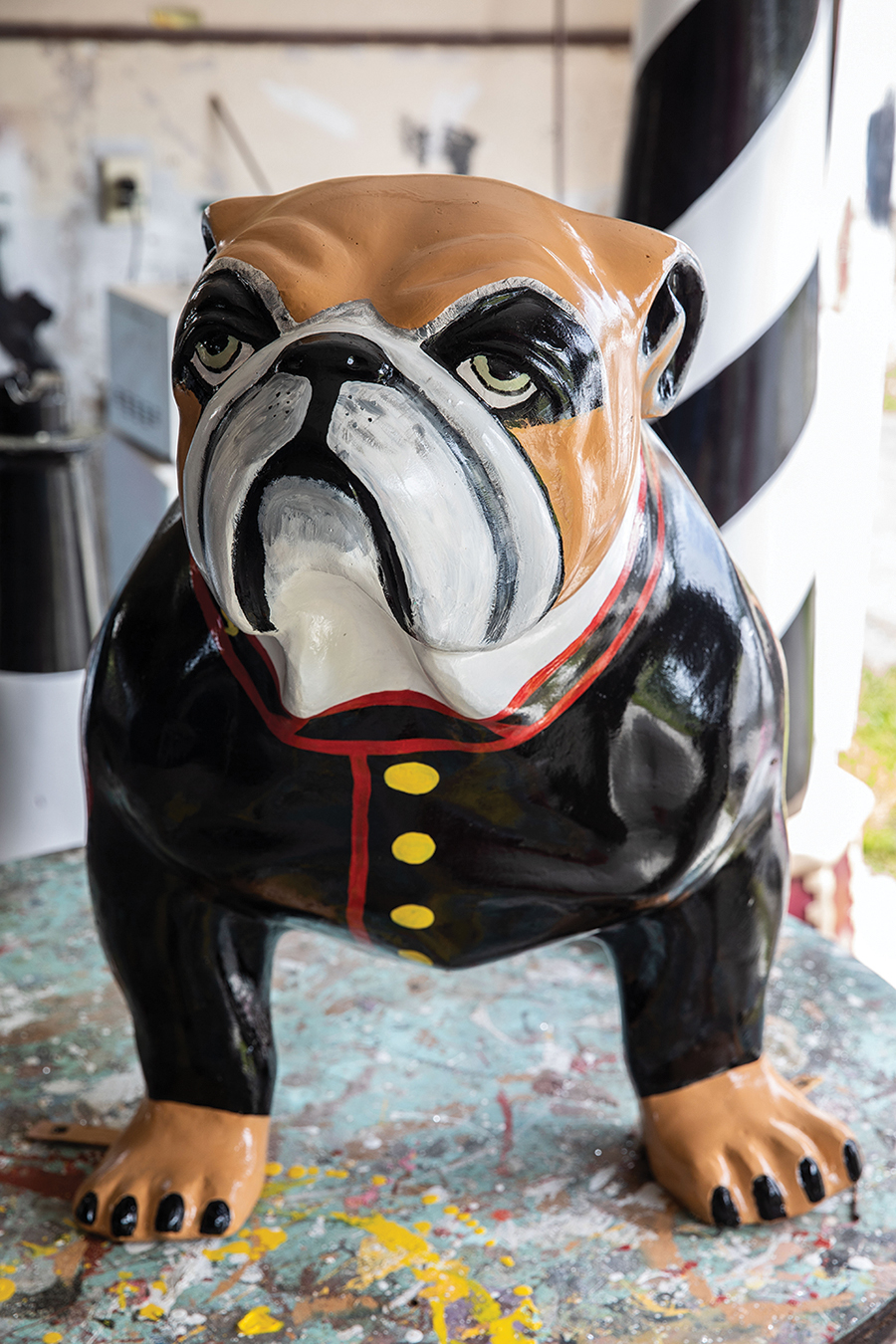
There is a man in Columbus County who creates dinosaurs in his backyard. He also builds bulldogs, painting some in tidy Marine Corps dress blues, and lighthouses as tall as an NBA player. Giant flamingos wearing bow ties and top hats watch him work, as kaleidoscopic cows, horses and zebras graze in the fields around him. A centaur points toward a pond where oversized herons hunt for giant, glittering fish heads. Gargantuan golf balls are teed up beside polar bears. A whale that can’t swim breaches in the distance. A Jolly Green Giant, undoubtedly responsible for the massive tomatoes and colossal watermelons growing nearby, startles a glass-eyed Pegasus; it rears up on its hind legs, wings flapping. Overlooking the whole tableaux is a 50-foot tall woman — a Uniroyal Gal, to be precise — wearing a cowboy hat.

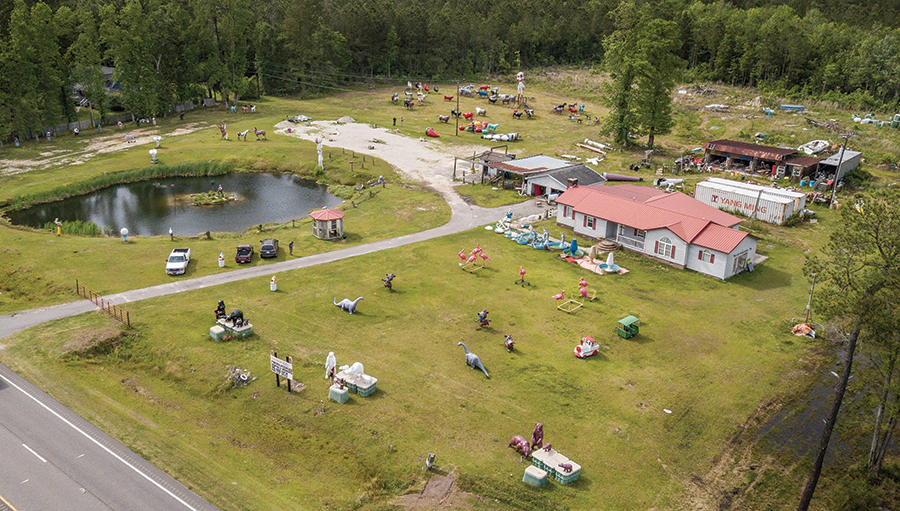
No, it’s not a fever dream. This is Grahamland, an 8-acre fiberglass menagerie on the side of U.S. 74-76, halfway between Lake Waccamaw and Wilmington. If you’ve ever driven that stretch of road, you’ve seen it. It’s impossible to miss, even at 70 miles an hour. The sculptures stare out at the highway, imploring you to pull over for a closer look, and many people do. Fiberglass artist Hubert Graham might get 20 visitors from across the state, country and world on a good day. Some people buy a sculpture — all of Graham’s work is for sale — but everybody asks the same question: Where on Earth did all this stuff come from?

It began with one lighthouse 25 years ago. Back then, Graham worked for the power company, and came home one day to find his front door kicked in and some belongings gone. The house was surrounded by woods then, hidden from the highway, so Graham cleared the land and, with the help of two friends, welded together a metal lighthouse with a security light on top. Pretty soon all his neighbors wanted one, too, but a hailstorm two years later left the original badly dented and sent Graham in search of a more durable material. He found a man named Bill Sharp, who built lighthouses from fiberglass up in Rocky Mount. Sharp was a roamer, far more interested in chasing women than in building lighthouses, but he taught Graham to “glass” and ended up selling him his molds when he retired.

Graham eventually left the power company and got a job at Southport Boat Works, building fishing boats and further developing his fluency with fiberglass. When that company went under they offered him the contents of their warehouse for one dollar, on the condition that he clear it out in 40 days. So he hired some former co-workers to help, and ended up with 200,000 gallons of resin and 300,000 pounds of fiberglass — the raw materials for Grahamland.

Fiberglass resin has a shelf life. The next few months were a frenzy of activity for Graham, building as much as he could before his resin kicked off. Every afternoon he would wax and gel the molds for whatever he was building (his sculptures are pieced together from molds, which he makes — half horse heads, sides of cows, legs for bulldogs), and in the morning his hired help would come in and roll the glass while he went to work at Corning. That afternoon, once it had cured, he would pop out all the pieces and do it all over again. After a year, he had used up all the resin, and had a yard full of fiberglass puzzle pieces of sculptures, waiting for assembly.

To build a horse takes seven days. Graham never works on one thing at a time; while he’s putting a horse together, he might be making horns for a bull or fins for a dolphin, too. His work shed has benches full of petrified paintbrushes, scraps of glass and angle grinders; rolls of fiberglass cloth and 55-gallon drums of resin line the walls. Everything is covered in fine itchy white dust, and the chemical-sweet smell of uncured resin, like some strange synthetic fruit gone far too ripe, hangs in the air. The floor is a textured mosaic of hardened resin drops, splattered with paint and glitter. Here is where the Frankenstein-like job of assembling the jumble of molded parts into a recognizable creature takes place. The seams are glassed from the inside to hide them, which means Graham must contortion himself up inside each dusty, hot, cramped animal and smooth on layers of glass and pungent resin. The stomach goes on last

Once the glass has cured, the real work begins: sanding. The ancient Greek Gods may well have punished Sisyphus by giving him a sander and some fiberglass instead of a boulder to roll up a hill; the work is loud and endless, and the dust is like itching powder that gets everywhere. Graham estimates it takes him 18 to 20 hours to sand smooth just one horse, during which time he wears through 30 discs of sandpaper. Amazingly, he works in short sleeves. “I’ll get too hot otherwise,” he says. “The less you sweat, the better off you are.” Then comes the paint, and the end result is something that will outlast almost anything else people can create. Wood may rot and metal may rust, but fiberglass is forever.

Like all artists, Graham is a dreamer, and had big plans for Grahamland. He envisioned a theme park where people could come to escape everyday life, complete with a mini-golf course (where people could putt-putt into giant fiberglass animal heads, naturally) and a restaurant topped by one of his signature giant lighthouses. Then Hurricane Florence came swirling up from the sea, and Grahamland was completely underwater. Animated by the furious flood, the sculptures scattered into the surrounding woods, some making it a half-mile away. Seven-foot-tall pink flamingos floated past grizzly bears treading water; a fleet of fiberglass hot dogs sailed on the storm-tossed waves. The Big Uniroyal Gal lost most of her clothing to the jealous fingers of the wind (fear not — she’s decent again). When the waters receded, Graham hopped in his tractor and shepherded his animals back home, but there is still a bathtub ring halfway up the side of his house.

Then the coronavirus came, and Grahamland’s gates closed again. He found himself, as many of us did during the quarantine, with more time on his hands than he’d ever had before, and found himself enjoying it. He finally has time to spend with his girlfriend. Before, he admits, their relationship suffered: “I wasn’t paying her any more attention than the man in the moon. I was too busy doing fiberglass stuff.”

But the recent death of his father put things in perspective for him. His father worked all his life, putting in 39 years with International Paper, acquiring a big house filled with things, but in the end, Graham says, he never got to enjoy it. “It’s so sad. You work all your life, you gain all this material stuff, and what do you got? When you die, all that stuff stays here . . . At the end of your life, were you happy? Happiness means more than anything else. Happiness, together with someone to share your life with, that means more than anything in this whole wide world.”

Three disasters in a row have left him burned out, and Graham is pushing 60. A quarter-century of hard work hasn’t gotten easier with age, and with no apprentice who could continue it, he’s not sure what the future holds for Grahamland. But he’s created something unique, something remarkable. Something durable enough to survive storms and plagues. Something that makes people smile when they drive past. Maybe that’s enough.

Will he build more? Graham chuckles. “I don’t know if I want to be up in another bull’s ass or not.”  PS

John Wolfe enjoys life as a writer and mariner on the North Carolina coast. More of his work can be found online at www.thewriterjohnwolfe.com.

Story of a House

Whole in One

Everything a golfing family needs under one roof

By Deborah Salomon     Photographs by John Gessner

Color this scene serene. Jana Van Paris, a lovely blonde wearing white pants, white shoes, a white shirt covered by an oatmeal sweater, sits back against a dining room chair upholstered in the same shades. The entire house — except for her husband, Todd’s, navy blue office/study — is painted a soft, glare-free white, the exterior bricks, French vanilla. Other furnishings, for the most part, continue gradations of this neutral mode.

“For me, white and neutrals represent peaceful, relaxing calm,” Jana says.

Color, when it appears in crewel and Oriental rugs or upholstery, tends toward muted blues and dusty apricots. After an elongated black and white checkerboard foyer, floors are dark-stained hardwood in stunning contrast to the white.

This sets the scene for comfortable formality.

How many families sit down to weeknight meals on a mirror-topped dining room table that reflects a crystal chandelier worthy of a ballroom?

In contrast, this serene mode is regularly interrupted by the happy noise of teenage boys — lots of them — who spill out of the rec room that has a putting green built into the carpet. Because golf is the overriding operative in this home on 5 acres, facing the sixth green of the Cardinal Course at the Country Club of North Carolina. Todd and Jana play. Their son Jackson, 16, trails a string of national titles after his name. His golf buddies from around the U.S. and abroad stay in a bunk room over the garage.

In parts and whole, this house exists to satisfy the particular needs of one family. Yet unlike other golf palaces in gated communities, modesty rules: no trophy case, no framed photos with luminaries, although, Jana admits, plenty are in storage.

Jana grew up in a different environment, on a cattle, cotton and soybean farm in Alabama, which her family has operated for five generations. She was restless. “I wanted to see what was out there,” she says, and took a degree in business. Her position with an international pharmaceuticals firm included travel.

“That’s how I met Todd, through business.”

Until 2017 the Van Paris family lived in a Chicago suburb, with a vacation home in Pinehurst. Chicago weather isn’t conducive to year-round golf. Besides, “We wanted out of the corporate world,” Jana says. “All the stars were aligned.”

But their Pinehurst pied-à-terre wasn’t big enough for the projected lifestyle, which included entertaining locals for an evening and out-of-town golfers for longer. Something about this elongated red brick house with green shutters, built according to 1985 luxury standards, appealed to Jana. It needed a makeover but not a complete renovation.

“The setting was beautiful and it had good bones. I could envision it meeting our needs.”

Most important, the house overlooked the golf course.

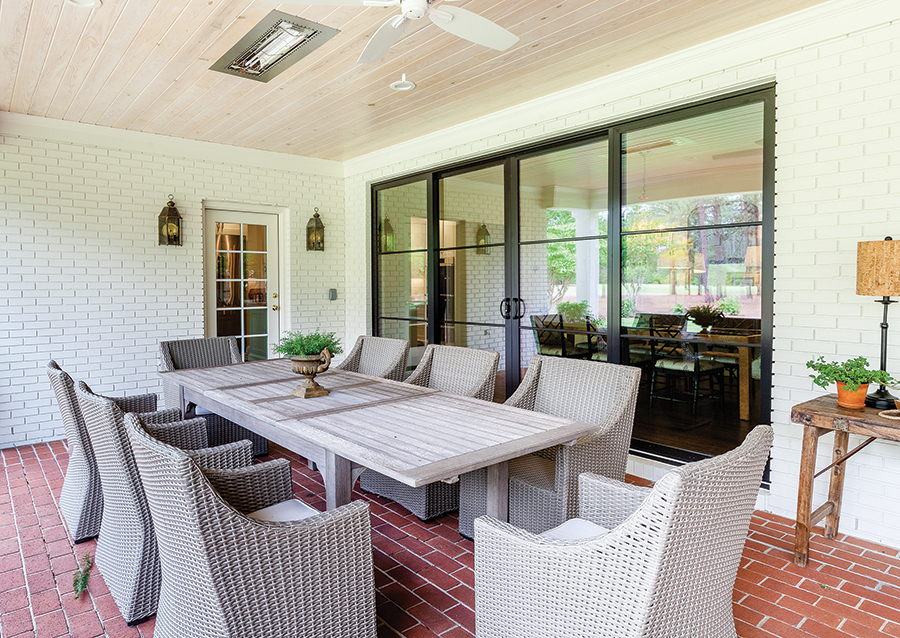
First to go were the red bricks and green shutters. They doubled the size of the terrace, which now stretches the length of living room, dining room and kitchen, with distinct areas for cooking, eating or just relaxing. A wall of huge black-rimmed glass squares was installed between living room and terrace, with doors opening out through dining room and kitchen, creating a nice flow for entertaining. The wall between formal dining room and kitchen became an archway framing the kitchen remodel, visible to diners, with footed furniture-style cabinetry . . . in white. Instead of a breakfast nook, space at the end of the kitchen became a small sitting room.

“Todd loves to cook,” Jana says. “He eats what he grows. We needed a kitchen big enough for everybody to hang out.”

When Jackson and his friends descend, there’s always the counter bar, with stools, also that big table with comfy barrel chairs on the terrace.

The double garage was finished off as a playroom with grasscloth walls, TV, a watercolor of Pinehurst No. 8 and ping-pong table. Jana explains that golfers, especially juniors, love ping-pong. That conversion meant building another attached garage with the bunk room over it, accessed by a full-sized staircase.

Although the house serves family living well, formality prevails, especially in the living room, with its grand piano. Potted orchids, Todd’s favorite, are everywhere. In the center, a multi-colored carpet over a neutral one. Cream upholstery does not detract from the focus: A series of black and white intaglio prints — a technique popularized during the 15th century — hangs over the sofa. A contemporary painting, suspended from the ceiling, appears to float through the drapes. Small benches rather than many chairs enable guests to form conversation groups.

Art, obviously, speaks to Jana and Todd. “Art is creative, like music. I like different kinds,” says Jana, who plays her piano regularly. “When we traveled, we would pick up a piece that represented the trip, or an event.” They collect what they like, whether from a popular or lesser-known artist. “I want to own the original,” says Jana.

After reading about the Spanish modernist Alvar (Àlvar Suñol Munoz-Ramos) they sought a painting, now in the dining room. “We won’t purchase a piece to store in a closet somewhere. We’ll find a spot for it.”

Amid the serenity of neutrals — which extends to the bedrooms — Jana found a spot for whimsy: powder room wallpapers.

“I like surprises, too.”

Year-round golf at their doorstep, copious indoor-outdoor space for entertaining, a kitchen garden, home offices, private quarters for their teenage son and friends — color that successful.

“We like the way the house lives,” Jana says. After Chicago, they especially appreciate the quiet.

“We were sitting on the patio watching TV . . . and we both said, ‘Don’t you just love it here?’”  PS

Buster Gets a Bath

When I pick him up
and tilt to the bathtub
he falls limp with shock
This cannot be. . . .

Then it’s dark thoughts
from dark eyes, the dog
I love so much hates me
A torture worse than death.

All sudsy now, scent of clover
and dead leaves washed away
with lavender and lemon.
How could you?

The sprayer — that cobra of doom
strikes again and again.
Even if it feels good
I’ll never say so.

After a brisk towel rub
he springs all over the house
a hero home from the war
The bath? It was my idea.

— Ashley Memory

Wrangler on Medicare

Or, what I did on my summer vacation

By Jan Leitschuh

It was raining — again. Cold, slushy, May rain, at 6,500 feet.

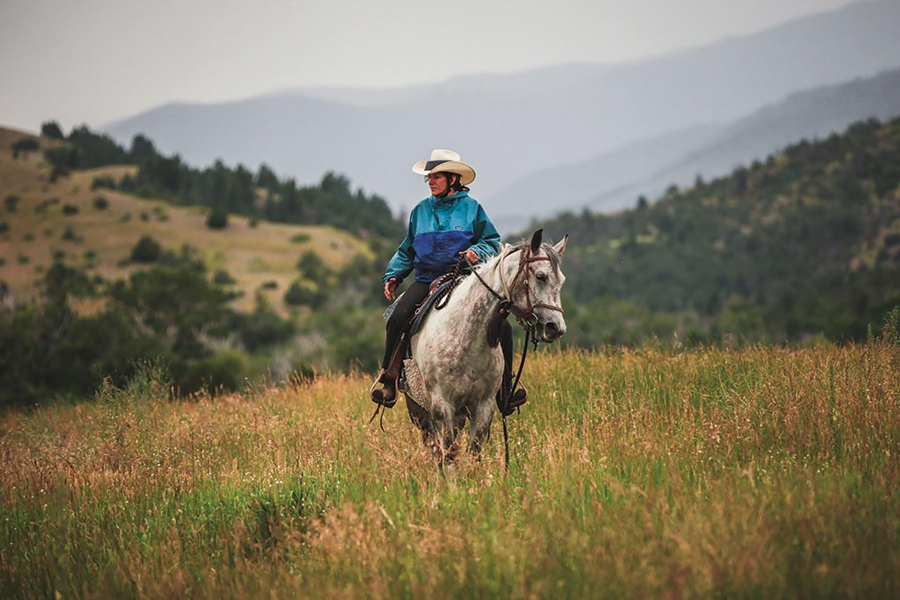
On my third day of work, as a 65-year-old wrangler on a guest ranch near Yellowstone National Park, my Western saddle suddenly shot forward onto the neck of my startled mount. I was pointed downhill on the slickest, steepest, narrowest slope of the morning’s mountain trail.

Outwardly, I was cool, calling ahead for a halt to the line of guests. Inwardly, I was freaking — how to fix this heavy saddle quickly, with a gaggle of guests in an awkward, uncomfortable, downhill hold?

As I sit homebound in these viral times, I find myself mind-traveling back to my Montana “summer vacation” last year. I had been, by far, the oldest wrangler in a young person’s job. My colleagues were in their early 20s, and I was older than their grannies. My immediate boss was 34 years my junior.

So I needed “street cred,” as it were. I was out of practice. And now I was stuck on a steep, muddy goat track, on an unhappy horse deciding if bucking down the mountain through the guests would solve his saddle problem.

Mid-May in the high country of southern Montana can be a snowy, rainy, muddy mess.

I was bringing up the rear on a lope (Western canter) ride, an option for the more experienced guests. It was so slippery we never chanced the faster gait, just walked and trotted to keep guests safe. The cold, gray clouds tossed some wet snow into the rainy mix. I was riding Sebastian, a nice, sturdy bay gelding with a massive, round barrel. Though I had cinched him up as much as I humanely could, the saddle and pad still let loose on the steepest downhill. When I called downslope to the lead wrangler to halt our ride for a moment, he was so far below, it was a miracle he heard.

How was I going to fix this? With a wall of Douglas fir rising on the right, I slid off the downhill, left side. When my boots hit the greasy clay, they shot out from under me, and I nearly slipped under my mount. Now my hefty horse really towered above me, with his hindquarters even higher uphill. I had to set the heavy saddle backward. Reaching up to reposition an awkward, 40-pound stock saddle loaded with safety gear, with frozen fingers, on an anxious horse pointed downhill, while balancing on two greasy, mud-slicked rocks in the chilly rain, while guests waited in a precarious position of their own, was not the greatest of my challenges in the moment.

I still had to remount.

With a long cowboy slicker and multiple layers of warm clothing hindering flexibility, downhill of a tall, skittish horse, with pounds of slippery clay bricked on my boots and no solid footing, I knew I would have to give it my all to regain the saddle. Over the summer the demands of the job would harden my aging muscles to wrangling tasks — but I was not quite there yet.

Calling on all my reserves, I sprang up off the greasy rocks. My pride, guest safety and new job were at stake. Just as my brain was registering that I was about to fail to haul my aging, clay-heavy, clothing-burdened carcass aboard, I let out a desperate roar of effort and just managed to regain the saddle, feeling an electric “sproing” in my left ribs that left me breathless and panting.

“OK!” I called forward, panting, and the ride started back up. I hoped my hasty saddle reset would last to the bottom of the mountain. I was wet, muddy, used up, hurting and mildly terrified.

At 65, I was the only “wrangler on Medicare” among youth. And I was beginning to see why it was a young person’s job. I thought, “What am I doing here?”

The next day, I broke my foot.

Thus began one of the best summers of my life.

No stranger to horses, I’d been an equine professional most of my life as a teacher, trainer, competitor, clinician, breeder, whipper-in and national dressage judge. I dove deeply into Western horsemanship as well, traveling to California to spend a remarkable winter with a life-changing teacher, the late Tom Dorrance. Yet as I tried to take care of my aging parents through six years of various health crises, while still keeping up my business, I found myself running out of gas and enthusiasm. The joy that had propelled me deeply into horses was gone. I was cooked.

A month after my mother died, I was burning out fast. I’d picked up a book about a woman who hiked the entire Appalachian Trail solo, and electricity shot through me as I read. I dreamed about the AT. The very concept lit a fire under me — Walking! Freedom! The idea hearkened back to my earliest draw to horses: mobility, a means of going places. After a two-year planning process, I sold my show horse, breeding stallion and broodmare, the majority of my horse gear, abandoned my beloved horse country lease, and pared my belongings down to a small storage locker.


And then I walked away. Literally. On the Appalachian Trail, from Georgia to Maine.

When I returned six months later, I honored the clinic commitments I had left stacked up around the country. But when I walked out of the arenas, I knew this chapter of my life was over. My horse interest, the most powerful driver in my life since before I could talk, was absent.

Imagine my surprise when, 15 years later, it came roaring back.

First, Denise, a trainer in Illinois and an old friend, asked me if I would return for a clinic. When I protested that I hadn’t ridden in years, she basically told me they didn’t want my butt, they wanted my eyeballs. I’d always believed in walking the talk. So I phoned up some old students and asked if I could watch them work, and offer what I could, to see if I could still be useful. Turns out it was like riding a bike.

Then, when I found myself retired but in need of some part-time employment, I looked at seasonal jobs and stumbled across “wrangler.”

Wrangler! I could do that! I had done it as a college student, traveling to Colorado for a fabulous, Rocky Mountain summer of trail rides and teaching. Returning to the Rockies would be a dream.

Local support bloomed. With my husband’s blessing, I blasted out applications, résumés and riding videos. Artist/rider Beth Roy loaned me an old campaigner to use in a wrangler video to display the needed skills to employers. Local trainer Kris Hamilton offered me long use of an old Western saddle. To get legged up, another friend, Cricket Gentry, found me a spare horse to ride. One windy day, the mare snapped out a sharp 180 and nearly spun me off — nearly, but didn’t — and as I sat up Cricket shouted, “You still got it!”

Maybe, just maybe, at 65, I still did.

I’d sent out a score of inquiries, but only two guest ranches topped my list. Radio silence. Was I too old?

Two weeks before I would need to leave, I got three offers — and the last one was my top pick. I was ecstatic, wild with joy, even. I was headed to Mountain Sky Guest Ranch, a 19,000-acre luxury dude ranch near Emigrant, Montana, with food, housing and use of the fine facilities included. My new bosses had taken a chance on a 65-year-old. My ranch had fielded over 400 applications for 15 positions. I was truly grateful, and privately vowed to be an asset in every way I could.

The early days were overwhelming.

Besides dealing with a broken foot, I had to memorize the herd of 150 horses — their names, habits, health, quirks and traits. There were ranch protocol, safety and first aid classes to master. Multiple trails and local geography had to be learned. Disconcertingly, I was finding my brain wasn’t as nimble as it had been when last I’d wrangled — in college. My young colleagues, unsurprisingly, socialized and shared information mostly among themselves. The work was deeply physical, with us on our feet or in the saddle for 12 hours a day, at times. Rotating staff brought the entire herd of horses down the mountain before daylight each morning, and returned them in the evening.

A young wrangler, Cody, kindly crafted me an iron plate fitted to the bottom of my cowboy boot. If I duct-taped it on every morning, it stiffened the boot sole enough that I could continue to work with the broken metatarsal.

But the “Iron Maiden,” as I called it, was heavy, and my foot ached. I missed my husband. The steep trails were mildly terrifying but I’d wrangled in the Rockies — what was I expecting? There were large critters out there that could eat you. Some days I was too tired to eat, just took a shower and collapsed in my room. So much information to master! I was having trouble sorting out the many trails. My sacroiliac joint sprained itself from limping, and that pelvic glitch was a bigger hindrance than the foot, making lifting heavy items (like saddles) excruciating. The rest of May and most of June, I was in fairly grinding pain, frustrated, tired, hobbling behind my colleagues. My bosses made concessions, and I chafed at my limitations.

But the sun came out in June. I learned the horses and the trails. I genuinely enjoyed the guests, especially coaching them to better horsemanship. Best of all, my deep and primal love of horses came roaring back.

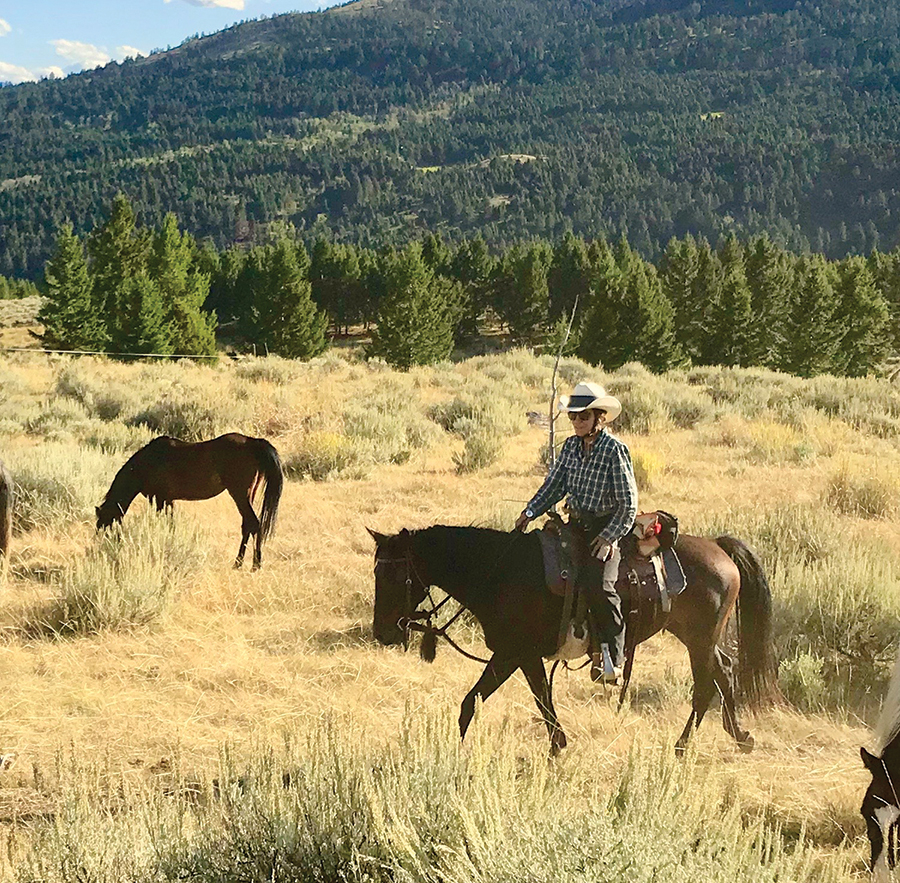
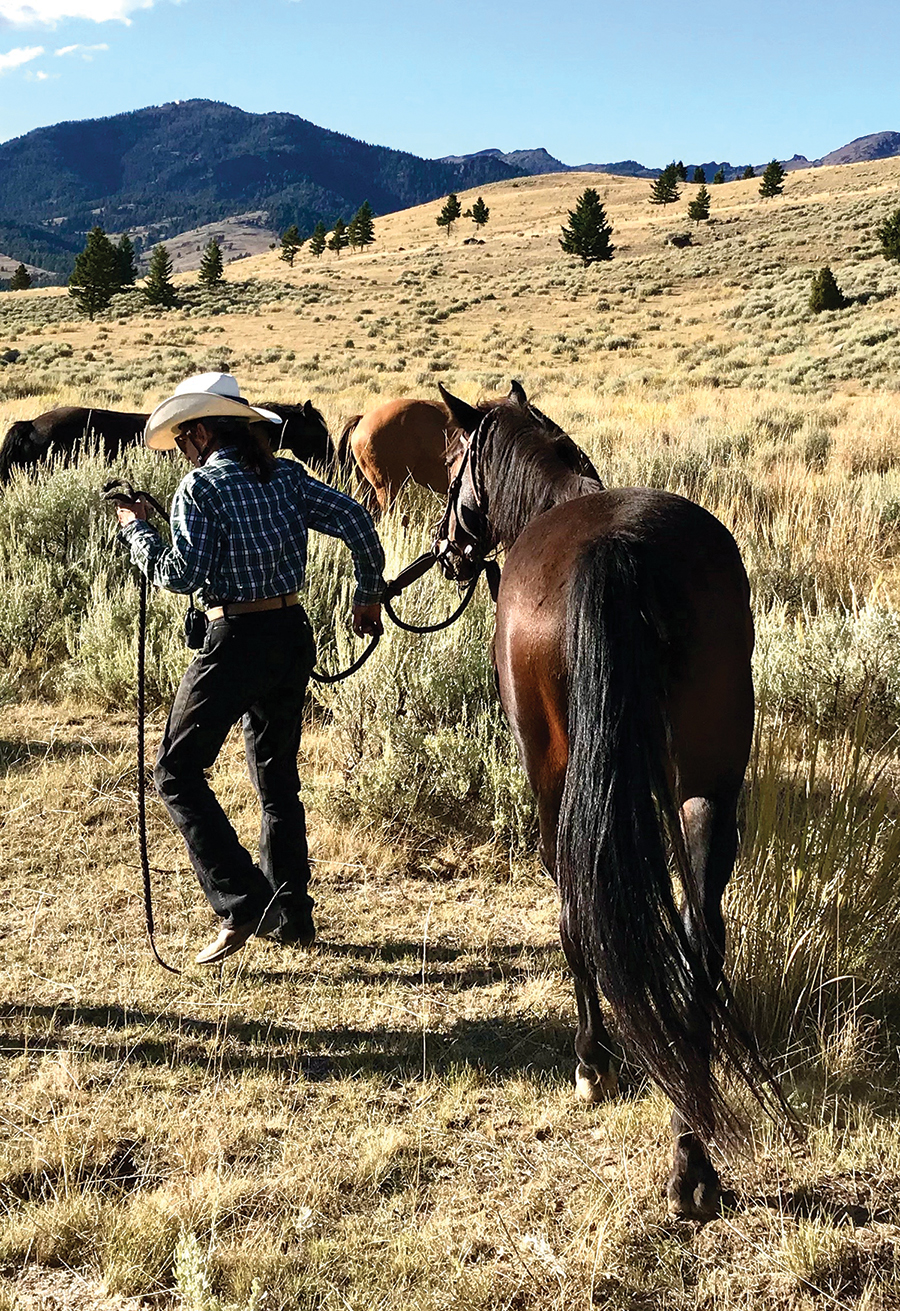
Wranglers are assigned newer horses to bring into ranch routines. My wrangle pony, “Honor,” a funny little Wyoming mustang, utterly stole my heart. Dark bay, almost black, this opinionated little girl could turn on a dime, usually in a whirling spook, but lots of groundwork and attention created a bond between us. She made me laugh. By July, I could call her name across the crowded corral and she would call back, trotting through the mud to find me.

“Homer” was another horse I was asked to ride. An affable bay roan gelding, he’d started an unsettling habit of trotting down hills. Sometimes he would even cut a switchback and plunge down the short cut, disconcerting guests. I was asked to nip that in the bud. Soon I became deeply fond of him as well, and often chose Homer to help flag the other horses when bringing up the herd. He was comfortable, honest and came around swiftly — and even saved my neck one early June morning.

For my first morning “gather,” I was to round up the herd on the mountaintop with another, more experienced colleague. I caught Homer, tacked him, and we set off into the cold dark at a fast clip. New growth sage perfumed the damp, stony mountain, and sometimes sparks flared from our mounts’ steel shoes. It was 4:30 a.m., pitch black, and I soon discovered my tiny backpacking headlamp was useless. I could follow the faint glint of the barbed wire fence, but basically I was gathering blind, trusting Homer to avoid stepping in a badger hole or tripping headlong over a sage bush. I didn’t yet know what I was doing, and it was terrifying. Every brushy crash, in my mind, was a mama grizzly or a mountain lion, neither of which was rare in our world. After an hour, we had somehow gathered the herd at the gate, ready for the long push down from the mountaintop to the ranch. My colleague felt that since it was still early in the season, someone — me — needed to lead the horses to make critical turns and twists. The other would stay on the mountain, waiting for the final corral count to be radioed back, then round up any stragglers.

The first task was to get 100-plus horses down the stony switchback, “Yellow Brick Road,” as we called the quick descent. In several places, the road edge dropped off.

“Get in front of them,” my colleague instructed.

“You mean trot downhill?” I asked. I was quietly agog. I couldn’t see a darn thing. The descent was slippery, steep and rocky. And Homer wasn’t supposed to even trot downhill.

“Go as fast as you have to, to stay in front of them,” he answered. Gulp. OK . . .


“GO!” he urged as he opened the gate. The restless herd churned down the mountain.

We went. Since I couldn’t see, all I could do was hope Homer could. Shut your eyes tight — that’s what I saw for 10 long minutes. On horseback. Downhill. With 100 loose horses hurrying behind me.

I held firm to the saddle horn in case Homer chose to deploy his switchback shortcut move — I didn’t want my horse to disappear from beneath me, leaving me hanging in mid-air like Wile E. Coyote before the inevitable crash. Back and forth we swayed in the dark, fast — too fast — taking the switchbacks, the herd pounding behind us, the edges unseen. It was a total trusting in fate and Homer — and both delivered.

After an eternity, I heard the creek roaring at the bottom of the mountain. We thundered across the wooden bridge, swung a hard left, skirted the leg-swallowing cattle guard across the road, crossed another bridge and turned a hard right up the next slope toward the ranch a half-mile away as the darkness finally yielded to faint shapes. All before coffee.

Every horse was accounted for that morning. Homer got a rubdown, an extra measure of grain, and my complete, grateful loyalty. He was solid. I made a point to look out for him in the herd. One large turn deserves another.

As summer routines settled in, parts healed. The sun-washed days warmed up and grew longer, the scenery was unparalleled, the guests interesting and often international, the four-star food was delicious. I rode other horses — the fine red mare Flower, the gaited pinto Archie, the large grey Badger, the lazy, good-natured Teddy, the grullo Mouse. I respected the horsemanship of my supervisors, and the programs they created to keep guests both safe and entertained.

Breakfast rides, dinner rides, team penning, moving cattle. I grew stronger, slimmed down, came to relish the steepest trails. I found a tribe with some of the older staff in dining, housekeeping, the wellness spa, veterinary. I met some fears, limiting beliefs about aging, barriers, and plowed forward. Late afternoons driving the herd back up the mountain became a favorite activity.

I did see grizzlies, eventually. Also moose, pronghorns, mule deer, fox, marten, airborne cranes and elk. Wildflowers galore, from pink shooting stars, arrowleaf balsamroot, Indian paintbrush to wild roses and postcard fields of purple lupine. Hiking was sublime, even if you did need to carry bear spray. I burned up my senior parks pass on days off visiting Yellowstone, viewing bison, wolves, hot springs, fumaroles, sulfurous mud pots, geysers and more.

Some of the wranglers returned to school in August, but my commitment was through the first week of October. It was a long time to be gone from home. We had cold and snow that last week. Montana was making it easier to say goodbye.

At a last meal in staff dining before I left, the head wrangler, Adam, our main boss, took a seat across from me. “You were as advertised,” he said with a smile. “You just never quit.”

I went to hug Julie, Adam’s assistant and my immediate supervisor. She pulled me to the side. “We got the most effusive praise from guests about you,” said Julie. “Strong finish. Your hard work was appreciated. You are welcome to return.”

When I got home last fall, old friend Trish Greenleaf immediately installed me on one of her horses. We trail ride often. I was back riding and requests for instruction and even colt starting began coming in again. The little work I accept has a richer, different flavor now that I’m retired. I’m gratified (and mystified) that this old passion has re-emerged in my life.

Meanwhile, at ranch elevation, the patchy snow has mostly melted off Emigrant Peak, and the wild raspberries are sweetening. Wild roses perfume the trails. The moose and elk and cattle calved and moved to higher ground, the bears roam, looking for a meal. The ranch herd will have shed their winter coats and sleeked up. This year, the ranch chose to close until at least early August.

I think of Honor and Homer and Flower and friends, and suddenly, it’s not COVID-19 cabin fever I’m feeling. It’s Rocky Mountain fever.  PS

Jan Leitschuh is a frequent contributor to PineStraw magazine.