The Deer Departed

At least, that’s the plan

By Jan Leitschuh

I have chronicled the ravages of Southern white-tailed deer here at Cottage Garden Farm, as well as the myriad methods used to discourage our cloven-hoofed neighbors from ravaging not only the vegetable garden but stripping out the tasty pansies, roses, zinnias, daylilies, sunflowers, hostas and more.

Last summer, it got so bad I actually considered giving up growing vegetables. The magnitude of that discouragement still stings. Vegetable gardening is something I’ve done since childhood when my parents, retaining a Victory Garden habit from the war years, taught me the pleasures of coaxing edible life from the soil. I can imagine few more graceful pursuits than the quiet peace of growing fresh, clean, delicious food.

But after following the call of spring last year, the largest horde of deer yet swooped in and savaged the entire garden. Before, it might be a ripe fruit taken here, an okra plant nipped there. Now, healthy cucumber, squash, sugar snap pea, pepper and tomato plants were taken to the ground. Laid waste. Little but rosemary was left standing.

I may have a solution. Call me hopeful, more hopeful than I have felt in years, thanks to a tip from a fellow plant enthusiast from Greensboro, garden educator Ellen Ashley.

You can’t blame the deer. They only do what deer do — smell out a good thing and eat it. With the efforts we have made to sweeten and enrich the garden’s soil, one could almost take it as a backhanded compliment. The deer equivalent of the cereal commercial: “Mikey likes it!”

We tried an electric fence wire. Nope, over they hopped. We hung the wire with little peanut butter-smeared foil “tags,” hoping to tempt the deer to lick them, and training them to stay away because of the mild electrical unpleasantness. For a variety of reasons, that didn’t work either (plus it was difficult to keep the wires from grounding out). The vegetables fattened happily on their parent plants, and just when you’d think “one more day to perfect ripeness,” the keen-nosed deer would make the same assessment, whisking in and making off with the season’s first tomato, flattening the okra or decimating the green bean patch — and ignoring the peanut butter.

Scent is key. Some studies have estimated that the white-tail deer’s ability to smell is about 10,000 times stronger than a human’s. In a deer, more brainpower is dedicated to analyzing odors than any other brain function. They have a secondary odor detector in the roof of their mouth. A buck can smell a doe over a mile away.

For deer, smell is the information highway, and a dinner menu.

Many anti-deer strategies try to use their sense of smell against them. I have tied pungent soaps in little hosiery bags around the garden — we should have bought stock in Irish Spring that year. Nope. I clipped the dog and sprinkled his winter fluff about the perimeter. No luck, although area bird nests that year had fluffy, soft, blond golden retriever linings. (The dog himself was useless, camping at night at the foot of our bed.) No dice with human hair collected from a hairdresser, either.

I casually suggested to my husband that he make his way to the perimeter of our secluded garden to kind of mark his territory in a sort of Y chromosome wilding activity. He was not amenable, noting that the toilet was much closer and less likely to get him arrested for indecent exposure.

Last year, taking a cue from Karyn Richardson of Eagles Nest Berry Farm, I invested in a tall, see-through plastic netting that blended nicely into the background. Deer can jump seven feet, so a fence must be high. Karyn has surrounded her blueberry acres with this fence and high poles, and from a distance, one can hardly see it. She did find the deer were sneaking underneath the fence, so she pinned the bottom.

I did the same, using bamboo poles to extend our stakes. The fence took tremendous effort to erect, was costly, a pain to weed-eat around and move wheelbarrows through, but what price peace in the garden?

It should have worked. Yet in the morning, there would be multiple deer inside our small garden and I’d lose my mind. In carelessly leaping out, the deer would tear down a whole netting wall. And the garden mess they left behind was heartbreaking. This winter we took the fence down completely. The deer were just too accustomed to visiting our flavorful patch. Was this the end of my love affair with garden veggies?

For years I had been protecting choice plants like pansies and hydrangeas with an expensive store-bought deer repellent spray. It did work — rather well, actually — but was too expensive to justify for a whole garden, even for a few fresh beans or young zucchini.

Which is why I sat up in my chair when Ashley spoke at Weymouth this April, at a public lecture sponsored by The Garden Club of the Sandhills, and declared she had a sure-fire deer repellent. “This will work! And I’ve tried everything!”

Ashley teaches regular gardening classes throughout the Triad on a number of topics like shade garden planting, cutting gardens, rock gardening, pruning, pest control, edible gardening, and more. It must have been fate that brought her to the Sandhills, and me to her lecture.

She noted that commercial sprays are effective and convenient if you only have a few plants in need of protection. “But they are expensive,” she said. “And I had 10 acres. And when you drove in, you’d see eight or nine deer on the driveway.”

Ashley’s challenge was to protect thousands of plants in more than nine different gardens, including woodland gardens, a “tropical garden,” a conifer garden, a rock garden, a cutting garden and an edible garden filled with fruit trees, berries, vegetables and herbs. “I used many things that were the solution,” she said.

Like me, she tried strategies like pungent soap in bags and human hair. She also tried mothballs, and 2-foot stakes with saturated cotton balls positioned every 15 feet around the garden. “It all worked until it didn’t.” 

She experimented with fox urine, also expensive. “You drip it around your garden and nothing is supposed to come near it. Including you. It was so nasty you never wanted to come near your garden.”

The commercial products “Deer Fence” and “I Must Garden” did work, but were still too expensive. “I noticed the common ingredient in these products was egg,” she said. “I added egg to my sprayer, but it kept gumming up the nozzle. So I separated the egg from the yolk, and just used the yolk. It worked beautifully.”

Ashley advised that the gardener should keep tabs on new growth. “The deer have such sensitive noses, they will know exactly which leaves you have not sprayed,” she said. “They will eat the five inches on top you have not sprayed. And if you don’t spray everything, they’ll just turn from their favorite to their second- or third-favorite plants.”

So I’ve taken the leap of faith. Yesterday, I mixed up a batch for a simple, inexpensive 1-gallon sprayer. I beat the egg yolk and peppermint oil together in a bowl with a bit of water and, innovating, added a small squirt of dish soap to help with the emulsifying and sticking. It did not smell bad at all, thanks to the peppermint.

I installed my tomato, squash, cukes, okra, eggplant, beans and pepper plants, and then liberally sprayed the still-surviving lilies, hostas, cosmos and pansies. Because, I must garden. 

Ellen Ashley’s Deer Repellent Recipe

Whip 3 egg yolks with 2 teaspoons of peppermint oil. Beat that into a gallon of water, and spray onto vulnerable plants. “It may smell funky to you, though it does seem to work while the eggs are fairly fresh,” says Ashley. “The stuff doesn’t go bad, it’s already bad. The longer it sits, the more pungent it becomes. I spray it when I’m about to go inside for the night. By the end of the next day you can hardly smell it.” Spray more frequently in spring, or after a hard rain.  PS

For lectures or courses, contact Ashley via her website http://www.learntogarden.net, or email ellen@learntogarden.net.

Jan Leitschuh is a local gardener, avid eater of fresh produce and co-founder of the Sandhills Farm to Table Cooperative.

Bull Session

By Astrid Stellanova

Queen Elizabeth and Ted Kaczynski. Willie Nelson and Billy Joel. Karl Marx and Malcom X. Tina Fey and Adele. Cher and Bono (U2 front man, not Cher’s late ex husband Sonny). That’s right, Star Children: These are Taurus babies who are all just a tee-ninesy bit intense and take to a stage, pulpit, or even the witness stand like a ducky takes to a daisy. The emerald? A pretty intense birthstone that makes it just right, don’tcha think? This is a month to end bad juju, make amends, dream bigger and dazzle with a smile. Ad Astra — Astrid

Taurus (April 20–May 20)

Sugar, you could be on your deathbed arguing about the guest list for your own funeral. Sometimes you are a pragmatic soul. At others, you go psycho over some little detail that flips you out and trips all the circuits. Take yourself for a little lunchtime walk or get your hands in the soil. Let nothing come between you and your joy this month.

Gemini (May 21–June 20)

If you don’t do anything else, accept a gift that is offered to you. Ain’t going to change the person who always gets you riled, so just live and learn, and move up the line. You’re a natural trendsetter, who will find yourself making an imprint. The second act of your life was always meant to be especially important.

Cancer (June 21–July 22)

Lordy! You started out saying you wanted to risk it for the biscuit, then you backed down. Don’t let anybody stop you this time — make your mind up to put some steel in your backbone, Honey. You have given much more than you’ll ever take — your moment has come and the reward is deserved. Also, say yes to that trip.

Leo (July 23-–August 22)

It won’t take a slide rule for you to calculate how many hours you have wasted on the wrong partner. It seems you overcommitted. Now, just try a little undercommitment. Sugar, I’m just warning you that you have been dropping the bucket down the wrong well. Your reward is waiting in an unexpected location.

Virgo (August 23-–September 22)

If you were just honest about it, being uppity is not working for you. By your standards, paper towels are white trash, too. Why don’t you practice a little more acceptance, because all this social maneuvering, posturing and aspiring just makes you look silly and feel lonely. And you don’t handle lonely.

Libra (September 23-–October 22)

A confession is overdue. There is something you need to stop carrying on your shoulder ’cause it’s not yours to bear, Love, and you don’t need to carry it one more step. Confront the person you think you wronged and make amends. They will surprise you, and your health will improve afterward.

Scorpio (October 23–November 21)

You are spending more time alone than is usual, and maybe you like your own company. Make it your business to reach out, Honey, and touch somebody, just like the commercial says. Few people know you have a doozy of a secret. Open up. They can handle it, Love.

Sagittarius (November 22–December 21)

The greatest adventure you ever took started at your front door. Only you understand what that means. Home is everything to you nowadays — far more than to most (and far more than to typically far-flung you!). It is also where you are finding your calm center in a very turbulent, topsy-turvy time. Rest up, Honey, because the adventure isn’t quite over.

Capricorn (December 22–January 19)

In your fantasies about the life you shoulda-coulda-woulda had and the path you didn’t take, there is always one particular dream on your mind. It has haunted you. This is a good time to take a step in realizing that dream, even if your rational self says it’s nuts. It ain’t. And, best of all, it ain’t too late, Sweet Pea.

Aquarius (January 20–February 18)

You are having a phase of intense dreams that reveal issues and concerns helpful in your daily life. In many ways, you have been dreaming of the most meaningful and best ways to move forward. Keep a close record of those reveries for May and notice key information that your mind is offering.

Pisces (February 19–March 20)

Shew, you crossed the wrong person and they have not let it go, have they? You sure did poke the bear and now you are living to regret it. Give ’em a good bottle of whatever they like to drink or take them some blossoms, but for garsh sakes, end this thing! They may be wrong but holding out ain’t worth it.

Aries (March 21–April 19)

Last month, you were given a birthday present that startled you and you haven’t quite figured out its meaning. That may be a good thing. Someone you don’t love in quite the same way as they feel toward you has been trying to worm their way into your heart. If you go there, it will flame out fast and cause more heartburn than passion, Baby.  PS

For years, Astrid Stellanova owned and operated Curl Up and Dye Beauty Salon in the boondocks of North Carolina until arthritic fingers and her popular astrological readings provoked a new career path.

Braking for Local Asparagus

Spring is the most ephemeral time of the year, so it pays to cook completely in the moment

By Jane Lear

Asparagus season is in full swing, and a good thing, too, for the vegetable is one of the home cook’s greatest allies. It can be steamed, boiled, sautéed, stir-fried, roasted or grilled. It comes elegantly thin or fat and juicy. It’s impressive drizzled with vinaigrette, and served as a first course; as a side to chicken, fish, ham, pork, or beef; or worked into pasta primavera, risotto, or an omelet or frittata. It is delicious hot, chilled or room temperature. It swings from simple, even austere, presentations (salt, pepper, olive oil, lemon zest) to more complex ones (in a stir-fry with other spring vegetables, for instance, or tucked into a creamy lasagne) without losing its presence.

And even though it is now found in the supermarket produce aisle pretty much year-round, most of us greet our local crop as something special, eating it with joyous, unabashed greed for the four to six weeks it is available. That is why it’s a good idea to buy plenty; I usually allot at least a half pound or more per person. On the off chance there are any leftovers, they’re delicious the next morning, warmed through and dipped into a runny soft-boiled egg.

Some people prefer pencil-thin spears, and others like them thick. The difference in circumference is due not to the relative maturity of the spears, but a combination of factors, including the age of the plants from which they were harvested (the thinner the spear, the younger the plant), cultivar and sex. Female plants produce fewer, larger spears; males give a much higher yield of thin to medium spears.

I tend to seek out asparagus that’s on the plump side because of its succulent, almost meaty, texture. I also find it easier to deal with. Skinny asparagus may look sophisticated on the plate, but during cooking, it can turn from tender to mushy in about a millisecond, and attention must be paid.

All that aside, go for whatever asparagus, whether thick or thin, is the freshest, because it doesn’t keep well. Look for firm, tightly closed tips with a beguiling lavender blush, scales (or leaves, botanically speaking) that lie flat against glossy stalks, and woody ends that are freshly cut and moist. The asparagus in our markets is typically green, but purple cultivars are becoming increasingly available; those are especially nice raw in salads, because when cooked they lose their color, which can range from pale mauve to deep purple. The white asparagus that is more common in Europe is simply prevented from turning green: The growing spears are continually banked with soil to keep them in the dark; that way, they don’t produce chlorophyll.

Cooking asparagus is staggeringly simple, and my basic method is as follows. First, rinse the asparagus well to remove any sand or grit (trust me, it’s there) and pat dry. Snap off the tough ends (or cut them if the spears are very thick), and peel the stalks if the skin is fibrous.

In a large skillet, lay the asparagus lengthwise, tips facing in the same direction, in an inch or so of salted water. Bring the water to a gentle boil and cook the asparagus until it is barely tender; the tip of a knife inserted in a spear should meet a very slight resistance, and if you pick it up in the middle with tongs, it should bend slightly. Thin spears take just a few minutes and more robust spears a bit longer. Once you’ve prepared asparagus this way, you can go in any number of directions. Below are two favorites.

A Homey Asparagus Supper for Two

I cobbled together this dish one rainy spring evening a few years ago, and was really proud of myself — until I realized the revered English food writer Nigel Slater had beat me to the punch. “A rubble of cooked, chopped pancetta, and especially its melted fat, makes a gorgeous seasoning for a fat bunch of spears,” he wrote in Tender: A cook and his vegetable patch. And how.

Preheat the oven to 400°F. Using the basic method outlined above, cook a bundle of medium to large asparagus until just barely tender. Meanwhile, melt a generous tablespoon of unsalted butter in an ovenproof skillet or sauté pan over moderately high heat. Add an enjoyable amount of chopped pancetta or bacon and cook until golden. Remove from the heat.

Scrape the pancetta and the fat in the pan to one side and add the asparagus. Spoon the pancetta and fat over the asparagus, then sprinkle with freshly grated Parmigiano-Reggiano. Put the pan in the oven and bake until the cheese is melted, 5 minutes or so.

Asparagus Mimosa for Four

This recipe, which can easily be doubled, is a wonderful way to kick-start a dinner party. The asparagus is delicious warm or at room temperature, and the sieved hard-boiled egg is more than a pretty topping: As it absorbs the vinaigrette, it fluffs up like the yellow mimosa blossoms that punctuate winter in Provence. The richness of the egg yolk also gentles the vinaigrette and gives it body.

Cook about 1 1/2 pounds asparagus as above. Cut 2 hard-boiled eggs in half, then press them through a sieve into a small bowl. Whisk together about 2 tablespoons white wine vinegar, 1 tablespoon minced shallot, and a dab of smooth Dijon mustard. (A little minced fresh tarragon would be nice, too.) Add coarse salt and freshly ground black pepper to taste. Whisk in 1/3 cup extra-virgin olive oil (use a mild oil, not a peppery Tuscan one). Toss the asparagus in a small amount of the vinaigrette, and reserve the rest. Parcel out the asparagus among four plates, spoon the rest of the vinaigrette over it, and sprinkle with the sieved egg. Et voilà!

Asparagus on the Grill

By the time May rolls around, we all want to spend as much time as possible outdoors, not standing over a stove. Luckily for us, the technique of grilling really concentrates the singular sweetness of asparagus and overlays its vegetal purity with a little smokiness. Grilled asparagus is delicious as is or with a garlicky mayonnaise.

“When you put just-picked asparagus on a hot grill, they are so juicy they actually jump as they start to cook,” Andrea Reusing once told me. The acclaimed chef-owner of Lantern, in Chapel Hill, and the restaurant at The Durham hotel, in downtown Durham, is extremely deft with seasonal ingredients, and the below recipe is from her book, Cooking in the Moment.

Andrea Reusing’s Charcoal-Grilled Asparagus

Prepare a hot fire in a charcoal grill. Count on 8 to 10 asparagus per person as a side dish or as the focal point of a salad. Keeping all the tips pointing the same direction, toss the asparagus with olive oil, a generous amount of salt, and some freshly ground black pepper. When the flame has died down, the coals are completely covered with ash, and the grill is very hot, grill the asparagus (in batches if necessary). Cook 2 to 3 minutes per side until fragrant, lightly marked, and vibrant green on the outside, and juicy and tender on the inside.  PS

Jane Lear was the senior articles editor at Gourmet and features director at Martha Stewart Living.

PinePitch

Live After 5

Nothin’ says summer in the Carolinas like beach music, and on Friday, May 11, Live After 5 is ushering in the summer with The Catalinas, “America’s Premier Beach Band.” Since 1957, The Catalinas have been entertaining audiences with their top-quality sound and onstage energy.

This free event begins at 5:30 p.m. and the fun continues until 9 p.m., providing not only music for your dancing and listening pleasure, but also activities for the kids. Bring your lawn chairs, blankets and picnic baskets — but please, no outside alcoholic beverages. Beer, wine and nonalcoholic beverages will be available for purchase, in addition to great local food trucks. Live After 5 will be held at Tufts Memorial Park, 1 Village Green Road W., in the village of Pinehurst. For more information, call (910) 295-8656 or www.vopnc.org.

Free Plant Clinic

The Moore County Master Volunteer Association is hosting a free plant clinic at the Walmart Supercenter on Saturday, May 19, from 10 a.m. to noon. The master gardener volunteers have many hours of training and experience dealing with plants that thrive (or at least survive) in the Sandhills and the issues confronting local gardeners like sandy soil, a wide variety of diseases and insect pests, and hot summers.

So if you’re having problems with a plant, bring a sample or photo for diagnosis to the Plant Clinic, just outside Walmart’s Patio and Garden Center. Or, if you’d like advice about what to plant where and how to care for your plants, stop by and get some advice. Walmart is located at 250 Turner St., Aberdeen. For more information, call (910) 947-3188.

The Power of the Press

On Wednesday, May 2, the Weymouth Center for the Arts & Humanities invites you to a riveting and timely conversation with Frank Daniels Jr. and David Woronoff. Daniels is the retired president and publisher of Raleigh’s The News & Observer and current chairman of The Pilot. Woronoff is The Pilot’s publisher. Both of these men have led their newspapers to excellence: Daniels’ N&O won the Pulitzer Prize for public service in 1996, and Woronoff transformed The Pilot into a 21st-century media company that produces not only the highly regarded newspaper, but the immensely popular magazines PineStraw, O.Henry and Salt.

The event begins at 2 p.m. and is free to the public, but reservations are required. Weymouth Center is located at 555 E. Connecticut Ave., Southern Pines. For more information and reservations, call (910) 692-6261 or email Mgweymouth1@gmail.com.

Shakespeare in the Pines

On Friday, Saturday and Sunday, June 1—3 and 8—10, the Uprising Theatre Company is bringing Shakespeare back to Tufts Memorial Park. The Company will present his most popular comedy, A Midsummer Night’s Dream, which intertwines the stories of six hilariously farcical actors, four love-struck teenagers, one royal wedding, and the infinite magic and mayhem of some woodland fairies as they navigate the enchanted forest.

The performance begins at 7:30 p.m. and general admission is free. A VIP table for six can be purchased for $450 and includes a bottle of Champagne, an assortment of gourmet appetizers and a bottle of red wine. These tables are close to the stage and offer maximum viewing. Tufts Park is located at 1 Village Green Road in the village of Pinehurst. For more information, call (541) 631-8241 or visit www.uprisingtheatrecompany.com.

The Rooster’s Wife

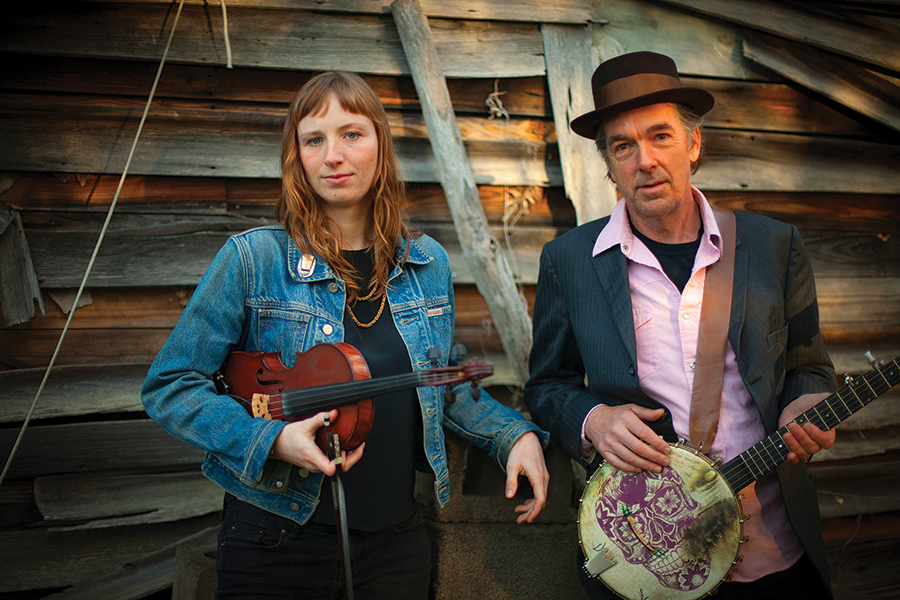
Sunday, May 6: Richie and Rosie. Richie Stearns and Rosie Newton are steadfastly old-time and thoroughly modern, performing songs with universal and timeless messages. Cost: $15.

Sunday, May 13: No Fuss and Feathers. Catherine Miles and Jay Mafale, Karyn Oliver and Carolann Solebello serve up a dynamic, cohesive cocktail of delicious harmonies, infectious rhythm and spontaneous hilarity. Cost: $15.

Thursday, May 17: Open Mic night. Free to members. Annual memberships are $5 and are available online or at the door.

Friday, May 18: Edgar Loudermilk Band, featuring Jeff Autrey. Traditional bluegrass led by a unique voice, accompanied by stellar players. Cost: $10.

Sunday, May 20: Robby Hecht and Caroline Spence. Robby Hecht is a modern folk musician-of-all-trades, joined tonight with Caroline Spence, a young troubadour from Charlottesville, Virginia. Cost: $15.

Sunday, May 27: Hank, Pattie & The Current. Two of North Carolina’s veteran bluegrass musicians join forces with some of the Triangle area’s most versatile musicians to create modern, American, acoustic music. Cost: $15.

Doors open at 6 p.m. and music begins at 6:46 at the Poplar Knight Spot, 114 Knight St., Aberdeen. Prices stated above are member prices. Annual memberships are $5 and are available online or at the door. For more information, call (910) 944-7502 or visit www.theroosterswife.org for tickets.

Vincent

The Sunrise Theatre will present the film Vincent Van Gogh: A New Way of Seeing, part of the Exhibition on Screen series, on Thursday, May 17. This award-winning documentary showcases Van Gogh’s iconic works and delves into the life of an artist as troubled as he was brilliant and prolific.

Denise Baker, artist and retired professor of art at Sandhills Community College, will introduce the film with commentary on Van Gogh’s work and influence on the world of art. The presentation begins at 10 a.m. Tickets are $10, or $15 for both this film and Loving Vincent, which will be shown at the Sunrise on May 24. The Sunrise Theater is located at 250 N.W. Broad St. in Southern Pines. For more information, call (910) 692-8501 or 692-3611 or visit sunrisetheater.com.

Meet the Authors

At 5 p.m. on Saturday, May 5, Elaine Neil Orr will present her new book, Swimming Between Worlds, at The Country Bookshop. The story, set in Winston-Salem in the 1960s, revolves around Tacker, a young engineering student, and Kate, a recent college graduate, both grappling with disturbing aspects of their past. They meet a young African-American boy and find themselves at the center of the civil rights struggle. Orr, an English professor at N.C. State, grew up in Nigeria.

On Saturday, May 19, at 2 p.m., South Carolina native Margaret Bradham Thornton, author of Charleston, immerses us in an entirely different world. In her second novel, A Theory of Love, Thornton takes us to such glamorous places as London, St. Tropez, Milan and Tangier in a story about a French-American businessman and a British journalist who struggle to maintain their marriage as well as their individuality.

The Country Bookshop is located at 140 N.W. Broad St., Southern Pines. For more information, call (910) 692-3211.

The Carolina Philharmonic

Internationally renowned violinist Natasha Korsakova returns to the Carolina Philharmonic for its Season Finale Symphonic Salute on Saturday, May 19. Known for her perfect technique, bold style and charisma, Korsakova will capture your hearts in a virtuoso performance that includes selections from George Gershwin’s Porgy and Bess and Camille Saint-Saëns’ Introduction and Rondo Capriccioso. The program also includes such Americana favorites as Gershwin’s An American in Paris and Aaron Copland’s Appalachian Spring. Maestro David Wolff will lead the orchestra in this rousing conclusion to a season that has brought Broadway stars, international opera singers and a piano prodigy to the Sandhills.

The performance begins at 7:30 p.m. at Owens Auditorium at Sandhills Community College, 3395 Airport Road in Pinehurst. Tickets range from $30 to $60, with discounts for military ($25) and students ($11). For information, call (910) 687-0287 or visit www.carolinaphil.org.

In Bloom

Pollinate your taste buds with elderflower syrup

By Tony Cross

The first time I sipped from a cocktail with elderflower liqueur in it, I think I said something to the tune of, “What the hell is that?” It was every bit as delicious as it was foreign to my taste buds. I was dining at a fantastic restaurant in Chapel Hill (it closed soon after, sadly) about a year before I got behind the bar, where I was bitten by the cocktail bug. That liqueur, St. Germaine, was all the rage at the time. Until recently, I haven’t come across anything comparable that’s available here. That changed when I received an email from a buddy of mine who reps for a wine company in Raleigh.

A year ago, I received the exact same email from my wine rep friend: “The Elderflower Syrup Is Returning,” it read. I didn’t respond right away or write myself a reminder. By the time I remembered, all of their cases had been sold. Not the case this year — no pun intended. I drove to Durham just to grab a bottle from another restaurant (a big thank you to Patrick over at Guglhupf Bakery, Café & Restaurant). Then I placed an order for 24 bottles of my own. I’ll explain why shortly.

Nikolaihof Elder Syrup is a pure, aromatic, non-alcoholic syrup that should be a new staple in your refrigerator. Nikolaihof is located in the Wachau region in Austria. It also happens to be the oldest wine estate in the country, dating back to 470 A.D. The elderflowers grow all over the estate’s property, run by the Saahs family. They blossom once a year in late spring. This gives the family only a couple of days to pick them, when they are “perfect.” Getting the flowers to this point includes a serious commitment to biodynamic farming. According to their tech sheet, “The Saahs plant and harvest according to the moon calendar and use homeopathic treatments for the grapevines and other plants.” After they are plucked, the elderflowers are steeped in a simple syrup, allowing the aromatics and rich flavor to extract into the sugar water. I love the results. Yes, the syrup is sweet, but there are little nuances that give it character. The info sheet I received about the syrup notes that flavors of “lychee, grapefruit, and pear” are present. I get a little pear and lychee, but I also taste a floral funkiness. Don’t get it twisted; this is not a bad thing. The floral funk is slight, and there’s just enough of it to say “hello.” That’s what does it for me.

When trying the syrup for the first time, I recommend adding 1/2 to 3/4 ounce to sparkling water with a squeeze of lemon. That alone is one of the most refreshing drinks I’ve had in a while, especially in the heat. It’s great for someone not imbibing alcohol but wanting to take part in the festivities. If you’re graduating to alcohol, add 1/4 ounce to your next glass of dry sparkling wine. Put the syrup in your flute first, then top off with sparkling wine. Take a swath of lemon peel (a grapefruit peel works nicely here too), express oils over the champagne flute, and add the peel.

If you’re going to try this in a cocktail, there are myriad spirits and styles awaiting you. Start with sparkling water and add vodka or gin; a blanco tequila or mezcal; or whatever you have in mind or on your shelf. Some of my favorite creations were mistakes or created in one try. Give it a go. The only place you can grab a bottle will be Nature’s Own. I got a couple of cases because only 3,500 bottles are produced each year (bottles, not cases).

Below is something I created the day I picked the bottle up in Durham. Actually, it’s a remake of a remake. When I finally got around to bartending a year after trying my first elderflower liqueur cocktail in Chapel Hill, I wanted to recreate it at my bar. What I’m sharing is my version of that cocktail, but using the Nikolaihof syrup. Different specs, different drink.

The Mysterious Vanishing of Holunderblüten

2 ounces Plymouth Gin

3/4 ounce lemon juice

Scant 1/2 ounce Nikolaihof Holunderblüten syrup

1/4 ounce rosemary-infused simple syrup*

Combine all ingredients in a cocktail shaker with ice, and shake until tin is ice cold. Double-strain into a chilled cocktail coupe. Garnish with a lemon wheel.

*Rosemary-infused simple syrup: Add 1/2 cup sugar to 1/2 cup water in a pot and stir over medium heat. Once sugar has dissolved, add three 4-inch stalks of rosemary. Once cooled, transfer to a container. Seal, and refrigerate overnight. Remove rosemary the next day.  PS

Tony Cross is a bartender who runs cocktail catering company Reverie Cocktails in Southern Pines.

Celebrate Sauvignon Blanc

Drink your herbs, minerals, melons or limes

By Angela Sanchez

I love all types of wine. Rosés, whites and reds. For several reasons, one of my all-time favorite whites is sauvignon blanc. I like dry tart fruit, minerality, acidity and interesting flavor profiles in white wine. I also like a wine that is a chameleon, widely different in style depending on where the grapes are grown and the wine is produced.

Sauvignon blanc, meaning “wild white,” originates in the Loire Valley and Bordeaux, in France. Today it is grown all over the world with some 250,000-plus vineyards from France and Italy to New Zealand, South Africa, Chile and the United States. It is distinguished in character from other well-known white wines because of the many styles it takes on and flavor profiles it gets from aromatic compounds, called pyrazines, found in the grapes themselves. In regions where the grapes are picked early, the flavors are more lime, Granny Smith apple and malic acidity. If they’re picked later when the grapes are riper, it produces more melon, apricot and pear aromas and flavors, rounder with a bit more structure.

Growing regions that give the wines short oak aging produce sauvignon blancs with a hint of vanilla and coconut aromas. In France, a sauvignon blanc from the Loire Valley, which has a continental climate, is racy, herbaceous with lime and tart green apple flavors. It is also distinguished by its minerality that comes from the chalkiness of the soil. The climate, soil and location give it its “terroir.”

In New Zealand, the wine can range from having lime, asparagus and green apple notes to melon and white peach with an underlying herbaceousness of dill and basil. The best are those that blend grapes from both the North and South islands that vary widely in geography and distinguishing characteristics. Think of painting on a blank canvas. If you used all one color — a vineyard that produces grapes with racy acidity and lime character — you would get a nice painting. If you use a blend of similar colors that all possess something that makes them distinctive — a coastal vineyard offering peach and bell peppers and a vineyard from a high elevation that offers gooseberry — you get a painting that has depth and contrast.

Travel to South Africa and you will find one of my favorite sauvignon blanc characteristics, capsicum, the green bite in jalapeños. Wine maker Neil Ellis says it is a result of the minerals and compounds in the soil that was once an ocean bed, coupled with the cool days and high elevations of the vineyards. Lemongrass and basil are common characteristics, too, making these wines great with the Cape Malay style of cuisine — a blend of Indonesian, Malaysian and East African cooking. Think super aromatic curries from spice and herb blends.

So, what pairs with this crazy chameleon of a wine? Believe it or not, asparagus. Good thing it’s fresh out of our Sandhills farms this time of year. Grilled chicken and pan-roasted halibut with herb sauce made with dill and basil are great pairings. Zucchini, spring onion and dishes with a little spice are perfect. As for my favorite, cheese, try an aged English cheddar. A more classic pairing is goat cheese made with an eatable bloomy rind tasting of earthiness and grass with a tangy bite. A little age gives this style of cheese a softer, creamier, spreadable texture. North Carolina-made examples are Paradox Farm Hickory Creek and Goat Lady Dairy Sandy Creek. The former is a beautiful labor of love resulting in a creamy camembert style; the other bears a distinctive vein of blue vegetable ash under the rind and down the middle.

The first Friday of May is International Sauvignon Blanc Day. Grab some friends and a few bottles of sauvignon blanc from around the world, pair it with delicious goat cheese from right here in North Carolina and enjoy.  PS

Angela Sanchez owns Southern Whey, a cheese-centric specialty food store in Southern Pines, with her husband, Chris Abbey. She was in the wine industry for 20 years and was lucky enough to travel the world drinking wine and eating cheese.

The Edible Schoolyard

More than just a cute idea

By Jan Leitschuh

The Power of the Garden — it can teach food literacy, bring people together, and teach respect for food as well as the challenges of growing it. In the garden, place-based learning makes it real, relevant and oh-so-remarkable. from “Musings from a Garden Educator: Sowing the Seeds of Wonder!” by Kathy Byron

April showers might bring May flowers, but local veggie gardens thrive, too. From parsley to asparagus to sugar snap peas, Swiss chard to radishes, strawberries to baby salad greens and green onions, a veritable cornucopia of nutritious produce is coming to fruition.

In schoolyards scattered across Moore County, a different sort of kitchen garden is prospering right now. Picture a successful produce gardener — does the image of a child come to mind? Yet the gardeners are children. Come spring — and, a bit later, autumn — one of the most productive crops might actually be the cultivation of young minds.

“The kids are the ones who plant the gardens,” says Kathy Byron, a former pediatric nurse, longtime Moore County Master Gardener Volunteer and director of the innovative Good Food Sandhills program, an entity of Sandhills Community College (and formerly, the FirstSchool Garden Program). “We use those things they grow for food activities and nutrition education, inside the classroom and out, in school and after school. And then we operate in the community.”

Over more than a decade, deploying the principles of The Edible Schoolyard model, “we outfitted over 61 percent of Moore County schools with school gardens, so over 4,000 kids have access to a school garden,” says Byron. “Currently, we have intensified these efforts in two of our schools that have the highest percentage of students who qualify for free and reduced lunch programs. We have honed our current efforts down to the most high-need youth. “

School gardens tap an innovative principle. “An environment-based education movement — at all levels of education — will help students realize that school isn’t supposed to be a polite form of incarceration, but a portal to the wider world,” writes Richard Louv, author of the best-selling book Last Child in the Woods: Saving Our Children from Nature-Deficit Disorder. Byron would add “and wiser nutritional choices” to the wider world idea.

Louv, Byron and others are at the forefront of an awareness that children need a connection to nature. This awareness has historical echoes. “Man’s heart, away from nature, becomes hard; [the Lakota] knew that lack of respect for growing, living things soon led to lack of respect for humans too,” said the Oglala chief and Native American author Luther Standing Bear, who lived from 1868 to 1939.

Leaving the confines of a school classroom and the climate-controlled halls, elementary students file out into the garden feeling the sunshine on their face and the breeze in their hair. The smell of sweet lavender fills the air, with the ever-constant din of traffic on 15/501 as the background noise for this outdoor classroom. Students’ happy banter, combined with a skip in their step, just confirms their excitement to be in this living laboratory! — “Musings from a Garden Educator”

These gardens generally take the shape of a raised bed or three. Filled with nutrient-rich soil and compost, they can be planted with seasonal vegetables. Planting “season” can happen all year, with collards, kale, spinach (under covers) and parsley in the winter. Cool season veggies such as radish, green onions, peas and salad greens can be added at the appropriate time, followed by a special warm-season planting. That produce is harvested for food-insecure families. In the fall, the cycle begins again, with cool-season veggies.

“Often, we plant butternut squash in summer to harvest in the fall and use through the winter. We use a lot of butternut squash,” says Byron with a laugh.

Fig trees, blueberries and muscadine grapes are also planted in the surrounding garden area. Besides seasonal vegetables and perennial fruits, every garden is planted with perennial herbs and a pollinator garden.

Pollinators and other beneficial insects become our friends and collaborators in making the garden healthy, full of life and amazement. Respecting spiders, ladybugs and assassin bugs as warriors in this ecosystem are some of their first lessons about respect of living things in the garden. Starting from the ground up — soil becomes the medium for planting seeds and seedlings, searching for microbes and inspecting under the microscope to see the world beyond the naked eye. Adding soil amendments such as blood meal and bone meal expands their understanding of nutrients plants provide us through the food we eat. — “Musings from a Garden Educator”

Math and science lessons have been held in the school gardens on nice days. Science and language activities hold interest while practical lessons slide in on the breezes of enthusiasm. “When truly present in nature, we do use all our senses at the same time, which is the optimum state of learning,” writes Louv.

They dig deeper into science and math through hands-on learning activities that allow them to use garden trowels, stinky fish fertilizer, Chromebooks for research. They cuddle chickens and extract DNA from a strawberry. Fractions are fascinating when making garden recipes like veggie tortillas, kale pesto or solar cooked pizza. We congregate around the picnic table to discuss the day’s activities, break into small groups and gather tools for our STEM (Science, Technology, Engineering and Math) Lessons. They fan out throughout the garden with a purpose to complete tasks that enrich their learning in real time. The garden is the premier STEM tool — as old and diverse as humankind and Mother Earth. — “Musings from a Garden Educator”

Movement is an essential component of learning, argue many experts. “A generation of children is not only being raised indoors, but is being confined to even smaller spaces,” writes Louv. “Jane Clark, a University of Maryland professor of kinesiology . . . calls them ‘containerized kids’ — they spend more and more time in car seats, highchairs, and even baby seats for watching TV. When small children go outside, they’re often placed in containers — strollers — and pushed by walking or jogging parents . . . Most kid-containerizing is done for safety concerns, but the long-term health of these children is compromised.”

Children’s health is a big driver for Bryon. School gardens are more than a cute idea, she argues. The stats are sobering. In 2007, North Carolina ranked fifth in the nation for childhood obesity; 42 percent of Moore County students were overweight or obese. Facts such as these moved the pediatric nurse in Byron to action. She observed that Moore County is populated by many low-income communities struggling to access healthy food. 

Over a decade later, Byron’s food concerns remain: “Things move slowly. One in four children in N.C. is food-insecure. And despite being an agricultural state, we are eighth in the nation for food insecurity. We work deeply in schools with free and reduced lunch programs, in low-income, high-needs schools. One of our principals noted, we bring experiences to children they would get nowhere else.”

Her work extends to developing local food systems addressing food justice in under-served communities. Through Sandhills Community College Continuing Education, Good Food Sandhills provides a holistic approach to linking the environment, healthy food and people from seed to table, classroom to community.

Respect for life, environment and one’s community evolves naturally as children explore and assimilate the implications of the web of life.

“Passion is lifted from the Earth itself by the muddy hands of the young; it travels along grass-stained sleeves to the heart. If we are going to save . . . the environment, we must also save an endangered indicator species: the child in nature,” says Louv. “We have such a brief opportunity to pass on to our children our love for this Earth, and to tell our stories. These are the moments when the world is made whole.”

“Planting, tending, harvesting and tasting what is grown in the garden changes a child’s relationship with food. It broadens their palate, ties it to their heritage and makes them a partner in the growing process. It is their broccoli, their kale, their radish…and they love it! As Cicero (106 B.C. — 43 B.C.), Roman philosopher, politician, lawyer and orator so eloquently put it . . . If you have a garden and a library, you have everything you need.” — “Musings from a Garden Educator”

For more information on school gardens, or to volunteer, contact Kathy Byron at kbyron@nc.rr.com. PS

Jan Leitschuh is a local gardener, avid eater of fresh produce and co-founder of the Sandhills Farm to Table Cooperative.

Time Capsule

A hall devoted to Carolinas golf history

By Lee Pace

Pinehurst in the 1970s was the repository of the United States’ most impressive golf museum. The $2.5 million structure christened in 1974 as the World Golf Hall of Fame loomed behind the fourth green of Pinehurst No. 2 and featured bronze busts of its honorees, a replica Scottish clubmaker’s shop and all manner of memorabilia. Alas, the building cost too much to operate and visitors to Pinehurst would rather play golf than study its history, so the museum was bought by the PGA of America, closed in the early 1990s, moved to St. Augustine and reopened there in 1998. The building was eventually razed, and that parcel today is owned by Pinehurst
Resort and sits vacant, awaiting possible development.

That has left the Tufts Archives in the village of Pinehurst and Heritage Hall in the Resort Clubhouse at Pinehurst as the area’s nods to the rich golf history that has been building here since Dr. Leroy Culver staked out the first nine holes in 1898, drawing on his visions and notes from a recent visit to St. Andrews, Scotland.

The Tufts Archives, an adjunct of the Given Memorial Library, chronicles the development of the village and resort with maps, photos, postcards, letters, and assorted documents and displays. Less than half a mile away, Heritage Hall runs from the front door of the clubhouse back to the golf shop and salutes Pinehurst’s rich competitive history — particularly through the boards listing winners of its prestigious North and South Amateur and long-defunct North and South Open.

The Sandhills’ newest development in the museum arena is the Xan Law Jr. Hall of History that opened in February in the Carolinas Golf Association’s headquarters in Southern Pines. The CGA, which celebrated its centennial in 2009, opened Carolinas Golf House in 2014 across Ridge Road from Pine Needles Lodge & Golf Club and set aside 1,500 square feet for an eventual museum.

CGA Executive Director Jack Nance and the association’s Executive Committee then set about raising approximately $1 million for the museum and decided to name it in honor of the Charlotte businessman and avid golfer who died in 2016 shortly after a watershed fundraising dinner that gave the museum an important underwriting base.

“Golf, like life, is a puzzle to be worked on but never solved,” Law said that evening.

The CGA retained the services of Andy Mutch, a former USGA museum director who, for the last 17 years, has operated Golf Curator Inc. in assisting clubs and associations organize, document, preserve and display their heritage.

“I was struck by how tight the golf network is in the Carolinas,” Mutch says. “Jack made calls to people who knew people who donated artifacts. We were able to acquire a museum full of authentic original artifacts — not loans or purchases, but donations — which was amazing. Even the folks at the USGA were incredulous that the only real loans we had for the entire Hall of History were from them. We were able to build a pretty serious museum of North and South Carolina golf history through this close network of committed CGA golfers. I think this authenticity comes through when you see the displays.”

A visit to the Hall of History can take from 30 to 60 minutes or longer, depending on how closely you delve into the photos and descriptive text at each of the displays. Here is the story behind the story of five of the artifacts on display:

The 1910 Carolinas Amateur contestants photo. The CGA was founded in October 1909 in Charleston and scheduled its inaugural Carolinas Amateur for the following June at Sans Souci Country Club in Greenville, South Carolina. One of the first images you’ll see in the Hall of History is a massive blown-up group shot of 23 of the contestants on the front steps of the clubhouse, the gang accented with bow ties, a cigarette or cigar in many hands and mouths, and bowler or straw boat hats on many heads. There are enough grins and bad posture to indicate the golfers have flubbed a few shots of golf and slaked a few shots of adult beverages. “On the final night, two hardy contestants commenced their next day’s contest in the bar room and left there for the first tee in the morning. One is reported to have broken five clubs in the first nine holes,” reported the local newspaper.

Peggy Kirk Bell’s Titleholders Blazer. The jacket is made of green velvet and was young Peggy Kirk’s prize for winning the 1949 Titleholders — a tournament on the fledgling women’s professional tour held at Augusta Country Club and modeled in the fashion of the Masters at nearby Augusta National. It was Peggy’s only professional win, and in time she would focus on the resort and golf teaching business with husband Warren “Bullet” Bell at Pine Needles, which they began running in 1953 and later purchased outright. In recognition of that Titleholders win, the Bells acquired the rights to the tournament in 1972 and moved it for one year to Pine Needles, with Sandra Palmer winning. Today a 40-inch bronze statue in the shape of the Titleholders crown logo still hangs in front of the Pine Needles entrance.

Paul Simson’s Ping Zing Putter. The Raleigh insurance executive arrived at Yeamans Hall outside Charleston in the fall of 1990 for the Carolinas Mid-Am and discovered he’d left his Ping Zing putter at home. Fellow competitor Vic Long said he just happened to have that very model in the trunk of his car that Simson could use. Simson liked the feel and function of the putter and won by five shots, breaking through after years of second-place finishes. “That opened the floodgates,” Simson says. “If a putter feels good and you win with it, how am I going to change?” Long gave Simson the putter in return for two dozen golf balls, and Simson used the club for many of his 33 CGA victories — giving it up finally in 2012 for a more modern version of the same putter.

Lionel Callaway display case. Donald Ross as an architect, Richard Tufts as an administrator — those leaders in early 1900s American golf are well known. Not as visible was Lionel Callaway, who was the teaching pro at Pinehurst for some 40 years in the mid-1900s. Today the Callaway Handicap System exists as a method for scoring golfers without established handicaps in competition. Callaway is also credited with developing putting cups with collapsible sides, grip molds to encourage proper hand placement on the club, practice nets and the standard of selling golf balls in packages of three. A variety of artifacts including photos, a scrapbook, his PGA of America membership cards and a handicapping gauge are collected under glass in the Hall of History.

Ben Hogan at Biltmore Forest photo. One of the best pictures on display is a gem from a gray day in the 1940s when Hogan is captured teeing off in front of a well-dressed and attentive gallery in the Land of the Sky Open, held in Asheville from 1933-51. North Carolina was a key juncture in the evolution of Hogan’s career. He was winless through eight years of pro golf when he came to Pinehurst in March 1940 for the North and South Open. He finally won, then went to Greensboro and on to Asheville for three consecutive victories. In three tournaments, Hogan played 216 holes 34-under-par, breaking par 11 of 12 rounds. “I won just in time,” Hogan later reflected on his remarkable trilogy. “I had finished second and third so many times I was beginning to think I was an also-ran. I know it’s what finally got me in the groove to win.”  PS

The museum is open during regular CGA business hours, 8:50 to 5:00 Monday through Friday.

Chapel Hill-based writer Lee Pace authored the CGA’s centennial commemorative book, Golf In The Carolinas, which was published in 2008.

The Bad Boys of Bird-dom

Vultures are proliferating — and living up to their bad rap as destructive scavengers

By Susan Campbell

Nuisance birds? Is there truly such a thing?? Yes. In fact, there are a number of them: pigeons (or more correctly rock pigeons), Canada geese and house sparrows are just a few of the species that can damage property all across the United States and every day. But there are also birds that may pose a health risk. Vultures, as it turns out, are one such group.

Often referred to generically as “buzzards,” vultures are part of a family of birds found worldwide with dozens of species including South American condors. Here in North Carolina, we have both turkey and black vultures year round. Individuals from farther north significantly boost flock numbers in the cooler months. These large, black scavengers lack feathers on their heads: likely an adaptation to feeding almost exclusively on carcasses. Turkey vultures are the more common species from the mountains to the coast. Soaring in a dihedral (v-shaped profile) on long wings with silver linings, they have extended tails for steering and distinctive red heads. Black vultures, however, have gray heads and white patches on the underwing as well as somewhat shorter wings and tails. As a result they soar with a flatter profile and fly with snappier wing beats. This species has really expanded across the Piedmont in recent years perhaps due to development, along with increased road building and the inevitable roadkill that results.

However, as often as one might see a vulture or two overhead, neither species is a common breeder in our part of the state. 

Some places, like the town of Robbins, here in Moore County, have had an overabundance of vultures now for over a decade. During a recent conversation with David Lambert, the town manager, it became clear that this small town in the western part of the county indeed has a serious issue. The vulture problem only just made it into the news recently. I was alarmed to learn that hundreds of birds roost around the center of town most of the year. The peak density of 600–800 birds occurs in midwinter. However, even in summer there are at least a few dozen loafing in the area. Deterrents such as noisemakers have been to no avail. An official from U.S. Department of Agriculture’s Wildlife Services even paid a visit a couple of years ago and used selective lethal measures (i.e. shooting a few birds). This actually worked — for a little while.

Vultures can definitely pose a health hazard. In the late afternoon, they will pour into a spot featuring large trees or where there is a tower of some kind and they will perch close together for the night. You can imagine how smelly and nasty their droppings can be under such structures in a short period of time! It is particularly an issue on water towers, which seem to attract both black and turkey vultures.  Guano has made its way into drinking water here in the Sandhills (in Vass) and certainly cannot be tolerated.

Vultures can also be very destructive if they are bored. This is especially true of juvenile birds in late summer. Some of them have been known to tear into fabric, rip into rubber and plastic, and even break through doors and windows that are not firmly secured.

No one really knows why the congregation exists in the Robbins area. Some speculate it may have to do with proximity to the Deep River or perhaps it is the abundance of chicken farms in close proximity — or it could be something else entirely. What’s clear, though, is that this is one of the largest congregations of vultures in the state.

The U.S.D.A. is likely to pay this town another visit in the near future to shoot more birds. This time, they’ll probably hang a few (yes, this works) at the largest sites to dissuade roosting flocks from congregating there. But since many of the vultures will have dispersed for the breeding season, things should have improved (one way or another). As far as how many return again next fall, only time will tell.  PS

Susan would love to receive your wildlife sightings and photos at susan@ncaves.com.

Landmarks of Life

The joys of the familiar

By Bill Fields

If I’m going to have a hot dog not terribly far from where I live, I’ll go to Walter’s in Mamaroneck, N.Y. There is a reason Walter’s has been serving its excellent hot dogs since 1919 and the stand where I go a couple of times a year has been there since 1928. The franks — once rated by Gourmet magazine as best in America — of a beef, pork and veal blend are made in-house and delicious. A little mustard, also Walter’s own, is the only condiment that should be added to $2.65 worth of flavor.

I don’t believe the hot dogs sold at The Ice Cream Parlor in downtown Southern Pines have received national acclaim, but one “all the way” makes me almost as happy. For North Carolina natives, there is something about a dog with chili, slaw and onions that sparks memories of the pit stops on childhood trips. Our road food — and that meant a hot dog loaded with Carolina-style toppings — on drives from the Sandhills to the Triad came from a place in Seagrove. The highway is quicker and the car seat safer from spills now, but the trip not nearly as anticipated.

Much of the comfort from a hot dog at the corner of New Hampshire and Broad these days is simply because The Ice Cream Parlor has been around for a while — not as long as Walter’s but for decades. Given how much change has taken place in Southern Pines, Pinehurst and the surrounding communities — how much is different from when I was growing up or even just 20 or 30 years ago — I consider constancy an increasingly treasured thing when I can find it.

I feel similarly about a pint from O’Donnell’s, a bucket of range balls at Knollwood or a walk on Ridge Street and back retracing the steps to and from school in days that simultaneously seem both distant and near.

If memories are, as someone said, the cushions of life, to be able to experience now what was experienced then is a sturdy foundation that grounds, informs and enriches.

I haven’t flown a kite in an empty field just north of Southern Pines in a long time, but I could. I hit tennis balls on the downtown courts as I did. The courts are smoother and the nets don’t sag, but for night play I miss putting in a quarter and hearing the lights whine before kicking on.

The Country Bookshop and the Southern Pines Public Library are in different locations than when I first discovered the joy of reading so long ago, but they’ve been in their present spots many years and it is a pleasure to spend time in either.

My friends aren’t playing guitar at The Jefferson Inn for the fun of it and a few Budweisers on the house as they did in the late 1970s, but I can still go there for a drink as folks have since the formative days of Southern Pines. The Lob Steer Inn — I loved that name and its salad bar — is no more, but Beefeaters remains. John’s Barbecue on Highway 15-501 is long gone, but Pik N Pig has been a Carthage staple for great barbecue for many years.

They’re still playing ball at Memorial Field and across the street from the National Guard Armory like they have for decades. Likewise at the town basketball courts, except the rims and nets are in better shape than when I played there if someone was desperate to fill out a pickup game with a good-shooting, slow-footed kid whose vertical leap could be measured with a ruler.

I sure can’t jump any higher now, but my spirit soars about what endures on my old turf, especially since so much doesn’t. PS

Southern Pines native Bill Fields, who writes about golf and other things, moved north in 1986 but hasn’t lost his accent.