Old Forty

Even the best of rides can throw a rod once in a while

By Tom Bryant

In 1959, the summer before my first year of college, my dad bought me a 1940 four-door deluxe Chevrolet. It was the finest car ever made, at least to me. There is something about a youngster’s first automobile. The occasion creates an aura of independence, open roads, traveling, seeing the country. Adventures are only limited by the imagination.

Dad bought the almost 20-year-old car at an estate sale in Pinehurst and called me at the ice plant where I was working a summer job before going off to Brevard College. He was the superintendent at the plant and gave me the job to supplement my spending money for school. The chief engineer on duty that day called me to the phone that was hanging on a post in the engine room. Dad said, “Tom, I need you to help me move some stuff at home. I’ll pick you up in a few minutes.”

“What stuff? I’m in the middle of pulling ice right now.”

“Never mind, let Walter take over. You’ll only be gone an hour or two.”

Walter was another summer employee, and we alternated the chore of pulling ice from the huge brine tanks. We used an immense crane that could lift 10 blocks weighing 400 pound each all at once. It was not my favorite job around the plant, so I was glad to let him take over.

When Dad arrived, he went to his office to check messages, and I waited in the car. In a few minutes he was back. “I need to go by Pinehurst, and then we’ll run home to move that swing set for the girls.” My sisters were into gymnastics and had an exercise bar and swing set in the backyard. We needed to move it to a shadier spot.

“I hope I’m still on the clock,” I joked. “I need the money. School is only six weeks away.” In those days I made the minimum wage, which was a dollar an hour. A 40-hour week provided, before taxes, $40, a lot of money in the ’50s.

I assumed we were going by the old chicken plant in Pinehurst where Dad was the consultant for the refrigeration system, so I didn’t pay a lot of attention when we pulled in to the driveway of an old house that had seen better days. He stopped in front of a ramshackle single garage. A dusty car squatted forlornly in the dark opening. “There it is, buddy roe,” he said.

“There what is?”

“Your new ride.” I piled out of the car and, somewhat dazed, walked to the garage and the dust-covered vehicle. It was so dirty, with years of accumulated grime, that I could hardly tell its color.

“What do you think?” Dad asked.

I was flabbergasted. I didn’t know what to say. “Will it run?”

“Sure it’ll run. I checked it out before I bought it. It’s gonna need a lot of cleaning and some small repairs, but she’s solid and, with a little work, will carry you many miles.”

I opened the driver’s side door and crawled in. It was magnificent, dirty but magnificent. I looked out at Dad and asked, “Can I crank it?”

“Sure, the switch for the starter is on the floor. I’ve already put in a new battery, so she should fire without any problem.”

I pushed down on the switch and the old vehicle roared into action.

“OK, son, back her out and I’ll follow you home.”

That was easier said than done. When I was just on the outskirts of Pinebluff, cruising at about 40 miles an hour, the right back tire blew like a firecracker. As I was pulling to a slow stop on the side of the road, the left front tire also blew out with a bang. Dad was right behind me and pulled over, got out of his car and walked up laughing. “I thought we’d make it home anyway,” he said, chuckling. “Those old tires are the originals and are dry rotted. They’ll have to be replaced. You wait here and I’ll get a wrecker to pull your car back to the plant, and we’ll put on a new set of tires.”

The rest of the day was a blur. Dad went to town and bought a set of tires from the automotive store, and the guys working at the plant helped me install them. I remember changing the oil and using some of the plant’s equipment to grease the old vehicle. It had been years since she had been serviced.

That day began a love affair with the ancient ride that we nicknamed plainly “The Old Forty.” I used her for all sorts of things: camping, hunting, fishing. She carried friends and me many, many miles safely and only left us, or me, rather, stranded once. It was my sophomore year and I was on the way to school, clipping through Hendersonville, about 20 miles from Brevard, at a pretty good pace. I topped a rise right outside of town and heard something give way in the engine. I pulled into the gravel parking lot of a two-pump service station, got out of the car, raised the hood and heard rattling. It sounded like something in the motor was using a hammer trying to get out.

An old guy, dressed in bib overalls, walked over, looked under the hood and motioned for me to shut down the engine. “I’m sorry, old sport,” he said as he leaned in the passenger-side window, “but I do believe you have, as they say in the vernacular, thrown a rod.” He spit a dollop of chewing tobacco out the corner of his mouth. “It looks like you’re heading to school,” he said, noticing the load of camping gear, clothes and boxes in the back seat.

“Yes sir, Brevard. The semester starts tomorrow.”

“Well, I’ll tell you, we might be able to solve this little quandary. Brevard is right down the road. I’ve got some business there this afternoon and if you don’t mind being towed by an old pickup, as a matter of fact about as old as this beauty you’re sporting, I can tow you to school and then you can make arrangements to get her fixed at your convenience.”

We hooked a chain from the front of Old Forty to the hitch on the back of his pickup, and that’s how I arrived at college. The old gentleman and his ancient truck deposited me at the rear of my dorm, right across from the cafeteria where a line was forming for evening chow. A cheer went up as we unhooked from his pickup and pushed my car into a parking spot. The old guy grinned and said, “It looks like some of those folks are glad to see you.”

That was an understatement. “The Old Forty” became famous as the conveyance that, even though it wouldn’t run, brought me back to an institution of higher learning, or so said many of my friends.

I had the car repaired the next spring and we went on to many more adventures.

A few years later, I was sitting in the front seat of the old vehicle in the parking lot of Ritchie’s Drive-in Bar and Grill, on the outskirts of Elon College, another bastion of higher learning I was attending at the time. I had Old Forty idling, heater going full blast, attempting to warm Linda and me. It was right frosty outside and the windows were fogged. I had been planning for weeks to propose marriage to the cute little girl sitting there in the passenger’s seat, and I made the decision, for better or worse, to pop the question.

The stars and moon must have been perfectly aligned that night because Linda said “yes,” and I swear I could hear the old car happily applauding, or maybe it was just the valves rattling as I shut her down and kissed my soon-to-be bride.  PS

Tom Bryant, a Southern Pines resident, is a lifelong outdoorsman and PineStraw’s Sporting Life columnist.

PinePitch

Longleaf Symphony

What could be finer than wine and cheese and The Carolina Philharmonic under the pines? “Serenade in the Pines” features four musical destinations and takes place June 16 from 4-6 p.m. at Weymouth Center for Arts & Humanities, 555 E. Connecticut Ave.  For information call (910) 692-6261 or visit weymouthcenter.org.

The Beach Goes On

Mary Alice Monroe continues her series about the struggles and triumphs of the Rutledge family of Charleston, South Carolina, in her new book, Beach House Reunion, when Cara Rutledge returns to her home on the Isle of Palms, reconnecting with family, friends and the low country. Monroe will speak and sign books at The Country Bookshop, 140 N.W. Broad St., in Southern Pines, on June 19 and 4 p.m.

Rhapsody in Weymouth

The Weymouth Center for Arts & Humanities features “An Evening of Gershwin Favorites” on June 7 at 7 p.m. John Hatcher and Friends Quintet perform with vocalist Megan Causey along with a special vocal guest, Dr. Marc Bernard. Tickets are $50 for members, $60 for non-members, and include wine and appetizers. Reservations for the event at 555 E. Connecticut Ave., in Southern Pines, are required. For more information call (910) 692-6261 or go to weymouthcenter.org.

Farmers on the Green

GivenTufts and Elliott’s on Linden present “A Taste of North Carolina” on the Pinehurst Village Green at 6:30 p.m. on June 21. Tickets to the North Carolina farm-to-table meal are $80 and available at the Tufts Archives, 150 Cherokee Rd., Pinehurst. Chef Mark Elliott is donating the food and proceeds from the dinner benefit GivenTufts. For more information call (910) 295-3642.

Lumbee Film Festival

Cucalorus, the North Carolina Arts Council and the Lumbee Tribe of North Carolina are partnering to produce the first Lumbee Film Festival on Saturday, June 23, at the UNC Pembroke Entrepreneurship Incubator, at 202 Main St., in Pembroke. The festival will showcase bold, original films by Native American Indians, especially Lumbee filmmakers, and will include a panel discussion with community organizers, filmmakers and tribe members. For more information visit www.cucalorus.org/lumbee-film-festival/.

Best in Show

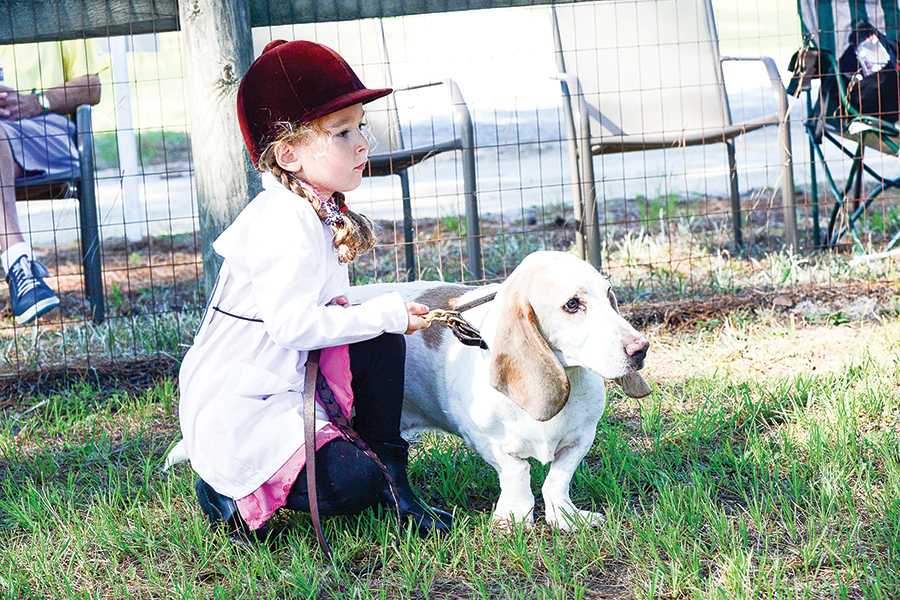
The highly entertaining Fun Dog Show will be June 9 from 9 a.m. to noon at the Walthour-Moss Foundation, Lyell’s Meadow, 225 Mile Away Lane, in Southern Pines. Registration begins at 8 a.m. The classes include: Cutest, Best Trick, Best Coiffed, Senior Dog, Junior Handler, Look Alike, Best Rescue, Best 6 Legs and Best in Show. Prizes and ribbons galore. Caring Hearts for Canines will be on-site with dogs seeking homes. Cost for entrants is $5 per class the morning of or you can register at www.walthour-moss.org.

First on the First at the First

With roots deep in the tradition of Blue Ridge music, the Jeff Little Trio headlines First Friday on the First Bank Stage beside the Sunrise Theater, 250 N.W. Broad St., in Southern Pines, on June 1. Food trucks and beverages abound but, please, leave the dogs at home. For further information call (910) 692-8501 or visit firstfridaysouthernpines.com.

Forsooth and Zounds

The Uprising Theatre Company brings Shakespeare back to the park with performances of A Midsummer Night’s Dream on consecutive weekends, June 1-3 and 8-10, at 7:30 p.m. at Tufts Memorial Park, 1 Village Green Road, Pinehurst. Admission is free to all though there are some VIP tables close to the stage available for $450. For more information call (541) 631-8241 or go to www.uprisingtheatrecompany.com.

The Rooster’s Wife

Friday, June 1: Seth Kibel and Bay Jazz Project. Premier woodwind player Seth Kibel fronts this crazy good band that leaves no genre uncovered. Cost: $10.

Sunday, June 3: Sultans of Swing, a Canadian duo, combines flamenco, Arabic folk, Cuban rhythms and French gypsy jazz. Cost: $15.

Saturday, June 9: The sextet Night Tree plays original works spanning the Celtic world. Cost: $10.

Wednesday, June 13: Bette Smith from Bed-Sty brings her big dreams and big band. Cost: $15.

Thursday, June 14: Open Mic. Members are admitted free.

Sunday, June 17: Jeanne Jolly’s wondrous voice is backed by a rocking band. Cost: $20.

Friday, June 22: City Dirt Trio, a side project of Urban Soil, features Gregory Meckley, Eric Chesson and Jonathan Wilson. Cost: $10.

Sunday, June 24: Singer, songwriter and guitarist Chris Jones and the Night Drivers bring their bluegrass sound. Cost: $15.

Doors open at 6 p.m. and music begins at 6:46 at the Poplar Knight Sport, 114 Knight St., Aberdeen. Prices above are for members. Annual memberships are $5 and available online or at the door. For more information call (910) 944-7502 or visit www.theroosterswife.org.

The Mighty Widget

And the learning curve of sweat

By Jim Moriarty

My two older brothers and myself all matriculated at the same institution, the Widget Factory. It’s the place we worked during the summers of our youth. I’m not sure which one of my brothers gave it the name but it’s the only thing we ever called it in our house, and it helped put all of us through places where the learning was advertised as being higher. In the final analysis — which is creeping up on all three of us — I’m not sure if I learned any more from Chaucer than I did from Jocko.

We called it the Widget Factory because functional, mostly unidentifiable, metal objects were manufactured there. You know those doors that open with a push bar? And, the doohickeys that hold the bar on the left and the right? Widgets. Gears don’t shift and forklifts don’t fork without widgets. They are the invisible hand that turns the indispensible cog. In the absence of the mighty widget, life is just a bucket of bolts. It’s true we had no idea what we were making but we were, nonetheless, secure in the knowledge that it served a purpose somewhere, somehow, to someone. And we got paid 10 cents more an hour for doing it on the graveyard shift, 25 cents more if we worked in the foundry.

Jocko ran the acid bath. He had the face of a battered palooka and the body of Haystacks Calhoun, dressed in T-shirts that appeared to be pre-sweat stained and unlaced work boots. You could strop a razor on the toe of either foot. As one might intuit from the name, the acid bath was not without its perils, the evidence of which appeared on most of the exposed portions of Jocko’s flesh. Serious about his craft, he was as territorial as a honey badger. Even the owner of the factory approached Jocko as if he was inviting Luca Brasi over for tea. 

Gil worked in the foundry, where they poured the steel at 3,100 degrees. One of the jobs I mastered during my summers was being Gil’s set-up guy, using a two-pronged pitchfork to move ceramic molds from the 1,200-degree oven to the spot where Gil would fill them with molten steel. He once told me he’d grown up in the same neighborhood as Jack Nicklaus and, after Jack hit the big time and Gil hit the foundry, he walked up to the door of Jack’s old house in Columbus, Ohio, and knocked on it just to see how he would be received. He said Jack was still the same old Jack and treated him like the same old Gil. He thought it was the kind of information people with a future beyond the Widget Factory ought to have.

Bob worked in the wax room, but I only addressed him by his last name, preceded by Mr. He owned one of the finest houses on top of a sand dune in one of the swankiest neighborhoods on the lake. On a clear night he could see the Chicago skyline through his picture window. He had successful kids. One was a professional athlete. Sometimes on break, I’d see him out back drinking wine out of a pint bottle. Inside, he sat in front of a cafeteria tray full of tiny wax widgets using a sharp knife and shaky hands to whittle away the residue where the two halves of a mold left an unwanted line. He wasn’t scraping away his dignity; he was holding on to as much of it as he could.

Dennis was the head inspector. Tall and lanky with James Dean hair, he drove a pickup truck as orange as a hunting vest and called me Hippie, combining derision and kindness in the same smoky breath. He had no education to speak of, but he worked meticulously and honestly and showed up on time every day, trusted more by the man who owned the joint to do the right thing than the owner trusted his accountant. That turned out to be prescient, since long after I’d stopped spending my summers there, two people (one was the accountant) who inherited the executive offices from the original owner got led away in handcuffs after they embezzled every nickel that wasn’t welded down. That was the graveyard shift for the Widget Factory, where the evening classes began with a punch clock instead of a bell, and the degree you received was a doctorate in the nobility of work.  PS

Radio Days

The perils of a talking head

By Bill Fields

Once in a while when checking the time, I go back in time.

It’s 4:15 . . . The current time brought to you by Bulova . . . Bulova available at The Glitter Box on Main Street in Aberdeen.

I hear myself — or my fellow WEEB-990 part-timer Keith Smith — reading that 10-second spot on the radio. The Glitter Box jewelry store is long gone, but the commercial has stuck in my memory like lint on a blue blazer.

Working for Southern Pines’ 5,000-watt AM station in the summer of ’77 was the first position related even a little to what I would do in the years ahead. Compared to bussing tables or parking golf carts, two of my other early jobs, turning onto WEEB’s driveway off Midland Road seemed a tiny journey toward a career.

I wasn’t entirely green to WEEB when Mitt Younts, then the manager and son of the station’s founder, Jack Younts, hired me.

Occasionally I had been part of a Key Club radio hour on Saturday mornings, when the booth was turned over to a couple of high school boys who would play records and yap mindlessly between songs. The Key Club show aired without incident, notwithstanding one weekend when, being Elton John fans and forgetting we were not on WQDR, the cool rock FM station in Raleigh, we put “The Bitch Is Back” on the turntable. We were allowed back but only after apologizing to the owner, who seemed to be on the phone before the chorus expressing his displeasure about our choosing such an inappropriate number.

Despite being part of that blunder, I got my own weekly show, “Pinecrest Sports Spotlight,” during which I would report on Patriot athletics and usually have a guest or two to interview in the studio. (When the Pinecrest girls won the state basketball championship, most of the team plus coach James Moore came, the microphone passed around like a bowl of mashed potatoes at Sunday supper.)

I had to pass up a post-graduation trip to the beach to start my job, but getting paid to come to work at the building I’d seen so often from the ninth tee while playing golf at Knollwood Fairways made that not seem like so much of an opportunity lost. I even got to cover some golf later that summer, the Women’s Trans National Amateur Championship held at Mid Pines.

Figuring out how to use Mitt’s tape recorder to get sound bites was infinitely easier than correctly pronouncing the surname of participant Lori Garbacz, which I butchered as “Gar-box.” Fortunately, Cathy Reynolds beat Beth Daniel in the final, two names that even I could handle.

A couple of shifts per week I got to be an actual disc jockey and got competent at cueing up vinyl, reading the required live advertisements and switching to ABC News at the top of the hour. Other days, much of the time was spent monitoring the auto-play operation that WEEB had adopted for the bulk of its programming. On Sundays, a preacher from one of the local churches would deliver a recording of that day’s service. I would collect his $30 payment and play the tape at the scheduled time.

One particular Sunday afternoon while on duty alone, there were prayers before the prayers.

I had my key to get into the station on a separate key ring from my car and house keys. Taking out the trash, I didn’t prop open the door. And, after emptying the garbage can and trying to re-enter the studios, I realized the WEEB key wasn’t in my pocket with my other keys.

It wasn’t Bulova time but panic time. 

If I used one of the golf clubs in my trunk to break in, everybody would know. If I left to go borrow a key and something happened to the station’s audio cruise control before I returned, everybody would know.

I decided to chance the latter choice, guessing correctly that Keith, one of the best athletes in my class as well as my co-worker, was lifting weights at a gym in downtown Southern Pines. Through his laughter he loaned me his key. Avoiding pine trees and police cars, I drove back to WEEB, the dust flying behind my Fairlane as I tore down the dirt lane toward the building.

Feeling as if I had been running wind sprints, I got inside and heard something. The programming had held. WEEB didn’t go off the air that day until sunset, as usual, nor had my career gone dark prematurely either.  PS

Southern Pines native Bill Fields, who writes about golf and other things, moved north in 1986 but hasn’t lost his accent.

A Perfect Match

Don’t judge a foot by its cover

By Beth MacDonald

One of life’s goals should be to make friends whose stories are more interesting than your own. Kate is one of mine. She’s a rock star, not a figurative one, a literal one. She has traveled the world, partied with amazing people. She is a beautiful soul, a singer, songwriter, insanely funny and has the kind of looks most women dream of having. One day at lunch over Bloody Marys, we heard her on the radio. “Can you believe they are playing this garbage?” she said. I feel blessed beyond belief to be surrounded by compelling and intelligent people who brighten my days and color my world with their wisdom and grace. So, when Kate told me I was an interesting friend, I almost choked on my frittata.

Some days I think the most interesting thing about me is my sock collection. I have socks with artwork on them. I wore them to the Louvre thinking I was “dressing for the occasion.” I have socks with a monorail on them that I wear to Walt Disney World. Some of my socks depict women at work and have pithy, feminist quips. Some socks are more vulgar. I wear those to meetings with people I find less, let’s say, agreeable. I have found that my socks are a way to recognize the world’s kinder souls, odd as that may be.

I think I have an interesting life. I am a lucky woman. Mason, my husband, is kind, and one of the smartest people I know. He never talks about himself, but has far more interesting stories than I ever will. Most people don’t give him the chance to tell them. They look at his tattoos and beard and probably think he’s not much for intellect. He doesn’t mind being underestimated. We have been friends for almost two decades, and married for four years. Both of our previous marriages ended at “Till death do us part,” making us an unusual pair — young, remarried, widow and widower. We have an unbreakable trust in each other, having been through “the worst.” 

I recently made the mistake of leaving Mason unsupervised with my socks. I don’t pair my socks when I do the laundry; they stay in a pile in the laundry room. That drives Mason to the brink of insanity. He likes to have a certain order to socks. He actually numbers his. When I need my socks I just go to “the pile” and pick out what I need and go about my business. If I’m in a hurry, I don’t even match them. I just grab and go. That makes Mason even crazier. While I was gone, he seriously contemplated getting rid of “the pile.” I’m still shocked he confessed this to me. My socks are as sacred as his OCD.

“I didn’t throw them away,” he said as if that somehow made the conspiracy less brazen. “It’s proof of my love.” I was still in shock, trying to keep from plotting revenge for a crime that wasn’t even committed. My poor precious endangered socks.

“You wanted to!”

“I have your name tattooed on my hand, in a rose. I’m not throwing your socks away.”

“My name should be tattooed in a sock, not a rose,” I said, my voice still an octave above calm.

Mason sighed. “There are no cool songs about sock tattoos.”

“Kate will write me one.” The whole scene played out in my head. I would call Kate and ask her to write me a raspy-voiced rock ballad about a sock tattoo and how no one should ever look down on socks with disdain. Brilliant!

Mason was saying something but I wasn’t listening. I think it was about his OCD and suggestions about how to organize my socks properly. He didn’t get it. My socks were organized. I knew that my right monorail sock was in the bottom drawer upstairs and the left one was in the basket hanging over the edge, near the handle.

Since even the kind can backslide, soon he may be able to find a reminder on iTunes.  PS

Beth MacDonald is a Southern Pines suburban misadventurer that likes to make words up. She loves to travel with her family, read everything she can, and shop locally for her socks.

A Sense of Place

Savoring the heart and soul

By Angela Sanchez

If you, or anyone you know, has ever traveled in Europe, you may be familiar with the feeling that the wine and food seem to taste better, certainly different, than if you mimicked the same thing in the United States. It may be because you’re on vacation or with special people in your life, but it’s also that you are enjoying a tradition of food or wine original and unique to that place. That is terroir, the French word for earth, land, even soil. It is the component that is the heart, the soul, the makeup of where the grapes are grown that eventually make a wine what it is. Wine expert Hugh Johnson describes terroir as an essential part of what makes a great wine. It is the character and personality, combined with weather and winemaking techniques, that are distinct and apart from wines of other regions produced from the same grapes. The same can be said for other agricultural products that are unique to a place. Both wine and food can have terroir, but does it matter if they do?

If you want a sense, or taste, of where the wine is produced — a feel for what that particular area is like — then terroir matters. If you simply want to enjoy a good quality product, then it probably doesn’t. Terroir acts as a point of reference, a standard. It’s a way to delineate a wine made from chardonnay grapes anywhere in the world, at any price point, from one that is specific to a place, as distinctive as the artist who made it. Some of the best, and best-known, examples of terroir are the wines of Burgundy. Chardonnay from Burgundy, France, is full of terroir. Puligny-Montrachet, Chassagne-Montrachet and Chablis are all produced from the same grape but could not be more different. Chablis is limestone and vigor, and Chassagne is round and lush. Any great chardonnay from any other growing region in the world will use the wines from this area as a model for their wine. If allowed to be a true product of their environment — the vineyards are not over-cropped and the winemaker doesn’t have a heavy hand — these wines will also exhibit terroir. Two great examples are Chateau Montelena Chardonnay from Napa, California, bearing classic lemon vibrancy and cream, and Hamilton Russell Chardonnay from Hemel-en-Aarde, South Africa, which is hugely influenced by the sea and elevation. Both are beautiful expressions of their own place. They distinguish themselves from others based on their environment, soil, climate — their terroir. Wines rich in terroir are often small production and carry a hefty price based on the fact that they are produced from very specific areas, often one vineyard that could be only a few acres.

Does a wine that is produced for sheer enjoyment and to fit a “crowd-pleaser” style or a consumer-friendly price make it any less of a wine? No. It’s like a tomato produced in a hothouse in winter or a cheese produced in a factory. Each serves a great purpose — widespread, reasonably priced enjoyment. They don’t, however, have the terroir of a fresh burrata cheese crafted in the Puglia region of Italy or a San Marzano tomato from Sicily. These accessible wines have a “style,” often an imitation of an original, that has been adapted to make it more approachable both in taste and price. Nothing wrong with that. But, it’s important to recognize and appreciate products with true terroir, if for no other reason than to experience something of their craft, made from the land, with a true sense of place. It’s a way to connect to tradition and small farms. You don’t have to look far to find them. There are some affordable examples produced from single-vineyard sites in California, Oregon and Washington.

You can find great examples of terroir in food, too, like grass fed beef from Argentina and John’s Island South Carolina tomatoes. Two of my favorite cheese examples are Meadow Creek Appalachian from Virginia and Humboldt Fog from California. The first is a natural rind tomme-style cow’s milk cheese exhibiting grassy, herbal buttery flavors with a bright yellow hue. The second is a bloomy rind goat’s milk cheese from Humboldt County made by Cypress Grove. It is famous for its distinct blue vegetable ash and it’s tangy earth sharpness. Both exhibit nuances from the land where the herds graze.

Terroir does matter. Sometimes it’s expensive and hard to find, but always worth the search.  PS

Angela Sanchez owns Southern Whey, a cheese-centric specialty food store in Southern Pines, with her husband, Chris Abbey. She was in the wine industry for 20 years and was lucky enough to travel the world drinking wine and eating cheese.

Natural Repellent

Keeping the bugs at bay

By Karen Frye

Mosquitoes, gnats, flies and chiggers are just a few of the biting insects we have to live with in the summer. They can be very annoying if you are outside gardening, by the pool or walking in the woods. Whatever pastime you enjoy outdoors, you are probably being eaten alive by biting insects.

The good news is you have options to keep these bugs off your body.

DEET is the most commonly used repellent. It was developed for the military during World War II and is the longest-lasting repellent available. However, it does have its drawbacks. It has a distinctive odor, and to avoid side effects, should be used only as recommended.

Natural repellents can be a useful alternative. Most are made from essential oils. These oils have strong odors that are offensive to most insects. Some essentials are more effective than others.

The Centers for Disease Control recognizes the oils of lemon and eucalyptus to be more effective than most other plant-based oils, with a similar effectiveness to DEET. There are many natural insect repellents on the market, with various combinations of oils to create a potent overall effect against bugs.

You can also make your own repellent that can be just as effective, and maybe save you money, too. Clove, citronella, lemon-eucalyptus and neem oils are among the most potent. Choose one of these as your primary active ingredient. Add another oil or two from the list to enhance the potency. Other oils that help repel insects are eucalyptus, cinnamon, rosemary, lavender, cedar, peppermint, geranium and thyme.

Essential oils can be used directly on the skin if you are putting a dab or two on spot areas. When applied liberally on their own, they can irritate the skin, so for widespread coverage, it’s best to mix them into a carrier oil to safely get it into the skin. Coconut oil is a perfect carrier, and it provides a reasonable level of protection against insects on its own. Another good thing about coconut oil is that it has a neutralizing effect on bug bites and stings. Even if you are bitten, the toxic or irritating effects are greatly reduced, and the itchy welts are barely noticeable.

Here’s an easy-to-make bug repellent: 144 drops of one or two of the oils on the list. Mix with 1/4 cup coconut oil. Store away from heat or light.

Rub the oil onto the exposed skin (avoiding your eyes). You may need to apply frequently if swimming, exercising heavily, or if you sweat a lot. If you are bitten, apply the pure coconut oil on the bite to soothe the itch and speed healing.

One more thing that helps keep insects off your skin is the B complex vitamins. You can find them all in one capsule, or you can add nutritional yeast to your diet (easy to add to soups, smoothies or juices). It has a nice, cheesy flavor and is delicious on popcorn. The B complex also helps fight fatigue, an added benefit to the supplement.

Now you can enjoy being outdoors without the annoying bugs ruining your good time.  PS

Karen Frye is the owner and founder of Natures Own and teaches yoga at the Bikram Yoga Studio.

Letting Go

Until then, hang on to dear, sweet life

By Jim Dodson

On a glorious end-of-spring afternoon, my friend Keith Bowman took me to see his farm, 15 miles southeast of town, a forested  tract of land to which he has devoted the last 35 years so as to turn it into a peaceable kingdom for people who love nature.

We met when I wrote about Keith and three college buddies who’ve attended every Masters Tournament together since 1960, a friendship still going strong 60 years later. During our conversations about Augusta National, Keith let on that he once took a sprig of the famous Augusta azaleas hoping to root and grow the same plant here in North Carolina on his farm where he and a cousin cultivated more than 600 azaleas and rhododendron.

When he learned I was an addicted gardener, he invited me to ride out someday and see his “garden that’s gone a little wild.”

Before that, however, was the matter of an old tree.

“There it is,” he said, pulling to the side on a quiet lane that turned off the Company Mill Road. “What do you think of that?”

The tree was an ancient poplar, rising from a small forested vale below the road bed, massive and very mystical-looking, knotted and gnarly as a giant’s index finger rising to a deep blue sky, at least 13 feet or so in circumference. The monster looked like something out of a children’s story, the home of a Druid king or hermit wizard.

“One day when I was about 13, my father brought me here to see this tree and told me how his grandfather hid in it to avoid being conscripted by the Confederate army.” On his next birthday, Keith Bowman will be 85. “The tree was probably close to 100 years old back then.”

“What amazes me is how it has survived everything from rough weather to changes here in the countryside,” said Keith. “Its top was sheared off long ago but it’s still putting out limbs and leaves. It just won’t let go, comes back year after year.”

Keith’s farm, which is named Ironwood and sits near the village of Climax, was pretty amazing in its own right. Though there are fields he leases to neighbors for raising crops, most of the 120-acre property is covered by a gorgeous forest of hardwoods. There is a handsome unpainted farmhouse and a large barn well off the road, both of which suffered significant damage from the great ice storm of 2014, when large trees toppled onto their roofs.  Other trees fell onto the spectacular octagonal gazebo built by Keith and his late father, Ross, beside the acre-and-a-half pond Keith had built at the heart of his earthly paradise.

The gazebo and pond were designed for swimming and fishing. The structure features hand-cut wooden shingles from the mountains and is bunkered by the aforementioned red and white azaleas.

“Because of the ice storms, the place doesn’t look as nice as it used to,” Keith needlessly apologized. “But this has certainly been a source of a lot of joy to me, friends and neighbors,” he allowed as we walked through the woods to see the remains of a large nursery where rhododendron and large azaleas were returning to a wild state. 

In the farm’s glory days, Keith invited school groups and neighbors from nearby Climax to use the property for “a getaway in nature,” and once threw a party for neighbors from the crossroads with barbecue and a bluegrass band.

Ironwood visitors fished, had picnics, hiked and swam. There is even a fancy paneled outhouse with a cathedral roof, skylight, electric lights, running water and a chandelier.  “It’s kind of the Cadillac of outhouses,” Keith joked.

Across the pond, he installed an orchard with 81 fruit trees and a large grape arbor of Concord, scuppernong and muscadine varieties. “For years I had so much fruit I couldn’t give it away,” he told me as we strolled around the pond.

It was late in the day and the surrounding woods were stirring with life, full of birdsong. The light was almost ethereal, the serenity complete in the seclusion of Keith Bowman’s Peaceable Kingdom.   

“You wouldn’t believe all the wildlife around us,” he was moved to say as we walked, pausing to marvel as a trio of honking Canada geese zoomed over the pond and our heads, heading north with spring. “That’s why it means so much to me to keep this place the way it is — to pass it along to someone who will properly care for it and allow others to use it for relaxation and spiritual renewal.”

As a kid, Keith dreamed of becoming a test pilot, and nearly achieved that dream by training as a fighter pilot during the Cold War. After that he worked as an engineer on the Nike missile for Western Electric in Burlington. A long career with the Small Business Administration followed — he was in charge of both Carolinas for a time — introducing him to good friends he keeps up with this day. For a decade he performed with a traveling gospel group. Though he never married  (“a couple of near-misses,” he says with a wistful laugh, “that just didn’t work out”) he has enjoyed a full life of faith and friendship, belonging to several different churches.

It’s the uncertain fate of Ironwood that chews at him. Since the death of a neighbor who did most of the heavy maintenance work on the property, Keith can’t possibly keep up with all that needs to be done.

“I don’t have any relations left to give it to,” he admitted, as we started back to his car. “That’s a problem I think a lot of older Americans face these days. As we get older out in the country, younger folks aren’t replacing us. They want to live in the city. You can’t blame them. But connections will be lost.”

For this reason, Keith has spent decades photographing nature and creating documents to show what was done, filling several meticulously organized scrapbooks.

When I suggested that he might consider giving the farm to a local church for a retreat or youth camp, given his strong connections to local congregations, he smiled and shook his head. “I know people who have done just that. Most churches would sell the property for other purposes.”

On the drive back to town, he showed me the historic Tabernacle Methodist Church where generations of his family are buried. The interior of the church was a handmade gem. Keith has photographed all of its stained glass windows.

“I think about a line I heard from the film Life of Pi,” he mused as we drove back into town. “All of life seems to be about letting go of things you love. Truthfully, I’m the worst person in the world at letting things go,” he said with a laugh. “But you’ve got to eventually let it go. I know that.”

Keith and his personal nature preserve were still on my mind a few days later when I phoned my friend Joe who is an experienced forester who helps people just like Keith figure out what to do with their land when the time arrives to let it go. Joe, as I knew he would, agreed to give his perspective and advice.

I even looked up the quote from Life of Pi, which goes, “I suppose in the end, the whole of life becomes an act of letting go, but what always hurts the most is not taking a moment to say goodbye.”

Keith, at least, is taking his own sweet time to say goodbye. 

Out in my half-finished Japanese garden, meanwhile, which has shown great improvement over the course of a cool and rainy spring, I couldn’t help but think about the things of this world I treasure but will someday have to let go.

As it happened, I was planting a pair of Red Slipper azaleas and a Christmas fern mixed with the ashes of the three well-loved golden retrievers that brought our family incalculable joy over the years. My garden will be the final resting places for dear old Amos, Bailey and Riley the Rooster, as we called him — and, with a little luck, perhaps the head gardener as well.

A rusted iron sign that stood forever in the peonies of my late mother’s garden read: Dig in the soil, delve in the soul. No place better than one’s garden to do that. Thomas Jefferson always made lists that he kept in his back pocket, especially when in his garden.

Keith and his farm were still on my mind, and I couldn’t help but make my own mental list of the people and things of this world I shall someday have to let go.

Naturally, my adorable wife and four great kids top the list — though with luck they’ll have to let go of me first.

As I dug, my simple list grew: my dog Mulligan, old friends, golf with buddies, quiet time in my garden, a house that finally feels like home, early church, arboretums, old hymns, my wife’s caramel cake, histories and spy novels, birds at the feeder, the glory of spring, the spice of autumn, the silence of snowy nights, film scores, dawn walks, rainy Sundays, supper on the porch, the blue of dusk, garden catalogs, my new rubber boots, my old guitar, blue limericks, roses in June, freshly baked bread, driving back roads, all of Scotland, half of England, the poems of Billy Collins and Mary Oliver, and a few other things I shall surely miss and think of later.

Leave it to Mary Oliver to offer the best advice to Keith and me and others like us.

“To live in this world,” she said, “you must be able to do three things. To love what is mortal and hold it against your bones knowing your own life depends on it; and then, when the time comes to let it go, to let it go.”  PS

Contact Editor Jim Dodson at jim@thepilot.com.

Triumphant Return

Frazier is back with a new historical novel that reads like poetry

By D.G. Martin

Charles Frazier’s blockbuster first novel, Cold Mountain, marked its 20th anniversary last year. It won the National Book Award in 1997 and became a popular and Academy Award-winning film starring Nicole Kidman, Jude Law and Renée Zellweger. From Cold Mountain and the books that followed, Thirteen Moons and Nightwoods, Frazier gained recognition as North Carolina’s most admired writer of literary fiction since Thomas Wolfe.

Frazier’s many fans celebrated the April release of his latest novel, Varina, based on the life of Confederate President Jefferson Davis’ wife. But, because his most recent previous novel, Nightwoods, had come out in 2011, they wondered why he had made them wait so long. The simple answer: Frazier refuses to work fast. Every word of every chapter of every one of his four books was reviewed, rewritten, replaced and restored by him to make the final product just right. It’s that process that makes Varina a book so full of rich and lovely prose it could pass for poetry. And well worth the wait.

Because Varina is historical fiction, Frazier faced a challenge similar to the one Wiley Cash encountered in his recent book, The Last Ballad. Writing about a real person — textile union activist Ella May Wiggins in Cash’s case or Varina Davis in Frazier’s book — limits an author’s freedom to create and imagine without limits. The facts of history set firm and solid boundaries.

On the other hand, those real historical facts provide the framework within which Cash and Frazier, both, have succeeded in developing interesting and believable characters. Varina takes us back to the 1800s and the Civil War, a period it shares with Cold Mountain and Thirteen Moons. The central character of the new book is Varina Howell Davis, until now an obscure Civil War footnote. Frazier refers to her as “V.”

He builds V’s story around an unusual fact. While living in Richmond as first lady of the Confederacy, she took in a young mixed race boy she called Jimmie. She raised him alongside her own children. At the end of the Civil War, Union troops took 6-year-old Jimmie away from V, and she never learned what happened to him.

Frazier begins his story 40 years later at a resort-spa-hotel-hospital in Saratoga Springs, New York, where V is residing. James Blake, a light-skinned, middle-aged African-American, has read about Jimmie. His memories are very dim, but he begins to think he might be that same Jimmie and sets out to visit V at Saratoga Springs.

When Blake calls on V at the hotel, she is suspicious, having been the victim of various con artists who attempted to exploit her fame. But something clicks. “She works at remembrance, looks harder at Blake’s broad forehead, brown skin, curling hair graying at the temples. She tries to cast back four decades to the war.”

Blake visits V for several Sundays, and Frazier builds his story on the growing friendship and the memories they share. During the course of Blake’s visits, V remembers her teenage years in Natchez, Mississippi; her courtship and marriage to Davis; life on his plantation while Davis is often away in military service or politics; living in Washington as wife of a U.S. senator and Cabinet official; being the first lady of the Confederacy; and her post-Civil War life when she becomes friends with the widow of Ulysses Grant and writes a column for a New York newspaper.

These are important subplots, but the book’s most compelling action develops in V’s flight from Richmond when it falls to Union troops at the end of the Civil War. In the book’s second chapter, V and Blake begin to recall their journey southward. As V prepares to leave Richmond on the train, Davis tells her she would be coming back soon because “General Lee would find a way.” But Lee does not find a way this time.

V’s family, including Jimmie, servants and Confederate officials, travel to Charlotte, where an angry mob confronts them at the rail station. Evading the mob there, they “traveled southwest down springtime Carolina roads, red mud and pale leaves on poplar trees only big as the tip of your little finger, a green haze at the tree line. They fled like a band of Gypsies — a ragged little caravan of saddle horses and wagons with hay and horse feed and a sort of kitchen wagon and another for baggage. Two leftover battlefield ambulances for those not a-saddle. The band comprised a white woman, a black woman, five children, and a dwindling supply of white men — which V called Noah’s animals, because as soon as they realized the war was truly lost, they began departing two by two.”

Their goal is escape to Florida and then Havana.

Supplies have shrunk and their money has become worthless. Rumors circulate that their caravan has a hoard of gold from the Confederate treasury and that there will be a big reward for their capture.

Frazier writes, “In delusion, bounty hunters surely rode hard behind faces, dark in the shadows of deep hat brims, daylight striking nothing but jawbones and chin grizzle, dirty necks, and once-white shirt collars banded with extrusions of their own amber grease.”

Like Inman’s trek toward home in Cold Mountain, V and her companions confront adventure and terror at almost every stop.

In Georgia, low on food and soaking wet, the group finds refuge in a seemingly deserted plantation house. As they settle in, two or three families of formerly enslaved people appear, accompanied by the son of their former owner, Elgin, a “white boy, who grew less beard than the fuzz on a mullein leaf.”

Elgin sasses and threatens two former Confederate naval cadets, Bristol and Ryland, who are accompanying V’s group. He blames them for losing the war.

Ryland responds in kind, “You’ve not ever worn a uniform or killed anybody, and you’re not going to start now. Have you even had your first drink of liquor?”

Ryland and Bristol laugh when the boy reaches into his pants and pulls out a Derringer pistol and points it at Ryland.

“And then Elgin twitched a finger, almost a nervous impulse, and an awful instant of time later, Ryland was gone for good.”

Frazier writes that Ryland had been transformed in a matter of seconds “to being a dead pile of meat and bones and gristle without a spark. Three or four swings of the pendulum and he was all gone.”

Instantly Bristol guns down Elgin. Before moving on, V’s group and the former slaves bury Elgin and Ryland, two more unnecessary casualties in a war that simply would not end.

With V’s group back on the road, we know their attempt to escape is doomed to failure. But Frazier’s dazzling descriptions give us hope, hope that is quickly dashed when Federal troops capture V and take Jimmie away from her.

Readers who loved Frazier’s luscious language and compelling characters in his earlier books will agree that Varina was worth the long wait.

But what are they to make of V, her husband, and the Confederate heroes who are bit players in the new book?

Perhaps Frazier leaves a clue with the final words, as James Blake remembers what V says to him on one of their visits at Saratoga Springs.

“When the time is remote enough nobody amounts to much.”  PS

D.G. Martin hosts North Carolina Bookwatch, which airs Sundays at 11 a.m. and Thursdays at 5 p.m. on UNC-TV.

TOPO’s Whiskey and Rum

New releases from one of North Carolina’s most inventive distilleries

By Tony Cross

Four years ago, I was in my final couple of hours of wrapping up a Saturday night behind the bar. It was busy and I was slinging drinks and carrying on the type of banter that goes with the territory. Usually after 8 p.m. on a weekend night, most of my guests were relaxed enough to tolerate, maybe even laugh at, my antics. In between the chaos, two gentlemen took seats at the bar. After greeting them, I turned around to grab a bottle of rye and make a drink. “Do you guys carry TOPO spirits?” one of them asked. It had to have been some sort of divine intervention, because my first thought was, “Yeah, but you’re the only person to ask for it.” TOPO vodka was the first local spirit I carried, and I was a little disappointed that guests weren’t flocking to support a local distillery. Another way of putting it is: My feelings got hurt when guests didn’t like what I did. But instead of talking first and thinking later, I said, “Actually, yeah, we carry their vodka. It’s good stuff.” Good job, Tony. Not being a smart-ass paid off for once. I had just met the owners of Top of the Hill Distillery, Scott Maitland and Esteban McMahan.

Since that night, I’ve formed a relationship with TOPO’s spirit guide, McMahan. No one in North Carolina’s distillery game seems busier than him. If you follow TOPO on Instagram (handle: topoorganicspirits), then you know exactly what I mean. If I had to guess, I’d say that he’s doing three to four events a week across the state. The guy is everywhere. And thanks to McMahan’s work ethic, I was able to debut my carbonated cocktails on draught to a ton of people when he asked me to bartend with him at Stoneybrook two years ago. Since then, we’ve collaborated a few times and he always makes a point to let me know when he’s in Moore County. The last time I saw McMahan was in March, when he was finishing up an event at the Carolina Horse Park and wanted to link up so he could turn me on to TOPO’s new whiskey. After having a drink and catching up, he gifted me a bottle of their organic Spiced Rum and Reserve Carolina Straight Wheat Whiskey.

I first got a taste of TOPO’s Spiced Rum last fall during Pepperfest in Carrboro. McMahan had invited my friend and co-worker, Carter, and me to come out and use pepper-infused TOPO vodka with our Reverie strawberry-ginger beer. We had a blast, and our cocktail even took first place. While we were there, we got to see the TOPO crew unveil their newest spirit, the Spiced Rum. A few months prior to Pepperfest, the guys over at the distillery were still tweaking the rum. They’d given me a taste at the time, and it wasn’t bad. When I got to try it at Pepperfest, it was clear they had gotten it just right. On the nose, there’s vanilla, orange, and the slightest whiff of banana. On the palate, orange and vanilla are still present, but I can also taste spices — cinnamon is definitely there, clove is subtle, and allspice seems to round it out. McMahan says their rum is “N.C.’s only USDA Certified Organic rum. It is distilled from organic evaporated cane juice and molasses, and spiced with organic fruit and spices. Unlike most spiced rums, it is not heavily sweetened post-distillation, nor are there artificial colors and flavors.” Heck, the rum was even awarded a bronze medal at the American Distilling Institute Competition this year. I would suspect that rum purists might not go crazy about it, but I think it’s fun to play around with, and goes well in a variety of mixed drinks. You can definitely go the Dark n’ Stormy route, or you can fiddle around with something like I did below:

Kind of Blue

2 ounces TOPO Spiced Rum

3/4 ounce pineapple juice

1/2 ounce lime juice

1/4 ounce simple syrup (2:1)

2 ounces Reverie Ginger Beer

Take all ingredients (sans ginger beer) and pour into a cocktail shaker with ice. Shake like hell, and then pour two ounces of ginger beer into the shaker. Dump everything into a rocks glass. Garnish with fresh grated nutmeg (using a microplane).

As much as I like to stay busy, I can do lazy, too. Case in point: that bottle of TOPO’s Reserve Carolina Straight Wheat Whiskey. I didn’t want to open it until I could take a picture of it for this issue’s column. I’ve had this bottle staring at me from my kitchen counter since March. All I had to do was take a picture of it. Well, I did. Tonight. And I opened it. Tonight. One of my friends has been telling me how good this whiskey is. I’ll be hearing “I told you so” sometime later this week.

I asked McMahan about TOPO’s new whiskey, and he had this to say: “The TOPO Organic Reserve Carolina Straight Wheat Whiskey is N.C.’s first and only locally sourced straight whiskey. It is distilled from a 100 percent wheat mash bill of USDA Certified Organic soft red winter wheat from the Jack H. Winslow Farms in Scotland Neck, N.C. It is distilled below 80 percent ABV, barrel aged in #3 char new American oak barrels two to four years at no more than 125 proof, and then it’s non chill-filtered.” I know, he forgot to tell me how smooth this whiskey is. Congratulations are in order, too. McMahan was just notified that TOPO placed gold in the San Francisco Spirits Competition. No drink recipe for this one, folks. If you must, an old-fashioned. I’ll take mine neat with half an ice cube. Cheers!   PS

Tony Cross is a bartender who runs cocktail catering company Reverie Cocktails in Southern Pines.