Drinking with Writers

The Third Person Project

In search of a buried and forgotten past

By Wiley Cash     Photographs by Mallory Cash

As his 2011 essay collection Pulphead makes clear, John Jeremiah Sullivan possesses the inestimable skill of sifting through American popular culture to separate the bright, shiny things from the timeless ones. The seemingly divergent essays in the collection ricochet between a hilarious yet stirring portrait of the Tea Party movement circa 2009, a deep dive into the origin myths surrounding Guns N’ Roses’ frontman Axl Rose, and meditations on loneliness, identity, and what is perhaps the most American trait of all: our Protean ability to recast ourselves in different renditions throughout our lifetimes. With this in mind, Wilmington, a city that is always revising and reinventing itself, is the perfect place for John Jeremiah Sullivan to live and work.

On Labor Day, John and I spent a few hours on his back porch, and, over a couple of appropriately named Long Weekend IPAs from Kinston’s Mother Earth Brewing, we discussed Wilmington’s frustrating history of not only shedding the past, but also burying it. Of course our conversation began with the most violent and shameful event in the city’s history: the race massacre of 1898, which is, to this day, the only successful coup d’état in American history, and something the city largely ignored for over a century. As John puts it, in Wilmington “our identity is based on something we can’t talk about.” But John has joined a legacy of writers and thinkers who are willing to research and talk about 1898. From these various investigations and discussions has sprung the Third Person Project, a group of citizens, scholars, students and researchers who are dedicated to scouring the past to uncover Wilmington’s missing and buried moments.

I ask John how the Third Person Project got started. He takes a moment to consider the question, and I imagine his mind cycling back through reams of microfiche and dusty pages of reference books and telephone directories that had been left hidden in basements and tucked away on bookshelves across the city.

“It grew out of the projects that make it up,” he finally says, the first of those projects being The Daily Record project, in which a group of scholars and local eighth-graders searched for editions of The Daily Record, an African-American newspaper that was thought lost to time after white marauders destroyed the printing press in 1898. The group found seven copies of the newspaper, and they scanned them and published them on their website.

“The experience of finding those newspapers and studying them gave us a sense of how thick the wood is here, how much there is to drill,” John says. “Wilmington has an unusual amount of lost history.”

Nowhere is this lost history more apparent than in Wilmington’s African- American life and culture. Take jazz musician Percy Heath, for example. Born in Wilmington in 1923, Heath was a bassist who played alongside icons like Miles Davis and Dizzy Gillespie, and was a member of the iconic Modern Jazz Quartet. While it is popularly believed that Heath grew up in Philadelphia, John informs me that Heath did not permanently leave Wilmington behind after the move north. He would return to Wilmington throughout his young life, a fact either glossed over or altogether absent from jazz history.
“Percy Heath played in the marching band at Williston,” John says, his voice edging toward an exasperated laugh. “And he was the class president! Every rock you turn over in Wilmington has a story like that.”

Another story is that of Charles W. Chesnutt, an author who was born in Cleveland and raised in Fayetteville, North Carolina, and who, by the turn of the 20th century, was the most celebrated African-American writer in the country. His seminal work, The Marrow of Tradition (1901), is probably the best-known fictional portrayal of 1898, even though its portrait of white terrorism effectively ended Chesnutt’s career.

Because Chesnutt spent his adult life in Cleveland, scholars have long wondered why he chose to fictionalize the events of 1898, especially because doing so exposed him to critical peril. It has been assumed that Chesnutt’s childhood in Fayetteville and his ties in eastern North Carolina are what made the events of 1898 so important to him, but John has found a more direct connection: Chesnutt’s uncle was a man named Dallas Chesnutt, who left Fayetteville and settled in Wilmington in 1876. Dallas Chesnutt forged a career as a postal worker, but he also had a second career as a printer. What did he print? It turns out he was the printer of The Daily Record, the newspaper the white mob set out to destroy by burning Dallas Chesnutt’s printing press in 1898. John argues that Charles Chesnutt’s interest in Wilmington’s coup d’état was not simply historical, cultural or political; it was deeply personal.

John points out that the 1898 race massacre was not the beginning of Wilmington’s attempt to unwind the positive changes brought about by Reconstruction. He recently discovered that the Confederate memorial statue in Wilmington’s Oakdale Cemetery is one of the very first, if not the first, Confederate statues in America, erected only a few years after the end of the Civil War.

Considering the milestones in Wilmington’s racial history — the erecting of what could be the nation’s first Confederate monument, the 1898 race massacre, the battles over integration, and the Wilmington Ten — John argues, “If it’s possible to be the anti-conscience of the South, Wilmington is, but we can reverse the polarity of that.” He smiles and looks into his backyard, the weight of what he has just said seeming to settle over him, the clouds that presage Hurricane Dorian not yet on the horizon.

“But that may be the thing I love most about Wilmington,” he says. “People who live here now can take a hand in it. I have a funny feeling that what happens in Wilmington — when it comes to the political destiny of the South and this country’s struggle with racial equality — somehow it matters what we do here.”  PS

Wiley Cash lives in Wilmington with his wife and their two daughters. His latest novel, The Last Ballad, is available wherever books are sold.

Bookshelf

October Books

FICTION

Cilka’s Journey, by Heather Morris

Author of The Tattooist of Auschwitz returns with a novel about beautiful Cilka, who is 16 years old and forcibly separated from the other women prisoners at the Auschwitz-Birkenau concentration camp. When the camp is liberated Cilka is charged as a collaborator and sent to a Siberian prison camp, where she begins to tend to the ill, struggling to care for them under brutal conditions. From child to woman, from woman to healer, Cilka’s journey illuminates the resilience of the human spirit and the will to survive.

The Giver of Stars, by Jojo Moyes

In the late 1930s, the WPA (Works Progress Administration) developed a number of projects intended to provide employment opportunities for unemployed artists, writers and craftsmen. One of those projects was the Pack Horse Library Initiative in which horsewomen picked their way along snowy hillsides and through muddy creeks with a simple goal: to deliver reading material to Kentucky’s isolated mountain communities. In The Giver of Stars, Moyes has brought to life the amazing, funny, adventurous stories of a few of these trailblazing women. Lovers of historical fiction will devour this story of a little-known piece of U.S. history.

Holding on to Nothing, by Elizabeth Chiles Shelburne

In luminous prose, Shelburne brings us a present-day Appalachian story in the tradition of Lee Smith, Silas House and Ron Rash, cast without sentiment or cliché, but with a genuine and profound understanding of the place and its people. Lucy Kilgore has her bags packed for her escape from her rural Tennessee upbringing, but a drunken mistake forever tethers her to the town and one of its least-admired residents, Jeptha Taylor. Their path is harrowing, but Lucy and Jeptha are characters to love, and readers will root for their success in this debut novel so riveting that no one will want to turn out the light until they know whether this family will survive.

NONFICTION

Notre-Dame, by Ken Follett

In this short, spellbinding book, international best-selling author Ken Follett describes the emotions that gripped him when he learned about the fire that threatened to destroy one of the greatest cathedrals in the world — the Notre-Dame de Paris. Follett tells the story of the cathedral, from its construction to the role it has played throughout its history. He reveals the influence it has had on cathedrals around the world and on the writing of one of his most famous novels, The Pillars of the Earth. Follett will donate the proceeds from the book to the charity La Fondation du Patrimoine.

Tell Me a Story, by Cassandra King Conroy

Cassandra King was leading a quiet life as a professor, divorced “Sunday wife” of a preacher, and debut novelist when she met Pat Conroy. The two courted and married, and now Cassandra King Conroy looks back at her love affair with a natural-born storyteller whose lust for life was fueled by a passion for literature, food and the Carolina low country that was his home. As she reflects on their relationship and the 18 years they spent together, cut short by Conroy’s passing at 70, Cassandra reveals how the marshlands of the South Carolina low country ultimately cast their spell on her, too, and how she came to understand the convivial, generous, funny, and wounded flesh-and-blood man beneath the legend — the original Prince of Tides.

Peculiar Questions and Practical Answers: A Little Book of Whimsy and Wisdom, from the New York Public Library

What did people do before Google? They asked a librarian. In this book, published from the archives of the New York Public Library, questions asked from the 1940s to the 1980s and the librarians’ answers are examined. For example, in 1965 a patron asked what “higher water” meant, curious if the term referenced American Indians. The reply was that they didn’t know what “higher water” meant, but then went into a brief discussion on Hiawatha. One of The New Yorker’s best-known and beloved illustrators, Barry Blitt, has created watercolors that bring many of the questions hilariously to life in a book that answers, among other questions, “What kind of apple did Eve eat?”

Life Undercover: Coming of Age in the CIA, by Amaryllis Fox

Fox was in her last year as an undergraduate at the University of Oxford when her writing mentor, Daniel Pearl, was captured and beheaded. Galvanized by this brutality, Fox applied to a master’s program in conflict and terrorism at Georgetown University’s School of Foreign Service, where she created an algorithm that predicted, with uncanny accuracy, the likelihood of a terrorist cell arising in any village around the world. At 21, she was recruited by the CIA. Her first assignment was reading and analyzing hundreds of classified cables a day from foreign governments and synthesizing them into daily briefs for the president of the United States. Her next assignment was at the Iraq desk in the counterterrorism center. At 22, she was fast-tracked into advanced operations training and was deployed as a spy under non-official cover — the most difficult and coveted job in the field — as an art dealer specializing in tribal and indigenous art and sent to infiltrate terrorist networks in remote areas of the Middle East and Asia.

The Body: A Guide for Occupants, by Bill Bryson

Bryson proves himself, once again, to be an incomparable companion as he guides us through the human body — how it functions; its remarkable ability to heal itself; and, unfortunately, the ways it can fail. Full of extraordinary facts (your body made a million red blood cells since you started reading this) and irresistible Bryson-esque anecdotes, The Body will lead you to a deeper understanding of the miracle that is life, in general, and you, in particular. As Bryson writes, “We pass our existence within this wobble of flesh and yet take it almost entirely for granted.” The Body will cure that indifference with generous doses of wondrous, compulsively readable facts and information that is as addictive as it is comprehensive.

CHILDREN’S BOOKS

Roar Like a Dandelion, by Ruth Krauss

This oh-so-cute alphabet book from the author of The Carrot Seed is filled with gems of playful, sage advice, including “jump like a raindrop” and “kick away the snow and make spring come.” Perfect for story time or even graduation giving, Roar like a Dandelion will be a read-aloud favorite. (Ages 4-6.)

The Scarecrow, by Beth Ferry, illustrations by the Fan Brothers

Sometimes friends come from the most unlikely places, and in this sweet story with stunning illustrations, Scarecrow finds a friend one would assume to be an enemy. A perfect read-together story for any time of the year, The Scarecrow is sure to become a classic. (Ages 3-6.)

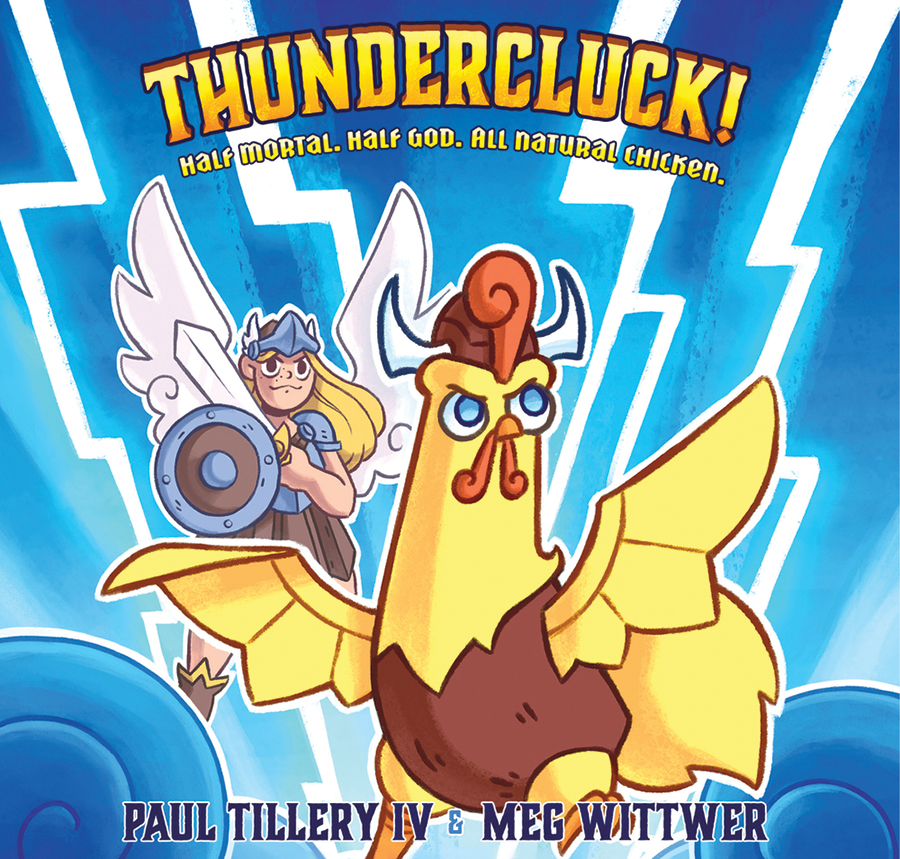
Thundercluck: Chicken of Thor, by Paul Tillery IV and Meg Wittwer

Thundercluck, the chicken with the power of Thor, is BWACKKKK in this second hilarious adventure from author/illustrator team of Tillery and Wittwer. Half mortal. Half god. All chicken. It’s perfect for fans of Wimpy Kid or Dogman. (Ages 8-12.)

Malamander, by Thomas Taylor

Herbert Lemon works as the lost-and-founder at the Grand Nautilus Hotel and one day, among the lost umbrellas and trunks, he finds himself face-to-face with a lost girl. The girl, Violet, leads Herbert on a wild journey through his unusual town, where the pair encounters a powerful old woman with spying capabilities, a top hat-wearing book-recommending monkey, a 12-year-old mystery and an aquatic monster. A fun mystery with quirky humor, Malamander is perfect for that sophisticated young reader who appreciates a little dark humor. (Ages 10-14.)

Allies, by Alan Gratz

From land, air and sea, Allies follows the lives of four young people through the 24-hour period that will forever change their lives and the lives of so many others in this masterpiece by the ever-amazing historical fiction master Gratz. Fans of all ages can meet the author Monday, Oct. 21, at 4 p.m., at The Country Bookshop. This event is free and open to the public. (Ages 12 and up.)  PS

Compiled by Kimberly Daniels Taws and Angie Tally

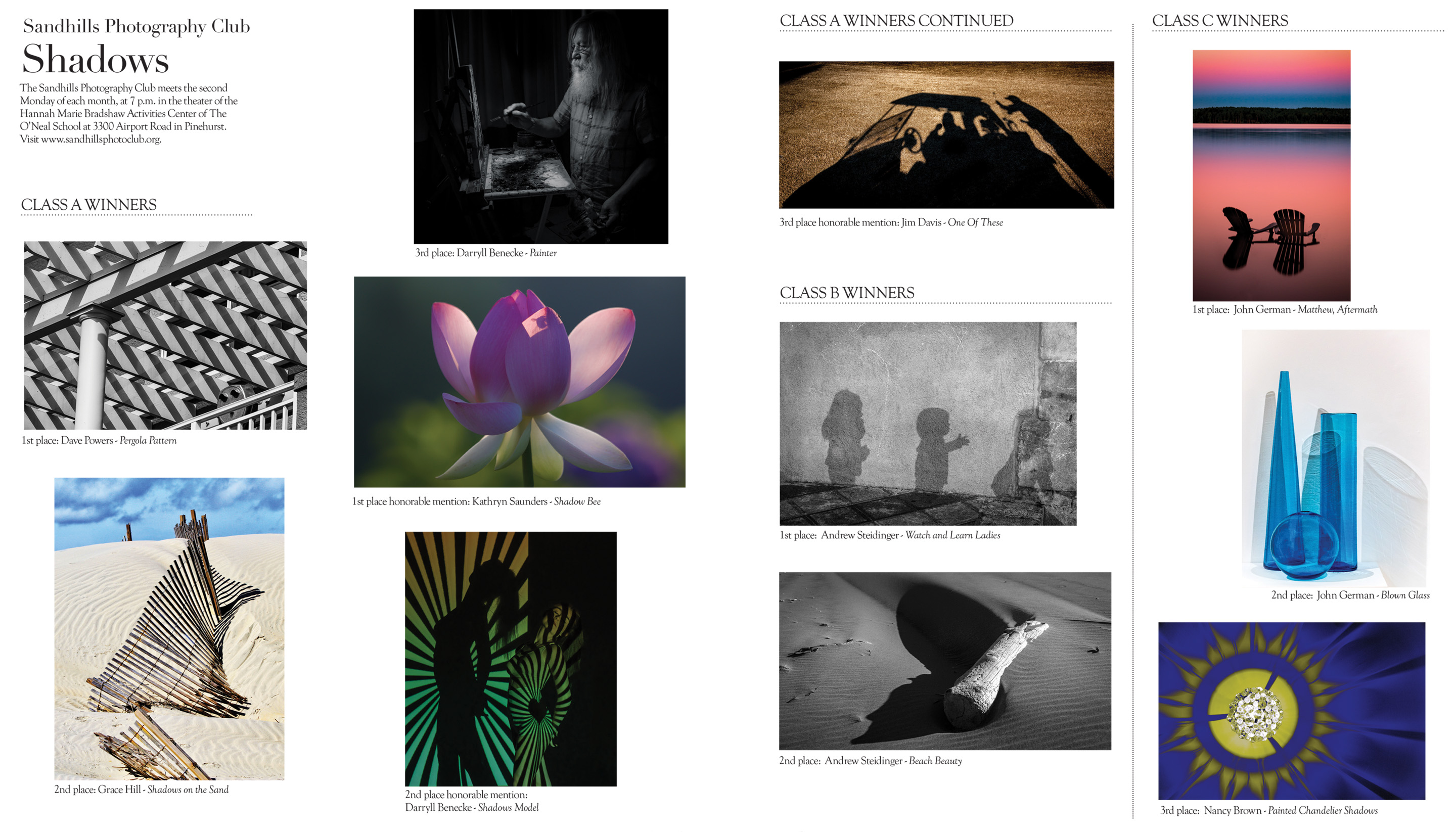
Sandhills Photography Club: Shadows

The Sandhills Photography Club meets the second Monday of each month, at 7 p.m. in the theater of the Hannah Marie Bradshaw Activities Center of The O’Neal School at 3300 Airport Road in Pinehurst. Visit www.sandhillsphotoclub.org.

Southwords

The State of Mystery

Across North Carolina, tales of unexplained happenings abound — and delight — come October

By Tom Allen

If ghosts and graveyards peak curiosity, October is your month. Check local listings for all things haunted or headless. Since Washington Irving penned his scary legend in 1820, “Sleepy Hollows” abound. I recall a couple of childhood nightmares, courtesy of Ichabod Crane.

Now that I’m grown up, lions and tigers and bears are a piece-a-cake. But vampires and zombies? Jeepers creepers! I likewise recoil from chainsaw murderers and psychotic clowns. Social media and 24/7 breaking news merge reality with fiction. I don’t need another autopsy on NCIS or Criminal Minds to remind me how palpable sadness and tragedy can be.

But I do love a good mystery. What happened to Amelia Earhart? Does the Loch Ness Monster exist? Did a college classmate (who’s sure the 1969 moon landing was staged) really encounter Bigfoot on a camping trek to Oregon?

From Murphy to Manteo, North Carolina mysteries and legends thrive. Growing up, I heard of a spot in a Chatham County forest: the Devil’s Tramping Ground, a 40-foot ring where nothing has grown for a century and anything left in the ring disappears overnight. I haven’t visited and don’t plan to.

However, I am curious about mermaid sightings, again in Chatham County, where the Haw and Deep rivers merge to form the Cape Fear. An Irishman and Revolutionary War commander, Ambrose Ramsey, opened a tavern near the bonnie banks in the late 1700s. Chaps making their way home after the tavern closed claimed to see mermaids singing, laughing and splashing about off a river sandbar. Stories of sightings continued for more than a hundred years. When flooding destroyed the tavern, those stories disappeared as well.

Oddly, tales of mermaid revelry never originated with fellows headed to the tavern, just after leaving. Ale tales or actual sightings? Who knows? The famous and infamous, from Christopher Columbus to the pirate Blackbeard, reported seeing the mythical creatures at sea. By all accounts, whether far out in the Atlantic or on a Cape Fear sandbar, the encounters — sporadic and brief — were always friendly.

For many North Carolinians, no unsolved mystery has consumed our imaginations, from elementary school years through adulthood, like that of the Lost Colony. In 1587, 117 settlers arrived at Roanoke Island, hoping to establish the first English-speaking colony in the New World. Three years later, delayed because of England’s war with Spain, the colony’s leader, English governor John White, returned with supplies. The colonists were nowhere to be found. A rescue party saw the letters CRO carved into a tree, and later, CROATAN, whittled on a fencepost.

Perhaps Croatan, an island south of Roanoke, inhabited by a Native American tribe of the same name, became the colonists’ new home. Were the settlers welcomed by friendly natives, or was their presence a source of hostility? Were they abducted, killed? Or, did they live out their lives assimilated among the Croatan, or some other native tribe more inland? Did they marry, have children, merge the New World with the Old? In recent years, DNA from locals failed to produce evidence of descendants.

Bad weather forced John White to end his search, a search that failed to locate his daughter, son-in-law and granddaughter, Virginia Dare, the first English child born in this New World. With few clues and lots of bad luck, the lost colonists vanished from history. Archeologists and amateur sleuths continue to ponder the mystery and mystique of what really happened, what might have been.

My theory? Google “Hattadare Indian Nation,” found in my hometown of Bunnlevel. James Lowery, a kind gentleman, also known as Chief Little Beaver, posited that some of the colonists survived, including Virginia, and intermarried with his coastal Native American ancestors, hence the name “Hattadare.” Mystery solved. Or not. But it makes sense to me.

Come Oct. 31, trick-or-treaters of all ages will remind us how much some folks enjoy dressing up and being someone they’re not, especially when fiction, at least for one night, is far from reality. Some may wonder about mermaids or lost people and worlds. Others, like myself, will ponder another mystery, still unsolved — How did a headless horseman find his way through that dark Sleepy Hollow? A horse with a great sense of direction?

Happy All Hallows Eve!  PS

Tom Allen is minister of education at First Baptist Church, Southern Pines.

The Accidental Astrologer

Long Live, Libra!

And Scorpio, too

By Astrid Stellanova

In the mists of ancient time before pumpkin spice lattes, Star Children, we only had golden pumpkins, autumn leaves, marigolds and Halloween to keep us happy in October. 

Ruled by Venus, those born in early October are balanced Libras, but the later October born, with powerful Pluto as their ruler, are passionate Scorpios. 

Long before old Astrid, we had Dr. Spock to tell us how special October babies are.  Strong, long-lived — more months of sunshine means more vitamin D for these babies. Strong minds and even stronger opinions. More presidents — John Adams, Theodore Roosevelt and Dwight Eisenhower, to name a few — are born in October than in any other month. If they can’t rule over you, they’ll entertain you, like Simon Cowell, Julie Andrews, John Lennon, Katy Perry  and Cardi B.

Libra (September 23–October 22)

There’s original you, and then there’s new you. There’s no shame in your game because that resilience makes you ever stronger. Sugar, you’ve had more comebacks than Sonny Bono after he split with Cher. Sonny bought a restaurant, added a whole new verse to “Bang Bang,” (for one of Cher’s later solo albums) and took up skiing. Wait — on second thought, don’t pull a Sonny. Don’t go to the big boy slope. Stay on the bunny slope and wear a helmet.

Scorpio (October 23–November 21

Think about Sesame Street: One of these things doesn’t belong here. What might that be? Can you see the ways that you have wandered off into the weeds when you were looking for the ball? Eyes back on the ball, Darlin’. There ain’t nothing worth risking what you’re risking.

Sagittarius (November 22–December 21)

If you don’t make a change, the one you’ve been stalling on, you will know it.  Here’s how: Regret will start stinking up the place like a bag of stale pork rinds.  Cha-cha-change will make you feel like a whole new person, even a real grownup. 

Capricorn (December 22–January 19)

Oh, what a flap dang doodle you got into. Is your legal advisor R. Kelly’s? Yes, you’ve won before, but this time you don’t want to test the limits. Throw it in reverse; rethink your situation. Lordamercy, you could use a better braking and thinking system.

Aquarius (January 20–February 18)

Listen, Ringmaster. This ain’t your monkey, and it sure ain’t your circus, Bud. Try not to dominate when you know the plan is not yours to control. The temptation to take charge of all the circus rings is one of your biggest urges, but, uh, no.

Pisces (February 19–March 20)

Oh, Lordy. This drama you’re starring in is about as fun as taking a bubble bath with a hair dryer. You’ll get lots of reaction, but none that a normal person would want to experience. Something about this reeks of wrong place, wrong door.

Aries (March 21–April 19)

In recent weeks, there’s been a surreal story line involving you and your closest friends. If it keeps up, you’ll have to fish your eyeballs out of the soup bowl. You know so much it is about to bust you wide open. But do your best to contain it, Baby.

Taurus (April 20–May 20)

Here’s what my Mama used to tell me at times like this: Keep things high and tight.  And if at all possible, dry. Yes, the creek is rising and you really didn’t plan on buying a duck boat. Sugar, if you see this as adventure, it really will be a giggle.

Gemini (May 21–June 20)

Your nearest and dearest think they’re Rat Pack Royalty. If anything, you should be the front person swinging the mic. Stop traveling with rats if you don’t want to be mistaken for their entourage, Sugar Bean.  It’s not your destiny to be a groupie.

Cancer (June 21–July 22)

An ounce of pretense is worth a pound of manure. That’s what you know in your heart of hearts, yet you allow one pretentious somebody to cause you a whole poopie storm of trouble. Windex won’t clean everything but at least it can clean your glasses and let you see things more clearly.

Leo (July 23–August 22)

You may be slick, but even you can’t slide on barbed wire. Take the opportunity to say no thank you to what looked like a great escape opportunity from what must feel like your personal Alcatraz. If you don’t, you might wind up getting important pieces of you rearranged. 

Virgo (August 23–September 22)

If you stir in that hot mess, are you willing to lick the spoon? No, I didn’t think so, Darlin’. You were a fine instigator of a situation that tickled you silly, but now the fun is over. Try to make amends with a friend that didn’t find it funny. 

For years, Astrid Stellanova owned and operated Curl Up and Dye Beauty Salon in the boondocks of North Carolina until arthritic fingers and her popular astrological readings provoked a new career path.  PS


Sporting Life

Tent Adventures

The Airstream isn’t such a bad idea after all

By Tom Bryant

There was to be a full moon — not just a full moon, but an October harvest full moon. Linda, my bride, and I were at what has become known in our family as our beach house, and it’s often located at Huntington Beach State Park, right below Murrells Inlet in South Carolina.

Beach house is a misnomer in a way, because we pull our little house, actually an Airstream trailer, behind our Toyota FJ Cruiser. The beauty of not having a real location at the coast is that we can take our vacation home with us and then put it up until it’s needed again.

We love the coast in the early fall. There’s just enough edge to the ocean breeze, the bugs are diminished, most of the kids are back in school, and it’s too early for the invasion of the snowbirds, the nickname given to the folks that leave their winter-frosty states up North for warmer climes. The surf has cooled enough to bring in big reds, flounder and other sport fish that will keep me on the beach, happily fishing for hours.

We usually try to get to Huntington several times a year, but October has become a must month for a trip. Sadly, this area has been discovered. In the past, we were able to reserve a site just about anytime we would call; but the spillover from Myrtle Beach, plus our friends from the North, and now-retiring baby boomers who have discovered RV camping fill up the place every week. During the summer season, reserving a site is practically impossible; and even in the off-season, it can be hard to get one.

This week, though, was to be a restful time, kinda laid back, maybe with some bike riding, of course fishing, and naturally we would work in some time to visit our favorite seafood restaurants down in Georgetown. We would absolutely have to budget a day trip to Charleston to check out old familiar places and see if they were still familiar. It was to be a busy but happy 10 days.

Linda and I walked out on the beach right before moonrise to watch the amazing, almost surreal moon ascend from the ocean like an ancient god. A golden magnificent orb to begin with, the moon drifted to a grey-white with the valleys and craters clearly visible. I had carried a couple of low-slung beach chairs with us, and we sat right at the surf line and listened and watched as Mother Nature put on her best show.

There were a few walkers, and a solitary fisherman was trying his luck down the beach; but for the most part, we had the strand to ourselves as we watched the moon get higher, lose its orange glow, and diminish in size. As the tide began to change we headed back to the Airstream and the dessert that we had postponed, being too full after our delicious shrimp dinner.

After dessert, Linda worked on an art project she had brought, and I decided to sit under the awning for a bit and have a cup of coffee. The full moon lit the campground with a soft glow, and I watched as a few walkers took a late stroll before bed. There were several tent campers at the site across from us, and they were sitting around a campfire softly talking as one of them strummed a guitar. It was a peaceful, restful evening.

I watched the young folks having a good time and remembered the days when we used to tent camp. I use the word “we” rather loosely because Linda was never a big advocate of spending a night in a tent. She did it one time. Thinking about those early days reminded me how my camping experiences have changed over my many years sleeping in the great outdoors.

To say they have changed is an understatement. Here we’re camped in the little Airstream with most of the conveniences of home. Our experience today can hardly compare to the years I used an Army surplus pup tent as a kid. The little tent worked fine, though, unless a driving rain drenched the campsite, then the tent leaked like a sieve. I always carried a waterproof duffle bag to stuff everything in that had to stay absolutely dry.

After the pup tent came a waterproof sleeping bag that I won by selling Christmas cards. I completed the requirement of moving the first batch of cards, primarily to family and friends, and received my sleeping bag. That wasn’t the end of it, though. The greeting card company I was dealing with sent another batch of cards, unannounced and unrequested. I was also responsible for selling this bunch. With the second batch came all kinds of threats on the chance that I didn’t complete the sales task. After a call from my father to a company representative, the problem was rapidly solved. I got to keep the sleeping bag and could have kept the cards, but my dad convinced me that the best thing was to pack them up and send them back to the company, collect.

The so-called waterproof bag worked OK if there was only a heavy dew, but any kind of rain would seep through the outer lining, and I would wake up as wet as if I had just gotten out of the bath. There were other problems, too. I was not the only one sleeping under the stars. Outdoor creatures, you know, have a tendency to do the same thing.

One early spring night, I was stretched out in my bag and dozed off after a strenuous day afield. As a precaution against snakes, I had placed a rope around the bag. I had read somewhere, or probably more like it, had seen it on a Roy Rogers western movie at the old Aberdeen theater, that a rope around your sleeping pad would keep out snakes. I can attest to the fact that it worked, no snakes that night. Early that morning, though, as I was really sawing logs, I was awakened with a start: An animal was licking my face. After a few seconds of terror, I discovered that it really isn’t impossible to climb an oak tree in a zipped-up sleeping bag. When I realized that the culprit that tried to eat my face was my trusty companion and watchdog Smut, I climbed down the tree and gave the dog a serious scolding. I believe though that Smut had heard me snoring and was just checking to see if I was all right. Linda will sometimes do exactly like Smut, no licking, just a firm elbow to my arm. Works fine, only difference, I don’t climb trees.

My next camping experiment was with a jungle hammock. It worked great, got me off the ground. Only problem was it was designed strictly for summer. After a winter night hanging between a couple of pines rapidly turning into a Popsicle, I decided to relegate the hammock to summertime use only.

My last piece of camp housing gear was a Eureka four-man tent. It worked great, and I still have it stored in one of my camping closets. Maybe I’ll break the old tent out one of these days and see if I can still rough it.

Naw, not gonna do that. I’ve gotten too used to the good camping life. Plus Linda would stay home.  PS

Tom Bryant, a Southern Pines resident, is a lifelong outdoorsman and PineStraw’s Sporting Life columnist.

Good Natured

Know the Source

Where do your supplements come from?

By Karen Frye

Many years ago, when I first opened my natural food store, there were a handful of companies that produced vitamins, minerals and other nutritional supplements. It is amazing how many are in the industry today. There’s so much on the shelves to choose from that it can be confusing if you aren’t up on the background and standards of the manufacturers.

With the exploding popularity of supplements, some companies jumped into the business with dollar signs in mind — but that’s not true of everyone. A wonderful example is Gaia Herbs, located in the western part of North Carolina just outside Brevard.

Gaia Herbs is a Certified B Corporation. The B Corporation certification is a private certification issued to for-profit companies by B Lab, a global nonprofit. The “B” stands for benefit. To become a B Corp the company must be totally transparent. The standard represents a company’s dedication to sustainability and social impact, with transparency in every aspect of production, accountability, and social and environmental performance. B Corps have elevated the standards in the supplement industry by redefining success with a focus beyond profit.

Every year Gaia Herbs hosts a farm tour, and this past August I had the chance to attend the event. It was a real learning experience to see the great lengths they go to in the production of their herbal supplements. The business started about 32 years ago. The farm is over 300 acres in the mountain hills. I was able to walk through the fields of herbs they use to produce a lot of extracts and formulas. There were acres of gingko and hawthorne trees; they handpick the leaves at peak harvest to ensure the most potent product. There were fields of nettles, echinacea flowers, astragalus and over 22 other species. They had over 200 beehives and monarch butterfly stations ensuring pollination. The farm team consists of dedicated folks committed to lessening the environmental impact and reducing the carbon footprint. They don’t allow any plastics on the farm.

After the farm tour and a delicious lunch of vegetables grown organically on the farm, we were invited to tour the laboratory and manufacturing facility. Gaia’s commitment to stringent manufacturing procedures is another reason they are respected by consumers who look for all the right things in their herbal support.

We talked with the scientists and engineers who rigorously test the raw materials grown (organically, of course) on-site, and also informed us which materials are sourced elsewhere. They screen for trace amounts of heavy metals, pesticides, mycotoxins, microbes and residual solvents, using only the cleanest materials in the formulations.

The manufacturing of the extracts and capsules uses clean extraction methods: water ethanol or CO2 supercritical extraction — never any hexane or solvents. Also, the herbs go through batch tests to ensure that the potency and quality meet Gaia’s high standards. In fact, you can trace the origin of the plants used in the purchased product by scanning a code on the label, giving you the background of the herb.

All supplements are not created equal. It may be in your best interest to get to know more about the company that’s producing them for you. It might make all the difference in your health.  PS

Karen Frye is the owner and founder of Nature’s Own and teaches yoga at the Bikram Yoga Studio.

PinePitch

Trick or Treat

Ages 10 and under are invited to trick-or-treat in the downtown Southern Pines business district, then head to the Downtown Park for a Hauntingly Good Time Festival with games, crafts and more, beginning at 5 p.m. on Friday, Oct. 25. The movie Hotel Transylvania 2 will start at 7 p.m. Bring a blanket or chair. Concessions will be available. For information call (910) 692-7376.

Autumnfest in the Pines

The 41st annual fall festival features live entertainment, arts and crafts, food, a 5K run, a 1-mile Fun Run and Health Walk, youth sprints and children’s activities. Admission is free at the Downtown Park, 145 S.E. Broad St., Southern Pines. For information call (910) 692-7376 or go to www.mooreart.org.

Heritage Fair

Join the celebration supporting the Moore Country Historical Association at the Shaw House Heritage Fair from 9 a.m. to 4 p.m. on Saturday, Oct. 4, at 10 W. Morganton Road, Southern Pines. There will be live music, re-enactors, tours, live demonstrations, kids’ activities and food vendors. For additional information call (910) 692-2015 or see www.moorehistory.com.

Cameron Antiques Fair

Over 300 antique dealers, including the 12 who call Cameron home, will set up shop during the annual festival that runs from 9 a.m. to 5 p.m., on the weekend of Oct. 4 and 5. The festival takes place rain or shine in Cameron’s Historic District, 485 Carthage St., Cameron. For information call (910) 245-1231 or go to www.antiquesofcameron.com.

Low Country Boil & Halloween Party

Grab your dancing shoes, dress in your favorite Halloween costume and party at the Low Country Boil & Halloween Party featuring DJ King Curtiss and catered by White Rabbit at 6:30 p.m. on October 31 at the Fair Barn. All proceeds benefit the Given Memorial Library and Tufts Archives. Tickets are $75 and can be purchased at ticketmesandhills.com or at the Tufts Archives.

First Friday

The Empire Strikes Brass, a high energy brass-funk-rock band from Asheville, will take the First Bank Stage at the Sunrise Theater, 250 N.W. Broad St., Southern Pines, on Friday, Oct. 4, from 5 to 8 p.m. There will be food trucks aplenty and alcohol for purchase. No outside alcohol allowed. For information visit www.sunrisetheater.com or call (910) 692-8501.

Holly Arts & Crafts

The annual Holly Arts & Crafts Festival is Saturday, Oct. 19, from 10 a.m. to 4 p.m., on the village streets of Pinehurst, 395 Magnolia Road. Over 200 craft vendors in myriad genres from woodworking to glass, jewelry to sculpture will join the downtown shops. There will be a food court and a Kids Zone with games and crafts on the Village Green sponsored by Given Tufts. For more information visit www.pinehurstbusinesspartners.com.

Elephant on the Water

Enjoy Dumbo on the big screen at the Aberdeen Lake Park Recreation Station, 301 Lake Park Crossing, Aberdeen, on Friday, Oct. 18, at 7:15 p.m. Admission is free, and concessions will be available. Additional information can be found at www.townofaberdeen.net or by calling (910) 944-7275.

“Unleashing the Pawsibilities”

The Moore Humane Society’s annual gala will be Friday, Oct. 25, at the Country Club of North Carolina, from 6 p.m. to 9 p.m. Hosted by Patrick Kelly of Star 102.5FM with live music from The Sand Band, a full buffet and a prize-packed auction, the goal is to raise $50,000 to cover veterinary costs for life-saving operations and spay-neuter procedures. Tickets are $75 and a table of eight is $500. To make reservations visit www.moorehumane.org.

Birds, Bees and Butterflies, Oh, My!

Help celebrate the opening of the new pollinator garden at the Village Arboretum in Pinehurst on Saturday, Oct. 5, from 11 a.m. to 2 p.m. The “Flutterby Festival” will feature guided tours of the new garden and a tent where you’ll be surrounded by monarch butterflies. At the end of the event you can tag and release monarchs for their great migration to Mexico. Live music will be provided by the Carolina Philharmonic. There will be food vendors and kids’ activities. For further information go to villageheritagefoundation.org.

Thundercluk!

Half mortal. Half God. All natural chicken. The Arts Council of Moore County and Sandhills Community College present “Thundercluk,” the Viking chicken, featuring the animation and storytelling of Paul Tillery and Meg Wittmer. The exhibit will be in the Katharine L. Boyd Library, SCC, 3395 Airport Road, Pinehurst, Oct. 2–30. There will be a reception and artist’s talk on Oct. 2 from 3–5 p.m. It’s free and open to the public. The exhibit will include illustrations, animation and storytelling. The character was created by Tillery while he was at the Savannah College of Art and Design, where he earned his Master of Fine Arts degree in 2014. For further information visit www.mooreart.org.

The Rooster’s Wife

Sunday, Oct. 6: Julian Loida is a Boston-based percussionist, composer and producer. His musical curiosity and open-mindedness have propelled him toward a wide range of sounds, genres, and artistic endeavors. Loida will open the evening with selections from his amazing new solo vibraphone album. Folk rocker James Maddock brings prodigious guitar skills to match his evocative lyrics. Cost: $20.

Thursday, Oct. 10: In 2018, Beth and Ara Lee James formed the duo project Stand and Sway, pushing the boundaries of soul and folk music and attempting to break down the walls that have separated the worlds of music and poetry. Cost: $15.

Sunday, Oct. 13: Introduced by the legendary Li’l Queenie and Leigh Harris, Josh Paxton and Debbie Davis have spent the better part of two decades exploring their shared musical interests, ranging from Ellington and Jelly Roll Morton to Stevie Wonder and Randy Newman. They have performed in Switzerland, Italy, and France in addition to performances across the U.S. Piano and all that jazz. Cost: $15

Thursday, Oct. 17: Open mic with the The Parsons. Free to members.

Sunday, Oct. 20: Journey to the Andalusia region of Spain for an authentic Spanish Tablao at The Rooster’s Wife. Experience the intense, emotional power of Flamenco. Eduardo’s Noche Flamenca combines Spanish music, dance, cuisine and wines with renowned performers from Cuba, Spain, Venezuela, Canada and the United States. Cost: $18.

Thursday, Oct. 24: Jeremy Pinnell, Kentucky’s son from across the river, is a soft-spoken man, born to an area that is equal parts Southern hospitality, Northern attitude and Midwestern charm. Raised from humble beginnings singing in church, he learned guitar from his father and soon his craft made heads turn and rooms fall silent. When he left home at 18 to venture into the unknown, Pinnell found himself surrounded by the demons of the world he tried to sing away. The stories told are true, not embellished folklore. Jeremy will not speak of them; only sing. While he has returned to his roots and is living an honest life, his experiences must be heard to be believed. They are real, and most importantly, never forgotten. Cost: $15.

Sunday, Oct. 27: Rosier. Lanaudière is known round the world as Québec’s most musical region. There, traditional music is in the air and water, handed down through generations. Such is the story of the members of Rosier, four young gals and a guy named Colin who grew up in active musician families in Lanaudière, and carry the traditions forward while adding some new songs and sounds of their own. They perform a sparkling, diversified, bilingual repertoire of intimate waltzes, reels and beautifully sung call-and-response songs. Cost: $15.

Unless otherwise noted, doors open at 6 p.m. and music begins at 6:46 at the Poplar Knight Spot, 114 Knight St., Aberdeen. Prices above are for members. Annual memberships are $5 and available online or at the door. For more information call (910) 944-7502 or visit www.theroosterswife.org or ticketmesandhills.com.

In the Spirit

Bar Balance

Rely on the classics

By Tony Cross

A friend of mine recently made the transition from lifetime server to behind the bar. As a server, he’s probably one of the best that I’ve ever had the pleasure to work with. He’s fast, knowledgeable and friendly, but most importantly, he can work a room. Whether a server has been given multiple tables at once, or it’s an extremely busy night, if he/she can get everyone on their side, the rest of the night is butter.

And that’s what he did. Night in and night out. I’m talking upselling appetizers, better wine, and that extra dessert. This always results in great tips and constant requests from big spenders.

But now that he’s a bartender, the night feels a bit foreign. He wants to do the best job that he can do, and knowing his work ethic, he’ll do just fine. However, when he first made the transition, he started asking me how to do infusions, and other drinks that, for novices, are a bit over the top. My friend — we’ll call him “Danny” — is not a big drinker; what he does drink is quite simple, e.g., domestic beer, wine and the occasional cocktail.

My response to Danny’s questions might have come off a bit unsympathetic, but sincere, and I hope he takes it to heart. “Learn the classics first,” I told him. For someone that’s never experimented with cocktails in the workplace or at home, this is pretty standard advice. There’s no point in making a fat-washed bourbon for a Manhattan if you don’t understand the Manhattan to begin with. I don’t care how good your infusion is, if your specs are off, your cocktail will be, too. Not to mention the other things to be mindful about while bartending: engaging customers while making copious drinks; being able to juggle making different cocktails at once while making eye contact with your guests; greeting newly seated bar guests, taking orders, and creating an atmosphere. Did I mention engaging? If you’re new to making drinks, you most definitely do not need six-plus ingredient drinks on your menu. You will set yourself up for failure one way or another. Either your drinks or your guests will suffer. Maybe both.

I have another friend who is a retired bartender. And by “retired,” I mean he was behind the stick for a decade or so before he decided to move on to another profession outside of the hospitality business. We’ll call him “Adam.” Even though Adam was a bartender by trade for many years, he couldn’t make many drinks that I would deem drink-worthy. God, that sounds pretentious. But if you knew Adam, you’d know what I mean.

I worked with Adam for a few years while I was a server. It pained me waiting for my drinks. It wasn’t that Adam was physically slow making drinks; it was just that he was more interested in chatting it up with his bar guests. Many a night, while I was standing there waiting for my three or four cocktails, Adam would be in the middle of mixing them while talking to one of our regulars. Uh-oh. His face read, “Did I or did I not already add that ounce-and-a-half of vodka?” Just to be sure, Adam would go ahead and pour more into the shaker. Like clockwork, I would return in five minutes because my table couldn’t stomach the unbalanced drink. One Wednesday night I came as a customer, sat at the bar with Adam, ordered a beer, and stayed for dinner. That was when I realized why Adam had so many regulars. Even though I ate alone, Adam kept me entertained the whole evening. I had a good time and left with a smile on my face.

I’m mentioning my two friends for a reason. Yes, there’s a moral to the stories. A great bartender is able to cover multiple tasks while looking cool under pressure. I’m certain that Danny is going to learn the ropes quickly — multitasking is his first language — and once he gets his drinks down, he’s going to be amazing. And Adam. Though I’d never say he was a great bartender, he was spot-on in his hospitality. If you’re new to bartending, especially in a restaurant bar, you’ll need balance.

Start with the classics. Have a handful of drinks that you know like the back of your hand, and study up why they work. Lots of great bartenders have used these recipes as backbones for new drinks when they are inspired. Keep your cocktail list simple, but delicious. And if you’re just the imbiber and it’s your first time at this bar or restaurant: order a daiquiri. If it’s no bueno, chances are the rest of the drinks on the list aren’t either.

Or do what I’d do when visiting Adam — just order a beer.  PS

Tony Cross is a bartender who runs cocktail catering company Reverie Cocktails in Southern Pines.

The Omnivorous Reader

Making of a Marsh Girl

Praise for a North Carolina tale

By D.G. Martin

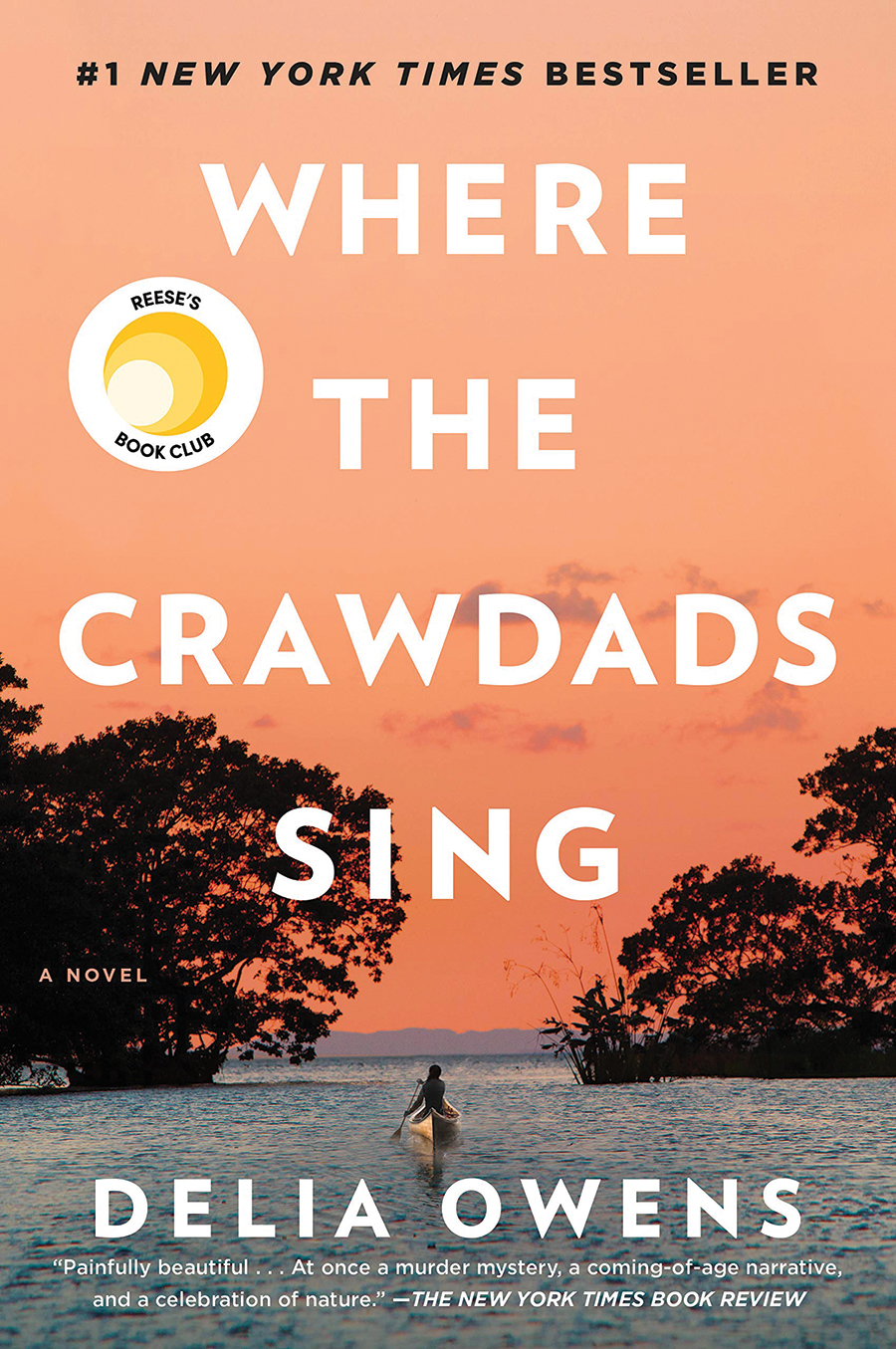
For almost a year now, Delia Owens’ Where the Crawdads Sing has been at the top of The New York Times best-seller list, usually at No. 1.

North Carolina likes to be first at everything. Freedom. Flight. Basketball. Books. So, some of us have been bragging because Crawdads is set in North Carolina. Most of the action takes place in the fictional coastal town of Barkley Cove and the surrounding marshes, coves and ocean waters. There are side trips to real places such as Greenville and Asheville.

Others complain that the book’s geography is confusing, that the main character is unbelievable, that the framing of the African-American characters and their dialect is faulty, and that the storyline is broken and contrived.

However, the book’s many fans argue that Crawdads is genuine literary fiction in light of its strong and lovely descriptions of nature’s plants and creatures. They continue with praise about the book’s compelling murder mystery that has an unexpected ending and gives readers a superior entertainment experience. They applaud the coming-of-age story of the book’s central character, Catherine Clark, or “Kya.”

Kya was abandoned by her family as a child and lived alone in a shack in the marshes miles away from town. People in Barkley Cove think she is weird, keep their distance, and call her “the Marsh Girl.” She spent only one day in school and cannot read or write. However, because she is smart and diligent, she learns about the nature of the marshes.

When Kya meets Tate Walker, a young man from Barkley Cove, he senses her strengths and shares her love of plants and animals. He teaches her to read and write. They fall in love.

When Tate leaves Kya behind to study science at UNC Chapel Hill, she is devastated. Later, she rebounds to the seductive charms of Chase Andrews, a town football hero and big shot. Their secret affair is interrupted by Chase’s marriage to another woman, and Kya is again distraught.

Overcoming these disappointments, Kya leverages her reading, writing and self-taught artistic talents to record the natural world that surrounds her. When Tate, now a scientist, returns to her life, he persuades her to submit her work for publication. The book is a great success, and she writes and illustrates several more.

All this is background for the story that begins when Kya is grown and her former lover, Chase Andrews, is found dead at the bottom of an old fire tower. Kya is a suspect and is ultimately charged, arrested, put in prison and tried for Chase’s murder.

The evidence against her seems flimsy at first. But incriminating facts pile up, including her angry response to the married Chase’s attempts to seduce her. But she has a strong alibi. The author’s deftness in setting up this situation, and resolving it smoothly, has helped make it a best-seller.

A remaining mystery is how and why Owens, the author of two successful non-fiction books about the African natural world, came to write Crawdads.

After studying and writing about animal behavior, as she explained on UNC-TV’s North Carolina Bookwatch in September, “I wanted to write a novel about how much we know about how animal behavior is like ours. It can help us learn about ourselves. So I came up with this idea of writing this novel about a young girl who is forced to live outside of a social group. She’s abandoned. She’s never totally alone, but she has to spend a lot of time alone, and how does that affect her behavior? That is the question of my novel. Because Kya doesn’t have any girlfriends, she is missing something. She’s lonely, she’s isolated, and when people are forced to live in that sort of situation they behave differently.

“Kya was raised in the wild coastal marsh of North Carolina. She was born in the 1940s and lived through the 1950s and on, and so I chose the marsh because she is mostly abandoned by her family. She has to live most of the time by herself. I wanted the story to be believable, and the marsh is a temperate climate so she could live, she didn’t have to worry about snow or freezing, and she had a shack. She could survive because you can truly walk around and pick up mussels and oysters. I know it’s not easy, but you can learn to do it. It was possible for her to survive in that environment. That’s the reason I chose it.”

Owens, who spent much of her life in the wilds of Africa, far from any other human, explained, “There’s a lot of me in Kya: girl, love of nature, live in the wilderness for years, feeling like I don’t belong anywhere. There’s a lot of me in Kya, but there’s a lot of Kya in all of us.”

She says that being totally alone changes a person. “When I was isolated in Africa all those years, I wanted to have social groups. I wanted to have more contact with people. But when I came back, I found out it’s not so easy just to do it. And that’s what happens to someone who’s isolated like Kya. She longed to be with people, but every time she had an opportunity she was shy and didn’t feel socially confident.

“One of the points of the book is that you do not have to live in a marsh to be lonely. A lot of people in cities are lonely. A lot of people in small towns, even though they have friends, are lonely because we don’t have the strong, long-lived groups that we used to have. And when we get away from that, not only do we feel less confident and lonely, but we also behave differently toward others.”

How does Owens make a story out of an isolated young woman who lives in a shack in the marsh?

“I came with the theme first. I wanted to write a story of a young girl growing up alone and how isolation would affect her, but I knew I couldn’t just write that story. It had to have a love story, and it’s a very intense love story. It’s a very compelling, I hope, murder mystery. Of course when Kya reached adolescence, she reached the time that she wanted to be with other people, she wanted to be loved. So she started in her way reaching out, at least watching, and there is sort of a love triangle that follows that is very intense.”

Will there be a movie? Crawdads gained the attention of actress Reese Witherspoon. Fox 2000 has acquired film rights and plans for Witherspoon to be the producer.

We can hope that the movie will be shot in North Carolina. But here the book’s problem jumps up. The geography described in the book, with palmettos and deep marshes adjoining ocean coves, seems to fit South Carolina or Georgia coastal landscapes better than North Carolina’s coastlands.

Nevertheless, whatever the moviemakers decide, North Carolinians can bask in the reflected glory of a No. 1 best-seller that claims our state for its setting.  PS

D.G. Martin hosts North Carolina Bookwatch Sunday at 11 a.m. and Tuesday at 5 p.m. on UNC-TV. The program also airs on the North Carolina Channel Tuesday at 8 p.m. To View prior programs go to http://video.unctv.org/show/nc-bookwatch/episodes/