In the Spirit

Home Alone

Lost in quarantine

By Tony Cross

Welcome back for another installment of Solitary Confinement. I’ll be your host.

As I type, I’m still locked down, but it seems some restrictions will be lifted soon with three or four phases gradually reopening different types of businesses. If all goes exactly as planned, restaurants should be allowed to let guests come in and dine sometime early this month. That’s a big “if.” Since, realistically, we could still be fending for ourselves well into mid-June, I’m going to recommend a few more drinks that you can make at home with your spouse, or by yourself.

Please remember that our ABC stores are open, and they carry many local distilleries’ spirits. Although I’m only naming two for the recipes below, also look for the following: Durham Distillery, Instill Distillery, Fair Game Beverage Company, Fainting Goat Spirits, Doc Porter’s Distillery, Crude Bitters (available in Nature’s Own and Triangle Wine), Muddy River Distillery, and many more. They thank you. I thank you.

Negroni

I’ve probably mentioned before about my first interaction with Campari. It didn’t go well. “That’s freaking gross,” I’m sure I said. Well, what the hell did I know? I was still smoking a pack a day, I flipped my hair (which I still had) up in the front like Tin-Tin, and fast food was dinner five or six nights a week. When I got my act together and started taking better care of my body (the hair was a lost cause), a few things happened: I felt better, and my palate expanded like you wouldn’t believe. I fell in love with certain vegetables that I never enjoyed before and started to fall in love with all things bitter. Bitter foods, bitter beer, bitter women, and yes, bitter spirits, especially amari.

Author Brad Thomas Parsons says in his book Amaro that “the ingredients of Campari, one of the world’s most famous amari, remain a closely guarded secret, with the only two known ingredients being alcohol and water. Beyond that, the recipe is based on an ‘infusion of herbs, aromatic plants, and fruit in alcohol and water.’”

I think you either love Campari or you don’t. I don’t think I’ve ever met anyone that’s in the middle. My favorite cocktail to make with Campari is the Negroni. In my opinion, it’s one of the best cocktails to have before dinner. It really wakes up the palate. This is an extremely easy cocktail to make. You’ll need three ingredients: gin, Campari and sweet vermouth. Four, if you count ice. For the gin, I stand by Sutler’s Spirit Co. out of Winston-Salem. I’ve written about Sutler’s a bunch, so take my word for it, it’s a lovely gin that’s not juniper-forward. For the sweet vermouth, I recommend Carpano Antica from Italy (also available at Nature’s Own). Traditionally, the recipe calls for equal parts of all three ingredients, but I like to up the gin a touch, so here we go:

Take 1 1/4 ounces of gin, and put it into your rocks glass (yes, we’ll be building this cocktail). Add 3/4 ounce of Campari, and 3/4 ounce of the sweet vermouth. Add ice, and stir until the cocktail is nice, cold, and properly diluted. All that’s left is the garnish. You can take an orange wedge and drop her in, or you can take the peel of an orange and express its oils over the cocktail and discard the peel into the drink. Either way, it’s one helluva way to start the evening. Or afternoon. Or morning (you know who you are, quarantine champs).

Westside

This is one of the first cocktails I learned how to make when I was trying to make heads or tails of the cocktail business. Also extremely easy to make, it just has a few more ingredients. This drink is a spin on the classic Westside, subbing vodka for gin. The Westside was created at the bar Employees Only, in New York City. My first crush was with these folks — their whole ideology of creating drinks, setting the mood, etc. Anyway, before I start getting too awkward, here’s the drink:

The original recipe calls for a Meyer lemon-infused vodka, but this will definitely work with TOPO vodka (out of Chapel Hill). You’ll also need cold sparkling water (Mountain Valley or die), mint, a lemon, rich simple syrup, ice, and a cocktail coupe (or martini glass). Before you start making this drink, place your coupe glass in your freezer, so it’s nice and cold by the time you’re ready to pour. Take 4-5 mint leaves, and break them in half, putting them into a cocktail shaker. Next, add 1/2 ounce of rich simple syrup (two parts sugar, one part water). You’ll take 3/4 ounce of fresh squeezed lemon juice, and finish with 1 1/2 to 2 ounces of vodka. Add ice to your shaker, seal it up, and shake hard for about 10 seconds. Take your coupe glass out of the freezer and place it on the table. Before you strain this cocktail into the glass (or double strain if you want to keep as much mint from entering the glass as possible), you want to add a splash of the sparkling water to your shaker. Bubbles! OK, now strain. You can garnish this drink with a very thin slice of lemon, or nothing at all. These go down pretty quick, so imbibe responsibly. Just kidding, you’re grown up; you’re in own house; the world is set on “virtual.” What have you got to do? Go to town.  PS

Tony Cross is a bartender (well, ex-bartender) who runs cocktail catering company Reverie Cocktails in Southern Pines.

The Kitchen Garden

Return of the Victory Garden

Idle time can lead to busy hands

By Jan Leitschuh

Got time on your hands? Matt and Betty Kuhn did.

They tired of a patch of overgrown blackberries at their Whispering Pines home. They were planning to “do something with it” — someday.

“Then, COVID came along,” recalls Matt. “Betty and I were cocooning at home, and the garden project just popped right up.”

Out came the blackberry tangle. In went, not shrubbery, but garden produce — six varieties of tomatoes, green beans, okra, several kinds of peppers, onions, herbs and garlic.

“Our little COVID-19 Victory Garden,” he says.

In these slower, socially-distanced times, many of us find ourselves sticking closer to home. And suddenly, little produce gardens are popping up where before there were none.

It makes sense for spring 2020. In a flash, we had extra time on our hands. We boned up on simple ways to strengthen our immune systems, from vitamin D to eating a healthy, whole-food diet. The siren call of spring drew us into the sun. We found a renewed enjoyment in going outside, even if it was the backyard. We eyed a sunny spot and began to muse about ripe tomatoes and crisp cukes, pungent basil, watermelon, beets and beans.

At the same time, we were seeing headlines highlighting incredible waste — dumped dairy, produce rotting in the fields, meat-packing plants shutting down, supply chains upended due to the global coronavirus pandemic. Going to a grocery store became an undertaking requiring masks and disinfectants.

We found ourselves ordering seeds and produce plants. Not to replace the grocery store. A little plot of land in the backyard, that’s something we could control in unsettled times. A distraction that could land on a plate.

These and other factors are at play this year, creating what some news reports are calling “the return of the Victory Garden.” National online retailers are reporting seed sellouts and up to a 300 percent increase in sales, with local sellers mirroring that demand.

Food. It’s not just for farmers anymore.

Making light of that which unsettles, one social media meme goes: “We are thinking of planting a garden in case of food shortages. Anybody have any Snickers or Cheetos seeds?”

Despite stores nationally keeping plenty of food on the shelves, runs on certain items may have spooked a few consumers. “I think there are a few people who worry about there being enough in the grocery store — in case the trucks can’t get through or the farmers can’t make do,” says manager Dawn Bowden of Sandhills Feed Supply of Southern Pines. “So they are trying to do a little of their own.”

Backyard produce is nothing new. During World War I, when a severe food crisis emerged in Europe, American citizens were asked to help by growing and preserving some of their own produce. The National War Garden Commission was organized to encourage Americans to contribute to the war effort by planting, fertilizing, harvesting and storing their own fruits and vegetables — that way, more food could be exported to our hungry allies.

No longer confined to rural fields, a kitchen garden habit took root in towns across America.

Victory gardens resurfaced again in World War II. With commercial crops sent to the military overseas, and the 1942 introduction of food rationing, Americans were once more urged to grow their own fruits and vegetables. My parents never lost the habit of those war years, and passed their love and knowledge of kitchen gardening along to me. Naturally, I applaud the recent enthusiasm to stick a tomato or three in the ground.

While there is no government campaign for Americans to utilize idle land to grow produce for themselves, an increased interest in food gardening has emerged again, just as it did in the tough economic times between 2008 and 2009.

Locally, the kitchen garden trend is booming.

“Our veggie plant sales have increased dramatically, and seeds have sold more than ever this year,” says Megan Gulley of Gulley’s Garden Center in Southern Pines. Popular sales include “lots of tomatoes, of course, but also peppers,” she says. “Cucumbers are flying out. Cantaloupe and watermelon are popular, especially for the kids.”

Plant and seed sales at Aberdeen Supply Garden Center have also been “through the roof,” says manager Brian Smith. “We cannot keep everything that everybody wants in stock,” he says. “We’re just selling our stuff so fast.”

The garden story is the same everywhere. “Sales have, I’d say, doubled,” says Bowden. “We’re already at what we’d sell for the year, and its only April.”

The local response doesn’t seem to be some homesteading survivalist urge so much as simply “time on their hands at home,” says Gulley — and pursuing that craving for the taste of fresh produce. Sure, people may have been a little spooked by empty supermarket shelves early on, but taste and time seem to be leading this resurgence.

“We’ve been thinking about this for some time,” says gardener Kuhn, “but never got around to it. You can’t beat the taste of a vine-ripened, homegrown tomato, period. “

That gift of time led to their garden. “We were comfortably and happily ensconced here,” says Kuhn. “COVID came along and gave us the added incentive and time to do it.”

And, with lots of family togetherness, parents and grandparents are looking for projects to share. “We are seeing people bringing their kids in,” says Gulley. “Parents who want to show kids how to grow their own food.”

Bowden agrees: “We’ve seen a lot of grandparents who are keeping grandchildren, so they are buying seeds to show the kids this is where food comes from, so they learn it doesn’t just show up in the grocery store magically.

Most noticeable is the uptick in newbies.

“We are seeing a lot of first-time vegetable growers,” says Gulley. “People approach us and say, ‘I have no idea how to grow a tomato.’ And they are doing it right, too, using good soil and mushroom compost, and starting small, maybe a 4 x 12 area, so as not to get overwhelmed.”

Aberdeen Supply’s Smith agrees: “We’ve had a number of people who say it’s their first time planting a garden.”

Bowden, of Sandhills Feed Supply, says that “with people who have never planted in their life, we try to guide them through it. We have a lot of people just trying out a tomato or a cucumber. And they are planting flowers too, because they want something cheerful to go along with it.”

Smith likes the raised bed kits because they are simple and manageable. “I think it’s the easiest to start with,” he says. “It’s neat, and contained.”

While he’s not a first-timer, Gabe Nickle of Southern Pines hasn’t grown produce in a long while. He chose to set up a raised bed in the backyard. “I haven’t had a vegetable garden for years. Since I had time around the house, I set one up.”

In his 6 x 8-foot raised bed, he first limed the acidic ground beneath, then filled the frame with mushroom compost. In went four tomatoes, two zucchinis, a cucumber, a jalapeño, eggplant and some beans: “I’m looking forward to a Mr. Stripey tomato in a few months,” he says.

For those without a garden, a few large 5-gallon pots, carefully watered and fertilized, could house tomatoes. Cucumbers or even cantaloupe could trail around deck railings. A sunny window box could hold a pungent and antioxidant-rich mix of herbs such as thyme, basil, sage and oregano, or even host a crop of green beans.

Come fall, crops can be switched to collards, onions, arugula, carrots, chard, bok choy, cabbage and lettuces, and to planting garlic, spinach and strawberries like Chandler and Sweet Charlie for harvest the following spring.

But for now, the simple pleasures of working in the summer garden may be enough. “It’s a fun pastime for me,” says Nickle.

Kuhn is thinking of issuing a tomato challenge to his friends and family. “We expect our Virus Victory garden to bring us much joy through summer,” he says.  PS

Jan Leitschuh is a local gardener, avid eater of fresh produce and co-founder of Sandhills Farm to Table.

The Accidental Astrologer

The Accidental Astrologer

Ground Control to Major Tom: Control Yourselves! June’s stars encourage restraint

Gemini (May 21–June 20)

Sugar, you really oughta seal those lips. You cannot stop yourself, and impulse control is the thing you need most. Try a glue stick instead of ChapStick. Itching to take a frying pan to your lover’s noggin? Pop some bubble wrap instead.

Cancer (June 21–July 22)

Aunt Tipsy and Uncle Toasted have not exactly modeled good behavior for you. Bonkers, Baby. So now that you’re all grown up, you are finding your own way. You are wiser and stronger than you know. 

Leo (July 23–August 22)

Just ’cause you’re a jungle cat, don’t mean you need to act like a house cat in the litter box. Right about now, you have dropped something stinky right in the midst of a situation that needs some air. Restrain from adding one more thing to a volatile mix, Pretty Kitty. 

Virgo (August 23–September 22)

What was it, Honey? A sugar rush to the brain? Did you two have a magical connection over Cinnabons? Sugar and cinnamon are sheer bliss together, but not much more than a passing fancy that will melt away.

Libra (September 23–October 22)

It ain’t all that deep, Sweet Pea. Truly, all who wander are not lost. Some are just looking for the restroom. It is not a month for you to play traffic cop and be a master of the universe. It’s a month for you to just master yourself.

Scorpio (October 23–November 21)

Sugar, don’t be so judgy. Grandpa Hornblower used to say that even the good Lord had a great fish story. Someone close tells a lot of tall tales, but let it slide. They just want you to believe they’re worthy.

Sagittarius (November 22–December 21)

Cornbread ain’t square unless it’s store-bought, and best made in a seasoned cast-iron skillet. You’re as country as hominy grits but nobody knows because you polished all the rough corners and are seasoned just right.

Capricorn (December 22–January 19)

Let’s pretend you go to McDonald’s for the carrot sticks. That you like dressing up for church. And that you love being a grown-up. Stop pretending. Time to kick a can, twirl a hula hoop, be a kid, and get down and dirty.

Aquarius (January 20–February 18)

Slim chance, fat chance, pick the difference, Sugar. It don’t matter. Do the thing that is true, and stop the BS.  If the virus taught us anything, it taught us that time is too precious to deceive ourselves. Risk something.

Pisces (February 19–March 20)

You’ve made yourself humorless with rule-keeping. Lighten up! A balanced diet is chocolate in both hands. Honey, cut yourself some slack because the one who needs to control themselves ain’t affected when you don’t.

Aries (March 21–April 19)

If you could make everyone happy in life, you’d be a wine box. But what you are is not exactly an endless fountain of joy juice. Baby Doll, sometimes you get so intractable that you lose yourself in the argument.

Taurus (April 20–May 20)

That thing that someone did really scrambled your eggs, didn’t it?  They messed in your business and you don’t know if you can forget it. Sugar Booger, let it go. You have a much bigger surprise coming.  PS

For years, Astrid Stellanova owned and operated Curl Up and Dye Beauty Salon in the boondocks of North Carolina until arthritic fingers and her popular astrological readings provoked a new career path.

Golftown Journal

Trolley Line

The push and pull of golf

By Lee Pace

They are known as push carts, pull carts, caddie carts and trolleys. They are revered in some locales (e.g., the United Kingdom) and sniffed upon at others (many high-brow American clubs). They began as simple devices made of lawn mower tires mounted on a steel chassis and have evolved into high-tech gadgets powered by batteries and in some models with hands-free remote control.

But these gizmos that allow a golfer to walk the course but not have to carry his bag or employ a caddie are a key part of the walking landscape.

“At many clubs, players choose the carts because they are annoyed by the kid who smirks when a shot is missed,” noted a 1941 issue of Golfdom magazine.

“Caddies are scarce. Caddies are small. Caddies are arrogant,” noted another article.

Advertisements in Golfdom prove that these carts were available in the late-1930s and into the World War II years, when labor for caddies was restricted. One of the early models was dubbed the Kaddie Kart. Another early cart was conceived by Bruce Williamson in Portland, Oregon, in 1945, and evolved into the company that manufactured the Bag Boy Cart, which is still in existence though under a different owner.

“First a player will timidly try one and may feel a little self-conscious rolling the little cart along the fairways, but then he finds himself fresher and feeling better after his exercise,” a 1947 Golfdom article noted. “His shoulder does not ache and his scorecard shows better results.”

Sunningdale Golf Club outside London is a bucket list course for me, and a couple of years ago I noticed a Tweet from noted golf photographer David Cannon that showed Ernie Els and three golfers posing under a big tree outside the Sunningdale clubhouse. What caught my eye was the background — easily two dozen trolleys with bags on them idling between the building and the golf course. That’s the United Kingdom for you.

They hate “buggies,” as they call motorized carts. But they love “trolleys.”

“I don’t accept this stigma that a push cart is beneath a private club, because you go to Scotland and Ireland and Australia and all the top clubs have them,” says architect Gil Hanse.

“You can take a trolley at probably every course on the British Open rota, but you can’t at many of our top clubs in the States,” says former USGA Executive Director David Fay. “Something doesn’t add up.”

Trolleys are generally lumped into two categories: push carts have three wheels and pull carts have two. They are allowed today at top-rung golf destinations like Pinehurst, Bandon Dunes, Cabot Links and Streamsong, though policies vary on whether you can bring your own or use/rent one provided by the club. 

Through the 1970s and ‘80s, as batteries and gas overtook the human gait as the preferred means of traversing a course, Pinehurst Resort and Country Club remained true to its traditional roots by offering a “Walking Club” to members who gathered in the afternoons to walk and carry their bags on No. 2. Fay used the program as a template for a similar program the USGA instituted in the 1990s to encourage walking across the nation.

Thankfully, the walking tradition has been healthy at most courses in the Sandhills. Pinehurst maintains a thriving caddie program, and certainly a popular bucket list item for many golfers is to play No. 2 with a caddie. Members have been allowed for quite a while to walk any course at any time, and the resort in 2017 green-lighted hotel guests the option to walk and carry as well. Now push carts are available on all courses, including No. 2 and the recently redesigned No. 4. 

“We felt like walking is an important tradition in golf and something we should support,” says Director of Golf Ben Bridgers. “The trend has really changed the last few years. We’re seeing a lot of people grabbing their bag, throwing it over their shoulder or taking a pull cart. It’s pretty awesome. I played No. 4 recently, and that day you saw people carrying, taking a pull cart and taking caddies. Not many people walked No. 4 before the restoration. It’s going back in time; it has more of an old-time Pinehurst feel.”

Trolleys have become more prevalent in junior golf and college golf since 2008, when the American Junior Golf Association announced it would allow them in its competitions. Research by noted golf training entities such as the Titleist Performance Institute has revealed concerns about the constant grinding on the back and shoulders of golfers who carry their bags. 

“Carrying your clubs not only places a huge amount of compressive force on your spine, but also causes lactic acid buildup in the surrounding muscles, causing fatigue and injuries,” says Dr. Josh Nelson, a sports chiropractor and TPI consultant. 

Stanford University men’s golf team proved that push carts were here to stay on the collegiate golf level in the 2014 NCAA Championships when four of five Cardinal golfers used them. Stanford’s Cameron Wilson won that year’s individual title pushing a trolley. 

At the PGA Merchandise Show in Orlando in 2018, I met Thomas Reiter, who formed a company called Big Max Golf in 1994 at first to service golfers in Germany and Austria and then expanding across Europe. Reiter named the company after his first-born son, Max, and started with a two-wheel pull cart. But he soon noted the stress that the pulling motion placed on the arm and shoulder. 

“We were the first to weld a third wheel onto the two-wheel cart and turn it around,” Reiter says. “It was a simple change, but one that nobody had ever done before. It was less stressful on the arm, and it was easier to direct with the cart in front of you. We’d created the first three-wheel folding push cart.”

I tested the company’s flagship cart, the IP Blade, on several rounds in July 2019 and came away impressed with the engineering and the benefits of pushing a cart. The IP Blade fits compactly in the trunk of a car, folding to roughly 3-feet long by 2-feet wide by 3-inches deep. You take it from the car, and the three wheels fold out and the center console pops up. You adjust one lever to lock the console and you’re ready to go. The cart holds golf bags of any size with attachments high and low to keep the bag secure. There is an attachment for an umbrella and places to hold scorecards, tees, a GPS device and water bottle.

The cart pushes smoothly and can go almost anywhere you want to walk, though certainly not through traps or across greens. After 18 holes, my lower back wasn’t as sore nor my right shoulder stressed.

The company has been the leading trolley manufacturer for two decades now in Europe, where Reiter estimates 95 percent of golfers walk, and is gaining traction in the United States after opening a facility in Tacoma, Washington, in 2014. 

“We are trying to get golfers to realize that carrying your golf bag is bad for your body and your game,” Reiter says. “You don’t see Tour players carrying their bags around, do you?  By pushing a cart, you have time to contemplate your next shot, and you have more energy left over the closing holes. If you want a long, good golf career, you need to take good care of your body.”

The trolley has become more relevant in the golf world today in the wake of the COVID-19 pandemic that has ravaged life in general and the golf universe in specific over the spring of 2020. Many of the courses that remained open restricted use of motorized carts, acknowledging that “social distancing” is more easily practiced by golfers walking a fairway. Forest Creek Golf Club, for example, remained open but required golfers to walk, and many members embraced the use of a push cart, which had previously not been allowed at the 36-hole facility 3 miles northwest of the village of Pinehurst. Coming out of the quarantine, the club is now allowing permanent use of push carts. 

And Big Max Golf saw a remarkable 800 percent jump in year-over-year unit sales of its Fold Flat push carts in March in states where golf was allowed during the pandemic. 

“One of the things I hope comes out of this is that more people will enjoy the walking game,” says Pinehurst President Tom Pashley. “I think that can be a nice outcome — more people walking the golf course.”  PS

Chapel Hill-based writer Lee Pace has written a book about the joys of walking some of the top courses in the Carolinas; the book is due out in 2021 from UNC Press. 

The Omnivorous Reader

An Honest Day’s Storytelling

Finding truth in Lee Smith’s fiction and nonfiction

By D.G. Martin

Some North Carolina writers say that it is easier for them to tell the truth in fiction than it is in nonfiction. In nonfiction, the facts can bind up authors so tight that it is hard for them to deliver the truth.

The two most recent books by North Carolina’s beloved novelist Lee Smith give us a chance to compare her “truth-telling” strengths in her fiction versus her nonfiction writing. Her most recent book, Blue Marlin, which came out in April, is fiction, while her memoir, Dimestore: A Writer’s Life, was published in 2016.

The main character and narrator of Smith’s Blue Marlin is a young teenage girl dealing with growing up, religion, boys and the troubled mental health and marital problems of her parents. Much of Dimestore, Smith’s only nonfiction book, deals with the same topics in the context of the real life experiences of Smith and her parents. 

Blue Marlin is short, about 120 pages, each filled with Smith’s warm and sympathetic storytelling gifts and characters who reach out and remind us of people we knew growing up. 

In the book, the Lee Smith-like character, Jenny, age 13, discovered her beloved small-town lawyer dad was having an affair. Soon everybody in town knew. Her dad moved out of their home. Her depressed mom sought treatment at a hospital in Asheville. After a time, her parents decided to try to put their marriage back together on a trip to Key West, Florida, with Jenny.

Riding to Key West in the back seat of her dad’s new Cadillac, Jenny began a list of good deeds she would do on each day of their trip, “which ought to be enough,” she thought, “to bring even Mama and Daddy back together.” But, will the time in Key West do the job?

Their motel, the Blue Marlin, was a positive, not just because of its swimming pool and waterslide. The motel was occupied by a movie crew, including actor Tony Curtis. Jenny and her mom were big movie fans and read the fan magazines together. They “squealed together” over Curtis. Things were off to a good start.

Jenny settled into Key West. She walked the streets, visited the sites, made friends with the locals, and did her good deeds every day. But she’s not sure her good deeds are working. “My parents were endlessly cordial to each other now, but so far they had never slept in the same bed. I knew this for a fact. I checked their room every morning.”

To find out whether Tony Curtis’ help and Jenny’s good deeds could bring about real marital reconciliation, you will have to read the book, but Smith leaves clues in the afterword.

Following a real family trip to Key West to help her real parents’ troubled marriage, Smith writes that the Key West cure worked. “Mama and Daddy would go home refreshed, and stay married for the rest of their lives.” She writes that of all the stories she has ever written, “this one is dearest to me, capturing the essence of my own childhood — the kind of unruly, spoiled only child I was; the sweetness of my troubled parents, and the magic essence of Key West, ever since January 1959, when these events actually occurred.” Smith cautions her readers that not all the events in her book happened, describing it as “autobiographical fiction, with the emphasis on fiction.” 

She explains, “I can tell the truth better in fiction than nonfiction.”

A few years ago when I read Dimestore, I thought her memoir’s real stories were, in some respects, even better than the wonderful ones she had told in her novels and short stories. 

Her descriptions of the real characters in her life were, like her fictional characters, compelling. Dimestore opened the door for her many fans to know her as well or better than her good friends do. 

It gave clues about how growing up in a small Appalachian coal mining town and spending most of her life working, writing and raising a family here in North Carolina have influenced her writing.

We learned that her seemingly idyllic childhood, with devoted parents, surrounded by loving members of an extended family, was also full of challenges.

In a chapter titled “Kindly Nervous,” Smith described the “immense anguish” her beloved father felt during his bouts of bipolar mania. 

But for Smith there was a bright side to her father’s condition, which he described as “kindly nervous.” When her father could not sleep, he would work all night at the dimestore he owned in downtown Grundy, Virginia. Smith often accompanied him to the store and slept on a pallet under his desk. In the morning, he took her to breakfast. “How I loved those breakfasts! I got to have my scrambled eggs and my own big white china cup of sweet, milky coffee alongside early-morning truckers and the miners who’d just worked the graveyard shift, their eyes rimmed with coal dust like raccoons.”

Her mother suffered, too, and was frequently hospitalized for depression and anxiety.

But, again, Smith emphasizes the bright side. “This is my story, then,” she writes, “but it is not a sob story. Whenever either of my parents was gone, everybody — our relatives, neighbors, and friends — pitched in to help take care of me, bringing food over, driving me to Girl Scouts or school clubs or whatever else came up.”

One time, both parents were hospitalized, her mother in Charlottesville. Her mother’s doctor invited the 13-year-old Lee to have lunch with him. “Our luncheon,” she writes, “remains one of the most memorable occasions of my youth.”

After a long formal lunch with lots of conversation about Smith’s love of literature, the doctor asked her if, because both parents were ill, she was worried about getting sick herself.

Smith replied, “You mean, if I am going to go crazy, too.”

When the doctor said, “yes,” Smith thought, “How did he know? Because that was exactly what I thought about, of course, all the time.”

The kindhearted doctor assured her that he was a good doctor and she seemed to be “a very nice, normal girl, and I am here to tell you that you can stop worrying about this right now. You will be fine.”

She was fine, and explains how such events can be blessings for an author.

“This is an enviable life, to live in the terrain of one’s heart,” she writes. “Most writers don’t — can’t — do this. Most of us are always searching, through our work and in our lives: for meaning, for love, for home. Writing is about these things. And as writers, we cannot choose our truest material. But sometimes we are lucky enough to find it.”

Is Smith’s “truest material” in her fiction or her memoir? I am not sure I know the answer. But one thing is certain, whenever she puts pencil to paper, the result is going to be moving, and honest.  PS

D.G. Martin hosts North Carolina Bookwatch Sunday at 3:30 p.m. and Tuesday at 5 p.m. on UNC-TV. The program also airs on the North Carolina Channel Tuesday at 8:00 p.m. and other times. To view prior programs: http://video.unctv.org/show/nc-bookwatch/episodes.

The Omnivorous Reader

The Delta Blues Legend Nobody Knew

A new biography of Robert Johnson comes alive with anecdotal details

By Stephen E. Smith

Biographers, musicologists and blues aficionados who’ve attempted to research the life and times of bluesman Robert Johnson have faced a daunting challenge: Not much is known about the elusive Johnson, who was born out of wedlock in Hazelhurst, Mississippi, in 1911, and whose lifeless body was found 27 years later in a ditch outside Greenwood.

All that remains of Johnson are a couple of photographs — and they don’t tell us much about his life — and a death certificate that lists only the date of his demise (Aug. 16, 1938) and the location of the body when it was found. And, of course, there are the 29 classic recordings, including 12 outtakes, of Johnson’s playing and singing what would eventually transform the man in a pinstripe suit holding a Gibson L-1 guitar into the definitive bluesman whose Delta style influenced a generation of guitar heroes.

Those are the available facts. The heart of the Robert Johnson legend, the details of how he lived and the appalling circumstances surrounding his death, are based on speculation, hearsay, rumor and outright invention, and despite a plethora of books, a feature film and a documentary or two, there’s been little primary source material available until the publication of Brother Robert: Growing Up with Robert Johnson, by Annye C. Anderson with Preston Lauterbach.

Annye Anderson is Johnson’s stepsister. She considers Robert “family,” although they weren’t blood relatives and were linked only by a convoluted mixing of broken relationships and communal living arrangements. Still, she managed to spend time with the great bluesman through her preteens, and she willingly supplies anecdotal details and insights into his life and personal habits. She also retells stories that were passed down to her from her extended family.

Given the dearth of information surrounding Johnson’s life, Anderson’s testimony is a welcome addition to the historical record, but the serious reader must be willing to take Anderson’s recollections at face value. Although there’s a chance of falling victim to a hoax, there’s no reason to believe that Anderson isn’t who she says she is. She supplies a summary of family relationships that link her to Johnson, and her intimate knowledge of the time and place in which Johnson lived is convincing enough. It’s reasonable to assume, or at least to hope, that Anderson’s collaborator, Preston Lauterbach, the author of three previous blues-related volumes, and the publisher, Hachette Books, have done their homework.

Anderson’s stated purpose is to “set the record straight.” Readers learn about Johnson’s daily routine in Memphis and details of his hoboing, his love life, his favorite foods, his preferred tobacco, and the divergent sources of his music.

Given the time and social circumstances in which he lived, Johnson was aesthetically middlebrow. “I know his (Brother Robert’s) repertoire pretty well,” Anderson writes. “He was blues, he was folk, he was country. Jimmie Rodgers was his favorite, and he became my favorite. Brother Robert could yodel just like he did. We did ‘Waiting for a Train,’ together. . . . And you name it. All the Irish songs he did, because in the South they used to sing lots of those songs: ‘Annie Laurie,’ ‘My Bonnie,’ and ‘Auld Lang Syne.’” Like many bluesmen of the period, Johnson played at juke joints, in parks, at rent parties and dances, and on street corners and front porches, but never achieved national recognition during his lifetime.

Typical of Anderson’s recollections is Johnson’s last visit at a family gathering on the evening of the Joe Louis-Max Schmeling fight. Johnson, guitar in hand, was decked out in a white sharkskin suit, Panama hat and patent leather shoes. “He was razor sharp when he dressed,” Anderson recalls. “He (Johnson) did ‘Terraplane (Blues),’ ‘Sweet Home Chicago,’ ‘Kind Hearted Woman,’ he and Son (Johnson’s half-brother) did ‘44 Blues’. . . . That night of the big fight was the last time I saw him.”

Johnson died not long after the Louis-Schmeling bout. “Everyone was in shock,” she writes. “He was dead two weeks before we knew. . . . We weren’t going to sing Jimmie Rogers together ever again, or sing ‘John Henry’ together anymore.”

The second half of Anderson’s memoir is a predictable tale of music-biz skulduggery. Johnson’s recordings went unappreciated until Columbia Records released King of the Delta Blues Singers in 1961. In the early ’60s, Steve LaVere, a researcher and promoter of blues artists, began to focus on the Johnson legend, making himself wealthy in the process. Anderson sums up seemingly endless controversy in one paragraph: “People say Steve LaVere made Robert Johnson a legend. No. Steve LaVere didn’t tell Eric Clapton about Robert Johnson. He didn’t tell Led Zeppelin or the Rolling Stones. Musicians already knew Brother Robert’s work before LeVere got into the picture. That’s the whole reason LeVere got involved. Those big artists had covered Brother Robert’s songs that nobody had copyrighted. Brother Robert was already a goldmine fifteen years before he won a Grammy. Steve LaVere caught on before anyone else, and we never caught up to him.”

As for the oft-repeated myth that Johnson sold his soul to the devil and the melodramatic stories surrounding his death by poisoning or from the ravages of congenital syphilis, Anderson dismisses it all, noting that people will say “anything for a dollar.”

Despite endless legal wrangling, Anderson and her half-sister Carrie Spencer never profited from Johnson’s belated success, and a sense of bitterness shades her memoir. In addition to setting the record straight, money is surely one of the motivations behind Brother Robert. Claud Johnson, who was ruled by the Mississippi Supreme Court to be Robert Johnson’s son, received over a million dollars in royalties in 1998. “My family lost all we worked for during the past twenty-five years,” Anderson writes. “You know, I was born at night, but not last night.”

Anderson supplies blues enthusiasts with a few mundane but revealing recollections that help flesh out the character of Robert Johnson, but we still lack a fully dimensional portrait. The man remains a mystery, a mostly fictive figure whose 29 recordings have had a profound influence on an essential American art form.  PS

Stephen E. Smith is a retired professor and the author of seven books of poetry and prose. He’s the recipient of the Poetry Northwest Young Poet’s Prize, the Zoe Kincaid Brockman Prize for poetry and four North Carolina Press awards.

PinePitch: Virtual Edition

In the immediate aftermath of the COVID-19 pandemic, many sites dropped their paywalls to allow unrestricted access. This likely won’t last forever, so don’t be surprised if the viewing at some of the destinations listed on these pages now comes with a price tag.

Casino Royale

Casino Guitars will continue its Musicians Matter series featuring local out-of-work musicians on Friday nights from 8 p.m. to 9:30 p.m. To tune in go to the Casino Guitars Facebook page. Venmo usernames will be posted during the livestream concerts for donations.

Standing ‘O’ from the Cheap Seats

On Wednesday, May 13, at 7:30 p.m., Maestro David Michael Wolff will present his third concert in a live streaming series launched together by Sandhills Community College and the Carolina Philharmonic. To join the audience for the piano-centric performance from an otherwise empty Owens Auditorium at the Bradshaw Performing Arts Center, simply go to www.carolinaphil.org and click the “play” button. The series will continue on May 27 at 7:30 p.m. with Ryan Book on the guitar. SCC piano instructor Kristina Henckel will also be performing in May. Details can be found at www.carolinaphil.org.

At the Sunrise

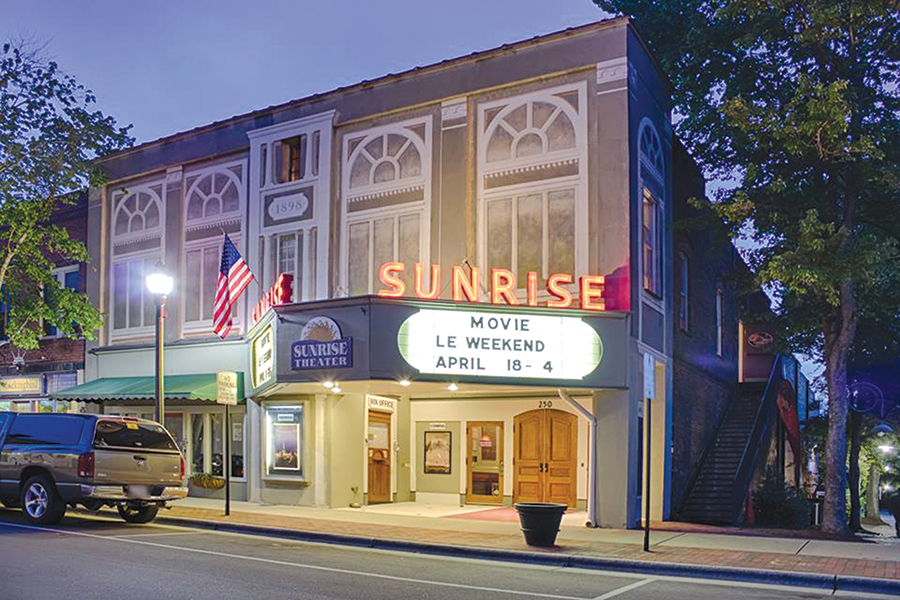
The Stay-At-Home Film Fest for locked-down Spielbergs has been extended for, well, about as long as we’re going to be locked down. Make a video re-enactment of a scene from your favorite movie or play and submit it. Keep it clean. For complete instructions, visit the Sunrise Theater website at www.sunrisetheater.com. At this writing, Good Shot Judy remains scheduled to give a live outdoor concert on May 23 at 7 p.m. The theater is also hoping to continue The Great Composer Series: In Search of Haydn at 10a.m. on Thursday, May 28. As Ronald Reagan said, “Trust, but verify.” In addition, the Sunrise will be continuing its Virtual Theater in May. Go to www.sunrisetheater.com.

Museums Galore

You’d be hard pressed to find a museum that isn’t doing some sort of virtual tour. What follows is just a smattering of what’s available online.

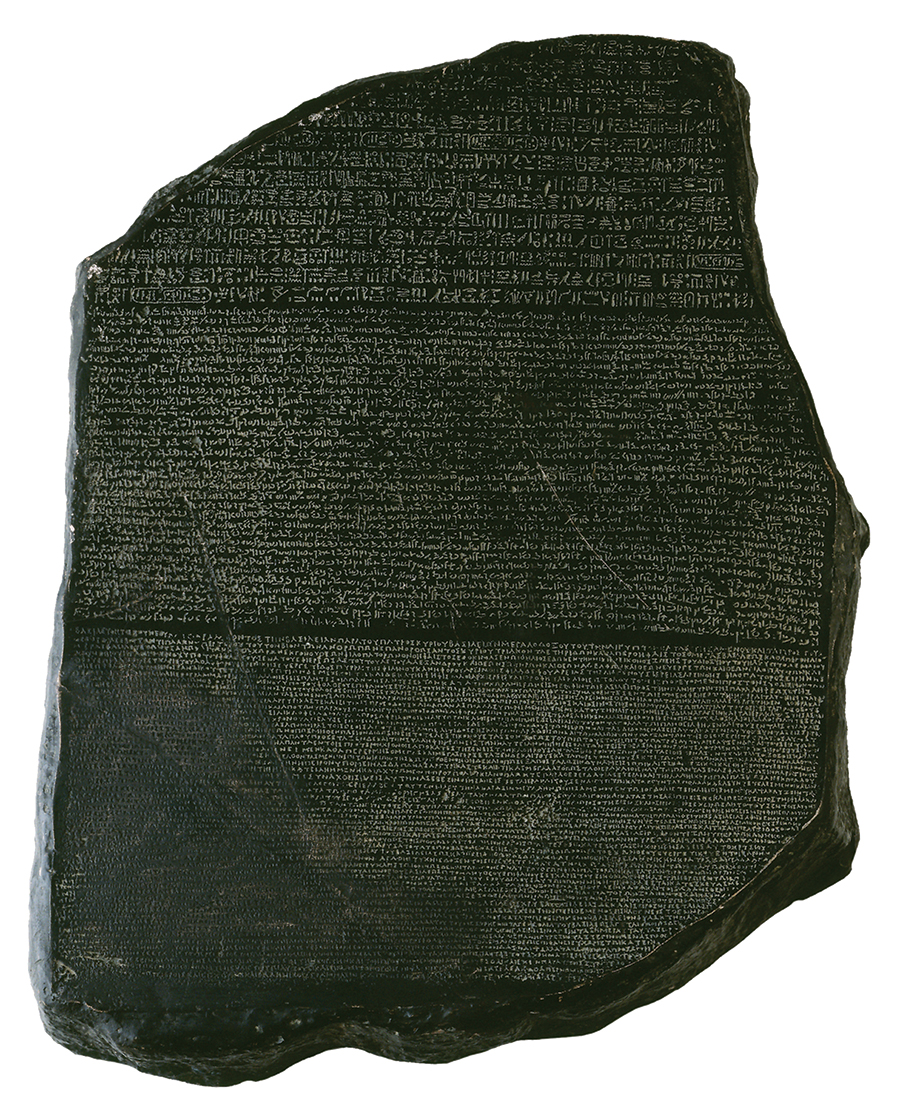
Want to see the Rosetta Stone and a few Egyptian mummies? Go to blog.britishmuseum.org.

Interested in a trip to Paris? You can visit the Musée de Louvre as long as vous acceptez l’utillsation de cookies.

Join “Degas at the Opéra” or “Raphael and His Circle” at the National Gallery of Art by visiting nga.gov.

If you simply can’t resist Paris in the springtime, you can make a return trip to the Musée d’Orsay at m.musee-orsay.fr to see “Whistler’s Mother,” Edouard Manet’s “Olympia” or Claude Monet’s “The Saint-Lazare Station” and more Degas, which is decidedly not the same as more cowbell.

So you think you are stuck in isolation? Have a look at “The Bedroom” in the Van Gogh Museum’s collection at vangoghmuseum.nl. Or maybe just stop by to check out the sunflowers.

What seems like about a hundred years ago, in April, all of America was worried about becoming Italy. But, even in these perilous times, you can visit the Uffizi Gallery in Florence. Botticelli. Caravaggio. Michelangelo. Leonardo. Virtualuffizi.com will let you book tickets.

And, in L.A., they come and go and talk of Michelangelo (Sincerest apologies, T.S.) at the J. Paul Getty Museum’s “Michelangelo: Mind of the Master” exhibit at www.getty.edu/museum.

Need more? Go to Google Arts & Culture for the motherlode.

Tar Heel Collections

Worried about being charged mileage on your gigabyte globetrotting tours of great museums? Stay right in your own backyard. At the North Carolina Museum of Art in Raleigh it’s possible to explore the collection virtually by going to ncartmuseum.org. Another feature, “NCMA Recommends,” highlights film, music and art from the collection. The Reynolda House Museum in Winston-Salem is producing “Call-a-Curator” to anyone on its email list where team members share their view on art and all things Reynolda. The Cameron Art Museum in Wilmington is currently giving a virtual tour of the photographs of well-known architect Phil Freelon in its exhibition: “Structure in Space and Time — Photography of Phil Freelon.”

Culture in Quarantine

The National Theatre Live, long a staple offering of the Sunrise Theater, will be releasing an encore performance every week in May on its YouTube channel. Find the list at either sunrisetheater.com or nationaltheatre.org.uk. In addition, the Metropolitan Opera has promised encore performances while the opera remains dark. That list is also available on the Sunrise website or at MetOpera.org. And, if you haven’t maxed out on baritones, you can always visit the Royal Opera House via Facebook or YouTube.

Montreux Jazz Festival and Boomer Rock

The Montreax Jazz Festival made over 50 concerts available to stream at no charge for 30 days. Included were performances by Ray Charles, Wu-Tang Clan, Johnny Cash, Nina Simone, Marvin Gaye and Carlos Santana. To find them go to stingray.com/FREEMJF1M and enter the code FREEMJF1M. At a higher altitude, Neil Young has allowed access to some of his “Fireside Sessions,” filmed at his house in Telluride, Colorado, by his wife Daryl Hannah at neilyoungarchives.com.

Take a Hike

Staying home is all well and good but if you feel the need to get out and explore you can do it safely by taking virtual tours — or watching live cams — at a number of National Parks, including Yellowstone at nps.gov. Other parks offering virtual tours are Yosemite, Denali, Kenai Fjords, Hawai’i Volcanoes, Carlsbad Caverns, Bryce Canyon and Dry Tortugas. Or, you can explore 35 of them on Google Earth. You’ll need a comfortable pair of boots and trail mix.

Get a Quick Art Fix

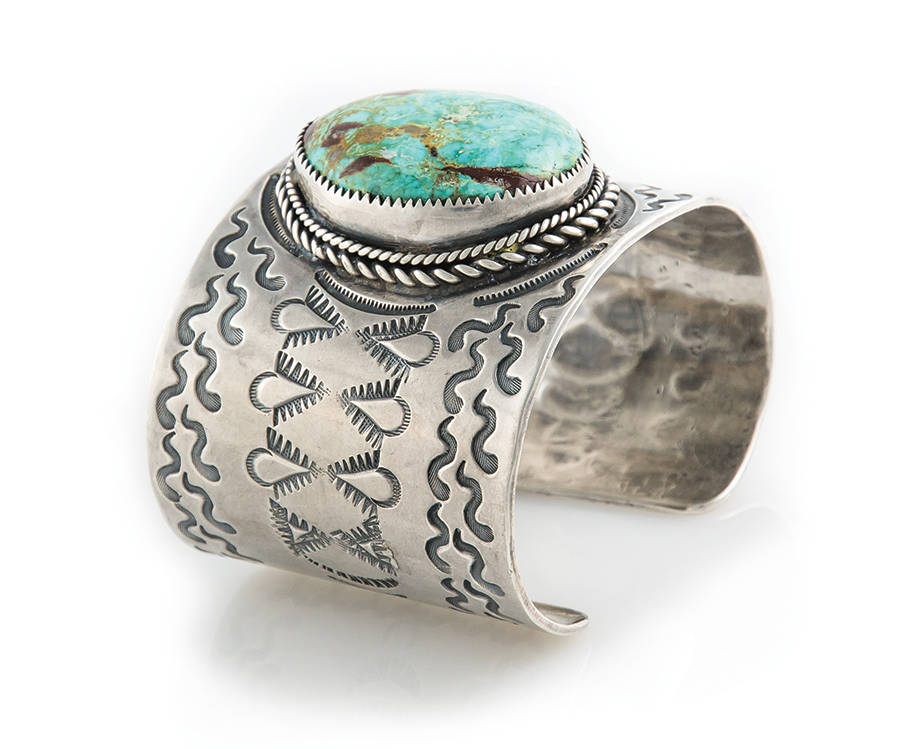
The Barnes Foundation in Philadelphia has been running short daily pieces featuring one of its curators talking about one of their favorite pieces of art in the extensive collection of over 900 impressionist, post-impressionist and modern paintings that include works by Pierre-Auguste Renoir, Paul Cézanne, Henri Matisse, Pablo Picasso, Henri Rousseau, Amedeo Modigliani, Edgar Degas, Vincent Van Gogh and Georges Seurat. The collection also features African masks, Greek antiquities, Native American jewelry and more. The “Daily Servings of Art” are available in bite-sized portions by going to YouTube and searching for “Barnes Takeout.”

In the Spirit

Rainy Day Cocktails

Always seem to know when it’s time to call

By Tony Cross

As I’m writing this, our state is going into a mandatory stay-at-home lockdown for folks who do not fall into the criteria of jobs considered “essential.” If you work at a grocery store, pharmacy, hardware store or even a bank, you can go to work if you choose. A lot of other folks must stay home.

This is the hardest column I’ve ever had to write. All of my friends in the restaurant/bar business are clinging to hope that this passes soon; most of them know it will not. I’m at a loss for words.

To say that these past weeks have been devastating would be a huge understatement and, in a way, somewhat disrespectful to those who have had their world flipped upside down. With that being said, a lot of people are staying home, which is good. Be responsible. A lot of you are stuck inside with your significant others. I feel for you, too. Hopefully, by the time you read this, we’ll no longer be hiding from a virus. But, just in case we are, here are some cocktails to make at home, while we’re trying to stay sane and keep hope alive.

I’m going to pick two spirits this month (bourbon and agave) and give a drink recommendation for each. If we’re still asked to stay at home a month from now, I’ll pick two more, rinse and repeat. So get out your jiggers, measuring spoons — whatever you’ve got — and try to have fun together, before you claw each other’s eyes out. As for me, all I can say is, “Cheers to being single!”

Bourbon

Besides drinking whiskey neat, there are myriad things that you can mix up at home, but for now we’ll stick with a classic. For those of you who come back to read this mess month after month, I know that I’m reposting this, but we may have some new friends tuning in.

Old-Fashioned

The definitive cocktail, right? Spirit, sugar, bitters and water. There ya go. Personally, I prefer a rye whiskey, but when you’re stuck at home, you play with the hand you’ve been dealt. By the way, I’ve been told that our local ABC stores are essential, so I guess things could be worse. Here’s how I build an old-fashioned when I’m home. I take my rocks glass and add a quarter-ounce of a rich demerara syrup. (To make that I stir together two parts demerara sugar and one-part water over medium heat until the sugar dissolves.) After the syrup, I add three dashes of Angostura bitters, one dash of Regan’s orange bitters, and one dash of Angostura orange bitters. Why two different orange bitters? Because I’m complex. No. Because the Regan’s is dry and the Ango is sweet. Together they bring an orange balance. If you are tuning in for the first time, I completely understand that now is the time you turn the page and read something else. No offense taken.

Add two ounces of whichever whiskey you’ve got on hand and give it all a quick stir. Next is ice. I use a large cube and stir for 50 or so revolutions, until the glass is chilled, and you feel the drink has been properly diluted. Remember, water is an ingredient, so make sure you stir. Then I’ll take a swath of orange and lemon peels, expressing oils over the drink, and put them in my cocktail. If you feel it looks good enough to drink, then do it.

Agave

It’s warming up. My favorite time of year is here, and it’s almost literally the only thing I’m smiling about these days. Margarita season is upon us. If you’re new to this column, first thing’s first: no store-bought mix. Ever. Take it out of your mind. It doesn’t exist. Here’s how to make a somewhat-decent ‘Rita from scratch. Grab a cocktail shaker. If you don’t have one, maybe you have a protein shaker. Not ideal, but who cares; you want a margarita, right? Add 3/4 to an ounce of fresh lime juice (you’ll need to squeeze your own) into the shaker. Take a rich simple syrup (refer to the old-fashioned recipe to make it yourself, but use white or cane sugar instead), adding a quarter or half-ounce to the shaker. If you like your margarita a bit sweeter, opt for the half-ounce. Add roughly a half-ounce of Cointreau (orange liqueur). If you only have triple sec, that will do. If you have none of the above, that’s OK, too. I’ll give you an alternative in a few.

Now comes the tequila. You’ll want a blanco tequila — it’s clear and unaged; light and crisp; perfect for margaritas. If you have a reposado, that will most definitely work as well. If you only have an añejo, I wouldn’t dare. Pour two ounces of the tequila into the shaker. Before you add ice, make sure you have your drinkware ready. If you’re having it on the rocks, make sure your glass is packed with ice. If you’d like to have a salted rim, take a lime wedge, and rim it around the glass. I recommend only rimming half of the glass; that way you can switch back and forth from a salted sip to a non-salted sip. If you’re having your drink straight up, make sure your coupe or martini glass has been in your freezer while you’ve been preparing it. Now add a lot of ice to your mixing vessel, seal it, and shake the hell out of it until it’s nice and frosty (if you’re actually using the protein shaker, you bro-shake it hard for about 10-15 seconds). Strain your margarita over ice or in your coupe. If you didn’t have an orange liqueur to add, you can take the peel of an orange, and spray the oils over the cocktail like we did with the old-fashioned. You can also add a lime wedge on the glass for a garnish, but I usually drink mine instantly and forget.

Stay well everyone.  PS

Tony Cross is a bartender (well, ex-bartender) who runs cocktail catering company Reverie Cocktails in Southern Pines.

Good Natured

Boost Your Happiness

Techniques to soothe the mind

By Karen Frye

The first quarter of the year has been a challenging time, more so than I can ever remember. We have ways to lift up our spirits when things seem uncertain and fear takes over our thoughts. Here are some suggestions that can make you feel better in just a few minutes.

Look at pictures of people and animals you love. Remember the enjoyable times you shared and send them a silent wish of happiness.

Exercise, even if only for a few minutes. Take a brisk walk, do jumping jacks — anything to get your heart rate up and, breathing deeply, more oxygen into your lungs. In one minute you will feel better.

Give someone money. Research shows that when we give money to someone in need, we immediately feel better about ourselves, and the other person will feel better, too, because someone cares.

Work toward a goal. It can be a simple task like organizing your desk (that always makes me feel better), or eating healthier foods. Feel good about your progress.

Remember the power of appreciation. Saying “thank you” to the people who work in public jobs — the grocery store checkout person, the server delivering take-out meals, the garbage collectors, the UPS driver — is a quick happiness booster.

Write down a few things that you are grateful for in your life. Your children, your pets, the food on your plate. When you write things down you have a visual reminder of all the goodness in your life.

Do a 90-second heart meditation. Take a deep breath and imagine exhaling from the center of your chest. Then close your eyes and imagine someone you love. Recall times you’ve shared with them and feel gratitude that they are in your life. This simple method can take you from stressed out to blissful in 90 seconds! It can reduce your stress hormones for up to five hours.

Play a song that you like, and sing along. This can lift you out of almost any bad mood.

Finally, the most effective way to quickly boost your happiness is to do an act of kindness for a stranger or a friend. Even the smallest acts have beautiful outcomes.  PS

Karen Frye is the owner and founder of Nature’s Own and teaches yoga at the Bikram Yoga Studio.

Golftown Journal

Splendid Isolation

Finding time to find the game

By Lee Pace

Long before COVID-, social distancing, tissue-hoarding and obsessive hand-washing gripped our very existences across America and beyond, I enjoyed a week of a self-imposed quarantine, specifically, the Thomas Wolfe Room at the Weymouth Center in Southern Pines.

In June 2019 I was fortunate enough to secure a week’s stay at the Weymouth Writers-In-Residence program, which has been running since 1979, when Sam Ragan, the center’s director, conceived the program. Given that Weymouth was once owned by novelist James Boyd, Ragan thought the rambling old mansion would be an ideal venue for North Carolina writers to hole up and work on their novels, poems, short stories, screenplays, what have you.

There should be muse in abundance amid these rooms and acres “where sparks of creativity could be struck,” in the words of Katharine Boyd, James’ wife.

After all, in this house Boyd conceived and wrote his acclaimed and best-selling book, Drums, a Revolutionary War saga published in 1925, and others like Marching On. Curiously, he didn’t type them or scribble them by longhand; he dictated them at a stand-up desk in a study that now serves as the N.C. Literary Hall of Fame room. And on this sprawling estate he and Katharine entertained literary giants like F. Scott Fitzgerald, Paul Green and Wolfe, who came for three days in January 1937. 

I had two golf books going at the time, so what better venue to percolate my thoughts? Five miles to the west was the first tee of Pinehurst No. 2, Donald Ross’ tour de force that has hosted three U.S. Opens, one Ryder Cup and a PGA Championship. One mile to the south was Southern Pines Golf Club, another Ross design with more than a century of history. Within a half-hour radius were nearly three dozen courses, from upscale private clubs designed by Tom Fazio at Forest Creek to idiosyncratic daily-fee designs like Mike Strantz’s Tobacco Road.

And just out my window was the land where over a century ago a nine-hole course called Weymouth Woods had been laid out.

“One of the finest private golf courses to be found in the state — perhaps the South,” it was described in 1910. “It is conveniently and beautifully located, a little east of the house, has a good turf and is as handsome as a framed picture.”

James Boyd was a noted Pennsylvania industrialist who bought the land in the early 1900s and created a 1,200-acre estate, naming it Weymouth in tribute to the seaside village in England. He commissioned the construction of the golf course (details on builder, designer and time frame are sketchy), but it eventually took second fiddle in town to Southern Pines GC, which was formed in 1906. In time the property passed to Boyd’s grandsons, Jackson and James, and James in the 1920s retreated to Weymouth and expanded the original home into the grand manor house that exists today.

The latter James Boyd was not a golfer, preferring equestrian and hunting sports, and founding Moore County Hounds, which exists today. He let the course go to seed.

“Golf is merely the most expensive and depressing form of pedestrianism,” Boyd wrote. “I know of no other practice, except the purchase and consumption of bad liquor, wherein good money can be spent for so pitiable a result.”

I beg to disagree, certainly, and spent my week at Weymouth reveling in the game to varying degrees, from spending the days with my fingers splayed across my laptop keyboard, and early mornings and evenings wrapped in this convergence of history, ambience and the spirit of golf. I brought plenty of reading material as well as a curious strap to work on keeping my arms and elbows connected should I hit some practice shots.

Early one morning I ventured down to Southern Pines GC with the idea of playing a quick nine before hitting the grind. I schlepped my bag on my shoulder and took off on the course completed by Ross in 1923, then remembered that the ninth hole doesn’t return to the clubhouse, a sure sign that the routing’s as pure as the land and architect’s eye would allow. No telling how many bad holes have been forced the last century by the purely American contrivance of returning the front nine back to the clubhouse.

It’s a brisk walk, the numerous inclines in the ground challenging my stamina, but the short distances from greens to tees of the vintage course giving some energy back. My game is properly tasked — trying to nail a draw on the par-5 fifth hole for extra carry, for example, and dial in short irons on the par-4 eighth and 10th. Nearly every green requires precision to imagine and execute a recovery if you’re off to the sides. The lake serving as anchor on the eighth through the 11th hole glistens in the early morning light.

At twilight several evenings I took a couple of golf clubs and balls out to the acreage where the golf course once existed, trying to imagine where the holes might have run, being mindful to hit away from the dog-walkers. Ah, that notch in the trees in the distance — what a nice spot for a putting green. Maybe a century ago that patch was covered with sand and clay before they learned to grow grass greens in the South.

And late into the evening I tucked into my copy of Michael Murphy’s 1972 cult classic, Golf in the Kingdom. The thesis of one of my writing projects was that golf is a game best played and enjoyed by walking, and though I’ve read the book a couple of times before, I wanted to re-read it with an eye toward catching snippets that might support my view.

I found this rant by Dr. Julian Laing, the town doctor in the fictional Scottish village of Burningbush: “For every theory ye propose about the improvement o’ the game, I’ll show ye how the game is fadin’ away, losin’ its old charm, becomin’ mechanized by the Americans and the rest o’ the world that blindly follows them . . .  I see the distorted swings, the hurried rounds, and now the electric carts tha ruin the courses and rob us of our exercise.”

And I uncovered these morsels from Shivas Irons talking about Seamus McDuff, the mythical figure lurking in the shadows along the Burningbush golf course. 

“Ye’re makin’ a great mistake if ye think the gemme is meant for the shots. The gemme is meant for walkin’.”

And, “‘Twas said tha he sometimes forgot his shots, the walkin’ got to be so good. Had to be reminded by his caddy to hit the ball.”

And finally, “If ye can enjoy the walkin’, ye can probably enjoy the other times in yer life when ye’re in between. And that’s most o’ the time; wouldn’t ye say?”

It was near midnight one evening when I turned off the lights in one of the upstairs rooms at the front of the house and made my way back to my bedroom, taking care that the old floorboards didn’t creak and disturb my fellow residents.

It was quite a splendid week, a couple of lunch appointments and evening rounds of golf with old friends, but it was mostly seven days of writing golf, reading golf and thinking golf. No news, limited outside engagement. Very quaint, indeed.

I was looking forward to returning to Weymouth in May, but sadly, the program has been suspended in the wake of the virus lockdown.

We’re certainly between shots at the moment.  PS

Chapel Hill-based writer Lee Pace has written the histories of Pinehurst Resort, Mid Pines and Pine Needles, and has authored a centennial book for the Carolinas Golf Association.