The Omnivorous Reader

The Omnivorous Reader
Heart of a Poet

Time, place and eternity meet in Indigo Field

By Stephen E. Smith

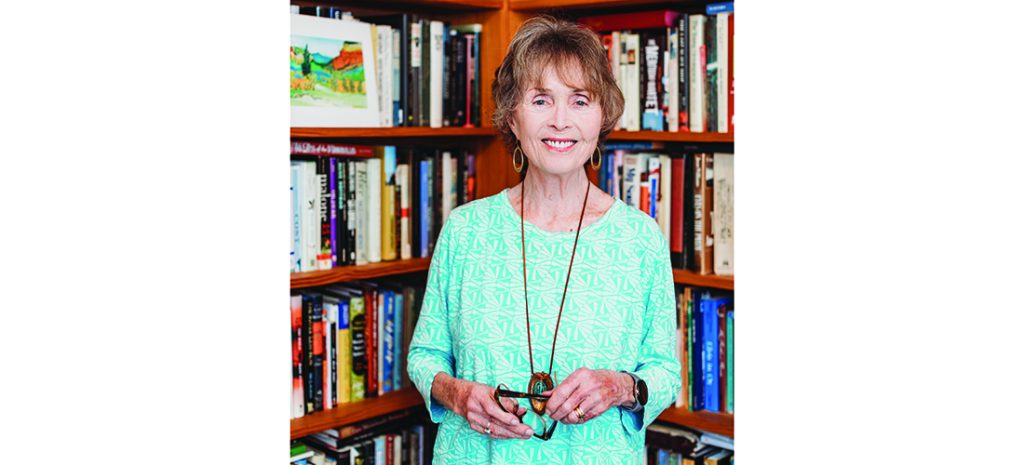
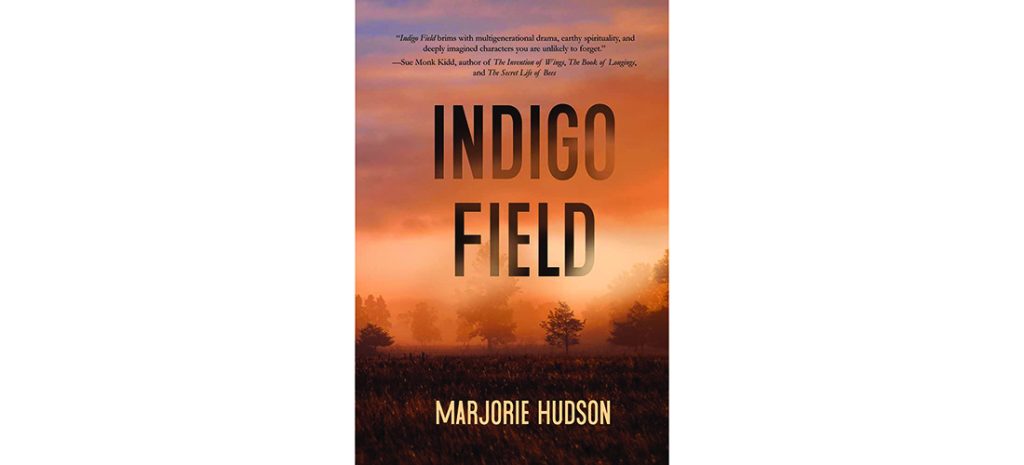
On this sunny late-March afternoon, Marjorie Hudson occupies rarefied space: She’s standing in the footprints of F. Scott Fitzgerald, Sherwood Anderson and Thomas Wolfe, reading from her beautifully wrought first novel, Indigo Field, at the Weymouth Center for the Arts & Humanities. Her bright eyes (they might be blue or green; the afternoon light plays tricks) stare out from a shock of white hair (she’s accurately penned the description “white-blonde hair” for a character in her novel), and she’s smiling the smile of one who’s realized her dream via pure, implacable determination. In the words of Keats, she’s surprised everyone, including herself, with “a fine excess,” writing that strikes the reader almost as a remembrance. Now all she has to do is sell her masterwork. The literary world needs to know about Indigo Field, and readers need to snatch it off bookstore shelves or download it online.

Hudson is a Midwesterner who settled in North Carolina by way of a lengthy sojourn in Washington, D.C., where she worked for a nature magazine that kept her indoors much of the time.  “We all worked such long hours we hardly got to go outside,” she says. “All it took for me to jump ship was a visit to a friend (in North Carolina), a rainbow over a farmhouse, and I was hooked. My days were full of freelance writing assignments, sunbathing in the yard, gardening, and pond swimming. Whippoorwills chanted outside my window, a sound I’d never heard before. When frogs took over the pond one night in a massive mating ritual, it was better than any nature documentary.”

Thus Indigo Field evolved into a decidedly Southern novel featuring Southern characters immersed in a regional history that emphasizes a strong sense of place. Even so, there’s no forced, ersatz Southernisms in her dialogue, no Hollywood “y’alls,” and, thank God, there’s not a subhuman Faulknerian Snopes in sight. Her characters speak authentically, and they never propagate a phony gesture. Somehow she’s acquired the ability to absorb the Southern landscape she’s adopted as home.

She came by this invaluable knowledge by happening into the perfect job. “One of the many freelance jobs I took to pay the rent was copy-editing novels at Algonquin Books of Chapel Hill,” she says. “I had never read much Southern lit before, and reading the novels of Clyde Edgerton and Jill McCorkle, and the stories of Lee Abbott and Larry Brown was like going to grad school. How a novel all fit together was fascinating. How a short story was constructed was beautiful. And the language! I was learning the rhythms of speech and turns of phrase from my neighbors, my new husband, and these stories. I turned to my computer and started a story of my own.”

Hudson’s prose style is clear and concise, and she preserves a delicate balance of empathy for characters who come alive with startling authenticity. Her leapfrogging plot turns sustain the story’s energy and propel the reader ever forward. The Regal House Publishing promotional material provides an accurate precis. “In this novel of moral reckoning, the unjust outcome of a murder trial, and the chance accident that follows, result in a feud that raises the spirits of the dead, forcing enemies to become allies in order to survive.”

Good enough. But the novel’s beauty is more than fancy footwork, deft plotting and the able handling of points of view. Hudson writes with the heart of a poet. Her prose has been worked on (in the best sense) to get rid of that worked-on feeling. Take this transitional passage from Chapter 49: “This great wind rode the eye of a rogue hurricane and spun out lightning and whirlwinds like warriors of a great army. These warriors flattened all they touched, and chose what they touched with care. They touched the new homes of wealthy people and left the old derelict home of Poolesville, the farmhouses of widows, the trailer parks of the destitute, damaged but still standing. The wind brought lightning strikes so pervasive that many small fires lit rooftops, tall trees and last year’s broomsedge in Indigo Field. . . . This wind skipped from high spot to high spot, so that places that had been raised up were laid low, and places that were low and humble remained intact.”

The writing of Indigo Field took up almost 30 years of Hudson’s life — with time out to write and publish an acclaimed short story collection, Accidental Birds of the Carolinas, and a history/travelogue, Searching for Virginia Dare. “I had 450 pages (of the novel) by 1998, but I didn’t know how to end it and I knew it needed revision.” She set Indigo Field aside, finished a different novel, sent it out, got discouraged, went to graduate school, and all the while the novel kept getting longer and longer. Hudson recalls: “I kept adding layers of things I was fascinated with: parrot colonies, Nike missile sites, archeology. As it got longer and longer, unbeknown to me, New York’s acceptable novel length had gotten shorter and shorter. It was roundly rejected.”  So Hudson turned to a small press, Regal House Publishing in Raleigh. Regal reminded her of Algonquin in the old days: “Small, feisty, locally owned. I even knew one of the editors,” she says. “I submitted my 50 pages. They asked for the rest. I got the call a couple of months later. I was still revising. Cutting mostly. I had a whole new version by the time Jaynie called and said ‘Yes.’”

Indigo Field was chosen to be part of Regal’s “Sour Mash Series,” a selection of books centered on the American South’s sense of place and history. Hudson was in the place described by Flannery O’Connor: “The Southern writer operates at a peculiar crossroads where time and place and eternity somehow meet.” After living in North Carolina for almost 40 years, Hudson is a Southern writer, and she’s pretty proud of that.

She’s come a distance, a far piece, to stand before an audience at the Weymouth Center — and all the other audiences she’ll be entertaining in the months to come. She has a novel to sell. It’s demanding work, but Marjorie Hudson is surely up to the task.  PS

Stephen E. Smith is a retired professor and the author of seven books of poetry and prose. He’s the recipient of the Poetry Northwest Young Poet’s Prize, the Zoe Kincaid Brockman Prize for poetry and four North Carolina Press Awards.

Southwords

Southwords

The Pinch Hitters

Now you see them, now you don’t

By Jim Moriarty

The year was 1959. I know this because my father, who was largely estranged from our family, took me to see the sensational new movie Al Capone, starring Rod Steiger. What 8-year-old kid can’t wait to see a gangster get his brains beaten in with a brick in dramatic black and white?

I was in my father’s charge that first week in May because my mother and both of my older brothers were off scouting colleges. It was a thing, even back in those days. My presence, under duress I’m sure, was not about to dissuade my father from his usual pursuits. The good news for me was that one of those pursuits involved watching the Chicago White Sox play the Boston Red Sox at Comiskey Park. Late in the game, a pinch hitter was announced. Ted Williams. My father leaned over to me and said, “Watch everything No. 9 does because one day you’re going to want to tell your children you saw him play.” I don’t remember a damn thing about what Williams did. I’m going to guess it wasn’t much, since 1959 was the only year of his career when he didn’t hit over .300. We were both in a slump, I guess.

Skip forward, if you’ll indulge me, to early May of 1974. A college friend of mine who was living in northern Michigan came south to visit, carrying a brown paper bag full of smoked chubs, and we bought tickets to watch the Atlanta Braves play the Chicago Cubs in Wrigley Field. The sky was pewter gray, and the low that day was 32 degrees. If it got over 50 in the afternoon, it couldn’t have been by much. The wind was howling off Lake Michigan, and attendance at the game was beyond meager. As the afternoon wore on — Wrigley didn’t have lights in those days — like an advancing glacier, folks just naturally inched closer and closer to the field. The ushers didn’t care. They were freezing, too.

My friend, his bag of smoked fish, and I finished the second half of the ball game in lovely seats right behind the first base dugout. Being a generous soul, he was passing his chubs up and down the row, sharing with anyone who wanted to sample this freshwater delicacy. Sitting next to us was an older man and a young girl, about the same age I had been that day long ago at Comiskey, who I took to be his granddaughter. Having skipped school in the middle of the week, she was a devout and vocal fan of the home team with a spanking new Cubs hat to prove it. Grandpa was equally enamored of smoked fish. It was a genial grouping of box seat interlopers.

Late in the day, the seventh or eighth inning, a pinch hitter was announced. It was Henry Aaron. Roughly a month before, Aaron had broken Babe Ruth’s home run record. When he came out of the dugout, swinging a bat to loosen up those old muscles, I leaned over toward the little girl and said, “Watch everything No. 44 does because one day, you’re going to want to tell your children you saw him play.”

I confess, recycling this bit of generational guidance made me feel rather fine and noble.

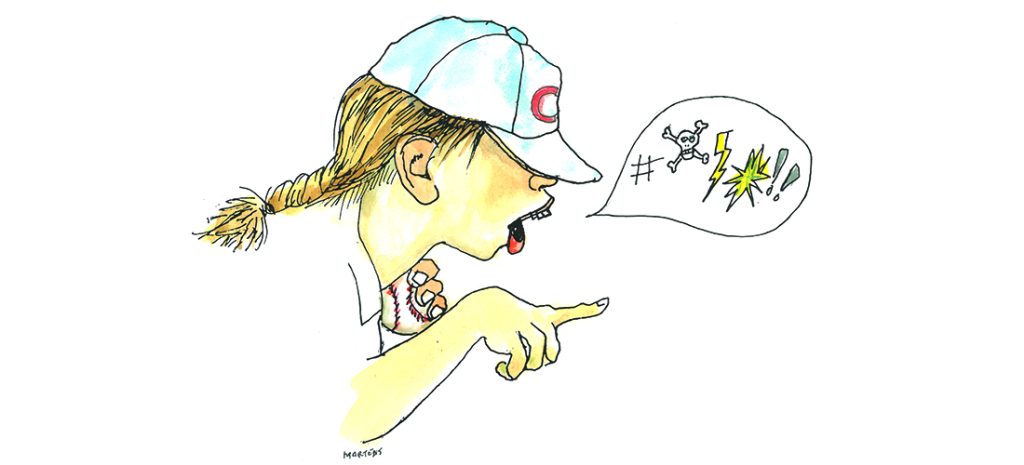
As swiftly as that bit of wisdom tumbled from my windchilled lips, that sweet little girl turned to me and, in language so colorful it would have made a tugboat captain faint, reinforced her undying love of the Cubs and her utter and complete disdain for anyone, including me, who might get in the way of a complete and total Chicago victory.

Fifteen years had passed and I was still in a slump.  PS

Jim Moriarty is the Editor of PineStraw and can be reached at
jjmpinestraw@gmail.com.

Crossroads

Crossroads

The Queen Is Dead,

Long live the king!

By Tony Rothwell

Sounds harsh doesn’t it? But that’s the way it’s been for a thousand years.

As London, and much of the world, prepares for another large helping of English pomp and circumstance, I can’t help thinking back to a cold, gloomy February day in Whitby, Yorkshire. The year was 1952. I was at a boarding school, in a spelling class. We were 9-year-olds. The door opened and in came a teacher who announced he had sad news — King George VI had died. He asked us to bow our heads in a minute of silence, after which he told us that Princess Elizabeth was now our queen.

King George had been an unassuming monarch, rather overshadowed by Winston Churchill in the public eye, and the truth was we didn’t know much about him. Yes, his head was on the back of our pennies and thruppenny bits but we had no real impression of him.

However, matters royal were about to change as year-long preparations were made for the coronation of our new queen. England had had a tough time of it since the beginning of World War II in 1939, and we were still suffering from shortages, rebuilding, even rationing. Now here was something we could all look forward to.

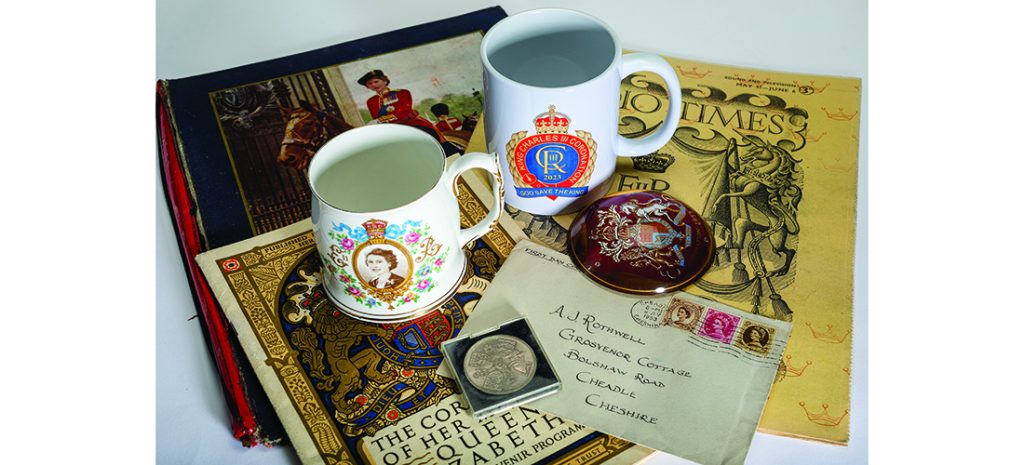
It wasn’t long before the date of the coronation was announced — June 2, 1953. Over a year of preparations lay ahead, and England went into overdrive. Long-made plans were dusted off for the service in Westminster Abbey, the procession, the invitation list and, out in the country, celebrations and street parties were planned in every town and village. Meanwhile, all manner of coronation merchandise was popping up in shops. I still have my treasure trove — a commemorative mug, a special coronation crown coin, first day cover postage stamps, a paperweight, the souvenir programme and BBC’s Radio Times for coronation week, in its original binder.

The big news was when the BBC announced that the coronation was to be televised, though only a handful of people had access to a set. My brother and I had recently watched TV for the first time when the English FA Cup final was shown in a hut in our village to a packed audience. The reception was terrible. Every vehicle that went by produced a snowstorm over the screen, but it was still very exciting. We heard our parents discussing getting a set and did all we could to encourage them. Then suddenly it was there. A beautiful, mahogany, floor-standing piece of furniture containing a tiny 12-inch screen behind double doors placed next to the fireplace in our living room.

The day of the coronation finally came. TV coverage began early, and we were all gathered round the cathode ray tube — my parents, brother Bill, our corgi Taffy and myself — at our house south of Manchester in northwest England with the Radio Times in hand. It perfectly reflected the all-consuming mood of patriotism and coronation-mania the country was experiencing. The pages were devoted to every conceivable aspect: the “Form and Order” of the 2 hour, 50 minute service with the crowning expected at approximately 12:30 p.m.; the symbology of the many trappings of the monarchy; the glorious music and who would be singing; a map of the route from Buckingham Palace to Westminster Abbey where a congregation of 7,000 would await the young queen; and, after the service, the much longer route back to Buckingham Palace to be cheered on by the huge crowds who had come from all over Britain.

Even the Times’ advertisements were in on the act. Shell Oil did it with poetry:

Along Pall Mall, along St. James

Old buildings echo with the din

Old streets remember famous names

Lord Byron, Wellington and Gwyn

While Guardsmen’s plumes awake the air

Like pigeons in Trafalgar Square.

Two days later the United States had its moment with a radio tribute to coronation week titled “A Star-Spangled Salute,” starring Burl Ives, Gregory Peck, Sam Wanamaker and Master of Ceremonies Ben Lyon.

My most vivid memories of the day are the arrival of the queen at the Abbey to the ear-splitting acclamation “Vivat! Vivat! Vivat! Regina”; the glorious coronation coach (it was black and white television, of course, but we were assured it was gold); and the massive, Union Jack-waving crowds lining the processional route.

In the year 1066 William the Conqueror was the first monarch to be crowned in Westminster Abbey, and 957 years later, on Saturday, May 6, King Charles will be the 40th monarch to process up the Abbey’s aisle. Once seated on the throne he will have the St. Edward’s crown, made in 1661 for Charles II, placed upon his head, and Camilla, as queen consort, will wear the crown made for Queen Mary in 1911. Incidentally the St. Edward’s crown weighs 4.9 pounds, which will explain the care exercised when it is being placed on Charles’ head.

The contrast between the two sovereigns, mother and son assuming the throne almost exactly 70 years apart, could not be greater — a pretty, sheltered, 25-year-old queen, and a 74-year-old, twice-married king. We are promised a somewhat scaled back service in the Abbey to that of the late queen, the king being sensitive to Britain’s current economic and social climate, but there will be three days of events and concerts and a national holiday on the Monday. For millions of Brits born after June 1953 and seeing their very first coronation, it will be a truly memorable occasion with celebrations up and down the country and glasses raised to the newly crowned sovereign — “Here’s a health unto His Majesty.”

Meanwhile our KCIII commemorative mug has just arrived.  PS

Tony Rothwell moved to Pinehurst in 2017, exchanging the mind-numbing traffic of Washington, D.C., for less traffic, better weather and the vagaries of golf. He spent 50 years in the hotel business but in retirement writes short stories, collects caricatures, sings in the Moore County Choral Society. He can be reached at ajrothwell@gmail.com.

Poem May 2023

Poem May 2023

Mallard Ducks

It is late afternoon and a pair

of mallard ducks is paddling

the length and breadth of Lake

Katharine, their webbed feet

working beneath the waterline.

The male’s hunter green head

is iridescent in the sun, his bill

the bright yellow of summer

squash. But a female is harder

to see. Her mottled, brunette

feathers blend with the aquatic

vegetation, which will help her

protect the nest she has yet to

build, the eggs she has not yet

lain. Today, however, this hen

seems content to bob for plants

and small fish while swimming

around the lake with her mate,

the two of them silent as rubber

ducks floating in a child’s bath —

or an old married couple eating

their supper on separate trays.

— Terri Kirby Erickson

Terri Kirby Erickson’s seventh book of poetry, Night Talks: New & Selected Poems, will be released in October 2023.

Almanac May 2023

Almanac May 2023

May is the nimble bard, back again, rendering tales of romance and revelry.

When the peonies sing out and the black snake sheds his winter skin, the bard slinks in with an age-old poem, jubilant and familiar. You recognize the words but the tune has changed. It’s more florid, less restrained.

A bard never sings the same song twice.

The poem is a constellation of roses, a bouquet of wild songbirds, a quivering fawn, wet from birth. It is a bluebird’s first flight, a canopy of tree frogs, a fox kit emerging from the den.

It’s a tale of first love — a whisper, a giggle, a kiss — a sacred song between two hearts and the ancient, flowering magnolia.

The rhythm quickens for the ballad of the bee and the lady’s slipper; the waltz of the foxglove and hummingbird; the butterfly’s ode to red clover.

Honeysuckle on the tongue, the bard weaves from wild place to formal garden, from strawberry patch to rabbit burrow, from poppy field to chrysalis. 

She sings of earthworms and spring rain; soft grass and bare feet; the boy and his mud castle.

Listen for the girl in the sunhat. Snap peas on the trellis. Dandelions and cartwheels and picnic baskets.

The wind sings along, carrying her tune through the leafed-out trees until we are nectar-drunk and flushed. Each word pulses with ecstasy. We cannot help but sing along.

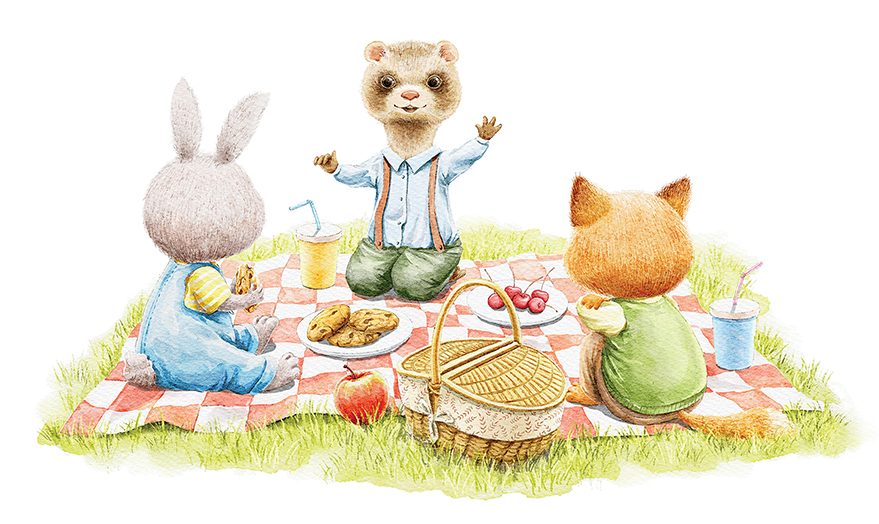
Three animal friends in clothes fox, rabbit and ferret chatting on summer picnic with food on bedspread isolated on white background. Watercolor hand drawn illustration sketch

Among the Wildflowers

National Wildflower Week, celebrated during the first full week of May, is spring at its finest. The air is sweet. Roadsides and meadows are bursting with life and color. The pollinators are here for the party.

Perhaps you know that in 2016, the North Carolina Wildlife Federation launched The Butterfly Highway project in response to the alarming decline of native bees and monarch butterflies. This conservation restoration initiative continues to expand its “network of native flowering plants” to help sustain our pollen- and nectar-dependent wild ones. Interested in adding a “Pollinator Pitstop” to the map? Visit ncwf.org/habitat/butterfly-highway, where you can find N.C. native pollinator seed packets, discover what’s blooming this month, and learn more.


The word May is a perfumed word . . . It means youth, love, song; and all that is beautiful in life.    — Henry Wadsworth Longfellow, journal, 1861

The Great Mother

Creation stories of the Lenape and Iroquois people evoke images of a great cosmic turtle carrying the world on its back. Surely all mothers have felt like that turtle from time to time.

This year, Mother’s Day lands on Sunday, May 14. Perhaps fittingly, World Turtle Day is celebrated this month, too — on Tuesday, May 23.

The Eastern box turtle, N.C.’s state reptile, begins nesting at the end of this month. Although common across the state, the Eastern box turtle population is declining. When next you see one, wish it well. She could be carrying eggs — or tending a clutch of tiny, delicate worlds.  PS

Back to the Future

Back to the Future

Revitalizing West Southern Pines

By Ann Petersen

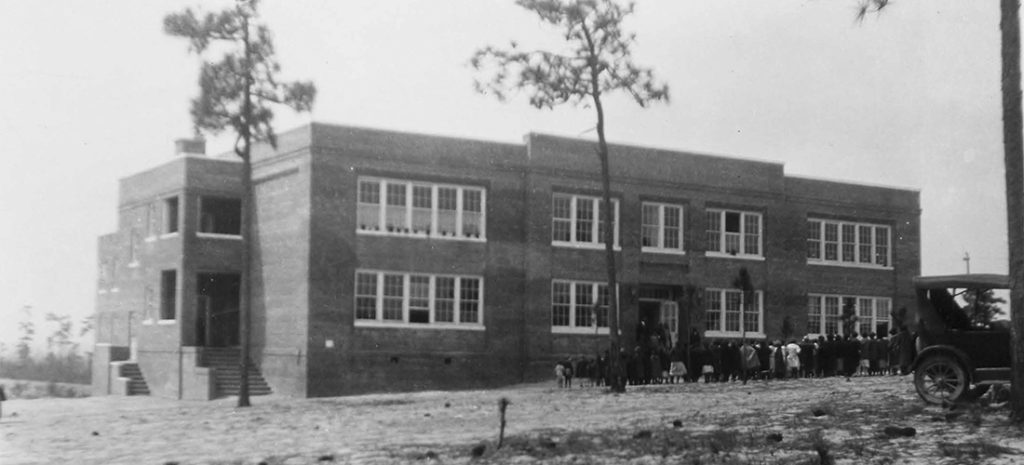
Feature Photo caption: West Southern Pines Rosenwald School, 1925


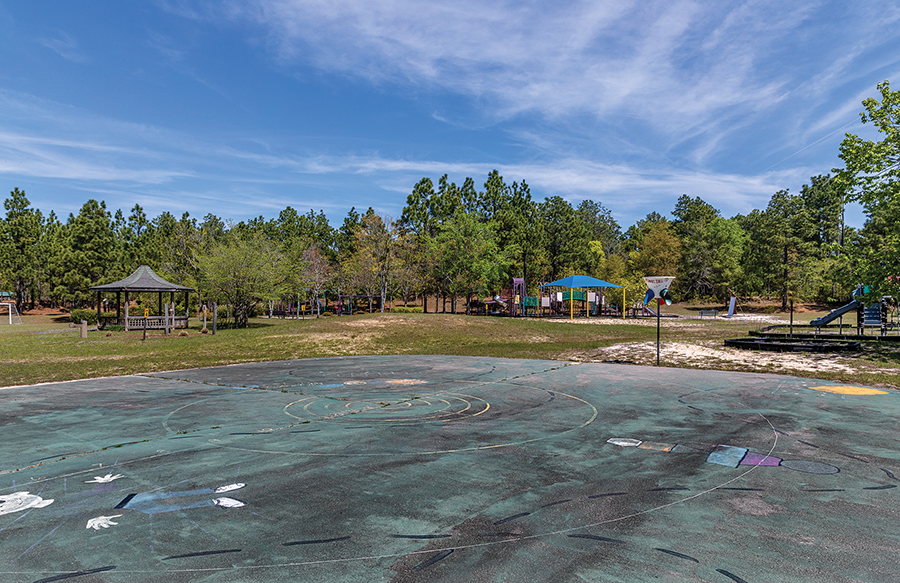
Blanchie Carter Discovery Park today

Photograph by John gessner

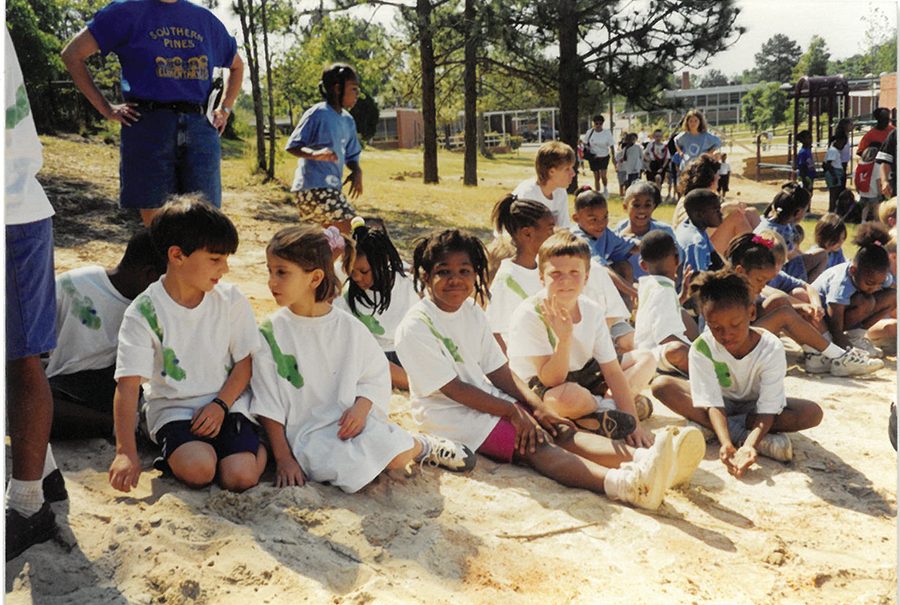
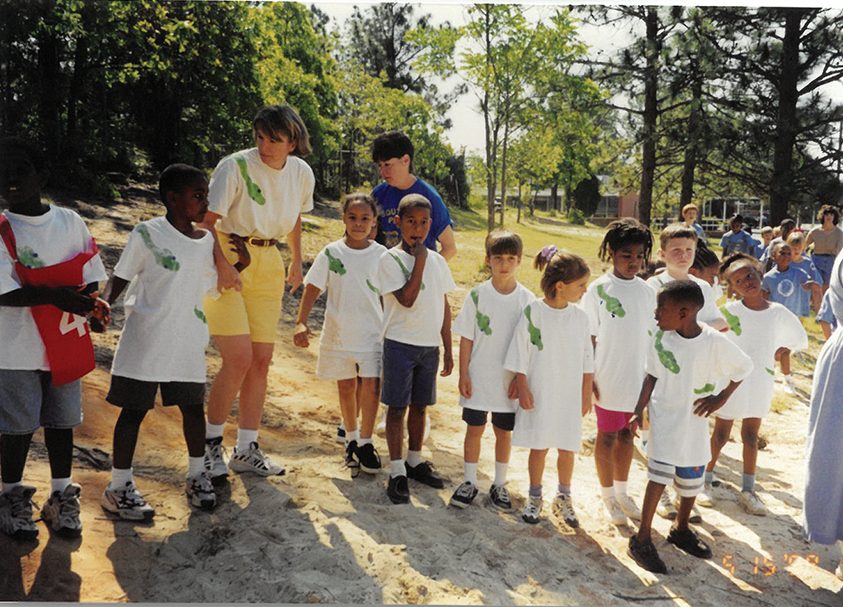
The land tells its own story. Hope, creativity and adaptability are its chapters. History is alive at 1250 West New York Avenue.

In 1923, the town of West Southern Pines was chartered as one of the first African American townships on the East Coast. Jim Town was the slang expression for it in those days, either in reference to James Bethea, who owned the general store and other property in the new township; or because of the Jim Crow laws of the day, explains Kim Wade, an expert on West Southern Pines’ history.

The citizens of the new township, often earning as little as 50 cents a day, dreamed of building a Rosenwald School to ensure their children’s education. Julius Rosenwald, the co-owner of Sears, Roebuck and Company, and his wife, Augusta, Jewish immigrants from Germany, established the Rosenwald Fund in 1917 “for the betterment of mankind.” Among its contributions, the Rosenwald Fund (in common cause with Booker T. Washington) helped build schools in an effort to strengthen rural Black communities in the United States.

With little more than hope to drive their funding, the community raised $6,000, above and beyond municipal taxes, to match the grant from the Rosenwald Fund. Four acres were donated by William and Emma Junge as a site for the school. The land was cleared by the community, and the school was completed in 1925. In the 1940s the Rosenwald School gave way to a more modern structure, and the property became West Southern Pines High School. While the name implied the school was for students in higher grades of secondary education, it was actually the school all children of color attended, regardless of age or grade level. Though the town charter was rescinded in 1931, the community, and school, strove to maintain their viability. A gym and lunchroom along with multiple wings of classrooms were added.
   

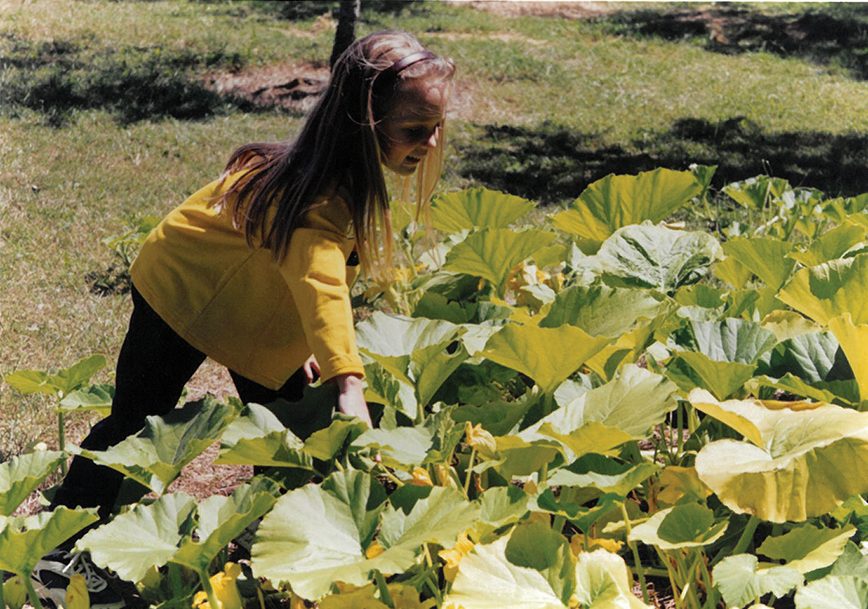
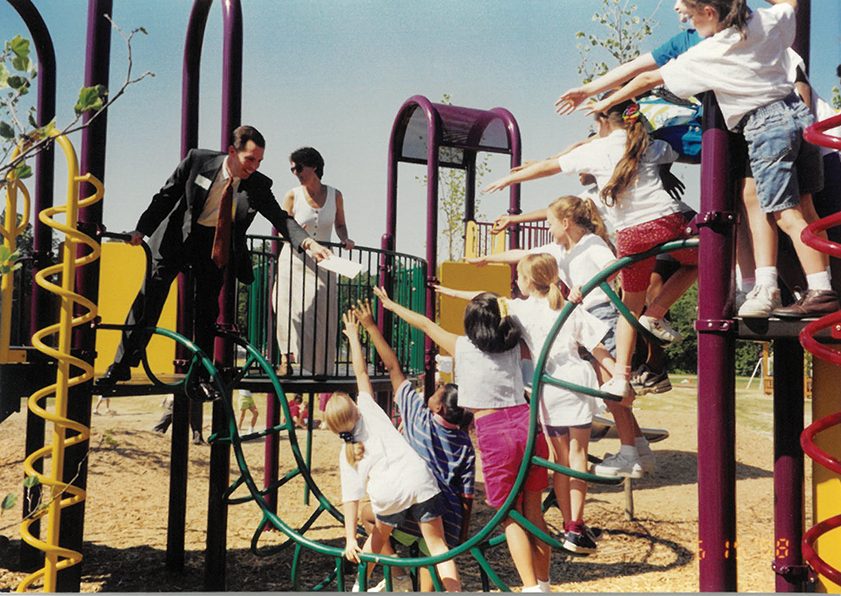
Work and play at the Blanchie Carter Discovery Park, 1998

Photographs Courtesy Ann Petersen

Many West Southern Pines alumni are still in Moore County. Some, after living successful lives elsewhere, have circled back home. Dorothy Brower, a member of the high school’s last graduating class, is just one example. She returned after a career that included being the director of the Orange County Campus of Durham Technical Community College and the affirmative action officer. Other alumni include Shirley Bowman, Dorothy Douglas Jackson, Walter Powell, Martha Dickerson, Jennifer McCall, Carolyn Penland, Bill Ross and Tessie Taylor.
Retired Lt. Col. Vincent Gordon came back after his stint in the service, followed by his work as an administrative officer with the census bureau in Washington, D.C. When Gordon, one of four sons of a school principal and a Moore County Schools teacher, returned, he was armed with the kind of experience that would prove invaluable when 1250 New York Avenue eventually transitioned to the Southern Pines Housing and Land Trust.

In the 1960s, it was the hope of then-Superintendent Bob Lee to desegregate Moore County Schools and create a heterogenous school system with equal access to education, regardless of race. While Lee and his family endured hateful threats, he worked tirelessly to achieve that goal. With the support of a fearless school board, the dream became a reality and, with desegregation, West Southern Pines High School would become Southern Pines Elementary School.

In 1995, my eldest daughter, Katie, was 5 years old, and my husband, Bruce, and I hoped for what all parents desire: a creative, inspiring, sound education for our children; an education where they would be loved and nurtured. Our decision ultimately fell to Katie and her soon-to-be principal, Blanchie Carter.


Work and play at the Blanchie Carter Discovery Park, 1998

Photographs Courtesy Ann Petersen

I remember walking through the halls of Southern Pines Elementary, trailing behind Blanchie and Katie. As Bruce and I checked out the surroundings, our loquacious child peppered Blanchie with comments and questions. When we reached the media center Katie turned to us and announced: “This will be my school.” And it was.

There was one drawback to the school at that time. The playground was a treeless desert, a home to unrelenting heat in the late summer and blistering winds in the winter. Periodic dust tornadoes would flit across the barren land. It was a place that bred anger and frustration for the students and the teachers. Riddled with sand spurs, the playground made recess, meant to be a healthy break in the day, anything but. It was, instead, a time to endure. 

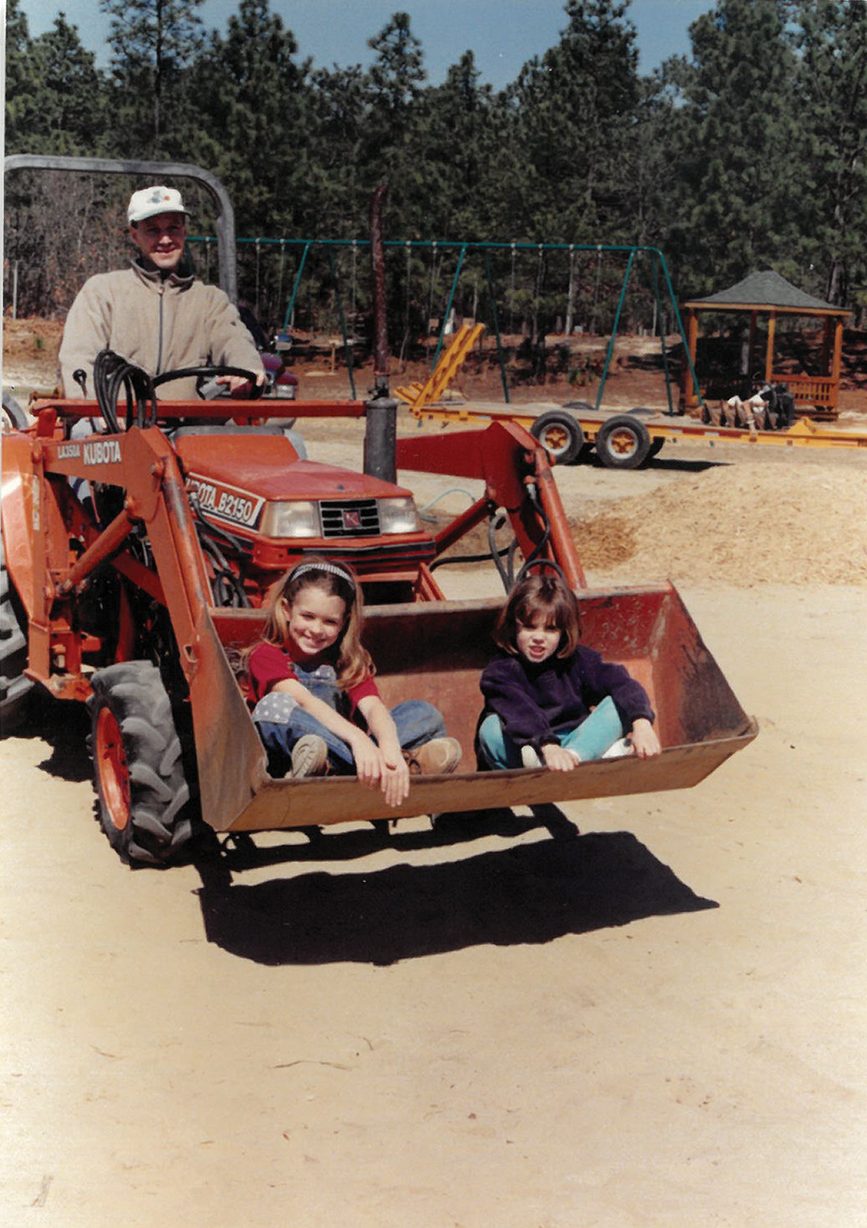
I signed up to co-chair the playground committee for the PTA. Our goal was to raise $25,000. Bruce, as he was prone to do, signed on to help. We ended up raising 10 times that amount. Fueled by both hope and good luck, we started searching for someone with expertise to help us with the playground. We discovered one of the world’s premier designers of parks for children, an Englishman, was on the teaching staff at the N.C. State School of Design.

Enter Robin Moore. His first lesson was to teach us we were not building a playground, but rather a discovery park. He was right. Blanchie Carter Discovery Park was born.

Moore led us to Dr. Nilda Cosco, a native Argentinian who is an expert on learning through play, also on the faculty of the N.C. State School of Design. She earned her reputation as a leader in the field by working with economically, physically and mentally challenged children in Buenos Aires. I like to think there is a magical matchmaking component to the Blanchie Carter Discovery Park. Shortly after Moore and Cosco began to collaborate on the park in West Southern Pines, Bruce and I received notice of their marriage.


Work and play at the Blanchie Carter Discovery Park, 1998

Photographs Courtesy Ann Petersen

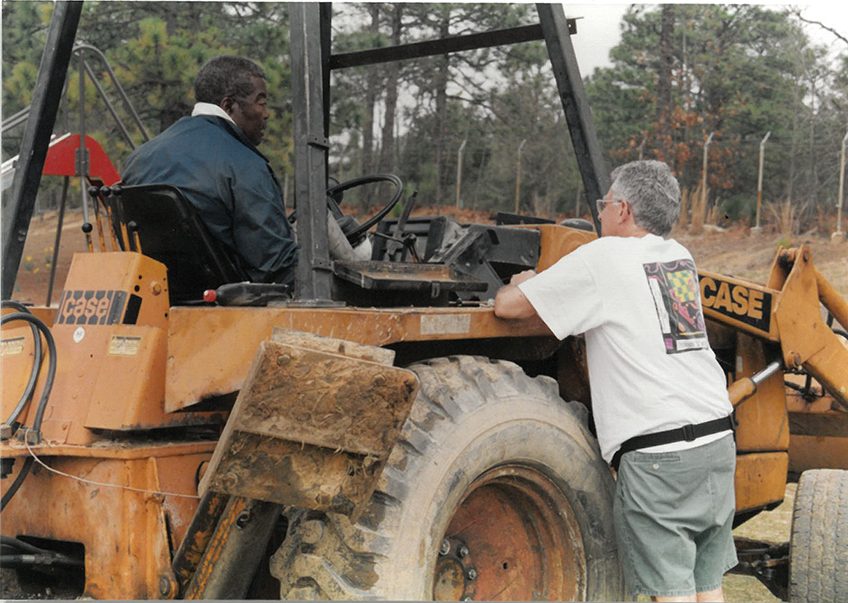
By 2006 the Blanchie Carter Discovery Park was built. The New York Times ran a feature on the park. Southern Living magazine came calling. Students read about the park in their national Scholastic magazines. James “Pygie” Pugh showed up with his D-6 bulldozer to cut the peripheral trail. Interns came from England to work with the students. Hope and curiosity had carried the day.

Mary Scott Harrison, the principal of the school following Blanchie’s retirement, recognized the extraordinary benefit the park served. Discipline problems dissipated. Both students and teachers were happier. Teachers designed lessons that could be taught outdoors. The school nurse created a walking club that met each morning and walked the peripheral trail. 

The staff at Southern Pines Elementary School was as good as any in the country. With the likes of Elaine Simon, Barbara Kelly (Smith), Mamie Allen, Damita Nocton, Edith Moore, Annie Osterman, Liz Lyndsey, Elizabeth Strickland, Toni Hyman and Jane Kschinka, led first by Blanchie Carter and then by Mary Scott Harrison, children thrived. Four years after Katie enrolled at the school, Jennie, her younger sister, entered the magic that was SPES. Jeff Moody, a retired track star turned elementary gym teacher, knew each child’s name. He could spot the gift Jennie possessed as she raced around the track. “She’s fast. Be patient and let her lead the way. She’s a runner,” he told us. Jennie’s running career, which eventually led her to Dartmouth College, began on the SPES track.

I have not cried when my children advanced from one educational level to another with one exception: I cried the day they both left 1250 West New York Avenue.

In 2020, Southern Pines Primary School (having supplanted Southern Pines Elementary School) was rendered outdated, and the property was vacated. Students of both Southern Pines Primary School and Southern Pines Elementary School enrolled in their brand new school on Carlisle Street. With that change, the land readied for another new chapter. 

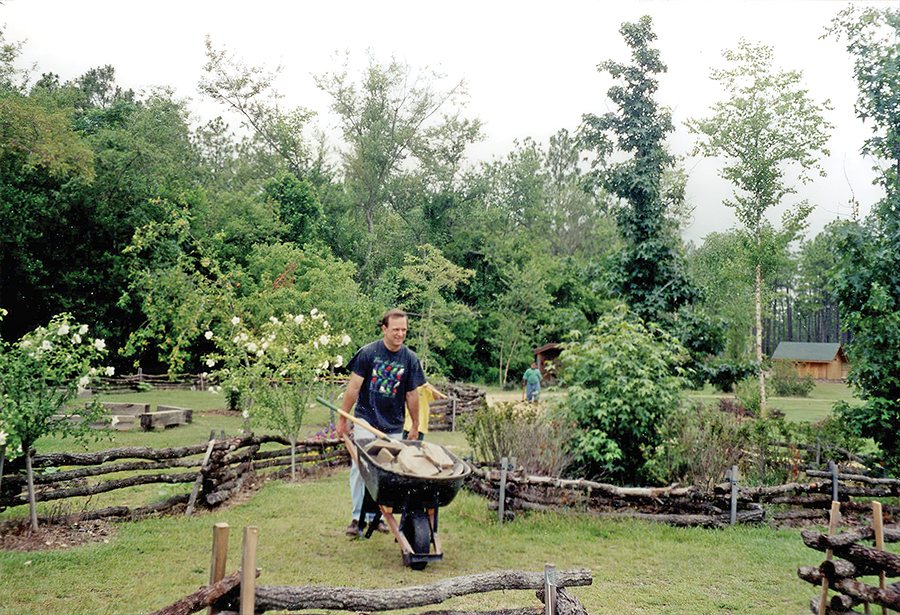
Bruce Cunningham working on the Blanchie Carter Discovery Park, 1998

The school board offered the land up for sale. There were struggles as the community sought to, again, purchase the land. As stories have a way of doing, this one came full circle when the land, primed for a new beginning, became the property of the Southern Pines Housing and Land Trust, an effort led by Vincent Gordon.

The purchase was driven largely by descendants of those who had attended the original Rosenwald School who hoped to not only embrace the history of the land, but to preserve Blanchie Carter Discovery Park as a learning venue for all children of Southern Pines to visit and enjoy. The final payment for the land was made by the Town of Southern Pines. Council member Mike Saulnier, who understood the importance of preserving the park, gave birth to a solution that resulted in a contract between the town and the Land Trust. 

The former school now proudly houses the West Southern Pines Center for African American History, Cultural Arts and Business. But hopes and dreams need funding to be realized. With a strong board of directors; Executive Director Sandra Dales; Director of Operations Nora Bowman; the relentless efforts of Tom, Lori and Rachel Van Camp; and an army of volunteers led by Susan Ward, who has managed the maintenance of the park, the weekend of May 19-20 will be filled with events to further the goals of refurbishing both the auditorium and Blanchie Carter Discovery Park.

On May 19, the auditorium where I once watched colorful Christmas pageants will play host to a jazz concert featuring Nnenna Freelon, a seven-time Grammy nominee. Tickets are on sale now at ticketmesandhills.com. With luck, similar fundraisers will become annual events. There will be an invitation-only dinner and auction on May 20 recognizing the contributions of the community, including businesses like the Pinehurst Resort, First Citizens Bank, First Bank and The Friends of the Pinehurst Surgical Clinic. Attendance will likely exceed 350.

Hope has never left 1250 West New York Avenue. Some hope for a museum that embraces the history of West Southern Pines. Others hope for a commercial revitalization of businesses there. A youth basketball team meets in the gym to practice, and the players hope for victory while their coaches — who refinished the gym floor themselves — hope the young players will learn the lessons of collaboration and teamwork. Moore and Cosco have returned to work on the rebirth of the Discovery Park, hoping the land will not only enhance the lives of local children, but serve as a training center for teachers studying early childhood development. It remains a place where dreams can come true.  PS

Bruce Cunningham and Ann Petersen were awarded the Governor’s Volunteer Award for their work on the Blanchie Carter Discovery Park.

Creators of N.C.

Creators of N.C.

Beads on a String

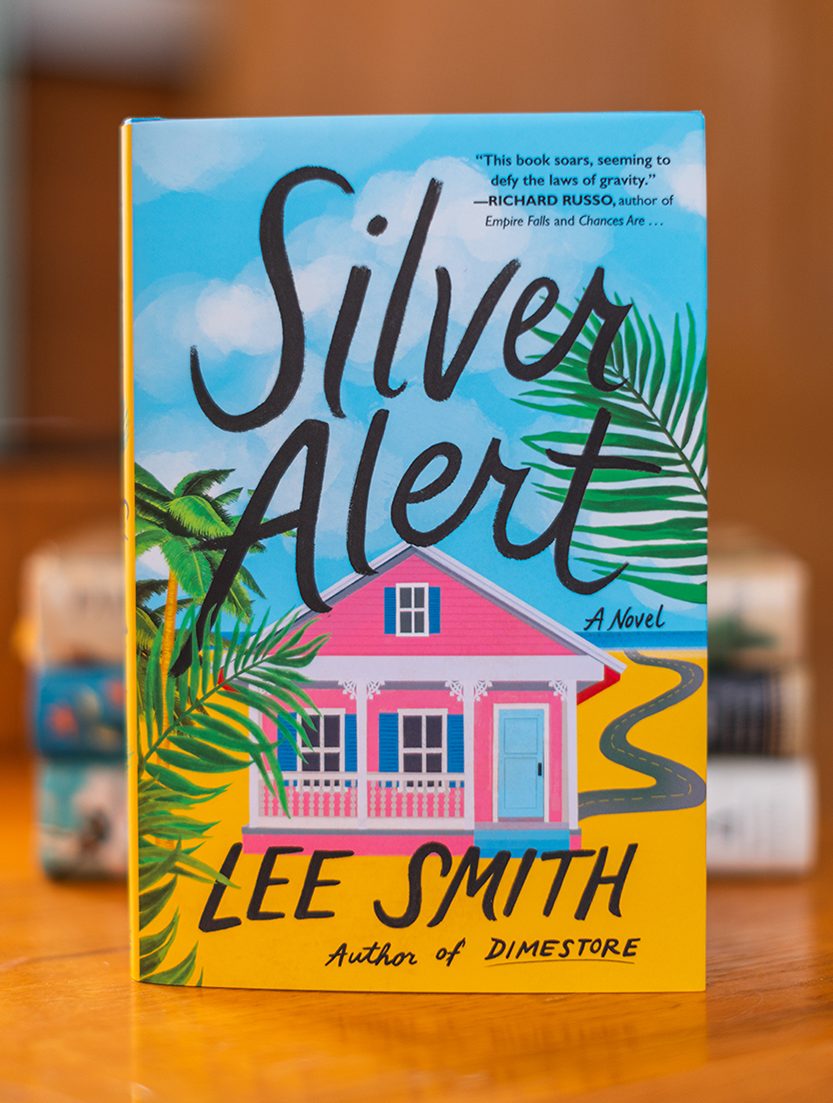
Silver Alert with Lee Smith

By Wiley Cash

Photographs By Mallory Cash


Silver Alert is Lee Smith’s 15th novel, and, if you believe her, it’ll probably be her last. How can this be true? How can the writer who gave us Ivy Rowe of Fair and Tender Ladies and the Cantrell family from Oral History be done with crafting memorable characters with expansive histories?

If this is true, if Silver Alert is indeed Lee Smith’s last novel, then at least readers will be left with several new characters to remember. There’s Dee Dee, a buoyant young aesthetician living under an assumed name who’s in Key West to hide from a past she can’t shake. There’s Dee Dee’s client Susan, a wealthy woman who seems too young to be locked in the throes of dementia. And then there’s Susan’s husband, Herb, a tough old guy from up north who, with his swollen prostate and weak bladder, can’t help but long for the days of his youth.

Silver Alert is everything readers want from good storytelling and sharply drawn characters; the book is alternately hilarious and heartbreaking, wise and lighthearted, sly and deeply profound. It’s the kind of novel that only Lee Smith could write, and it will remind readers to be thankful that she has given us so many.

The idea behind Silver Alert came to Lee a little differently than the ideas that spawned her previous novels. Several years ago, when she and her husband, writer Hal Crowther, were driving back from a winter vacation in Key West, they began spotting signs on U.S. 1, alerting readers with the words “Silver Alert,” complete with the make and model of a vehicle. Neither Lee nor Hal had ever heard of a silver alert, but they’d seen amber alerts that are issued when a youth goes missing, and they soon pieced it all together. They pieced together a story, too.

“We decided that it was an elderly guy who found a set of car keys in an old golf  shoe, and he’d taken off in his car with the mani-pedi girl from the assisted living place.”

Lee and Hal had a few laughs on their drive home, speculating about where the man would stop on a trip that might end up being his final burst of freedom.

“There’s never been a more natural plot,” Lee tells me. “That’s the number one plot in literature: ‘Somebody takes a trip.’ And number two is, ‘A stranger came to town.’”

If there’s a stranger who’s come to town in Silver Alert, it’s Dee Dee. She’s from the mountains of North Carolina, and her cheerful beauty belies the dark secrets of a life of poverty that has been suffered in the shadows of sex trafficking. She seems to be the only person who can settle Susan during her bouts of confusion, a continuous struggle that has overwhelmed Herb, whose existential angst is fueled by grieving for his wife and the sense that their life together is over.

“Bless her soul,” Herb thinks on the novel’s opening page, “and damn it all to hell.”

Herb’s sarcasm and cynical nature, especially after his and Susan’s kids stage an intervention and force the couple into selling their home to move into an assisted living facility, could have easily soured the reader’s soul — at one point the narrator even says that Herb “hates everybody that’s young, everybody that’s having fun” — but Lee doesn’t allow that to happen because soon even Herb is buoyed by Dee Dee’s infectious optimism, and it’s that optimism that inspires Herb to abscond with his yellow Porsche, Dee Dee riding shotgun.

I ask Lee how she so convincingly wrote a character like Dee Dee, someone who maintains her spirit in spite of the trauma and struggle in her past.

“Well, I think in part that is a form of self-defense,” she says. “It’s a way of putting a little shell around yourself.”

In the novel, Dee Dee has spent time at the fictional Rainbow Farm in northern Florida, which is a home for women who are hoping to escape life on the streets. It’s the kind of place that Lee knows pretty well after working with organizations like Thistle Farms outside of Nashville, Tennessee. According to the organization’s mission, it’s a “nonprofit social enterprise dedicated to helping women survivors recover and heal from prostitution, trafficking, and addiction” by offering a place to live and the opportunity to learn a professional skill. While at Rainbow Farm, Dee Dee learned to be an aesthetician, something that felt natural to Lee, who admits, “I love the beauty shop type of stuff.”

Dee Dee’s work and her relationships with new friends like Susan and Herb lead her to believe that the terrible fates of life are far behind her and getting farther away every day, even if they do still exist somewhere in her past. Throughout the novel, Lee brings the reader’s attention to this time continuum, including one moment when Dee Dee is watching moonlight move across a deck, thinking, “I am happy I’m so happy I will remember this for the rest of my life.” The book’s narrator steps in at that moment to add “and she would too.”

If Dee Dee is living in the moment while thinking about the future, Herb is living in the past while dreading what’s ahead. While he attempts to care for Susan, he continually “feels himself slipping back, back, back through time” to his first love, a woman named Roxana, whom he met when they were children in Buffalo.

Given Susan and Herb’s predicament of being forced into assisted living, it would be easy to read Silver Alert as a kind of elegy to aging, but I read it as the opposite. I read it as a celebration of life along the time continuum. It’s about the past, present and future existing in the space of our minds regardless of what our bodies are doing.

“I find incredible solace in that,” I tell Lee.

“Yes,” Lee says. “Here I am, almost 80 years old, and I think this might very well be the last novel I write. But I still have everything existing in me just like you said, all these ideas and memories are still there. You can do that with a novel.

“But things are sort of coming to me now in smaller scenes and short stories, smaller things like beads on a string, and you can see that in this book.”

If you were to look back over the novels that Lee has published, beginning with her debut The Last Day the Dogbushes Bloomed in 1968, you could see the beads on a string, the long continuum that has taken her from her hometown of Grundy in the Virginia mountains down to Hillsborough, North Carolina, and various parts of the state where she’s lived and worked. 

“In your early work, it seems that you were investigating and chronicling the place that you came from in southwest Virginia,” I say. “And then in your more recent work, maybe beginning with Guests on Earth and Silver Alert, it feels like you’re investigating your place in the larger world after leaving the mountains of your youth.”

“I think that’s true,” Lee says.

“As you’ve spent more time writing about life outside of the place you call home, do you feel your work is somehow getting more personal?”

“In a funny way, yes, I think so,” she says. “I write my fiction very much from real life. And so, when I had those closer ties to the mountains, that’s what I wrote about. And some of the other places I’ve lived since then that have interested me.”

Beads on a string. The long continuum. Grundy, Hillsborough, Key West, Florida, and the incredible characters and stories born from these places. It’s all there in Lee Smith’s novels, and regardless of whether or not she ever writes another one, it always will be.  PS

Wiley Cash is the Alumni Author-in-Residence at the University of North Carolina at Asheville. His new novel, When Ghosts Come Home, is available wherever books are sold.

A Legend Slept Here

A Legend Slept Here

Reimagining the Rassie Wicker Cottage

By Deborah Salomon Photographs by John Gessner


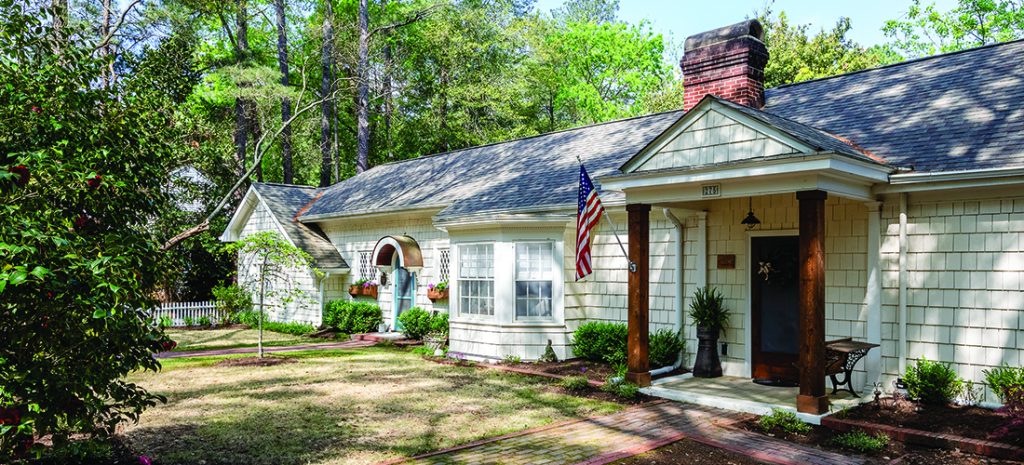
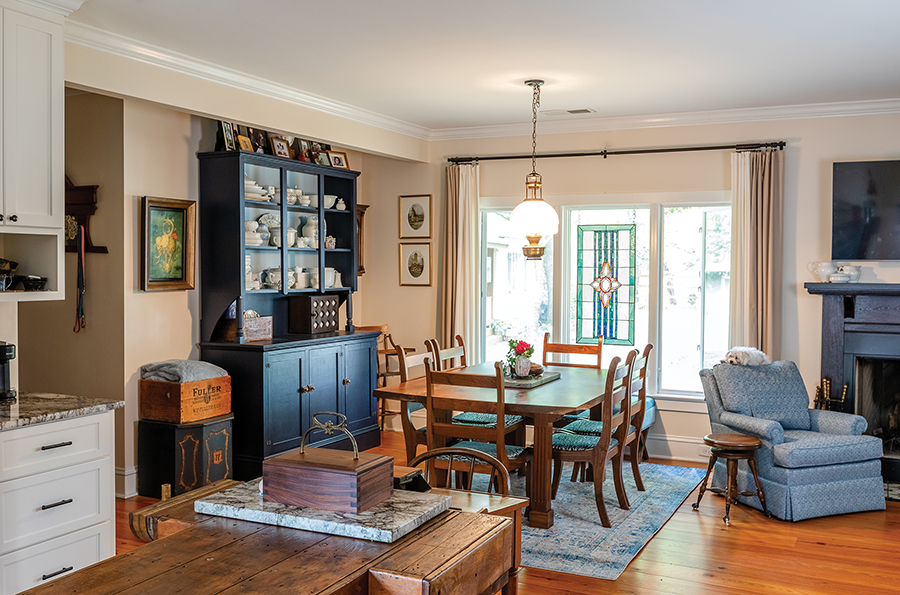
Should the spirit of Rassie Wicker return to his modest Pinehurst cottage, finding pipe and slippers — let alone his bed and a hearty breakfast — might pose a problem. Rooms have been added, space repurposed. The house now sports two front and three back doors, two full-size dining tables, a living room and a sitting room, plus a kitchen without defining walls or a Sub-Zero. Narrow hallways and a warren of cubbies, closets and pantries fulfill the owners’ requirements in clever ways, none of them glamorous, all of them practical.

Which suggests a kinship between Wicker, who built the cottage in 1923, and Bob and Lisa Hammond, whose purchase in 2017 initiated changes accomplished mostly with their own hands during weekends, while sleeping in a backyard cabin/guest house.


Bob, a retired optometrist, and Lisa, an almost-retired nurse, bring extensive construction know-how. Bob added some doors, sealed others. He crafted the footed Shaker-style kitchen cabinets, built tables with a skill tempered by homeowner pride — not unlike Wicker’s own.

A mystical connection, perhaps?

Rassie Wicker, born in 1892 to a carpenter/cabinetmaker father employed by Leonard Tufts, grew up to be a force in Pinehurst history. After graduating from a one-room schoolhouse he continued studies at what would become N.C. State University, returning to Pinehurst as surveyor-civil engineer and self-styled Moore County historian.


After serving in Europe during World War I, Rassie married Dolly Loving, had two children, and in 1923 built a home on Dundee Road. Over the years Pinehurst’s “Renaissance man” helped configure village streets and greenspaces. He died in 1972, and Rassie Wicker Park was named in honor of him in 1995.

The Wicker homestead had been updated and well-maintained when Bob and Lisa discovered it while living in a three-story brick Federalist in Holly Springs. Lisa wanted an old house to restore in retirement. Golf sweetened the deal for Bob.

“What about Pinehurst?” he suggested.

Like other retirees, Lisa pictured something walking distance to the village. Availability for these prime locations was, as usual, tight. Then, while driving out of Pinehurst they spotted the Wicker cottage, its brown shakes painted yellow, in a neighborhood Tufts intended for resort employees.


The cottage had been remodeled in the late ’90s, but Bob wasn’t thrilled with its flat roof. Nevertheless, the guest cottage and workshop were a plus, as was the acre of land. They returned to take a look. Soon after, by chance, Lisa met Rassie’s granddaughter, Jill Wicker Gooding, who still keeps a house in Pinehurst.

“This house was meant to be, for us,” Lisa concluded. “We felt an instant connection.”

With help from a contractor, the two medical professionals from Ohio converted space to better uses, even locating a stall shower outside the bathroom proper. They added 900 square feet onto the back, forming a living-dining room with walls sized to fit their furniture, including dining and coffee tables crafted by Bob. In another life, the coffee table was a flatbed trolley carrying wood around a lumberyard. “She finds a picture, I make it,” says Bob.

A sun porch was converted (with beadboard paneling and ceiling-height windows) into a guest room — bright and charming as a treehouse. “Dolly’s kitchen” became another bedroom, while the new kitchen-without-walls spread in several directions. The master suite was cobbled from three original bedrooms. That unattractive flat roof gained a pitch, with its rafters removed and reinstalled as shelves. The yellow exterior shakes are now a fresh vanilla.

Some wide knotty pine floorboards, full of character, come from trees Bob estimates were 400 years old.

Furnishings, many family heirlooms, are more homey than elegant. “This is our style, no high-end antiques,” Lisa says. Some enjoy a secondary use, like the carpenter’s bench with attached vise that became a kitchen island — Bob cooks, too — with a school desk (Lisa’s mother was a teacher) anchoring one end. A butter churn and bottle capper became lamps.

“Our goal was to renovate while honoring the past,” says Lisa.


Several tones of sea blue and bright navy flow from room to room. Previous owners had finished off the guest cottage, now with covered deck, perfect for visiting family.

No secret documents or family jewels were plastered into the walls, but they did discover a formal handwritten message from father to son inside a medicine cabinet, dated September, 1923: “Made by J.A. Wicker for Rassie E. Wicker.”

The yard offered additional surprises from the plant-loving Wickers. In 1986 Jill Wicker Gooding wrote to her grandmother Dolly on her 90th birthday:  “I remember the round-leaf sweetgum when it was too small to climb and I remember the sunken garden before the ivy took over.”

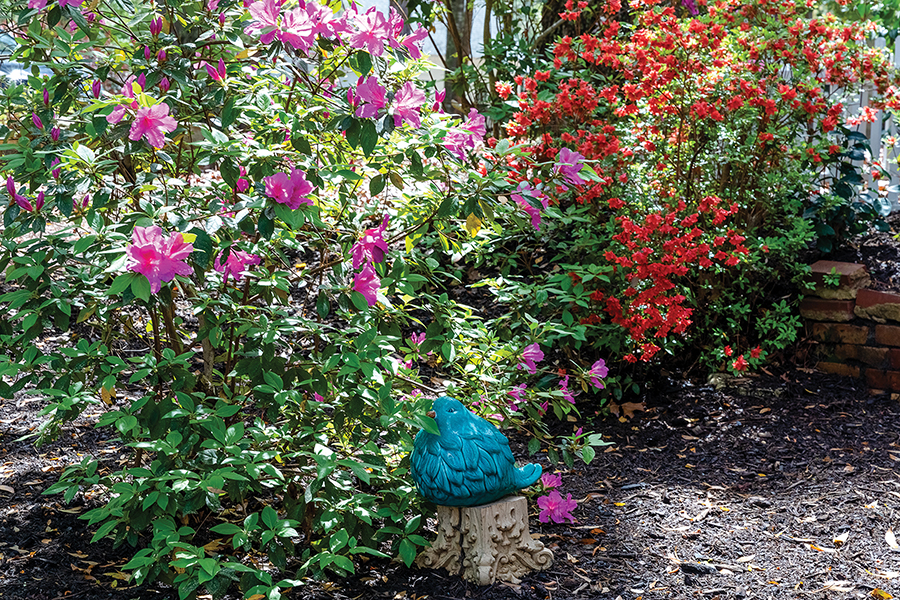
Sweetgum trees were impacted by blight, but the one Rassie moved to his yard lives on. Lisa dug out the brick-walled sunken garden, now ablaze with azaleas. Bob built a window box to fill with pansies. Incredibly, the original wooden picket fence still stands.

Inside and out, among early 20th century cottages built to draw residents to a fashionable winter mecca, this one stands apart. In 2017, Rassie Wicker Cottage was awarded a Pinehurst Historic Plaque by the Village Heritage Foundation, which recognizes the preservation of historic buildings, both grand and simple. It hangs above one of the front doors.

“We think Rassie would be proud,” Lisa says, and smiles.  PS

Ladybug, ladybug

Ladybug, Ladybug

Fly away home

By Amberly Glitz Weber     Photographs by Laura Gingerich


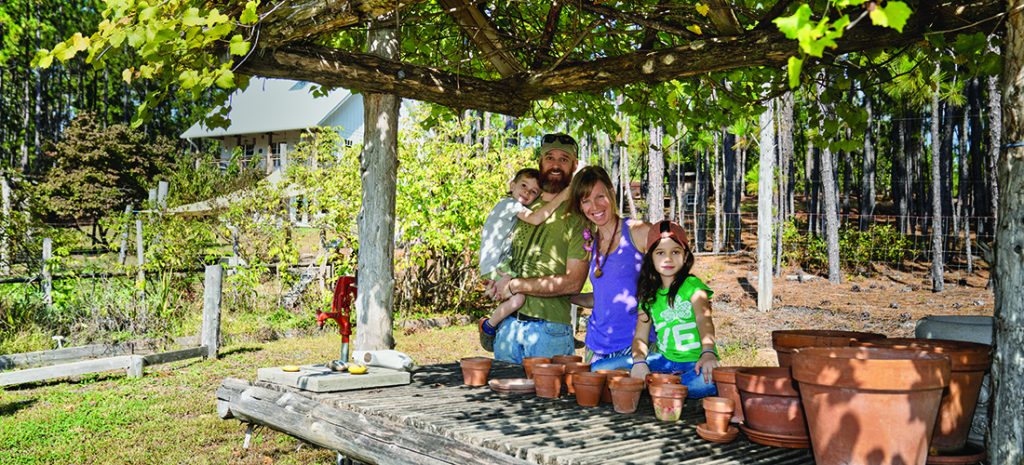
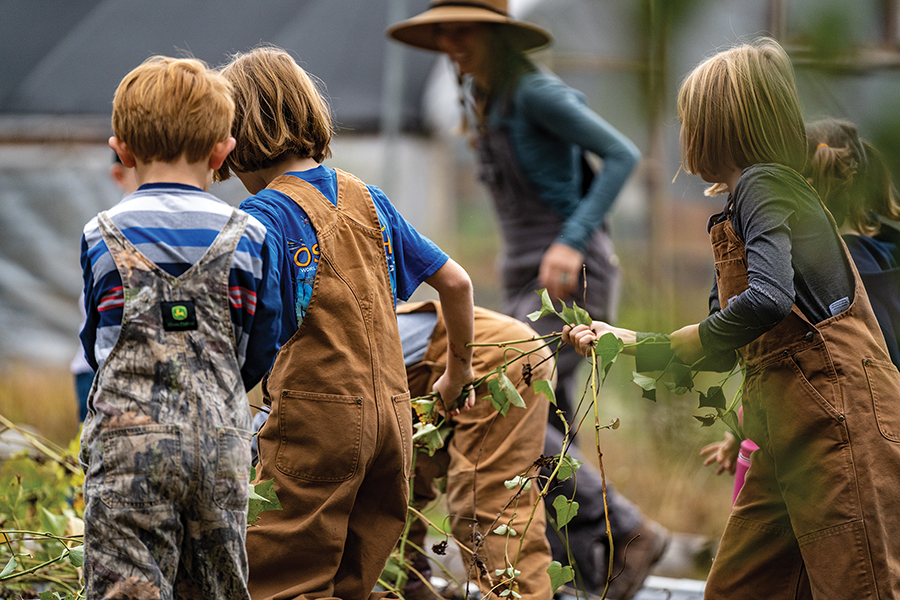
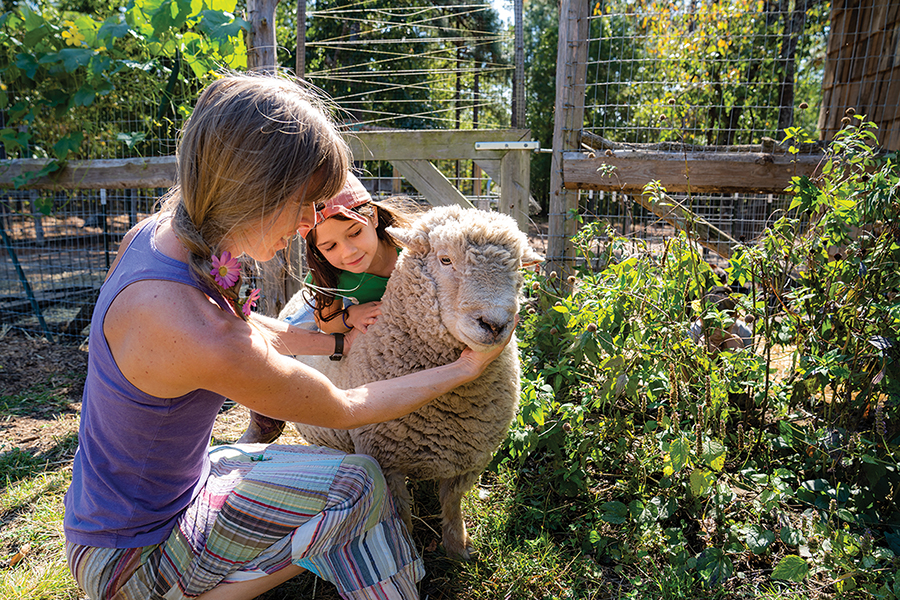
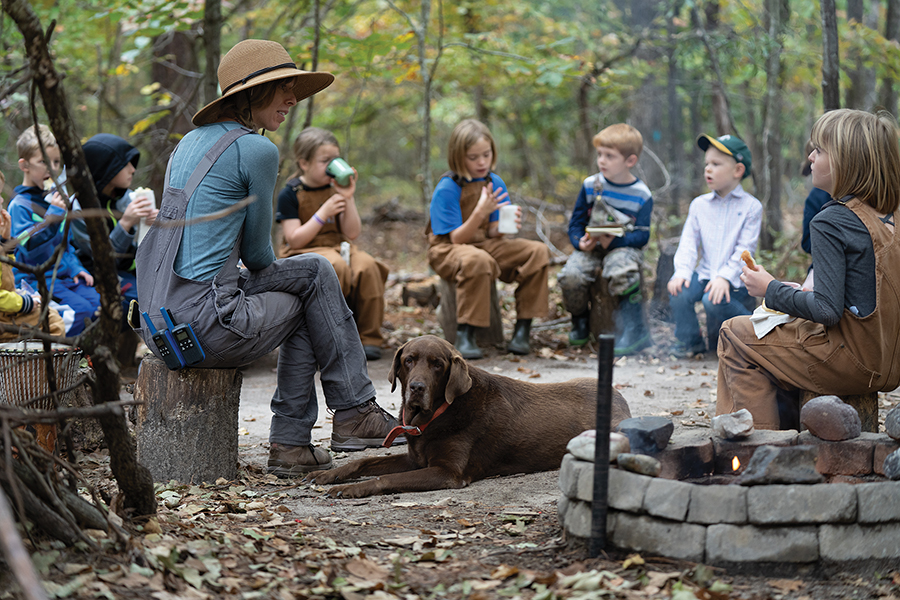
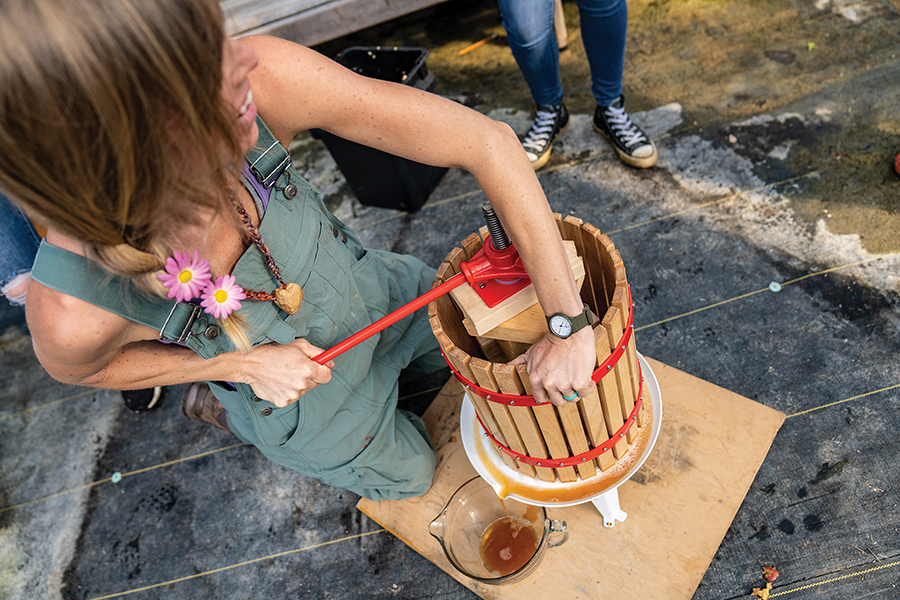
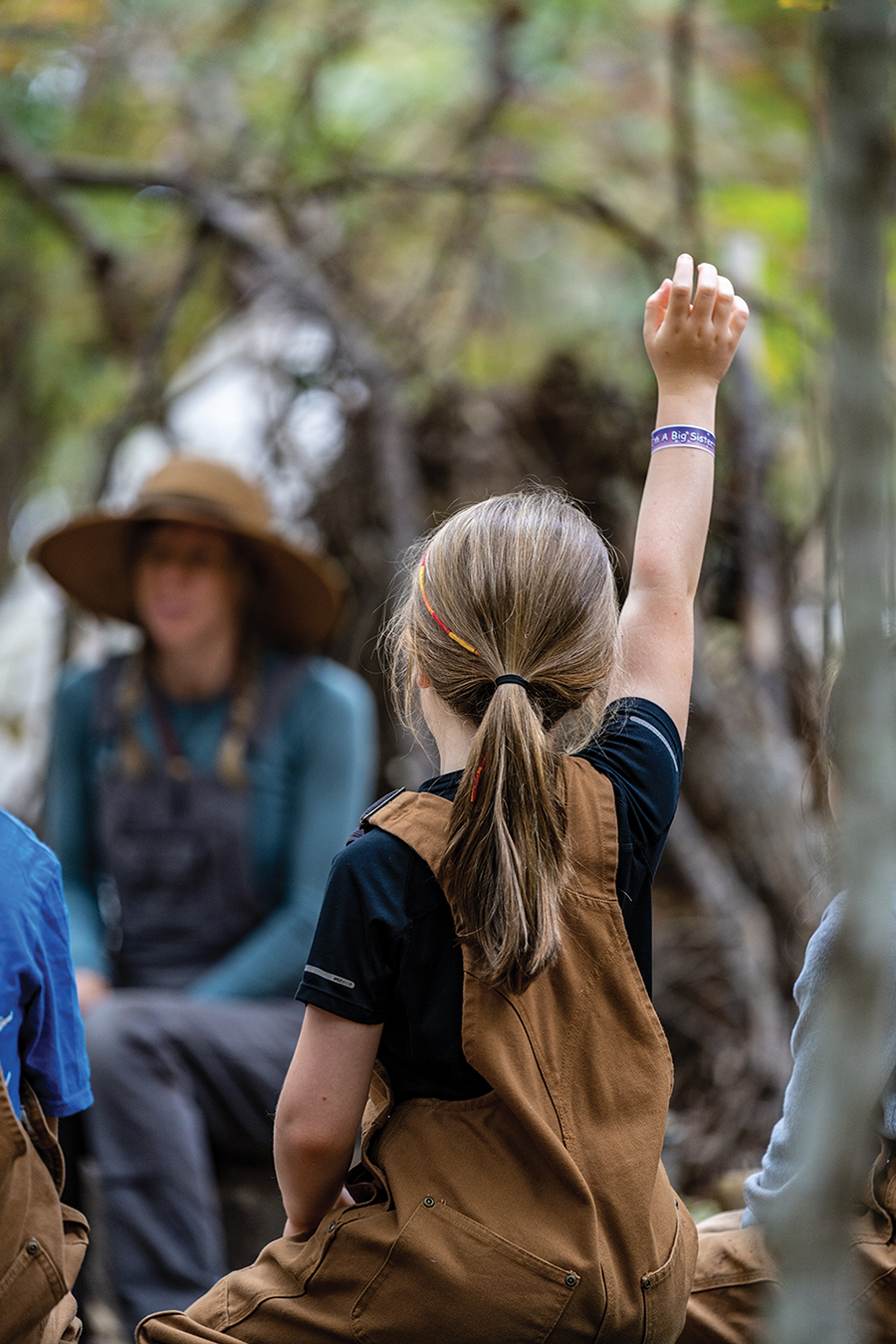
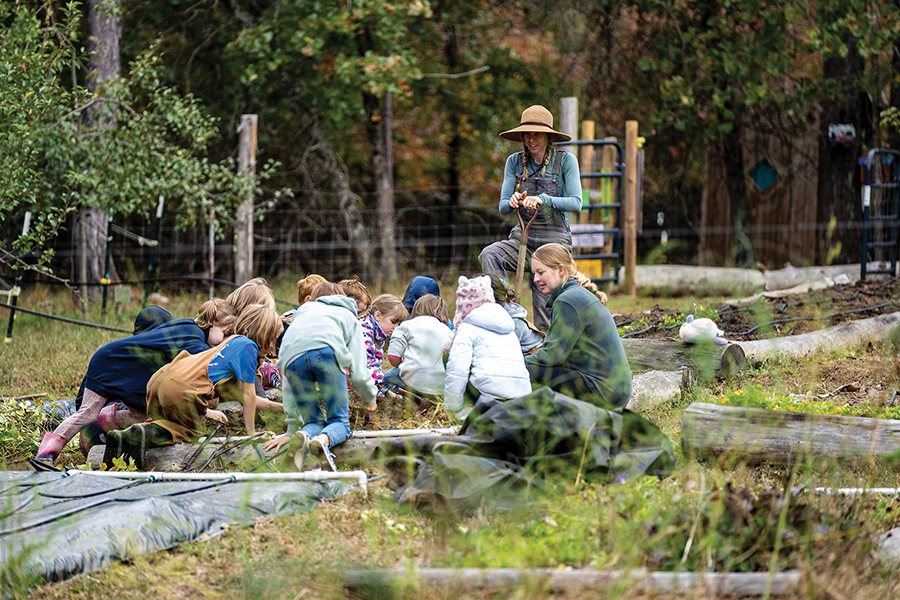
Children’s voices lilt and pitch as they pile out of minivans in a dirt parking lot and file down a well-tended forest trail deeper into the woods. It is a cool morning with a mist in the air and the sun dappling through the pine trees. They pass animal pens and an apple orchard. Hens cluck to the anthem of a large Black Copper Maran rooster. Goats bleat and a large sow snuffles into her feed trough.

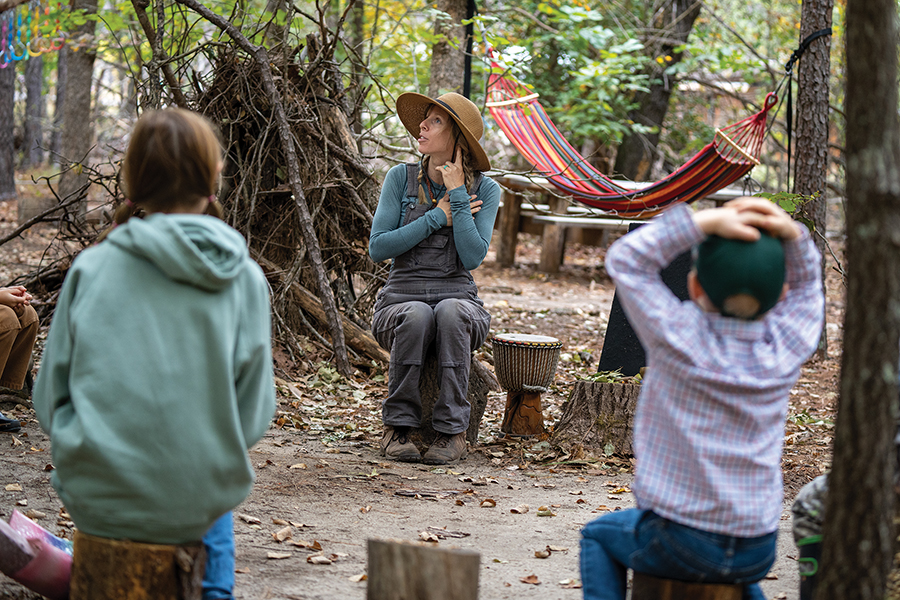
As the children shuffle down the sand path into a forest clearing and settle onto log seats around a stone fire circle, a woman’s voice begins singing softly: “Good morning dear friends/so glad to see you.” It is a gentle, untrained voice that carries a smile in it as the children settle into rapt attention.

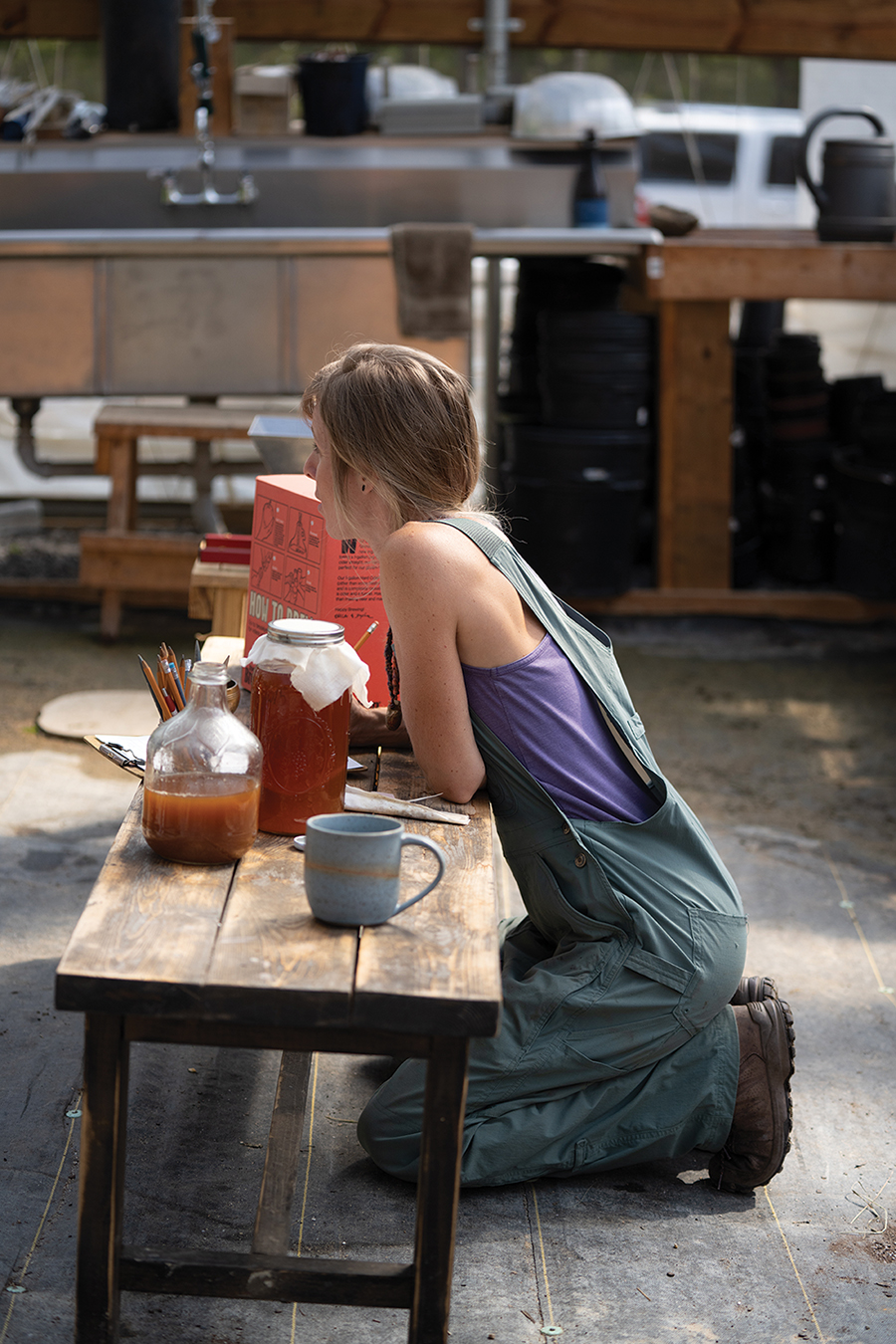
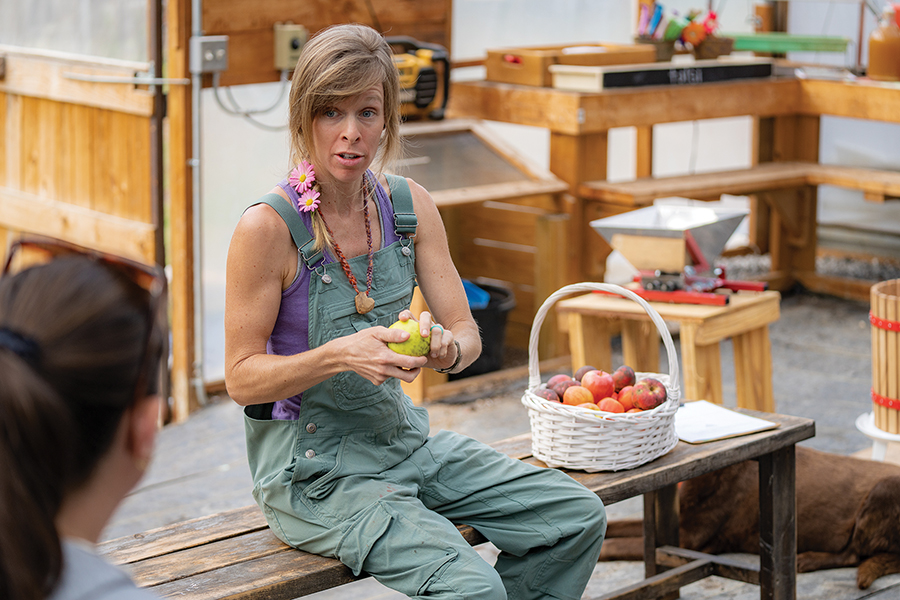
This is the daily ritual at Ladybug Farm, Shawna and Jared Fink’s 16-acre Pinebluff farm that hosts a variety of nature immersion classes and other programs. Such attentiveness on the part of preschoolers may be difficult, if not impossible, for most parents to imagine. Is it magic that holds them spellbound on their log seats, cradling a hot cup of tea from homegrown tea leaves and nibbling at fresh-baked bread? If so, it is a magic made wholly by the woman with kind eyes singing on the other side of the circle.

Shawna did not grow up with a farming background in her home in upstate New York, though she did live in a rural community “with more registered dairy cows than people,” she says. Her father’s garden offered a place for special time spent together after her parents’ divorce, and long walks in the woods accompanying him in his hunting and trapping were treasured. “I didn’t realize at the time how important and sacred nature was to me, but now, reflecting on it, I think it led me here today,” she says.


For a woman so integral to this family farm and forest school, it was a gradual metamorphosis — Shawna never even intended to leave her hometown. After starting a degree in art and art therapy, she changed over to education. Preparing herself for the New York State school system, Shawna added a concentration in high school math to her undergraduate degree in elementary education and special education with an art minor. “I love doing things, and learning, and I’m a believer you can just keep learning your whole life,” Shawna says.

The following year, Jared’s job took them to Pennsylvania, where Shawna planted the first of many rudimentary gardens that would follow her from place to place.

“We had a little apartment, and we were on the second floor so I had no yard,” she says.  “I asked the neighbor, ‘Can I put a few things in the garden?’ A couple of months later, it’s like beans, huge cosmos, sunflowers, a little bit of lettuce and a couple of carrots — enough to feel that connection to the earth.”

Shawna finished her master’s degree in curriculum and instruction while in Pennsylvania. “The plan was to return to New York. A lot of people were pushing me toward administration and leadership, but then you’re so disconnected from the children,” she says. “So, curriculum and instruction was a great outlet for me.” It also gave her the opportunity to begin incorporating Waldorf school principles into her educational philosophy.


With that degree complete, Shawna was ready to find work in her field, and Jared was willing to follow wherever that led. They searched from Florida to Hawaii to Thailand before a cousin in Sanford pointed them toward North Carolina. An interview with Hoke County, followed by an immediate job offer, brought them south.

It was a difficult start for a first-year teacher and a daily battle. “I felt I was needed there, but I was also passing the gardens of Aberdeen Elementary every day on my commute from Moore County, and I really wanted to be at that school,” she says. Shawna joined Aberdeen as a third-grade teacher the next year, and her “heart fell in love with it.”

While at Aberdeen Elementary, Shawna taught inclusion to a third-grade class containing children of different ages and varying abilities. Children with special needs, as well as those considered gifted, all had to be tested at a third-grade level. Using differentiation and small groups, she got amazing test results, winning The Growing to Greatness Award. She led nationwide classroom management workshops through FoodCorps, sharing the feasibility of getting kids outside and managing children in an outdoor setting with other teachers.

“There’s something so wholesome to me that even when I was teaching, gardening was something that I did,” Shawna says. Third-grade curriculum included the functions of the stems, roots, leaves, area, perimeter — answers to all of which were to be found hands-on in the garden.


“The kids knew, every Friday, you bring your boots, you’re going out rain or shine in the garden and doing things. So, I was already doing that a lot, and it filled my soul.” She experienced the growth of a child who had required police restraint in his own home, isolated by severe behavioral issues, for whom a daily start in the garden was life-changing.

“I saw the changes that happened in my children when I allowed them to go out in the garden every morning,” Shawna remembers. “It just changed the whole dynamic, responsibility level, the attitudes of my children, it was incredible.” She gloried in watching her class develop a connection to their food, fondly remembering a precocious child’s exclamation,“OMG, this broccoli doesn’t even need ranch dressing!”

After advocating for the interests of her self-contained classroom and the individuality she felt necessary for the success of all her children, mass curriculum changes caused her to depart public education. Unsure of her next step, she knew the one constant was that it would involve nature. “To see children who don’t have that connection to their food develop that connection really changed me, and so when I left teaching that was still a very big part of what I wanted to do,” she says.

The road to Ladybug Farm continued to meander, as she launched a landscape consulting business but missed working with children. Motherhood came and with it a resurgence of her interest in childhood education, the richness of Waldorf and myriad other doctrines offering enrichment to the whole child.


The Finks’ final move to their Pinebluff land and the adventure of building their own home while living in a fifth-wheel RV brought another whirlwind of activity. “We were in the camper before we even had a well dug, and borrowed a hose from the neighbor’s house,” Shawna says. “We could have workmen running power tools or air conditioning, but there just wasn’t enough for both.” Their second child was born and the family moved into the completed home when he was 6 months old. “We made the most of it, and I was so happy, and excited, but it was nice when we moved into the house. We called it our castle, because it seemed so big.”

Throughout the frenzy of construction, a newborn, and building the infrastructure of a fully functioning farm, Shawna continued to host play dates and draw her community into the nature they had cultivated. As the farm grew she began hosting field trips for local schools and her dream along with it. “I want children and families to develop a connection with nature. I want a community — that is my goal. A community-based farm where people can come to develop a connection with nature. The school started from there, with a few children in the fall.” The first session hosted an autumn-only program, which eventually grew to a full year.

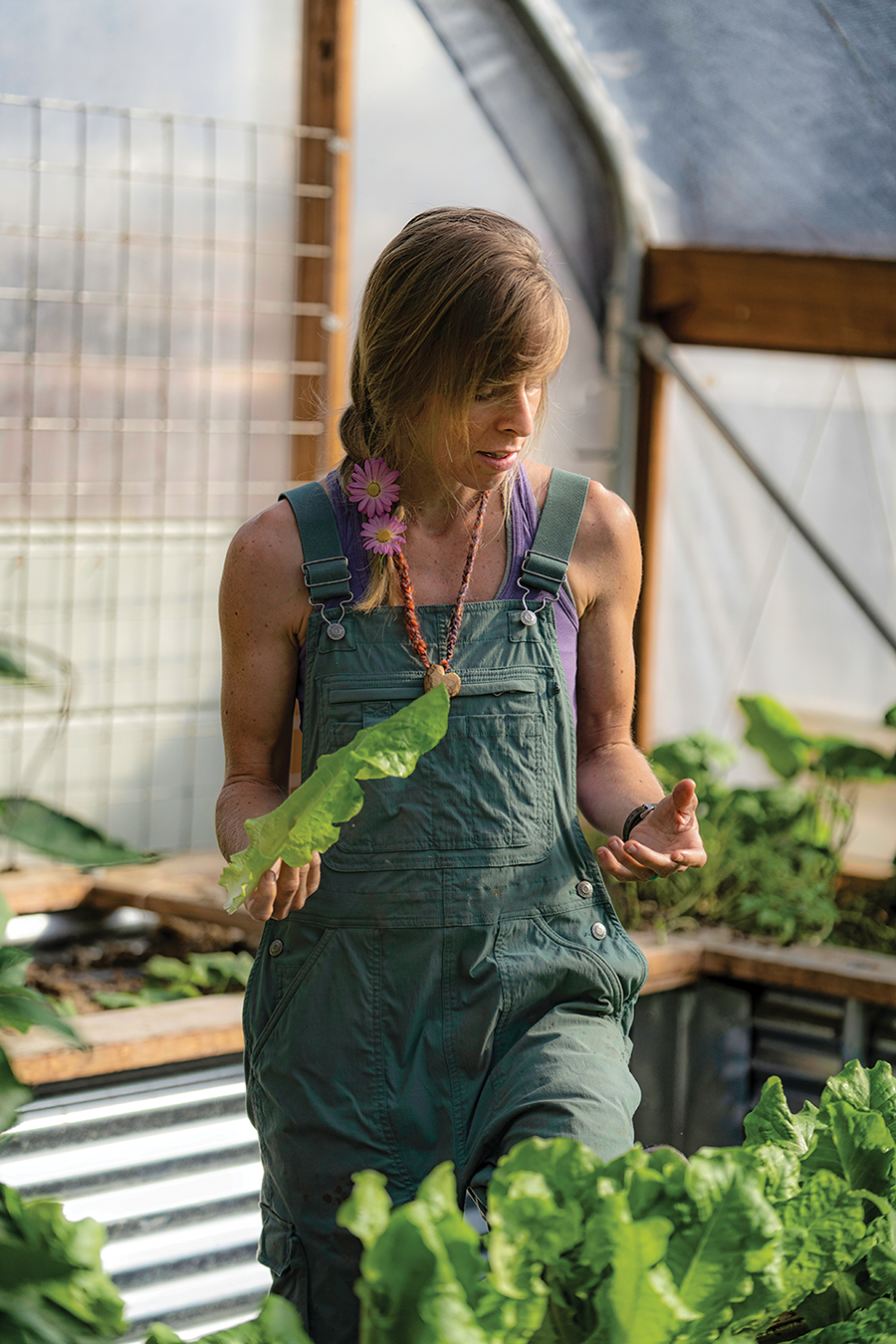
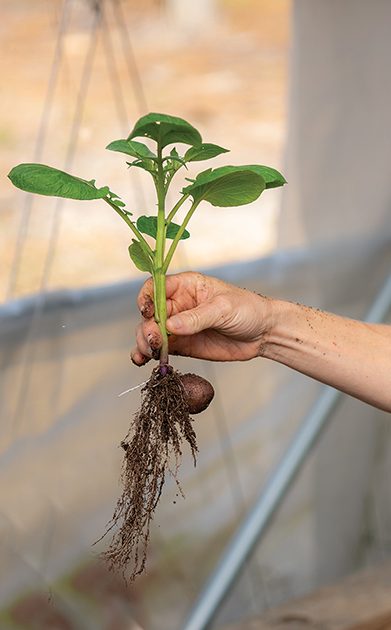
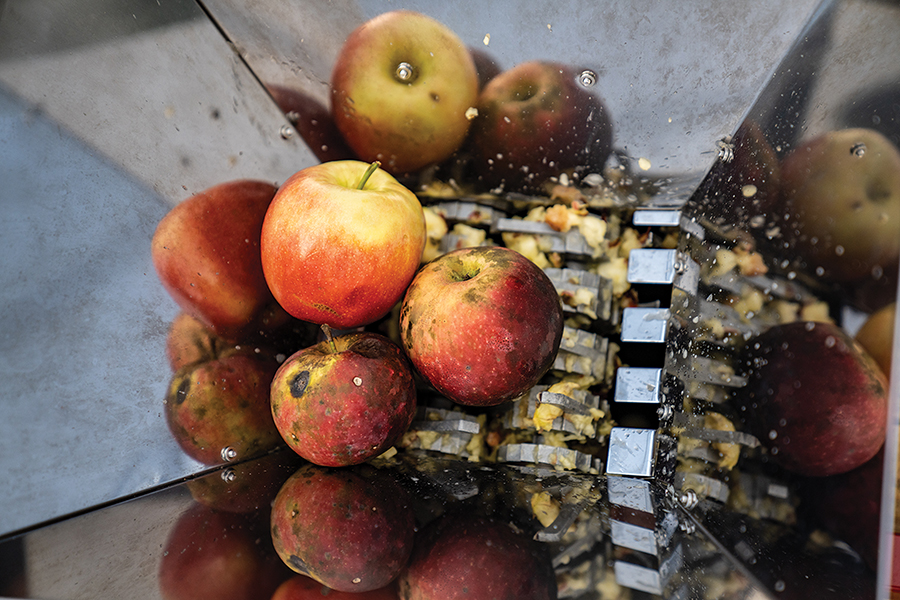
    Like the apple orchard that started as a testing ground for cider varieties, the programs at Ladybug Farm have blossomed naturally over time. The Nature Immersion Forest Kindergarten for 3- to 6-year-olds led organically to the Nature Immersion Forest Homeschool program, as children who aged out of the first group couldn’t bear to leave the farm entirely. The kindergarten, now in its fifth year, has grown to two days a week, as Shawna adds more Waldorf rhythm and handicrafts. The Finks finished their hoop-style greenhouse, which grew from a desire to create a wheelchair-friendly space with wide aisles and raised beds. Forest classes benefit from the extended growing period and are able to harvest the fruits of their labors before summer vacation. Adults wanted to join the community, sparking a Winter Greenhouse Gardening Program. Jared continues to expand his passion project, LBF Carpentry, with the twin goals of crafting heirloom furniture while offering community workshop space and woodworking classes.   

As full as life is at Ladybug Farm, it remains an integrated part of its Sandhills community. “I really like chocolate, but you can’t grow chocolate here,” Shawna says with a smile. “So everyone thinks, ‘Oh you’re self-sustaining, you don’t need anyone else.’ No, self-sustainability is never going to be the goal — you can be community sustainable. And you can go to Java Bean and get your coffee beans. And then go here and get something else. But you’re always going to need your community.”

The home Shawna and Jared built looks out on a garden, bees from their apiary buzzing through the celery stalks while ducks waddle into a stock pond. In early spring, the white “castle” on the hill will attract its namesake ladybug in droves, carpeting its southern walls in the sunshine. The insect has brought a fitting name to this 16-acre farm. Dainty and colorful, they may not seem particularly fierce and yet one ladybug can decimate 5,000 aphids over the course of its lifetime. It is a telling reminder of the power a single person can have on their own environment. One Shawna Fink keeps in mind, as she tends deep roots of her own at Ladybug Farm.  PS

Aberdeen resident Amberly Glitz Weber is an Army veteran and freelance writer. She’s grateful for every minute spent out of doors, rain or shine.

The Acorn and the Tree

The Acorn and the Tree

Sharing the gifts of love and life

By Jenna Biter     Photographs by Lolly  Nazario

Mothers do big things. They plan weddings and crisscross the country (sometimes the globe) to visit children and babysit grandchildren. They do small things, too, like pack lunchboxes, sort smelly laundry, and cheer from the sidelines in excited shouts or whispers. Better than anyone else, mothers navigate awkward, in-between-sized things, like bad breakups or even worse grades.

Mom often does it all without audience or recognition. Sixteen-year-olds don’t remember when she changed their diapers or cooed nighttime lullabies. Her love becomes expected. Some moms relearn calculus only to teach it. Others drive to college in the middle of the night like it’s no big deal. Above all else, moms expertly watch.

She watches, drives, coos, changes, navigates, cheers, sorts, packs and plans. At root, a mother does. Her world is a deep sea of verbs that almost always includes sharing. Mothers and children share hugs. Some share daily conversation. And then there are the lucky few — like these five mothers and their children — who share passions.


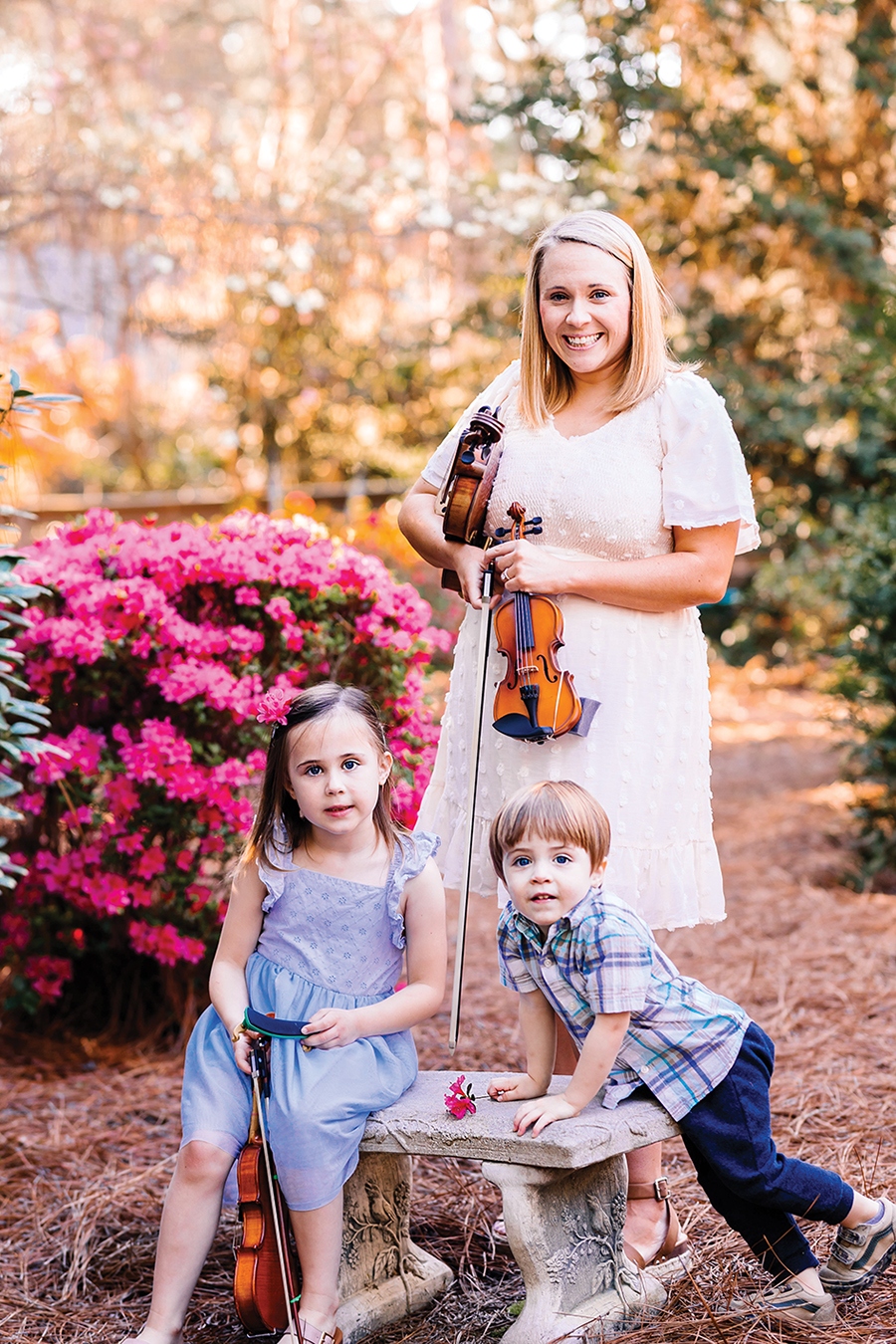
Hannah Mebane

Louisa and Walter Mebane

Two-and-a-half-year-old Walter takes his tot-sized violin out of its case a second time. Meanwhile, big sister Louisa asks Mom if she can add a heart-shaped sticker to her practice chart. The 6-year-old violinist just cycled through “Mississippi Stop Stop,” the first rhythm to her first song: “Twinkle, Twinkle Little Star.”

“Sure,” Hannah Mebane says.

Hannah started playing the violin at Pinehurst Elementary in fourth grade. Fast forward a few decades, and she has taught music and orchestra in Moore County for 11 years. But 2023 will be her last. Hannah has her hands full with kids, a part-time real estate gig, and plans to go from private lessons to a full-time, Suzuki-method studio. There, Hannah will be able to teach even more kids the way she teaches her own.


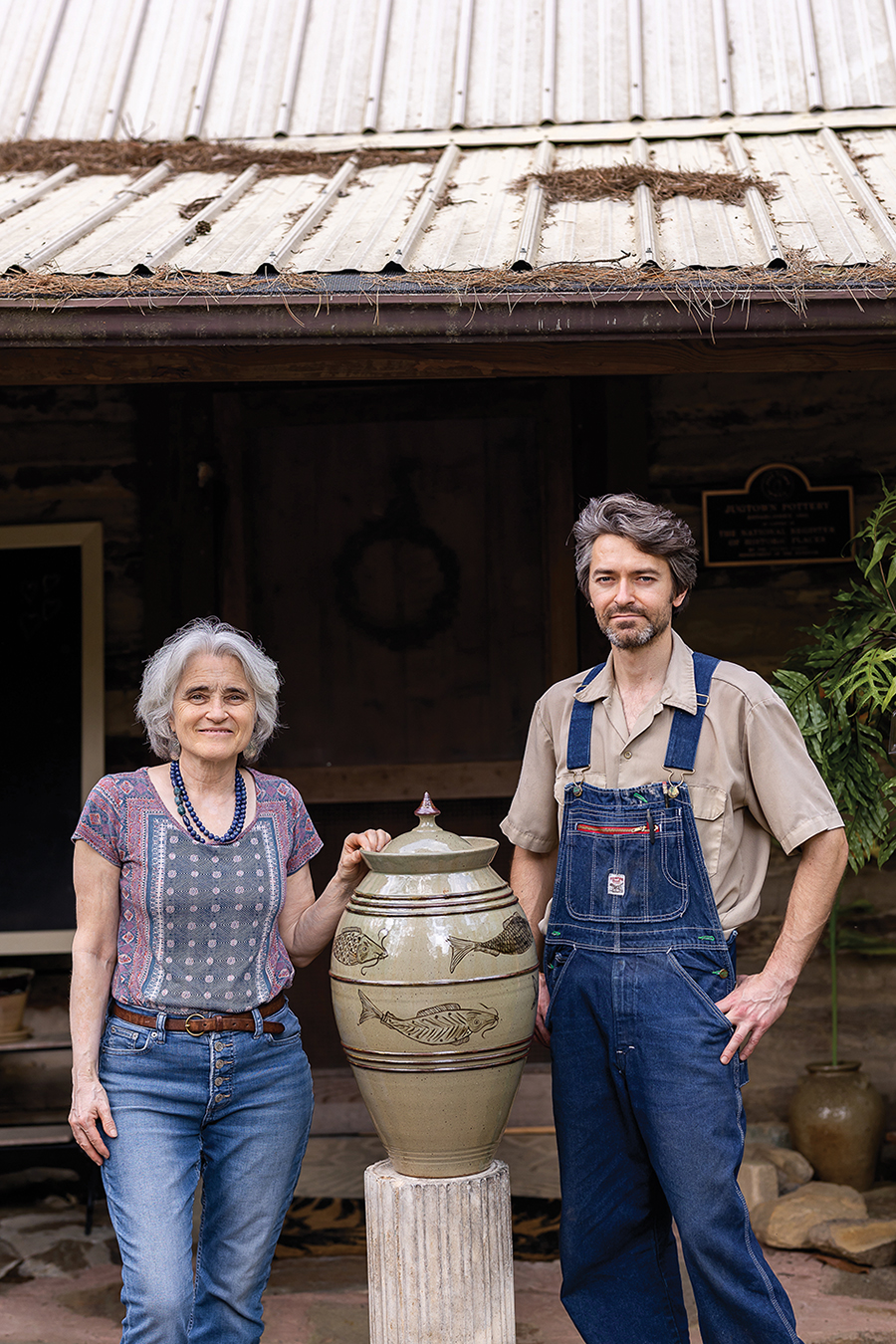
Pam Owens

Travis Owens

Tucked off a backroad — where wildflowers grow tall and dew perpetually clings to emerald grass — sits an old cabin that a trio of fairy godmothers should inhabit. But sprites are nowhere to be found, only sloping candlesticks, jugs with full bellies, and a family of four professional potters hard at work to keep the legacy of Jugtown Pottery alive.

Like the clay they shape with their hands, the Owenses seem to have surfaced from the North Carolina ground. Vernon practically has. Coming from a long line of Seagrove potters, he grew up just around the corner. Pam had to move a little farther. With New England pottery-making in her blood, she originally came south to apprentice with Vernon. Then she returned to marry him, and together, they passed the cumulative talent of generations on to their children, Travis and Bayle.

“I stayed, as a baby, in the room where my mother was working,” Travis says in an easy Southern drawl. “That’s my memory of being very small: being in the workshop, especially with her.”


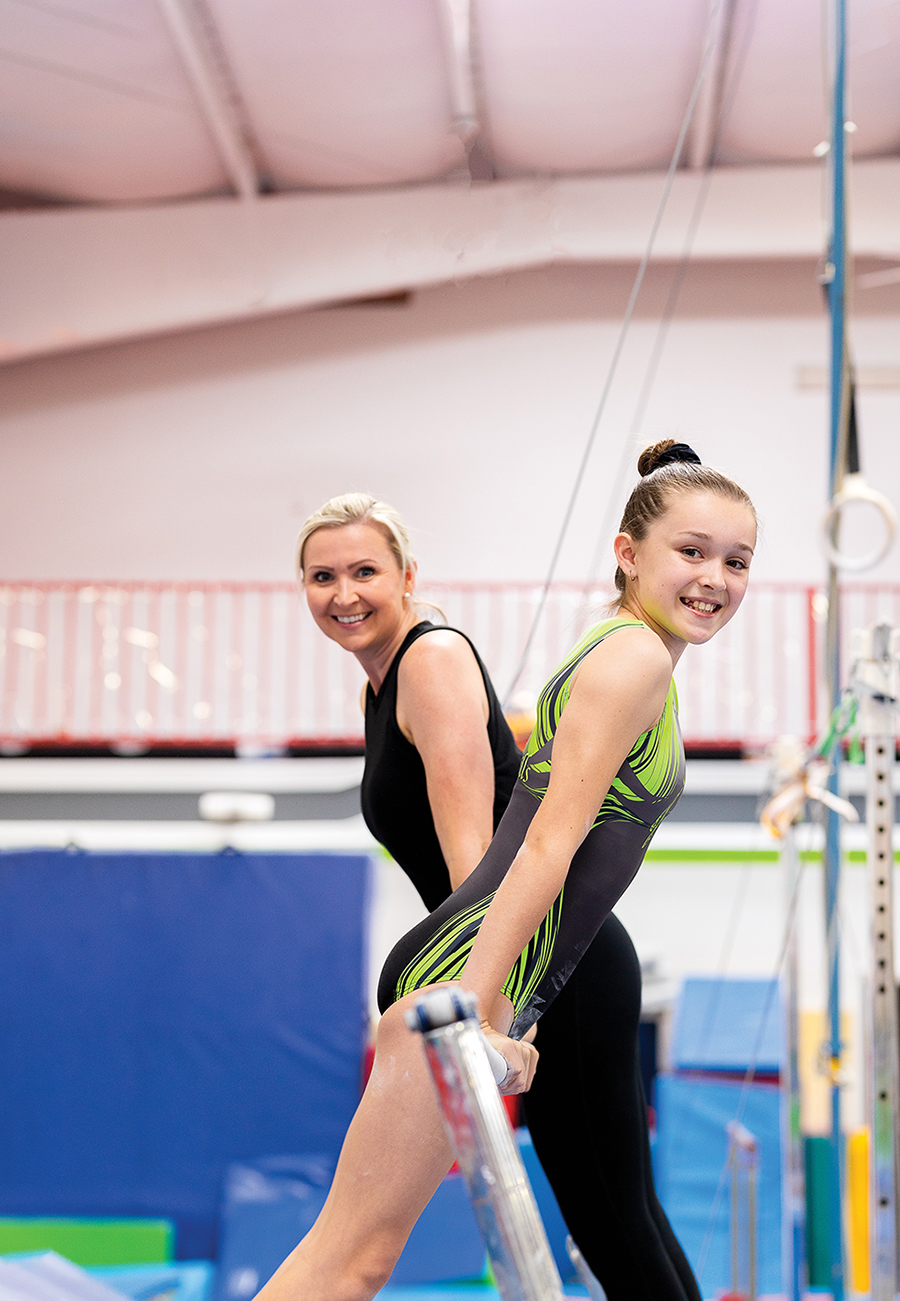
Tracey Greene

Claire Greene

Eleven-year-old Claire Greene practices on her balance beam at home while her mom, Tracey, gives pointers. Up next, 5-year-old Caroline tries a move with instruction from Claire.

“I help train her,” the big sister gushes. “She can already do a bridge, and her cartwheel is getting a lot better.”

Like mother, like daughters.

From ages 4 to 14, Tracey participated in competitive gymnastics. The sport was her lifeline. After her mom, Pat, died from breast cancer, coaches became like second parents. For Claire, gymnastics, as well as dance, provide similar support. They have been her throughline from one military move to the next.

“I started gymnastics when I was 2,” Claire says with a broad smile. “I remember some pictures of us doing stuff together: me mocking Mom, wanting to do what she was doing.”

Then the roles reversed. Watching her daughter compete, Tracey yearned to join in and soon did. She has been tumbling every Wednesday night since an adult class started at Sandhills Gymnastics this January.


Barbara Burley

Nikki Windham

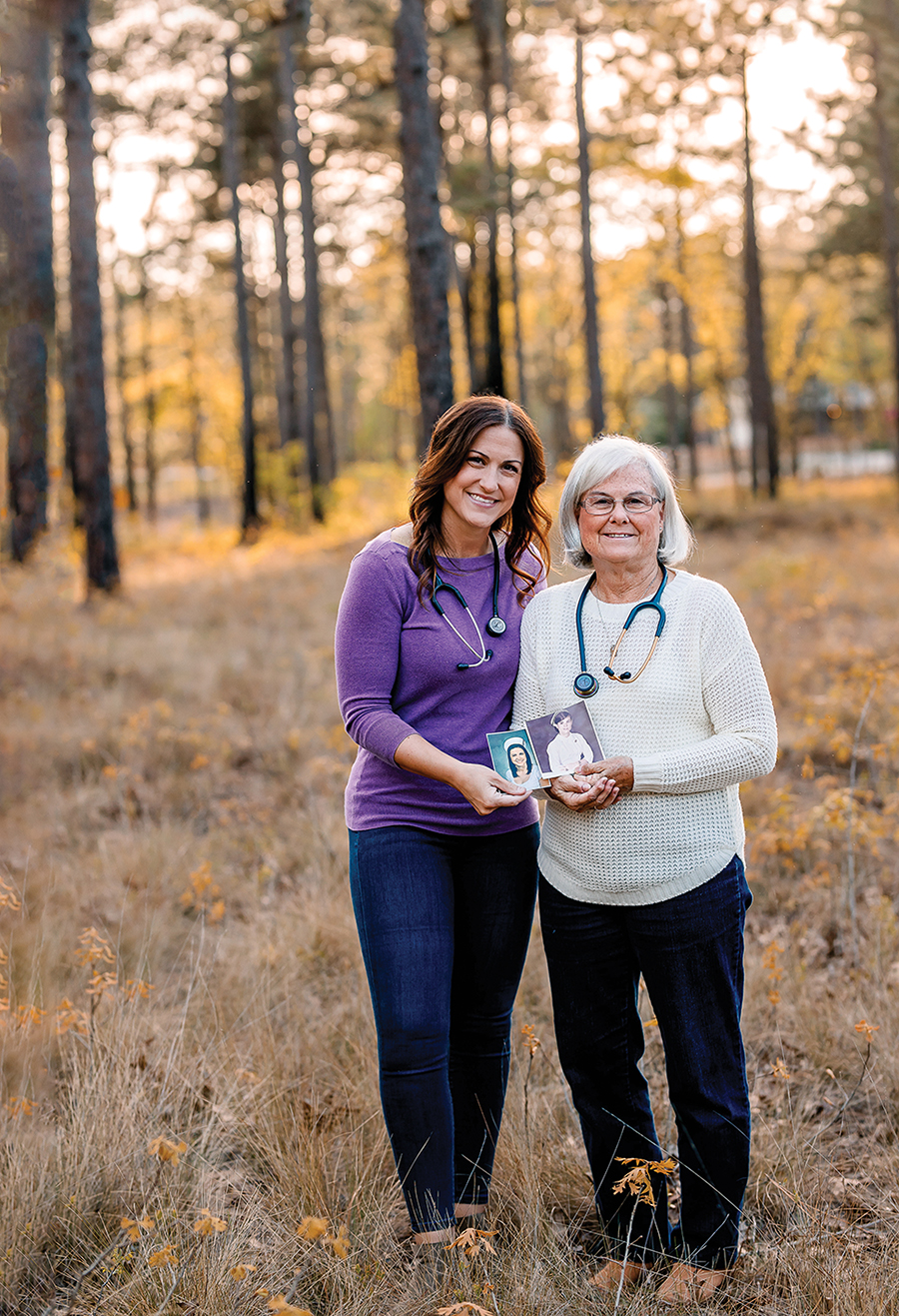
At only 14 years old, Barbara Burley sat at the hospital bedside of a sick child she would babysit. From then on, she knew that she wanted to be a nurse. She pursued a nursing degree and didn’t look back for decades. For 47 1/2 years, Barbara worked nights in the pediatric unit at Moore Regional Hospital. Her last night was New Year’s Eve 2020.

While the night shift wasn’t easy, it allowed Barbara to take her daughters, Beth and Nikki, to and from school, attend their every practice and game, and sometimes even get some sleep.

“She was always at everything. I thought her schedule was great as a kid,” Nikki says. “I didn’t realize how hard it is until I had my children and started working the night shift. You just don’t sleep.”

Nikki graduated from nursing school exactly 25 years after her mom. Thanks to Barbara’s good reputation, she got her first nursing job at Moore, where she worked in the neonatal intensive care unit. Ministering to children must run in the family. Beth also works with kids as a pediatric occupational therapist in the county. 


Christina Baker

Amara Baker

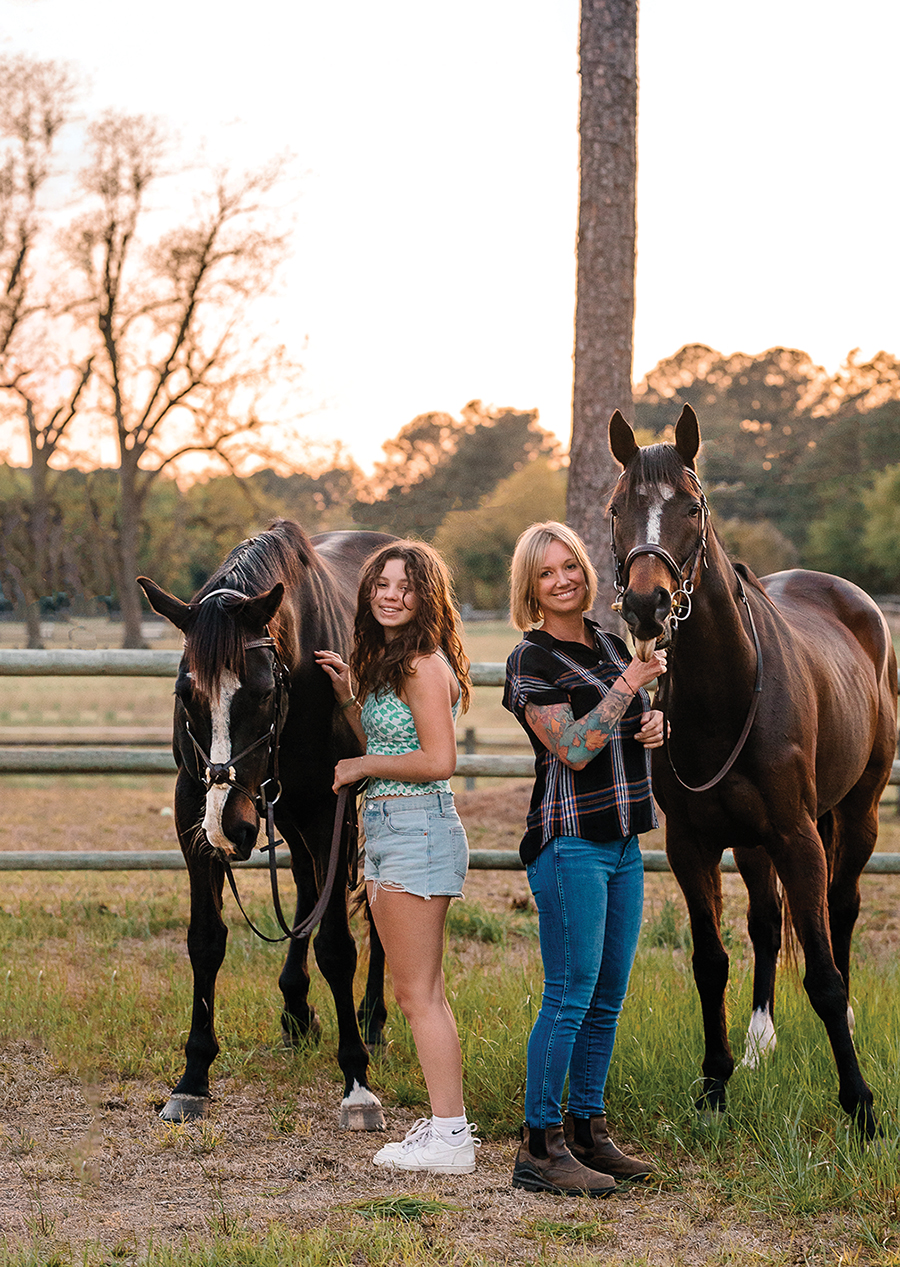
Christina Baker points past the fence. “Here comes Amara.” Back from an hour-long lesson, the teenage brunette rides toward the Baker family’s barn on a matching horse named Zeppelin. Amara dismounts, unlatches her helmet, and shelves her tack before hosing down the retired racehorse. She started riding more than a decade ago, first falling for the flat-out speed of foxhunting, and then the discipline of eventing. Inspired by her daughter, Christina decided to take the reins herself.

“Having a teenager is difficult,” Christina says. “I’m not even close to the center of Amara’s world anymore. But, as long as horses are a big part of her world, sharing that activity lets me have a special little place in it, even if it’s just for a one-hour ride.”