Dark Clowns

By Jim Dodson

I was deep in the country at twilight, heading home with the radio on when I heard about the dark clowns. The BBC presenter sounded skeptical, even amused by reports out of Greenville, South Carolina, where people dressed as clowns were reportedly trying to lure children into the woods with candy and money.

“So . . . is this just a hoax or something people there are really concerned about?” the host asked a local reporter covering the story, his tongue half in cheek.

“I can’t say it’s a hoax,” she replied, “because the police are taking this very seriously. They have warned parents and doubled patrols. This really has a lot of people freaked out.”

So-called “after-dark clowns” have been spooking America quite a bit lately, it turns out, most recently in Winston-Salem and Green Bay, Wisconsin, where a photograph of a dark clown roaming early morning streets carrying black balloons set the Internet on fire. Two Octobers ago residents of Bakersfield, California, were spooked by photographs of “evil after-dark clowns” roaming their streets after hours, showing up under lampposts and frequenting kiddie rides. Since then, reports of dark clowns have cropped up in a dozen other places around the country.

“The police don’t know whether the stories are coming from the imaginations of children or something sinister is afoot, but panicked residents seem to be taking the law into their own hands,” The New York Times noted about this latest outbreak of clowns in South Carolina, adding that shots had been fired into wooded areas where the sightings occurred.

Whatever else may be true, clowns occupy a peculiar space in American popular culture, somewhere between what’s perfectly innocent and downright terrifying. My September issue of Smithsonian notes that clowns have been with us since man’s earliest days in the guise of everything from mythologized tricksters to painted medicine men. Pygmy clowns entertained bored Egyptian pharaohs, and medieval court jesters were entitled to thumb their oversized noses at the king without fear of losing their heads. Ancient Rome had professional clowns whose job it was to pacify unruly crowds at festivals, peacekeepers who kept an eye out for troublemakers. “Well into the 18th and 19th century,” writes Smithsonian’s Linda Rodriguez McRobbie, “the prevailing clown figure of Western Europe and Britain was the pantomime clown, who was sort of a bumbling buffoon.”

Once, standing in a crowd of camera-wielding tourists next to my young daughter on the main drag in Jackson Hole, Wyoming, awaiting a parade of local rodeo riders, I spotted a mime working the crowd and approaching us. My daughter was delighted. But I wasn’t.

Mimes have always made me uncomfortable, a modest phobia I trace to a powerful moment in my early childhood in Mississippi, where my father briefly owned a small newspaper. One evening in the late fall he took my brother and me to a political rally in a cornfield just outside town where a group of strange people showed up wearing white robes and hoods and stood around a bonfire. We didn’t stay long, just long enough for our father to get a quote or two from the mayor and the hooded figures and to frighten the bug juice out of his sons. We asked our dad why those men wore hoods. “Because people who wear masks are weak people often up to no good,” he replied. Our mother gave him holy hell when she found out where he’d taken us just to harvest a quote.

Forty years later, picking up on my post-Klan jitters, the mime paused right in front of us and attempted to make me smile. He made a huge happy face followed by a tragic sad one, rubbing away imaginary tears when I wouldn’t yield. The crowd ate it up.

“Thanks,” I said through gritted teeth. “Feel free to move along now.”

Clowns were everywhere in the America where I grew up. Most were fun-loving and perfectly innocent in those faraway days — Clarabell the Clown on Howdy Doody and Bozo the Clown with his internationally syndicated show — which according to Smithsonian had a 10-year waiting list for tickets.

There was even a clown I liked on my favorite weeknight TV show, Red Skelton’s alter ego Clem Kadiddlehopper, a bumbling painted-up fool who was tolerable only because he often broke up halfway through his skits. In my bedroom I even had a harlequin desk lamp. I attended Ringling Bros. and Barnum & Bailey Circus about that time, exactly once, on the other hand, feeling bad for the animals and truly bothered by the clowns. Only the acrobats appealed to me.

“So the question is,” Smithsonian’s McRobbie wonders, “when did the clown, supposedly a jolly figure of innocuous, kid-friendly entertainment, become so weighed down by fear and sadness? When did clowns become so dark?”

The truest answer is, long ago and far away.

Classical operas and Shakespearean dramas, after all, have long used clown figures as sinister messengers of mystery and intrigue. But in the modern American context it may well have been an evil clown named Pogo who established the motif of the dark clown around town.

His real name was John Wayne Gacy Jr., a friendly chap who entertained children in the Chicago suburbs for years during the middle 1970s before he was arrested, tried and convicted of killing 33 young men. “You know,” he reportedly told investigators, “a clown can get away with murder.” Before Gacy faced execution in 1994, America’s Crown Prince of Killer Clowns spent his time in his cell painting pictures of clowns and self-portraits of himself as Pogo the clown.

After seven years of writing about dark things for my magazine in Atlanta, I officially swore off watching horror films after writing a piece for Boston magazine about a reclusive teen in western Massachusetts whose mother allowed her son to gorge himself on the Friday the 13th films only to have her troubled son don a hockey mask one Halloween night and slash several kids before hanging himself in the woods. The psychologist who’d been treating him for years told me “his identification with Jason seemed pretty harmless.”

A toxic flood of even more ghastly films continues to flow into your local Cineplex, feeding our insatiable desire to terrify ourselves. Heath Ledger’s brilliant if disquieting Joker in the 2008 Batman remake The Dark Knight seemed almost too real and sadly prefigured the gifted actor’s own demons rising to the surface when he shortly died of an accidental drug and alcohol overdose.

I sometimes wonder if we aren’t simply hardwired to value a good harmless scare in a world that appears damaged beyond repair and full of very real dangers, providing new purpose to whatever bogeyman has always lurked beneath the bed. In another age, after all, fairy tales and fables of trolls loitering beneath bridges and witches in the woods were meant to instruct children on the dangers of straying too far beyond the light or down a road of ruin, real or imagined. “Always keep a-hold of Nurse,” goes a famous ditty by a French writer, Hilaire Belloc, “for fear of finding something worse.”

Once upon a time, Madge the beautician and Speedy Alka-Seltzer were icons of commercial television spots. They’ve given way to pharmaceutical companies peddling expensive drugs for maladies whose side effects may kill you, security firms eager to surveil your home against intruders who are just waiting to pounce, identity theft, and internet investment firms that torched your 401-K plan a few years back while reminding you that you haven’t put aside nearly enough for a “happy” retirement.

Perhaps this explains why Americans can’t seem to get enough of Halloween’s faux gore and fright wigs, projected to shell out a record $7 billion or $75 per ghoul among those celebrating the holiday this year — rivaling Christmas retail.

It’s all part of the funhouse ride that thankfully isn’t real, and every town larger than the hips on a snake seems eager to cash in on the phenomenon with its own haunted corn maze or woods of terror peopled by chain saw–wielding psychos and evil clowns, bless their dark little hearts.

In a broader context, all our lives are challenged by Dark Clowns of one kind or another and things that go bump in the night — a sick child, a worrying diagnosis, a lost job. The worry list is endless.

Maybe the way to fight back is to simply make light of such darkness the way John Candy did in the 1989 John Hughes’ classic Uncle Buck. In one of my favorite scenes in the movie, a drunken clown shows up to entertain at a children’s birthday party where Uncle Buck Russell, good-natured loser — played to perfection by the late great Candy — is babysitting his nephew and two nieces. Upon discovering that the clown is drunk from an all-night bachelorette party, Uncle Buck suggests the clown’s behavior is inappropriate for children. Offended, the clown snarls, “In the field of local live home entertainment, I’m a god.” At which Uncle Buck points to the clown’s rodent-eared VW and firmly says, “Get in your mouse and get out of here,” and proceeds to flattens the clown’s big fat rubber nose to drive home the point.

According to Smithsonian, only 2 percent of grown-ups suffer from excessive fear of clowns, technically a phobia called coulrophobia.

But don’t try telling that to the anxious parents of Green Bay, Bakersfield and Greenville anytime soon.

Truthfully, I’m more worried about some of the dark clowns we’ll have to decide between in the voting booth a few days after Halloween. Bottom line, if a dark clown is foolish enough to show up at my door on Halloween night, don’t be surprised if I give him a shot of John Candy to remember me by.  PS

Contact editor Jim Dodson at jim@thepilot.com.

On the Lookout

A fascinating first novel, a talk of ecological disaster

By Gwenyfar Rohler

Upstairs in the UNC Wilmington Creative Writing Department is the publishing laboratory, where the literary magazine Ecotone matured, and a small press, Lookout Books, refines their books into existence like an oyster begetting a pearl. Until recently, Lookout’s carefully curated and award-winning catalog included two collections of short fiction, a memoir and even a book of poetry, but no novel. But now, Lookout and writer Matthew Neill Null have both dipped their proverbial toes in the water of novel-writing by debuting their first novel, Honey From The Lion, last year.

In the book, set in and around a logging camp in West Virginia at the turn of the 20th century, Null brings us characters that many people would cross the street to avoid. He slowly pulls back the curtains and, with a flickering gaslight, breathes life into these unwashed, violent and desperate people who then become the source of great empathy.

Honey From The Lion is not a hymn to strong men who control other people’s destinies, though the first chapter and the title (an allusion to Sampson from the Bible) might hint at that. For Null, the real story is the struggle of the hundreds of working men to realize their own destinies within their private lives and a system with the singular purpose of exploitation of resources — natural and human. He takes a microscope to look as closely as possible at individuals who, in most circumstances, would never be anything more than statistics: ledger columns, payroll, accident reports. These moments, teasing out the backstories of each character, no matter how minor, are reminiscent of David Foster Wallace.

Echoes of Larry McMurtry’s Lonesome Dove reverberate as well. The introduction and development of the uber macho world are built around a strict code and the appearance of outsiders unprepared to understand the code. But where McMurtry’s men have developed their own code and live outside the dictates of a world they reject, Null’s are trapped inside the code as the least powerful players in their ecosystem.

The care and adoration lavished on a Lookout book is obvious. The physical product is a beauty to behold in an age where book design and production are sidelined for bargain prices and expedient content delivery. Not at Lookout. French flaps, beautiful graphic design and tailored page layouts are the hallmarks of a book that someone cares about. (On the rare occasions that you see a book this carefully created from a big publisher, you know it was the pet project of someone in the office who went the extra mile.) At Lookout, each book radiates that level of care. Perhaps that is the best argument for smaller presses: Because each book takes so much time and effort, they put out few in a year (Lookout produces only one or two annually), and each book is almost a sacred experience. Any author would swoon to have his or her work treated with such reverence, especially for one’s debut novel.

Curious about the selection process for Lookout’s first novel, I reached out to Emily Smith, publisher and co-founder of Lookout. Smith writes, “Null evokes the virgin forest as a fully realized character we grieve deeply by the end of the novel. He implores us to care about the ecological tragedy in West Virginia through story . . . it presented a rare opportunity for our publishing entities to better align our missions and to showcase a book in which place and the natural world feature prominently.”

Ecotone, the sister imprint, place-centric magazine, published Null’s story “The Island in the Gorge of the Great River” in the spring 2014 issue. Null, the then-emerging writer, had not published a book, which appealed to Lookout, whose mission states “seeks out emerging and historically underrepresented voices, as well as overlooked gems by established writers.” In manuscript form, Smith was attracted to this novel’s “nuanced and lyrical descriptions of the natural world, its expansive and cinematic pace.”

Lookout has enjoyed success with previous publications, like their first one, Edith Pearlman’s story collection Binocular Vision, a finalist for the National Book Award in 2011. The following year, Lookout published Steve Almond’s story collection God Bless America: Stories, which won the Paterson Fiction Prize. They know how to pick a winner and how to present one.

I can only imagine the stunned grin that must have spread across Null’s face the moment he received his first novel in Lookout-form. But, from reading Honey From The Lion, I am certain he would recreate the moment in stunning, captivating, undulating prose, drawing the experience out for paragraphs if not pages, intensifying the moment to something epic in contrast to the momentary sensation of pages in hands.

A part of the Creative Writing program at UNC Wilmington, Lookout ensures that the art of bookmaking continues to live hand-in-hand with the art of writing. It may be one of the most valuable lessons to impart on to the next generation of writers. Because, as in Lookout’s new novel, each page holds moments experienced in-depth that draw and enlighten the darkened corners of each character’s soul. Value the written word (and the well-designed book) as something sacred, for it will outlive all of us.  PS

Gwenyfar Rohler spends her days managing her family’s bookstore on Front Street.

Cider House Rules

How David and Ann Marie Thornton transformed an empty ice cream stand into a business with a fringe benefit

By Jim Moriarty     Photographs by Laura Gingerich

If you’re going to grow a business from the ground up, you might as well get a good buzz out of it. When Dr. David Thornton and his wife, Ann Marie, turned some of the same varieties of Southern heirloom apples George Washington and Thomas Jefferson had at Mount Vernon and Monticello into hard ciders of their own creation, the experiment blossomed into a cottage industry that could make your head whirl like Auntie Em’s house.

Crates of ripe Grimes Goldens, a fruit with roots dating back to 1790 and Johnny Appleseed, sit under the open-air shelter beside the cider house that, in a previous life, had been the Ferguson farm produce and ice cream stand on Old U.S. 1. The Thorntons’ F350 Super Duty truck is parked nearby, the door wide open so they can hear Nickel Creek on the sound system. Assisted by Erin Knight, who studied agriculture at the University of Vermont, they slice the apples by hand, carving out the bad spots. They dip them in a tub filled with water and a soupçon of bleach to discourage any natural yeasts, then rinse them off with a hose and feed them rapid fire down the metal throat of a crusher as if they were tossing rocks into a wishing well. Cut. Dip. Rinse. Grind. Repeat. The bluegrass mandolin is drowned out by the heavy metal symphony of grinding. Tiny shards of apple fly about like sweet, sticky shrapnel as a 5-gallon bucket fills with mashed pulp. They pour bucket after bucket into a cylindrical silver hydraulic press that, like a vertical colander, squeezes out the juice.

ps-cider3-10-16

“This will be at least a two shirt-crushing,” says Dave. The old ice cream stand, now a constant 60 degrees, is the lab where they test pH, measure sulfites and add the yeast of their choice, maybe English cider or white wine. “Dave is in charge of microbial control,” says Ann Marie of their “picobrewery,” as she laughingly calls it. The pasteurizing is done in a tank behind the building. The old produce stand fronting the orchards the Thorntons now own is where they put the labels on the bottles with a hand crank machine, 10 in a minute, 1,200 on a weekend on the way to bottling a couple thousand gallons for the season. “I really am the chief cook and bottle washer,” says Ann Marie.

It’s the first season the Thorntons have been able to sell their cider commercially. Previously, they stayed under the legal limit and confined themselves to lighting up local happenings like Stoneybrook or the foxhunt and hanging out a shingle or two at the odd farmers market. Now, they’ll be producing two brands of hard cider, James Creek Cider House, made strictly from their own apples, and Stargazer, which will be a more adventurous version of the hard ciders familiar to most consumers’ taste buds.

“Our James Creek will be a very wine-like cider, refined, dry and relatively higher in alcohol content, about 8 or 8 1/2 percent,” says Ann Marie. “Stargazer is a little bit more on the craft beer, inventive side.” It’s where the Thorntons can get their freak on, blending in a hint of peach, blackberry, ginger, pretty much whatever they feel like. “For Stargazer we press our apples, we press apples from other growers, and we also bought juice. The Stargazer is themed with constellations. Prowling Peach is Leo. He’s a summer constellation. A lot of great apples ripen in October when Orion is high in the sky, so it will be Orion the Mighty Hunter. We might do a blend with persimmon for winter. Stinger for Scorpio. Something like that. I think we’ll have blueberry in the spring.”

Two of their ciders have won prizes in the Great Lakes International Cider and Perry Competition. (Yes, there are cider conventions.) Last year they attended CiderCON in Portland, Oregon. “Physician conferences look pretty bleak compared to cider conferences,” says Dave. “I used to think doctors partied. These guys are having fun.”

The Thorntons aren’t trying to become the Angry Orchard of the East. “If we come out with a good quality product that gets people engaged and just keep it local, then we will have met our goals,” says Dave. “We love this land. We love the countryside. Having something we can use the land for and creating something new is part of the challenge.”

So, how did an intensive care unit doctor and his wife with a master’s degree in English wind up as the Moëts of Sandhills cider?

Dave Thornton grew up in Cincinnati in the Ohio River Valley, where his family was in the produce business, the Castellini Co., still headquartered in Wilder, Kentucky. “The produce warehouses were all down on the waterfront,” he says. “So, I grew up down on the river carrying boxes around and driving forklifts full of fruits and receiving them on the docks. I was surrounded by fruits and vegetables when I was a kid, but I really wanted the farm side.”

Ann Marie grew up in Pelham, New York, a New York City suburb, and the pair met at the University of Notre Dame. They spent a semester in London in the fall of their junior year, simultaneously cultivating one another and a taste for hard cider. After Notre Dame, the Air Force put Dave through medical school. He was on active duty during the 9/11 terrorist attacks. “I used to teach medicine at the Air Force’s residency hospital in San Antonio, but I also worked with Air Force Special Operations Command and ran a team that did light combat search and rescue, took care of the operators if they had problems,” he says. He was in the first task force to Afghanistan. “I wasn’t kicking down doors. The minute somebody found out I was a physician, my street cred went way down.”

San Antonio eventually led the Thorntons and their two daughters, Katheryn and Maura, to Southern Pines, where they found a house and some land bordering James Creek on the outer environs of Horse Country. There was a small, hidden glade, invisible from the house. “We called it a secret field. We thought, well, this would be a lovely place to put some apple trees,” says Dave, who wanted to plant something he could ferment, a boyhood enthusiasm. When he was growing up, he actually had a still in the basement. “I took a still to the university science fair when I was in grade school,” he says, and took a blue ribbon back to the basement. “It was pure science, with a fringe benefit.”

They began reading up on Southern heirloom apples. “Everyone was teasing us. This is peach country. You’re planting apples?” says Ann Marie. “We said, well, it seems like they grew on people’s farms a hundred years ago.”

They did soil preparation in ’08 and began planting trees the next year. “Apple trees are all traditionally done by grafting, so you take a branch cutting from an existing tree and you place it onto a rootstock,” says Ann Marie. The rootstock determines the size of the tree and how soon it produces. The grafting is the genetic material that determines the type of fruit. Sounds simple enough, except for a few things. They weren’t farmers. They weren’t growers. They weren’t pruners or pickers. They weren’t cider makers. They weren’t bottlers. They weren’t marketers. It’s a good thing they each possess a finely tuned sense of humor because the learning curve they were staring at was hysterical.

“They’re highly intelligent people, they really are,” says Taylor Williams, the Agricultural Extension Agent at Moore County’s N.C. Cooperative Extension. “They didn’t grow up in this area. The soils and climate here are quite unique. Ann Marie went through our Farm School Program, where you can sit down and look at the numbers for a business plan related to a farm. Here’s your production costs. Here are your marketing costs. Here’s your likely market. This is what you’re going to have to do to access that. Let me put it this way, for me to take a tobacco farmer who knows all about handling soil and handling the crop and get him geared up toward growing complicated produce crops, that’s a big transition. The Thorntons have had to learn all of that plus some of the soil and fertility managements, then carrying it through to adding value — processing the apples into cider. At every stage there’s a learning curve, plus a regulatory curve, figuring out how to negotiate with the alcohol and beverage control people. Just everything to get a saleable crop and do it legally.” Which is why Ann Marie now has a 60-hour-a-week job.

ps-cider4-10-16

The Thorntons’ research began with Old Southern Apples, a book by Creighton Lee Calhoun Jr., a Pittsboro native described as the man who built the Noah’s ark of Southern heirloom apples. He criss-crossed the South taking cuttings of apple tree varieties to, in many cases, keep them in existence. Calhoun’s banner, to a considerable degree, has been passed to David C. Vernon, an advance placement chemistry and physics teacher at Western Alamance High School, who grows roughly 500 different varieties of mostly Southern heirloom apple trees on his farm, Century Farm Orchards, where the Thorntons bought their first trees.

Along with advice from Williams, the Thorntons got input from Dr. David Ritchie and Dr. Mike Parker from N.C. State University, the former a plant pathologist and the latter a horticulturalist who advised them on plant spacing and pruning. “It’s amazing what a resource we have in those folks,” says Dave. “One of them will come out and I’ll say, ‘Hey, what’s going on with my tree?’ He’ll pick some grass and say, ‘Oh, yeah, you don’t have enough of this.’ I’m looking at the tree. He’s looking at the grass. He knows what’s going on before he even looks at the tree. It’s been a fairly humbling experience.”

The secret field morphed into the Thorntons’ genesis orchard that now has more than 60 heirloom varieties among its 600 or so trees. “Those down there are American Golden Russets,” says Dave as he walks between the rows of their “test” orchard. “This tree is from the 1600s. It’s a Roxbury Russet. It was in Monticello and Mount Vernon.”

“This is a Hewes Crab,” says Ann Marie. “Jefferson said it was his favorite apple. That yellow apple is a Grimes Golden.”

“This is an old Southern apple called a King David,” says Dave. “It was such a heavy crop this year we had to hold the branches up or they’d break right off the tree.” Arkansas Blacks. Johnson Keeper. Summer Bananas. Terry Winter. Limbertwig. “The two of us can get our geek on over this, in no uncertain terms,” says Dave.

In addition to their cider business, Ann Marie takes fruit to the Carrboro Farmers Market, where she’s been doing an “heirloom of the week.” It’s a Peter and Paul dynamic. To ferment or not to ferment, that is the question. “I usually say those apples are for cider,” says Dave. “But the truth is, where cash flow is concerned, Ann Marie wins.”

On her latest trip to Carrboro, a French couple sampled one of the Thorntons’ ciders. “A woman from Normandy told her husband, in French, it tasted like her grandmother’s cider,” says Ann Marie with a smile.

“Right now we’re having a blast,” says Dave. “Fermenting these in groups either by harvest date or by variety and then making hard cider out of them and tasting what each different variety is like. Then what we can do is blend them together to make something that’s very interesting and palatable. The blending at the cider house is pretty cool.”

So are the days in the field. “We keep some German shepherds and they’ll come out on the hillside with us and hang out while we prune away on the trees. You can get a real Zen going about it. The time can just fly by,” he says.

“We recognize the apples from this place may taste differently than they do somewhere else,” says Ann Marie. “That’s OK. We just want to know what they taste like here. What kind of cider can you make here?” It’s a traditional Southern cider to complement traditional Southern foods, fried chicken, barbecue, oysters. Just a couple of Golden Domers at home with their Grimes Goldens.  PS

Jim Moriarty is Senior Editor of PineStraw and can be reached at jjmpinestraw@gmail.com.

The Cruds

The sacred golf buddy trip reaches 100

By Lee Pace

There’s nothing quite like the golf buddy trip: escape, golf, drinking, golf, gambling, golf, cigars, merciless razzing and needling, hangovers, golf and a special brand of childishness among grown men that few other venues can generate. Some guys are skilled players with deep pockets who play the British Open courses from the tips with a trip concierge. Others are 18-handicappers in cargo shorts who make a beeline from the 18th green to a Myrtle Beach honky-tonk.

In February 1967 a group of eight members at Hope Valley Country Club in Durham discovered that particular elixir of adventure and camaraderie that is the golf buddy trip. They ventured to Myrtle Beach when it was a sleepy town with three golf courses, enjoyed the occasion and decided to take another in the fall. Two more, spring and fall, followed in 1968. Ditto 1969, ad infinitum, and since the sixth trip, each has been a 54-hole weekend.

And so this October, this same group of men, certainly with some additions and subtractions over half a century, will travel to The Dunes Club for another 54-hole event — its 100th trip.

“This piece of paper goes back to the very beginning,” Russell Barringer Jr. is saying in his office at his Durham building supply company as he looks at a faded ledger pad. Across it are pencil notations with names, dates, hotels and golf courses dating back to that first trip when LBJ was president and the Super Bowl had just one Roman numeral.

“If you do the math, we’ve played 307 rounds of golf, with three of them on a special trip we made to Scotland in 1974. That’s 304 days of golf in Myrtle Beach, and we’ve missed eight days to weather. That’s remarkable — only eight of 304 rained out.”

He continues.

“Two hundred and twenty-five rounds have been at The Dunes Club.

“Forty-four men have been in our group. Eleven are dead. Three have resigned. Nine are inactive. That leaves 21 active Cruds left.”

Cruds? What’s a Crud?

Barringer relishes telling the story. The original eight golfers — all of them with handicaps of seven or less — enjoyed the trip so much they decided to expand the group and were talking the trip up to other Hope Valley members. The wife of one prospective member overheard a conversation and interjected: “Who’s going on this trip?”

The names were rattled off — all of them up-and-coming businessmen, doctors, lawyers and stockbrokers in their early 30s — and the woman sniffed, “My husband’s not going out of town with those cruds.”

“The name stuck. We’ve been the Cruds ever since,” Barringer says.

Barringer missed the first trip because he and his wife had a previously scheduled trip to Jamaica planned, but he was on the second trip and has not missed one since. The trip to the beach Oct. 13-16 will be his 99th consecutive, longest by a large margin over Bob Baker’s 80-some straight trips.

“Mr. Barringer’s been talking about number 100 for several years now,” says Dennis Nichol, director of golf at The Dunes Club. “That seemed to be his finish line. He’d say, ‘I’m hanging on for a hundred.’

“This is quite a remarkable group. I’ve known of groups coming to the beach for 20, 25 years, but nothing as long as this group. He runs a tight ship. Some groups are a cluster. They’re hung over, no one’s in charge, and sometimes they’re not even at the right golf course. Mr. Barringer is a stickler for the details, and his guys have such a good time and enjoy each other’s company.”

The Cruds did their share of barhopping in the early days, but no one ever got into serious trouble. One Crud was convinced he was beaten up in the bathroom on the back nine at The Dunes, when in truth he was so hungover his cleats tripped him entering the building and he took a nasty fall. And there was an over-served Crud who one year threw some furniture off the second floor balcony of the motel and resorted to putting the damage charge of $365 on his company credit card. That prompted one member to pen a poem by the next trip that opened:

Twas the second of October at Myrtle Beach shore;

The Cruds were assembled for a weekend galore.

Graciously received by the St. John’s Inn;

If only they’d known of the forthcoming din.

“There’s been a lot of teasing and razzing going back and forth,” Barringer says. “Guys will jump your ass over the smallest thing, but it’s never hateful or serious.”

Barringer assumed the role of secretary/treasurer from that fall trip in 1967 and since then has juggled raising three children, running his business and myriad other commitments with operating a taut Cruds ship. He spent 12 years in active Reserve, and eight others of the early Cruds had some military or service background, so it’s no surprise letters to the members might begin, “You will report to the Thunderbird Motel, 73rd Avenue North, no later than 2300 hours,” and “Officers” were appointed for such responsibilities as handicaps, Bloody Marys and even “regrets & remorses.”

The Cruds stayed mostly at the St. John’s Inn in the early days, sometimes at the Thunderbird, and the charge per man in 1968 was $14 per person per day, including room, breakfast and golf. Barringer joined The Dunes Club in 1974 and later bought a condominium and then a single-family home in the neighborhood, so now eight golfers each year can stay in his homes, and several other members have second homes at the beach as well. Most of their golf has been played at The Dunes, but in the early days they ventured out to courses like The Surf Club. Barringer says none of the Cruds have been heavy gamblers, so they put up $25 per man per day for various competitions.

The Saturday night dinner this October promises to be an emotional one. They’ll take a group photo on the 13th hole at The Dunes, each Crud wearing a navy blazer, off-white slacks and the matching shirts that Barringer has custom-ordered every five trips. The usual table will be set in the dining room for the 11 deceased members, with a photo of each golfer at his place setting, and after the invocation and Pledge of Allegiance, each fallen Crud will be recognized and toasted. It will pain Barringer to see two Cruds with medical attendants nearby, one having suffered a stroke and another needing dialysis four days a week.

“I’m going to make a prediction,” Barringer says. “This 100th trip will be the last by the Cruds as we know them. Four or five years ago, I proposed the idea that we think of turning the group over to our sons. I think the group will go in that direction after 100.

“We’ve really been bonded by golf. The Cruds have been such a part of my life, I don’t want to just let it go. That’s one of the reasons I want to perpetuate the group. I want my kids, now grown adults, to enjoy what I’ve had for so many years.”

Enjoy, indeed: the elegance of The Dunes Club and Robert Trent Jones’ 1948 masterpiece. The scent of the salty air off the Atlantic. A Bloody Mary at the turn. A crisp 7-iron and a good pal ready to giggle if you catch it the slightest bit fat.  PS

Lee Pace’s first book on Pinehurst, Pinehurst Stories, was released just weeks before the 1991 Tour Championship.

October Books

By Kimberly Daniels Taws

Sirius: The Little Dog Who Almost Changed History, by Jonathan Crown (Oct. 4)

Sirius, a very smart fox terrier, takes a circuitous route from Germany to America and back to Germany during the 1930s and ’40s. Having been a movie star in Hollywood, then taken in by Hitler, he realizes he misses his family and escapes to await his reunion with them. A delightful story of a dog that “almost changed history” and learned that home is where your heart is.

El Paso: A Novel, by Winston Groom (Oct. 4)

The author of Forrest Gump returns with his first piece of fiction in 20 years. El Paso expands the classic Western into epic historical fiction. An aging American tycoon and his son race to the desert to find their ranch destroyed and his grandchildren abducted by Pancho Villa. Yankee money and political clout mean nothing against the harsh climate of Mexico. The father and son nearly lose all hope until a twist of fate connects them with a matador in search of his wife, also abducted by Villa. This book is sure to be the hit of the fall.

Bolshoi Confidential: Secrets of the Russian Ballet from the Rule of the Tsars to Today, by Simon Morrison (October/November)

Music historian Simon Morrison presents an enthralling and definitive history of the Bolshoi Ballet, where visionary performances onstage compete with political machinations backstage. A fun and sophisticated read.

Rogue Heroes: The History of the SAS, Britain’s Secret Special Forces Unit that Sabotaged the Nazis and Changed the Nature of War, by Ben Macintyre (Oct. 4)

The author of A Spy Among Friends: Kim Philby and the Great Betrayal returns with this story of the group that forever changed the rules of war, using unconventional tactics to sabotage the German war machine. Most interesting is the mastermind behind the Special Air Service, David Sterling.

Speaking American: How Y’all, Youse, and You Guys Talk: A Visual Guide, by Josh Katz (Oct. 25)

Fantastic graphs show patterns of speech in the United States, including linguistic discrepancies like “lightning bug” or “firefly” and varying terms for BBQ and lawn care. It’s a beautiful package, sure to be an entertaining gift for friends and family members across the country.

Smithsonian’s History of America in 101 Objects, by Richard Kurin (Oct. 25)

This is a well-priced hardcover full of pictures revealing who we are by what we leave behind.

The Tunnels: Escapes Under the Berlin Wall and the Historic Films the JFK White House Tried to Kill, by Greg Mitchell (Oct.18)

In the summer of 1962 West Berliners risked everything to dig tunnels under the wall and provide dangerous escape routes for East Berliners. Eager to report on the story, CBS and NBC both sponsored a tunnel in exchange for the ability to film the escapees. In the end, JFK and Secretary of State Dean Rusk stopped the documentaries. This book is a riveting look at the people creating and surrounding this moment in time.

Cooking For Jeffrey: A Barefoot Contessa Cookbook, by Ina Garten (Oct. 25)

The Barefoot Contessa returns with a unique cookbook reinforcing her no fuss, no problem cooking that has served as a guidebook for home cooks of all ages. This book is a culinary love letter to her husband of more than 40 years and tells the story of their courtship and life together. It’s full of new recipes for the home cook to prepare for any loved one.

We Show What We Have Learned, by Clare Beams (Oct.25)

This collection of short stories is the latest book from Lookout Press, a small press tied to the University of North Carolina at Wilmington’s Creative Writing Department. The stories are tinged with other-worldliness as ingénues at a boarding school bind themselves to their headmaster’s vision of perfection; a 19th-century landscape architect embarks on his first major project, but finds the terrain of class and power difficult; a bride glimpses her husband’s past when she wears his World War II parachute as a gown; and a teacher comes undone in front of her astonished fifth-graders. This collection of short stories is an accomplished delight and sure to appeal to the literary reader.

The General vs. The President: MacArthur and Truman at the Brink of Nuclear War, by H.W. Brands (Oct. 11)

Brands, twice a finalist for the Pulitzer Prize, chronicles the contest of wills between these two historic figures, unfolding against the turbulent backdrop of the Korean War and terrors conjured at home by Joseph McCarthy. From the drama of Stalin’s blockade of West Berlin to the daring landing of MacArthur’s forces at Inchon to the shocking entrance of China into the war, The General and the President vividly evokes the making of a new American era.”

The Mothers, by Brit Bennett (Oct. 11)

This literary coming-of-age novel begins with a secret in the teenage years and asks the question if we ever truly escape the decisions of our younger selves, the communities that parented us, and the choices that shape our lives forever.

CHILDREN’S BOOKS

By Angie Tally

One More Dino on the Floor, by Kelly Starling Lyons. Budding paleontologists will enjoy hip-hopping, foot-stomping, hand-clapping, finger-snapping and counting one to 10 as the dinosaurs get their groove on in this delightful counting book. With bright colorful illustrations and fun rhythmic text, young readers will be tapping their feet to the Jurassic beat. Dinosaur lovers age 3-8 and their families are invited to meet the author, Kelly Starling Lyons, and celebrate National Fossil Day with an afternoon of dinosaur and fossil fun Tuesday, Oct. 11, at 4 p.m., at The Country Bookshop.

Gertie’s Leap to Greatness, by Kate Beasley. It is the first day of fifth grade and Gertie Reese Foy is 100 percent excited! She has two best friends (Genius Jean and sweet kind Junior), she has an amazing summer story to tell, and best of all, she has a plan for greatness that she is sure will bring her long-lost mother back into her world. But when all the things she holds dear are threatened by new girl Mary Sue Spivey, beautiful daughter of a Hollywood movie producer, Gertie must decide what is really important. With the pluck of Ramona Quimby, the cleverness of Mo LeBeau and the stick-to-it-ness of a Penderwick sister, Gertie will charm her way into the hearts of readers. (Age 8-12.)

Projekt 1065. Award-winning, critically acclaimed, North Carolina Battle of the Books author Alan Gratz, author of the powerful WWII historical fiction novel Prisoner B-3087, returns with another gripping World War II story, this time about Michael O’Shaunessey, the son of the Irish ambassador to Nazi Germany who served as a spy in the Hitler Youth. Despising everything the Hitler Youth stood for, from book burning to horrific games, O’Shaunessey was charged with delivering insider information to his parents and the British Secret Service, but when tasked to find out more about Projekt 1065, a secret Nazi mission, O’Shaunessey must prove his loyalty to the Hitler Youth even if it risks the lives of those he loves. Gratz will be at The Country Bookshop Friday, Oct. 7, at 4 p.m., to discuss Projekt 1065 as well as The League of Seven, Gratz’s Steampunk fantasy adventure series, which is on the North Carolina Elementary Battle of the Books list for 2016-17.  PS

Sound and Fury

How the Carolina Theatres of Pinehurst and Southern Pines navigated the leap from silent films to talkies in 1928

By Bill Case

he man in charge of virtually everything in Pinehurst perused the June 1928 edition of Motion Picture News, bypassing the provocative feature on the recent European vacation of Hollywood’s most glamorous couple, Douglas Fairbanks and Mary Pickford. Instead, 32-year-old Richard Tufts concentrated his attention on the trade paper’s lengthy editorial dealing with the rapid emergence of the talking movie — a technological advancement in the film industry likely to alter the business model for movie studio and theater owners alike. One of the many hats Tufts wore in his ubiquitous management of Pinehurst was that of president of Pinehurst Theatre Company, operator of the town’s 5-year-old movie house, The Carolina Theatre, at 90 Cherokee Road.

So, on June 21, 1928, Tufts posted a letter to PTC’s general manager, Charles Picquet, expressing the view that, “Pinehurst should be one of the first to have talking movies.” Ever close with a buck, Richard focused on how the costs of retrofitting the theater to exhibit “talkies” could be minimized. With Picquet’s connections as president of the Carolina Theatre Owners Association and vice-president of the National Theatre Owners Association, Tufts thought he might avoid the estimated $11,000 cost of synchronizing for sound. To him it was product placement Roaring 20s style. “With your influence and with the recognized standing of the
Pinehurst Theatre, it might be possible for us to persuade some of the companies to locate a machine here, pretty much at their expense, in order to obtain publicity for the talking movies,” Richard suggested. Presumably his clientele, the upper crust of the East, once having experienced talking pictures in Pinehurst, would induce theater owners back home to convert to the new technology.

Picquet was the man Richard Tufts tasked with the job of keeping his resort guests and the well-heeled members of the town’s “cottage colony” entertained. Along with his wife, Juanita, Picquet had once been a member of a light opera troupe touring the U.S. and Canada. Whether it was managing the Sandhill Fair, organizing local choral groups, luring performers like humorist Will Rogers for theatrical engagements, or exhibiting feature films, Charlie was in the middle of things. He was a hands-on manager, typically greeting movie patrons wearing a tuxedo with a carnation in his lapel, then scurrying to the projection booth, changing into a blue denim jumper and running the projector. When the last frame flickered out, Picquet would be back at the theater entrance in his tux as the audience filed out.

Picquet wasted no time replying to Tuft’s suggestion, advising him events were moving at a dizzying pace. He said Paramount Pictures had already announced that “75 percent of their new product will be synchronized (talking pictures) and Metro will do the same.” Theaters in Greensboro and Raleigh were showing talkies, as were two movie houses in Charlotte. Picquet believed movie houses everywhere would inevitably have to buy in or close. Manufacturers couldn’t keep up with the demand for sound synchronization equipment, making Richard’s hope of obtaining it gratis seem as fanciful as the movies themselves. Picquet warned that addressing the issue could not be sidestepped: “We cannot escape it no matter how much we would like to.”

Since PTC was its own company, Richard Tufts and Charlie Picquet could not act unilaterally. The support of a majority of the 21 shareholders was required for such an extraordinary expenditure. Those shareholders included some glittering names in the Pinehurst galaxy: Henry C. Fownes (steel magnate and founder of Pittsburgh’s Oakmont Country Club); George T. Dunlap (founding partner of Grossett & Dunlap publishers); Leonard Tufts (Richard’s father and owner of the controlling interest in Pinehurst, Inc.); and Donald Ross (Pinehurst’s unparalleled golf course architect).

In light of Picquet’s sense of urgency, Tufts authored a message on July 16, 1928, to PTC’s shareholders asking for an immediate vote on whether to obtain sound equipment. “It is apparent to the officers of your company that the moving picture industry is about to undergo one of those revolutionary changes which new inventions frequently bring to an industry,” he wrote. Richard made the case that if the requisite synchronization equipment wasn’t put in, “. . . we shall probably lose business during the coming winter as many of our patrons will be accustomed to attending the ‘talking movies’ already installed in practically all the larger cities. We cannot afford to have this happen because we depend wholly on our winter patronage to make money.”

Since smaller theaters around Pinehurst seemed unlikely to make the move for the upcoming season, Richard was confident he’d quickly recoup the investment in box office receipts and wanted PTC to immediately initiate acquisition of the equipment. He framed the proposition this way: “If the ‘talking movies’ are with us to stay, it seems almost axiomatic that the sooner we are on the bandwagon the better off we shall be.”

Like any innovation, talking movies had its detractors. There were respected voices in the motion picture business that believed they were little more than a passing fad. Some trade journals expressed concern that the exorbitant costs of producing a sound movie made them impractical. There were fears the rehearsals necessary for actors to master dialogue would compound production costs. Not all silent stars possessed the voice and thespian skill to make a seamless transition to talkies. Other industry flacks believed the public wouldn’t accept the disappearance of silent movies’ orchestral accompaniment. And, the musicians’ union promised a battle royale to protect its members whose jobs would disappear if the talkies actually caught on. There was enough negativity bandied about to give pause to theater owners concerned about laying down serious cash for an extravagant new sound system.

With Richard Tufts on board, however, shareholder approval seemed a mere formality. He controlled enough stock by himself that he needed very little support from the non-family shareholders to get approval for his plan. The formality proved to be anything but. With an eye toward his own bottom line, J. T. Newton, holder of nine shares, was out. He was “opposed to any such expenditure that would reduce dividends.” George Dunlap ambivalently stated that while it might be necessary to “hook up” with the talking movies, his personal preference “would be the other way.” But it was H.C. Fownes’ opposition that caused Richard to waver on the proposal himself. Fownes argued the concept was only in its formative stages and questioned whether PTC was “in the proper financial condition at present to make the investment.”

Fownes’ reply to Richard had somehow caused a flip in the PTC president’s viewpoint. On July 31, Tufts wrote to Picquet, “The more I think about it, the more I think Mr. Fownes is right.” The purchase of synchronization equipment was suddenly in doubt. What caused Richard to make such a quick about-face? The answer may lie in a parallel theater-related brouhaha.

That dispute involved another movie theater operating at 143 N.E. Broad St. in Southern Pines also named the “Carolina Theatre.” PTC did not own the Carolina Theatre of Southern Pines, but Picquet and Tufts, personally, did. Though the two Carolina Theatres were not under common ownership (one owned by the PTC shareholders, the other by the Picquet/Tufts partnership), Richard considered it beneficial for them to be managed as one, giving Picquet leverage in obtaining films from distributors on terms that a single screen operator could not achieve. The two theaters could coordinate their movie showings and share the costs of a single film rental.

Earlier in 1928, Tufts and Picquet asked PTC shareholders to consider financially participating in the construction of a new theater in Southern Pines to replace the existing one, which Richard described as “a dump.” Fownes, however, rejected PTC’s participation in the construction venture outright. Richard fumed at this unanticipated roadblock and fired off an indignant missive to Fownes declaring that “it would be impossible for Mr. Picquet and me to adjust . . . if the stockholders have lost confidence in the way we have conducted the theater. It would be so much better for us to get out.”

ps-theater2-10-16

The dust-up was resolved only after the landlord of the Southern Pines Carolina Theatre agreed to make overdue improvements. Richard usually avoided run-ins with the elite members of Pinehurst’s “cottage colony.” His atypical outburst probably caused some uneasiness in his relationship with H.C. who was arguably the most prominent cottager of all, serving on the country club’s board of governors and Pinehurst Inc.’s citizen advisory board. Fownes had personally supported a local bond issue and, after the crash of 1929, would help bail out Pinehurst, Inc. by contributing $30,000 to retire its delinquent bank note.

When the issue of PTC’s transition to talking movies arose, Tufts would naturally have been reluctant to engage in another fractious dispute with Fownes. So, when H.C. reported on Aug. 6 that a friend in the film industry had confirmed “it would be a mistake to make an investment to the degree you (Richard) estimated an outfit would cost,” Tufts did not push back. Pinehurst’s Carolina Theatre would remain a silent movie house for the duration of the resort’s 1928-29 season.

Picquet, however, was not inclined to take no for an answer. When he got wind of Fownes’ letter, he composed a diplomatic rebuttal. He informed Richard that he was “glad to see the note from Fownes also as I am anxious to hear all sides of the sound question.”  However, the manager pointed out, “talkies are packing them in even during the most torrid weather while ‘silents’ are suffering and closing . . . Fox has stopped silents. Within a month Paramount and Metro will do the same . . .Within two months all newsreels will be talkies.”

Facing what he was sure would be dismal winter admissions in Pinehurst, Charlie urged reconsideration of the decision in an Aug. 10 message: “I am going on record . . . to predict that we would more than pay for the installation within the next two years in increased attendance and higher admissions . . .The theaters that will clean up . . . are the theaters who get in on it now while there are comparatively few installations.” Picquet also mentioned that, “Contrary to Mr. Fownes’ report, Pittsburgh’s sound theater is doing a turn-away business and the silent ones are doing almost nothing.”

Perturbed at his general manager’s drumbeating, Tufts suggested Picquet was not fully in tune with public taste. On Aug. 27 he wrote he was “very much impressed at the lack of interest shown (in talkies). Most . . . do not like them and prefer the organ music.” He intimated people in the trade were getting ahead of their own customers.

The correspondence between Tufts and Picquet took on a frostier tone. On Sept. 5, Charlie rubbed it in that the Greensboro sound theater was perpetually “SRO” and that in three months, the resulting profits would pay for the equipment. Three days later, Richard noted the impresario’s ongoing “propaganda on talking movies.” No still meant no.

Picquet took a September vacation to New York, where he enjoyed racing days at Belmont Park but also found time to hobnob with fellow movie people. Not above negotiating in the press, when he returned Charlie informed The Pilot that he had concluded, “after tramping Broadway from end to end . . . the ‘talkies’ are here to stay.” With Tufts still opposed, Picquet tried another tack on Oct. 23. He offered “to ‘hock’ my stock with the bank in order to provide funds for the installation.” So sure was he that Richard and H.C. would find his offer acceptable that Charlie began arranging for purchase of the equipment.

Even that gambit misfired. Fownes still objected. He feared PTC would wind up on the hook morally, if not contractually, if the investment didn’t pan out. On Dec. 17, Picquet informed them he had already personally bought the necessary equipment, but that if “Mr. Fownes is unwilling to allow me to put it in, I would suggest that it be installed in Southern Pines.” Charlie also sounded the alarm that the competing theater in Aberdeen was “rarin’ to install one and will get it, if I do not.”

The frustrated Picquet could not resist taking a potshot at H.C. “Of course, Mr. Fownes does not know it, but the silent pictures from now on are going to be ‘sorry’ affairs . . . No less than 15 silent pictures which were booked for November and December, have been withdrawn to make ‘talkies’ . . . This means that the silent pictures will be junk.”

Finally, Tufts relented, allowing Picquet to install sound synchronization equipment in Southern Pines’ Carolina Theatre. Nelson Hyde’s editorial in The Pilot hailed the coming of the talkies: “This week Charlie Picquet expects to present the first talking picture show ever brought to middle North Carolina.” Hyde cited the “courage of the Carolina Theatre’s management” in bringing about the talkies’ arrival.

On March 7, 1929, Southern Pines’ Carolina Theatre debuted its first talkie, The Iron Mask, starring Douglas Fairbanks in his inaugural speaking role. The Pilot remarked that “Mr. Picquet worked feverishly for two days to assemble his new de Forest Phonofilm projector for the Fairbanks production, and the presentation was voted a great success by those present.”

The Pinehurst Carolina Theatre continued to show silent movies as an alternative to the talking variety exhibited by the sister theater in Southern Pines. In April, a Lupe Velez movie was exhibited in silent form at Pinehurst while the sound adaptation was on view in Southern Pines. The Pilot encouraged moviegoers to check out both versions and reach their own conclusions. The verdict, in the Sandhills and everywhere else, came swiftly: the market for silent pictures had vanished altogether. The Pilot observed in November that, “the Pinehurst house has been playing to handfuls while Southern Pines has been turning people away. No longer will the public go to see silent films while they can witness musical comedies and cry with the tragedians . . . (T)his season was only four weeks along when it became evident to Mr. Picquet and others interested in the Pinehurst theater that times have changed and the old dog is dead.”

Once they observed in the fall of 1929 that silent movies in Pinehurst were playing to a nearly empty theater, Tufts and Fownes swallowed their pride and changed course rapidly. In November, they authorized Picquet to acquire a de Forest projector for Pinehurst and get it installed promptly. As astute businessmen, they may have missed the launch, but they weren’t going to miss the boat. Normal delivery would have taken months. But Picquet managed to expedite matters. The Carolina Theatre Owners Association scheduled its annual meeting in Pinehurst for Dec. 9-10, 1929. Lee de Forest, the inventor of the radio tube and the de Forest projector, was slated to speak at the convention. Charlie reasoned that if talking pictures’ grand opening at PTC could be scheduled to coincide with the gathering, he could prevail upon his fellow theater owners to attend. He pitched to the manufacturer that the conventioneers would make for a target-rich audience for de Forest to showcase their projector in action. His pitch worked; delivery was expedited and the equipment installed at the theater in record time. PTC’s first sound movie was presented on Dec. 9 to a packed house. The Love Parade, a musical comedy starring Maurice Chevalier, was well-received by a crowd seeking respite from the jolt of the stock market collapse. Lee de Forest himself came by to offer remarks to the enthralled audience about the revolutionary synchronization system.

Thereafter, neither theater looked back, enjoying good runs for the next 25 years. As consumer tastes changed mid-century, it became increasingly difficult to economically operate a seasonal movie theater. Pinehurst’s Carolina Theatre showed its last film on April 25, 1954. A local theatrical company performed plays for a time, but in 1962, the Pinehurst theater went permanently dark. Subsequent renovation led by new owners Marty and Susan McKenzie transformed the building  into market space by 1981.

Despite advancing health problems and fierce competition from the Sunrise Theatre, Charlie Picquet doggedly kept the Southern Pines Carolina Theatre going. Longtime Southern Pines resident Norris Hodgkins ushered for Charlie at the Carolina Theatre in the late 1930s. Hodgkins remembers that his boss observed formalities not often practiced in other theaters. “Mr. Picquet had us ushers wearing spiffy bellboy uniforms with pillbox hats. If a customer misbehaved, Mr. Picquet tossed him out,” says Norris. “There was no concession stand at The Carolina. No popcorn, no soda. Mr. Picquet believed that food inside the theater detracted from the tone.”

Always nattily attired, Picquet faithfully followed his nightly ritual of personally greeting his theatergoers, then bidding them goodbye after the final credits rolled, a practice he continued until the day he died of a heart attack at age 81 in May 1957. The last movie Charlie showed was a classic: Alfred Hitchcock’s thriller Strangers on a Train. All of Southern Pines’ merchants closed their businesses for an hour to mourn the man who opened the town’s first theater in 1913 — originally named the Princess Theatre — and ran it for 44 years. After Charlie Picquet left its stage, the theater never reopened.

Katharine Boyd paid homage to Picquet in The Pilot, writing that he was “. . . the George M. Cohan type, the trouper through and through: the good friend, the good American.” She noted that Picquet started a competition for musically gifted high school students, the Picquet Cup, and that it “will endure and grow in significance, keeping the name of its donor always before us, up there in the lights where the star’s name goes.”

Today, the Kiwanis Club of the Sandhills continues to hold the Picquet Music Festival each April. Vocal and instrumental students from local high schools compete at the festival for college scholarships. A pioneer and innovator, Charlie’s name remains on the marquee.  PS

Pinehurst resident Bill Case is PineStraw’s history man. He can be reached at Bill.Case@thompsonhine.com.

Peace in the Pines

Euro-minimalism meets Southern practicality

By Deborah Salomon   •   Photographs by John Gessner & Laura Gingerich

Desired by many, attained by few: a peaceful living space.

Trish and Gates Harris succeeded. Their contemporary lakeside home in Whispering Pines integrates Euro-minimalism with function and practicality.

“Ahhh . . . ” the house breathes, from living room with window wall and narrow deck to open kitchen with soapstone countertops, skylight, Italian gas range and espresso machine.

Nothing huge, nothing obtrusive. No clutter, zero tchotchkes.  Bookshelves, a few paintings and family photos against white and neutrals.

“I’ve always wanted to live beside peaceful water . . . and soothe my soul,” Trish says, echoing the psalmist.

This totality represents a startling reversal. For more than 20 years, Gates, an attorney, and Trish, a psychology professor at Sandhills Community College, occupied a rambling home in Weymouth — a 30-minute commute to Gates’ law office in Red Springs. Here, they raised two sons, Max and Will, while collecting mountains of stuff.

When the boys left for college, Trish and Gates made that noise familiar to empty-nesters: downsize. An understatement, in their case.

“We purged!” Trish exclaims. “Moving is a good time to let go.” Furniture that wouldn’t conform was left in the house. Other items they donated or parked by the “free tree,” which Gates characterizes as giving back to the Earth more than throwing away.

“We used to have 30 (cereal) bowls; now we have four,” says son Will, 21, pulling an unusual white one from the cupboard.

Here, the process mirrors the people.

ps-house2-10-16

Gates grew up “poor as church mice” in a tenant farmhouse in Robeson County with one bathroom accommodating six occupants. As a young attorney he worked for A.B. Hardee, developer of Whispering Pines. “I would drive there on business — Whispering Pines looked like the shining city on the hill.”

Raising a family in traditional Weymouth sharpened his appetite not only for cleaner lines, but for less maintenance. In the past, “Gates dug the hole for every plant in the yard — it was never a ballgame on the weekends,” Trish recalls. “Now that’s switched off.”

Gates even purged his power tools since, after the renovation, little needed fixing. “This is freedom for us.”

Trish describes her childhood home in Michigan as a “little post-war cracker box.” Five children, one bathroom. “Growing up, I always wanted to live in a house with a lovely fireplace.” Now she has two, one with raised hearth, both into long walls of painted brick. Nature frames her lifestyle; Trish recently completed hiking the 2,190-mile Appalachian Trail, from Georgia to Maine, over four summers. “I like the peacefulness of water, I like the birds. I’m looking for a kingfish.” Early mornings, she has coffee on the deck, walks, sometimes kayaks across Spring Valley Lake.

This purge/relocation didn’t happen overnight.  The Harrises looked for two years in several lakeside communities. Gates, a Frank Lloyd Wright admirer, wanted something mid-century modern suitable for an interior renovation without enlarging the footprint.

“I knew Gates loved the linear nature of a modern home, one that we could afford to fix up,” Trish says. He identifies Whispering Pines as a hotbed of architects who promoted this style. The elongated brick house they settled on, built as a vacation retreat for Kodak executives in 1973, channeled FLW outside with what Gates calls an Austin Powers interior.

“You know, shag carpet and foil wallpaper,” he cringes.

But it had a sunken living room, aboveground finished basement, screened porch and potential galore. Trish, Gates, their sons and contractor Steve Sims designed the renovation by gut. “(My mother) picked the house,” says Max. After that, “Nothing was decided without agreement,” adds Will, who helped with demolition and carpentry.

ps-house3-10-16

Up came the carpet, but unlike homes built in the ’50s, this one revealed no hardwood underneath — a plus for Gates, who designed wood strip flooring resembling a boat deck. Down came the wall (with typical ’70s pass-through) separating kitchen from dining area; in went the black-and-white Ikea kitchen with soapstone island, significant because the material reminds Gates of college chemistry lab.  Here, illuminated by a skylight, they cook in tandem, “. . . sometimes bumping into each other as we sashay around,” Gates says.

The screened corner porch, where Trish curls up with a blanket and a book on winter afternoons, is a study in forest browns and greens, with iron chairs once belonging to Gates’ mother peeling white paint. Bedrooms follow the shades-of-grey palette. The enlarged master bathroom has an unusual shower with no curtains or glass enclosure. Neither are windows covered, allowing maximum natural light.

Gates paid particular attention to plumbing and lighting fixtures, all with clean, modern sculpturesque lines.

Downstairs, the walkout basement has become a private apartment for the boys, with separate entrance, bedrooms, bathroom, easy-clean slate floor, living area with fireplace looking out toward the dock. Their kitchenette sports a hunk of nostalgia: the well-worn butcher block from Gates’ grandfather’s store in Robeson County.

“I remember chopping neck bones,” Gates grins, miming the action.

The Harrises have traveled the world, living in rather than visiting Europe, India and Asia. At chez Harris, furnishings defy period or style, simply fading into the international aura. Some, like a pair of swivel armchairs, survived the purge, reupholstered. But over them looms a new floor lamp that cuts a parabola through the air. The Swedish sectional sofa stands alone. Pillows from India provide a spot of color along with Oriental runners and a landscape by Pinehurst artist Jessie Mackay. Gates’ reading chair is positioned by the window for view and best light. They both value books, therefore built a wall of bookshelves in the dining area, which also contains chairs that were left in the house, now painted black, and an unusual slat table meant for patio use.  Over the door between dining area and screened porch hangs another family trophy:

“My mother fished once in her life, in Florida,” Gates explains. “She caught a snapper.”

Fine with Trish: “I’m a go-along girl.” She selected furnishings but “Gates drives choices like color and space.” He is an expert on whites, matching nuance to the room.

Then why is the oversized front door with deep panels red?

“Vermilion, actually,” Gates says. Gates and Max spent several weeks in Japan, living on tatami mats, visiting gardens and studying Buddhism and Shintoism. They noticed this color, vermilion, an ancient pigment made from inorganic chemicals applied to lacquerware. The heavy door begged its brilliance. “People say it makes the house look like a Chinese restaurant,” Gates says.

ps-house4-10-16

The total effect seems more an architect’s showplace than a pre-retirement home expressing evolved tastes. However, The Lake House, as the Harris family calls it, expresses multiple personalities rooted in common precepts, a near-nirvana few families achieve. They acknowledge the transition:

“It was weird, coming from a house we’d lived in for 22 years,” Max says.  “Everything here seems fresh and new. It turned out better than I thought.”

“I see my sons’ hands all over it,” Trish adds. “The house balances us out.”

Or, according to Max: “Nothing but good news here.”  PS

Almanac

The Feast of Trumpets

Rosh Hashanah begins at sundown on October 2. Also called the Feast of the Trumpets, this two-day Jewish New Year celebration includes the ritualistic sounding of the ancient shofar (ram’s horn) and foods to evoke shana tovah u’metukaha good and sweet year. Since now is the time of the apple harvest, what sweeter way to celebrate than with a Red or Golden delicious, fresh from the tree? By dipping said fruit in honey, of course. Consider this tasty Jewish custom when your neighbor presents you with a basketful of local apples, but don’t let it stop you from experimenting with cobblers and crisps, cinnamon-laced ciders, and in the spirit of Halloween, perhaps even shrunken apple heads. Granny Smiths work well for this — best if cored and peeled.

Using the tip of a pen, make indentions to guide your carvings. Cut hollows for the mouth and eyes, and carve away the apple flesh around the nose. Exaggerate the features. Your second apple will be better than the first, et cetera, but failed carvings spell homemade pie, so you might flub a few just for fun. Next, soak the carved apple heads in a mixture of lemon juice (1 cup) and salt (1 tablespoon) for a few minutes to help keep the fruit from molding. Pat dry. Now all that’s left to do is wait. A food dehydrator is the fastest and easiest way to dry out — aka shrink — your apple head, but a warm, well-ventilated area should also work. Since the drying process can take over a week, you’ll want to entertain yourself with other projects. In the spirit of carnival season, how about apple juggling?

Speaking of carving, did you know that the first jack-o’-lanterns weren’t made out of pumpkins? Named for the Irish folktale of Stingy Jack — a man who twice fooled the devil yet unknowingly doomed his soul to roam the Earth until the end of time — the tradition of carving grotesque faces into turnips and potatoes to scare off evil spirits is centuries-old. According to legend, Jack’s ghost carries a hollowed turnip aglow with an ember from the fires of Hell. Bet you can guess what happened when Irish immigrants came across their first pumpkin patch.

“Autumn is the hardest season. The leaves are all falling, and they’re falling like they’re falling in love with the ground.”

― Andrea Gibson, poet

National Runner-up

Marigolds are the birth flower of October. Known as the ‘herb of the sun’, these vibrant yellow, red and orange flowers were carried as love charms in the Middle Ages. Although Victorian flower language experts believe them to be symbols of grief, many associate marigolds with optimism. Burpee president David Burpee must have been among them. In the late 1960s, the seed salesman launched a spirited campaign for marigolds to be named the national flower. We chose the rose.

Herbs to Plant this Month:

Dill — Aids with digestion and insomnia.

Oregano — Used to treat skin conditions.

Sage — Increases recall ability.

Fennel — Improves kidneys, spleen, liver and lungs.

The Best Planting Time

Tulip and daffodil bulbs will color your spring garden brilliant if you plant them before the ground freezes. Allow yourself to dream. Imagine your home nestled in a grove of golden flowers, fringed blooms spilling out of planters, window boxes, busted rain boots. The more bulbs you plant the better — and plant them at random. Save pumpkin seeds to plant in spring.  PS

Hannah & Andy Midgette

HANNAH & ANDY MIDGETTE

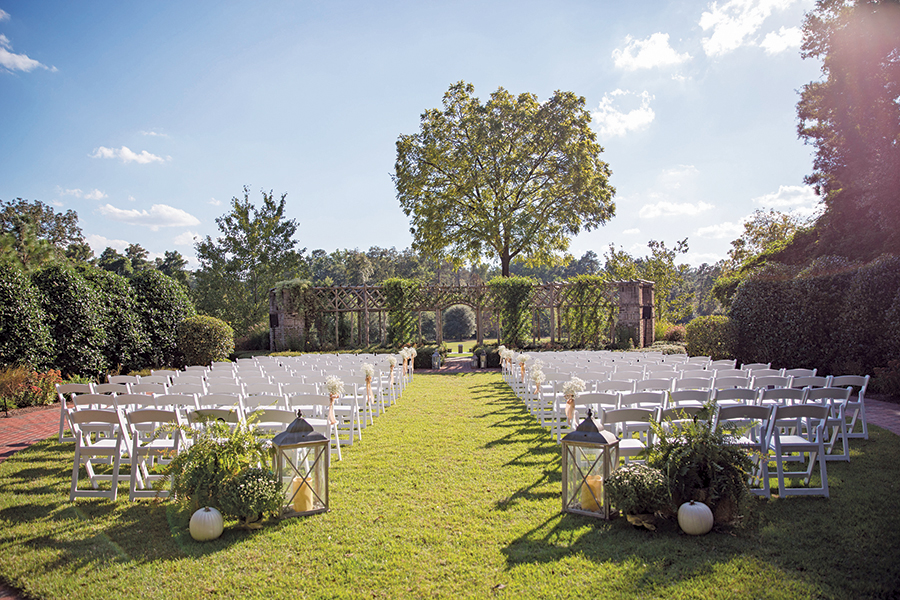
After Raleigh couple Hannah and Andy Midgette got engaged in 2015, they spent time looking for the perfect venue, but nothing fit them just right. Enter Twin Fields Horse Farm, the Southern Pines farm where Hannah used to ride horses as a child. It was the perfect place for their guests to dance, enjoy the night, yet still have the room to roam around and explore the natural beauty of Southern Pines horse country. Guests played corn hole and giant Jenga and fed on pulled pork catered by the Humble Pig. The wedding’s classic color palette of blush pinks and lush greenery played off the farm’s beauty, making for a timeless night.

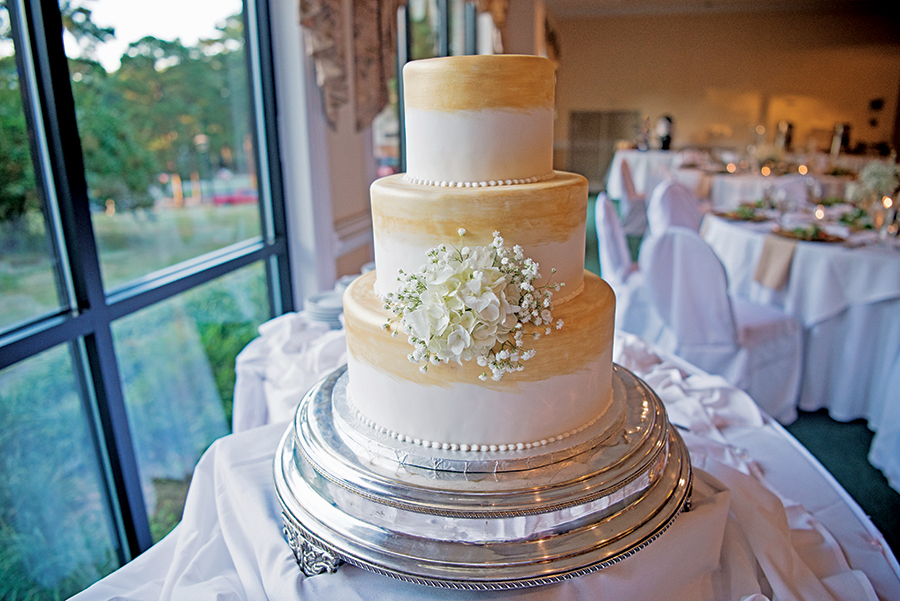
Wedding Planner: Nicole Smith, Vision Events | Photography: J Parker Photography | Ceremony & Reception: Twin Fields Farm | Dress: Essense of Australia | Shoes: Badgley Mischka | Flowers: Carlie Mason | Hair & Makeup: Retro Salon | Cake: Cakes by Sherran | Entertainment: Diverse Groove

Amy & Adam Ross

AMY & ADAM ROSS

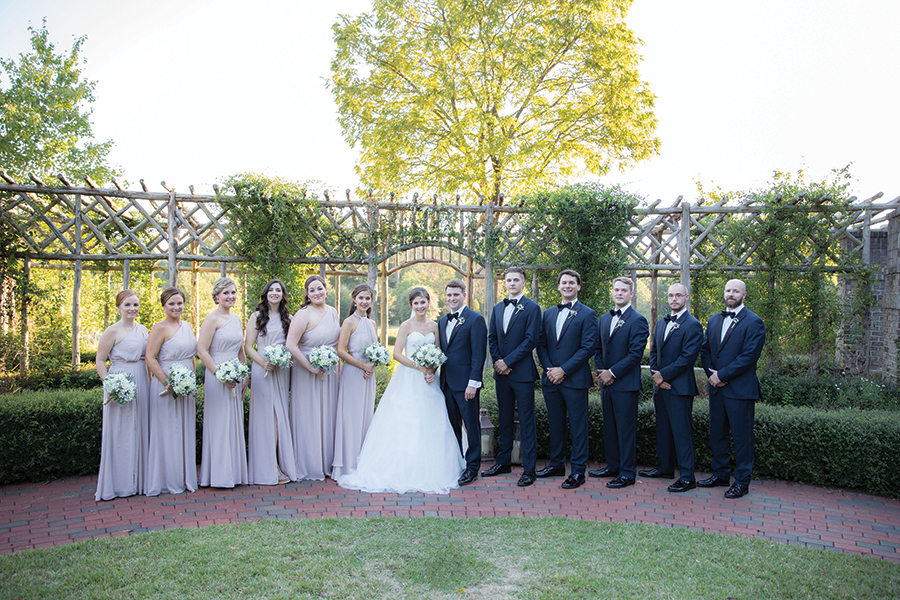
For Amy and Adam Ross, Tropical Storm Hermine hitting Southern Pines the day before the wedding could not deter a beautiful wedding day. The little details contributed to a beautiful, romantic ceremony held at Weymouth Center for the Arts and Humanities. The details are what made the day special for the bride — from the vintage lace hankie she carried to her “something blue” heart cut from her grandfather’s clothing and stitched into the back of her dress. Guests ate off plates Amy found in different antique stores, and a puzzle turned guest book paid homage to Adam’s family’s love of puzzles.

Photography: Megan Travis Photography Ceremony & Reception: Weymouth Center | Dress: Essense of Australia | Shoes: Badgley Mischka | Flowers: Aldena Frye | Makeup: Retro Salon | Cake: The Bakehouse | Entertainment: Ward Productions