Almanac

Hollowed pumpkins filled with dahlias. Acorns, gourds and pheasant feathers. Cinnamon and clementine. November is a holy shrine.

Can you feel that? The vibrancy among the decay?

The veil between worlds is thin.  

In the garden, the holly gleams with scarlet berries, beckons bluebird, warbler, thrasher, and — do you hear those lisping calls? — gregarious flocks of cedar waxwing. 

We too offer fruit. Some for the living, some for the dead.

Altars lined with flickering candles, candied pumpkins, marigolds and copal incense are lovingly created in remembrance of deceased loved ones, who are believed to return home for El Día de los Muertos, a Mexican holiday celebrated Oct. 31 through Nov. 2.

Sweet bread, warm meals, soap to cleanse the weary soul . . .

Imagine celebrating Thanksgiving with that kind of spirit.

Or better yet, try it. 

For man, autumn is a time of harvest, of gathering together.

For nature, it is a time of sowing, of scattering abroad. Edwin Way Teale

Seeds of inspiration for the November gardener:

·  Enjoy the quiet hour of morning, the sweet gift of Daylight Saving Time (Sunday, Nov. 4). 

·  Day after Thanksgiving, sow poppy seeds on the full Beaver Moon for a dreamy spring.

·  Feed the birds.

·  Force paperwhites, hyacinth and amaryllis bulbs for holiday bloom.

·  Stop and smell the flowering witch hazel.

The Eleventh Hour

Best known by nom de plume George Eliot, Victorian-era novelist Mary Anne Evans so loved fall that she claimed her very soul was wedded to it. “If I were a bird,” she wrote, “I would fly about the earth seeking the successive autumns.” No surprise she was born in November, the 11th hour of this season of swirling leaves, snapdragons, goldenrod and falling apple.

Sesame Street’s googly-eyed Muppet Cookie Monster was born Nov. 2, on the Mexican Day of the Dead.

You want cookie?

In the spirit of life and death, try pan de muertos instead, a sweet bread baked in honor of departed loved ones. The below recipe came from a sweet-toothed friend who isn’t afraid to wake the dead.   

Pan de Muertos (Mexican Bread of the Dead)

Bread:

1/4 cup butter

1/4 cup milk

1/4 cup warm water

3 cups all-purpose flour

1 1/4 teaspoons active dry yeast

1/2 teaspoon salt

2 teaspoons aniseed (or 1/2 teaspoon anise extract)

1/4 cup white sugar

2 eggs, beaten

2 teaspoons orange zest

Glaze:

1/4 cup white sugar

1/4 cup orange juice

1 tablespoon orange zest

2 tablespoons white sugar

Directions:

Heat butter and milk together in medium saucepan. Once butter melts, remove mixture from heat, then add warm water.

In a large bowl, combine 1 cup of the flour, plus yeast, salt, aniseed, and 1/4 cup of the sugar. Beat in the warm milk mixture, then add eggs and orange zest and beat until well combined. Stir in 1/2 cup of flour and continue adding more flour until the dough is soft.

Turn dough out onto a lightly floured surface and knead until smooth and elastic.

Place the dough into a lightly greased bowl, cover with plastic wrap, and let rise in a warm place until doubled in size (allow 1 to 2 hours). Next, punch the dough down and shape it into a large round loaf with a round knob on top. Place dough onto a baking sheet, loosely cover with plastic wrap, and let rise in a warm place for about 1 hour or until roughly doubled in size.

Bake in a preheated oven at 350 degrees for about 35 to 45 minutes. Remove from oven, let cool slightly, then brush with glaze.

To make glaze: In a small saucepan combine the 1/4 cup sugar, orange juice and orange zest. Bring to a boil over medium heat and boil for 2 minutes. Brush over top of bread while still warm. Sprinkle glazed bread with white sugar.
November 2018

Lost Cause

Doing battle with the autumn winds,

the fragile leaves present their colors.

They shake their pointed fingers

in a wild dance, then regroup.

In the end, there is no reprieve;

strength overcomes determination.

The forlorn maple tree shivers,

gives up all pretense of modesty.


I’ve watched this drama unfold

for days now as though I were

at a sporting event — rooting for

the underdog, though I realize

it’s truly a lopsided contest.

In the autumn of my years,

I too am buffeted willy-nilly

by the winds of inexorable change.

— Martha Golensky

America’s First Family of Art

America’s First Family of Art

Victoria Browning Wyeth gives an intimate look at a legacy of genius

By Ray Owen

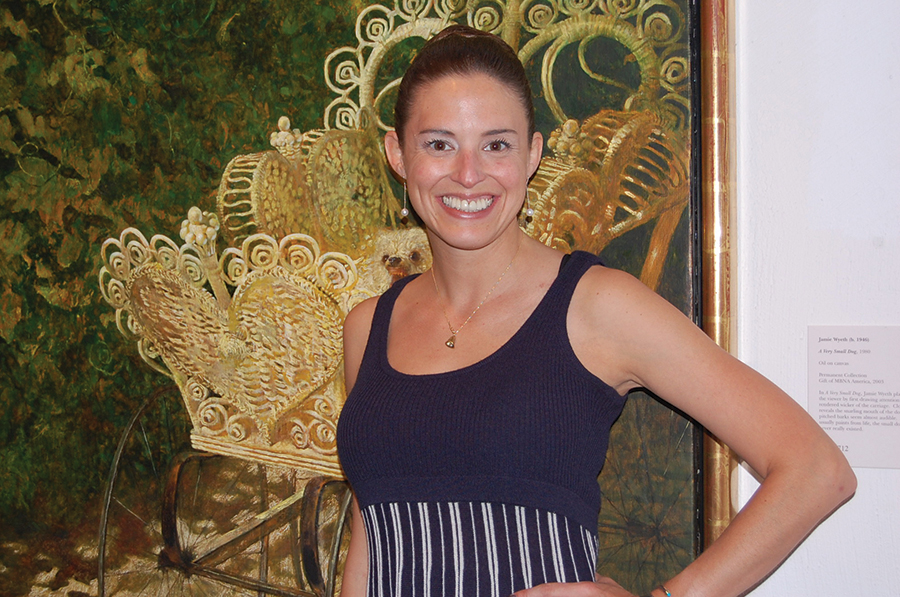
Art is in Victoria Wyeth’s blood. Her family has produced three generations of such highly regarded artists that they have become part of the national consciousness. She is the grandchild of iconic artist Andrew Wyeth, the great-granddaughter of illustrator N.C. Wyeth, and the niece of contemporary realist Jamie Wyeth. Her father, Nicholas, is a private art dealer, and her mother, Jane, is an art adviser who was trained as an art historian.

“The biggest myth is that my family paints from photos,” says Victoria, a gifted photographer whose images have been exhibited nationwide. She credits a high school teacher for pushing her into a medium that was previously unexplored by her relatives. “It’s tough to come from a famous family when everyone is so talented,” she says. “I can’t paint, I have no talent, and I can’t draw a circle.”

As the designated family historian, Victoria gives lectures on all things Wyeth when not working as a therapist in the Pennsylvania state hospital system. Her insider’s knowledge of the painters has been the subject of numerous articles, and she has given talks throughout the United States and abroad, offering the public a more intimate view of her family than can be gained simply from the perspective of an art historian. She has a story for everyone of her lineage — including ties to North Carolina and Southern Pines.

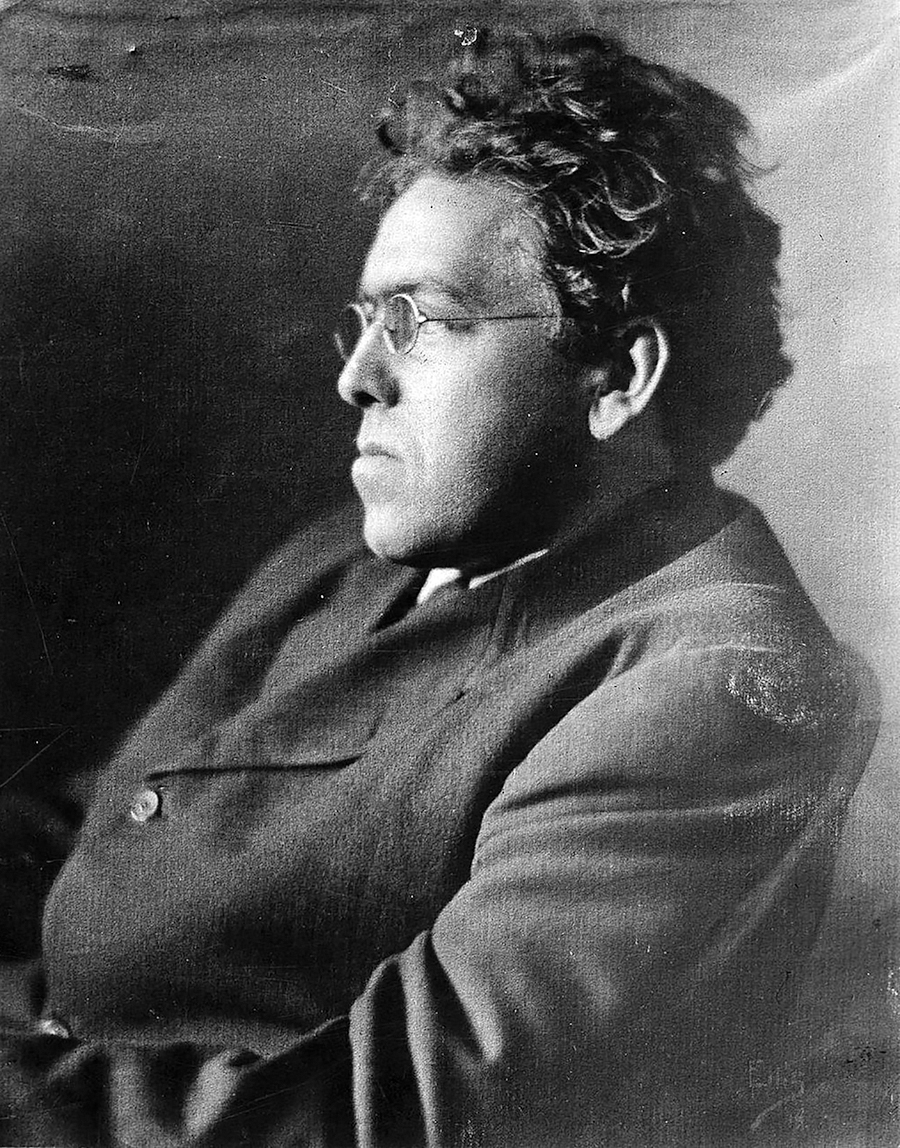
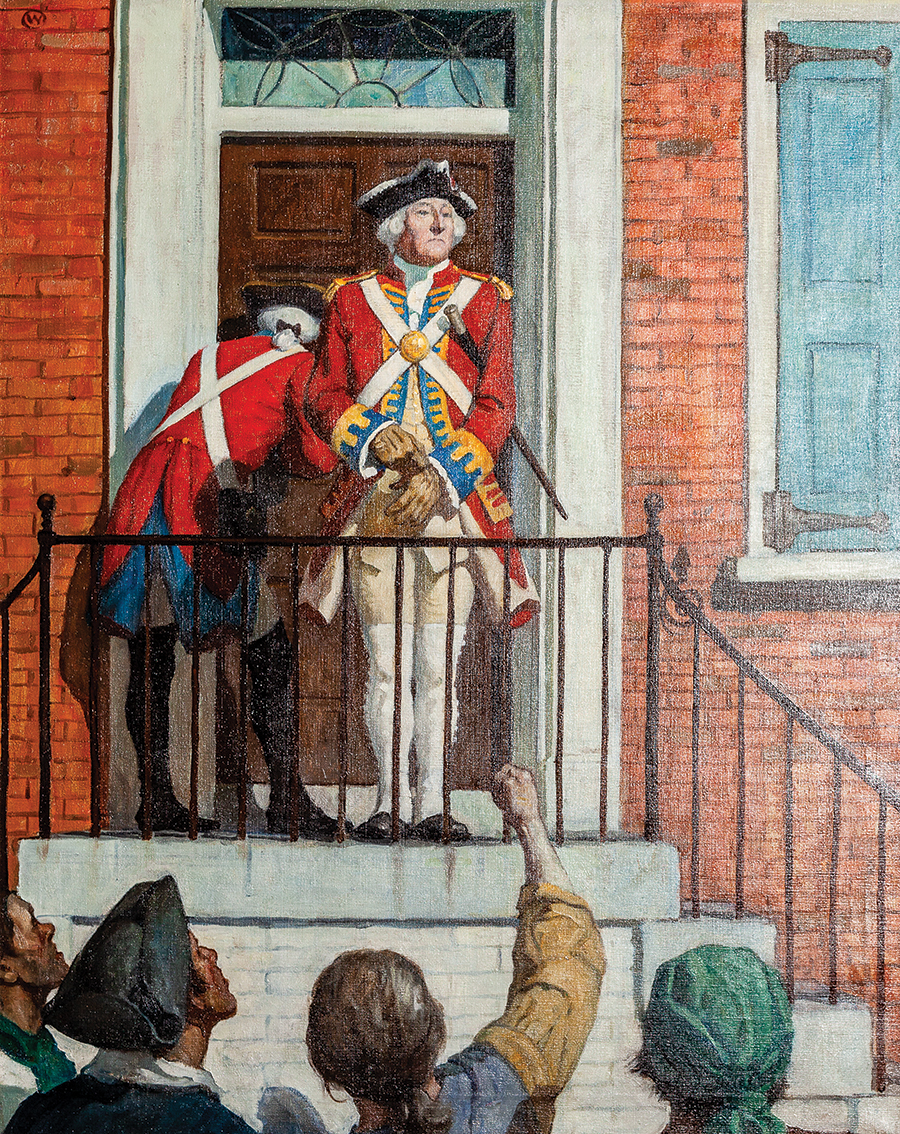
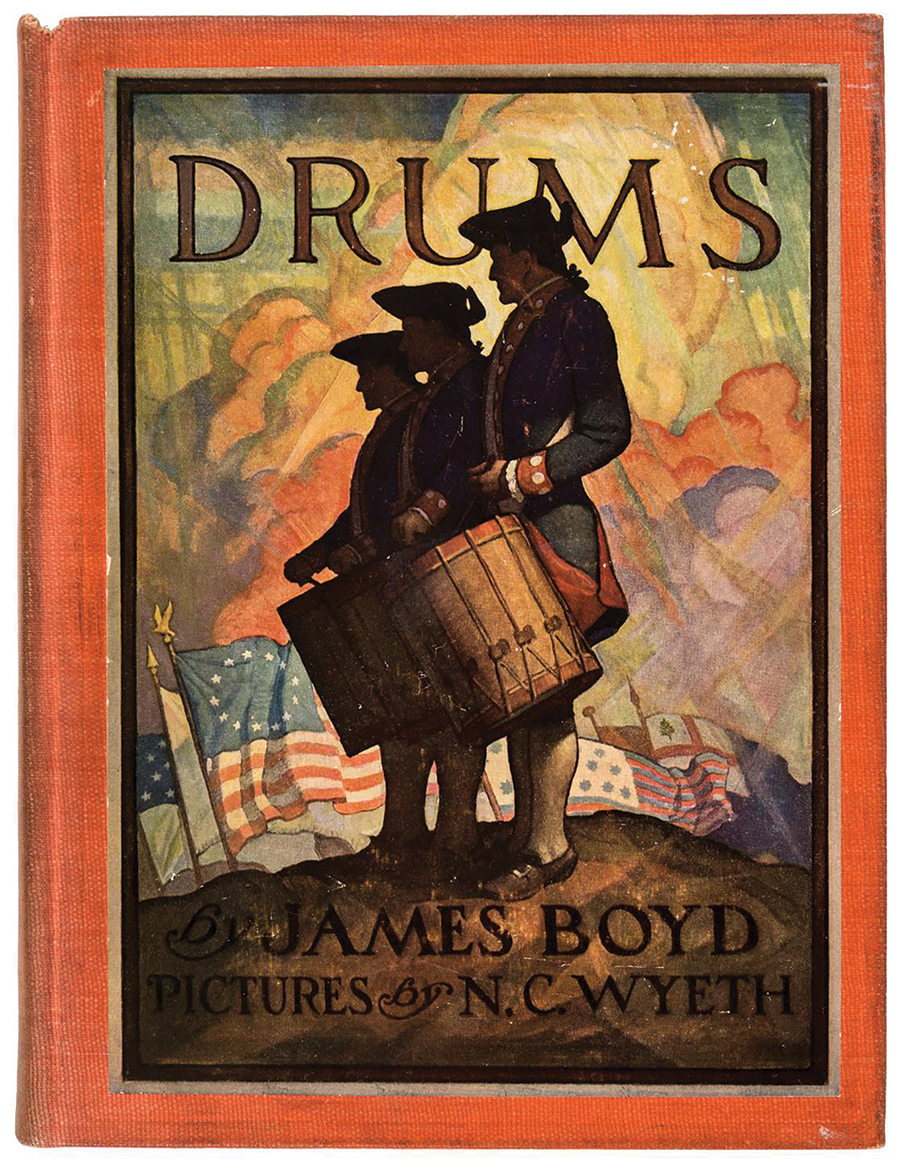
The patriarch of Victoria’s artistic legacy was her great grandfather, N.C. Wyeth (1882-1945). The town of Southern Pines owns three significant paintings by the artist that are on public display in the Utility Billing Office, located at 180 SW Broad Street, formerly the public library. The paintings, created as illustrations for James Boyd’s novel Drums, were gifted to the town by his wife, Katharine Boyd.

N.C. Wyeth was one of America’s greatest illustrators. During his lifetime, he created over 3,000 paintings and illustrated 112 books, 25 of them for Charles Scribner’s Sons publishing. A swashbuckler of a man whose works fired the imaginations of generations of readers, N.C. Wyeth was a household name during the first quarter of the 20th century for the art he provided for classic titles like Treasure Island, The Last of the Mohicans and The Yearling.

Standing larger than life, N.C. Wyeth was a realist painter whose dramatic canvases could be understood quickly. He only painted from experience, sympathetic to his subjects, showing them at one with their environment. It was this interest that brought him to Southern Pines in 1927, in preparation for his illustrations for Drums. Boyd was making a name for himself in literary circles, his Weymouth mansion a favorite retreat for such figures as William Faulkner, F. Scott Fitzgerald and Thomas Wolfe.

There was a wonderful exchange of letters between Wyeth and Boyd included in an early 1928 edition of Drums. Boyd provided a car and driver for Wyeth for a side trip to Edenton, North Carolina, so that he could get the look and feel of the Colonial town, the setting for the book:

N.C. Wyeth, Edenton, NC, December 1927

My dear Boyd,

This afternoon was spent wandering in and about these relics of 1770. My heart went out to them, because you, Boyd, have made them alive for me. The oak timbers, whose adze-marked surfaces are still crisp on their protected sides and smoothed to gentle undulations where the sun and rain for years have touched them, thrilled me like music.

Cordially, Wyeth

And the reply:

James Boyd, Southern Pines, NC, December 1927

Dear NCW,

Your letter just come from Edenton disturbs me. It is an injustice of nature that a man who can paint like you should also be able to write like that. Everything you say stirs me mightily. It is only the way you say it that makes me uneasy. A little tactfully assumed illiteracy would be more becoming when addressing a man in my business. Otherwise I might be obliged to ask myself why I am in this business at all.


In its day, Drums was considered the finest novel of the American Revolution that had ever been written, with more than 50,000 copies sold in its first year. Since that time, generations of Southern Pines residents have cherished the Wyeth paintings as an important aspect of the cultural heritage of the town.

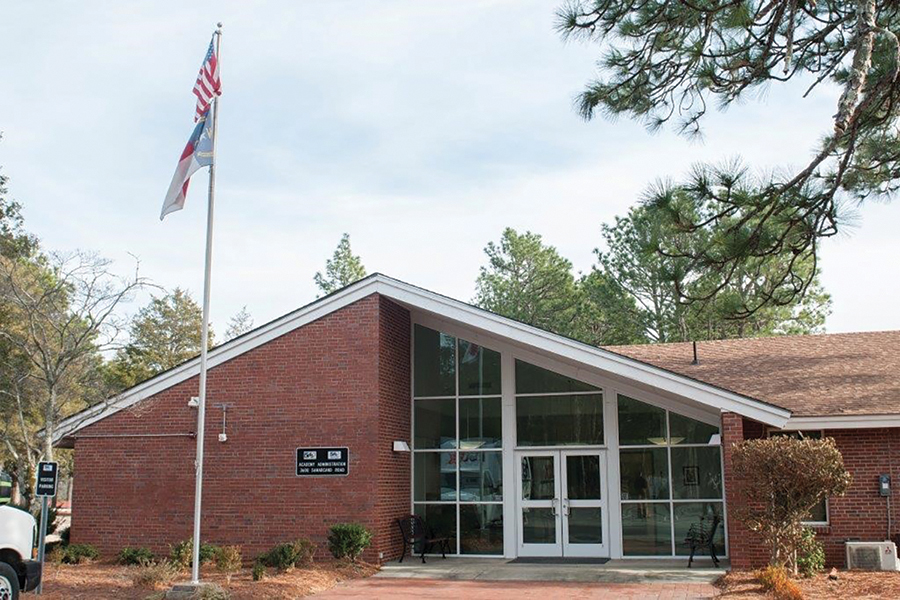
Victoria Wyeth’s personal connection to Southern Pines is through her acquaintance with artist Jeffrey Mims, founder and director of the Academy of Classical Design. As a painter and educator, Mims has been at the forefront of the revival of the classical tradition for the past 30 years.

For Victoria, her Uncle Jamie (b.1946) is the keeper of her family’s tradition, with his paintings more varied than his predecessors. “Jamie is the future of our family,” says Victoria. “And he’s so different. He’s managed to do his own thing in his own style, and he’s painted everything from pigs to presidents. The whole family has a wonderful sense of humor, and Jamie’s the one who paints with it.”

Jamie’s father, Andrew Wyeth, holds a very special place in Victoria’s heart. As his only grandchild, she was one of the few people he ever allowed to watch him paint. The first photograph she took of her grandfather was a kind of epiphany. “I always saw him as this adorable, smiling older man,” she says of that day. “For the first time in my life, Andrew Wyeth was standing before me. Not Grandpa, but the artist, and he had the most earnest look I had ever seen in my life.”

Andrew Wyeth (1917-2009) is recognized as one of the most important American artists of the 20th century. For more than seven decades he painted the regions of Chadds Ford, Pennsylvania, where he was born, and mid-coast Maine, where he spent most of his summer months.   

The youngest of N.C. Wyeth’s five children, at age 15 Andrew began several years of intensive artistic training under his father, who encouraged him to work as both an illustrator and painter. His career launched in 1937 with a sold-out exhibition of his watercolors in New York. On the occasion of the young artist’s debut, his father wrote him a congratulatory letter prophesying, “You are headed in the direction that should finally reach the pinnacle in American art.”

An austere poet laureate of rural life, Andrew once noted that meaning “is hiding behind the mask of truth” in his work. He freely manipulated his subjects, transforming them in order to evoke memories, ideas and emotions. Through a process of reduction and selection, he created mysterious undercurrents in his landscapes, interiors and portraits.

Victoria adored him, called him “Andy,” and spent all her childhood summers with him and Grandma Betsy in Cushing, Maine, where she vividly remembers long boat trips to family-owned islands for picnics. As a child, Victoria began to realize that “all the people in the paintings were the folks I’d been hanging out with,” and she fondly recalls that, “on Andrew’s birthday the president would always call.”

Andrew drew and painted Victoria many times. She was 6 years old for the first sitting and remembers very little about the experience, except how hard it was to keep still. “We had made a deal the third time that I’d only pose if I could take notes, and so I just sat there taking notes the entire time.” The artist often chuckled at her precociousness, but he gamely tried to answer every query.

The last question logged in her “Andy Journals” was about how to create the color black. He said that he didn’t start by squeezing inky paint from a tube. “You build in the excitement before adding black, you slowly build it up with blues and reds and greens.”

One of Andrew Wyeth’s most powerful works is in the permanent collection of the North Carolina Museum of Art in Raleigh. The painting, titled “Winter 1946,” depicts a boy running fast and recklessly down a hill, casting a long shadow on the grass behind him. The figure with furrowed brow, gazing down and forward, is dressed in a heavy winter coat, his mind elsewhere, lost in the golden earth, and the vast, breathtaking landscape.

Andrew created this painting after the horrific death of his father in 1945. The tragedy occurred at a railroad crossing on a hill in Chadds Ford, when an oncoming train hit the car carrying N.C. Wyeth and his young grandson, killing them both. The hill became a source of inspiration for Andrew’s paintings over the next 30 years, as he rendered the memory of the place into something strangely beautiful.

Victoria Wyeth’s most enduring memory of her grandfather is not paint and canvas, but “his hugs — he gave the best long hugs. He made me feel so special all the time.” During his lifetime Andrew said, “Your art goes as far as your love goes.”  PS

Ray Owen is a local historian, who works for the Arts Council of Moore County.

The Gift of Personality

The Gift of Personality

Finding the soul in a role

By Jim Moriarty     Photograph by Tim Sayer

saw Joyce Reehling at around 3 a.m. She was dressed in white.

Her role in this particular episode of Law and Order was modest. She was a naval officer. All business. But there was something in her eyes, as if, for reasons known only to her, she wasn’t entirely on board with what was happening in that office. She’d had a life before that moment sitting in that chair across that desk from whatever the hell that district attorney’s name is. There was stuff. Maybe stuff she didn’t talk about because, if you’re a female officer in the Navy, maybe you don’t talk about stuff like that, especially if the investigation involves another female naval officer.

And I wondered what it was. And I rearranged the pillow behind my head so I could have a better look.

Reehling doesn’t deliver a line. She pulls back the curtain just a touch to give you a peek through the windowpane, inside the house. Maybe it’s funny. Maybe it’s not. But the one thing it always is, is honest.

Born in Baltimore, Reehling grew up in Laytonsville, once a tiny Montgomery County town that’s gone from the middle of nowhere to a gridlocked prisoner of urban sprawl. “Our huge claim to fame was that the Laytonsville volunteer fire department building burned down once,” says Reehling, who knew she wanted to be an actress from the time she was in kindergarten. “I was in this rhythm band, and I was playing the blocks with sandpaper on them,” she says. “Somebody’s playing the triangle, and we all seemed so happy and I thought, ‘I bet you can do this for a living.’ And I have the musical ability of a dinner plate.”

Reehling’s father, Stanley, who passed away almost two decades ago, was a traveling salesman — insert jokes at your peril — selling institutional food. Her mother, Jean, took care of the home and children. Joyce has a twin sister, Karen, and two younger sisters, Jenny and Mandy, who came along nine and 10 years after the twins. “It was like living in a sorority house interrupted by a father showing up,” she says. “My father was a Marine in the Second World War, God bless him. He spent a part of his life in the South Pacific and China and was a drill sergeant for a while. This is not the building block of great empathy. He wasn’t in the first wave to go into Guadalcanal, but he was there. I’d have to check to find all the places he was, but there was not one that was fun. He was in terrible places doing terrible things, that I know.”

Reehling got her first big break in acting from a wrestling coach. It sounds more violent than it was. She was at Gaithersburg High School and “my guidance counselor, Adam Zetts, was mainly the wrestling coach. Big guy. He didn’t quite know what to make of me. He came to school one day and he saw me in the hall and said, ‘I found it. I found it.’ He’d read a story in the Christian Science Monitor about the North Carolina School of the Arts and he said, ‘I think this is what you need.’”

It was.

“My year was the first full graduating class,” she says. “The school was so new it was like puppies in a box. Now it’s just really together.”

After a fifth year at the School of the Arts as part student, part graduate assistant, it was off to New York. “I still didn’t feel ready,” she says. “The foundation there now is so thorough you should know what you’re doing. Of course, that doesn’t mean you’re not going to be scared. I left the School of the Arts terrified. When I went, you went up on your own. Good luck getting a job. You’re the flotsam and jetsam. It’s very unsettling at first. I think I went to New York with $1,000. I got in the Rehearsal Club, two brownstones up from the Museum of Modern Art. The play and movie Stage Door are based on this place. Carol Burnett had lived there. A whole bunch of women. A lot of Rockettes. Men were not allowed above the first floor. I think we were paying $35 a week. That included breakfast and dinner and linens. I remember a bunch of us having the ubiquitous meeting in a coffee shop where you could have unlimited coffee and everyone got a bagel. That’s a meal. One guy said how fun this phase of life is. I said, ‘I’m OK with it now but at 30 this is going to be really old.’ You were nickel and diming your way through everything.”

Commercials and voice-overs, particularly Reehling’s Robitussin role of Dr. Mom, supported her theater habit. “I always said my job was auditioning, interrupted by work. You were lucky if you had auditions. If you got a play for five or six weeks, whatever it was, you could just about relax into it — but not for long. Oh, this is great. I’m in rehearsal. We opened. It’s going well. What’s my next job? I don’t have one . . . . In the summer I was almost always in a show. I didn’t get to my grandmothers’ funerals because I didn’t have a standby. I had no one to take over so I couldn’t go. Those kinds of things happen. This is what you agreed to when you joined the tribe.”

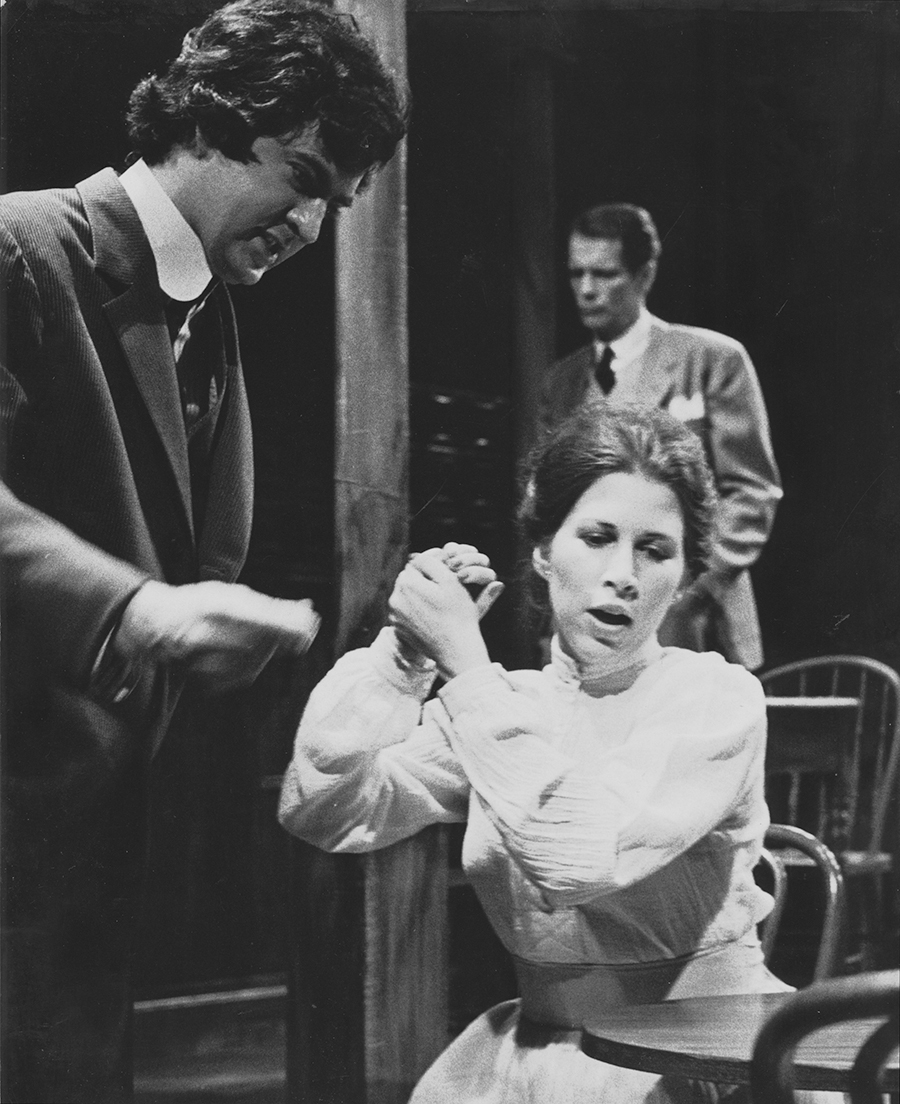
But the dream job did come along. It was in the Circle Repertory Company, co-founded by a Pulitzer Prize-winning playwright, the late Lanford Wilson, and director Marshall W. Mason, a member of the Theater Hall of Fame and a recipient of a Tony Award for Lifetime Achievement. Reehling got their attention when she was acting in Wilson’s The Hot l Baltimore on the West Coast.

“Lanford had the ability of creating eight people on stage at one time, and Marshall had the ability to direct eight people on stage at one time. And both of those things are very difficult,” says Reehling. “What Circle Rep did for me was something I really didn’t know I wanted. It put me in a company where there were playwrights who wrote for actors. We had the joy of starting with (a play) from the minute it hit the page.”

Mason, an emeritus professor at Arizona State University, now spends half his year in Mazatlan, Mexico, and the other half in Manhattan. “Lanford wrote Fifth of July with Joyce in mind to play June. I have to say, when we talk about actors at Circle Repertory, the first thing that you’re talking about is a deep honesty. You don’t see acting, the actors become the characters so much. That was the secret of our success. It was true of all our actors. It was certainly true of Joyce. Having said that, what made Lanford especially happy was she knew how to land a line just as the playwright wanted it and score a big laugh. In Fifth of July she brought the house down.”

A couple of years ago Mason called Reehling just to talk about her portrayal of June. “I never discussed this,” says Reehling. “I said to myself in rehearsal, ‘I can’t keep sounding like a shrew.’ I’m always saying something about ‘Let’s get this done. Let’s sprinkle Uncle Matt.’” Her character, June, was intent on scattering Uncle Matt’s ashes. “I came up with a memory. I wore a necklace that nobody saw, little tiny pearls I got in an estate sale or something. I decided that when Uncle Matt was really sick, I came to visit — they more or less raised my daughter. I came to see Matt and he asked to talk to me alone and he was funny like he always was, but he grabbed my arm and he said, ‘Don’t let her keep these ashes too long. Promise me.’ And I promised him. So it wasn’t that I was pushy the way it might appear. Whenever I was on stage, my hand would go here . . . .”

Reehling leans back in her chair and places her hand on an imaginary necklace, as genuine as a recurring dream.

“Oh, it brings tears to my eyes. It’s so real for me. And Marshall didn’t know a thing about that and Lanford didn’t either. Marshall said to me once, ‘What are you using in this moment?’ I said, ‘Do you like it or do you not like it?’ He said, ‘I like it.’ I said, ‘Then I can’t tell you because once I speak it to you, it’s gone.’ I love the secret life. I think every character, every person, we all have secrets all the time, things we don’t say, things we know about ourselves and never want to share. You’ve got to find those things, you must find those things with each person.”

Of course, like an honored houseguest, an actor — even one desperate to work — can overstay his or her welcome inside a character. “The hardest thing in a long run is to know what you know when you know it,” says Reehling, adding a cautionary tale about Carrie Nye from Mary, Mary. “She has a scene where she comes storming in the door, takes off her gloves, throws them down, walks over and says blah, blah, blah, blah, blah and then walks in the bedroom, off stage. She came in one day, took off her gloves, threw them down and said blah, blah, blah, blah, blah, went into the bedroom off stage and walked straight over to the stage manager’s booth and said, ‘I’m giving
notice.’ At intermission she tells the stage manager, ‘Did you realize I wasn’t wearing the gloves?’ She came in, took off gloves she wasn’t wearing, threw them down and didn’t even know she wasn’t wearing them. Time to go.”

Ted Sluberski is an acting instructor in New York City. “I was a very young casting director in the late ’80s, early ’90s. The best thing that could happen to a young casting director was, at one point, Joyce said something to the effect, ‘I think you might be in this for the long run, so I’m going to show you how to talk to an actor.’ And she did. We hit it off like a house on fire. In my now 36 years in the business, the best way to describe Joyce was she did her job to the fullest extent, always. Whether it was a Broadway show, whether it was guest star, whether it was commercials — which are a craft aspect of the business — her commitment to the basic core of acting was consummate. The people who survive in this business are the people who do their job to the hilt. I’ve seen her do some dramatic things. I’ve seen her do some brilliantly comedic things. She always built a person. She didn’t build the idea of someone.”

Reehling and her husband, Tony Elms, the person she refers to as “the most precious man in the world,” have lived in Pinehurst for nearly 10 years. This month she’ll join Sally Struthers (All in the Family, Gilmore Girls) and Kim Coles (Living Single, In Living Color) in the Judson Theatre Company’s October 18-21 production of Love, Loss and What I Wore, by Nora and Dehlia Ephron. It will be the second time Reehling has appeared in one of Judson’s productions, this time with a tad more advance notice.

“Joyce has been like a guardian angel to Judson Theatre Company,” says its founder, Morgan Sills. “I’m not sure everybody realized she had this major past life in New York on television and on the screen working with all these legendary people” (Richard Thomas, Bill Hurt, Swoozie Kurtz, Jeff Daniels, Christopher Reeve, Gig Young, Holly Hunter, Alec Baldwin, Mary Louise Parker, Timothy Hutton, to name a few). Reehling’s first appearance for Judson, however, came straight out of the bullpen. Dawn Wells of Gilligan’s Island fame was cast as Weezer in Steel Magnolias but wound up in the hospital, if just temporarily, instead of on the stage.

“Someone alerted me to Joyce,” says Sills. “She understood the situation. We walked her through it a couple of times and she went on. And she was wonderful.”

Sills thinks the Ephrons’ play is a perfect fit for Reehling. “It’s basically five extraordinary women across the generations, telling the stories, the defining moments, of their lives, via the clothing they had on at the time. So, it’s a piece that shows her tremendous range. Make you laugh; bring a tear to your eye. It’s heartwarming and human and I think it will resonate with everyone. The track of roles Joyce is doing I’ve seen performed by a lot of prodigiously gifted New York actresses, and Joyce is very much in that mold.”

The Reehling/Elms house off Linden Road is filled with art, each piece seemingly with its own secret life. “I love this,” Reehling says, pointing to a painting by James Feehan of figures and poles and shaky equilibrium. “It’s called ‘Tenuous Balance’ and I said, ‘Boy, that feels like my career.’ I wish it had gone on longer. I was never an ingénue, I was always a character girl, and that shortens your life, but women in general have short lives in the theater and film. I can honestly say I can see myself standing in a field near our little red house outside of Baltimore — my father had volunteered us for the job of picking up stones for 25 cents an hour — and I can remember in the back of my head going, ‘How am I going to get from here to where I want to go?’ I didn’t know how I was going to do it, but I did it, one foot in front of the other.” One secret life at a time.  PS

Poem

Hickory Nut Falls

The wind says, Breathe into the sting,

but the mind anticipates the hive.

Each day bears a lesson.

In my room, where the dry leaves know the secret to eternal life

and the acorn shows me how to stand tall, I search for the gorge,

cool patches of earth like open mouth kisses.

There is no separation.

Papa used prayer, sat in his threadbare chair,

each labored breath a short infinity; each day a gift.

At the water’s edge, I see him as a young man,

feet bare, toes crooked like mine,

working a smooth stone between his fingers

like a talisman to a timeless space.

Ankles numb in the flowing river that connects us,

I stand there as he sends the stone dancing across the water’s surface,

feel the ripples expand within me, remember the calm of his voice:

I am always with you. We are always home.

—Ashley Wahl

House of Sweet Surprises

House of Sweet Surprises

Designer Mark Parson’s imaginative reworking of a humble bungalow creates something for everyone

By Deborah Salomon     Photographs by John Gessner

If the shoemaker’s children shouldn’t go barefoot, neither must an architectural designer’s family suffer an ordinary house. What Mark and Kathie Parson have done to a humble 1940s bungalow on the outskirts of the village of Pinehurst is the glass slipper on Cinderella’s sooty foot, the genie in the mayonnaise jar. Not only has Mark designed a compound housing three generations, he has paid homage to the St. Andrews Links in Scotland by reproducing narrow, curving canals through which flow gurgling water, set on putting-green grass, in a rear courtyard.

He also designed and installed the landscaping, including details like leaving a narrow band of soil between a brick walkway and low wall, allowing ficus vines to root and creep.

“Houses don’t have DNA,” he reasons. “We had to give it character.” Knocking the bungalow down would have been easier. “But then you wouldn’t have a good story.”

Mark Parson is full of surprising stories, starting with self-training. Then, his unlikely success, evidenced by hardscape and softscape designs for Sandals Caribbean resorts, Miami Beach mansions and a prize-winning Harley-Davidson dealership. Locally, besides residential projects, he transformed an unsightly garage on Broad Street into The Sly Fox gastropub.

To Kathie go accolades for the floorplan and décor, her taste honed as a designer/manager at Bloomingdale’s in Miami, where they met. Kathie is from Minnesota, Mark from (he wrinkles his nose) Ohio. She grew up in an apartment; he in “a shoebox.” His upward mobility could have been written by Twain, or O. Henry. In part: “My father was a union guy at Chrysler. I framed houses, worked in a sheet metal shop, welded, worked as an orthodontist’s assistant —all that hands on stuff.” But, despite dream jobs like being flown back and forth to Sandals Royal Bahamian Resort in Nassau, he and Kathie, new parents after many years of marriage, opted out of the glam lane and chose North Carolina — first Shelby, then Asheboro. While participating in a Richard Petty charity ride, Mark discovered Pinehurst. “I had heard of (Frederick Law) Olmsted. The real draw was sandy soil and people from everywhere.” People who appreciated and could afford imaginative renovations/new construction.

Kathie looked at the village of Pinehurst, drove over to Southern Pines and decided this was where she wanted to be a stay-home mom.

In 2003, they bought two houses on Everette Road, one for them, one for Kathie’s mother. The plan: Put both on the market and remodel the one that didn’t sell.

Remodel is hardly the word. Mark, as architect and general contractor, took the 1,100-square-foot house down to the studs and dirt floor. The phoenix that arose, double in size, had a new wing, a living room delineated by columns, a kitchen with corner banquette eating area but, strangely, no dining room.

“We eat everywhere,” Kathie says. Walkabout fajita parties inside and out are more likely than sit-down dinners. One Thanksgiving they served on the front patio, which has a fireplace, and beside it, a salad garden. Out back, beyond the reflecting pool, is another dining area with grill and wood-fired pizza oven.

The reasoning goes deeper. In the dining room space stands a grand piano played by 18-year-old Wyatt, a serious musician who started on a keyboard and progressed to this magnificent instrument. Beyond it, windows and doors overlook the grassy courtyard. Entering the front door, a person’s eye is drawn forward by the piano and beyond, to the garden, which was Mark’s intention. A hallway to the right — previously two bedrooms and bath — has been reconfigured as a master suite with dressing room and Kathie’s office. In the bedroom, wide-board knotty pine floors used elsewhere yield to velvety-thick moss green carpet, the whole resembling a fine hotel.

People gravitate to the kitchen,” Mark continues. With this in mind, he designed a beauty and elled a wing around it with two more bedrooms, a bath and moderately sized den.

The moss green coloration that permeates each room has followed them from house to house. Kathie finds it soothing. She drew complementary forest tones from a printed fabric brought from Florida and used to upholster the breakfast room valance. Even the granite kitchen island has a green-gray tinge. Elsewhere, old leather couches, rather formal tables and chests, and heavy sateen drapes convey elegance. Kathie and Mark both prefer mahogany and other dark woods for their richness and antiquity which, Mark says, echoes Pinehurst. In contrast, rather than elaborate crown moldings and door frames, Mark chose simple flat stock painted a darker green, while several chairs upholstered in bold stripes speak contemporary Scandinavian. Art is mainly florals or landscapes, which blend with upholstery and rug patterns.

Although family heirlooms aren’t part of the scene, Kathie and Mark planned a kitchen alcove to accommodate a massive sideboard Mark’s mother painted. Above it, a blackboard framed in curlicue gold announces the dinner menu: wood-fired pizza.

Every designer has a signature that follows him or her from project to project. Mark is a ceiling guy. “I want people to look up. Why do you think churches have steeples?” Angles and vaults have become his trademark — in the family room, paneled in cedar, they suggest a dome. The living room gabled ceiling is accomplished with cottage-y painted tongue-and-groove boards. Mark indulged himself with the curving canals bisecting the courtyard, strewn with bocce balls, also a tiny waterfall on the front walkway, because he likes the sound. He tucked two butler’s pantries into the layout and, as the family cook, fine-tuned the kitchen.

The sweetest surprise stands beyond the back gallery: a free-standing storybook Nantucket cottage with flowers spilling from window boxes. Mark built it for his beautiful 82-year-old mother, Ila Parson.

“She raised me,” he says, reverently. “I can see her when I’m standing at the kitchen sink and she’s sitting in her living room. We wave every night before I go to bed.”

Family dynamics influenced the project. Ila Parson lives independently with a 17-year-old teacup poodle. She drives her own car, prepares most of her meals and walks miles every day. “We’re careful not to get in each other’s way,” Ila says. Kathie adds, “Mark had to think how to incorporate his mother’s lifestyle with ours, our son and his friends.”

Ila’s most frequent visitor is grandson Wyatt; proximity has fostered a close relationship.

Ila prepared for the move by getting rid of almost everything in her Village Acres house, then choosing simple new furnishings in refreshing blue, white and gray. The 740-square-foot cottage has one bedroom with, typically, a vaulted ceiling; a bathroom, kitchen with breakfast bar, sitting room and screened porch. Tucked behind the main house, this tiny domain is quiet and practically invisible from the street.

Barefoot? Hardly. A smart shoemaker’s children wear his best styles for all to see, to covet. Mark Parson’s home and grounds showcase his design capabilities for customers. Otherwise, Kathie says, “This house is everything we didn’t have.”

Remember, Mark’s goal was to create a story for a house that — unlike others in historic Pinehurst — had none.

Obviously, he succeeded.   PS

Coach

Coach

Remembering a man who made us better

By Bill Fields

John Wiley Williams, “Coach” to most, was a motion offense of a man, always on the move, as much shark as bulldog, although he certainly got the latter nickname for good reason. If he wasn’t jogging — at least 10 miles a day for a year when he was in his 40s, just to prove he could do it — he was cycling. If he wasn’t teaching someone the hook slide, he was demonstrating how to pole vault.

“It is better to wear out,” said one of the many slogans posted in Williams’ field house office at Pinecrest High School, “than to rust out.”

Coach, who seemed born with a whistle around his neck and a large ring of keys on his belt that jangled with every jumping jack, had bow legs and an odd gait. But few knew just how improbable it was that he could run and jump and make a drag bunt look like ballet.

Serving stateside in the U.S. Army during the Korean War, Williams was badly injured when a load of artillery shells fell on his legs. He spent a year in a Michigan hospital, had four knee operations and was informed by doctors upon his discharge from the service that he would never walk without crutches.

“They told Dad, ‘You’re never going to walk right again,’” says Dr. John Wiley Williams Jr., the oldest of John and Patricia Williams’ three sons. “But through rehab and work, he was able to recover.”

Star athletes who revered Williams, even as he ordered wind sprint upon wind sprint as the epilogue to a tough practice, didn’t know. Slacker boys in a Pinecrest physical education class, who would rather have been sneaking a cigarette than trailing Coach on a run through the woods to Midland Road and back, didn’t know. They didn’t know either — he didn’t know, until years after he boxed in the Golden Gloves and played high school football — he was born with one kidney.

“The only substitute for hard work is a miracle,” was another of Williams’ favorite aphorisms, and he came down squarely on the side of perspiration.

Williams was a fixture in the Sandhills for three decades — teacher, coach and athletic director — from his arrival in the summer of 1960 until his death at age 59 in a car-train accident the day before Thanksgiving in 1990.

“I don’t know how you judge things like this, but to me he was the most valuable citizen that we had in the county bar none,” says retired pediatrician Dr. David Bruton, 83, who became a close friend of Williams after opening his Southern Pines medical practice in 1966. “He was an extraordinary person, no doubt about that, devoted almost full time to others.”

Attending his 40th Pinecrest reunion two years ago, John Jr. encountered Tommy Grove, a fellow member of the Class of ’76 who had starred on the Patriot football and baseball teams. “Anyone who played for Dad, the typical response was how tough he was. They were bound by memories of how hard he worked them, that they survived Coach Williams,” John Jr. says. “Tommy came up and said, ‘I think of you as a brother, because your dad was like my father.’”

Plenty of Southern Pines residents saw Williams lining an athletic field, stripes as straight as the man pushing the chalk spreader. It was a smaller cadre of folks who knew he often lined up temporary shelter for young people who needed it.

“As a kid I had many, many roommates,” says Mike Williams, the middle son. “They might have an alcoholic parent, they might be getting beat up — they became my brother. It wasn’t an everyday occurrence, but when the need arose, my parents opened their home to anyone.”

And not just their home, as Joe Robinson, Pinecrest Class of ’71, discovered when he returned to the Sandhills to teach and coach after graduating from N.C. State.

“I was renting a little efficiency at the Pinehurst Motel down on the highway,” says Robinson. “Two beds and a kitchenette. One night about 10 o’clock, a kid knocked on the door and said, ‘Coach Williams told me I could stay with you for a little while.’ A ‘little while’ turned out to be three months. Everybody thought he was a hard man, but in a lot of ways he really wasn’t.”

He was, in Bruton’s memory, a “consummate con man” that swept up other members of the community to lend a helping hand, whether for new bleachers at the ball field or a new beginning for boy who deserved it.

“He would farm out the kids to us and other families if he got more than he could handle,” Bruton says. “He’d tell you an awful story that you had to get up the money to take care of it. He sent a lot of kids to school, to camp, whose parents couldn’t afford it. It was probably the best money I’ve ever spent. He was an unusual fellow — he didn’t seem to care much about John Williams, but he sure cared about others.”

Coach was born on Jan. 29, 1931, in Lenoir County, the middle child of Walter Spencer Williams, a successful Kinston businessman, and Marjorie Earnhardt Williams. Marjorie died shortly after giving birth to her third child. Less than a month later Walter took Williams, not yet 2 years old, and his two sisters (Lib and Billie) across the state to Cabarrus County to be raised by Marjorie’s parents, John and Willie Irene Earnhardt, Lutheran farmers (and relatives of future stock-car legend Dale Earnhardt) trying to eke out an existence in hard times.

Walter Williams remarried quickly, to a friend of Marjorie’s, and had little contact with his three children. His son — born Jackie Arnie but renamed John Wiley by his grandparents when he was baptized — grew up loved but with few material possessions. “John slept in a crib until he was 6 years old,” Patricia Williams wrote in an unpublished memoir. “He told me he remembered his feet sticking out at the end of the crib before he got a real bed.”

By the time he was sleeping in that bed, Williams was already contributing to the family effort, “Pop” Earnhardt having fashioned a diminutive plow so his grandson could work the fields. “He’d be at the field at the crack of dawn from the time he was 5 or 6,” says John Jr., “and once he was in high school he worked on a loading platform, throwing heavy things on the train. That’s how he got strong, from working.”

At Mount Pleasant High School, Williams was a talented athlete but struggled in the classroom because reading was difficult. His wife, a longtime elementary school teacher, believes it was because he was dyslexic. High school might have been a miserable experience for Williams if not for the guiding hand of Mount Pleasant teacher/coach Luther Adams. Raised in an orphanage, Adams saw potential in the gritty student who, Patricia wrote, “had the heart and desire to excel in sports” but was growing up in a household whose priority was its crops.

Adams moved to Southern Pines as school superintendent in 1959. A year later, when a larger student body gave Adams the authority to expand the faculty, he hired the young man for whom he had been an instrumental mentor a decade earlier. After graduating from Atlantic Christian College, Williams had been at Pineland College in Sampson County for two years when he was hired as physical education teacher at East Southern Pines Elementary, becoming an assistant coach for several Blue Knight teams as well. Three years later he established a track and field team, the first in Moore County, and began to become an integral part of the town using sports to build community bonds.

“John saw the difference [Adams] made in his life,” Patricia wrote, “and he set out to pattern his life’s work after his role model. He wanted to coach, to help young people, to do special things for poor people, and to be a good father and husband. He did all that and more.”

A religious man who carried a Bible and could quote it, Williams wasn’t a saint. He was well known to local law enforcement for a habit of driving too fast. It was in his blood — after all, he was a cousin of the racing Earnhardts of stock car legend.

“He couldn’t not speed,” says Gary Barbee, Pinecrest Class of ’75, a four-year pitcher on Williams’ baseball squad. “Sometimes the police would let him go, but still he got a lot of tickets. His wife gave him a spool of thread to screw into the floorboard below the gas pedal on his old Studebaker so it wouldn’t go above 55 miles an hour. That was the only way to keep him from getting any more tickets and having their insurance go up any higher.”

“Might be true,” Mike Williams says. “He did not like to go slow. If we were going to the beach with a group of folks in several cars and we stopped to have a soda, it was very rare that somebody didn’t ask him to slow down because they couldn’t keep up.”

Driving to away track meets in Southern Pines’ aging and slow activity bus, the “Blue Goose,” Williams would navigate winding back roads to shave time and beat other schools to the venue. “Getting there first was an event to him,” Mike says. “That was pretty competitive.”

Keeping up with Williams when he wasn’t behind the wheel was difficult enough. As a young football coach, he liked to have players tackle him rather than dummy runners — breaking four watches in one season. “He lived up to his ‘Bulldog’ nickname fighting for rebounds or diving for a loose ball in a pickup basketball game,” says Robinson.

Mike Williams remembers trips when he and his older brother would be in the back seat, squabbling the way siblings do. “Mom would have had enough,” Mike says, “and he would just reach around with his right arm and the next thing you know we’re elevated off the seat while he continued to drive down the road. He was very calm as he asked if we were ready to settle our differences.”

Coach would roughhouse with his baseball players and always came out on top. “We’d jump on him, two or three of us, trying to wrestle him to the ground and you just couldn’t hold him,” Barbee says. “He’d bite, kick, whatever it took. Someone was adjusting our old pitching machine once. He was in the batter’s box and a ball hit him in the back of the head. It would have knocked you or me out. He just rubbed his head a little bit and kept going. He was a tough cookie, man.”

And he sought to make his players tough. Barbee’s lungs still burn recalling “Burma Road,” a practice drill. “You’d run to first and back, then to first and second and back, then to first, second and third and back. Finally, to first, second, third and home. Then the next time, you did each sprint twice. And after every game, home or away, win or lose, we ran 10-to-15 100-yard wind sprints. Opposing teams would say, ‘Y’all, we need to cut the lights off.’ It didn’t matter. We ran. We were in shape.”

Williams’ own running — he built up his muscles with leg lifts, but his limbs still ached constantly — became part of Coach lore. As a sentence for a speeding violation, a judge in Southern Pines offered an option of paying a fine or walking to Howard Johnson’s on U.S. 1 in Aberdeen, round trip of about 4 miles. That was easy pickings for Coach, who would run there and back in less time than it took to watch an episode of The Andy Griffith Show.

The feat that caused the most stir was a hot and humid day in the mid-1970s when Williams ran home to Southern Pines from Raeford, the best part of marathon distance. Mike watered him down with a garden hose in the backyard while his wife phoned David Bruton to ask him what she should do for her exhausted husband. “Quick,” Bruton said, laughing, “go grab him before he runs to Raleigh.”

One of the best runners to graduate from Pinecrest, Jef Moody, a middle-distance star who was poised to make the 1980 U.S. Olympic team before the Moscow boycott, spent more than a year of Saturday mornings as an eighth-grader logging miles with Coach. The experience normalized what had been a jarring move from Philadelphia to a still-segregated South as an African-American fifth-grader in the spring of 1968.

“He asked me if I wanted to come run with him on Saturdays at Mid Pines,” says Moody, 61, who now coaches the men’s and women’s track and cross country teams at Sandhills Community College. “We’d run the 18 holes, just the two of us, then I’d run home. It really meant a lot to me. I never had him for a P.E. teacher or a track coach, but he was my buddy.”

When Robinson was back in his hometown as fledgling teacher and coach, Williams gave him some advice about his new students. “You’ve got to love every one of them,” Coach told him.

Williams’ support for his athletes, present and past, was resolute.

Coach finagled funds from Bruton and other townspeople so he could buy an early whirlpool bath — which looked like a metal washtub with a small boat propeller — so young pitchers could soak their throwing arms. “He could con me and others out of whatever he needed for his sports activities,” Bruton says. “That tub cost more than it was worth, of course. But he was very proud.”

Once I pulled a back muscle at a Little League practice that Coach was overseeing.

“We’ll go get you in the tub,” he said, “and get some Cream of Jesus on it.”

At least that’s what it sounded like he said. Sometimes Coach’s sentences, voiced in his husky Tar Heel accent, were like a hiking trail that didn’t quite make it to the summit. When we got to the high school field house, I noticed an industrial-size container of orange goo.

He had been talking about Cramergesic, a therapeutic muscle balm that made Vick’s vapor rub seem as mild as a peppermint. But it helped my back.

That was the side of Coach who would gently catch a wasp between thumb and index finger and deposit the insect out a car window instead of swatting it dead, perhaps the day after he’d set his watch back twice so a jayvee football practice would finish at “six bells” an hour after weary players had heard a half-dozen chimes waft to Memorial Field from the Episcopal church.

“I was always challenged getting rides,” says Tim Maples, a senior star pitcher on Williams’ 1979 state championship Pinecrest baseball squad. “It seemed that I was always spending time with him. ‘Where you going to be, Maples? I’ll pick you up.’ I’d be at home, or at the Elks Club pool, and he’d pick me up in the bus, and he’d take me home in the bus after practice.”

Coach — the generous spirit and the drill sergeant both — stuck with people long after they’d left his class or his gridiron. His boys carried the connection and attitudes to college campuses, pro ball and war.

“He walked the walk,” says Maples. “He’d talk a lot of times about intestinal fortitude, heart, 110 percent. It was like he had invented those terms.”

Those who became educators themselves brought Coach’s ethos to their lives. “The one big thing he did was mentor others to become leaders and grow community involvement,” says youngest son Mark Williams. “For me, it is this handing down of a sense of responsibility, ethics, knowledge, sportsmanship and values that continues and is so powerful.”

One of Williams’ disciples, Bill Strickland, took his lessons to the Vietnam War, where he was terribly injured. “He told me he could remember waking up, after several days, having gone through surgeries,” says Mike Williams. “He was in a bed, flipped upside down so he couldn’t move. He said, ‘Mike, I woke up and my doctor was laying underneath.’ He said, ‘Soldier, you should be dead. You should not be here. What force has kept you alive?’ And Billy said, ‘Coach Williams.’”

By the fall semester of 1990, Williams had passed on his coaching duties to others and was teaching and serving as athletic director at Pinecrest. On Nov. 21, the day before Thanksgiving, he had an early morning dental cleaning appointment, then ran an errand to McDonald Brothers Inc., a building and lumber supply company north of Southern Pines.

John and Patricia, who had moved to Whispering Pines, were looking forward to a family gathering — sons, daughters-in-law and grandchildren. He went to the store to buy chains to complete a swing set he was building for the youngest members of the family. As he drove across a railroad crossing, his sedan was hit on the passenger side by an Amtrak passenger train, the Silver Star, which had just left Southern Pines on its journey from Miami to New York.

“I don’t think anybody knows exactly what happened,” says John Jr. “My theory is that they had a new puppy and he had that new puppy with him. I bet either the puppy distracted him or it got down into the footwell where the pedals are, and he couldn’t make things work.”

The long holiday weekend was transformed into a period of grieving across the Sandhills. “It was such a shock,” says Nat Carter, 78, Williams’ longtime teaching and coaching colleague in Moore County. “It was hard to figure what happened with the train. We lost a great one when we lost him. You could learn a lot just watching Coach John and being in his presence.”

Pinecrest sports teams compete at the John W. Williams Athletic Complex, facilities that honor his longtime contributions. Those who knew Coach are in middle age or beyond, their memories aging but vivid.

“We always said the Lord’s Prayer before a game,” Maples says, remembering his Pinecrest baseball days. “We put in our hands, in the dugout. Coach’s hand was always down first, and I always tried to get my hand on top of his.”

When the Patriots were at bat, Williams jogged to the third base box. Everybody took the first pitch, sometimes two. Tug of the cap, touch of the face, swipe of the chest, rub of the arm. You didn’t want to be the player who blew a sign.

“I missed a suicide squeeze at Laurinburg and about killed a guy,” Barbee says. “He was running on the pitch and I took a cut. Coach would get right in your face and just chew you out. He wouldn’t put up with anything. But we all trusted him and believed in him.”

The feeling was mutual.  PS

Georgie Porgie, Oh My!

Georgie Porgie, Oh My!

The sometimes ghoulish roots of innocent nursery rhymes

By Michael Smith     Illustration by Romey Petite

Nursery rhymes are forever. Even the scary ones. They stick in your brain like bubble gum on hot pavement. Here’s proof: “ . . . and dried up all the rain. And the itsy bitsy spider went up the spout again.” Who among us doesn’t remember the opening lines?

Many nursery rhymes are played out in singsong fashion. With some, like Patty Cake, there is physical interaction while you both belt out the lyrics. Now that’s fun. But there’s more to it than fun. Nursery rhymes facilitate the development of a bond between Mom and baby or between siblings or friends. Fun and interaction work their magic, so that the next time Mom says, “Want to play patty cake?” Zap, your hands go up, palms out, ready to play. Your sense of competence subtly notches upward.

According to child development experts, nursery rhymes, especially those with music, significantly aid a child’s mental development and spatial reasoning. On NBC’s Today show, Seth Lerer, Dean of Arts and Humanities at the University of California-San Diego, said nursery rhymes both foster emotional connections and cultivate language ability.

So, the sweet words and lulling lyrics of today’s nursery rhymes cement relationships. Time was, though, that nursery rhyme words were not so sweet and nursery rhymes functioned more as transmitters of historical events. They were full of political satire, ribald jokes, religious disputes, violence and sexual innuendos — definitely not for young and innocent ears, not according to today’s standards.

So bad were they that British Victorians founded an association to clean the things up. As late as 1941 the British Society for Nursery Rhyme Reform was still culling X-rated content, excising accounts of animal torment, descriptions of violent human deaths — decapitations, hangings and the like, even cannibalism. Tales for the babies? Not.

Let’s take a closer look at several long-since sanitized nursery rhymes. The majority derive from England. Theories about their origins are numerous and varied, and are difficult, sometimes even impossible, to substantiate. Most have gone through a number of revisions over the years. All the same, the ghouls and goblins might find them interesting.

London Bridge Is Falling Down is as good a place as any to start. One account of its origin has it that a bridge would collapse unless a human sacrifice, particularly a child, was entombed within it. The child would be bricked into the bridge foundation while alive and slowly die from lack of food and water. Lore is that the child would eternally watch over the structure and ensure its stability.

Substantiation, complete with references, of such grisly immurement practices can be found in A Walled-Up Wife: A Casebook: “In 1615, Count Anthony Günter of Oldenburg, visiting a dyke under construction, is said to have found the workmen about to bury a child beneath it. He rescued the child and reprimanded the mother, who had sold it for the purpose.” Another passage suggests that, “When the castle of Liebenstein in Thuringia was being built, a child was purchased from the mother and walled in.” And so on. So much for the hod carriers union.

Children play a game that may have derived from that very goriness. Two children face each other and hold hands forming an arch. As other children run beneath, the arch is slowly lowered till one is “selected” while all chant “London bridge is falling down, falling down, falling down . . .” Macabre little game there.

Then there is Ring Around the Rosie. As with most, there are several claims regarding this nursery rhyme’s origin. One refers to the 1665 Great Plague of London. The “rosie” was a rash that appeared on those who contracted the plague. It gave off such a stench that the afflicted would attempt to suppress it with a pocket full of posies.

“Ashes! Ashes! We all fall down!” supposedly reflects the fear that all would eventually get, and die from, the plague. (Indeed, about 15 percent of the country did just that.) The “ashes” were the cremated remains of the deceased.

The daughter of Henry VIII and Katherine of Aragon, Mary I, is thought to be the subject of Mary, Mary, Quite Contrary after Henry got big on Protestantism and established the Anglican Church when the Catholic Church repeatedly denied him the right to a divorce. But Mary wasn’t having any of that business. She was hardcore Catholic and after she took the reins, though unsuccessful, she was quite contrary about returning the country to Catholicism.

Her reign was a scant five years, yet, during that time her garden grew — her “garden” being graveyards populated by Protestant martyrs. Not for nothing did they call her “Bloody Mary.”

Mary was a busy beaver. She instituted a turn-or-burn policy and during her brief reign, had over 280 religious dissenters burned at the stake. To assist those having trouble deciding to convert, she employed little gadgets like “silver bells,” actually bone-crushing thumbscrews. She also was fond of “cockleshells,” torture devices that were attached to males’ nether reaches.

Fortunately for an English population quite satisfied with their Anglican Church, Mary’s stint as the first Catholic woman on the throne of England was limited. Weakened possibly from uterine cancer, she is thought to have died at the age of 42 from the flu.

One of the oldest nursery rhymes is Three Blind Mice. The earliest version, along with music, was published in 1609. (Incidentally, that was the year Thomas Thorpe published sonnets written by a dude dubbed the Bard of Avon. Hint: nothing to do with cosmetics.) Moving right along, Three Blind Mice, as we know it, is also said to be grounded in Bloody Mary’s reign. The three mice are thought to be two bishops and the Archbishop of Canterbury, who plotted to remove Mary from the throne. Big mistake. Mary uncovered the scheme and had each of them burned at the stake. You don’t mess with Mary.

Our final nursery rhyme is Georgie Porgie, the origin of which actually has been substantiated through court documents and diaries. Remember Georgie Porgie? “Georgie Porgie, pudding and pie; Kissed the girls and made them cry; When the boys came out to play; Georgie Porgie ran away.”

Certainly sounds innocent enough for tender ears. In fact, George was none other than George Villiers, bisexual nobleman and lover of King James I. George’s close friendship paid off nobly, too, when the King publicly proclaimed his love for George and named 31-year-old George Villiers the Duke of Buckingham.

George was equally fond of the ladies and had affairs with daughters and even the wives of powerful Englishmen. Ladies were warned against being alone with George, kind of an early Harvey Weinstein. Understandably, George’s randy nature and activities generated a certain amount of strain, but his relationship with King James also generated a certain amount of immunity.

And so it was that today’s delicate expurgated nursery rhymes evolved from backgrounds well suited to Poe or perhaps Steven King or maybe the Brothers Grimm.

“Itsy bitsy spider went up the water spout. Down came the rain and washed the spider out. Out came the sun . . . ” PS

Michael Smith lives in Talamore, Southern Pines, with his wife, Judee. They moved here in 2017 and wish they had moved here years earlier.

Poem

Crazy Bones

He’s been going to the same tavern for 30 years,

always sits on the same stool in the same spot.

The bartender has been working since the day

Clinton and Monica got caught. He remembers

watching the news on the bar’s TV. On her first

night, the bartender walked up behind him

and pinched the loose skin on his elbow between

her forefinger and thumb. “I like the way elbow skin

feels on old people,” she told him. “It’s so soft

and sometimes I can see a face in the wrinkles.”

She’s done this many times. Now she’s moving

to Sarasota. She married a black ops guy from Bragg.

The other barflies like telling the good one about

how her husband would have to kill you if he told you

what he did in the military. This is her last night.

The place is smoky. These people pay no attention

to state law. He orders a Fat Tire and she pours it in

a pilsner glass. He flattens his forearm on the bar

and she lays hers next to his, elbow to elbow,

crazy bone to crazy bone. He rolls the loose skin

on her elbow between his thumb and forefinger.

“Do you see a face?” she asks. “Yeah,” he says,

“mine.” And they laugh together like people

who’ll never see each other again.

Stephen E. Smith